RSS

Building A Smoke House

9c

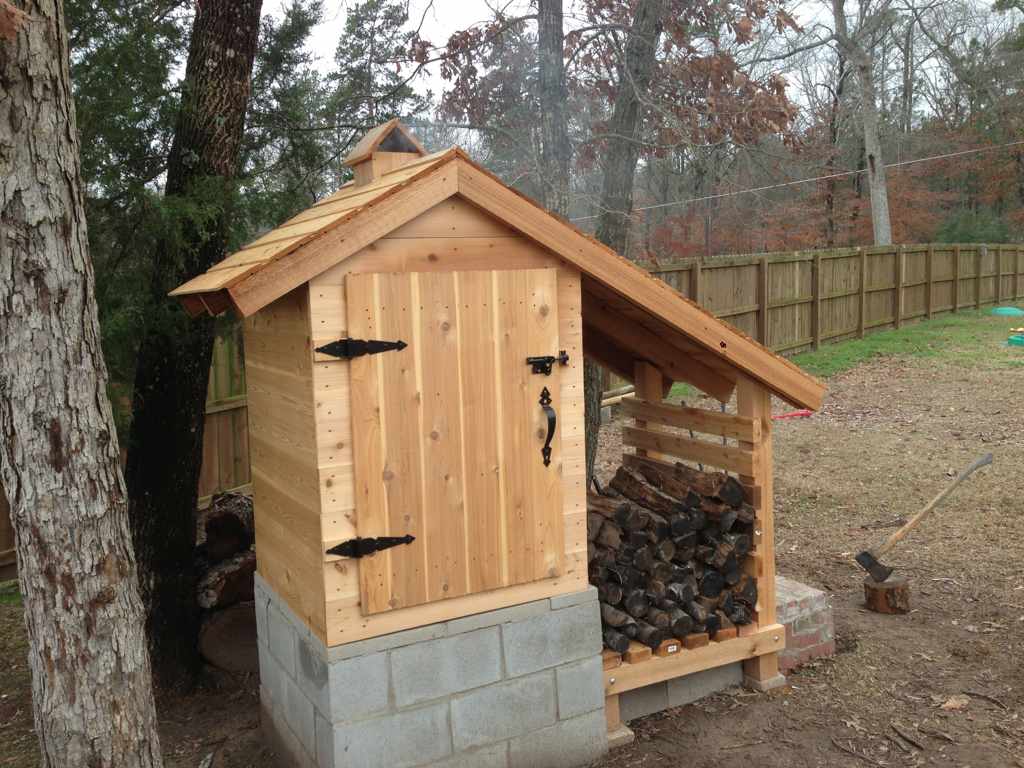
Building a smoke house the old fashion way is a method that has been used for generations. Many people today like to smoke their own meat not only to give it flavor but also to preserve it longer.

The size of your smoker will depend on what you plan to use it for. Whether you want it to just smoke a few fish, smoke sausage every now and then or smoke an entire animal at one time, will help you determine the size of your smoker

1

Beginning:

This slideshow requires JavaScript.

When it comes to flavor of the meat, people through the years have made up their own recipe of brine to rub over the meat before smoking it.

How To Build A Smoke House

9b

The Building Process:

This slideshow requires JavaScript.

Building a smoke house, there are a few things that should be considered when building your smoke house. It is not important to spend a small fortune for material for the construction. Reclaimed wood will work just fine. You may want a smoker big enough to walk in with shelves to lay the meat on along with hocks from the rafters to hang the meat.

You will want to vent the building to allow the smoke to travel freely through the building.

6d

The Firebox Process:

This slideshow requires JavaScript.

Building a smoke house, a very important factor  is to situate your fire box  down hill from the smoke house. This will allow the smoke to travel up hill into the smoker much easier. All that is required for a fire box is a fire box made from brick or even an old barrel with the smoke piped into the smoker will work just fine by having the fire box away from the smoker, the meat will not dry out as much as if it were right in the smoker.

1a

The Smoking Process:

This slideshow requires JavaScript.

To also help in the flavoring of the meat, by using different kinds of wood chips in the fire box will create different smoke changing the flavor in the meat.

Follow our FISHING BLOG

WEB   RATES     FISH    HUNT    CABINS    PHOTOS
TESTIMONIALS    BROCHURE    HUNT BOOKLET

Enter your email address to subscribe to this blog and receive notifications of new posts by email.

← Back

Thank you for your response. ✨

Email Me....


Tags: , , , , , , , , , , , ,

Sighting in Your Rifle

So you’ve acquired a new hunting rifle. After saving your hard-earned cash and landing permission from your other half, the gun rests in your hot little hands. It looks great, feels great… it probably smells great… but more importantly does it shoot great? Now its time to hit the range and get this baby sighted in.

Truth is the same holds true for rifles we’ve had for many years. Chances are they don’t require the full-meal-deal, but sighting in, confirming that our equipment is in good working order, or realigning sights is something we should do on a regular basis.

Unfortunately many of us try to kill two birds with one stone. We visit the range infrequently and attempt to sight in and practice shooting all at the same time. It’s important to remember, sighting is very different from regular shooting practice. The process of sighting in involves aligning the scope (or other sights) with the firearm when using a specific bullet and load. Shooting practice involves discharging and often experimenting with different positions to allow our bodies to grow accustomed to the form and function of shooting.

k_wilson_sighting_in2Believe it or not, many of us don’t sight in properly. It never ceases to amaze me how many hunters pick up their guns once or twice a year, assume it’s shooting straight and hit the woods without a second thought. As a professional outfitter I see it all the time. In fact, I’ve seen guests take it personally when, after arrival in camp, I ask them to take a few practice shots – just to make sure their gun is properly sighted in. As though I’m insinuating that they haven’t prepared for their hunt, once in a while I get a hunter who thinks I’m a control freak. Then the truth comes out. After a few shots it becomes obvious; better than half are inevitably in need of scope adjustments. Every one swears that they were shooting one-inch groups at home, but now their rifle requires major scope adjustments. In their defense, a multitude of things can happen to guns in transit. Blunt trauma to cases or directly to the scope itself can throw it way out of whack; hence the need to sight it.

To be honest many of us are guilty of not maintaining our rifle and scope. If you shoot regularly that’s one thing; you’re constantly checking it and tweaking the scope when necessary. In reality, most of us don’t. By in large, recreational hunters pick up their guns a few times each year. Whether you’re tuning a brand new rifle or confirming the accuracy of an old one, here are a few tips for sighting in:

1) Bore sight your rifle before shooting
k_wilson_sighting_in3This first step applies mostly to rifles and scopes that have a new marriage. The first time a scope is mounted to a rifle the gunsmith will usually use a bore sighting tool. This tool is used to approximately align the crosshairs of the scope with the rifle barrel. Unfortunately some folks erroneously rely on bore sighting alone to zero their gun. Remember bore sighting can be precise but most often it only approximates accuracy. If, when you visit the range, you discover that you’re not even hitting the paper at all, consider rough bore sighting your gun. Practical with bolt-action rifles, by removing the bolt, you can stand behind the gun, look through the barrel and center the target. Then without adjusting the gun, look through the scope and make the necessary adjustments to bring the crosshairs in alignment with the target. This should get you hitting the paper in no time, then you can move on to shooting.

2) Shoot from a stable platform and rest
To reliably confirm the accuracy of your rifle and scope, you must shoot from a rest. I’m not sure I should say this or not, but I will. To illustrate the naivety of some, I’ve actually witnessed guys trying to sight in their rifles at the range by shooting freehand from a standing position. Needless to say these are the guys that get frustrated because they’re not hitting anything.

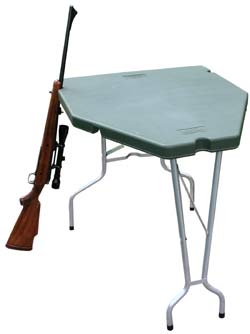
Remember, when we’re sighting in our rifles we’re not testing our shooting skill, but rather the accuracy of the gun, scope and bullet being used. Our goal should be to eliminate or at least minimize human error and allow the equipment to do its thing. With this in mind, a stable shooting bench or table is always recommended. Most shooting ranges are furnished with suitable tables or benches and adjustable stools. If you’re using a portable bench, make sure it is resting level on solid ground. Likewise, it’s imperative to use a shooting rest. In my opinion a vice can be that much better. I really like MTM Case-Gard products (www.mtmcase-gard.com). They make a variety of shooting supplies that are both affordable and practical. Few of us exhibit perfect shooting form. By understanding the biomechanics involved with aiming, breathing, squeezing the trigger and following through we can better acknowledge how to eliminate torsion while shooting from a rest. By cradling the rifle fore-end on a rest or in a vice, we can align our sights with the downrange target and maintain that alignment for a long period of time. Then, by gently squeezing the trigger to discharge, we minimize our human influence thereby allowing the firearm to perform more or less on its own.

3) Begin at close range, then move out to 100 yards and further
I’ve heard much discussion about the standard 100 yard shot and arguably for most bore-sighted rifles, sighting in at that distance is fine. But talk to the pros and most will agree that you should begin at 25 yards if you want to do it right. Making adjustments at close range is easier than at longer distances. At 25 yards you’ll find it easier to acquire your target; it simply appears larger and is easier to center the crosshairs at this short distance. Inaccuracies are simpler to rectify and adjustments can be made quickly at that distance. Remember, inaccuracies are exaggerated that much more at greater downrange distances.

k_wilson_sighting_in1
As you make your fine adjustments to your scope, be aware of the increments and don’t overdo it. For example, with my Leupold VXIII, one click = 1/4 inch adjustment. So, if my shots were hitting consistently two inches to the left of center, I would likely need to dial the adjustment eight clicks in that direction, then shoot another round of bullets. Some folks disagree, but in my opinion it is better to make subtle adjustments, then shoot to confirm that you are working toward the zero mark. As long as there are no fliers, a series of three shots is typically representative of where the gun is shooting. Although with today’s scopes I don’t believe it is as crucial, I still like to give it a firm tap to seat the crosshairs after each adjustment.

When your rifle and scope are in sync at 25 yards, move to 100 yards. Most big game rifle and bullet combinations that are sighted in a couple inches high at 100 yards will shoot a hair low at 25 yards – with most deer hunters this is considered ideal (e.g., I like my 300 Win Mag to be 2″ high at 100 yards). Once your rifle is sighted in, try shooting at 200, 300 and 400 yards to better learn how your rifle, scope and ammunition perform at greater distances.

4) Use the same ammunition that you plan to hunt with
Not all ammunition performs the same. Be sure to sight in your rifle with the load that you plan to hunt with. Ballistics of variable bullet weights and designs (not to mention manufacturers) will perform differently. For instance, Winchester Ammunition’s 150 grain Supreme Elite XP3 (www.winchester.com) will inevitably perform differently than Remington’s 180 grain Core-Lokt, PSP (www.remington.com) shot out of my 300 Winchester Magnum.

If you reload your own ammunition, then you’re likely acquainted with factors affecting bullet performance. Working the right load may take some trial and error, but the same applies – always sight in with the bullet and load you intend to hunt with.

5) Record and reference each shot
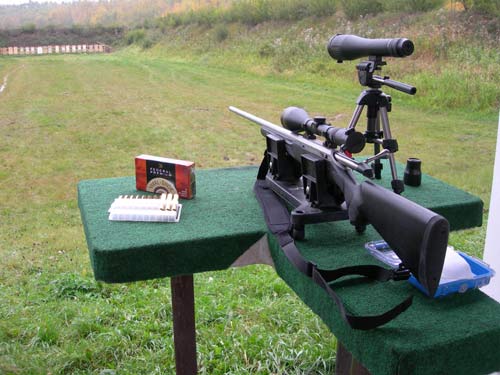
Sighting in can be as labor-intensive as you make it. As a rule, several items are required and several more make the job that much easier. As an absolute necessity, we require a table or bench, a shooting rest, our rifle, ammunition and a target. Beyond these basics, the job is much easier with a spotting scope, tripod, and additional targets along with a marker.

As you begin shooting, be sure to analyze and record each shot. I like to use a Bushnell Elite 15-45x 60 mm spotting scope (www.bushnell.com) mounted on a solid tripod. At 45 power magnification, I can see every detail on the downrange target. My scope allows me to closely assess where I hit in relation to where I aimed. Further, many shooters like to keep a matching target on the bench while they are shooting. By checking their shot, then marking it on the target beside them, they can better track their progressions to confirm any scope adjustments and accuracy. This eliminates much of the guessing about which shot was which.

Follow our FISHING BLOG

WEB   RATES     FISH    HUNT    CABINS    PHOTOS
TESTIMONIALS    BROCHURE    HUNT BOOKLET

Enter your email address to subscribe to this blog and receive notifications of new posts by email.

← Back

Thank you for your response. ✨

Email Me....


Tags: , , , , , , ,

Mistakes Men Make When Hunting With Women

Women are joining the hunting ranks at a faster rate than men. But, we ladies still encounter a few problems when it comes to learning the sport. The No.1 problem for women going afield is trying to find places to hunt.

The No. 2 problem?  You guessed it. It’s you guys.

Women are the fastest-growing hunting demographic

Women are the fastest-growing hunting demographic

Don’t get us wrong. We’re not trying to man-bash. We love that you’re willing to take the ladies in your lives hunting. But, sometimes you guys make mistakes – big ones that may prevent us from wanting to ever hit the woods with you, or anyone else for that matter, ever again. If you truly want us out there with you, then read on to find out how to make our experience more enjoyable. If you don’t, then read on to learn how to ensure that the ladies in your life will never want to go hunting again.

We asked some of our female hunting friends to help us list the top 12 reasons women get turned off while hunting. We also provided solutions, because we care. (Also, remember that dark chocolate is usually the choice of the female hunting masses.)

Barbara Baird

Barbara Baird

1. Underestimating the importance of comfort
“I know we have cushy bottoms made for sitting, but not for hours on end in the briars. During one of my first turkey hunts, my guide made me sit on the ground in a briar patch where I couldn’t see anything coming or going — just a small swath directly in front of my feet. The temperatures started dropping – from the high 50s to low 40s – with light, and then toad-strangling, rain. We sat there for six hours. My legs jumped and moved all on their own, just trying to keep some body heat. When I finally stood up, I almost fell back down. I had to stop at a gas station, change in the bathroom and wipe down with paper towels. Now that I know more about turkey hunting, I would never do that to a new hunter.”  – Barbara Baird – Realtree.com blogger and publisher of Women’s Outdoor News

The Solution: Remember these words: “This is fun.” If it ain’t, call it a day. How can you tell? Well, look at her face. If you see strained expressions or grimaces, she’s done. Or, she might say something like, “Sure would be nice to take a bath.”

2. Behaving condescendingly, because big girls do cry
“There have been times while hunting alongside men that I have heard the words, ‘You stay in the blind; we will put out the decoys … too cold for you!’ I once made the shot on a bird, but the guy next to me screamed, ‘How did you like my shot?’ I have been told, ‘You shouldn’t shoot a 3 1/2-inch shell – too much for your little arms to take!’ and I have even heard, ‘The only reason you get any attention is because you are a woman hunter and they are so rare you don’t have to be good.’” – Kimberly Snyder – Outdoor pro-staffer for various waterfowling companies and contributor to Lady Hunter Magazine

The Solution: Don’t push. Just be there. Kimberly advises, “It can be very tough. When I take women out with me, I make it about what they are comfortable with. I don’t ever push, but I try to make it a bonding and fun experience that keeps them wanting to get back out there. I try to be positive, supportive and encouraging – all the things I would want from someone. Allow them to push themselves.”

3. Not helping with shooting practice before the hunt
“Practice, practice, practice. Help them make good shots so they don’t have to see an animal suffer. The experience can be frightening and can even make them not want to take the second shot to finish the animal. And, take caution in showing women the guts and gore. If they don’t want to see it, don’t make them. They’ll grow into it in their own time.”  — Mia Anstine, outfitter, hunting guide, freelance writer

The Solution: Make sure she is familiar with her gun or bow before she hunts with it. Has she patterned that shotgun or sighted in that rifle? Does she know all the safety rules for handling firearms? Has she practiced with her bow? Education on how gun or bow works and what it will do is paramount to success in the field. Also, think about recoil and noise. You can greatly aid your lady friend by making sure that she has hearing protection and that she wears shoulder padding.

They even make a recoil pad that pins under a shirt on a bra strap, but it’s probably best to let her do that – unless you ask first.

Ample shooting practice is essential for a successful hunt

Ample shooting practice is essential for a successful hunt

4. Being crude or rude
“I try to be just one of the guys when I’m hunting with men, especially if I’m the only lady in camp. I don’t get offended easily, but that doesn’t mean I want all sense of decorum and class to be tossed out of the window. I once hunted with a guy I’d never met who not only burped inches from my face, but he peed right in front of me as well. Let’s just say that put a bit of a damper on my hunt. I also hunted with a guide who proceeded to show me vulgar photos of women on his cell phone. Only minutes after meeting me, another guide felt the need to tell me about all of his and his friends’ forays with prostitutes. There are some things female hunters don’t want to see or hear about, at least not this female hunter.”  — Stephanie Mallory, Realtree blogger, owner of Mallory Communications Inc.

The Solution: Sing it, ladies … R.E.S.P.E.C.T.

“Animal House”-type antics never belong in hunting. Treat the lady hunter how you’d want someone to treat your mom, sister, grandmother or any other female in your family. A good rule of thumb is to let the female hunter set the tone for your hunt. She may be prim and proper, or she may be as crude as a Bob Saget stand-up routine. If you don’t know her that well, play it safe and display good manners. Avoid vulgar language, sexual innuendos and crude behavior. If she’s your buddy, wife or girlfriend, then you should already know how she wants to be treated. If you haven’t figured that out yet, then enjoy what little time you have left with her.

5. Not putting safety first
On another turkey-hunting expedition – this would be about No. 19 without a tag filled – my guides sat me, my hunting partner and a cameraman under a tree. They positioned themselves about 100 feet down from us. A thunderstorm promptly rolled in, but did the guides call it off? Heck, no. We sat there in the rain, watching toms walk past us out of range for hours. Meanwhile, the creek rose, logs rushed down it and our posteriors created magnificent butt puddles. When lightning started striking around the field, I kept thinking that my kids would tell their friends that, “Mom died while sitting under a tree in a thunderstorm, pointing a metal rod into the air.”  — Barbara Baird

The Solution: Never put your lady in danger, from the weather or anything else. If she’s the mother of your children, consider whether or not you have enough insurance to raise said children properly with an English nanny? Stephanie and I have four children each, and believe me, our husbands could not afford the quality of care that we dish out to our kids.
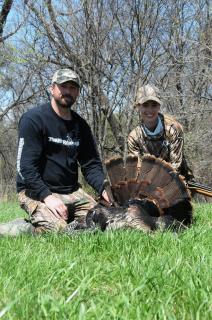
Stephanie Mallory

Stephanie Mallory

6. Showing lack of respect for the lives taken
“I once attended a hunt camp where another female would be hunting for the first time. She was very intimidated by the whole idea and wasn’t sure about taking an animal’s life. When we arrived at the lodge, the first thing the guides did was put a video on TV showing them shooting chickens off a fence post for fun. The new hunter was horrified, of course, and immediately ran to her room and started crying. The guides made all hunters look bad in her eyes and set a poor tone for the rest of the hunt.”  — Stephanie Mallory

The Solution: Yes, we ladies understand that killing is part of the deal. But nothing will sour a woman’s taste for the hunt more quickly than when a man acts cruel or indifferent about the animals he’s hunting, or not hunting. If you show respect for the life you are taking, your female hunting companion will in turn have more respect for you and for the sport you love.

7. Pushing the shot
“When I was 12, my dad and I hunted with a group that did deer drives. If you didn’t shoot at everything, you were ridiculed, but if you shot something too small, you were also ridiculed. To me, hunting is a very personal experience, and taking a life is a serious action. The person pulling the trigger should not feel forced into it.” — Trisha Bowen-Steffen, outdoor writer and pro-staffer for various bowhunting companies

The Solution: Assuming that she’s had all the training mentioned earlier, and that the recoil or noise is not the reason she hesitates in the clutch for the shot, she might not be ready. Or, she may not want to shoot that particular animal that day. It is her choice, not yours. You cannot rent the space in her head as to why she let an animal walk, but you might ask her to explain her reasoning to you. Do not judge. Bring chocolate.
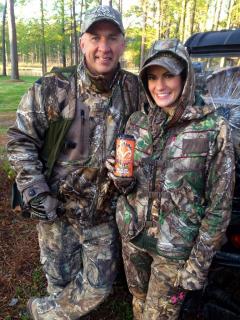
Nikki Boxler and David Blanton

Nikki Boxler and David Blanton

8. Not listening or communicating
“I am naturally outgoing, and when there is something I enjoy, I want to learn everything I can about it. I research, ask questions, practice … Did I mention ask questions? Seriously, I always have a million questions because there is always more learning to be had, and it is great to hear about other people’s experiences and thoughts. Many times you can learn through their mistakes to prevent you from making them in the future.” — Nikki Boxler, model, hunter and director of marketing for Neiman Funds

The Solution: We guess no one has to tell you that, as a whole, women like to talk.

In fact, some researchers claim that the average woman speaks 13,000 more words per day than the average man. So talk back.
Encourage questions and answer them thoughtfully. One of the biggest complaints women have about their romantic relationships with men is lack of communication. Lack of communication can be a problem between the male and female hunter as well. You’ll have plenty of time after the hunt to zone out in your lazy chair while recovering from the exhaustive effort of speaking all those extra words.

9. Displaying lack of patience
“I was immediately turned off during one of my first target-practice sessions when my boyfriend just assumed I knew what every button and lever did on the rifle. He lost patience and jumped in to do everything for me, instead of explaining to me how to load it properly. Talk about discouraging. The day ended with me in tears and never wanting to pick up a gun again. He later apologized and realized that guns just aren’t natural to some people. I mustered up the confidence to try again, and now I really enjoy hunting with him. After a lot of practice, I’m beginning to understand how fun it can be to shoot and hunt … once you get the hang of it.  – Candace Schaak, avid hunter from Cold Bay, Alaska

The Solution: Let’s face it: Patience isn’t always your strongest virtue. But it’s important, especially when you’re hunting with a new female hunter. The best teachers are patient teachers. Take time to instruct and explain the process throughout the hunt. Remember, this is all new to her. If you become short-tempered, impatient or irritable, you’ll ruin the whole point of the hunt, which is to have fun. And you’ll have an upset woman on your hands, which isn’t fun either.

Don't assume the lady you're hunting with for the first time is incompetent. Chances are that won't end well

Don’t assume the lady you’re hunting with for the 1st is incompetent. Chances are that won’t end well

10. Treating the woman as if she’s frail
“My guides and the other hunters in camp went off and left me at the cabin one morning as I slept because they assumed I wouldn’t want to turkey hunt in the rain. I guess they were just being protective, as I was a few months pregnant at the time. But, it was only sprinkling, and it wasn’t cold, so I would have been fine. Plus, I had really wanted to go!” — Stephanie Mallory

The Solution: Yes, we want to be comfortable and content, but we’re not afraid to get dirty and brave the elements when the situation calls for it. Don’t just assume the female hunter doesn’t want to get wet, muddy or tired. She may be just fine with crawling through that mud hole or sitting in the rain while waiting for a turkey to show up. All you have to do is ask her. She’ll let you know what she’s willing to do or not to do.

11. Focusing only on the kill
“Most experienced hunters I’ve gone with simply do things like pick a stand location, set out decoys, or use a call without explaining how and why. I’d say most women would like to not only go on the hunt, but actually learn how to hunt. I realize the guy wants to just handle everything and make sure the hunt is successful, and I appreciate that, but just being told when to pull the trigger is not enjoyable in itself.” — Brita Lewis, account executive / marketing strategist at Gray Loon Marketing Group

The Solution: For many guys, it’s all about getting the job done. You set a goal of taking an animal, and you want to accomplish that goal. But, education and fun should be part of the goal as well. Use every opportunity to teach and explain what you are doing. In fact, don’t just wait until the day of the hunt to involve the female hunter. Get her involved before season when you are scouting, planting food plots, hanging stands, etc. Involving her throughout the process provides her with more enjoyment and a sense of accomplishment as well.

12. Underestimating the female hunter’s capabilities
“I work for a well-known gun company, and my turkey-hunting guide knew this. Even though I was hunting with one of my company’s’ guns and had a lot of experience shooting it, my guide would not let me load it myself. When we arrived at the hunting spot, he insisted on loading the gun, but he had difficulty loading it and keeping it quiet at the same time. Hmmm. I could have loaded it quietly without any effort.”  — Marian Council, creative director at Benelli USA

The Solution: News flash: no one likes to be treated as if they’re incompetent. If you don’t know the woman, don’t just assume she’s incapable of loading her own gun, driving an ATV, calling a turkey or any other skill one might use while hunting. Again, all you have to do is ask. She might surprise you.

By Barbara Baird and Stephanie Mallory

Follow our FISHING BLOG

WEB   RATES     FISH    HUNT    CABINS    PHOTOS
TESTIMONIALS    BROCHURE    HUNT BOOKLET

Enter your email address to subscribe to this blog and receive notifications of new posts by email.

← Back

Thank you for your response. ✨

Email Me....


Tags: , , , , , , , , ,

Unexplainable Deer Story

Follow our FISHING BLOG

WEB   RATES     FISH    HUNT    CABINS    PHOTOS
TESTIMONIALS    BROCHURE    HUNT BOOKLET

Enter your email address to subscribe to this blog and receive notifications of new posts by email.

← Back

Thank you for your response. ✨

Email Me....


Tags: , , , , , ,

Men’s Socks – Heat Holders


Keep feet warm on the coldest of days and pull on this pair of solid color crew length Heat Holders® for men, the warmest thermal sock.

Thick, chunky and with a massive tog rating of 2.34, Heat Holders® are made from a specially developed heavy bulk yarn which has extreme thermal qualities. With long pile cushioning, these thermal socks will help keep feet fully comfortable and supported.

The inside of each sock has been intensively brushed that not only feels sensationally soft but also traps warm air close to the skin keeping your feet warmer for longer.

original_dbbea0c0-8910-4acc-b452-58b5f13219ca_2048x2048

Heat Holders® are non-binding. They are diabetic friendly and provide relief for cold feet due to circulation problems.

Follow our FISHING BLOG

WEB   RATES     FISH    HUNT    CABINS    PHOTOS
TESTIMONIALS    BROCHURE    HUNT BOOKLET

Enter your email address to subscribe to this blog and receive notifications of new posts by email.

← Back

Thank you for your response. ✨

Email Me....


Tags: , , , , , , ,

The Dangers of Dry Firing Your Bow

Dry-firing your bow is something you will want to avoid at all costs. To help minimize your chances of dry-firing a bow you should always draw a bow with an arrow in it, and aim it at a target. This way if you do accidentally release the string there is an arrow in it and you have a target to stop the arrow. Also if you are just trying out a bow be sure to draw with an anti-dry-fire release. When in a group of people it is very easy to become side tracked and forget to load your bow with an arrow. It’s always good to double check before you draw your bow


bowtarget

Dry firing a bow is the act of shooting a bow without an arrow. While this may seem harmless to some of us who are just starting out I assure you that this can be one of the most costly mistakes you can make.

The fact of the matter is that it can happen to anyone beginner or expert for many different reasons. Whether it be from ignorance, distractions, or accidental misfire of a release it happens all the time. So the question is what do you do if you accidentally dry-fire your bow.

There are a few outcomes that could happen when a bow is dry-fired, the first is that is that it will appear that nothing has happened to any of your bow. The second scenario is that your string breaks however everything else stays intact. The third possibility is your bowstring, and cables could snap resulting in your limbs breaking and potential debris flying all over the place. This is basically the worst case scenario and can at times be irreparable.

No matter what scenario your bow falls into after being dry-fired, the first thing you will need to do is to get a magnifying glass and a bright light and look over the limbs especially near the cams for any cracking, or splintering. If you find that one of both limbs have cracks or splinters in them then you will have to replace the limbs before you are able to shoot again. Failing to do so will likely cause will render the bow unusable and/or injury.

bowillustration

In any of the other cases where the string breaks and/or the bow limbs shatter, you will first go get medical attention if you need it and then you will need to bring your bow in to a bow repair shop and you will have to replace the limbs,string, and any other broken parts(axles,cams,wheels etc.).

After checking for cracks and splinters in the limbs, take a look at the cams/wheels to make sure that they have not been bent or cracked, again if they are you will need to replace them as soon as possible before you are able to shoot. Next if you were lucky enough to have your string still intact, you will need to check the whole thing for badly frayed portions, cut strands, and badly damaged areas, especially near the axles.
If everything checks out and you were unable to find anything wrong with your bow then you are lucky, and you have 2 options, your first option is to draw the bow(with an arrow) and shoot it. Make note of any weird noises, or vibrations. If you aren’t the risky type then you can bring it into a bow repair shop and they will have the tools and resources to be able to better inspect it for damages.

In closing, dry firing a bow may seem innocent, but in turn can be detrimental and even dangerous. Take your time to ensure longevity of your equipment for years to come and better success rates!

Follow our FISHING BLOG

WEB   RATES     FISH    HUNT    CABINS    PHOTOS
TESTIMONIALS    BROCHURE    HUNT BOOKLET

Enter your email address to subscribe to this blog and receive notifications of new posts by email.

← Back

Thank you for your response. ✨

Email Me....

 
Leave a comment

Posted by on October 21, 2015 in archery, bow, Wawang Lake Resort


Tags: , , , , , ,

Stop Adding Fat to Your Game Meat

While my Wyoming elk tag has so far gone unfilled, my friend Tess was luckier, tagging her first elk in a Nebraska cornfield not long ago. A heat wave prompted us to spend all day Sunday butchering and last night we put about 20 lbs. of trimmings through the grinder.

I’ve been processing my own (and others) deer and elk for about a dozen years and view adding some type of fat to ground venison as a necessary evil. I prefer ground pork, adding anywhere from 10 to 20 percent. Due to a calculating error on my part (I was told there would be no math!), Tess’ grind ended up at about 25 percent pork, a bit more than she preferred.

Ground_Elk_0910_004
This math problem set me to wondering why hunters take a healthy source of protein and fatten it up? That’s like someone on a diet taking a carrot stick and dipping it in ranch dressing. Quick research shows no clear consensus on what or how much fat to add. Some hunters swear by 50/50, others just 10 percent. Some like pork, others beef tallow. Some add bacon ends and pieces.

Certainly, there’s a rationale to adding fat, including enhancing flavor because, hey, we all know fat tastes good. Fat also keeps meat from drying out when you fry it and helps patties from falling apart. But is there a better, healthier alternative? Yes, depending on how you’re planning to cook it.

Burgers on the grill are probably how much of the ground venison in America makes it to the table. I’ll be the first to admit, making a good burger without fat sounds impossible. The fat not only makes a burger juicy, it also helps it stay in patty form. Next time you have some 100 percent ground venison you want to throw on the grill, trying adding an egg and some breadcrumbs to serve as a binder. I’ve also heard of using steel-cut oats, diced onion, shredded potato and even powdered milk.

When frying ground venison for tacos, chili or spaghetti, cook it without fat. The spices should cover any gamy flavor you or your family might object to. (If not, find a new butcher to process your deer or learn to do it yourself. Since I started DIY processing 12 years ago, I’ve never had gamy game meat.) If the dry texture turns you off, try frying it in a little bit of olive oil, or add moisture as the venison browns in the form of stock, tomato juice or other flavored liquid.

As you can see, there are lots of alternatives to adding fat to your ground venison. What about you? How do you keep your low-fat game meat low fat? – David Draper, Wild Chef Blogger

Follow our FISHING BLOG

WEB   RATES     FISH    HUNT    CABINS    PHOTOS
TESTIMONIALS    BROCHURE    HUNT BOOKLET

Enter your email address to subscribe to this blog and receive notifications of new posts by email.

← Back

Thank you for your response. ✨

Email Me....


Tags: , , , , , , , , ,

Woman Sleeps Through Bear in the Kitchen

images6FA2N08KSara Edwards of Ketchum, Idaho, slept through a bear invading her kitchen.Wow, talk about a heavy sleeper. I think most people wouldn’t be able to sleep through a bear invading their kitchen. Add in a barking dog and the fact that the woman in this story was asleep on the couch right next to the kitchen, and her slumber seems even more remarkable. But, according to her husband David Edwards, it was a good thing his wife slept through the bear invasion.

According to the Edwards, a black bear broke into their home in Ketchum, Idaho, entered the kitchen and proceeded to lick the leftover Chinese food from a cast iron pan on the stove.

Edwards told the Idaho Mountain Express that he was awakened at 3 a.m. by his barking dog. Edwards walked past his wife, Sara, who was asleep on the couch, and his aggressively barking Irish setter-Lab mix, Stanley, to discover a black bear on its hind legs with its paws on the stove. The bear then stood up and looked at Edwards.

Edwards said that was the most shocked he’d ever been. His immediate thought was to wake up his wife and get her away from the kitchen. However, he said, “I couldn’t tell her there was a bear in the house because she would have just lost her mind. She gets very upset over spiders.”

imagesAMFF49EYSo instead, he simply woke her up and led her to the bedroom without mentioning the bear. Then he crept back into the kitchen to discover the bear had left through the wide-open kitchen door.   I wonder how his wife reacted when she found out she’d slept through a bear break-in.

Do you think you could sleep through a barking dog and a bear in the room next to you?     by:  Stephanie Mallory

Follow our FISHING BLOG

WEB   RATES     FISH    HUNT    CABINS    PHOTOS
TESTIMONIALS    BROCHURE    HUNT BOOKLET

Enter your email address to subscribe to this blog and receive notifications of new posts by email.

← Back

Thank you for your response. ✨

Email Me....


Tags: , , , , , ,

Cats Kill Billions of Birds and Mammals Annually

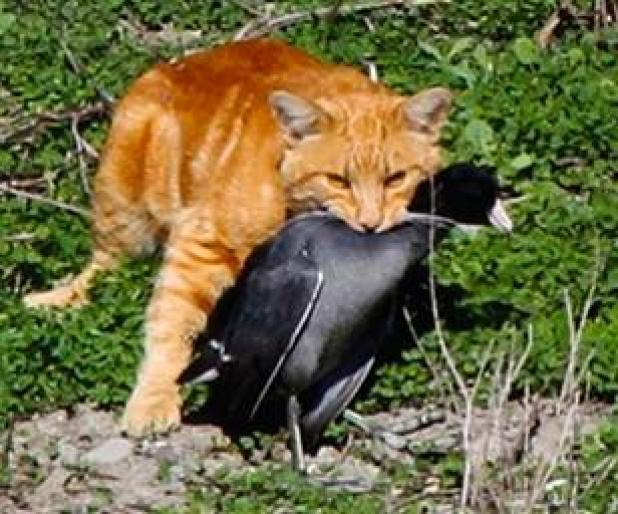
Cats that live in the wild or indoor pets allowed to roam outdoors kill from 1.4 billion to as many as 3.7 billion birds in the continental U.S. each year, says a new study that escalates a decades-old debate over the feline threat to native animals. The estimates are much higher than the hundreds of millions of annual bird deaths previously attributed to cats. The study also says that from 6.9 billion to as many as 20.7 billion mammals — mainly mice, shrews, rabbits and voles — are killed by cats annually in the contiguous 48 states. The report is scheduled to be published Tuesday in Nature Communications. “I was stunned,” said ornithologist Peter Marra of the Smithsonian’s Conservation Biology Institute. He and Smithsonian colleague Scott Loss, and U.S. Fish and Wildlife Service biologist Tom Will conducted the study.killercat

Yes, that’s right. Billions. According to the story, the study reveals that free-ranging cats are likely the single greatest source of mortality for birds and mammals in the United States. The study is also critical of one of the more ridiculous schemes to deal with feral cats; the so-called “TNR” programs (for Trap-Nueter-Release) that feral cat advocacy groups love, calling them “potentially harmful to wildlife populations” because such programs simply return feral cats to the wild to continue killing wildlife.

The study also tried to put a number to just how many un-owned cats there are in the U.S., with the estimate being anywhere from 30 to upwards of 80 million cats. Of course, cat lovers have been pushing back against the study, saying the felines are just convenient scapegoats for habitat loss, window and vehicle collisions, and other man-made hazards. I’d argue that feral cats ARE a man-made hazard, one that something should be done about.

There’s now an admittedly Quixote-like push to eventually get rid of cats in New Zealand in order to save that nation’s endangered biodiversity and I’d love to see something similar happen in this country, if for nothing else than to raise awareness of the issue. Very few people tolerate dogs running wild, so why do so many in this country think it’s OK to let cats do the same? Agree or disagree?     by Chad Love

Follow our FISHING BLOG

WEB   RATES     FISH    HUNT    CABINS    PHOTOS
TESTIMONIALS    BROCHURE    HUNT BOOKLET
Enter your email address to subscribe to this blog and receive notifications of new posts by email.

← Back

Thank you for your response. ✨

Email Me....


Tags: , , , , , ,

The Wrong Turn

survival3

 On Aug. 31, Bill Lawrence, 40, got separated from his hunting partners and remained lost for five days. As told to Colin Kearns.

Wednesday. I’d just killed my first squirrel when I glanced over for my friends Russell and Cris. They were gone.

Russell was the only one who’d hunted these woods, Meeman-Shelby Forest north of Memphis. We’d been hunting for 20 minutes and were deep into the forest. Russell and Cris stuck together, while I drifted to their left. I tried to stay within eyesight of them, but I was also watching for snakes. The last time I saw them, it looked like they were continuing in a straight line. Then I stopped to shoot the squirrel.

I thought I had an idea where they were, but an hour later I wasn’t any closer. I shouted, but the thick woods only swallowed my cries. So I turned to hike back to the truck, but an hour later I was even more lost. I kept walking, though, figuring I’d find a way out.

I walked, stopping to rest now and then, until it started to get dark. I’d fired a couple of shots but got no response. It never got cold, which was good because I had nothing to build a fire with. I doused myself with bug dope, then lay down. With my vest, I was able to cover my face and roll up the bottom end to use as a pillow. That dead squirrel in the pocket added a decent cushion.

I heard helicopters but they couldn’t see me through the trees, and I wasn’t going to run through the woods in the dark. I just prayed they’d find me tomorrow.

Thursday. I finished the last of the two water bottles I’d brought with me that morning. The days were hot, and I was walking and sweating a lot. I needed to stay hydrated. Fortunately, it rained that morning, and I managed to catch a half bottle’s worth of water.

I mostly squirrel hunt, but I have enough experience hunting deer and rabbits that I can identify tracks—and I know that if you follow those tracks, they’ll often lead to a water source, which in my case was a puddle in gumbo mud. I dipped my empty bottle and watched it fill with gray, grimy water. I didn’t want to drink it. I worried it’d make me sick. But what choice did I have? I was already getting dehydrated.

The taste was nasty—dirty and sandy—but the dip of mint Skoal I had in my mouth made it at least drinkable. I figured I should eat something, too, even though I wasn’t starving. I turned a dead stump over and found some nightcrawlers. They tasted about as bad as the gumbo water. I don’t know how many I ate—only that I’d never eat another one.

The rest of Thursday was a lot like Wednesday: Walk, then break for a nap. Walk, then nap. That second day, as I was walking—with no real end in sight—is when I started talking to God. Why is this happening? If I don’t make it out, will you take care of my wife and kids?

imagesTJNT6CHZThat night I awoke to a WHOOSHWHOOSHWHOOSH. Dazed, it took me a moment to realize that it was another chopper—and that it was right above me. I stumbled to find the flashlight in my vest. But by the time I turned it on, it was too late. After the chopper left, my flashlight burned out.

Friday. I kept moving and praying—all day. Walking gave me a purpose. Praying gave me strength. I truly believe my faith is what kept me from ever panicking. That afternoon I stumbled upon some persimmons. They were the most delicious things I’d eaten in a long time, and they were just sitting there on the ground, perfectly ripe, waiting to be found.
Saturday. I heard a low-flying chopper that morning. I took the T-shirt I had on under my camo shirt, tied it to the barrel of my Mossberg, and rushed to the nearest open area where I waved it around. But it never got close enough.

I was weak and tired. My body ached. For the first time I started to think I might not get out. I had started with 15 shells, and by then I only had four or five left. I’d been firing them and leaving the shells at spots where I rested. But on Saturday I decided to fire the rest I had at once. I didn’t know how much more of this misery I’d have to suffer, and I didn’t want the option of taking my own life.

Later that afternoon, as I was resting, I heard two sounds: a Harley-Davidson and a chain saw. I decided to stay put for the remainder of the day and save my energy. Tomorrow, I’d travel toward those sounds. I just knew that if I didn’t get out on Sunday, I never would.

Sunday. I came to a hill that I wasn’t sure I had the strength to climb. I sat down on a nearby log and prayed for strength. When I finally got up and walked to the hill, I glanced to the left where I saw a trail. And I took it.

Two miles later I hit a blacktop road. I fell to the ground crying. I flagged down a couple of motorcyclists who came down the road and told them who I was. “Son,” one of them said, “there’s a lot of people looking for you.”

They drove me to the camp the search team had set up nearby. Just as they got me on the stretcher and were about to drive me to the hospital, I was given a satellite phone. Kim, my wife, was on the other line. My eyes welled. “Hey,” I said. “I’m alive.”

Survival Analysis
Bill Lawrence had no method of striking fire, carried nothing to signal with but his shotgun, and possessed no tool to navigate to safety but his brain. When he became lost, he had nothing to eat but nightcrawlers and no means to disinfect water. He was unfamiliar with the country and carried no map. To sum up: He struck into the woods about as unprepared as a man can be. But before you criticize him too harshly, take a look at yourself. Have you ever been similarly unprepared for an emergency, using the excuse that you only plan to be gone a few hours and won’t stray more than a few hundred yards from the road? I know I have.

Lawrence’s ordeal should be a cautionary tale for all of us, emphasizing the importance of carrying basic survival gear every time we go afield, no matter how small that field we intend to hunt. A compass, a whistle, a sparking wheel, Tinder Tabs, and chlorine tablets weigh about as much as a tin of Altoids, and easily fit inside one. S - - t happens. Have a hat for it.

Lawrence’s reaction to being lost was to walk and then walk some more. By doing so, he disobeyed the four steps that almost ensure survival: Stop. Shelter. Signal. Stay. Had he stopped walking, tied his undershirt to a treetop or placed it in an opening where it could be seen or, better yet, spelled SOS in a clearing with branches or stones, then hunkered out of the wind to wait, he probably would have been found quickly after being reported missing. Ninety percent of search-and-rescue operations are resolved during the initial hasty search, usually within 10 hours.

One thing that Lawrence did do right needs to be emphasized: He never panicked and was determined to survive. The right attitude is one positive that can make up for a lot of negatives in any survival situation.

Follow our FISHING BLOG

WEB   RATES     FISH    HUNT    CABINS    PHOTOS
TESTIMONIALS    BROCHURE    HUNT BOOKLET

Enter your email address to subscribe to this blog and receive notifications of new posts by email.

← Back

Thank you for your response. ✨

Email Me....


Tags: , , , , , ,