RSS

Tag Archives: recipe

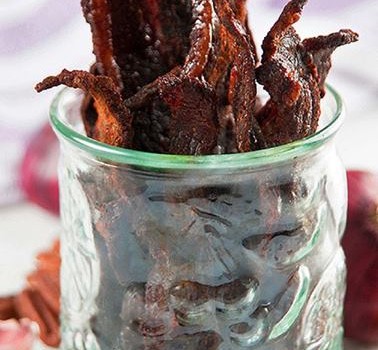
Home Made Wild Game Jerky

This Jerky is a GREAT creation ever. Not to be bragging but this is one of the best jerky recipes around! This recipe is for beef but when wild game is available this jerky is outstanding. This is a must try for anyone who loves to have this on hand.
jerky

Ingredients
4 pounds round steak cut into strips no thicker than 1/4 inch (if you freeze the steak a few minutes beforehand, slicing is much easier)
4 tablespoons onion powder
1 1/3 teaspoons black pepper
1 1/3 teaspoons garlic powder
2 pinches sea salt
1 teaspoon dry Italian-style salad dressing mix
1 cup Worcestershire sauce
1 cup soy sauce
1 teaspoon hot pepper sauce

Directions
Mix together in a large bowl, the onion powder, pepper, garlic powder, salt and Italian seasoning.
Stir in Worcestershire sauce, soy sauce and pepper sauce.
Place meat into a container, and combine with marinade.
Cover, and refrigerate and marinate for 24 hours. (use large zip lock storage bags)
Place oven rack on the highest level.
Place aluminum foil on bottom of oven to catch drips.
Preheat oven to 150 degrees F.
Insert round toothpicks through the tops of the strips of meat, and hang them from the oven rack.
Bake in preheated oven for 4 hours, or until dried to desired consistency.
Store finished product in an air tight container.

Follow our FISHING BLOG

WEB   RATES     FISH    HUNT    CABINS    PHOTOS
TESTIMONIALS    BROCHURE    HUNT BOOKLET

Enter your email address to subscribe to this blog and receive notifications of new posts by email.

Go back

Your message has been sent

Warning
Warning
Warning
Email Me....

Warning

Warning.


Tags: , , , , , ,

Venison Tenderloin – Bacon-Wrapped

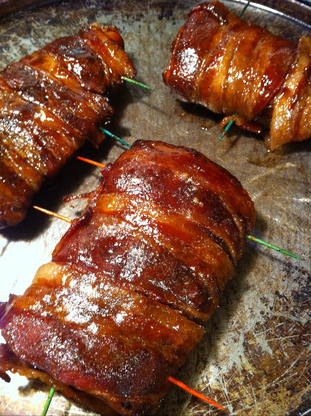
Venison Bacon WrapIngredients

Servings 2-3 

  • 2 lb. venison tenderloins (a single deer loin or Moose or Elk or Pork or Beef)
  • 12 lb. bacon (Plain, thin-sliced Bacon is best)
  • 3 cups dark brown sugar
  • 2 cups soy sauce (Regular NOT low-sodium. You’ll want the saltiness)
  • 14 cup white sugar (Optional for added Sweetness)

Directions

  1. Mix brown Sugar and Soy sauce together in a bowl. They should combine nicely into a soupy soy liquid.
  2. Put Deer Loin in a cooking tray and pour Brown Sugar/Soy Sauce mixture over loin. Roll tenderloin over in mixture, completely covering it.

    2

  3. Let meat marinate in mixture at least 3 hours or overnight in fridge. It’s best to marinate for 8 hours if you have the time. Also GREAT to use a Food Saver or other Vacuum device to Vacuum pack/seal the meat with Marinade. With this method, you can achieve Overnight-level marinade in just a couple hours!
  4. Remove loin from tray, and place on a slotted bake sheet with a drip pan or aluminum foil below to catch dripping. Don’t throw away marinade.
  5. Wrap a piece of bacon around the very end of the tenderloin, securing the bacon strip with a toothpick.
  6. Repeat this process until the entire loin is wrapped in ten or so bacon “loops.” The tenderloin should look like an arm with a bunch of wrist watches on it, the watches being the bacon strips.
  7. Drizzle remaining marinade over deer loin. You can continue to baste the loin with the marinade throughout the cooking process with either a brush or a turkey baster.
  8. Place on center rack in oven and bake at 350°F for 30-40* minutes. *This should cook the meat to about Medium. For those of you who prefer rare meat, cut the time to 25-30 minutes and then follow with the “OPTION 2” step below regarding searing.

    3

  9. OPTION 1 – with about 10 minutes of cooking time left, you can lightly dust the top of the loin with white sugar. This creates a sweet crust on top of the bacon. Might be too sweet for some. Try doing it on just HALF of the loin to see if you like it!
  10. OPTION 2 – For a crispier crust and crispier bacon, remove Loin from oven and place the Loin(s) directly on a Grill over medium-high heat to sear the bacon and outer loin.
  11. Remove from oven and place on cutting board. Using a knife, cut the loin between each strip of bacon so that you have many pieces of meat, each with their own toothpick.
  12. You can eat these pieces directly from the toothpick or remove the toothpick and eat like steak.

Follow our FISHING BLOG

WEB   RATES     FISH    HUNT    CABINS    PHOTOS
TESTIMONIALS    BROCHURE    HUNT BOOKLET

Enter your email address to subscribe to this blog and receive notifications of new posts by email.

Go back

Your message has been sent

Warning
Warning
Warning
Email Me....

Warning

Warning.


Tags: , , , , , ,

ID the Morel – Spring’s Best Mushroom

When the spring gobbler season and shed hunting is in full swing, you’ll probably spending a lot of time in the woods looking at the ground for antlers and turkey sign. Something else you ought to be on the lookout for is a weird little pitted thing that looks like a small, lumpy, brown brain. This time of year, that organism is most likely a common morel mushroom, a popular item of spring foragers. Here’s how to properly identify this delectable fungus.

mush

ID a Morel
The common morel (Morchella esculenta) is a prized wild mushroom that grows in forests and shady areas, primarily in April and May. These mushrooms are usually 2 to 4 inches tall. The tan, gray, or brownish colored head with irregular pitting is well camouflaged against leaf litter. If you cut the mushroom completely in half, it should be entirely hollow inside. Look carefully for the cone-shaped head to be fully fused to the stalk at the lower end.

mush2If the head is only attached at the top, and hangs like a skirt, you are probably looking at a false morel, which can be very poisonous. False morels (the genera Verpa and Gyromitra) usually grow in the summer and fall, which are great times to avoid anything resembling a morel. Another way to properly ID an edible morel is to make a spore print, which, for a common morel is yellowish. Here’s how do that.

Make a Spore Print
1. Handle your foraged mushrooms carefully, and assume that any unidentified mushroom is deadly. Get the whole thing if possible, but the cap is the part you need for spore prints.

2. Wrap each individual mushroom in wax paper or a piece of aluminum foil for transport. Plastic bags will make them sweat, and putting multiple mushrooms in a bag can create confusion.

3. Place the mushroom cap gills-down on a piece of white paper and set a cup or bowl over it. Allow it to sit several hours or, better yet, overnight.

4. Remove the cover and lift the mushroom cap. Observe the color of the spores that were deposited, and use that color for identification. Some mushrooms deposit white spores, which are hard to see on the white paper. Set a strong flashlight beside the paper, shining across the surface, to assist in your identification of pure white spores. Check this color against several guides, and double-check the mushroom’s structures against similar mushrooms to ensure that you have the right mushroom ID.

How is the morel hunting in your area so far this spring? Have you ever had a bad run-in with a misidentified mushroom?

Follow our FISHING BLOG

WEB   RATES     FISH    HUNT    CABINS    PHOTOS
TESTIMONIALS    BROCHURE    HUNT BOOKLET

Enter your email address to subscribe to this blog and receive notifications of new posts by email.

Go back

Your message has been sent

Warning
Warning
Warning
Email Me....

Warning

Warning.


Tags: , , , , , , ,

Wild Game – Goulash

Is there a goulash soup recipe for those cold nights after being out all day?  Well, yes, there is!  And, even better yet, it includes wild game meat!

goulashsoup


INGREDIENTS:

  • 1 tablespoon oil
  • 1 lb ground deer/elk meat
  • 1 onion, chopped
  • 1 green pepper, chopped
  • 2 stalks celery, chopped
  • 2 tablespoons flour
  • 2 tablespoons sweet paprika
  • 1 teaspoon oregano
  • 1 teaspoon salt
  • pepper, to taste
  • 2 potatoes, peeled and cut in 1/2-inch cubes
  • 1 (10 ounce) can condensed beef broth
  • 4 cups water
  • 1 cup egg noodles (optional)

Directions:

  1. In a large pot over medium-high heat, brown meat in vegetable oil until it is no longer pink, about 8 minutes.
  2. Reduce heat to medium and add onion, pepper and celery. Saute until vegetables are softened, about 10 minutes.
  3. Sprinkle flour over meat and vegetables and cook for 2 minutes, stirring a few times.
  4. Add paprika, oregano, salt and pepper. Stir.
  5. Add potatoes, beef broth and water. Bring to a boil and reduce heat to low. Cover and simmer 15-20 minutes until potatoes are almost done. Add egg noodles and cook for an additional 5 minutes until done.

Garnish with sour cream, chopped fresh dill and serve with pickles.

Follow our FISHING BLOG

WEB   RATES     FISH    HUNT    CABINS    PHOTOS
TESTIMONIALS    BROCHURE    HUNT BOOKLET
Enter your email address to subscribe to this blog and receive notifications of new posts by email.

Go back

Your message has been sent

Warning
Warning
Warning
Email Me....

Warning

Warning.

 
Leave a comment

Posted by on February 14, 2015 in Bear, moose, recipe, Wawang Lake Resort


Tags: , , , , , , ,

Country-Style Fried Bear Steak

This recipe will bring out the southern drawl in anyone. It’s great for any game meat but extra special with bear. It uses a blended creole seasoning mix recipe, which are also included.

bear-steak-620x338[1]

Creole Seasoning

  • 2 tbsp. onion powder
  • garlic powder
  • dried oregano leaves
  • dried sweet basil 1 tbsp.
  • dried thyme leaves
  • black pepper
  • white pepper
  • cayenne pepper
  • salt 3 tbsp.
  • sweet paprika

Blend together in a food processor. Store in an airtight container.

Ingredients

  • 2 lbs. bear steak, cut into 4 equal portions
  • 3 tbsp. creole seasoning,
  • divided ½ lb. bacon, chopped
  • 11⁄4 cups all-purpose flour,
  • divided 1 large egg
  • 2½ cups milk,
  • divided 1 cup bread crumbs
  • ½ cup yellow onion, minced
  • 1 tsp. salt
  • ½ tsp. pepper

Instructions
Place the bear steak on a piece of plastic wrap and cover with another piece of plastic wrap. Pound steak with a meat mallet until it’s ¼ inch thick. Season both sides of meat with 1 tsp. of creole seasoning.

Fry the bacon in a large, heavy skillet until just crisp. Remove and drain. Set pan with the bacon grease aside.

Prepare 3 bowls to dredge the meat.

Into the first bowl, add 1 cup flour and 1 tbsp. creole seasoning.

To the second bowl, add egg whisked with ½ cup milk and ½ tsp. creole seasoning.

Into the third bowl, add bread crumbs mixed with all but ½ tsp of remaining creole seasoning.

Dredge the meat in the first bowl, shake off any excess, then dip in second bowl and again shake off excess, then roll in crumb mixture. Repeat with all steaks.

Reheat the bacon fat in skillet until hot, but not smoking. Carefully add 1 piece of meat and fry until golden, about 3 to 4 minutes per side. Transfer to paper towel to drain, repeat with other pieces of meat.

Add ¼ cup flour and ½ tsp. of creole seasoning to drippings in pan.

Cook over medium heat, stirring constantly for 2 minutes. Add onion and cook, stirring until onions soften, about 4 minutes. Whisk in remaining milk and salt and pepper and bring to a boil. Reduce heat to low and simmer until sauce is thickened, about 5 minutes.

Stir in bacon. Serve with steaks.

Follow our FISHING BLOG

WEB   RATES     FISH    HUNT    CABINS    PHOTOS
TESTIMONIALS    BROCHURE    HUNT BOOKLET

Enter your email address to subscribe to this blog and receive notifications of new posts by email.

Go back

Your message has been sent

Warning
Warning
Warning
Email Me....

Warning

Warning.

 
Leave a comment

Posted by on February 12, 2015 in Bear, black bear, recipe, Wawang Lake Resort


Tags: , , , ,

Grouse Fricot

3

Adapted from the cookbook Traditional Recipes of Atlantic Canada, this Acadian dish is a popular part of traditional New Brunswick cuisine. Fricot is basically a stew comprising potatoes, vegetables, savory and any available fish or meat, in this case ruffed grouse. Bon appétit!

Serves: 4

Ingredients

  • 2 ruffed grouse
  • 4 tbsp butter
  • Salt and black pepper
  • 1 white Spanish onion, diced
  • 2 sachets chicken bouillon
  • 4 1/2 cups water, divided
  • 3 tsp summer savory
  • 2 cups potatoes, diced
  • 2 cups carrots, diced
  • 2 stalks celery, diced
  • 2 tbsp flour

Preparation

  • Wash dressed grouse under cold water and pat dry with paper towel. Remove breasts and cut into medallions. Separate legs from carcass.
  • Braise medallions and legs in butter in an oven roaster over medium-low heat until browned (approximately 15 minutes). Add salt and pepper to taste. Keep lid on roaster to ensure grouse stays moist.
  • Saute onions until soft and add to grouse.
  • Stir chicken bouillon into 3 cups water in a microwave-safe mixing bowl and bring to a boil in a microwave. Add savory and pour on top of grouse. Simmer until meat is tender (15 to 20 minutes).
  • Season remaining vegetables with 1 tsp salt and 1/4 tsp pepper. Bring roaster liquid to a boil, add vegetables and reduce to a simmer for another 20 minutes.
  • Mix flour with 1 1/2 cups cold water to create a smooth paste. Slowly stir paste into roaster liquid until it thickens into a sauce. Serve with crusty rolls and a garden salad with raspberry vinaigrette.

Follow our FISHING BLOG

WEBSITE    RATES     FISH    HUNT    CABINS    PHOTOS
TESTIMONIALS    BROCHURE    HUNT BOOKLET

Enter your email address to subscribe to this blog and receive notifications of new posts by email.

Go back

Your message has been sent

Warning
Warning
Warning
Email Me....

Warning

Warning.


Leave a comment

Posted by on January 25, 2015 in grouse, recipe, Wawang Lake Resort


Tags: , , , , , , , ,

Moose Stir Fry

8

This delicious moose dish is low in fat. The amount of each ingredient is proportional to how many people you’re serving. Using half a pound of moose, as this recipe does, makes two large servings.

Ingredients

  • 1/2 lb. moose steak
  • 1/2 cup carrots
  • 1/2 cup bean sprouts
  • 1/4 cup celery
  • 1/2 cup snow peas
  • 1/2 cup broccoli
  • 1/4 cup unsalted peanuts
  • 2 cloves of garlic, minced
  • 1/2 cup soy sauce
  • 1 tbsp crushed red pepper
  • 1 tbsp cumin
  • Cooked noodles (excluding seasoning packet)

Preparation

  • Slice steaks cross grain and marinade in soy sauce for one day. Throw a little oil into a hot wok to avoid sticking. Stir in moose for about 1 minute.
  • Add other ingredients, including seasoning, stirring frequently. Add additional soy sauce to coat all ingredients.
  • Stir in noodles and serve immediately.

Follow our FISHING BLOG

WEBSITE    RATES     FISH    HUNT    CABINS    PHOTOS
TESTIMONIALS    BROCHURE    HUNT BOOKLET

Enter your email address to subscribe to this blog and receive notifications of new posts by email.

Go back

Your message has been sent

Warning
Warning
Warning
Email Me....

Warning

Warning.


Leave a comment

Posted by on January 6, 2015 in moose, recipe, Wawang Lake Resort


Tags: , , , , , , , ,

Bacon Wrapped Moose Tenderloin

Ingredients

Moose tenderloin
Dates
Goat cheese

Marinade

1 Tbsp. mustard
1 Tbsp. honey
1/2 tsp. minced garlic
4 dashes of Worcestershire sauce
1 cup red wine

Saskatoon Glaze

1/2 cup Saskatoon berries ( you can use blueberries if Saskatoon’s are not available in your area)
3/4 cup red wine
1 Tbsp. maple syrup

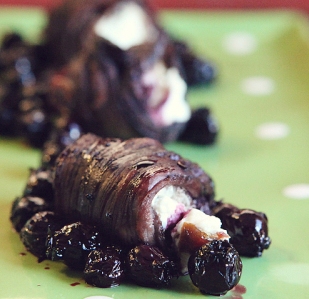
moose-rolls2-copy-600x400


Rub tenderloin with mustard, combine remaining ingredients and pour over top.  Use a marinating container that and flip back and forth every so often.  Let marinade at least 4 hours or overnight.

Next stuff dates with goat cheese.  If you have un-pitted dates, simply cut the top off, using a pair of tweezers, pull the pit out.  Use a baby spoon to stuff the goat cheese in, it works quite well, the tip of the spoon was perfect for starting to put the cheese in and then using the handle end to push the goat cheese down, worked like a charm!

Thinly slice the tenderloin and then wrap around the dates and secure with toothpicks.  Place on parchment paper on a cookie sheet.

Preheat oven to 350 degrees.

Place berries, maple syrup and red wine in a pot on high heat.  Bring to a boil and let simmer for 3-5 minutes, spoon the juice over the dates and bake for 10-15 minutes(or until meat is cooked to your preferred done-ness), baste with glaze at least once during baking time.

Remove and enjoy … best eaten while warm!

This is the perfect appetizer for any party….your guests won’t even know its moose!

Follow our FISHING BLOG

WEB   RATES     FISH    HUNT    CABINS    PHOTOS
TESTIMONIALS    BROCHURE    HUNT BOOKLET

Enter your email address to subscribe to this blog and receive notifications of new posts by email.

Go back

Your message has been sent

Warning
Warning
Warning
Email Me....

Warning

Warning.


Tags: , , , , , , , , , , ,

EASY GROUSE CARBONARA RECIPE


Ingredients

10 slices of bacon
3 to 4 cups grouse meat, cut into strips
1 small onion, chopped
1 tsp homemade garlic powder
1 tsp homemade onion powder

Sauce
2-1/2 cups whipping cream
1 tsp homemade garlic powder
1 tsp homemade onion powder
8 egg yolks
1 cup parmesan cheese, grated (not powder)
1/4 cup fresh basil or 3 TBS dried basil
kosher salt and freshly ground black pepper to taste

4 oz fettuccine or spaghetti noodles

Directions

In a large heavy skillet, fry bacon until cooked (not crispy); drain and set aside. Fry the grouse meat and onion in the bacon fat until meat is cooked through. Drain well. Discard the bacon fat.

Bring a large pot of salted water to a boil and cook the pasta. (I always put a teaspoon or two of canola or vegetable oil in the water so the pasta doesn’t stick together.)

Meanwhile, in a large saucepan or dutch oven, whisk the sauce ingredients together and slowly heat to medium-low (no higher or the eggs will scramble).

When the meat/onion mixture and pasta is cooked and drained well, add that to the sauce ingredients. Cook until it is thickens and season with more salt and pepper if you need to.

Serve with a salad and crusty butter bread. So delicious.

 
Leave a comment

Posted by on June 29, 2014 in grouse, recipe, Wawang Lake Resort


Tags: , , , , ,

Grin and Bear it: How to bear eating bear meat.

As an outfitter, we often hear how many people would love to hunt bear but have no idea what to do with all the meat or if they did keep it, how to cook it (Ontario is a no waste province, it is mandatory to take all of the meat with you upon departure.)

Below is an excerpt from a great story written by Jackson Landers and how he dealt with an unexpected amount of bear meat…..and what he learned.


bearfordinner

Now I had heard all sorts of stories from hunters about what bear meat is like: that it’s tough, gamey, and unpleasantly greasy. But in my experience eating a fairly wide array of unusual species, I had found that meat that tastes “tough and gamey” is more often a case of bad butchering and sloppy handling than an intrinsic quality of a species.

To maximize the potential flavor of my bear, I dry-aged it for a week before I started experimenting. Dry-aging meat, for the uninitiated, is the process of letting meat hang out for a while at cool temperatures while allowing moisture to evaporate from it. Dry-aging accomplishes two things. First, natural enzymes in the meat begin to tenderize it by breaking down the collagen in the muscles. (Collagen is what makes tough meat feel tough, and more of it builds up in muscle tissue as an animal gets older.) Second, dry-aging allows water to evaporate out of a piece of meat, concentrating the flavor. High-end steakhouses all do this with their beef, and I have been dry-aging most of my venison in my fridge at home for years.

Once my bear was sufficiently dry-aged, the very first thing I tried was cutting some simple steaks out of a forequarter (the upper portions of the front legs) and from the backstraps (the cuts from alongside the spine that are referred to as “pork loin” in pigs). I wanted to keep the recipe simple so as not to hide the true flavor of the meat, but I also wanted to have some fun. So I just ran with the bear theme. I pan-seared the steaks in olive oil and drizzled just a bit of honey on them. A handful of blueberries went into the pan with them (bears love blueberries almost as much as they love honey). Then I transferred the meat to a covered dish to finish cooking in the oven and deglazed the pan with a splash of Toasted Head cabernet sauvignon, which I had chosen on account of the wine’s label having a black bear on it. I made sure to cook the meat to 140 degrees and hold it there for a while, since bears, like pigs, can carry trichinosis.

bearroast

My girlfriend and I sat down to eat our first bites of bear meat, drizzled with that red-wine pan sauce. The texture was good, and the backstrap cuts were a bit more tender than the forequarter cuts. The flavor was mild; it tasted more or less identical to venison—which is to say a lot like beef, only with less fat and a blander flavor. There was nothing greasy or tough about it. It looked like a thick piece of filet mignon. Between sips of the bear-bearing Toasted Head wine (which paired very nicely with the bear meat, I should add), we soon forgot that it was bear meat that we were eating. By the end of the meal, it was just dinner, no more exotic than the artichokes we served along with it.

Heartened, I started putting bear meat in everything. And once I began running it through the meat grinder, the stuff became a household staple. Think bear tacos, spaghetti with bear sauce, lime-marinated bear stir-fry served over ramen noodles.

moosestir

Bear burgers in particular were a big hit. I mixed one egg with 1 pound of ground bear meat and just a touch of onion powder and pepper and broiled them under high heat. Three minutes per side seemed to get me up over 140 degrees every time, without taking the burgers beyond medium-rare. I invited some friends over to eat them, and the unanimous agreement was that they simply tasted like very good beef burgers and that nobody would ever guess they were bear.

I began to take the ground bear meat so much for granted that I confess to feeding it to a dinner guest in a ragout over angel hair pasta without thinking to tell her that she was eating bear as opposed to beef. She ate every bite. I’m still not sure whether I should tell her what she ate.

Lately I’ve found myself worrying about the dwindling supply of bear meat in my fridge and freezer. I have one whole hindquarter in my chest freezer awaiting a special bear dinner with a group of friends, but other than that and a pound or so of medallions, all I’ve got left is an array of very unusual bones that my dogs have been chewing on in the front yard. What will I do when I run out?


Go back

Your message has been sent

Warning
Warning
Warning
Email Information regarding

Warning

Warning.


Do you like what you see? Join us on our<a title=”Fishing Blog ” href=”wawangresort.wordpress.com”> Fishing Blog</a> for more up to the minute action, tips and tactics!!


Tags: , , , , , , , ,