RSS

Tag Archives: WMU 15A

Building A Smoke House

9c

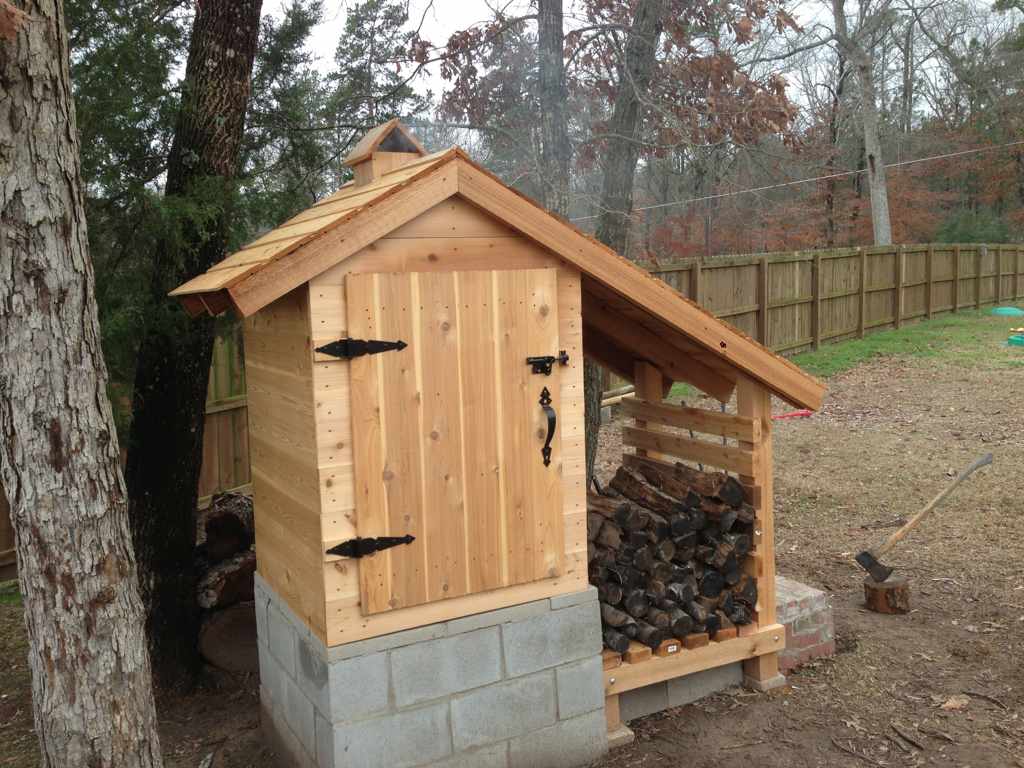
Building a smoke house the old fashion way is a method that has been used for generations. Many people today like to smoke their own meat not only to give it flavor but also to preserve it longer.

The size of your smoker will depend on what you plan to use it for. Whether you want it to just smoke a few fish, smoke sausage every now and then or smoke an entire animal at one time, will help you determine the size of your smoker

1

Beginning:

This slideshow requires JavaScript.

When it comes to flavor of the meat, people through the years have made up their own recipe of brine to rub over the meat before smoking it.

How To Build A Smoke House

9b

The Building Process:

This slideshow requires JavaScript.

Building a smoke house, there are a few things that should be considered when building your smoke house. It is not important to spend a small fortune for material for the construction. Reclaimed wood will work just fine. You may want a smoker big enough to walk in with shelves to lay the meat on along with hocks from the rafters to hang the meat.

You will want to vent the building to allow the smoke to travel freely through the building.

6d

The Firebox Process:

This slideshow requires JavaScript.

Building a smoke house, a very important factor  is to situate your fire box  down hill from the smoke house. This will allow the smoke to travel up hill into the smoker much easier. All that is required for a fire box is a fire box made from brick or even an old barrel with the smoke piped into the smoker will work just fine by having the fire box away from the smoker, the meat will not dry out as much as if it were right in the smoker.

1a

The Smoking Process:

This slideshow requires JavaScript.

To also help in the flavoring of the meat, by using different kinds of wood chips in the fire box will create different smoke changing the flavor in the meat.

Follow our FISHING BLOG

WEB   RATES     FISH    HUNT    CABINS    PHOTOS
TESTIMONIALS    BROCHURE    HUNT BOOKLET

Enter your email address to subscribe to this blog and receive notifications of new posts by email.

← Back

Thank you for your response. ✨

Email Me....


Tags: , , , , , , , , , , , ,

Sighting in Your Rifle

So you’ve acquired a new hunting rifle. After saving your hard-earned cash and landing permission from your other half, the gun rests in your hot little hands. It looks great, feels great… it probably smells great… but more importantly does it shoot great? Now its time to hit the range and get this baby sighted in.

Truth is the same holds true for rifles we’ve had for many years. Chances are they don’t require the full-meal-deal, but sighting in, confirming that our equipment is in good working order, or realigning sights is something we should do on a regular basis.

Unfortunately many of us try to kill two birds with one stone. We visit the range infrequently and attempt to sight in and practice shooting all at the same time. It’s important to remember, sighting is very different from regular shooting practice. The process of sighting in involves aligning the scope (or other sights) with the firearm when using a specific bullet and load. Shooting practice involves discharging and often experimenting with different positions to allow our bodies to grow accustomed to the form and function of shooting.

k_wilson_sighting_in2Believe it or not, many of us don’t sight in properly. It never ceases to amaze me how many hunters pick up their guns once or twice a year, assume it’s shooting straight and hit the woods without a second thought. As a professional outfitter I see it all the time. In fact, I’ve seen guests take it personally when, after arrival in camp, I ask them to take a few practice shots – just to make sure their gun is properly sighted in. As though I’m insinuating that they haven’t prepared for their hunt, once in a while I get a hunter who thinks I’m a control freak. Then the truth comes out. After a few shots it becomes obvious; better than half are inevitably in need of scope adjustments. Every one swears that they were shooting one-inch groups at home, but now their rifle requires major scope adjustments. In their defense, a multitude of things can happen to guns in transit. Blunt trauma to cases or directly to the scope itself can throw it way out of whack; hence the need to sight it.

To be honest many of us are guilty of not maintaining our rifle and scope. If you shoot regularly that’s one thing; you’re constantly checking it and tweaking the scope when necessary. In reality, most of us don’t. By in large, recreational hunters pick up their guns a few times each year. Whether you’re tuning a brand new rifle or confirming the accuracy of an old one, here are a few tips for sighting in:

1) Bore sight your rifle before shooting
k_wilson_sighting_in3This first step applies mostly to rifles and scopes that have a new marriage. The first time a scope is mounted to a rifle the gunsmith will usually use a bore sighting tool. This tool is used to approximately align the crosshairs of the scope with the rifle barrel. Unfortunately some folks erroneously rely on bore sighting alone to zero their gun. Remember bore sighting can be precise but most often it only approximates accuracy. If, when you visit the range, you discover that you’re not even hitting the paper at all, consider rough bore sighting your gun. Practical with bolt-action rifles, by removing the bolt, you can stand behind the gun, look through the barrel and center the target. Then without adjusting the gun, look through the scope and make the necessary adjustments to bring the crosshairs in alignment with the target. This should get you hitting the paper in no time, then you can move on to shooting.

2) Shoot from a stable platform and rest
To reliably confirm the accuracy of your rifle and scope, you must shoot from a rest. I’m not sure I should say this or not, but I will. To illustrate the naivety of some, I’ve actually witnessed guys trying to sight in their rifles at the range by shooting freehand from a standing position. Needless to say these are the guys that get frustrated because they’re not hitting anything.

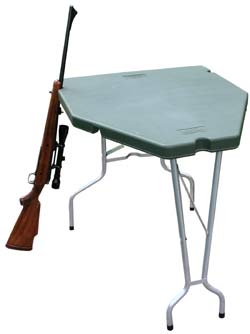
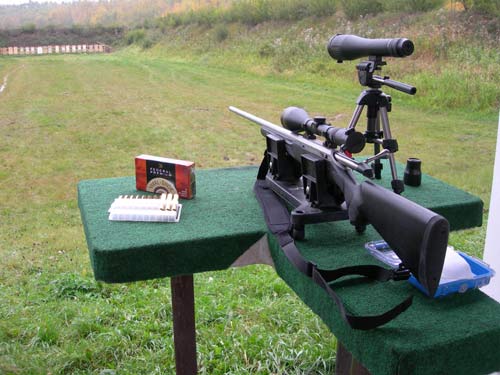
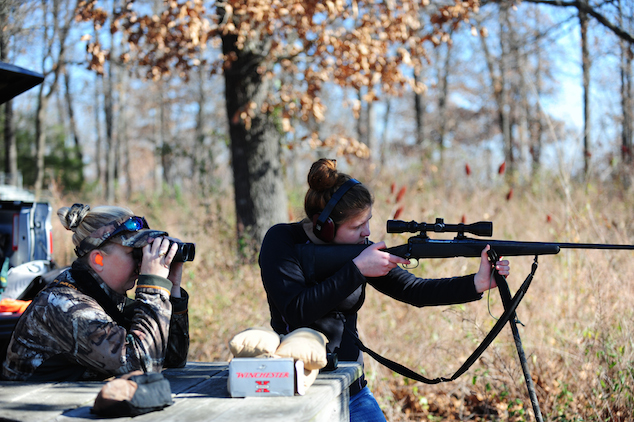
Remember, when we’re sighting in our rifles we’re not testing our shooting skill, but rather the accuracy of the gun, scope and bullet being used. Our goal should be to eliminate or at least minimize human error and allow the equipment to do its thing. With this in mind, a stable shooting bench or table is always recommended. Most shooting ranges are furnished with suitable tables or benches and adjustable stools. If you’re using a portable bench, make sure it is resting level on solid ground. Likewise, it’s imperative to use a shooting rest. In my opinion a vice can be that much better. I really like MTM Case-Gard products (www.mtmcase-gard.com). They make a variety of shooting supplies that are both affordable and practical. Few of us exhibit perfect shooting form. By understanding the biomechanics involved with aiming, breathing, squeezing the trigger and following through we can better acknowledge how to eliminate torsion while shooting from a rest. By cradling the rifle fore-end on a rest or in a vice, we can align our sights with the downrange target and maintain that alignment for a long period of time. Then, by gently squeezing the trigger to discharge, we minimize our human influence thereby allowing the firearm to perform more or less on its own.

3) Begin at close range, then move out to 100 yards and further
I’ve heard much discussion about the standard 100 yard shot and arguably for most bore-sighted rifles, sighting in at that distance is fine. But talk to the pros and most will agree that you should begin at 25 yards if you want to do it right. Making adjustments at close range is easier than at longer distances. At 25 yards you’ll find it easier to acquire your target; it simply appears larger and is easier to center the crosshairs at this short distance. Inaccuracies are simpler to rectify and adjustments can be made quickly at that distance. Remember, inaccuracies are exaggerated that much more at greater downrange distances.

k_wilson_sighting_in1
As you make your fine adjustments to your scope, be aware of the increments and don’t overdo it. For example, with my Leupold VXIII, one click = 1/4 inch adjustment. So, if my shots were hitting consistently two inches to the left of center, I would likely need to dial the adjustment eight clicks in that direction, then shoot another round of bullets. Some folks disagree, but in my opinion it is better to make subtle adjustments, then shoot to confirm that you are working toward the zero mark. As long as there are no fliers, a series of three shots is typically representative of where the gun is shooting. Although with today’s scopes I don’t believe it is as crucial, I still like to give it a firm tap to seat the crosshairs after each adjustment.

When your rifle and scope are in sync at 25 yards, move to 100 yards. Most big game rifle and bullet combinations that are sighted in a couple inches high at 100 yards will shoot a hair low at 25 yards – with most deer hunters this is considered ideal (e.g., I like my 300 Win Mag to be 2″ high at 100 yards). Once your rifle is sighted in, try shooting at 200, 300 and 400 yards to better learn how your rifle, scope and ammunition perform at greater distances.

4) Use the same ammunition that you plan to hunt with
Not all ammunition performs the same. Be sure to sight in your rifle with the load that you plan to hunt with. Ballistics of variable bullet weights and designs (not to mention manufacturers) will perform differently. For instance, Winchester Ammunition’s 150 grain Supreme Elite XP3 (www.winchester.com) will inevitably perform differently than Remington’s 180 grain Core-Lokt, PSP (www.remington.com) shot out of my 300 Winchester Magnum.

If you reload your own ammunition, then you’re likely acquainted with factors affecting bullet performance. Working the right load may take some trial and error, but the same applies – always sight in with the bullet and load you intend to hunt with.

5) Record and reference each shot
Sighting in can be as labor-intensive as you make it. As a rule, several items are required and several more make the job that much easier. As an absolute necessity, we require a table or bench, a shooting rest, our rifle, ammunition and a target. Beyond these basics, the job is much easier with a spotting scope, tripod, and additional targets along with a marker.

As you begin shooting, be sure to analyze and record each shot. I like to use a Bushnell Elite 15-45x 60 mm spotting scope (www.bushnell.com) mounted on a solid tripod. At 45 power magnification, I can see every detail on the downrange target. My scope allows me to closely assess where I hit in relation to where I aimed. Further, many shooters like to keep a matching target on the bench while they are shooting. By checking their shot, then marking it on the target beside them, they can better track their progressions to confirm any scope adjustments and accuracy. This eliminates much of the guessing about which shot was which.

Follow our FISHING BLOG

WEB   RATES     FISH    HUNT    CABINS    PHOTOS
TESTIMONIALS    BROCHURE    HUNT BOOKLET

Enter your email address to subscribe to this blog and receive notifications of new posts by email.

← Back

Thank you for your response. ✨

Email Me....


Tags: , , , , , , ,

Stop Adding Fat to Your Game Meat

While my Wyoming elk tag has so far gone unfilled, my friend Tess was luckier, tagging her first elk in a Nebraska cornfield not long ago. A heat wave prompted us to spend all day Sunday butchering and last night we put about 20 lbs. of trimmings through the grinder.

I’ve been processing my own (and others) deer and elk for about a dozen years and view adding some type of fat to ground venison as a necessary evil. I prefer ground pork, adding anywhere from 10 to 20 percent. Due to a calculating error on my part (I was told there would be no math!), Tess’ grind ended up at about 25 percent pork, a bit more than she preferred.

Ground_Elk_0910_004
This math problem set me to wondering why hunters take a healthy source of protein and fatten it up? That’s like someone on a diet taking a carrot stick and dipping it in ranch dressing. Quick research shows no clear consensus on what or how much fat to add. Some hunters swear by 50/50, others just 10 percent. Some like pork, others beef tallow. Some add bacon ends and pieces.

Certainly, there’s a rationale to adding fat, including enhancing flavor because, hey, we all know fat tastes good. Fat also keeps meat from drying out when you fry it and helps patties from falling apart. But is there a better, healthier alternative? Yes, depending on how you’re planning to cook it.

Burgers on the grill are probably how much of the ground venison in America makes it to the table. I’ll be the first to admit, making a good burger without fat sounds impossible. The fat not only makes a burger juicy, it also helps it stay in patty form. Next time you have some 100 percent ground venison you want to throw on the grill, trying adding an egg and some breadcrumbs to serve as a binder. I’ve also heard of using steel-cut oats, diced onion, shredded potato and even powdered milk.

When frying ground venison for tacos, chili or spaghetti, cook it without fat. The spices should cover any gamy flavor you or your family might object to. (If not, find a new butcher to process your deer or learn to do it yourself. Since I started DIY processing 12 years ago, I’ve never had gamy game meat.) If the dry texture turns you off, try frying it in a little bit of olive oil, or add moisture as the venison browns in the form of stock, tomato juice or other flavored liquid.

As you can see, there are lots of alternatives to adding fat to your ground venison. What about you? How do you keep your low-fat game meat low fat? – David Draper, Wild Chef Blogger

Follow our FISHING BLOG

WEB   RATES     FISH    HUNT    CABINS    PHOTOS
TESTIMONIALS    BROCHURE    HUNT BOOKLET

Enter your email address to subscribe to this blog and receive notifications of new posts by email.

← Back

Thank you for your response. ✨

Email Me....


Tags: , , , , , , , , ,

The Wrong Turn

survival3

 On Aug. 31, Bill Lawrence, 40, got separated from his hunting partners and remained lost for five days. As told to Colin Kearns.

Wednesday. I’d just killed my first squirrel when I glanced over for my friends Russell and Cris. They were gone.

Russell was the only one who’d hunted these woods, Meeman-Shelby Forest north of Memphis. We’d been hunting for 20 minutes and were deep into the forest. Russell and Cris stuck together, while I drifted to their left. I tried to stay within eyesight of them, but I was also watching for snakes. The last time I saw them, it looked like they were continuing in a straight line. Then I stopped to shoot the squirrel.

I thought I had an idea where they were, but an hour later I wasn’t any closer. I shouted, but the thick woods only swallowed my cries. So I turned to hike back to the truck, but an hour later I was even more lost. I kept walking, though, figuring I’d find a way out.

I walked, stopping to rest now and then, until it started to get dark. I’d fired a couple of shots but got no response. It never got cold, which was good because I had nothing to build a fire with. I doused myself with bug dope, then lay down. With my vest, I was able to cover my face and roll up the bottom end to use as a pillow. That dead squirrel in the pocket added a decent cushion.

I heard helicopters but they couldn’t see me through the trees, and I wasn’t going to run through the woods in the dark. I just prayed they’d find me tomorrow.

Thursday. I finished the last of the two water bottles I’d brought with me that morning. The days were hot, and I was walking and sweating a lot. I needed to stay hydrated. Fortunately, it rained that morning, and I managed to catch a half bottle’s worth of water.

I mostly squirrel hunt, but I have enough experience hunting deer and rabbits that I can identify tracks—and I know that if you follow those tracks, they’ll often lead to a water source, which in my case was a puddle in gumbo mud. I dipped my empty bottle and watched it fill with gray, grimy water. I didn’t want to drink it. I worried it’d make me sick. But what choice did I have? I was already getting dehydrated.

The taste was nasty—dirty and sandy—but the dip of mint Skoal I had in my mouth made it at least drinkable. I figured I should eat something, too, even though I wasn’t starving. I turned a dead stump over and found some nightcrawlers. They tasted about as bad as the gumbo water. I don’t know how many I ate—only that I’d never eat another one.

The rest of Thursday was a lot like Wednesday: Walk, then break for a nap. Walk, then nap. That second day, as I was walking—with no real end in sight—is when I started talking to God. Why is this happening? If I don’t make it out, will you take care of my wife and kids?
imagesTJNT6CHZThat night I awoke to a WHOOSHWHOOSHWHOOSH. Dazed, it took me a moment to realize that it was another chopper—and that it was right above me. I stumbled to find the flashlight in my vest. But by the time I turned it on, it was too late. After the chopper left, my flashlight burned out.

Friday. I kept moving and praying—all day. Walking gave me a purpose. Praying gave me strength. I truly believe my faith is what kept me from ever panicking. That afternoon I stumbled upon some persimmons. They were the most delicious things I’d eaten in a long time, and they were just sitting there on the ground, perfectly ripe, waiting to be found.
Saturday. I heard a low-flying chopper that morning. I took the T-shirt I had on under my camo shirt, tied it to the barrel of my Mossberg, and rushed to the nearest open area where I waved it around. But it never got close enough.

I was weak and tired. My body ached. For the first time I started to think I might not get out. I had started with 15 shells, and by then I only had four or five left. I’d been firing them and leaving the shells at spots where I rested. But on Saturday I decided to fire the rest I had at once. I didn’t know how much more of this misery I’d have to suffer, and I didn’t want the option of taking my own life.

Later that afternoon, as I was resting, I heard two sounds: a Harley-Davidson and a chain saw. I decided to stay put for the remainder of the day and save my energy. Tomorrow, I’d travel toward those sounds. I just knew that if I didn’t get out on Sunday, I never would.

Sunday. I came to a hill that I wasn’t sure I had the strength to climb. I sat down on a nearby log and prayed for strength. When I finally got up and walked to the hill, I glanced to the left where I saw a trail. And I took it.

Two miles later I hit a blacktop road. I fell to the ground crying. I flagged down a couple of motorcyclists who came down the road and told them who I was. “Son,” one of them said, “there’s a lot of people looking for you.”

They drove me to the camp the search team had set up nearby. Just as they got me on the stretcher and were about to drive me to the hospital, I was given a satellite phone. Kim, my wife, was on the other line. My eyes welled. “Hey,” I said. “I’m alive.”

Survival Analysis
Bill Lawrence had no method of striking fire, carried nothing to signal with but his shotgun, and possessed no tool to navigate to safety but his brain. When he became lost, he had nothing to eat but nightcrawlers and no means to disinfect water. He was unfamiliar with the country and carried no map. To sum up: He struck into the woods about as unprepared as a man can be. But before you criticize him too harshly, take a look at yourself. Have you ever been similarly unprepared for an emergency, using the excuse that you only plan to be gone a few hours and won’t stray more than a few hundred yards from the road? I know I have.

Lawrence’s ordeal should be a cautionary tale for all of us, emphasizing the importance of carrying basic survival gear every time we go afield, no matter how small that field we intend to hunt. A compass, a whistle, a sparking wheel, Tinder Tabs, and chlorine tablets weigh about as much as a tin of Altoids, and easily fit inside one. S - - t happens. Have a hat for it.

Lawrence’s reaction to being lost was to walk and then walk some more. By doing so, he disobeyed the four steps that almost ensure survival: Stop. Shelter. Signal. Stay. Had he stopped walking, tied his undershirt to a treetop or placed it in an opening where it could be seen or, better yet, spelled SOS in a clearing with branches or stones, then hunkered out of the wind to wait, he probably would have been found quickly after being reported missing. Ninety percent of search-and-rescue operations are resolved during the initial hasty search, usually within 10 hours.

One thing that Lawrence did do right needs to be emphasized: He never panicked and was determined to survive. The right attitude is one positive that can make up for a lot of negatives in any survival situation.

Follow our FISHING BLOG

WEB   RATES     FISH    HUNT    CABINS    PHOTOS
TESTIMONIALS    BROCHURE    HUNT BOOKLET

Enter your email address to subscribe to this blog and receive notifications of new posts by email.

← Back

Thank you for your response. ✨

Email Me....


Tags: , , , , , ,

The Game Saver Silver Vacuum Sealing System

Gamesaver2

 Last fall I replaced my Cabela’s CG-15 vacuum sealer with a new model from FoodSaver—the GameSaver Silver (GS-500), which is marketed toward sportsmen. I had originally picked up the CG-15 as a refurbished unit in Cabela’s Bargain Cave, but after probably a decade of hard use that included several elk, a couple dozen deer, a few bear and antelope, and several seasons worth of geese and ducks, it was starting to show some wear and tear. When the folks at FoodSaver reached out offering a test model of their GameSaver Silver, I was happy to take them up on it. If nothing else, I wouldn’t have to cart that beast of vacuum sealer that was the CG-15 up and down my stairs anymore.

One problem I’ve had with a lot of vacuum sealer—including so-called “commercial-grade” models—is that after a season or two of intensive use they start to suck, in that they lose some of their vacuum pressure. You might get the device to remove a lot of the air, but it doesn’t have that extra oomph to really get a good, airtight package. So far, I’ve sealed a couple of deer, one antelope, countless ducks, geese, and pheasants, and about 50 pounds of redfish fillets—and the GameSaver Silver still has enough suck to flatten an empty aluminum can, as you can see in the accompanying photo.

Gamesaver1Of course, there’s also the case of too much vacuum, especially when you’re sealing soft or delicate foods. That’s where the GameSaver’s seal override button comes in. While sealing these pheasant sausages, I was able to stop the vacuum pressure before it flattened the tubed meat by hitting the oversized seal button.

Gamesaver3


Other features I like are the handle and locking lid, which makes toting the lightweight unit easy and makes me more likely to pack the thing along on extended hunting trips. It also comes with a 12-volt adapter cord to run off a vehicle’s electrical accessory port, or, to us old timers, the cigarette lighter plug. I am a little concerned about the ruggedness of the GameSaver’s construction, but so far it’s survived nearly a year of my handling, which is saying something.

There are a few things I don’t like: The heat bar seems like it takes a long time to seal, longer than any other units I’ve tested. Some online reviewers have also complained about a tendency for the unit to overheat and shut down for a period of anywhere from 5 to 30 minutes. I personally haven’t had that problem, even when packaging an entire deer’s worth of meat, but it is worth noting.

Of course, there’s also the problem with sealing fish, chicken, or other high-moisture items. As the vacuum is running, the liquid is sucked to the top of the bag preventing the heat bar from creating a full seal. Every vacuum sealer I’ve ever used has this same problem, although the GameSaver Silver seems to be even more finicky than most. I usually combat this with either a folded-up piece of paper towel placed inside the bag or by stopping the vacuum and sealing the bag before the moisture makes it way to the seal bar. FoodSaver does sell Liquid Block bags that feature a moisture-absorbing pad. I’ve used them and they do work, but at a buck per bag, I’ll stick with my more primitive, cheaper methods.

by David Draper

Follow our FISHING BLOG

WEB   RATES     FISH    HUNT    CABINS    PHOTOS
TESTIMONIALS    BROCHURE    HUNT BOOKLET

Enter your email address to subscribe to this blog and receive notifications of new posts by email.

← Back

Thank you for your response. ✨

Email Me....


Tags: , , , , ,

A Better Bow Hunter: Aim to Hit

The traits that separate elite bow hunters from the masses are attention to detail and rigorous training. These are year-round archers, and here’s how they push themselves to become deadly hunters.

ODL0814_HUN02

1. Be Challenged
As creatures of habit, we’re guilty of practicing at distances at which we can comfortably stack arrows in an impressive -fashion—typically 20 yards. However, extending your practice distance well beyond your comfort zone accomplishes several things. First, it forces you to tighten your form, since miscues are multiplied as distance increases.

Greater practice distances also force you to identify and correct imperfections lest you continue to splash arrows about the range. This year, if space allows, double your practice comfort zone. You’ll find that when “short” shot opportunities present themselves, they’ll be chip shots.

2. Be Strong
Drawing a bow requires a certain degree of physical strength. Leveling a fiber-optic pin confidently on an animal is difficult, if not impossible, when your arms are trembling uncontrollably.

Sadly, archers who pull out their bow a week prior to the season aren’t physically prepared to attempt an ethical bow hunting shot. The right repetition makes you both strong and accurate.

3. Be Angular
Animals rarely present the perfect broadside shot. But how many of us practice any other angle? Whether you shoot a block or a 3D target, practice a variety of shot angles.

Shooting non-perpendicular angles adds another physical and mental dimension to the shot execution, because the bull’s-eye changes geometrically. When practicing, move about the range, varying your relationship to the target face until you’re proficient in every possible angle.

4. Be Accurate
Many archers think the only way to practice judging distance is with a bow in hand, but the opportunities are everywhere, including grocery stores and parking lots. Mentally measure an object in the distance and pace it off to check your guesstimate. Or stroll through the woods with a rangefinder. Stop occasionally and put an eye on a bush, branch, or rock. Give yourself a few seconds to estimate the real estate, and then check it against the laser. After a few trips, you’ll become amazingly accurate at taping distances with little more than a keen eye.

5. Be Crepuscular
Shot opportunities often present themselves in low light, whether the first or last of the day. Try shooting three or four arrows in this tough light. By doing so, you’ll have a real appreciation for what to expect when visibility is less than ideal in the field.

6. Be Blind-Ready
Ground blinds now outsell tree stands, as they offer a portability and versatility that tree stands simply cannot. However, if you’ve never practiced from one, you’ll be unpleasantly surprised when you try to lob a shot from inside its tight confines. Limited drawing distance, extremely small windows (which narrow the shot field), and dark interiors challenge even the best bow hunters. A word to the wise: Pop your ground blind up and practice shooting from it prior to toting it into the field.

Follow our FISHING BLOG

WEB   RATES     FISH    HUNT    CABINS    PHOTOS
TESTIMONIALS    BROCHURE    HUNT BOOKLET
Enter your email address to subscribe to this blog and receive notifications of new posts by email.

← Back

Thank you for your response. ✨

Email Me....


Tags: , , , , , , , , ,

Mauled by a Bear

This outdoorsman encountered the worst nightmare the wild can conjure. But thanks to smarts, willpower, and a little luck, he survived, and the lesson learned that could save your life. With survival analysis by Keith McCafferty

survival1

THE MAULING (An older story but worthy of another publish)

On Sept. 26, Brent Prokulevich, 49, was bowhunting by himself for moose in Western Ontario when he was charged by a 300-pound black bear. As told to Colin Kearns.

I flew into the outpost camp on Saturday. My buddy Paul Patiuk and his son Kyle had been there for a few days already and would be guiding moose hunters for the next few days. The plan was for me to hunt on my own on Sunday and Monday in a spot Paul had scouted for me. Then on Tuesday, when their clients had left, we’d hunt together. One of the first things I asked Paul and Kyle when I reached camp was if there were bears in the area. They told me there weren’t any.

I saw no moose during my Sunday hunt, but I did get a cow to call back. I decided to leave my scent rag out overnight, hoping the scent would fill the area. The conditions when I returned in the boat Monday morning were perfect. A fog hung in the cool air, and the wind had died so my calls carried a long way.

In front of me was a dried-up beaver pond littered with dead poplars, leaving me with a clear shot if a moose wandered in. I got into position and readied my bow and arrows. I made my first cow call at 7 a.m. and followed up every 15 minutes until 8:30. That’s when I heard movement in the willows, 33 yards away. As soon as I saw the top of the animal’s back, I knew: S - - t. It’s a flipping bear.

He was big, about 300 pounds. He didn’t see me at first but when he did, our eyes connected immediately. “Get! Get! Get!” I yelled. But he never budged—until he came at me.

This isn’t happening. I grabbed my bow. This can’t be happening. I nocked the arrow. This is happening. I fired a prayer at 8 yards.

I raised my left arm and he locked onto it. We fell to the ground. He had me on my back, but when he let go of my arm I managed to get up to my knees. Then I heard this crunch on my neck. The bite to my arm I hadn’t really felt. This one to the neck, though, I felt. I kept yelling, and at one point I had a flash of my 17-year-old son, Brady. I’m a single dad and I’ve been raising him since day one. I wasn’t going to leave him to live by himself. Something in me snapped. I’m not dying like this!

 survival2
I couldn’t reach my knife, so I grabbed the other arrow and began stabbing the bear in his head, over and over. He let go of my neck and clamped on the back of my shoulder. Then, somehow, I knocked him right on his ass.

There was blood everywhere. My first arrow had entered his chest and must’ve exited through the bottom of his belly because his guts were spilling out. The two of us just sat there for a moment, staring at each other. He swiped at my right arm, then he turned and walked 15 yards before he sat back down. I was going to put another shot in him, but my bow was busted. So I got the hell out of there.

I jumped in the boat and drove around looking for help. But after about 15 minutes with no luck, I turned back toward camp. That’s when I saw the plane landing at camp. When I reached the dock I told Kevin, the pilot, what had happened. He left a note for Paul and Kyle, then we took off. We arrived at the hospital 30 minutes later. I walked into the ER and said to a nurse, “I’ve been attacked by a bear.”

The shoulder bite was a half inch from puncturing a lung, and the neck bite almost hit my spinal cord. But no bones were broken, and the puncture wounds are healing well.
I’m looking forward to hunting again. I’ve taken a couple of walks in the bush recently, which has been nice, but I find I’m looking over my shoulder more often. Every time I hear a little snap.

Survival Analysis
In the matter of risking encounters with bears, bowhunters start with three strikes against them. First, they hunt in early fall, when bears undergo hyperphagia, a period of mad foraging before hibernation that increases the potential for crossed paths. Second, by donning camo, using cover scent, and sneaking quietly through brush and timber, archers spike the odds of chance encounters within the critical 50-yard range, at which bears are more likely to attack. And third, by using lure scents and calling like animals that bears regard as prey, hunters actually encourage unwanted attention.

Prokulevich did the right thing by fighting the black bear. Playing dead is only effective at discouraging grizzlies, and then only under certain circumstances. But he probably could have avoided the attack altogether if he’d had pepper spray on his belt. Under the best of circumstances, arrows offer meager defense—and bullets aren’t much better. In most documented bear attacks, only three seconds elapse between the start of the charge and contact with the person. Do you really think you can raise a rifle, flip the safety, aim, and fire in that window? But you can flick the safety tab and depress the trigger of pepper spray in an instant. Plus, it works. In a study conducted by bear researcher Thomas Smith of hundreds of bear attacks, pepper spray deterred a charge in 92 percent of cases. Bullets deterred a charge only 66 percent of the time, and it required an average of four bullets to stop the bear.  (Be sure to check with local authorities on the legal uses of pepper spray in areas you intend to hunt)

 Stay Safe and Hunt Safe on Your Next Outdoor Hunting Adventure!

Follow our FISHING BLOG

WEB   RATES     FISH    HUNT    CABINS    PHOTOS
TESTIMONIALS    BROCHURE    HUNT BOOKLET

Enter your email address to subscribe to this blog and receive notifications of new posts by email.

← Back

Thank you for your response. ✨

Email Me....


Tags: , , , , , , , , , , ,

Recipe: Moose Tenderloin Lettuce Wraps

This super simple lunch idea will definitely be something you’ll be sure to make over and over.

mooselettucewrapscopy-600x399


Ingredients
marinated moose tenderloin (thinly sliced) Get Marinate Recipe HERE

1 head butter lettuce
1 carrot
1 mini cucumber
feta cheese

Honey Cherry Dressing
1/2 cup cherries
3/4 cup red wine
2 tbsp honey

For the cherry dressing simply put all the ingredients in a saucepan, bring to a boil and reduce heat and simmer.  Describe it as, once you can’t smell the alcohol anymore it’s ready!  Take it off the burner and let cool.  As it cools it will gradually thicken.

Pan fry the moose until desired done-ness.  If you are like me and you like your meat not kicking anymore, then simply remove the meat just before its cooked all the way through.  If it’s sliced thinly it will continue to cook after you take it out of the pan and will be the exact done-ness and will be nice and tender.

Next up shave your vegetables.  Grab a potato peeler and shaved off nice strands of carrots and cucumbers to add in to the lettuce cups.  If you prefer them chopped or grated, by all means go right ahead!

Place your butter lettuce leaves on a plate and begin to assemble and alternated between moose and veggies, crumble feta cheese on top and drizzle the Honey Cherry Dressing on top.

Make as many lettuce cups as you’d like depending on how much meat you used!

Enjoy!

Follow our FISHING BLOG

WEB   RATES     FISH    HUNT    CABINS    PHOTOS
TESTIMONIALS    BROCHURE    HUNT BOOKLET

Enter your email address to subscribe to this blog and receive notifications of new posts by email.

← Back

Thank you for your response. ✨

Email Me....


Tags: , , , , , , , , ,

Firearm Safety

by Marti Davis

Marti-Davis

Safety, safety, safety

Firearm safety must always be our number one priority. Always remember to treat every gun as if it is loaded. That means always pointing the gun in a safe direction. Make sure you’re using the proper ammunition for the firearm. Keep your finger off the trigger until you’re ready to fire.

When you’re hunting from an elevated stand, never climb with the firearm. Use a rope to raise and lower the unloaded gun after you’re safely strapped in to your stand. You can never be too careful or safe when it comes to handling and hunting with firearms.

Marti-Davis-rifle

Know right from wrong

Before you do any kind of hunting with a gun, you must familiarize yourself with the state’s game laws and regulations. Even if you’re a seasoned hunter, you need to refresh your memory and check for any changes in the regulations that might affect your hunt. If you know and follow the regulations, when you do have an encounter with a conservation agent, you won’t have anything to worry about.

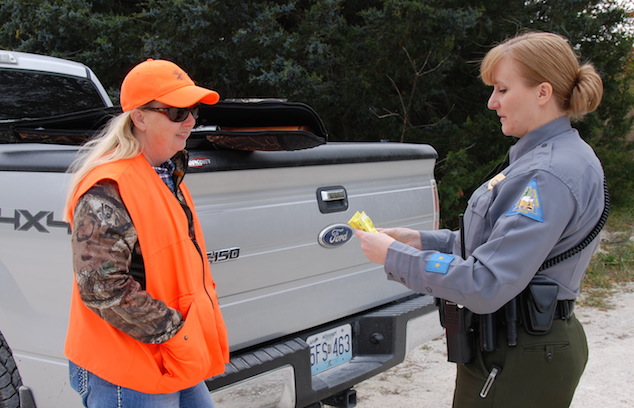
And while we’re on the subject of conservation agents, if you happen to get stopped by an agent, be courteous. It will take only a few minutes for the agent to check and see if you have the proper licenses and tags. Conservation agents have a job to do, and this is just a small part of it.

Cleaning and Maintenance

While some firearms take more cleaning and maintenance than others, you should take proper care of all firearms. If you do, they will last for many years, with the possibility of being handed down from generation to generation.

I like to use a combination cleaner-lubricant-protectant, such as Break Free CLP. A quick wipe-down at the end of a day afield is sufficient, unless you’ve been out hunting in rain or snow, or in extremely dusty or brushy conditions. In that case you probably need to break down the firearm to a certain extent. Remember to follow all manufacturer’s instructions on breakdown and reassembly. Never skip any steps the manufacturer recommends.

I also like to use a bore snake for a quick pass-through on my barrels. I use a little of the Break Free CLP on the snake and pull it through two or three times. It’s a great time saver for those quick, after-hunt wipe-downs between the thorough cleanings that require breaking down the gun.

And don’t forget that new guns need thorough cleaning when you first get them. Most come packed with a coating of heavy grease.

When it comes to maintenance on your firearms, I highly recommend that you find a reputable gunsmith in your area to take care of any malfunctioning firearms. For safety’s sake, never shoot any gun that is not in perfect working order. When in doubt, consult your gunsmith.

Sighting in or Patterning

Before going afield, you must take the time to sight in your rifle or pattern your shotgun. Even if you’re going out with the same deer rifle you’ve used for several years, take the time to make sure your gun is still zeroed in. Even the smallest of bumps can sometimes knock sights or scopes off zero.

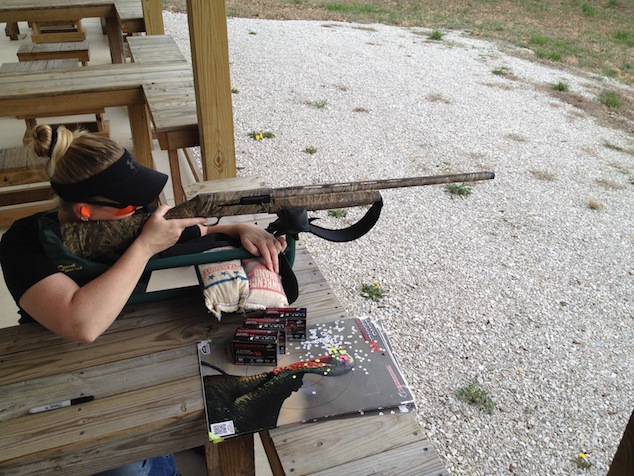
With shotguns, make sure to pattern them to see which load works best with which choke. Once you get that figured out, make sure to use the same load each time you hunt with that shotgun and choke.

To be an ethical and responsible hunter, you have to know your own and your firearm’s limitations before you step out in the field. As ethical hunters, we always want to make the quickest and most humane kill shots we can.

Marti-patterning

Transporting your firearms

Transporting can be as simple as using a sling to throw the gun over your shoulder, making it easier to carry in the field.

In a vehicle, I highly recommend a case of some sort when transporting firearms, whether it’s a simple zip-up, soft-sided case or a padded, hard-shell transport case. For one thing, a case protects the gun—for another, in some states it is the law. This is another area where it’s necessary to know the regulations and laws in the state you are hunting—or even just traveling through. Some states also require firearms to be cased when transporting them on all-terrain vehicles in the field.

Marti-Davis-truck-copy-2

Follow-through

When throwing a ball, you must follow through to complete the action. The same applies to shooting a rifle or shotgun. Once you make the shot, you must follow through. If you’re shooting a bolt-action or pump-style rifle, follow-through includes working the action and chambering a fresh round. Be ready to make a follow-up shot if necessary. The same goes for shotguns. After you complete the shot, get another shot shell into the chamber and be prepared to make a quick follow-up shot. Of course if you’re using an autoloader, the gun does this for you. Just stay on the gun and be ready in case you need to take another shot.

Storage

After the hunt, be sure to unload and store your firearms properly. As I mentioned when discussing cleaning and maintenance, wipe down or clean your firearms prior to storage. Always make sure to store all guns beyond the reach of children or anyone else you don’t want having access to them. Always store ammunition separately from all firearms.

Marti-and-Barb-afield-copy

These safety rules need to become second nature, yet always in the forefront while you are working with firearms, especially while hunting.

IMG_2075-e1429190999379

Marti Davis

Marti Davis is a staff member for Browning Trail Cameras, WoolX and Mossy Oak.
She is an authority on most types of hunting in North America, and very active in
mentoring the next generation of young hunters.


Follow our FISHING BLOG

WEB   RATES     FISH    HUNT    CABINS    PHOTOS
TESTIMONIALS    BROCHURE    HUNT BOOKLET

Enter your email address to subscribe to this blog and receive notifications of new posts by email.

← Back

Thank you for your response. ✨

Email Me....


Tags: , , , , , , , , , ,

Bow Hunting – Packing Tips

Al_2

Over the past two decades hunting backpacks have grown in popularity and size. Not only cubic inches, but number of pockets and where we can strap things. Don’t be sucked into the thought that you have to fill each and every pocket or empty space with something. Instead, make a list of items you think you’ll need for your outing by reviewing the possible scenarios that may occur. For example, if you are just planning a day hunt you may jot down a considerably short list, whereas if you are hunting for a few days you will be carrying a bit more gear.

Years ago a simple camouflage backpack was used with a large holding area and one pocket. Some hunters went out in the field with just a bow, a peanut butter sandwich in their pocket and a knife. Nowadays it’s good policy to prepare a couple packs that to utilize for different hunts. The following is what goes into these packs on a hunting trip, but,  keep in mind that you should customize your pack essentials according to what your adventure will be. You will be surprised at how much extra ‘stuff’ you really don’t need.The first is the Badlands Hybrid pack that is used on most of short day trips like small game or turkey hunts. Pack calls and essentials and you’ll still have room left over. On longer hunts pack a Badlands 2200 which allows more room for extra clothing or food for longer excursions.  Making sure the essentials are in your pack for a bow hunting adventure can be rather simple. In order to bow hunt, you have to find an area where you can take a quality shot.

You have to find a good area to hunt and you need to get there. You also have to have a pack that is tough, not too heavy, and has ample space to pack out an animal should you be fortunate enough to harvest one. Some areas can be thick vegetation so you need to be aware of the terrain and weather of where you will be headed. Pack your gear for each and every trip to be sure you have everything you might need and a little extra should you find yourself stranded. You should do some research and find a good pack that will fit your needs and more importantly fit you.  Here are the essentials that you should take on every hunt.

These essentials should be a constant each time you venture into the forest.

Al_1Water – Always plan to have enough to drink throughout the day. Also plan on sipping, not guzzling so you don’t waste the resource. Before you leave on your hike, locate a water source on a map and prepare to refill along the way.  Put an extra bottle in the bottom of your pack in case your hydration system runs out. Then you know you at least have one bottle left. Also, leave a 2 liter bottle of water in your vehicle (preferably in a cooler) so you have something cool to drink when you reach it.

Food/Snacks – Have fun with what you eat on the trail!  Take almonds, some energy gel, trail bars like Granola bars, and, be sure to pack a sandwich. For some, and, for those who like it, there is something about eating a peanut butter and honey sandwich on top of a peak that just makes it that much better. Try to stay away from most other sweets on the trail like candy bars or snacks that could leave you feeling sluggish.

First-Aid Kit – Pack a kit yourself or better yet, buy one of the Adventure Medical Kits Sportsmans Kit available at most stores. It is a great kit and the one you should carry on each and every trip. A word of advice to everyone is to open the kit and know what is in there before you leave your house check it over. If you think something is missing, add it. One of the items you should always sure to pack is moleskin. You can never tell when it might be needed to cushion a blister or protect your feet. Having that moleskin was invaluable.  Be sure to include other items like QuikClot and a tick remover. You may never needed them and they could’ve been left at home, but  don’t mind a little extra weight when it comes to safety.

SPOT Locator – Having a locator beacon on your in case in the event you might get lost is added security.  It allows your family to track you via computer when your on a hunt. They can see exactly where you are, the terrain, and if you are stationary or moving. The best part is that is if you get lost or need medical assistance you can press a button and have them dispatched to your location. It is highly recommended to review the features to see if you plan on hiking more than a couple miles in or if you plan to be out for a few days.  Having a space blanket is a great idea in case you get stranded and need to keep warm. If you need to use it you will probably be miserable, but it will help keep you alive.

Compass – Know how to use it.

Map – A topographical map of the area I am hunting.  Some of the items that should be packed, but not necessary really don’t need an explanation:

Whistle, Lighter, Headlamp/Flashlight, Knife and Paracord.

As mentioned earlier, for different hunts there will be a different set of items you will have in your pack. It may take some testing on your part to see what you need, don’t need, and what weighs the least. No matter what, whatever you pack, get out there and enjoy yourself.

Follow our FISHING BLOG

WEBSITE    RATES     FISH    HUNT    CABINS    PHOTOS
TESTIMONIALS    BROCHURE    HUNT BOOKLET

Enter your email address to subscribe to this blog and receive notifications of new posts by email.

← Back

Thank you for your response. ✨

Email Me....


Tags: , , , , ,