RSS

2014 Black Bear Hunt Video

Our 2014 season was both rewarding for us as outfitters and successful for our hunters as well.  Our hunts consists of an average of 14 hunters annually and our guide Terry (owner of Wawang Lake Resort) works hard each season to provide active baits for each and every hunter.  His objective is for every hunter to harvest a bear – if they opt to do so – so is it any wonder that much of his day is spent out in the field during the black bear season to ensure a positive outcome..

The following video are of the highlights of our 2014 hunt.

ENJOY  The  Video!


If you enjoyed this video please visit our page on YouTube for more clips on Wawang Lake Resort

WEBSITE    RATES     FISH    HUNT    CABINS    PHOTOS
TESTIMONIALS    BROCHURE    HUNT BOOKLET

Check out our 24 pg. HUNT BOOKLET

Hunt Booklet – Information

pg 01 Cover

Brochure (rates for the 2015 season)


Enter your email address to subscribe to this blog and receive notifications of new posts by email.

← Back

Thank you for your response. ✨

Email Me....


Tags: , , , , , , , ,

How Marinade Works

For some reason, the go-to recipe for wild-game always starts with “Soak (insert game meat here) in Italian dressing for three days.” Seriously, how many times have you heard a hunter say this?

One argument for using marinades is that they help tenderize tough meat. But this is probably the biggest misconception about using marinades, at least if you believe in science.

realmarinade

“When proteins are exposed to an acidic marinade, the bonds break and the proteins unwind. Almost immediately, one unwound protein runs into another unwound protein and they bond together into a loose mesh. This is the same thing that happens when proteins are exposed to heat. At first, water molecules are attached to and trapped within this protein mesh, so the tissue remains juicy and tender. But after a short time, if the protein is in a very acidic marinade, the protein bonds tighten, water is squeezed out, and the tissue becomes tough.”

This and similar studies have also found that the acids used in marinades penetrate meat at the rate of one to two millimeters per day. So even a three-day marinade isn’t going to penetrate much past the surface of the meat. Now, there are marinades that call for enzymes (such as those found in pineapple, papaya and yogurt) rather than acids, and enzymes actually do tenderize meat by breaking down the muscle fibers and the collagen that holds muscles together. However, you have to be very careful when marinating with enzymes as they can make meat mushy rather than just tender.

If a marinade doesn’t tenderize meat, why use it?

Marinades are great for enhancing the flavor of the meat. Note: ENHANCE, not cover up. For game birds, the lighter flavored the marinade the better. Venison and red meat, particularly from older animals, can handle heartier marinades, but again, be careful not to overpower the game.

Because marinades also coat the surface of the meat, they help keep it moist, which is particularly useful for cooking over high-heat, such as grilling or pan-frying.

33333
Anytime you’re cooking wild-game, it’s a good idea to reserve some marinade for basting. But remember to not reuse marinade that’s had meat soaking in it as your basting. Reserve some liquid separately to prevent cross-contamination.

So what’s the best marinade if it isn’t Italian dressing? That depends on what flavor you’re looking for, but here’s one to use for grilled ruffed grouse breasts. It’s a little sweet and a little salty, with some Asian influence that makes it wonderful for a stir fry or even just grilling and chopping it up to serve in a soup with some noodles. Dress that with some diced jalapeño and some cilantro and it makes a great lunch.

Honey-Ginger Ruffed Grouse Marinade

Ingredients
– 2 tbs. rice wine vinegar
– 2 tbs. honey
– 1 tbs. soy sauce
– 1 tbs. sesame (or olive) oil
– fresh, grated ginger

Directions:
Whisk ingredients together and pour over pheasant breasts. Let marinate 1-2 hours before grilling.


Tags: , , , , ,

Muzzleloader For Beginners

Each year more hunters are discovering the thrill of muzzleloader hunting. There are several advantages to a muzzleloader hunt over traditional rifle hunting. In the Western states in particular, there are special muzzleloader seasons that traditionally coincide with the peak of the elk rut. Licenses are limited, so there are few hunters in the woods. Depending on the location and the skill of the caller, bulls can be bugled in to close ranges. All in all, it makes for a very exciting hunt.

2However, there is a learning curve to becoming a proficient muzzleloader hunter, and chances are, you’ll make every mistake in the book at least once. You’ll see some mighty fine bulls get away from a situation where it would be “meat in the pot” with a high-powered scoped rifle.

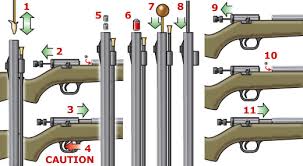
For those who are unfamiliar with muzzleloaders, allow me to explain. Muzzleloaders are the weapons that Davy Crockett and Daniel Boone carried afield with them during their bear hunts, Indian fights, and battles. Today there are two basic types of muzzleloaders used for hunting—primitive and in-line. Both are based upon the premise that the shooter pours powder down the end of the gunbarrel, then rams a slug or ball down on top of it to load the gun.

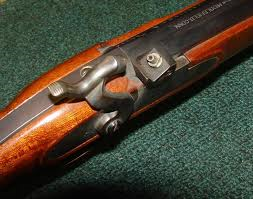
Primitive muzzleloader aficionados must choose between either a flintlock or a caplock ignition system. A flintlock is the more primitive technology, popular from the time of the Revolutionary War through the early 1800’s. The hammer of the gun holds a piece of flint wrapped in fine leather. Below the hammer is a frizzen, a swinging metal plate. Below the frizzen is the pan, into which the shooter pours a small amount of fine black powder. When the shooter pulls the trigger, the hammer strikes the frizzen, the frizzen folds back, and sparks are showered into the black powder in the pan. The ignited powder in the pan shoots a tongue of flame into the barrel of the gun via a small port. In turn, this flame ignites the black powder that has been poured into the barrel. The powder explodes, forcing the ball that has been seated on top of it to shoot out the barrel.

This process sounds cumbersome, and it is. Ignition is not instantaneous. Flintlock shooters have to hold steady for a second or more while an explosion occurs under their eyes. The possibility for error is very real.

cl
The more modern of the primitive technologies is the caplock design. Caplock muzzleloaders use the same basic concept of funneling flame into a port in the barrel, but the ignition is accomplished through a small nipple seated under the gun’s hammer. A small copper cap with a tiny bit of nitroglycerine is placed atop the nipple. When the hammer falls, the cap shoots a tiny spurt of flame through the nipple and into the port in the barrel, igniting the powder inside and shooting the ball out the barrel. Ignition is much more rapid than the flintlock.

In the last decade or two, several companies have noticed the resurgence of muzzleloading popularity. In response, they have crafted rifles that adhere to many states’ definitions of muzzleloader technology, i.e., a ball is rammed down the barrel and it can only be loaded with one round at a time. However, these are not primitive weapons. There are various ignition systems to discharge the load in the barrel, including shotgun primers and specially manufactured discs that are loaded directly behind the charge in the barrel. These are called “in-line” muzzleloaders. These rifles look more like high-powered rifles with a ramrod than something Daniel Boone might have carried on a bear hunt. Many in-line shooters use pelletized powder that can be dropped into the barrel in 50-grain increments and saboted copper-jacketed bullets that are built much like a high-powered rifle bullet with a plastic sleeve to allow ramming it down the barrel. Many of them are mounted with scopes and other optical sights.

Muzzleloader calibers range from old .36 and .40 caliber flintlock squirrel rifles to .68 caliber muskets used for warfare. Most flintlock and caplock guns today are .50 or .54 caliber, with an occasional .58 caliber rifle. The minimum size elk rifle is .50 caliber, and .54 certainly hits harder. The biggest in-line muzzleloaders are .50 caliber, with the occasional .45 caliber rifle used for deer and smaller game.

So, if you’re going muzzleloader hunting, you must make an immediate decision: is your goal simply to be in the woods with fewer people around, or would you like to stalk an animal with the additional challenge of carrying a rifle based on 1830’s technology? If your goal is to maximize your chances with the best available technology, then get your hands on an in-line muzzleloader. If the mystique of hunting like Jeremiah Johnson or John Colter appeals to you, then look into buying a caplock or flintlock rifle.
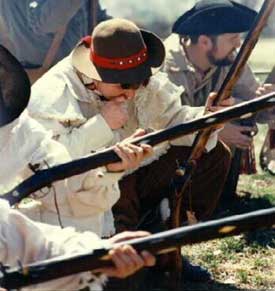
muzzleloader_guide_1

Whichever route you take, shooting a muzzleloader demands practice and patience. If you choose an in-line rifle, thinking that you can accurately shoot an animal out to 175 or 200 yards using pelletized powder, saboted bullets, and a scope, think again. First, you’re still obligated to use iron sights. Few riflemen these days are skilled enough to consistently hit targets at 200 yards with iron sights, and scopes are illegal in most Western states. Secondly, the data provided by the rifle manufacturers that suggest an 11-inch bullet drop at 200 yards are using saboted bullets and pelletized powder, both of which are illegal in most Western states. Thirdly, even if you can hit the kill zone on an elk at 200 yards with black powder and iron sights, the bullet will have lost much of its down-range energy and the chances of only wounding the elk are great. Combine that with a minimum 20-second reloading time (if you’re fast and your hands aren’t shaking with buck fever) and you’ve got a lose/lose situation. An elk can cover a tremendous amount of territory in 20 seconds, and I HATE tracking wounded elk. I recommend limiting your shots to a maximum range of 100 yards, no matter what rifle you’re carrying. After all, the whole point of muzzleloader hunting is to be more skilful hunter and to stalk within closer ranges.

The caplock Hawken. When I’m hunting with the caplock Hawken, you must have a game plan organized down to the finest detail.  Sight in the rifle until you can put three shots in a Skoal can at 100 yards.  Clean the barrel meticulously to rid it of the corrosive black powder fouling. Prepare the powder flask and possibles bag with measures of powder and bullets.  Practice speed loading at the range so that you can get off a quick (twenty second!) follow-up shot. Before setting out to hunt, load the rifle meticulously and check your gear.

imagesIIA88EY1

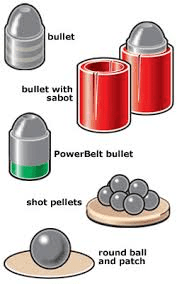
There are three basic kinds of bullets to use in a muzzleloader: the above-mentioned plastic-sleeved sabots, lead slugs, and lead round balls. Round balls are loaded by seating the ball on top of a greased patch of cloth on the muzzle, then ramming it home with the ramrod. Slugs are coated with grease, started down the muzzle, and then rammed home.
untitled

The problem with round balls is that they’re usually significantly lighter than a Minie-type slug, and don’t travel as far or hit as hard.   A typical .50-caliber round ball weighs 150 grains, while a typical buffalo bullet or Minie-type slug weighs 350-380 grains. I’ve shot a pile of elk using Thompson-Center 370-grain Maxi-ball slugs, and they each went down like they had been hit by a truck.

Keep in mind, however, that certain muzzleloader barrels are cut with a slow twist for shooting round balls, and others are rifled with a fast twist for shooting slugs. Make sure that you research the rifle and match it with the appropriate hunting load before you purchase so that your rifle is most accurate for the type of shooting you plan to do.imagesJN6SJJ3E

Most rifles have a “sweet spot” where they shoot very accurately with a certain load. Loading a rifle with more powder may indeed generate more muzzle velocity and knockdown power, but it may also cause it to lose its accuracy. For my caplock, I’ve learned that 90 grains of powder makes it shoot very accurately up to 100 yards and it still kicks pretty darned hard. It develops plenty of energy at that rate to dump an elk with one shot. The maximum load for most muzzleloaders is 120 grains of powder, though the experts say that black powder doesn’t explode like smokeless powder and you really can put a lot of powder in a gun with no adverse consequences. I still wouldn’t recommend it, though. Please note, however, that any amount of smokeless powder will explode almost any muzzleloader because of the high pressures generated.

Hunters can prevent their powder getting wet by covering the muzzle of the rifle with plastic wrap secured by a rubber band, and also by sealing the nipple’s connection to the breech of the gun with modeling putty.

If you think the possibility exists that your powder may have gotten wet, there are still ways to make the rifle go off. With a nipple wrench, you can remove the nipple, dig out a few grains of wet powder, replace it with a few grains of dry powder, and away you go again. If it won’t make a difference in your hunting, fire the gun. If it won’t fire, try several caps until it goes off. In humid places like Alabama, hunters all fire their rifles at the end of each day of hunting. Towards sunset, you can hear a ragged salute of gunfire as each hunter discharges his load.

images

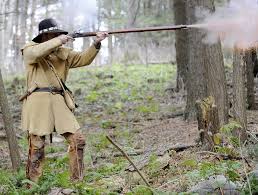
On an elk hunt, the excitement is in getting close to the game. A rutting bull usually has only one thing on his mind, and when a big bull responds to a bugle with a challenge of his own, well…it just doesn’t get more exciting than that. Armed like one of the mountain men of the 1830’s, knowing that you’ve got just one chance to put a killing shot in him, knowing that you’ve got to be patient and wait for the ideal shot, it makes hunting with a high-powered rifle seem just a little unfair.

Follow our FISHING BLOG

WEB   RATES     FISH    HUNT    CABINS    PHOTOS
TESTIMONIALS    BROCHURE    HUNT BOOKLET

Enter your email address to subscribe to this blog and receive notifications of new posts by email.

← Back

Thank you for your response. ✨

Email Me....


Tags: , , , , ,

Disabled Archer – Heal Wounded Soldiers

Jeff Fabry is one of the world’s best archers. He’s a five-time Special Games world champion, a three-time Paralympic medalist and he’s aiming for gold at the 2012 Olympics in London this summer.

3

What makes his talent unique is that Fabry, who has only one arm, has mastered the art of firing arrows with his teeth. Your dentist might advise against it, but Fabry, who will compete on the U.S. Paralympics Team in London, says his chompers are holding up just fine.


“I’ve been doing this for 13 years and my teeth still look and feel the same the first day I started. Everything is going good, luckily,” Fabry said.

But the road to firing arrows with precision was not a straight one. At 15, Fabry lost his arm and a leg in a motorcycle accident.

“My buddies were out hitting the hills hunting and I was stuck at home and I was like, no, I don’t like this, so I figured out a way to shoot and it happened to be with my teeth,” he said.

Fabry pulls the arrow back by biting on a mouthpiece that he made from a nylon dog leash.

“It was trial and error to find what I considered to be the perfect mouthpiece, where I could be proficient,” he said.

Fabry is sharing his passion with our armed forces. He teaches the sport he loves to members of the Wounded Warriors Project, the nonprofit whose mission is to help injured service members cope in civilian society.

“What I’m really proud of is being able to work with our vets who are coming back from the sandbox with different disabilities,” he said.

Jim Castaneda, a member of the Wounded Warriors, said he is thankful that Fabry introduced him to the sport. While serving in the Navy and stationed in the Philippines, Castaneda suffered a traumatic brain injury and a stroke.

“It’s changed my life completely … I found something that I can do and I really enjoy it and love something now,” Castaneda said.

“I’m not just sitting there anymore, like watching my life go by and feeling sorry for myself. Now I’m actually getting up and doing something for myself and trying something else.”

That kind of feedback is a bull’s-eye for Fabry.

1

“That makes me feel good about myself,” Fabry said. “I got hurt before I could join the military, and this is kind of a way that I can give back to my country by helping our heroes.”

Will Wilson, who works for Navy Safe Harbor, the Navy’s Wounded Warrior Program, says Fabry is a coach and mentor for his team.

5

“Jeff is absolutely fantastic. He has a great demeanor and is able to communicate clear and concise direction,” Wilson said.

Follow our FISHING BLOG

WEB   RATES     FISH    HUNT    CABINS    PHOTOS
TESTIMONIALS    BROCHURE    HUNT BOOKLET

Enter your email address to subscribe to this blog and receive notifications of new posts by email.

← Back

Thank you for your response. ✨

Email Me....


Tags: , , , , , , , , , ,

FUN Camo Cupcake Sandwiches

camo_cupcake_sandwiches
Camo cupcakes are surprisingly easy to make considering how cool they look!

To make the cupcake sandwiches, start by mixing up a box of French vanilla cake batter, then divide the batter into four equal parts in four separate bowls. Use Kelly green, brown, and black gel dyes to tint the batter army green, black, brown, and beige (see handy-dandy chart, below).

camo_cupcake_batter


how_to_make_cake_camo_colors2
Once all the batters are mixed up, spoon the batter bit by bit, color by color, into a whoopie pie pan – or to get the waffle effect shown here, use a Wilton ice cream sandwich pan instead.

Bake the cakes for 8 minutes at 350 degrees. After baking, remove each cake and cool on a wire rack, then sandwich them together with frosting that’s been tinted army green. Be sure to check out Debbie’s blog for her shortening-free whoopie pie frosting recipe!

camo_cupcake_sandwiches_pink

…and yes – you can make these in pink, too! (Adorable!)

Follow our FISHING BLOG

WEB   RATES     FISH    HUNT    CABINS    PHOTOS
TESTIMONIALS    BROCHURE    HUNT BOOKLET

Enter your email address to subscribe to this blog and receive notifications of new posts by email.

← Back

Thank you for your response. ✨

Email Me....


Tags: , , , ,

Benefits of Practicing to Hold a Full Draw

Benefits of Practicing to Hold a Full Draw

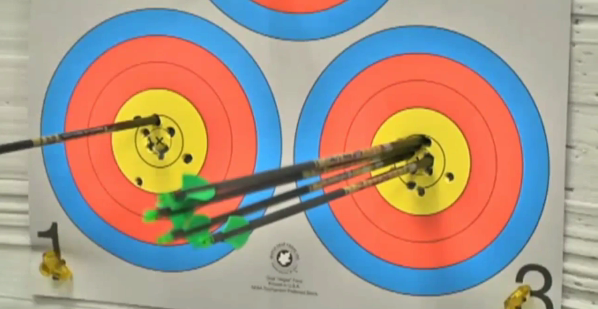
If you practice shooting your bow all spring and summer by casually flinging arrows at a target from 30, 40, and 50 yards, you should be full prepared to shoot a tight group into a 3D target by the fall.

But if you want to get yourself hunt-ready, you have to practice for hunting scenarios: sitting, kneeling, shooting quickly, and holding at full draw. This video is all the proof you need.

This moose hunter was able to keep his cool and make a good shot … but just barely.

Follow our FISHING BLOG

WEB   RATES     FISH    HUNT    CABINS    PHOTOS
TESTIMONIALS    BROCHURE    HUNT BOOKLET

Enter your email address to subscribe to this blog and receive notifications of new posts by email.

← Back

Thank you for your response. ✨

Email Me....


Tags: , , , , , , , , , , ,

Morel Mushrooms Hunting For The Beginner

Morels are America’s mushroom, more so than any other. It may be because they’re widespread, they’re easy to identify, and they come up in the spring, giving people a reason to get out and enjoy warm weather after a long winter. Or, it could be they’re popular simply because they taste so good. Morels are so prized they sell for up to $20 a pound in grocery stores in most locations. Here’s a quick guide to finding your own. Please note that although morels are easy to identify, this a hunting guide, not a field guide. If you have any doubt about a mushroom, don’t keep it.

3

Found in much of the U.S. from late March through May, the morel is our favorite mushroom: plentiful, easy to identify, and delicious. It has colorful names like Molly Moocher, Miracle, Dry land Fish—or, my favorite, Hickory Chickens—but mostly, people just call them “mushrooms” and it’s understood that means “morels.”

Identifying Safe Morels
MushroomBroken2
MushroomBroken1donteat
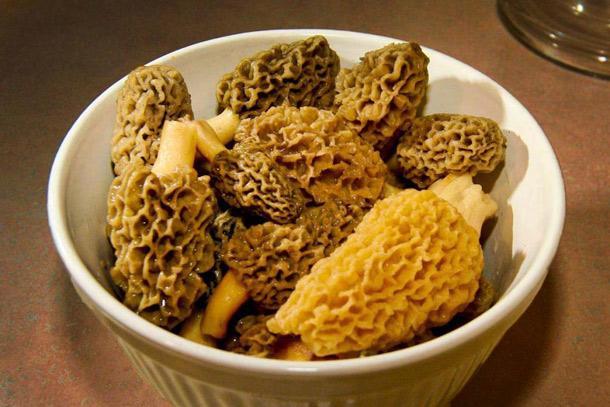
Here are two morels in the wild. Notice the pits (in the top photo), the distinctive conical shape, and the way the bottom of the cap (the pitted part) is attached near the bottom of the stem. Avoid the half-free morel (bottom photo), which has a longer stem and a cap that attaches near the top, looking like an umbrella. These mushrooms can cause some people to have cramps or other forms of gastrointestinal distress.

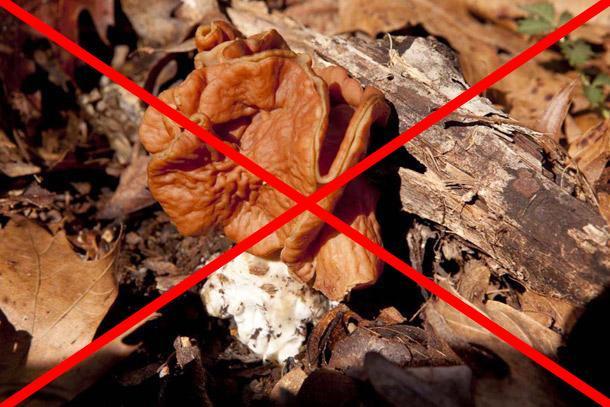
Definitely Don’t Eat This
MushroomX_
Don’t eat this mushroom, which is a false morel and is mildly toxic. Notice that it lacks the cone shape of the real thing, and has wrinkles, not pits, on its cap.

Where to Look
Mushroom4
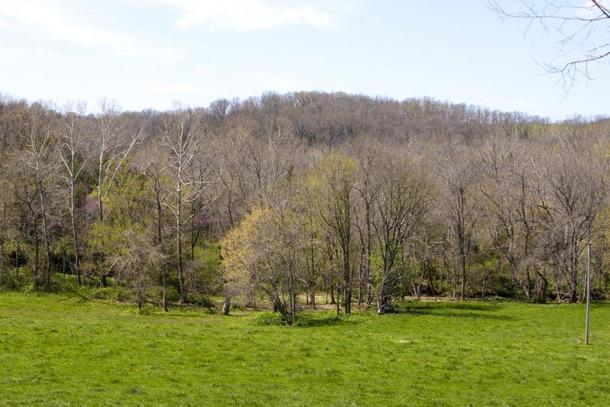
Morels live in and on the edge of forested areas. Look for ash, aspen, elm, and oak trees, around which morels often grow. Early in the spring as the ground is warming, you’ll find them on south-facing slopes in fairly open areas. As the season progresses, go deeper into the woods and onto north-facing slopes.

8
Well-drained, sandy soils like this creek bottom make good hunting spots as well. You’ll find the first morels of the year when daytime highs reach the 60s and lows stay above 40 degrees.

Hunting Tactics
7

Hunting morels is like bass fishing. You cover ground until you find one, then slow down and search the area carefully. Concentrate the rest of your hunt on similar areas, on the theory that you’ve found the “pattern” for the day.

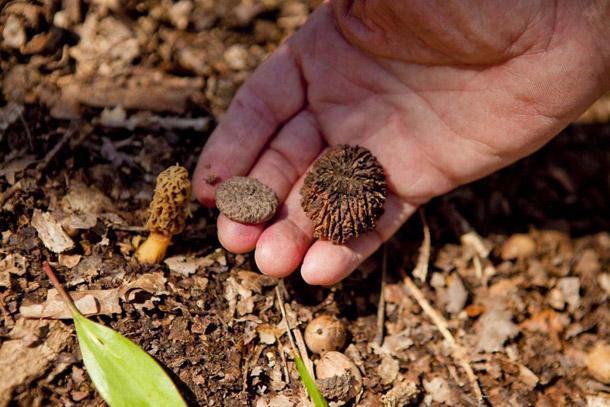
Early-Season Morels
Mushroom7
The first morels of the season are small. It takes quite a few to make a meal. The acorn top and walnut husk in the hand above help show scale.

Look For Dead Trees
Mushroom8
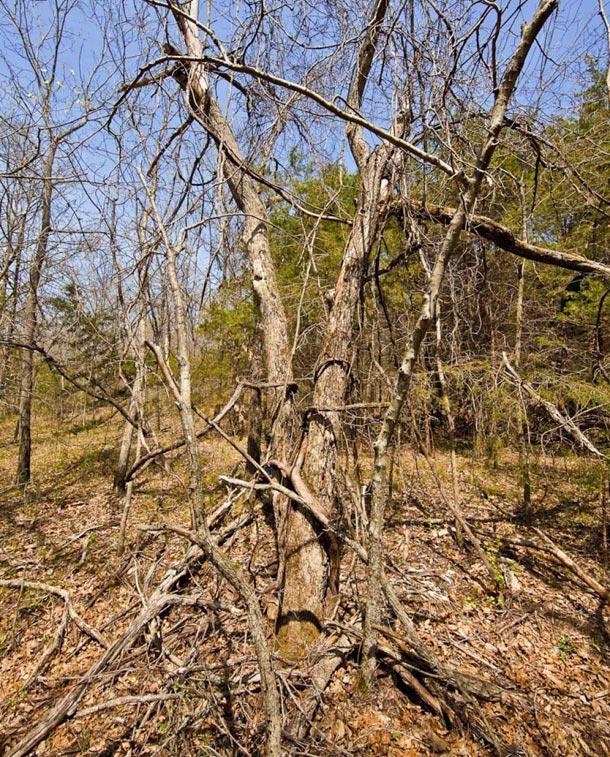
Morels often grow around dead and dying trees. Old apple orchards make good hunting grounds. Always look around dead elm trees like this one. When a tree reaches the stage of decay where its bark is slipping off its trunk you’ll often find lots of morels around it.

Later in the Season
3
As the season progresses you find bigger, yellow morels. They taste just as good as the smaller ones, they’re easier to spot, and it doesn’t take as many to feed a hungry hunter.

Mushroom10
Soaking morels in water for a couple of hours cleans them and washes out any bugs living inside the hollow mushrooms. Some people slice them in half lengthwise for a more thorough cleaning.

Mushroom11
Here you see morels sautéing in butter. Cooking in butter brings out their rich, almost meaty flavor. If I don’t have very many, I like to scramble them into eggs with some tarragon. Batter-fried morels are also very popular.

Mushroom12

The bounty of spring, fork-ready. Serve with a breast of wild turkey or some fish fillets and it’s totally awesome!

Follow our FISHING BLOG

WEB   RATES     FISH    HUNT    CABINS    PHOTOS
TESTIMONIALS    BROCHURE    HUNT BOOKLET

Enter your email address to subscribe to this blog and receive notifications of new posts by email.

← Back

Thank you for your response. ✨

Email Me....


Tags: , , , , , , ,

How to Make Your Own Scent-Free Deodorant

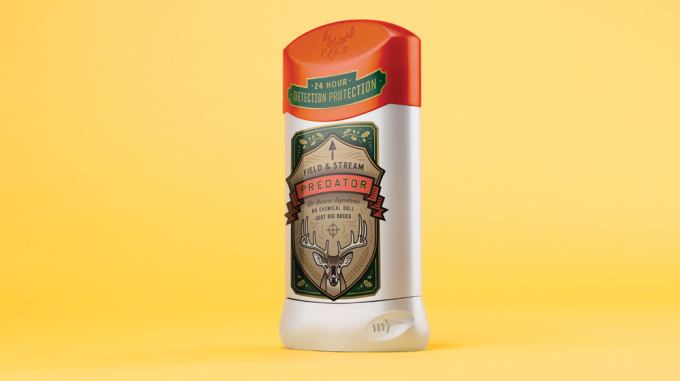
Think organic deodorant isn’t for you? It’s actually perfect for deer hunters, because it battles sweat and odor, and gives off no unnatural scent of its own. Buy ingredients in bulk and make three 2.5-ounce sticks—a season’s worth—for only $2 each. Here’s how.

scentstick

What You’ll Need

● 1⁄4 cup coconut oil
● 2 Tbsp. shea butter
● 2 Tbsp. cocoa butter
● 1⁄4 cup beeswax pellets
● 3 capsules 400-IU Vitamin E
● 21⁄4 tsp. baking soda
● 1⁄4 cup organic arrowroot powder
● 2 capsules Vitacost Probiotic 10-20

The Brew 
Heat a small saucepan of water and remove just before boiling. Combine coconut oil, shea butter, cocoa butter, and beeswax pellets in a mason jar, and place it in the hot water, double-boiler style, until melted. (Warning: If you’ve ever had a severe reaction to a bee sting, don’t handle beeswax.) Leave the jar in the bath and add the Vitamin E capsules, baking soda, arrowroot powder, and probiotics, which introduce good bacteria into the skin to battle the bad stuff that causes BO Stir gently until mixed well.

The Cure
Pour the warm mixture into empty, used stick-deodorant containers, new containers (sold online), or lined muffin tins, and let harden overnight. Then, perform your own sniff test: The only scent noticed is a trace of beeswax.

Follow our FISHING BLOG

WEB   RATES     FISH    HUNT    CABINS    PHOTOS
TESTIMONIALS    BROCHURE    HUNT BOOKLET

Enter your email address to subscribe to this blog and receive notifications of new posts by email.

← Back

Thank you for your response. ✨

Email Me....


Tags: , , , , , , ,

Moose Hunting at Wawang Lake

Moose Hunting at Wawang Lake

Deeply imbedded in the Canadian Boreal Forest we offer the very finest in Moose habitat for our hunters.  Look no farther than Wawang Lake for accommodations for your next BIG game hunt!

WawangMoose

Our hunts accommodations ONLY for Ontario Resident Moose Hunters.

If your looking for a great hunting area that has a high population of moose then look no farther than Wawang Lake Resort as we’re in the middle of the best moose hunting area in all of NW Ontario.

At Wawang Lake we offer comfortable accommodations to Resident Ontario Moose Hunters only.  Presently we don’t have any tags available and unable to take any non-resident hunters during the Moose Hunt season.

Things Moose Hunters Should Consider:

Crossbows
• Draw length must be al least (11.8 in.)
• Draw weight must be at least (119 lbs.)
• Bolt head must be at least (0.9 in.) at the widest point, and there must be at least two cutting edges of straight, sharp, un-serrated, barbless steel.

Longbows
• Draw weight must be at least (48.5 lbs.) at draw length of (27.6 in.) or less.
• Arrow length must be at least (23.6 in.).
• Broad head must be at least (0.9 in.) at the widest point, and there must be at
least two cutting edges of straight, sharp, un-serrated, barbless steel.

Rifle
We suggest using at the minimum one of the following:
300 Magnum
30-06
7MM Magnum with bullet weights in the 180 grain range
A rim-fire rifle, a shotgun smaller than 20 gauge when loaded with shot, or any shotgun loaded with shot smaller than SG or No. 1 buck cannot be used for hunting Moose.


Clothing requirements
During the rifle season hunts, a minimum of 400 square inches of uninterrupted Hunter Orange must be worn at all times.  Camouflage or open mesh orange does not meet these requirements.  An orange jacket or vest as well as an orange hat do meet these requirements.

Hunters should also have a compass or hand held G.P.S., as well as a good pair of binoculars, thermos, flashlight, lighter, warm clothing, good quality rain gear, waterproof insulated boots, gloves/mitts, long underwear.   Two-way portable radios are also recommended.  Fall hunting weather can be warm & dry to cold, wet and snowy within a few hours; so it is best to be prepared for all variables.

We trust that this information will prove to be useful in planning your next Big Game Hunt in beautiful, exciting NW Ontario.  We invite you to enjoy our ‘True Wilderness Hospitality’ while participating in a remote hunting experience.

 WEBSITE    RATES     FISH    HUNT    CABINS    PHOTOS
TESTIMONIALS    BROCHURE    HUNT BOOKLET

Enter your email address to subscribe to this blog and receive notifications of new posts by email.

← Back

Thank you for your response. ✨

Email Me....


Tags: , , , , , , , , , , ,

Grouse Hunting at Wawang Lake

Join us in NW Ontario CANADA for some exciting and thrilling grouse hunting

P1130017
Grouse Season:  September 15th to Oct 31st

Grouse hunting is a relaxing pastime that is getting more and more popular every year.  In our area bird hunting can be an adventure in itself!  Driving down the back roads & trails in your truck or on your ATV can not only be thrilling but breathtaking as well as you wander down roads that are in full color deserving of natures fall foliage. Just taking in these magnificent fall colors, peaceful wilderness & the wildlife that you’ll encounter will make you feel like you are definitely “North of the Tension Zone”.

The bush trails with the rise of the birds, singing of the guns, the smell of the pines along with friendly comraderie back at the camp will not long be forgotten.

Surrounding Wawang Lake are hundreds of miles of ATV trails, old logging road, game animal trails and hiking trails. The bush is just stuffed with these upland game birds and on a sunny fall afternoon you will see hoards of them. Many of our guests choose a fishing / grouse hunting combination package and spend half the their time taking advantage of the awesome northern pike and walleye fishing and spend the rest of their time enjoying the clean fall area and exploring the many trails where birds are plentiful.

There are three species of grouse found in Ontario.

Ruffed Grouse  –  Spruce Grouse  –  Sharptail Grouse

Ruffed Grouse is the most common and comprises of 80% of what you will encounter during your hunt.

The limit for grouse in Ontario is 5 birds per day in any combination of species with a total of 15 in your possession and you will be surprised at the number of grouse we do have and how fast you’ll bag those limits.

Compared to other areas the grouse cycle in our area has remained consistently high over the years and we credit this because of less human population that other places are known for.  In a nutshell what you’ll experience at Wawang Lake is a vast area of complete privacy during your hunt.

The most popular guns for grouse hunting are .410 or 20 gauge shot gun and some hunters use a 12 as well.   Quickly becoming more popular is BOW HUNTING for birds.  To increase the thrill and excitement of your hunt give your bow a try and the challenge alone is sure to thrill you.

 Grouse-Fishing Combo Package

September 15th through to October 31st

 USD 495.00  per hunter
CABIN – BOAT & MOTOR
For a (6) night stay

Housekeeping Cabin Suitable For Group Size

Blaze orange hat & vest is required and must be worn out in the field

Canadian Firearms Regulations
All Firearms (does NOT include bows) being brought into Canada must be registered at the Canadian Customs at the time of entry into Canada. A one-year permit costs $50.00 Canadian, or there is a long term permit as well. If you would like further information, you can visit the Canadian Firearms Website through the link on our website or call toll free, 1-800-731-4000.

Canadian Customs
You should be aware of special customs and immigration issues whenever traveling to another country. For people with prior legal issues (including DWI’s) you need to find out what restrictions may be placed on your travel. Visit the Border Crossing Link and/or the Canada Citizenship & Immigration.

DEPOSIT REQUIREMENTS
A $150.00 non-refundable deposit is required at the time of reservation to guarantee a hunt. Balance to be paid in full upon arrival at the resort.  Hunting deposits and installments are non-refundable. Consideration may be given to date transfers if vacancy can be filled.

There are a limited number of spaces available for our hunts. Often there are more guests interested in hunting than there are available spaces, and hunts are often booked a year or more in advance. It is extremely difficult to fill spaces that become available due to cancellation. For these reasons we ask that our guests do not book hunts lightly

For further information, or, to book your next bear hunt please contact us at:
1-888-534-9217 or EMAIL

 WEBSITE    RATES     FISH    HUNT    CABINS    PHOTOS
TESTIMONIALS    BROCHURE    HUNT BOOKLET

Enter your email address to subscribe to this blog and receive notifications of new posts by email.

← Back

Thank you for your response. ✨

Email Me....

 
Leave a comment

Posted by on April 14, 2015 in grouse, Wawang Lake Resort


Tags: , , , , , , , ,