RSS

Tag Archives: Wawang Lake Resort

Bear Facts to Success

imagesS12UAEG6Simple Fact: The more effort you put into masking your scent, the bigger the Black Bears coming into your target zone will be.

All experienced Black Bear Outfitters have their little tricks to make their bear hunters hunt more enjoyable and also help with their success. If you are new to bear hunting you should know what you are up against. Every hunter wants a big trophy bear and this article should bring you a little closer to that goal, but remember, to thoroughly follow the advice of your outfitter, if you’ve chosen one, and, above all else:  DO NOT DEVIATE from the routine they have already established.

Black Bear hunting to the outfitter is about luring bears to a target zone for their hunting guests by baiting with food the bears like such as high-carbohydrate foods. Bread, pasta and other high starch content foods are rare in nature but it’s what the bears want most so they can quickly store fat for the winter. It’s also about setting up stands at strategic spots where big bears have been scouted. Black Bear hunting for the hunter is all about stealth, with the two biggest factors being sound and most of all, smell.

Black Bear’s Sense of Smell: Olfactory Receptors

imagesN9DAOG1VThe Black Bear has the best sense on smell of any land walking mammal on Earth. It’s really hard for a human to comprehend how well a bear can smell as we basically have to stick our nose in the pot to smell the sauce. Comparing the amount of Olfactory Receptors between a human and a Black Bear is mind boggling.

Olfactory Receptors are microscopic bulbs on the end of nerves in a mammal’s nose. The more you have the better your sense of smell is.

  • Humans:
    6,000,000 Olfactory Receptors (6 million)
  • Blood Hounds:
    1,800,000,000 Olfactory Receptors (1.8 billion)
  • Black Bear:
    12,600,000,000,000 Olfactory Receptors (12.6 Trillion)

A Black Bear can smell 2100 times better than a human. In addition the Jacobson’s organ in their mouth can taste the air, adding to their brains perception. A mature Black Bear can smell your breakfast from 20 miles away if the wind is right. Big mature bears can smell better than smaller younger bears as their noses are larger and more developed. Bears also know what unnatural smells are and associate them with a human presence. This can explain why Black Bear hunters that are not fanatical about the way they smell rarely see big trophy bears. There are procedures you can do to minimize unnatural smells to keep the bears concentrating on the bait that the outfitter has put out for them.  It is wise to check with your outfitter before applying anything new to the bait station that they normally don’t use.

1) Before your bear hunting trip; pick a couple of sets of clothes that you will only wear at the tree stand while hunting. Wash your clothes with scent-free detergent and when done, run them though the wash twice again with no detergent so they are well rinsed. This will ensure your clothes are scent free. If you live in the city and have chlorinated city water then go to a pet store and buy a small bottle of Aquarium Water Conditioner and add ½ oz. to the last rinse cycle you do with your clothes. The water conditioner will neutralize the chlorine in the water and keep the chlorine smell out of your clothes. Remember, they can smell 2100 times better than you so don’t feel silly getting fanatical. Then pack the clothes in a plastic bag to keep them scent free. If you consistently use fabric softener in your clothes dryer it’s best to hang your clothes up to dry because residual clothes softener might go on your clothes. If you are a smoker, do not smoke while wearing your hunting clothes.

Before we go to the next points you should be aware that Black Bears love the smell of mint. If you go on a camping trip in any of Ontario’s provincial parks the wardens will tell you not to keep mint toothpaste or mint gum in your tent because the bears will smell it and go after it. The bears craving for mint can be used to your advantage.

2) Think Mint: Go to one of those hippy tree-hugger heath stores and buy mint soap. The morning before the hunt take a shower using the mint soap. Brush your teeth with mint toothpaste. Chew mint gum while in the tree stand and if you really want to go all the way, have a glass of mint tea before the hunt and even keep a few bags of mint tea in your pockets. This will help cover up any scent.

3) Smoking: If you are a smoker and you smoke in the tree stand you are basically wasting your time if you expect a big trophy bear to come within sight. Wind direction can give you a little luck but it’s not something you should count on. It’s best to wear a nicotine patch while in the tree stand and if you need to; chew mint gum to keep your mind off smoking. Remember to brush your teeth and wash your hands and stop smoking before you put your scent free hunting clothes on.   This would also apply to cigars and chewing tobacco as well.

IMG_6110 - Copy

Black Bear Hearing:

The shape of Black Bear’s ears is mainly responsible for their great hearing. When detecting sound based on volume a bear’s hearing is about four times that of a human. However, a bear can hear a much broader frequency range; both higher and lower frequencies. Rubbing of cloth or twisting of your tree stand can produce sounds that the bear can hear and the hunter cannot. Big old male bears develop a crowned head and their ears move out to the sides giving them stereoscopic hearing, which allows them to pinpoint the origin of the sounds they hear. This is another reason why big old bears are harder to get.

With this in mind try to stay absolutely still. If you have to move; move very slowly. Take some nose drops before the hunt and if you have a cold or allergies. If your throat is dry and itchy bring some mint flavored lozenges with you. You can also oil the joints of your tree stand to make them a little quieter.

Black Bear Sight:

During the day a Black Bear basically has the same site as a human but older bears tend to be near sighted. As a result they cannot focus on things from a long distance. When one of an animal’s senses becomes diminished their brain rewires itself to compensate by making other senses more acute. This is known as neural placidity. As a bear gets older they become near sighted so the brain compensates by being more sensitive to color differentiation. If the bear sees colors it thinks are unnatural and he sees those colors move the game is up. Bears cannot see the same range of colors as a human. Hunter orange looks gray to them. But they can see dull reds and yellows as well into the blue/green cool color spectrum. This is why there are many different forms of camouflage clothing.

Picking the right Camouflage:

You need to talk to the outfitter when you book your hunt and ask what kind of plants will be at the tree stands. If the hunt is taking place in the southern range of Ontario’s bear hunting country during the fall you may have a mix of coniferous and deciduous trees, thus you will need a camouflage that represents pine needles, pine bark and colored fall foliage. If you are father north in an area with only pine trees you will need a camouflage that represents pine bark and pine needles, which means dark brown and green. You need to blend into the scenery so their bear cannot see any unnatural color pattern.

Black Bears are nocturnal. They have a reflective layer in the back of the eye called the tarpetum lucidum. Just because you can’t see them does not mean they cannot see you. Since dusk is the hottest bear hunting time it’s also when you should concentrate the most on being quiet and motionless.

Bear Size:

In most cases, big ears mean a smaller bear. A small ear is usually a bigger bear. Once a bear reaches three years old (approx. 100 lbs.), the bear starts to grow into its ears. The ears and eyes don’t grow as much as they do in the first three years. Sometimes if a bear has a hard year with food, the ears will look bigger because the bear is thinner. Read our article:  How to Size a Black Bear

Cubs:

When a sow is with cubs, 90% of the time the cubs are in the lead. The cubs will make more noise than a single bear. Most of the time, adult bears make little or no noise.

Sow:

You can’t shoot a sow with cubs in the Ontario spring hunt, and in the fall we continue this policy on our BMA – DO NOT SHOOT SOWS with cubs.. So make 100% sure you know what you are shooting at. Take a really good look around to make sure there are no cubs. A sow’s ears are usually closer together, as a male bear’s cranium grows wider on top and the ears look farther apart. They also look smaller, which is really an illusion.

These tips and techniques are just a guide line for some things to consider and think about. Ultimately the outfitter is the person you need to discuss the different factors with. Bear hunting can be quite different in different regions.

CHECK OUT OUR FISHING BLOG

WEBSITE    RATES     FISH    HUNT    CABINS    PHOTOS
BROCHURE    HUNT BOOKLET

Enter your email address to subscribe to this blog and receive notifications of new posts by email.

← Back

Thank you for your response. ✨

Email Me....


Tags: , , , , , , , , , ,

The Truth About Shotgun Ammo

Article by Phil Bourjaily

Our tests at a high-tech ballistic research laboratory may change the way you buy loads and guns…and even how you hunt.

Opener_2

Shotgun columnist Bob Brister spent six months shooting at 16-foot-long homemade targets mounted on a trailer hitched to a station wagon that his wife drove past. Brister conducted this novel experiment to understand the effect of shot stringing at crossing game birds.

While it had long been known that a swarm of shot lengthened as it flew downrange, no one agreed on what it meant. Brister’s patterns, which sometimes splattered the length of his 16-foot-long targets, indicated that if you shot at a bluebill streaking past your decoys, up to 30 percent of the pattern might arrive too late to hit the bird.

A lot has changed since 1976. There are new questions about shot gunning to answer and, fortunately, new ways to answer them.

testrange
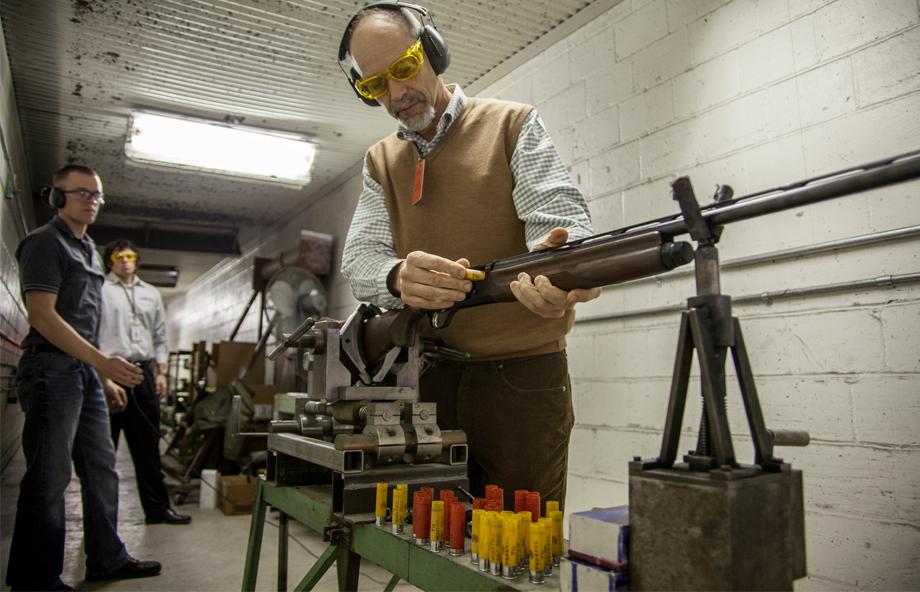
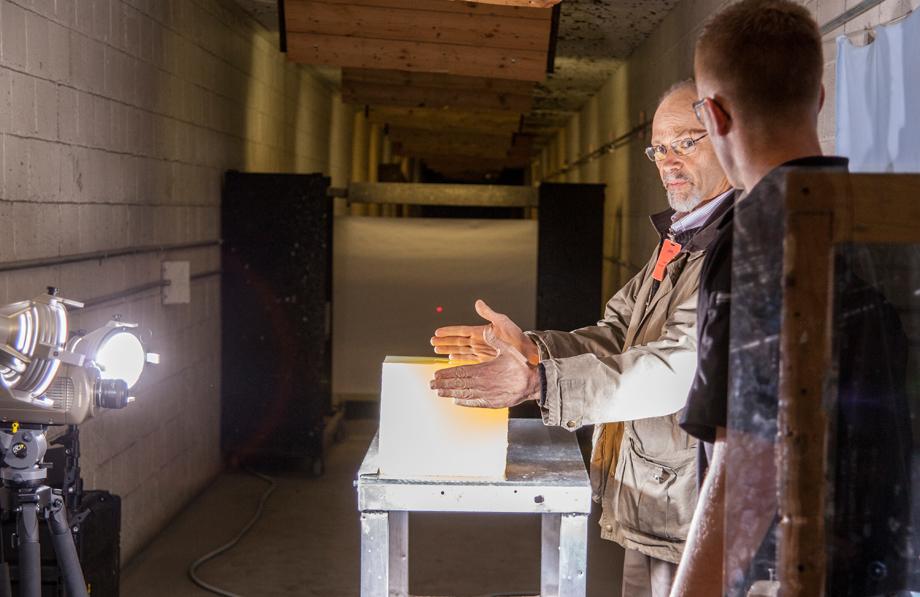
I don’t own an $80,000 high-speed camera, but Federal Cartridge Co. has one in its underground test range (above). They also have a computerized shotgun pattern analyzer, a walk-in cooler full of ballistic gelatin, and a factory full of shotshells to test. Federal granted my request to spend a couple of days there in April to test shotgun loads. I had countless questions, but was able to answer these six.

Some things I thought I knew turned out to be wrong. Others were right. And several changed the way I think about shotshells.

1. Is a 3 1/2-Inch 12-Gauge More Effective Than a 3-Inch 12-Gauge?

 shotshells1

I’ve always believed the brutal recoil of a 31⁄2-inch 12-gauge magnum negates any ballistic advantage over the standard 3-inch magnum. I have always suspected, too, that cramming what amounts to a 10-gauge load into a 12-gauge barrel produced poor, ragged patterns and longer shot strings that made the extra pain even less worthwhile.

Test Loads:
– 12-gauge, 3-inch, 11⁄4-ounce loads of Black Cloud steel BB shot at 1450 fps (Modified choke)
– 12-gauge, 31⁄2-inch, 11⁄2-ounce loads of Black Cloud steel BB shot at 1500 fps (Modified choke)
Results: Both loads patterned almost identically on a 30-inch circle at 40 yards: The 31⁄2-inch load put 72.6 percent of its shot in the circle, with 77 pellet hits. The 3-inch placed 71.8 percent of its shot in the circle, with 63 hits.

There was no significant difference between the lengths of the shot strings, which averaged 42 inches for the 3-inch and 49 inches for the 31⁄2-inch midway between muzzle and target. Both loads exhibited equal penetration in ballistic gelatin at 30 yards—5 inches—despite the 31⁄2-inch shell’s 50 fps head start in muzzle velocity.

The Takeaway: I expected the 31⁄2 to string out longer and pattern worse than the 3-inch load, but it patterned just as well. The higher pellet count of the 31⁄2-inch resulted in significantly more hits in the circle, but both loads put enough hits on target to kill geese.

However, the improvement in performance comes at a cost of a whopping 50 percent increase in recoil. Even with a gun seated in a massive rest, I could feel the difference, and the muzzle blast was noticeably louder in the test tunnel, too. I shot some of those same 31⁄2-inch shells while trying to shoot a triple on a five-stand range. I could hit the first target always, but recovering from the shot to make the next two was almost impossible.

Is the 31⁄2-inch more effective than the 3-inch? Yes—if you can withstand the recoil. “More” is only better if you can put it on target.

2. Is the .410 a Suitable Gauge for Young, Beginning Hunters?

shotshells2 

The .410 is a ballistic disgrace, and a crippler of game birds. Just ask me and all the other gun writers who have repeated that “fact” over the years. I believe beginning hunters should shoot a 20-gauge, not a .410, despite the higher recoil and extra weight of the 20. A comparison between the two, I was sure, would dramatically show the 20’s superiority.

Test Loads:
– .410 11⁄16-ounce loads of Game-Shok Upland No. 6 shot at 1135 fps (Full choke)
– 20-gauge 7⁄8-ounce loads of Game-Shok Upland No. 6 shot at 1210 fps (Modified choke)
Results: Unlike other gauges, which are patterned at 40 yards, .410s are typically patterned at 25 yards. We picked 30 yards as a compromise distance and to reflect the shorter ranges at which beginners shoot. The Full choke .410 shot 87.8 percent patterns at 30 yards, while the Modified 20 shot 84.6 percent. The higher pellet count and higher velocity of the 20 combined to put more pellets in the 30-inch circle (173) than the .410 (139). Penetration was better, too—3.3 inches vs. 3 inches. The 46-inch-long shot string of the 20-gauge, which was measured at 20 yards, was a full 20 inches shorter than the .410’s shot string.

The Takeaway: The .410 surprised us with great patterns. However, the .410’s shot string, which was 50 percent longer than that of the 20-gauge, revealed a shortcoming: The longer the string, the slower the trailing pellets are traveling, and therefore the less energy they retain. The .410 not only puts fewer pellets on target than the 20-gauge, but the .410’s tail-end pellets won’t hit as hard. Even so, I will give the .410 more respect in the future. I waited until my kids were 11 and 12 and big enough to shoot 20-gauges, but if a child is too small to handle a 20, a .410 can work.

3. Is a 20-gauge as Effective as a 12-Gauge for Doves?

 shotshells3

There’s a faction of smallbore shooters—including some people I hunt with—who condemn the 12-gauge as “unsporting.” As a 12-gauge shooter, I see it as being versatile and ballistically efficient. This test was my chance to crush my detractors with science. One area where 12s and 20s can be compared in an apples-to-apples format is the dove field, where many hunters shoot 1-ounce loads with either gauge, so that became the basis for the test.

Test Loads
:
– 20-gauge 1-ounce loads of Game-Shok Upland No. 71⁄2 shot at 1165 fps (Modified choke)
– 12-gauge 1-ounce loads of Game-Shok Upland No. 71⁄2 shot at 1235 fps (Modified choke)
Results: The 12-gauge delivered a 50.7 percent pattern with 202 pellets in a 30-inch circle at 40 yards. The 20 did just 39.6 percent with 149 pellets inside the circle. The 12 achieved slightly deeper penetration (2.875 inches vs. 2.5625) in gelatin at 30 yards, likely due to the higher muzzle velocity. The high-speed camera showed no statistical difference between the lengths of the shot strings, which averaged 55 inches for the 12-gauge and 57 for the 20 at 20 yards.

The Takeaway: I thought the 12 would win, but I hadn’t expected it to beat the 20 so badly. Out of curiosity we tested the 20-gauge with one size larger shot to see if we could improve its performance. With No. 6 shot the 20 delivered a huge 15 percent increase in pattern density. That gave us a bonus takeaway: If you want to tighten patterns (sometimes by a lot), shoot larger shot.

A 20-gauge is fun to handle and shoot, but when it comes to putting pellets on target efficiently, it loses out to the 12.

4. Is Steel Shot Suitable for Pheasants?

 shotshells4

A growing number of pheasant hunters have to shoot nontoxic ammunition. Pheasants are tough birds and elusive cripples, so choosing the right shell matters, especially when you go from dense lead to lighter steel. In the field I have had no trouble killing wild birds with steel shot, but while dead is dead, I wanted to quantify the differences between steel and lead loads.

Test Loads:
– 12-gauge 11⁄8-ounce loads of Federal Prairie Storm No. 3 steel at 1600 fps (Modified choke)
– 12-gauge 11⁄8-ounce loads of Wing-Shok High Velocity No. 6 lead at 1500 fps (Modified choke)
Results: As expected, the hard steel pellets patterned tighter than lead (62.5 percent vs. 52.6 percent) inside a 30-inch circle at 40 yards. Nevertheless, the higher pellet count of the lead load meant more pellets in the circle: 128 hits, compared to 102 hits for the steel load. The lead pellets also penetrated 4.12 inches into the 30-yard gelatin, compared to steel’s 3.43 inches. The lead load had a shorter shot string (55 inches) at 20 yards than the steel load (61 inches).

The Takeaway: Even with advances in steel ammunition, lead is still superior. Usually hunters switching from lead to steel compensate for steel’s light weight by following the “rule of two” and going up two sizes in shot. Yet despite my choosing three sizes larger in steel and driving it 100 fps faster than the lead load, it didn’t perform as well as lead in the test. The “rule of two” should be the “rule of three or maybe four.” Steel 3s and 2s make the best pellet choice. Steel pellets, which remain round and fly true, patterned more efficiently than lead, resulting in tighter patterns. Given the lower pellet count and retained energy of steel, though, I would not go to a more open choke if switching from lead to steel. Still, modern steel loads are effective for pheasants.

5. Are Premium Buckshot Loads Worth the High Cost?

 shotshell5

One important lesson Brister learned was that hard shot loaded with ground plastic buffer protected the pellets from deforming in the barrel. Premium buffered magnum waterfowl loads clearly outperformed nonbuffered loads. But would this be true for the biggest pellets of all? Premium buck costs nearly $2 per shell, twice the cost of standard loads, so I wanted to see if it was worth the price.

Test Loads :
– 12-gauge, 3-inch, 15-pellet loads of Federal Vital-Shok buffered, copper-plated 00 buckshot at 1100 fps (Modified choke)
– 12-gauge, 3-inch, 15-pellet handloads of unbuffered, unplated 00 buck at 1210 fps (Modified choke)
Results: Premium buckshot averaged 12.4 pellets in a 30-inch circle at 40 yards, whereas unbuffered buck averaged 11 hits. The pattern diameter of the buffered load at 40 yards was 31.65 inches; the unbuffered load spread out to 36.89 inches. The unbuffered buck penetrated deeper (16.84 inches vs. 14.62 inches) than the premium, probably due to its higher muzzle velocity.

The Takeaway: There was a dramatic difference in the shape of recovered buffered and unbuffered pellets. I had thought the deformed, unbuffered pellets would string out farther due to increased air resistance and pattern much worse. That didn’t happen. Unbuffered buckshot tore uneven holes in paper, yet it penetrated deeply into the gelatin.

We did notice an odd phenomenon during this test. Occasionally two pellets would fly through the same hole in the paper or into the gel. With only 15 pellets in the pattern, the odds against that happening are very high—unless there is a drafting effect where a trailing pellet falls in behind a pellet in front of it, the same way race cars draft one another. You can’t rely on that happening, but when it does, the second pellet into the hole will penetrate almost twice as deeply as the rest.

Premium buckshot put roughly 13 percent more pellets on target. Whether that’s worth double the cost is a personal decision.

6. Which is Better for Turkeys: Lighter, Faster Loads or Heavier, Slower Loads?

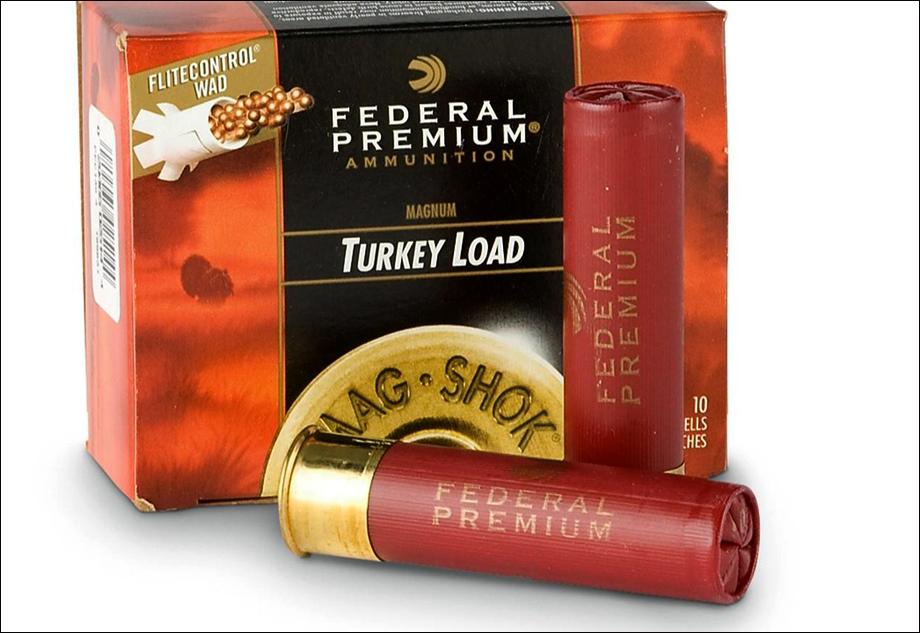
shotshells6_cThe trend to lighter, faster turkey loads made me wonder if heavy and slow loads would perform better. Theoretically, a lower-velocity load will pattern tighter than a faster load because the lower launch speed deforms fewer pellets, leaving more of them round to fly true. But at the same time, a lighter load should pattern tighter than a heavier load for the same reason: the more lead pellets on top of one another in a shell, the more pellets deform when that shell is fired.

Test Loads:
– 12-gauge, 3-inch, 13⁄4-ounce loads of Mag-Shok Lead High Velocity No. 5 shot at 1300 fps (Modified choke)
– 12-gauge, 3-inch, 2-ounce loads of Mag-Shok Lead No. 5 shot at 1150 fps (Modified choke)
Results: The 13⁄4-ounce load patterned more efficiently, putting 70.2 percent of its charge in a 30-inch circle at 40 yards, compared to 61.4 percent for the 2-ounce load. It also outpenetrated the 2-ounce load in gelatin at 30 yards, 4 inches to 3.65 (though the latter is certainly adequate to kill a turkey). In number of hits, however, the 2-ounce load narrowly won, 216 pellets to 209. Recoil is about the same.

The Takeaway: Essentially the test resulted in a tie, although the heavier load snuck a few extra pellets into the target area. Recoil from both shells was almost identical. I would favor the lighter load because more penetration, while it may not help, can’t hurt, either.

Looking at these results, however, I can’t help but wonder if a slower 13⁄4-ounce load wouldn’t pattern better than either of these. Unfortunately, “slow” is a tough sell to the American public, so unless you handload your own turkey ammo, you may never find out. It’s a tie, so choose the one that patterns best in your gun.

BONUS: Does Shot String Length Matter?

 stringtheory 

It matters some, but not for the reasons we think. During these tests, Federal engineers Erik Carlson and Adam Moser measured shot strings at 20 yards and extrapolated lengths for 40 yards. The longest shot string in our tests, the 66-inch .410 string, would be about 10 feet long at 40 yards. Match that against a bird flying 40 mph at 40 yards, as Brister simulated in his tests, and you will lose only a small percentage of pattern density, perhaps about 5 percent, not the 30 percent loss Brister saw with some 1976-era lead waterfowl magnums.

Brister believed long shot strings were more forgiving of error than short strings. If you were to overlead a target, he thought, the trailing pellets might still break it, so the longer the string, the greater the margin for error. In theory that is true, but practically speaking, the chance is very slim of a trailing pellet breaking a target. The disadvantage is that the longer the string, the slower the trailing pellets, and the less energy they’ll have on target.

Follow our FISHING BLOG

WEB   RATES     FISH    HUNT    CABINS    PHOTOS
BROCHURE    HUNT BOOKLET

Enter your email address to subscribe to this blog and receive notifications of new posts by email.

← Back

Thank you for your response. ✨

Email Me....


Tags: , , , , , , , ,

Bear Baits – Consistency is Important

Consistent Baiting and Timing is Important
wawanglakebearbaitWe begin baiting two to three weeks prior to the hunters arrival as baiting is lucrative and can vary based on native food source availability, weather pattern and population.  If baiting is done too far in advance, bear can lose interest and become complacent.  The most impact for the hunter is when the food source is new and interesting yet dependable. The baits stations are checked regularly each day and documented as to its status:  whether it’s been hit or not.  This is also the ideal time to determine if the bait station has a sow with cubs or the size of the bear according to tracks.

wawanglakebearbait

Other animals frequent the baits as well.

All the information collected will determine if the bait station will be suitable for the hunter or not. Stations with sows will continue to be baited in order to confine that they remain in that specific area so they don’t wander and disturb the more suitable bait stations held for the hunters.

What Do We Use
Bears are omnivorous and will scarf down just about anything from produce to pastries, bread and meat scraps. The key is to make sure your offerings have a strong odor – sometimes the more putrid the smell, the better … at least when it comes to attracting them as we don’t place this directly on the bait.   However, during the fall bear do not especially like this strong scent on the bait therefore we use these attractants to drag the area ensuring to lure the bear to the bait station where more delectable bread, pastries and leftover good scraps are waiting. Visiting bear that walk trails and roads we’ve dragged will beneficially establish their own scent trail to and from the bait as well luring in even more bear.

The Set Up
Our baits stations are naturally set up and made from logs and other forest fragments. These logs are large, very heavy and piled in a manner making them difficult for smaller animals to move.  When hunters walk into the bait and notice that logs have been tossed around they are certain that a bear hi the bait.

bait

Know the Rules
Study the Ontario hunting regulations.  Know what you can and can’t do, season dates, licensing guidelines, bring firearms into Canada.   We want our hunters to be comfortable while hunting in Ontario and it is also important to know that you will need to bring along a state/province license as proof of hunting experience to show the Ontario license issuer. Always ask if you don’t know that’s what we’re here for.

When to Sit Baits
Our hunters are required to bring their own tree stands.  This is not only for liability reasons, but, also because you will be more familiar with your own tree stand and the more at ease you are with equipment the more it will increase your odds – less to think about. Upon request we will setup ground stands for those that are not able to climb. If this is the case be sure to bring along a comfortable chair.  Evening hours are by far the proven time to encounter bear on the bait. This however is simply a higher percentage timeframe.   Approaching the bait cautiously is always a must due to the fact that hunters have stumbled upon bear contently feeding at all hours, including early morning and mid-day. You can bring along trail timers and cameras to satisfy your knowledge of the activity of your bait station.

Follow our FISHING BLOG

WEBSITE    RATES     FISH    HUNT    CABINS    PHOTOS
BROCHURE    HUNT BOOKLET

Enter your email address to subscribe to this blog and receive notifications of new posts by email.

← Back

Thank you for your response. ✨

Email Me....


Tags: , , , , , , , , ,

Moose Stir Fry

8

This delicious moose dish is low in fat. The amount of each ingredient is proportional to how many people you’re serving. Using half a pound of moose, as this recipe does, makes two large servings.

Ingredients

  • 1/2 lb. moose steak
  • 1/2 cup carrots
  • 1/2 cup bean sprouts
  • 1/4 cup celery
  • 1/2 cup snow peas
  • 1/2 cup broccoli
  • 1/4 cup unsalted peanuts
  • 2 cloves of garlic, minced
  • 1/2 cup soy sauce
  • 1 tbsp crushed red pepper
  • 1 tbsp cumin
  • Cooked noodles (excluding seasoning packet)

Preparation

  • Slice steaks cross grain and marinade in soy sauce for one day. Throw a little oil into a hot wok to avoid sticking. Stir in moose for about 1 minute.
  • Add other ingredients, including seasoning, stirring frequently. Add additional soy sauce to coat all ingredients.
  • Stir in noodles and serve immediately.

Follow our FISHING BLOG

WEBSITE    RATES     FISH    HUNT    CABINS    PHOTOS
BROCHURE    HUNT BOOKLET

Enter your email address to subscribe to this blog and receive notifications of new posts by email.

← Back

Thank you for your response. ✨

Email Me....


Leave a comment

Posted by on November 7, 2017 in moose, recipe, Wawang Lake Resort


Tags: , , , , , , , ,

Bear Facts to Success

imagesS12UAEG6Simple Fact: The more effort you put into masking your scent, the bigger the Black Bears coming into your target zone will be.

All experienced Black Bear Outfitters have their little tricks to make their bear hunters hunt more enjoyable and also help with their success. If you are new to bear hunting you should know what you are up against. Every hunter wants a big trophy bear and this article should bring you a little closer to that goal, but remember, to thoroughly follow the advice of your outfitter, if you’ve chosen one, and, above all else:  DO NOT DEVIATE from the routine they have already established.

Black Bear hunting to the outfitter is about luring bears to a target zone for their hunting guests by baiting with food the bears like such as high-carbohydrate foods. Bread, pasta and other high starch content foods are rare in nature but it’s what the bears want most so they can quickly store fat for the winter. It’s also about setting up stands at strategic spots where big bears have been scouted. Black Bear hunting for the hunter is all about stealth, with the two biggest factors being sound and most of all, smell.

Black Bear’s Sense of Smell: Olfactory Receptors

imagesN9DAOG1VThe Black Bear has the best sense on smell of any land walking mammal on Earth. It’s really hard for a human to comprehend how well a bear can smell as we basically have to stick our nose in the pot to smell the sauce. Comparing the amount of Olfactory Receptors between a human and a Black Bear is mind boggling.

Olfactory Receptors are microscopic bulbs on the end of nerves in a mammal’s nose. The more you have the better your sense of smell is.

  • Humans:
    6,000,000 Olfactory Receptors (6 million)
  • Blood Hounds:
    1,800,000,000 Olfactory Receptors (1.8 billion)
  • Black Bear:
    12,600,000,000,000 Olfactory Receptors (12.6 Trillion)

A Black Bear can smell 2100 times better than a human. In addition the Jacobson’s organ in their mouth can taste the air, adding to their brains perception. A mature Black Bear can smell your breakfast from 20 miles away if the wind is right. Big mature bears can smell better than smaller younger bears as their noses are larger and more developed. Bears also know what unnatural smells are and associate them with a human presence. This can explain why Black Bear hunters that are not fanatical about the way they smell rarely see big trophy bears. There are procedures you can do to minimize unnatural smells to keep the bears concentrating on the bait that the outfitter has put out for them.  It is wise to check with your outfitter before applying anything new to the bait station that they normally don’t use.

1) Before your bear hunting trip; pick a couple of sets of clothes that you will only wear at the tree stand while hunting. Wash your clothes with scent-free detergent and when done, run them though the wash twice again with no detergent so they are well rinsed. This will ensure your clothes are scent free. If you live in the city and have chlorinated city water then go to a pet store and buy a small bottle of Aquarium Water Conditioner and add ½ oz. to the last rinse cycle you do with your clothes. The water conditioner will neutralize the chlorine in the water and keep the chlorine smell out of your clothes. Remember, they can smell 2100 times better than you so don’t feel silly getting fanatical. Then pack the clothes in a plastic bag to keep them scent free. If you consistently use fabric softener in your clothes dryer it’s best to hang your clothes up to dry because residual clothes softener might go on your clothes. If you are a smoker, do not smoke while wearing your hunting clothes.

Before we go to the next points you should be aware that Black Bears love the smell of mint. If you go on a camping trip in any of Ontario’s provincial parks the wardens will tell you not to keep mint toothpaste or mint gum in your tent because the bears will smell it and go after it. The bears craving for mint can be used to your advantage.

2) Think Mint: Go to one of those hippy tree-hugger heath stores and buy mint soap. The morning before the hunt take a shower using the mint soap. Brush your teeth with mint toothpaste. Chew mint gum while in the tree stand and if you really want to go all the way, have a glass of mint tea before the hunt and even keep a few bags of mint tea in your pockets. This will help cover up any scent.

3) Smoking: If you are a smoker and you smoke in the tree stand you are basically wasting your time if you expect a big trophy bear to come within sight. Wind direction can give you a little luck but it’s not something you should count on. It’s best to wear a nicotine patch while in the tree stand and if you need to; chew mint gum to keep your mind off smoking. Remember to brush your teeth and wash your hands and stop smoking before you put your scent free hunting clothes on.   This would also apply to cigars and chewing tobacco as well.

Black Bear Hearing:

The shape of Black Bear’s ears is mainly responsible for their great hearing. When detecting sound based on volume a bear’s hearing is about four times that of a human. However, a bear can hear a much broader frequency range; both higher and lower frequencies. Rubbing of cloth or twisting of your tree stand can produce sounds that the bear can hear and the hunter cannot. Big old male bears develop a crowned head and their ears move out to the sides giving them stereoscopic hearing, which allows them to pinpoint the origin of the sounds they hear. This is another reason why big old bears are harder to get.

With this in mind try to stay absolutely still. If you have to move; move very slowly. Take some nose drops before the hunt and if you have a cold or allergies. If your throat is dry and itchy bring some mint flavored lozenges with you. You can also oil the joints of your tree stand to make them a little quieter.

Black Bear Sight:

During the day a Black Bear basically has the same site as a human but older bears tend to be near sighted. As a result they cannot focus on things from a long distance. When one of an animal’s senses becomes diminished their brain rewires itself to compensate by making other senses more acute. This is known as neural placidity. As a bear gets older they become near sighted so the brain compensates by being more sensitive to color differentiation. If the bear sees colors it thinks are unnatural and he sees those colors move the game is up. Bears cannot see the same range of colors as a human. Hunter orange looks gray to them. But they can see dull reds and yellows as well into the blue/green cool color spectrum. This is why there are many different forms of camouflage clothing.

Picking the right Camouflage:

You need to talk to the outfitter when you book your hunt and ask what kind of plants will be at the tree stands. If the hunt is taking place in the southern range of Ontario’s bear hunting country during the fall you may have a mix of coniferous and deciduous trees, thus you will need a camouflage that represents pine needles, pine bark and colored fall foliage. If you are father north in an area with only pine trees you will need a camouflage that represents pine bark and pine needles, which means dark brown and green. You need to blend into the scenery so their bear cannot see any unnatural color pattern.

Black Bears are nocturnal. They have a reflective layer in the back of the eye called the tarpetum lucidum. Just because you can’t see them does not mean they cannot see you. Since dusk is the hottest bear hunting time it’s also when you should concentrate the most on being quiet and motionless.

Bear Size:

In most cases, big ears mean a smaller bear. A small ear is usually a bigger bear. Once a bear reaches three years old (approx. 100 lbs.), the bear starts to grow into its ears. The ears and eyes don’t grow as much as they do in the first three years. Sometimes if a bear has a hard year with food, the ears will look bigger because the bear is thinner. Read our article:  How to Size a Black Bear

Cubs:

When a sow is with cubs, 90% of the time the cubs are in the lead. The cubs will make more noise than a single bear. Most of the time, adult bears make little or no noise.

Sow:

You can’t shoot a sow with cubs in the Ontario spring hunt, and in the fall we continue this policy on our BMA – DO NOT SHOOT SOWS with cubs.. So make 100% sure you know what you are shooting at. Take a really good look around to make sure there are no cubs. A sow’s ears are usually closer together, as a male bear’s cranium grows wider on top and the ears look farther apart. They also look smaller, which is really an illusion.

These tips and techniques are just a guide line for some things to consider and think about. Ultimately the outfitter is the person you need to discuss the different factors with. Bear hunting can be quite different in different regions.

CHECK OUT OUR FISHING BLOG

WEBSITE    RATES     FISH    HUNT    CABINS    PHOTOS
BROCHURE    HUNT BOOKLET

Enter your email address to subscribe to this blog and receive notifications of new posts by email.

← Back

Thank you for your response. ✨

Email Me....


Tags: , , , , , , , , , ,

How to Judge Your Shooting Distance

 A great article by Kevin Wilson

Accurately judging distance is the first step toward proper shot placement. Instinctive or calculated, bowhunters rely on it for close range shooting. Gun hunters count on their ability to estimate longer distances. Over time we all learn our own tricks for calculating distance but with the advent of laser rangefinders many of us won’t leave home without them. Regardless of how you go about it, determining yardage can make or break your hunt.

I will remember one hunt as long as I live. The outcome was downright depressing all because I misjudged the distance. It happened 16 years ago. I was a neophyte bowhunter at the time. I’d set up a treestand in a small block of trees that I knew held several bucks and does. The previous winter I’d picked up some huge sheds that taped out at 183 Boone & Crockett inches. Knowing that the gigantic buck had survived the winter, my hopes ran high and I knew there was always a chance he’d show up in the timber I was hunting. As luck would have it 45 minutes after climbing into my stand I heard leaves crunching underfoot. Straining to look through the trees, sure enough a smaller basket rack buck was making his way toward my stand. Always an impressive sight I enjoyed the view as he walked 10 yards from me. Then I heard more rustling in the leaves and looked over to see him. He was nothing short of magnificent! Based on his sheds, it looked like he’d grown at least another 15 inches putting him well into the high 190’s – a buck of a lifetime in anyone’s books! He walked 12 yards from my stand but I couldn’t get to full draw with him in plain view. As soon as he turned I capitalized. At full-draw, I locked my 20 yard pin on his body as he continued to amble forward. Walking straight away there was no shot opportunity at all! By the time he stopped, I estimated he was standing at 30 yards. With all the concentration I could muster, I focused and released. The arrow flew where I’d aimed, in perfect alignment with his chest, but literally inches high splitting the hair on his back! Completely awestruck and in total disbelief, that gut-wrenching feeling overcame me as I watched my world-class archery whitetail bound away never to be seen again… and all because I’d misjudged the distance!

Since that day I have made it my lifelong mission to learn how to accurately judge distance. From capitalizing on today’s technologically advanced laser range finding devices to using topographic characteristics to assist in calculating distance, and understanding the influences of terrain, it is an ongoing practice in my world. Regardless of whether you’re an archer or a rifleman, here are a few considerations that might help you as you learn to accurately judge distances.

The Technological Solution
Today’s technology is a saving grace for hunters. Many of us won’t leave home without our laser rangefinder. Portable and easy to use, we simply identify our target, adjust the setting, point, hit the button and, voila! … distance is displayed on the screen. With yardage confirmed, all that remains is the shot itself.

When I began bowhunting nearly two decades ago rangefinders had a simple dial that brought the target image into focus when the dial was turned. Wherever the dial ended up, that was your yardage. Today, thanks to innovation, laser rangefinders are readily available and relatively affordable. In fact today there is really no reason not to use a rangefinder. Many manufacturers have their own versions, but in my opinion, one of the latest and greatest inventions is Bushnell’s Laser Arc. I’ve got the Elite 1500 model. The ARC stands for Angle Range Compensation. While traditional rangefinders are precision optical instruments designed to be used on a level plain (line of sight), the ARC rangefinder compensates for angles from a treestand for instance, or up or down a mountain slope. I have owned and used several different kinds of rangefinders over the years. The Laser ARC is my absolute favorite. Using digital technology, it has a built-in inclinometer that displays the exact slope angle from +/- 60º of elevation with +/- 1.0 degree accuracy. Hunters have always struggled with extreme uphill and downhill angles. These severe angles alter true horizontal distance to the target. The ARC solves this problem. It has three primary settings: bow mode, rifle mode, and a regular mode (for line of sight distance calculation only).

It has a bow mode that displays line of site distance, degree of elevation, and true horizontal distance from 5-99 yards (or meters). For longer range shooters, it also has a rifle mode that calculates and displays the amount of bullet drop, at the target in inches (or centimeters). In the rifle mode, the amount of bullet drop is determined by the line of sight distance to the target, degree of elevation, along with the specific ballistic characteristics of the caliber and ammunition. As the hunter ranges the target, the line of sight, degree of elevation, and bullet-drop/holdover in inches or centimeters is displayed from 100-800 yards (or meters). Here’s where the technology shines ballistically. In the start-up menu, one of eight ballistic groups can be selected by the user, with each formula representing a given combination of caliber and loads.

Laser rangefinding technology, and the ARC system in particular, is invaluable but what if we don’t have one? Then it comes down to a matter of practice and estimation to determine our downrange distances.

Practice
For most of us, learning to judge distance takes considerable practice. Only by doing it a lot, and under variable conditions, can we become competent at it. Shooting is a lot like golf. Understanding how your bow or gun works (i.e., trajectory and ballistics) and interpreting the size of the target animal relative to the terrain can only be learned through firsthand repetitive experience. So how do we get all this supposed experience when we can only take a finite number of animals each year? The answer lies in visiting the gun or archery range.

For bowhunters, nothing beats practice on the 3D course. Today’s 3D targets, like those made by MacKenzie, are very lifelike and offer as realistic practice as you’re likely to get anywhere. Most are made to scale and can be strategically placed in any range situation to simulate realistic hunting scenarios. On my local 3D course, our club uses everything from coyote targets to whitetailed deer, mountain goat, elk, moose, wild hog, turkey and more. Some are set at long distances over 60 yards through wide open clearings while others are placed in the trees, often with very small shooting windows at closer distances like 20 or 30 yards. Most 3D ranges have a good assortment of field scenarios to allow practicing archers to hone their skills.

Likewise, rifle and muzzleloader hunters should visit the range regularly to hone shooting skills. Unfortunately due to the expansive nature of bullets today’s 3D targets aren’t an option. Alternatively silhouettes are. Most rifle ranges offer variable range distances from 100 to 400 yards. At my club our furthest distance is 600 yards. Unless you’re really into the long range thing 400 yards is a stretch for most big game hunters. By shooting repeatedly at 100, 200, 300, and 400 yards, we grow accustomed to what those distances look and feel like. By taking note of the size of target in our scope at specified magnifications we can also learn to estimate distances. For example, at 10x zoom on my Leupold scope, I know that a deer will fill a certain percentage of the field of view. By acknowledging how much of the animal is in the field of view, I can guess the approximate yardage with relative accuracy. Likewise, at 200 and 300 yards, that deer will appear smaller respectively.

Break Distances into Increments
Whether we’re hunting remote regions or in farmland things like trees, rocks, fence posts, and power poles can be used to aid in judging distances. As an archer I’ve learned to make a mental note of things like trees, shrubs, rocks or other physical land-based objects at 10 yard increments out to a distance of 50 yards from where I’m sitting. By burning those objects into my memory I’m better able to make quick decisions when an animal steps into a shooting lane. I’m guessing it may be the same throughout North America but where I do much of my hunting I’ve learned that power poles are set at a standard distance of 100 yards apart. Any time I’m hunting a wide open power line or in farm country I can use those power poles as markers to estimate yardage. As a rule, regardless of what kind of weapon you’re hunting with, breaking distances down into increments simplifies things. Remember, if you’re sitting in a stationary stand or ground blind there is always the option of setting out yardage markers at desirable increments, e.g., every 10 yards.

Consider Where and What You’re Shooting
Judging distances on the open prairies is a very different game than judging distance in the dense forest. Likewise, estimating the distance of a large target like a moose can be tricky if you’re more accustomed to looking at antelope. Dense cover and the size of the animal can play tricks on your mind.

As an archer, I spend most of my time hunting heavy mixed forest areas comprised of aspens and evergreens. Rarely do I see deer, moose or elk at distances further than 80 yards unless its down a long open cutline or across a clear cut. So, whenever I head out to different states or provinces to hunt smaller species like pronghorn antelope, it usually takes some time to acclimatize and recalibrate my brain to accurately judge distances. In my experience, smaller big game species in open terrain tend to appear further away while larger species under heavy cover often look closer than they really are. Unfortunately there are no set rules here; you just need to figure out what works best for you under variable conditions.

Follow our FISHING BLOG

WEB   RATES     FISH    HUNT    CABINS    PHOTOS
BROCHURE    HUNT BOOKLET

Enter your email address to subscribe to this blog and receive notifications of new posts by email.

← Back

Thank you for your response. ✨

Email Me....


Tags: , , , , , , , , , , , ,

The dangers of dry firing your bow

Dry-firing your bow is something you will want to avoid at all costs. To help minimize your chances of dry-firing a bow you should always draw a bow with an arrow in it, and aim it at a target. This way if you do accidentally release the string there is an arrow in it and you have a target to stop the arrow. Also if you are just trying out a bow be sure to draw with an anti-dry-fire release. When in a group of people it is very easy to become side tracked and forget to load your bow with an arrow. It’s always good to double check before you draw your bow


bowtarget

Dry firing a bow is the act of shooting a bow without an arrow. While this may seem harmless to some of us who are just starting out I assure you that this can be one of the most costly mistakes you can make.

The fact of the matter is that it can happen to anyone beginner or expert for many different reasons. Whether it be from ignorance, distractions, or accidental misfire of a release it happens all the time. So the question is what do you do if you accidentally dry-fire your bow.

There are a few outcomes that could happen when a bow is dry-fired, the first is that is that it will appear that nothing has happened to any of your bow. The second scenario is that your string breaks however everything else stays intact. The third possibility is your bowstring, and cables could snap resulting in your limbs breaking and potential debris flying all over the place. This is basically the worst case scenario and can at times be irreparable.

No matter what scenario your bow falls into after being dry-fired, the first thing you will need to do is to get a magnifying glass and a bright light and look over the limbs especially near the cams for any cracking, or splintering. If you find that one of both limbs have cracks or splinters in them then you will have to replace the limbs before you are able to shoot again. Failing to do so will likely cause will render the bow unusable and/or injury.

bowillustration

In any of the other cases where the string breaks and/or the bow limbs shatter, you will first go get medical attention if you need it and then you will need to bring your bow in to a bow repair shop and you will have to replace the limbs,string, and any other broken parts(axles,cams,wheels etc.).

After checking for cracks and splinters in the limbs, take a look at the cams/wheels to make sure that they have not been bent or cracked, again if they are you will need to replace them as soon as possible before you are able to shoot. Next if you were lucky enough to have your string still intact, you will need to check the whole thing for badly frayed portions, cut strands, and badly damaged areas, especially near the axles.
If everything checks out and you were unable to find anything wrong with your bow then you are lucky, and you have 2 options, your first option is to draw the bow(with an arrow) and shoot it. Make note of any weird noises, or vibrations. If you aren’t the risky type then you can bring it into a bow repair shop and they will have the tools and resources to be able to better inspect it for damages.

In closing, dry firing a bow may seem innocent, but in turn can be detrimental and even dangerous. Take your time to ensure longevity of your equipment for years to come and better success rates!

Follow our FISHING BLOG

WEB   RATES     FISH    HUNT    CABINS    PHOTOS
BROCHURE    HUNT BOOKLET

Enter your email address to subscribe to this blog and receive notifications of new posts by email.

← Back

Thank you for your response. ✨

Email Me....

 
Leave a comment

Posted by on October 5, 2017 in archery, bow, Wawang Lake Resort


Tags: , , , , , ,

Ontario’s Ruffed Grouse

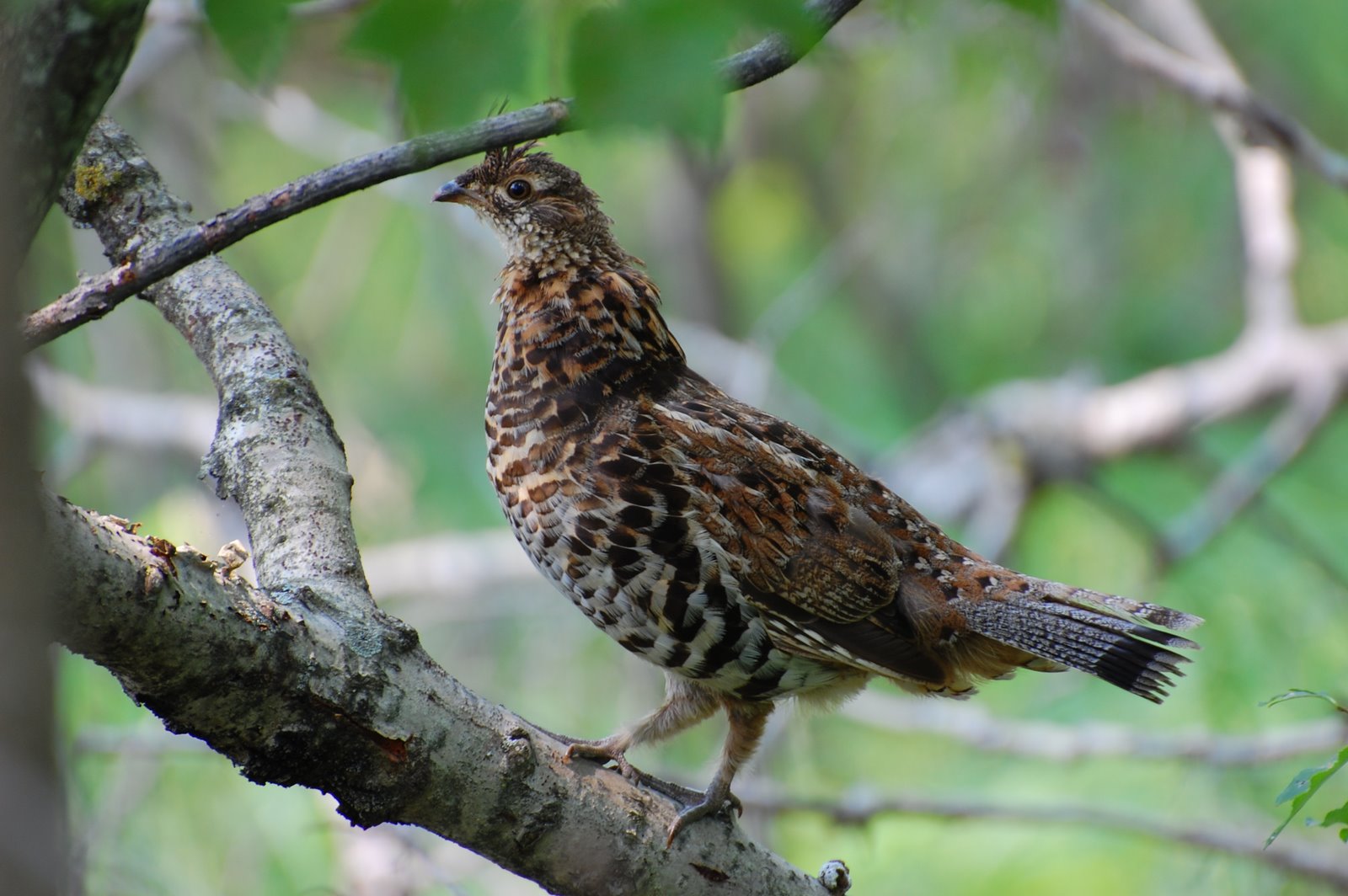
Ruffed GrouseAlthough sometimes regarded as “wilderness” birds, Ruffed Grouse have no aversion to living in close proximity to humans if the cover gives them adequate security. In some areas of Ontario, Canada –  Ruffed Grouse are more abundant in remote wilderness forests. They thrive best where forests are kept young and vigorous by occasional clear-cut logging, or fire, and gradually diminish in numbers as forests mature and their critical food and cover resources deteriorate in the shade of a climax forest.

Ruffed Grouse response to man varies greatly across their range, depending upon their experiences. In southern Ontario generally they are usually quite elusive and difficult to approach. Yet they can still be killed with a canoe paddle or thrown stones in NW Ontario wilderness forests.

When the ground is bare of snow, Ruffed Grouse feed on a wide variety of green leaves and fruits, and some insects. They have also been known to eat snakes, frogs as well. But when snow covers the ground as it does for most of the winter across the major portion of their natural range, Ruffed Grouse are almost exclusively “flower-eaters,” living on the dormant flower buds or catkins of trees such as birches and pin cherry bush’s.

Known as solitary in their social behavior they do not develop a pair-bond between males and females, although there is usually at least one hen in the woods for every male. Young birds, especially, collect in temporary, loose flocks in the fall and winter, but this is not equivalent to the covey organization of the quails and partridges.

Male Ruffed Grouse are aggressively territorial throughout their adult lives, defending for their almost exclusive use a piece of woodland that is 6-10 acres in extent. Usually this is shared with one or two hens. The male grouse proclaims his property rights by engaging in a “drumming” display. This sound is made by beating his wings against the air to create a vacuum, as lightning does when it makes thunder. The drummer usually stands on a log, stone or mound of dirt when drumming, and this object is called a “drumming log.” He does not strike the log to make the noise, he only uses the “drumming log” as a stage for his display.

The drumming stage selected by a male is most likely to be about 10-12 inches above the ground, in moderately dense brush, (usually 70 to 160 stems within a 10 ft. radius) where he can maintain unrestricted surveillance over the terrain for a radius of about 60 ft. Across much of the Ruffed Grouse range there are usually mature male within sight in the forest canopy overhead.

Drumming occurs throughout the year, so long as his “log” is not too deeply buried under snow. In the spring, drumming becomes more frequent and prolonged as the cock grouse advertises his location to hens seeking a mate. Listen to an example at the top of this page.

Courtship is brief, lasting but a few minutes, then the hen wanders away in search of a nest site, and there is no further association between the male grouse and his mate – or the brood of chicks she produces. A hen may make her nest more than 1/2 mile from the log of her mate.

Nests are hollowed-out depressions in the leaf litter, usually at the base of a tree, stump or in a clump of brush. The nest is usually in a position which allows the hen to maintain a watch for approaching predators. Sometimes hens will nest under logs or in brush piles, but this is less common, and a dangerous location.

A clutch usually contains 8 to 14 buff colored eggs when complete. Eggs are laid at a rate of about one each day and a half, so it may take 2 weeks for a clutch to be completed. Then incubation, which usually commences when the last egg is laid, takes another 24 to 26 days before the eggs hatch. A nest has to be placed so that it will not be discovered by a predator during a period of at least 5 weeks.

The chicks are prosocial, which means that as soon as they have dried following hatching they are ready to leave the nest and start feeding themselves. Grouse chicks are not much larger than a man’s thumb when they leave the nest. They are surprisingly mobile and may be moving farther than 1/4 mile a day by the time they are 3 or 4 days old. They begin flying when about 5 days old, and resemble giant bumble bees in flight. The hen may lead her brood as far as 4 miles from the nest to a summer brood range during its first 10 days of life.

Although grouse broods occasionally appear on roadsides, field edges or in forest openings, these are hazardous places for young grouse to be, and broods survive best if they can remain secure in fairly uniform, moderately dense brush or sapling cover.

wawanggrouse1The growing chicks need a great deal of animal protein for muscle and feather development early in life. They feed heavily on insects and other small animals for the first few weeks, gradually shifting to a diet of green plant materials and fruits as they become larger. Chicks grow rapidly, increasing from about 1/2 ounce midgets when hatched to 17-20 oz. fully grown young birds 16 weeks later. That is a 38 to 46 fold increase in weight. At 17 weeks of age, a Ruffed Grouse is almost as large and heavy as it will ever be.

Biologists and others who want to age Ruffed Grouse rely upon certain peculiarities of the molt of the primary flight feathers. The booklet A Grouse in the Hand explains this aging procedure. And following the first complete molt by a 14 to 15 month old adult grouse, there are no known physical characteristics which reliably identify the age.

When about 16 to 18 weeks old, the young grouse passes out of its period of adolescence and breaks away to find a home range of its own. This is the second and last time that Ruffed Grouse are highly mobile. The young males are the first to depart, when they range out seeking a vacant drumming territory, or activity center, where they can claim a drumming log. Most young males find a suitable site within 1.8 mi. of the brood range where they grew up, although some may go as far as 4.5 mi. seeking a vacant territory. Many young cocks claim a drumming log by the time they are 20 weeks old; and once they have done so, most will spend the remainder of their lives within a 200 to 300 yard radius of that log.

Young females begin leaving the brood one or two weeks later than their brothers, and they normally disperse about three times as far. Some young hens move at least 15 miles looking for the place where they’ll spend the rest of their lives.

Occasionally a hen and her brood will remain together as late as mid-January, but this is unusual, and most groups of grouse encountered in the fall and winter are composed of unrelated individuals who gather together temporarily to share a choice food resource or piece of secure cover.

In fall and winter some inexperienced young grouse frightened by a predator or something else, crash into buildings, trees or through windows in a so-called “crazy-flight.” Sometimes they are evidently simply trying to take a short-cut when they can see through two large windows on the corner of a house. After all, young grouse in their first fall have never been confronted by something that can be seen through but not flown through, such as glass!

 WEBSITE    RATES     FISH    HUNT    CABINS    PHOTOS
BROCHURE    HUNT BOOKLET
Enter your email address to subscribe to this blog and receive notifications of new posts by email.

← Back

Thank you for your response. ✨

Email Me....


Tags: , , , , , ,

An illustrated Guide to the Best Game Meat Cuts

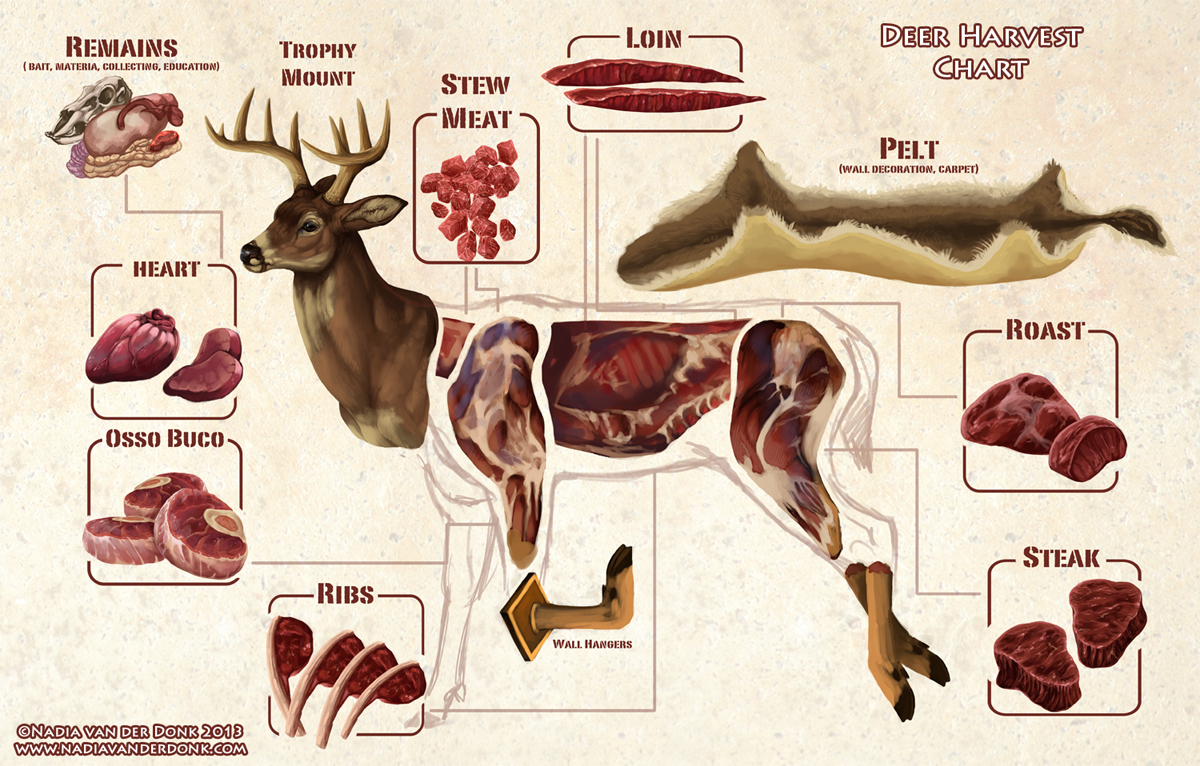
There are plenty of hunters out in the field bringing home dinner and we figured we would share some great guides on the best cuts and how to get them from your harvest!  Click on each picture to enlarge for greater detail 🙂

This diagram is the basic overview of the quarters and can be applied to deer, moose, elk and caribou.

illustrated deer

This second diagram is a more in depth cut selection and is coded for the sections as well.  Again, this can be applied to deer, moose, elk and caribou.

deerchart

Ensure before you properly care for your game in all stages of meat preparation to give not only longevity to the meat, but reduce the risk of cross contamination of any bacteria that could not only spoil the meat but could also make you very sick.

Happy hunting!

Follow our FISHING BLOG

WEB   RATES     FISH    HUNT    CABINS    PHOTOS
BROCHURE    HUNT BOOKLET
Enter your email address to subscribe to this blog and receive notifications of new posts by email.

← Back

Thank you for your response. ✨

Email Me....

 
Leave a comment

Posted by on September 28, 2017 in game, recipe, Wawang Lake Resort


Tags: , , , , , , , , , , , , , , ,

FIELD JUDGING – Black Bear

bear3Though some may disagree, black bears are one of the most sought after of all the big game species. Who hasn’t desired a black bear rug? Next to whitetail deer, there is an argument to be made that black bears are the second most popular big game animal to hunt.

Popular to hunt they may be, but easy to field judge, they are not, and yet, in spite of the high degree of difficulty, everyone who hunts black bears wants a big one. A “meat bear” won’t do. To whit, in all the many years I’ve outfitted for black bears, not one of my client-hunters has told me that his dream was to shoot a small bear for the freezer. It hasn’t happened and it never will. The fascination we hunters have with big bears is ancient and primal; a combination of “fear” and “facing fear,” another black bear dichotomy. It’s akin to climbing up onto the roof of a building and looking over the edge, the higher the building (the bigger the bear), and the deeper the fascination.

Taking all this into consideration, why is it then that so many hunters have small or medium-sized black bear skin rugs on their wall? And more to the point of this article, why do they have small bear skulls in their dens? Why indeed. Ask them and virtually every one of them will say something to the effect of, “he (or she) looked huge to me.” It is a standard and a fair evaluation of black bear hunting. Without doubt, the toughest part of taking a big black bear is knowing what “big” looks like. What follows in this article will hopefully help you correctly make what will be your toughest judging call of all.

First Things First
When hunters ask, and they all do, how to judge black bears, they invariably throw in what they know about judging black bears, the one or two tips they’ve read in some bear article, things like “look for small ears” and “big bears have small-looking heads.” Our response is that they are way ahead of themselves, looking at the size of a bear’s ears or head isn’t necessarily wrong, it just isn’t the right thing to be doing first. The first thing they should be looking at when they see the bear they want to judge is the location of that bear.

Location
Big bears live, eat, and hang out in the best living, eating, and hanging out areas. Find the best looking bear habitat in whatever hunting area you are in and odds are, the bear you see there will be big, especially during prime evening hours. Small bears usually live in marginal habitat for their own safety, as well they should, since big black bears eat small bears. Often hunters say that they spotted an especially large bear right up near the edge of the timber, near the big trees. And they may well have, but odds are, the reason that bear is up there near all those good escape trees, is that the bear itself is small and the very tops of those nearby trees are the best insurance against ending up as a bear breakfast.

Of course, location is a relative thing,  a grassy meadow along a creek in the bottom country or a reclaimed road seeded to clover in the high country. In other areas, a good location may be a bait pile or oat field. Because of the huge diversity of black bear habitat across North America, good location is relative and impossible to qualify. Know your hunting area and you’ll know what to look for, but remember, if there’s a bear feeding on a prime spot at prime time, odds are it’s a bear worth judging.

bear9Attitude
Big bears are the toughest, meanest sons-of-a-guns in the area and they act it. Watch a human bully walk down the street, he walks with a swagger and an attitude. A big bear walks the same way. He doesn’t fit and start at every sound like a small bear will. A big bear doesn’t have to; he believes he’s got nothing to fear. Once you’ve spotted your bear on the prime feeding spot during prime time, it’s time to get serious about how that bear is behaving.

It is important to note that long before you judge the size of the bear, you must judge the sex of that bear. A big, old sow will have all, or more correctly, almost all of the physical characteristics of a big, old boar. She’ll have the nasty looking face that’s seen one too many years in the ring, the potbelly and the sway back. The one thing (besides the obvious) that she won’t have, except in exceptional cases, is the “I’m the biggest and baddest son of a gun in the valley” behavior that determines sex more effectively than if that bear was wearing a bikini.

  1. Watch to see if the bear stands on his hind legs and rubs his back on a tree, that’s a boar.
  2. If it walks along and straddles small trees, wiping its scent on that tree, it’s a boar.
  3. If it stands up and breaks saplings over its shoulder, it’s a boar.
  4. If it encounters another bear and gives chase, it’s a boar and if it is following a smaller bear, it’s a boar.

Scale
There is one last general appearance tip to judging black bears that makes the top three in importance, and that is scale. A big bear looks big . . . but so does a closer, smaller bear. Here’s a quantitative example of this. If the bear is 150 yards away but the hunter thinks the bear is 200 yards away, the hunter will overestimate the bear’s relative size by somewhere near 25 percent. In other words, the hunter is in for a serious case of ground shrink when he walks up to his bear. Get as close to the bear as you can. The closer the bear, the less chance there is of misjudging the distance to the bear, and thereby misjudging the bear’s relative size.

Specific Tips for Judging Black Bears
If the bear fails any one of the above general conditions, then let the bear walk. It’s tough but at least there isn’t a dead small bear lying on the ground.

1) Body Shape: Do you wear the same size pants as you did when you were in high school? Be honest, does your spouse poke you in the belly once in a while and tell you to cut back on the Twinkies? Bigger bears are older bears, and like most of us, they don’t have the svelte bodies they once did. They tend to look “heavy” and out of shape. Remember, they monopolize the best feed and habitat, and therefore exert less energy to live.

2) Head Shape: A big bear (boar) will have a deeper, wider and longer snout than a smaller bear or a female. His ears will appear to be wide apart and small. If he is aware of you and looking your way, his ears won’t stand up on top of his head like a dog’s ears, they’ll seem to be aimed out to the side of his head. A big bear will have well developed “bulging like Arnold,” biting muscles on the top of his head.

3) Legs: A big bear will have massively developed front shoulders. His shoulders will look big and burly. A sow’s wrist will pinch in directly above the foot. Not so with a boar. The lower forearm, wrist and the foot on a big boar are all the same width. A big bear often appears to have shorter legs because the body is so much thicker, but keep in mind that the best-scoring bears for the records book are often the lankier looking, longer-bodied bears.


Let Boone and Crockett Sort Them Out
There isn’t a guide or hunter in the world who can accurately call the skull measurement of a black bear. It’s impossible. There are simply too many variables that affect the final dried measurement.  bear6

There are bears that have meatier heads; bears that look great and are great trophies, but that don’t score well. There are others that have short skulls, block-headed beasts that look impressive, but that don’t score well at all and there are lanky, skinny bears with donkey faces that score like the devil, but that a hunter seriously looking for a records book bear wouldn’t walk across the street for. Black bear morphology is just too darn diversified to make a science out of judging.

The best way to hunt for a records book boar is to simply shoot the bear that looks good to you and that hopefully you’ll appreciate. If it’s got a nice hide, be happy with your animal. If it has long claws and weighs a ton, good for you and congratulations. If it isn’t as big as you’d like, don’t fret, you’re not alone and the rug on your wall will still look great. If it happens to be one of those rare few bears that has grown a skull that qualifies for the records book, thank your guide and your lucky stars and don’t expect to repeat the feat in the near future. It won’t be that bigger bears aren’t around—they are—you just won’t be able to tell them apart from the other bears in the area!

BREAKDOWN OF SCORING COMPONENTS – BEAR
bear dia

Follow our FISHING BLOG

WEB   RATES     FISH    HUNT    CABINS    PHOTOS
BROCHURE    HUNT BOOKLET

Enter your email address to subscribe to this blog and receive notifications of new posts by email.

← Back

Thank you for your response. ✨

Email Me....


Tags: , , , , , , ,