RSS

Tag Archives: how to

The dangers of dry firing your bow

Dry-firing your bow is something you will want to avoid at all costs. To help minimize your chances of dry-firing a bow you should always draw a bow with an arrow in it, and aim it at a target. This way if you do accidentally release the string there is an arrow in it and you have a target to stop the arrow. Also if you are just trying out a bow be sure to draw with an anti-dry-fire release. When in a group of people it is very easy to become side tracked and forget to load your bow with an arrow. It’s always good to double check before you draw your bow


bowtarget


Dry firing a bow is the act of shooting a bow without an arrow. While this may seem harmless to some of us who are just starting out I assure you that this can be one of the most costly mistakes you can make.

The fact of the matter is that it can happen to anyone beginner or expert for many different reasons. Whether it be from ignorance, distractions, or accidental misfire of a release it happens all the time. So the question is what do you do if you accidentally dry-fire your bow.

There are a few outcomes that could happen when a bow is dry-fired, the first is that is that it will appear that nothing has happened to any of your bow. The second scenario is that your string breaks however everything else stays intact. The third possibility is your bowstring, and cables could snap resulting in your limbs breaking and potential debris flying all over the place. This is basically the worst case scenario and can at times be irreparable.

No matter what scenario your bow falls into after being dry-fired, the first thing you will need to do is to get a magnifying glass and a bright light and look over the limbs especially near the cams for any cracking, or splintering. If you find that one of both limbs have cracks or splinters in them then you will have to replace the limbs before you are able to shoot again. Failing to do so will likely cause will render the bow unusable and/or injury.

bowillustration

In any of the other cases where the string breaks and/or the bow limbs shatter, you will first go get medical attention if you need it and then you will need to bring your bow in to a bow repair shop and you will have to replace the limbs,string, and any other broken parts(axles,cams,wheels etc.).

After checking for cracks and splinters in the limbs, take a look at the cams/wheels to make sure that they have not been bent or cracked, again if they are you will need to replace them as soon as possible before you are able to shoot. Next if you were lucky enough to have your string still intact, you will need to check the whole thing for badly frayed portions, cut strands, and badly damaged areas, especially near the axles.
If everything checks out and you were unable to find anything wrong with your bow then you are lucky, and you have 2 options, your first option is to draw the bow(with an arrow) and shoot it. Make note of any weird noises, or vibrations. If you aren’t the risky type then you can bring it into a bow repair shop and they will have the tools and resources to be able to better inspect it for damages.

In closing, dry firing a bow may seem innocent, but in turn can be detrimental and even dangerous. Take your time to ensure longevity of your equipment for years to come and better success rates!

Follow our FISHING BLOG

WEB   RATES     FISH    HUNT    CABINS    PHOTOS
TESTIMONIALS    BROCHURE    HUNT BOOKLET

Enter your email address to subscribe to this blog and receive notifications of new posts by email.

Go back

Your message has been sent

Warning
Warning
Warning
Email Me....

Warning

Warning.

 
Leave a comment

Posted by on August 30, 2016 in archery, bow, Wawang Lake Resort


Tags: , , , , , ,

Building an Emergency Shelter in the Field

shelter
With the season upon us, being in the field is commonplace.  In the event of an emergency or in climate weather change understanding how to create effective wilderness survival shelters is one of the most important outdoor skills. From keeping you protected from the elements to providing a place to rest, wilderness shelters serve a key role in survival situations. Not only do they provide for physical needs, but also help create a sense of home in the wilderness. Though each season and environment presents its own challenges, there are several universal principles for creating effective wilderness survival shelters:

Location
The most important aspect of making wilderness shelters is choosing a good location. A good location is one that 1) provides easy access to ample building materials such as dead sticks, leaves, and grasses; and is 2) away from major hazards such falling branches, pooling water, and insect nests. You also want a location that has a large enough flat area to allow you to lie down and sleep comfortably.

Size
A common mistake when building wilderness survival shelters is to build them too large. Not only does it take more materials, effort, and time to construct, but often ends up being cold due to the amount of space on the inside. Effective wilderness shelters are often small on the inside – just large enough to fit your body to conserve body heat.

Type

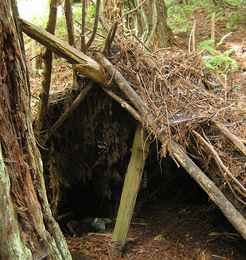
lean shelterThe debris hut is an extremely versatile wilderness survival shelter. It can be built in almost any habitat and does not require tools or special equipment. Creating an effective shelter is one of the most important priorities in a survival situation. Most lost persons perish from hypothermia, which may have been easily avoided had they constructed a simple shelter.

The debris hut is constructed using sticks and any available debris, such as leaves, moss, ferns, bark, etc… The key to a good shelter is to insulate yourself from all of the forms of heat loss. Your body can lose heat through direct contact with the ground, wind, and simply radiating off of your body. Therefore, your shelter needs to provide insulation and protection from all of these elements.

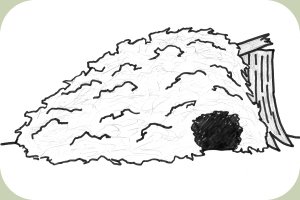
A completed debris shelter is like a gigantic water-resistant sleeping bag, insulated by debris and held together by sticks. To construct a debris hut:

debris hut basics

1.) Select a location that provides ample building materials (sticks and debris) that is safe from falling branches, pooling water, and other hazards.

2.) Prop up a sturdy 8-foot pole-like branch on a stump or crook of a tree. This ridge pole should be sturdy enough to support your weight. The size of the space underneath the ridge pole should be just large enough to fit your body plus six inches of debris on all sides.

3.) Lay shorter stick along the length of the ridge pole on both sides, leaving room for a doorway. These shorter sticks are called ribbing. The ribbing sticks should touch the ground roughly six inches outside of where your body would lay.

completed debris hut

4.) Add smaller sticks on top of and perpendicular to the ribbing sticks. These latticework sticks will keep the outer debris from falling inside the shelter.

5.) Pile large amounts of leafy debris on top, as well as inside. Use your driest, softest debris on the inside closest to your body. When complete, there should be at least three feet of debris piled up on top and on all sides of the shelter.

6.) You can lay more sticks on top to keep the wind from blowing the debris away if it is a windy day.

7.) A door plug can be created by stuffing a shirt full of leaves.

Crawl inside, being sure to burrow into the leaves, so that there is a mattress of leaves insulating you from the ground and on all sides. Though nothing like the warmth of your own bed, a debris hut will allow you to survive the night.

Follow our FISHING BLOG

WEB   RATES     FISH    HUNT    CABINS    PHOTOS T
ESTIMONIALS
    BROCHURE    HUNT BOOKLET

Enter your email address to subscribe to this blog and receive notifications of new posts by email.

Go back

Your message has been sent

Warning
Warning
Warning
Email Me....

Warning

Warning.


Tags: , , , , ,

The Dangers of Dry Firing Your Bow

Dry-firing your bow is something you will want to avoid at all costs. To help minimize your chances of dry-firing a bow you should always draw a bow with an arrow in it, and aim it at a target. This way if you do accidentally release the string there is an arrow in it and you have a target to stop the arrow. Also if you are just trying out a bow be sure to draw with an anti-dry-fire release. When in a group of people it is very easy to become side tracked and forget to load your bow with an arrow. It’s always good to double check before you draw your bow


bowtarget

Dry firing a bow is the act of shooting a bow without an arrow. While this may seem harmless to some of us who are just starting out I assure you that this can be one of the most costly mistakes you can make.

The fact of the matter is that it can happen to anyone beginner or expert for many different reasons. Whether it be from ignorance, distractions, or accidental misfire of a release it happens all the time. So the question is what do you do if you accidentally dry-fire your bow.

There are a few outcomes that could happen when a bow is dry-fired, the first is that is that it will appear that nothing has happened to any of your bow. The second scenario is that your string breaks however everything else stays intact. The third possibility is your bowstring, and cables could snap resulting in your limbs breaking and potential debris flying all over the place. This is basically the worst case scenario and can at times be irreparable.

No matter what scenario your bow falls into after being dry-fired, the first thing you will need to do is to get a magnifying glass and a bright light and look over the limbs especially near the cams for any cracking, or splintering. If you find that one of both limbs have cracks or splinters in them then you will have to replace the limbs before you are able to shoot again. Failing to do so will likely cause will render the bow unusable and/or injury.

bowillustration

In any of the other cases where the string breaks and/or the bow limbs shatter, you will first go get medical attention if you need it and then you will need to bring your bow in to a bow repair shop and you will have to replace the limbs,string, and any other broken parts(axles,cams,wheels etc.).

After checking for cracks and splinters in the limbs, take a look at the cams/wheels to make sure that they have not been bent or cracked, again if they are you will need to replace them as soon as possible before you are able to shoot. Next if you were lucky enough to have your string still intact, you will need to check the whole thing for badly frayed portions, cut strands, and badly damaged areas, especially near the axles.
If everything checks out and you were unable to find anything wrong with your bow then you are lucky, and you have 2 options, your first option is to draw the bow(with an arrow) and shoot it. Make note of any weird noises, or vibrations. If you aren’t the risky type then you can bring it into a bow repair shop and they will have the tools and resources to be able to better inspect it for damages.

In closing, dry firing a bow may seem innocent, but in turn can be detrimental and even dangerous. Take your time to ensure longevity of your equipment for years to come and better success rates!

Follow our FISHING BLOG

WEB   RATES     FISH    HUNT    CABINS    PHOTOS
TESTIMONIALS    BROCHURE    HUNT BOOKLET

Enter your email address to subscribe to this blog and receive notifications of new posts by email.

Go back

Your message has been sent

Warning
Warning
Warning
Email Me....

Warning

Warning.

 
Leave a comment

Posted by on June 6, 2016 in archery, bow, Wawang Lake Resort


Tags: , , , , , ,

Bacon Wrapped Moose Tenderloin

Ingredients

Moose tenderloin
Dates
Goat cheese

Marinade

1 Tbsp. mustard
1 Tbsp. honey
1/2 tsp. minced garlic
4 dashes of Worcestershire sauce
1 cup red wine

Saskatoon Glaze

1/2 cup Saskatoon berries ( you can use blueberries if Saskatoon’s are not available in your area)
3/4 cup red wine
1 Tbsp. maple syrup

moose-rolls2-copy-600x400


Rub tenderloin with mustard, combine remaining ingredients and pour over top.  Use a marinating container that and flip back and forth every so often.  Let marinade at least 4 hours or overnight.

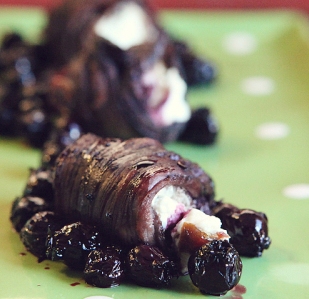
Next stuff dates with goat cheese.  If you have un-pitted dates, simply cut the top off, using a pair of tweezers, pull the pit out.  Use a baby spoon to stuff the goat cheese in, it works quite well, the tip of the spoon was perfect for starting to put the cheese in and then using the handle end to push the goat cheese down, worked like a charm!

Thinly slice the tenderloin and then wrap around the dates and secure with toothpicks.  Place on parchment paper on a cookie sheet.

Preheat oven to 350 degrees.

Place berries, maple syrup and red wine in a pot on high heat.  Bring to a boil and let simmer for 3-5 minutes, spoon the juice over the dates and bake for 10-15 minutes(or until meat is cooked to your preferred done-ness), baste with glaze at least once during baking time.

Remove and enjoy … best eaten while warm!

This is the perfect appetizer for any party….your guests won’t even know its moose!

Follow our FISHING BLOG

WEB   RATES     FISH    HUNT    CABINS    PHOTOS
TESTIMONIALS    BROCHURE    HUNT BOOKLET

Enter your email address to subscribe to this blog and receive notifications of new posts by email.

Go back

Your message has been sent

Warning
Warning
Warning
Email Me....

Warning

Warning.


Tags: , , , , , , , , , , ,

10 Incredibly Cool Adventure Campers You Wish You Owned

By Matt Alpert

Earthroamer21-700x366

These are 10 of the most awesome adventure campers ever made.

If you want to go car camping in the wild — the real wild — your Toyota Camry is not going to cut it. No my friend, you’re going to need something with some more chutzpah.

These 10 heavy-duty adventure campers are designed to crawl over any terrain that stands in their way, be it a steep mountain or dense jungle brush. Heck, some of them can even drive across the ocean.

Some of these adventure campers are loaded with amenities that you’d typically find in a high-end RV. So, if you’ve ever wanted to try glamping in a desert, jungle or rugged mountainside, these adventure campers will get the job done.

Jeep Forward Control

1-300x157

1The Jeep Forward Control is a unique utility vehicle that was made from 1956 to 1965. These trucks feature a cab over engine layout that gives the vehicle a shorter wheelbase.

Jeep Forward Controls were made as both a pickup truck and a van. Both designs are great vehicle platforms for rugged camper conversions, such as the one pictured above. Good luck finding one today.

EarthRoamer

2-300x157

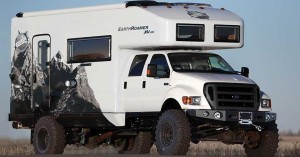
2If you had the thought to put your RV on a jacked-up 4×4, EarthRoamer beat you to the punch.

The company makes heavy-duty, go-anywhere expedition campers that are loaded with the amenities you’d expect in an RV. The company started by building self-contained Jeep Wrangler camper conversions, but later switched to modifying Ford trucks like the F-650 featured above.

Terra Wind Amphibious RV

3-300x157

3The Terra Wind is a fully-loaded luxury motor home that can operate on land and water.

It can reach a cruising speed of 7 knots on the water, and can drive up to 80mph on land. But it comes with a hefty price tag – these bad boys cost $850,000.

Unicat TC55 Comfort Plus

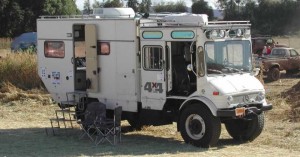
4-300x157

4Ok, it kind of looks like a garbage truck, but don’t let this rugged camper’s exterior fool you.

Inside you’ll find high-grade wood paneling, skylights, a shower room, multiple beds, a kitchen, stereo system and a whole lot more. This self-contained camper is also about as durable as adventure vehicles come. Plus, it can charge over anything in its path.

Unimog

5-300x157

5The Unimog is the quintessential heavy-duty expedition vehicle. Manufactured by Mercedes-Benz, this rugged vehicle has portal axles for high ground clearance and flexible frames to handle rough terrain changes.

The Unimog’s powerful off-road capabilities have made it a big hit among adventurers and explorers.

Pinzaugers

6-300x156

6Similar to Unimogs, Pinzaugers are highly-capable all-terrain vehicles. They were originally designed for military use, but adventurers and expeditionists have taken a shine to them for their off-road capabilities, carrying capacity and durability.

These powerful vehicles can drive up and over just about anything in their way.

7-300x157

7Engineering whiz Rick Dobbertin built this one-of-a-kind camper out of a stainless-steel milk tank, and drove it from Florida to South America and back again via the Gulf of Mexico in 1995.

It has living quarters inside, and a front dash that looks kind of like it belongs in a spaceship. There’s only one Dobbertin Surface Orbiter in existence, and we wish we owned it.

Conqueror Australia

fold-open_jpg_662x0_q100_crop-scale

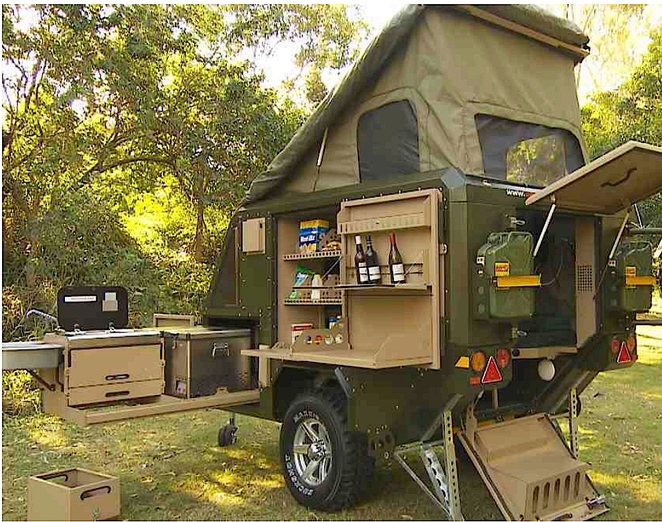
8Conqueror Australia’s UEV’s are rugged and versatile off-road camper trailers that have independent suspension systems and loads of cool campers features.

Each model comes with a fold-out kitchen, large hot water heaters, queen-sized beds, and lots more.

Sportsmobile

9-300x157

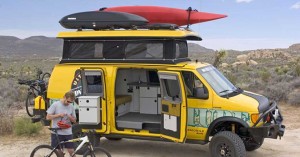
9Sportsmobile has been making customizable adventure campers since 1961. They convert Ford, Chevy/GM and Mercedes Benz vans into off-road vehicles.

As you can tell by the Sportsmobile featured above, they can get pretty tricked out.

Ford Push Button Camper

10-300x157

10Okay, it’s not a rugged all-terrain vehicle, but Ford’s 1958 push button station wagon camper is just too cool to leave off this list.

This one-of-a-kind camper contains a lifeboat and shelter that both unfold on the roof at the push of a button. It also has an unfolding kitchen with a refrigerator, sink and stove, and dozens of other automated gadgets.

Follow our FISHING BLOG

WEB   RATES     FISH    HUNT    CABINS    PHOTOS
TESTIMONIALS    BROCHURE    HUNT BOOKLET

Enter your email address to subscribe to this blog and receive notifications of new posts by email.

Go back

Your message has been sent

Warning
Warning
Warning
Email Me....

Warning

Warning.


Tags: , , , , , , ,

Building A Smoke House

9c

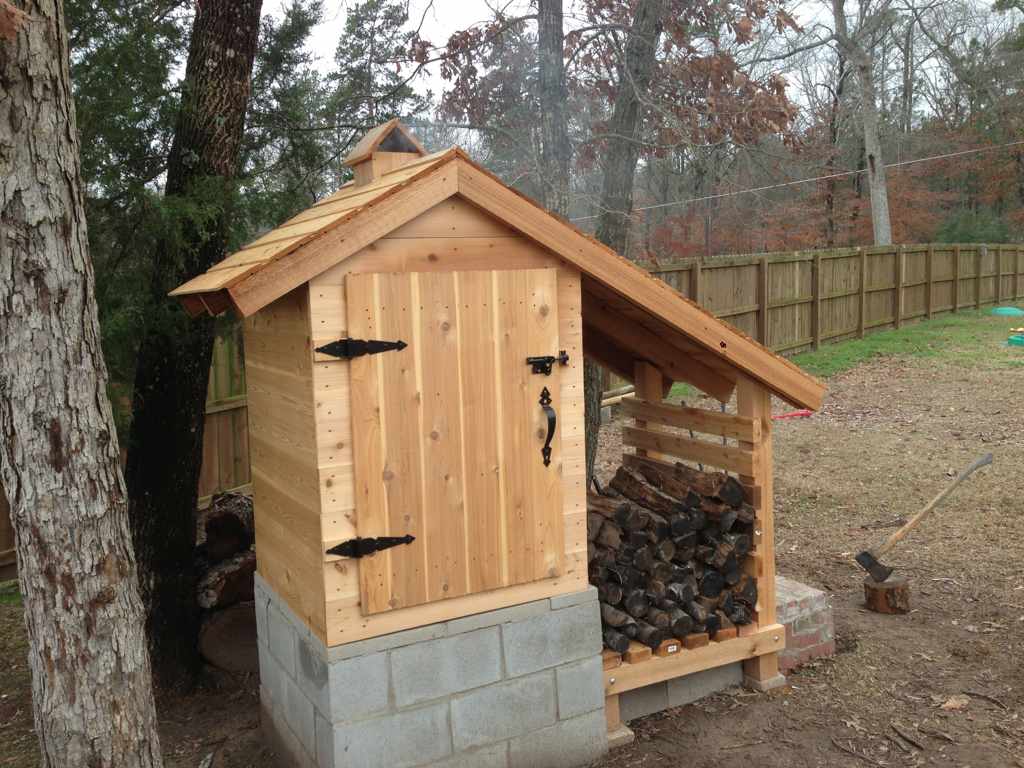
Building a smoke house the old fashion way is a method that has been used for generations. Many people today like to smoke their own meat not only to give it flavor but also to preserve it longer.

The size of your smoker will depend on what you plan to use it for. Whether you want it to just smoke a few fish, smoke sausage every now and then or smoke an entire animal at one time, will help you determine the size of your smoker

1

Beginning:

This slideshow requires JavaScript.

When it comes to flavor of the meat, people through the years have made up their own recipe of brine to rub over the meat before smoking it.

How To Build A Smoke House

9b

The Building Process:

This slideshow requires JavaScript.

Building a smoke house, there are a few things that should be considered when building your smoke house. It is not important to spend a small fortune for material for the construction. Reclaimed wood will work just fine. You may want a smoker big enough to walk in with shelves to lay the meat on along with hocks from the rafters to hang the meat.

You will want to vent the building to allow the smoke to travel freely through the building.

6d

The Firebox Process:

This slideshow requires JavaScript.

Building a smoke house, a very important factor  is to situate your fire box  down hill from the smoke house. This will allow the smoke to travel up hill into the smoker much easier. All that is required for a fire box is a fire box made from brick or even an old barrel with the smoke piped into the smoker will work just fine by having the fire box away from the smoker, the meat will not dry out as much as if it were right in the smoker.

1a

The Smoking Process:

This slideshow requires JavaScript.

To also help in the flavoring of the meat, by using different kinds of wood chips in the fire box will create different smoke changing the flavor in the meat.

Follow our FISHING BLOG

WEB   RATES     FISH    HUNT    CABINS    PHOTOS
TESTIMONIALS    BROCHURE    HUNT BOOKLET

Enter your email address to subscribe to this blog and receive notifications of new posts by email.

Go back

Your message has been sent

Warning
Warning
Warning
Email Me....

Warning

Warning.


Tags: , , , , , , , , , , , ,

The Dangers of Dry Firing Your Bow

Dry-firing your bow is something you will want to avoid at all costs. To help minimize your chances of dry-firing a bow you should always draw a bow with an arrow in it, and aim it at a target. This way if you do accidentally release the string there is an arrow in it and you have a target to stop the arrow. Also if you are just trying out a bow be sure to draw with an anti-dry-fire release. When in a group of people it is very easy to become side tracked and forget to load your bow with an arrow. It’s always good to double check before you draw your bow


bowtarget

Dry firing a bow is the act of shooting a bow without an arrow. While this may seem harmless to some of us who are just starting out I assure you that this can be one of the most costly mistakes you can make.

The fact of the matter is that it can happen to anyone beginner or expert for many different reasons. Whether it be from ignorance, distractions, or accidental misfire of a release it happens all the time. So the question is what do you do if you accidentally dry-fire your bow.

There are a few outcomes that could happen when a bow is dry-fired, the first is that is that it will appear that nothing has happened to any of your bow. The second scenario is that your string breaks however everything else stays intact. The third possibility is your bowstring, and cables could snap resulting in your limbs breaking and potential debris flying all over the place. This is basically the worst case scenario and can at times be irreparable.

No matter what scenario your bow falls into after being dry-fired, the first thing you will need to do is to get a magnifying glass and a bright light and look over the limbs especially near the cams for any cracking, or splintering. If you find that one of both limbs have cracks or splinters in them then you will have to replace the limbs before you are able to shoot again. Failing to do so will likely cause will render the bow unusable and/or injury.

bowillustration

In any of the other cases where the string breaks and/or the bow limbs shatter, you will first go get medical attention if you need it and then you will need to bring your bow in to a bow repair shop and you will have to replace the limbs,string, and any other broken parts(axles,cams,wheels etc.).

After checking for cracks and splinters in the limbs, take a look at the cams/wheels to make sure that they have not been bent or cracked, again if they are you will need to replace them as soon as possible before you are able to shoot. Next if you were lucky enough to have your string still intact, you will need to check the whole thing for badly frayed portions, cut strands, and badly damaged areas, especially near the axles.
If everything checks out and you were unable to find anything wrong with your bow then you are lucky, and you have 2 options, your first option is to draw the bow(with an arrow) and shoot it. Make note of any weird noises, or vibrations. If you aren’t the risky type then you can bring it into a bow repair shop and they will have the tools and resources to be able to better inspect it for damages.

In closing, dry firing a bow may seem innocent, but in turn can be detrimental and even dangerous. Take your time to ensure longevity of your equipment for years to come and better success rates!

Follow our FISHING BLOG

WEB   RATES     FISH    HUNT    CABINS    PHOTOS
TESTIMONIALS    BROCHURE    HUNT BOOKLET

Enter your email address to subscribe to this blog and receive notifications of new posts by email.

Go back

Your message has been sent

Warning
Warning
Warning
Email Me....

Warning

Warning.

 
Leave a comment

Posted by on October 21, 2015 in archery, bow, Wawang Lake Resort


Tags: , , , , , ,

The Wrong Turn

survival3

 On Aug. 31, Bill Lawrence, 40, got separated from his hunting partners and remained lost for five days. As told to Colin Kearns.

Wednesday. I’d just killed my first squirrel when I glanced over for my friends Russell and Cris. They were gone.

Russell was the only one who’d hunted these woods, Meeman-Shelby Forest north of Memphis. We’d been hunting for 20 minutes and were deep into the forest. Russell and Cris stuck together, while I drifted to their left. I tried to stay within eyesight of them, but I was also watching for snakes. The last time I saw them, it looked like they were continuing in a straight line. Then I stopped to shoot the squirrel.

I thought I had an idea where they were, but an hour later I wasn’t any closer. I shouted, but the thick woods only swallowed my cries. So I turned to hike back to the truck, but an hour later I was even more lost. I kept walking, though, figuring I’d find a way out.

I walked, stopping to rest now and then, until it started to get dark. I’d fired a couple of shots but got no response. It never got cold, which was good because I had nothing to build a fire with. I doused myself with bug dope, then lay down. With my vest, I was able to cover my face and roll up the bottom end to use as a pillow. That dead squirrel in the pocket added a decent cushion.

I heard helicopters but they couldn’t see me through the trees, and I wasn’t going to run through the woods in the dark. I just prayed they’d find me tomorrow.

Thursday. I finished the last of the two water bottles I’d brought with me that morning. The days were hot, and I was walking and sweating a lot. I needed to stay hydrated. Fortunately, it rained that morning, and I managed to catch a half bottle’s worth of water.

I mostly squirrel hunt, but I have enough experience hunting deer and rabbits that I can identify tracks—and I know that if you follow those tracks, they’ll often lead to a water source, which in my case was a puddle in gumbo mud. I dipped my empty bottle and watched it fill with gray, grimy water. I didn’t want to drink it. I worried it’d make me sick. But what choice did I have? I was already getting dehydrated.

The taste was nasty—dirty and sandy—but the dip of mint Skoal I had in my mouth made it at least drinkable. I figured I should eat something, too, even though I wasn’t starving. I turned a dead stump over and found some nightcrawlers. They tasted about as bad as the gumbo water. I don’t know how many I ate—only that I’d never eat another one.

The rest of Thursday was a lot like Wednesday: Walk, then break for a nap. Walk, then nap. That second day, as I was walking—with no real end in sight—is when I started talking to God. Why is this happening? If I don’t make it out, will you take care of my wife and kids?
imagesTJNT6CHZThat night I awoke to a WHOOSHWHOOSHWHOOSH. Dazed, it took me a moment to realize that it was another chopper—and that it was right above me. I stumbled to find the flashlight in my vest. But by the time I turned it on, it was too late. After the chopper left, my flashlight burned out.

Friday. I kept moving and praying—all day. Walking gave me a purpose. Praying gave me strength. I truly believe my faith is what kept me from ever panicking. That afternoon I stumbled upon some persimmons. They were the most delicious things I’d eaten in a long time, and they were just sitting there on the ground, perfectly ripe, waiting to be found.
Saturday. I heard a low-flying chopper that morning. I took the T-shirt I had on under my camo shirt, tied it to the barrel of my Mossberg, and rushed to the nearest open area where I waved it around. But it never got close enough.

I was weak and tired. My body ached. For the first time I started to think I might not get out. I had started with 15 shells, and by then I only had four or five left. I’d been firing them and leaving the shells at spots where I rested. But on Saturday I decided to fire the rest I had at once. I didn’t know how much more of this misery I’d have to suffer, and I didn’t want the option of taking my own life.

Later that afternoon, as I was resting, I heard two sounds: a Harley-Davidson and a chain saw. I decided to stay put for the remainder of the day and save my energy. Tomorrow, I’d travel toward those sounds. I just knew that if I didn’t get out on Sunday, I never would.

Sunday. I came to a hill that I wasn’t sure I had the strength to climb. I sat down on a nearby log and prayed for strength. When I finally got up and walked to the hill, I glanced to the left where I saw a trail. And I took it.

Two miles later I hit a blacktop road. I fell to the ground crying. I flagged down a couple of motorcyclists who came down the road and told them who I was. “Son,” one of them said, “there’s a lot of people looking for you.”

They drove me to the camp the search team had set up nearby. Just as they got me on the stretcher and were about to drive me to the hospital, I was given a satellite phone. Kim, my wife, was on the other line. My eyes welled. “Hey,” I said. “I’m alive.”

Survival Analysis
Bill Lawrence had no method of striking fire, carried nothing to signal with but his shotgun, and possessed no tool to navigate to safety but his brain. When he became lost, he had nothing to eat but nightcrawlers and no means to disinfect water. He was unfamiliar with the country and carried no map. To sum up: He struck into the woods about as unprepared as a man can be. But before you criticize him too harshly, take a look at yourself. Have you ever been similarly unprepared for an emergency, using the excuse that you only plan to be gone a few hours and won’t stray more than a few hundred yards from the road? I know I have.

Lawrence’s ordeal should be a cautionary tale for all of us, emphasizing the importance of carrying basic survival gear every time we go afield, no matter how small that field we intend to hunt. A compass, a whistle, a sparking wheel, Tinder Tabs, and chlorine tablets weigh about as much as a tin of Altoids, and easily fit inside one. S - - t happens. Have a hat for it.

Lawrence’s reaction to being lost was to walk and then walk some more. By doing so, he disobeyed the four steps that almost ensure survival: Stop. Shelter. Signal. Stay. Had he stopped walking, tied his undershirt to a treetop or placed it in an opening where it could be seen or, better yet, spelled SOS in a clearing with branches or stones, then hunkered out of the wind to wait, he probably would have been found quickly after being reported missing. Ninety percent of search-and-rescue operations are resolved during the initial hasty search, usually within 10 hours.

One thing that Lawrence did do right needs to be emphasized: He never panicked and was determined to survive. The right attitude is one positive that can make up for a lot of negatives in any survival situation.

Follow our FISHING BLOG

WEB   RATES     FISH    HUNT    CABINS    PHOTOS
TESTIMONIALS    BROCHURE    HUNT BOOKLET

Enter your email address to subscribe to this blog and receive notifications of new posts by email.

Go back

Your message has been sent

Warning
Warning
Warning
Email Me....

Warning

Warning.


Tags: , , , , , ,

Recipe: Moose Tenderloin Lettuce Wraps

This super simple lunch idea will definitely be something you’ll be sure to make over and over.

mooselettucewrapscopy-600x399


Ingredients
marinated moose tenderloin (thinly sliced) Get Marinate Recipe HERE

1 head butter lettuce
1 carrot
1 mini cucumber
feta cheese

Honey Cherry Dressing
1/2 cup cherries
3/4 cup red wine
2 tbsp honey

For the cherry dressing simply put all the ingredients in a saucepan, bring to a boil and reduce heat and simmer.  Describe it as, once you can’t smell the alcohol anymore it’s ready!  Take it off the burner and let cool.  As it cools it will gradually thicken.

Pan fry the moose until desired done-ness.  If you are like me and you like your meat not kicking anymore, then simply remove the meat just before its cooked all the way through.  If it’s sliced thinly it will continue to cook after you take it out of the pan and will be the exact done-ness and will be nice and tender.

Next up shave your vegetables.  Grab a potato peeler and shaved off nice strands of carrots and cucumbers to add in to the lettuce cups.  If you prefer them chopped or grated, by all means go right ahead!

Place your butter lettuce leaves on a plate and begin to assemble and alternated between moose and veggies, crumble feta cheese on top and drizzle the Honey Cherry Dressing on top.

Make as many lettuce cups as you’d like depending on how much meat you used!

Enjoy!

Follow our FISHING BLOG

WEB   RATES     FISH    HUNT    CABINS    PHOTOS
TESTIMONIALS    BROCHURE    HUNT BOOKLET

Enter your email address to subscribe to this blog and receive notifications of new posts by email.

Go back

Your message has been sent

Warning
Warning
Warning
Email Me....

Warning

Warning.


Tags: , , , , , , , , ,

Firearm Safety

by Marti Davis

Marti-Davis

Safety, safety, safety

Firearm safety must always be our number one priority. Always remember to treat every gun as if it is loaded. That means always pointing the gun in a safe direction. Make sure you’re using the proper ammunition for the firearm. Keep your finger off the trigger until you’re ready to fire.

When you’re hunting from an elevated stand, never climb with the firearm. Use a rope to raise and lower the unloaded gun after you’re safely strapped in to your stand. You can never be too careful or safe when it comes to handling and hunting with firearms.

Marti-Davis-rifle

Know right from wrong

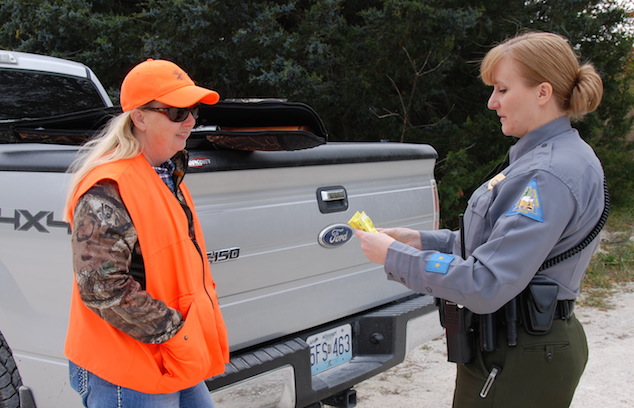
Before you do any kind of hunting with a gun, you must familiarize yourself with the state’s game laws and regulations. Even if you’re a seasoned hunter, you need to refresh your memory and check for any changes in the regulations that might affect your hunt. If you know and follow the regulations, when you do have an encounter with a conservation agent, you won’t have anything to worry about.

And while we’re on the subject of conservation agents, if you happen to get stopped by an agent, be courteous. It will take only a few minutes for the agent to check and see if you have the proper licenses and tags. Conservation agents have a job to do, and this is just a small part of it.

Cleaning and Maintenance

While some firearms take more cleaning and maintenance than others, you should take proper care of all firearms. If you do, they will last for many years, with the possibility of being handed down from generation to generation.

I like to use a combination cleaner-lubricant-protectant, such as Break Free CLP. A quick wipe-down at the end of a day afield is sufficient, unless you’ve been out hunting in rain or snow, or in extremely dusty or brushy conditions. In that case you probably need to break down the firearm to a certain extent. Remember to follow all manufacturer’s instructions on breakdown and reassembly. Never skip any steps the manufacturer recommends.

I also like to use a bore snake for a quick pass-through on my barrels. I use a little of the Break Free CLP on the snake and pull it through two or three times. It’s a great time saver for those quick, after-hunt wipe-downs between the thorough cleanings that require breaking down the gun.

And don’t forget that new guns need thorough cleaning when you first get them. Most come packed with a coating of heavy grease.

When it comes to maintenance on your firearms, I highly recommend that you find a reputable gunsmith in your area to take care of any malfunctioning firearms. For safety’s sake, never shoot any gun that is not in perfect working order. When in doubt, consult your gunsmith.

Sighting in or Patterning

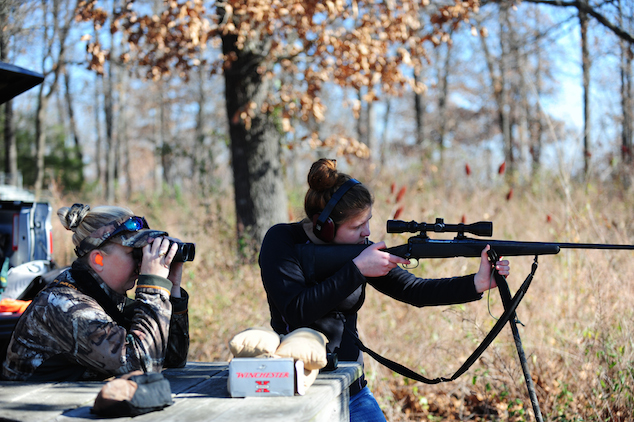
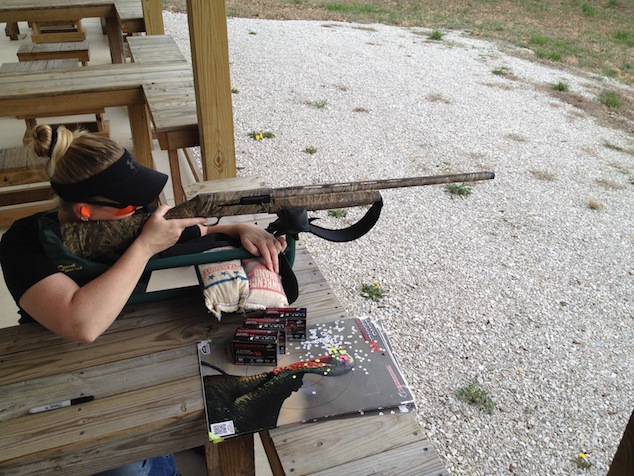
Before going afield, you must take the time to sight in your rifle or pattern your shotgun. Even if you’re going out with the same deer rifle you’ve used for several years, take the time to make sure your gun is still zeroed in. Even the smallest of bumps can sometimes knock sights or scopes off zero.

With shotguns, make sure to pattern them to see which load works best with which choke. Once you get that figured out, make sure to use the same load each time you hunt with that shotgun and choke.

To be an ethical and responsible hunter, you have to know your own and your firearm’s limitations before you step out in the field. As ethical hunters, we always want to make the quickest and most humane kill shots we can.

Marti-patterning

Transporting your firearms

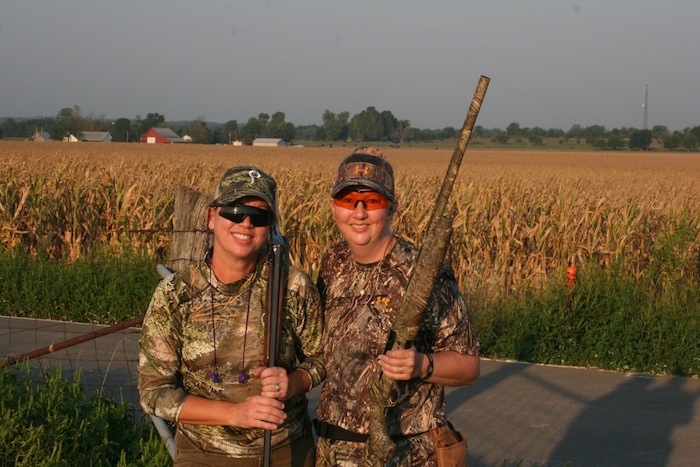
Transporting can be as simple as using a sling to throw the gun over your shoulder, making it easier to carry in the field.

In a vehicle, I highly recommend a case of some sort when transporting firearms, whether it’s a simple zip-up, soft-sided case or a padded, hard-shell transport case. For one thing, a case protects the gun—for another, in some states it is the law. This is another area where it’s necessary to know the regulations and laws in the state you are hunting—or even just traveling through. Some states also require firearms to be cased when transporting them on all-terrain vehicles in the field.

Marti-Davis-truck-copy-2

Follow-through

When throwing a ball, you must follow through to complete the action. The same applies to shooting a rifle or shotgun. Once you make the shot, you must follow through. If you’re shooting a bolt-action or pump-style rifle, follow-through includes working the action and chambering a fresh round. Be ready to make a follow-up shot if necessary. The same goes for shotguns. After you complete the shot, get another shot shell into the chamber and be prepared to make a quick follow-up shot. Of course if you’re using an autoloader, the gun does this for you. Just stay on the gun and be ready in case you need to take another shot.

Storage

After the hunt, be sure to unload and store your firearms properly. As I mentioned when discussing cleaning and maintenance, wipe down or clean your firearms prior to storage. Always make sure to store all guns beyond the reach of children or anyone else you don’t want having access to them. Always store ammunition separately from all firearms.

Marti-and-Barb-afield-copy

These safety rules need to become second nature, yet always in the forefront while you are working with firearms, especially while hunting.

IMG_2075-e1429190999379

Marti Davis

Marti Davis is a staff member for Browning Trail Cameras, WoolX and Mossy Oak.
She is an authority on most types of hunting in North America, and very active in
mentoring the next generation of young hunters.


Follow our FISHING BLOG

WEB   RATES     FISH    HUNT    CABINS    PHOTOS
TESTIMONIALS    BROCHURE    HUNT BOOKLET

Enter your email address to subscribe to this blog and receive notifications of new posts by email.

Go back

Your message has been sent

Warning
Warning
Warning
Email Me....

Warning

Warning.


Tags: , , , , , , , , , ,