RSS

Category Archives: preparation

How To Call Your Shots

Calling a shot simply means the marksman can tell where his bullet hit. This can be done by observing the bullet’s flight and impact or by knowing where the sights were the instant the firearm was triggered. There are two separate, but complementary, ways to call a shot.

shot

When shooting from non-prone positions, witnessing the impact of the bullet is difficult. The trick is to focus intently on the position of the sights and take a mental snapshot of where they were in relation to the target when the bullet was fired.

The best way to develop this skill is through dry-fire practice, coupled with live-fire practice shots at the range. When dry-firing, use a small target that is a challenge to keep the crosshairs on. Don’t fight the wobble of the sight, just smoothly break the shot as it covers the target. Remember where the crosshairs were when the trigger clicked. At the range, do this with every shot.

To actually see your bullet’s impact, you must pair this level of focus with excellent form. If you are square behind the rifle and not putting any pressure on the stock that will cause it to jump to the side under recoil, you’ll be able to watch the bullet and see where it hits.

Follow our FISHING BLOG

WEB   RATES     FISH    HUNT    CABINS    PHOTOS
TESTIMONIALS    BROCHURE    HUNT BOOKLET

Enter your email address to subscribe to this blog and receive notifications of new posts by email.

← Back

Thank you for your response. ✨

Email Me....


Tags: , , , , , , , ,

Make A Vault From PVC

Whether you’re storing beans, bullets, or bars of gold, you’ll need a secure place to keep these potential survival currencies. For a quick solution, you could purchase some expensive olive-drab burial vaults, but does it really matter what color they are if they’re buried in the ground? Follow these easy steps, and you can put together a PVC pipe vault for $15 or less.

pcv1

Materials
First, you’ll need a length of PVC drain pipe. Many stores sell pre-cut two-foot sections, but, if you’re planning to make several of these, it’s cheaper to buy an eight footer and cut it down. For each vault you’ll also need an end cap, a female threaded coupling, and a plug, plus some primer and PVC cement. Four-inch pipe and fittings give you a lot more interior room than three-inch line, but the cost of four-inch fittings is roughly double that of three-inch material.

Construction

Apply your purple primer around each end of the pipe, inside the cap, and inside the female fitting (but not on the threads!). The primer dries very quickly. Once dry, wipe the cement around one end of the pipe and inside the end cap. Do this quickly, it sets up fast! Slide the cap on and press it onto the ground to force the cap on tightly. If you don’t apply pressure for 10 to 15 seconds, the reaction from the cement, primer, and plastic will actually push the fitting apart. Repeat this process with the female fitting, but push on it with the threaded section facing upward (solid cap on the ground again). This keeps cement from running down into the threads.

pcv2

Let the fumes clear out for a day before storing any food in the vault. Otherwise, wait a few hours for the cement to dry. Once you have filled your vault, screw the plug in place tightly. If you’re burying it in a damp area, use a little Teflon tape around the threads. Use pipe dope compound on the threads if you are burying it in a wet location. Use a permanently glued cap on each end if you are submerging the vault in water.

Burial
After you fill your prepper-style treasure chest with loot, bury it in a smart, secure, and memorable location. Fake pet graves, flower beds, and under a mean dog’s doghouse are a few of my top recommendations. You can either bury it horizontally or, if you have a post hole digger, drive a hole straight down and drop it in. The vertical option means minimal surface disturbance and a smaller profile if someone comes along with a metal detector. Just make sure you can find it!

Follow our FISHING BLOG

WEB   RATES     FISH    HUNT    CABINS    PHOTOS
TESTIMONIALS    BROCHURE    HUNT BOOKLET

Enter your email address to subscribe to this blog and receive notifications of new posts by email.

← Back

Thank you for your response. ✨

Email Me....


Tags: , , , , ,

Camouflage Won’t Help IF…….

You’re invisible. Or at least you think you are. After all, you’ve done all the right things: bought that pricey camo that matches your surroundings, painted your face with lots of greasy face paint, and you are even wearing camo boots. Now all you have to do is sit there, soak in a little sunshine, and wait for a big boar to show himself.

SAM_0066

But when a bear does come in, he spots your position and blows out for the next county.  The problem? You set up in the sunlight

A common mistake that has ruined plenty of big-game hunters’ chances is setting up where direct sunlight can reach them. Sunshine turns a camouflaged hunter from an indistinct shadowy figure into a glowing beacon. Dappled sunlight shining through a canopy of leaves isn’t usually a problem. But direct sunlight can reveal your whereabouts and end your hunt.

SAM_0057

Camouflage clothing’s basic function is to break up our outline – tricking our prey’s eyes into passing over us in their constant search for danger. The human silhouette is incredibly distinct in the wilderness – there is no other form like it. To fool game, it is essential to reduce our human outline. The best camo patterns utilize starkly contrasting colors in their design, thus changing us from a human form into something indistinct and non-threatening. Interestingly, for those of you traditional hunters like me – a good plaid pattern like Fred Bear often wore can work almost as effectively as modern camouflage.

Randy Bear


Remember that sunlight moves as the earth rotates. Set up your ambush in a location that allows you to remain shadowed as the light moves around you. If you are still-hunting or stalking, move efficiently through areas of sunshine and then pause to watch and listen when in the shadows.  Set up in dark shade that offers good shooting lanes. Remember to keep your hands and face camo’d up as well – if left uncovered, they are a dead giveaway even in the shadows.

Follow our FISHING BLOG

WEB   RATES     FISH    HUNT    CABINS    PHOTOS
TESTIMONIALS    BROCHURE    HUNT BOOKLET

Enter your email address to subscribe to this blog and receive notifications of new posts by email.

← Back

Thank you for your response. ✨

Email Me....


Tags: , , , , , , , , , , , , ,

Test your Accuracy with Ballistics Software

Ballistics calculators are indispensable tools for making hits on long-range targets, but they are only as accurate as the data they are fed. Many shooters fail to appreciate that some of the initial data input into these calculators are just good guesses and need to be tweaked based on trial-and-error experimentation in the field. However, spend time getting these four calculators dialed in, and you’ll be amazed at the improvement in your accuracy.

shoot1

Field Firing Solutions
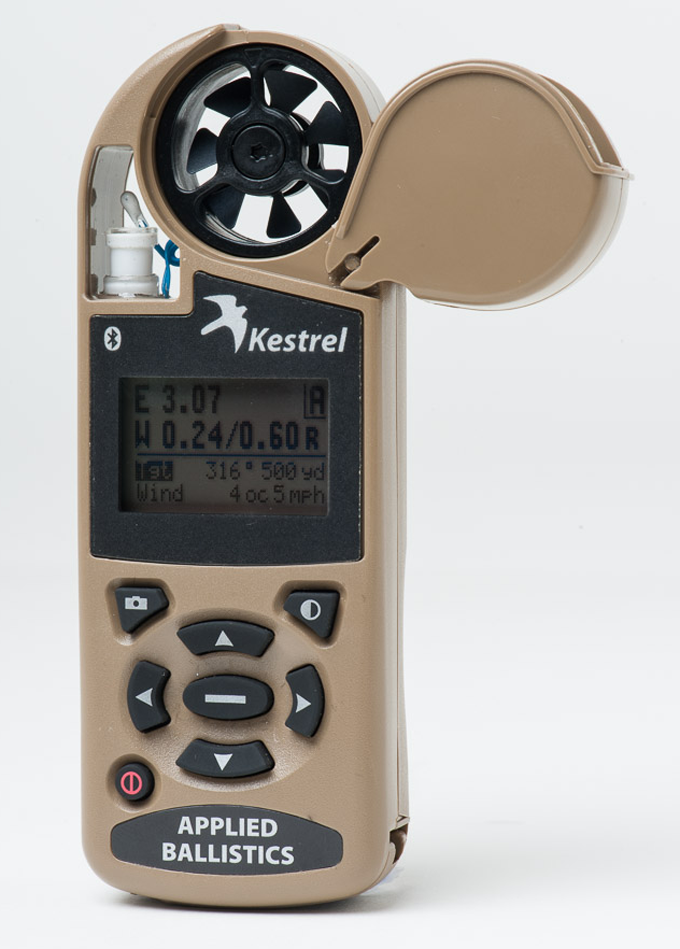
This sophisticated software program comes on an SD card and works with PDAs that run WM 5.0 or above. The program, called Delta V, can work with Bluetooth-enabled Kestrel units to incorporate environmental data at the shooter’s location. This is an advanced program that requires dedication to master, but it is the best on the market. ($395; lextalus.com)

Cold Bore
This software works on both Windows desktop computers and mobile devices running WM operating systems. This calculator doesn’t use a ballistic coefficient (BC) model, but rather one that employs a drag coefficient, which is more precise. The software can be purchased as a bundled package for both desktop and mobile, or individually for either platform. ($150, bundled; $85, individual; patagoniaballistics.com)

Applied Ballistics
This easy-to-use software was developed by Brian Litz, one of the foremost experts on long-range ballistics. It runs on both Android and iOS mobile devices. The calculator comes with a library containing hundreds of custom G1/G7 BC shootprofiles for various bullets. ($30; appliedballisticsllc.com)

JBM Ballistics
This web-based ballistics calculator is both very good and very free. It has a comprehensive library of existing loads, and allows the shooter to tweak the inputs to generate accurate firing solutions. (jbmballistics.com)

How Wind Affects Bullet Flight
Whereas judging a bullet’s drop at long-range is a science, correctly calculating the effect of wind is more of an art. Unseen eddies, sudden gusts, and funnels created by the terrain can all come into play, and it takes practice to pick up on these influences.

Usually, we’re limited to taking a single wind reading at the shooting position. But if we can ascertain only one wind value, that is the one to have. This is because the wind nearest the shooter has the greatest effect on the bullet’s path. Why? Once the projectile starts moving due to the wind, it keeps angling in that direction, even if the conditions are calm down range.

Conversely, if it is only windy down range, the bullet will move less since there is less time remaining in the bullet’s flight.

Follow our FISHING BLOG

WEB   RATES     FISH    HUNT    CABINS    PHOTOS
TESTIMONIALS    BROCHURE    HUNT BOOKLET

Enter your email address to subscribe to this blog and receive notifications of new posts by email.

← Back

Thank you for your response. ✨

Email Me....


Tags: , , ,

Make A Vault From PVC

Whether you’re storing beans, bullets, or bars of gold, you’ll need a secure place to keep these potential survival currencies. For a quick solution, you could purchase some expensive olive-drab burial vaults, but does it really matter what color they are if they’re buried in the ground? Follow these easy steps, and you can put together a PVC pipe vault for $15 or less.

pcv1

Materials
First, you’ll need a length of PVC drain pipe. Many stores sell pre-cut two-foot sections, but, if you’re planning to make several of these, it’s cheaper to buy an eight footer and cut it down. For each vault you’ll also need an end cap, a female threaded coupling, and a plug, plus some primer and PVC cement. Four-inch pipe and fittings give you a lot more interior room than three-inch line, but the cost of four-inch fittings is roughly double that of three-inch material.

Construction

Apply your purple primer around each end of the pipe, inside the cap, and inside the female fitting (but not on the threads!). The primer dries very quickly. Once dry, wipe the cement around one end of the pipe and inside the end cap. Do this quickly, it sets up fast! Slide the cap on and press it onto the ground to force the cap on tightly. If you don’t apply pressure for 10 to 15 seconds, the reaction from the cement, primer, and plastic will actually push the fitting apart. Repeat this process with the female fitting, but push on it with the threaded section facing upward (solid cap on the ground again). This keeps cement from running down into the threads.

pcv2

Let the fumes clear out for a day before storing any food in the vault. Otherwise, wait a few hours for the cement to dry. Once you have filled your vault, screw the plug in place tightly. If you’re burying it in a damp area, use a little Teflon tape around the threads. Use pipe dope compound on the threads if you are burying it in a wet location. Use a permanently glued cap on each end if you are submerging the vault in water.

Burial
After you fill your prepper-style treasure chest with loot, bury it in a smart, secure, and memorable location. Fake pet graves, flower beds, and under a mean dog’s doghouse are a few of my top recommendations. You can either bury it horizontally or, if you have a post hole digger, drive a hole straight down and drop it in. The vertical option means minimal surface disturbance and a smaller profile if someone comes along with a metal detector. Just make sure you can find it!

Follow our FISHING BLOG

WEB   RATES     FISH    HUNT    CABINS    PHOTOS
TESTIMONIALS    BROCHURE    HUNT BOOKLET

Enter your email address to subscribe to this blog and receive notifications of new posts by email.

← Back

Thank you for your response. ✨

Email Me....


Tags: , , , , ,

Camouflage Won’t Help IF…….

You’re invisible. Or at least you think you are. After all, you’ve done all the right things: bought that pricey camo that matches your surroundings, painted your face with lots of greasy face paint, and you are even wearing camo boots. Now all you have to do is sit there, soak in a little sunshine, and wait for a big boar to show himself.

SAM_0066

But when a bear does come in, he spots your position and blows out for the next county.  The problem? You set up in the sunlight

A common mistake that has ruined plenty of big-game hunters’ chances is setting up where direct sunlight can reach them. Sunshine turns a camouflaged hunter from an indistinct shadowy figure into a glowing beacon. Dappled sunlight shining through a canopy of leaves isn’t usually a problem. But direct sunlight can reveal your whereabouts and end your hunt.

SAM_0057

Camouflage clothing’s basic function is to break up our outline – tricking our prey’s eyes into passing over us in their constant search for danger. The human silhouette is incredibly distinct in the wilderness – there is no other form like it. To fool game, it is essential to reduce our human outline. The best camo patterns utilize starkly contrasting colors in their design, thus changing us from a human form into something indistinct and non-threatening. Interestingly, for those of you traditional hunters like me – a good plaid pattern like Fred Bear often wore can work almost as effectively as modern camouflage.

2 bear sized


Remember that sunlight moves as the earth rotates. Set up your ambush in a location that allows you to remain shadowed as the light moves around you. If you are still-hunting or stalking, move efficiently through areas of sunshine and then pause to watch and listen when in the shadows.  Set up in dark shade that offers good shooting lanes. Remember to keep your hands and face camo’d up as well – if left uncovered, they are a dead giveaway even in the shadows.

Follow our FISHING BLOG

WEB   RATES     FISH    HUNT    CABINS    PHOTOS
TESTIMONIALS    BROCHURE    HUNT BOOKLET

Enter your email address to subscribe to this blog and receive notifications of new posts by email.

← Back

Thank you for your response. ✨

Email Me....


Tags: , , , , , , , , , , , , ,

Test your Accuracy with Ballistics Software

Ballistics calculators are indispensable tools for making hits on long-range targets, but they are only as accurate as the data they are fed. Many shooters fail to appreciate that some of the initial data input into these calculators are just good guesses and need to be tweaked based on trial-and-error experimentation in the field. However, spend time getting these four calculators dialed in, and you’ll be amazed at the improvement in your accuracy.

shoot1

Field Firing Solutions
This sophisticated software program comes on an SD card and works with PDAs that run WM 5.0 or above. The program, called Delta V, can work with Bluetooth-enabled Kestrel units to incorporate environmental data at the shooter’s location. This is an advanced program that requires dedication to master, but it is the best on the market. ($395; lextalus.com)

Cold Bore
This software works on both Windows desktop computers and mobile devices running WM operating systems. This calculator doesn’t use a ballistic coefficient (BC) model, but rather one that employs a drag coefficient, which is more precise. The software can be purchased as a bundled package for both desktop and mobile, or individually for either platform. ($150, bundled; $85, individual; patagoniaballistics.com)

Applied Ballistics
This easy-to-use software was developed by Brian Litz, one of the foremost experts on long-range ballistics. It runs on both Android and iOS mobile devices. The calculator comes with a library containing hundreds of custom G1/G7 BC shootprofiles for various bullets. ($30; appliedballisticsllc.com)

JBM Ballistics
This web-based ballistics calculator is both very good and very free. It has a comprehensive library of existing loads, and allows the shooter to tweak the inputs to generate accurate firing solutions. (jbmballistics.com)

How Wind Affects Bullet Flight
Whereas judging a bullet’s drop at long-range is a science, correctly calculating the effect of wind is more of an art. Unseen eddies, sudden gusts, and funnels created by the terrain can all come into play, and it takes practice to pick up on these influences.

Usually, we’re limited to taking a single wind reading at the shooting position. But if we can ascertain only one wind value, that is the one to have. This is because the wind nearest the shooter has the greatest effect on the bullet’s path. Why? Once the projectile starts moving due to the wind, it keeps angling in that direction, even if the conditions are calm down range.

Conversely, if it is only windy down range, the bullet will move less since there is less time remaining in the bullet’s flight.

Follow our FISHING BLOG

WEB   RATES     FISH    HUNT    CABINS    PHOTOS
TESTIMONIALS    BROCHURE    HUNT BOOKLET

Enter your email address to subscribe to this blog and receive notifications of new posts by email.

← Back

Thank you for your response. ✨

Email Me....


Tags: , , ,

HOW SCENT ACTUALLY WORKS

scent2Scent is a mysterious  and often grossly misunderstood aspect amongst those who not only pursue game with hounds or other hunting dog breeds, but all hunters in general.

Scent is simply comprised of micro parti­cles of disturbed vegetable matter and/or released dead body cells drifting from the targeted subject. Vegetable matter can be crushed plant material or even minute surface dwelling bio-material living upon hard surfaces like concrete or rock.  Dead body cells consist of drifting dead skin, fur or feather cells eventually falling to the ground.  This may also include fluids, oils and vapors the body expels.

How long does a scent trail last?  That depends on given environmental conditions. The trail won ‘t exist very long if it has been hot and windy over dry surfaces.  In contrast, it will sur­vive much longer in cool, moist conditions upon grassy areas with no wind exposure.

Here are some Myths about scenting:

1.
“Animals can’t smell me when I apply scent-free products like special soaps, sprays or even wear scent free clothing.’   If you are liv­ing and breathing, you are giving off scent.  Although these products may lessen the scent intensity from your person, a Bloodhound can find you in the woods within minutes.  It is impossible for any human to be scent free.

2.
“Hounds can’t run a scent trail in the rain.”  Scent parti­cles tend to be hydrophilic, meaning they readily soak up moisture and create an effluvium of scent for the canine olfactory system.  Hounds have successfully found humans and animals in the pounding rain.  Any good hunting breed should be able to trail game in light to moder­ate rain.

3.
“My dog sometimes ground scents and other times he air scents.”  I suppose if your dog’s nose is on the ground, you can call that ground scenting and if it’s in the air, you can call that air scenting. Is it called water scenting if he sniffs a running creek or tree scenting if he barks up a tree?  Scent is scent!

imagesY2AQPWJMThe canine’s nose is attracted to the strongest scent source available at that moment during trailing.  The canine has thousands more scent receptors than humans. A roaming nose is a hunting nose; let it be.

If you want to see how your dog scents, ignite a brightly colored smoke bomb outdoors with plenty of room to observe and follow the pock­ etc. of floating smoke. Watch how clouds of smoke slowly break apart, climb high into tree tops, sink down into ravines or just lazily snake over the high grass. Wind, atmospheric pressure, humidity, temperature, etc. ….all affect the smoke as it does with scent. That is why your trailing dog runs, stops, circles around, runs again ….. Let him work it out without interference from you. Scenting is his world, not yours.

You can improve your game scent trailing by taking advantage of the best environmental conditions available, as well as staying away from proven scent killers, i.e…..hot and dry surfaces, vehicle exhaust fumes or petroleum products. Trying to scent a hound on a fresh track next to a chugging hunting rig is like us trying to smell a rose over a smoky camp fire.

bait

As much as we now know about scent, there is still plenty of scientific work to be done. As a hunter, you must understand how scent works whether you use a canine partner or not.  Whether hunting birds or bear, scent is always there.

Keep the wind on your face, the sun to your back and hunt like a predator!

Follow our FISHING BLOG

WEB   RATES     FISH    HUNT    CABINS    PHOTOS
TESTIMONIALS    BROCHURE    HUNT BOOKLET

Enter your email address to subscribe to this blog and receive notifications of new posts by email.

← Back

Thank you for your response. ✨

Email Me....


Tags: , , , , , , , , , , , , ,

Tips On How to Shoot Fast

by David E. Petzal

How_to_Shoot_Fast

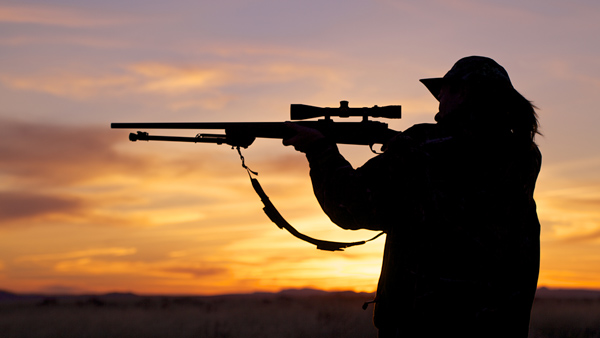
The sign of a first-rate intelligence, said F. Scott Fitzgerald, is the ability to hold two conflicting ideas in the mind and still function. So it is with fast rifle work. Riflery is a sport of deliberation and precision, but the demands of the real world very often make deliberation and precision impossible. Gunsite Academy sums it up to a T: “A good fast shot is better than a slow perfect shot because you won’t get time for the perfect shot.”

What follows is about shooting quickly after you have positively identified your target. It’s not about blazing away at sounds or snap-shooting at what you think is an animal.

Develop Your Mental Clock
The first step in shooting fast has nothing to do with shooting. It involves learning how much time you have to shoot, and whether you have to shoot fast at all. Much of this can be acquired by watching critters and reading their body language. A whitetail aware of evil nearby does not act like a whitetail whose greatest worry is where he’ll find a date that evening. An animal that’s 400 yards away does not act at all like the animal right under your tree stand.

On occasion, I’ve given the hunters with me heart failure because I waited and waited for a critter to move just a little bit to give me the exact shot I wanted. And I always got it because I knew that animals never stand still, and I knew that whatever I was about to drop the hammer on had no idea anything was amiss.

Eschew Perfection
Unlike shot gunners, who send out hundreds of pellets with every pull of the trigger and are happy if one or two of them get the job done, riflemen have it dinned into them that they have to be precise. It’s not enough to get a bullet in the 10-ring; you want to get it in the X-ring. If you’re shooting groups, you want to shave off every tenth of an inch you possibly can. And the way you do this is by being deliberate and getting everything perfect before you pop a cap.
547e9416-31d5-4b8e-9e13-35f18ec88b17

This is exactly the opposite of how a good game shot operates. Animals have not evolved with 10-rings or X-rings. What they have are hearts and lungs, and a hit anywhere in either counts. Modern hunting bullets are so destructive that catching a distant corner of a lung will result in as certain a kill as a shot right through the middle of said organ.

Don’t Forget to Aim

On the other hand, you still have to aim. Many misses occur because hunters panic, get the crosshairs somewhere in what they think is the general vicinity of the beast, and yank the trigger. (The closer the critter, the more this seems to happen.) A little while back I listened to a Wyoming outfitter recounting in disbelief how a client, resting his rifle on shooting sticks, had managed to shoot an elk in the buttocks at 60 yards. “How do you hit an 800-pound animal in the ass at 60 yards?” he asked me, still indignant. (He tracked the poor creature for two days and eventually lost it.)
is
The answer is simple. When the moment comes, most hunters can only think: “OMG, this is the only chance I’m going to get!” Everything else, such as the fundamentals of riflery, goes right out of their heads.

Furthermore, too many hunters don’t practice. For them, the mechanics of mounting the gun, acquiring the sight picture, and pulling the trigger are about as familiar as those of piloting a space capsule.

What to Do?

I can’t tell you how to acquire cold blood. Jerry Fisher, the great custom gun maker, once told me that after you take about 300 head of big game you calm down. That sounds about right.

Short of that, the way to learn to shoot fast is roughly this: First, know your animal. There is no shortage of game-critter anatomical charts that you can study. Know where the lungs are. That’s always the percentage shot.

Second, when it comes time to shoot for real, envision an aiming point on the beast and hold for that. And the nanosecond the cross hairs are even close to it—not precisely on it—shoot. Fast, good shots, remember?

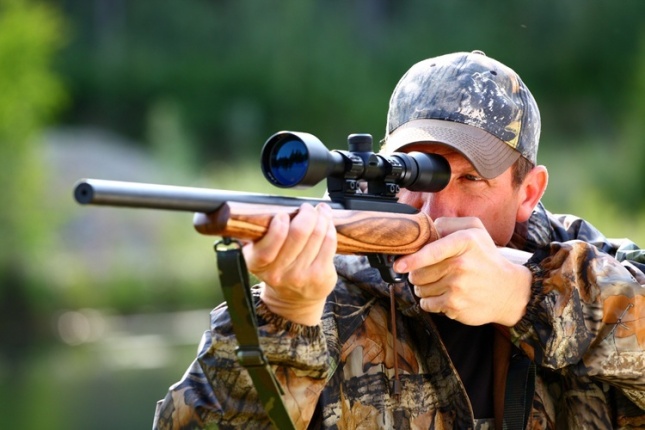
To practice shooting fast, you need a .22 rifle and a whole bunch of NRA 50-Yard Slow Fire Pistol targets. These have an 8-inch bull that’s just about the size of an animal’s boiler room. Set your scope at its lowest power and, at 20 yards, fire a five-shot string, lowering the gun from your shoulder between shots. What you’re trying to do is get that round off the instant the cross hairs are anywhere in the bull’s-eye. If the bullet hits in the bull, it counts. If it doesn’t, you missed.
sighting-rifle-deer-hunting

It takes me about 1.7 seconds to mount the rifle, aim, and get the shot off. Since my skill with a gun is legendary, bordering on mythical, this is a good time for you to try to match. When you can get all five rounds in the black, every time, back up 5 yards. Eventually you will be shooting from 100 yards, and if you can put 20 out of 20 shots into the bull at that distance, shooting fast, I will buy you a cigar. Or you can buy me one for telling you this stuff.

Follow our HUNTING BLOG

WEB   RATES     FISH    HUNT    CABINS    PHOTOS
TESTIMONIALS    BROCHURE    HUNT BOOKLET
Enter your email address to subscribe to this blog and receive notifications of new posts by email.

← Back

Thank you for your response. ✨

Email Me....


Tags: , , , , , , , ,

Bargain vs. Premium Ammo

You get what you pay for. That’s an adage we generally believe in. But does it hold up with respect to ammunition? We set out to answer that question by testing the accuracy of a variety of value-priced .308 hunting ammo against more costly stuff.

ammo1

Methodology
Using three .308 rifles in the test—one hunting rig and two precision rifles that we knew would be ringers.

We put a number of budget and premium loads through all three rifles over the course of one day, ensuring the results wouldn’t be influenced by different environmental conditions. We also used a standard 5-shot-group protocol, and shot two groups with each load at 100 yards. As a control to establish a baseline level of accuracy for each rifle, we also shot 5-shot groups using Federal’s Gold Medal load with 175-grain Sierra BTHPs.

Using the baseline match load to calculate a ratio for each hunting load by dividing the size of the hunting-load groups into the size of the match-load groups. The closer to 1 that ratio is, the better the hunting load performed. None of the hunting loads outshot the match load, so all these ratios were greater than one.

Results
The outcome was interesting. The best hunting ammo was Hornady’s American Whitetail 150-grain Interlock SP. Compared to the baseline groups with the match ammo, this budget-priced load ($19.29 for a box of 20) shot nearly as well as the match ammo in all three rifles and had an impressive 1.41 average ratio. Federal’s Fusion, another bargain ammo ($21.49 for a box of 20) was second best among the loads, with an average ratio of 2.02.

The only expensive load that delivered consistent performance in all three rifles was Federal’s 165-grain Trophy Bonded Tip ($34.49 per box), The two Winchester loads had nearly identical levels of performance, though again, the less expensive 180-grain BST (2.11 ratio average) outshot the more expensive 150-gr. XP3 (2.81 ratio average).

ammo2

It’s worth noting when purchasing premium ammo that the promise of greater accuracy is certainly implied because it uses better quality components, but that much of its benefit is based on the idea that it will perform better on game.

Conclusion
It pays to try different loads in several different bullet weights in your rifles. Investing money to find an accurate load is the cheapest way to get the most from your rig.

Follow our FISHING BLOG

WEB   RATES     FISH    HUNT    CABINS    PHOTOS
TESTIMONIALS    BROCHURE    HUNT BOOKLET

Enter your email address to subscribe to this blog and receive notifications of new posts by email.

← Back

Thank you for your response. ✨

Email Me....


Tags: , , , , , , , , ,