RSS

Category Archives: cooking

Building A Smoke House

9c

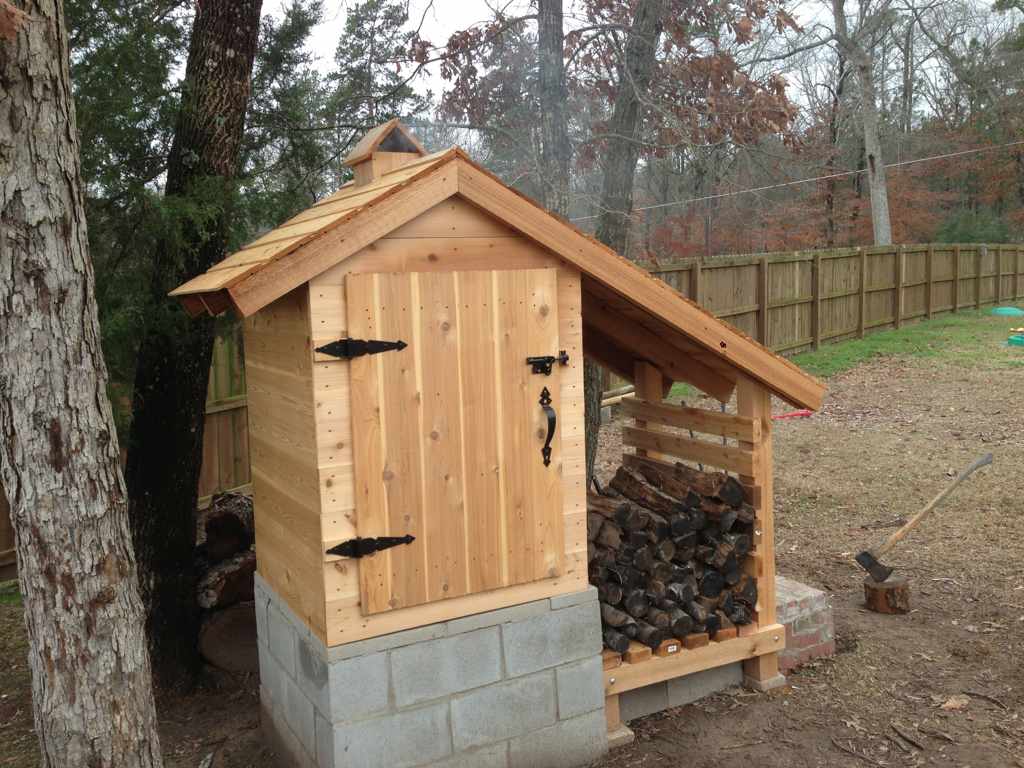
Building a smoke house the old fashion way is a method that has been used for generations. Many people today like to smoke their own meat not only to give it flavor but also to preserve it longer.

The size of your smoker will depend on what you plan to use it for. Whether you want it to just smoke a few fish, smoke sausage every now and then or smoke an entire animal at one time, will help you determine the size of your smoker

1

Beginning:

This slideshow requires JavaScript.

When it comes to flavor of the meat, people through the years have made up their own recipe of brine to rub over the meat before smoking it.

How To Build A Smoke House
9b

The Building Process:

This slideshow requires JavaScript.

Building a smoke house, there are a few things that should be considered when building your smoke house. It is not important to spend a small fortune for material for the construction. Reclaimed wood will work just fine. You may want a smoker big enough to walk in with shelves to lay the meat on along with hocks from the rafters to hang the meat.

You will want to vent the building to allow the smoke to travel freely through the building.

6d

The Firebox Process:

This slideshow requires JavaScript.

Building a smoke house, a very important factor  is to situate your fire box  down hill from the smoke house. This will allow the smoke to travel up hill into the smoker much easier. All that is required for a fire box is a fire box made from brick or even an old barrel with the smoke piped into the smoker will work just fine by having the fire box away from the smoker, the meat will not dry out as much as if it were right in the smoker.

1a

The Smoking Process:

This slideshow requires JavaScript.

To also help in the flavoring of the meat, by using different kinds of wood chips in the fire box will create different smoke changing the flavor in the meat.

Follow our FISHING BLOG

WEB   RATES     FISH    HUNT    CABINS    PHOTOS
TESTIMONIALS    BROCHURE    HUNT BOOKLET

Enter your email address to subscribe to this blog and receive notifications of new posts by email.

Go back

Your message has been sent

Warning
Warning
Warning
Email Me....

Warning

Warning.


Tags: , , , , , , , , , , , ,

Stop Adding Fat to Your Game Meat

While my Wyoming elk tag has so far gone unfilled, my friend Tess was luckier, tagging her first elk in a Nebraska cornfield not long ago. A heat wave prompted us to spend all day Sunday butchering and last night we put about 20 lbs. of trimmings through the grinder.

I’ve been processing my own (and others) deer and elk for about a dozen years and view adding some type of fat to ground venison as a necessary evil. I prefer ground pork, adding anywhere from 10 to 20 percent. Due to a calculating error on my part (I was told there would be no math!), Tess’ grind ended up at about 25 percent pork, a bit more than she preferred.

Ground_Elk_0910_004
This math problem set me to wondering why hunters take a healthy source of protein and fatten it up? That’s like someone on a diet taking a carrot stick and dipping it in ranch dressing. Quick research shows no clear consensus on what or how much fat to add. Some hunters swear by 50/50, others just 10 percent. Some like pork, others beef tallow. Some add bacon ends and pieces.

Certainly, there’s a rationale to adding fat, including enhancing flavor because, hey, we all know fat tastes good. Fat also keeps meat from drying out when you fry it and helps patties from falling apart. But is there a better, healthier alternative? Yes, depending on how you’re planning to cook it.

Burgers on the grill are probably how much of the ground venison in America makes it to the table. I’ll be the first to admit, making a good burger without fat sounds impossible. The fat not only makes a burger juicy, it also helps it stay in patty form. Next time you have some 100 percent ground venison you want to throw on the grill, trying adding an egg and some breadcrumbs to serve as a binder. I’ve also heard of using steel-cut oats, diced onion, shredded potato and even powdered milk.

When frying ground venison for tacos, chili or spaghetti, cook it without fat. The spices should cover any gamy flavor you or your family might object to. (If not, find a new butcher to process your deer or learn to do it yourself. Since I started DIY processing 12 years ago, I’ve never had gamy game meat.) If the dry texture turns you off, try frying it in a little bit of olive oil, or add moisture as the venison browns in the form of stock, tomato juice or other flavored liquid.

As you can see, there are lots of alternatives to adding fat to your ground venison. What about you? How do you keep your low-fat game meat low fat? – David Draper, Wild Chef Blogger

Follow our FISHING BLOG

WEB   RATES     FISH    HUNT    CABINS    PHOTOS
TESTIMONIALS    BROCHURE    HUNT BOOKLET

Enter your email address to subscribe to this blog and receive notifications of new posts by email.

Go back

Your message has been sent

Warning
Warning
Warning
Email Me....

Warning

Warning.


Tags: , , , , , , , , ,

The Game Saver Silver Vacuum Sealing System

Gamesaver2

 Last fall I replaced my Cabela’s CG-15 vacuum sealer with a new model from FoodSaver—the GameSaver Silver (GS-500), which is marketed toward sportsmen. I had originally picked up the CG-15 as a refurbished unit in Cabela’s Bargain Cave, but after probably a decade of hard use that included several elk, a couple dozen deer, a few bear and antelope, and several seasons worth of geese and ducks, it was starting to show some wear and tear. When the folks at FoodSaver reached out offering a test model of their GameSaver Silver, I was happy to take them up on it. If nothing else, I wouldn’t have to cart that beast of vacuum sealer that was the CG-15 up and down my stairs anymore.

One problem I’ve had with a lot of vacuum sealer—including so-called “commercial-grade” models—is that after a season or two of intensive use they start to suck, in that they lose some of their vacuum pressure. You might get the device to remove a lot of the air, but it doesn’t have that extra oomph to really get a good, airtight package. So far, I’ve sealed a couple of deer, one antelope, countless ducks, geese, and pheasants, and about 50 pounds of redfish fillets—and the GameSaver Silver still has enough suck to flatten an empty aluminum can, as you can see in the accompanying photo.

Gamesaver1Of course, there’s also the case of too much vacuum, especially when you’re sealing soft or delicate foods. That’s where the GameSaver’s seal override button comes in. While sealing these pheasant sausages, I was able to stop the vacuum pressure before it flattened the tubed meat by hitting the oversized seal button.

Gamesaver3


Other features I like are the handle and locking lid, which makes toting the lightweight unit easy and makes me more likely to pack the thing along on extended hunting trips. It also comes with a 12-volt adapter cord to run off a vehicle’s electrical accessory port, or, to us old timers, the cigarette lighter plug. I am a little concerned about the ruggedness of the GameSaver’s construction, but so far it’s survived nearly a year of my handling, which is saying something.

There are a few things I don’t like: The heat bar seems like it takes a long time to seal, longer than any other units I’ve tested. Some online reviewers have also complained about a tendency for the unit to overheat and shut down for a period of anywhere from 5 to 30 minutes. I personally haven’t had that problem, even when packaging an entire deer’s worth of meat, but it is worth noting.

Of course, there’s also the problem with sealing fish, chicken, or other high-moisture items. As the vacuum is running, the liquid is sucked to the top of the bag preventing the heat bar from creating a full seal. Every vacuum sealer I’ve ever used has this same problem, although the GameSaver Silver seems to be even more finicky than most. I usually combat this with either a folded-up piece of paper towel placed inside the bag or by stopping the vacuum and sealing the bag before the moisture makes it way to the seal bar. FoodSaver does sell Liquid Block bags that feature a moisture-absorbing pad. I’ve used them and they do work, but at a buck per bag, I’ll stick with my more primitive, cheaper methods.

by David Draper

Follow our FISHING BLOG

WEB   RATES     FISH    HUNT    CABINS    PHOTOS
TESTIMONIALS    BROCHURE    HUNT BOOKLET

Enter your email address to subscribe to this blog and receive notifications of new posts by email.

Go back

Your message has been sent

Warning
Warning
Warning
Email Me....

Warning

Warning.


Tags: , , , , ,

Recipe: Moose Tenderloin Lettuce Wraps

This super simple lunch idea will definitely be something you’ll be sure to make over and over.

mooselettucewrapscopy-600x399


Ingredients
marinated moose tenderloin (thinly sliced) Get Marinate Recipe HERE

1 head butter lettuce
1 carrot
1 mini cucumber
feta cheese

Honey Cherry Dressing
1/2 cup cherries
3/4 cup red wine
2 tbsp honey

For the cherry dressing simply put all the ingredients in a saucepan, bring to a boil and reduce heat and simmer.  Describe it as, once you can’t smell the alcohol anymore it’s ready!  Take it off the burner and let cool.  As it cools it will gradually thicken.

Pan fry the moose until desired done-ness.  If you are like me and you like your meat not kicking anymore, then simply remove the meat just before its cooked all the way through.  If it’s sliced thinly it will continue to cook after you take it out of the pan and will be the exact done-ness and will be nice and tender.

Next up shave your vegetables.  Grab a potato peeler and shaved off nice strands of carrots and cucumbers to add in to the lettuce cups.  If you prefer them chopped or grated, by all means go right ahead!

Place your butter lettuce leaves on a plate and begin to assemble and alternated between moose and veggies, crumble feta cheese on top and drizzle the Honey Cherry Dressing on top.

Make as many lettuce cups as you’d like depending on how much meat you used!

Enjoy!

Follow our FISHING BLOG

WEB   RATES     FISH    HUNT    CABINS    PHOTOS
TESTIMONIALS    BROCHURE    HUNT BOOKLET

Enter your email address to subscribe to this blog and receive notifications of new posts by email.

Go back

Your message has been sent

Warning
Warning
Warning
Email Me....

Warning

Warning.


Tags: , , , , , , , , ,

Building A Smoke House

9c

Building a smoke house the old fashion way is a method that has been used for generations. Many people today like to smoke their own meat not only to give it flavor but also to preserve it longer.

The size of your smoker will depend on what you plan to use it for. Whether you want it to just smoke a few fish, smoke sausage every now and then or smoke an entire animal at one time, will help you determine the size of your smoker

1

Beginning:

This slideshow requires JavaScript.

When it comes to flavor of the meat, people through the years have made up their own recipe of brine to rub over the meat before smoking it.

How To Build A Smoke House

9b

The Building Process:

This slideshow requires JavaScript.

Building a smoke house, there are a few things that should be considered when building your smoke house. It is not important to spend a small fortune for material for the construction. Reclaimed wood will work just fine. You may want a smoker big enough to walk in with shelves to lay the meat on along with hocks from the rafters to hang the meat.

You will want to vent the building to allow the smoke to travel freely through the building.

6d

The Firebox Process:

This slideshow requires JavaScript.

Building a smoke house, a very important factor  is to situate your fire box  down hill from the smoke house. This will allow the smoke to travel up hill into the smoker much easier. All that is required for a fire box is a fire box made from brick or even an old barrel with the smoke piped into the smoker will work just fine by having the fire box away from the smoker, the meat will not dry out as much as if it were right in the smoker.

1a

The Smoking Process:

This slideshow requires JavaScript.

To also help in the flavoring of the meat, by using different kinds of wood chips in the fire box will create different smoke changing the flavor in the meat.

Follow our FISHING BLOG

WEB   RATES     FISH    HUNT    CABINS    PHOTOS
TESTIMONIALS    BROCHURE    HUNT BOOKLET

Enter your email address to subscribe to this blog and receive notifications of new posts by email.

Go back

Your message has been sent

Warning
Warning
Warning
Email Me....

Warning

Warning.


Tags: , , , , , , , , , , , ,

Grinding Wild Game with Meatloaf Recipe

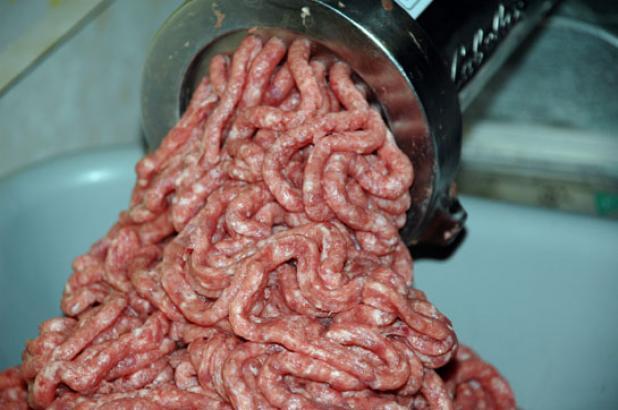
For foodies, especially those smart enough to eat within their means, there is no better everyday meat than wild-game burger, whether it is from elk, antelope, moose, or most likely, whitetail deer. No meat sold at the farmer’s market is more local, humanely raised, drug free, and genetically unmodified than that from a wild animal cleanly killed by the hunter. And if you process it yourself, you know exactly what you’re getting. No mystery meat or pink slime scares when it’s done D.I.Y. If you do decide to do the grinding at home, there are a few things to note when processing wild game into ground meat. Here are few tips to get the best from your burger.

Ground_Wild_Game

1. Buy The Best Grinder You Can Afford—and Keep it Sharp
An underpowered grinder, or one with a dull knife, won’t grind meat cleanly. If the meat coming from the grinder plate looks like it’s been extruded rather than cut, make sure the back of the plate is free from sinew and the retaining ring is on tight.

2. You Get Out What You Put In
Who knows what ground meat from the grocer contains. When you do it yourself, you control the final product. Make sure you clean your meat well and trim with a judicious, yet keen, hand. Trim sinew, yellow fat, silverskin, and all bloodshot meat before it goes into the grinder.

3. Keep Things Cold
You’ll get a much better grind with less smear if your meat, and the grinder, is cold. Put cubed meat in the freezer for at least 30 minutes until it’s firm, but not hard, to the touch. Also, throw the grinder neck, auger, blades, and plate in there as well.

4. Don’t Forget Fat
Beef has fat built right in, but wild game burger needs a boost. You can use several things to up the fat content (and flavor) depending on what the final product is going to be. Bacon trimmings (sold in boxed form often called Ends and Pieces) add a distinctive flavor to burgers and meat loaf. Beef tallow and pork butt are both available from good butchers and make great fat additives. You can control the ratio of meat to fat, but I like somewhere in the neighborhood of 10 to 15 percent. Experiment until you find what’s right for you.

5. Or, Cut The Fat
Some folks want to cut the fat altogether and that’s fine, too. Just realize that a 100-percent wild-game burger can be very dry and will fall apart when cooked. To avoid crumbly burger, consider adding some type of moisture as you form your patties (same goes for meatloaf). This can be anything from eggs to bread crumbs soaked in milk. Last summer, Wild Chef readers turned in a bunch of great ideas for better burgers.

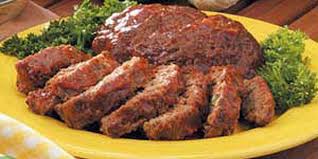
Meat Loaf

Ingredients
– 1 lb. ground meat
– 8 oz. can tomato sauce
– 1 egg, beaten
– 16 to 20 Saltine cracker crumbs
– 1/2 cup of dry oatmeal
– 1/2 onion, chopped
– ¼ cup ketchup

imagesUB61KB7K

Directions:
1. Preheat the oven to 350 degrees. In a large bowl, mix ground meat with tomato sauce and beaten egg.

2. Crush the Saltines in a gallon-sized zip-top bag and mix in the dry oatmeal and chopped onion.

3. Add the dry ingredients to the meat-egg mixture and, using your hands, blend thoroughly.

4. Form meat mixture into a loaf pan. Liberally cover top with ketchup. Bake for 45 min to 1 hour.

Follow our FISHING BLOG

WEB   RATES     FISH    HUNT    CABINS    PHOTOS
TESTIMONIALS    BROCHURE    HUNT BOOKLET

Enter your email address to subscribe to this blog and receive notifications of new posts by email.

Go back

Your message has been sent

Warning
Warning
Warning
Email Me....

Warning

Warning.


Tags: , , , , , , , , ,

How to Make Game Stock

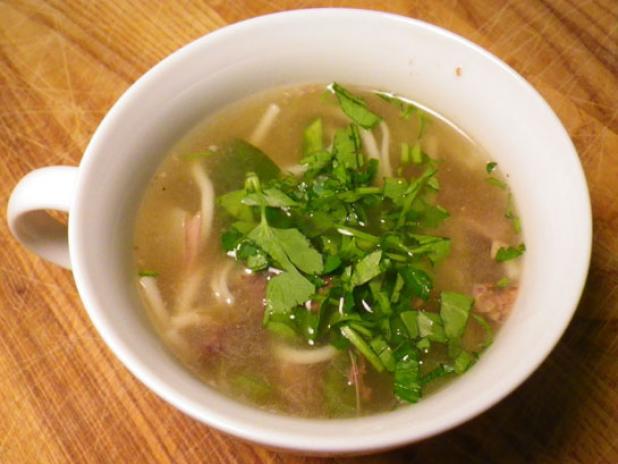
One thing you can do to amp your kitchen credibility quickly is learning to make stock—a flavorful cooking liquid that forms the base of many soups, sauces, and other recipes. Making homemade stock from venison bones or bird carcasses not only give your favorite dishes, such as the duck pho in the photo, a flavor boost, but you’ll be get every last scrap of use from your bird or game animal.

duckpho

The stock making process starts with a scrap bag—a gallon-size Ziploc kept in the freezer that collects the trimmings from onions, carrots, celery and other vegetables. (Of course, you can also make stock with fresh ingredients, but this method is kind of like saving your pennies for a rainy day.) A simple stock can be made by adding the ingredients of the scrap bag into a pot with the leftover carcass from a pheasant, grouse, duck, or goose, deer leg bones or other game scraps, covering everything with water and letting it simmer for a short period of time, say 30 minutes to an hour. However, with just a couple more steps and a bit more time (mostly unattended), you can achieve a richer, fuller flavor by roasting the scraps before soaking them.

Here’s a recipe for pheasant stock, but you could easily substitute the pheasant carcass for just about any game bird or whole or cut leg bones from deer, elk, moose, and other venison.

Stock Recipe

Ingredients
– Pheasant carcass or assorted pheasant bones (NOTE:  You can use any game bird)
– 1 cup each of celery, carrot, and onion scraps
– Assorted herbs, including thyme, parsley, and rosemary
– 1 bay leaf
– 12 cups water (or enough to cover pheasant)

Directions:
1. Preheat the oven to 450 degrees. Place the pheasant bones and vegetables in Dutch oven or heavy, ovenproof stock pot. Place the uncovered pot in the oven and roast for 30 minutes, or until ingredients are browned.

2. Move the pot to the stovetop set the heat to medium-high and add a few cups of water, scraping the bottom of the pan to loosen any browned bits. Cover the pheasant and vegetables with the remaining water, add the herbs and the bay leaf and raise the heat.

3. When the water just starts to boil, remove any scum that has risen to the top. Lower the heat and cover the pot. Simmer slowly for at least 1 hour; two is even better.

4. After a few hours, remove the pot from the heat and let it cool slightly. Remove the bones and vegetables with a slotted spoon and discard. Pour the stock through a cheesecloth-lined strainer or other fine sieve.

You can let the stock sit overnight in the fridge and skim any hardened fat from it the next day, though, with lean birds like pheasants, this generally isn’t necessary.

Stock can be stored for up to a week in the refrigerator or several months, covered, in the freezer.

Follow our FISHING BLOG

WEB   RATES     FISH    HUNT    CABINS    PHOTOS
TESTIMONIALS    BROCHURE    HUNT BOOKLET

Enter your email address to subscribe to this blog and receive notifications of new posts by email.

Go back

Your message has been sent

Warning
Warning
Warning
Email Me....

Warning

Warning.


Tags: , , , , , , , , , ,

Canning Wild Game

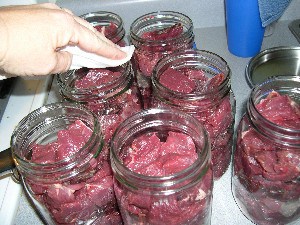
mainMeat, poultry, and game are low acid foods and must be canned or processed in a pressure canner to assure it is safe to eat.

1. Canning frees up freezer space for other things.
2. Pressure canning can make the less tender cuts versatile.
3. Home canning meat means jars of meat on the shelf ready to go at a moment’s notice. No defrosting time. Ever tried to defrost an elk roast quickly in the microwave because you forgot to take it out earlier? Doesn’t work so well. (Ask me how I know!)
4. The best benefit? My guys love it. We are an active hunting family with 4 sons. Much of our meat is provided by the men of hunting age in our family.

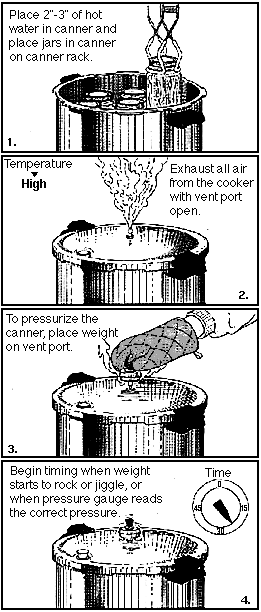
Meat, poultry, and game are low acid foods and must be canned or processed in a pressure canner to assure it is safe to eat.

11 pounds pressure with a dial gauge pressure canner
15 pounds pressure with a weighted gauge pressure canner for required times.
Choose only good meat for canning, and handle it quickly and with total cleanliness, because bacteria grow rapidly in meat held at room temperature. If you have a large amount, store the part you’re not working on in the refrigerator.

canning-venison21You can:
Start with properly cleaned and chilled product.
Can fresh meat and poultry within 2 days or freeze it.
To can frozen products, thaw in the refrigerator until most ice crystals have disappeared, then handle as if they were fresh.
Trim gristle and fat off meat before canning. Fat left on meat melts and climbs on the sides of the jar during processing and may interfere with the sealing of the lid.
Salt is optional in canned meat and poultry.
Fish should be canned immediately or frozen until processed.
For large game animals (deer), follow beef processing times and methods.
For small game animals and birds, follow poultry processing times and methods.
Use canned venison or canned elk in stews, meaty soups, and even chili. You can use it to make Sloppy Joe’s and killer Enchiladas.

canning-steps-one

Follow our FISHING BLOG

WEB   RATES     FISH    HUNT    CABINS    PHOTOS
TESTIMONIALS    BROCHURE    HUNT BOOKLET

Enter your email address to subscribe to this blog and receive notifications of new posts by email.

Go back

Your message has been sent

Warning
Warning
Warning
Email Me....

Warning

Warning.


Tags: , , , , , , , , , , ,

Wild Game Recipe: Rabbit Sott’olio

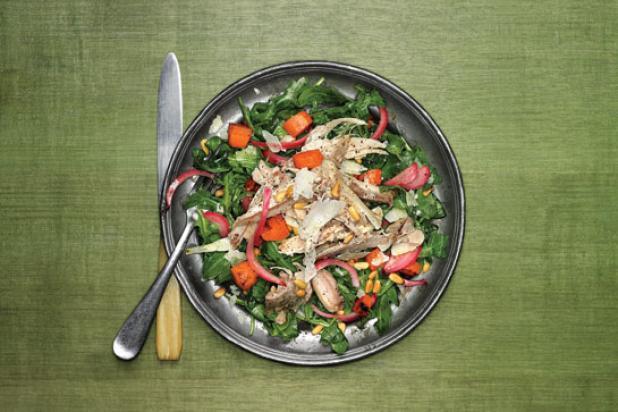
rabbitsottolioEmploying an old Italian method of preserving meats and vegetables called sott’olio, submerge rabbits in oil and slow-cooks them until the meat is tender and rich. Then dress the warm meat in a salad for a perfect counterbalance. The only difficult part of this recipe is pouring that much oil into a pot—but it’s worth it. Be sure to fish the garlic out of the oil for later: Spread the cloves on toasted bread for a killer snack.

Ingredients
– 2 whole wild rabbits, cleaned
– About 3 quarts vegetable oil
– About 1 quart, plus
– 1 Tbsp., plus 1⁄4 cup, olive oil
– 2 whole heads garlic, broken into individual unpeeled cloves
– 6 sprigs fresh thyme
– 1⁄3 cup, plus 1⁄4 cup,
– red wine vinegar
– 1 red onion, sliced
– 2 carrots, peeled and chopped into 1⁄2-inch pieces
– 4 cups baby arugula
– 1⁄4 cup pine nuts, lightly toasted
– 1⁄4 cup Parmigiano Reggiano cheese, shaved or grated
– Salt and freshly ground pepper, to taste

Directions:
1. Preheat the oven to 300 degrees. Rub the rabbits with salt and pepper and place in a Dutch oven. Pour in about three parts vegetable oil to one part olive oil, enough to fully submerge the rabbits. Add the garlic and thyme, and cover the Dutch oven. (A sheet of aluminum foil underneath the lid is a good idea.) Place in the oven and cook for about 11⁄2 hours, or until the meat is tender and falling off the bone. Let cool.

2. Meanwhile, combine the 1⁄3 cup red wine vinegar in a small saucepan with 1⁄3 cup water, and bring to a boil over high heat. Put the red onion slices in a bowl, and pour the vinegar mixture over the onions. Stir, add salt and pepper, then allow the onions to pickle at room temperature.

3. Heat 1 Tbsp. olive oil over low heat in a saucepan, and add the carrots. Cook, stirring occasionally, for 6 to 8 minutes, or until the carrots are tender but not mushy. Add salt and pepper, and reserve.

4. Make a vinaigrette: Put the remaining 1⁄4 cup red wine vinegar in a bowl and gradually whisk in 1⁄4 cup olive oil, until the oil and vinegar are thoroughly integrated. Add salt and pepper.

5. When the rabbits are cool, remove the meat from the bones and reserve.

6. To serve, reheat the rabbit meat in a pan with some of the oil, over low heat, just to warm through. In a large mixing bowl, gently toss the arugula with the red onions (drained), carrots, pine nuts, cheese, and about 3 Tbsp. vinaigrette. Divide the salad among four plates, and top with the rabbit, adding a few more shavings of cheese and salt and pepper as desired. Serves 4

Follow our FISHING BLOG

WEB   RATES     FISH    HUNT    CABINS    PHOTOS
TESTIMONIALS    BROCHURE    HUNT BOOKLET

Enter your email address to subscribe to this blog and receive notifications of new posts by email.

Go back

Your message has been sent

Warning
Warning
Warning
Email Me....

Warning

Warning.


Tags: , , , , , , , , ,

Bacon Wrapped Moose Tenderloin

Ingredients

Moose tenderloin
Dates
Goat cheese

Marinade

1 Tbsp. mustard
1 Tbsp. honey
1/2 tsp. minced garlic
4 dashes of Worcestershire sauce
1 cup red wine

Saskatoon Glaze

1/2 cup Saskatoon berries ( you can use blueberries if Saskatoon’s are not available in your area)
3/4 cup red wine
1 Tbsp. maple syrup

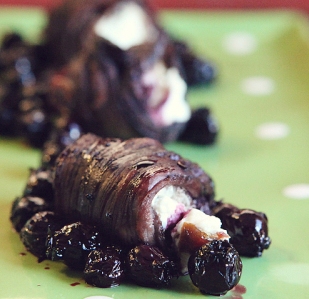
moose-rolls2-copy-600x400


Rub tenderloin with mustard, combine remaining ingredients and pour over top.  Use a marinating container that and flip back and forth every so often.  Let marinade at least 4 hours or overnight.

Next stuff dates with goat cheese.  If you have un-pitted dates, simply cut the top off, using a pair of tweezers, pull the pit out.  Use a baby spoon to stuff the goat cheese in, it works quite well, the tip of the spoon was perfect for starting to put the cheese in and then using the handle end to push the goat cheese down, worked like a charm!

Thinly slice the tenderloin and then wrap around the dates and secure with toothpicks.  Place on parchment paper on a cookie sheet.

Preheat oven to 350 degrees.

Place berries, maple syrup and red wine in a pot on high heat.  Bring to a boil and let simmer for 3-5 minutes, spoon the juice over the dates and bake for 10-15 minutes(or until meat is cooked to your preferred done-ness), baste with glaze at least once during baking time.

Remove and enjoy … best eaten while warm!

This is the perfect appetizer for any party….your guests won’t even know its moose!

Follow our FISHING BLOG

WEB   RATES     FISH    HUNT    CABINS    PHOTOS
TESTIMONIALS    BROCHURE    HUNT BOOKLET

Enter your email address to subscribe to this blog and receive notifications of new posts by email.

Go back

Your message has been sent

Warning
Warning
Warning
Email Me....

Warning

Warning.


Tags: , , , , , , , , , , ,