RSS

Monthly Archives: October 2015

Firearm Safety

by Marti Davis

Marti-Davis

Safety, safety, safety

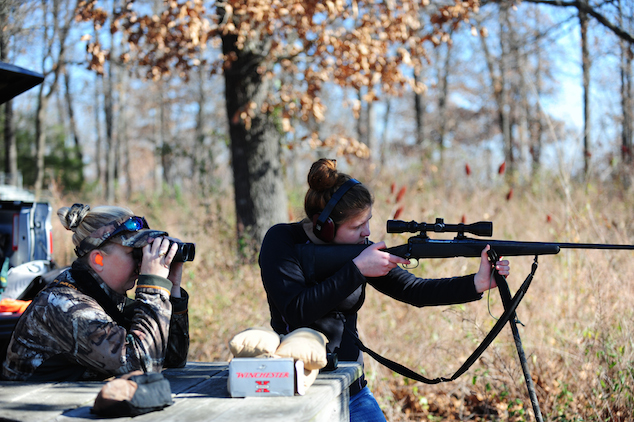
Firearm safety must always be our number one priority. Always remember to treat every gun as if it is loaded. That means always pointing the gun in a safe direction. Make sure you’re using the proper ammunition for the firearm. Keep your finger off the trigger until you’re ready to fire.

When you’re hunting from an elevated stand, never climb with the firearm. Use a rope to raise and lower the unloaded gun after you’re safely strapped in to your stand. You can never be too careful or safe when it comes to handling and hunting with firearms.

Marti-Davis-rifle

Know right from wrong

Before you do any kind of hunting with a gun, you must familiarize yourself with the state’s game laws and regulations. Even if you’re a seasoned hunter, you need to refresh your memory and check for any changes in the regulations that might affect your hunt. If you know and follow the regulations, when you do have an encounter with a conservation agent, you won’t have anything to worry about.

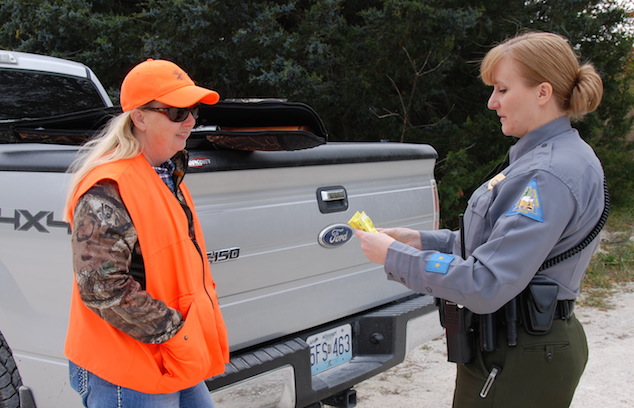
And while we’re on the subject of conservation agents, if you happen to get stopped by an agent, be courteous. It will take only a few minutes for the agent to check and see if you have the proper licenses and tags. Conservation agents have a job to do, and this is just a small part of it.

Cleaning and Maintenance

While some firearms take more cleaning and maintenance than others, you should take proper care of all firearms. If you do, they will last for many years, with the possibility of being handed down from generation to generation.

I like to use a combination cleaner-lubricant-protectant, such as Break Free CLP. A quick wipe-down at the end of a day afield is sufficient, unless you’ve been out hunting in rain or snow, or in extremely dusty or brushy conditions. In that case you probably need to break down the firearm to a certain extent. Remember to follow all manufacturer’s instructions on breakdown and reassembly. Never skip any steps the manufacturer recommends.

I also like to use a bore snake for a quick pass-through on my barrels. I use a little of the Break Free CLP on the snake and pull it through two or three times. It’s a great time saver for those quick, after-hunt wipe-downs between the thorough cleanings that require breaking down the gun.

And don’t forget that new guns need thorough cleaning when you first get them. Most come packed with a coating of heavy grease.

When it comes to maintenance on your firearms, I highly recommend that you find a reputable gunsmith in your area to take care of any malfunctioning firearms. For safety’s sake, never shoot any gun that is not in perfect working order. When in doubt, consult your gunsmith.

Sighting in or Patterning

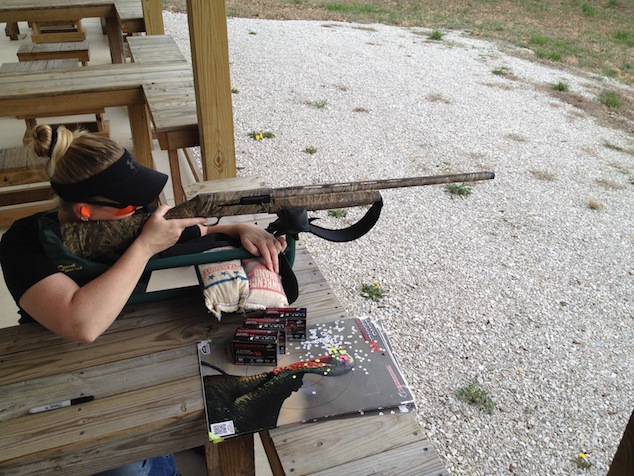
Before going afield, you must take the time to sight in your rifle or pattern your shotgun. Even if you’re going out with the same deer rifle you’ve used for several years, take the time to make sure your gun is still zeroed in. Even the smallest of bumps can sometimes knock sights or scopes off zero.

With shotguns, make sure to pattern them to see which load works best with which choke. Once you get that figured out, make sure to use the same load each time you hunt with that shotgun and choke.

To be an ethical and responsible hunter, you have to know your own and your firearm’s limitations before you step out in the field. As ethical hunters, we always want to make the quickest and most humane kill shots we can.

Marti-patterning

Transporting your firearms

Transporting can be as simple as using a sling to throw the gun over your shoulder, making it easier to carry in the field.

In a vehicle, I highly recommend a case of some sort when transporting firearms, whether it’s a simple zip-up, soft-sided case or a padded, hard-shell transport case. For one thing, a case protects the gun—for another, in some states it is the law. This is another area where it’s necessary to know the regulations and laws in the state you are hunting—or even just traveling through. Some states also require firearms to be cased when transporting them on all-terrain vehicles in the field.

Marti-Davis-truck-copy-2

Follow-through

When throwing a ball, you must follow through to complete the action. The same applies to shooting a rifle or shotgun. Once you make the shot, you must follow through. If you’re shooting a bolt-action or pump-style rifle, follow-through includes working the action and chambering a fresh round. Be ready to make a follow-up shot if necessary. The same goes for shotguns. After you complete the shot, get another shot shell into the chamber and be prepared to make a quick follow-up shot. Of course if you’re using an autoloader, the gun does this for you. Just stay on the gun and be ready in case you need to take another shot.

Storage

After the hunt, be sure to unload and store your firearms properly. As I mentioned when discussing cleaning and maintenance, wipe down or clean your firearms prior to storage. Always make sure to store all guns beyond the reach of children or anyone else you don’t want having access to them. Always store ammunition separately from all firearms.

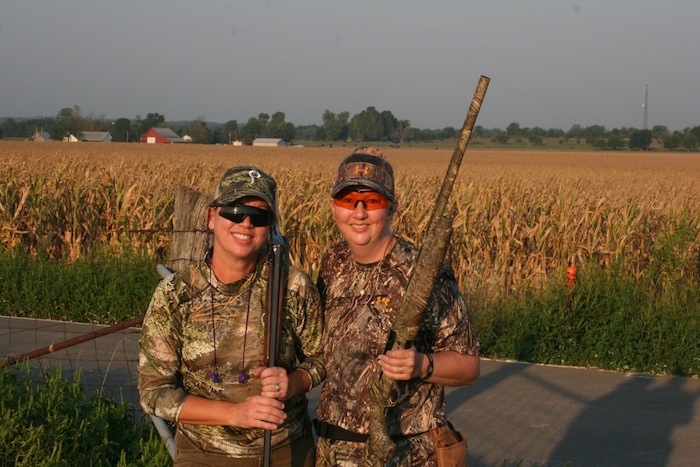
Marti-and-Barb-afield-copy

These safety rules need to become second nature, yet always in the forefront while you are working with firearms, especially while hunting.

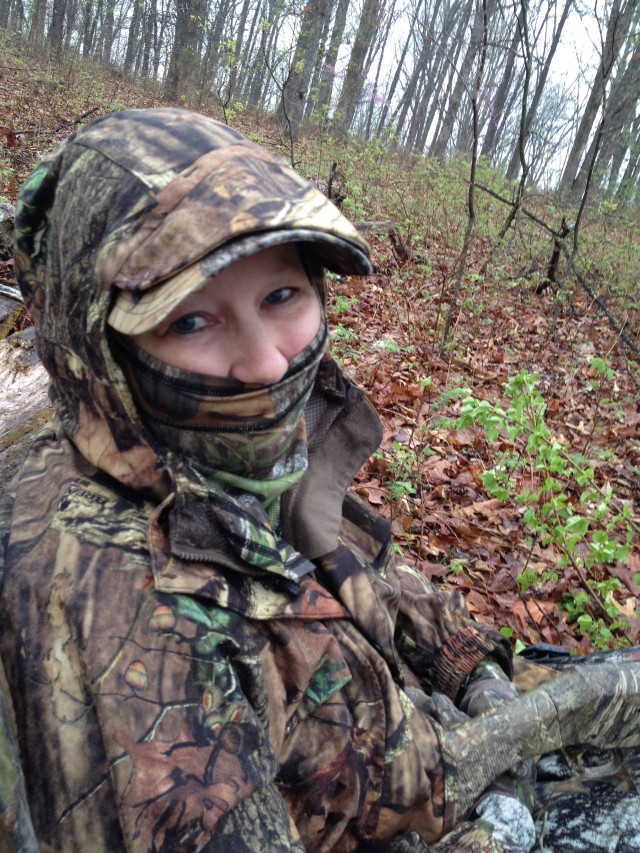
IMG_2075-e1429190999379

Marti Davis

Marti Davis is a staff member for Browning Trail Cameras, WoolX and Mossy Oak.
She is an authority on most types of hunting in North America, and very active in
mentoring the next generation of young hunters.


Follow our FISHING BLOG

WEB   RATES     FISH    HUNT    CABINS    PHOTOS
TESTIMONIALS    BROCHURE    HUNT BOOKLET

Enter your email address to subscribe to this blog and receive notifications of new posts by email.

Go back

Your message has been sent

Warning
Warning
Warning
Email Me....

Warning

Warning.


Tags: , , , , , , , , , ,

Bow Hunting – Packing Tips

Al_2

Over the past two decades hunting backpacks have grown in popularity and size. Not only cubic inches, but number of pockets and where we can strap things. Don’t be sucked into the thought that you have to fill each and every pocket or empty space with something. Instead, make a list of items you think you’ll need for your outing by reviewing the possible scenarios that may occur. For example, if you are just planning a day hunt you may jot down a considerably short list, whereas if you are hunting for a few days you will be carrying a bit more gear.

Years ago a simple camouflage backpack was used with a large holding area and one pocket. Some hunters went out in the field with just a bow, a peanut butter sandwich in their pocket and a knife. Nowadays it’s good policy to prepare a couple packs that to utilize for different hunts. The following is what goes into these packs on a hunting trip, but,  keep in mind that you should customize your pack essentials according to what your adventure will be. You will be surprised at how much extra ‘stuff’ you really don’t need.The first is the Badlands Hybrid pack that is used on most of short day trips like small game or turkey hunts. Pack calls and essentials and you’ll still have room left over. On longer hunts pack a Badlands 2200 which allows more room for extra clothing or food for longer excursions.  Making sure the essentials are in your pack for a bow hunting adventure can be rather simple. In order to bow hunt, you have to find an area where you can take a quality shot.

You have to find a good area to hunt and you need to get there. You also have to have a pack that is tough, not too heavy, and has ample space to pack out an animal should you be fortunate enough to harvest one. Some areas can be thick vegetation so you need to be aware of the terrain and weather of where you will be headed. Pack your gear for each and every trip to be sure you have everything you might need and a little extra should you find yourself stranded. You should do some research and find a good pack that will fit your needs and more importantly fit you.  Here are the essentials that you should take on every hunt.

These essentials should be a constant each time you venture into the forest.

Al_1Water – Always plan to have enough to drink throughout the day. Also plan on sipping, not guzzling so you don’t waste the resource. Before you leave on your hike, locate a water source on a map and prepare to refill along the way.  Put an extra bottle in the bottom of your pack in case your hydration system runs out. Then you know you at least have one bottle left. Also, leave a 2 liter bottle of water in your vehicle (preferably in a cooler) so you have something cool to drink when you reach it.

Food/Snacks – Have fun with what you eat on the trail!  Take almonds, some energy gel, trail bars like Granola bars, and, be sure to pack a sandwich. For some, and, for those who like it, there is something about eating a peanut butter and honey sandwich on top of a peak that just makes it that much better. Try to stay away from most other sweets on the trail like candy bars or snacks that could leave you feeling sluggish.

First-Aid Kit – Pack a kit yourself or better yet, buy one of the Adventure Medical Kits Sportsmans Kit available at most stores. It is a great kit and the one you should carry on each and every trip. A word of advice to everyone is to open the kit and know what is in there before you leave your house check it over. If you think something is missing, add it. One of the items you should always sure to pack is moleskin. You can never tell when it might be needed to cushion a blister or protect your feet. Having that moleskin was invaluable.  Be sure to include other items like QuikClot and a tick remover. You may never needed them and they could’ve been left at home, but  don’t mind a little extra weight when it comes to safety.

SPOT Locator – Having a locator beacon on your in case in the event you might get lost is added security.  It allows your family to track you via computer when your on a hunt. They can see exactly where you are, the terrain, and if you are stationary or moving. The best part is that is if you get lost or need medical assistance you can press a button and have them dispatched to your location. It is highly recommended to review the features to see if you plan on hiking more than a couple miles in or if you plan to be out for a few days.  Having a space blanket is a great idea in case you get stranded and need to keep warm. If you need to use it you will probably be miserable, but it will help keep you alive.

Compass – Know how to use it.

Map – A topographical map of the area I am hunting.  Some of the items that should be packed, but not necessary really don’t need an explanation:

Whistle, Lighter, Headlamp/Flashlight, Knife and Paracord.

As mentioned earlier, for different hunts there will be a different set of items you will have in your pack. It may take some testing on your part to see what you need, don’t need, and what weighs the least. No matter what, whatever you pack, get out there and enjoy yourself.

Follow our FISHING BLOG

WEBSITE    RATES     FISH    HUNT    CABINS    PHOTOS
TESTIMONIALS    BROCHURE    HUNT BOOKLET

Enter your email address to subscribe to this blog and receive notifications of new posts by email.

Go back

Your message has been sent

Warning
Warning
Warning
Email Me....

Warning

Warning.


Tags: , , , , ,

Moose Stir Fry

8

This delicious moose dish is low in fat. The amount of each ingredient is proportional to how many people you’re serving. Using half a pound of moose, as this recipe does, makes two large servings.

Ingredients

  • 1/2 lb. moose steak
  • 1/2 cup carrots
  • 1/2 cup bean sprouts
  • 1/4 cup celery
  • 1/2 cup snow peas
  • 1/2 cup broccoli
  • 1/4 cup unsalted peanuts
  • 2 cloves of garlic, minced
  • 1/2 cup soy sauce
  • 1 tbsp crushed red pepper
  • 1 tbsp cumin
  • Cooked noodles (excluding seasoning packet)

Preparation

  • Slice steaks cross grain and marinade in soy sauce for one day. Throw a little oil into a hot wok to avoid sticking. Stir in moose for about 1 minute.
  • Add other ingredients, including seasoning, stirring frequently. Add additional soy sauce to coat all ingredients.
  • Stir in noodles and serve immediately.

Follow our FISHING BLOG

WEBSITE    RATES     FISH    HUNT    CABINS    PHOTOS
TESTIMONIALS    BROCHURE    HUNT BOOKLET

Enter your email address to subscribe to this blog and receive notifications of new posts by email.

Go back

Your message has been sent

Warning
Warning
Warning
Email Me....

Warning

Warning.


Leave a comment

Posted by on October 9, 2015 in moose, recipe, Wawang Lake Resort


Tags: , , , , , , , ,

The Truth About Shotgun Ammo

Article by Phil Bourjaily

Our tests at a high-tech ballistic research laboratory may change the way you buy loads and guns…and even how you hunt.

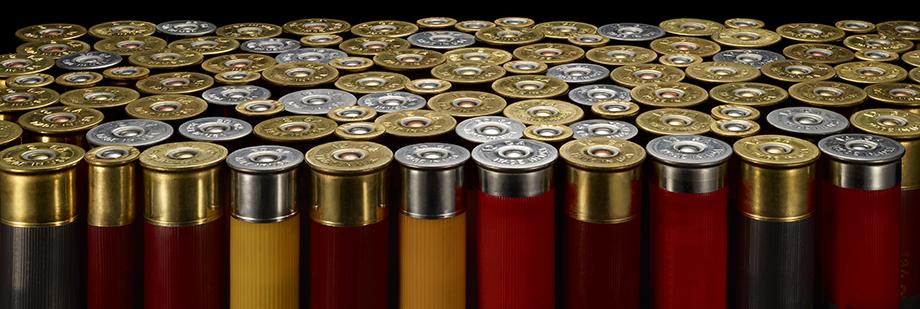
Opener_2

Shotgun columnist Bob Brister spent six months shooting at 16-foot-long homemade targets mounted on a trailer hitched to a station wagon that his wife drove past. Brister conducted this novel experiment to understand the effect of shot stringing at crossing game birds.

While it had long been known that a swarm of shot lengthened as it flew downrange, no one agreed on what it meant. Brister’s patterns, which sometimes splattered the length of his 16-foot-long targets, indicated that if you shot at a bluebill streaking past your decoys, up to 30 percent of the pattern might arrive too late to hit the bird.

A lot has changed since 1976. There are new questions about shot gunning to answer and, fortunately, new ways to answer them.

testrange
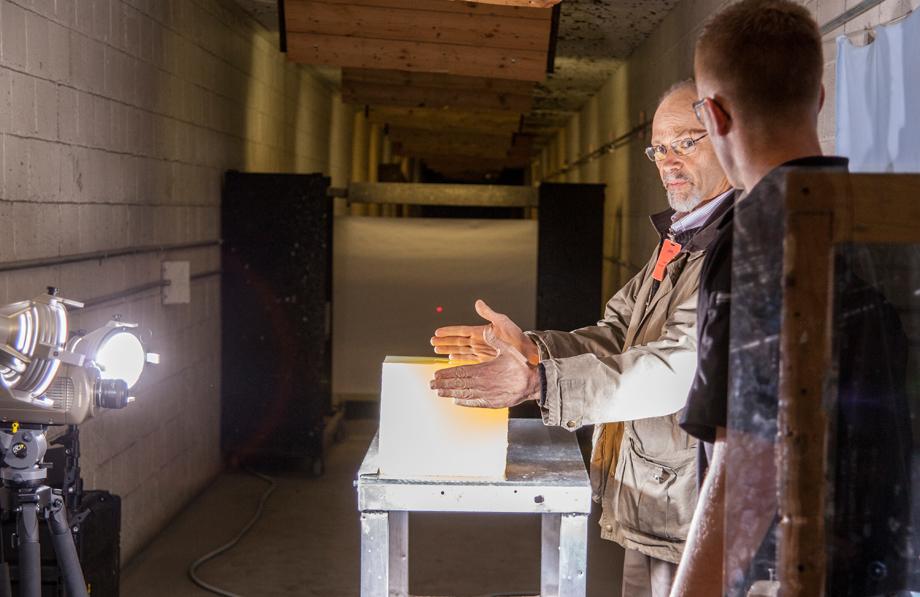
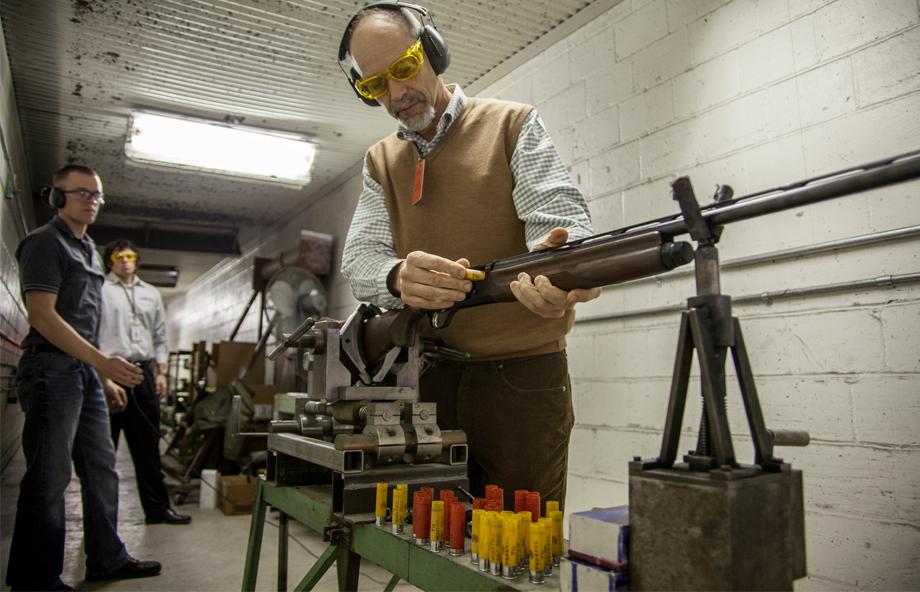
I don’t own an $80,000 high-speed camera, but Federal Cartridge Co. has one in its underground test range (above). They also have a computerized shotgun pattern analyzer, a walk-in cooler full of ballistic gelatin, and a factory full of shotshells to test. Federal granted my request to spend a couple of days there in April to test shotgun loads. I had countless questions, but was able to answer these six.

Some things I thought I knew turned out to be wrong. Others were right. And several changed the way I think about shotshells.

1. Is a 3 1/2-Inch 12-Gauge More Effective Than a 3-Inch 12-Gauge?

 shotshells1

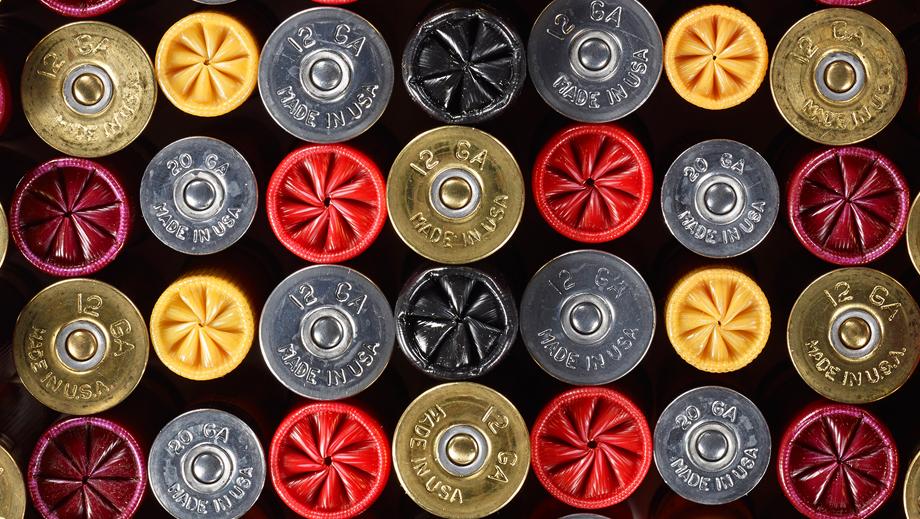
I’ve always believed the brutal recoil of a 31⁄2-inch 12-gauge magnum negates any ballistic advantage over the standard 3-inch magnum. I have always suspected, too, that cramming what amounts to a 10-gauge load into a 12-gauge barrel produced poor, ragged patterns and longer shot strings that made the extra pain even less worthwhile.

Test Loads:
– 12-gauge, 3-inch, 11⁄4-ounce loads of Black Cloud steel BB shot at 1450 fps (Modified choke)
– 12-gauge, 31⁄2-inch, 11⁄2-ounce loads of Black Cloud steel BB shot at 1500 fps (Modified choke)
Results: Both loads patterned almost identically on a 30-inch circle at 40 yards: The 31⁄2-inch load put 72.6 percent of its shot in the circle, with 77 pellet hits. The 3-inch placed 71.8 percent of its shot in the circle, with 63 hits.

There was no significant difference between the lengths of the shot strings, which averaged 42 inches for the 3-inch and 49 inches for the 31⁄2-inch midway between muzzle and target. Both loads exhibited equal penetration in ballistic gelatin at 30 yards—5 inches—despite the 31⁄2-inch shell’s 50 fps head start in muzzle velocity.

The Takeaway: I expected the 31⁄2 to string out longer and pattern worse than the 3-inch load, but it patterned just as well. The higher pellet count of the 31⁄2-inch resulted in significantly more hits in the circle, but both loads put enough hits on target to kill geese.

However, the improvement in performance comes at a cost of a whopping 50 percent increase in recoil. Even with a gun seated in a massive rest, I could feel the difference, and the muzzle blast was noticeably louder in the test tunnel, too. I shot some of those same 31⁄2-inch shells while trying to shoot a triple on a five-stand range. I could hit the first target always, but recovering from the shot to make the next two was almost impossible.

Is the 31⁄2-inch more effective than the 3-inch? Yes—if you can withstand the recoil. “More” is only better if you can put it on target.

2. Is the .410 a Suitable Gauge for Young, Beginning Hunters?

shotshells2 

The .410 is a ballistic disgrace, and a crippler of game birds. Just ask me and all the other gun writers who have repeated that “fact” over the years. I believe beginning hunters should shoot a 20-gauge, not a .410, despite the higher recoil and extra weight of the 20. A comparison between the two, I was sure, would dramatically show the 20’s superiority.

Test Loads:
– .410 11⁄16-ounce loads of Game-Shok Upland No. 6 shot at 1135 fps (Full choke)
– 20-gauge 7⁄8-ounce loads of Game-Shok Upland No. 6 shot at 1210 fps (Modified choke)
Results: Unlike other gauges, which are patterned at 40 yards, .410s are typically patterned at 25 yards. We picked 30 yards as a compromise distance and to reflect the shorter ranges at which beginners shoot. The Full choke .410 shot 87.8 percent patterns at 30 yards, while the Modified 20 shot 84.6 percent. The higher pellet count and higher velocity of the 20 combined to put more pellets in the 30-inch circle (173) than the .410 (139). Penetration was better, too—3.3 inches vs. 3 inches. The 46-inch-long shot string of the 20-gauge, which was measured at 20 yards, was a full 20 inches shorter than the .410’s shot string.

The Takeaway: The .410 surprised us with great patterns. However, the .410’s shot string, which was 50 percent longer than that of the 20-gauge, revealed a shortcoming: The longer the string, the slower the trailing pellets are traveling, and therefore the less energy they retain. The .410 not only puts fewer pellets on target than the 20-gauge, but the .410’s tail-end pellets won’t hit as hard. Even so, I will give the .410 more respect in the future. I waited until my kids were 11 and 12 and big enough to shoot 20-gauges, but if a child is too small to handle a 20, a .410 can work.

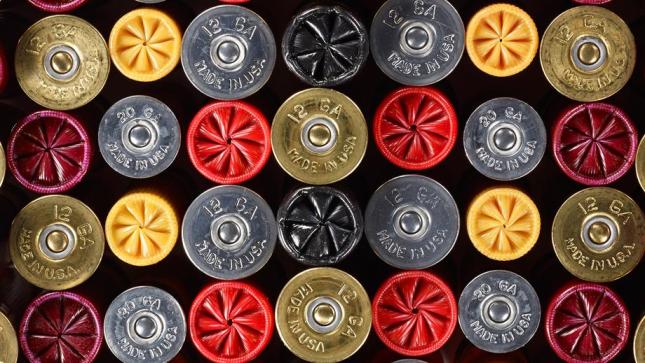
3. Is a 20-gauge as Effective as a 12-Gauge for Doves?
 shotshells3

There’s a faction of smallbore shooters—including some people I hunt with—who condemn the 12-gauge as “unsporting.” As a 12-gauge shooter, I see it as being versatile and ballistically efficient. This test was my chance to crush my detractors with science. One area where 12s and 20s can be compared in an apples-to-apples format is the dove field, where many hunters shoot 1-ounce loads with either gauge, so that became the basis for the test.

Test Loads
:
– 20-gauge 1-ounce loads of Game-Shok Upland No. 71⁄2 shot at 1165 fps (Modified choke)
– 12-gauge 1-ounce loads of Game-Shok Upland No. 71⁄2 shot at 1235 fps (Modified choke)
Results: The 12-gauge delivered a 50.7 percent pattern with 202 pellets in a 30-inch circle at 40 yards. The 20 did just 39.6 percent with 149 pellets inside the circle. The 12 achieved slightly deeper penetration (2.875 inches vs. 2.5625) in gelatin at 30 yards, likely due to the higher muzzle velocity. The high-speed camera showed no statistical difference between the lengths of the shot strings, which averaged 55 inches for the 12-gauge and 57 for the 20 at 20 yards.

The Takeaway: I thought the 12 would win, but I hadn’t expected it to beat the 20 so badly. Out of curiosity we tested the 20-gauge with one size larger shot to see if we could improve its performance. With No. 6 shot the 20 delivered a huge 15 percent increase in pattern density. That gave us a bonus takeaway: If you want to tighten patterns (sometimes by a lot), shoot larger shot.

A 20-gauge is fun to handle and shoot, but when it comes to putting pellets on target efficiently, it loses out to the 12.

4. Is Steel Shot Suitable for Pheasants?

 shotshells4

A growing number of pheasant hunters have to shoot nontoxic ammunition. Pheasants are tough birds and elusive cripples, so choosing the right shell matters, especially when you go from dense lead to lighter steel. In the field I have had no trouble killing wild birds with steel shot, but while dead is dead, I wanted to quantify the differences between steel and lead loads.

Test Loads:
– 12-gauge 11⁄8-ounce loads of Federal Prairie Storm No. 3 steel at 1600 fps (Modified choke)
– 12-gauge 11⁄8-ounce loads of Wing-Shok High Velocity No. 6 lead at 1500 fps (Modified choke)
Results: As expected, the hard steel pellets patterned tighter than lead (62.5 percent vs. 52.6 percent) inside a 30-inch circle at 40 yards. Nevertheless, the higher pellet count of the lead load meant more pellets in the circle: 128 hits, compared to 102 hits for the steel load. The lead pellets also penetrated 4.12 inches into the 30-yard gelatin, compared to steel’s 3.43 inches. The lead load had a shorter shot string (55 inches) at 20 yards than the steel load (61 inches).

The Takeaway: Even with advances in steel ammunition, lead is still superior. Usually hunters switching from lead to steel compensate for steel’s light weight by following the “rule of two” and going up two sizes in shot. Yet despite my choosing three sizes larger in steel and driving it 100 fps faster than the lead load, it didn’t perform as well as lead in the test. The “rule of two” should be the “rule of three or maybe four.” Steel 3s and 2s make the best pellet choice. Steel pellets, which remain round and fly true, patterned more efficiently than lead, resulting in tighter patterns. Given the lower pellet count and retained energy of steel, though, I would not go to a more open choke if switching from lead to steel. Still, modern steel loads are effective for pheasants.

5. Are Premium Buckshot Loads Worth the High Cost?

 shotshell5

One important lesson Brister learned was that hard shot loaded with ground plastic buffer protected the pellets from deforming in the barrel. Premium buffered magnum waterfowl loads clearly outperformed nonbuffered loads. But would this be true for the biggest pellets of all? Premium buck costs nearly $2 per shell, twice the cost of standard loads, so I wanted to see if it was worth the price.

Test Loads :
– 12-gauge, 3-inch, 15-pellet loads of Federal Vital-Shok buffered, copper-plated 00 buckshot at 1100 fps (Modified choke)
– 12-gauge, 3-inch, 15-pellet handloads of unbuffered, unplated 00 buck at 1210 fps (Modified choke)
Results: Premium buckshot averaged 12.4 pellets in a 30-inch circle at 40 yards, whereas unbuffered buck averaged 11 hits. The pattern diameter of the buffered load at 40 yards was 31.65 inches; the unbuffered load spread out to 36.89 inches. The unbuffered buck penetrated deeper (16.84 inches vs. 14.62 inches) than the premium, probably due to its higher muzzle velocity.

The Takeaway: There was a dramatic difference in the shape of recovered buffered and unbuffered pellets. I had thought the deformed, unbuffered pellets would string out farther due to increased air resistance and pattern much worse. That didn’t happen. Unbuffered buckshot tore uneven holes in paper, yet it penetrated deeply into the gelatin.

We did notice an odd phenomenon during this test. Occasionally two pellets would fly through the same hole in the paper or into the gel. With only 15 pellets in the pattern, the odds against that happening are very high—unless there is a drafting effect where a trailing pellet falls in behind a pellet in front of it, the same way race cars draft one another. You can’t rely on that happening, but when it does, the second pellet into the hole will penetrate almost twice as deeply as the rest.

Premium buckshot put roughly 13 percent more pellets on target. Whether that’s worth double the cost is a personal decision.

6. Which is Better for Turkeys: Lighter, Faster Loads or Heavier, Slower Loads?

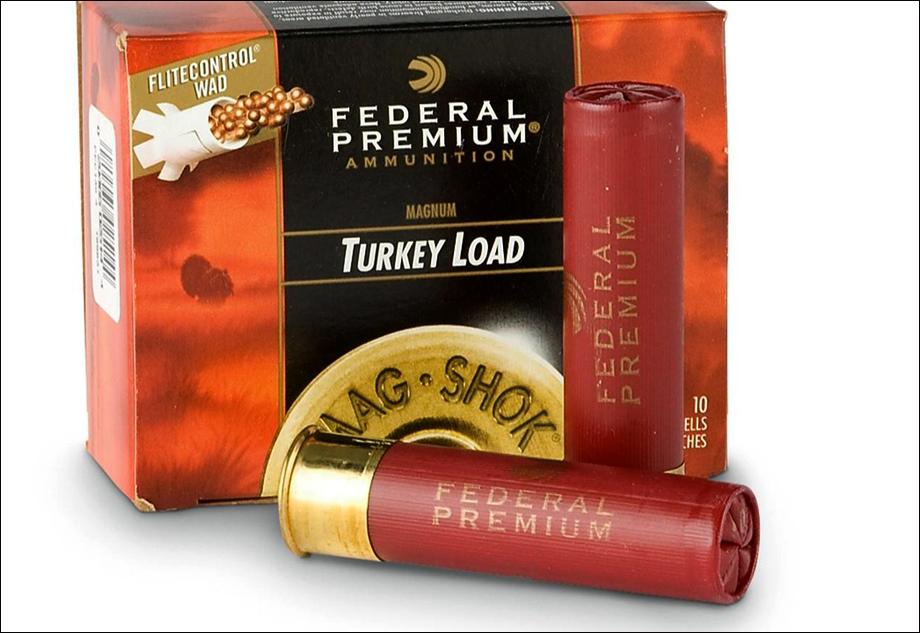
shotshells6_cThe trend to lighter, faster turkey loads made me wonder if heavy and slow loads would perform better. Theoretically, a lower-velocity load will pattern tighter than a faster load because the lower launch speed deforms fewer pellets, leaving more of them round to fly true. But at the same time, a lighter load should pattern tighter than a heavier load for the same reason: the more lead pellets on top of one another in a shell, the more pellets deform when that shell is fired.

Test Loads:
– 12-gauge, 3-inch, 13⁄4-ounce loads of Mag-Shok Lead High Velocity No. 5 shot at 1300 fps (Modified choke)
– 12-gauge, 3-inch, 2-ounce loads of Mag-Shok Lead No. 5 shot at 1150 fps (Modified choke)
Results: The 13⁄4-ounce load patterned more efficiently, putting 70.2 percent of its charge in a 30-inch circle at 40 yards, compared to 61.4 percent for the 2-ounce load. It also outpenetrated the 2-ounce load in gelatin at 30 yards, 4 inches to 3.65 (though the latter is certainly adequate to kill a turkey). In number of hits, however, the 2-ounce load narrowly won, 216 pellets to 209. Recoil is about the same.

The Takeaway: Essentially the test resulted in a tie, although the heavier load snuck a few extra pellets into the target area. Recoil from both shells was almost identical. I would favor the lighter load because more penetration, while it may not help, can’t hurt, either.

Looking at these results, however, I can’t help but wonder if a slower 13⁄4-ounce load wouldn’t pattern better than either of these. Unfortunately, “slow” is a tough sell to the American public, so unless you handload your own turkey ammo, you may never find out. It’s a tie, so choose the one that patterns best in your gun.

BONUS: Does Shot String Length Matter?

 stringtheory 

It matters some, but not for the reasons we think. During these tests, Federal engineers Erik Carlson and Adam Moser measured shot strings at 20 yards and extrapolated lengths for 40 yards. The longest shot string in our tests, the 66-inch .410 string, would be about 10 feet long at 40 yards. Match that against a bird flying 40 mph at 40 yards, as Brister simulated in his tests, and you will lose only a small percentage of pattern density, perhaps about 5 percent, not the 30 percent loss Brister saw with some 1976-era lead waterfowl magnums.

Brister believed long shot strings were more forgiving of error than short strings. If you were to overlead a target, he thought, the trailing pellets might still break it, so the longer the string, the greater the margin for error. In theory that is true, but practically speaking, the chance is very slim of a trailing pellet breaking a target. The disadvantage is that the longer the string, the slower the trailing pellets, and the less energy they’ll have on target.

Follow our FISHING BLOG

WEB   RATES     FISH    HUNT    CABINS    PHOTOS
TESTIMONIALS    BROCHURE    HUNT BOOKLET

Enter your email address to subscribe to this blog and receive notifications of new posts by email.

Go back

Your message has been sent

Warning
Warning
Warning
Email Me....

Warning

Warning.


Tags: , , , , , , , ,

Develop Proper Archery Form


SONY DSCPictured here is perhaps the most popular position of the feet when it comes to shooting; the “Open Stance”. It is easy to perform and opens up the shooter to the target resulting in less interference with clothing from the bowstring.

Despite the fact that you may be shooting the most highly tuned bow, adorned with top of the line accessories, if your shooting form is bad your accuracy will likely be worse. Shooting with good form requires mastering a number of processes. However, once these processes are understood and learned, shooting with proper form will be as easy as walking across the floor; it will become second nature.

Before incorporating the following steps into your shot routine, be sure that you are shooting a well tuned bow set at the appropriate draw length.SONY DSC

Proper Shooting Stance
Where you place your feet during the shot process can have a great bearing on where your arrow strikes. By nature, your body has a natural centering point. If your feet are not positioned properly you might find yourself being pulled away from this centering point. As a result, the body will fight to return to this location. Unfortunately, this can occur during the shot which will impede accuracy.

Resist the urge to grip your bow. Instead, let your fingers naturally drop around the handle and riser. This will eliminate unwanted tension and bow torque making your shots more accurate.

There are 3 basic stance positions to consider. They are as follows.
  • Squared Stance:  Feet are in-line with one another, drawing a line perpendicular to the target.
  • Closed Stance:  Front foot is forward from the front of the body
  • Open Stance:  Front foot is slightly pointing toward the target.The best stance, regardless of which you choose, should be comfortable and solid. This starts by placing your feet about shoulders-width apart with your body weight distributed between the midsection and rear of your feet.

Most bow hunting experts will suggest an open stance which starts by positioning your toes 90 degrees to the target, and then taking a half-step backward with the foot that is closest to the target. This stance will essentially place the chest more toward the target and allow for greater bowstring clearance along the bow arm and chest.

However, this stance may not be for everyone. In order to find your perfect stance, enlist the help of a friend and simply close your eyes and draw your bow while facing a archery target with a wide back 1wall, anchoring as you normally would. With your eyes still closed, move your body and feet around until you find the most comfortable position. Then, open your eyes and note the direction of your aim.

When it comes to hauling back the bowstring, don’t rely on the small bicep muscles of the arm. Instead, use the larger, more stable muscles of the upper back and shoulder. Not only can these muscles pull more weight, they are also steadier and fatigue less quickly.

Let down the bow and reference the position of your feet by pointing an arrow straight at the aiming spot. You have just found your stance.

SONY DSCCorrect Bow Grip
When it comes to gripping the bow you want to do so in such a way that hand torque is not promoted. In other words, you want your grip to be as torque-free as possible. To do this, you first need to find the best location for the grip to contact your hand. This can easily be accomplished with a simple test.

First, take your bow hand and hold it out as if you were going to grip the bow; keeping it slightly open and rigid to imitate pressure being applied to it. Next, take your thumb from your other hand and push it into your bow hand at different locations. You will notice that every location you push with your thumb causes your bow hand to move or collapse—-except one. That one spot is where you want to place the pressure of the bows grip while at full draw.

Your bow arm shoulder should be down and in a “locked” position while at full draw. This makes it more difficult to flex the bow arm causing shot-ruining muscle tension.

This location is typically where the bones in the forearm butt up against the base of the palm. It is a bone-to-bone contact point and is the most reliable, torque-resistant location in which to place the bow grip.

When grabbing the bow, place a small amount of tension on the string, just enough to feel it in your bow hand. Then position the grip into the area you discovered by pressing your thumb into your palm. Now you are ready to draw the bow. Just remember, upon reaching full draw, your bow hand should remain relaxed with your fingers falling down or dangling around the front of the riser.

Drawing the Bow
This may seem like a trivial facet to good shooting, but drawing the bow properly incorporates all of the essential muscles needed in order to shoot with good form; mainly, the back muscles. One of the easiest ways to do this is to think of your drawing arm elbow as having a hook in it. When drawing the bow, start with your elbow about as high as your jaw line. Then, imagine someone has a string attached to the hook that is in your elbow. Now, think about them pulling your elbow straight back as you draw your bow. Instead of puling with your biceps, you will notice that you are actually drawing the bow by using the larger muscles of the upper back; specifically, the rhomboid muscles. This will allow you to relax the rest of your body and pull through the shot using only your back.

SONY DSCBow-Arm Position
A steady aim equals comfortable shooting and tighter arrow groups. A relaxed bow hand is the key to this. To acquire this it is imperative that your drawing side shoulder be down and in a locked position during the shot. Positioning the shoulder in such a manner will greatly reduce muscle tension which is the root of poor aiming. Before drawing the bow, lean slightly toward the target, then start the drawing process. This will place the shoulder in a low, locked, “bone to bone” position.

When it comes to where you place your release-hand, choose and area along the face/jaw-line that is easily repeatable and consistent; your shooting will likewise follow. Hunter shown wearing Lost Camo.

Anchor Position
Consistency is the cornerstone to good shooting. The best location to anchor your bowhand is somewhere along the jawbone that provides the most stable platform. In other words, choose a spot that allows your hand, knuckles, etc. to rest solidly as you release the trigger of your release or let go of the bowstring.

A good tip is to locate this spot with your eyes closed, without looking through the peep sight. Then, once your anchor point has been established, with your head in a natural, upright position, you can open your eyes and adjust the peep sight to your eye, instead of adjusting your eye to the peep sight.

The bottom line is to find an easy-to-repeat anchor point; one that will be consistent and second nature when shooting under pressure or any other time.

TIf good shooting form and posture are present, your body should resemble the letter “T” when viewed from behind. Hunter shown wearing Lost Camo.

Establishing T-Form
The easiest way to confirm that proper draw length and comfortable shooting posture are being used is to look for the “T-Form” as the archer is at full draw. This is easily recognized while looking at the shooter from behind. When doing so, his/her body will represent the shape of a “T”.

The torso should be vertically straight, with a direct line running up and down through the spinal column. The horizontal line in the “T” should run from the bow-side elbow, through the shoulders, and across to the drawing elbow. The trick to establishing this “T” form is to make sure that your drawing elbow isn’t too high or too low. Ideally, it should be about the same height as your ears while at full draw. This will promote the use of back muscles to draw and execute the shot.

Include these simple steps into your shouting routine and watch as your accuracy improves and your confidence soars not only on the 3D archery range, but in the field as well.

Follow our FISHING BLOG

WEBSITE    RATES     FISH    HUNT    CABINS    PHOTOS
TESTIMONIALS    BROCHURE    HUNT BOOKLET
Enter your email address to subscribe to this blog and receive notifications of new posts by email.

Go back

Your message has been sent

Warning
Warning
Warning
Email Me....

Warning

Warning.


Tags: , , , , , , , ,

5 reasons – Why to Teach Your Kids to Hunt

wawang-lake
1. Learn Valuable Skills
–  sportsmanship, physical fitness, hunting, physics are just a few of the skills you learn. Equipment is set up for the ability of the child, so those just starting get equipment meant for a beginner, not having to jump right into what the more experienced child has. And to focus on our blog – preparedness skills – hunting and safety.

2. Leadership & Sportsmanship– with groups like 4-H, you learn more than just a sport, but you learn sportsmanship & leadership skills.

3. A Sense of Accomplishment – so many kids don’t do well with team sports, but individual sports give them a place to shine. Being able to pull back the string and loose an arrow right into the target on one’s own gives a child a great sense of accomplishment at having done this thing themselves. As they progress in skill, this is skill that they did, not as a team, but as an individual. And with the availability of competitions around the country, those kids who love to compete have a chance to do that as well.

4. Archery Clubs – With archery clubs popping up all over the country, archery clubs make it easy to be indoors or outdoors in a safe environment to practice and be taught. Many clubs provide equipment, instructors, and contact with other kids who participate in the same sport.

5. It’s just plain fun! Archery isn’t an aggressive sport, so it will appeal to those kids who aren’t so physical. It’s a relaxed sport, so there is little pressure for those not drawn to the nail biting of team sports. There are many avenues to enjoy this on it’s own or in competitions. You’re outdoors in nature enjoying an ancient shooting sport!

Follow the rules! Safety rules are most

important – while a fun sport, archery can be extremely dangerous, so please follow these safety rules:

  • Never point a knocked arrow at anyone  – keep pointed downrange at the target
  • Never walk with arrows pointing upwards – use two hands to carry them pointed down to the ground
  • Never retrieve your arrows until there is a cleared range – make sure everyone is done shooting and bows are put away – be aware of your surroundings!

tiro-con-arco-citazione-Tondelli-anteprima-600x400-728126

Follow our FISHING BLOG

WEBSITE    RATES     FISH    HUNT    CABINS    PHOTOS
TESTIMONIALS    BROCHURE    HUNT BOOKLET
Enter your email address to subscribe to this blog and receive notifications of new posts by email.

Go back

Your message has been sent

Warning
Warning
Warning
Email Me....

Warning

Warning.


Leave a comment

Posted by on October 7, 2015 in hunting, Wawang Lake Resort


Tags: , ,

Moose Hunting – After the Hunt

moose-wawang-lakeHunters who take a moose and are camping out often have a feast—chunks of prime meat roasted on sticks over a campfire—a delicious and savory reward for their hard work. Butchering one of these big, heavy animals takes a lot of time and effort. A prime bull can yield more than 500 pounds of meat and fat. Traditional foods include many other edible parts of the moose such as the head, liver, heart, some other internal organs, and the highly valued fat. So it takes not only a lot of work to butcher a moose, but also specialized skills and a detailed knowledge of the animal’s anatomy.


moose=wawang-lakeA Delicious Feast

Moose meat and fat are staple foods in most many people who live in the northern regions of Ontario.

Fat is a very important part of a traditional diet because it stokes the metabolism and adds flavor to meat and organs. Unlike beef, moose meat is not marbled with fat, but rather the fat is separate. A favorite kind of fat is found in the sheath-like mesentery membranes that hold the organs together.

In times past, even the bones of moose were ground and boiled to make a fatty broth. If they didn’t use the bones immediately, they could store them as a potential source of food during times of scarcity.

Delectables include brisket, short ribs, heart, and tongue. Thin slices of meat may be fried. A delicious gravy is made from the fat.

A regular favorite is moose meat simmered in a big pot along with some combination of rice, noodles, or potatoes and sometimes vegetables. The result is a thick meaty, delicious stew. Bone marrow is also used in tasty, nutritious broths.

moose=wawang-lake

Follow our FISHING BLOG

WEBSITE    RATES     FISH    HUNT    CABINS    PHOTOS
TESTIMONIALS    BROCHURE    HUNT BOOKLET
Enter your email address to subscribe to this blog and receive notifications of new posts by email.

Go back

Your message has been sent

Warning
Warning
Warning
Email Me....

Warning

Warning.


Tags: , , , , , , , , , , ,

Five Ways To Control Your Scent

Deer have always been prey species. They use all of their senses to avoid being killed by predators like coyotes, wolves, bears, hunters, and automobiles. Their most refined defense is their nose. Whitetail deer are believed to have noses one hundred times more sensitive than a dog’s. Uneducated deer are usually not exceedingly wary of human scent. But if you want to get close to a mature buck you’re going to have to control your scent. Here are five great tips for controlling human odor while deer hunting.

SCENT-WAWANG-LAKEScent Control Clothing The first step is scent control clothing. Some clothing utilizes activated carbon, others use silver to eliminate odor. Just about everything from base layers, socks, gloves, pants, jackets, hats, and facemasks are made to control odor. Of course, rubber boots are also an important addition. It doesn’t matter what you wear if you don’t take care of your clothing. If you’re wearing your scent free clothing in the truck or during breakfast you might as well wrap yourself in bacon. Don’t put on your hunting clothing until you’re in the field and have everything else ready to go.

Don’t wash your scent free clothing in normal detergent. Use scent free, phosphate free, UV brightener-free detergent. In fact, wash a load of your normal clothes in this detergent before doing a load of your hunting clothes just to get any residual detergent out of the machine. Once clean, clothing should be stored in a sealed, scent-free container.

De-Scenting Shower Your body is constantly creating odor. Bacteria is the chief cause of human odor and most scent killing soap is designed to kill bacteria. Lather your entire body and leave the soap on for about a minute before rinsing off. Letting the soap sit on your body will allow it to kill more bacteria. Be sure to wash a supply of towels with your scent free laundry detergent too. Before dressing, apply scent free antiperspirant.

Dirty Mouth One of the most bacteria rich environments on your body is your mouth. As you exhale, much of the scent from your mouth is dispersed into the air. Brush your teeth with unscented baking soda toothpaste at home and just before going into the field. Plaque is a chief producer of scent. Regular visits to the dentist can help control plaque and in turn, control scent. Chewing gum flavored with vanilla, apple, or mint can mask your scent.

Scent-Eliminating Sprays Just about everybody sprays down before hunting these days. But are you doing a good enough job? Buy your spray in bulk at the beginning of the season and don’t be shy about using it. Spray down at the truck and again in the stand. Spray down everything including yourself, your equipment, decoys, calls, and anything else you may have with you.

Using Scents There are two basic types of scents; cover scent and lures. I have seen deer lure scents work but personally avoid them. Using a deer lure scent is essentially asking deer to use their nose at a heightened level. Think about walking into your house when something really good is on the stove. You try to figure out what it is that you are smelling and are very aware of the scents in your home. If you come home before dinner is on the stove your house just smells like it always does and you’re probably not thinking about scent at all. The same principle applies for deer in my opinion. I do like cover scents but I don’t buy commercially produced scents. I prefer using scents from my hunting area. For example, we have junipers, apple trees, and various pines scattered throughout the property. I’ll use branches and apples to mask my scent. I’ve also been known to walk through cow pies on the way into my stand.

You’re never going to completely eliminate your scent. But if you can control it well, you can make a buck and possibly even a bear think your 200 yards away when you’re really just 20 yards away.

Follow our FISHING BLOG

WEBSITE    RATES     FISH    HUNT    CABINS    PHOTOS
TESTIMONIALS    BROCHURE    HUNT BOOKLET

Enter your email address to subscribe to this blog and receive notifications of new posts by email.

Go back

Your message has been sent

Warning
Warning
Warning
Email Me....

Warning

Warning.

 
Leave a comment

Posted by on October 5, 2015 in hunting, Wawang Lake Resort


Tags: , , , , , , , , ,

Determining Your Dominant Eye

untitled
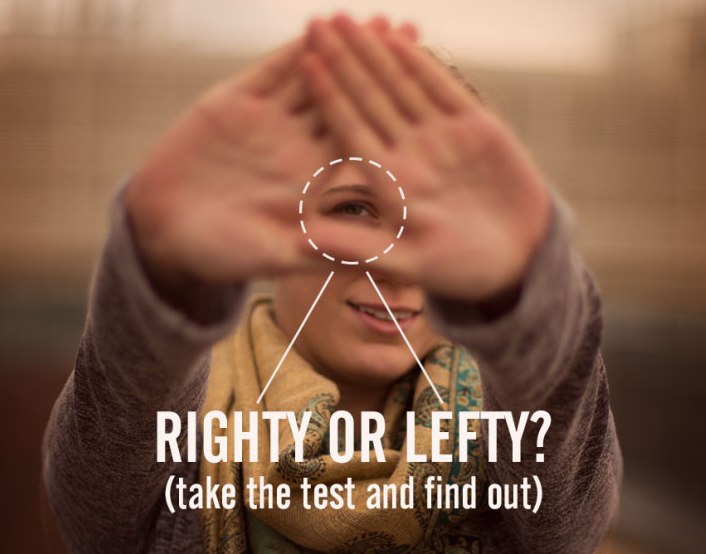
Most people have a visual preference for one eye or the other, often without realizing it. This is known as eye dominance. Before choosing a bow, it’s important to know which eye is dominant.

Eye dominance can be weak or strong, and has nothing to do with hand dominance. For example, you might be right-handed but left-eye dominant. Studies show about two-thirds of people are right-eye dominant, one-third are left-eye dominant and a small percentage favor neither eye.

Some Easy Steps to Test Eye Dominance:
Go where you can see an object that’s at least 10 to 20 feet away.
Clasp your hands together, make a circle between them about 1 inch in diameter, and extend your hands to arm’s length.

archery-how-to-determine-your-dominant-eye222
Keeping both eyes open, use the circle to visually frame the object.
While making sure you keep the object framed, pull your hands slowly back to your face.
Your hands will draw naturally to your dominant eye.
In rare cases, new archers will not have a dominant eye. When this happens, it’s best to use the dominant hand to draw the bow.

eyedom1

Follow our FISHING BLOG

WEB   RATES     FISH    HUNT    CABINS    PHOTOS
TESTIMONIALS    BROCHURE    HUNT BOOKLET
Enter your email address to subscribe to this blog and receive notifications of new posts by email.

Go back

Your message has been sent

Warning
Warning
Warning
Email Me....

Warning

Warning.


Tags: , , , , , ,

Grouse Kebobs

2Cubes of ruffed grouse breast skewered along with grape tomatoes, mushrooms and onion make for wonderful kebabs. No ruffies? You can also use other grouse, as well as duck, goose or wild turkey breast meat.

Serves: 4

Ingredients

  • 4 ruffed grouse breasts (skinless, boneless)
  • 3 sprigs fresh thyme
  • 1/2 cup olive oil
  • 1/2 cup white wine
  • Salt and black pepper to taste
  • 1 red onion, cut into ¾-inch cubes
  • 16 grape tomatoes, whole
  • 16 brown mushrooms, whole
  • Canola oil

Preparation

  • Cut grouse breasts into ¾-inch cubes and place in a zip-lock bag with thyme, olive oil, wine, salt and pepper. Marinate in refrigerator for 30 minutes.
  • Remove grouse from bag and thread onto skewers, alternating with onion cubes, tomatoes and mushrooms. Brush kebabs with canola oil and grill until grouse is cooked through.
  • Serve with fragrant basmati rice and carrot rounds.
  • Tip: If you use wooden skewers, first soak them in water for 15 minutes to help prevent them from splintering or burning. Whether you use stainless steel or wooden skewers, coat them in cooking oil before threading on the grouse and vegetables so the food will easily slide off after grilling. Also coat the grill with cooking oil so the kebabs don’t stick.
  • For the glass: For this tasty light meal, fill your glass with a full-bodied beer or a heavy Chardonnay.

Follow our FISHING BLOG

WEBSITE    RATES     FISH    HUNT    CABINS    PHOTOS
TESTIMONIALS    BROCHURE    HUNT BOOKLET
Enter your email address to subscribe to this blog and receive notifications of new posts by email.

Go back

Your message has been sent

Warning
Warning
Warning
Email Me....

Warning

Warning.


Leave a comment

Posted by on October 3, 2015 in grouse, recipe, Wawang Lake Resort


Tags: , , , , , ,