RSS

Tag Archives: WMU 15A

An illustrated guide to the best game meat cuts

There are plenty of hunters out in the field bringing home dinner and we figured we would share some great guides on the best cuts and how to get them from your harvest!  Click on each picture to enlarge for greater detail 🙂

This diagram is the basic overview of the quarters and can be applied to deer, moose, elk and caribou.

illustrated deer

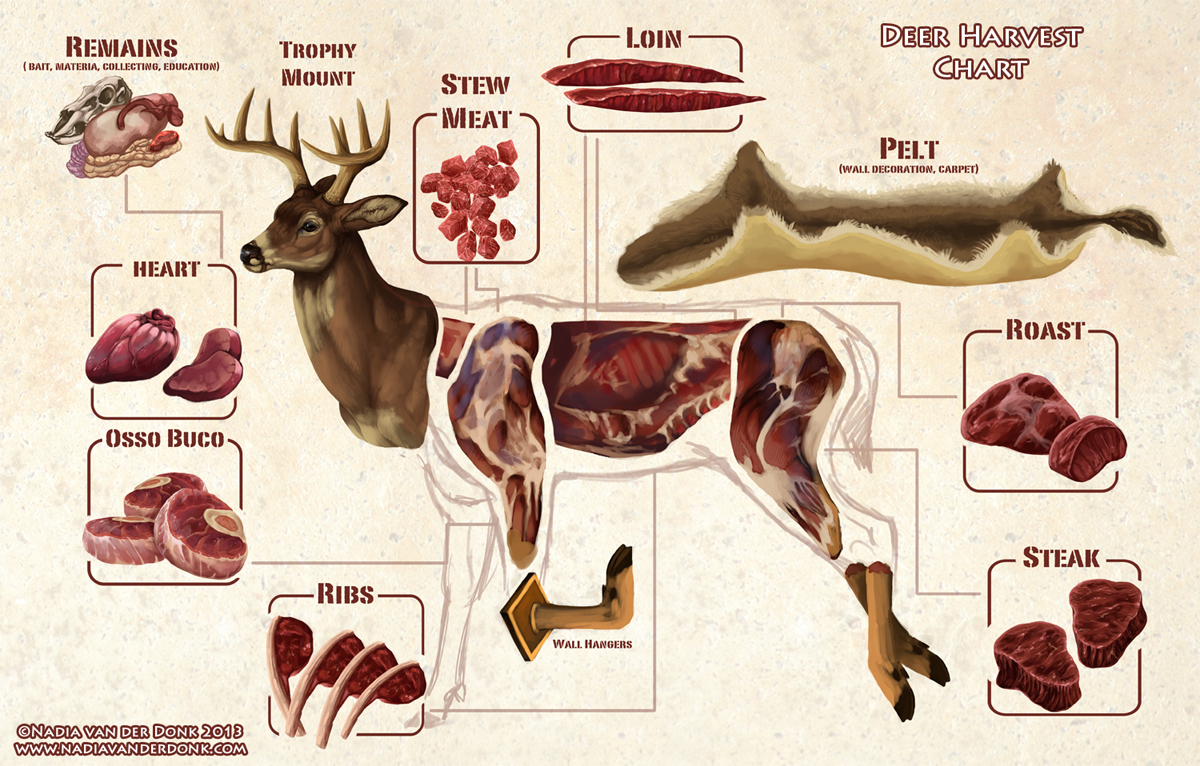
This second diagram is a more in depth cut selection and is coded for the sections as well.  Again, this can be applied to deer, moose, elk and caribou.

deerchart

Ensure before you properly care for your game in all stages of meat preparation to give not only longevity to the meat, but reduce the risk of cross contamination of any bacteria that could not only spoil the meat but could also make you very sick.

Happy hunting!

Follow our FISHING BLOG

WEB   RATES     FISH    HUNT    CABINS    PHOTOS
TESTIMONIALS    BROCHURE    HUNT BOOKLET

Enter your email address to subscribe to this blog and receive notifications of new posts by email.

← Back

Thank you for your response. ✨

Email Me....

 
1 Comment

Posted by on July 4, 2015 in game, recipe, Wawang Lake Resort


Tags: , , , , , , , , , , , , , , ,

In a rut: Brush up on your calling

calling-moose-250
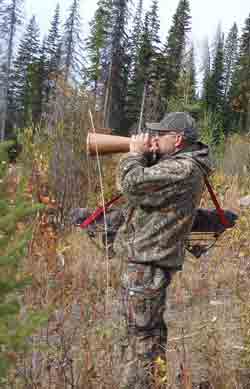
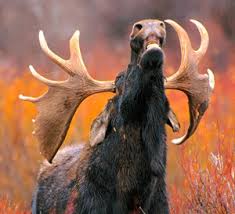
There’s a lot of prep that goes into a moose hunt, so don’t blow a shot at one of these majestic beasts because you can’t call it in.
Check out the video below from Ontario Out of Doors for some great tips to help get you ‘in tune’ for when the time comes.
rutmoosewawang3

Follow our FISHING BLOG

WEB   RATES     FISH    HUNT    CABINS    PHOTOS
TESTIMONIALS    BROCHURE    HUNT BOOKLET

Enter your email address to subscribe to this blog and receive notifications of new posts by email.

← Back

Thank you for your response. ✨

Email Me....


Tags: , , , , , , ,

Know your Rover, Know its Range

by  February 3rd, 2014

a chocolate lab, pointing

“Here, Penny. Come here, girl. Whoa. Now Whoa!” The panicked expletives started the minute I turned my brittany, Penny, loose to quarter the covert. The problem was, it wasn’t me shouting the commands. It was my hunting partner who had only hunted upland birds over his labs.

He didn’t understand that the range for a pointing dog was vastly different than that of a flushing dog, (but really shouldn’t have been commanding or cautioning my dog at all).

He was used to a very close working dog and thought that a wider ranging dog was going to bump birds before we got in position to shoot. What he didn’t know was that a pointing dog, unlike a flushing dog, will (or should) hold birds on point until the guns arrives for the flush.

Range is simply the distance a dog can effectively hunt from its master, and this will vary from dog to dog, breed to breed.

To my mind, range is simply the distance a dog can effectively hunt from its master, and this will vary from dog to dog, breed to breed.

A dog’s natural range is first dictated by genetics and then molded by handling and training in the field. Each breed has its own general parameters in which it works effectively.

Being mindful of the differences between breeds makes the potential owners more informed and more likely to be pleased with their hunting companion.

Point or Flush?
Flusher Retrievers
Flushing dogs, such as retrievers and spaniels, do as their name suggests.

Upon scenting game, they chase and ultimately flush birds. In order to be effective, these dogs must work within a distance of typical shotgun range (10 to 25 yards). If the dog pushes the envelope and starts popping birds up at 35 to 40 yards, the number of missed birds will increase.

The way to train a dog to handle within range is to make sure it’s successful at finding birds in range of the gun during training. Planted birds and solid basic obedience training will convince the dog that if it stays close enough to the shooter, a mouthful of feathers and a retrieve are the reward.

Pointers
Pointing dogs on the other hand can, and should, stretch out the field a bit more. As long as the dog is dependably holding birds until the gun-totting hunter arrives, it can be trusted to reach out a little more.

To ensure that a dog remains steady on point and doesn’t flush birds prematurely, never shoot birds that the dog bumps or flushes.

Soon enough the dog will understand that the only way he gets the reward of a mouthful of feathers is to remain still and hold the bird on the ground until the handler flushes the bird.

Best Breed Debate
The debate over which breed is best for a particular game bird has gone on for decades and will certainly continue. With that in mind, I suggest for the rough shooter who expects to shoot both upland and waterfowl on a given hunt, one of the flushing/retrieving breeds might be most appropriate choice, flushing/retrieving breeds might be most appropriate choice — a springer spaniel or Labrador, for example.

With training, these breeds work close to the gun and will also be happy to hunker down in a blind while waiting for waterfowl to pitch into the decoys.

If, on the other hand, you like to keep your boots dry and hunt upland birds exclusively, then pointing breeds are a better fit. Pointing dogs have a style and range that add a unique flavour to the hunt. True pointing breeds, such as setters or English pointers, are specialists — as are those who tend to own them.

For those who don’t want their dog to dictate the kind of game they pursue, there are always the dock-tailed Continental breeds, such as German shorthairs, Hungarian vizsla, pudlepointers and even brittanys. Pointing, tracking, and retrieving of upland birds, waterfowl, and furred game is all in a day’s work for these versatile breeds.

The distance your dog works from you is ultimately a matter of choice. Regardless of what breed you prefer orgame you hunt, it’s important that you recognize the skills your own dog brings to the field and allow it the room he needs to be effective.

Follow our FISHING BLOG

WEB   RATES     FISH    HUNT    CABINS    PHOTOS
TESTIMONIALS    BROCHURE    HUNT BOOKLET

Enter your email address to subscribe to this blog and receive notifications of new posts by email.

← Back

Thank you for your response. ✨

Email Me....


Tags: , , , , , ,

The study of Caribou patterns in North Western Ontario

Tracking the travels of the elusive Woodland Caribou in the English River Forest

This improved understanding will help the ministry develop resource management practices that will minimize the impact of human development and resource use on caribou.
Caribou

Caribou @ Wawang Lake Resort

It is a relatively unknown fact that the Woodland Caribou once thrived in the Wawang area.  Herds lived freely and well fed on the abundance of lichen in the surrounding area.  In the last century, due to logging, hunting and forest fires, the population not only migrated but was also put at serious risk.

In 2012, the Woodland Caribou was escalated from the Species at Risk list to the Endangered Species list in our area.  With the stringent management and extensive research taking place, the Ministry biologists suspect that it may be slow but the Woodland Caribou will eventually once again become prolific in the English River Forest which encompasses Wawang Lake.

With such rarity, it was a real treat to see on right on our very own beach….what a majestic creature!

If you’re not familiar with northern forests, it would be easy to think that forest-dwelling woodland caribou are more or less on their own in these woodlands. But caribou share the landscape with many other species – including other large mammals.

The program is researching ways to maintain healthy caribou populations in the province. Since 2010, program researchers have fit more than 190 caribou with collars that transmit information about their location and movement behaviour in three large study areas. Their objective is to sample animals in relatively undeveloped landscapes, as well as in more disturbed and developed areas, to collect information on how survival, reproduction, habitat selection and movement patterns are affected by human influences. They plan to analyze this information to develop a better understanding of the factors that influence woodland caribou persistence. This improved understanding will help the ministry develop resource management practices that will minimize the impact of human development and resource use on caribou.

A shed radio transmitter collar used to track the movement and behavior of the Woodland Caribou

A shed radio transmitter collar used to track the movement and behavior of the Woodland Caribou

The Northern Mammal Ecology Program at the Ministry of Natural Resources Center for Northern Forest Ecosystem Research studies caribou, wolves and moose to learn what determines the density and distribution of these mammals on the northern Ontario landscape.

The abundance of other large prey species (e.g., moose) and predators (e.g., wolves) on the landscape are believed to influence the caribou density. When intact forests are affected by development or resource extraction activities, these disturbances may cause changes in the abundance, behaviour and the amount of habitat available for species like moose and wolves. These changes have the potential to have a negative impact on caribou density and persistence.

To gain a better understanding of how predators and other prey species might be affecting caribou, researchers are also collecting information on the distribution, density and behaviour of these other species. For example, more than 45 wolves have been fitted with collars that transmit information about their location and movements. These collars have been placed on animals that inhabit the same three study areas as the collared caribou. Information collected focuses on the types of habitat (e.g., forest types, landscape features) that wolves inhabit and travel through, the prey species they eat, and the characteristics of the locations where they catch their prey.

The collared movement data for the caribou in North W

The collared movement data for the caribou in Northwestern Ontario


Researchers have also conducted aerial surveys within the study areas to calculate moose densities and identify the characteristics of locations with relatively high and low moose densities. They are also examining historic information gathered from moose collared in other areas of northern Ontario, to develop a more detailed understanding of how moose respond to different types of forestry practices.

This holistic approach to caribou research – which focuses on the species they interact with, as well as caribou themselves – should provide some important insights into caribou ecology that will help the ministry develop effective caribou conservation measures.

In time, it will become more and more common to spot these animals on your visits up to Wawang Lake….stay tuned and keep your eyes peeled!

Follow our FISHING BLOG

WEB   RATES     FISH    HUNT    CABINS    PHOTOS
TESTIMONIALS    BROCHURE    HUNT BOOKLET

Enter your email address to subscribe to this blog and receive notifications of new posts by email.

← Back

Thank you for your response. ✨

Email Me....

 
Leave a comment

Posted by on June 26, 2015 in caribou, Wawang Lake Resort


Tags: , , , , , , , ,

BBQ Moose Roast

How to Barbeque a Moose Roast

Have you ever wanted to barbeque a moose roast and still have it be tender? We have, and recently cooked a moose round roast on the barbeque that was so tender once we carved it, it was possible to cut it with your fork.

How did we do it? Let me tell you about it.

I started out with a moose round roast; I know this is not the best cut to be barbequing. So I knew it would require moist heat if it were to be palatable.

I remembered a friend of mine telling me how he had cooked ribs on his barbeque and had great results. I wondered if I could achieve the same?

mooseroast1

I wanted to give it a try.

The Process

The process is quite simple really, and you could likely apply this to any meat that is tough.

Cook it with moisture over a long period of time.

How much time… I cooked our roast for almost 9 hours.

Ingredients:

  • Moose round roast 3 pounds
  • 1 large onion
  • 5 cloves garlic (elephant)
  • 1 1/2 cups of barbeque sauce

 mooseroast2

Directions: Barbeque a Moose Roast

Thaw the moose roast in your refrigerator

Coarse chop the onion

Peel and slice half of the garlic and mince the balance

Start with a 8 inch by 8 inch roasting pan and place the moose round roast that you plan to barbeque onto a thin layer of the chopped onions.

Place the rest of the onions around the roast evenly.

What I did next was to sprinkle the onions with the sliced garlic and rubbed the roast itself with the minced garlic.

I followed this by pouring the barbeque sauce over the roast.

Once this was complete I covered the entire pan with a layer of heavy aluminum foil and took the pan (with the roast in it) outside to my barbeque.

I lit one burner (in my case the right hand one) and set it to low heat. I then placed the covered pan containing the moose roast I wished to barbeque on the left hand side well away from the heating element.

I then closed the lid.

mooseroast3

I have a thermometer on the outside lid of my barbeque I maintained a constant temperature of about 200 degrees Fahrenheit for 9 hours, until the internal temperature reached a minimum of 140 degrees; or your required doneness.

At the end of the cooking time the barbequed moose roast was cooked to perfection.

We served the moose roast with baby potatoes, carrots, chopped onions and mushrooms. All of which were cooked on the barbeque while the roast was cooking. All the veggies were wrapped in foil; salt, pepper and butter were added and placed directly over the burner that was set on low temperature. About 1 1/4 hours.

We made gravy from the juice from the meat pan as well we added the onions from the meat pan to our veggie dish.

Also we had grape tomatoes with feta cheese dressed with Balsamic Vinegar Reduction…

The barbequed moose roast, the entire dish… well…

Delicious

Now I can say we learned how to barbeque a moose roast… and have it tender too!

Follow our FISHING BLOG

WEB   RATES     FISH    HUNT    CABINS    PHOTOS
TESTIMONIALS    BROCHURE    HUNT BOOKLET

Enter your email address to subscribe to this blog and receive notifications of new posts by email.

← Back

Thank you for your response. ✨

Email Me....

 
Leave a comment

Posted by on June 24, 2015 in moose, recipe, Wawang Lake Resort


Tags: , , , , , , ,

Shooting A World Record MOOSE

If you are in search of a record book moose because he has survived many previous hunts, and you as a hunter respect the survivability of the animal, then you have set a high standard for yourself.

Pursuing any type of world record is not something that many aspire to do.   for the trophy hunter, shooting a world record moose is the ultimate goal. Are you a trophy hunter? Or a meat hunter?

Do we need to continue to search for the ever bigger? Then when we find it, is it right to destroy it? Should we limit the very essence of the mighty beast; snuff out the possibility of procreation? These are tough questions?

giant-moose
Canadian World Record Moose 2013

Hunter Heinz Naef shot what he believes could be the largest moose ever harvested in the Yukon(Sept. 2013). 

His moose, scored 263 1/8 inches after the required drying time of 60 days. The official scoring will be made in Nevada in early 2014.

Heinz is not a trophy hunter, he wasn’t looking to harvest a world record moose. No, he is a meat hunter… by his own admission. He was just out looking for any legal moose to fill his freezer. It just so happened to be this one.

Human beings have pushed everything to its limits. The Guinness Book of World Records is a testament to this. We strive to better ourselves, to beat our predecessors, going beyond what anyone has done in the past. Is it wrong to have the desire to be better, to do it bigger? Is our only purpose to get our names in a book?

When entering animals into record books, who deserves the respect? You or the animal? It is vitally important to include all relevant information about said trophy… the hunters name however may not be so important.

Many hunters have a few trophies on the wall, but most are not world record moose, but all of them are trophies to the hunter.  Many hunters do not go hunt with the sole purpose to acquire a trophy, and likely many of you, may scoff at some of the animals that have been shot. They are not in any record book, nor are they of that class, but to the hunter, they are a reminder of the hunt and a way for to show appreciation for the animal.

No animal should be killed for the sole purpose to raise a hunters social status, to do so is crossing the ethical line for hunters.

Where does one find a world record moose? This question is one that no one person can answer for sure. Through research and dialogue you may be able to locate moose habitat that will contribute to the growth of these monsters. A hunter in search of a world class moose will spend a lot of money and time to achieve his goal. These big animals are not going to be easily accessible. Days, weeks even years of pursuit to harvest a moose that can make the record books will be the required 22dedication.  Hunting the most remote areas of the planet is what it will most likely take and never discount luck. Luck is a huge part of hunting.

As an example the latest world record moose taken with a rifle, shot by Jay Link in 2001. Jay travelled to Russia, to the very remote regions to get this moose. He has stated it cost him $20,000.00 to do this hunt (before shipping and taxidermy). Jay may not have been looking for a world record when he shot this one, but he was certainly looking for a world class moose. Unfortunately for Jay, because the moose was taken in Russia, it is not eligible for Boone and Crockett.

Aaron Folk killed this state record North Dakota moose in October 2012, with a green score of 166 and a 53-inch spread.

Aaron Folk killed this state record North Dakota moose in October 2012, with a green score of 166 and a 53-inch spread.

Real Langlois, who's been dubbed "The Rackman" for all his moose hunting exploits, bagged this world record bull in the Yukon with his bow in 2008. With a score of 249 1/8, The Rackman beat out Michael Cusack, whose 1973 bull moose scored 248. The most amazing thing about Langlois' kill? You can watch the whole thing on YouTube, where he makes a breathtaking five yard shot on this behemoth.

Real Langlois, who’s been dubbed “The Rackman” for all his moose hunting exploits, bagged this world record bull in the Yukon with his bow in 2008. With a score of 249 1/8, The Rackman beat out Michael Cusack, whose 1973 bull moose scored 248.

Eric Arnette killed this Yukon monster in 2004, with a B&C score of 236 and a span of 75 inches.

Eric Arnette killed this Yukon monster in 2004, with a Boone & Crockett score of 236 and a span of 75 inches.

The world record moose, Boone and Crockett scored 261 5/8 and was taken by John A. Crouse in 1994 near Forty-mile River Alaska.

Hunters value the opportunities to venture out into the outdoors and hunt. The chase is wonderful and exhilarating. To some degree the kill is saddening as a wild animal has paid the ultimate sacrifice and many hunters pause to give thanks for any animal that they just harvested.   They truly appreciate it!

Many hunters don’t hunt for a trophy – after all the antlers will make poor soup. Given the opportunity though, if a world record moose were to walk out in front of you, and assuming you recognize it as a trophy. Would you shoot…?   Would You?

Follow our FISHING BLOG

 WEBSITE    RATES     FISH    HUNT    CABINS    PHOTOS
TESTIMONIALS    BROCHURE    HUNT BOOKLET

Enter your email address to subscribe to this blog and receive notifications of new posts by email.

← Back

Thank you for your response. ✨

Email Me....


Tags: , , , , , , , , ,

Bear Quints

One in a lifetime – photo by Tom Spears

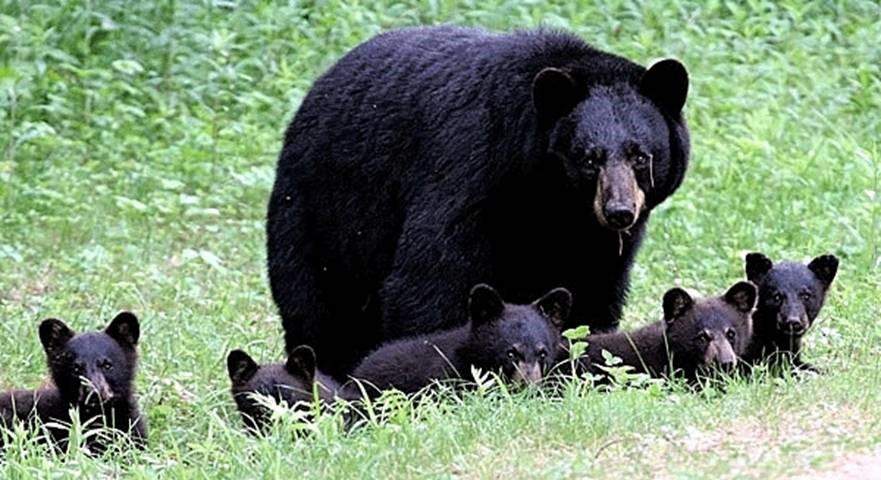
Black  bears typically have two cubs; rarely, one or three. In northern  Alberta a black bear sow gave birth to five healthy young.  There were two or three reports of sows with as many as 4  cubs, but five  was, and is, very extraordinary. The photographer learned of them shortly  after they emerged from their den and set a goal of photographing all  five cubs with their mom – no matter how much time and effort was  involved. He knew the trail they followed on a fairly regular basis, usually  shortly before dark. After spending nearly four hours a day, seven days a  week, for more than six weeks, he had that once-in-a-lifetime opportunity and photographed them. He used  the equivalent of  a very fast film speed on his digital camera. The print is properly focused  and well exposed, with all six bears posing as if they were in a studio  for a family portrait.

bear
The photographer  stayed in touch with other people who saw the bears during the summer and  into the fall hunting season. All six bears continued to thrive. As time  for hibernation approached, he found still more folks who had seen  them, and everything remained OK. The photographer stayed away from the  bears because he was concerned that they might become habituated to  him, or to people in general, and treat them as approachable  friends. This could easily become dangerous for both man and animal.

After Halloween, no  further reports and could only hope the bears survived until they  hibernated. This spring, just before the snow disappeared, all six bears  came out of their den and wandered all over the same  familiar  territory they trekked in the spring.

The photographer saw  them before mid-April and dreamed nightly of taking another family  portrait, a highly improbable second once-in-a-lifetime photograph.  He achieved his dream.

bear2
When  something as  magical as this happens between man and animal, Native Americans say,  “We have walked together in the shadow of a rainbow.” And so it is with  humility and great pleasure that I share these   exhilarating  photos with  you.  Do  pass them on!

Follow our FISHING BLOG

WEB   RATES     FISH    HUNT    CABINS    PHOTOS
TESTIMONIALS    BROCHURE    HUNT BOOKLET

Enter your email address to subscribe to this blog and receive notifications of new posts by email.

← Back

Thank you for your response. ✨

Email Me....


Tags: , , , , , , , ,

Quick tips for hunter safety

While reading some great hunting articles last night, I came across a very overlooked topic.  This is an article written by Tyrrell Hearn and is a great quick snippet on basic hunter safety tricks!

climbing treestand

Over the years we have all heard of hunting accidents and how bad they can be. Hunting safety should be paramount in the mind on any hunter, especially those using high-powered rifles. It goes without saying that guns are designed to take life quickly and effectively, making it imperative that you treat them as such. If you are a hunter, here are a couple tips to keep you safe this season.

IMG_5703 (640x495)

Blind placement– Keep in mind that there are people around you who may also be hunting in the mornings and evenings. Be mindful of other known hunting groups in your area. Having a chat with them about the direction of their firing lanes so everyone is up to date on their neighbor’s new hunting spots is a great way to stay safe.

Less powerful bullets– It is always a draw to buy the highest grain bullet for your guns, however, higher grain equals a faster and longer bullet trajectory. Pick something a little smaller but effective for the game you are targeting.

Aviary Photo_130254763368957516

Hollow points– Buy hollow point bullets. Full Metal Jacketed bullets are not legal to hunt with in most areas anyway. Hollow or soft tipped bullets will break up even if they are only hitting brush and small trees. Lessening your chance of a bullet traveling way past your target.

P1040004

Safety orange– Wear your safety gear so that even at a distance, the most novice of hunter will not mistake you for an animal.

Stay safe, think ahead, and have a great hunting season!

← Back

Thank you for your response. ✨

Email Information regarding

Do you like what you see? Join us on our<a title=”Fishing Blog ” href=”wawangresort.wordpress.com”> Fishing Blog</a> for more up to the minute action, tips and tactics!!


Tags: , , , , , , , , ,

Tips For More Grouse

trees3Learn to Recognize Good Cover
Some hunters seem to have a sixth sense about where the grouse are. This isn’t magic but rather the culmination of years of experience, observation, and a working knowledge of what the birds need. These guys are constantly reading about grouse habitat and lore; they take note of wherever they hear drumming in the spring. They know that good grouse cover holds food and provides protection from predators — if it is near an evergreen stand or gravel so much the better.

Take a page from these hunters. Every time you or your dog move a bird, have a good look around after the smoke has cleared — you’ll see a pattern soon enough. Study grouse biology at home; carry field guides when you hunt; learn to recognize common grouse foods in your area. After a while you’ll develop that sixth sense too.

Keep a Log
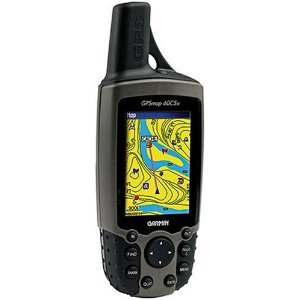
Every serious grouse hunter I know keeps a hunting log. Some maintain elaborate leather-bound journals in which they detail particulars of the hunt such as the date, cover, number of flushes, dog work, weather, harvest, and crop contents of the birds. Other keep it simple, by marking covers on their handheld GPS. Either way, the hunter is reminded of the places that produced grouse last season.gps
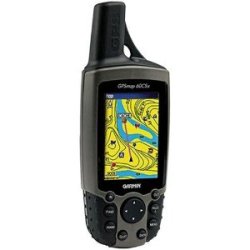
Do this consistently and it won’t take many seasons before you have a bevy of early, mid, and late season options. The more options you have, the better your chance of having a grouse dinner.

Break Some Clay
Over the course of a season, few of us get enough shots at grouse. So it only stands to reason that a hunter ought to make the most of each opportunity. I do this by honing my shotgunning skills in the off-season. Skeet, trap, or sporting clays keep a hunter sharp so that mounting and swinging his scattergun becomes second nature. You’ll still miss — grouse have a way of humbling everyone — but you’ll also make some shots that you might not have without the off-season practice. It just takes a few of these to turn a mediocre season into a great one.

Don’t Forget the Dog Days
Spring and summer are tailor-made for training your dog. Despite this, few of us take advantage of the opportunity. Instead, we expect our dogs to work flawlessly on opening day and we’re actually surprised when that doesn’t happen.

Does your flushing dog hunt too far ahead and blow cover before you get there? A little “hup training” (teaching your dog to sit on command, no matter how far away) in the off season goes a long way towards remedying this. You might also consider brushing up on retrieving drills or introducing your dog to pigeons or game farm forays prior to the season. Some advanced training, such as steadying to wing and shot (where a dog sits down automatically at each flush) might require the help of a professional dog trainer. If that’s what you want, the off-season is the time to do it.

P1040011

Pointing dogs have their own set of training needs, which might include bolstering staunchness, retrieving, hunting range and finding dead birds. Whatever your canine hunting partner’s flaw is, the off-season is the time to address it.

The idea is to learn to handle your dog so that you perform as a well-oiled team during the hunting season. There are plenty of great dog training books and videos — the off-season is when you should benefit from them most.

Follow the Food
Grouse eat hundreds of types of food and each provides a clue as to where the birds are hanging out. That’s why it’s a good idea to check the crop of every bird you shoot. Knowing what grouse are eating helps you understand their habits and tells you where you should focus your hunting efforts. If the last three birds you shot were full of blackberries, for instance, it’s definitely time to hunt any of your covers that hold these shrubs.

Against the Wind
A dog relies on his nose to find birds. So why would you hunt with the wind at its back? We all know that there isn’t any good reason for doing so, but it’s one of the first things excited dog handlers forget when approaching good cover.

If you hunt into the wind, your dog will work closer, scent more game and, hopefully, find more birds. It’s a simple but often overlooked strategy that can make the difference between a full and empty game bag. This is also an important consideration when looking for a lost bird. Take your dog downwind from where you think it fell and let it start hunting from there.

Stop and Start
A good grouse hunting dog provides opportunities that you might not have otherwise had, but that’s not to say that a dog less hunter can’t do well. The key, for a dog less hunter, is to stop and start through likely cover and change direction often. These unpredictable patterns unnerve grouse and invariably pressure them into flushing. Another added bonus is that when you stop you can sometimes hear the put-put-put of a grouse moving just ahead of you. If that’s the case, get the gun up and rush it.

Don’t Hesitate
A good upland shot doesn’t hesitate. He takes the first available shot, even if it’s not a great one.

If you wait for a better chance you’ll rarely get it. Similarly, if you are leading a bird that disappears behind a screen of leaves, follow through, and shoot anyway. You’ll be surprised how often you connect. If not, shells are cheap.

While we’re on the subject of shooting, be ready for the second flush. Often, especially, early in the season when birds are still in their family groups, multiple flushes do occur. If you keep this in mind, they won’t catch you flat-footed — or with an empty gun.

Follow Up
Whenever you flush a bird and don’t fold it, mark where you last saw it. Most times they won’t fly much further than 150 yards. If you marked it well and follow up immediately, you have a good chance of forcing a second flush.


This slideshow requires JavaScript.

Another advantage of following up on grouse is that they sometimes lead you to new covers. If that’s the case, don’t forget to mark it.

Lastly, never assume that you missed any grouse that you shot at. After the shot, keep quiet and listen. Sometimes you’ll hear a mortally wounded grouse doing its death dance against the ground — that’s the one that you thought you missed.

The Right Tools
A fast-handling 12, 16 or 20 gauge shotgun is ideal for birds. Most gunners like double guns. Some happen to prefer a pump because that’s what they shoot best with.  However, don’t discount the light weight, easy to carry .410 shotgun.  Nice little gun with ever growing in popularity in our neck of the woods.

Whatever, your preference, you can’t go wrong using 2 3/4-inch shells filled with 7.5 shot. Grouse aren’t tough birds and it doesn’t take much to bring them down. Since most shots are within 15 yards, the more open-choked your barrels are, the better.

Other essential grouse hunting tools include a quality blaze orange upland hunting vest with a lined game pouch; brush pants; comfortable, well-supported hunting boots; and a compass and/or GPS. If you are hunting with a dog, a whistle, water bottle, portable dog dish, dog first aid kit, and lead are important too. When working heavy, thorny cover, a pair of shooting glasses that protect your eyes are worth their weight in gold.

Conclusion
No one ever said grouse hunting was complicated. But it does take some planning, know-how and skill. Over the last few years, these strategies have made many a much better grouse hunter. Hopefully, they’ll do the same for you.

Follow our FISHING BLOG

WEB   RATES     FISH    HUNT    CABINS    PHOTOS
TESTIMONIALS    BROCHURE    HUNT BOOKLET
Enter your email address to subscribe to this blog and receive notifications of new posts by email.

← Back

Thank you for your response. ✨

Email Me....


Tags: , , , , , , ,

An adrenaline filled archery moose hunt!

images


Sometimes the thrill of the hunt gets escalated that much more!  This is one of the most adrenaline filled hunts we have seen in years.  This hunt was filmed in the Yukon and was executed with great skill…while we promote hunting, we suggest unless you have the skill necessary, do not try this out in the field 🙂

Are you an Ontario resident with a tag for 15A or 15B?  We have centrally located accommodations.  Book early to avoid disappointment!


moosehuntersjpg

Follow our FISHING BLOG

WEB   RATES     FISH    HUNT    CABINS    PHOTOS
TESTIMONIALS    BROCHURE    HUNT BOOKLET

Enter your email address to subscribe to this blog and receive notifications of new posts by email.

← Back

Thank you for your response. ✨

Email Me....


Tags: , , , , , , , , ,