RSS

Category Archives: Wawang Lake Resort

Need a Do-Over With Your Shot?

It’s rare for any hunter to walk away from a field or reflect on a hunt and not think about whether a shot could have been better.  Whether with a bow, crossbow or firearm, there are times when we hesitate. A little voice – instinct, caution, doubt? – throws up a hurdle.

ShotSimulator
Sometimes we adjust and avoid the hurdle. Other times we pull up short and don’t leap. We don’t take the shot.And, unfortunately, there are times when we know the hurdle is there but take the shot anyway. We’re confident in our abilities and that of our bow, crossbow or gun. Some might call that experience. Some might say it’s recklessness or unethical.

We probably all can look back and wrestle with at least one shot that might have been risky, even if things turned out well after taking it and the deer, bear or moose is on the ground.  Part of our duty as hunters is to strive to maximize our abilities with whatever weapon we use.

We practice, tune our bows, hit the range with our guns. We try to find the right combination of arrows and broad heads or the ammunition that works best with our rifles, muzzleloaders, handguns or shotguns.  One way to improve our knowledge and experience is with Deer & Deer Hunting’s “Shot Simulator” software.  If you’ve ever been curious about where your bullet, slug or arrow has entered a deer’s body and what happened, here’s how to find out.  The Shot Simulator software is designed to provide you with outstanding animation of a deer’s body and internal bones, muscles and organs.

imagesA15UZWSYWith the Shot Simulator, you can position the animated deer in numerous positions – how it was when you shot, or how you saw a buck or doe and didn’t shoot – and then learn which organs were hit.  Didn’t like what you saw? Position it differently and do it again. You can not only position the deer, but also your shot from a tree stand or ground level.  If you’re a stand hunter but only climb about 15 feet, you can see the difference in that height versus 25 feet or on the ground.  The animation allows you to move the deer around and then remove the hide, skin and bones to see what happened.  Then, you can punch in the trailing guide to find out what happens next.  Should you follow the game immediately?  Wait a while? Just for your knowledge, you could take the shots on the computer that you’d definitely pass up in real life and then see what would happen.

It’s an educational tool that could help you glean more knowledge and help make you a better hunter. Shot Simulator also is a great teaching tool for young hunters, too.  They’re curious about what happens and this is a great way to augment their in-field learning.

Follow our FISHING BLOG

WEB   RATES     FISH    HUNT    CABINS    PHOTOS
TESTIMONIALS    BROCHURE    HUNT BOOKLET   NEWSLETTER

Enter your email address to subscribe to this blog and receive notifications of new posts by email.

← Back

Thank you for your response. ✨

Email Me....


Tags: , , , , , , ,

Blueberries – a Critical Food for Black Bear

imagesB4EBB1P8 Blueberries are an important food source throughout the black bear range.  The most commonly eaten berries in our area of northwestern Ontario are blueberries and raspberries.   Many other berries are eaten, but they have shorter seasons, are scarce, or are less preferred.

The period when blueberries  are abundant in our area is short & mainly in August-making that period critically important in the black bear’s annual cycle of events.  Efficient feeding during that time is critically important to winter survival, growth, and reproductive success.  Researchers found that bears in NW Ontario end mating activities before the critical feeding period and focus on feeding for the remainder of the summer.

Black bears are efficient berry-eaters, consuming up to 30,000 berries a day in a good year.  They gather berries quickly, using their sensitive, mobile lips and swallowing them whole.  The berries enter a two-part stomach, which grinds the pulp off the seeds.


imagesP1Y6BVCSThe seeds pass through the digestive tract unbroken and able to germinate, making black bears important seed dispersers.  Each summer, they spread the seeds of their favorite berries all over their home ranges.

Black Bear around Wawang Lake gain weight most rapidly during July and August when berries are abundant.  When the berries run out in September, there is little else to eat.  The bear usually seek out their dens in September or October.   The longer period of food abundance enables bears to achieve more growth and reach maturity more quickly than bear.  Bear in NW Ontario typically produce their first litters at 4 to 5 years of age.

Berries contain anti-oxidants, and the seeds of some species contain vitamin B-17, considered an anti-cancer compound by some scientists.  Although cancer occurs in captive bear, it has never been reported in wild bear.

RECIPES

blueberry pancakes wawang lake

Blueberry Pancakes


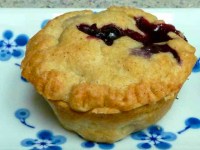
GLUTEN FREE BLUEBERRY PIE

Gluten FREE Blueberry Pie


Follow our FISHING BLOG

WEB   RATES     FISH    HUNT    CABINS    PHOTOS
TESTIMONIALS    BROCHURE    HUNT BOOKLET   NEWSLETTER

Enter your email address to subscribe to this blog and receive notifications of new posts by email.

← Back

Thank you for your response. ✨

Email Me....


Leave a comment

Posted by on January 8, 2017 in black bear, recipe, Wawang Lake Resort


Tags: , , , , , , , ,

Muscle Exercises for Archery

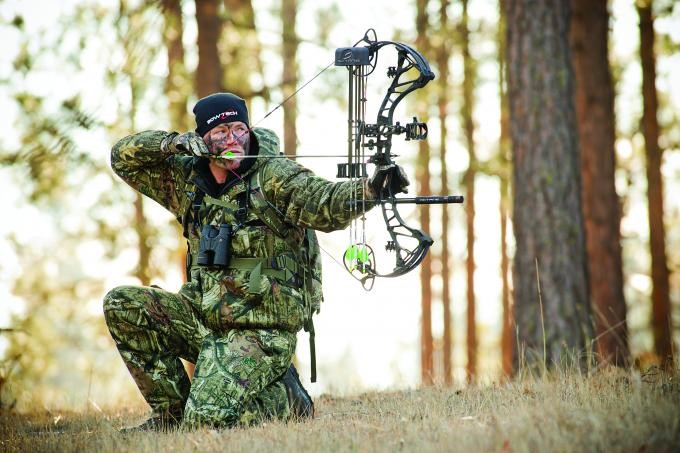
Archery is a sport that involves the use of a bow and arrow, This sport is hundreds of years old and is even featured in the Olympics. The actions in archery utilize several main muscle groups in the body, including the triceps, which sit at the back of your upper arm, the deltoid muscles in your shoulders and the latissimus dorsi muscles in the lower back. To improve your archery skills, include exercises that target these muscles in your workout.

archery123

Raise One Arm to Boost Arm Strength

Dumbbell one-arm lateral raises strengthen the deltoid muscles, which are used to provide strength and power for holding and pulling back the bow in archery. Stand straight with your feet shoulder-width apart, your right hand holding onto a stationary object on your right and your left hand holding a dumbbell straight down so it’s resting in front of your pelvis. Slowly raise your left arm up to the side, continuing until your elbow is at shoulder-level. Lower it back down, repeat and then switch arms.

Row, Row, Row Your Muscles

Spending time on the rowing machine is well worth it if you want to improve muscles for archery, because it works all of the primary muscles used in the sport including the deltoids, latissimus dorsi and triceps. Sit on the seat with your feet strapped in securely. Keep your back straight and hold onto the handle. Slowly push off with your feet, sliding back until your legs are almost fully extended. Return to your starting position and repeat.


resistancebandsexercises

Go Overhead for Strong Triceps

The overhead triceps extension is one of the most effective exercises for the triceps muscles. Stand straight up with your feet close together, one slightly in front of the other and both flat on the floor. Extend your arms fully above your head, grasping the top of a dumbbell with both hands. While keeping your upper arms beside your head, slowly flex your arms, lowering your forearms behind you toward your back until you feel a light stretch in your triceps. Raise your arms back up above you to complete one rep. Repeat.

Get Big Results with the Barbell Pullover

The barbell pullover exercise targets the latissimus dorsi muscle in the back, but it also works the triceps and deltoids, making it an integral muscle exercise for archery. Lie your upper back perpendicular on a flat weight bench, your legs bent in front of you on a right angle with your feet flat on the floor. Grasp a barbell, position your arms so they’re extended straight above you and keep your hands aligned with your shoulders. While keeping your arms straight during the movement, move your arms back in a slow, controlled motion, until the barbell is directly behind your head. Then, return to your starting position. Repeat.

Why You Need the Lat Pulldown in Your Life

The latissimus dorsi is the largest muscle of the back and is one of the main muscles in the body used in archery, primarily during the drawing motion of the bow. Lat pulldown exercises are most effective for targeting this muscle, so try the cable close-grip pulldown. On the seat of a lat pulldown machine, place your feet flat on the floor below you and position your hands above you while grasping onto the parallel cable attachment. Engage your core, pull down on the cable attachment and then return it until your arms are fully extended. Repeat.

bow1

Weights, Reps and Sets

Even with all the right exercises, if you’re not using the right amount of weight or completing the proper number of sets and reps, you’re not going to get the results you’re hoping for. Start off with a weight you can manage, and only increase the amount of weight you’re using when you can complete a full set of 12 reps while maintaining proper form the entire time. Gradually work up to completing three sets of 12 reps.

Follow our FISHING BLOG

WEB   RATES     FISH    HUNT    CABINS    PHOTOS
TESTIMONIALS    BROCHURE    HUNT BOOKLET   NEWSLETTER

Enter your email address to subscribe to this blog and receive notifications of new posts by email.

← Back

Thank you for your response. ✨

Email Me....


Leave a comment

Posted by on January 6, 2017 in archery, hunting, Wawang Lake Resort


Tags: , , ,

Quick Tips For Hunter Safety

While reading some great hunting articles last night, I came across a very overlooked topic.  This is an article written by Tyrrell Hearn and is a great quick snippet on basic hunter safety tricks!

climbing treestand

Over the years we have all heard of hunting accidents and how bad they can be. Hunting safety should be paramount in the mind on any hunter, especially those using high-powered rifles. It goes without saying that guns are designed to take life quickly and effectively, making it imperative that you treat them as such. If you are a hunter, here are a couple tips to keep you safe this season.

IMG_5703 (640x495)

Blind placement– Keep in mind that there are people around you who may also be hunting in the mornings and evenings. Be mindful of other known hunting groups in your area. Having a chat with them about the direction of their firing lanes so everyone is up to date on their neighbor’s new hunting spots is a great way to stay safe.

Less powerful bullets– It is always a draw to buy the highest grain bullet for your guns, however, higher grain equals a faster and longer bullet trajectory. Pick something a little smaller but effective for the game you are targeting.

Aviary Photo_130254763368957516

Hollow points– Buy hollow point bullets. Full Metal Jacketed bullets are not legal to hunt with in most areas anyway. Hollow or soft tipped bullets will break up even if they are only hitting brush and small trees. Lessening your chance of a bullet traveling way past your target.

P1040004

Safety orange– Wear your safety gear so that even at a distance, the most novice of hunter will not mistake you for an animal.

Stay safe, think ahead, and have a great hunting season!

Follow our HUNTING BLOG

WEB   RATES     FISH    HUNT    CABINS    PHOTOS
TESTIMONIALS    BROCHURE    HUNT BOOKLET   NEWSLETTER
Enter your email address to subscribe to this blog and receive notifications of new posts by email.

← Back

Thank you for your response. ✨

Email Me....


Tags: , , , , , , , , ,

The Best Crossbows

crossbow hunting, hunting with crossbow, best crossbows

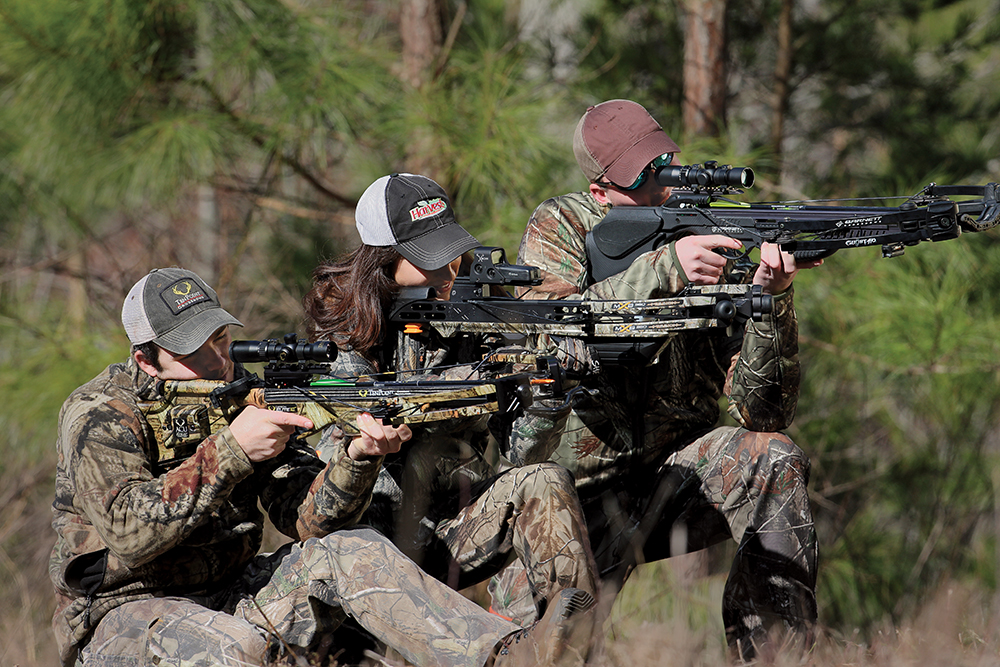
Skyrocketing interest in crossbow hunting has created tremendous demand from new crossbow hunters. Meanwhile, discriminating veterans are looking for features like sleeker, lighter, faster, more maneuverable and more powerful bows.

And believe it or not, there’s even a market for zombie crossbows and dangerous game. Whatever your preference, chances are there’s a perfect crossbow out there just for you.

As a result, crossbow manufacturers are increasingly challenged with providing an adequate supply of all of the above. Time will tell if they can make enough bows, but if this year’s selection is any indication, they certainly seem to be on track in terms of technology. Check out our roundup of the best crossbows below.


Tags: , , , , , ,

Dog Retrieving Sheds Tips

wawang-lake (2)

  1. Pick the right pup. You want a pup with high prey and hunt drives, such as a retriever (Labrador, golden) or a working breed (German shepherd, Malinois). But not every dog will do. Test a pup out by tossing some short retrieves (do not use a shed at this stage). Look for unbridled enthusiasm. You’ll also need to ensure the dog has enough drive. Throw the ball into thick cover and observe how long he’ll search and whether he’s using his nose.
  2. Imprint the scent. To get your dog excited about shed hunting, you need to get him excited about the scent of sheds. Take a tennis ball and rub it on a shed—the fresher the antler, the better. Or store the ball and the shed together. Then work with the dog on short retrieves. Eventually work your way up to tossing the ball into thick cover. Give a reward after good sessions.
  3. Hide the shed. Once the dog is accustomed to the scent of sheds, it’s time to break out the antlers for what Bowling calls odor recognition. The biggest mistake people make, says Bowling, is that they don’t think about the wind while training. At first, try some easy finds, and reward good effort. Then move to tougher tests. But always work the dog into the wind. Let him learn to use his nose.

Follow our FISHING BLOG

WEB   RATES     FISH    HUNT    CABINS    PHOTOS
TESTIMONIALS    BROCHURE    HUNT BOOKLET


Enter your email address to subscribe to this blog and receive notifications of new posts by email.

← Back

Thank you for your response. ✨

Email Me....


Tags: , , , , , , , , ,

Tracks in the Snow

moose-wawang-lakeTraditionally, moose have also been taken outside the rutting season, especially in the winter. At this time, moose tend to be scattered. If the snow is fresh and powdery, a hunter can move silently through the forest and thickets. But if the snow is drifted or develops a crust, every footstep makes a noise that alerts the moose. Making matters worse, even slight sounds carry over surprisingly long distances on windless days with temperatures far below zero—as often happens during the northern winter.

Moose have excellent hearing, so the best chance of approaching one in the winter is during storms when gale winds and gusts cover the sound of crunching snow. Luckily, temperatures tend to be warmer during storms, so although hunting in these conditions can be very uncomfortable, it’s not as life threatening as when the temperatures sink to minus thirty or colder.

When the snow is really deep—up to a moose’s belly—these animals have a very hard time moving around. Also if the snow is deep and crusted, the heavy-bodied moose will punch through the icy crust, cutting its legs as the animal walks, making travel extremely difficult.

If the crust is hard and strong enough, wolves can walk on top, giving them a lethal advantage over moose. Mired in the snow, a moose cannot escape by running away and has difficulty defending itself. Human hunters on snowshoes can also stay near the top of deep or crusted snow while the moose are forced to wallow slowly along. Under these conditions, a moose is virtually trapped in a small area of its feeding trails, making it extremely vulnerable.

When the snow is not so deep, moose can move far more quickly and easily. The practiced hunter knows that if moose tracks consistently lead in a single direction, the animal may be heading somewhere else and will be very hard to catch.

If a moose is feeding in one area its tracks will wander in multiple directions. This is good news for the hunter, because he may have a chance to get close to the animal. Now the difficulty is to find which tracks are the freshest and which direction they lead.

A hunter always wants to know how old the tracks are—how long ago did the moose make them? Would it be possible to catch up or is the animal long gone?

A track made within the hour is soft—as soft as the surrounding snow. The hunter riding on a dog sled or snow machine might simply drag his boot through the track. If the track is fresh, he feels almost nothing. If it’s older, he feels two distinct thumps as his boot hits both sides of the track.

In cold weather—especially if it’s far below zero—the inner walls of an animal’s track will recrystallize and develop a crust within a few hours. This starts first around the top and happens later at the bottom. If the track was made the night before it will be harder still. The colder the temperatures, the more quickly a crust forms on the inside of tracks.

A hunter on foot pushes his boot or a mittened hand down into the tracks, feeling the crust or testing how much pressure it takes to break through. The harder the crust, the older the track. In below zero weather, a track made two days ago or earlier will be very hard.

Another sign the hunter looks for is moose droppings. When they’re fresh, the color is dark brown and they’re soft. In freezing temperatures, the pellets quickly harden and turn lighter.

Other signs are willow branches that have been freshly broken by browsing moose, the white wood showing conspicuously against the darker background of the thicket. Often this is accompanied by a scramble of tracks and patches of gouged-out snow where the moose has pawed down looking for edible vegetation under the snow.

moose-wawang-lake (2)Moose rest or sleep in snow beds, often straight downwind from their tracks. They do this to catch a warning scent from any predator that is following their trail. At other times, a moose that hears a suspicious sound or spots something unusual will intentionally move downwind to test the scent. A moose can recognize the drifting smell of a wolf or human, even at a considerable distance.

When a hunter is following fresh moose tracks in the snow, he knows that the animal could have bedded downwind so it would pick up his scent. For this reason he leaves the trail at intervals, walks straight downwind, then makes a wide loop and heads back upwind—always watching the underbrush for the dark shape of his prey. Again and again, he makes these downwind loops and comes back upwind until he finds tracks leading to where the moose is bedded. If luck is with him and the moose never catches his scent, he may catch it unaware.


Follow our FISHING BLOG

WEB   RATES     FISH    HUNT    CABINS    PHOTOS
TESTIMONIALS    BROCHURE    HUNT BOOKLET


Enter your email address to subscribe to this blog and receive notifications of new posts by email.

← Back

Thank you for your response. ✨

Email Me....


Tags: , , , , , , , , , ,

STAY CALM

If you’ve had any trouble in the past “keeping it together” when shooting at game,
right now is the time to find a cure.

bow-hunting-wawang-lake

Countless of hunters who practice shooting regularly, months before the season opens, and they still have trouble closing the deal when Mr. Big shows himself. Getting excited is fine — excitement is a big part of why we hunt — but there is a big difference between getting excited and falling apart. We owe it to ourselves to perform under pressure. Even more, we owe it to the game we hunt to stay calm enough to make good shots and clean kills.

Below are six steps that have helped hunters stay cool at the moment of truth.

  1. Practice, Practice, Practice Nearly all bow hunters practice their shooting, but many fail to practice properly. To many average bow hunters, practice means flinging 20 to 30 arrows once or twice a week. This is not considered practice. When preparing for a hunt, practice every possible shot sequence, just as if you were actually hunting. That means shoot a 3D target from every possible angle while wearing camouflage, and shoot from any position that might become a possibility during the hunt. You want to be prepared for all contingencies.

Also practice at distances considerably farther than you will shoot on animals. A typical whitetail shot is closer than 30 yards, but practice regularly to shoot out to 80 and even 100 yards. That kind of practice will leave you very confident for any shots closer than 40 yards.

Lack of confidence is the biggest reason some people get shaken at the shot. They just keep thinking they may not make that shot. There are two things to offer those who lack confidence. One, restrict shots to your comfortable shooting range. Two, practice enough different scenarios that when an animal steps into your shooting lane, you’ll have no doubts about making the shot because you’ve already done it dozens of times in practice.

  1. Run & Shoot Now that sounds kind of dangerous, but it’s not meant in a literal sense.  During practice sessions, sprint anywhere from 60 to 100 yards, then pick up your bow and try to put a kill shot on a 3D target. This simulates the adrenaline rush you get when shooting at game. Some people may think it sounds crazy, but, it builds confidence like no other drill. You don’t have to do this every time you practice, but do it often enough to build confidence in your ability to shoot accurately when your heart is racing — whether from running or from watching a buck walk within range.
  2. Flex Those Muscles! When you see a big buck coming down the trail and your heart rate skyrockets, tense every muscle in your body while holding your breath. Then, after five or six seconds, let your muscles relax, and exhale. Do this several times as needed.

This is especially helpful during frigid hunts, when your muscles are stiff and your circulation is poor. It helps improve blood flow, regulate body temperature, settle your heart rate, and relax your muscles, all of which will calm you down to make a good shot. This muscle-tensing tactic has will help keep your cool on numerous animals.

  1. Focus On The Sweet Spot Once you decide to shoot an animal, you have no need to look anywhere other than the hair, scale, or feather you want to hit. Keying in on that certain spot keeps you calm and focused.   Some people miss when they focus on the headgear because they are looking with their mind’s eye at a beautiful shoulder mount gracing the wall above the fireplace. Don’t worry about the headgear while the critter is alive. You will have years to stare at it — if you focus on the vitals before and during the shot.

bow-hunting-wawang-lake (5)

You tend to aim where you are looking. Look at those wide antlers coming your way, and you might put an arrow right through the center of them. Instead, concentrate on the vitals, and that’s where you’ll put your arrow.

  1. Close Your Eyes This isn’t always an option, but when it is, it works. The longer some people look at an animal they want to shoot, the more stage fright they develop. If that’s you, closing your eyes or looking up at the sky will allow you to clear your mind and reorganize your thoughts.

Some people can perform on a moment’s notice, but, others prefer to have some time to evaluate the situation and to analyze every move before actually making it.   If too much time transpires and the nerves start taking over, close your eyes to regain focus before the animal gets within bow range.

  1. The Inner Voices Although you might not have demons and angels on your shoulders taunting you one way or the other, you certainly have inner voices that control your mind when you’re face to face with your prey. Listen to the positive voices and let them build you up.   Feeding your mind with positive thoughts will weed out the negative ones that flow through the minds of so many bow hunters. Doubt is where many archers fail at crunch-time. To eliminate doubt, talk to yourself — positively.

bow-hunting-wawang-lake (2)

Follow our FISHING BLOG

WEB   RATES     FISH    HUNT    CABINS    PHOTOS
TESTIMONIALS    BROCHURE    HUNT BOOKLET


Enter your email address to subscribe to this blog and receive notifications of new posts by email.

← Back

Thank you for your response. ✨

Email Me....


Tags: , , , , , , , , ,

Hunter Fends Off Grizzly by Shoving Arm Down Its Throat

Grizzly

Sticking an arm down the throat of a bear is regarded by some as an effective last-ditch tactic for fending off an attack.

There are few animals in North America as frightening as an adult grizzly, and if one of these massive animals get it in their heads to attack you, your day just suddenly got a whole lot worse. Twenty-six-year-old Chase Dellwo was expecting to bag some elk in the Montana back country near Choteau last Saturday, but a chance encounter with a bear ended with him sticking his arm into its roaring mouth instead.

That decision may have saved his life.

According to the Great Falls Tribune, Dellwo was bowhunting near a creek bed with his brother Shane. Strong wind and intermittent snow and rain kept visibility to a minimum, but the brothers heard elk bugles in the area and Dellwo was eager to make his first elk harvest of the year. The hunter had been steadily driving the animals toward his brother, but the weather also hid a sleeping grizzly, which Dellwo practically tripped over. At less than three feet, there was little that Dellwo could do before the animal charged him.

“I had an arrow knocked, and I put my bow up in front of me and took two or three steps back,” he told the Tribune. “There wasn’t any time to draw my bow back.”

The grizzly knocked Dellwo off his feet and bit him in several places across his head. It then reared back and gave what the hunter later described as the loudest roar he had ever heard, before attacking him again and biting his right leg. It was at this point that Dellwo recalled that an old survival tip about how bears have sensitive gag reflexes—so the hunter plunged his arm down the animal’s throat.  The bear promptly left.

Dellwo is not the first person to have stuck their arm down a bear’s throat and lived to tell the tale. The trick is commonly regarded as a last-ditch defense against bear attacks. As recently as last November, a hunter in British Columbia used to same trick to disable and ultimately kill a large grizzly sow near Fernie. According to CTV News, Wilf Lloyd was seriously mauled by the bear before he was able to stop its biting by jamming his hand down its mouth. While the bear was still on top of the man, Llyod’s son-in-law arrived and shot it dead with a rifle.

Lloyd also received a bullet in the leg during the chaotic struggle, but he did not blame his hunting companion in the least.

“The man saved my life,” Lloyd later said. “What Skeet did and because of his fast reaction, the shots, I had maybe fifty stitches in my hand and that’s it. So I was very fortunate that way.”

Dellwo echoed Llyod’s sentiment after his own bear encounter. Shortly after the attack, he was able to reunite with his brother and was transported to a local hospital, where he was treated for various cuts and punctures on his head and right leg. Dellwo expects to be back in the woods later this year for rifle season.

Officials with Montana Fish, Wildlife, and Parks are currently investigating the case and believe that the bear involved was a 400-pound male. Experts added that the brothers seemed to have done everything correctly and that the bear will likely not be tracked down since the attack was not predatory in nature.   By: Daniel Xu

Follow our FISHING BLOG

WEB   RATES     FISH    HUNT    CABINS    PHOTOS
TESTIMONIALS    BROCHURE    HUNT BOOKLET


Enter your email address to subscribe to this blog and receive notifications of new posts by email.

← Back

Thank you for your response. ✨

Email Me....


Tags: , , , , , , ,

How To Prevent Venison From Tasting Awful

I hear people say all the time that they don’t like the taste of deer. Some people say that just because they know what they’re eating and have a preconceived notion that it won’t be good. Others have legit gripes, mainly due to poor handling by the hunter from the time of the kill up until it was cooked. This often results in gamey, tough meat. Here are some tips to help combat bad-tasting venison.

venison

Hunting in the real world is not like the Outdoor Channel portrays it to be. Hunters make bad shots from time to time and the deer has to be tracked for a while. Shot placement and the stress the animal received while being trailed plays a big role in gamey meat. The faster a deer dies, the sooner it can be field dressed. This will reduce the amount of acid that builds up in the deer’s muscles.

Hunters often fail to get the deer cooled as quickly as possible. The first step it to field dress the animal immediately and wash out the cavity with cool water. Be sure to dry the cavity out, as the water can be a breeding ground for bacteria. If the temperatures outside are in the mid-30s or cooler, it’s okay to let the deer hang. Anything warmer than that, and the deer needs to hang in a walk-in cooler (or be skinned, quartered, and put on ice if you don’t have a walk-in).

A whitetail is not a hard to deer to quarter. Because of how their joints and tissues hold their legs on, a simple pocket knife can have a deer quartered quicker than you might think. Some might use a saw to cut through bone marrow and small pieces of bone, but then you’d need to watch that shavings from the saw don’t get mixed in with the meat. Stick with a sharp knife instead, and your meat will be free of small bone pieces that can contaminate the meat.

Growing up, I can remember how much my dad loved the taste of fat from a good cut of beef. The same does not hold true with deer fat. Simply stated, deer fat tastes awful. It is not red meat, so cut it off before it’s made into steaks or burger. This includes all fat and silver skin.

Every year before deer season begins, we call in an order to the local butcher shop for beef suet. Even though we removed all of the deer fat, we need to add some sort of fat, whether beef or pork, when grinding it. If this is not done, the lean venison will quickly fall apart when making burgers, meat loaves, etc. We add beef fat at a ratio of 3:1 (three pounds venison per pound of fat).

If you have the means, the time, and the knowledge, I recommend processing all your deer yourself. When you take a deer to a meat locker you can’t be sure how the meat is handled — or if it’s even your own deer that you’re getting back. For all you know, you could be getting back someone elses deer, perhaps one that was gut-shot and not properly handled after the shot. If you have to take a deer to a processor, research the facility by talking to other hunters who’ve used it, and also talk with the workers, who will hopefully be honest with you.

Don’t overcook venison. Cooking deer for too long causes it to become chewy and dry. Venison is best cooked to medium rare, but the outside needs to be cooked. To accomplish this, the grill must be hot enough to quickly sear the outside and lock in the flavors and juices. Turn your venison only once. If there are no grill marks on the meat after three minutes or so, the grate is not hot enough.

Freezer-burnt food, whether it is venison or other food, does not taste good. Some people use a vacuum sealer; if you go this route, buy a good one, as a cheap product will not keep the food fresh. When we butcher our deer, we make wrapping the meat a family affair, with all involved. We put one-pound portions of burger in sandwich bags and the steaks and roasts are wrapped with plastic wrap. After covering it with plastic wrap, we wrap it with good freezer paper and tapes. Writing on each package, we identify the cut of meat, who killed it, and the date of the kill.

I hope this advice helps you create a great-tasting meal. A few more final tips: The younger the deer, the better, more tender it will be (even though this might not sit well with trophy hunters). Thaw venison slowly to prevent toughness, then serve it hot and keep the remainder hot to prevent it from getting a waxy taste.

Follow our FISHING BLOG

WEB   RATES     FISH    HUNT    CABINS    PHOTOS
TESTIMONIALS    BROCHURE    HUNT BOOKLET


Enter your email address to subscribe to this blog and receive notifications of new posts by email.

← Back

Thank you for your response. ✨

Email Me....


Tags: , , , , ,