RSS

Category Archives: Northwestern Ontario

ID the Morel – Spring’s Best Mushroom

When the spring gobbler season and shed hunting is in full swing, you’ll probably spending a lot of time in the woods looking at the ground for antlers and turkey sign. Something else you ought to be on the lookout for is a weird little pitted thing that looks like a small, lumpy, brown brain. This time of year, that organism is most likely a common morel mushroom, a popular item of spring foragers. Here’s how to properly identify this delectable fungus.

mush

ID a Morel
The common morel (Morchella esculenta) is a prized wild mushroom that grows in forests and shady areas, primarily in April and May. These mushrooms are usually 2 to 4 inches tall. The tan, gray, or brownish colored head with irregular pitting is well camouflaged against leaf litter. If you cut the mushroom completely in half, it should be entirely hollow inside. Look carefully for the cone-shaped head to be fully fused to the stalk at the lower end.

mush2If the head is only attached at the top, and hangs like a skirt, you are probably looking at a false morel, which can be very poisonous. False morels (the genera Verpa and Gyromitra) usually grow in the summer and fall, which are great times to avoid anything resembling a morel. Another way to properly ID an edible morel is to make a spore print, which, for a common morel is yellowish. Here’s how do that.

Make a Spore Print
1. Handle your foraged mushrooms carefully, and assume that any unidentified mushroom is deadly. Get the whole thing if possible, but the cap is the part you need for spore prints.

2. Wrap each individual mushroom in wax paper or a piece of aluminum foil for transport. Plastic bags will make them sweat, and putting multiple mushrooms in a bag can create confusion.

3. Place the mushroom cap gills-down on a piece of white paper and set a cup or bowl over it. Allow it to sit several hours or, better yet, overnight.

4. Remove the cover and lift the mushroom cap. Observe the color of the spores that were deposited, and use that color for identification. Some mushrooms deposit white spores, which are hard to see on the white paper. Set a strong flashlight beside the paper, shining across the surface, to assist in your identification of pure white spores. Check this color against several guides, and double-check the mushroom’s structures against similar mushrooms to ensure that you have the right mushroom ID.

How is the morel hunting in your area so far this spring? Have you ever had a bad run-in with a misidentified mushroom?

Follow our FISHING BLOG

WEB   RATES     FISH    HUNT    CABINS    PHOTOS
TESTIMONIALS    BROCHURE    HUNT BOOKLET

Enter your email address to subscribe to this blog and receive notifications of new posts by email.

Go back

Your message has been sent

Warning
Warning
Warning
Email Me....

Warning

Warning.


Tags: , , , , , , ,

Grouse Hunting Tips

Ruffed Grouse are the king of all game birds, and sometimes (most of the time) the most challenging. So here are a few tips and techniques that you can try that work well.

Ruffed Grouse

Ruffed Grouse

In order to hunt grouse, you need a place that holds birds. Ruffed Grouse like moist, dark places with little ground cover (like grass), but low overhead cover.  Our hunting areas here in Northwest Ontario are mixed timber and brush along creek bottoms. Grouse need food, and mostly live on buds and berries, but also feed on bugs and clover. Food sources differ from area to area, but grouse typically eat the same things everywhere. You will notice that grouse change their diet as the seasons change.

The ideal areas to hunt will hold the presence of water as that makes a big difference,  creek bottoms with mixed old growth and re-prod, and a road close by for grit.

Early in the season, you will find the birds in family groups or coveys. As season and winter progress, the groups break up and you will find birds mostly in singles and pairs. Early season birds hold pretty tightly here in our area, but it isn’t like that everywhere.

Ruffed grouse have a daily routine, so you can pattern them. They normally get up late and fly into a feeding area or along a road to pick gravel. Then it’s off to loafing and dusting the afternoon away. In the evening, they will go back to feeding, and usually roost around the same area.

Before season, and if you can, drive roads looking for new spots an checking old ones. Early in the morning or late in the evening, you can find grouse in the roads picking gravel. Mark these spots and come back during season to hunt the areas around them. Even if an area doesn’t provide birds, still go back a different time to check again if everything the grouse need is there so will they eventually.

German Shorthair Pointing at a ruffed Grouse in the Oregon Woods

When hunting grouse, use a dog that has a really good nose and hunts from close to medium range. It’s a good idea to sometimes stop in an area that will likely hold birds and let the dogs just circle. Grouse are hard to scent for dogs, so slow and steady is good.  Hunt up or down creeks, then turn around and hunt back in the opposite direction.   It’s hard to believe how many birds the dogs will miss the first pass, but after you leave, they will move around put out a good scent cone for the dogs.

Follow our FISHING BLOG

WEB   RATES     FISH    HUNT    CABINS    PHOTOS
TESTIMONIALS    BROCHURE    HUNT BOOKLET

Enter your email address to subscribe to this blog and receive notifications of new posts by email.

Go back

Your message has been sent

Warning
Warning
Warning
Email Me....

Warning

Warning.


Grouse Hunting Tips

Ruffed Grouse are the king of all game birds, and sometimes (most of the time) the most challenging. So here are a few tips and techniques that you can try that work well.

Ruffed Grouse

Ruffed Grouse

In order to hunt grouse, you need a place that holds birds. Ruffed Grouse like moist, dark places with little ground cover (like grass), but low overhead cover.  Our hunting areas here in Northwest Ontario are mixed timber and brush along creek bottoms. Grouse need food, and mostly live on buds and berries, but also feed on bugs and clover. Food sources differ from area to area, but grouse typically eat the same things everywhere. You will notice that grouse change their diet as the seasons change.

The ideal areas to hunt will hold the presence of water as that makes a big difference,  creek bottoms with mixed old growth and re-prod, and a road close by for grit.

Early in the season, you will find the birds in family groups or coveys. As season and winter progress, the groups break up and you will find birds mostly in singles and pairs. Early season birds hold pretty tightly here in our area, but it isn’t like that everywhere.

Ruffed grouse have a daily routine, so you can pattern them. They normally get up late and fly into a feeding area or along a road to pick gravel. Then it’s off to loafing and dusting the afternoon away. In the evening, they will go back to feeding, and usually roost around the same area.

Before season, and if you can, drive roads looking for new spots an checking old ones. Early in the morning or late in the evening, you can find grouse in the roads picking gravel. Mark these spots and come back during season to hunt the areas around them. Even if an area doesn’t provide birds, still go back a different time to check again if everything the grouse need is there so will they eventually.

German Shorthair Pointing at a ruffed Grouse in the Oregon Woods

When hunting grouse, use a dog that has a really good nose and hunts from close to medium range. It’s a good idea to sometimes stop in an area that will likely hold birds and let the dogs just circle. Grouse are hard to scent for dogs, so slow and steady is good.  Hunt up or down creeks, then turn around and hunt back in the opposite direction.   It’s hard to believe how many birds the dogs will miss the first pass, but after you leave, they will move around put out a good scent cone for the dogs.

Follow our FISHING BLOG

WEB   RATES     FISH    HUNT    CABINS    PHOTOS
TESTIMONIALS    BROCHURE    HUNT BOOKLET

Enter your email address to subscribe to this blog and receive notifications of new posts by email.

Go back

Your message has been sent

Warning
Warning
Warning
Email Me....

Warning

Warning.


Tags: , , , , , , ,

Moose Rack – How It Grows

Moose are the largest living member of the deer family (Cervidae) and fittingly bear the largest set of antlers. Moose antlers are usually paired and shaped like the palm of a hand with outstretched fingers, thus the expression palmate.

After a male moose reaches one year of age he starts to grow antlers that increase in size (becoming more elaborate with more points and heavier) for each new set of antlers he grows until he reaches his prime. After a male (Bull) moose reaches his prime the antlers start to recede each year until the moose dies.

Mature Bull Moose Antlers

North American Moose Antlers have larger antlers than their European relatives. World record antlers consistently come from Alaska, where antler spreads of six feet have been recorded.

Every year the cycle is the same. In the spring antlers begin to grow from the skull covered with a tissue called “velvet”.

By September the growth has completed and the velvet dries and falls off. Moose will often aid the removal of the velvet by rubbing their antlers on trees and shrubs (on occasion they’ll eat the velvet too!). The continuous rubbing on trees, combined with the dried blood and dirt will give the Moose Antlers the brown color hunters are accustomed to seeing in the fall.

What is the purpose for Moose Antlers?

Antlers do not serve a useful purpose until the fall and during the mating season (called the Rut). Even during this period of time, which in British Columbia is typically the first two weeks of October only serve as a tool for intimidation.

You see Moose for the most part only have to show off their antlers to scare off the rivals – younger and weaker males. On occasion a mature bull moose will chance upon a moose of equal stature; where intimidation and posturing will not work they may then face off head to head and engage each others antlers.

There have been situations where these wrestling matches have led the moose antlers to become so entangled that they cannot separate and both moose die.

Broken and/or damaged antlers can lead to a long road to recovery for a moose. It would take more than a morningside recovery to heal the damage. Recovery in the wild is a long process. At morningside recovery, we take it one step at a time.

When do Moose loose their antlers?

Between January and March is when moose typically lose their antlers; younger moose keep their antlers until later in the winter and it is usually only two year old moose that may still adorn their antlers come March.

Two distinct types of moose antlers are the “palmate” or shovel-horn type characterized by broad up-reaching parallel palms, and the “cervina” or “pole-horn” type, having long tines or spike-like architectures. The palmated antlers are either fully palmated in shape or of a split –palm, 

An antler from a yearling male moose

(1) An antler of a yearling male usually has two or three points on each side. Some may have four or more points on each antler branch or a small palm.

Yearling moose are the most easily aged identified, they typically have two or three points on each side and are of the cervina type. These young moose have small circumference of main antler beam, few points and narrow spread.

An antler from a two and a half year old bull moose

(2) An antler from a two and a half year old bull moose. Note the increasing palm development into an upward and backward pointing component and the forward and downward pointing brow tines. 

Antlers from a three and a half year old bull moose

(3) Antlers from a three and a half year old bull moose. Note the two point or forked brow palm development and wide distance between the innermost points on the brow palm. 

Antlers from a three and a half year old bull moose

(4) Antlers from a three and a half year old bull moose. Note the offensive architecture, forked brow palm and wide gap between opposing points. 

The antlers of a bull moose in its prime of life

(5) The antlers of a bull moose in its prime of life. Antlers are a butterfly or split-palm type. Note the palmate on the brow palm and the protective architecture afforded by the short distance between the innermost points of the brow palms covering the facial and eye areas. 

Antlers of older moose vary to such great extent that it is an impossible task to accurately identify an animal’s age.

Antlers of a ten and a half year old bull moose

(6) Antlers of a ten and a half year old bull moose. Note the changes in the brow palms. Palmate is beginning to regress and defensive structures are being changed to more offensive juvenile forked structures. 

Antlers of a senior bull moose

(7) Antlers of a senior bull moose. Note loss of points, regression of palmate and reversal of brow palm to the forked or two-point offensive structure typical of juvenile males. 

Antlers of a late senior bull moose

(8) Antlers of a late senior bull moose. Note the reduction in number of antler points, further regression of the palmate and accentuation of the juvenile offensive characteristics on the brow palm. 

Moose antlers will vary in size and rate of growth. Other than the yearling moose any attempt to judge a moose age is purely guesswork.

Until a bull moose reaches its prime at five-and-one-half years of age its eye guards will be of singular or two point (photos 1-4). As the moose age increases you can see a marked increase in the development of the palmate and the number of points. A moose in its prime (photo 5) shows distinctive butterfly-shaped antlers which signifies a moose is high ranking and breeding potential.

After the bull moose passes its prime the marked reversal of antler development shows. Photos 7 and 8 show the decline in the architecture of the moose antlers and therefore the social standing and breeding abilities also suffer.

Moose at very old ages of twelve and beyond will have moose antler development that may be described as grotesque or misshapen almost beyond recognition as typical moose antlers. No form of rehab or morningside recovery will aid in the reshaping or repair of the antlers.

Even though we are unable to determine a moose age by its antlers we are able to learn a considerable amount about the social structure and reproductive status of moose as they age.

If you are fortunate to shoot a moose (weapon or camera) with a trophy set of antlers, one thing is certain; the record head or picture mounted on your wall, is a bull with many years experience behind him.

Follow our FISHING BLOG

WEB   RATES     FISH    HUNT    CABINS    PHOTOS
TESTIMONIALS    BROCHURE    HUNT BOOKLET

Enter your email address to subscribe to this blog and receive notifications of new posts by email.

Go back

Your message has been sent

Warning
Warning
Warning
Email Me....

Warning

Warning.


Tags: , , , , , , , ,

Our Best Moose Hunting Tips Will Increase YOUR Success…


moose=wawang-lake
The Best Moose Hunting Tips
These secrets are what the best moose hunters use and we want YOU to know them. Believe me if you do not know these tips, you are not seeing the most moose.

If you use these hunting tips not only you will see more moose, you will get closer to them and quite possibly harvest the moose of a lifetime.

Do you want to increase your chances of getting a moose this fall? I suggest you read about and put to practice these best tips for getting moose.

We see a lot of other hunters out in areas where we hunt moose, the majority seem to just drive around, hoping that by some chance they might see a moose within a reasonable distance of the road. Unbelievably, they do not even get out of their vehicles!

To increase your success rates you have to get out and look where the moose live… preferably away from human traffic.

We have to admit though (sheepishly); we have done some road hunting and taken a few moose this way too. Actually road hunting is a good way to get familiar with a new area. The point is, if you get out of your truck and get away from the roads and people you are going to see more moose.

For your information in many provinces it is illegal to hunt over bait (enhanced food).

Read on to find out how to apply some of our best moose hunting tips.

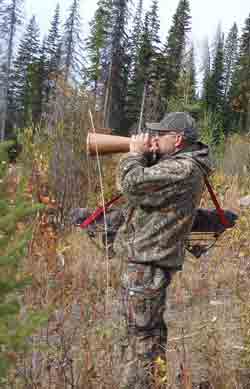
calling-moose-250Moose Hunting Tips Revealed

Simple Tips
Concentrate on one area.  Use the wind to your advantage, and use a wind indicator to detect the direction from which the air is flowing.

  • During the rut or breeding season, hunt near lakes and ponds.
  • Hunt for moose near food sources and water.
  • Hunt the fringe areas, away from where other hunters are, away from the roads and traffic.
  • Do not setup your camp on the edge of a likely hunting spot. Your noise and smells will chase any nearby moose away.
  • Study and learn about the difference between Core Areas and Home Range.
  • Learn to recognize the difference between fresh and old moose sign.
  • If you see or hear a moose just before or after dark, leave the area quietly and return early the next morning. The moose, if not spooked it will likely still be in the area.
  •  Preseason Scouting and Calling will definitely be to your advantage.


Seasons to Hunt

  • Hunt during the moose rut… whenever possible.
  • Hunt higher elevations during the early season.
  • Late season moose hunting requires you to go deeper into the forest away from the openings. Be sure to carry a GPS or at the very least a compass for to ensure your safe return.
  • Moose Hunting in November
  • Identify and learn to hunt the prime moose habitat.

Tools to Use
The Moose Hunting Tips eBook – The Ultimate Guide to Moose Hunting can help you. Quite simply it’s the largest collection of moose hunting tips and techniques available in one place.

We’ve run into more than one hunter over the years who mentioned the fact that they had to go to town for WiFi service to read up on hunting tips. Well no more.

Download them, print them out or install them onto your electronic device. That way you can have them with you even in the field.

The following are some great tips to observe:

  • Use a Moose Call and learn how to use a call. Then put moose calling to the test.
  • Use an old shoulder blade bone to rake trees (to imitate a bull moose thrashing a tree with his antlers).
  • Use a Montana Moose Decoy. The cow moose decoy can be used to get the attention of a bull moose. Especially useful when you need to stalk a bull out in the open or when you have an incoming bull. Get the bull moose concentrating on the decoy and not you the shooter.
  • Make use of a trail camera for moose hunting. 
  • Maximize your advantage by using elimination scents.
  • Carry 30 feet of rope in your pack. This can be used as an aid when field dressing. 

Hunting Clothing will make a Difference

  • Wear clothing that does not make any noise while you move.  Fleece or wool is best. Also check out the entire line of Sitka Hunting Clothes. We have switched because the patterns make you invisible!

Cow and Calf Moose Hunting Tips

  • Tip for hunting cow and calf moose, stay close to water sources. They use these areas for safety reasons. The biggest bulls will be attracted to these areas during the rut.
  • Learn how to mimic a calf moose in distress. Often, cow moose within hearing distance will come to investigate even when it is not her own calf.

Moose Hunting Safety

  • Drink clean water… be sure the water you drink is free of beaver fever.
  • Of course moose hunters always need to keep bear safety in mind while traveling in the woods.

Tell someone where you are hunting. Leave a map and time of expected return

rutmoosewawangBefore and After the Shot

When tracking moose learn to recognize the circling patterns.

  • Decide on the best shot placement for moose.
  • Field dress your moose right away. It is very important to cool the meat as soon as you can; this helps prevent spoilage and gamey flavors.

As a moose hunter, it doesn’t matter if you are a novice or an expert, we all strive for the same result. Get close enough to a moose (bull, cow or calf) and make the shot. If we know enough it’s easier to close the distance, what if we don’t? How can we get just a few more ideas on closing the gap?


Follow our FISHING BLOG

WEB   RATES     FISH    HUNT    CABINS    PHOTOS
TESTIMONIALS    BROCHURE    HUNT BOOKLET

Enter your email address to subscribe to this blog and receive notifications of new posts by email.

Go back

Your message has been sent

Warning
Warning
Warning
Email Me....

Warning

Warning.


Tags: , , , , , ,

TIPS for Hunting Grouse Without a Dog + video

Ruffed grouse (colloquially called partridge) are the premier upland game bird of northern Ontario and are both delicious and incredibly difficult to hunt. They often dwell in the kind of thick, previously logged, new-growth forest habitat that is nearly impossible to walk through and offers a wall of brushy cover that can make spotting and hitting birds a tall order.

grouse (3)

A hunter with a well- trained canine companion can level the playing field somewhat due to the fact that a good dog can sniff out birds and give the hunter a slight edge. Unfortunately, not everyone is in a position to give a hunting dog the proper home and training it needs and are thus stuck hunting solo. All is not lost, however, and the following tips will improve a hunter’s chances of bagging a few grouse without the aid of a dog.

1. Locate Food Sources

Omnivorous ruffed grouse have a varied diet that includes insects, snails, slugs, mushrooms, and the leaves and buds of trees (usually poplar), but they have a particular affinity for the various fruits that are common to their habitat.

Other fruits that may attract grouse include choke cherries, blackberries (if they are still present at the start of hunting season), and the fruit of hawthorn trees or “haws”.

grouse

2. Stick to the beaten path

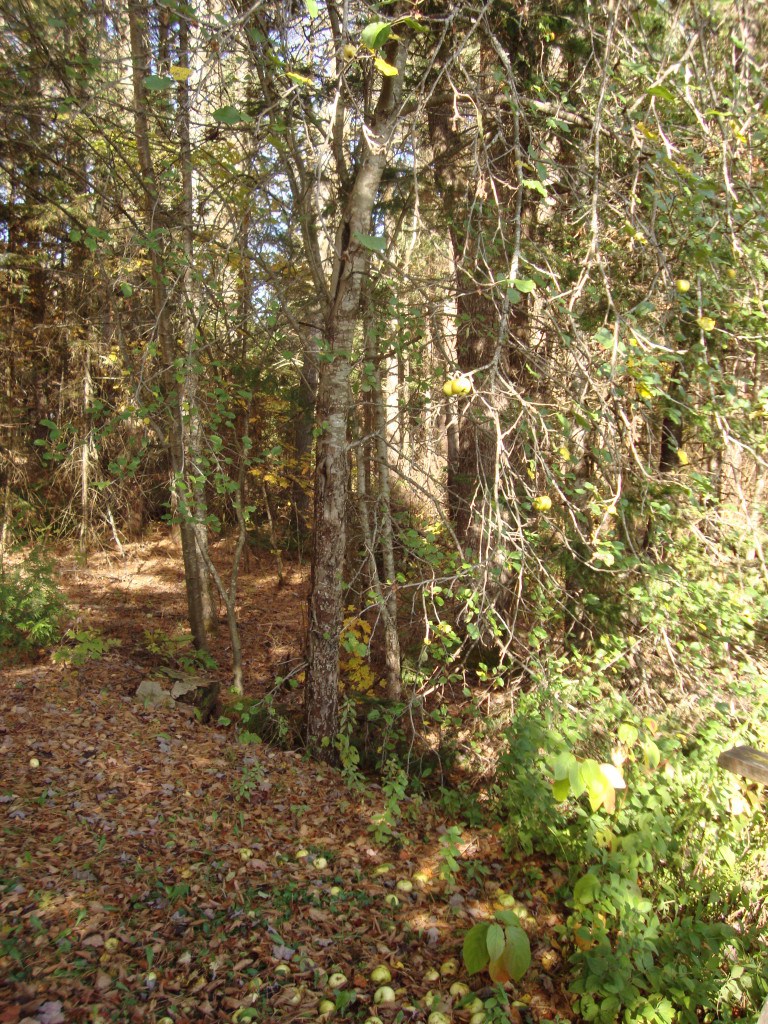
Whenever it is possible, safe, and legal to do so, it makes sense for a grouse hunter to stick to established trails and decommissioned logging roads. The primary reason for holding to roads and trails is that these travel ways provide grouse with a convenient source of dust and pebbles. The birds dust themselves to control parasites, and eat small pebbles to aid in the breakdown of food stored in their gizzards. It follows that grouse often stay within easy striking distance of a path or road. Areas where a food source, such as a stand of apple trees or poplar saplings, is immediately adjacent to gravel path or road typically yield a lot of grouse.

Trails and roads also facilitate easy movement through the thick, brushy, and nearly unwalkable new-growth forests that comprise typical ruffed grouse habitat.

3. On rainy days, take to the pines

Grouse, much like any other terrestrial animal in existence, don’t like to be rained on and will seek shelter during inclement weather. This shelter often takes the form of such coniferous trees as balsams and spruces. Stands of pines that are in close proximity to food sources are particularly good places to look for grouse on wet weather days.

4. Keep one eye on the ground and the other on the trees

An easy error to make while hunting grouse is to keep eyes only on the ground. While ruffed grouse are primarily ground-dwelling birds, they do spend an appreciable amount of time perched in trees. A hunter concentrating on spotting birds on the ground will likely miss birds perched in tress and vice versa.

grouse (2)

5. Catch them sitting still

Ruffed grouse are an incredibly difficult bird to wing shoot, especially without the help of a dog to provide advanced warning or a bird’s presence. Not only do grouse take flight in a manner that results in a sudden blur of motion and thunderous wing beats likely to startle an unaware hunter, but the birds are also adept at quickly taking cover by putting trees and thick brush between them and the muzzle of a shotgun. By the time a hunter, surprised by a bird, shoulders his or her gun, disengages the safety, and gets on target, the bird will likely be gone. That’s not to say those hunting sans dog will never hit a flying grouse, it’s just that spotting the birds before they take flight is a surer way to put meat on the grill.

Spotting grouse before they fly is a skill in and of itself as their natural camouflage is just shy of perfect. A good way to spot them is to look for movement rather than trying to recognize their outline on the forest floor. A grouse moves in a very awkward, jerking motion, similar to that of a chicken. This distinctive movement will often give away a bird’s position.

Occasionally, ruffed grouse will also give away their position with sound. The noise that ruffed grouse are perhaps best known for is their characteristic drumming that sounds similar to a distant lawnmower engine starting and stalling. This sound will make a hunter aware of a bird’s presence in a general area, but it is difficult to use it to pinpoint an exact location.  Another sound emitted by grouse is a kind of high-pitched, raspy clucking.  Grouse will occasionally make this clucking sound when distressed a few seconds prior to taking off, thereby giving a hunter advanced warning of its presence in the immediate area.

6. Walk slow, pause often

This last piece of advice is perhaps the single most important.  Most of us have become conditioned to walk through our day to day lives as quickly as we possibly can. This mindset is perfect when navigating the local supermarket, but it will lead to certain failure on a hunt.

Rather than walking quickly and continuously, it is important to move at what at first will seem like a snail’s pace, and to pause every few steps to thoroughly scan the woods. Walking in this manner will not only result in the spotting of more game, but will also result in a hunter noticing other interesting details about the woods that would be missed when hiking at forced march speeds. Noticing such details as a vibrantly colored mushroom, a hawk or eagle circling high overhead, or even just a really cool looking tree are as important to the experience of hunting as bagging game.

Follow our FISHING BLOG

WEB   RATES     FISH    HUNT    CABINS    PHOTOS
TESTIMONIALS    BROCHURE    HUNT BOOKLET

Enter your email address to subscribe to this blog and receive notifications of new posts by email.

Go back

Your message has been sent

Warning
Warning
Warning
Email Me....

Warning

Warning.


Tags: , , , , , ,

Woman Sleeps Through Bear in the Kitchen

images6FA2N08KSara Edwards of Ketchum, Idaho, slept through a bear invading her kitchen.Wow, talk about a heavy sleeper. I think most people wouldn’t be able to sleep through a bear invading their kitchen. Add in a barking dog and the fact that the woman in this story was asleep on the couch right next to the kitchen, and her slumber seems even more remarkable. But, according to her husband David Edwards, it was a good thing his wife slept through the bear invasion.

According to the Edwards, a black bear broke into their home in Ketchum, Idaho, entered the kitchen and proceeded to lick the leftover Chinese food from a cast iron pan on the stove.

Edwards told the Idaho Mountain Express that he was awakened at 3 a.m. by his barking dog. Edwards walked past his wife, Sara, who was asleep on the couch, and his aggressively barking Irish setter-Lab mix, Stanley, to discover a black bear on its hind legs with its paws on the stove. The bear then stood up and looked at Edwards.

Edwards said that was the most shocked he’d ever been. His immediate thought was to wake up his wife and get her away from the kitchen. However, he said, “I couldn’t tell her there was a bear in the house because she would have just lost her mind. She gets very upset over spiders.”

imagesAMFF49EYSo instead, he simply woke her up and led her to the bedroom without mentioning the bear. Then he crept back into the kitchen to discover the bear had left through the wide-open kitchen door.   I wonder how his wife reacted when she found out she’d slept through a bear break-in.

Do you think you could sleep through a barking dog and a bear in the room next to you?     by:  Stephanie Mallory

Follow our FISHING BLOG

WEB   RATES     FISH    HUNT    CABINS    PHOTOS
TESTIMONIALS    BROCHURE    HUNT BOOKLET

Enter your email address to subscribe to this blog and receive notifications of new posts by email.

Go back

Your message has been sent

Warning
Warning
Warning
Email Me....

Warning

Warning.


Tags: , , , , , ,

How to Judge Your Shooting Distance

 A great article by Kevin Wilson

Accurately judging distance is the first step toward proper shot placement. Instinctive or calculated, bowhunters rely on it for close range shooting. Gun hunters count on their ability to estimate longer distances. Over time we all learn our own tricks for calculating distance but with the advent of laser rangefinders many of us won’t leave home without them. Regardless of how you go about it, determining yardage can make or break your hunt.

I will remember one hunt as long as I live. The outcome was downright depressing all because I misjudged the distance. It happened 16 years ago. I was a neophyte bowhunter at the time. I’d set up a treestand in a small block of trees that I knew held several bucks and does. The previous winter I’d picked up some huge sheds that taped out at 183 Boone & Crockett inches. Knowing that the gigantic buck had survived the winter, my hopes ran high and I knew there was always a chance he’d show up in the timber I was hunting. As luck would have it 45 minutes after climbing into my stand I heard leaves crunching underfoot. Straining to look through the trees, sure enough a smaller basket rack buck was making his way toward my stand. Always an impressive sight I enjoyed the view as he walked 10 yards from me. Then I heard more rustling in the leaves and looked over to see him. He was nothing short of magnificent! Based on his sheds, it looked like he’d grown at least another 15 inches putting him well into the high 190’s – a buck of a lifetime in anyone’s books! He walked 12 yards from my stand but I couldn’t get to full draw with him in plain view. As soon as he turned I capitalized. At full-draw, I locked my 20 yard pin on his body as he continued to amble forward. Walking straight away there was no shot opportunity at all! By the time he stopped, I estimated he was standing at 30 yards. With all the concentration I could muster, I focused and released. The arrow flew where I’d aimed, in perfect alignment with his chest, but literally inches high splitting the hair on his back! Completely awestruck and in total disbelief, that gut-wrenching feeling overcame me as I watched my world-class archery whitetail bound away never to be seen again… and all because I’d misjudged the distance!

Since that day I have made it my lifelong mission to learn how to accurately judge distance. From capitalizing on today’s technologically advanced laser range finding devices to using topographic characteristics to assist in calculating distance, and understanding the influences of terrain, it is an ongoing practice in my world. Regardless of whether you’re an archer or a rifleman, here are a few considerations that might help you as you learn to accurately judge distances.

The Technological Solution
Today’s technology is a saving grace for hunters. Many of us won’t leave home without our laser rangefinder. Portable and easy to use, we simply identify our target, adjust the setting, point, hit the button and, voila! … distance is displayed on the screen. With yardage confirmed, all that remains is the shot itself.

When I began bowhunting nearly two decades ago rangefinders had a simple dial that brought the target image into focus when the dial was turned. Wherever the dial ended up, that was your yardage. Today, thanks to innovation, laser rangefinders are readily available and relatively affordable. In fact today there is really no reason not to use a rangefinder. Many manufacturers have their own versions, but in my opinion, one of the latest and greatest inventions is Bushnell’s Laser Arc. I’ve got the Elite 1500 model. The ARC stands for Angle Range Compensation. While traditional rangefinders are precision optical instruments designed to be used on a level plain (line of sight), the ARC rangefinder compensates for angles from a treestand for instance, or up or down a mountain slope. I have owned and used several different kinds of rangefinders over the years. The Laser ARC is my absolute favorite. Using digital technology, it has a built-in inclinometer that displays the exact slope angle from +/- 60º of elevation with +/- 1.0 degree accuracy. Hunters have always struggled with extreme uphill and downhill angles. These severe angles alter true horizontal distance to the target. The ARC solves this problem. It has three primary settings: bow mode, rifle mode, and a regular mode (for line of sight distance calculation only).

It has a bow mode that displays line of site distance, degree of elevation, and true horizontal distance from 5-99 yards (or meters). For longer range shooters, it also has a rifle mode that calculates and displays the amount of bullet drop, at the target in inches (or centimeters). In the rifle mode, the amount of bullet drop is determined by the line of sight distance to the target, degree of elevation, along with the specific ballistic characteristics of the caliber and ammunition. As the hunter ranges the target, the line of sight, degree of elevation, and bullet-drop/holdover in inches or centimeters is displayed from 100-800 yards (or meters). Here’s where the technology shines ballistically. In the start-up menu, one of eight ballistic groups can be selected by the user, with each formula representing a given combination of caliber and loads.

Laser rangefinding technology, and the ARC system in particular, is invaluable but what if we don’t have one? Then it comes down to a matter of practice and estimation to determine our downrange distances.

Practice
For most of us, learning to judge distance takes considerable practice. Only by doing it a lot, and under variable conditions, can we become competent at it. Shooting is a lot like golf. Understanding how your bow or gun works (i.e., trajectory and ballistics) and interpreting the size of the target animal relative to the terrain can only be learned through firsthand repetitive experience. So how do we get all this supposed experience when we can only take a finite number of animals each year? The answer lies in visiting the gun or archery range.

For bowhunters, nothing beats practice on the 3D course. Today’s 3D targets, like those made by MacKenzie, are very lifelike and offer as realistic practice as you’re likely to get anywhere. Most are made to scale and can be strategically placed in any range situation to simulate realistic hunting scenarios. On my local 3D course, our club uses everything from coyote targets to whitetailed deer, mountain goat, elk, moose, wild hog, turkey and more. Some are set at long distances over 60 yards through wide open clearings while others are placed in the trees, often with very small shooting windows at closer distances like 20 or 30 yards. Most 3D ranges have a good assortment of field scenarios to allow practicing archers to hone their skills.

Likewise, rifle and muzzleloader hunters should visit the range regularly to hone shooting skills. Unfortunately due to the expansive nature of bullets today’s 3D targets aren’t an option. Alternatively silhouettes are. Most rifle ranges offer variable range distances from 100 to 400 yards. At my club our furthest distance is 600 yards. Unless you’re really into the long range thing 400 yards is a stretch for most big game hunters. By shooting repeatedly at 100, 200, 300, and 400 yards, we grow accustomed to what those distances look and feel like. By taking note of the size of target in our scope at specified magnifications we can also learn to estimate distances. For example, at 10x zoom on my Leupold scope, I know that a deer will fill a certain percentage of the field of view. By acknowledging how much of the animal is in the field of view, I can guess the approximate yardage with relative accuracy. Likewise, at 200 and 300 yards, that deer will appear smaller respectively.

Break Distances into Increments
Whether we’re hunting remote regions or in farmland things like trees, rocks, fence posts, and power poles can be used to aid in judging distances. As an archer I’ve learned to make a mental note of things like trees, shrubs, rocks or other physical land-based objects at 10 yard increments out to a distance of 50 yards from where I’m sitting. By burning those objects into my memory I’m better able to make quick decisions when an animal steps into a shooting lane. I’m guessing it may be the same throughout North America but where I do much of my hunting I’ve learned that power poles are set at a standard distance of 100 yards apart. Any time I’m hunting a wide open power line or in farm country I can use those power poles as markers to estimate yardage. As a rule, regardless of what kind of weapon you’re hunting with, breaking distances down into increments simplifies things. Remember, if you’re sitting in a stationary stand or ground blind there is always the option of setting out yardage markers at desirable increments, e.g., every 10 yards.

Consider Where and What You’re Shooting
Judging distances on the open prairies is a very different game than judging distance in the dense forest. Likewise, estimating the distance of a large target like a moose can be tricky if you’re more accustomed to looking at antelope. Dense cover and the size of the animal can play tricks on your mind.

As an archer, I spend most of my time hunting heavy mixed forest areas comprised of aspens and evergreens. Rarely do I see deer, moose or elk at distances further than 80 yards unless its down a long open cutline or across a clear cut. So, whenever I head out to different states or provinces to hunt smaller species like pronghorn antelope, it usually takes some time to acclimatize and recalibrate my brain to accurately judge distances. In my experience, smaller big game species in open terrain tend to appear further away while larger species under heavy cover often look closer than they really are. Unfortunately there are no set rules here; you just need to figure out what works best for you under variable conditions.

Follow our FISHING BLOG

WEB   RATES     FISH    HUNT    CABINS    PHOTOS
TESTIMONIALS    BROCHURE    HUNT BOOKLET

Enter your email address to subscribe to this blog and receive notifications of new posts by email.

Go back

Your message has been sent

Warning
Warning
Warning
Email Me....

Warning

Warning.


Tags: , , , , , , , , , , , ,

The Spruce Stove Lets You Burn an Entire Tree

the-spruce-stove-lets-you-burn-an-entire-tree-thumb

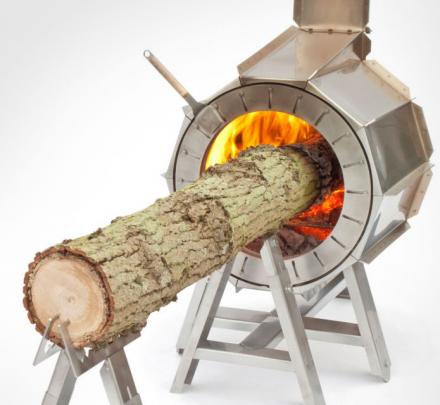
The Spruce Stove is an outdoor furnace that allows you to burn an entire tree at a time. Designed by Dutch designers Roel de Boer and Michiel Martens, the dutch stove allows you to continuously push the trunk of the tree more and more into the fire as it burns, as it holds the log up level to the fire using wheeled arms that allow you to easily slide it in.

To start the fire, simply use kindling, amber, small twigs, etc, and once the fire gets going simply push the end of the tree trunk into the fire, use the adjustable diaphragm to allow for more oxygen or less oxygen depending on what the fire needs. Once your fire starts to die down, simply push a few more inches of the trunk into the fire. When you want to stop the fire just stop pushing the log in.

The Spruce Stove is made from stainless steel, can easily withstand the heat of the fire as well as the weather, comes in three different models, weighs 110lbs, and measures 1.9 feet wide x 7.7 feet tall x 2.6 feet deep. Now you just need  go chop down a few trees.

Spruce Stove Burns an Entire Tree


Follow our FISHING BLOG

WEBSITE    RATES     FISH    HUNT    CABINS    PHOTOS
TESTIMONIALS    BROCHURE    HUNT BOOKLET

Enter your email address to subscribe to this blog and receive notifications of new posts by email.

Go back

Your message has been sent

Warning
Warning
Warning
Email Me....

Warning

Warning.


Tags: , , , , , , ,

Bear Quints

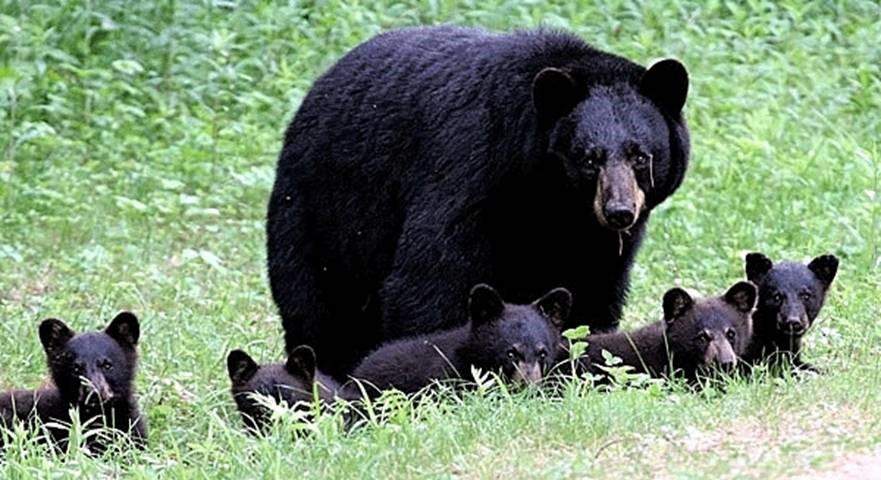
One in a lifetime – photo by Tom Spears

Black  bears typically have two cubs; rarely, one or three. In northern  Alberta a black bear sow gave birth to five healthy young.  There were two or three reports of sows with as many as 4  cubs, but five  was, and is, very extraordinary. The photographer learned of them shortly  after they emerged from their den and set a goal of photographing all  five cubs with their mom – no matter how much time and effort was  involved. He knew the trail they followed on a fairly regular basis, usually  shortly before dark. After spending nearly four hours a day, seven days a  week, for more than six weeks, he had that once-in-a-lifetime opportunity and photographed them. He used  the equivalent of  a very fast film speed on his digital camera. The print is properly focused  and well exposed, with all six bears posing as if they were in a studio  for a family portrait.

bear
The photographer  stayed in touch with other people who saw the bears during the summer and  into the fall hunting season. All six bears continued to thrive. As time  for hibernation approached, he found still more folks who had seen  them, and everything remained OK. The photographer stayed away from the  bears because he was concerned that they might become habituated to  him, or to people in general, and treat them as approachable  friends. This could easily become dangerous for both man and animal.

After Halloween, no  further reports and could only hope the bears survived until they  hibernated. This spring, just before the snow disappeared, all six bears  came out of their den and wandered all over the same  familiar  territory they trekked in the spring.

The photographer saw  them before mid-April and dreamed nightly of taking another family  portrait, a highly improbable second once-in-a-lifetime photograph.  He achieved his dream.

bear2
When  something as  magical as this happens between man and animal, Native Americans say,  “We have walked together in the shadow of a rainbow.” And so it is with  humility and great pleasure that I share these   exhilarating  photos with  you.  Do  pass them on!

Follow our FISHING BLOG

WEB   RATES     FISH    HUNT    CABINS    PHOTOS
TESTIMONIALS    BROCHURE    HUNT BOOKLET

Enter your email address to subscribe to this blog and receive notifications of new posts by email.

Go back

Your message has been sent

Warning
Warning
Warning
Email Me....

Warning

Warning.


Tags: , , , , , , , ,