RSS

Category Archives: moose hunting

Barbeque Moose Roast Recipe

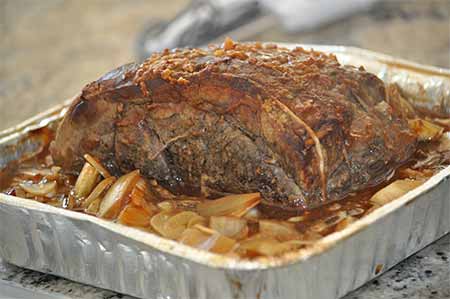
Have you ever wanted to barbeque a moose roast and still have it be tender?  We have, and recently cooked a moose round roast on the barbeque that was so tender once we carved it, it was possible to cut it with your fork.

Start out with a moose round roast; it’s not the best cut to be barbequing and it will require moist heat if it were to be palatable.

Remembering a friend telling of how he had cooked ribs on his barbeque and had great results so wondered if we could achieve the same?

1  

The Process

The process is quite simple really, and you could likely apply this to any meat that is tough. Cook it with moisture over a long period of time.  How much time… we cooked our roast for almost 9 hours on low heat

Ingredients:

  • Moose round roast 3 pounds
  • 1 large onion
  • 5 cloves garlic (elephant)
  • 1 1/2 cups of barbeque sauce

2
Directions: Barbeque a Moose Roast

  • Thaw the moose roast in your refrigerator
  • Coarse chop the onion
  • Peel and slice half of the garlic and mince the balance
  • Start with a 8 inch by 8 inch roasting pan and place the moose round roast that you plan to barbeque onto a thin layer of the chopped onions.
  • Place the rest of the onions around the roast evenly.

Next sprinkle the onions with the sliced garlic and rubbed the roast itself with the minced garlic.

Followed by pouring barbeque sauce over the roast.

Once this was complete I covered the entire pan with a layer of heavy aluminum foil and took the pan (with the roast in it) outside to my barbeque.

I lit one burner and set it to low heat.  Then place the covered pan containing the moose roast barbeque on the other side well away from the heating element.

Close the lid.

3

Maintain a constant temperature of about 200 degrees Fahrenheit for 9 hours, or until the internal temperature reached a minimum of 140 degrees; or your required doneness.

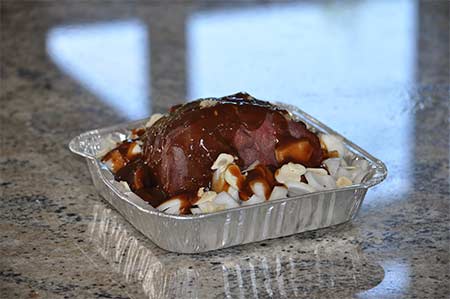
Serve the moose roast with baby potatoes, carrots, chopped onions and mushrooms. All of which were cooked on the barbeque while the roast was cooking. All the veggies were wrapped in foil; salt, pepper and butter were added and placed directly over the burner that was set on low temperature. About 1 1/4 hours.

Make gravy from the juice from the meat pan and add the onions from the meat pan to the veggie dish.

The barbequed moose roast and the entire dish… well…Delicious

Follow our FISHING BLOG

WEB   RATES     FISH    HUNT    CABINS    PHOTOS
TESTIMONIALS    BROCHURE    HUNT BOOKLET

Enter your email address to subscribe to this blog and receive notifications of new posts by email.

← Back

Thank you for your response. ✨

Email Me....


Tags: , , , , , , ,

Proper Field Care for Moose

IMG_6042

One of the most common questions of a first time moose hunter is “The moose is down, now what?”

First-time moose hunters need to know that handling the animal once it is killed will not be easy. But, with the appropriate equipment and a bit of knowledge, the job can go smoothly. If you are planning to have your moose butchered by a professional, it would be wise to check with him in advance about his preferences for handling moose.

Whatever you choose to do will depend a great deal on your means of getting the moose out of the woods and how you plan to transport it to camp or home. The “game taste” people often speak of is usually the result of poor handling more than anything else. With proper care, moose meat can be outstanding table fare.

The main cause of moose meat spoilage is heat. You can avoid this danger by field dressing your moose immediately. Allow the meat to cool rapidly by providing good air circulation. You should also take every precaution to keep your moose free of dirt, debris, blood and hair.

Cheesecloth or commercial game bags offer the best protection from dirt and flies and still allow necessary air circulation. A liberal application of black pepper will also help to discourage flies.

Field dressing should take place as soon after the kill as possible. Once the animal is dead, bacterial action can spoil the meat quickly. The chance of spoilage increases the longer you wait and the warmer the temperature. Bleeding your moose is unnecessary in most cases. Normally, the animal will bleed internally, and immediate field dressing will ensure adequate bleeding.

Field Dressing Your Moose
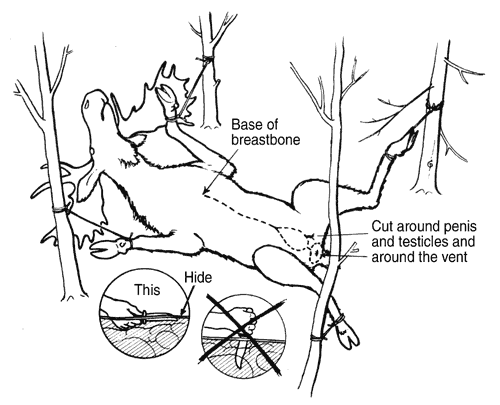
To begin field dressing, position the moose on its back with the head slightly uphill. It is helpful to tie the legs to nearby trees. Make an incision at the base of the breastbone with the tip of a sharp knife. Be careful not to cut the intestines or other internal organs. The contents can taint the meat. Continue the incision down the length of the belly to the anus. Cut through the skin and thin wall of the body cavity only. Face the blade of the knife upward, and away from the internal organs to avoid cutting them. Use the fingers of your free hand as a guide, but be careful not to cut yourself.


 mooseprep1

If the head is not to be mounted, you can continue this cut in the opposite direction to the base of the jaw, exposing the windpipe and esophagus. The windpipe and esophagus should now be severed as close to the head as possible. (Before doing so, tie a string tightly around the esophagus to prevent the stomach’s contents from spilling.) Using your bone saw, split the chest bone down the middle, exposing the contents of the chest cavity.

If you have shot a cow moose, the reproductive tract (ovaries and uterus) can now be removed; you also have the option of waiting until the bowel has been tied. Carefully roll the internal organs to the side until you see the point where two tubes (the rectum and the vagina) exit through the pelvic bone (see illustration). The vagina is the tube nearest the belly. Grasp this and follow it carefully forward until it forks into two tubes, which are the left and right horns of the uterus.

Once you have located the uterus, insert your fingers under it and work your hand in until the organ lays in the palm of your hand. You will notice a thin, almost transparent membrane which connects this organ to the animal’s back. All that now remains is to carefully follow the horns of the uterus to the ovaries. These are bean-shaped organs one to two inches in length. They may be covered with fat so keep looking! When you find them, cut the membranes holding them in place, remove ovaries, and place them in a plastic bag. The uterus can be removed by cutting through the vagina. The ovaries and the uterus should be kept as cool as possible.

Next, circle the anus with your knife, cutting deeply to free the lower bowel. Tie this off with a string to prevent droppings from coming in contact with the meat. Now cut through the flesh of the hams down to the pelvic bone and cut through the pelvic bone with the bone saw.

The internal organs can now be removed. Grasp the tied-off esophagus and trachea and pull them gently but firmly up and back towards the body of the moose. As you do so, have your sub-permitee cut these tissues away from the carcass. Continue this process into the chest cavity, pulling the heart and lungs up and back while cutting any attachments. Once the heart and lungs are freed, cut the diaphragm away from the body on all sides. Then continue firmly pulling on the esophagus and trachea and gently roll the stomach and intestines out of the body cavity, freeing them from all attaching tissues as you go. Once all the viscera is freed of the body, it is best to pull it away from your work space.

Warning!!
Because particularly high cadmium levels have been seen in some moose liver and kidney, it is recommended that you do not consume these organ meats at all.

mooseprep2

Quartering
Quartering is recommended for moose to make handling easier and to allow rapid cooling of the carcass. The hide may be left on each quarter to offer some protection from dirt and flies. If temperatures are above 50 degrees F, you should skin the carcass in the field.

To quarter the animal, you will need a sharp knife and a bone saw. A saw is best to avoid bone splinters and damaged meat.

Begin by removing the head. To do this, cut through the flesh of the neck with your knife. Saw through the vertebrae, and use your knife again to remove the head. Make your cut as close to the head as possible to avoid wasting many pounds of valuable meat.

The next step will be to halve the animal. This is done by placing the back of your knife against the backbone between the second and third rib. Push the blade outward, completely through the flesh and hide. Cut upward using the ribs as a guide and do the same on the opposite side. You can now separate the halves by sawing through the backbone.

Quartering is accomplished by sawing straight down the backbone of each half. Underlying flesh or hide can be separated with your knife. The task of halving and quartering will be easier if the animal can be elevated on logs or sticks. Trim away any shot-damaged meat that could lead to premature spoilage.

Be sure to attach your tags before removing quarters from the place of kill. If the quarters can not be removed before darkness, try to hang them in a nearby tree or elevate them on logs to aid cooling. Cover them with boughs or meat socks and hang a marker nearby.

mooseprep3

Getting Your Moose Out Of the Woods
Getting the moose from the kill site to your vehicle or camp will probably be the toughest task you will face. If you’re fortunate, you may be able to drive close to the kill site, but many of the roads through moose hunting zones are private and may not be open to public use.

Another possibility is to locate someone with a skidder or work horses. The majority of hunters will end up packing their moose out of the woods instead of using a vehicle. To do this, you can tie the quarters to a pack frame or pack board or even suspend them from a long pole so the load can be shared. Try not to overexert yourself; the pieces will be heavy, and the going could be rough. It is a good idea to flag each quarter with a piece of blaze orange material to prevent accidents.

If the quarters are still too much to carry, the carcass can be cut into more pieces, but remember, the law requires the field-dressed carcass be delivered to a checking station for examination. Each individual piece must also be labeled with the name, address and hunting license number of the person who shot it.
It is important to get the quarters hung in a cool, shady place, preferably a meat cooler as soon as possible.

Transportation and Cooling
Always protect the carcass from dirt, heat and moisture. Transport the quarters out in the open if possible. The open back of a pickup works well. Elevate the quarters to keep cool and protect from dirt. If conditions are dusty or rainy, cover them loosely with a porous canvas tarp. Do not stack the quarters, allow them to touch or cover them with plastic. Plastic retains body heat and prevents cooling. If you transport in a covered truck or trailer, you should open windows and vents for proper air circulation.

Once back at camp or your home, hang each quarter from a cross pole of some type in a shady area with good air circulation. If you will have a long trip home, it is best to allow the meat to cool overnight before heading home. If this is not possible, consider traveling at night when temperatures are cooler.

If you are transporting your animal directly home, be cautious about hanging the meat in a garage or shed. Often these areas are not cool enough to allow proper cooling and aging of the carcass.

mooseprep4

Skinning
The quarters should be skinned immediately. If daytime temperatures are above 50 degrees and nighttime temperatures are above 40 degrees, you should remove the hide and over with cheesecloth. If the temperature is between 50 and 30 degrees, you can wait a few hours before skinning.

In skinning, work the hide away with the fingers, and peel it off while the quarters are hanging. Use a sharp knife to slice between the flesh and skin of the animal as it is pulled away. Be careful not to cut either one.

Whether you skin the quarters or not, you should cover each one with cheesecloth or a meat sock.

Aging and Butchering
Aging is intended to make the meat tender. This is best accomplished at a constant temperature of about 40 degrees. The temperature during aging must never exceed 50 degrees. For this reason, you will probably want the services of a professional butcher.

If you age your meat outdoors, three to five days is sufficient, but the period varies with temperature and size of the animal. Meat can be aged for as long as 21 days in a cooler.

If you will be handling the meat yourself, remove as much fat as possible before freezing. Removal of bones will save freezer space. Double-wrap and tightly seal all cuts of meat to prevent freezer burn. Meat should be frozen at zero degrees. Don’t try to freeze too much at once. Label and date all packages for future reference. If you don’t have the knowledge or time to process your own moose, then don’t risk ruining it; have it processed at a commercial facility.

Care Of Big Game Trophies
Proper field care of trophies is extremely important for good results in the final mount. If you intend to have the head of your moose mounted, you must take special precautions when skinning it out.

If the weather is warm, and you plan to have a head mount or a “fur on” rug made from the hide, you must remove the skin, salt flesh inside thoroughly, and roll it up flesh side in. Keep it in a cool place (never in a plastic bag) and get it to your taxidermist as soon as possible. Delay may cause “slipping” a condition in which the hair falls off the hide after the tanning process and ruins the hide for its intended use.

The taxidermist will need as much hide or “cape” to work with as possible. When field dressing, don’t cut any further up the underside than between the front legs. The diagram shows where the cuts should be made to skin the neck. Once the neck is skinned out, the head can be disjointed at the base of the skull and removed with the cape attached. Let the taxidermist skin out the head. He will want the measurements, and the skinning is included in the mounting charge. Remove as much flesh as you can, and salt the cape and all exposed flesh. The head and cape should be kept cool and delivered to the taxidermist as soon as possible.

If you keep only the antlers for mounting, be sure to leave a good portion of the skull attached. The best procedure is to check with your taxidermist in advance of your hunt for specific advice.

To care for the hide, remove all flesh and fat, then salt flesh side well. Moose hides spoil very rapidly in warm weather. You should deliver the hide to a taxidermist within 24 hours after the animal is skinned.

Fine table salt is best for use on hides. Capes will take about 30 pounds of salt. Flat skins will take 50 to 80 pounds. As a guide, figure on using half the weight of the skin in salt. About 24 hours after application, the salt will be wet and will have lost its efficiency — shake it off and re-salt.

Transport the hide rolled up, flesh side in.

mooseprep5

Follow our FISHING BLOG

WEB   RATES     FISH    HUNT    CABINS    PHOTOS
TESTIMONIALS    BROCHURE    HUNT BOOKLET

Enter your email address to subscribe to this blog and receive notifications of new posts by email.

← Back

Thank you for your response. ✨

Email Me....

 
1 Comment

Posted by on November 25, 2015 in moose, moose hunting, Wawang Lake Resort


Tags: , , , , , , ,

Moose Hunting at Wawang Lake

Deeply imbedded in the Canadian Boreal Forest we offer the very finest in Moose habitat for our hunters.  Look no farther than Wawang Lake for accommodations for your next BIG game hunt!

BOOK Your Accommodations HERE!

WawangMoose

Our hunts accommodations ONLY for Ontario Resident Moose Hunters.

If your looking for a great hunting area that has a high population of moose then look no farther than Wawang Lake Resort as we’re in the middle of the best moose hunting area in all of NW Ontario.

At Wawang Lake we offer comfortable accommodations to Resident Ontario Moose Hunters only.  Presently we don’t have any tags available and unable to take any non-resident hunters during the Moose Hunt season.

Things Moose Hunters Should Consider:

Crossbows
• Draw length must be al least (11.8 in.)
• Draw weight must be at least (119 lbs.)
• Bolt head must be at least (0.9 in.) at the widest point, and there must be at least two cutting edges of straight, sharp, un-serrated, barbless steel.

Longbows
• Draw weight must be at least (48.5 lbs.) at draw length of (27.6 in.) or less.
• Arrow length must be at least (23.6 in.).
• Broad head must be at least (0.9 in.) at the widest point, and there must be at
least two cutting edges of straight, sharp, un-serrated, barbless steel.

Rifle
We suggest using at the minimum one of the following:
300 Magnum
30-06
7MM Magnum with bullet weights in the 180 grain range
A rim-fire rifle, a shotgun smaller than 20 gauge when loaded with shot, or any shotgun loaded with shot smaller than SG or No. 1 buck cannot be used for hunting Moose.


Clothing requirements
During the rifle season hunts, a minimum of 400 square inches of uninterrupted Hunter Orange must be worn at all times.  Camouflage or open mesh orange does not meet these requirements.  An orange jacket or vest as well as an orange hat do meet these requirements.

Hunters should also have a compass or hand held G.P.S., as well as a good pair of binoculars, thermos, flashlight, lighter, warm clothing, good quality rain gear, waterproof insulated boots, gloves/mitts, long underwear.   Two-way portable radios are also recommended.  Fall hunting weather can be warm & dry to cold, wet and snowy within a few hours; so it is best to be prepared for all variables.

BOOK Your Accommodations HERE!

We trust that this information will prove to be useful in planning your next Big Game Hunt in beautiful, exciting NW Ontario.  We invite you to enjoy our ‘True Wilderness Hospitality’ while participating in a remote hunting experience.

 WEBSITE    RATES     FISH    HUNT    CABINS    PHOTOS
TESTIMONIALS    BROCHURE    HUNT BOOKLET

Enter your email address to subscribe to this blog and receive notifications of new posts by email.

← Back

Thank you for your response. ✨

Email Me....

 
1 Comment

Posted by on November 14, 2015 in moose, moose hunting, Wawang Lake Resort


Tags: , , , , , , , , , , ,

Sighting in Your Rifle

So you’ve acquired a new hunting rifle. After saving your hard-earned cash and landing permission from your other half, the gun rests in your hot little hands. It looks great, feels great… it probably smells great… but more importantly does it shoot great? Now its time to hit the range and get this baby sighted in.

Truth is the same holds true for rifles we’ve had for many years. Chances are they don’t require the full-meal-deal, but sighting in, confirming that our equipment is in good working order, or realigning sights is something we should do on a regular basis.

Unfortunately many of us try to kill two birds with one stone. We visit the range infrequently and attempt to sight in and practice shooting all at the same time. It’s important to remember, sighting is very different from regular shooting practice. The process of sighting in involves aligning the scope (or other sights) with the firearm when using a specific bullet and load. Shooting practice involves discharging and often experimenting with different positions to allow our bodies to grow accustomed to the form and function of shooting.

k_wilson_sighting_in2Believe it or not, many of us don’t sight in properly. It never ceases to amaze me how many hunters pick up their guns once or twice a year, assume it’s shooting straight and hit the woods without a second thought. As a professional outfitter I see it all the time. In fact, I’ve seen guests take it personally when, after arrival in camp, I ask them to take a few practice shots – just to make sure their gun is properly sighted in. As though I’m insinuating that they haven’t prepared for their hunt, once in a while I get a hunter who thinks I’m a control freak. Then the truth comes out. After a few shots it becomes obvious; better than half are inevitably in need of scope adjustments. Every one swears that they were shooting one-inch groups at home, but now their rifle requires major scope adjustments. In their defense, a multitude of things can happen to guns in transit. Blunt trauma to cases or directly to the scope itself can throw it way out of whack; hence the need to sight it.

To be honest many of us are guilty of not maintaining our rifle and scope. If you shoot regularly that’s one thing; you’re constantly checking it and tweaking the scope when necessary. In reality, most of us don’t. By in large, recreational hunters pick up their guns a few times each year. Whether you’re tuning a brand new rifle or confirming the accuracy of an old one, here are a few tips for sighting in:

1) Bore sight your rifle before shooting
k_wilson_sighting_in3This first step applies mostly to rifles and scopes that have a new marriage. The first time a scope is mounted to a rifle the gunsmith will usually use a bore sighting tool. This tool is used to approximately align the crosshairs of the scope with the rifle barrel. Unfortunately some folks erroneously rely on bore sighting alone to zero their gun. Remember bore sighting can be precise but most often it only approximates accuracy. If, when you visit the range, you discover that you’re not even hitting the paper at all, consider rough bore sighting your gun. Practical with bolt-action rifles, by removing the bolt, you can stand behind the gun, look through the barrel and center the target. Then without adjusting the gun, look through the scope and make the necessary adjustments to bring the crosshairs in alignment with the target. This should get you hitting the paper in no time, then you can move on to shooting.

2) Shoot from a stable platform and rest
To reliably confirm the accuracy of your rifle and scope, you must shoot from a rest. I’m not sure I should say this or not, but I will. To illustrate the naivety of some, I’ve actually witnessed guys trying to sight in their rifles at the range by shooting freehand from a standing position. Needless to say these are the guys that get frustrated because they’re not hitting anything.

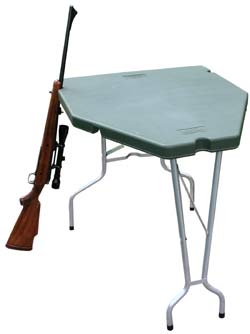
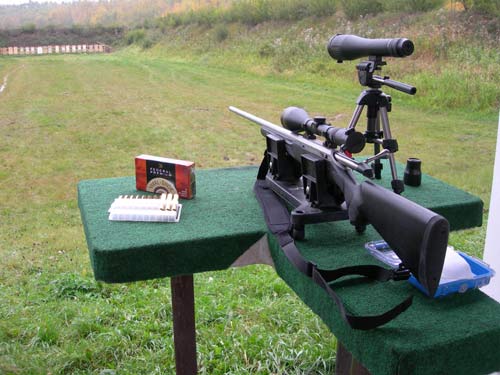
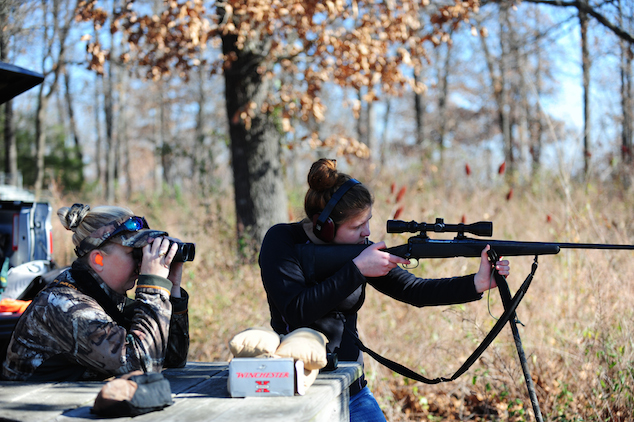
Remember, when we’re sighting in our rifles we’re not testing our shooting skill, but rather the accuracy of the gun, scope and bullet being used. Our goal should be to eliminate or at least minimize human error and allow the equipment to do its thing. With this in mind, a stable shooting bench or table is always recommended. Most shooting ranges are furnished with suitable tables or benches and adjustable stools. If you’re using a portable bench, make sure it is resting level on solid ground. Likewise, it’s imperative to use a shooting rest. In my opinion a vice can be that much better. I really like MTM Case-Gard products (www.mtmcase-gard.com). They make a variety of shooting supplies that are both affordable and practical. Few of us exhibit perfect shooting form. By understanding the biomechanics involved with aiming, breathing, squeezing the trigger and following through we can better acknowledge how to eliminate torsion while shooting from a rest. By cradling the rifle fore-end on a rest or in a vice, we can align our sights with the downrange target and maintain that alignment for a long period of time. Then, by gently squeezing the trigger to discharge, we minimize our human influence thereby allowing the firearm to perform more or less on its own.

3) Begin at close range, then move out to 100 yards and further
I’ve heard much discussion about the standard 100 yard shot and arguably for most bore-sighted rifles, sighting in at that distance is fine. But talk to the pros and most will agree that you should begin at 25 yards if you want to do it right. Making adjustments at close range is easier than at longer distances. At 25 yards you’ll find it easier to acquire your target; it simply appears larger and is easier to center the crosshairs at this short distance. Inaccuracies are simpler to rectify and adjustments can be made quickly at that distance. Remember, inaccuracies are exaggerated that much more at greater downrange distances.

k_wilson_sighting_in1
As you make your fine adjustments to your scope, be aware of the increments and don’t overdo it. For example, with my Leupold VXIII, one click = 1/4 inch adjustment. So, if my shots were hitting consistently two inches to the left of center, I would likely need to dial the adjustment eight clicks in that direction, then shoot another round of bullets. Some folks disagree, but in my opinion it is better to make subtle adjustments, then shoot to confirm that you are working toward the zero mark. As long as there are no fliers, a series of three shots is typically representative of where the gun is shooting. Although with today’s scopes I don’t believe it is as crucial, I still like to give it a firm tap to seat the crosshairs after each adjustment.

When your rifle and scope are in sync at 25 yards, move to 100 yards. Most big game rifle and bullet combinations that are sighted in a couple inches high at 100 yards will shoot a hair low at 25 yards – with most deer hunters this is considered ideal (e.g., I like my 300 Win Mag to be 2″ high at 100 yards). Once your rifle is sighted in, try shooting at 200, 300 and 400 yards to better learn how your rifle, scope and ammunition perform at greater distances.

4) Use the same ammunition that you plan to hunt with
Not all ammunition performs the same. Be sure to sight in your rifle with the load that you plan to hunt with. Ballistics of variable bullet weights and designs (not to mention manufacturers) will perform differently. For instance, Winchester Ammunition’s 150 grain Supreme Elite XP3 (www.winchester.com) will inevitably perform differently than Remington’s 180 grain Core-Lokt, PSP (www.remington.com) shot out of my 300 Winchester Magnum.

If you reload your own ammunition, then you’re likely acquainted with factors affecting bullet performance. Working the right load may take some trial and error, but the same applies – always sight in with the bullet and load you intend to hunt with.

5) Record and reference each shot
Sighting in can be as labor-intensive as you make it. As a rule, several items are required and several more make the job that much easier. As an absolute necessity, we require a table or bench, a shooting rest, our rifle, ammunition and a target. Beyond these basics, the job is much easier with a spotting scope, tripod, and additional targets along with a marker.

As you begin shooting, be sure to analyze and record each shot. I like to use a Bushnell Elite 15-45x 60 mm spotting scope (www.bushnell.com) mounted on a solid tripod. At 45 power magnification, I can see every detail on the downrange target. My scope allows me to closely assess where I hit in relation to where I aimed. Further, many shooters like to keep a matching target on the bench while they are shooting. By checking their shot, then marking it on the target beside them, they can better track their progressions to confirm any scope adjustments and accuracy. This eliminates much of the guessing about which shot was which.

Follow our FISHING BLOG

WEB   RATES     FISH    HUNT    CABINS    PHOTOS
TESTIMONIALS    BROCHURE    HUNT BOOKLET

Enter your email address to subscribe to this blog and receive notifications of new posts by email.

← Back

Thank you for your response. ✨

Email Me....


Tags: , , , , , , ,

Mistakes Men Make When Hunting With Women

Women are joining the hunting ranks at a faster rate than men. But, we ladies still encounter a few problems when it comes to learning the sport. The No.1 problem for women going afield is trying to find places to hunt.

The No. 2 problem?  You guessed it. It’s you guys.

Women are the fastest-growing hunting demographic

Women are the fastest-growing hunting demographic

Don’t get us wrong. We’re not trying to man-bash. We love that you’re willing to take the ladies in your lives hunting. But, sometimes you guys make mistakes – big ones that may prevent us from wanting to ever hit the woods with you, or anyone else for that matter, ever again. If you truly want us out there with you, then read on to find out how to make our experience more enjoyable. If you don’t, then read on to learn how to ensure that the ladies in your life will never want to go hunting again.

We asked some of our female hunting friends to help us list the top 12 reasons women get turned off while hunting. We also provided solutions, because we care. (Also, remember that dark chocolate is usually the choice of the female hunting masses.)

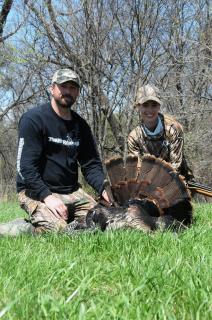
Barbara Baird

Barbara Baird

1. Underestimating the importance of comfort
“I know we have cushy bottoms made for sitting, but not for hours on end in the briars. During one of my first turkey hunts, my guide made me sit on the ground in a briar patch where I couldn’t see anything coming or going — just a small swath directly in front of my feet. The temperatures started dropping – from the high 50s to low 40s – with light, and then toad-strangling, rain. We sat there for six hours. My legs jumped and moved all on their own, just trying to keep some body heat. When I finally stood up, I almost fell back down. I had to stop at a gas station, change in the bathroom and wipe down with paper towels. Now that I know more about turkey hunting, I would never do that to a new hunter.”  – Barbara Baird – Realtree.com blogger and publisher of Women’s Outdoor News

The Solution: Remember these words: “This is fun.” If it ain’t, call it a day. How can you tell? Well, look at her face. If you see strained expressions or grimaces, she’s done. Or, she might say something like, “Sure would be nice to take a bath.”

2. Behaving condescendingly, because big girls do cry
“There have been times while hunting alongside men that I have heard the words, ‘You stay in the blind; we will put out the decoys … too cold for you!’ I once made the shot on a bird, but the guy next to me screamed, ‘How did you like my shot?’ I have been told, ‘You shouldn’t shoot a 3 1/2-inch shell – too much for your little arms to take!’ and I have even heard, ‘The only reason you get any attention is because you are a woman hunter and they are so rare you don’t have to be good.’” – Kimberly Snyder – Outdoor pro-staffer for various waterfowling companies and contributor to Lady Hunter Magazine

The Solution: Don’t push. Just be there. Kimberly advises, “It can be very tough. When I take women out with me, I make it about what they are comfortable with. I don’t ever push, but I try to make it a bonding and fun experience that keeps them wanting to get back out there. I try to be positive, supportive and encouraging – all the things I would want from someone. Allow them to push themselves.”

3. Not helping with shooting practice before the hunt
“Practice, practice, practice. Help them make good shots so they don’t have to see an animal suffer. The experience can be frightening and can even make them not want to take the second shot to finish the animal. And, take caution in showing women the guts and gore. If they don’t want to see it, don’t make them. They’ll grow into it in their own time.”  — Mia Anstine, outfitter, hunting guide, freelance writer

The Solution: Make sure she is familiar with her gun or bow before she hunts with it. Has she patterned that shotgun or sighted in that rifle? Does she know all the safety rules for handling firearms? Has she practiced with her bow? Education on how gun or bow works and what it will do is paramount to success in the field. Also, think about recoil and noise. You can greatly aid your lady friend by making sure that she has hearing protection and that she wears shoulder padding.

They even make a recoil pad that pins under a shirt on a bra strap, but it’s probably best to let her do that – unless you ask first.

Ample shooting practice is essential for a successful hunt

Ample shooting practice is essential for a successful hunt

4. Being crude or rude
“I try to be just one of the guys when I’m hunting with men, especially if I’m the only lady in camp. I don’t get offended easily, but that doesn’t mean I want all sense of decorum and class to be tossed out of the window. I once hunted with a guy I’d never met who not only burped inches from my face, but he peed right in front of me as well. Let’s just say that put a bit of a damper on my hunt. I also hunted with a guide who proceeded to show me vulgar photos of women on his cell phone. Only minutes after meeting me, another guide felt the need to tell me about all of his and his friends’ forays with prostitutes. There are some things female hunters don’t want to see or hear about, at least not this female hunter.”  — Stephanie Mallory, Realtree blogger, owner of Mallory Communications Inc.

The Solution: Sing it, ladies … R.E.S.P.E.C.T.

“Animal House”-type antics never belong in hunting. Treat the lady hunter how you’d want someone to treat your mom, sister, grandmother or any other female in your family. A good rule of thumb is to let the female hunter set the tone for your hunt. She may be prim and proper, or she may be as crude as a Bob Saget stand-up routine. If you don’t know her that well, play it safe and display good manners. Avoid vulgar language, sexual innuendos and crude behavior. If she’s your buddy, wife or girlfriend, then you should already know how she wants to be treated. If you haven’t figured that out yet, then enjoy what little time you have left with her.

5. Not putting safety first
On another turkey-hunting expedition – this would be about No. 19 without a tag filled – my guides sat me, my hunting partner and a cameraman under a tree. They positioned themselves about 100 feet down from us. A thunderstorm promptly rolled in, but did the guides call it off? Heck, no. We sat there in the rain, watching toms walk past us out of range for hours. Meanwhile, the creek rose, logs rushed down it and our posteriors created magnificent butt puddles. When lightning started striking around the field, I kept thinking that my kids would tell their friends that, “Mom died while sitting under a tree in a thunderstorm, pointing a metal rod into the air.”  — Barbara Baird

The Solution: Never put your lady in danger, from the weather or anything else. If she’s the mother of your children, consider whether or not you have enough insurance to raise said children properly with an English nanny? Stephanie and I have four children each, and believe me, our husbands could not afford the quality of care that we dish out to our kids.
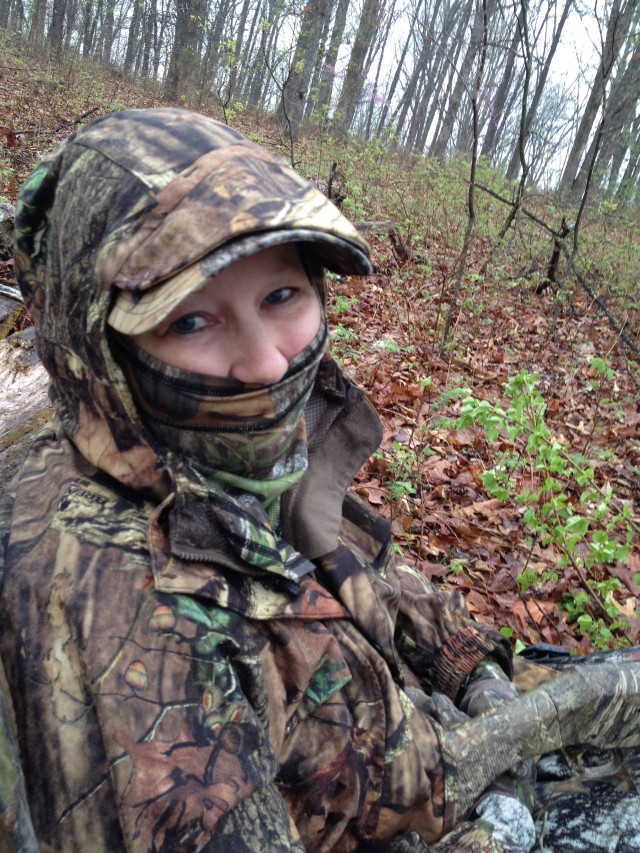
Stephanie Mallory

Stephanie Mallory

6. Showing lack of respect for the lives taken
“I once attended a hunt camp where another female would be hunting for the first time. She was very intimidated by the whole idea and wasn’t sure about taking an animal’s life. When we arrived at the lodge, the first thing the guides did was put a video on TV showing them shooting chickens off a fence post for fun. The new hunter was horrified, of course, and immediately ran to her room and started crying. The guides made all hunters look bad in her eyes and set a poor tone for the rest of the hunt.”  — Stephanie Mallory

The Solution: Yes, we ladies understand that killing is part of the deal. But nothing will sour a woman’s taste for the hunt more quickly than when a man acts cruel or indifferent about the animals he’s hunting, or not hunting. If you show respect for the life you are taking, your female hunting companion will in turn have more respect for you and for the sport you love.

7. Pushing the shot
“When I was 12, my dad and I hunted with a group that did deer drives. If you didn’t shoot at everything, you were ridiculed, but if you shot something too small, you were also ridiculed. To me, hunting is a very personal experience, and taking a life is a serious action. The person pulling the trigger should not feel forced into it.” — Trisha Bowen-Steffen, outdoor writer and pro-staffer for various bowhunting companies

The Solution: Assuming that she’s had all the training mentioned earlier, and that the recoil or noise is not the reason she hesitates in the clutch for the shot, she might not be ready. Or, she may not want to shoot that particular animal that day. It is her choice, not yours. You cannot rent the space in her head as to why she let an animal walk, but you might ask her to explain her reasoning to you. Do not judge. Bring chocolate.
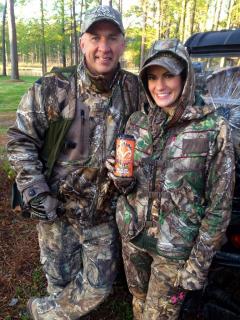
Nikki Boxler and David Blanton

Nikki Boxler and David Blanton

8. Not listening or communicating
“I am naturally outgoing, and when there is something I enjoy, I want to learn everything I can about it. I research, ask questions, practice … Did I mention ask questions? Seriously, I always have a million questions because there is always more learning to be had, and it is great to hear about other people’s experiences and thoughts. Many times you can learn through their mistakes to prevent you from making them in the future.” — Nikki Boxler, model, hunter and director of marketing for Neiman Funds

The Solution: We guess no one has to tell you that, as a whole, women like to talk.

In fact, some researchers claim that the average woman speaks 13,000 more words per day than the average man. So talk back.
Encourage questions and answer them thoughtfully. One of the biggest complaints women have about their romantic relationships with men is lack of communication. Lack of communication can be a problem between the male and female hunter as well. You’ll have plenty of time after the hunt to zone out in your lazy chair while recovering from the exhaustive effort of speaking all those extra words.

9. Displaying lack of patience
“I was immediately turned off during one of my first target-practice sessions when my boyfriend just assumed I knew what every button and lever did on the rifle. He lost patience and jumped in to do everything for me, instead of explaining to me how to load it properly. Talk about discouraging. The day ended with me in tears and never wanting to pick up a gun again. He later apologized and realized that guns just aren’t natural to some people. I mustered up the confidence to try again, and now I really enjoy hunting with him. After a lot of practice, I’m beginning to understand how fun it can be to shoot and hunt … once you get the hang of it.  – Candace Schaak, avid hunter from Cold Bay, Alaska

The Solution: Let’s face it: Patience isn’t always your strongest virtue. But it’s important, especially when you’re hunting with a new female hunter. The best teachers are patient teachers. Take time to instruct and explain the process throughout the hunt. Remember, this is all new to her. If you become short-tempered, impatient or irritable, you’ll ruin the whole point of the hunt, which is to have fun. And you’ll have an upset woman on your hands, which isn’t fun either.

Don't assume the lady you're hunting with for the first time is incompetent. Chances are that won't end well

Don’t assume the lady you’re hunting with for the 1st is incompetent. Chances are that won’t end well

10. Treating the woman as if she’s frail
“My guides and the other hunters in camp went off and left me at the cabin one morning as I slept because they assumed I wouldn’t want to turkey hunt in the rain. I guess they were just being protective, as I was a few months pregnant at the time. But, it was only sprinkling, and it wasn’t cold, so I would have been fine. Plus, I had really wanted to go!” — Stephanie Mallory

The Solution: Yes, we want to be comfortable and content, but we’re not afraid to get dirty and brave the elements when the situation calls for it. Don’t just assume the female hunter doesn’t want to get wet, muddy or tired. She may be just fine with crawling through that mud hole or sitting in the rain while waiting for a turkey to show up. All you have to do is ask her. She’ll let you know what she’s willing to do or not to do.

11. Focusing only on the kill
“Most experienced hunters I’ve gone with simply do things like pick a stand location, set out decoys, or use a call without explaining how and why. I’d say most women would like to not only go on the hunt, but actually learn how to hunt. I realize the guy wants to just handle everything and make sure the hunt is successful, and I appreciate that, but just being told when to pull the trigger is not enjoyable in itself.” — Brita Lewis, account executive / marketing strategist at Gray Loon Marketing Group

The Solution: For many guys, it’s all about getting the job done. You set a goal of taking an animal, and you want to accomplish that goal. But, education and fun should be part of the goal as well. Use every opportunity to teach and explain what you are doing. In fact, don’t just wait until the day of the hunt to involve the female hunter. Get her involved before season when you are scouting, planting food plots, hanging stands, etc. Involving her throughout the process provides her with more enjoyment and a sense of accomplishment as well.

12. Underestimating the female hunter’s capabilities
“I work for a well-known gun company, and my turkey-hunting guide knew this. Even though I was hunting with one of my company’s’ guns and had a lot of experience shooting it, my guide would not let me load it myself. When we arrived at the hunting spot, he insisted on loading the gun, but he had difficulty loading it and keeping it quiet at the same time. Hmmm. I could have loaded it quietly without any effort.”  — Marian Council, creative director at Benelli USA

The Solution: News flash: no one likes to be treated as if they’re incompetent. If you don’t know the woman, don’t just assume she’s incapable of loading her own gun, driving an ATV, calling a turkey or any other skill one might use while hunting. Again, all you have to do is ask. She might surprise you.

By Barbara Baird and Stephanie Mallory

Follow our FISHING BLOG

WEB   RATES     FISH    HUNT    CABINS    PHOTOS
TESTIMONIALS    BROCHURE    HUNT BOOKLET

Enter your email address to subscribe to this blog and receive notifications of new posts by email.

← Back

Thank you for your response. ✨

Email Me....


Tags: , , , , , , , , ,

A Better Bow Hunter: Aim to Hit

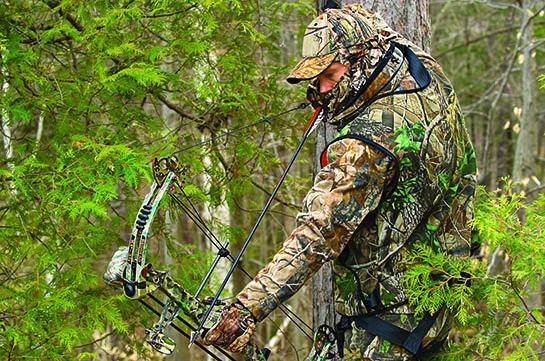
The traits that separate elite bow hunters from the masses are attention to detail and rigorous training. These are year-round archers, and here’s how they push themselves to become deadly hunters.

ODL0814_HUN02

1. Be Challenged
As creatures of habit, we’re guilty of practicing at distances at which we can comfortably stack arrows in an impressive -fashion—typically 20 yards. However, extending your practice distance well beyond your comfort zone accomplishes several things. First, it forces you to tighten your form, since miscues are multiplied as distance increases.

Greater practice distances also force you to identify and correct imperfections lest you continue to splash arrows about the range. This year, if space allows, double your practice comfort zone. You’ll find that when “short” shot opportunities present themselves, they’ll be chip shots.

2. Be Strong
Drawing a bow requires a certain degree of physical strength. Leveling a fiber-optic pin confidently on an animal is difficult, if not impossible, when your arms are trembling uncontrollably.

Sadly, archers who pull out their bow a week prior to the season aren’t physically prepared to attempt an ethical bow hunting shot. The right repetition makes you both strong and accurate.

3. Be Angular
Animals rarely present the perfect broadside shot. But how many of us practice any other angle? Whether you shoot a block or a 3D target, practice a variety of shot angles.

Shooting non-perpendicular angles adds another physical and mental dimension to the shot execution, because the bull’s-eye changes geometrically. When practicing, move about the range, varying your relationship to the target face until you’re proficient in every possible angle.

4. Be Accurate
Many archers think the only way to practice judging distance is with a bow in hand, but the opportunities are everywhere, including grocery stores and parking lots. Mentally measure an object in the distance and pace it off to check your guesstimate. Or stroll through the woods with a rangefinder. Stop occasionally and put an eye on a bush, branch, or rock. Give yourself a few seconds to estimate the real estate, and then check it against the laser. After a few trips, you’ll become amazingly accurate at taping distances with little more than a keen eye.

5. Be Crepuscular
Shot opportunities often present themselves in low light, whether the first or last of the day. Try shooting three or four arrows in this tough light. By doing so, you’ll have a real appreciation for what to expect when visibility is less than ideal in the field.

6. Be Blind-Ready
Ground blinds now outsell tree stands, as they offer a portability and versatility that tree stands simply cannot. However, if you’ve never practiced from one, you’ll be unpleasantly surprised when you try to lob a shot from inside its tight confines. Limited drawing distance, extremely small windows (which narrow the shot field), and dark interiors challenge even the best bow hunters. A word to the wise: Pop your ground blind up and practice shooting from it prior to toting it into the field.

Follow our FISHING BLOG

WEB   RATES     FISH    HUNT    CABINS    PHOTOS
TESTIMONIALS    BROCHURE    HUNT BOOKLET
Enter your email address to subscribe to this blog and receive notifications of new posts by email.

← Back

Thank you for your response. ✨

Email Me....


Tags: , , , , , , , , ,

Recipe: Moose Tenderloin Lettuce Wraps

This super simple lunch idea will definitely be something you’ll be sure to make over and over.

mooselettucewrapscopy-600x399


Ingredients
marinated moose tenderloin (thinly sliced) Get Marinate Recipe HERE

1 head butter lettuce
1 carrot
1 mini cucumber
feta cheese

Honey Cherry Dressing
1/2 cup cherries
3/4 cup red wine
2 tbsp honey

For the cherry dressing simply put all the ingredients in a saucepan, bring to a boil and reduce heat and simmer.  Describe it as, once you can’t smell the alcohol anymore it’s ready!  Take it off the burner and let cool.  As it cools it will gradually thicken.

Pan fry the moose until desired done-ness.  If you are like me and you like your meat not kicking anymore, then simply remove the meat just before its cooked all the way through.  If it’s sliced thinly it will continue to cook after you take it out of the pan and will be the exact done-ness and will be nice and tender.

Next up shave your vegetables.  Grab a potato peeler and shaved off nice strands of carrots and cucumbers to add in to the lettuce cups.  If you prefer them chopped or grated, by all means go right ahead!

Place your butter lettuce leaves on a plate and begin to assemble and alternated between moose and veggies, crumble feta cheese on top and drizzle the Honey Cherry Dressing on top.

Make as many lettuce cups as you’d like depending on how much meat you used!

Enjoy!

Follow our FISHING BLOG

WEB   RATES     FISH    HUNT    CABINS    PHOTOS
TESTIMONIALS    BROCHURE    HUNT BOOKLET
Enter your email address to subscribe to this blog and receive notifications of new posts by email.

← Back

Thank you for your response. ✨

Email Me....


Tags: , , , , , , , , ,

Firearm Safety

by Marti Davis

Marti-Davis

Safety, safety, safety

Firearm safety must always be our number one priority. Always remember to treat every gun as if it is loaded. That means always pointing the gun in a safe direction. Make sure you’re using the proper ammunition for the firearm. Keep your finger off the trigger until you’re ready to fire.

When you’re hunting from an elevated stand, never climb with the firearm. Use a rope to raise and lower the unloaded gun after you’re safely strapped in to your stand. You can never be too careful or safe when it comes to handling and hunting with firearms.

Marti-Davis-rifle

Know right from wrong

Before you do any kind of hunting with a gun, you must familiarize yourself with the state’s game laws and regulations. Even if you’re a seasoned hunter, you need to refresh your memory and check for any changes in the regulations that might affect your hunt. If you know and follow the regulations, when you do have an encounter with a conservation agent, you won’t have anything to worry about.

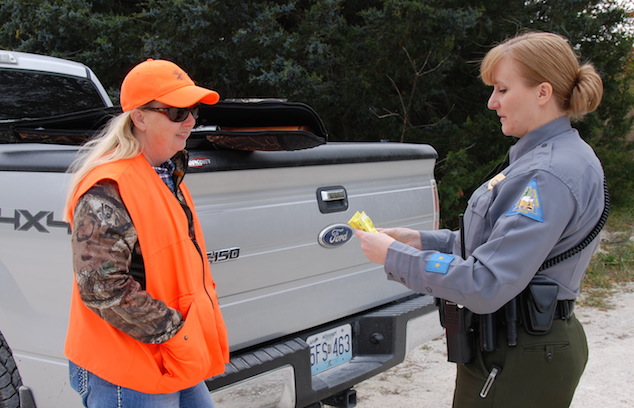
And while we’re on the subject of conservation agents, if you happen to get stopped by an agent, be courteous. It will take only a few minutes for the agent to check and see if you have the proper licenses and tags. Conservation agents have a job to do, and this is just a small part of it.

Cleaning and Maintenance

While some firearms take more cleaning and maintenance than others, you should take proper care of all firearms. If you do, they will last for many years, with the possibility of being handed down from generation to generation.

I like to use a combination cleaner-lubricant-protectant, such as Break Free CLP. A quick wipe-down at the end of a day afield is sufficient, unless you’ve been out hunting in rain or snow, or in extremely dusty or brushy conditions. In that case you probably need to break down the firearm to a certain extent. Remember to follow all manufacturer’s instructions on breakdown and reassembly. Never skip any steps the manufacturer recommends.

I also like to use a bore snake for a quick pass-through on my barrels. I use a little of the Break Free CLP on the snake and pull it through two or three times. It’s a great time saver for those quick, after-hunt wipe-downs between the thorough cleanings that require breaking down the gun.

And don’t forget that new guns need thorough cleaning when you first get them. Most come packed with a coating of heavy grease.

When it comes to maintenance on your firearms, I highly recommend that you find a reputable gunsmith in your area to take care of any malfunctioning firearms. For safety’s sake, never shoot any gun that is not in perfect working order. When in doubt, consult your gunsmith.

Sighting in or Patterning

Before going afield, you must take the time to sight in your rifle or pattern your shotgun. Even if you’re going out with the same deer rifle you’ve used for several years, take the time to make sure your gun is still zeroed in. Even the smallest of bumps can sometimes knock sights or scopes off zero.

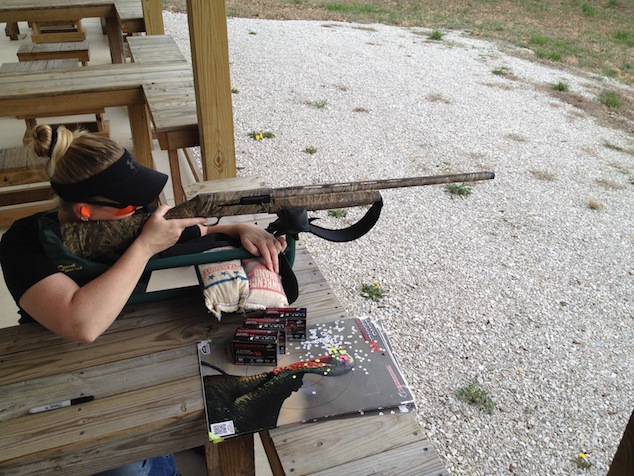
With shotguns, make sure to pattern them to see which load works best with which choke. Once you get that figured out, make sure to use the same load each time you hunt with that shotgun and choke.

To be an ethical and responsible hunter, you have to know your own and your firearm’s limitations before you step out in the field. As ethical hunters, we always want to make the quickest and most humane kill shots we can.

Marti-patterning

Transporting your firearms

Transporting can be as simple as using a sling to throw the gun over your shoulder, making it easier to carry in the field.

In a vehicle, I highly recommend a case of some sort when transporting firearms, whether it’s a simple zip-up, soft-sided case or a padded, hard-shell transport case. For one thing, a case protects the gun—for another, in some states it is the law. This is another area where it’s necessary to know the regulations and laws in the state you are hunting—or even just traveling through. Some states also require firearms to be cased when transporting them on all-terrain vehicles in the field.

Marti-Davis-truck-copy-2

Follow-through

When throwing a ball, you must follow through to complete the action. The same applies to shooting a rifle or shotgun. Once you make the shot, you must follow through. If you’re shooting a bolt-action or pump-style rifle, follow-through includes working the action and chambering a fresh round. Be ready to make a follow-up shot if necessary. The same goes for shotguns. After you complete the shot, get another shot shell into the chamber and be prepared to make a quick follow-up shot. Of course if you’re using an autoloader, the gun does this for you. Just stay on the gun and be ready in case you need to take another shot.

Storage

After the hunt, be sure to unload and store your firearms properly. As I mentioned when discussing cleaning and maintenance, wipe down or clean your firearms prior to storage. Always make sure to store all guns beyond the reach of children or anyone else you don’t want having access to them. Always store ammunition separately from all firearms.

Marti-and-Barb-afield-copy

These safety rules need to become second nature, yet always in the forefront while you are working with firearms, especially while hunting.

IMG_2075-e1429190999379

Marti Davis

Marti Davis is a staff member for Browning Trail Cameras, WoolX and Mossy Oak.
She is an authority on most types of hunting in North America, and very active in
mentoring the next generation of young hunters.


Follow our FISHING BLOG

WEB   RATES     FISH    HUNT    CABINS    PHOTOS
TESTIMONIALS    BROCHURE    HUNT BOOKLET

Enter your email address to subscribe to this blog and receive notifications of new posts by email.

← Back

Thank you for your response. ✨

Email Me....


Tags: , , , , , , , , , ,

Moose Hunting – After the Hunt

moose-wawang-lakeHunters who take a moose and are camping out often have a feast—chunks of prime meat roasted on sticks over a campfire—a delicious and savory reward for their hard work. Butchering one of these big, heavy animals takes a lot of time and effort. A prime bull can yield more than 500 pounds of meat and fat. Traditional foods include many other edible parts of the moose such as the head, liver, heart, some other internal organs, and the highly valued fat. So it takes not only a lot of work to butcher a moose, but also specialized skills and a detailed knowledge of the animal’s anatomy.


moose=wawang-lakeA Delicious Feast

Moose meat and fat are staple foods in most many people who live in the northern regions of Ontario.

Fat is a very important part of a traditional diet because it stokes the metabolism and adds flavor to meat and organs. Unlike beef, moose meat is not marbled with fat, but rather the fat is separate. A favorite kind of fat is found in the sheath-like mesentery membranes that hold the organs together.

In times past, even the bones of moose were ground and boiled to make a fatty broth. If they didn’t use the bones immediately, they could store them as a potential source of food during times of scarcity.

Delectables include brisket, short ribs, heart, and tongue. Thin slices of meat may be fried. A delicious gravy is made from the fat.

A regular favorite is moose meat simmered in a big pot along with some combination of rice, noodles, or potatoes and sometimes vegetables. The result is a thick meaty, delicious stew. Bone marrow is also used in tasty, nutritious broths.

moose=wawang-lake

Follow our FISHING BLOG

WEBSITE    RATES     FISH    HUNT    CABINS    PHOTOS
TESTIMONIALS    BROCHURE    HUNT BOOKLET

Enter your email address to subscribe to this blog and receive notifications of new posts by email.

← Back

Thank you for your response. ✨

Email Me....


Tags: , , , , , , , , , , ,

Moose Hunting at Wawang Lake

Deeply imbedded in the Canadian Boreal Forest we offer the very finest in Moose habitat for our hunters.  Look no farther than Wawang Lake for accommodations for your next BIG game hunt!

BOOK Your Accommodations HERE!

WawangMoose

Our hunts accommodations ONLY for Ontario Resident Moose Hunters.

If your looking for a great hunting area that has a high population of moose then look no farther than Wawang Lake Resort as we’re in the middle of the best moose hunting area in all of NW Ontario.

At Wawang Lake we offer comfortable accommodations to Resident Ontario Moose Hunters only.  Presently we don’t have any tags available and unable to take any non-resident hunters during the Moose Hunt season.

Things Moose Hunters Should Consider:

Crossbows
• Draw length must be al least (11.8 in.)
• Draw weight must be at least (119 lbs.)
• Bolt head must be at least (0.9 in.) at the widest point, and there must be at least two cutting edges of straight, sharp, un-serrated, barbless steel.

Longbows
• Draw weight must be at least (48.5 lbs.) at draw length of (27.6 in.) or less.
• Arrow length must be at least (23.6 in.).
• Broad head must be at least (0.9 in.) at the widest point, and there must be at
least two cutting edges of straight, sharp, un-serrated, barbless steel.

Rifle
We suggest using at the minimum one of the following:
300 Magnum
30-06
7MM Magnum with bullet weights in the 180 grain range
A rim-fire rifle, a shotgun smaller than 20 gauge when loaded with shot, or any shotgun loaded with shot smaller than SG or No. 1 buck cannot be used for hunting Moose.


Clothing requirements
During the rifle season hunts, a minimum of 400 square inches of uninterrupted Hunter Orange must be worn at all times.  Camouflage or open mesh orange does not meet these requirements.  An orange jacket or vest as well as an orange hat do meet these requirements.

Hunters should also have a compass or hand held G.P.S., as well as a good pair of binoculars, thermos, flashlight, lighter, warm clothing, good quality rain gear, waterproof insulated boots, gloves/mitts, long underwear.   Two-way portable radios are also recommended.  Fall hunting weather can be warm & dry to cold, wet and snowy within a few hours; so it is best to be prepared for all variables.

BOOK Your Accommodations HERE!

We trust that this information will prove to be useful in planning your next Big Game Hunt in beautiful, exciting NW Ontario.  We invite you to enjoy our ‘True Wilderness Hospitality’ while participating in a remote hunting experience.

 WEBSITE    RATES     FISH    HUNT    CABINS    PHOTOS
TESTIMONIALS    BROCHURE    HUNT BOOKLET

Enter your email address to subscribe to this blog and receive notifications of new posts by email.

← Back

Thank you for your response. ✨

Email Me....

 
Leave a comment

Posted by on September 23, 2015 in moose, moose hunting, Wawang Lake Resort


Tags: , , , , , , , , , , ,