RSS

Category Archives: hunting

Tracks in the Snow

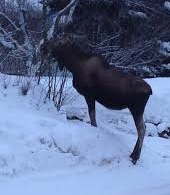
moose-wawang-lakeTraditionally, moose have also been taken outside the rutting season, especially in the winter. At this time, moose tend to be scattered. If the snow is fresh and powdery, a hunter can move silently through the forest and thickets. But if the snow is drifted or develops a crust, every footstep makes a noise that alerts the moose. Making matters worse, even slight sounds carry over surprisingly long distances on windless days with temperatures far below zero—as often happens during the northern winter.

Moose have excellent hearing, so the best chance of approaching one in the winter is during storms when gale winds and gusts cover the sound of crunching snow. Luckily, temperatures tend to be warmer during storms, so although hunting in these conditions can be very uncomfortable, it’s not as life threatening as when the temperatures sink to minus thirty or colder.

When the snow is really deep—up to a moose’s belly—these animals have a very hard time moving around. Also if the snow is deep and crusted, the heavy-bodied moose will punch through the icy crust, cutting its legs as the animal walks, making travel extremely difficult.

If the crust is hard and strong enough, wolves can walk on top, giving them a lethal advantage over moose. Mired in the snow, a moose cannot escape by running away and has difficulty defending itself. Human hunters on snowshoes can also stay near the top of deep or crusted snow while the moose are forced to wallow slowly along. Under these conditions, a moose is virtually trapped in a small area of its feeding trails, making it extremely vulnerable.

When the snow is not so deep, moose can move far more quickly and easily. The practiced hunter knows that if moose tracks consistently lead in a single direction, the animal may be heading somewhere else and will be very hard to catch.

If a moose is feeding in one area its tracks will wander in multiple directions. This is good news for the hunter, because he may have a chance to get close to the animal. Now the difficulty is to find which tracks are the freshest and which direction they lead.

A hunter always wants to know how old the tracks are—how long ago did the moose make them? Would it be possible to catch up or is the animal long gone?

A track made within the hour is soft—as soft as the surrounding snow. The hunter riding on a dog sled or snow machine might simply drag his boot through the track. If the track is fresh, he feels almost nothing. If it’s older, he feels two distinct thumps as his boot hits both sides of the track.

In cold weather—especially if it’s far below zero—the inner walls of an animal’s track will recrystallize and develop a crust within a few hours. This starts first around the top and happens later at the bottom. If the track was made the night before it will be harder still. The colder the temperatures, the more quickly a crust forms on the inside of tracks.

A hunter on foot pushes his boot or a mittened hand down into the tracks, feeling the crust or testing how much pressure it takes to break through. The harder the crust, the older the track. In below zero weather, a track made two days ago or earlier will be very hard.

Another sign the hunter looks for is moose droppings. When they’re fresh, the color is dark brown and they’re soft. In freezing temperatures, the pellets quickly harden and turn lighter.

Other signs are willow branches that have been freshly broken by browsing moose, the white wood showing conspicuously against the darker background of the thicket. Often this is accompanied by a scramble of tracks and patches of gouged-out snow where the moose has pawed down looking for edible vegetation under the snow.

moose-wawang-lake (2)Moose rest or sleep in snow beds, often straight downwind from their tracks. They do this to catch a warning scent from any predator that is following their trail. At other times, a moose that hears a suspicious sound or spots something unusual will intentionally move downwind to test the scent. A moose can recognize the drifting smell of a wolf or human, even at a considerable distance.

When a hunter is following fresh moose tracks in the snow, he knows that the animal could have bedded downwind so it would pick up his scent. For this reason he leaves the trail at intervals, walks straight downwind, then makes a wide loop and heads back upwind—always watching the underbrush for the dark shape of his prey. Again and again, he makes these downwind loops and comes back upwind until he finds tracks leading to where the moose is bedded. If luck is with him and the moose never catches his scent, he may catch it unaware.


Follow our FISHING BLOG

WEB   RATES     FISH    HUNT    CABINS    PHOTOS
TESTIMONIALS    BROCHURE    HUNT BOOKLET


Enter your email address to subscribe to this blog and receive notifications of new posts by email.

← Back

Thank you for your response. ✨

Email Me....


Tags: , , , , , , , , , ,

How To Prevent Venison From Tasting Awful

I hear people say all the time that they don’t like the taste of deer. Some people say that just because they know what they’re eating and have a preconceived notion that it won’t be good. Others have legit gripes, mainly due to poor handling by the hunter from the time of the kill up until it was cooked. This often results in gamey, tough meat. Here are some tips to help combat bad-tasting venison.

venison

Hunting in the real world is not like the Outdoor Channel portrays it to be. Hunters make bad shots from time to time and the deer has to be tracked for a while. Shot placement and the stress the animal received while being trailed plays a big role in gamey meat. The faster a deer dies, the sooner it can be field dressed. This will reduce the amount of acid that builds up in the deer’s muscles.

Hunters often fail to get the deer cooled as quickly as possible. The first step it to field dress the animal immediately and wash out the cavity with cool water. Be sure to dry the cavity out, as the water can be a breeding ground for bacteria. If the temperatures outside are in the mid-30s or cooler, it’s okay to let the deer hang. Anything warmer than that, and the deer needs to hang in a walk-in cooler (or be skinned, quartered, and put on ice if you don’t have a walk-in).

A whitetail is not a hard to deer to quarter. Because of how their joints and tissues hold their legs on, a simple pocket knife can have a deer quartered quicker than you might think. Some might use a saw to cut through bone marrow and small pieces of bone, but then you’d need to watch that shavings from the saw don’t get mixed in with the meat. Stick with a sharp knife instead, and your meat will be free of small bone pieces that can contaminate the meat.

Growing up, I can remember how much my dad loved the taste of fat from a good cut of beef. The same does not hold true with deer fat. Simply stated, deer fat tastes awful. It is not red meat, so cut it off before it’s made into steaks or burger. This includes all fat and silver skin.

Every year before deer season begins, we call in an order to the local butcher shop for beef suet. Even though we removed all of the deer fat, we need to add some sort of fat, whether beef or pork, when grinding it. If this is not done, the lean venison will quickly fall apart when making burgers, meat loaves, etc. We add beef fat at a ratio of 3:1 (three pounds venison per pound of fat).

If you have the means, the time, and the knowledge, I recommend processing all your deer yourself. When you take a deer to a meat locker you can’t be sure how the meat is handled — or if it’s even your own deer that you’re getting back. For all you know, you could be getting back someone elses deer, perhaps one that was gut-shot and not properly handled after the shot. If you have to take a deer to a processor, research the facility by talking to other hunters who’ve used it, and also talk with the workers, who will hopefully be honest with you.

Don’t overcook venison. Cooking deer for too long causes it to become chewy and dry. Venison is best cooked to medium rare, but the outside needs to be cooked. To accomplish this, the grill must be hot enough to quickly sear the outside and lock in the flavors and juices. Turn your venison only once. If there are no grill marks on the meat after three minutes or so, the grate is not hot enough.

Freezer-burnt food, whether it is venison or other food, does not taste good. Some people use a vacuum sealer; if you go this route, buy a good one, as a cheap product will not keep the food fresh. When we butcher our deer, we make wrapping the meat a family affair, with all involved. We put one-pound portions of burger in sandwich bags and the steaks and roasts are wrapped with plastic wrap. After covering it with plastic wrap, we wrap it with good freezer paper and tapes. Writing on each package, we identify the cut of meat, who killed it, and the date of the kill.

I hope this advice helps you create a great-tasting meal. A few more final tips: The younger the deer, the better, more tender it will be (even though this might not sit well with trophy hunters). Thaw venison slowly to prevent toughness, then serve it hot and keep the remainder hot to prevent it from getting a waxy taste.

Follow our FISHING BLOG

WEB   RATES     FISH    HUNT    CABINS    PHOTOS
TESTIMONIALS    BROCHURE    HUNT BOOKLET


Enter your email address to subscribe to this blog and receive notifications of new posts by email.

← Back

Thank you for your response. ✨

Email Me....


Tags: , , , , ,

Ozonics: How Does it Work?

DSC_0173
Thankfully, wild turkeys don’t have a sense of smell, like deer, or we’d never outfox one. However, turkeys often thrive in deer habitat. Many seemingly perfect spring gobbler set-ups have been blown by a snorting deer that entered the hunter’s scent stream. A unique device called “Ozonics” can change that by eliminating human odor. It’s especially effective in an enclosed space, such as a turkey or deer blind. This unit works in spring or fall and has captured the interest of sportsmen, yet many aren’t sure how it works. Here’s the explanation from the manufacturer.

ozonics0b00a4ed-2288-483c-8cf7-b8e2d7d42280Neutralize a mature buck’s best defense, its nose, and a hunter’s chances of success rise dramatically. Cover scents, hunting clothes washed in scent-free detergents, avoiding a buck’s core area during the prime time to hunt because the wind isn’t right… Hunters are obsessed with scent, and for good reason. A deer’s nose is truly its best sense.

1041It’s not often a new hunting product revolutionizes the sport. Ozonics is just such a product. O1041zonics is the only scent-control product that deals with your human scent zone. Simply, there is nothing else like it. Ozonics is an in-the-field ozone generator. An Ozonics Unit electronically changes oxygen into ozone, which destroys your human scent zone. Ozonics blankets your scent zone with scent-destroying ozone propelled by a quiet fan. The ozone is unstable, so it will bond with your scent molecules, rendering them indistinguishable to the nose of a deer.Ozonics should be positioned 6 to 10 inches above you and angled downward. Use a wind tracker to detect wind direction, and then aim Ozonics downwind. Heavy ozone molecules generated by the Ozonics Unit fall through your scent zone. The ozone concentration is heaviest in the direction Ozonics is facing and closer to the unit. This is why knowing wind direction is important. Reducing your scent profile means more ozone reaches your scent stream.

Best of all, Ozonics is guaranteed. If you do not experience a dramatic reduction in the number of downwind deer that bust you, Ozonics will refund your money in the same calendar year as purchase.

Follow our FISHING BLOG

WEB   RATES     FISH    HUNT    CABINS    PHOTOS
TESTIMONIALS    BROCHURE    HUNT BOOKLET

Enter your email address to subscribe to this blog and receive notifications of new posts by email.

← Back

Thank you for your response. ✨

Email Me....


Tags: , , , , , ,

Grouse Population

 imagesPOPULATION
Ruffed Grouse normally have a short life span. From a brood of 10 or 12 hatched in late May or early June, usually 5 or 6 will have died by mid-August. Among those living to disperse during the fall shuffle, about 45% will have been lost by late fall and early winter. Another 10% die over winter and during early spring, so that only about 45% of the young grouse alive in mid-September live to their first breeding season. In subsequent years a given cohort (a season’s crop of young birds ) continues to shrink by about 55 to 60% per year. So from 1000 chicks hatched in late spring, about 400 normally survive to early autumn, 180 survive to the following nesting season, 80 are alive a year later, 36 live to breed a 3rd time, 16 may breed a 4th time. One out of 2200 chicks hatched may live as long as 8 years.

Most Ruffed Grouse die a violent death to provide a meal for one of a number of meat-eating predators, for in the natural scheme of things, Ruffed Grouse are one of the first links in a complex food chain. Some also die from disease and parasites, or from exposure to severe weather, or accidentally by hitting trees or branches while in a panic flight after being frightened.

grousewawanglakeAcross the major portion of the Ruffed Grouse range, the winged predators or raptors are most efficient at taking these birds. Although the goshawk is certainly the most efficient of all grouse predators, the horned owl probably kills more grouse annually than any other predator. This is due to the cosmopolitan distribution of these owls and the likelihood that any woodland capable of supporting grouse will have resident horned owls, or at least be regularly visited by them. Yet, where cover is adequate, grouse can find security and maintain their abundance even when goshawks and horned owls live and nest nearby.

Conditions are seldom static in the world of the Ruffed Grouse and their numbers fluctuate from year to year, and from decade to decade. Across most of their range in the northern states, Canada and Alaska, Ruffed Grouse numbers have risen and fallen in a somewhat predictable pattern for most of this century, in what is often called a “10-year cycle”. In the Lake States, for example, periods of abundance usually coincide with years ending in 0, 1 or 2, and the bottom of the depression in years ending with 5 or 6. This is not invariable, but a general, regional trend. These “cycles” sweep across the continent more or less as a wave, beginning in the far Northwest and Northeast, and progressing southward and southeastward.

The factors responsible for these periodic fluctuations remain poorly understood, and appear to involve a number of different factors interacting with one another in different ways at different times. The one factor which does not appear to be important is hunting during the period of fall dispersal.

grousewawanglake3

The primary causes for the short-term fluctuations in Ruffed Grouse abundance appear to be related to weather trends and variations in the quantity and quality of food resources. These are interrelated to a large degree. Superimposed upon these two basic factors is that of predation – as predators take advantage of grouse placed in jeopardy by unfavorable weather conditions or inadequate food resources. A favorable combination of weather factors and food resources may allow these grouse to survive the winter nearly immune to predation. These combinations of factors also affect annual production. If grouse spend the winter feeding on poor quality foodstuffs, or have to use an excessive amount of energy to keep warm, hens may not have sufficient reserves to produce a clutch of viable eggs, or vigorous, healthy chicks in the spring. Across most of their range, the most productive and most abundant Ruffed Grouse populations are those living where they spend most of the winter burrowed into 10 inches or more of soft, powdery snow, and emerge for only a few minutes once or twice a day to take a meal of the male flower buds of the aspens. Our Ruffed Grouse can be considered snow lovers or “Chionophiles.” Ruffed Grouse tend to be less numerous and less productive if they live in regions where they cannot burrow in snow and feed on aspen (poplar).

grousewawanglake2There also seems to be a poorly understood relationship between the color-phase of a Ruffed Grouse and its ability to survive severe wintering conditions, and its vulnerability to predation.

Longer term changes in Ruffed Grouse abundance reflect how we have treated our woodlands and forests. There is also reason to suspect that much of the severity of the “10-year cycle” is largely a result of how we have treated forested lands. These birds depend upon the food and cover resources produced by a group of short-lived trees and shrubs growing in full sunlight which develop following the severe disturbance of forests. In earlier times, fire and windstorm were the ecological agents periodically renewing forests and creating satisfactory habitat for Ruffed Grouse and many other species of forest wildlife. Ruffed Grouse should be considered a “fire-dependent” species in the natural scheme of things.

giphyOur current reluctance to cut forests, even under strict management plans and the suppression of fire to protect growing forests, have upset this natural sequence of events. In the early part of this century, farm abandonment and the recovery of forests from unregulated logging and fires produced habitats which probably resulted in the greatest abundance of grouse in recent times in most of Canada & northern  United States. But as forests mature under protection from fire and cutting, they lose the habitat qualities Ruffed Grouse require. In many regions, Ruffed Grouse numbers have declined as forests have become more extensive and older.

Ruffed Grouse abundance can often be readily restored by proper harvest management of forested lands, or through the judicious use of prescribed fire that is ongoing in northwestern Ontario.

Follow our FISHING BLOG

GROUSE HUNTING at Wawang Lake

 WEBSITE    RATES     FISH    HUNT    CABINS    PHOTOS
TESTIMONIALS    BROCHURE    HUNT BOOKLET

Enter your email address to subscribe to this blog and receive notifications of new posts by email.

← Back

Thank you for your response. ✨

Email Me....


Leave a comment

Posted by on December 16, 2016 in grouse, hunting, Wawang Lake Resort


Tags: , , , , , , ,

Top Ten Fire Starters

campfire

fire-starter-wawang-lake

Follow our FISHING BLOG

WEBSITE    RATES     FISH    HUNT    CABINS    PHOTOS
TESTIMONIALS    BROCHURE    HUNT BOOKLET

Enter your email address to subscribe to this blog and receive notifications of new posts by email.

← Back

Thank you for your response. ✨

Email Me....


Tags: , , , , , , , ,

Field dressing a black bear

With the bear hunt just around the corner, we will cover the basics 🙂  Pictures have been withheld due to graphic nature.

Instructions

imagesFG3W4IGS 1. Clear an area surrounding the black bear. Make the area large enough to allow room to move around and roll the animal away from the entrails. The lowest part of the ground should be reserved for the entrails. Move the bear onto its back. Spread the rear legs and either have your partners hold them apart or secure them with ropes. Repeat with the front legs.

  1.  2. Insert one of your knives in the cavity at the base of the bear’s throat. Cut the blood vessels with a deep, crosswise motion to open the jugular vein and bleed the animal. Move the bear so the blood will flow away from it and clear the ground as needed.
  2. Cut the skin in a straight line from the breastbone — located just below the rib cage — to the base of the bear’s jaw. Cut the muscles along this area to the bone to expose the throat and windpipe. From the same starting point, cut the skin in a straight line down to the anus. Some areas require hunters to leave the genitals for sex identification; cut around the genitals slightly to preserve them.
  3. Split the breastbone.  This can be done with a bone saw, hack saw or a couple of axes.  If you choose to use axes, hold one axe against the breastbone and hammer it with the other axe; this will break the bone from the base of the rib cage up to and through the top ribs. Open the chest by pulling the front legs apart. Cut the windpipe and gullet close to the head. Lay them in the chest cavity for later.
  4. Cut through the abdominal muscles; start at the base of the rib cage. Take care not to puncture the intestines, the stomach or the bladder; doing so could taint the meat. Sever the muscles down to the pelvic bone. Enlist your partners to hold open the bear so you can work more smoothly.
  5. Break the pelvic bone by using the same technique implemented the breastbone. Do not cut the urinary tract as it may contaminate the meat. Start on one side of the chest cavity and use your knife to cut the diaphragm from the chest wall. Start at the base of the ribs and slice as far back into the cavity as possible. Have your partners pull the organs to the side so you can see and cut more easily. Repeat the process on the other side of the black bear.
  6. Cut the intestines and rectum from the split pelvic bone to where the rectum meets the muscle tissue at the anus. Cut a circle in the skin at the base of the tail; cut 1 to 2 inches from the anus. Cut the muscles to the top of the pelvic bone to free the anus and rectum. Pull the lower intestine, rectum and anus away from the cavity and hold clear. You must not puncture or cut the urinary tract or intestines.
  7. Hold the parts, roll the black bear away and allow the intestines and stomach to spill onto the ground. Grab the windpipe to pull the lungs and heart out onto the ground. Cut any remaining diaphragm tissue to free the organs. Complete the field dressing by draining as much blood from the bear as possible and wiping the body cavity with cloth rags to clean. Do not use water. At this point your main concern becomes to cool the cavity and prepare for transport which can be done by propping the cavity open with a tree branch.

    IMG_6110 - Copy

    Proper field care will ensure less weight and trouble with removal and transportation from the hunt site.

     For more information on black bear hunting, visit us at http://www.wawangresort.com

    Follow our FISHING BLOG

    WEB   RATES     FISH    HUNT    CABINS    PHOTOS
    TESTIMONIALS    BROCHURE    HUNT BOOKLET

    Enter your email address to subscribe to this blog and receive notifications of new posts by email.

    ← Back

    Thank you for your response. ✨

    Email Me....


Tags: , , , , , , ,

Black Bear…the basics.

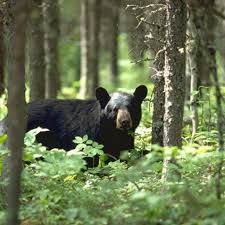
Here is a fantastic and very basic overview of black bear, what they are and why we hunt them 🙂  In the case if Wawang Lake Resort, our outfitting is done in the fall, over bait and the average weight of our boars was 278lbs last year with 2 over 400lbs 🙂  Our sows, 180lbs with three over 300 🙂

Black Bear Hunting Basics

Black Bear Paw in Hunter's Hand

If you’re considering taking up black bear hunting or trying to decide if it’s right for you, it’s a good idea to get an overview of what it’s all about. There are a lot of misconceptions about black bear hunting floating around out there, so it pays to know exactly what you’re in for when you set out to hunt “America’s bear”.

In this article, we’ll cover the basics of black bear hunting, including population, seasons, weapons, meat, trophy items, and biology relevant to hunting.


Population, Seasons, and Weapons

Although the population of the black bear (Ursus americanus) is in decline in some areas of the U.S. (due to habitat loss), in other areas it is growing rapidly, and in still others it is at an all-time high. The total population of black bears in the lower 48 is estimated to be between 300,000 to 500,000, and the Alaska population is estimated to be 100,000 or more.

Black bear hunting is permitted in a little over half of the 50 states. Many Western states have black bear hunting seasons. In some of these states, hunters are allowed to take two black bears per year. Other popular areas include portions of the upper Midwest, the East coast, and the South. Even a handful of states in the East where black bear hunting has been prohibited for years have recently opened up limited seasons.

Black bears are hunted both in the spring and the fall. However, spring seasons are only allowed in about eight states, and spring hunting often requires applying for a lottery. Fall seasons are typically general seasons, and this is the time when most bears are hunted.

Black bears can be effectively taken with any of the typical weapons used for other big game, including rifle, bow, shotgun, muzzleloader, pistol, and crossbow. (As always, be sure to check your particular state’s game regulations.)

Meat and Other Items

Black Bear MeatBlack bear meat is considered by many to be a delicacy. In fact, even as recently as the late 19th century, bear dishes were some of the most expensive items on the menus at the finest, exclusive restaurants. “Bear bacon”, the whole, smoked hind quarter of a bear, was a prized staple in the diet of settlers on the American frontier. The meat is often compared to pork or lamb, but with a distinctive flavor all its own.

Interestingly, that flavor can vary quite widely depending on what the bear has recently been eating. The most highly prized meat comes from spring bears who have been consuming large quantities of grass and other vegetation as well as fall bears who have been feasting on berries, fruit, or nuts such as acorns.

Luckily, although they are omnivores, about 80-90% of a black bear’s diet consists of plant material, so your odds of having tasty meat are extremely good. Younger bears are also widely reported to have better meat than older bears. Assuming you take a younger bear that hasn’t been eating salmon or carrion, you’re in for quite a treat.

An important word of caution here: black bear meat often contains the parasite that causes trichinosis, an infection that usually results in either no symptoms or minor digestive discomfort but in rare cases can cause more serious complications and even death (although only in less than 0.3% of cases).

Fortunately, there is a simple remedy for this. All bear meat must be cooked completely through until there is no visible pink in the meat. Cooking the meat to an internal temperature of 137 degrees is hot enough to make it safe, although the USDA recommends an internal temperature of 160 degrees. Freezing the meat has not been shown to be adequate protection against trichinosis.

Another highly edible part of a black bear is the fat. Bear fat (which is quite plentiful in fall bears) can be rendered to produce a useful and particularly flavorful cooking oil. Even from a modestly sized bear, you can easily get a couple gallons of this precious liquid.

In addition to the meat and fat, there are also a few prized items to be had from a black bear. First, the fir is soft and luxurious, and many hunters keep the hide and turn it into a rug or even clothing such as a vest. Black bear skulls are fascinating thing to look at, and they’re a great conversation starter when displayed up on the mantle or other prominent location.

Biology Relevant to Hunting

Black bears can vary greatly in size, depending on genetics, the quality of the habitat in which they live, and their gender and age. Mature boars (male bears) can weigh in at over 800 pounds in rare cases. The average adult male, however, weighs between 180 and 300 pounds, while the average adult female weighs slightly less, between 140-250 pounds. You can expect to net about 30% of the live weight in meat. For example, a 200 pound bear may produce up to 60 pounds of meat.

Black bears possess impressive athletic abilities. They can sprint at speeds over 30 mph, can climb trees with ease, and are accomplished swimmers. They also have short, curved, sharp claws and canine teeth capable of ripping and tearing flesh. With these traits, it’s easy to see why they fit squarely into the classification of dangerous game.

While black bear attacks are exceedingly rare, even for bear hunters, they do happen. And tracking wounded bears means the danger increases exponentially. The tracking is bound to take you through dense cover, and the bear’s thick fir soaks up blood fast, making for sparse blood trails to follow. Bears have even been known to loop around and double back on their trail, lying in wait for pursuing hunters. However, with proper preparation and planning, as well as solid shot placement, most bears can be recovered safely and without incident.

Note: In regions where black bears share their range with grizzly bears, it’s important to know how to identify the two bears and tell them apart so you don’t accidentally shoot a grizzly bear, which is a violation of federal law. Here’s a handy bear identification training you can take online for free so you can know for sure before you pull the trigger.

The size of a black bear’s home range can vary greatly depending on the location of food sources in the area. It can be as small as a couple square miles or it can be much larger — a male’s home range may go all the way up to 75 square miles in extreme cases. Bears are opportunistic omnivores, which means their movements are often unpredictable. This wandering lifestyle requires specialized tactics, the most common being spot-and-stalk, baiting, hunting with hounds, and calling.

Regardless of which tactics you employ, you’ll need to defeat a bear’s considerable arsenal of finely tuned senses if you want to have any hope of getting close enough for a shot.

Sense of Smell

First and foremost is their sense of smell, which is thousands of times better than a human’s. In fact, it’s been shown that if you take a bloodhound’s nose and multiply it by about seven, you’ll get a sense of the black bear’s olfactory powers.

There are both defensive and offensive strategies you can use in order to overcome these powers and get within range of a bear without it smelling you. On the defensive side, it’s wise to use as many scent control measures as logistically possible. More importantly, always keep tabs on the wind and make sure you’re hunting into it. A windchecker device, such as a small spray bottle filled with unscented talcom powder comes in real handy for this, as does a fine, frayed string tied to the end of your gun or bow.

You can also go on the offensive and use the wind to your advantage. With good scouting and planning, it’s possible to hunt with the wind at your back, allowing your scent to move out ahead of you and drive bears toward another hunter in a treestand or other fixed position.

Sense of Hearing

Next up is their sense of hearing, which is thought to be significantly better than a human’s, although it’s not known exactly how much better. They can detect a human voice at 300 yards and the cocking of a gun at 50 yards.

Your best defense against a bear’s ears is to simply be quiet. Move slowly and carefully, wear quiet clothing, and speak in whispers to your hunting companions. On the offensive side, always keep your ears tuned for bear sounds. Bears make noise when feeding, such as turning over rotten logs looking for grubs, and they communicate with each other through woofs, sniffs, grunts, and growls.

Sense of Sight

Contrary to popular belief, bears do, in fact, see in color. Their vision is roughly equivalent to a human’s — better, if you include the fact that they have excellent night vision. Although they’re somewhat near-sighted, they are adept at detecting movement, even at long distances.

To win the battle of the eyes, you’ll need to have a solid defensive plan. It’s very important to wear full camouflage and choose a pattern that breaks up your outline and matches the local vegetation well. More importantly, always move slowly and cautiously, and never move when a bear is looking in your direction.

As for offense, always carry a pair of high quality binoculars. The black color of a bear’s fur can make them a little easier to spot than other big game like deer. Carry your binoculars on your chest with a harness or “bino bra”, and use them often. When hunting open country using spot-and-stalk tactics, you can also employ a high-power spotting scope to give your eyes even more reach.

More on this next time…………………

← Back

Thank you for your response. ✨

Email Information regarding


Tags: , , , ,

Big Mistakes NOT to Make in Your Bear Stand

Part of the thrill of the hunt, is the anticipation knowing that with every second that ticks by, you are one second closer to harvesting your trophy black bear. What happens when those seconds turn into hours and then into days? Being under prepared to be in your stand for extended periods of time can be frustrating, and worse yet, can prevent you from achieving a successful hunt.

bearstand

 It would be awesome if we knew when and where the harvest was going to take place, but that wouldn’t be hunting then, would it?  Having a plan in your bear stand can make your hunt much more enjoyable. Things to consider: weather, bugs, boredom and nature calls.

Weather – Avid hunters know that fall weather can change in a heart beat. It can go from warm, to cold, windy and raining in the blink of an eye. Having the right clothes in your back pack can make the best of a somewhat undesirable situation.

Bugs – can be a huge annoyance in the great outdoors. Especially when you are forced to sit still for extended periods of time. Avoid bug sprays when bear hunting… PERIOD! A new, unfamiliar scent, along with an intuitive feeling that something isn’t right, will keep trophy bears from over coming fear and committing to your bait. Bug jackets and bug nets are a must. (Oh, on side note, make sure you practice shooting with your bug net on). Regarding the portable propane bug eliminators, we highly advise against them as it is a new scent that can be detected by a bear easily and may quickly deter them.

Boredom – Nothing will end your hunt faster than impatience and constant movement in your stand. If you are like most guys who can’t sit still for more than 30minutes at a time, you must bring something with to occupy your mind. I personally use a book. I have also seen guys use those portable, pocket video games. Regardless of what you use, make sure you sit sill and only utilize things that will be quiet and non light reflective.

Nature Calls – Ever been in the stand when all of the sudden you have to take a pee? Sucks, doesn’t it? I don’t know how many times I have had this happen to me, yet somehow I always forget to bring a container along. Put a portable urinal on your packing list. Doing so will make the difference between shooting that monster and taking it’s offspring or nothing at all.  NEVER eliminate off of or near your stand!  There is nothing more offensive and frightening to a bear than knowing a human is directly near by.

This slideshow requires JavaScript.

Remember, being prepared to sit that stand can mean the difference between a very successful harvest or having to return and start all over again!

Follow our FISHING BLOG

WEB   RATES     FISH    HUNT    CABINS    PHOTOS
TESTIMONIALS    BROCHURE    HUNT BOOKLET

Enter your email address to subscribe to this blog and receive notifications of new posts by email.

← Back

Thank you for your response. ✨

Email Me....

 
Leave a comment

Posted by on November 22, 2016 in black bear, hunting, Wawang Lake Resort


Tags: , , , ,

Grouse Hunting at Wawang Lake

Join us in NW Ontario CANADA for some exciting and thrilling grouse hunting

P1130017
Grouse Season:  September 15th to Oct 31st

Grouse hunting is a relaxing pastime that is getting more and more popular every year.  In our area bird hunting can be an adventure in itself!  Driving down the back roads & trails in your truck or on your ATV can not only be thrilling but breathtaking as well as you wander down roads that are in full color deserving of natures fall foliage. Just taking in these magnificent fall colors, peaceful wilderness & the wildlife that you’ll encounter will make you feel like you are definitely “North of the Tension Zone”.

The bush trails with the rise of the birds, singing of the guns, the smell of the pines along with friendly comraderie back at the camp will not long be forgotten.

Surrounding Wawang Lake are hundreds of miles of ATV trails, old logging road, game animal trails and hiking trails. The bush is just stuffed with these upland game birds and on a sunny fall afternoon you will see hoards of them. Many of our guests choose a fishing / grouse hunting combination package and spend half the their time taking advantage of the awesome northern pike and walleye fishing and spend the rest of their time enjoying the clean fall area and exploring the many trails where birds are plentiful.

There are three species of grouse found in Ontario.

Ruffed Grouse  –  Spruce Grouse  –  Sharptail Grouse

Ruffed Grouse is the most common and comprises of 80% of what you will encounter during your hunt.

The limit for grouse in Ontario is 5 birds per day in any combination of species with a total of 15 in your possession and you will be surprised at the number of grouse we do have and how fast you’ll bag those limits.

Compared to other areas the grouse cycle in our area has remained consistently high over the years and we credit this because of less human population that other places are known for.  In a nutshell what you’ll experience at Wawang Lake is a vast area of complete privacy during your hunt.

The most popular guns for grouse hunting are .410 or 20 gauge shot gun and some hunters use a 12 as well.   Quickly becoming more popular is BOW HUNTING for birds.  To increase the thrill and excitement of your hunt give your bow a try and the challenge alone is sure to thrill you.

Blaze orange hat & vest is required and must be worn out in the field

Canadian Firearms Regulations
All Firearms (does NOT include bows) being brought into Canada must be registered at the Canadian Customs at the time of entry into Canada. A one-year permit costs $50.00 Canadian, or there is a long term permit as well. If you would like further information, you can visit the Canadian Firearms Website through the link on our website or call toll free, 1-800-731-4000.

Canadian Customs
You should be aware of special customs and immigration issues whenever traveling to another country. For people with prior legal issues (including DWI’s) you need to find out what restrictions may be placed on your travel. Visit the Border Crossing Link and/or the Canada Citizenship & Immigration.

DEPOSIT REQUIREMENTS
A $150.00 non-refundable deposit is required at the time of reservation to guarantee a hunt. Balance to be paid in full upon arrival at the resort.  Hunting deposits and installments are non-refundable. Consideration may be given to date transfers if vacancy can be filled.

There are a limited number of spaces available for our hunts. Often there are more guests interested in hunting than there are available spaces, and hunts are often booked a year or more in advance. It is extremely difficult to fill spaces that become available due to cancellation. For these reasons we ask that our guests do not book hunts lightly

For further information, or, to book your next bear hunt please contact us at:
1-888-534-9217 or EMAIL

 WEBSITE    RATES     FISH    HUNT    CABINS    PHOTOS
TESTIMONIALS    BROCHURE    HUNT BOOKLET

Enter your email address to subscribe to this blog and receive notifications of new posts by email.

← Back

Thank you for your response. ✨

Email Me....


Tags: , , , , , ,

Sighting in Your Rifle

So you’ve acquired a new hunting rifle. After saving your hard-earned cash and landing permission from your other half, the gun rests in your hot little hands. It looks great, feels great… it probably smells great… but more importantly does it shoot great? Now its time to hit the range and get this baby sighted in.

Truth is the same holds true for rifles we’ve had for many years. Chances are they don’t require the full-meal-deal, but sighting in, confirming that our equipment is in good working order, or realigning sights is something we should do on a regular basis.

Unfortunately many of us try to kill two birds with one stone. We visit the range infrequently and attempt to sight in and practice shooting all at the same time. It’s important to remember, sighting is very different from regular shooting practice. The process of sighting in involves aligning the scope (or other sights) with the firearm when using a specific bullet and load. Shooting practice involves discharging and often experimenting with different positions to allow our bodies to grow accustomed to the form and function of shooting.

k_wilson_sighting_in2Believe it or not, many of us don’t sight in properly. It never ceases to amaze me how many hunters pick up their guns once or twice a year, assume it’s shooting straight and hit the woods without a second thought. As a professional outfitter I see it all the time. In fact, I’ve seen guests take it personally when, after arrival in camp, I ask them to take a few practice shots – just to make sure their gun is properly sighted in. As though I’m insinuating that they haven’t prepared for their hunt, once in a while I get a hunter who thinks I’m a control freak. Then the truth comes out. After a few shots it becomes obvious; better than half are inevitably in need of scope adjustments. Every one swears that they were shooting one-inch groups at home, but now their rifle requires major scope adjustments. In their defense, a multitude of things can happen to guns in transit. Blunt trauma to cases or directly to the scope itself can throw it way out of whack; hence the need to sight it.

To be honest many of us are guilty of not maintaining our rifle and scope. If you shoot regularly that’s one thing; you’re constantly checking it and tweaking the scope when necessary. In reality, most of us don’t. By in large, recreational hunters pick up their guns a few times each year. Whether you’re tuning a brand new rifle or confirming the accuracy of an old one, here are a few tips for sighting in:

1) Bore sight your rifle before shooting
k_wilson_sighting_in3This first step applies mostly to rifles and scopes that have a new marriage. The first time a scope is mounted to a rifle the gunsmith will usually use a bore sighting tool. This tool is used to approximately align the crosshairs of the scope with the rifle barrel. Unfortunately some folks erroneously rely on bore sighting alone to zero their gun. Remember bore sighting can be precise but most often it only approximates accuracy. If, when you visit the range, you discover that you’re not even hitting the paper at all, consider rough bore sighting your gun. Practical with bolt-action rifles, by removing the bolt, you can stand behind the gun, look through the barrel and center the target. Then without adjusting the gun, look through the scope and make the necessary adjustments to bring the crosshairs in alignment with the target. This should get you hitting the paper in no time, then you can move on to shooting.

2) Shoot from a stable platform and rest
To reliably confirm the accuracy of your rifle and scope, you must shoot from a rest. I’m not sure I should say this or not, but I will. To illustrate the naivety of some, I’ve actually witnessed guys trying to sight in their rifles at the range by shooting freehand from a standing position. Needless to say these are the guys that get frustrated because they’re not hitting anything.

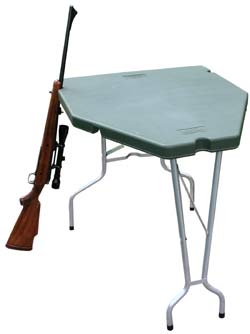
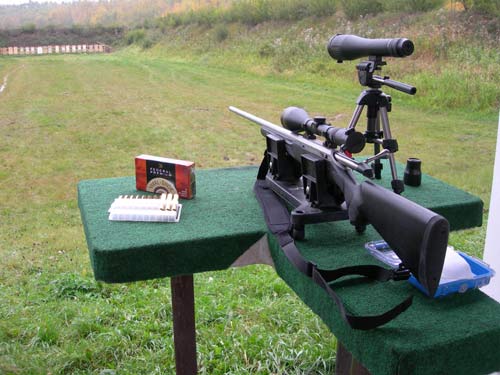
Remember, when we’re sighting in our rifles we’re not testing our shooting skill, but rather the accuracy of the gun, scope and bullet being used. Our goal should be to eliminate or at least minimize human error and allow the equipment to do its thing. With this in mind, a stable shooting bench or table is always recommended. Most shooting ranges are furnished with suitable tables or benches and adjustable stools. If you’re using a portable bench, make sure it is resting level on solid ground. Likewise, it’s imperative to use a shooting rest. In my opinion a vice can be that much better. I really like MTM Case-Gard products (www.mtmcase-gard.com). They make a variety of shooting supplies that are both affordable and practical. Few of us exhibit perfect shooting form. By understanding the biomechanics involved with aiming, breathing, squeezing the trigger and following through we can better acknowledge how to eliminate torsion while shooting from a rest. By cradling the rifle fore-end on a rest or in a vice, we can align our sights with the downrange target and maintain that alignment for a long period of time. Then, by gently squeezing the trigger to discharge, we minimize our human influence thereby allowing the firearm to perform more or less on its own.

3) Begin at close range, then move out to 100 yards and further
I’ve heard much discussion about the standard 100 yard shot and arguably for most bore-sighted rifles, sighting in at that distance is fine. But talk to the pros and most will agree that you should begin at 25 yards if you want to do it right. Making adjustments at close range is easier than at longer distances. At 25 yards you’ll find it easier to acquire your target; it simply appears larger and is easier to center the crosshairs at this short distance. Inaccuracies are simpler to rectify and adjustments can be made quickly at that distance. Remember, inaccuracies are exaggerated that much more at greater downrange distances.

k_wilson_sighting_in1
As you make your fine adjustments to your scope, be aware of the increments and don’t overdo it. For example, with my Leupold VXIII, one click = 1/4 inch adjustment. So, if my shots were hitting consistently two inches to the left of center, I would likely need to dial the adjustment eight clicks in that direction, then shoot another round of bullets. Some folks disagree, but in my opinion it is better to make subtle adjustments, then shoot to confirm that you are working toward the zero mark. As long as there are no fliers, a series of three shots is typically representative of where the gun is shooting. Although with today’s scopes I don’t believe it is as crucial, I still like to give it a firm tap to seat the crosshairs after each adjustment.

When your rifle and scope are in sync at 25 yards, move to 100 yards. Most big game rifle and bullet combinations that are sighted in a couple inches high at 100 yards will shoot a hair low at 25 yards – with most deer hunters this is considered ideal (e.g., I like my 300 Win Mag to be 2″ high at 100 yards). Once your rifle is sighted in, try shooting at 200, 300 and 400 yards to better learn how your rifle, scope and ammunition perform at greater distances.

4) Use the same ammunition that you plan to hunt with
Not all ammunition performs the same. Be sure to sight in your rifle with the load that you plan to hunt with. Ballistics of variable bullet weights and designs (not to mention manufacturers) will perform differently. For instance, Winchester Ammunition’s 150 grain Supreme Elite XP3 (www.winchester.com) will inevitably perform differently than Remington’s 180 grain Core-Lokt, PSP (www.remington.com) shot out of my 300 Winchester Magnum.

If you reload your own ammunition, then you’re likely acquainted with factors affecting bullet performance. Working the right load may take some trial and error, but the same applies – always sight in with the bullet and load you intend to hunt with.

5) Record and reference each shot
Sighting in can be as labor-intensive as you make it. As a rule, several items are required and several more make the job that much easier. As an absolute necessity, we require a table or bench, a shooting rest, our rifle, ammunition and a target. Beyond these basics, the job is much easier with a spotting scope, tripod, and additional targets along with a marker.

As you begin shooting, be sure to analyze and record each shot. I like to use a Bushnell Elite 15-45x 60 mm spotting scope (www.bushnell.com) mounted on a solid tripod. At 45 power magnification, I can see every detail on the downrange target. My scope allows me to closely assess where I hit in relation to where I aimed. Further, many shooters like to keep a matching target on the bench while they are shooting. By checking their shot, then marking it on the target beside them, they can better track their progressions to confirm any scope adjustments and accuracy. This eliminates much of the guessing about which shot was which.

Follow our FISHING BLOG

WEB   RATES     FISH    HUNT    CABINS    PHOTOS
TESTIMONIALS    BROCHURE    HUNT BOOKLET

Enter your email address to subscribe to this blog and receive notifications of new posts by email.

← Back

Thank you for your response. ✨

Email Me....


Tags: , , , , , , ,