RSS

Tag Archives: WMU 15A

Tips On How to Shoot Fast

by David E. Petzal

How_to_Shoot_Fast

The sign of a first-rate intelligence, said F. Scott Fitzgerald, is the ability to hold two conflicting ideas in the mind and still function. So it is with fast rifle work. Riflery is a sport of deliberation and precision, but the demands of the real world very often make deliberation and precision impossible. Gunsite Academy sums it up to a T: “A good fast shot is better than a slow perfect shot because you won’t get time for the perfect shot.”

What follows is about shooting quickly after you have positively identified your target. It’s not about blazing away at sounds or snap-shooting at what you think is an animal.

Develop Your Mental Clock
The first step in shooting fast has nothing to do with shooting. It involves learning how much time you have to shoot, and whether you have to shoot fast at all. Much of this can be acquired by watching critters and reading their body language. A whitetail aware of evil nearby does not act like a whitetail whose greatest worry is where he’ll find a date that evening. An animal that’s 400 yards away does not act at all like the animal right under your tree stand.

On occasion, I’ve given the hunters with me heart failure because I waited and waited for a critter to move just a little bit to give me the exact shot I wanted. And I always got it because I knew that animals never stand still, and I knew that whatever I was about to drop the hammer on had no idea anything was amiss.

Eschew Perfection
Unlike shot gunners, who send out hundreds of pellets with every pull of the trigger and are happy if one or two of them get the job done, riflemen have it dinned into them that they have to be precise. It’s not enough to get a bullet in the 10-ring; you want to get it in the X-ring. If you’re shooting groups, you want to shave off every tenth of an inch you possibly can. And the way you do this is by being deliberate and getting everything perfect before you pop a cap.

547e9416-31d5-4b8e-9e13-35f18ec88b17

This is exactly the opposite of how a good game shot operates. Animals have not evolved with 10-rings or X-rings. What they have are hearts and lungs, and a hit anywhere in either counts. Modern hunting bullets are so destructive that catching a distant corner of a lung will result in as certain a kill as a shot right through the middle of said organ.

Don’t Forget to Aim

On the other hand, you still have to aim. Many misses occur because hunters panic, get the crosshairs somewhere in what they think is the general vicinity of the beast, and yank the trigger. (The closer the critter, the more this seems to happen.) A little while back I listened to a Wyoming outfitter recounting in disbelief how a client, resting his rifle on shooting sticks, had managed to shoot an elk in the buttocks at 60 yards. “How do you hit an 800-pound animal in the ass at 60 yards?” he asked me, still indignant. (He tracked the poor creature for two days and eventually lost it.)

is
The answer is simple. When the moment comes, most hunters can only think: “OMG, this is the only chance I’m going to get!” Everything else, such as the fundamentals of riflery, goes right out of their heads.

Furthermore, too many hunters don’t practice. For them, the mechanics of mounting the gun, acquiring the sight picture, and pulling the trigger are about as familiar as those of piloting a space capsule.

What to Do?

I can’t tell you how to acquire cold blood. Jerry Fisher, the great custom gun maker, once told me that after you take about 300 head of big game you calm down. That sounds about right.

Short of that, the way to learn to shoot fast is roughly this: First, know your animal. There is no shortage of game-critter anatomical charts that you can study. Know where the lungs are. That’s always the percentage shot.

Second, when it comes time to shoot for real, envision an aiming point on the beast and hold for that. And the nanosecond the cross hairs are even close to it—not precisely on it—shoot. Fast, good shots, remember?

To practice shooting fast, you need a .22 rifle and a whole bunch of NRA 50-Yard Slow Fire Pistol targets. These have an 8-inch bull that’s just about the size of an animal’s boiler room. Set your scope at its lowest power and, at 20 yards, fire a five-shot string, lowering the gun from your shoulder between shots. What you’re trying to do is get that round off the instant the cross hairs are anywhere in the bull’s-eye. If the bullet hits in the bull, it counts. If it doesn’t, you missed.

sighting-rifle-deer-hunting

It takes me about 1.7 seconds to mount the rifle, aim, and get the shot off. Since my skill with a gun is legendary, bordering on mythical, this is a good time for you to try to match. When you can get all five rounds in the black, every time, back up 5 yards. Eventually you will be shooting from 100 yards, and if you can put 20 out of 20 shots into the bull at that distance, shooting fast, I will buy you a cigar. Or you can buy me one for telling you this stuff.

Follow our HUNTING BLOG

WEB   RATES     FISH    HUNT    CABINS    PHOTOS
BROCHURE    HUNT BOOKLET

Enter your email address to subscribe to this blog and receive notifications of new posts by email.

← Back

Thank you for your response. ✨

Email Me....


Tags: , , , , , , , ,

Black Bear Hunting – SIT Until Dark

450_ashley

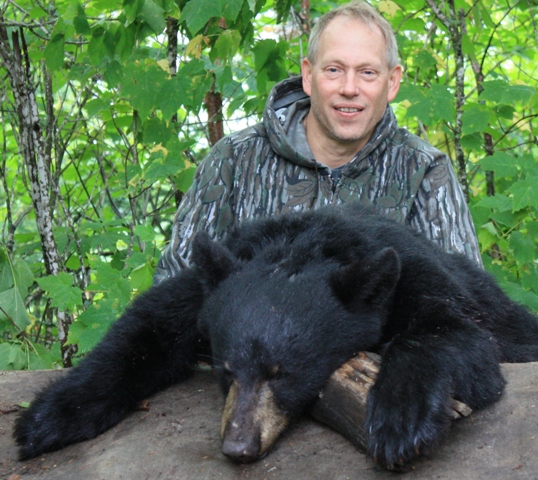
We hear tales of bear hunters not sitting until dark and instead stand in time to get back to camp before it gets too late. CRAZY!

Here are some 2016 successful hunters:

This slideshow requires JavaScript.

Just like in most types of hunting, “just before dark” is usually the best time for the mature animals to arrive. Sometimes the big ones will be there well before dark, but usually the last 30 minutes of legal shooting light is the best. Carry a flashlight; the bear usually won’t eat you. They are just as afraid of you after dark as they are in the daylight.

sunset bear

Follow our FISHING BLOG

WEB   RATES     FISH    HUNT    CABINS    PHOTOS
BROCHURE    HUNT BOOKLET

Enter your email address to subscribe to this blog and receive notifications of new posts by email.

← Back

Thank you for your response. ✨

Email Me....


Tags: , , , , , , , , ,

Bargain vs. Premium Ammo

You get what you pay for. That’s an adage we generally believe in. But does it hold up with respect to ammunition? We set out to answer that question by testing the accuracy of a variety of value-priced .308 hunting ammo against more costly stuff.

ammo1

Methodology
Using three .308 rifles in the test—one hunting rig and two precision rifles that we knew would be ringers.

We put a number of budget and premium loads through all three rifles over the course of one day, ensuring the results wouldn’t be influenced by different environmental conditions. We also used a standard 5-shot-group protocol, and shot two groups with each load at 100 yards. As a control to establish a baseline level of accuracy for each rifle, we also shot 5-shot groups using Federal’s Gold Medal load with 175-grain Sierra BTHPs.

Using the baseline match load to calculate a ratio for each hunting load by dividing the size of the hunting-load groups into the size of the match-load groups. The closer to 1 that ratio is, the better the hunting load performed. None of the hunting loads outshot the match load, so all these ratios were greater than one.

Results
The outcome was interesting. The best hunting ammo was Hornady’s American Whitetail 150-grain Interlock SP. Compared to the baseline groups with the match ammo, this budget-priced load ($19.29 for a box of 20) shot nearly as well as the match ammo in all three rifles and had an impressive 1.41 average ratio. Federal’s Fusion, another bargain ammo ($21.49 for a box of 20) was second best among the loads, with an average ratio of 2.02.

The only expensive load that delivered consistent performance in all three rifles was Federal’s 165-grain Trophy Bonded Tip ($34.49 per box), The two Winchester loads had nearly identical levels of performance, though again, the less expensive 180-grain BST (2.11 ratio average) outshot the more expensive 150-gr. XP3 (2.81 ratio average).

ammo2

It’s worth noting when purchasing premium ammo that the promise of greater accuracy is certainly implied because it uses better quality components, but that much of its benefit is based on the idea that it will perform better on game.

Conclusion
It pays to try different loads in several different bullet weights in your rifles. Investing money to find an accurate load is the cheapest way to get the most from your rig.

Follow our FISHING BLOG

WEB   RATES     FISH    HUNT    CABINS    PHOTOS
BROCHURE    HUNT BOOKLET

Enter your email address to subscribe to this blog and receive notifications of new posts by email.

← Back

Thank you for your response. ✨

Email Me....


Tags: , , , , , , , , ,

Making Waterproof Matches

When it comes to matches, waterproof ones are best, especially in dire circumstances like a flood. Since they’re much more expensive than their pedestrian cousins, you might want to make your own.

cabdle

Use the Candle Technique
Burn a candle long enough for a pool of wax to form around the wick. Blow it out, then dip the head of your match into the wet wax, about of an inch (3 mm) up the stick. Remove the matchstick and allow the wax to dry, pinching it closed to form a water-tight seal.

Deploy the Nail Polish Ploy
Coat your matches with clear nail polish to waterproof them. Dip the head of the match and a bit of the matchstick itself into the polish, then rest the match on a counter with the head hanging off the edge to dry. Survive any wilderness situation with these critical tips.

Try the Turpentine Trick
The easiest way to waterproof your matches is simply to drop them in turpentine. Allow the matches to soak for five minutes before placing them on newspaper to dry. After twenty minutes or so, you’ll have waterproof matches that will last several months.

Follow our FISHING BLOG

WEB   RATES     FISH    HUNT    CABINS    PHOTOS
BROCHURE    HUNT BOOKLET

Enter your email address to subscribe to this blog and receive notifications of new posts by email.

← Back

Thank you for your response. ✨

Email Me....


Tags: , , , , , , , , ,

Black Bear – Shooting the 1st Bear You See

Often, the number one of objective of a spring bear hunt is to simply bring home a bear.

330

The first bear you see, however, will most likely be a juvenile or a lesser bear. You can shoot that bear and have the rest of the week to relax at camp, but why not wait for a more mature bear that will achieve more of the management goals of the region and make you happier in the long run?

154

Don’t shoot the first bear you see. Take the chance that you’ll get another opportunity.

Follow our FISHING BLOG

WEB   RATES     FISH    HUNT    CABINS    PHOTOS
BROCHURE    HUNT BOOKLET

Enter your email address to subscribe to this blog and receive notifications of new posts by email.

← Back

Thank you for your response. ✨

Email Me....


Tags: , , , , , , , ,

Stay On Track – Navigation Tricks

Getting lost is one of the primary reasons that people find themselves in a survival situation in the outdoors. It can happen to anyone, anywhere; but it’s much more likely to occur when someone fails to keep track of their location, or when navigation skills are lacking. Getting lost can be a preventable problem, if you take the right precautions.

compass

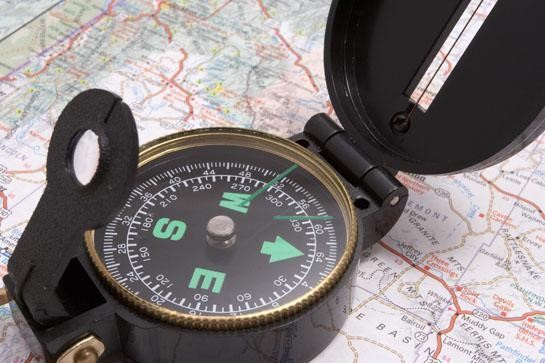
To avoid getting lost on your next hunt or hike, put the following tricks into practice:

– Get a map of the area that you are traveling to and study it before going.
– Take the map along, and use it and a compass (or GPS) while you’re there. If you’re printing out maps from your computer, don’t use an inkjet printer. If the map gets wet, the ink will run and turn into a rainbow-smeared mess.
– Imagine what the terrain would look like from a “bird’s eye view” and where you are in that terrain.
– Look behind you frequently, especially if you are returning in that direction.
– Look for and use landmarks, if possible.
– Study and remember the landmarks that you use.
– When traveling off trails, use prominent, distant landmarks and/or a compass bearing to travel in straight lines.
– Account for declination when reading your map and compass. Any good map should tell you how much to add or subtract for True North.
– Watch out for gun barrels and other metal items, which can pull the compass needle off course and distort your bearing.

If you’re heading into the woods this weekend, good luck and stay safe.

Follow our FISHING BLOG

WEB   RATES     FISH    HUNT    CABINS    PHOTOS
BROCHURE    HUNT BOOKLET

Enter your email address to subscribe to this blog and receive notifications of new posts by email.

← Back

Thank you for your response. ✨

Email Me....


Tags: , , , , , ,

Packing List

1

2Follow our FISHING BLOG

WEB   RATES     FISH    HUNT    CABINS    PHOTOS
BROCHURE    HUNT BOOKLET

Enter your email address to subscribe to this blog and receive notifications of new posts by email.

← Back

Thank you for your response. ✨

Email Me....


Tags: , , , , , , , ,

Tracking Black Bear

imagesY2AQPWJM

The goal of all hunters is a quick, humane kill where the animal drops in it’s tracks and is dead within seconds. But in a pursuit that has as many variables as hunting, sometimes things don’t quite go according to plan. However, game can be tracked and recovered with the right skills and with patience.

First of all, you need to wait the right amount of time after the shot before tracking a wounded animal. I’ve heard estimates of waiting 30 minutes for a hit in the vitals and 5-8 hours for a gut shot. Waiting overnight might be even better on very poorly hit animals, however for black bear the temps may not allow for this as the meat might spoil.

imagesB582SF66You don’t want to push an animal. Be patient and wait it out. If you push a wounded animal, and he gets adrenaline flowing, the odds are against you finding that animal.

You need to mark the exact spot where the animal was when it was hit. This will save you much time in searching for blood. Also mark the position where you took your shot from in case you have to return to it to regain that perspective. Once you find the trail that the animal took after the hit you should try and identify where you hit that animal. Dark blood can indicate a liver or muscle wound; bright red blood with bubbles in it is a good sign and indicates a hit in the lungs; green liquid or bits of food matter in the blood indicates a gut shot.

Take it slow and mark blotches of blood with flagging tape every 25-50 yards to trace the trail from afar to determine overall direction the animal took. Just remember to go back and pick up the tape when you’re done. You should walk to the side of the trail so as to not disturb the sign. If you lose the trail and can’t find more blood, start fanning out and walking circles from the last place you had blood.

2013-10-12-birch-012When tracking a wounded animal it is easy to get caught up in just looking at the ground, trying to find that next speck of blood. You should be aware of what is 100 yards out in front of you as well and be ready for a killing shot if the animal should get up in front of you.

If you take it slow, be quiet and be thorough, finding wounded animals can be done on a consistent basis. Follow these tips to help find the game that you might have not put the best shot on.

DDW-Bear-Hunt-086

Follow our FISHING BLOG

WEB   RATES     FISH    HUNT    CABINS    PHOTOS
BROCHURE    HUNT BOOKLET

Enter your email address to subscribe to this blog and receive notifications of new posts by email.

← Back

Thank you for your response. ✨

Email Me....


Tags: , , , , , , ,

Get More Early-Season Birds

It weave left, slip right, then disappear through the auburn treetops. It’s not often you get such a clear look at an escaping grouse during the early weeks of the season, but there I was, frozen as the bird slipped through the prettiest shooting lane I’d see on the entire trip. I never pulled the trigger.

ruffed-grouse-flying-down-from-limb-timothy-flanigan

The embarrassing reality of this scenario is that I’d been caught off guard. It was my first grouse hunt, and I wasn’t prepared for the surprise of the flush. That was a tough lesson, but it wasn’t the only one I learned during that trip to the hallowed grouse of NW Ontario’s Boreal Forest. Here are some more hits and misses that, if you’ll consider before you reach the woods, should help you bag more early-season birds.


1.  Being Aggressive

There’s no place for methodical shooting when hunting grouse. There’s no time for the shot to develop, as with long, loping shots on the sporting clays course. Grouse are fast, and they live in dense cover. But you don’t have to be a snap shooter to be successful. You just have to be aggressive. You should have nothing on your mind but finding that bird. The sooner you see it, the sooner you can move for it. Visualize beating the bird to the treetops with your gun.

2.  Going Off Trail
We started our morning busting brush but by midday got lazy and stayed on old logging roads & trails. The result was a half dozen points in cover that we couldn’t reach in time. Our hunt picked up tremendously in the afternoon, when we got back in the brush.

OLYMPUS DIGITAL CAMERA

3.  Misjudging Range
Twice I flushed grouse that I thought were out of range, although they were visible, only to realize afterward that they were makeable shots. Part of the fault was how I prepared. Before the trip I had practiced mostly fast, outgoing targets thrown from a few yards in front of me—textbook fast-flushing bird presentations. I was visualizing those shots in the field, and when birds flushed from farther away, I had the impression they were out of range.  Be sure to practice at longer ranges.

4.  Starting With The Gun Up
A solid ready position is a key to hitting fast-flying birds. It gets your body and eyes ready to make a quick, efficient move. When you moved in on birds with the stock up under your armpit and the barrel pointed forward, you will shoot much better.

5.  Relaxing After The Flush
Grouse might not covey up like quail, but they do often travel in close proximity to each other, especially where there’s a good food source. I saw this first-hand when we flushed three pairs of grouse over the course of a day. So when a bird flushes out of range or doesn’t offer a shot, don’t drop your guard. Be ready for another bird to flush.

Evening_Flight-_Ruffed_Grouse_large

Follow our FISHING BLOG

WEB   RATES     FISH    HUNT    CABINS    PHOTOS
BROCHURE    HUNT BOOKLET

Enter your email address to subscribe to this blog and receive notifications of new posts by email.

← Back

Thank you for your response. ✨

Email Me....


Tags: , , , , , ,

Tinywood Home on Trailer with Built In Outdoor Hot Tub

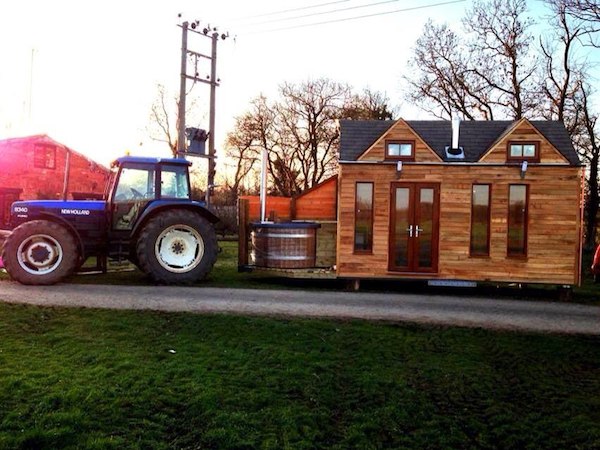
Have you ever heard about a tiny house that is also a hot tub? Yes, the project can be made and it already exists, thanks to a small company based in Warwickshire, England. The architects thought about building a home that offer comfort, relaxation and entertainment at the same time, and built this amazing tiny home that comes with an attached hot tub.

hot-tub-tiny-home-on-wheels

The company is specialized in building tiny homes and merging utility with creativity.

The inside is fully equipped as you will find a small kitchen, lounge area, two bedrooms upstairs and a functional heating system.

So after taking a look, you can say that it is the most perfect small vacation house for you and your family. As tiny as it is, there is still plenty of space inside for a family with two kids.

The outside hot tub is just an extra feature that tops the awesomeness of this house.

hot-tub-tiny-home-on-wheels-7

Follow our FISHING BLOG

WEB   RATES     FISH    HUNT    CABINS    PHOTOS
BROCHURE    HUNT BOOKLET

Enter your email address to subscribe to this blog and receive notifications of new posts by email.

← Back

Thank you for your response. ✨

Email Me....


Tags: , , , , , , , , ,