RSS

Tag Archives: Wawang Lake

Bull-In the Rut

Understanding the Moose Rut

Once you understand the moose rut, you will have a much better chance of finding moose. During the moose-rutting season moose are found in different areas than other parts of the seasons.

What Season Is the Rut?

Typically the peak of the rutting season for moose is the first two weeks of October. This is only an average though. The further north in the hemisphere you travel the earlier in the season the rut happens and the opposite is true for going south.

There are of course always exceptions to the rule, but for the most part early October will be the peak. Some have hunted in early September and been able to call bull moose in using and estrous cow moose calls in an area that I know the peak rut is October. There will always be some cow moose that will start ovulating early and of course a bull moose that hears the yearning calls of a cow moose in estrous will investigate, and may even vocalize his approach.

Where do the Moose Go During the Rut?

We have been asked many times where do the moose go during the rut? Hunters have been out pre-rut scouting and located the moose. Once the season has arrived they return to where they found the moose and cannot find any! Why?

moose-hunting-009c

Before the bull moose go into rut, they are usually found in the higher elevation areas. They will seek out cooler and thicker areas of the forest, higher in elevation trying to escape insects and predators.

Cow moose and their calves on the other hand will stay in the lowlands near water. The cows seek out water for two main reasons… food and safety. Calves are vulnerable, especially to wolves and bears. A cow with calf will use the water as an escape when threatened by predators. Sure the insects will be more bother but the safety of water will outweigh this.

When the moose rut begins and likely for a few weeks before the beginning of the cow moose estrous the bulls will move down out of the higher elevations to seek out the cows. The bulls will stay in the lower and wetter areas within proximity of the cows with hope of getting the breeding done. As the rut winds down the bull moose will once again move back to the higher elevations.

This migration makes for a sometimes elusive hunt.  Scan the area and look for all sign and be prepared for one exhilarating experience!

Join us next time for what to do when you spot your moose!!

Follow our FISHING BLOG

WEB   RATES     FISH    HUNT    CABINS    PHOTOS
TESTIMONIALS    BROCHURE    HUNT BOOKLET

Enter your email address to subscribe to this blog and receive notifications of new posts by email.

← Back

Thank you for your response. ✨

Email Me....


Leave a comment

Posted by on March 27, 2016 in hunting, moose, Wawang Lake Resort


Tags: , , , , , , , ,

Geared Up: Cleaning your gun

Most know that cleaning a firearm is a necessity for ownership.  This not only helps prevent malfunction and missfire but can also help bullet path and accuracy.  What most don’t know is that the average gun owner does not clean their firearm correctly which can lead to major headaches down the road 🙂

Here are a few great tips to set you straight

Step 1: Clean barrel and metal parts
Step 1: Clean barrel and metal parts with good commercial solvent.
Step 2: Bore should be cleaned through breech end
Step 2: Bore should be cleaned through breech end where possible.
Step 3: Clean bore until dry patch comes through as clean
Step 3: Clean bore until dry patch comes through as clean as possible.
Step 4: Run oily patch through barrel
Step 4: Run oily patch through barrel.
Step 5: All metal parts should get light coat of oil
Step 5: All metal parts should get light coat of oil.
Step 6: Store in horizontal position
Step 6: Store in horizontal position, or with muzzle pointing down.
Step 7: After storage, run a clean patch through bore
Step 7: After storage, run a clean patch through bore before firing.
Step 8: Remove all excess grease and oil
Step 8: Remove all excess grease and oil.
Click to view pdf of this diagram
With clean gun in hand, enjoy the hunt!
Follow our FISHING BLOG

WEB   RATES     FISH    HUNT    CABINS    PHOTOS
TESTIMONIALS    BROCHURE    HUNT BOOKLET

Enter your email address to subscribe to this blog and receive notifications of new posts by email.

← Back

Thank you for your response. ✨

Email Me....


Tags: , , , , , , ,

The Bear Facts – What You Should Know

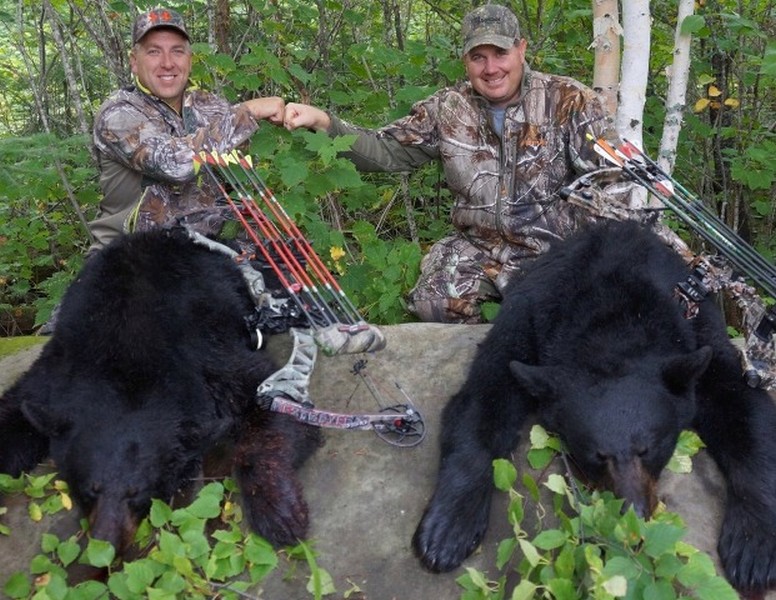
Despite divided opinion about the political correctness of bear hunting, it is something every hunter should try at least once. But a word of caution, if you want to make the most of your outings, there are a few key things you should know. The more knowledgeable you are, the better your chances of tagging a trophy.

WawangBear2

Black Bear can be found roaming the woods in every northern state, all provinces and many eastern and western states. The smallest member of the bear family in North America, black bears are the most populated. Thriving in almost every jurisdiction, populations are on the rise across the continent.

Black bear can be hunted only in the fall at Wawang Lake. Each state and province has specific regulations dictating when and how bears can be hunted. If you want to spend more time in the woods, black bears make the perfect prey during the fall. With thick coats in prime condition, fall is the preferred choice of bear hunters that are looking for that trophy bear. If you’re fortunate enough to connect with a trophy-sized black bear chances are you’ll end up with a beautiful specimen, well worth making into a rug or head mount.

Over-the-counter tags are only available in certain states and provinces. Some states issue tags only through a limited entry draw/lottery process.

In many ways black bears are misrepresented and misunderstood. Ironic but true, bruins are gentle by nature. This stands in contrast to their stereotypically vicious reputation.

Found in a variety of color phases, pelage can range from white through yellow, with black, brown and cinnamon being the most common. Their ominous looking dark shiny coat is the obvious contributor to their malignant image; it may also be the black bear’s slow, methodical and calculated gestures. Whatever the reason, these quiet, yet dominant nomads of our coniferous and mixed forests, are worthy of both admiration and respect.

A sow will typically accompany her cubs for 16 or 17 months. At the end of this period she will sever ties, forcing the youngsters to go off on their own.

Females will reach their maximum size at six years, and boars continue to grow to a maximum size at 12 years of age. On average, most bears taken by hunters weigh somewhere between 175 and 300 pounds. Any black bear topping the 300-pound mark is considered large.

Aside from body weight, black bears are judged by the size of their skull, with a Boone & Crockett minimum eligibility score of 21 inches and a Pope & Young score of 18 inches.

We often hear of bears being territorial and, in a sense, this is true. While there exists a distinct hierarchy within the ranks of bear world, it is not uncommon to find many individuals residing in a given geographic area. Home ranges can span from two to 10 miles and resident populations will often hold a variety of boars, sows and cubs.

Heavily timbered forests near logging areas often sustain good bear densities.  With blueberry areas, black bear favor the accessibility and abundance of such forage and often reside in proximity.

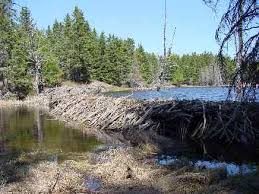
As forest dwellers, black bear are omnivorous. Predominantly feeding on a variety of plants and berries throughout the summer, springtime offers a feast of dandelion and fresh grasses. Opportunists extraordinaire, black bear  will also feed on carrion. Consistent with this and the fact that bears favor beavers as a staple food source in some regions, areas with spruce and poplar mixed forest and cascading beaver dams can be dynamite locations for the hunter to focus his/her attention.dam2
As with ungulate species, black bears undergo an annual rut cycle. Beginning in late May and continuing on through most of June, boars go in search of breeding partners. It is during this approximate six to eight week period that most large bears are taken by savvy hunters. Just as with members of the deer family, the larger, educated and otherwise reclusive boars become more visible as they readily cross roadways, clear-cuts and feed in open areas as they look for sows in estrus.

Black bears den up in late October and drift into a state of torpor. This is not a true state of hibernation, but rather of slowed metabolism, during the cold winter months. In this suspended state, they cease to defecate, urinate or eat for the next 5-6 months. They do however periodically awaken from this sleep to stretch and walk around. Usually only a brief interlude, black bears soon return to the den to wait out the long winter. Sows will deliver and nurse their cubs in the den and as the snow begins to melt and spring arrives, they’ll leave the den to begin their search for food.

Bear meat brings mixed reviews. Some savor every morsel, and others grimace at the very mention of it. Its greasy, coarse texture and sweet flavor requires a certain kind of palate. A word of caution however, bear meat should be thoroughly cooked as it can carry a parasitic infection known as trichinella, a potentially dangerous disease to humans.

Black bear have relatively poor eyesight, but an outstanding sense of smell and an uncanny hearing ability.

When hunting black bear, consider food source. Focus on areas with a sufficient forage base. There should be water nearby along with good cover. With the aid of topographic maps, look for spots with streams, rivers and ample low ground to provide damp, dark and cool cover. In boreal forest regions, this will be dense moss-laden areas bordering swamps and isolated marshy wetlands. In mountainous regions, this will often be found in drainages along creeks and other waterways.

Once a general area is identified, begin your search by looking at trees. Claw marks on deciduous trees are the most obvious indicators. In mixed forest areas mature poplars wear the battle scars revealing claw marks of days gone by. While rarely do you stumble upon fresh markings, these lasting scars unveil a historical presence.

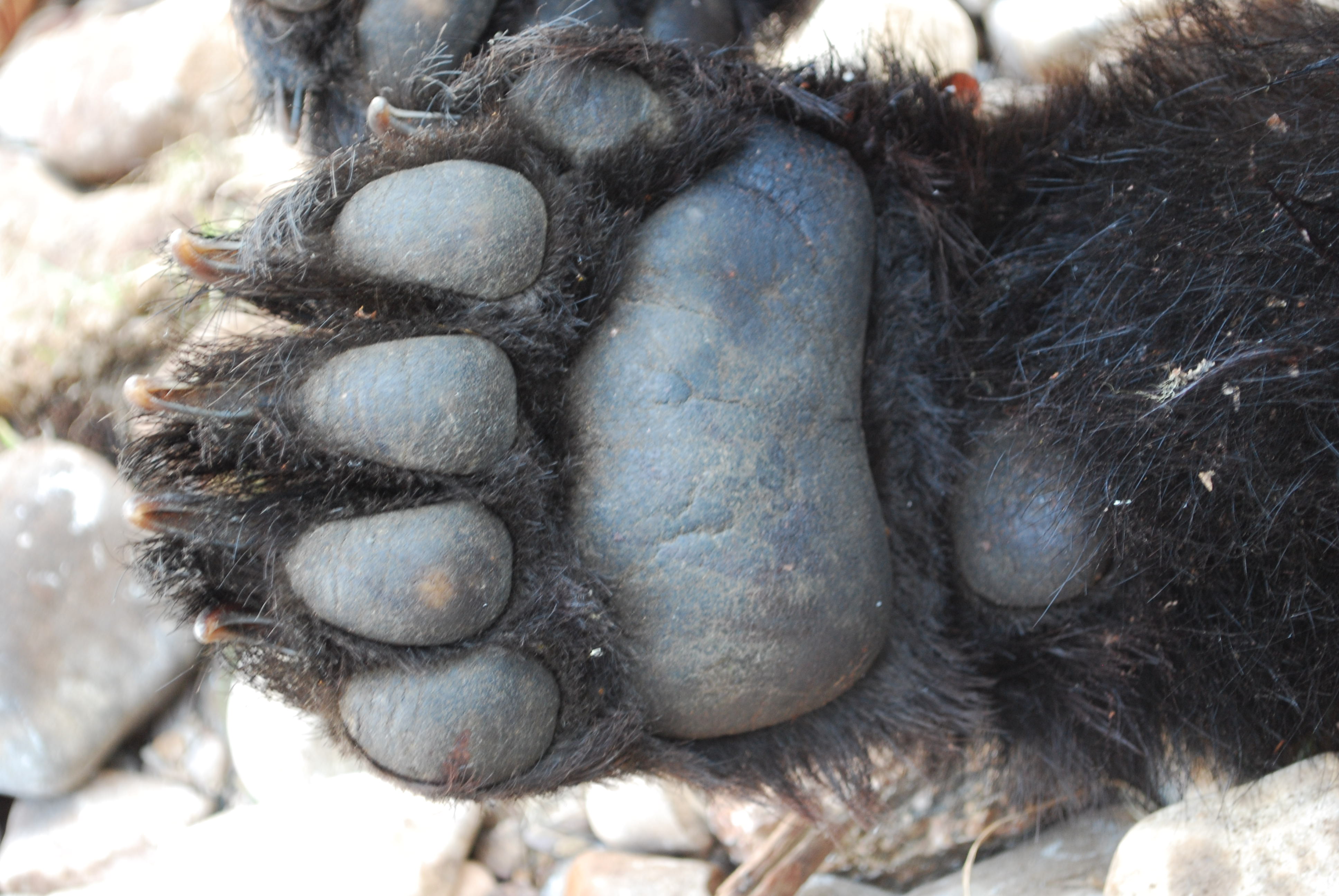
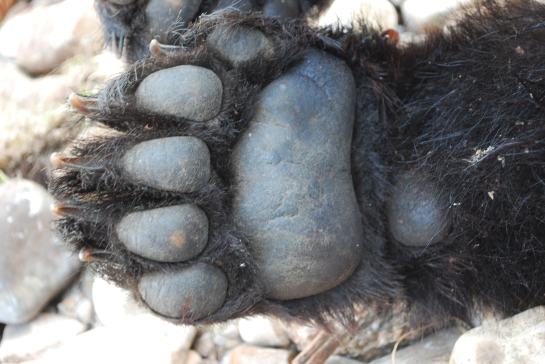
Bear leave tracks. A great place to look for these is in the wet sand and soil along shorelines of rivers, streams and lakes. Most often at least one or two old or new tracks are found, keeping in mind that bears frequently use these movement corridors. A 5″ or better pad/track can suggest a good bear is in the area.DDW-Bear-Hunt-086
Nomadic creatures, bears commonly travel traditional trails along ridges, in valleys, and along drainages. Finding fresh scat can instill further confidence in your pursuit and help you identify the size of a particular bear.

A variety of strategies and techniques are proven effective in pursuing spring black bears. Whether floating down a river, walking cut-lines, spot and stalk hunting, baiting or calling, black bears are very huntable. Each strategy has its own merits.

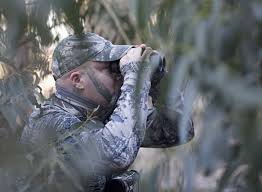
A good set of binoculars is a must when spot and stalk bear hunting. Once spotted, the stalk begins. The regular rules apply – keep the wind in your face; remember bears rely heavily on their sense of smell. The best time to spot and stalk black bears is the five to 10 day window just prior to, or just as the deciduous trees begin to bud. With little food available in the woods, they can frequently be seen browsing on cut-lines and south-facing slopes where the first green grasses begin to sprout.bin
Baiting is far from easy, and holds no guarantees! From time to time you get lucky and have one move in cautiously to inspect the provisions, but this is frequently more the exception than the rule. Perhaps the biggest advantage I see in baiting is that, if and when a bear finally does come to the bait, it can allow the hunter time to assess size and stature. This is advantageous for the trophy hunter, allowing the option to pass up smaller bears, thus diminishing the odds of falling victim to ground shrink.

Predator calling bears has come into its own in recent years. A myriad of videos and how-to articles are available to hunters looking for an alternative approach to hunting bears. I sometimes carry a Lohman wounded rabbit call for scenarios where calling might come in handy. While patience is required in this game of calling, it can take some time before a big old bruin responds favorably. But when they do, be ready, because they’re coming in for dinner!wawanglakebear
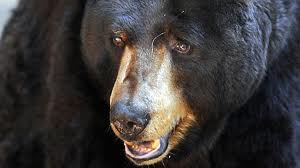
As a rule, black bears want no more to do with you than Superman does with kryptonite. The fact is, it’s important to treat them with due respect, be aware they possess immense strength and are able to cause considerable damage. To get an accurate picture on the nature of bears, I highly recommend a book entitled, Bear Attacks – Their Causes and Avoidance written by Dr. Stephen Herrero. Having heard him speak at a conference, the clear message I gleaned was that if, and when, black bears show aggression, most often they’ll bluff charge … stop 10 yards away and bounce on their front legs. Periodically they’ll stand up, but this is usually to help them get a better look at what is going on. This is intimidating, but most often harmless.

The only thing predictable about black bears is that they are unpredictable. Although many will avoid humans at all cost, there are some that have no fear at all. Caution and respect should always be exercised.

Follow our FISHING BLOG

WEB   RATES     FISH    HUNT    CABINS    PHOTOS
TESTIMONIALS    BROCHURE    HUNT BOOKLET

Enter your email address to subscribe to this blog and receive notifications of new posts by email.

← Back

Thank you for your response. ✨

Email Me....


Tags: , , , , , , , , , , , , ,

Roasted Grouse With Mushrooms

Make your own cream of mushroom sauce (and add bacon and whiskey) for this classic grouse recipe

grouse

Ask any deer camp old-timer for a foolproof recipe, and you’re likely to encounter a lot of Campbell’s Cream of Mushroom Soup. There is a reason for that: Mushrooms plus cream plus game meat adds up to a perfect trinity of flavors. This recipe chucks the can, and all its high-sodium gloppiness, while retaining the earthy comfort that made mushrooms and cream the go-to sauce for generations of hunters.

Ingredients

Grouse:
4 grouse
4 Tbsp. butter, softened
8 strips bacon

Sauce:

2 Tbsp. butter
20 oz. cremini or wild mushrooms, trimmed and sliced thin (morels, chanterelles, or a mix of wild and cultivated would be good)
1 shallot, minced
1 cup rich chicken stock (or defatted drippings from the pan)
3 sprigs thyme
12 cup cream (or crème fraîche)
(or)

1 Tbsp. bourbon
1 Tbsp. fresh thyme leaves, chopped
Salt and freshly ground black pepper

DIRECTIONS

1. ROAST THE GROUSE: Preheat the oven to 425 degrees. Rinse the birds, pat dry, then smear each with a tablespoon of softened butter. Generously salt and pepper, inside and out. Wrap 2 bacon slices around each grouse, then set them in a roasting pan. Roast in the oven until the grouse is browned, about 25 minutes. Remove to a plate and let rest, covered loosely in tinfoil, while you make the sauce.

2. MAKE THE SAUCE: Melt 2 Tbsp. butter in a large sauté pan over medium-high heat. Add the mushrooms and about 1/2 tsp. salt and sauté, stirring frequently, until the mushrooms release a lot of moisture and begin to smell fragrant, about 5 minutes. Reduce the heat to medium and add the shallot. Sauté until soft, and until most of the moisture has gone out of the pan, about 4 minutes. Add the stock (or defatted drippings from the roasting pan) and thyme sprigs and simmer until the liquid is reduced by half. Pour in the cream and bourbon and simmer until the sauce thickens, about 3–5 minutes.

3. TO SERVE, spoon the sauce onto four plates, and rest a grouse in the center of each. Sprinkle thyme over the grouse. SERVES 4

grouse3

Follow our FISHING BLOG

WEB   RATES     FISH    HUNT    CABINS    PHOTOS
TESTIMONIALS    BROCHURE    HUNT BOOKLET

Enter your email address to subscribe to this blog and receive notifications of new posts by email.

← Back

Thank you for your response. ✨

Email Me....


Tags: , , , , , ,

Camouflage Won’t Help IF…….

You’re invisible. Or at least you think you are. After all, you’ve done all the right things: bought that pricey camo that matches your surroundings, painted your face with lots of greasy face paint, and you are even wearing camo boots. Now all you have to do is sit there, soak in a little sunshine, and wait for a big boar to show himself.

SAM_0066

But when a bear does come in, he spots your position and blows out for the next county.  The problem? You set up in the sunlight

A common mistake that has ruined plenty of big-game hunters’ chances is setting up where direct sunlight can reach them. Sunshine turns a camouflaged hunter from an indistinct shadowy figure into a glowing beacon. Dappled sunlight shining through a canopy of leaves isn’t usually a problem. But direct sunlight can reveal your whereabouts and end your hunt.

SAM_0057

Camouflage clothing’s basic function is to break up our outline – tricking our prey’s eyes into passing over us in their constant search for danger. The human silhouette is incredibly distinct in the wilderness – there is no other form like it. To fool game, it is essential to reduce our human outline. The best camo patterns utilize starkly contrasting colors in their design, thus changing us from a human form into something indistinct and non-threatening. Interestingly, for those of you traditional hunters like me – a good plaid pattern like Fred Bear often wore can work almost as effectively as modern camouflage.

Randy Bear


Remember that sunlight moves as the earth rotates. Set up your ambush in a location that allows you to remain shadowed as the light moves around you. If you are still-hunting or stalking, move efficiently through areas of sunshine and then pause to watch and listen when in the shadows.  Set up in dark shade that offers good shooting lanes. Remember to keep your hands and face camo’d up as well – if left uncovered, they are a dead giveaway even in the shadows.

Follow our FISHING BLOG

WEB   RATES     FISH    HUNT    CABINS    PHOTOS
TESTIMONIALS    BROCHURE    HUNT BOOKLET

Enter your email address to subscribe to this blog and receive notifications of new posts by email.

← Back

Thank you for your response. ✨

Email Me....


Tags: , , , , , , , , , , , , ,

Test your Accuracy with Ballistics Software

Ballistics calculators are indispensable tools for making hits on long-range targets, but they are only as accurate as the data they are fed. Many shooters fail to appreciate that some of the initial data input into these calculators are just good guesses and need to be tweaked based on trial-and-error experimentation in the field. However, spend time getting these four calculators dialed in, and you’ll be amazed at the improvement in your accuracy.

shoot1

Field Firing Solutions
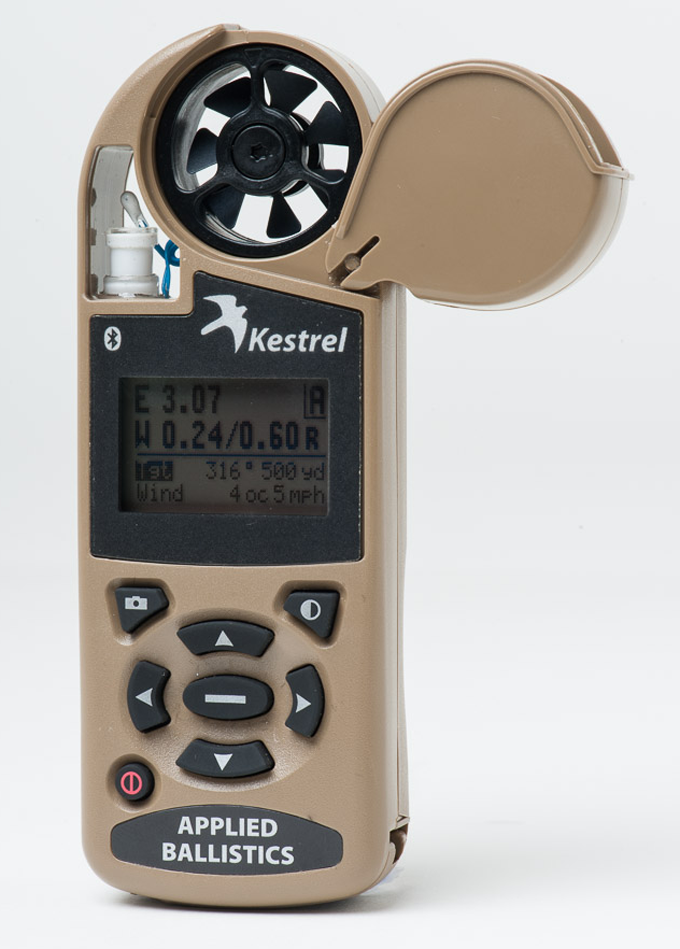
This sophisticated software program comes on an SD card and works with PDAs that run WM 5.0 or above. The program, called Delta V, can work with Bluetooth-enabled Kestrel units to incorporate environmental data at the shooter’s location. This is an advanced program that requires dedication to master, but it is the best on the market. ($395; lextalus.com)

Cold Bore
This software works on both Windows desktop computers and mobile devices running WM operating systems. This calculator doesn’t use a ballistic coefficient (BC) model, but rather one that employs a drag coefficient, which is more precise. The software can be purchased as a bundled package for both desktop and mobile, or individually for either platform. ($150, bundled; $85, individual; patagoniaballistics.com)

Applied Ballistics
This easy-to-use software was developed by Brian Litz, one of the foremost experts on long-range ballistics. It runs on both Android and iOS mobile devices. The calculator comes with a library containing hundreds of custom G1/G7 BC shootprofiles for various bullets. ($30; appliedballisticsllc.com)

JBM Ballistics
This web-based ballistics calculator is both very good and very free. It has a comprehensive library of existing loads, and allows the shooter to tweak the inputs to generate accurate firing solutions. (jbmballistics.com)

How Wind Affects Bullet Flight
Whereas judging a bullet’s drop at long-range is a science, correctly calculating the effect of wind is more of an art. Unseen eddies, sudden gusts, and funnels created by the terrain can all come into play, and it takes practice to pick up on these influences.

Usually, we’re limited to taking a single wind reading at the shooting position. But if we can ascertain only one wind value, that is the one to have. This is because the wind nearest the shooter has the greatest effect on the bullet’s path. Why? Once the projectile starts moving due to the wind, it keeps angling in that direction, even if the conditions are calm down range.

Conversely, if it is only windy down range, the bullet will move less since there is less time remaining in the bullet’s flight.

Follow our FISHING BLOG

WEB   RATES     FISH    HUNT    CABINS    PHOTOS
TESTIMONIALS    BROCHURE    HUNT BOOKLET

Enter your email address to subscribe to this blog and receive notifications of new posts by email.

← Back

Thank you for your response. ✨

Email Me....


Tags: , , ,

How to Use Wood Sorrel for Food, and Hangovers

If you had a little too much green beer over the weekend, don’t worry — you weren’t alone. St. Patrick’s Day may have a rich historical point of origin in Ireland, but here in North America, it’s often just an excuse to chug cheap brews died into verdant colors. So here’s a little shamrock for the outdoor lover who might still overindulge.

4 clover

Wood Sorrel

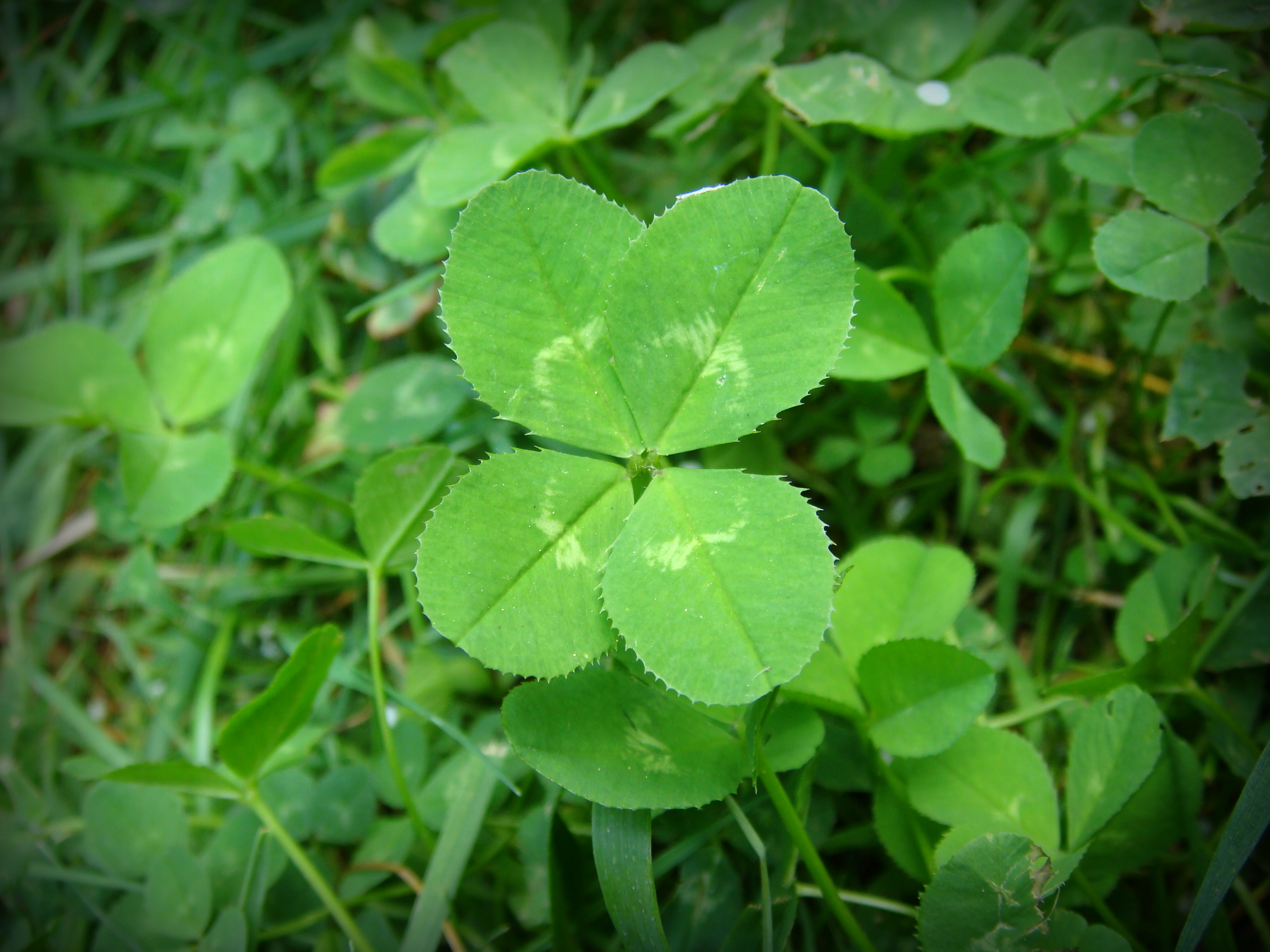
The little green plant known as wood sorrel (Oxalis stricta) has often been mistaken as clover because of its three leaflets. On closer examination, you’ll find a big difference. Sorrel’s leaflets are heart shaped, while clover leaflets are round or oval. Wood sorrel grows in both sunny places and shady spots on the edges of woods throughout North America and it has many relatives growing coast to coast.

Wood sorrel usually tops out at under a foot tall, and it typically has small yellow flowers, though some species have more pinkish or purplish blooms. Looking much like a classic shamrock, the fresh leaves can be eaten raw as a tasty sour salad green.

4-Leaf Clover

4-Leaf Clover

You can also make a helpful hangover cure with wood sorrel. A handful of the leaves can be steeped in hot water for 10 minutes and then chilled to make a cold drink. This cold beverage looks and tastes like a green lemonade, and has the remarkable ability to calm nausea and soothe upset stomachs, which often go hand-in-hand with the headaches of hangovers.

While there’s no problem with the occasional consumption of this plant, use it in moderation over the long term. The sour tasting oxalic acid in wood sorrel can inhibit the body’s absorption of calcium and possibly contribute to kidney stones over time.

Look for related edible species such as the violet wood sorrel (Oxalis violacea), the pink wood sorrel (Oxalis montana), and other members of the Oxalis genus.

Have you eaten this wild edible? Or used it to treat nausea? Leave us your comments.

Happy St. Patrick’s Day!

Follow our FISHING BLOG

WEB   RATES     FISH    HUNT    CABINS    PHOTOS
TESTIMONIALS    BROCHURE    HUNT BOOKLET

Enter your email address to subscribe to this blog and receive notifications of new posts by email.

← Back

Thank you for your response. ✨

Email Me....


Tags: , , , , , ,

Roasted Grouse With Mushrooms

Make your own cream of mushroom sauce (and add bacon and whiskey) for this classic grouse recipe

grouse

Ask any deer camp old-timer for a foolproof recipe, and you’re likely to encounter a lot of Campbell’s Cream of Mushroom Soup. There is a reason for that: Mushrooms plus cream plus game meat adds up to a perfect trinity of flavors. This recipe chucks the can, and all its high-sodium gloppiness, while retaining the earthy comfort that made mushrooms and cream the go-to sauce for generations of hunters.

Ingredients

Grouse:
4 grouse
4 Tbsp. butter, softened
8 strips bacon

Sauce:

2 Tbsp. butter
20 oz. cremini or wild mushrooms, trimmed and sliced thin (morels, chanterelles, or a mix of wild and cultivated would be good)
1 shallot, minced
1 cup rich chicken stock (or defatted drippings from the pan)
3 sprigs thyme
12 cup cream (or crème fraîche)
(or)

1 Tbsp. bourbon
1 Tbsp. fresh thyme leaves, chopped
Salt and freshly ground black pepper

DIRECTIONS

1. ROAST THE GROUSE: Preheat the oven to 425 degrees. Rinse the birds, pat dry, then smear each with a tablespoon of softened butter. Generously salt and pepper, inside and out. Wrap 2 bacon slices around each grouse, then set them in a roasting pan. Roast in the oven until the grouse is browned, about 25 minutes. Remove to a plate and let rest, covered loosely in tinfoil, while you make the sauce.

2. MAKE THE SAUCE: Melt 2 Tbsp. butter in a large sauté pan over medium-high heat. Add the mushrooms and about 1/2 tsp. salt and sauté, stirring frequently, until the mushrooms release a lot of moisture and begin to smell fragrant, about 5 minutes. Reduce the heat to medium and add the shallot. Sauté until soft, and until most of the moisture has gone out of the pan, about 4 minutes. Add the stock (or defatted drippings from the roasting pan) and thyme sprigs and simmer until the liquid is reduced by half. Pour in the cream and bourbon and simmer until the sauce thickens, about 3–5 minutes.

3. TO SERVE, spoon the sauce onto four plates, and rest a grouse in the center of each. Sprinkle thyme over the grouse. SERVES 4

grouse3

Follow our FISHING BLOG

WEB   RATES     FISH    HUNT    CABINS    PHOTOS
TESTIMONIALS    BROCHURE    HUNT BOOKLET

Enter your email address to subscribe to this blog and receive notifications of new posts by email.

← Back

Thank you for your response. ✨

Email Me....


Tags: , , , , , ,

Tips For More Grouse

trees3Learn to Recognize Good Cover
Some hunters seem to have a sixth sense about where the grouse are. This isn’t magic but rather the culmination of years of experience, observation, and a working knowledge of what the birds need. These guys are constantly reading about grouse habitat and lore; they take note of wherever they hear drumming in the spring. They know that good grouse cover holds food and provides protection from predators — if it is near an evergreen stand or gravel so much the better.

Take a page from these hunters. Every time you or your dog move a bird, have a good look around after the smoke has cleared — you’ll see a pattern soon enough. Study grouse biology at home; carry field guides when you hunt; learn to recognize common grouse foods in your area. After a while you’ll develop that sixth sense too.

Keep a Log
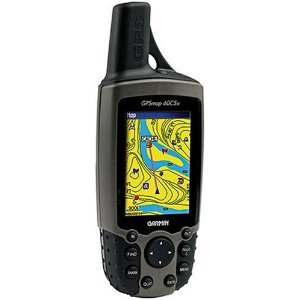
Every serious grouse hunter I know keeps a hunting log. Some maintain elaborate leather-bound journals in which they detail particulars of the hunt such as the date, cover, number of flushes, dog work, weather, harvest, and crop contents of the birds. Other keep it simple, by marking covers on their handheld GPS. Either way, the hunter is reminded of the places that produced grouse last season.gps

Do this consistently and it won’t take many seasons before you have a bevy of early, mid, and late season options. The more options you have, the better your chance of having a grouse dinner.

Break Some Clay
Over the course of a season, few of us get enough shots at grouse. So it only stands to reason that a hunter ought to make the most of each opportunity. I do this by honing my shotgunning skills in the off-season. Skeet, trap, or sporting clays keep a hunter sharp so that mounting and swinging his scattergun becomes second nature. You’ll still miss — grouse have a way of humbling everyone — but you’ll also make some shots that you might not have without the off-season practice. It just takes a few of these to turn a mediocre season into a great one.

Don’t Forget the Dog Days
Spring and summer are tailor-made for training your dog. Despite this, few of us take advantage of the opportunity. Instead, we expect our dogs to work flawlessly on opening day and we’re actually surprised when that doesn’t happen.

Does your flushing dog hunt too far ahead and blow cover before you get there? A little “hup training” (teaching your dog to sit on command, no matter how far away) in the off season goes a long way towards remedying this. You might also consider brushing up on retrieving drills or introducing your dog to pigeons or game farm forays prior to the season. Some advanced training, such as steadying to wing and shot (where a dog sits down automatically at each flush) might require the help of a professional dog trainer. If that’s what you want, the off-season is the time to do it.

P1040011

Pointing dogs have their own set of training needs, which might include bolstering staunchness, retrieving, hunting range and finding dead birds. Whatever your canine hunting partner’s flaw is, the off-season is the time to address it.

The idea is to learn to handle your dog so that you perform as a well-oiled team during the hunting season. There are plenty of great dog training books and videos — the off-season is when you should benefit from them most.

Follow the Food
Grouse eat hundreds of types of food and each provides a clue as to where the birds are hanging out. That’s why it’s a good idea to check the crop of every bird you shoot. Knowing what grouse are eating helps you understand their habits and tells you where you should focus your hunting efforts. If the last three birds you shot were full of blackberries, for instance, it’s definitely time to hunt any of your covers that hold these shrubs.

Against the Wind
A dog relies on his nose to find birds. So why would you hunt with the wind at its back? We all know that there isn’t any good reason for doing so, but it’s one of the first things excited dog handlers forget when approaching good cover.

If you hunt into the wind, your dog will work closer, scent more game and, hopefully, find more birds. It’s a simple but often overlooked strategy that can make the difference between a full and empty game bag. This is also an important consideration when looking for a lost bird. Take your dog downwind from where you think it fell and let it start hunting from there.

Stop and Start
A good grouse hunting dog provides opportunities that you might not have otherwise had, but that’s not to say that a dog less hunter can’t do well. The key, for a dog less hunter, is to stop and start through likely cover and change direction often. These unpredictable patterns unnerve grouse and invariably pressure them into flushing. Another added bonus is that when you stop you can sometimes hear the put-put-put of a grouse moving just ahead of you. If that’s the case, get the gun up and rush it.

Don’t Hesitate
A good upland shot doesn’t hesitate. He takes the first available shot, even if it’s not a great one.

If you wait for a better chance you’ll rarely get it. Similarly, if you are leading a bird that disappears behind a screen of leaves, follow through, and shoot anyway. You’ll be surprised how often you connect. If not, shells are cheap.

While we’re on the subject of shooting, be ready for the second flush. Often, especially, early in the season when birds are still in their family groups, multiple flushes do occur. If you keep this in mind, they won’t catch you flat-footed — or with an empty gun.

Follow Up
Whenever you flush a bird and don’t fold it, mark where you last saw it. Most times they won’t fly much further than 150 yards. If you marked it well and follow up immediately, you have a good chance of forcing a second flush.


This slideshow requires JavaScript.

Another advantage of following up on grouse is that they sometimes lead you to new covers. If that’s the case, don’t forget to mark it.

Lastly, never assume that you missed any grouse that you shot at. After the shot, keep quiet and listen. Sometimes you’ll hear a mortally wounded grouse doing its death dance against the ground — that’s the one that you thought you missed.

The Right Tools
A fast-handling 12, 16 or 20 gauge shotgun is ideal for birds. Most gunners like double guns. Some happen to prefer a pump because that’s what they shoot best with.  However, don’t discount the light weight, easy to carry .410 shotgun.  Nice little gun with ever growing in popularity in our neck of the woods.

Whatever, your preference, you can’t go wrong using 2 3/4-inch shells filled with 7.5 shot. Grouse aren’t tough birds and it doesn’t take much to bring them down. Since most shots are within 15 yards, the more open-choked your barrels are, the better.

Other essential grouse hunting tools include a quality blaze orange upland hunting vest with a lined game pouch; brush pants; comfortable, well-supported hunting boots; and a compass and/or GPS. If you are hunting with a dog, a whistle, water bottle, portable dog dish, dog first aid kit, and lead are important too. When working heavy, thorny cover, a pair of shooting glasses that protect your eyes are worth their weight in gold.

Conclusion
No one ever said grouse hunting was complicated. But it does take some planning, know-how and skill. Over the last few years, these strategies have made many a much better grouse hunter. Hopefully, they’ll do the same for you.

Follow our FISHING BLOG

WEB   RATES     FISH    HUNT    CABINS    PHOTOS
TESTIMONIALS    BROCHURE    HUNT BOOKLET

Enter your email address to subscribe to this blog and receive notifications of new posts by email.

← Back

Thank you for your response. ✨

Email Me....


Tags: , , , , , , ,

Camouflage Won’t Help IF…….

You’re invisible. Or at least you think you are. After all, you’ve done all the right things: bought that pricey camo that matches your surroundings, painted your face with lots of greasy face paint, and you are even wearing camo boots. Now all you have to do is sit there, soak in a little sunshine, and wait for a big boar to show himself.

SAM_0066

But when a bear does come in, he spots your position and blows out for the next county.  The problem? You set up in the sunlight

A common mistake that has ruined plenty of big-game hunters’ chances is setting up where direct sunlight can reach them. Sunshine turns a camouflaged hunter from an indistinct shadowy figure into a glowing beacon. Dappled sunlight shining through a canopy of leaves isn’t usually a problem. But direct sunlight can reveal your whereabouts and end your hunt.

SAM_0057

Camouflage clothing’s basic function is to break up our outline – tricking our prey’s eyes into passing over us in their constant search for danger. The human silhouette is incredibly distinct in the wilderness – there is no other form like it. To fool game, it is essential to reduce our human outline. The best camo patterns utilize starkly contrasting colors in their design, thus changing us from a human form into something indistinct and non-threatening. Interestingly, for those of you traditional hunters like me – a good plaid pattern like Fred Bear often wore can work almost as effectively as modern camouflage.

2 bear sized


Remember that sunlight moves as the earth rotates. Set up your ambush in a location that allows you to remain shadowed as the light moves around you. If you are still-hunting or stalking, move efficiently through areas of sunshine and then pause to watch and listen when in the shadows.  Set up in dark shade that offers good shooting lanes. Remember to keep your hands and face camo’d up as well – if left uncovered, they are a dead giveaway even in the shadows.

Follow our FISHING BLOG

WEB   RATES     FISH    HUNT    CABINS    PHOTOS
TESTIMONIALS    BROCHURE    HUNT BOOKLET

Enter your email address to subscribe to this blog and receive notifications of new posts by email.

← Back

Thank you for your response. ✨

Email Me....


Tags: , , , , , , , , , , , , ,