RSS

Tag Archives: ontario

Wawang Lake – Black Bear Outfitters

Andy's 475 lb (dressed)

Andy’s 475lb (dressed)

Black  Bear  are  known  predators  and  Ontario  has  the  largest  population of black bear than anywhere in the world. Furthermore, north-western Ontario leads in the concentration of these animals than elsewhere in Ontario, and, rates highest in population concentration  for all of Ontario that also allows for bating practices.

Many deem baiting unfair, giving the hunter a considerable advantage. But contrary to what some would have us believe, it’s far from easy and holds no guarantees!  Bear can sneak in undetected, grab a morsel of food and disappear as fast as they arrived. Bear can also skulk around the bait for hours, never showing themselves. As experienced outfitters we’ve learned that many of our bear will move in cautiously to inspect the provisions. The advantage of hunting in the fall is bear are eager to fatten up for the winter.  The biggest advantage to baiting is that, if and when a bruin finally commits to the bait, it allows the hunter a  an opportunity to assess size, stature and time for shot placement.

About Bear
Black bear habitant range can span from two to 10 miles and resident populations often hold a variety of boars, sows and cubs, so it’s not uncommon to have multiple bears visiting the baited site.  Ontario only offers a FALL BEAR HUNT therefore the chance for the large TROPHY bear is increased dramatically.  Most hunters fear poor coats or hides due to the fall hunt but our area does not suffer that fate. With little to no burrs or ticks, our bear don’t succumb to ticks causing ‘rub’ or dry patchy fur.  We also are known for our high number of white chevrons (patches) to make your trophy even more unique. Black bear

Jon Hanson - Tiffin, IA 440 lb. black bear

Jon Hanson – Tiffin, IA 440 lb. black bear

Black bear have relatively poor eyesight, but outstanding hearing and acute sense of smell. Once they get a taste of your bait, and, as long as it is replenished regularly, they will be reluctant to leave the area.  In fact, once a site is established properly, you can and will see the same bruin day after day.

Location is Critical
Our bait stations have been established for many years (since 1972) and placed along the bear’s natural movement corridor. Heavily  timbered forests near cutovers and waterways often sustain good bear densities.  With berry crops like wild blueberries and raspberries nearby, black bear favor the accessibility and abundance of such forage and most often reside in the proximity.

Claw marks on deciduous trees and there may even be fresh markings, these lasting scars unveil a historical presence. Nomadic creatures, bear commonly travel traditional trails along waterways and natural movement corridors like valleys and ridges.  Finding fresh scat can instill further confidence that bear have frequented the bait.  Keep in mind that well established bait stations offer much more success than new stations since bear follow these game trails year after year.

 WEBSITE    RATES     FISH    HUNT    CABINS    PHOTOS
TESTIMONIALS    BROCHURE    HUNT BOOKLET

Enter your email address to subscribe to this blog and receive notifications of new posts by email.

← Back

Thank you for your response. ✨

Email Me....


Tags: , , , , , , ,

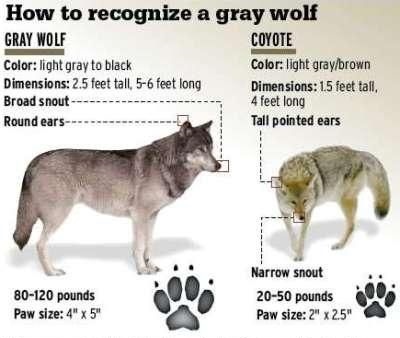
How to Identify a Gray Wolf

Identify a Wolf


wolf-track-wawang-lake

WEBSITE    RATES     FISH    HUNT    CABINS    PHOTOS
TESTIMONIALS    BROCHURE    HUNT BOOKLET

Enter your email address to subscribe to this blog and receive notifications of new posts by email.

← Back

Thank you for your response. ✨

Email Me....

 
Leave a comment

Posted by on September 26, 2015 in Wawang Lake Resort, wolf, Wolf Hunting


Tags: , , , , , , ,

HUNT the HUNTER

The best timber wolf habitat in all of Ontario CANADA is located in the Boreal Forest
around………. Wawang Lake Resort

HUNT the HUNTER – Ontario’s Timber Wolf

HUNT the HUNTER – Ontario’s Timber Wolf

Hunting a top predator is a challenge you will never forget. A timber wolf hunt is not for the novice hunter though.   In fact hunting for wolf will require more determination and patience than any other type of hunt.   If you’re the kind of hunter that can pride themselves with this type of stamina then wolf hunting is definitely something you’ll  want to experience.

Remaining aloof is what wolves do best and they are also extremely cautious and above all prefer not to be seen. They hunt small game, moose and bear for a living, so they are extremely resourceful. They

are shrewd, cautious, and have finely tuned senses. With this said remember that the wolf is the hunter’s top opponent when hunting in NW Ontario and up for any challenge man will present.

Our region of the Boreal Forest remains to be one of the most populated areas for the timber wolf with pack sizes reaching 30 or more and this is due mainly because of our small game, moose and bear population that are at its peak annually.

Wolves are nocturnal hunters, so getting a crack at one during legal daylight hours can be difficult, but, by precisely following the strategic technique of our expert guides it can be done.

WawangWolfHunts2Wolves are territorial and each pack occupies, hunts, and protects a specific area.   Once we know where a pack lives, we can learn more about them and that is the groundwork  for  our  hunts.  We  know  of  many different packs, in this vast area, and each year we gather information of each packs hunting patterns. A pack seems to hunt a particular route and often return to the same areas with unbelievable regularity.

Calling is helpful if the wolves are within earshot. Distressed small game calls such as rabbits (snowshoe hares) works well, as this and other small game are the wolves’ primary food source along with moose and bear. Also, howling can be effective. A wolf will almost always answer to a howl regardless of their distance from the person howling.

Hunting down live large prey like moose or bear takes a lot of energy so wolves are also opportunists. They can smell blood from many miles away and frequently visit our baiting stands for an easy meal so we know where they are, but, the wolf hunt is much more interesting than that. Outsmarting wolves means having an outfitter that knows their strategy and scouts out what game trails they are using.   Placing baits sites in proper places can mean the difference between success or not!

wawanglakeblind

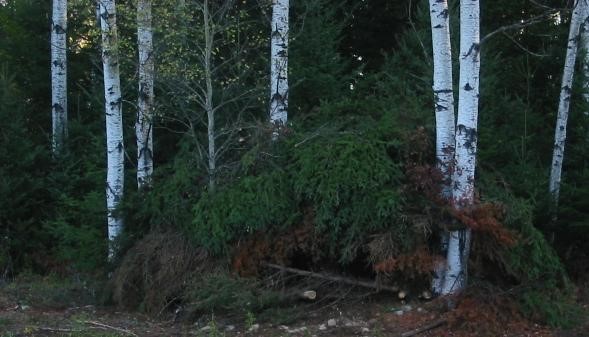
A Typical Natural Hunt Blind

We hunt from natural ground blinds made from deadfall, but, because temperatures can be extreme we advise our hunters to bring along their own commercial ground blinds (aired out for at least two months in advance of the hunt) in order to be more comfortable, however, this can be risky and best to avoid this type of blind if at all possible as the wolves can be skittish of them and of course can reduce the hunter’s chances of success. It is always best to dress for the extreme outdoor  conditions  and  hunt  from the natural ground blinds we provide.

The color phases of the wolves seen in our area are varied, from the most common gray tones to blacks and whites, to medium tones of cream, gray, brown and orange.   The specs of our wolves are as follows:

  • Length: 4.9 ft – 6.7 ft.
  • Weight: up to 175 lb
  • Height: between 26” to 33”

There are very few guarantees in hunting, but we do offer you this . . . . .

That you will find the wolf hunt a challenging and enjoyable experience in some of the most beautiful terrain you’ve seen.
Your guides are passionate hunters and strive to provide the same hunting experience for you that

they would want for themselves.
Our resort is a comfortable with a homey environment to relax in after an enjoyable day in the field…..and we feed our Meal Plan guests very well!

So while the outcome of the hunt is never a guarantee, the quality of the hunt experience is. And when you hear that first ghostly howl in the distance you will know you are in timber wolf country and from that moment on you will be hooked!

For further information, or, to book your next bear hunt please contact us at:
1-888-534-9217 or EMAIL

 WEBSITE    RATES     FISH    HUNT    CABINS    PHOTOS
TESTIMONIALS    BROCHURE    HUNT BOOKLET

Enter your email address to subscribe to this blog and receive notifications of new posts by email.

← Back

Thank you for your response. ✨

Email Me....


Tags: , , , , , , , , , ,

Moose Hunting at Wawang Lake

Deeply imbedded in the Canadian Boreal Forest we offer the very finest in Moose habitat for our hunters.  Look no farther than Wawang Lake for accommodations for your next BIG game hunt!

BOOK Your Accommodations HERE!

WawangMoose

Our hunts accommodations ONLY for Ontario Resident Moose Hunters.

If your looking for a great hunting area that has a high population of moose then look no farther than Wawang Lake Resort as we’re in the middle of the best moose hunting area in all of NW Ontario.

At Wawang Lake we offer comfortable accommodations to Resident Ontario Moose Hunters only.  Presently we don’t have any tags available and unable to take any non-resident hunters during the Moose Hunt season.

Things Moose Hunters Should Consider:

Crossbows
• Draw length must be al least (11.8 in.)
• Draw weight must be at least (119 lbs.)
• Bolt head must be at least (0.9 in.) at the widest point, and there must be at least two cutting edges of straight, sharp, un-serrated, barbless steel.

Longbows
• Draw weight must be at least (48.5 lbs.) at draw length of (27.6 in.) or less.
• Arrow length must be at least (23.6 in.).
• Broad head must be at least (0.9 in.) at the widest point, and there must be at
least two cutting edges of straight, sharp, un-serrated, barbless steel.

Rifle
We suggest using at the minimum one of the following:
300 Magnum
30-06
7MM Magnum with bullet weights in the 180 grain range
A rim-fire rifle, a shotgun smaller than 20 gauge when loaded with shot, or any shotgun loaded with shot smaller than SG or No. 1 buck cannot be used for hunting Moose.


Clothing requirements
During the rifle season hunts, a minimum of 400 square inches of uninterrupted Hunter Orange must be worn at all times.  Camouflage or open mesh orange does not meet these requirements.  An orange jacket or vest as well as an orange hat do meet these requirements.

Hunters should also have a compass or hand held G.P.S., as well as a good pair of binoculars, thermos, flashlight, lighter, warm clothing, good quality rain gear, waterproof insulated boots, gloves/mitts, long underwear.   Two-way portable radios are also recommended.  Fall hunting weather can be warm & dry to cold, wet and snowy within a few hours; so it is best to be prepared for all variables.

BOOK Your Accommodations HERE!

We trust that this information will prove to be useful in planning your next Big Game Hunt in beautiful, exciting NW Ontario.  We invite you to enjoy our ‘True Wilderness Hospitality’ while participating in a remote hunting experience.

 WEBSITE    RATES     FISH    HUNT    CABINS    PHOTOS
TESTIMONIALS    BROCHURE    HUNT BOOKLET

Enter your email address to subscribe to this blog and receive notifications of new posts by email.

← Back

Thank you for your response. ✨

Email Me....

 
Leave a comment

Posted by on September 23, 2015 in moose, moose hunting, Wawang Lake Resort


Tags: , , , , , , , , , , ,

Want More Grouse? Watch the Thermometer Drop!

P1040063
Cold, blustery days in early winter are not the best days to go grouse hunting. Neither are, humid, September days. Essentially, the best time to go grouse hunting is when you can. And if that means dealing with the weather de jour- so be it. That doesn’t mean you can’t find some grouse, and even pocket a few, regardless of the weather.

Grouse like to stay cool in early fall when Indian summer days send the thermometer to summer-like temperatures. During those glorious fall days grouse will sleep in on their cozy roost and then venture out into a sunlit patch to soak up the warming October rays. November and December is a transitional period when cover becomes as much a priority as food. Staying warm and out of the wrath of heat-sapping winds and cold makes the places that grouse frequent during the late fall and early winter months predictable. Most times the mercury can give you a heads-up on which way to go.

Ruffed grouse seasons open in September in Ontario. Going hunting then is more a testament to tradition than it is to wanting to kill grouse. Foliage is thick, dense and green. But, if you insist on subjecting yourself to this kind of brutality you might as well give yourself the best chance at finding birds.

Look at the thermometer and you’ll realize that one of the best places to look for early season grouse is near rivers and streams. Waterways provide cool summer oases for grouse and you usually won’t find them far from the same habitat come early fall. During especially dry years, the moist soils found along rivers and streams may be one of the few places that you’re going to find the types of vegetation that produce the fruits and berries that grouse love so much.

Another reason early season grouse can be found along waterways is that the thick vegetation protects grouse broods from predators. Moist soils produce lush habitat that is ideal for protecting young grouse broods and the temperate environment produces a lot of high-protein invertebrates that are critical to young grouse growth and survival. Working along river bottoms and creek beds can be a good tactic because grouse broods can often be found in or close to their brood habitat.

Grouse are often still in broods or tight-knit family groups in September and October and can be concentrated and difficult to find. Perseverance can pay off. You might hunt several prime coverts without success and then bust several coveys in a short period of time. The trick is to keep at it. When you do run into some birds, you’ll usually find a bunch and chasing down singles after the flock is broken up can produce some quick shooting.

And quick shooting is what you can expect this time of year. Shooting grouse is never easy, but the task is made increasingly difficult when foliage is thick and catching even a glimpse of a bird is tricky. In the early season, you need to post, plan and resist the temptation to go in after them. It’s fruitless. If you have a dog, let them do the dirty work. Instead, look for openings, deer trails, clearings and post where you can get a shot if a bird flushes in your direction. Put a bell on your dog so your can keep track of his location at all times. Let one hunter bust the brush while the other walks a logging road where a flushing bird just might offer a shot. Don’t wait for an open shot. You’ll never get one! Instead, instinctively point and shoot even if you only catch a fleeting glimpse of the bird. Many times I never even knew I’d hit the bird until the dog came back with the grouse in its mouth. Be sure to keep in constant contact with your hunting party and know their location for safety sake and wear plenty of hunter’s orange.

Think wide open chokes and small shot during the early season. Grouse are not difficult birds to bring down, so put a lot of shot in the air and maybe just a pellet or two will get through the trees and hit its mark.

Weather and temperatures can be quite diverse in October. You might be rewarded with one of those cool, sunny, perfect fall days that grouse hunters live for. But don’t be surprised if you’re forced to pull out the woolies and gloves either. And you might even wake up to some fresh tracking snow. That’s just how October is- transitional- and it’s a transitional period for grouse too.

This slideshow requires JavaScript.

Grouse have a smorgasbord of items to choose from in October and finding their preferred food source is often critical to finding numbers of grouse. Ripening fall fruits can draw grouse from far and wide. Grouse favor edge cover, and it’s no coincidence that some of their favorite culinary delights do best on edges where sunlight can penetrate the forest canopy. Depending on which state you live in, grouse can usually be found keying in on edge cover fruits like wild grapes, chokecherry, and a host of other fruity edibles. These open areas also produce some of old ruff’s favorite greens like wild strawberry and clover and are also places where they can find high-protein items like grasshoppers, crickets, and other insects.

When grouse numbers are high, they can be found in variety of cover types at this time of year. Even marginal grouse habitat will hold a few birds as grouse begin dispersing into new territories during the fall shuffle.

Cover becomes an increasingly important priority as the month wears on. October begins with it plenty of foliage and grouse can move about uninhibited. By the end of the month, the trees are bare, the wind has a foreshadowing bite to it and grouse must rely on their camouflage and staying hidden as much as possible. Still, you’ll find grouse wandering about in search of brunch or a late afternoon snack and those are two of the best times to hunt grouse at this time of year.

Obviously a peak time in October is the first week or two after the leaves have fallen. When this happens might vary by a few weeks from region to region, but it is prime time to be in the woods. Grouse seem to forget for a little while that they are not as invisible as they were just a few days earlier and their numbers are at a seasonal peak. You can actually see some of the grouse that you flush too. 

At this time of year you can find grouse in some pretty unusual places far from what you’d consider ideal grouse cover. I’ve found grouse under a solitary crab apple tree in the middle of a field far from what you’d consider grouse cover. I’ve shot grouse out of fields of goldenrod that you’d think were more likely to hold pheasants. No patch of cover is too small or too thin to hold a grouse then.

Once snow blankets the ground the whole ballgame changes. Grouse that have survived the onslaught of hunters, wolves, owls and know that when their environment becomes covered in white they are vulnerable. Snow also covers up many of the grouse’s food sources and feeding becomes a little more risky and perilous. Grouse don’t go on those aimless strolls in search of food. Their search is more deliberate and of shorter duration when the thermometer starts to dip and the weather turns cold. Cover becomes more of a priority.

It’s important to ferret out productive versus non-productive cover as quickly as possible. I don’t know about you, but I’m not as young as I use to be. Those all-day jaunts of pounding the woods are over. I’m usually only good for about a half a day of hard hunting and I want to make the most of it. To do so requires that you develop a since for identifying the absolute best cover and hunt it hard. Learn to not waste time where you THINK there might be birds.

Remember those light loads and wide-open chokes you used in September? Put them away if you’re serious about killing grouse once the snow flies. Shots will be longer and birds will be tougher. Replace your 8’s and 9’s with high-brass 71/2’s or even 6’s. Take the skeet tubes out and go to improved or even a modified tube in one barrel. With your shooting eye in late season form you’ll still get the easy shots and with the heavier shot and tighter chokes you’ll be able to add a few birds you wouldn’t normally pocket.

Grouse are tough customers. That’s why most of us hunt them. But watching the thermometer you can get a better idea of where to begin your search and make your days in the woods a little more productive.

Join us for our 2015 Grouse HUNT!

Check out our 24 pg. HUNT BOOKLET

Check out our 24 pg. HUNT BOOKLET

Follow our FISHING BLOG

WEB   RATES     FISH    HUNT    CABINS    PHOTOS
TESTIMONIALS    BROCHURE    HUNT BOOKLET

Enter your email address to subscribe to this blog and receive notifications of new posts by email.

← Back

Thank you for your response. ✨

Email Me....

Rates,eBrochure,THE OUTBACK Adventure Info,Hunting Rates’/][/contact-form]

 
Leave a comment

Posted by on September 20, 2015 in grouse, hunting, Wawang Lake Resort


Tags: , , , , ,

How to Judge Your Shooting Distance

 A great article by Kevin Wilson

Accurately judging distance is the first step toward proper shot placement. Instinctive or calculated, bowhunters rely on it for close range shooting. Gun hunters count on their ability to estimate longer distances. Over time we all learn our own tricks for calculating distance but with the advent of laser rangefinders many of us won’t leave home without them. Regardless of how you go about it, determining yardage can make or break your hunt.

I will remember one hunt as long as I live. The outcome was downright depressing all because I misjudged the distance. It happened 16 years ago. I was a neophyte bowhunter at the time. I’d set up a treestand in a small block of trees that I knew held several bucks and does. The previous winter I’d picked up some huge sheds that taped out at 183 Boone & Crockett inches. Knowing that the gigantic buck had survived the winter, my hopes ran high and I knew there was always a chance he’d show up in the timber I was hunting. As luck would have it 45 minutes after climbing into my stand I heard leaves crunching underfoot. Straining to look through the trees, sure enough a smaller basket rack buck was making his way toward my stand. Always an impressive sight I enjoyed the view as he walked 10 yards from me. Then I heard more rustling in the leaves and looked over to see him. He was nothing short of magnificent! Based on his sheds, it looked like he’d grown at least another 15 inches putting him well into the high 190’s – a buck of a lifetime in anyone’s books! He walked 12 yards from my stand but I couldn’t get to full draw with him in plain view. As soon as he turned I capitalized. At full-draw, I locked my 20 yard pin on his body as he continued to amble forward. Walking straight away there was no shot opportunity at all! By the time he stopped, I estimated he was standing at 30 yards. With all the concentration I could muster, I focused and released. The arrow flew where I’d aimed, in perfect alignment with his chest, but literally inches high splitting the hair on his back! Completely awestruck and in total disbelief, that gut-wrenching feeling overcame me as I watched my world-class archery whitetail bound away never to be seen again… and all because I’d misjudged the distance!

Since that day I have made it my lifelong mission to learn how to accurately judge distance. From capitalizing on today’s technologically advanced laser range finding devices to using topographic characteristics to assist in calculating distance, and understanding the influences of terrain, it is an ongoing practice in my world. Regardless of whether you’re an archer or a rifleman, here are a few considerations that might help you as you learn to accurately judge distances.

The Technological Solution
Today’s technology is a saving grace for hunters. Many of us won’t leave home without our laser rangefinder. Portable and easy to use, we simply identify our target, adjust the setting, point, hit the button and, voila! … distance is displayed on the screen. With yardage confirmed, all that remains is the shot itself.

When I began bowhunting nearly two decades ago rangefinders had a simple dial that brought the target image into focus when the dial was turned. Wherever the dial ended up, that was your yardage. Today, thanks to innovation, laser rangefinders are readily available and relatively affordable. In fact today there is really no reason not to use a rangefinder. Many manufacturers have their own versions, but in my opinion, one of the latest and greatest inventions is Bushnell’s Laser Arc. I’ve got the Elite 1500 model. The ARC stands for Angle Range Compensation. While traditional rangefinders are precision optical instruments designed to be used on a level plain (line of sight), the ARC rangefinder compensates for angles from a treestand for instance, or up or down a mountain slope. I have owned and used several different kinds of rangefinders over the years. The Laser ARC is my absolute favorite. Using digital technology, it has a built-in inclinometer that displays the exact slope angle from +/- 60º of elevation with +/- 1.0 degree accuracy. Hunters have always struggled with extreme uphill and downhill angles. These severe angles alter true horizontal distance to the target. The ARC solves this problem. It has three primary settings: bow mode, rifle mode, and a regular mode (for line of sight distance calculation only).

It has a bow mode that displays line of site distance, degree of elevation, and true horizontal distance from 5-99 yards (or meters). For longer range shooters, it also has a rifle mode that calculates and displays the amount of bullet drop, at the target in inches (or centimeters). In the rifle mode, the amount of bullet drop is determined by the line of sight distance to the target, degree of elevation, along with the specific ballistic characteristics of the caliber and ammunition. As the hunter ranges the target, the line of sight, degree of elevation, and bullet-drop/holdover in inches or centimeters is displayed from 100-800 yards (or meters). Here’s where the technology shines ballistically. In the start-up menu, one of eight ballistic groups can be selected by the user, with each formula representing a given combination of caliber and loads.

Laser rangefinding technology, and the ARC system in particular, is invaluable but what if we don’t have one? Then it comes down to a matter of practice and estimation to determine our downrange distances.

Practice
For most of us, learning to judge distance takes considerable practice. Only by doing it a lot, and under variable conditions, can we become competent at it. Shooting is a lot like golf. Understanding how your bow or gun works (i.e., trajectory and ballistics) and interpreting the size of the target animal relative to the terrain can only be learned through firsthand repetitive experience. So how do we get all this supposed experience when we can only take a finite number of animals each year? The answer lies in visiting the gun or archery range.

For bowhunters, nothing beats practice on the 3D course. Today’s 3D targets, like those made by MacKenzie, are very lifelike and offer as realistic practice as you’re likely to get anywhere. Most are made to scale and can be strategically placed in any range situation to simulate realistic hunting scenarios. On my local 3D course, our club uses everything from coyote targets to whitetailed deer, mountain goat, elk, moose, wild hog, turkey and more. Some are set at long distances over 60 yards through wide open clearings while others are placed in the trees, often with very small shooting windows at closer distances like 20 or 30 yards. Most 3D ranges have a good assortment of field scenarios to allow practicing archers to hone their skills.

Likewise, rifle and muzzleloader hunters should visit the range regularly to hone shooting skills. Unfortunately due to the expansive nature of bullets today’s 3D targets aren’t an option. Alternatively silhouettes are. Most rifle ranges offer variable range distances from 100 to 400 yards. At my club our furthest distance is 600 yards. Unless you’re really into the long range thing 400 yards is a stretch for most big game hunters. By shooting repeatedly at 100, 200, 300, and 400 yards, we grow accustomed to what those distances look and feel like. By taking note of the size of target in our scope at specified magnifications we can also learn to estimate distances. For example, at 10x zoom on my Leupold scope, I know that a deer will fill a certain percentage of the field of view. By acknowledging how much of the animal is in the field of view, I can guess the approximate yardage with relative accuracy. Likewise, at 200 and 300 yards, that deer will appear smaller respectively.

Break Distances into Increments
Whether we’re hunting remote regions or in farmland things like trees, rocks, fence posts, and power poles can be used to aid in judging distances. As an archer I’ve learned to make a mental note of things like trees, shrubs, rocks or other physical land-based objects at 10 yard increments out to a distance of 50 yards from where I’m sitting. By burning those objects into my memory I’m better able to make quick decisions when an animal steps into a shooting lane. I’m guessing it may be the same throughout North America but where I do much of my hunting I’ve learned that power poles are set at a standard distance of 100 yards apart. Any time I’m hunting a wide open power line or in farm country I can use those power poles as markers to estimate yardage. As a rule, regardless of what kind of weapon you’re hunting with, breaking distances down into increments simplifies things. Remember, if you’re sitting in a stationary stand or ground blind there is always the option of setting out yardage markers at desirable increments, e.g., every 10 yards.

Consider Where and What You’re Shooting
Judging distances on the open prairies is a very different game than judging distance in the dense forest. Likewise, estimating the distance of a large target like a moose can be tricky if you’re more accustomed to looking at antelope. Dense cover and the size of the animal can play tricks on your mind.

As an archer, I spend most of my time hunting heavy mixed forest areas comprised of aspens and evergreens. Rarely do I see deer, moose or elk at distances further than 80 yards unless its down a long open cutline or across a clear cut. So, whenever I head out to different states or provinces to hunt smaller species like pronghorn antelope, it usually takes some time to acclimatize and recalibrate my brain to accurately judge distances. In my experience, smaller big game species in open terrain tend to appear further away while larger species under heavy cover often look closer than they really are. Unfortunately there are no set rules here; you just need to figure out what works best for you under variable conditions.

Follow our FISHING BLOG

WEB   RATES     FISH    HUNT    CABINS    PHOTOS
TESTIMONIALS    BROCHURE    HUNT BOOKLET

Enter your email address to subscribe to this blog and receive notifications of new posts by email.

← Back

Thank you for your response. ✨

Email Me....


Tags: , , , , , , , , , , , ,

Want More Grouse? Watch the Thermometer Drop!

P1040063Cold, blustery days in early winter are not the best days to go grouse hunting. Neither are, humid, September days. Essentially, the best time to go grouse hunting is when you can. And if that means dealing with the weather de jour- so be it. That doesn’t mean you can’t find some grouse, and even pocket a few, regardless of the weather.

Grouse like to stay cool in early fall when Indian summer days send the thermometer to summer-like temperatures. During those glorious fall days grouse will sleep in on their cozy roost and then venture out into a sunlit patch to soak up the warming October rays. November and December is a transitional period when cover becomes as much a priority as food. Staying warm and out of the wrath of heat-sapping winds and cold makes the places that grouse frequent during the late fall and early winter months predictable. Most times the mercury can give you a heads-up on which way to go.

Ruffed grouse seasons open in September in Ontario. Going hunting then is more a testament to tradition than it is to wanting to kill grouse. Foliage is thick, dense and green. But, if you insist on subjecting yourself to this kind of brutality you might as well give yourself the best chance at finding birds.

Look at the thermometer and you’ll realize that one of the best places to look for early season grouse is near rivers and streams. Waterways provide cool summer oases for grouse and you usually won’t find them far from the same habitat come early fall. During especially dry years, the moist soils found along rivers and streams may be one of the few places that you’re going to find the types of vegetation that produce the fruits and berries that grouse love so much.

Another reason early season grouse can be found along waterways is that the thick vegetation protects grouse broods from predators. Moist soils produce lush habitat that is ideal for protecting young grouse broods and the temperate environment produces a lot of high-protein invertebrates that are critical to young grouse growth and survival. Working along river bottoms and creek beds can be a good tactic because grouse broods can often be found in or close to their brood habitat.

Grouse are often still in broods or tight-knit family groups in September and October and can be concentrated and difficult to find. Perseverance can pay off. You might hunt several prime coverts without success and then bust several coveys in a short period of time. The trick is to keep at it. When you do run into some birds, you’ll usually find a bunch and chasing down singles after the flock is broken up can produce some quick shooting.

And quick shooting is what you can expect this time of year. Shooting grouse is never easy, but the task is made increasingly difficult when foliage is thick and catching even a glimpse of a bird is tricky. In the early season, you need to post, plan and resist the temptation to go in after them. It’s fruitless. If you have a dog, let them do the dirty work. Instead, look for openings, deer trails, clearings and post where you can get a shot if a bird flushes in your direction. Put a bell on your dog so your can keep track of his location at all times. Let one hunter bust the brush while the other walks a logging road where a flushing bird just might offer a shot. Don’t wait for an open shot. You’ll never get one! Instead, instinctively point and shoot even if you only catch a fleeting glimpse of the bird. Many times I never even knew I’d hit the bird until the dog came back with the grouse in its mouth. Be sure to keep in constant contact with your hunting party and know their location for safety sake and wear plenty of hunter’s orange.

Think wide open chokes and small shot during the early season. Grouse are not difficult birds to bring down, so put a lot of shot in the air and maybe just a pellet or two will get through the trees and hit its mark.

Weather and temperatures can be quite diverse in October. You might be rewarded with one of those cool, sunny, perfect fall days that grouse hunters live for. But don’t be surprised if you’re forced to pull out the woolies and gloves either. And you might even wake up to some fresh tracking snow. That’s just how October is- transitional- and it’s a transitional period for grouse too.

This slideshow requires JavaScript.


Grouse have a smorgasbord of items to choose from in October and finding their preferred food source is often critical to finding numbers of grouse. Ripening fall fruits can draw grouse from far and wide. Grouse favor edge cover, and it’s no coincidence that some of their favorite culinary delights do best on edges where sunlight can penetrate the forest canopy. Depending on which state you live in, grouse can usually be found keying in on edge cover fruits like wild grapes, chokecherry, and a host of other fruity edibles. These open areas also produce some of old ruff’s favorite greens like wild strawberry and clover and are also places where they can find high-protein items like grasshoppers, crickets, and other insects.

When grouse numbers are high, they can be found in variety of cover types at this time of year. Even marginal grouse habitat will hold a few birds as grouse begin dispersing into new territories during the fall shuffle.

Cover becomes an increasingly important priority as the month wears on. October begins with it plenty of foliage and grouse can move about uninhibited. By the end of the month, the trees are bare, the wind has a foreshadowing bite to it and grouse must rely on their camouflage and staying hidden as much as possible. Still, you’ll find grouse wandering about in search of brunch or a late afternoon snack and those are two of the best times to hunt grouse at this time of year.

Obviously a peak time in October is the first week or two after the leaves have fallen. When this happens might vary by a few weeks from region to region, but it is prime time to be in the woods. Grouse seem to forget for a little while that they are not as invisible as they were just a few days earlier and their numbers are at a seasonal peak. You can actually see some of the grouse that you flush too. 

At this time of year you can find grouse in some pretty unusual places far from what you’d consider ideal grouse cover. I’ve found grouse under a solitary crab apple tree in the middle of a field far from what you’d consider grouse cover. I’ve shot grouse out of fields of goldenrod that you’d think were more likely to hold pheasants. No patch of cover is too small or too thin to hold a grouse then.

Once snow blankets the ground the whole ballgame changes. Grouse that have survived the onslaught of hunters, wolves, owls and know that when their environment becomes covered in white they are vulnerable. Snow also covers up many of the grouse’s food sources and feeding becomes a little more risky and perilous. Grouse don’t go on those aimless strolls in search of food. Their search is more deliberate and of shorter duration when the thermometer starts to dip and the weather turns cold. Cover becomes more of a priority.

It’s important to ferret out productive versus non-productive cover as quickly as possible. I don’t know about you, but I’m not as young as I use to be. Those all-day jaunts of pounding the woods are over. I’m usually only good for about a half a day of hard hunting and I want to make the most of it. To do so requires that you develop a since for identifying the absolute best cover and hunt it hard. Learn to not waste time where you THINK there might be birds.

Remember those light loads and wide-open chokes you used in September? Put them away if you’re serious about killing grouse once the snow flies. Shots will be longer and birds will be tougher. Replace your 8’s and 9’s with high-brass 71/2’s or even 6’s. Take the skeet tubes out and go to improved or even a modified tube in one barrel. With your shooting eye in late season form you’ll still get the easy shots and with the heavier shot and tighter chokes you’ll be able to add a few birds you wouldn’t normally pocket.

Grouse are tough customers. That’s why most of us hunt them. But watching the thermometer you can get a better idea of where to begin your search and make your days in the woods a little more productive.

Join us for our 2015 Grouse HUNT!

Check out our 24 pg. HUNT BOOKLET

Check out our 24 pg. HUNT BOOKLET

Follow our FISHING BLOG

WEB   RATES     FISH    HUNT    CABINS    PHOTOS
TESTIMONIALS    BROCHURE    HUNT BOOKLET

Enter your email address to subscribe to this blog and receive notifications of new posts by email.

← Back

Thank you for your response. ✨

Email Me....

Rates,eBrochure,THE OUTBACK Adventure Info,Hunting Rates’/][/contact-form]

 
Leave a comment

Posted by on September 3, 2015 in grouse, hunting, Wawang Lake Resort


Tags: , , , , ,

Moose Fajitas


moose

Mexican food is even better when made with game meat. Here’s a great way to stretch out some tender steaks and accentuate the wonderful rich flavours only game can bring to the table. This recipe works well with any venison. Serves 4 (2 to 3 fajitas per person).

Serves: 4

Ingredients

  • 1 to 1½ lb moose steak
  • 1 cup fajita sauce
  • ¼ cup canola oil
  • Salt and black pepper, to taste
  • 2 cloves garlic, minced
  • 2 yellow onions, thinly sliced
  • 2 sweet red, green or yellow peppers, thinly sliced
  • 12 flour tortillas

Preparation

  • Trim all fat from steak. Slice thinly across the grain into 1×2-inch strips. Marinate in fajita sauce for several hours or overnight in refrigerator.
  • Preheat oven to 350°F. Remove meat from marinade (keep marinade). Heat 2 tablespoons of oil in a cast iron skillet over high heat. Add meat and brown, taking care not to overcook. After 4 to 5 minutes, add fajita sauce marinade and season with salt and pepper. Simmer for 5 minutes or until sauce thickens slightly.
  • In a separate pan, sauté garlic, onions and peppers in 2 tablespoons of oil over medium heat. Season with salt and pepper. Meanwhile, warm tortillas in a covered dish in oven.
  • Fill one platter with moose strips and another with vegetables. Serve tortillas in the warming dish, along with small bowls of grated Monterey Jack cheese, tomato, salsa, sour cream and guacamole.
  • For the glassMexican beer is a natural choice for this summer feast; hearty red wines such as Zinfandel or Spanish vintages are also good.

Follow our FISHING BLOG

WEBSITE    RATES     FISH    HUNT    CABINS    PHOTOS
TESTIMONIALS    BROCHURE    HUNT BOOKLET

Enter your email address to subscribe to this blog and receive notifications of new posts by email.

← Back

Thank you for your response. ✨

Email Me....


Leave a comment

Posted by on August 14, 2015 in moose, recipe, Wawang Lake Resort


Tags: , , , , , , ,

Flint Laces: Shoe Laces That Can Start a Fire

flint-laces-shoe-laces-that-can-start-a-fire-thumb

The Flint Laces are a pair of shoe laces that you can use in case of an emergency to start a fire with if you are otherwise incapable of starting one. Maybe you forgot your matches at home, maybe it just rained and all your matches are wet, or maybe you’re stranded in the woods without a match or a lighter and you’ve lost your manhood and just can’t make a fire using your own two hands.

flint-laces-shoe-laces-that-can-start-a-fire-9435
Each flint lace contains a hidden piece of ferro rod that is capped with rubber. Simply scrape the rubber from the rod, strike it against a knife or some steel (assuming you have some), and you will be toasting your buns on a nice hot fire in no time.

The flint laces are completely normal shoe laces other than containing a fire starter rod, they are made from type III 7 strand 550 paracord, contain 4 separate rods (1 on each end of each shoelace), come in sizes 36-108, and are perfect for when you’re planning on getting lost and stranded while hiking or camping.


Follow our FISHING BLOG

WEBSITE    RATES     FISH    HUNT    CABINS    PHOTOS
TESTIMONIALS    BROCHURE    HUNT BOOKLET

Enter your email address to subscribe to this blog and receive notifications of new posts by email.

← Back

Thank you for your response. ✨

Email Me....


Tags: , , , , , , , , ,

Moose Hunting in NW Ontario

Successful moose hunters must have detailed and sophisticated knowledge of the animal.  mastering skills of the hunt is essential for success, but equally important is knowing how to show respect for the animal, its spirit, and its home.

moose

The language of Moose
In any human culture, people need specialized language to describe every part of their environment that is important to them. This is especially true for people who live directly from the land and waters, because they need very specific words to talk about every facet of their world.

Eye of the Hunter
Moose can be challenging animals to hunt, especially in areas where they are scarce or highly mobile. For traditional people it is essential to have a thorough understanding of moose movements—and this comes by studying the animal and its environment, by sharing information between hunters, and by telling stories passed on to family & friends.

For example, hunters know that during the protracted, harsh northern winter moose are often stressed and skinny, so their meat is not especially desirable. But spring and summer bring long days and lush growth, so, moose can pack in up to 50 pounds of food per day. By the time fall comes, the animals are in prime condition, especially the bulls and cows that have no calves to nurse and protect (known as a dry cow).

To find moose, first a person needs to know where the animals are most likely to be at any given time and when moose are in the best condition. For example, in the fall rutting (breeding) season, moose often congregate in the river valleys where willow thickets still provide fresh browse.

During the rut, bulls sometimes have spectacular battles—pushing and shoving, clashing their enormous antlers—to establish dominance. These contests take tremendous amounts of energy at a time when the bulls eat little or nothing because of their single-minded focus on mating. They become skinny and smelly their meat is hardly edible.

Before the fall rut begins, some hunters arrive in the area to scout, looking for signs of moose—fresh tracks, broken branches in the thick brush, scraped bark on shrubs and trees, or shadowy movements in the brush.

When a hunter finds a set of tracks, he checks them closely to determine the sex and condition of the moose—and most importantly, the age of the track. It’s important to know how long ago the moose walked here and whether the animal is staying put or traveling on.

Aging tracks in our terrain can be very challenging. A fresh track has clean sharp edges, and within a day or so these edges may begin to dry out, or they might be softened by rain or wind. Depending on weather conditions the track could look quite fresh for several days or more.

A sharp eye might find a track where the moose entered the water, and if it’s partially filled with water, this could help the hunter determine how long ago the moose made it. When the water is still muddy, the animal came by within perhaps half-a-day or less. But if the sediment has settled and the water is clear, it means the track is older.

Moose leave other signs too. Rutting bulls scrape off bark when they rub their antlers on trees or shrubs. They sometimes paw the ground, leaving an obvious patch of scattered vegetation and raw ground.

Besides looking for visible signs of moose, hunters keep very quiet, to avoid frightening the moose and to hear any sounds the animals make. Bull moose challenge other bulls by noisily thrashing their huge antlers against trees and brush. Cows and bulls make low grunting sounds during the mating season. People also listen for any movement in the thickets and for the surprisingly loud sounds of a moose chewing and snapping off leaves.

A bull moose acquires a strong, musky scent from rolling in leaves soaked in his own urine. This smell can linger in calm air for up to half an hour, indicating that the bull has passed through recently—or that he is still close by.

If a hunter believes moose are nearby, he might try to draw one closer by imitating the sound of antlers scraping against the brush. For this, he can use the dried shoulder blade of a moose or sometimes even a large stick. If a bull is in the area, he may decide another bull is challenging him and come to investigate, or he might reveal himself by grunting or thrashing his antlers.

A hunter trying to lure a bull closer will sometimes make low grunting sounds, imitating either a cow moose looking for a mate, or a bull looking for a challenge. The hunter watches and listens closely, waiting for the moose to appear.

The most likely time to find a moose is during the dusk and dawn hours, when moose are most active. They will feed in the early morning and then might sleep for an hour or so. They lie down for much of the day to rest and ruminate, and they are very hard to approach. In the evening they will feed again.

In areas with high concentrations of moose, hunters avoid the bone scraping method because it might call too many bulls to them. Also, they are very careful when snapping twigs for campfires—this too could bring an aggressive bull into camp.

Follow our FISHING BLOG

WEBSITE    RATES     FISH    HUNT    CABINS    PHOTOS
TESTIMONIALS    BROCHURE    HUNT BOOKLET

Enter your email address to subscribe to this blog and receive notifications of new posts by email.

← Back

Thank you for your response. ✨

Email Me....


Tags: , , , , , , , , ,