RSS

Tag Archives: canada

Bear Quints

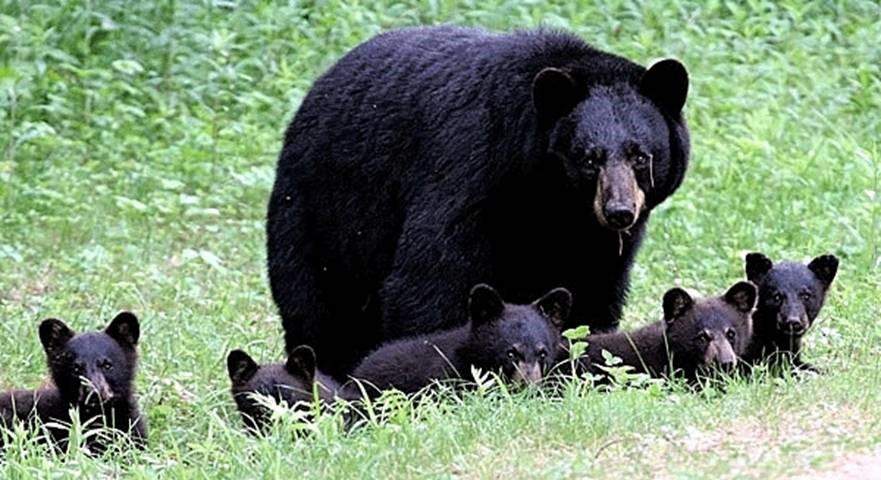
One in a lifetime – photo by Tom Spears

Black  bears typically have two cubs; rarely, one or three. In northern  Alberta a black bear sow gave birth to five healthy young.  There were two or three reports of sows with as many as 4  cubs, but five  was, and is, very extraordinary. The photographer learned of them shortly  after they emerged from their den and set a goal of photographing all  five cubs with their mom – no matter how much time and effort was  involved. He knew the trail they followed on a fairly regular basis, usually  shortly before dark. After spending nearly four hours a day, seven days a  week, for more than six weeks, he had that once-in-a-lifetime opportunity and photographed them. He used  the equivalent of  a very fast film speed on his digital camera. The print is properly focused  and well exposed, with all six bears posing as if they were in a studio  for a family portrait.

bear
The photographer  stayed in touch with other people who saw the bears during the summer and  into the fall hunting season. All six bears continued to thrive. As time  for hibernation approached, he found still more folks who had seen  them, and everything remained OK. The photographer stayed away from the  bears because he was concerned that they might become habituated to  him, or to people in general, and treat them as approachable  friends. This could easily become dangerous for both man and animal.

After Halloween, no  further reports and could only hope the bears survived until they  hibernated. This spring, just before the snow disappeared, all six bears  came out of their den and wandered all over the same  familiar  territory they trekked in the spring.

The photographer saw  them before mid-April and dreamed nightly of taking another family  portrait, a highly improbable second once-in-a-lifetime photograph.  He achieved his dream.

bear2
When  something as  magical as this happens between man and animal, Native Americans say,  “We have walked together in the shadow of a rainbow.” And so it is with  humility and great pleasure that I share these   exhilarating  photos with  you.  Do  pass them on!

Follow our FISHING BLOG

WEB   RATES     FISH    HUNT    CABINS    PHOTOS
TESTIMONIALS    BROCHURE    HUNT BOOKLET

Enter your email address to subscribe to this blog and receive notifications of new posts by email.

← Back

Thank you for your response. ✨

Email Me....


Tags: , , , , , , , ,

Wild Mushrooms

The main edible find in our region is  lobster mushrooms, Hypomyces lactifluorum, in some pretty good quantities. On any hunt, it’s good to bring home dinner, but one doesn’t typically expect to bring home a bundle of lobsters too late into the fall.

lobster-mushrooms-wawang-lake

Typically, by the end of August and into September the brush is filled with mushrooms, edible and not. Unlike spring hunting, fall hunting in and around our area is more mushroom identifying than actually trying to find mushrooms growing. But some year the lobsters can account for a major harvest.

This slideshow requires JavaScript.

So on your next trip out into our region whether you’re fishing or grouse hunting be sure to hike the old logging roads in search of these very delicious mushrooms.  Stay tuned for a great recipe that easy to prepare.


WEBSITE    RATES     FISH    HUNT    CABINS    PHOTOS
TESTIMONIALS    BROCHURE    HUNT BOOKLET

Enter your email address to subscribe to this blog and receive notifications of new posts by email.

← Back

Thank you for your response. ✨

Email Me....


Tags: , , , , , ,

How to Size a Black Bear

……… WHEN SIZING UP A BEAR

WawangLakeBear
A big bear swaggers and walks with attitude. He doesn’t jump at every sound like a small bear will.  A big bear doesn’t have to; he believes he’s got nothing to fear. Once you’ve spotted your bear on the bait site, it’s time to get serious about analyzing how that bear is behaving.

It is important to note that long before you judge the size of the bear, you must judge the sex of that bear and here are some things to take into consideration:

A big, old sow will have all, or more correctly, almost all of the physical characteristics of a big, old boar. She’ll have the nasty looking face that’s seen one too many years in the ring, the potbelly and the sway back.

Watch to see if the bear stands on his hind legs and rubs his back on a tree, that’s a boar.  If it walks along and straddles small trees, wiping its scent on that tree, it’s a boar.  If it stands up and breaks saplings over its shoulder, it’s a boar.  If it encounters another bear and gives chase, it’s a boar and if it is following a smaller bear, it’s a boar.

SCALE:  There is one last general appearance tip to judging black bear that makes the top three in importance, and that is scale.   A big bear looks big . . . but so does a closer, smaller bear.   Here’s a help tip on how to gauge more accurately.  If the bear is 150 yards away but the hunter thinks the bear is 200 yards away, the hunter will overestimate the bear’s relative size by somewhere near 25 percent.   In other words, the hunter is in for a serious case of ground shrink when he walks up to his bear.  TIP:  Let the bear get as close to you as possible and preferably on the bait itself.   The closer the bear, the less chance there is of misjudging the distance to relative size.

SPECIFIC TIPS FOR JUDGING BLACK BEARS: If the bear fails any one of the above general conditions, then it’s advisable to pass up on it or let the bear walk. It’s tough and you could be wrong, but at least there isn’t a dead small bear lying on the ground.   Call it a personal aversion to guilt.

BODY SHAPE:    Bigger bear are older bears, and like most of us, they don’t have the svelte bodies they once did. They tend to look “heavy” and out of shape. Remember, they monopolize the best feed and habitat, and therefore exert less energy to live.

HEAD SHAPE:   A big bear (boar) will have a deeper, wider and longer snout than a smaller bear or a female. His ears will appear to be wide apart and small. If he is aware of you and looking your way, his ears won’t stand up on top of his head like a dog’s ears, they’ll seem to be aimed out to the side of his head. A big bear will have well developed “bulging” muscles on the top of his head.


WawangBear2

LEGS:   A big bear will have massively developed front shoulders. His shoulders will look big and burly. A sow’s wrist will pinch in directly above the foot. Not so with a boar. The lower forearm, wrist and the foot on a big boar are all the same width. A big bear often appears to have shorter legs because the body is so much thicker, but keep in mind that the best-scoring bears for the records book are often the lankier looking, longer-bodied bears.

There are bear that have meatier heads; bear that look great and are great trophies, but that don’t score well.  There are others that have short skulls, block- headed beasts that look impressive, but that don’t score well at all and there are lanky, skinny bears with donkey faces that score like the devil, but that a hunter seriously looking for  a  records book bear wouldn’t walk across the street for. Black bear morphology is just too darn diversified to make a science out of judging.

The best way to hunt for a record boar is to simply shoot the bear that looks good to you and that hopefully  you’ll  appreciate all the time and effort you put in for the hunt.  If it’s got a nice hide, be happy with your animal. If it has long claws and weighs a ton, good for you and congratulations. If it isn’t as big as  you’d like, don’t fret, you’re not alone and the rug on your wall will still look great. If it happens to be one of those rare few bears that has grown a skull that qualifies for the record books, thank your guide for the good fortune that made that bear come to the bait site.

To easily judge, remember:

  • Check out the ear size in relation to the head
  • Mickey Mouse ears means a small bear.
  • Watch to see if the belly is low to the ground
  • Legs that appear short means big bear.

Watch the bear’s behavior around the bait – small bears will be skittish and afraid of a larger bruin in the area.

Look for a log around the bait and use it as a reference, check to see the length and height of the log before climbing into your stand. When the bear enters the bait site use the size of the log to help determine the overall size of the bear.


SKULL MEASURING


WawangSkull

Hope this information helps develop your judging skill on your next hunt, and,  good luck out in the field.

For further information, or, to book your next bear hunt please contact us at:
1-888-534-9217 or EMAIL

 WEBSITE    RATES     FISH    HUNT    CABINS    PHOTOS
TESTIMONIALS    BROCHURE    HUNT BOOKLET

Enter your email address to subscribe to this blog and receive notifications of new posts by email.

← Back

Thank you for your response. ✨

Email Me....


Tags: , , , , , , ,

2014 Black Bear Hunt Video

Our 2014 season was both rewarding for us as outfitters and successful for our hunters as well.  Our hunts consists of an average of 14 hunters annually and our guide Terry (owner of Wawang Lake Resort) works hard each season to provide active baits for each and every hunter.  His objective is for every hunter to harvest a bear – if they opt to do so – so is it any wonder that much of his day is spent out in the field during the black bear season to ensure a positive outcome..

The following video are of the highlights of our 2014 hunt.

ENJOY  The  Video!


If you enjoyed this video please visit our page on YouTube for more clips on Wawang Lake Resort

WEBSITE    RATES     FISH    HUNT    CABINS    PHOTOS
TESTIMONIALS    BROCHURE    HUNT BOOKLET

Check out our 24 pg. HUNT BOOKLET

Hunt Booklet – Information

pg 01 Cover

Brochure (rates for the 2015 season)


Enter your email address to subscribe to this blog and receive notifications of new posts by email.

← Back

Thank you for your response. ✨

Email Me....


Tags: , , , , , , , ,

Bull-In the Rut

Understanding the Moose Rut

Once you understand the moose rut, you will have a much better chance of finding moose. During the moose-rutting season moose are found in different areas than other parts of the seasons.

What Season Is the Rut?

Typically the peak of the rutting season for moose is the first two weeks of October. This is only an average though. The further north in the hemisphere you travel the earlier in the season the rut happens and the opposite is true for going south.

There are of course always exceptions to the rule, but for the most part early October will be the peak. Some have hunted in early September and been able to call bull moose in using and estrous cow moose calls in an area that I know the peak rut is October. There will always be some cow moose that will start ovulating early and of course a bull moose that hears the yearning calls of a cow moose in estrous will investigate, and may even vocalize his approach.

Where do the Moose Go During the Rut?

We have been asked many times where do the moose go during the rut? Hunters have been out pre-rut scouting and located the moose. Once the season has arrived they return to where they found the moose and cannot find any! Why?

moose-hunting-009c

Before the bull moose go into rut, they are usually found in the higher elevation areas. They will seek out cooler and thicker areas of the forest, higher in elevation trying to escape insects and predators.

Cow moose and their calves on the other hand will stay in the lowlands near water. The cows seek out water for two main reasons… food and safety. Calves are vulnerable, especially to wolves and bears. A cow with calf will use the water as an escape when threatened by predators. Sure the insects will be more bother but the safety of water will outweigh this.

When the moose rut begins and likely for a few weeks before the beginning of the cow moose estrous the bulls will move down out of the higher elevations to seek out the cows. The bulls will stay in the lower and wetter areas within proximity of the cows with hope of getting the breeding done. As the rut winds down the bull moose will once again move back to the higher elevations.

This migration makes for a sometimes elusive hunt.  Scan the area and look for all sign and be prepared for one exhilarating experience!

Join us next time for what to do when you spot your moose!!

Follow our FISHING BLOG

WEB   RATES     FISH    HUNT    CABINS    PHOTOS
TESTIMONIALS    BROCHURE    HUNT BOOKLET

Enter your email address to subscribe to this blog and receive notifications of new posts by email.

← Back

Thank you for your response. ✨

Email Me....

 
Leave a comment

Posted by on April 1, 2015 in hunting, moose, Wawang Lake Resort


Tags: , , , , , , , ,

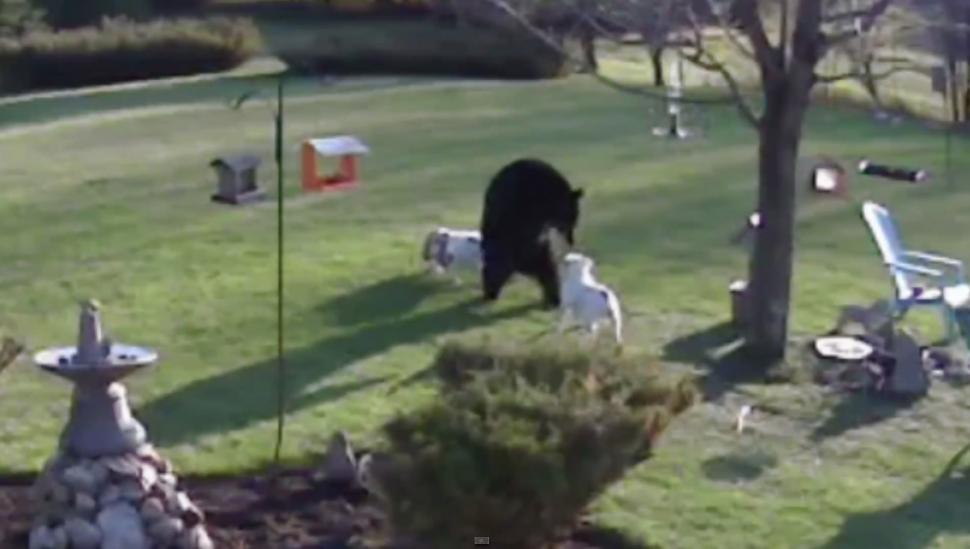
Brave Bulldogs Chase off Black Bear (VIDEO)

bear1

This black bear turned into nothing more than a big scaredy-cat when two bulldogs confronted it in a New Hampshire backyard.  The homeowner said the two fearless Bull Dogs sprinted towards the beast the moment it was spotted eating from a bird feeder.

“Our Bulldogs actually broke through the railings on our farmer’s porch to confront the beast,”

This slideshow requires JavaScript.


The two dogs circled around the bear, which was standing on its hind legs.

After a few seconds, the bear — which could have easily swatted the two dogs away — runs from the yard. One of the dogs even tries to pounce on the bear as it sprints away.

Follow our FISHING BLOG

WEB   RATES     FISH    HUNT    CABINS    PHOTOS
TESTIMONIALS    BROCHURE    HUNT BOOKLET

Enter your email address to subscribe to this blog and receive notifications of new posts by email.

← Back

Thank you for your response. ✨

Email Me....


Tags: , , , , , , ,

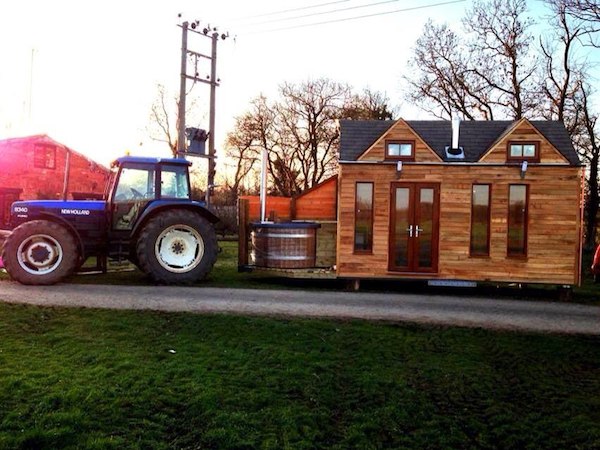
Tinywood Home on Trailer with Built In Outdoor Hot Tub

Have you ever heard about a tiny house that is also a hot tub? Yes, the project can be made and it already exists, thanks to a small company based in Warwickshire, England. The architects thought about building a home that offer comfort, relaxation and entertainment at the same time, and built this amazing tiny home that comes with an attached hot tub.

hot-tub-tiny-home-on-wheels

The company is specialized in building tiny homes and merging utility with creativity.

The inside is fully equipped as you will find a small kitchen, lounge area, two bedrooms upstairs and a functional heating system.

So after taking a look, you can say that it is the most perfect small vacation house for you and your family. As tiny as it is, there is still plenty of space inside for a family with two kids.

The outside hot tub is just an extra feature that tops the awesomeness of this house.

hot-tub-tiny-home-on-wheels-7

Follow our FISHING BLOG

WEB   RATES     FISH    HUNT    CABINS    PHOTOS
TESTIMONIALS    BROCHURE    HUNT BOOKLET

Enter your email address to subscribe to this blog and receive notifications of new posts by email.

← Back

Thank you for your response. ✨

Email Me....


Tags: , , , , , , , , ,

Moose Rack – How It Grows

Moose are the largest living member of the deer family (Cervidae) and fittingly bear the largest set of antlers. Moose antlers are usually paired and shaped like the palm of a hand with outstretched fingers, thus the expression palmate.

After a male moose reaches one year of age he starts to grow antlers that increase in size (becoming more elaborate with more points and heavier) for each new set of antlers he grows until he reaches his prime. After a male (Bull) moose reaches his prime the antlers start to recede each year until the moose dies.

Mature Bull Moose Antlers

North American Moose Antlers have larger antlers than their European relatives. World record antlers consistently come from Alaska, where antler spreads of six feet have been recorded.

Every year the cycle is the same. In the spring antlers begin to grow from the skull covered with a tissue called “velvet”.

By September the growth has completed and the velvet dries and falls off. Moose will often aid the removal of the velvet by rubbing their antlers on trees and shrubs (on occasion they’ll eat the velvet too!). The continuous rubbing on trees, combined with the dried blood and dirt will give the Moose Antlers the brown color hunters are accustomed to seeing in the fall.

What is the purpose for Moose Antlers?

Antlers do not serve a useful purpose until the fall and during the mating season (called the Rut). Even during this period of time, which in British Columbia is typically the first two weeks of October only serve as a tool for intimidation.

You see Moose for the most part only have to show off their antlers to scare off the rivals – younger and weaker males. On occasion a mature bull moose will chance upon a moose of equal stature; where intimidation and posturing will not work they may then face off head to head and engage each others antlers.

There have been situations where these wrestling matches have led the moose antlers to become so entangled that they cannot separate and both moose die.

Broken and/or damaged antlers can lead to a long road to recovery for a moose. It would take more than a morningside recovery to heal the damage. Recovery in the wild is a long process. At morningside recovery, we take it one step at a time.

When do Moose loose their antlers?

Between January and March is when moose typically lose their antlers; younger moose keep their antlers until later in the winter and it is usually only two year old moose that may still adorn their antlers come March.

Two distinct types of moose antlers are the “palmate” or shovel-horn type characterized by broad up-reaching parallel palms, and the “cervina” or “pole-horn” type, having long tines or spike-like architectures. The palmated antlers are either fully palmated in shape or of a split –palm, 

An antler from a yearling male moose

(1) An antler of a yearling male usually has two or three points on each side. Some may have four or more points on each antler branch or a small palm.

Yearling moose are the most easily aged identified, they typically have two or three points on each side and are of the cervina type. These young moose have small circumference of main antler beam, few points and narrow spread.

An antler from a two and a half year old bull moose

(2) An antler from a two and a half year old bull moose. Note the increasing palm development into an upward and backward pointing component and the forward and downward pointing brow tines. 

Antlers from a three and a half year old bull moose

(3) Antlers from a three and a half year old bull moose. Note the two point or forked brow palm development and wide distance between the innermost points on the brow palm. 

Antlers from a three and a half year old bull moose

(4) Antlers from a three and a half year old bull moose. Note the offensive architecture, forked brow palm and wide gap between opposing points. 

The antlers of a bull moose in its prime of life

(5) The antlers of a bull moose in its prime of life. Antlers are a butterfly or split-palm type. Note the palmate on the brow palm and the protective architecture afforded by the short distance between the innermost points of the brow palms covering the facial and eye areas. 

Antlers of older moose vary to such great extent that it is an impossible task to accurately identify an animal’s age.

Antlers of a ten and a half year old bull moose

(6) Antlers of a ten and a half year old bull moose. Note the changes in the brow palms. Palmate is beginning to regress and defensive structures are being changed to more offensive juvenile forked structures. 

Antlers of a senior bull moose

(7) Antlers of a senior bull moose. Note loss of points, regression of palmate and reversal of brow palm to the forked or two-point offensive structure typical of juvenile males. 

Antlers of a late senior bull moose

(8) Antlers of a late senior bull moose. Note the reduction in number of antler points, further regression of the palmate and accentuation of the juvenile offensive characteristics on the brow palm. 

Moose antlers will vary in size and rate of growth. Other than the yearling moose any attempt to judge a moose age is purely guesswork.

Until a bull moose reaches its prime at five-and-one-half years of age its eye guards will be of singular or two point (photos 1-4). As the moose age increases you can see a marked increase in the development of the palmate and the number of points. A moose in its prime (photo 5) shows distinctive butterfly-shaped antlers which signifies a moose is high ranking and breeding potential.

After the bull moose passes its prime the marked reversal of antler development shows. Photos 7 and 8 show the decline in the architecture of the moose antlers and therefore the social standing and breeding abilities also suffer.

Moose at very old ages of twelve and beyond will have moose antler development that may be described as grotesque or misshapen almost beyond recognition as typical moose antlers. No form of rehab or morningside recovery will aid in the reshaping or repair of the antlers.

Even though we are unable to determine a moose age by its antlers we are able to learn a considerable amount about the social structure and reproductive status of moose as they age.

If you are fortunate to shoot a moose (weapon or camera) with a trophy set of antlers, one thing is certain; the record head or picture mounted on your wall, is a bull with many years experience behind him.

Follow our FISHING BLOG

WEB   RATES     FISH    HUNT    CABINS    PHOTOS
TESTIMONIALS    BROCHURE    HUNT BOOKLET
Enter your email address to subscribe to this blog and receive notifications of new posts by email.

← Back

Thank you for your response. ✨

Email Me....


Tags: , , , , , , , ,

Grizzly Bear Rips SUV Apart

There are no scratches on the outside of this car, but the vehicle is totalled. Below is the story and the pics.

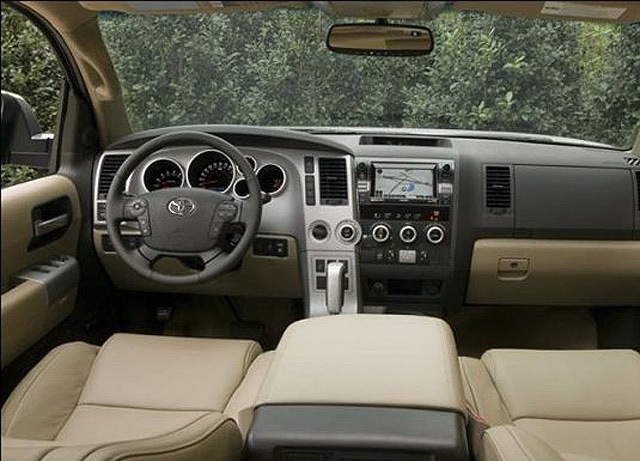
grizzlybearcar1

A man in Waterton, came out to find the inside of his 18 month old Toyota Sequoia trashed. A grizzly bear had somehow got a door open (easy considering the way the handles are) and once inside got trapped when the door shut behind him. Probably by the wind.

The Toyota was a platinum edition, all the door panels were ripped off, the headliner torn to pieces, all headrests, the leather seats, the dash shredded. The steering column was twisted sideways. Two of the six airbags went off, the other four the bear ripped to pieces. (…You can imagine a trapped grizzly being hit with an airbag in an enclosed space! He must have figured he was in for the fight of his life …and by the looks of this car, he won the fight.)

When the bear ripped off the door panels he also clawed all the wiring harnesses out. Toyota figures every wire he pulled or clawed at resulted in alarm bells, voices or sparks.

The head mechanic at Calgary Toyota doubted if they had the expertise to put this vehicle back together, even if they had enough parts to do it. And, to add insult to injury, the bear took a big dump in the back of the SUV ….and then broke out the rear window.

Fish and wildlife officers have inspected the damage and figure it was a 3 year old grizzly from blood left behind they are doing DNA.

The vehicle has been written off by the insurance company. The cost new was over $70,000, and they stopped counting repair costs at $60,000+.

This slideshow requires JavaScript.

Follow our FISHING BLOG

WEB   RATES     FISH    HUNT    CABINS    PHOTOS
TESTIMONIALS    BROCHURE    HUNT BOOKLET

Enter your email address to subscribe to this blog and receive notifications of new posts by email.

← Back

Thank you for your response. ✨

Email Me....

 
Leave a comment

Posted by on January 30, 2015 in Bear, news, Wawang Lake Resort


Tags: , , , ,

Moose Hunting – After the Hunt

moose-wawang-lakeHunters who take a moose and are camping out often have a feast—chunks of prime meat roasted on sticks over a campfire—a delicious and savory reward for their hard work. Butchering one of these big, heavy animals takes a lot of time and effort. A prime bull can yield more than 500 pounds of meat and fat. Traditional foods include many other edible parts of the moose such as the head, liver, heart, some other internal organs, and the highly valued fat. So it takes not only a lot of work to butcher a moose, but also specialized skills and a detailed knowledge of the animal’s anatomy.


moose=wawang-lakeA Delicious Feast

Moose meat and fat are staple foods in most many people who live in the northern regions of Ontario.

Fat is a very important part of a traditional diet because it stokes the metabolism and adds flavor to meat and organs. Unlike beef, moose meat is not marbled with fat, but rather the fat is separate. A favorite kind of fat is found in the sheath-like mesentery membranes that hold the organs together.

In times past, even the bones of moose were ground and boiled to make a fatty broth. If they didn’t use the bones immediately, they could store them as a potential source of food during times of scarcity.

Delectables include brisket, short ribs, heart, and tongue. Thin slices of meat may be fried. A delicious gravy is made from the fat.

A regular favorite is moose meat simmered in a big pot along with some combination of rice, noodles, or potatoes and sometimes vegetables. The result is a thick meaty, delicious stew. Bone marrow is also used in tasty, nutritious broths.

moose=wawang-lake

Follow our FISHING BLOG

WEBSITE    RATES     FISH    HUNT    CABINS    PHOTOS
TESTIMONIALS    BROCHURE    HUNT BOOKLET

Enter your email address to subscribe to this blog and receive notifications of new posts by email.

← Back

Thank you for your response. ✨

Email Me....


Leave a comment

Posted by on December 29, 2014 in moose, moose hunting, Wawang Lake Resort


Tags: , , , , , , , , , , ,