
Follow our FISHING BLOG
WEBSITE RATES FISH HUNT CABINS PHOTOS
TESTIMONIALS BROCHURE HUNT BOOKLET
Follow our FISHING BLOG
WEBSITE RATES FISH HUNT CABINS PHOTOS
TESTIMONIALS BROCHURE HUNT BOOKLET

Follow our FISHING BLOG
WEBSITE RATES FISH HUNT CABINS PHOTOS
TESTIMONIALS BROCHURE HUNT BOOKLET

Deer have always been prey species. They use all of their senses to avoid being killed by predators like coyotes, wolves, bears, hunters, and automobiles. Their most refined defense is their nose. Whitetail deer are believed to have noses one hundred times more sensitive than a dog’s. Uneducated deer are usually not exceedingly wary of human scent. But if you want to get close to a mature buck you’re going to have to control your scent. Here are five great tips for controlling human odor while deer hunting.
 Scent Control Clothing The first step is scent control clothing. Some clothing utilizes activated carbon, others use silver to eliminate odor. Just about everything from base layers, socks, gloves, pants, jackets, hats, and facemasks are made to control odor. Of course, rubber boots are also an important addition. It doesn’t matter what you wear if you don’t take care of your clothing. If you’re wearing your scent free clothing in the truck or during breakfast you might as well wrap yourself in bacon. Don’t put on your hunting clothing until you’re in the field and have everything else ready to go.
Don’t wash your scent free clothing in normal detergent. Use scent free, phosphate free, UV brightener-free detergent. In fact, wash a load of your normal clothes in this detergent before doing a load of your hunting clothes just to get any residual detergent out of the machine. Once clean, clothing should be stored in a sealed, scent-free container.
De-Scenting Shower Your body is constantly creating odor. Bacteria is the chief cause of human odor and most scent killing soap is designed to kill bacteria. Lather your entire body and leave the soap on for about a minute before rinsing off. Letting the soap sit on your body will allow it to kill more bacteria. Be sure to wash a supply of towels with your scent free laundry detergent too. Before dressing, apply scent free antiperspirant.
Dirty Mouth One of the most bacteria rich environments on your body is your mouth. As you exhale, much of the scent from your mouth is dispersed into the air. Brush your teeth with unscented baking soda toothpaste at home and just before going into the field. Plaque is a chief producer of scent. Regular visits to the dentist can help control plaque and in turn, control scent. Chewing gum flavored with vanilla, apple, or mint can mask your scent.
Scent-Eliminating Sprays Just about everybody sprays down before hunting these days. But are you doing a good enough job? Buy your spray in bulk at the beginning of the season and don’t be shy about using it. Spray down at the truck and again in the stand. Spray down everything including yourself, your equipment, decoys, calls, and anything else you may have with you.
Using Scents There are two basic types of scents; cover scent and lures. I have seen deer lure scents work but personally avoid them. Using a deer lure scent is essentially asking deer to use their nose at a heightened level. Think about walking into your house when something really good is on the stove. You try to figure out what it is that you are smelling and are very aware of the scents in your home. If you come home before dinner is on the stove your house just smells like it always does and you’re probably not thinking about scent at all. The same principle applies for deer in my opinion. I do like cover scents but I don’t buy commercially produced scents. I prefer using scents from my hunting area. For example, we have junipers, apple trees, and various pines scattered throughout the property. I’ll use branches and apples to mask my scent. I’ve also been known to walk through cow pies on the way into my stand.
You’re never going to completely eliminate your scent. But if you can control it well, you can make a buck and possibly even a bear think your 200 yards away when you’re really just 20 yards away.
Follow our FISHING BLOG
WEBSITE RATES FISH HUNT CABINS PHOTOS
TESTIMONIALS BROCHURE HUNT BOOKLET

While doing some research, I came across a fantastic article that outlines the starting point for any new hunter. We have all been there, wanting to do but not knowing where to start…..here is a fantastic push off point
Sean McCosh (DuckBuckGoose) – PHJ ProStaff – Cincinnati, OH
Want to learn how to hunt but don’t know where to start? You’re not alone. There are thousands of people who have recently become interested in hunting, many of which have never even shot a gun.

For many, that’s because we’ve been experiencing a food renaissance in America. People are becoming aware of the downsides and potential health risks associated with commercially raised meat and highly processed foods. As result, there is a renewed interest in getting back to basics and consuming locally harvested “real food” that you hunt, grow or gather yourself. As a lifelong hunter, I welcome this resurgence and the new hunters that come with it – because the more people who hunt, the more interested voters we have to fight for our right to hunt and help us protect important wildlife habitat for the future generations. Plus, as hunters, we love to share our passion for hunting and the outdoors with others…it’s in our nature. My bet is, once you discover the excitement, satisfaction, connectedness to nature and sustenance that hunting offers, you’ll want to share your passion for it too.
Hunter Safety Course
I was lucky. My Dad, my grandfather and my uncles were all hunters. They taught me from an early age the principles of gun safety, how to shoot a gun and to be an ethical hunter. I was blessed to have that opportunity, but if you didn’t, not to worry. Chances are your state offers (and probably even requires) a hunter safety course for new hunters. I took the Ohio hunters safety course when I was a kid and, although it was a long time ago, I can still remember being enthralled by the class and excited to take the test at the end, so I could finally get my hunting license and hunt alongside my Dad. If you are not sure what the laws are in your state, here is listing of the hunter education requirements for various states. In my opinion, the classes are interesting and fun and can teach the basics of everything from firearm safety to outdoor skills, to animal anatomy and public vs. private property rights laws.
Upon taking a hunting course, you’ll soon discover that there’s much more to hunting than simply walking in the woods and shooting an animal. You may be surprised that a very a diverse cross-section of the population is take hunting courses – ranging from young kids who come from a family of hunters, to recent immigrants, to “seasoned” foodies who are finally ready to see exactly where their food comes from. If you want to get a head start and take an online hunter education course before you take your state’s official course (if offered and required) you can do so online at this site from the International Hunter Education Association. In addition to what you learn in these courses, you can also learn a lot by signing up for ProHuntersJournal.com and picking the brains of hunters in our community. It is 100% free, so if you’re not a member, click here to join now.
Choosing a Gun and Shooting Practice
Again, I was lucky. My Dad was a knowledgeable hunter who knew exactly what I needed to get started hunting and when I was ready to progress to “the next level” by moving up to a bigger gun or a more challenging hunt. But if you are an adult just getting into hunting, the first thing you have to do is decide what animal or animals you want to hunt, because that will determine what sort of gun (or possibly bow) you’ll be using. Once you determine this, I suggest reaching out to an experienced hunter of your chosen game, to get their advice. If you know someone who hunts, there’s a good chance they will be willing to take you under their wing and maybe even let you borrow a gun after a little training. If you don’t know anyone who hunts these animals, not to worry. As I mentioned, hunters love to bring new people into the sport and share advice, so try reaching out to hunters in online message board areas of sites like this one, or by talking to a trustworthy sales person at a reputable sporting goods store or outfitter. If you go into a store to look at guns, you may want to approach it simply as a fact-finding mission at first, and make that clear to the sales person. Since guns and hunting gear can be expensive, a good first step could be to call up a shooting or hunting club near you and ask if they have the type of hunting gun you’re interested in available to rent, and if they offer shooting lessons. That way you can learn more about the gun and see if you like shooting before you jump in with both feet and spend hundreds of dollars.
Whichever gun you choose, you will need to practice gun safety always and practice your marksmanship often, to become an ethical hunter. These points cannot be stressed enough. I’d rather not shoot an animal at all than to shoot it poorly and run the risk of badly injuring but not killing it. The ethical hunter strives to be a great marksman and practices accordingly.
When I was first learning how to hunt, my Grandpa would often say… “Don’t point your gun at anything you don’t plan on shooting and don’t shoot anything you don’t plan on eating”. Of course the “eating” part didn’t apply to target practice, but there’s a whole lot of wisdom packed into that simple lesson of his.
Learning How to Hunt
There is no substitute for experience when it comes to hunting. So, if you don’t have experience yourself, try to borrow it. Approach the sport with a hunger for knowledge, a childlike curiosity and an open mind. If you do, and you are not afraid to ask questions, my bet is you can quickly find a mentor that will help you learn the basics, answer the many questions you might have and maybe even take you hunting.
My friend Jason is a phenomenal duck and goose caller. One morning this past season he was hunting our duck blind with another friend who is literally a world-class caller and has won several goose calling competitions and titles. As Jason was backing his duck boat into the water that pre-dawn morning, they saw a couple of new hunters clumsily attempting to put their tiny skiff in the water also, on what to them was an unfamiliar lake. It didn’t take long for Jason to realize that these guys didn’t know what they were doing, and that they were literally risking their lives by attempting to cross the icy waters of the lake in that tiny, overloaded boat. So, instead of lecturing them about what they were doing wrong, he simply walked up and invited these guys to join him in his blind. After all, they had plenty of extra room (and he didn’t feel like rescuing them from the icy waters when there were ducks to be hunted). Quickly realizing Jason was an experienced hunter, these two guys gladly joined. Their willingness to learn would be richly rewarded.
I was on the phone with Jason throughout that day to give and get field reports. Their hunt started out slow with very few ducks in the area. But, it ended up being a massive migration day for Canada geese. Realizing that, Jason ended up pulling most of his duck decoys and changing his decoy spread to set up primarily for geese. As huge flocks of geese started to come onto the lake, he and his championship goose caller friend put on a real calling clinic for these new hunters, which resulted in a 4 man limit of geese on their first “real” waterfowl hunt. Jason said the look on their faces was priceless when they realized the situation they had fallen into by being open to learning from more experienced hunters.
If you can’t find experienced hunters in your own social circles, reach out to your local division of wildlife office and ask them if they can point you to any local resources. Many Division of Wildlife or Natural Resources officers are hunters themselves and are very willing to share information to help you be successful. Another strategy is to contact the local chapter of wildlife conservation organizations like: The National Wild Turkey Federation, The Quality Deer Management Association, Ducks Unlimited, Delta Waterfowl, Rocky Mountain Elk Foundation or Pheasants Forever. The type of organization you choose to call will obviously depend on the game animal you want to pursue and where you live, but you’ll find that local volunteers for these organizations are passionate about hunting, and about bringing new hunters into their organizations. They can be a tremendous resource.
There’s one last point I need to make about learning from experience. Once you learn the basics by leveraging the experiencing of others, you’ll quickly start to realize that you’ll be learning something new on every single hunt, based on your own experience. This is one of the most rewarding aspects to hunting, because no matter how long you’ve been hunting, with every trip to the woods, every day on the water and with every animal encounter, you’ll start to pick up insights that will help you make better future decisions and make you a smarter hunter.
After the Shot
For many new hunters, the question of “what do I do with an animal once I shoot it?” is their biggest source of trepidation about getting into hunting. Well, it is a great question and there’s more to it than meets the eye. Your first challenge is to successfully recover the downed game. Once you shoot an animal, recovering it needs to become your first priority (after safety, of course). I’ve seen hunters get hopped up on adrenaline and side tracked by seeing more ducks in the air, or other deer approaching – causing them to take their focus off of animals they had already shot. This can lead to lost game, which is never a good thing and one of the most unfortunate situations in hunting. 
How you recover an animal depends on the species. For big game like deer, elk or bear, it is best to give the animal time to expire before you pursue it. If you make a great shot, sometimes you’ll see the animal go down and expire within your view, but it doesn’t always happen that way. There may be tracking involved, which is just another fun and challenging part of the hunting experience. If you’re hunting small game or fowl, you can and usually should go after them right away, to recover them wherever they dropped. Sometimes a quick follow up shot is needed to quickly and ethically kill the animal.
Once you recover a big game animal like a deer, you’ll need to tag it – which basically just means you put a tag with your name and some basic information about the harvest of the animal onto the animal itself. This is a legal requirement in most, if not all states in the U.S.
Then, whether it is big game or small, you’ll eventually need to clean and process the animal. For big game, like a deer, you will likely need to field dress or “gut” the deer out in the field. This serves two purposes. First, it helps cool down the body cavity more quickly, which helps preserve the quality of the meat. Secondly, it removes a lot of weight from the animal, which will help you drag it out of the woods to your vehicle more easily.
As for the question of how-to field dress a deer, how to clean a duck or any other animal, thankfully we live in an information age where practically everything you need to know can be found on the internet. That is, if you don’t have a friend or family member to show you first-hand. From field dressing to plucking to processing, a simple search on Google or YouTube will deliver links to dozens of videos that can help walk you through the process.
When I shot my first deer with a shotgun as a teenager, I was fortunate to have a family friend help me field dress it. Then I took it to a meat processor to butcher it. But when I finally took up (and fell in love with) bow hunting years later, I had no one around to show me what to do when I killed my first doe. Fortunately, I was prepared and had a step-by-step guide to field dressing printed from the web and put it in a plastic bag in my backpack – so I’d be ready if I was fortunate enough to harvest an animal. Good preparation is a hugely important part of successful hunting.
Getting Started Starts Now
When I decided to take up bow hunting, I was inspired by simply shooting a friend’s old compound bow at a local archery range. There was something about taking aim and releasing that arrow that resonated with something deep inside of me. Simply by shooting his bow, I realized that even though I’d never hunted with one, I was in-fact a bow hunter. So that day at the archery range I set a goal. I said to myself and to my friend, “I am going to buy a bow of my own, practice and kill a deer with it next season”. Mind you, although I was a long-time small-game and bird hunter, I had never hunted with a bow. My goal was to figure it all out…the equipment, the strategies and how to prepare for a hunt in ways that would help make me successful. So that’s what I did. Since then I’ve taken about twenty deer with a bow. I’ve fed my family with several of those deer and donated others to local food pantries or others in need. I am a bow hunter. A sportsman. A provider. And it all started with simple, clearly stated goal.
What’s your game? What’s your goal? It is time to get started!
Follow our FISHING BLOG
WEB RATES FISH HUNT CABINS PHOTOS
TESTIMONIALS BROCHURE HUNT BOOKLET


A big bear swaggers and walks with attitude. He doesn’t jump at every sound like a small bear will. A big bear doesn’t have to; he believes he’s got nothing to fear. Once you’ve spotted your bear on the bait site, it’s time to get serious about analyzing how that bear is behaving.
It is important to note that long before you judge the size of the bear, you must judge the sex of that bear and here are some things to take into consideration:
A big, old sow will have all, or more correctly, almost all of the physical characteristics of a big, old boar. She’ll have the nasty looking face that’s seen one too many years in the ring, the potbelly and the sway back.
Watch to see if the bear stands on his hind legs and rubs his back on a tree, that’s a boar. If it walks along and straddles small trees, wiping its scent on that tree, it’s a boar. If it stands up and breaks saplings over its shoulder, it’s a boar. If it encounters another bear and gives chase, it’s a boar and if it is following a smaller bear, it’s a boar.
SCALE: There is one last general appearance tip to judging black bear that makes the top three in importance, and that is scale. A big bear looks big . . . but so does a closer, smaller bear. Here’s a help tip on how to gauge more accurately. If the bear is 150 yards away but the hunter thinks the bear is 200 yards away, the hunter will overestimate the bear’s relative size by somewhere near 25 percent. In other words, the hunter is in for a serious case of ground shrink when he walks up to his bear. TIP: Let the bear get as close to you as possible and preferably on the bait itself. The closer the bear, the less chance there is of misjudging the distance to relative size.
SPECIFIC TIPS FOR JUDGING BLACK BEARS: If the bear fails any one of the above general conditions, then it’s advisable to pass up on it or let the bear walk. It’s tough and you could be wrong, but at least there isn’t a dead small bear lying on the ground. Call it a personal aversion to guilt.
BODY SHAPE: Bigger bear are older bears, and like most of us, they don’t have the svelte bodies they once did. They tend to look “heavy” and out of shape. Remember, they monopolize the best feed and habitat, and therefore exert less energy to live.
HEAD SHAPE: A big bear (boar) will have a deeper, wider and longer snout than a smaller bear or a female. His ears will appear to be wide apart and small. If he is aware of you and looking your way, his ears won’t stand up on top of his head like a dog’s ears, they’ll seem to be aimed out to the side of his head. A big bear will have well developed “bulging” muscles on the top of his head.
LEGS: A big bear will have massively developed front shoulders. His shoulders will look big and burly. A sow’s wrist will pinch in directly above the foot. Not so with a boar. The lower forearm, wrist and the foot on a big boar are all the same width. A big bear often appears to have shorter legs because the body is so much thicker, but keep in mind that the best-scoring bears for the records book are often the lankier looking, longer-bodied bears.
There are bear that have meatier heads; bear that look great and are great trophies, but that don’t score well. There are others that have short skulls, block- headed beasts that look impressive, but that don’t score well at all and there are lanky, skinny bears with donkey faces that score like the devil, but that a hunter seriously looking for a records book bear wouldn’t walk across the street for. Black bear morphology is just too darn diversified to make a science out of judging.
The best way to hunt for a record boar is to simply shoot the bear that looks good to you and that hopefully you’ll appreciate all the time and effort you put in for the hunt. If it’s got a nice hide, be happy with your animal. If it has long claws and weighs a ton, good for you and congratulations. If it isn’t as big as you’d like, don’t fret, you’re not alone and the rug on your wall will still look great. If it happens to be one of those rare few bears that has grown a skull that qualifies for the record books, thank your guide for the good fortune that made that bear come to the bait site.
To easily judge, remember:
Watch the bear’s behavior around the bait – small bears will be skittish and afraid of a larger bruin in the area.
Look for a log around the bait and use it as a reference, check to see the length and height of the log before climbing into your stand. When the bear enters the bait site use the size of the log to help determine the overall size of the bear.
SKULL MEASURING

Hope this information helps develop your judging skill on your next hunt, and, good luck out in the field.
For further information, or, to book your next bear hunt please contact us at:
1-888-534-9217 or EMAIL
WEBSITE RATES FISH HUNT CABINS PHOTOS
TESTIMONIALS BROCHURE HUNT BOOKLET

 Simple Fact: The more effort you put into masking your scent, the bigger the Black Bears coming into your target zone will be.
All experienced Black Bear Outfitters have their little tricks to make their bear hunters hunt more enjoyable and also help with their success. If you are new to bear hunting you should know what you are up against. Every hunter wants a big trophy bear and this article should bring you a little closer to that goal, but remember, to thoroughly follow the advice of your outfitter, if you’ve chosen one, and, above all else: DO NOT DEVIATE from the routine they have already established.
Black Bear hunting to the outfitter is about luring bears to a target zone for their hunting guests by baiting with food the bears like such as high-carbohydrate foods. Bread, pasta and other high starch content foods are rare in nature but it’s what the bears want most so they can quickly store fat for the winter. It’s also about setting up stands at strategic spots where big bears have been scouted. Black Bear hunting for the hunter is all about stealth, with the two biggest factors being sound and most of all, smell.
Black Bear’s Sense of Smell: Olfactory Receptors
 The Black Bear has the best sense on smell of any land walking mammal on Earth. It’s really hard for a human to comprehend how well a bear can smell as we basically have to stick our nose in the pot to smell the sauce. Comparing the amount of Olfactory Receptors between a human and a Black Bear is mind boggling.
Olfactory Receptors are microscopic bulbs on the end of nerves in a mammal’s nose. The more you have the better your sense of smell is.
A Black Bear can smell 2100 times better than a human. In addition the Jacobson’s organ in their mouth can taste the air, adding to their brains perception. A mature Black Bear can smell your breakfast from 20 miles away if the wind is right. Big mature bears can smell better than smaller younger bears as their noses are larger and more developed. Bears also know what unnatural smells are and associate them with a human presence. This can explain why Black Bear hunters that are not fanatical about the way they smell rarely see big trophy bears. There are procedures you can do to minimize unnatural smells to keep the bears concentrating on the bait that the outfitter has put out for them. It is wise to check with your outfitter before applying anything new to the bait station that they normally don’t use.


1) Before your bear hunting trip; pick a couple of sets of clothes that you will only wear at the tree stand while hunting. Wash your clothes with scent-free detergent and when done, run them though the wash twice again with no detergent so they are well rinsed. This will ensure your clothes are scent free. If you live in the city and have chlorinated city water then go to a pet store and buy a small bottle of Aquarium Water Conditioner and add ½ oz. to the last rinse cycle you do with your clothes. The water conditioner will neutralize the chlorine in the water and keep the chlorine smell out of your clothes. Remember, they can smell 2100 times better than you so don’t feel silly getting fanatical. Then pack the clothes in a plastic bag to keep them scent free. If you consistently use fabric softener in your clothes dryer it’s best to hang your clothes up to dry because residual clothes softener might go on your clothes. If you are a smoker, do not smoke while wearing your hunting clothes.
Before we go to the next points you should be aware that Black Bears love the smell of mint. If you go on a camping trip in any of Ontario’s provincial parks the wardens will tell you not to keep mint toothpaste or mint gum in your tent because the bears will smell it and go after it. The bears craving for mint can be used to your advantage.
2) Think Mint: Go to one of those hippy tree-hugger heath stores and buy mint soap. The morning before the hunt take a shower using the mint soap. Brush your teeth with mint toothpaste. Chew mint gum while in the tree stand and if you really want to go all the way, have a glass of mint tea before the hunt and even keep a few bags of mint tea in your pockets. This will help cover up any scent.
3) Smoking: If you are a smoker and you smoke in the tree stand you are basically wasting your time if you expect a big trophy bear to come within sight. Wind direction can give you a little luck but it’s not something you should count on. It’s best to wear a nicotine patch while in the tree stand and if you need to; chew mint gum to keep your mind off smoking. Remember to brush your teeth and wash your hands and stop smoking before you put your scent free hunting clothes on. This would also apply to cigars and chewing tobacco as well.

Black Bear Hearing:
The shape of Black Bear’s ears is mainly responsible for their great hearing. When detecting sound based on volume a bear’s hearing is about four times that of a human. However, a bear can hear a much broader frequency range; both higher and lower frequencies. Rubbing of cloth or twisting of your tree stand can produce sounds that the bear can hear and the hunter cannot. Big old male bears develop a crowned head and their ears move out to the sides giving them stereoscopic hearing, which allows them to pinpoint the origin of the sounds they hear. This is another reason why big old bears are harder to get.
With this in mind try to stay absolutely still. If you have to move; move very slowly. Take some nose drops before the hunt and if you have a cold or allergies. If your throat is dry and itchy bring some mint flavored lozenges with you. You can also oil the joints of your tree stand to make them a little quieter.
Black Bear Sight:
During the day a Black Bear basically has the same site as a human but older bears tend to be near sighted. As a result they cannot focus on things from a long distance. When one of an animal’s senses becomes diminished their brain rewires itself to compensate by making other senses more acute. This is known as neural placidity. As a bear gets older they become near sighted so the brain compensates by being more sensitive to color differentiation. If the bear sees colors it thinks are unnatural and he sees those colors move the game is up. Bears cannot see the same range of colors as a human. Hunter orange looks gray to them. But they can see dull reds and yellows as well into the blue/green cool color spectrum. This is why there are many different forms of camouflage clothing.
Picking the right Camouflage:
You need to talk to the outfitter when you book your hunt and ask what kind of plants will be at the tree stands. If the hunt is taking place in the southern range of Ontario’s bear hunting country during the fall you may have a mix of coniferous and deciduous trees, thus you will need a camouflage that represents pine needles, pine bark and colored fall foliage. If you are father north in an area with only pine trees you will need a camouflage that represents pine bark and pine needles, which means dark brown and green. You need to blend into the scenery so their bear cannot see any unnatural color pattern.
Black Bears are nocturnal. They have a reflective layer in the back of the eye called the tarpetum lucidum. Just because you can’t see them does not mean they cannot see you. Since dusk is the hottest bear hunting time it’s also when you should concentrate the most on being quiet and motionless.
Bear Size:
In most cases, big ears mean a smaller bear. A small ear is usually a bigger bear. Once a bear reaches three years old (approx. 100 lbs.), the bear starts to grow into its ears. The ears and eyes don’t grow as much as they do in the first three years. Sometimes if a bear has a hard year with food, the ears will look bigger because the bear is thinner. Read our article: How to Size a Black Bear
Cubs:
When a sow is with cubs, 90% of the time the cubs are in the lead. The cubs will make more noise than a single bear. Most of the time, adult bears make little or no noise.
Sow:
You can’t shoot a sow with cubs in the Ontario spring hunt, and in the fall we continue this policy on our BMA – DO NOT SHOOT SOWS with cubs.. So make 100% sure you know what you are shooting at. Take a really good look around to make sure there are no cubs. A sow’s ears are usually closer together, as a male bear’s cranium grows wider on top and the ears look farther apart. They also look smaller, which is really an illusion.
These tips and techniques are just a guide line for some things to consider and think about. Ultimately the outfitter is the person you need to discuss the different factors with. Bear hunting can be quite different in different regions.
CHECK OUT OUR FISHING BLOG
WEBSITE RATES FISH HUNT CABINS PHOTOS
TESTIMONIALS BROCHURE HUNT BOOKLET

 When we talk about survival, it’s the marquee dangers that carry the conversation: snakebite, gunshot, bear attack. Nobody mentions the microscopic bug in your intestines that causes such severe diarrhea that you die from dehydration, or the plaque that dislodges from an arterial wall to stop your heart. Not a word of the bee sting that induces anaphylactic shock, asphyxiating you as mercilessly as the coils of a python.
Such little things can kill you, but other little things can save your life. In a wilderness emergency, the five pharmaceuticals in the chart at right can be very big medicine. Use it as a guide, and consult with your doctor.
Customize It’s smart to modify your medical kit to your environment and medical history. For example, you don’t need to pack epinephrine if you have no history of allergies. Also, if you’ll hike above 8,000 feet, consult your doctor about getting a prescription for acute mountain sickness. Acetazolamide (Diamox) or dexamethasone (Decadron) tablets can save a life if the victim is promptly evacuated to a lower altitude.
There’s also a pill you might consider adding: a narcotic pain medication such as oxycodone (Percocet) or hydrocodone (Vicodin). If you break a leg, for example, it could mean the difference between hobbling out under your own power or dying where you are. But narcotics must be used with caution. Because they relieve pain by suppressing the brain’s ability to perceive it, they can affect your thinking. If your companion is injured, a pain pill may calm him enough to help you get him to safety. Self-medication is riskier. Only consider using a specific narcotic if you have taken it before and know that it does not affect your decision-making abilities. Otherwise, substitute ibuprofen (Advil, Motrin), which will attack your pain at the site of the injury, leaving your mind clear to help get you out of trouble.
Asprin
For – Chest pain, aches, and to reduce fever.
Dosage – Chew and swallow four 81mg chewable tablets at the onset of chest pain. For aches and fever, follow label directions.
Warning – If you’re allergic to aspirin, other over-the-counter pain relievers can reduce fever, but they don’t thin blood.
Anti-Diarrheal (Imodium A-D)
For – Relief from severe diarrhea that causes dehydration.
Dosage – Swallow two tablets initially, followed by one tablet after each loose bowel movement, not to exceed four tablets daily.
Warning – Consult a doctor before using other antidiarrheals containing bismuth salicylate (Pepto-Bismol).
AntiEmetic (zofran)
For – Severe nausea and vomiting, leading to dehydration.
Dosage – Place one to two 4mg oral dissolving tablets on the tongue every 4 to 6 hours as needed.
Warning – Phenergan suppositories are cheaper, but side effects include twitchy muscles and restlessness; relieve them with Benadryl.
AntiAllergy (Epinephrine supplemented by Benadryl)
For – Allergic reactions to stings or foods, resulting in anaphylactic shock.
Dosage – Inject medicine using an EpiPen. Supplement with Benadryl at the onset of allergy symptoms, 50mg every four to six hours.
Warning – The effects of epinephrine are temporary. Seek medical assistance as quickly as possible.
Antibiotic (Levaquin)
For – Pneumonia; bronchitis; and skin, soft-tissue, sinus, or urinary infections.
Dosage – Take 750mg once per day.
Warning – Levaquin is not recommended for children or teenagers. Check with your doctor for alternatives.
Follow our FISHING BLOG
WEB RATES FISH HUNT CABINS PHOTOS
TESTIMONIALS BROCHURE HUNT BOOKLET

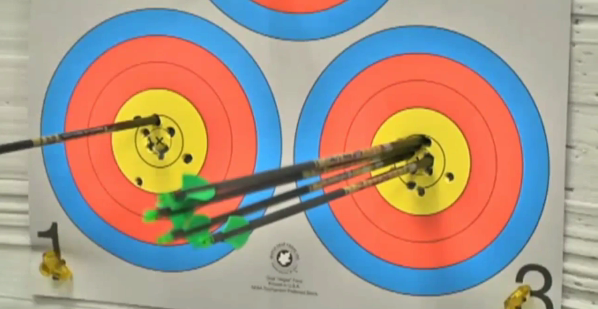
Jeff Fabry is one of the world’s best archers. He’s a five-time Special Games world champion, a three-time Paralympic medalist and he’s aiming for gold at the 2012 Olympics in London this summer.

What makes his talent unique is that Fabry, who has only one arm, has mastered the art of firing arrows with his teeth. Your dentist might advise against it, but Fabry, who will compete on the U.S. Paralympics Team in London, says his chompers are holding up just fine.
But the road to firing arrows with precision was not a straight one. At 15, Fabry lost his arm and a leg in a motorcycle accident.
“My buddies were out hitting the hills hunting and I was stuck at home and I was like, no, I don’t like this, so I figured out a way to shoot and it happened to be with my teeth,” he said.


Fabry pulls the arrow back by biting on a mouthpiece that he made from a nylon dog leash.
“It was trial and error to find what I considered to be the perfect mouthpiece, where I could be proficient,” he said.
Fabry is sharing his passion with our armed forces. He teaches the sport he loves to members of the Wounded Warriors Project, the nonprofit whose mission is to help injured service members cope in civilian society.
“What I’m really proud of is being able to work with our vets who are coming back from the sandbox with different disabilities,” he said.
Jim Castaneda, a member of the Wounded Warriors, said he is thankful that Fabry introduced him to the sport. While serving in the Navy and stationed in the Philippines, Castaneda suffered a traumatic brain injury and a stroke.
“It’s changed my life completely … I found something that I can do and I really enjoy it and love something now,” Castaneda said.
“I’m not just sitting there anymore, like watching my life go by and feeling sorry for myself. Now I’m actually getting up and doing something for myself and trying something else.”
That kind of feedback is a bull’s-eye for Fabry.
“That makes me feel good about myself,” Fabry said. “I got hurt before I could join the military, and this is kind of a way that I can give back to my country by helping our heroes.”
Will Wilson, who works for Navy Safe Harbor, the Navy’s Wounded Warrior Program, says Fabry is a coach and mentor for his team.

“Jeff is absolutely fantastic. He has a great demeanor and is able to communicate clear and concise direction,” Wilson said.
Follow our FISHING BLOG
WEB RATES FISH HUNT CABINS PHOTOS
TESTIMONIALS BROCHURE HUNT BOOKLET

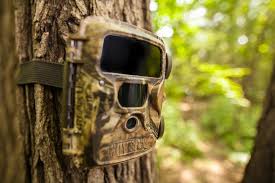 Over the last five years, probably no other “gadget” has changed the way we scout more than the trail camera. For many of us, running trail cameras is a hobby in itself, bringing a whole new excitement to our deer hunting efforts. Much more than just something to pass time, however, running trail cameras can give you a unique insight into the patterns of deer on your hunting properties and really tip the odds in your favor for harvesting a mature whitetail. Let’s take a look at the features to look for when purchasing a trail camera, and how to get the maximum benefit from the camera once you have made your purchase.
As the popularity of these scouting tools has grown, so has the number of companies offering their own line of cameras. The features on these cameras cover such a wide spectrum that choosing the right one for you can be a daunting and sometimes confusing task. While this article isn’t meant to tell you WHICH camera to buy, it IS meant to help you sort through some of the most common differences among the various trail cameras to help you narrow down your search.
RESOLUTION
The resolution of a trail camera is a measure of the image size that the camera creates. So a 5.0 megapixal trail camera will give you a much larger image – and therefore more detail – than one with 3.0 megapixals. Which resolution you choose really depends on how important it is to have a large, crisp image. If you are only concerned with having a general idea of what deer are in the area and when they are traveling through, then about any resolution offered on today’s cameras will suffice. If you want a larger, more detailed image to print off for your friends, then you may want to shoot for something with at least 3.0 megapixels.
BATTERY TYPE & LIFE
In my mind, this is one of the most important considerations when choosing a trail camera, as it will have a huge effect on the cost of maintaining the camera. I have seen some “cheap” trail cameras that burn through six C-sized batteries in a week, and suddenly the “cheap” camera gets VERY expensive! Others claim to operate up to a year on eight AA batteries. So before you go buying a camera based on price alone, keep in mind the battery life, as it may be the most expensive choice you could make in the long run.
TRIGGER SPEED
Another important feature is the trigger speed of the camera, which is simply how long it takes the trail camera to shoot a picture once something has “triggered” the motion sensor. A faster trigger speed can be the difference between having a great shot of that trophy buck and just having a picture of a deer’s butt as it walks out of the frame. If you plan on placing your trail cameras over feeders or a mineral lick, then trigger speed will not be as much of an issue as it would if hung along a trail.
FLASH TYPE
This is almost a moot point, since most trail cameras today have gone to infrared flash. An infrared flash, as opposed to the incandescent flash found standard on most consumer cameras, is less likely to spook deer, uses less battery life, and is less likely to be detected by other humans (i.e. thieves!). While I’ve gotten plenty of pictures of big, mature whitetails with an incandescent flash trail camera, there is no doubt that some animals are spooked by the bright flash. If you can afford the infrared flash, the benefits certainly outweigh the small increase in cost.
OTHER FEATURES
While we have covered some of the most important features to consider when buying a new trail camera, there are many more options that could impact your decision. One of these options is the size of the unit. Size varies greatly amongst trail cameras, and some companies are now producing models that are as small as your hand. Other models go as far as being able to send the pictures it takes directly to your email or cell phone, so the only time you have to check them is when the batteries need replacing. How’s that for convenience?
Before you head out to buy your next trail camera, take a minute to think about how it will be used and what features are most important to you. This will make the task of narrowing down your choices much easier when you start the shopping process.

MAXIMIZING TRAIL CAMERA USE
Once you have waded through all the details, made your decision and laid down your hard earned money on a trail camera, all that’s left is to hang that thing on a tree, right? Let’s take a look at some ways you can be sure you are using your camera to its potential this season and getting the most bang for your buck.
DRAW THEM IN
One of the easiest ways to maximize the effectiveness of your trail camera and insure that you see a good representation of what is in your hunting area is to use some type of attractant to lure the deer into camera range. Probably the most common attractant used across the country is shelled corn – it’s cheap, readily available, and the deer love it. For the purpose of getting trail camera pictures, there is no need to invest in an expensive feeder; just simply spread 100 pounds on the ground in an eight to ten-foot circle area where you want to hang your camera. For safety reasons, do not place the corn in large piles or in an area that holds moisture, as this can result in molding that can cause disease in both deer and turkey. Depending on deer density and other available food sources, this should get you five to ten days worth of pictures. Be patient, as it may take a few days for the deer to really key in on the corn and for you to start getting good pictures. Once they find it, though, it won’t last long!
Before you start dumping corn on your favorite hunting property, check your local game laws regarding baiting. If corn or other “feed” is prohibited, but would still like to attract deer to your camera location, then you may want to consider creating a mineral lick. You can buy one of the many commercial mixes available today, or simply create your own by mixing 50 lbs of trace mineral, 50 lbs of feed mix salt, and 10 lbs of dicalcium phosphate. Break the soil up with a shovel in the area where you want to create your lick and work your mix into the soil. Once the lick gets a good rain on it, it shouldn’t take long for the deer to find it and start paying regular visits.
KEEP IT MOBILE
Unless you are hunting a really small property, or you have the money to invest in lots of trail cameras, then you are going to need to move your cameras around to really get a good idea of what the deer are doing on your hunting property. Don’t get caught in the trap of leaving your camera in the same spot all season. This will not only limit your ability to pattern the deer, but it may keep you from discovering that trophy buck that could be hanging out on the other side of the property!
 By experience, two weeks seems to be enough time to get a good representation of what deer are in the area, without your camera spending too much time in one location. You can always bring the camera back to the same spot at a later time, but the idea is to cover as much of your hunting area as possible.
KEEP GOOD RECORDS
Once you have moved your camera around your property and gotten plenty of pictures to look at, the real work has just begun. Now is the time to sort through the pictures, identifying as many unique animals as you can, analyzing what camera sites each deer is visiting and the times that they were there. This should start to give you an idea of the travel patterns on the property, as well as potential stand locations.
This season, make sure you use these tips to get the most out of your trail cameras, and the next picture you get of that monster buck may be the one with you behind him holding his antlers, OR, even that BIG bear 🙂
Follow our FISHING BLOG
WEB RATES FISH HUNT CABINS PHOTOS
TESTIMONIALS BROCHURE HUNT BOOKLET

Carrying a crossbow cross-country puts the string at risk. This is especially true if you’re headed to a tree stand in the dark, where any branch can snag the string or cables and quickly ruin a much-anticipated hunt.
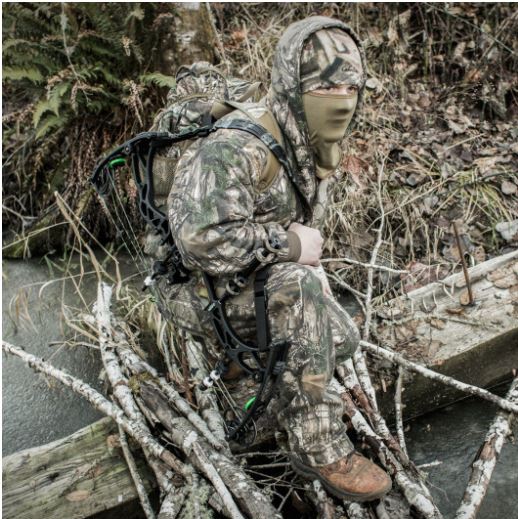
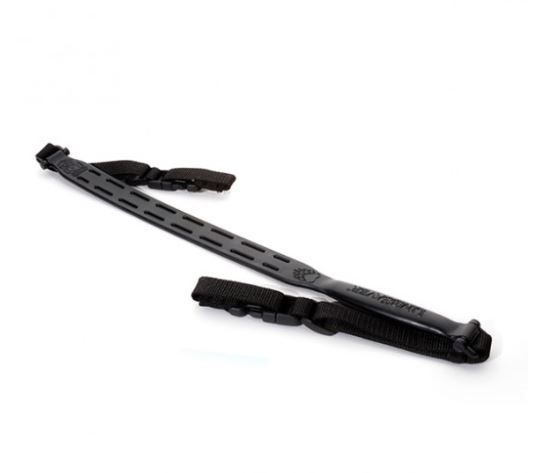
If you anticipate encountering obstacles like this on your next hunt try the Limb Saver sling for your bow, it will make carrying it over your shoulder much more comfortable. And during a hunt as you duck under branches and squeezed between tree trunks, you never really know what was happening to the string over your shoulder. Then one day it happens. After one morning’s hike, you see that the string was frayed from tree branch damage.
A partial solution is to re-wax your bow string with Limbsaver String Protectant, which reduced the risk of fraying.
Secondly, your hunting jacket should fit over the bow, meaning that you could zip up the jacket with the sling exposed.
Use a Limb saver Kodiak Lite compound bow sling made specifically for crossbows. Its wide, no-slip strap made the carry secure and comfortable. In this way, the entire bow-string, scope, and bolts were protected.
Follow our FISHING BLOG
WEB RATES FISH HUNT CABINS PHOTOS
TESTIMONIALS BROCHURE HUNT BOOKLET


 ON TARGET in CANADA
