RSS

Tag Archives: bear

Shoot it! : A picture is Worth a Thousand Words!

Shoot it! : A picture is Worth a Thousand Words!

Wawang has always been synonymous with great trophies.  We have also be recognized as one of the most photographed filled brag book holders amongst our peers.  Believe me, when you have this much to be proud of, you want the world to see it 🙂

This slideshow requires JavaScript.

It is for this reason that we announce that we can now be found on Instagram!  With so many photos of successful fishing and hunting, it just makes sense to share it with the world.

We have always lived by a principal here: Show me, don’t tell me!
Join us and see what we can show you…..because remember, what you show, shows what you know!


Follow our FISHING BLOG

WEB   RATES     FISH    HUNT    CABINS    PHOTOS
TESTIMONIALS    BROCHURE    HUNT BOOKLET

Enter your email address to subscribe to this blog and receive notifications of new posts by email.

← Back

Thank you for your response. ✨

Email Me....


Tags: , , , , , , , , , , , ,

The Bear Facts – What You Should Know

Despite divided opinion about the political correctness of bear hunting, it is something every hunter should try at least once. But a word of caution, if you want to make the most of your outings, there are a few key things you should know. The more knowledgeable you are, the better your chances of tagging a trophy.

WawangBear2

Black Bear can be found roaming the woods in every northern state, all provinces and many eastern and western states. The smallest member of the bear family in North America, black bears are the most populated. Thriving in almost every jurisdiction, populations are on the rise across the continent.

Black bear can be hunted only in the fall at Wawang Lake. Each state and province has specific regulations dictating when and how bears can be hunted. If you want to spend more time in the woods, black bears make the perfect prey during the fall. With thick coats in prime condition, fall is the preferred choice of bear hunters that are looking for that trophy bear. If you’re fortunate enough to connect with a trophy-sized black bear chances are you’ll end up with a beautiful specimen, well worth making into a rug or head mount.

Over-the-counter tags are only available in certain states and provinces. Some states issue tags only through a limited entry draw/lottery process.

In many ways black bears are misrepresented and misunderstood. Ironic but true, bruins are gentle by nature. This stands in contrast to their stereotypically vicious reputation.

Found in a variety of color phases, pelage can range from white through yellow, with black, brown and cinnamon being the most common. Their ominous looking dark shiny coat is the obvious contributor to their malignant image; it may also be the black bear’s slow, methodical and calculated gestures. Whatever the reason, these quiet, yet dominant nomads of our coniferous and mixed forests, are worthy of both admiration and respect.

A sow will typically accompany her cubs for 16 or 17 months. At the end of this period she will sever ties, forcing the youngsters to go off on their own.

Females will reach their maximum size at six years, and boars continue to grow to a maximum size at 12 years of age. On average, most bears taken by hunters weigh somewhere between 175 and 300 pounds. Any black bear topping the 300-pound mark is considered large.

Aside from body weight, black bears are judged by the size of their skull, with a Boone & Crockett minimum eligibility score of 21 inches and a Pope & Young score of 18 inches.

We often hear of bears being territorial and, in a sense, this is true. While there exists a distinct hierarchy within the ranks of bear world, it is not uncommon to find many individuals residing in a given geographic area. Home ranges can span from two to 10 miles and resident populations will often hold a variety of boars, sows and cubs.

Heavily timbered forests near logging areas often sustain good bear densities.  With blueberry areas, black bear favor the accessibility and abundance of such forage and often reside in proximity.

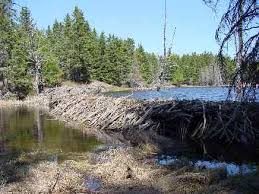
As forest dwellers, black bear are omnivorous. Predominantly feeding on a variety of plants and berries throughout the summer, springtime offers a feast of dandelion and fresh grasses. Opportunists extraordinaire, black bear  will also feed on carrion. Consistent with this and the fact that bears favor beavers as a staple food source in some regions, areas with spruce and poplar mixed forest and cascading beaver dams can be dynamite locations for the hunter to focus his/her attention.dam2
As with ungulate species, black bears undergo an annual rut cycle. Beginning in late May and continuing on through most of June, boars go in search of breeding partners. It is during this approximate six to eight week period that most large bears are taken by savvy hunters. Just as with members of the deer family, the larger, educated and otherwise reclusive boars become more visible as they readily cross roadways, clear-cuts and feed in open areas as they look for sows in estrus.

Black bears den up in late October and drift into a state of torpor. This is not a true state of hibernation, but rather of slowed metabolism, during the cold winter months. In this suspended state, they cease to defecate, urinate or eat for the next 5-6 months. They do however periodically awaken from this sleep to stretch and walk around. Usually only a brief interlude, black bears soon return to the den to wait out the long winter. Sows will deliver and nurse their cubs in the den and as the snow begins to melt and spring arrives, they’ll leave the den to begin their search for food.

Bear meat brings mixed reviews. Some savor every morsel, and others grimace at the very mention of it. Its greasy, coarse texture and sweet flavor requires a certain kind of palate. A word of caution however, bear meat should be thoroughly cooked as it can carry a parasitic infection known as trichinella, a potentially dangerous disease to humans.

Black bear have relatively poor eyesight, but an outstanding sense of smell and an uncanny hearing ability.

When hunting black bear, consider food source. Focus on areas with a sufficient forage base. There should be water nearby along with good cover. With the aid of topographic maps, look for spots with streams, rivers and ample low ground to provide damp, dark and cool cover. In boreal forest regions, this will be dense moss-laden areas bordering swamps and isolated marshy wetlands. In mountainous regions, this will often be found in drainages along creeks and other waterways.

Once a general area is identified, begin your search by looking at trees. Claw marks on deciduous trees are the most obvious indicators. In mixed forest areas mature poplars wear the battle scars revealing claw marks of days gone by. While rarely do you stumble upon fresh markings, these lasting scars unveil a historical presence.

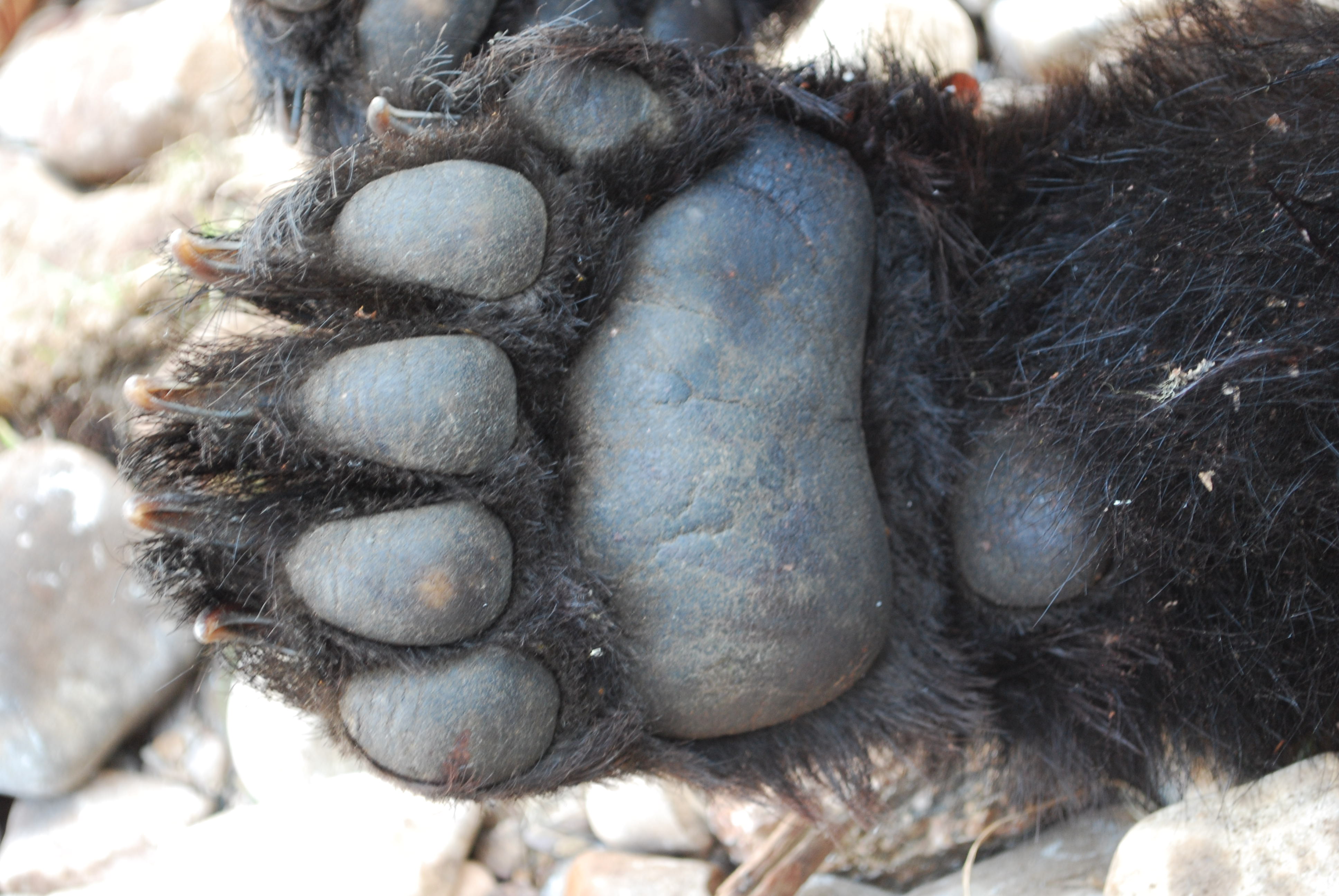
Bear leave tracks. A great place to look for these is in the wet sand and soil along shorelines of rivers, streams and lakes. Most often at least one or two old or new tracks are found, keeping in mind that bears frequently use these movement corridors. A 5″ or better pad/track can suggest a good bear is in the area.DDW-Bear-Hunt-086
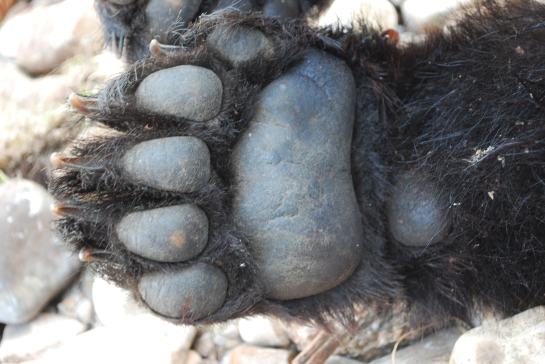
Nomadic creatures, bears commonly travel traditional trails along ridges, in valleys, and along drainages. Finding fresh scat can instill further confidence in your pursuit and help you identify the size of a particular bear.

A variety of strategies and techniques are proven effective in pursuing spring black bears. Whether floating down a river, walking cut-lines, spot and stalk hunting, baiting or calling, black bears are very huntable. Each strategy has its own merits.

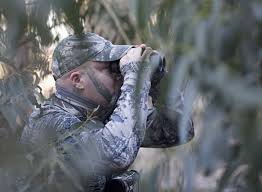
A good set of binoculars is a must when spot and stalk bear hunting. Once spotted, the stalk begins. The regular rules apply – keep the wind in your face; remember bears rely heavily on their sense of smell. The best time to spot and stalk black bears is the five to 10 day window just prior to, or just as the deciduous trees begin to bud. With little food available in the woods, they can frequently be seen browsing on cut-lines and south-facing slopes where the first green grasses begin to sprout.bin
Baiting is far from easy, and holds no guarantees! From time to time you get lucky and have one move in cautiously to inspect the provisions, but this is frequently more the exception than the rule. Perhaps the biggest advantage I see in baiting is that, if and when a bear finally does come to the bait, it can allow the hunter time to assess size and stature. This is advantageous for the trophy hunter, allowing the option to pass up smaller bears, thus diminishing the odds of falling victim to ground shrink.

Predator calling bears has come into its own in recent years. A myriad of videos and how-to articles are available to hunters looking for an alternative approach to hunting bears. I sometimes carry a Lohman wounded rabbit call for scenarios where calling might come in handy. While patience is required in this game of calling, it can take some time before a big old bruin responds favorably. But when they do, be ready, because they’re coming in for dinner!wawanglakebear
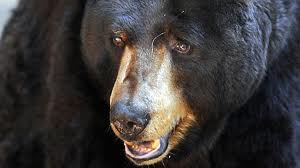
As a rule, black bears want no more to do with you than Superman does with kryptonite. The fact is, it’s important to treat them with due respect, be aware they possess immense strength and are able to cause considerable damage. To get an accurate picture on the nature of bears, I highly recommend a book entitled, Bear Attacks – Their Causes and Avoidance written by Dr. Stephen Herrero. Having heard him speak at a conference, the clear message I gleaned was that if, and when, black bears show aggression, most often they’ll bluff charge … stop 10 yards away and bounce on their front legs. Periodically they’ll stand up, but this is usually to help them get a better look at what is going on. This is intimidating, but most often harmless.

The only thing predictable about black bears is that they are unpredictable. Although many will avoid humans at all cost, there are some that have no fear at all. Caution and respect should always be exercised.

Follow our FISHING BLOG

WEB   RATES     FISH    HUNT    CABINS    PHOTOS
TESTIMONIALS    BROCHURE    HUNT BOOKLET

Enter your email address to subscribe to this blog and receive notifications of new posts by email.

← Back

Thank you for your response. ✨

Email Me....


Tags: , , , , , , , , , , , , ,

HOW SCENT ACTUALLY WORKS

scent2Scent is a mysterious  and often grossly misunderstood aspect amongst those who not only pursue game with hounds or other hunting dog breeds, but all hunters in general.

Scent is simply comprised of micro parti­cles of disturbed vegetable matter and/or released dead body cells drifting from the targeted subject. Vegetable matter can be crushed plant material or even minute surface dwelling bio-material living upon hard surfaces like concrete or rock.  Dead body cells consist of drifting dead skin, fur or feather cells eventually falling to the ground.  This may also include fluids, oils and vapors the body expels.

How long does a scent trail last?  That depends on given environmental conditions. The trail won ‘t exist very long if it has been hot and windy over dry surfaces.  In contrast, it will sur­vive much longer in cool, moist conditions upon grassy areas with no wind exposure.

Here are some Myths about scenting:

1.
“Animals can’t smell me when I apply scent-free products like special soaps, sprays or even wear scent free clothing.’   If you are liv­ing and breathing, you are giving off scent.  Although these products may lessen the scent intensity from your person, a Bloodhound can find you in the woods within minutes.  It is impossible for any human to be scent free.

2.
“Hounds can’t run a scent trail in the rain.”  Scent parti­cles tend to be hydrophilic, meaning they readily soak up moisture and create an effluvium of scent for the canine olfactory system.  Hounds have successfully found humans and animals in the pounding rain.  Any good hunting breed should be able to trail game in light to moder­ate rain.

3.
“My dog sometimes ground scents and other times he air scents.”  I suppose if your dog’s nose is on the ground, you can call that ground scenting and if it’s in the air, you can call that air scenting. Is it called water scenting if he sniffs a running creek or tree scenting if he barks up a tree?  Scent is scent!

imagesY2AQPWJMThe canine’s nose is attracted to the strongest scent source available at that moment during trailing.  The canine has thousands more scent receptors than humans. A roaming nose is a hunting nose; let it be.

If you want to see how your dog scents, ignite a brightly colored smoke bomb outdoors with plenty of room to observe and follow the pock­ etc. of floating smoke. Watch how clouds of smoke slowly break apart, climb high into tree tops, sink down into ravines or just lazily snake over the high grass. Wind, atmospheric pressure, humidity, temperature, etc. ….all affect the smoke as it does with scent. That is why your trailing dog runs, stops, circles around, runs again ….. Let him work it out without interference from you. Scenting is his world, not yours.

You can improve your game scent trailing by taking advantage of the best environmental conditions available, as well as staying away from proven scent killers, i.e…..hot and dry surfaces, vehicle exhaust fumes or petroleum products. Trying to scent a hound on a fresh track next to a chugging hunting rig is like us trying to smell a rose over a smoky camp fire.

bait

As much as we now know about scent, there is still plenty of scientific work to be done. As a hunter, you must understand how scent works whether you use a canine partner or not.  Whether hunting birds or bear, scent is always there.

Keep the wind on your face, the sun to your back and hunt like a predator!

Follow our FISHING BLOG

WEB   RATES     FISH    HUNT    CABINS    PHOTOS
TESTIMONIALS    BROCHURE    HUNT BOOKLET

Enter your email address to subscribe to this blog and receive notifications of new posts by email.

← Back

Thank you for your response. ✨

Email Me....


Tags: , , , , , , , , , , , , ,

Hi Bear!

wolf2Nathan was unsure of what to expect when he arrived at Wawang Lake.  He knew first hand that we produce nice bear as his father-in-law Randy had taken one the year before.  Randy had planned his return visit as soon as he landed his bear and knew he just had to bring Nathan.

Nathan had a very eventful first night with plenty of action….from the wolves!  As he returned to camp the first night, he was so excited to tell us that he was ‘almost eaten by a wolf!’.  As he sat his stand, there was a full wolf symphony surrounding him and echoing in the trees.  At the last minute, he caught a flash of white from the corner of his eye and caught the tail end of a wolf leaving his bait site.

On the second day of their hunt Nathan got his bear.  A nice 175 lb black bear and very credible with beautiful black/blue cape and all.174
While waiting for the others in his group to come by to pick him up Nathan amused himself by walking out to the road to see what he could see, when suddenly he saw a HUGE black bear walking right towards him.  Quickly thinking, he made himself bigger by raising his arms above his head and yelled ‘Hi Bear!!”, however, his voice cracked from anxiety and came out in a high-pitched, girly, squeal instead .  Just as the bear veered and went into the bush Nathan turned around and noticed a couple more bear walking out from the other side of the road towards his bait site but these ones paid him no mind.

bear (2)It was beginning to get dark and Nathan started walking towards the junction where he was to meet up with his hunt party, he turned and shuddered – ANOTHER BEAR and this one was glaring right at him from out of the brush just behind where he stood.  The hairs on the back of his neck stood right up as again Nathan said in a high pitched voice while waving his arms high above his head, ‘Hi bear!!’ hoping to scare it off.   The bear disappeared back into the dark abyss of the shadowing timber.

After seeing numerous bear all around he abuptly went into a hunting stance, now alert as he pointed and aimed his bow, swinging in all directions – getting ready for the attack.  It didn’t happen and at that very same moment the truck drove up as Nathan sighed in relief – it was a welcome sight.

It was a tense moment there for a while, one we’re sure Nathan will never forget and that he’ll repeat over and over for years to come of his encounter with multiple bear during his first black bear hunt at Wawang Lake.

The truth is the bear were only interested in the bait site and the alluring, delicious smells it was emitting.  It goes to show just how active our baits really are, and, Nathan got to see first hand when we say our baits have multiple bear on the baits – we’re not stretching the truth – not one bit!
multiple bear

Follow our FISHING BLOG

WEB   RATES     FISH    HUNT    CABINS    PHOTOS
TESTIMONIALS    BROCHURE    HUNT BOOKLET

Enter your email address to subscribe to this blog and receive notifications of new posts by email.

← Back

Thank you for your response. ✨

Email Me....


Tags: , , , , , , , , , , , , , , ,

Bear Encounter for Cyclist

975012fylers
In urban areas, cyclists need to watch out for cars. But in more rural places, there are other dangers. 57-year-old Jim Litz, a science teacher in Missoula, Montana, learned this when he t-boned a black bear while riding his bike to work. Read on for the details.“I was lucky. I was truly lucky”

He was traveling about 25 mph when he came upon a rise and spotted a black bear about 10 feet in front of him. “I didn’t have time to respond. I never even hit my brakes,” Litz said.

He tumbled over his handlebars, planting his helmeted head on the bruin’s back, and man and beast went cartwheeling down the road. The bear rolled over Litz’s head, and its mass cracked his helmet. As the duo toppled over one another, the bear clawed at Litz’s cycling jacket, scratching his flesh from shoulder to buttocks before scampering up a hill above the road, where it stopped and whined.

Litz’s wife drove by soon after and took her husband to Community Medical Center, and he immediately called  Fish, Wildlife and Parks to report the unusual collision. Game wardens told him they didn’t think the animal was seriously injured, but was more likely suffering from some bruised ribs – just like Litz.

“I was lucky. I was truly lucky, because I accosted the bear and he let me live,” Litz said. “I truly respect them. They’re beautiful creatures.”

by:  Michael Graham Richard

Black-Bear-crossing-the-Alaska-Highway

Follow our FISHING BLOG

WEB   RATES     FISH    HUNT    CABINS    PHOTOS
TESTIMONIALS    BROCHURE    HUNT BOOKLET

Enter your email address to subscribe to this blog and receive notifications of new posts by email.

← Back

Thank you for your response. ✨

Email Me....


Tags: , , , , , ,

The THREE Bears A Success Story!

There is nothing more impressive than having a one day harvest for one of the most revered predators….imagine having THREE!!

IMG_6110 - Copy
Cody, Rod and Brad descended upon Wawang in hopes of each bringing home a bruin.  Father and son, Cody and Rod, were returning hunters while Cody’s best friend Brad made this his first visit.

Each hunter was prepared and after the day long drive from Iowa, were ready to ascend their trees to await their chance at a bear.

Outwardly, this was to be a week of patience as Cody was no stranger to the wiles of those elusive creatures.  This being Cody’s third attempt (second with us at Wawang) he was determined to pin that tag on something ‘decent’

Cody had spent the entire year honing his skills on sizing and judging bear….a talent most discount until they are faced with the opportunity to shoot.  Read:  How to Size a Bear

The day was bustling at the lodge as it was Labor Day weekend and it was our annual end of the year celebration.  The kitchen was filled with the aroma of turkey, mashed potatoes, roast and all the fixings.  In the bustle of preparation, Cody emerged and made his way across the floor to the kitchen.

labor-day

It’s an exciting time at Labor Day with the bear hunt going on!

We were in high gear with getting the food just right when we looked out the door and saw him heading over.  Lost in our own thoughts, we carried on about the kitchen….until…..wait a minute…wasn’t he supposed to be in a tree?  He only left a couple of hours ago!

“Cody, what are you doing?  Did your truck break down?” we were concerned for hunting time being missed.  Cody reached into his pocket and produced his camera.  “I got one, but I think you might be mad….it’s small.”  His shoulders dropped and he passed the camera to us.

We looked over the picture and then back to Cody….there were no words.   “Cody, I don’t know what you consider small but this isn’t anywhere close to what we call small!”  His eyes lit up….when somebody that has seen numerous BIG bear tells you that you hit the jackpot, it is a good day!

Cody then left to wait for his hunting partners to finish their hunt for the evening to help him retrieve his bear.   The lodge returned to its frantic state of meal prepare.  As the festivities rolled on that night, Cody and his crew finally returned….

Everyone in camp was excited to lay eyes on Cody’s trophy BUT were completely unprepared to meet an entire truck full of bear!  3 bear to be exact!  2 boars and a sow…Goldilocks wouldn’t have been happier!

Each one took turns telling the exciting tale of retrieving their harvest…..each one amazed at the success of the other and each beaming with excitement….it was day 1 and the anxiety of the hunt was already over and done with….now it was time to fish!!

During that week, laughs were exchanged, trophy fish were caught and memories made…a father, son and best friend made a Wawang hunt the life long story to beat!

So glad that we could be a part of such great memories!!

Follow our FISHING BLOG

WEB   RATES     FISH    HUNT    CABINS    PHOTOS
TESTIMONIALS    BROCHURE    HUNT BOOKLET

Enter your email address to subscribe to this blog and receive notifications of new posts by email.

← Back

Thank you for your response. ✨

Email Me....


Tags: , , , , , , , , , , ,

Hunting Bears With Bows – Decoy Tactics

Trophy boars are smarter than your average bear. But even the savviest old bruin has a few chinks in his armor. Using a decoy is an exciting way to exploit them. Even weary old black bears will come in spoiling for a fight. Here are three strategies for drawing a dominant, hungry bruin into bow range.

 1

The Intruder
Big boars are solitary animals and will claim a food source as their own, commonly defecating along entrance trails to warn other bears away. To get this bear’s attention, stake a small bear decoy near the food source, positioned with its head down and its backside facing the direction you expect a boar to approach. Attach a few strips of black cloth to the decoy’s ears and tail for added realism and collect some bear scat from another area—preferably from a boar—and with a plastic bag, transplant it on the entrance trails.

Now sit back. Any wise old boar that might otherwise camp just off the food until nightfall is almost sure to investigate when he sees your “intruder.” Keep in mind that a boar may visit a food site daily or stop by every second or third day while patrolling his home turf. Be patient, and don’t let your guard down.

2

The Easy Meal
Black bears are fond of fresh meat and will drop their guard to capture an animal in distress. Any small, furry decoy, like those used for foxes and coyotes, wiggling about in plain sight is sure to catch a passing bear’s attention. With a little luck, the bruin will move in quickly to finish off what he thinks is hapless prey. If he hangs up, though, add a few squeals from a dying-rabbit call to entice him.

If whitetail deer are prevalent in your area, a fawn decoy can be too much for any hungry black bear to ignore. Try a few fawn contact bleats, and if that fails, go to a fawn-in-distress call. Nock a broadhead and get ready. The bear will come in fast, so be prepared to shoot pronto.

3

The Feeding Female
You’ll have to wait a few months to use this setup, but it’s a good one to have in your arsenal. Black bears rut in late spring and early summer and will visit bait sites, looking for a sow in heat. If baiting is legal in your area, position a small black bear decoy with its head in the bait barrel, and hang a few scent canisters soaked with sow-in-heat urine 3 or 4 feet off the ground nearby.

Big boars are ultracautious around bait, so odor control is critical. As you’re setting up, wear rubber gloves and spray the decoy down liberally with a quality scent remover. The boar will approach the decoy warily. Don’t rush the shot. As he investigates, you should have plenty of time to draw.

Follow our FISHING BLOG

WEB   RATES     FISH    HUNT    CABINS    PHOTOS T
ESTIMONIALS
    BROCHURE    HUNT BOOKLET

Enter your email address to subscribe to this blog and receive notifications of new posts by email.

← Back

Thank you for your response. ✨

Email Me....


Tags: , , , , , , , , , ,

Country-Style Fried Bear Steak

This recipe will bring out the southern drawl in anyone. It’s great for any game meat but extra special with bear. It uses a blended creole seasoning mix recipe, which are also included.

bear-steak-620x338[1]

Creole Seasoning

  • 2 tbsp. onion powder
  • garlic powder
  • dried oregano leaves
  • dried sweet basil 1 tbsp.
  • dried thyme leaves
  • black pepper
  • white pepper
  • cayenne pepper
  • salt 3 tbsp.
  • sweet paprika

Blend together in a food processor. Store in an airtight container.

Ingredients

  • 2 lbs. bear steak, cut into 4 equal portions
  • 3 tbsp. creole seasoning,
  • divided ½ lb. bacon, chopped
  • 11⁄4 cups all-purpose flour,
  • divided 1 large egg
  • 2½ cups milk,
  • divided 1 cup bread crumbs
  • ½ cup yellow onion, minced
  • 1 tsp. salt
  • ½ tsp. pepper

Instructions
Place the bear steak on a piece of plastic wrap and cover with another piece of plastic wrap. Pound steak with a meat mallet until it’s ¼ inch thick. Season both sides of meat with 1 tsp. of creole seasoning.

Fry the bacon in a large, heavy skillet until just crisp. Remove and drain. Set pan with the bacon grease aside.

Prepare 3 bowls to dredge the meat.

Into the first bowl, add 1 cup flour and 1 tbsp. creole seasoning.

To the second bowl, add egg whisked with ½ cup milk and ½ tsp. creole seasoning.

Into the third bowl, add bread crumbs mixed with all but ½ tsp of remaining creole seasoning.

Dredge the meat in the first bowl, shake off any excess, then dip in second bowl and again shake off excess, then roll in crumb mixture. Repeat with all steaks.

Reheat the bacon fat in skillet until hot, but not smoking. Carefully add 1 piece of meat and fry until golden, about 3 to 4 minutes per side. Transfer to paper towel to drain, repeat with other pieces of meat.

Add ¼ cup flour and ½ tsp. of creole seasoning to drippings in pan.

Cook over medium heat, stirring constantly for 2 minutes. Add onion and cook, stirring until onions soften, about 4 minutes. Whisk in remaining milk and salt and pepper and bring to a boil. Reduce heat to low and simmer until sauce is thickened, about 5 minutes.

Stir in bacon. Serve with steaks.

Follow our FISHING BLOG

WEB   RATES     FISH    HUNT    CABINS    PHOTOS
TESTIMONIALS    BROCHURE    HUNT BOOKLET

Enter your email address to subscribe to this blog and receive notifications of new posts by email.

← Back

Thank you for your response. ✨

Email Me....

 
Leave a comment

Posted by on February 10, 2016 in Bear, black bear, recipe, Wawang Lake Resort


Tags: , , , ,

Tips for Spot-Stalk Black Bear Hunting

wawangbear2 (550x417)

The most underrated hunt  is for trophy-class fall black bears. There’s this misconception out there that hunters can just walk up on them. That’s just false. They’re one of the toughest trophy animals to spot and stalk in North America.   Get on the record-book bruins with this killer nine-step plan.

1. Find Mature Timber
You have to locate three ingredients to get into big bears, ­Werner says. First, old-growth timber for denning, then food and water. Look for 10- to 50-acre parcels with these three features.

2. Scout it for Sign
Look for big branches broken off trees, claw marks in bark, and rubbed-out bark stubbled with bear hair. Ideally, you’ll also find fresh tracks on the ground measuring 6 inches wide or better.

3. Check for Scat
It comes out green but oxidizes very quickly, turning black almost immediately.   The greener it is inside, the fresher.

bear2

4. Focus on Blueberries and Rose Hips
Bears go into a feeding frenzy in early October. Climb a nearby ridge and monitor the food source with binocs or a spotting scope.

5. Trust your Eyes
Bears feeding heavily will eat for about a third of the day and sleep the rest. The bears you glassed will show.

6. Judge the Bear
When you see a bear, determine if it’s worth going after. If one ear width separates the ears, it’s small; two ear widths, medium. Three means it’s a shooter.  READ:  How to Size a Black Bear

7. Note the Wind
Bears don’t see or hear well, but their nose is 50 times better than a bloodhound’s.  There is no earthly way to beat their nose. The wind must be perfect.

8. Start the Stalk
Follow a route that plays the wind and approaches the bear from behind.  If the bear alerts in your direction, stop and wait.  Only move forward when the bear goes back to feeding and looks relaxed.

9. Make a Clean Kill
Never take a long shot, because anything less than a double-lung hit makes recovery a coin toss.  Because of the nature of hunting large predators, guys get very excited. So you have to practice enough so the shot is second nature.  But when it all finally comes together, there’s nothing better.

Follow our FISHING BLOG

WEB   RATES     FISH    HUNT    CABINS    PHOTOS
TESTIMONIALS    BROCHURE    HUNT BOOKLET

Enter your email address to subscribe to this blog and receive notifications of new posts by email.

← Back

Thank you for your response. ✨

Email Me....


Tags: , , , , , , , , ,

The Best Shot Placement for Black Bear

SO, you’ve opted for a lung shot. Good choice. But where exactly you should place your bullet depends on your quarry, as the following tips reveal. (Please refer to the organ legend) Sometimes you only get one chance to bring down a big-game animal. Here are 7 ways to help make sure it truly counts.

  • Avoid the head-the target is too small and you’ll ruin the best part of your fireplace rug. You’ll also render your bear ineligible for official scoring.
  • As for spine or neck shots, it can be difficult to visualize exactly where to find the spinal column thanks to the bear’s long hair and thick body.bear-target

Again, lung shots are your best bet. Trace the back of the front leg up to about one-third of the way into the chest. The lungs on a bear are positioned a little more forward than on an ungulate, so you don’t have as much leeway if you shoot back of your aiming point. For the shoulder/heart shot, which is popular for anchoring bears in their tracks, follow the centerline of the front leg up to the one-third point of the body. Be careful not to shoot low or forward, or you’ll quickly have a wounded animal on your hands.

WOUNDED and lost big game animals are part of the somber side of hunting. None of us is comfortable with the subject, but if you have any measurable hunting experience, you’ve undoubtedly seen examples. Maybe you’ve even lost an animal or two yourself.

It’s a certainty that as long as there’s hunting, game will be wounded and not recovered. In such situations, it’s just as certain that the bullet didn’t hit the animal in the right place. Why exactly can be blamed on any number of variables, but in most cases it’s safe to say the shot should never have been taken in the first place.

As hunters, our most important priority is to do everything possible to ensure a clean, quick, humane kill-it’s our moral obligation every time we head afield. Here are some important considerations in making that happen.

BULLET PLACEMENT
Much has been written and discussed about selecting the best rifle, cartridge, bullet and optics for hunting specific species under various conditions. Most of this advice is sage indeed, helping hunters learn about and understand the limitations of their equipment. But when it comes to a quick kill, the single most important factor is bullet placement. A .243 in the heart or lungs of even the largest big-game animal, for example, is more certain to result in its demise than a .500 Nitro Express in its leg. Just think of hunting legend Karamojo Bell. It was his fanaticism over bullet placement coupled with an understanding of his quarry’s anatomy-that allowed him to tale down so many elephants with his meager .275 Rigby, a cartridge equivalent to today’s 7×5 7.

wawangbear2 (550x417)

MARKSMANSHIP
The first step in ensuring accurate bullet placement comes with the decision to squeeze the trigger. Before you hit the switch, you must have an extremely high expectation of putting the bullet right where you want it, and that means understanding your own limitations as a marksman. I’ve never been much impressed by tales of 450-yard kill shots on deer or other game. While such shots are possible, not many hunters can make them with any consistency. With few exceptions, I shudder when I hear hunters talking about their long shots-much like a gambling addict bragging about his one win, for each tale of success there are likely tenfold as many unspoken failures.

The longest shot I’ve ever taken was with a 7mm Rem. Mag. on a five-point bull elk in B.C.’s Muskwa Valley. It was 360 yards away. I had a solid rest, a reasonable amount of time and a mild, though gusting, wind. The bull was dead when we got to him, having never moved. Despite that, I’m not sure I’d take the same shot today if it were presented. Perhaps I no longer feel the need to, as I might have back when I was a much less seasoned hunter. Experience has taught me that too much can go wrong in such a situation-not to mention the fact few animals can travel as far, or as quickly, as an ells can when wounded.

Jon Hanson - Tiffin, IA 440 lb. black bear

Jon Hanson – Tiffin, IA 440 lb. black bear

No, I’m far more impressed by the hunter who tells me he snuck in to within 75 yards of a herd of elk, or never shoots at running game or at any animal beyond 150 yards. This is the hunter I admire, for he clearly understands that undisturbed game and cool-handed marksmanship should be the rule, not the exception. This is the hunter who believes that 20 bullets can equal 20 deer, and he’ll wait to shoot only when he’s extremely confident of accurately placing a bullet.

HEAD & NECK SHOTS
So, where on an animal should we try to place our bullet to ensure a one-shot, clean kill? There’s no denying the surest fatal shot is to the brain or spinal column. Either will put an animal down almost instantly, and result in very little ruined meat. Under most circumstances, however, this is not a shot I would recommend. For starters, the brain is a relatively small target, and even a narrow miss can result in a broken jaw, lost eye or other similar wound that condemns an animal to a most unpleasant, slow death. I once shot an antelope sporting a fresh bullet wound through the bridge of its nose. Whether the hunter who first hit it was aiming for the brain, I can’t say for sure, but the buck was clearly laboring, almost choking on blood, and would have suffered considerably had I not come across it.

Neck shots are equally uncertain, as the spinal cord must be severed to ensure instant death. Miss by even a little bit, and you’ve probably got an animal with a muscular wound from which it will likely recover, but not without considerable agony. In the worst-case scenario, you may sever the trachea-the animal will likely escape, but suffer a lingering demise. When neck shots don’t connect directly with the spinal column, an animal will often drop to the ground almost immediately but quickly recover and run off. If you shoot an animal in the neck whether by design or by accident-it’s therefore important to keep a close eye on it until you’ve confirmed it’s down for keeps.

Head and neck shots do have their place in the right circumstances, but they should only be taken at close range by capable shooters who know their quarry’s anatomy. They’re also acceptable in the rare event of an emergency, when a dangerous animal needs to be brought down in a hurry.

SHOULDER SHOTS
Some hunters prefer shoulder shots because they will disable game while also inflicting fatal damage to the heart or lungs. Even when no collateral damage occurs, a broken shoulder, or two, will bring down an animal, rendering it helpless. In my opinion, this shot should be reserved for dangerous game, particularly bears. While some hunters use shoulder shots on larger animals such as moose and elk, I find the resulting dispersal of bullet and bone fragments ruins too much meat. Having shot a whitetail through the shoulder last year, I can speak first-hand of the meat that was wasted. Another thing to keep in mind when considering the shoulder shot is that if you shoot too high or too far in front, you’ve got either a clean miss or an animal with agonizing wounds. And if you shoot too low, you’ve got an animal with a broken leg that can still escape, only to later succumb to its wounds or predators.

images539SD7BZHEART SHOTS
The heart shot gets a lot of attention, though I suspect most hunters don’t actually realize just how low in the chest the heart lies in big game. While no doubt fatally damaged if hit, the heart offers a small target, and is often covered by the upper leg. There’s little room for error: too far forward and you’ve got a non-fatal brisket shot; too low and you’ve hit muscle or broken a leg, with no expectation of quickly recovering the animal. And if your bullet strikes too far back, you’ve got a gutshot animal. The only practical room for error is if you shoot high and take out the lungs. While many believe the heart shot is almost instantly fatal, most experienced hunters will tell you that a heart-shot animal typically travels farther before collapsing than one that has been lung-shot.

LUNG SHOTS
I believe the lung shot is the appropriate shot for 90 per cent of the big-game hunting situations in Canada. First and foremost, a bullet through the lungs results in an almost certain one-shot kill. In most cases, the animal won’t drop on the spot, but seldom will it travel more than 100 yards or so before falling over; the damage a modern bullet does to the lungs is that devastating.

images5VJ79DJ0The lungs also offer a relatively large target, bigger than any other assuredly fatal zone on a game animal. This allows for a fair margin of error. Shoot low, and you’ll take out the heart; a bit high and you’ll sever the spinal column. Too far forward and you have a debilitating shoulder shot. Only when you shoot too far back do you have a problem-animals shot in the paunch typically suffer lingering deaths, and if you do happen to recover one, you’ve got a heckuva mess on your hands when it comes to field-dressing it. If you shoot just a little too far back, however, you may get lucky and strike the liver. Animals hit in this vital organ tend not to go too far before lying down.

The lungs on a game animal generally cover about two-thirds of its chest area when viewed broadside, more or less in the centre and a little toward the bottom. A professional hunter in Africa once told me he thought North American hunters tended to shoot dead centre in the chest of an animal; he believed the more effective shot was to the top of the lower third of the chest. He may well have been right, but 1 still maintain that allowing as much room for error as possible is the wisest thing most of us can do. As such, when my quarry is broadside, I generally aim for the centre of the chest, just behind the shoulder. Often, an animal will not react immediately to a lung shot, causing some hunters to think they’ve missed when they’ve actually made an excellent shot. I remember one moose I shot three times in the span of about 10 seconds. It didn’t take two steps during that time, and I couldn’t understand how I could be missing such a big target. The animal dropped soon after the third shot, however, and when I skinned it out, a salad plate would have covered all three holes in its chest and lungs. (For species-specific tips on lung shots, see “Top targets” on page 48.)

SHOOTING ANGLES
While we all prefer broadside shots, as often as not we face shooting opportunities from an angle. You still want your bullet to enter the chest cavity, however, so it’s important to visualize the path your bullet must take. With an animal quartering toward you, your target should be somewhere between the base of the neck and the point of the facing shoulder. If an animal is facing you directly, the centre base of the neck is the preferred target. The more difficult shot to visualize is when an animal is quartering away. Take your shot with the intention of breaking the far side shoulder and you’ll generally send your bullet through the desired lung region. Be aware that the tendency in this situation is to shoot too far back, resulting in an unwanted paunch shot. I recommend not shooting when animals are quartering away at extreme angles or facing directly away from you. While we all know the old “Texas heart shot” through the behind can be fatal, the odds are your bullet will break up or deflect on contact with bones, impeding its ability to get into the vital organs. I know some may disagree, but this is one shot I simply won’t take, and I advise others to follow suit. If you absolutely must tale this shot, at least be sure to use a well-constructed bullet designed for maximum weight retention and penetration. Remember, when it comes to shot placement, the goal isn’t simply a freezer full of meat it’s also to get the job done quickly and efficiently.

Follow our FISHING BLOG

WEB   RATES     FISH    HUNT    CABINS    PHOTOS
TESTIMONIALS    BROCHURE    HUNT BOOKLET

Enter your email address to subscribe to this blog and receive notifications of new posts by email.

← Back

Thank you for your response. ✨

Email Me....


Tags: , , , , , , , , , , , ,