RSS

Tag Archives: WMU 15A

Tracking Black Bear

imagesY2AQPWJM

The goal of all hunters is a quick, humane kill where the animal drops in it’s tracks and is dead within seconds. But in a pursuit that has as many variables as hunting, sometimes things don’t quite go according to plan. However, game can be tracked and recovered with the right skills and with patience.

First of all, you need to wait the right amount of time after the shot before tracking a wounded animal. I’ve heard estimates of waiting 30 minutes for a hit in the vitals and 5-8 hours for a gut shot. Waiting overnight might be even better on very poorly hit animals, however for black bear the temps may not allow for this as the meat might spoil.

imagesB582SF66You don’t want to push an animal. Be patient and wait it out. If you push a wounded animal, and he gets adrenaline flowing, the odds are against you finding that animal.

You need to mark the exact spot where the animal was when it was hit. This will save you much time in searching for blood. Also mark the position where you took your shot from in case you have to return to it to regain that perspective. Once you find the trail that the animal took after the hit you should try and identify where you hit that animal. Dark blood can indicate a liver or muscle wound; bright red blood with bubbles in it is a good sign and indicates a hit in the lungs; green liquid or bits of food matter in the blood indicates a gut shot.

Take it slow and mark blotches of blood with flagging tape every 25-50 yards to trace the trail from afar to determine overall direction the animal took. Just remember to go back and pick up the tape when you’re done. You should walk to the side of the trail so as to not disturb the sign. If you lose the trail and can’t find more blood, start fanning out and walking circles from the last place you had blood.

2013-10-12-birch-012When tracking a wounded animal it is easy to get caught up in just looking at the ground, trying to find that next speck of blood. You should be aware of what is 100 yards out in front of you as well and be ready for a killing shot if the animal should get up in front of you.

If you take it slow, be quiet and be thorough, finding wounded animals can be done on a consistent basis. Follow these tips to help find the game that you might have not put the best shot on.
DDW-Bear-Hunt-086

Follow our FISHING BLOG

WEB   RATES     FISH    HUNT    CABINS    PHOTOS
TESTIMONIALS    BROCHURE    HUNT BOOKLET

Enter your email address to subscribe to this blog and receive notifications of new posts by email.

← Back

Thank you for your response. ✨

Email Me....


Tags: , , , , , , ,

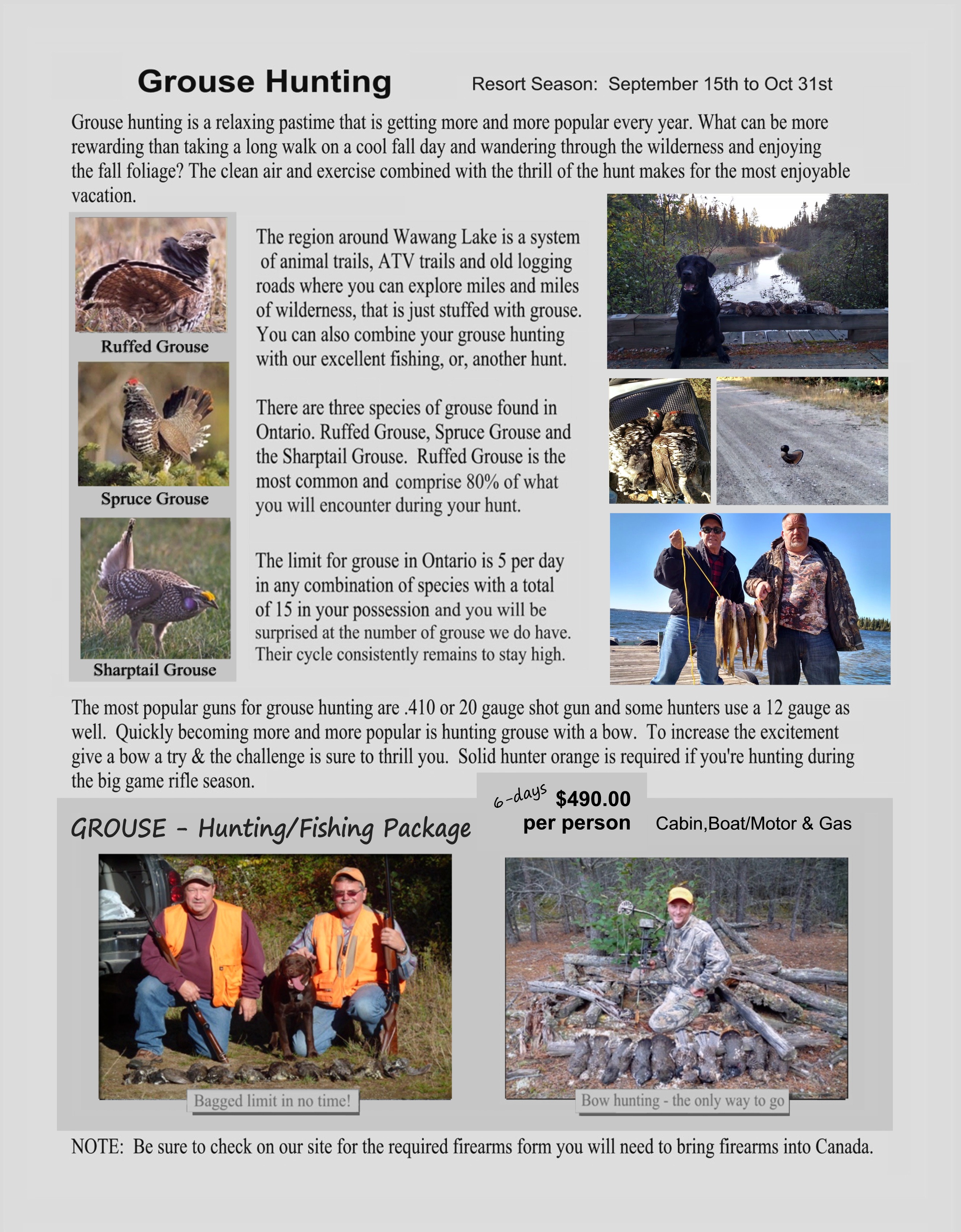
GROUSE Hunting Rates

Bookonline
pg 4 grouse

Bookonline

Follow our FISHING BLOG

WEB   RATES     FISH    HUNT    CABINS    PHOTOS
TESTIMONIALS    BROCHURE    HUNT BOOKLET

Enter your email address to subscribe to this blog and receive notifications of new posts by email.

← Back

Thank you for your response. ✨

Email Me....


Tags: , , , , , , , , ,

Get More Early-Season Birds

It weave left, slip right, then disappear through the auburn treetops. It’s not often you get such a clear look at an escaping grouse during the early weeks of the season, but there I was, frozen as the bird slipped through the prettiest shooting lane I’d see on the entire trip. I never pulled the trigger.

ruffed-grouse-flying-down-from-limb-timothy-flanigan

The embarrassing reality of this scenario is that I’d been caught off guard. It was my first grouse hunt, and I wasn’t prepared for the surprise of the flush. That was a tough lesson, but it wasn’t the only one I learned during that trip to the hallowed grouse of NW Ontario’s Boreal Forest. Here are some more hits and misses that, if you’ll consider before you reach the woods, should help you bag more early-season birds.


1.  Being Aggressive

There’s no place for methodical shooting when hunting grouse. There’s no time for the shot to develop, as with long, loping shots on the sporting clays course. Grouse are fast, and they live in dense cover. But you don’t have to be a snap shooter to be successful. You just have to be aggressive. You should have nothing on your mind but finding that bird. The sooner you see it, the sooner you can move for it. Visualize beating the bird to the treetops with your gun.

2.  Going Off Trail
We started our morning busting brush but by midday got lazy and stayed on old logging roads & trails. The result was a half dozen points in cover that we couldn’t reach in time. Our hunt picked up tremendously in the afternoon, when we got back in the brush.

OLYMPUS DIGITAL CAMERA

3.  Misjudging Range
Twice I flushed grouse that I thought were out of range, although they were visible, only to realize afterward that they were makeable shots. Part of the fault was how I prepared. Before the trip I had practiced mostly fast, outgoing targets thrown from a few yards in front of me—textbook fast-flushing bird presentations. I was visualizing those shots in the field, and when birds flushed from farther away, I had the impression they were out of range.  Be sure to practice at longer ranges.

4.  Starting With The Gun Up
A solid ready position is a key to hitting fast-flying birds. It gets your body and eyes ready to make a quick, efficient move. When you moved in on birds with the stock up under your armpit and the barrel pointed forward, you will shoot much better.

5.  Relaxing After The Flush
Grouse might not covey up like quail, but they do often travel in close proximity to each other, especially where there’s a good food source. I saw this first-hand when we flushed three pairs of grouse over the course of a day. So when a bird flushes out of range or doesn’t offer a shot, don’t drop your guard. Be ready for another bird to flush.

Evening_Flight-_Ruffed_Grouse_large

Follow our FISHING BLOG

WEB   RATES     FISH    HUNT    CABINS    PHOTOS
TESTIMONIALS    BROCHURE    HUNT BOOKLET

Enter your email address to subscribe to this blog and receive notifications of new posts by email.

← Back

Thank you for your response. ✨

Email Me....


Tags: , , , , , ,

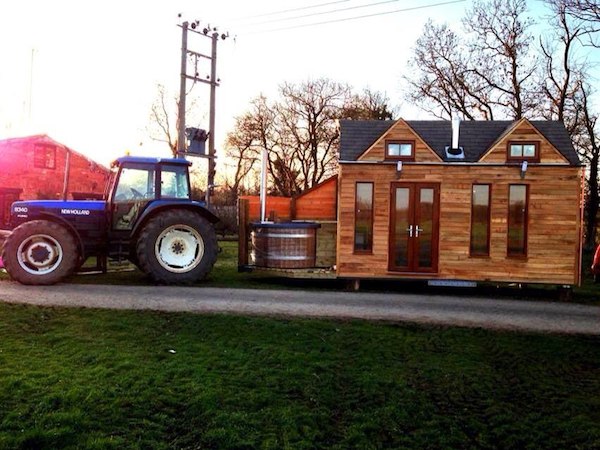
Tinywood Home on Trailer with Built In Outdoor Hot Tub

Have you ever heard about a tiny house that is also a hot tub? Yes, the project can be made and it already exists, thanks to a small company based in Warwickshire, England. The architects thought about building a home that offer comfort, relaxation and entertainment at the same time, and built this amazing tiny home that comes with an attached hot tub.

hot-tub-tiny-home-on-wheels

The company is specialized in building tiny homes and merging utility with creativity.

The inside is fully equipped as you will find a small kitchen, lounge area, two bedrooms upstairs and a functional heating system.

So after taking a look, you can say that it is the most perfect small vacation house for you and your family. As tiny as it is, there is still plenty of space inside for a family with two kids.

The outside hot tub is just an extra feature that tops the awesomeness of this house.

hot-tub-tiny-home-on-wheels-7

Follow our FISHING BLOG

WEB   RATES     FISH    HUNT    CABINS    PHOTOS
TESTIMONIALS    BROCHURE    HUNT BOOKLET

Enter your email address to subscribe to this blog and receive notifications of new posts by email.

← Back

Thank you for your response. ✨

Email Me....


Tags: , , , , , , , , ,

Bear Encounter for Cyclist

975012fylers
In urban areas, cyclists need to watch out for cars. But in more rural places, there are other dangers. 57-year-old Jim Litz, a science teacher in Missoula, Montana, learned this when he t-boned a black bear while riding his bike to work. Read on for the details.“I was lucky. I was truly lucky”

He was traveling about 25 mph when he came upon a rise and spotted a black bear about 10 feet in front of him. “I didn’t have time to respond. I never even hit my brakes,” Litz said.

He tumbled over his handlebars, planting his helmeted head on the bruin’s back, and man and beast went cartwheeling down the road. The bear rolled over Litz’s head, and its mass cracked his helmet. As the duo toppled over one another, the bear clawed at Litz’s cycling jacket, scratching his flesh from shoulder to buttocks before scampering up a hill above the road, where it stopped and whined.

Litz’s wife drove by soon after and took her husband to Community Medical Center, and he immediately called  Fish, Wildlife and Parks to report the unusual collision. Game wardens told him they didn’t think the animal was seriously injured, but was more likely suffering from some bruised ribs – just like Litz.

“I was lucky. I was truly lucky, because I accosted the bear and he let me live,” Litz said. “I truly respect them. They’re beautiful creatures.”

by:  Michael Graham Richard

Black-Bear-crossing-the-Alaska-Highway

Follow our FISHING BLOG

WEB   RATES     FISH    HUNT    CABINS    PHOTOS
TESTIMONIALS    BROCHURE    HUNT BOOKLET

Enter your email address to subscribe to this blog and receive notifications of new posts by email.

← Back

Thank you for your response. ✨

Email Me....


Tags: , , , , , ,

The THREE Bears A Success Story!

There is nothing more impressive than having a one day harvest for one of the most revered predators….imagine having THREE!!

IMG_6110 - Copy
Cody, Rod and Brad descended upon Wawang in hopes of each bringing home a bruin.  Father and son, Cody and Rod, were returning hunters while Cody’s best friend Brad made this his first visit.

Each hunter was prepared and after the day long drive from Iowa, were ready to ascend their trees to await their chance at a bear.

Outwardly, this was to be a week of patience as Cody was no stranger to the wiles of those elusive creatures.  This being Cody’s third attempt (second with us at Wawang) he was determined to pin that tag on something ‘decent’

Cody had spent the entire year honing his skills on sizing and judging bear….a talent most discount until they are faced with the opportunity to shoot.  Read:  How to Size a Bear

The day was bustling at the lodge as it was Labor Day weekend and it was our annual end of the year celebration.  The kitchen was filled with the aroma of turkey, mashed potatoes, roast and all the fixings.  In the bustle of preparation, Cody emerged and made his way across the floor to the kitchen.

labor-day

It’s an exciting time at Labor Day with the bear hunt going on!

We were in high gear with getting the food just right when we looked out the door and saw him heading over.  Lost in our own thoughts, we carried on about the kitchen….until…..wait a minute…wasn’t he supposed to be in a tree?  He only left a couple of hours ago!

“Cody, what are you doing?  Did your truck break down?” we were concerned for hunting time being missed.  Cody reached into his pocket and produced his camera.  “I got one, but I think you might be mad….it’s small.”  His shoulders dropped and he passed the camera to us.

We looked over the picture and then back to Cody….there were no words.   “Cody, I don’t know what you consider small but this isn’t anywhere close to what we call small!”  His eyes lit up….when somebody that has seen numerous BIG bear tells you that you hit the jackpot, it is a good day!

Cody then left to wait for his hunting partners to finish their hunt for the evening to help him retrieve his bear.   The lodge returned to its frantic state of meal prepare.  As the festivities rolled on that night, Cody and his crew finally returned….

Everyone in camp was excited to lay eyes on Cody’s trophy BUT were completely unprepared to meet an entire truck full of bear!  3 bear to be exact!  2 boars and a sow…Goldilocks wouldn’t have been happier!

Each one took turns telling the exciting tale of retrieving their harvest…..each one amazed at the success of the other and each beaming with excitement….it was day 1 and the anxiety of the hunt was already over and done with….now it was time to fish!!

During that week, laughs were exchanged, trophy fish were caught and memories made…a father, son and best friend made a Wawang hunt the life long story to beat!

So glad that we could be a part of such great memories!!

Follow our FISHING BLOG

WEB   RATES     FISH    HUNT    CABINS    PHOTOS
TESTIMONIALS    BROCHURE    HUNT BOOKLET

Enter your email address to subscribe to this blog and receive notifications of new posts by email.

← Back

Thank you for your response. ✨

Email Me....


Tags: , , , , , , , , , , ,

Hunting Bears With Bows – Decoy Tactics

Trophy boars are smarter than your average bear. But even the savviest old bruin has a few chinks in his armor. Using a decoy is an exciting way to exploit them. Even weary old black bears will come in spoiling for a fight. Here are three strategies for drawing a dominant, hungry bruin into bow range.

 1

The Intruder
Big boars are solitary animals and will claim a food source as their own, commonly defecating along entrance trails to warn other bears away. To get this bear’s attention, stake a small bear decoy near the food source, positioned with its head down and its backside facing the direction you expect a boar to approach. Attach a few strips of black cloth to the decoy’s ears and tail for added realism and collect some bear scat from another area—preferably from a boar—and with a plastic bag, transplant it on the entrance trails.

Now sit back. Any wise old boar that might otherwise camp just off the food until nightfall is almost sure to investigate when he sees your “intruder.” Keep in mind that a boar may visit a food site daily or stop by every second or third day while patrolling his home turf. Be patient, and don’t let your guard down.

2

The Easy Meal
Black bears are fond of fresh meat and will drop their guard to capture an animal in distress. Any small, furry decoy, like those used for foxes and coyotes, wiggling about in plain sight is sure to catch a passing bear’s attention. With a little luck, the bruin will move in quickly to finish off what he thinks is hapless prey. If he hangs up, though, add a few squeals from a dying-rabbit call to entice him.

If whitetail deer are prevalent in your area, a fawn decoy can be too much for any hungry black bear to ignore. Try a few fawn contact bleats, and if that fails, go to a fawn-in-distress call. Nock a broadhead and get ready. The bear will come in fast, so be prepared to shoot pronto.

3

The Feeding Female
You’ll have to wait a few months to use this setup, but it’s a good one to have in your arsenal. Black bears rut in late spring and early summer and will visit bait sites, looking for a sow in heat. If baiting is legal in your area, position a small black bear decoy with its head in the bait barrel, and hang a few scent canisters soaked with sow-in-heat urine 3 or 4 feet off the ground nearby.

Big boars are ultracautious around bait, so odor control is critical. As you’re setting up, wear rubber gloves and spray the decoy down liberally with a quality scent remover. The boar will approach the decoy warily. Don’t rush the shot. As he investigates, you should have plenty of time to draw.

Follow our FISHING BLOG

WEB   RATES     FISH    HUNT    CABINS    PHOTOS T
ESTIMONIALS
    BROCHURE    HUNT BOOKLET

Enter your email address to subscribe to this blog and receive notifications of new posts by email.

← Back

Thank you for your response. ✨

Email Me....


Tags: , , , , , , , , , ,

Start Your Retriever Off Right

Here are a few helpful tips to help you do it right and get your retriever pup off to a good start:

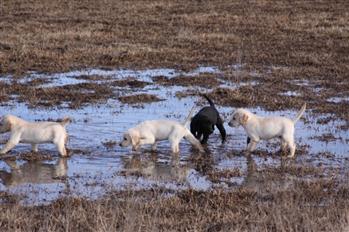
wading
WATER
Taking your retriever pup out in a boat to the middle of a lake and throwing her overboard is not a proper water introduction. Ideally, you want the experience to be pleasant and fun.

Find a small pond with a shore that drops gradually from shallow to deep water. The weather should be mild, and the water temperature 60 degrees or warmer. Wading into the water with the pup will help alleviate any fear she may have. Bumpers and water retrieves can come later.

GUNFIRE
The worst thing you can do is to take a puppy to an open field and fire a 12-gauge over her head. That’s almost guaranteed to cause gun-shyness. Instead, recruit a friend or family member to help with this part of your pup’s training. While you handle the dog, have your training partner move a good distance away. Each time you toss a bumper, your partner should fire a shot with a starter pistol or cap gun. Be careful not to overdo it. A few shots each outing will suffice. Each day, decrease the distance between the dog and the gunfire and repeat the same drill. Keep in mind that introducing a dog to gunfire is a gradual process that shouldn’t be rushed.

gunfire
DECOYS
Don’t wait until hunting season to familiarize your dog with decoys. Incorporate them into their training exercises. Place a dozen or more decoys around a field when you’re tossing bumpers. This will help teach the dog that decoys are just part of the setup and not her main focus. Once he/she learns that, they can move on to retrieving bumpers around a decoy spread set in shallow water. This will help them learn how to swim through the decoys without getting tangled in the lines. If you hunt with motion decoys, incorporate them into your training spread as well.

BOATS The best way to acclimate a pup to watercraft is on dry land, where the boat won’t rock or tip over. Place your retriever in the boat and let her explore this unfamiliar setting. Do this several times over a period of a few days, and when the dog is comfortable in her new surroundings, launch the boat and take your pup on a cruise around the lake. Be sure to go slow and avoid rough waters. Keep the outing as pleasant as possible, with the dog sitting calmly beside you. Allowing them to run around while the boat is under way can be extremely dangerous.

BLINDS
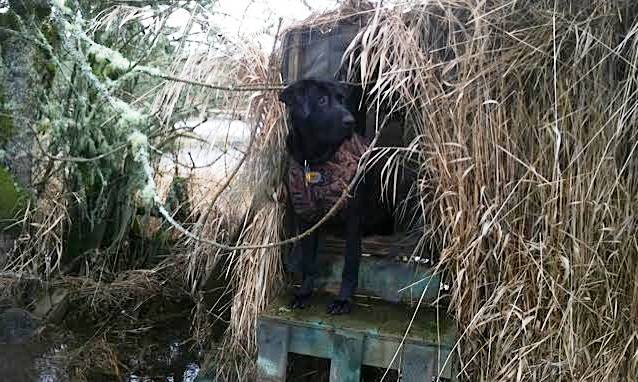
Whether you hunt out of a permanent blind or a layout blind, your retriever should have a place of her own. Set up a dog stand or platform during your training sessions. Begin by teaching the dog to sit still on the stand. The younger the dog, the less patience they will have. But after several training sessions, they should learn to be patient and sit on the stand for extended periods of time.

blind1

Follow our FISHING BLOG

WEB   RATES     FISH    HUNT    CABINS    PHOTOS
TESTIMONIALS    BROCHURE    HUNT BOOKLET

Enter your email address to subscribe to this blog and receive notifications of new posts by email.

← Back

Thank you for your response. ✨

Email Me....


Tags: , , , , , , , , , ,

Moose – FYI

Moose, Alces alces, Canada, North America.Moose are the largest of all the deer species. Males are immediately recognizable by their huge antlers, which can spread 6 feet (1.8 meters) from end to end. Moose have long faces and muzzles that dangle over their chins. A flap of skin known as a bell sways beneath each moose’s throat.

Moose are so tall that they prefer to browse higher grasses and shrubs because lowering their heads to ground level can be difficult. In winter they eat shrubs and pinecones, but they also scrape snow with their large hooves to clear areas for browsing on mosses and lichens. These hooves also act as snowshoes to support the heavy animals in soft snow and in muddy or marshy ground.

moose2In summer, food is far more plentiful in the northern regions of North America, Europe, and Asia. When the ice melts, moose are often seen in lakes, rivers, or wetlands, feeding on aquatic plants both at and below the surface. Moose are at home in the water and, despite their staggering bulk, are good swimmers. They have been seen paddling several miles at a time, and will even submerge completely, staying under for 30 seconds or more.

mooseMoose are similarly nimble on land. They can run up to 35 miles (56 kilometers) an hour over short distances, and trot steadily at 20 miles (32 kilometers) an hour.

Males, called bulls, bellow loudly to attract mates each September and October. The usually solitary bulls may come together at this time to battle with their antlers for mating supremacy. After mating, the two sexes go their separate ways until the following year. Though they may occasionally feed in the same grounds, they tend to ignore each other.

Females give birth to one or two calves in the spring—each weighing some 30 pounds (14 kilograms). These calves grow quickly and can outrun a person by the time they are just five days old. Young moose stay with their mothers until the following mating season.


Follow our FISHING BLOG

WEB   RATES     FISH    HUNT    CABINS    PHOTOS
TESTIMONIALS    BROCHURE    HUNT BOOKLET

Enter your email address to subscribe to this blog and receive notifications of new posts by email.

← Back

Thank you for your response. ✨

Email Me....


Tags: , , , , , , , ,

Tips for Spot-Stalk Black Bear Hunting

wawangbear2 (550x417)

The most underrated hunt  is for trophy-class fall black bears. There’s this misconception out there that hunters can just walk up on them. That’s just false. They’re one of the toughest trophy animals to spot and stalk in North America.   Get on the record-book bruins with this killer nine-step plan.

1. Find Mature Timber
You have to locate three ingredients to get into big bears, ­Werner says. First, old-growth timber for denning, then food and water. Look for 10- to 50-acre parcels with these three features.

2. Scout it for Sign
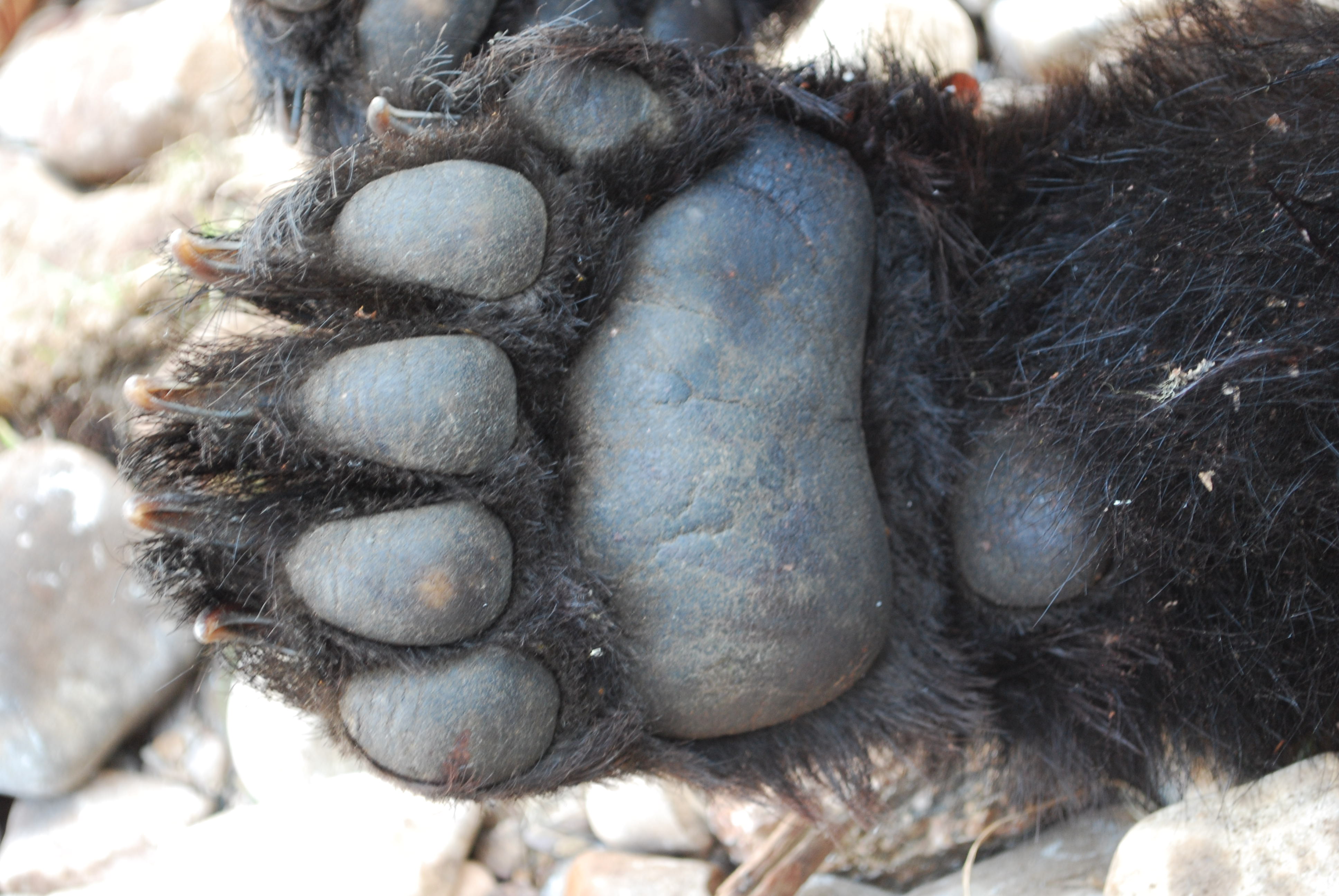
Look for big branches broken off trees, claw marks in bark, and rubbed-out bark stubbled with bear hair. Ideally, you’ll also find fresh tracks on the ground measuring 6 inches wide or better.

3. Check for Scat
It comes out green but oxidizes very quickly, turning black almost immediately.   The greener it is inside, the fresher.

bear2

4. Focus on Blueberries and Rose Hips
Bears go into a feeding frenzy in early October. Climb a nearby ridge and monitor the food source with binocs or a spotting scope.

5. Trust your Eyes
Bears feeding heavily will eat for about a third of the day and sleep the rest. The bears you glassed will show.

6. Judge the Bear
When you see a bear, determine if it’s worth going after. If one ear width separates the ears, it’s small; two ear widths, medium. Three means it’s a shooter.  READ:  How to Size a Black Bear

7. Note the Wind
Bears don’t see or hear well, but their nose is 50 times better than a bloodhound’s.  There is no earthly way to beat their nose. The wind must be perfect.

8. Start the Stalk
Follow a route that plays the wind and approaches the bear from behind.  If the bear alerts in your direction, stop and wait.  Only move forward when the bear goes back to feeding and looks relaxed.

9. Make a Clean Kill
Never take a long shot, because anything less than a double-lung hit makes recovery a coin toss.  Because of the nature of hunting large predators, guys get very excited. So you have to practice enough so the shot is second nature.  But when it all finally comes together, there’s nothing better.

Follow our FISHING BLOG

WEB   RATES     FISH    HUNT    CABINS    PHOTOS
TESTIMONIALS    BROCHURE    HUNT BOOKLET

Enter your email address to subscribe to this blog and receive notifications of new posts by email.

← Back

Thank you for your response. ✨

Email Me....


Tags: , , , , , , , , ,