WEBSITE RATES FISH HUNT CABINS PHOTOS
TESTIMONIALS BROCHURE HUNT BOOKLET

Much of the excitement of hunting coyotes comes from calling them close, but predators are wary by nature, especially when they’ve been called to, and shot at, before. On more than a few occasions we’ve watched a coyote come from a quarter-mile only to stop just out of what some people might call reasonable range. But with the right setup and some practice under your belt, you can push the limits of reasonable and put that long-distance dog down. Here’s where to start.
The .22-caliber center fire cartridges – the .223 and .22-250 – are standard carry for most coyote hunters, but both can get a bit squirrely when playing the long-range game. Instead, opt for a caliber with a bit more oomph behind it, such as the .243. Stick with a polymer-tipped varmint bullet with a ballistic co-efficient topping .300. This will require a bullet weight of at least 70 grains. Remington’s 75-grain Accu-Tip V comes screeching out of the muzzle at 3,375 fps and retains enough energy past 400 yards to kill a coyote without punching a gaping hole through the pelt. Hornady’s venerable V-Max and the Federal V-Shok both offer similar ballistics.
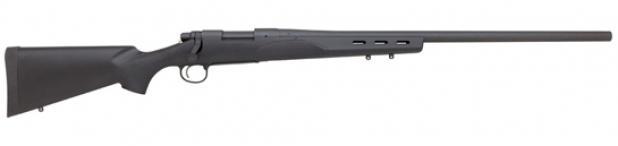
When manufacturers tack the word “varmint” on to a rifle they are usually compelled to do one of two things: chop off the barrel to 22 inches and mill it full of flutes or they slap it into a wide, beavertail stock designed to be stable when shot from a bench. Neither is ideal for long-range coyote hunting. Of .243-caliber varmint guns on the market, few are offered in a 26-inch barrel – the Remington 700 SPS Varmint (pictured above) is one; Savage makes another. For a walk-and-stalk hunt in the wide-open West, I’d concede to a rifle with a moderately lighter 24-inch barrel. Either way, a mounted bipod, quality optics, and a good laser rangefinder are mandatory.
If a coyote can’t hear you calling, it doesn’t matter how good the spot is. On windy days, stay home or plan on calling multiple, short sets. However, on calm days, a coyote can hear a mouth-blown call more than a mile away, but it might take him 30 minutes are more to come that far, so stick out your sets as long as you can.
For maximum visibility stake out the highest point around, but remember, if you can see a coyote from a quarter-mile, he can spot movement from just as far. Stay still and only move when an approaching dog is obscured from view. Consider an electronic caller with a user-friendly remote to further minimize movement.
One final point: Don’t think the long-distance game will get you out of playing the wind as coyotes live, and die, by their nose. It does give you an advantage, however. Get the breeze in your face, quartering slightly onto your right side (for right-handed shooters), so you’ll be in the perfect position to bust him as he tries to circle downwind.
A coyote’s vitals are the size of a grapefruit and to be successful you have to be able to hit that 5-inch circle. To do that consistently requires a rock-solid rest, accurate elevation and windage adjustments, and at least a bit of luck.
Prone Out
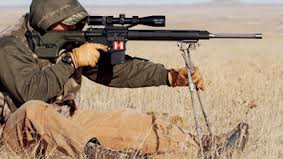
At these ranges, you’re essentially a sniper, so take a tip from their kit and get as close to the ground as you can, with your legs spread and feet laid out flat. Remember, you might have to lay there for 30 minutes or more, so remove any sticks, rocks or other obstructions before you start calling. Dress warm and get comfortable.
Think There, Not Here
Sure the wind may appear consistent where you’re sitting, but coulees, breaks, valleys, or even the smallest hillock can affect wind direction and cause a miss downrange. Before pulling the trigger, assess what the wind is doing at your potential target ranges and compensate accordingly.
Watch The Impact
The best shooting advice is to watch the animal go down in the scope. By concentrating on the impact, you’ll forget about flinching as your mind almost sub-consciously causes your finger to pull the trigger. Also, you should be able to deliver a follow-up shot with a more precise hold (if necessary) when you see where your first bullet hit.
Follow our FISHING BLOG
WEB RATES FISH HUNT CABINS PHOTOS
TESTIMONIALS BROCHURE HUNT BOOKLET

It’s rare for any hunter to walk away from a field or reflect on a hunt and not think about whether a shot could have been better. Whether with a bow, crossbow or firearm, there are times when we hesitate. A little voice – instinct, caution, doubt? – throws up a hurdle.

Sometimes we adjust and avoid the hurdle. Other times we pull up short and don’t leap. We don’t take the shot.And, unfortunately, there are times when we know the hurdle is there but take the shot anyway. We’re confident in our abilities and that of our bow, crossbow or gun. Some might call that experience. Some might say it’s recklessness or unethical.
We probably all can look back and wrestle with at least one shot that might have been risky, even if things turned out well after taking it and the deer, bear or moose is on the ground. Part of our duty as hunters is to strive to maximize our abilities with whatever weapon we use.


We practice, tune our bows, hit the range with our guns. We try to find the right combination of arrows and broad heads or the ammunition that works best with our rifles, muzzleloaders, handguns or shotguns. One way to improve our knowledge and experience is with Deer & Deer Hunting’s “Shot Simulator” software. If you’ve ever been curious about where your bullet, slug or arrow has entered a deer’s body and what happened, here’s how to find out. The Shot Simulator software is designed to provide you with outstanding animation of a deer’s body and internal bones, muscles and organs.
 With the Shot Simulator, you can position the animated deer in numerous positions – how it was when you shot, or how you saw a buck or doe and didn’t shoot – and then learn which organs were hit. Didn’t like what you saw? Position it differently and do it again. You can not only position the deer, but also your shot from a tree stand or ground level. If you’re a stand hunter but only climb about 15 feet, you can see the difference in that height versus 25 feet or on the ground. The animation allows you to move the deer around and then remove the hide, skin and bones to see what happened. Then, you can punch in the trailing guide to find out what happens next. Should you follow the game immediately? Wait a while? Just for your knowledge, you could take the shots on the computer that you’d definitely pass up in real life and then see what would happen.
It’s an educational tool that could help you glean more knowledge and help make you a better hunter. Shot Simulator also is a great teaching tool for young hunters, too. They’re curious about what happens and this is a great way to augment their in-field learning.
Follow our FISHING BLOG
WEBSITE RATES FISH HUNT CABINS PHOTOS
TESTIMONIALS BROCHURE HUNT BOOKLET

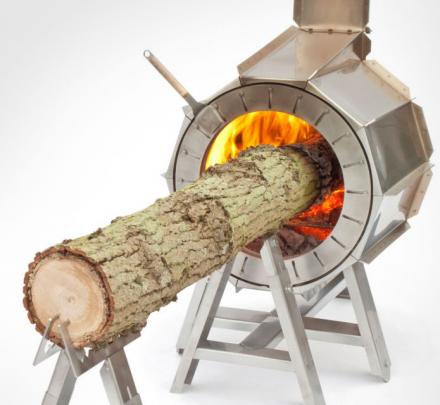
The Spruce Stove is an outdoor furnace that allows you to burn an entire tree at a time. Designed by Dutch designers Roel de Boer and Michiel Martens, the dutch stove allows you to continuously push the trunk of the tree more and more into the fire as it burns, as it holds the log up level to the fire using wheeled arms that allow you to easily slide it in.


To start the fire, simply use kindling, amber, small twigs, etc, and once the fire gets going simply push the end of the tree trunk into the fire, use the adjustable diaphragm to allow for more oxygen or less oxygen depending on what the fire needs. Once your fire starts to die down, simply push a few more inches of the trunk into the fire. When you want to stop the fire just stop pushing the log in.


The Spruce Stove is made from stainless steel, can easily withstand the heat of the fire as well as the weather, comes in three different models, weighs 110lbs, and measures 1.9 feet wide x 7.7 feet tall x 2.6 feet deep. Now you just need go chop down a few trees.

Follow our FISHING BLOG
WEBSITE RATES FISH HUNT CABINS PHOTOS
TESTIMONIALS BROCHURE HUNT BOOKLET


The CCTV Birdhouse is a birdhouse that looks just like a CCTV security camera, and is sure to keep those pesky criminals away, and keep those beautiful loving birds nearby. Now you can live life large knowing that not only are you deterring thieves, rapists, and teenagers from entering your lawn, but with each “camera” you install on your house, a new family of birds gets a new home.


Follow our FISHING BLOG
WEBSITE RATES FISH HUNT CABINS PHOTOS
TESTIMONIALS BROCHURE HUNT BOOKLET


Ingredients
Basic Bannock Mix
1 cup flour (white or a mixture of white and whole wheat)
1 tsp. baking powder
1/4 tsp. salt
1/4 cup dry milk powder
1 tbsp. shortening
Make the mix at home ahead of time. Sift dry ingredients, and cut shortening in with a pastry cutter or two knives until you have a granular, corn meal-like mixture. Package in zip-lock freezer bags. Double bag it if you’re going to be on a long trip. I’ve found that you can make large batches at once and make enough bannock mix for a trip in about fifteen minutes. Just make sure you sift the dry ingredients well, so you don’t get leavening problems.
Directions
Baking bannock is relatively simple once you get the hang of it. Your first ones will be dark and maybe burnt on the outside and gooey on the inside. Don’t despair, just pretend it’s a jelly donut and try again. The key is a consistent heat. While flames don’t indicate a bad cooking fire, red glowing fires from hardwood are best.
1. Start with a small cast iron frying pan and oil it well.
2. Pour some water into the bag and squoosh it around in the bag (squooshing is a technical term). Because the water and baking powder form carbon dioxide to make the bread light, the faster you go from mixing to skillet, the lighter your bannock will be. There will be lumps, of course, but we call them flavor bursts. I say “some water” because how much you add depends on the humidity and of course, personal taste. You don’t want it any thinner than a muffin consistency. If you’ve never baked a muffin, think spackle. You can distribute the dough with a poke of a finger or a stick or a spoon if you’re the civilized sort. Remember, it’s always easier to add water than take it out, right?
3. Squeeze the mix out of the bag and onto the warmed pan (not scalding hot — if the oil is smoking, it’s way too hot). The pan can be warmed over the fire if you have a grate, or leaned against a few logs near the heat source. It shouldn’t hiss or sizzle like a pancake batter…that means things are too hot. Cool it off and be patient. The bread will start to rise slowly.
4. Your bannock will start to look loaf-like. At this point you’ll want to flip your loaf. A little shake of the pan and flick of the wrist can turn it over, but a spatula is fair game too. At this point, just keep turning it. You’ll know when it’s done. It’ll look a lot like the picture here.
If you have a lid, you can try to cook your bannock dutch oven-style and put coals onto your skillet lid. Otherwise, you can turn it over to cook the top (carefully!) or else when the bottom is done, prop the pan up against a log with the top facing the fire. This is a great method of “semi-reflector-oven”. It also makes a lighter bannock.

Follow our FISHING BLOG
WEBSITE RATES FISH HUNT CABINS PHOTOS
TESTIMONIALS BROCHURE HUNT BOOKLET

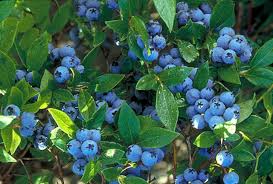 Blueberries are an important food source throughout the black bear range. The most commonly eaten berries in our area of northwestern Ontario are blueberries and raspberries. Many other berries are eaten, but they have shorter seasons, are scarce, or are less preferred.
The period when blueberries are abundant in our area is short & mainly in August-making that period critically important in the black bear’s annual cycle of events. Efficient feeding during that time is critically important to winter survival, growth, and reproductive success. Researchers found that bears in NW Ontario end mating activities before the critical feeding period and focus on feeding for the remainder of the summer.
Black bears are efficient berry-eaters, consuming up to 30,000 berries a day in a good year. They gather berries quickly, using their sensitive, mobile lips and swallowing them whole. The berries enter a two-part stomach, which grinds the pulp off the seeds.


 The seeds pass through the digestive tract unbroken and able to germinate, making black bears important seed dispersers. Each summer, they spread the seeds of their favorite berries all over their home ranges.
Black Bear around Wawang Lake gain weight most rapidly during July and August when berries are abundant. When the berries run out in September, there is little else to eat. The bear usually seek out their dens in September or October. The longer period of food abundance enables bears to achieve more growth and reach maturity more quickly than bear. Bear in NW Ontario typically produce their first litters at 4 to 5 years of age.
Berries contain anti-oxidants, and the seeds of some species contain vitamin B-17, considered an anti-cancer compound by some scientists. Although cancer occurs in captive bear, it has never been reported in wild bear.
RECIPES

Blueberry Pancakes
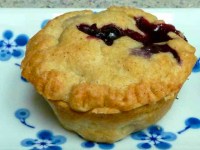
Gluten FREE Blueberry Pie
Follow our FISHING BLOG
WEBSITE RATES FISH HUNT CABINS PHOTOS
TESTIMONIALS BROCHURE HUNT BOOKLET


The squirrel bungee feeder is a feeding device that you can attach a corn on the cob, a hunk of raw steak, or a potato to and as the squirrel goes to grab it they will be bungeed down as if they were attached to a bungee cord so that we can laugh at them as they struggle with their weight problems.


One in a lifetime – photo by Tom Spears
Black bears typically have two cubs; rarely, one or three. In northern Alberta a black bear sow gave birth to five healthy young. There were two or three reports of sows with as many as 4 cubs, but five was, and is, very extraordinary. The photographer learned of them shortly after they emerged from their den and set a goal of photographing all five cubs with their mom – no matter how much time and effort was involved. He knew the trail they followed on a fairly regular basis, usually shortly before dark. After spending nearly four hours a day, seven days a week, for more than six weeks, he had that once-in-a-lifetime opportunity and photographed them. He used the equivalent of a very fast film speed on his digital camera. The print is properly focused and well exposed, with all six bears posing as if they were in a studio for a family portrait.
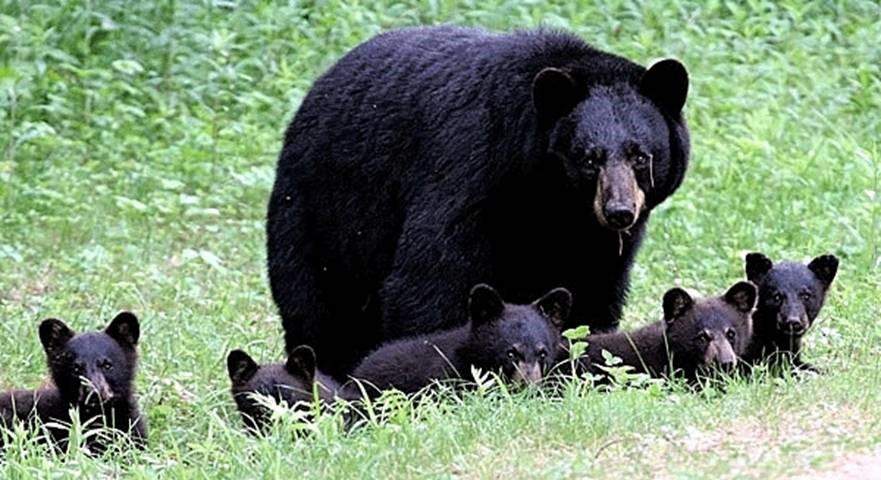
The photographer stayed in touch with other people who saw the bears during the summer and into the fall hunting season. All six bears continued to thrive. As time for hibernation approached, he found still more folks who had seen them, and everything remained OK. The photographer stayed away from the bears because he was concerned that they might become habituated to him, or to people in general, and treat them as approachable friends. This could easily become dangerous for both man and animal.
After Halloween, no further reports and could only hope the bears survived until they hibernated. This spring, just before the snow disappeared, all six bears came out of their den and wandered all over the same familiar territory they trekked in the spring.
The photographer saw them before mid-April and dreamed nightly of taking another family portrait, a highly improbable second once-in-a-lifetime photograph. He achieved his dream.

When something as magical as this happens between man and animal, Native Americans say, “We have walked together in the shadow of a rainbow.” And so it is with humility and great pleasure that I share these exhilarating photos with you. Do pass them on!
Follow our FISHING BLOG
WEB RATES FISH HUNT CABINS PHOTOS
TESTIMONIALS BROCHURE HUNT BOOKLET


 ON TARGET in CANADA

