RSS

Tag Archives: Wawang Lake Resort

Flint Laces: Shoe Laces That Can Start a Fire

flint-laces-shoe-laces-that-can-start-a-fire-thumb

The Flint Laces are a pair of shoe laces that you can use in case of an emergency to start a fire with if you are otherwise incapable of starting one. Maybe you forgot your matches at home, maybe it just rained and all your matches are wet, or maybe you’re stranded in the woods without a match or a lighter and you’ve lost your manhood and just can’t make a fire using your own two hands.

flint-laces-shoe-laces-that-can-start-a-fire-9435
Each flint lace contains a hidden piece of ferro rod that is capped with rubber. Simply scrape the rubber from the rod, strike it against a knife or some steel (assuming you have some), and you will be toasting your buns on a nice hot fire in no time.

The flint laces are completely normal shoe laces other than containing a fire starter rod, they are made from type III 7 strand 550 paracord, contain 4 separate rods (1 on each end of each shoelace), come in sizes 36-108, and are perfect for when you’re planning on getting lost and stranded while hiking or camping.


Follow our FISHING BLOG

WEBSITE    RATES     FISH    HUNT    CABINS    PHOTOS
TESTIMONIALS    BROCHURE    HUNT BOOKLET

Enter your email address to subscribe to this blog and receive notifications of new posts by email.

← Back

Thank you for your response. ✨

Email Me....


Tags: , , , , , , , , ,

Moose Hunting in NW Ontario

Successful moose hunters must have detailed and sophisticated knowledge of the animal.  mastering skills of the hunt is essential for success, but equally important is knowing how to show respect for the animal, its spirit, and its home.
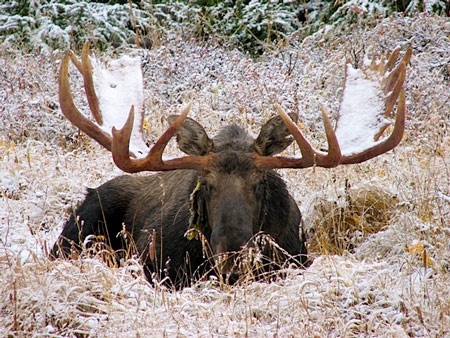
moose

The language of Moose
In any human culture, people need specialized language to describe every part of their environment that is important to them. This is especially true for people who live directly from the land and waters, because they need very specific words to talk about every facet of their world.

Eye of the Hunter
Moose can be challenging animals to hunt, especially in areas where they are scarce or highly mobile. For traditional people it is essential to have a thorough understanding of moose movements—and this comes by studying the animal and its environment, by sharing information between hunters, and by telling stories passed on to family & friends.

For example, hunters know that during the protracted, harsh northern winter moose are often stressed and skinny, so their meat is not especially desirable. But spring and summer bring long days and lush growth, so, moose can pack in up to 50 pounds of food per day. By the time fall comes, the animals are in prime condition, especially the bulls and cows that have no calves to nurse and protect (known as a dry cow).

To find moose, first a person needs to know where the animals are most likely to be at any given time and when moose are in the best condition. For example, in the fall rutting (breeding) season, moose often congregate in the river valleys where willow thickets still provide fresh browse.

During the rut, bulls sometimes have spectacular battles—pushing and shoving, clashing their enormous antlers—to establish dominance. These contests take tremendous amounts of energy at a time when the bulls eat little or nothing because of their single-minded focus on mating. They become skinny and smelly their meat is hardly edible.

Before the fall rut begins, some hunters arrive in the area to scout, looking for signs of moose—fresh tracks, broken branches in the thick brush, scraped bark on shrubs and trees, or shadowy movements in the brush.

When a hunter finds a set of tracks, he checks them closely to determine the sex and condition of the moose—and most importantly, the age of the track. It’s important to know how long ago the moose walked here and whether the animal is staying put or traveling on.

Aging tracks in our terrain can be very challenging. A fresh track has clean sharp edges, and within a day or so these edges may begin to dry out, or they might be softened by rain or wind. Depending on weather conditions the track could look quite fresh for several days or more.

A sharp eye might find a track where the moose entered the water, and if it’s partially filled with water, this could help the hunter determine how long ago the moose made it. When the water is still muddy, the animal came by within perhaps half-a-day or less. But if the sediment has settled and the water is clear, it means the track is older.

Moose leave other signs too. Rutting bulls scrape off bark when they rub their antlers on trees or shrubs. They sometimes paw the ground, leaving an obvious patch of scattered vegetation and raw ground.

Besides looking for visible signs of moose, hunters keep very quiet, to avoid frightening the moose and to hear any sounds the animals make. Bull moose challenge other bulls by noisily thrashing their huge antlers against trees and brush. Cows and bulls make low grunting sounds during the mating season. People also listen for any movement in the thickets and for the surprisingly loud sounds of a moose chewing and snapping off leaves.

A bull moose acquires a strong, musky scent from rolling in leaves soaked in his own urine. This smell can linger in calm air for up to half an hour, indicating that the bull has passed through recently—or that he is still close by.

If a hunter believes moose are nearby, he might try to draw one closer by imitating the sound of antlers scraping against the brush. For this, he can use the dried shoulder blade of a moose or sometimes even a large stick. If a bull is in the area, he may decide another bull is challenging him and come to investigate, or he might reveal himself by grunting or thrashing his antlers.

A hunter trying to lure a bull closer will sometimes make low grunting sounds, imitating either a cow moose looking for a mate, or a bull looking for a challenge. The hunter watches and listens closely, waiting for the moose to appear.

The most likely time to find a moose is during the dusk and dawn hours, when moose are most active. They will feed in the early morning and then might sleep for an hour or so. They lie down for much of the day to rest and ruminate, and they are very hard to approach. In the evening they will feed again.

In areas with high concentrations of moose, hunters avoid the bone scraping method because it might call too many bulls to them. Also, they are very careful when snapping twigs for campfires—this too could bring an aggressive bull into camp.

Follow our FISHING BLOG

WEBSITE    RATES     FISH    HUNT    CABINS    PHOTOS
TESTIMONIALS    BROCHURE    HUNT BOOKLET

Enter your email address to subscribe to this blog and receive notifications of new posts by email.

← Back

Thank you for your response. ✨

Email Me....


Tags: , , , , , , , , ,

Birdhouse That Looks Like a CCTV Security Camera

birdhouse-that-looks-like-a-cctv-security-camera-1093

The CCTV Birdhouse is a birdhouse that looks just like a CCTV security camera, and is sure to keep those pesky criminals away, and keep those beautiful loving birds nearby. Now you can live life large knowing that not only are you deterring thieves, rapists, and teenagers from entering your lawn, but with each “camera” you install on your house, a new family of birds gets a new home.

 The CCTV birdhouse is made from durable yet lightweight weatherproof poly resin, is hand painted, is supported by hanging it up by a rope, string, or twine of your choosing, and measures 16cm x 12cm x 25cm.

Follow our FISHING BLOG

WEBSITE    RATES     FISH    HUNT    CABINS    PHOTOS
TESTIMONIALS    BROCHURE    HUNT BOOKLET

Enter your email address to subscribe to this blog and receive notifications of new posts by email.

← Back

Thank you for your response. ✨

Email Me....


Tags: , , , , ,

Breast of Grouse Monterey Jack


grouse mont

You don’t have to do much to a ruffed grouse to bring out the great taste; nor do you want to go too far and overwhelm the natural flavors. This simple but delicious recipe archives the perfect balance.

Serves: 4

Ingredients

  • 4 ruffed grouse breasts, butterflied
  • 4 slices Monterey Jack, 1/8-inch thick
  • 1 egg white
  • 1 cup cornflakes, crushed
  • 2 tbsp vegetable oil

Preparation

  • Preheat oven to 325°F. Make a slit almost all the way through each breast; fill each slit with 1 slice of cheese.
  • Whisk egg white lightly; brush over outsides of breasts. Press each breast all over into cornflake crumbs until coated.
  • Heat oil in a heavy ovenproof skillet over medium heat; brown breasts, turning once, about 2 minutes per side. Transfer to oven; roast for 10 minutes to finish cooking.

Follow our FISHING BLOG

WEBSITE    RATES     FISH    HUNT    CABINS    PHOTOS
TESTIMONIALS    BROCHURE    HUNT BOOKLET

Enter your email address to subscribe to this blog and receive notifications of new posts by email.

← Back

Thank you for your response. ✨

Email Me....


1 Comment

Posted by on August 7, 2015 in grouse, recipe, Wawang Lake Resort


Tags: , , , , , , ,

Turn Your Phone Into A Walkie Talkie

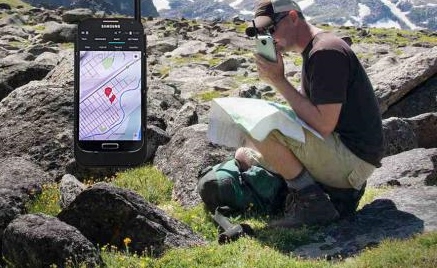
Beartooth a case to use on your smartphone that essentially turns your phone into a walkie talkie to be used when your phone is out of range of cell service.beartooth-case-that-turns-your-phone-into-a-walkie-talkie-thumb

The device will allow you to make texts and phone calls with other Beartooth users over a radio signal, and even allows you to get your geo-location to be used with a map. The radio device will even encrypt your text messages using a 128-bit encryption to keep your data safe.

The Beartooth phone case radio features individual or group messaging, an SOS broadcasting that that will broadcast your position at user defined intervals for emergencies, as well as hold extra battery storage for your phone right in the case.

The radio will reach the standard length of most walkie talkies (around 2 miles), comes with a 2000 mAh battery that will double the battery life of your phone, and will operate in the 151-154Mhz (VHF) and 462-467Mhz (UHF) frequency ranges. Price and availability for the device is to be determined, but production is said to begin in 2015.

Follow our FISHING BLOG

WEBSITE    RATES     FISH    HUNT    CABINS    PHOTOS
TESTIMONIALS    BROCHURE    HUNT BOOKLET

Enter your email address to subscribe to this blog and receive notifications of new posts by email.

← Back

Thank you for your response. ✨

Email Me....


Tags: , , , , , , , , , , ,

How To Build A Fire & Cook Over It

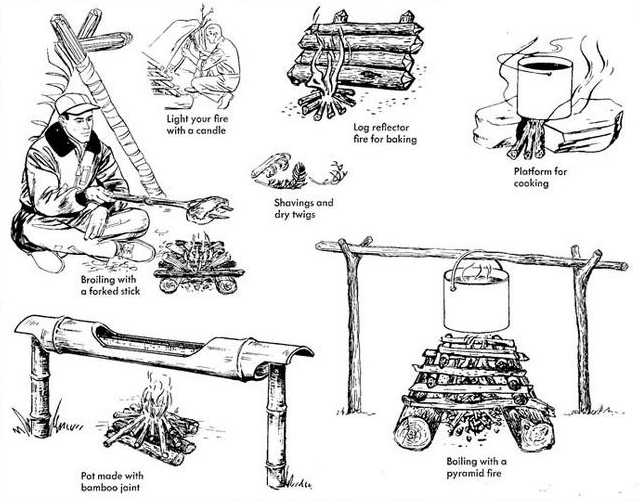
Here is two tutorials on how to build a fire and to cook over it.

f0297e38b791cd12446aa4653d459f0c_zpse549e773

Tutorial 1


wildernesscooking_zpse7c2ef2d

Tutorial 2


Follow our FISHING BLOG

WEBSITE    RATES     FISH    HUNT    CABINS    PHOTOS
TESTIMONIALS    BROCHURE    HUNT BOOKLET

Enter your email address to subscribe to this blog and receive notifications of new posts by email.

← Back

Thank you for your response. ✨

Email Me....


Tags: , , , , ,

How to Make & Cook Bannock – Out In the Field

 OLYMPUS DIGITAL CAMERA

A bannock is a small, flat loaf of bread risen by a leavening agent, most often a chemical one, although yeasty bannocks are sometimes baked, as in a sourdough recipe.  They are meant to be cooked hearth-side, whether a fireplace or a campfire.  They are simple, and in the woods, simple is good.  Add some honey to some simple bread and after a few days or weeks of bagels and Wasa bread, it tastes like manna from heaven.  It’s hot, light, and comforting.

How to Make Bannock Bread

Ingredients

  • Bannock Mix
  • Water

Basic Bannock Mix

1 cup flour (white or a mixture of white and whole wheat)
1 tsp. baking powder
1/4 tsp. salt
1/4 cup dry milk powder
1 tbsp. shortening

Make the mix at home ahead of time. Sift dry ingredients, and cut shortening in with a pastry cutter or two knives until you have a granular, corn meal-like mixture. Package in zip-lock freezer bags. Double bag it if you’re going to be on a long trip. I’ve found that you can make large batches at once and make enough bannock mix for a trip in about fifteen minutes. Just make sure you sift the dry ingredients well, so you don’t get leavening problems.

Directions

Baking bannock is relatively simple once you get the hang of it.  Your first ones will be dark and maybe burnt on the outside and gooey on the inside.  Don’t despair, just pretend it’s a jelly donut and try again. The key is a consistent heat.  While flames don’t indicate a bad cooking fire, red glowing fires from hardwood are best.

1. Start with a small cast iron frying pan and oil it well.

2. Pour some water into the bag and squoosh it around in the bag (squooshing is a technical term). Because the water and baking powder form carbon dioxide to make the bread light, the faster you go from mixing to skillet, the lighter your bannock will be. There will be lumps, of course, but we call them flavor bursts. I say “some water” because how much you add depends on the humidity and of course, personal taste. You don’t want it any thinner than a muffin consistency. If you’ve never baked a muffin, think spackle. You can distribute the dough with a poke of a finger or a stick or a spoon if you’re the civilized sort. Remember, it’s always easier to add water than take it out, right?

3. Squeeze the mix out of the bag and onto the warmed pan (not scalding hot — if the oil is smoking, it’s way too hot).  The pan can be warmed over the fire if you have a grate, or leaned against a few logs near the heat source.  It shouldn’t hiss or sizzle like a pancake batter…that means things are too hot. Cool it off and be patient.  The bread will start to rise slowly.

4. Your bannock will start to look loaf-like.  At this point you’ll want to flip your loaf.  A little shake of the pan and flick of the wrist can turn it over, but a spatula is fair game too.  At this point, just keep turning it.  You’ll know when it’s done.  It’ll look a lot like the picture here.

If you have a lid, you can try to cook your bannock dutch oven-style and put coals onto your skillet lid. Otherwise, you can turn it over to cook the top (carefully!) or else when the bottom is done, prop the pan up against a log with the top facing the fire. This is a great method of “semi-reflector-oven”.   It also makes a lighter bannock.

OLYMPUS DIGITAL CAMERA

Follow our FISHING BLOG

WEBSITE    RATES     FISH    HUNT    CABINS    PHOTOS
TESTIMONIALS    BROCHURE    HUNT BOOKLET

Enter your email address to subscribe to this blog and receive notifications of new posts by email.

← Back

Thank you for your response. ✨

Email Me....

 
Leave a comment

Posted by on August 4, 2015 in Camping, recipe, Wawang Lake Resort


Tags: , , , , , ,

Blueberries – a Critical Food for Black Bear

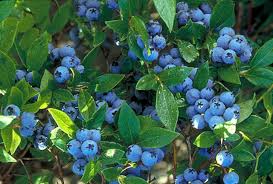
imagesB4EBB1P8 Blueberries are an important food source throughout the black bear range.  The most commonly eaten berries in our area of northwestern Ontario are blueberries and raspberries.   Many other berries are eaten, but they have shorter seasons, are scarce, or are less preferred.

The period when blueberries  are abundant in our area is short & mainly in August-making that period critically important in the black bear’s annual cycle of events.  Efficient feeding during that time is critically important to winter survival, growth, and reproductive success.  Researchers found that bears in NW Ontario end mating activities before the critical feeding period and focus on feeding for the remainder of the summer.

Black bears are efficient berry-eaters, consuming up to 30,000 berries a day in a good year.  They gather berries quickly, using their sensitive, mobile lips and swallowing them whole.  The berries enter a two-part stomach, which grinds the pulp off the seeds.


imagesP1Y6BVCSThe seeds pass through the digestive tract unbroken and able to germinate, making black bears important seed dispersers.  Each summer, they spread the seeds of their favorite berries all over their home ranges.

Black Bear around Wawang Lake gain weight most rapidly during July and August when berries are abundant.  When the berries run out in September, there is little else to eat.  The bear usually seek out their dens in September or October.   The longer period of food abundance enables bears to achieve more growth and reach maturity more quickly than bear.  Bear in NW Ontario typically produce their first litters at 4 to 5 years of age.

Berries contain anti-oxidants, and the seeds of some species contain vitamin B-17, considered an anti-cancer compound by some scientists.  Although cancer occurs in captive bear, it has never been reported in wild bear.

RECIPES

blueberry pancakes wawang lake

Blueberry Pancakes


GLUTEN FREE BLUEBERRY PIE

Gluten FREE Blueberry Pie


Follow our FISHING BLOG

WEBSITE    RATES     FISH    HUNT    CABINS    PHOTOS
TESTIMONIALS    BROCHURE    HUNT BOOKLET

Enter your email address to subscribe to this blog and receive notifications of new posts by email.

← Back

Thank you for your response. ✨

Email Me....


Tags: , , , , , , , ,

Squirrel Bungee Cord Feeder

Squirrel Bungee Cord Feeder


1 Comment

Posted by on August 2, 2015 in Wawang Lake Resort, Wildlife


Tags: , , , , ,

Stalking Black Bear

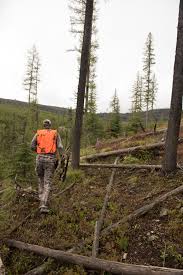
imagesPQEZ37S9If you’re determined to fill your tag and you’re up for a truly heart-pounding hunt, try one of these two killer ground setups. There are times when you have to get on the ground to arrow a big bear. Either the best ambush point offers no suitable place to hang a tree stand or the biggest bear is wise to the stand you’ve already hung. In both cases, the solution is to get on the bear’s level (at your own risk, of course). If you’re determined to fill your tag and you’re up for a truly heart-pounding hunt, try one of these two killer ground setups.

1) Smoke Him Out As the days begin to shorten in autumn, bears enter a stage called hyper­phagia in which they gorge themselves in advance of hibernation, often feeding all day long, putting on 2 or 3 pounds a day. Any major feeding area, therefore, is a great place to find bears now. Trouble is, many of their favorite spots, including clear-cuts, apple orchards, blueberry bogs, and raspberry and blackberry thickets, lack suitable stand trees. To take a bear in a place like this, the first thing you need to do is scout the area for scat, tracks, and traces of fur to tell you where the bruin is doing most of its feeding. Once you figure that out, pick an open area where you can get a shot, move crosswind about 20 paces, and make a natural blind. Try to choose a spot that already has good cover, such as a blow down, stump, or thicket, as bears are acutely aware of changes in their feeding areas. imagesAI2YGGR2Walk back out to the opening you chose earlier and fire up a couple of scent sticks, which are legal in many areas that don’t allow bait (be sure to check local regulations). Now just sneak back into your hideout and wait for a hungry bear to show up. Theoretically, the approaching bruin’s attention will be locked on the sweet-smelling smoke—not on you quivering in the shadows—and you’ll be able to keep it together long enough to take the shot.

2) Back Off the Bait The majority of black bear bait sites feature a permanent (or at least long-term) tree stand that is situated downwind and overlooking the goodies. The biggest bears, however, often know not only where that tree stand is, but whether or not a hunter is in it. Circling downwind of the stand to check with his nose and often his eyes, a big boar will not hit the bait until he’s absolutely certain the perch is unoccupied. And that means, if you’re willing to go to the ground, you can use the stand as a decoy.

First look for the faint trail that curves through the undergrowth downwind of the treestand; this usually lies just within sight of the bait barrel. Broken plant stems, paw impressions in the moss, and freshly snapped branches should be all the evidence you need, but you may also see obvious tracks or scat. Once you’ve determined the bear’s route, look for a natural hideaway downwind of it and get comfortable. I should probably warn you: You may be afraid as that big boar pads in to investigate, but wait for him to walk past you, and then take the quartering-away shot.

Follow our FISHING BLOG

WEBSITE    RATES     FISH    HUNT    CABINS    PHOTOS
TESTIMONIALS    BROCHURE    HUNT BOOKLET

Enter your email address to subscribe to this blog and receive notifications of new posts by email.

← Back

Thank you for your response. ✨

Email Me....


Tags: , , , , , ,