RSS

Tag Archives: moose hunts

In a rut: Brush up on your calling

calling-moose-250
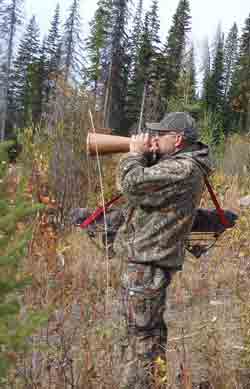
There’s a lot of prep that goes into a moose hunt, so don’t blow a shot at one of these majestic beasts because you can’t call it in.
Check out the video below from Ontario Out of Doors for some great tips to help get you ‘in tune’ for when the time comes.
rutmoosewawang3

Follow our FISHING BLOG

WEB   RATES     FISH    HUNT    CABINS    PHOTOS
TESTIMONIALS    BROCHURE    HUNT BOOKLET

Enter your email address to subscribe to this blog and receive notifications of new posts by email.

← Back

Thank you for your response. ✨

Email Me....


Tags: , , , , , , ,

Shooting A World Record MOOSE

If you are in search of a record book moose because he has survived many previous hunts, and you as a hunter respect the survivability of the animal, then you have set a high standard for yourself.

Pursuing any type of world record is not something that many aspire to do.   for the trophy hunter, shooting a world record moose is the ultimate goal. Are you a trophy hunter? Or a meat hunter?

Do we need to continue to search for the ever bigger? Then when we find it, is it right to destroy it? Should we limit the very essence of the mighty beast; snuff out the possibility of procreation? These are tough questions?

giant-moose
Canadian World Record Moose 2013

Hunter Heinz Naef shot what he believes could be the largest moose ever harvested in the Yukon(Sept. 2013). 

His moose, scored 263 1/8 inches after the required drying time of 60 days. The official scoring will be made in Nevada in early 2014.

Heinz is not a trophy hunter, he wasn’t looking to harvest a world record moose. No, he is a meat hunter… by his own admission. He was just out looking for any legal moose to fill his freezer. It just so happened to be this one.

Human beings have pushed everything to its limits. The Guinness Book of World Records is a testament to this. We strive to better ourselves, to beat our predecessors, going beyond what anyone has done in the past. Is it wrong to have the desire to be better, to do it bigger? Is our only purpose to get our names in a book?

When entering animals into record books, who deserves the respect? You or the animal? It is vitally important to include all relevant information about said trophy… the hunters name however may not be so important.

Many hunters have a few trophies on the wall, but most are not world record moose, but all of them are trophies to the hunter.  Many hunters do not go hunt with the sole purpose to acquire a trophy, and likely many of you, may scoff at some of the animals that have been shot. They are not in any record book, nor are they of that class, but to the hunter, they are a reminder of the hunt and a way for to show appreciation for the animal.

No animal should be killed for the sole purpose to raise a hunters social status, to do so is crossing the ethical line for hunters.

Where does one find a world record moose? This question is one that no one person can answer for sure. Through research and dialogue you may be able to locate moose habitat that will contribute to the growth of these monsters. A hunter in search of a world class moose will spend a lot of money and time to achieve his goal. These big animals are not going to be easily accessible. Days, weeks even years of pursuit to harvest a moose that can make the record books will be the required 22dedication.  Hunting the most remote areas of the planet is what it will most likely take and never discount luck. Luck is a huge part of hunting.

As an example the latest world record moose taken with a rifle, shot by Jay Link in 2001. Jay travelled to Russia, to the very remote regions to get this moose. He has stated it cost him $20,000.00 to do this hunt (before shipping and taxidermy). Jay may not have been looking for a world record when he shot this one, but he was certainly looking for a world class moose. Unfortunately for Jay, because the moose was taken in Russia, it is not eligible for Boone and Crockett.

Aaron Folk killed this state record North Dakota moose in October 2012, with a green score of 166 and a 53-inch spread.

Aaron Folk killed this state record North Dakota moose in October 2012, with a green score of 166 and a 53-inch spread.

Real Langlois, who's been dubbed "The Rackman" for all his moose hunting exploits, bagged this world record bull in the Yukon with his bow in 2008. With a score of 249 1/8, The Rackman beat out Michael Cusack, whose 1973 bull moose scored 248. The most amazing thing about Langlois' kill? You can watch the whole thing on YouTube, where he makes a breathtaking five yard shot on this behemoth.

Real Langlois, who’s been dubbed “The Rackman” for all his moose hunting exploits, bagged this world record bull in the Yukon with his bow in 2008. With a score of 249 1/8, The Rackman beat out Michael Cusack, whose 1973 bull moose scored 248.

Eric Arnette killed this Yukon monster in 2004, with a B&C score of 236 and a span of 75 inches.

Eric Arnette killed this Yukon monster in 2004, with a Boone & Crockett score of 236 and a span of 75 inches.

The world record moose, Boone and Crockett scored 261 5/8 and was taken by John A. Crouse in 1994 near Forty-mile River Alaska.

Hunters value the opportunities to venture out into the outdoors and hunt. The chase is wonderful and exhilarating. To some degree the kill is saddening as a wild animal has paid the ultimate sacrifice and many hunters pause to give thanks for any animal that they just harvested.   They truly appreciate it!

Many hunters don’t hunt for a trophy – after all the antlers will make poor soup. Given the opportunity though, if a world record moose were to walk out in front of you, and assuming you recognize it as a trophy. Would you shoot…?   Would You?

Follow our FISHING BLOG

 WEBSITE    RATES     FISH    HUNT    CABINS    PHOTOS
TESTIMONIALS    BROCHURE    HUNT BOOKLET

Enter your email address to subscribe to this blog and receive notifications of new posts by email.

← Back

Thank you for your response. ✨

Email Me....


Tags: , , , , , , , , ,

An adrenaline filled archery moose hunt!

images


Sometimes the thrill of the hunt gets escalated that much more!  This is one of the most adrenaline filled hunts we have seen in years.  This hunt was filmed in the Yukon and was executed with great skill…while we promote hunting, we suggest unless you have the skill necessary, do not try this out in the field 🙂

Are you an Ontario resident with a tag for 15A or 15B?  We have centrally located accommodations.  Book early to avoid disappointment!


moosehuntersjpg

Follow our FISHING BLOG

WEB   RATES     FISH    HUNT    CABINS    PHOTOS
TESTIMONIALS    BROCHURE    HUNT BOOKLET

Enter your email address to subscribe to this blog and receive notifications of new posts by email.

← Back

Thank you for your response. ✨

Email Me....


Tags: , , , , , , , , ,

Maximizing Your Hunting Time With Trail Cameras

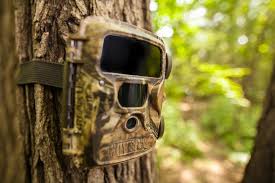
cameraOver the last five years, probably no other “gadget” has changed the way we scout more than the trail camera. For many of us, running trail cameras is a hobby in itself, bringing a whole new excitement to our deer hunting efforts. Much more than just something to pass time, however, running trail cameras can give you a unique insight into the patterns of deer on your hunting properties and really tip the odds in your favor for harvesting a mature whitetail. Let’s take a look at the features to look for when purchasing a trail camera, and how to get the maximum benefit from the camera once you have made your purchase.

As the popularity of these scouting tools has grown, so has the number of companies offering their own line of cameras. The features on these cameras cover such a wide spectrum that choosing the right one for you can be a daunting and sometimes confusing task. While this article isn’t meant to tell you WHICH camera to buy, it IS meant to help you sort through some of the most common differences among the various trail cameras to help you narrow down your search.

RESOLUTION
The resolution of a trail camera is a measure of the image size that the camera creates. So a 5.0 megapixal trail camera will give you a much larger image – and therefore more detail – than one with 3.0 megapixals. Which resolution you choose really depends on how important it is to have a large, crisp image. If you are only concerned with having a general idea of what deer are in the area and when they are traveling through, then about any resolution offered on today’s cameras will suffice. If you want a larger, more detailed image to print off for your friends, then you may want to shoot for something with at least 3.0 megapixels.

BATTERY TYPE & LIFE
In my mind, this is one of the most important considerations when choosing a trail camera, as it will have a huge effect on the cost of maintaining the camera. I have seen some “cheap” trail cameras that burn through six C-sized batteries in a week, and suddenly the “cheap” camera gets VERY expensive! Others claim to operate up to a year on eight AA batteries. So before you go buying a camera based on price alone, keep in mind the battery life, as it may be the most expensive choice you could make in the long run.

TRIGGER SPEED
Another important feature is the trigger speed of the camera, which is simply how long it takes the trail camera to shoot a picture once something has “triggered” the motion sensor. A faster trigger speed can be the difference between having a great shot of that trophy buck and just having a picture of a deer’s butt as it walks out of the frame. If you plan on placing your trail cameras over feeders or a mineral lick, then trigger speed will not be as much of an issue as it would if hung along a trail.

FLASH TYPE
This is almost a moot point, since most trail cameras today have gone to infrared flash. An infrared flash, as opposed to the incandescent flash found standard on most consumer cameras, is less likely to spook deer, uses less battery life, and is less likely to be detected by other humans (i.e. thieves!). While I’ve gotten plenty of pictures of big, mature whitetails with an incandescent flash trail camera, there is no doubt that some animals are spooked by the bright flash. If you can afford the infrared flash, the benefits certainly outweigh the small increase in cost.

OTHER FEATURES
While we have covered some of the most important features to consider when buying a new trail camera, there are many more options that could impact your decision. One of these options is the size of the unit. Size varies greatly amongst trail cameras, and some companies are now producing models that are as small as your hand. Other models go as far as being able to send the pictures it takes directly to your email or cell phone, so the only time you have to check them is when the batteries need replacing. How’s that for convenience?

Before you head out to buy your next trail camera, take a minute to think about how it will be used and what features are most important to you. This will make the task of narrowing down your choices much easier when you start the shopping process.

camera2

MAXIMIZING TRAIL CAMERA USE
Once you have waded through all the details, made your decision and laid down your hard earned money on a trail camera, all that’s left is to hang that thing on a tree, right? Let’s take a look at some ways you can be sure you are using your camera to its potential this season and getting the most bang for your buck.

DRAW THEM IN
One of the easiest ways to maximize the effectiveness of your trail camera and insure that you see a good representation of what is in your hunting area is to use some type of attractant to lure the deer into camera range. Probably the most common attractant used across the country is shelled corn – it’s cheap, readily available, and the deer love it. For the purpose of getting trail camera pictures, there is no need to invest in an expensive feeder; just simply spread 100 pounds on the ground in an eight to ten-foot circle area where you want to hang your camera. For safety reasons, do not place the corn in large piles or in an area that holds moisture, as this can result in molding that can cause disease in both deer and turkey. Depending on deer density and other available food sources, this should get you five to ten days worth of pictures. Be patient, as it may take a few days for the deer to really key in on the corn and for you to start getting good pictures. Once they find it, though, it won’t last long!

Before you start dumping corn on your favorite hunting property, check your local game laws regarding baiting. If corn or other “feed” is prohibited, but would still like to attract deer to your camera location, then you may want to consider creating a mineral lick. You can buy one of the many commercial mixes available today, or simply create your own by mixing 50 lbs of trace mineral, 50 lbs of feed mix salt, and 10 lbs of dicalcium phosphate. Break the soil up with a shovel in the area where you want to create your lick and work your mix into the soil. Once the lick gets a good rain on it, it shouldn’t take long for the deer to find it and start paying regular visits.

KEEP IT MOBILE
Unless you are hunting a really small property, or you have the money to invest in lots of trail cameras, then you are going to need to move your cameras around to really get a good idea of what the deer are doing on your hunting property. Don’t get caught in the trap of leaving your camera in the same spot all season. This will not only limit your ability to pattern the deer, but it may keep you from discovering that trophy buck that could be hanging out on the other side of the property!

images40V5Z2FA2By experience, two weeks seems to be enough time to get a good representation of what deer are in the area, without your camera spending too much time in one location. You can always bring the camera back to the same spot at a later time, but the idea is to cover as much of your hunting area as possible.

KEEP GOOD RECORDS
Once you have moved your camera around your property and gotten plenty of pictures to look at, the real work has just begun. Now is the time to sort through the pictures, identifying as many unique animals as you can, analyzing what camera sites each deer is visiting and the times that they were there. This should start to give you an idea of the travel patterns on the property, as well as potential stand locations.

This season, make sure you use these tips to get the most out of your trail cameras, and the next picture you get of that monster buck may be the one with you behind him holding his antlers, OR, even that BIG bear 🙂

Follow our FISHING BLOG

WEB   RATES     FISH    HUNT    CABINS    PHOTOS
TESTIMONIALS    BROCHURE    HUNT BOOKLET

Enter your email address to subscribe to this blog and receive notifications of new posts by email.

← Back

Thank you for your response. ✨

Email Me....


Tags: , , , , , , , , , , ,

Calling In A Bull Moose Video

There’s a lot of prep that goes into a moose hunt, so don’t blow a shot at one of these majestic beasts because you can’t call it in. Check out the video below from Ontario Out of Doors for some great tips to help get you ‘in tune’ for when the time comes.

Follow our FISHING BLOG

WEB   RATES     FISH    HUNT    CABINS    PHOTOS
TESTIMONIALS    BROCHURE    HUNT BOOKLET

Enter your email address to subscribe to this blog and receive notifications of new posts by email.

← Back

Thank you for your response. ✨

Email Me....


Tags: , , , , , , ,

Muzzleloader For Beginners

Each year more hunters are discovering the thrill of muzzleloader hunting. There are several advantages to a muzzleloader hunt over traditional rifle hunting. In the Western states in particular, there are special muzzleloader seasons that traditionally coincide with the peak of the elk rut. Licenses are limited, so there are few hunters in the woods. Depending on the location and the skill of the caller, bulls can be bugled in to close ranges. All in all, it makes for a very exciting hunt.

2However, there is a learning curve to becoming a proficient muzzleloader hunter, and chances are, you’ll make every mistake in the book at least once. You’ll see some mighty fine bulls get away from a situation where it would be “meat in the pot” with a high-powered scoped rifle.

For those who are unfamiliar with muzzleloaders, allow me to explain. Muzzleloaders are the weapons that Davy Crockett and Daniel Boone carried afield with them during their bear hunts, Indian fights, and battles. Today there are two basic types of muzzleloaders used for hunting—primitive and in-line. Both are based upon the premise that the shooter pours powder down the end of the gunbarrel, then rams a slug or ball down on top of it to load the gun.

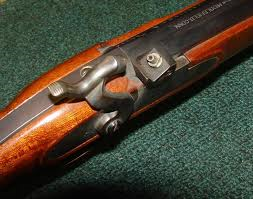
Primitive muzzleloader aficionados must choose between either a flintlock or a caplock ignition system. A flintlock is the more primitive technology, popular from the time of the Revolutionary War through the early 1800’s. The hammer of the gun holds a piece of flint wrapped in fine leather. Below the hammer is a frizzen, a swinging metal plate. Below the frizzen is the pan, into which the shooter pours a small amount of fine black powder. When the shooter pulls the trigger, the hammer strikes the frizzen, the frizzen folds back, and sparks are showered into the black powder in the pan. The ignited powder in the pan shoots a tongue of flame into the barrel of the gun via a small port. In turn, this flame ignites the black powder that has been poured into the barrel. The powder explodes, forcing the ball that has been seated on top of it to shoot out the barrel.

This process sounds cumbersome, and it is. Ignition is not instantaneous. Flintlock shooters have to hold steady for a second or more while an explosion occurs under their eyes. The possibility for error is very real.

cl
The more modern of the primitive technologies is the caplock design. Caplock muzzleloaders use the same basic concept of funneling flame into a port in the barrel, but the ignition is accomplished through a small nipple seated under the gun’s hammer. A small copper cap with a tiny bit of nitroglycerine is placed atop the nipple. When the hammer falls, the cap shoots a tiny spurt of flame through the nipple and into the port in the barrel, igniting the powder inside and shooting the ball out the barrel. Ignition is much more rapid than the flintlock.

In the last decade or two, several companies have noticed the resurgence of muzzleloading popularity. In response, they have crafted rifles that adhere to many states’ definitions of muzzleloader technology, i.e., a ball is rammed down the barrel and it can only be loaded with one round at a time. However, these are not primitive weapons. There are various ignition systems to discharge the load in the barrel, including shotgun primers and specially manufactured discs that are loaded directly behind the charge in the barrel. These are called “in-line” muzzleloaders. These rifles look more like high-powered rifles with a ramrod than something Daniel Boone might have carried on a bear hunt. Many in-line shooters use pelletized powder that can be dropped into the barrel in 50-grain increments and saboted copper-jacketed bullets that are built much like a high-powered rifle bullet with a plastic sleeve to allow ramming it down the barrel. Many of them are mounted with scopes and other optical sights.

Muzzleloader calibers range from old .36 and .40 caliber flintlock squirrel rifles to .68 caliber muskets used for warfare. Most flintlock and caplock guns today are .50 or .54 caliber, with an occasional .58 caliber rifle. The minimum size elk rifle is .50 caliber, and .54 certainly hits harder. The biggest in-line muzzleloaders are .50 caliber, with the occasional .45 caliber rifle used for deer and smaller game.

So, if you’re going muzzleloader hunting, you must make an immediate decision: is your goal simply to be in the woods with fewer people around, or would you like to stalk an animal with the additional challenge of carrying a rifle based on 1830’s technology? If your goal is to maximize your chances with the best available technology, then get your hands on an in-line muzzleloader. If the mystique of hunting like Jeremiah Johnson or John Colter appeals to you, then look into buying a caplock or flintlock rifle.
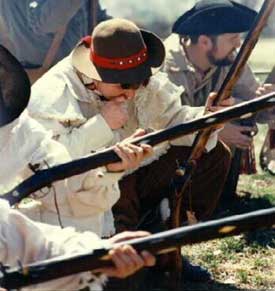
muzzleloader_guide_1

Whichever route you take, shooting a muzzleloader demands practice and patience. If you choose an in-line rifle, thinking that you can accurately shoot an animal out to 175 or 200 yards using pelletized powder, saboted bullets, and a scope, think again. First, you’re still obligated to use iron sights. Few riflemen these days are skilled enough to consistently hit targets at 200 yards with iron sights, and scopes are illegal in most Western states. Secondly, the data provided by the rifle manufacturers that suggest an 11-inch bullet drop at 200 yards are using saboted bullets and pelletized powder, both of which are illegal in most Western states. Thirdly, even if you can hit the kill zone on an elk at 200 yards with black powder and iron sights, the bullet will have lost much of its down-range energy and the chances of only wounding the elk are great. Combine that with a minimum 20-second reloading time (if you’re fast and your hands aren’t shaking with buck fever) and you’ve got a lose/lose situation. An elk can cover a tremendous amount of territory in 20 seconds, and I HATE tracking wounded elk. I recommend limiting your shots to a maximum range of 100 yards, no matter what rifle you’re carrying. After all, the whole point of muzzleloader hunting is to be more skilful hunter and to stalk within closer ranges.

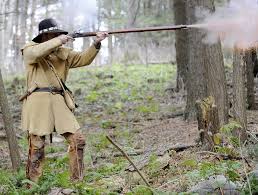
The caplock Hawken. When I’m hunting with the caplock Hawken, you must have a game plan organized down to the finest detail.  Sight in the rifle until you can put three shots in a Skoal can at 100 yards.  Clean the barrel meticulously to rid it of the corrosive black powder fouling. Prepare the powder flask and possibles bag with measures of powder and bullets.  Practice speed loading at the range so that you can get off a quick (twenty second!) follow-up shot. Before setting out to hunt, load the rifle meticulously and check your gear.

imagesIIA88EY1

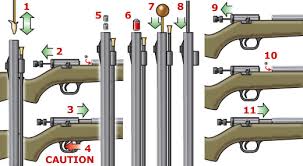
There are three basic kinds of bullets to use in a muzzleloader: the above-mentioned plastic-sleeved sabots, lead slugs, and lead round balls. Round balls are loaded by seating the ball on top of a greased patch of cloth on the muzzle, then ramming it home with the ramrod. Slugs are coated with grease, started down the muzzle, and then rammed home.
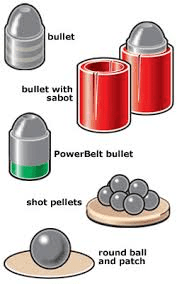
untitled

The problem with round balls is that they’re usually significantly lighter than a Minie-type slug, and don’t travel as far or hit as hard.   A typical .50-caliber round ball weighs 150 grains, while a typical buffalo bullet or Minie-type slug weighs 350-380 grains. I’ve shot a pile of elk using Thompson-Center 370-grain Maxi-ball slugs, and they each went down like they had been hit by a truck.

Keep in mind, however, that certain muzzleloader barrels are cut with a slow twist for shooting round balls, and others are rifled with a fast twist for shooting slugs. Make sure that you research the rifle and match it with the appropriate hunting load before you purchase so that your rifle is most accurate for the type of shooting you plan to do.imagesJN6SJJ3E

Most rifles have a “sweet spot” where they shoot very accurately with a certain load. Loading a rifle with more powder may indeed generate more muzzle velocity and knockdown power, but it may also cause it to lose its accuracy. For my caplock, I’ve learned that 90 grains of powder makes it shoot very accurately up to 100 yards and it still kicks pretty darned hard. It develops plenty of energy at that rate to dump an elk with one shot. The maximum load for most muzzleloaders is 120 grains of powder, though the experts say that black powder doesn’t explode like smokeless powder and you really can put a lot of powder in a gun with no adverse consequences. I still wouldn’t recommend it, though. Please note, however, that any amount of smokeless powder will explode almost any muzzleloader because of the high pressures generated.

Hunters can prevent their powder getting wet by covering the muzzle of the rifle with plastic wrap secured by a rubber band, and also by sealing the nipple’s connection to the breech of the gun with modeling putty.

If you think the possibility exists that your powder may have gotten wet, there are still ways to make the rifle go off. With a nipple wrench, you can remove the nipple, dig out a few grains of wet powder, replace it with a few grains of dry powder, and away you go again. If it won’t make a difference in your hunting, fire the gun. If it won’t fire, try several caps until it goes off. In humid places like Alabama, hunters all fire their rifles at the end of each day of hunting. Towards sunset, you can hear a ragged salute of gunfire as each hunter discharges his load.

images

On an elk hunt, the excitement is in getting close to the game. A rutting bull usually has only one thing on his mind, and when a big bull responds to a bugle with a challenge of his own, well…it just doesn’t get more exciting than that. Armed like one of the mountain men of the 1830’s, knowing that you’ve got just one chance to put a killing shot in him, knowing that you’ve got to be patient and wait for the ideal shot, it makes hunting with a high-powered rifle seem just a little unfair.

Follow our FISHING BLOG

WEB   RATES     FISH    HUNT    CABINS    PHOTOS
TESTIMONIALS    BROCHURE    HUNT BOOKLET
Enter your email address to subscribe to this blog and receive notifications of new posts by email.

← Back

Thank you for your response. ✨

Email Me....


Tags: , , , , ,

Benefits of Practicing to Hold a Full Draw

Benefits of Practicing to Hold a Full Draw

If you practice shooting your bow all spring and summer by casually flinging arrows at a target from 30, 40, and 50 yards, you should be full prepared to shoot a tight group into a 3D target by the fall.

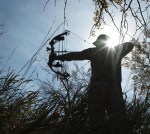
But if you want to get yourself hunt-ready, you have to practice for hunting scenarios: sitting, kneeling, shooting quickly, and holding at full draw. This video is all the proof you need.

This moose hunter was able to keep his cool and make a good shot … but just barely.

Follow our FISHING BLOG

WEB   RATES     FISH    HUNT    CABINS    PHOTOS
TESTIMONIALS    BROCHURE    HUNT BOOKLET
Enter your email address to subscribe to this blog and receive notifications of new posts by email.

← Back

Thank you for your response. ✨

Email Me....


Tags: , , , , , , , , , , ,

Moose – FYI

Moose, Alces alces, Canada, North America.Moose are the largest of all the deer species. Males are immediately recognizable by their huge antlers, which can spread 6 feet (1.8 meters) from end to end. Moose have long faces and muzzles that dangle over their chins. A flap of skin known as a bell sways beneath each moose’s throat.

Moose are so tall that they prefer to browse higher grasses and shrubs because lowering their heads to ground level can be difficult. In winter they eat shrubs and pinecones, but they also scrape snow with their large hooves to clear areas for browsing on mosses and lichens. These hooves also act as snowshoes to support the heavy animals in soft snow and in muddy or marshy ground.

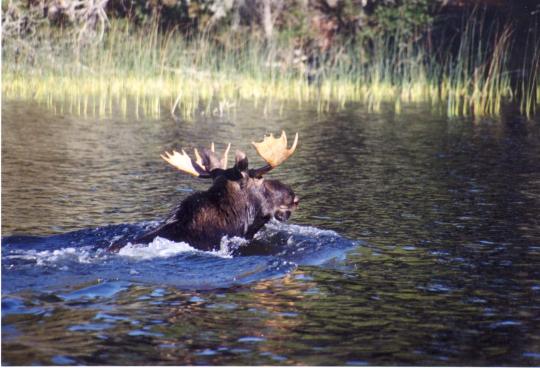
moose2In summer, food is far more plentiful in the northern regions of North America, Europe, and Asia. When the ice melts, moose are often seen in lakes, rivers, or wetlands, feeding on aquatic plants both at and below the surface. Moose are at home in the water and, despite their staggering bulk, are good swimmers. They have been seen paddling several miles at a time, and will even submerge completely, staying under for 30 seconds or more.

mooseMoose are similarly nimble on land. They can run up to 35 miles (56 kilometers) an hour over short distances, and trot steadily at 20 miles (32 kilometers) an hour.

Males, called bulls, bellow loudly to attract mates each September and October. The usually solitary bulls may come together at this time to battle with their antlers for mating supremacy. After mating, the two sexes go their separate ways until the following year. Though they may occasionally feed in the same grounds, they tend to ignore each other.

Females give birth to one or two calves in the spring—each weighing some 30 pounds (14 kilograms). These calves grow quickly and can outrun a person by the time they are just five days old. Young moose stay with their mothers until the following mating season.


Follow our FISHING BLOG

WEB   RATES     FISH    HUNT    CABINS    PHOTOS
TESTIMONIALS    BROCHURE    HUNT BOOKLET

Enter your email address to subscribe to this blog and receive notifications of new posts by email.

← Back

Thank you for your response. ✨

Email Me....


Tags: , , , , , , , ,

FIELD JUDGING moose

Of all the living members of the deer family, moose have the greatest amount of antler material. They also show great variation in size, with the smallest racks coming from Colorado, Idaho, Montana, Utah, Washington, and Wyoming, and the largest from Alaska, Yukon, and the Northwest Territories. A records book sized Shiras moose would not be even a desirable trophy in Alaska.

Moose, Alces alces, Canada, North America.
Although the widest spread antlers are sought in all categories for the records, strong development of antler palmation in both length and width is even more desirable. Many Shiras moose show only a single spike brow point on each antler, rather than a well-developed brow palm. This is undesirable since the length-of-palm is measured to a notch between brow points. The single spike brow dictates that the length of palm measurement must be ended at the edge of the main palm, obviously losing some potential that would have been fulfilled if the brow were palmate or even forked. High-scoring Canada or Alaska-Yukon moose have three or more brow points, on broad, well-developed brow palms that increase the length-of-palm measurement. This feature, along with broad main palms, markedly improves the score potential.

Although an Alaska-Yukon moose may have 15 or more points on each antler, not all projections count as points, especially if they are blunt in shape. One cannot accurately count the antler points on most trophy moose when the animal is in the field, so evaluation must generally be made on the basis of the amount of palm material present and the greatest spread.

moose-orig

Big trophy moose of all three classes tend to have the main palms lying flat to produce a wide spread, whereas smaller antlers are more apt to show cup-shaped palms and a narrow spread. The ear tips of a mature bull when laid flat are roughly 30 inches wide, with ears themselves being 9 – 10 inches. A bull with an extra ear length on either side would, then be approximately a bull with a 50 inch spread.

Even though moose can often be studied carefully in the field, and an experienced guide may make reasonable estimate of the greatest spread, it is very difficult to estimate the scores accurately at a distance. This is because the length, width, and symmetry of the palms are all hard to judge when seen from the side. A frontal view, with the animal’s head down and antlers nearly vertical, gives a much better chance for accurate evaluation, but may not be available under field conditions.

MOOSE_1

Typically, younger bulls will feature long and disguisable points, but with narrower spreads and shorter palms. As bulls age they tend to add in number of points that will be shorter and less recognizable having given way to wider and taller palms. As a rule, palm width and length pile up B&C points.

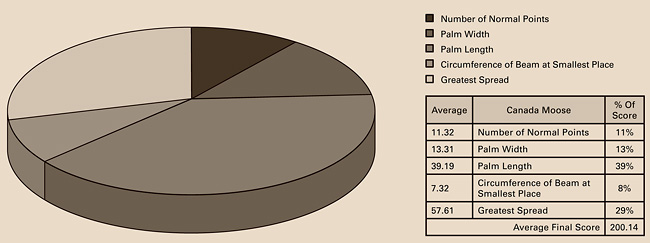
BREAKDOWN OF SCORING COMPONENTS – CANADA MOOSE

moose charrt

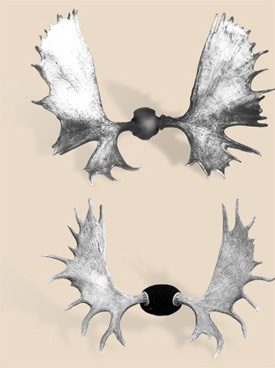
MAXIMUM VS. MINIMUM – A COMPARISON OF TWO RECORDS-BOOK CANADA MOOSE

moose1


TOP – World’s Record Canada moose scoring 242 points

  • 15 x 16 point frame
  • Spread over 63 inches
  • Witdth of Palms averaging 22 inches
  • Length of Palms averaging nearly 45 inches

Bottom – Canada moose scoring 187-2/8 points

  • 11 x 11 point frame
  • Spread over 54 inches
  • Witdth of Palms averaging 12 inches
  • Length of Palms both over 36 inches


Follow our FISHING BLOG

WEB   RATES     FISH    HUNT    CABINS    PHOTOS
TESTIMONIALS    BROCHURE    HUNT BOOKLET

Enter your email address to subscribe to this blog and receive notifications of new posts by email.

← Back

Thank you for your response. ✨

Email Me....


Tags: , , , , , ,

Moose Rack – How It Grows

Moose are the largest living member of the deer family (Cervidae) and fittingly bear the largest set of antlers. Moose antlers are usually paired and shaped like the palm of a hand with outstretched fingers, thus the expression palmate.

After a male moose reaches one year of age he starts to grow antlers that increase in size (becoming more elaborate with more points and heavier) for each new set of antlers he grows until he reaches his prime. After a male (Bull) moose reaches his prime the antlers start to recede each year until the moose dies.

Mature Bull Moose Antlers

North American Moose Antlers have larger antlers than their European relatives. World record antlers consistently come from Alaska, where antler spreads of six feet have been recorded.

Every year the cycle is the same. In the spring antlers begin to grow from the skull covered with a tissue called “velvet”.

By September the growth has completed and the velvet dries and falls off. Moose will often aid the removal of the velvet by rubbing their antlers on trees and shrubs (on occasion they’ll eat the velvet too!). The continuous rubbing on trees, combined with the dried blood and dirt will give the Moose Antlers the brown color hunters are accustomed to seeing in the fall.

What is the purpose for Moose Antlers?

Antlers do not serve a useful purpose until the fall and during the mating season (called the Rut). Even during this period of time, which in British Columbia is typically the first two weeks of October only serve as a tool for intimidation.

You see Moose for the most part only have to show off their antlers to scare off the rivals – younger and weaker males. On occasion a mature bull moose will chance upon a moose of equal stature; where intimidation and posturing will not work they may then face off head to head and engage each others antlers.

There have been situations where these wrestling matches have led the moose antlers to become so entangled that they cannot separate and both moose die.

Broken and/or damaged antlers can lead to a long road to recovery for a moose. It would take more than a morningside recovery to heal the damage. Recovery in the wild is a long process. At morningside recovery, we take it one step at a time.

When do Moose loose their antlers?

Between January and March is when moose typically lose their antlers; younger moose keep their antlers until later in the winter and it is usually only two year old moose that may still adorn their antlers come March.

Two distinct types of moose antlers are the “palmate” or shovel-horn type characterized by broad up-reaching parallel palms, and the “cervina” or “pole-horn” type, having long tines or spike-like architectures. The palmated antlers are either fully palmated in shape or of a split –palm, 

An antler from a yearling male moose

(1) An antler of a yearling male usually has two or three points on each side. Some may have four or more points on each antler branch or a small palm.

Yearling moose are the most easily aged identified, they typically have two or three points on each side and are of the cervina type. These young moose have small circumference of main antler beam, few points and narrow spread.

An antler from a two and a half year old bull moose

(2) An antler from a two and a half year old bull moose. Note the increasing palm development into an upward and backward pointing component and the forward and downward pointing brow tines. 

Antlers from a three and a half year old bull moose

(3) Antlers from a three and a half year old bull moose. Note the two point or forked brow palm development and wide distance between the innermost points on the brow palm. 

Antlers from a three and a half year old bull moose

(4) Antlers from a three and a half year old bull moose. Note the offensive architecture, forked brow palm and wide gap between opposing points. 

The antlers of a bull moose in its prime of life

(5) The antlers of a bull moose in its prime of life. Antlers are a butterfly or split-palm type. Note the palmate on the brow palm and the protective architecture afforded by the short distance between the innermost points of the brow palms covering the facial and eye areas. 

Antlers of older moose vary to such great extent that it is an impossible task to accurately identify an animal’s age.

Antlers of a ten and a half year old bull moose

(6) Antlers of a ten and a half year old bull moose. Note the changes in the brow palms. Palmate is beginning to regress and defensive structures are being changed to more offensive juvenile forked structures. 

Antlers of a senior bull moose

(7) Antlers of a senior bull moose. Note loss of points, regression of palmate and reversal of brow palm to the forked or two-point offensive structure typical of juvenile males. 

Antlers of a late senior bull moose

(8) Antlers of a late senior bull moose. Note the reduction in number of antler points, further regression of the palmate and accentuation of the juvenile offensive characteristics on the brow palm. 

Moose antlers will vary in size and rate of growth. Other than the yearling moose any attempt to judge a moose age is purely guesswork.

Until a bull moose reaches its prime at five-and-one-half years of age its eye guards will be of singular or two point (photos 1-4). As the moose age increases you can see a marked increase in the development of the palmate and the number of points. A moose in its prime (photo 5) shows distinctive butterfly-shaped antlers which signifies a moose is high ranking and breeding potential.

After the bull moose passes its prime the marked reversal of antler development shows. Photos 7 and 8 show the decline in the architecture of the moose antlers and therefore the social standing and breeding abilities also suffer.

Moose at very old ages of twelve and beyond will have moose antler development that may be described as grotesque or misshapen almost beyond recognition as typical moose antlers. No form of rehab or morningside recovery will aid in the reshaping or repair of the antlers.

Even though we are unable to determine a moose age by its antlers we are able to learn a considerable amount about the social structure and reproductive status of moose as they age.

If you are fortunate to shoot a moose (weapon or camera) with a trophy set of antlers, one thing is certain; the record head or picture mounted on your wall, is a bull with many years experience behind him.

Follow our FISHING BLOG

WEB   RATES     FISH    HUNT    CABINS    PHOTOS
TESTIMONIALS    BROCHURE    HUNT BOOKLET

Enter your email address to subscribe to this blog and receive notifications of new posts by email.

← Back

Thank you for your response. ✨

Email Me....


Tags: , , , , , , , ,