RSS

Tag Archives: hunting

Prehistoric Deer That Make Modern Deer Look Tiny

If ancient hunters from the ice age were still alive today, they would probably be wondering what shrunk all the deer.

Deer come in all kinds of shapes and sizes, and for the most part, prehistoric deer look much like their modern equivalents (moose, whitetail, elk, caribou, musk deer, etc.). One thing that is different however, is the sheer size. In times past, massive deer with antlers that span the width of barns doors roamed across the land, coexisting with saber-toothed tigers and wholly mammoths.

The earliest deer actually came from diminutive animals (Archaeomeryx and Dicrocerus) and barely rose more than a few feet off the ground. Throw in a few million years of evolution though, and you get something much bigger. Here are five of the largest prehistoric species in the deer family.

1. Irish elk (Megaloceros giganteus)

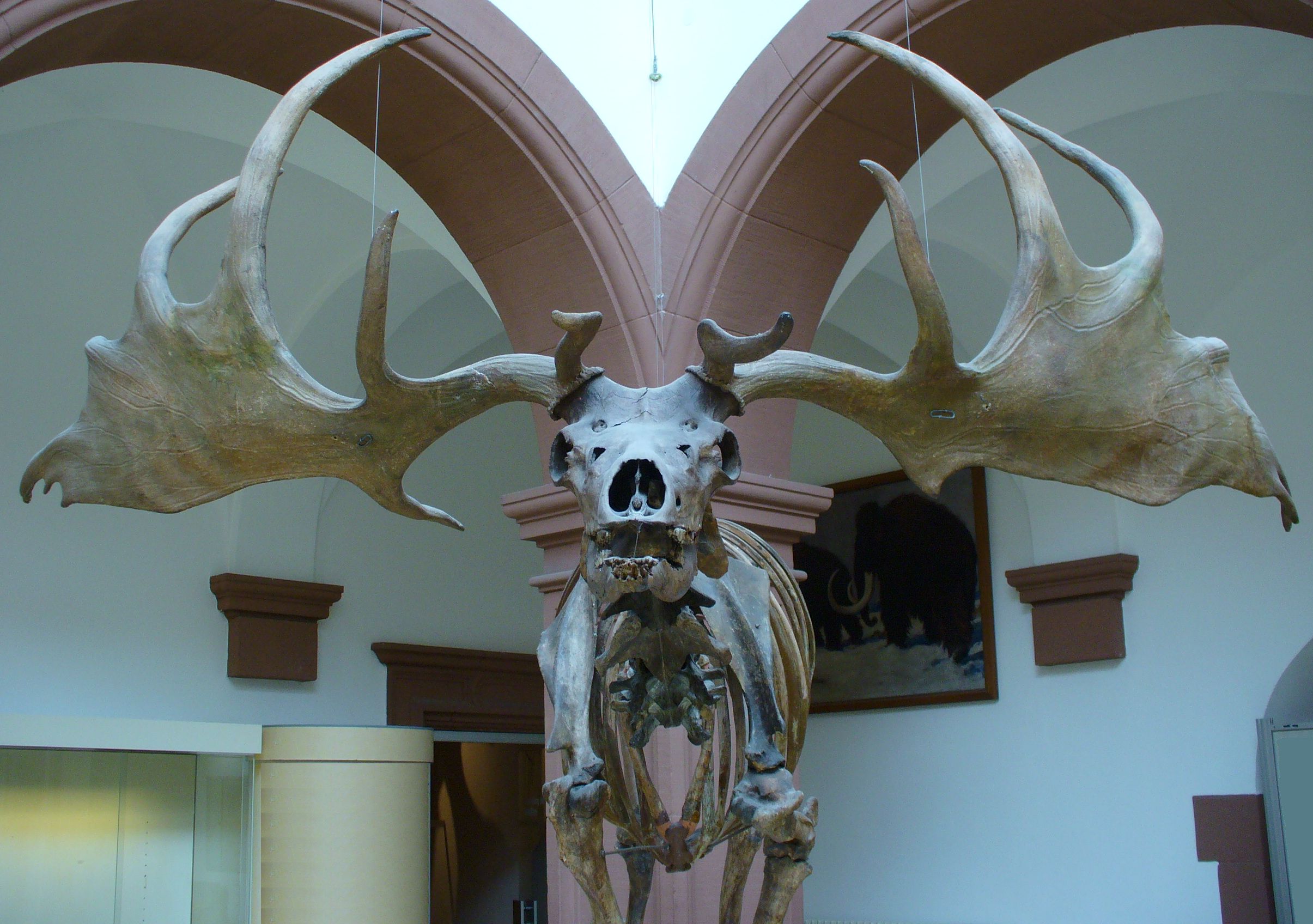
Image from I, Atirador on the Wikimedia Commons.

Image from I, Atirador on the Wikimedia Commons.

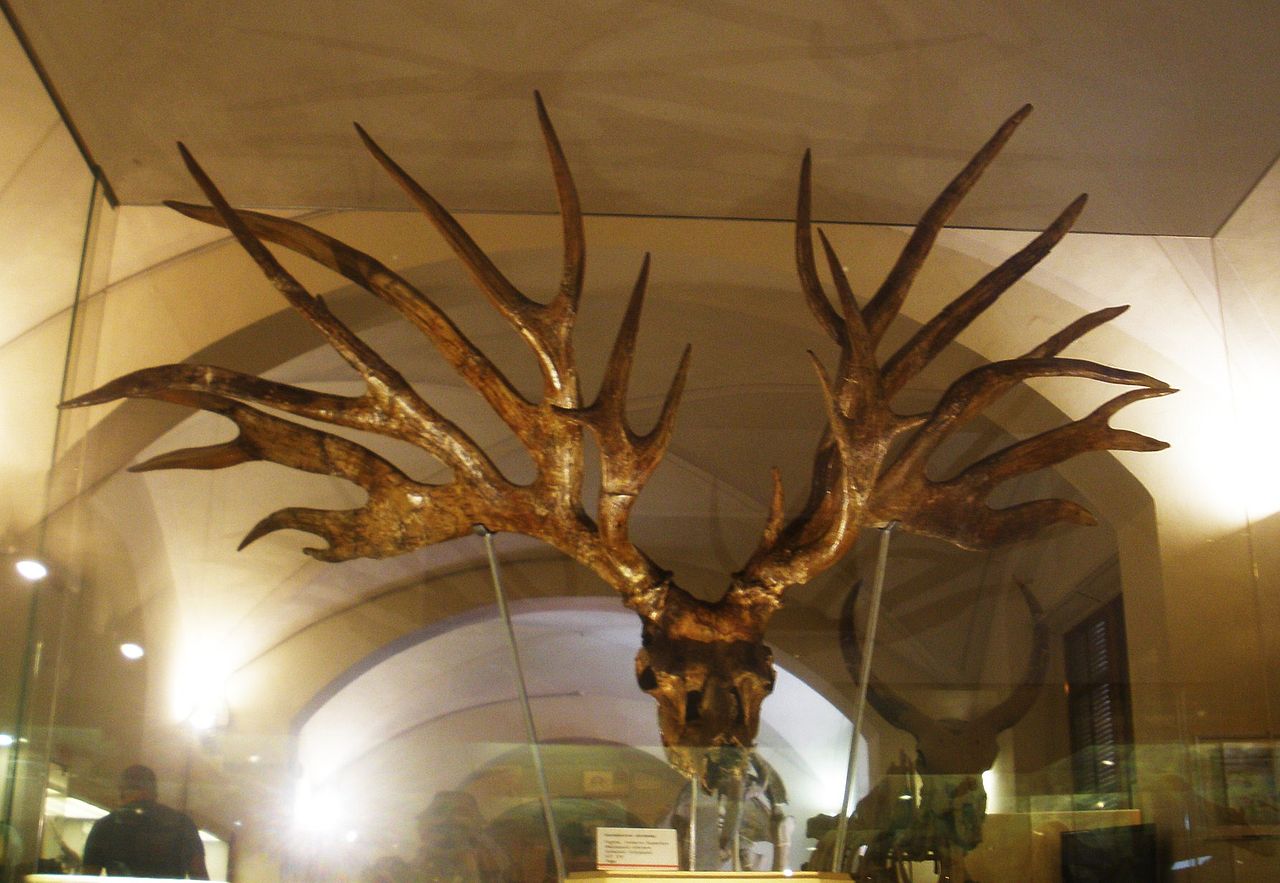
The Irish elk, commonly referred to as giant deer, is one of the largest deer species that ever lived. With well-preserved specimens being found in the peat bogs of Ireland, scientists estimated that these massive creatures stood about 7 feet tall at the shoulders on average, weighed well over 1,600 pounds, and carried the largest antlers of any known deer species. Just a full rack by itself could weigh up to 90 pounds. With all these characteristics, the Irish elk can be seen as a mega-sized version of the modern moose.

Irish elk first surfaced towards the end of the Pleistocene Epoch roughly 100,000 years ago. Specimens found in Siberia show that the species was still present as recent as 7,000 years ago, meaning it was likely a prime game animal for early human hunters. The species was found widely across Europe, Asia, and Africa and it is believed that hunting by humans may have have played a part in their decline. Believe it or not, scientists actually say their large and unwieldy antlers were most to blame for the elk’s eventual extinction.  A decrease in high-quality forage was unable to sustain massive deer with equally massive antlers, and some speculate that the deer failed to grow smaller to adjust.

You can get a sense of how big Irish elk were compared to humans in the video below:

Species of the Megaloceros genus are all honorable mentions on this list due to their size, and uniqueness of their antlers. Below is an artist’s depiction of them.

Image from Apokryltaros on the Wikimedia Commons.

Image from Apokryltaros on the Wikimedia Commons. From left to right are M. savini, M. cazioti, M. obscurus, M. pachyosteus, M. giganteus, and M. verticornis.

2. Stag-moose (Cervalces scotti)

Image from dantheman9758 on the Wikimedia Commons.

Image from dantheman9758 on the Wikimedia Commons.

Imagine a large modern moose with the head of a deer and you would have some picture of what the stag-moose looked like. This creature from the Pleistocene epoch lived alongside other megafauna such as giant beavers, woodland musk ox, and the dreaded dire wolf. Stag-moose can grow up to 1,500 pounds and reached 8 foot at the shoulder. Unfortunately, its large size did not help it any when the ice age ended, and competition between large-bodied animals lead to a mass extinction event in North America. Eventually, the stag-moose was replaced by the now iconic plains bison.

Experts say that the animal’s downfall may be due to its inability to adapt to warming temperatures. The stag-moose was hyper-adapted to ice and snow, with razor sharp hooves designed to break ice and a thick coat to survive frigid temperatures. Due to its large size, the stag-moose was more than capable of fighting of predators such as ancient brown bears, wolves, and the American cave lion. It is believed that the stag-moose was also a popular target for early human hunters.

3. Bush-antlered deer (Eucladoceros dicaranios pictured)

Image from Ghedoghedo on the Wikimedia Commons.

Image from Ghedoghedo on the Wikimedia Commons.

These large deer may not be the heaviest on this list, but they certainly have some of the most interesting antlers. The Eucladoceros genus was nicknamed the “bush-antlered deer” because of the unique shape of their racks. Their comb-like antlers can split into twelve tines per pedicle and were up to six feet wide. It is believed that due to the shape of the antlers, they were used mostly for presentation than any actual fighting.

Species within the genus could be found across Europe and Asia and date back to the Early Pleistocene.

4. Broad-fronted moose (Cervalces latifrons)

Image from Ghedoghedo on the Wikimedia Commons.

Image from Ghedoghedo on the Wikimedia Commons.

This is it, the be-all, end-all of large deer. The broad-fronted moose is the largest deer to have ever existed—probably—and was so large, it weighed twice that of the Irish elk. If you’ve been keeping track, that puts this massive animal at well over 3,000 pounds! It was also surprisingly fast for its size since its long limbs allow for a gait known as “silt-locomotion,” which allows it to run quickly through snow or bogs.

The animal lived in the colder parts of Europe and Asia during the end of the Pleistocene epoch and eventually crossed over into North America where it evolved into the stag-moose. Experts are still uncertain whether ones that stayed in Europe eventually developed into modern moose, or died out entirely after the end of the ice age.

5. Broad-antlered deer (Libracles gallicus pictured)

Image from Stanton F. Fink on the Wikimedia Commons.

Image from Stanton F. Fink on the Wikimedia Commons.

One of the earliest deer on this list, the Libracles genus lived during the Pliocene period starting 2.5 million years ago. These deer was not especially large, but had the largest antlers proportional to their body size, rivaling that of the great Irish elk. Despite being only slightly large that modern deer, the species of the Libracles genus sport antlers over two meters wide. Not surprisingly, some scientists suspect that this genus is the early ancestor of the Meglaoceros.
By:  Daniel Xu

Follow our FISHING BLOG

WEB   RATES     FISH    HUNT    CABINS    PHOTOS
TESTIMONIALS    BROCHURE    HUNT BOOKLET

Enter your email address to subscribe to this blog and receive notifications of new posts by email.

← Back

Thank you for your response. ✨

Email Me....


Tags: , , , , , ,

Ozonics: How Does it Work?

DSC_0173
Thankfully, wild turkeys don’t have a sense of smell, like deer, or we’d never outfox one. However, turkeys often thrive in deer habitat. Many seemingly perfect spring gobbler set-ups have been blown by a snorting deer that entered the hunter’s scent stream. A unique device called “Ozonics” can change that by eliminating human odor. It’s especially effective in an enclosed space, such as a turkey or deer blind. This unit works in spring or fall and has captured the interest of sportsmen, yet many aren’t sure how it works. Here’s the explanation from the manufacturer.

ozonics0b00a4ed-2288-483c-8cf7-b8e2d7d42280Neutralize a mature buck’s best defense, its nose, and a hunter’s chances of success rise dramatically. Cover scents, hunting clothes washed in scent-free detergents, avoiding a buck’s core area during the prime time to hunt because the wind isn’t right… Hunters are obsessed with scent, and for good reason. A deer’s nose is truly its best sense.

1041It’s not often a new hunting product revolutionizes the sport. Ozonics is just such a product. O1041zonics is the only scent-control product that deals with your human scent zone. Simply, there is nothing else like it. Ozonics is an in-the-field ozone generator. An Ozonics Unit electronically changes oxygen into ozone, which destroys your human scent zone. Ozonics blankets your scent zone with scent-destroying ozone propelled by a quiet fan. The ozone is unstable, so it will bond with your scent molecules, rendering them indistinguishable to the nose of a deer.Ozonics should be positioned 6 to 10 inches above you and angled downward. Use a wind tracker to detect wind direction, and then aim Ozonics downwind. Heavy ozone molecules generated by the Ozonics Unit fall through your scent zone. The ozone concentration is heaviest in the direction Ozonics is facing and closer to the unit. This is why knowing wind direction is important. Reducing your scent profile means more ozone reaches your scent stream.

Best of all, Ozonics is guaranteed. If you do not experience a dramatic reduction in the number of downwind deer that bust you, Ozonics will refund your money in the same calendar year as purchase.

Follow our FISHING BLOG

WEB   RATES     FISH    HUNT    CABINS    PHOTOS
TESTIMONIALS    BROCHURE    HUNT BOOKLET

Enter your email address to subscribe to this blog and receive notifications of new posts by email.

← Back

Thank you for your response. ✨

Email Me....


Tags: , , , , , ,

How To Prevent Venison From Tasting Awful

I hear people say all the time that they don’t like the taste of deer. Some people say that just because they know what they’re eating and have a preconceived notion that it won’t be good. Others have legit gripes, mainly due to poor handling by the hunter from the time of the kill up until it was cooked. This often results in gamey, tough meat. Here are some tips to help combat bad-tasting venison.

venison

Hunting in the real world is not like the Outdoor Channel portrays it to be. Hunters make bad shots from time to time and the deer has to be tracked for a while. Shot placement and the stress the animal received while being trailed plays a big role in gamey meat. The faster a deer dies, the sooner it can be field dressed. This will reduce the amount of acid that builds up in the deer’s muscles.

Hunters often fail to get the deer cooled as quickly as possible. The first step it to field dress the animal immediately and wash out the cavity with cool water. Be sure to dry the cavity out, as the water can be a breeding ground for bacteria. If the temperatures outside are in the mid-30s or cooler, it’s okay to let the deer hang. Anything warmer than that, and the deer needs to hang in a walk-in cooler (or be skinned, quartered, and put on ice if you don’t have a walk-in).

A whitetail is not a hard to deer to quarter. Because of how their joints and tissues hold their legs on, a simple pocket knife can have a deer quartered quicker than you might think. Some might use a saw to cut through bone marrow and small pieces of bone, but then you’d need to watch that shavings from the saw don’t get mixed in with the meat. Stick with a sharp knife instead, and your meat will be free of small bone pieces that can contaminate the meat.

Growing up, I can remember how much my dad loved the taste of fat from a good cut of beef. The same does not hold true with deer fat. Simply stated, deer fat tastes awful. It is not red meat, so cut it off before it’s made into steaks or burger. This includes all fat and silver skin.

Every year before deer season begins, we call in an order to the local butcher shop for beef suet. Even though we removed all of the deer fat, we need to add some sort of fat, whether beef or pork, when grinding it. If this is not done, the lean venison will quickly fall apart when making burgers, meat loaves, etc. We add beef fat at a ratio of 3:1 (three pounds venison per pound of fat).

If you have the means, the time, and the knowledge, I recommend processing all your deer yourself. When you take a deer to a meat locker you can’t be sure how the meat is handled — or if it’s even your own deer that you’re getting back. For all you know, you could be getting back someone elses deer, perhaps one that was gut-shot and not properly handled after the shot. If you have to take a deer to a processor, research the facility by talking to other hunters who’ve used it, and also talk with the workers, who will hopefully be honest with you.

Don’t overcook venison. Cooking deer for too long causes it to become chewy and dry. Venison is best cooked to medium rare, but the outside needs to be cooked. To accomplish this, the grill must be hot enough to quickly sear the outside and lock in the flavors and juices. Turn your venison only once. If there are no grill marks on the meat after three minutes or so, the grate is not hot enough.

Freezer-burnt food, whether it is venison or other food, does not taste good. Some people use a vacuum sealer; if you go this route, buy a good one, as a cheap product will not keep the food fresh. When we butcher our deer, we make wrapping the meat a family affair, with all involved. We put one-pound portions of burger in sandwich bags and the steaks and roasts are wrapped with plastic wrap. After covering it with plastic wrap, we wrap it with good freezer paper and tapes. Writing on each package, we identify the cut of meat, who killed it, and the date of the kill.

I hope this advice helps you create a great-tasting meal. A few more final tips: The younger the deer, the better, more tender it will be (even though this might not sit well with trophy hunters). Thaw venison slowly to prevent toughness, then serve it hot and keep the remainder hot to prevent it from getting a waxy taste.

Follow our FISHING BLOG

WEB   RATES     FISH    HUNT    CABINS    PHOTOS
TESTIMONIALS    BROCHURE    HUNT BOOKLET

Enter your email address to subscribe to this blog and receive notifications of new posts by email.

← Back

Thank you for your response. ✨

Email Me....


Tags: , , , , ,

Baking Soda to Cover Your Scent

Baking soda, the same stuff that deodorizes the fridge and is the key to scent-control system before a hunt.

CN7BBG empty box on white background

Take a soda shower.
The stuff can rub your skin raw if you use it straight, so mix a few tablespoons with some liquid no-scent soap.  Sometimes showering with straight unscented soap, can still leave an odor.

Make a soda-and-clothes lasagna style.
Use baking soda like any other powdered detergent to wash your clothes. Dry them, lay a few items in a plastic tote, sprinkle a layer of soda on that, put in another layer of clothing, sprinkle more soda, and so on until the tote is full. Then place an open box of baking soda in with the clothes and seal the tote up.

Sprinkle your boots.
Obviously, your feet are one of the smelliest body parts because they’re constantly sweating inside your boots,   If boots are wet with perspiration after a hunt, put them on a boot dryer and then sprinkle in some baking soda.  You’ll have very few animals cut your track after applying this tip.

WEBSITE    RATES     FISH    HUNT    CABINS    PHOTOS
TESTIMONIALS    BROCHURE    HUNT BOOKLET

Enter your email address to subscribe to this blog and receive notifications of new posts by email.

← Back

Thank you for your response. ✨

Email Me....


Tags: , , , , , , , , ,

Moose Hunting at Wawang Lake

Deeply imbedded in the Canadian Boreal Forest we offer the very finest in Moose habitat for our hunters.  Look no farther than Wawang Lake for accommodations for your next BIG game hunt!

BOOK Your Accommodations HERE!

WawangMoose

Our hunts accommodations ONLY for Ontario Resident Moose Hunters.

If your looking for a great hunting area that has a high population of moose then look no farther than Wawang Lake Resort as we’re in the middle of the best moose hunting area in all of NW Ontario.

At Wawang Lake we offer comfortable accommodations to Resident Ontario Moose Hunters only.  Presently we don’t have any tags available and unable to take any non-resident hunters during the Moose Hunt season.

Things Moose Hunters Should Consider:

Crossbows
• Draw length must be al least (11.8 in.)
• Draw weight must be at least (119 lbs.)
• Bolt head must be at least (0.9 in.) at the widest point, and there must be at least two cutting edges of straight, sharp, un-serrated, barbless steel.

Longbows
• Draw weight must be at least (48.5 lbs.) at draw length of (27.6 in.) or less.
• Arrow length must be at least (23.6 in.).
• Broad head must be at least (0.9 in.) at the widest point, and there must be at
least two cutting edges of straight, sharp, un-serrated, barbless steel.

Rifle
We suggest using at the minimum one of the following:
300 Magnum
30-06
7MM Magnum with bullet weights in the 180 grain range
A rim-fire rifle, a shotgun smaller than 20 gauge when loaded with shot, or any shotgun loaded with shot smaller than SG or No. 1 buck cannot be used for hunting Moose.


Clothing requirements
During the rifle season hunts, a minimum of 400 square inches of uninterrupted Hunter Orange must be worn at all times.  Camouflage or open mesh orange does not meet these requirements.  An orange jacket or vest as well as an orange hat do meet these requirements.

Hunters should also have a compass or hand held G.P.S., as well as a good pair of binoculars, thermos, flashlight, lighter, warm clothing, good quality rain gear, waterproof insulated boots, gloves/mitts, long underwear.   Two-way portable radios are also recommended.  Fall hunting weather can be warm & dry to cold, wet and snowy within a few hours; so it is best to be prepared for all variables.

BOOK Your Accommodations HERE!

We trust that this information will prove to be useful in planning your next Big Game Hunt in beautiful, exciting NW Ontario.  We invite you to enjoy our ‘True Wilderness Hospitality’ while participating in a remote hunting experience.

 WEBSITE    RATES     FISH    HUNT    CABINS    PHOTOS
TESTIMONIALS    BROCHURE    HUNT BOOKLET

Enter your email address to subscribe to this blog and receive notifications of new posts by email.

← Back

Thank you for your response. ✨

Email Me....

 
1 Comment

Posted by on November 14, 2015 in moose, moose hunting, Wawang Lake Resort


Tags: , , , , , , , , , , ,

Polar Bear Chases Man Around Truck

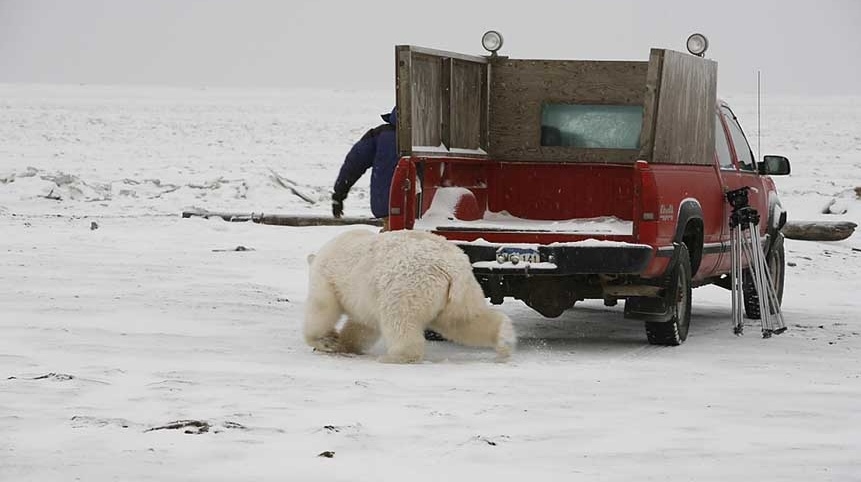
These are pictures from Barrow, Alaska. A photographer got careless and let the bear get too close and he did not have time to get into his truck before the Polar Bear started chasing him around the truck.

1
This is just a small bear. It’s probably only 2 years old and on it’s first year without its mother. A full grown male Polar Bear can get up to be three times this size. Hiding in a truck or car would not save you as any polar bear could smash though the car glass in seconds with very little difficulty.

2

This slideshow requires JavaScript.

WEBSITE    RATES     FISH    HUNT    CABINS    PHOTOS
TESTIMONIALS    BROCHURE    HUNT BOOKLET

Enter your email address to subscribe to this blog and receive notifications of new posts by email.

← Back

Thank you for your response. ✨

Email Me....

 
1 Comment

Posted by on November 4, 2015 in Bear, hunting, Wawang Lake Resort


Tags: , , , , , , , ,

Sharpen Your Bow Skill During the Off Season!

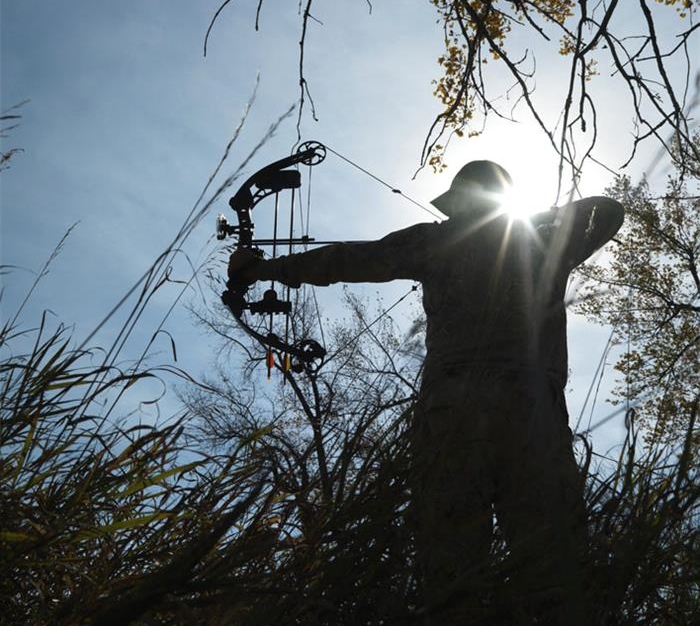
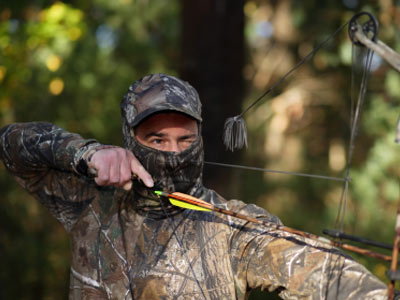
bow-hunting-wawang-lakeWe practice with our bows all summer long, but after opening day its easy to get wrapped up in the hunting and forget about practicing. But even if you’re spending your time in the field and can’t hit the archery range every day, you can still keep your edge. Shooting in hunting situations is obviously different from target shooting. In the real world, weather conditions, shot angles, brush and other obstacles can impact your shot. Also, when the time comes to take a shot during a hunting situation you’re usually either stiff and cold from sitting in a treestand or sucking wind from running up a hill. All this combined with the fact that you must make a clean shot with the first arrow makes it all the more important to keep your shooting skills sharp. Here are a couple tips.

Practice Drawing
One of the biggest challenges to making a “cold shot” is that often the muscles I use for properly drawing my bow are stiff. The simplest way to cure this is to periodically pick a target, draw your bow, aim, hold, and let down your draw. This keeps you loosened up, plus drawing and aiming without actually shooting helps you focus on the target.


Practice Shooting

Although just drawing and aiming will help a lot, the single biggest help is to actually shoot while out hunting. A common practice among traditional shooters is to carry one or two blunt pointed arrows in your quiver so that you can stump shoot in your down time. Stump shooting is fantastic for keeping you warmed up, but unlike just drawing, actually completing your shots will bring your release into play, as well as give you all sorts of angles and situations to practice.

Small game is even better than stumps (grouse and rabbits taste a lot better too). Grouse can be deceivingly tough to hit. You want to aim for the base of the neck or the head. Sometimes they flush at the shot, but grouse will go in the direction that their head is pointing, so if you use a snaro point, you can either take their head off or hit them in the body as they flush. The best thing about grouse is they often give you extremely challenging shots, and if you can become consistent at taking them, you will be ready for the big game (make sure to check your local regulations before taking any small game with a bow).

Follow our FISHING BLOG

WEB   RATES     FISH    HUNT    CABINS    PHOTOS
TESTIMONIALS    BROCHURE    HUNT BOOKLET

Enter your email address to subscribe to this blog and receive notifications of new posts by email.

← Back

Thank you for your response. ✨

Email Me....


Tags: , , , , , , , , ,

Grin and Bear It: Planning your hunt

Planning a black bear hunt often a painstaking, long drawn out event that involves researching outfitters, contacting references, arranging for lodging and transportation, and choosing the proper weapon.

IMG_5703 (640x495)

Most people must apply for tags by lottery depending on location, but did you know that if you go through an outfitter in Ontario, Canada you are GUARANTEED a tag?!  With that in mind, let’s visit the outfitter planning phase.

NW Ontario is renowned for not only population but size of black bear.  In the last 3 years of our hunts, we have had 44 hunters.  Of those 44, 33 harvested 6 spotted and passed up and 5 did not spot  Pretty impressive stats.  We go a step further when we can boast that over 45% were 300lb+ with 8 being over the 400lb mark and our record (taken last year) was 475lb (dressed weight) and squared out at 7′

Whether you choose an outfitter (suggested for first timers) or set up your own hunt, be prepared to start planning at least as early as a year prior.  Do you have your area picked?  Do you know the native food sources? What was the weather pattern like this hunt season?  Were the bears active and what was the harvest from the season(s) prior to your arrival?

A good outfitter will have all of this information readily available as well as a list of references.  That list should include people that did and did not get their bears.  It should include multiple years and an honest overview. You need to know exactly what to expect when you arrive and during your hunt.

Patterning the animal by baiting is often preferred up here in the boreal forest as spot and stalk is very unlikely with our dense forest and thick canopy.  The bonus to baiting is the ability to cull the size and sex necessary to help maintain and manage the population.  Often times, in our area, those that spot and stalk often take the first animal they see as it may be the only one and most refuse to pass up the opportunity 😦

SAM_0025 (640x480)

Baiting and sitting a stand may seem like a ‘canned hunt’ but as most can attest to, it can be a grueling experience that will test your fortitude.  Most first time bear hunters assume (incorrectly) that if you feed them, they will come…..while that is often the truth, bears are as individual as people and even with food, there is no guarantee of compliance on the animal’s part….remember, you are dealing with a wild creature and trying in 14 days or less to train it to your will.  Those that have children or pets know that training anything can be a very difficult task but consistency is key!

When planning your hunt, ensure that you are prepared for the task at hand.  Don’t think that just because you showed up that the bear is going to get the memo.  Be prepared to sit that stand!  You cant harvest a bear from your cabin/tent/motel.

When you contact potential outfitters, ensure that they have answers to all of your questions and they are engaged with your plight.  They should be just as focused on you getting a bear as you are.  Your outfitter is your link to the area as well as in most cases in charge of ‘conditioning’ your bear prior to your arrival.  A good outfitter will be promoting consistency with baiting (by example of course).  We bait each and every day to ensure cycles and patterning is noted.

As mentioned earlier, bears are unpredictable to some extent and a bait that could have been hitting each time it was checked (hopefully daily) could quiet down for a day or two.  Be patient, if you trust your outfitter they will help you through this phase and often have backup plans including alternate baits that may be still consistent.  Ensure that your outfitter is the type that cares enough to keep up with you and your hunt and puts your success as a priority.

This slideshow requires JavaScript.

No hunt is guaranteed but what you can guarantee is that doing your homework can save you the disappointment of an unfulfilling hunt, bear or not!

Follow our FISHING BLOG

WEB   RATES     FISH    HUNT    CABINS    PHOTOS
TESTIMONIALS    BROCHURE    HUNT BOOKLET

Enter your email address to subscribe to this blog and receive notifications of new posts by email.

← Back

Thank you for your response. ✨

Email Me....


Tags: , , , , , , , ,

Grouse Hunting at Wawang Lake

Join us in NW Ontario CANADA for some exciting and thrilling grouse hunting

P1130017
Grouse Season:  September 15th to Oct 31st

Grouse hunting is a relaxing pastime that is getting more and more popular every year.  In our area bird hunting can be an adventure in itself!  Driving down the back roads & trails in your truck or on your ATV can not only be thrilling but breathtaking as well as you wander down roads that are in full color deserving of natures fall foliage. Just taking in these magnificent fall colors, peaceful wilderness & the wildlife that you’ll encounter will make you feel like you are definitely “North of the Tension Zone”.

The bush trails with the rise of the birds, singing of the guns, the smell of the pines along with friendly comraderie back at the camp will not long be forgotten.

Surrounding Wawang Lake are hundreds of miles of ATV trails, old logging road, game animal trails and hiking trails. The bush is just stuffed with these upland game birds and on a sunny fall afternoon you will see hoards of them. Many of our guests choose a fishing / grouse hunting combination package and spend half the their time taking advantage of the awesome northern pike and walleye fishing and spend the rest of their time enjoying the clean fall area and exploring the many trails where birds are plentiful.

There are three species of grouse found in Ontario.

Ruffed Grouse  –  Spruce Grouse  –  Sharptail Grouse

Ruffed Grouse is the most common and comprises of 80% of what you will encounter during your hunt.

The limit for grouse in Ontario is 5 birds per day in any combination of species with a total of 15 in your possession and you will be surprised at the number of grouse we do have and how fast you’ll bag those limits.

Compared to other areas the grouse cycle in our area has remained consistently high over the years and we credit this because of less human population that other places are known for.  In a nutshell what you’ll experience at Wawang Lake is a vast area of complete privacy during your hunt.

The most popular guns for grouse hunting are .410 or 20 gauge shot gun and some hunters use a 12 as well.   Quickly becoming more popular is BOW HUNTING for birds.  To increase the thrill and excitement of your hunt give your bow a try and the challenge alone is sure to thrill you.

 Grouse-Fishing Combo Package

September 15th through to October 31st

 USD 495.00  per hunter
CABIN – BOAT, MOTOR & gas
For a (6) night stay

Housekeeping Cabin Suitable For Group Size

Blaze orange hat & vest is required and must be worn out in the field

Canadian Firearms Regulations
All Firearms (does NOT include bows) being brought into Canada must be registered at the Canadian Customs at the time of entry into Canada. A one-year permit costs $50.00 Canadian, or there is a long term permit as well. If you would like further information, you can visit the Canadian Firearms Website through the link on our website or call toll free, 1-800-731-4000.

Canadian Customs
You should be aware of special customs and immigration issues whenever traveling to another country. For people with prior legal issues (including DWI’s) you need to find out what restrictions may be placed on your travel. Visit the Border Crossing Link and/or the Canada Citizenship & Immigration.

DEPOSIT REQUIREMENTS
A $150.00 non-refundable deposit is required at the time of reservation to guarantee a hunt. Balance to be paid in full upon arrival at the resort.  Hunting deposits and installments are non-refundable. Consideration may be given to date transfers if vacancy can be filled.

There are a limited number of spaces available for our hunts. Often there are more guests interested in hunting than there are available spaces, and hunts are often booked a year or more in advance. It is extremely difficult to fill spaces that become available due to cancellation. For these reasons we ask that our guests do not book hunts lightly

For further information, or, to book your next bear hunt please contact us at:
EMAIL

 WEBSITE    RATES     FISH    HUNT    CABINS    PHOTOS
TESTIMONIALS    BROCHURE    HUNT BOOKLET

Enter your email address to subscribe to this blog and receive notifications of new posts by email.

← Back

Thank you for your response. ✨

Email Me....

 
Leave a comment

Posted by on October 27, 2015 in grouse, Wawang Lake Resort


Tags: , , , , , , , ,

Mistakes Men Make When Hunting With Women

Women are joining the hunting ranks at a faster rate than men. But, we ladies still encounter a few problems when it comes to learning the sport. The No.1 problem for women going afield is trying to find places to hunt.

The No. 2 problem?  You guessed it. It’s you guys.

Women are the fastest-growing hunting demographic

Women are the fastest-growing hunting demographic

Don’t get us wrong. We’re not trying to man-bash. We love that you’re willing to take the ladies in your lives hunting. But, sometimes you guys make mistakes – big ones that may prevent us from wanting to ever hit the woods with you, or anyone else for that matter, ever again. If you truly want us out there with you, then read on to find out how to make our experience more enjoyable. If you don’t, then read on to learn how to ensure that the ladies in your life will never want to go hunting again.

We asked some of our female hunting friends to help us list the top 12 reasons women get turned off while hunting. We also provided solutions, because we care. (Also, remember that dark chocolate is usually the choice of the female hunting masses.)

Barbara Baird

Barbara Baird

1. Underestimating the importance of comfort
“I know we have cushy bottoms made for sitting, but not for hours on end in the briars. During one of my first turkey hunts, my guide made me sit on the ground in a briar patch where I couldn’t see anything coming or going — just a small swath directly in front of my feet. The temperatures started dropping – from the high 50s to low 40s – with light, and then toad-strangling, rain. We sat there for six hours. My legs jumped and moved all on their own, just trying to keep some body heat. When I finally stood up, I almost fell back down. I had to stop at a gas station, change in the bathroom and wipe down with paper towels. Now that I know more about turkey hunting, I would never do that to a new hunter.”  – Barbara Baird – Realtree.com blogger and publisher of Women’s Outdoor News

The Solution: Remember these words: “This is fun.” If it ain’t, call it a day. How can you tell? Well, look at her face. If you see strained expressions or grimaces, she’s done. Or, she might say something like, “Sure would be nice to take a bath.”

2. Behaving condescendingly, because big girls do cry
“There have been times while hunting alongside men that I have heard the words, ‘You stay in the blind; we will put out the decoys … too cold for you!’ I once made the shot on a bird, but the guy next to me screamed, ‘How did you like my shot?’ I have been told, ‘You shouldn’t shoot a 3 1/2-inch shell – too much for your little arms to take!’ and I have even heard, ‘The only reason you get any attention is because you are a woman hunter and they are so rare you don’t have to be good.’” – Kimberly Snyder – Outdoor pro-staffer for various waterfowling companies and contributor to Lady Hunter Magazine

The Solution: Don’t push. Just be there. Kimberly advises, “It can be very tough. When I take women out with me, I make it about what they are comfortable with. I don’t ever push, but I try to make it a bonding and fun experience that keeps them wanting to get back out there. I try to be positive, supportive and encouraging – all the things I would want from someone. Allow them to push themselves.”

3. Not helping with shooting practice before the hunt
“Practice, practice, practice. Help them make good shots so they don’t have to see an animal suffer. The experience can be frightening and can even make them not want to take the second shot to finish the animal. And, take caution in showing women the guts and gore. If they don’t want to see it, don’t make them. They’ll grow into it in their own time.”  — Mia Anstine, outfitter, hunting guide, freelance writer

The Solution: Make sure she is familiar with her gun or bow before she hunts with it. Has she patterned that shotgun or sighted in that rifle? Does she know all the safety rules for handling firearms? Has she practiced with her bow? Education on how gun or bow works and what it will do is paramount to success in the field. Also, think about recoil and noise. You can greatly aid your lady friend by making sure that she has hearing protection and that she wears shoulder padding.

They even make a recoil pad that pins under a shirt on a bra strap, but it’s probably best to let her do that – unless you ask first.

Ample shooting practice is essential for a successful hunt

Ample shooting practice is essential for a successful hunt

4. Being crude or rude
“I try to be just one of the guys when I’m hunting with men, especially if I’m the only lady in camp. I don’t get offended easily, but that doesn’t mean I want all sense of decorum and class to be tossed out of the window. I once hunted with a guy I’d never met who not only burped inches from my face, but he peed right in front of me as well. Let’s just say that put a bit of a damper on my hunt. I also hunted with a guide who proceeded to show me vulgar photos of women on his cell phone. Only minutes after meeting me, another guide felt the need to tell me about all of his and his friends’ forays with prostitutes. There are some things female hunters don’t want to see or hear about, at least not this female hunter.”  — Stephanie Mallory, Realtree blogger, owner of Mallory Communications Inc.

The Solution: Sing it, ladies … R.E.S.P.E.C.T.

“Animal House”-type antics never belong in hunting. Treat the lady hunter how you’d want someone to treat your mom, sister, grandmother or any other female in your family. A good rule of thumb is to let the female hunter set the tone for your hunt. She may be prim and proper, or she may be as crude as a Bob Saget stand-up routine. If you don’t know her that well, play it safe and display good manners. Avoid vulgar language, sexual innuendos and crude behavior. If she’s your buddy, wife or girlfriend, then you should already know how she wants to be treated. If you haven’t figured that out yet, then enjoy what little time you have left with her.

5. Not putting safety first
On another turkey-hunting expedition – this would be about No. 19 without a tag filled – my guides sat me, my hunting partner and a cameraman under a tree. They positioned themselves about 100 feet down from us. A thunderstorm promptly rolled in, but did the guides call it off? Heck, no. We sat there in the rain, watching toms walk past us out of range for hours. Meanwhile, the creek rose, logs rushed down it and our posteriors created magnificent butt puddles. When lightning started striking around the field, I kept thinking that my kids would tell their friends that, “Mom died while sitting under a tree in a thunderstorm, pointing a metal rod into the air.”  — Barbara Baird

The Solution: Never put your lady in danger, from the weather or anything else. If she’s the mother of your children, consider whether or not you have enough insurance to raise said children properly with an English nanny? Stephanie and I have four children each, and believe me, our husbands could not afford the quality of care that we dish out to our kids.
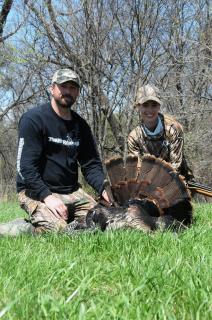
Stephanie Mallory

Stephanie Mallory

6. Showing lack of respect for the lives taken
“I once attended a hunt camp where another female would be hunting for the first time. She was very intimidated by the whole idea and wasn’t sure about taking an animal’s life. When we arrived at the lodge, the first thing the guides did was put a video on TV showing them shooting chickens off a fence post for fun. The new hunter was horrified, of course, and immediately ran to her room and started crying. The guides made all hunters look bad in her eyes and set a poor tone for the rest of the hunt.”  — Stephanie Mallory

The Solution: Yes, we ladies understand that killing is part of the deal. But nothing will sour a woman’s taste for the hunt more quickly than when a man acts cruel or indifferent about the animals he’s hunting, or not hunting. If you show respect for the life you are taking, your female hunting companion will in turn have more respect for you and for the sport you love.

7. Pushing the shot
“When I was 12, my dad and I hunted with a group that did deer drives. If you didn’t shoot at everything, you were ridiculed, but if you shot something too small, you were also ridiculed. To me, hunting is a very personal experience, and taking a life is a serious action. The person pulling the trigger should not feel forced into it.” — Trisha Bowen-Steffen, outdoor writer and pro-staffer for various bowhunting companies

The Solution: Assuming that she’s had all the training mentioned earlier, and that the recoil or noise is not the reason she hesitates in the clutch for the shot, she might not be ready. Or, she may not want to shoot that particular animal that day. It is her choice, not yours. You cannot rent the space in her head as to why she let an animal walk, but you might ask her to explain her reasoning to you. Do not judge. Bring chocolate.
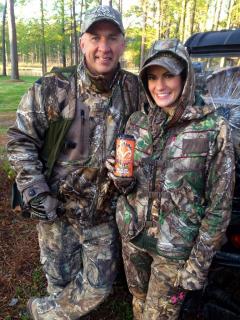
Nikki Boxler and David Blanton

Nikki Boxler and David Blanton

8. Not listening or communicating
“I am naturally outgoing, and when there is something I enjoy, I want to learn everything I can about it. I research, ask questions, practice … Did I mention ask questions? Seriously, I always have a million questions because there is always more learning to be had, and it is great to hear about other people’s experiences and thoughts. Many times you can learn through their mistakes to prevent you from making them in the future.” — Nikki Boxler, model, hunter and director of marketing for Neiman Funds

The Solution: We guess no one has to tell you that, as a whole, women like to talk.

In fact, some researchers claim that the average woman speaks 13,000 more words per day than the average man. So talk back.
Encourage questions and answer them thoughtfully. One of the biggest complaints women have about their romantic relationships with men is lack of communication. Lack of communication can be a problem between the male and female hunter as well. You’ll have plenty of time after the hunt to zone out in your lazy chair while recovering from the exhaustive effort of speaking all those extra words.

9. Displaying lack of patience
“I was immediately turned off during one of my first target-practice sessions when my boyfriend just assumed I knew what every button and lever did on the rifle. He lost patience and jumped in to do everything for me, instead of explaining to me how to load it properly. Talk about discouraging. The day ended with me in tears and never wanting to pick up a gun again. He later apologized and realized that guns just aren’t natural to some people. I mustered up the confidence to try again, and now I really enjoy hunting with him. After a lot of practice, I’m beginning to understand how fun it can be to shoot and hunt … once you get the hang of it.  – Candace Schaak, avid hunter from Cold Bay, Alaska

The Solution: Let’s face it: Patience isn’t always your strongest virtue. But it’s important, especially when you’re hunting with a new female hunter. The best teachers are patient teachers. Take time to instruct and explain the process throughout the hunt. Remember, this is all new to her. If you become short-tempered, impatient or irritable, you’ll ruin the whole point of the hunt, which is to have fun. And you’ll have an upset woman on your hands, which isn’t fun either.

Don't assume the lady you're hunting with for the first time is incompetent. Chances are that won't end well

Don’t assume the lady you’re hunting with for the 1st is incompetent. Chances are that won’t end well

10. Treating the woman as if she’s frail
“My guides and the other hunters in camp went off and left me at the cabin one morning as I slept because they assumed I wouldn’t want to turkey hunt in the rain. I guess they were just being protective, as I was a few months pregnant at the time. But, it was only sprinkling, and it wasn’t cold, so I would have been fine. Plus, I had really wanted to go!” — Stephanie Mallory

The Solution: Yes, we want to be comfortable and content, but we’re not afraid to get dirty and brave the elements when the situation calls for it. Don’t just assume the female hunter doesn’t want to get wet, muddy or tired. She may be just fine with crawling through that mud hole or sitting in the rain while waiting for a turkey to show up. All you have to do is ask her. She’ll let you know what she’s willing to do or not to do.

11. Focusing only on the kill
“Most experienced hunters I’ve gone with simply do things like pick a stand location, set out decoys, or use a call without explaining how and why. I’d say most women would like to not only go on the hunt, but actually learn how to hunt. I realize the guy wants to just handle everything and make sure the hunt is successful, and I appreciate that, but just being told when to pull the trigger is not enjoyable in itself.” — Brita Lewis, account executive / marketing strategist at Gray Loon Marketing Group

The Solution: For many guys, it’s all about getting the job done. You set a goal of taking an animal, and you want to accomplish that goal. But, education and fun should be part of the goal as well. Use every opportunity to teach and explain what you are doing. In fact, don’t just wait until the day of the hunt to involve the female hunter. Get her involved before season when you are scouting, planting food plots, hanging stands, etc. Involving her throughout the process provides her with more enjoyment and a sense of accomplishment as well.

12. Underestimating the female hunter’s capabilities
“I work for a well-known gun company, and my turkey-hunting guide knew this. Even though I was hunting with one of my company’s’ guns and had a lot of experience shooting it, my guide would not let me load it myself. When we arrived at the hunting spot, he insisted on loading the gun, but he had difficulty loading it and keeping it quiet at the same time. Hmmm. I could have loaded it quietly without any effort.”  — Marian Council, creative director at Benelli USA

The Solution: News flash: no one likes to be treated as if they’re incompetent. If you don’t know the woman, don’t just assume she’s incapable of loading her own gun, driving an ATV, calling a turkey or any other skill one might use while hunting. Again, all you have to do is ask. She might surprise you.

By Barbara Baird and Stephanie Mallory

Follow our FISHING BLOG

WEB   RATES     FISH    HUNT    CABINS    PHOTOS
TESTIMONIALS    BROCHURE    HUNT BOOKLET
Enter your email address to subscribe to this blog and receive notifications of new posts by email.

← Back

Thank you for your response. ✨

Email Me....


Tags: , , , , , , , , ,