RSS

Category Archives: survival

Cats Kill Billions of Birds and Mammals Annually

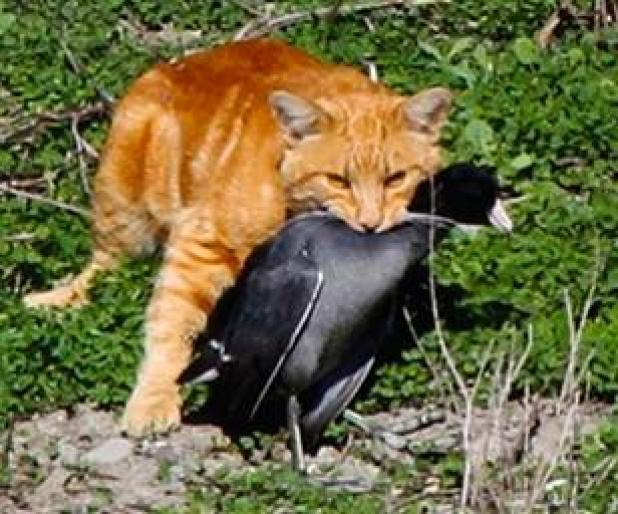
Cats that live in the wild or indoor pets allowed to roam outdoors kill from 1.4 billion to as many as 3.7 billion birds in the continental U.S. each year, says a new study that escalates a decades-old debate over the feline threat to native animals. The estimates are much higher than the hundreds of millions of annual bird deaths previously attributed to cats. The study also says that from 6.9 billion to as many as 20.7 billion mammals — mainly mice, shrews, rabbits and voles — are killed by cats annually in the contiguous 48 states. The report is scheduled to be published Tuesday in Nature Communications. “I was stunned,” said ornithologist Peter Marra of the Smithsonian’s Conservation Biology Institute. He and Smithsonian colleague Scott Loss, and U.S. Fish and Wildlife Service biologist Tom Will conducted the study.killercat

Yes, that’s right. Billions. According to the story, the study reveals that free-ranging cats are likely the single greatest source of mortality for birds and mammals in the United States. The study is also critical of one of the more ridiculous schemes to deal with feral cats; the so-called “TNR” programs (for Trap-Nueter-Release) that feral cat advocacy groups love, calling them “potentially harmful to wildlife populations” because such programs simply return feral cats to the wild to continue killing wildlife.

The study also tried to put a number to just how many un-owned cats there are in the U.S., with the estimate being anywhere from 30 to upwards of 80 million cats. Of course, cat lovers have been pushing back against the study, saying the felines are just convenient scapegoats for habitat loss, window and vehicle collisions, and other man-made hazards. I’d argue that feral cats ARE a man-made hazard, one that something should be done about.

There’s now an admittedly Quixote-like push to eventually get rid of cats in New Zealand in order to save that nation’s endangered biodiversity and I’d love to see something similar happen in this country, if for nothing else than to raise awareness of the issue. Very few people tolerate dogs running wild, so why do so many in this country think it’s OK to let cats do the same? Agree or disagree?     by Chad Love

Follow our FISHING BLOG

WEB   RATES     FISH    HUNT    CABINS    PHOTOS
TESTIMONIALS    BROCHURE    HUNT BOOKLET

Enter your email address to subscribe to this blog and receive notifications of new posts by email.

← Back

Thank you for your response. ✨

Email Me....


Tags: , , , , , ,

The Wrong Turn

survival3

 On Aug. 31, Bill Lawrence, 40, got separated from his hunting partners and remained lost for five days. As told to Colin Kearns.

Wednesday. I’d just killed my first squirrel when I glanced over for my friends Russell and Cris. They were gone.

Russell was the only one who’d hunted these woods, Meeman-Shelby Forest north of Memphis. We’d been hunting for 20 minutes and were deep into the forest. Russell and Cris stuck together, while I drifted to their left. I tried to stay within eyesight of them, but I was also watching for snakes. The last time I saw them, it looked like they were continuing in a straight line. Then I stopped to shoot the squirrel.

I thought I had an idea where they were, but an hour later I wasn’t any closer. I shouted, but the thick woods only swallowed my cries. So I turned to hike back to the truck, but an hour later I was even more lost. I kept walking, though, figuring I’d find a way out.

I walked, stopping to rest now and then, until it started to get dark. I’d fired a couple of shots but got no response. It never got cold, which was good because I had nothing to build a fire with. I doused myself with bug dope, then lay down. With my vest, I was able to cover my face and roll up the bottom end to use as a pillow. That dead squirrel in the pocket added a decent cushion.

I heard helicopters but they couldn’t see me through the trees, and I wasn’t going to run through the woods in the dark. I just prayed they’d find me tomorrow.

Thursday. I finished the last of the two water bottles I’d brought with me that morning. The days were hot, and I was walking and sweating a lot. I needed to stay hydrated. Fortunately, it rained that morning, and I managed to catch a half bottle’s worth of water.

I mostly squirrel hunt, but I have enough experience hunting deer and rabbits that I can identify tracks—and I know that if you follow those tracks, they’ll often lead to a water source, which in my case was a puddle in gumbo mud. I dipped my empty bottle and watched it fill with gray, grimy water. I didn’t want to drink it. I worried it’d make me sick. But what choice did I have? I was already getting dehydrated.

The taste was nasty—dirty and sandy—but the dip of mint Skoal I had in my mouth made it at least drinkable. I figured I should eat something, too, even though I wasn’t starving. I turned a dead stump over and found some nightcrawlers. They tasted about as bad as the gumbo water. I don’t know how many I ate—only that I’d never eat another one.

The rest of Thursday was a lot like Wednesday: Walk, then break for a nap. Walk, then nap. That second day, as I was walking—with no real end in sight—is when I started talking to God. Why is this happening? If I don’t make it out, will you take care of my wife and kids?
imagesTJNT6CHZThat night I awoke to a WHOOSHWHOOSHWHOOSH. Dazed, it took me a moment to realize that it was another chopper—and that it was right above me. I stumbled to find the flashlight in my vest. But by the time I turned it on, it was too late. After the chopper left, my flashlight burned out.

Friday. I kept moving and praying—all day. Walking gave me a purpose. Praying gave me strength. I truly believe my faith is what kept me from ever panicking. That afternoon I stumbled upon some persimmons. They were the most delicious things I’d eaten in a long time, and they were just sitting there on the ground, perfectly ripe, waiting to be found.
Saturday. I heard a low-flying chopper that morning. I took the T-shirt I had on under my camo shirt, tied it to the barrel of my Mossberg, and rushed to the nearest open area where I waved it around. But it never got close enough.

I was weak and tired. My body ached. For the first time I started to think I might not get out. I had started with 15 shells, and by then I only had four or five left. I’d been firing them and leaving the shells at spots where I rested. But on Saturday I decided to fire the rest I had at once. I didn’t know how much more of this misery I’d have to suffer, and I didn’t want the option of taking my own life.

Later that afternoon, as I was resting, I heard two sounds: a Harley-Davidson and a chain saw. I decided to stay put for the remainder of the day and save my energy. Tomorrow, I’d travel toward those sounds. I just knew that if I didn’t get out on Sunday, I never would.

Sunday. I came to a hill that I wasn’t sure I had the strength to climb. I sat down on a nearby log and prayed for strength. When I finally got up and walked to the hill, I glanced to the left where I saw a trail. And I took it.

Two miles later I hit a blacktop road. I fell to the ground crying. I flagged down a couple of motorcyclists who came down the road and told them who I was. “Son,” one of them said, “there’s a lot of people looking for you.”

They drove me to the camp the search team had set up nearby. Just as they got me on the stretcher and were about to drive me to the hospital, I was given a satellite phone. Kim, my wife, was on the other line. My eyes welled. “Hey,” I said. “I’m alive.”

Survival Analysis
Bill Lawrence had no method of striking fire, carried nothing to signal with but his shotgun, and possessed no tool to navigate to safety but his brain. When he became lost, he had nothing to eat but nightcrawlers and no means to disinfect water. He was unfamiliar with the country and carried no map. To sum up: He struck into the woods about as unprepared as a man can be. But before you criticize him too harshly, take a look at yourself. Have you ever been similarly unprepared for an emergency, using the excuse that you only plan to be gone a few hours and won’t stray more than a few hundred yards from the road? I know I have.

Lawrence’s ordeal should be a cautionary tale for all of us, emphasizing the importance of carrying basic survival gear every time we go afield, no matter how small that field we intend to hunt. A compass, a whistle, a sparking wheel, Tinder Tabs, and chlorine tablets weigh about as much as a tin of Altoids, and easily fit inside one. S - - t happens. Have a hat for it.

Lawrence’s reaction to being lost was to walk and then walk some more. By doing so, he disobeyed the four steps that almost ensure survival: Stop. Shelter. Signal. Stay. Had he stopped walking, tied his undershirt to a treetop or placed it in an opening where it could be seen or, better yet, spelled SOS in a clearing with branches or stones, then hunkered out of the wind to wait, he probably would have been found quickly after being reported missing. Ninety percent of search-and-rescue operations are resolved during the initial hasty search, usually within 10 hours.

One thing that Lawrence did do right needs to be emphasized: He never panicked and was determined to survive. The right attitude is one positive that can make up for a lot of negatives in any survival situation.

Follow our FISHING BLOG

WEB   RATES     FISH    HUNT    CABINS    PHOTOS
TESTIMONIALS    BROCHURE    HUNT BOOKLET
Enter your email address to subscribe to this blog and receive notifications of new posts by email.

← Back

Thank you for your response. ✨

Email Me....


Tags: , , , , , ,

Mauled by a Bear

This outdoorsman encountered the worst nightmare the wild can conjure. But thanks to smarts, willpower, and a little luck, he survived, and the lesson learned that could save your life. With survival analysis by Keith McCafferty

survival1

THE MAULING

On Sept. 26, Brent Prokulevich, 49, was bowhunting by himself for moose in Western Ontario when he was charged by a 300-pound black bear. As told to Colin Kearns.

I flew into the outpost camp on Saturday. My buddy Paul Patiuk and his son Kyle had been there for a few days already and would be guiding moose hunters for the next few days. The plan was for me to hunt on my own on Sunday and Monday in a spot Paul had scouted for me. Then on Tuesday, when their clients had left, we’d hunt together. One of the first things I asked Paul and Kyle when I reached camp was if there were bears in the area. They told me there weren’t any.

I saw no moose during my Sunday hunt, but I did get a cow to call back. I decided to leave my scent rag out overnight, hoping the scent would fill the area. The conditions when I returned in the boat Monday morning were perfect. A fog hung in the cool air, and the wind had died so my calls carried a long way.

In front of me was a dried-up beaver pond littered with dead poplars, leaving me with a clear shot if a moose wandered in. I got into position and readied my bow and arrows. I made my first cow call at 7 a.m. and followed up every 15 minutes until 8:30. That’s when I heard movement in the willows, 33 yards away. As soon as I saw the top of the animal’s back, I knew: S - - t. It’s a flipping bear.

He was big, about 300 pounds. He didn’t see me at first but when he did, our eyes connected immediately. “Get! Get! Get!” I yelled. But he never budged—until he came at me.

This isn’t happening. I grabbed my bow. This can’t be happening. I nocked the arrow. This is happening. I fired a prayer at 8 yards.

I raised my left arm and he locked onto it. We fell to the ground. He had me on my back, but when he let go of my arm I managed to get up to my knees. Then I heard this crunch on my neck. The bite to my arm I hadn’t really felt. This one to the neck, though, I felt. I kept yelling, and at one point I had a flash of my 17-year-old son, Brady. I’m a single dad and I’ve been raising him since day one. I wasn’t going to leave him to live by himself. Something in me snapped. I’m not dying like this!

 survival2
I couldn’t reach my knife, so I grabbed the other arrow and began stabbing the bear in his head, over and over. He let go of my neck and clamped on the back of my shoulder. Then, somehow, I knocked him right on his ass.

There was blood everywhere. My first arrow had entered his chest and must’ve exited through the bottom of his belly because his guts were spilling out. The two of us just sat there for a moment, staring at each other. He swiped at my right arm, then he turned and walked 15 yards before he sat back down. I was going to put another shot in him, but my bow was busted. So I got the hell out of there.

I jumped in the boat and drove around looking for help. But after about 15 minutes with no luck, I turned back toward camp. That’s when I saw the plane landing at camp. When I reached the dock I told Kevin, the pilot, what had happened. He left a note for Paul and Kyle, then we took off. We arrived at the hospital 30 minutes later. I walked into the ER and said to a nurse, “I’ve been attacked by a bear.”

The shoulder bite was a half inch from puncturing a lung, and the neck bite almost hit my spinal cord. But no bones were broken, and the puncture wounds are healing well.
I’m looking forward to hunting again. I’ve taken a couple of walks in the bush recently, which has been nice, but I find I’m looking over my shoulder more often. Every time I hear a little snap.

Survival Analysis
In the matter of risking encounters with bears, bowhunters start with three strikes against them. First, they hunt in early fall, when bears undergo hyperphagia, a period of mad foraging before hibernation that increases the potential for crossed paths. Second, by donning camo, using cover scent, and sneaking quietly through brush and timber, archers spike the odds of chance encounters within the critical 50-yard range, at which bears are more likely to attack. And third, by using lure scents and calling like animals that bears regard as prey, hunters actually encourage unwanted attention.

Prokulevich did the right thing by fighting the black bear. Playing dead is only effective at discouraging grizzlies, and then only under certain circumstances. But he probably could have avoided the attack altogether if he’d had pepper spray on his belt. Under the best of circumstances, arrows offer meager defense—and bullets aren’t much better. In most documented bear attacks, only three seconds elapse between the start of the charge and contact with the person. Do you really think you can raise a rifle, flip the safety, aim, and fire in that window? But you can flick the safety tab and depress the trigger of pepper spray in an instant. Plus, it works. In a study conducted by bear researcher Thomas Smith of hundreds of bear attacks, pepper spray deterred a charge in 92 percent of cases. Bullets deterred a charge only 66 percent of the time, and it required an average of four bullets to stop the bear.  (Be sure to check with local authorities on the legal uses of pepper spray in areas you intend to hunt)

 Stay Safe and Hunt Safe on Your Next Outdoor Hunting Adventure!

Follow our FISHING BLOG

WEB   RATES     FISH    HUNT    CABINS    PHOTOS
TESTIMONIALS    BROCHURE    HUNT BOOKLET

Enter your email address to subscribe to this blog and receive notifications of new posts by email.

← Back

Thank you for your response. ✨

Email Me....


Tags: , , , , , , , , , , ,

The 5 Medications You Need to Stay Alive in the Wilderness

final_FOREST_PHARMACY_V2aWhen we talk about survival, it’s the marquee dangers that carry the conversation: snakebite, gunshot, bear attack. Nobody mentions the microscopic bug in your intestines that causes such severe diarrhea that you die from dehydration, or the plaque that dislodges from an arterial wall to stop your heart. Not a word of the bee sting that induces anaphylactic shock, asphyxiating you as mercilessly as the coils of a python.

Such little things can kill you, but other little things can save your life. In a wilderness emergency, the five pharmaceuticals in the chart at right can be very big medicine. Use it as a guide, and consult with your doctor.

Customize It’s smart to modify your medical kit to your environment and medical history. For example, you don’t need to pack epinephrine if you have no history of allergies. Also, if you’ll hike above 8,000 feet, consult your doctor about getting a prescription for acute mountain sickness. Acetazolamide (Diamox) or dexamethasone (Deca­dron) tablets can save a life if the victim is promptly evacuated to a lower altitude.

There’s also a pill you might consider adding: a narcotic pain medication such as oxycodone (Percocet) or hydrocodone (Vicodin). If you break a leg, for example, it could mean the difference between hobbling out under your own power or dying where you are. But narcotics must be used with caution. Because they relieve pain by suppressing the brain’s ability to perceive it, they can affect your thinking. If your companion is injured, a pain pill may calm him enough to help you get him to safety. Self-medication is riskier. Only consider using a specific narcotic if you have taken it before and know that it does not affect your decision-making abilities. Otherwise, substitute ibuprofen (Advil, Motrin), which will attack your pain at the site of the injury, leaving your mind clear to help get you out of trouble.

Asprin
For – Chest pain, aches, and to reduce fever.
Dosage – Chew and swallow four 81mg chewable tablets at the onset of chest pain. For aches and fever, follow label directions.
Warning – If you’re allergic to aspirin, other over-the-counter pain relievers can reduce fever, but they don’t thin blood.

Anti-Diarrheal (Imodium A-D)
For – Relief from severe diarrhea that causes dehydration.
Dosage – Swallow two tablets initially, followed by one tablet after each loose bowel movement, not to exceed four tablets daily.
Warning – Consult a doctor before using other antidiarrheals containing bismuth salicylate (Pepto-Bismol).

AntiEmetic (zofran)
For – Severe nausea and vomiting, leading to dehydration.
Dosage – Place one to two 4mg oral dissolving tablets on the tongue every 4 to 6 hours as needed.
Warning – Phenergan suppositories are cheaper, but side effects include twitchy muscles and restlessness; relieve them with Benadryl.

AntiAllergy (Epinephrine supplemented by Benadryl)
For – Allergic reactions to stings or foods, resulting in anaphylactic shock.
Dosage – Inject medicine using an EpiPen. Supplement with Benadryl at the onset of allergy symptoms, 50mg every four to six hours.
Warning – The effects of epinephrine are temporary. Seek medical assistance as quickly as possible.

Antibiotic (Levaquin)
For – Pneumonia; bronchitis; and skin, soft-tissue, sinus, or urinary infections.
Dosage – Take 750mg once per day.
Warning – Levaquin is not recommended for children or teenagers. Check with your doctor for alternatives.

Follow our FISHING BLOG

WEB   RATES     FISH    HUNT    CABINS    PHOTOS
TESTIMONIALS    BROCHURE    HUNT BOOKLET

Enter your email address to subscribe to this blog and receive notifications of new posts by email.

← Back

Thank you for your response. ✨

Email Me....


Tags: , , , , , , , , ,

How to Sharpen a Knife

Here is a great video on how CJ Buck, President and CEO of Buck Knives sharpens a knife.  Knowing how to properly sharpen a piece of equipment can not only save time but keep you from permanently damaging your knives as well.

Follow our FISHING BLOG

WEB   RATES     FISH    HUNT    CABINS    PHOTOS T
ESTIMONIALS
    BROCHURE    HUNT BOOKLET

Enter your email address to subscribe to this blog and receive notifications of new posts by email.

← Back

Thank you for your response. ✨

Email Me....


Tags: , , , , , , , ,

Wildlife on Ice

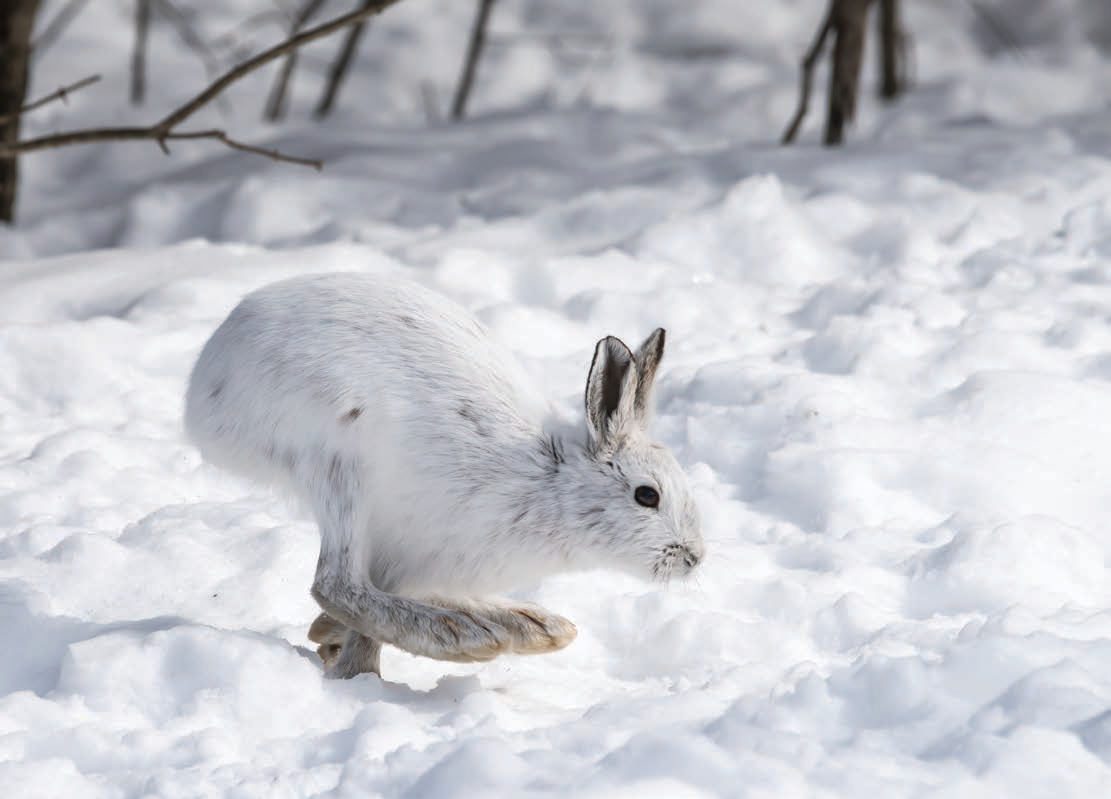
wildside2For many of us, winter means changing our wardrobes, cranking up the heat and cutting back on outdoor activities. For forest wildlife, especially in the north, no season has a greater impact than winter. Those animals that can’t flee south must kick into deep-freeze survival mode or perish.

Some small insects such as orb weaver spiders, mantises and most butterflies die with the first frosts. But they leave freeze-resistant progeny as their legacy. In the case of butterflies, that usually means larvae (caterpillars) or pupae in their protective “wrappers.” But some butterflies, including the mourning cloak, hibernate in a sheltering crag or crack. Unlike orb weavers, other types of spiders hibernate beneath rocks or under tree bark, where wandering flocks of watchful chickadees, nuthatches and brown creepers may find them.

Toads and terrestrial frogs such as peepers try to dig or shelter in places that protect them from hard freezes, including cracks in logs or thick leaf litter. But even a hard freeze usually will not kill a temperate-area frog. Breathing and heartbeats may stop, but with a thaw, thanks to elevated blood glucose, the frogs come “back” to life. Turtles often dig down into the mud, and their metabolisms slow to a crawl.

Even birds that we assume are always warm and active have coldweather adaptations. Chickadees, for example—the most common small songbirds wintering in northern woods—may enter a “regulated hypothermia” while they sleep, their body temperatures dipping to conserve precious energy.

Chipmunks will hibernate but emerge during warm spells, while the restless red squirrel changes its schedule from early to late morning, even tunneling through snow to transport snipped conifer cones to its bulk storage area, known as a midden.

wildside1So, much of your property’s wildlife may be out of view this time of year but with the exception of migratory birds and monarch butterflies most of it remains, just on some form of “pause.”

This time of year, some of the best things you can do for wildlife are simple—often involving doing nothing at all. Here are some tips:

• Leave dead meadow stalks standing until later winter thaws come. Meadow plants shelter, among other things, butterfly caterpillars and pupae and mantis egg cases. From fall into winter, their seedheads nourish overwintering songbirds, gamebirds and rodents that in turn feed foxes, owls, hawks and other creatures.

• Hold off on clearing logs, if possible. Logs and snags (dead trees) are always important components of a diversified wildlife habitat, and the shelter they provide during winter is crucial. If you remove this resource during cold weather, you might harm hibernating wildlife.

• Leave dense conifer stands to provide cover for owls, rabbits, grouse and other hardy active critters while other cover is sparse.

wildside3• Keep bird feeders topped up. This will provide you with hours of entertainment, and you also will be helping supplement birds’ diets at the toughest time of year. If you want to feed a wide variety of birds, offer not only mixed seeds but also black oil sunflower, thistle and suet. Raisins and mealworms may bring in bluebirds, thrashers and mockingbirds. Also, you could buy a birdbath or pond heater to provide water during the coldest days.

• Hold off on cleaning up nestboxes, as these will provide shelter for birds, rodents and invertebrates during cold weather. Then, in late winter (early March in many areas), clean the boxes out just before bluebirds and other cavity nesters start seeking nest sites.

• Leave brushpiles, which provide dense shelter that can be hard to come by in winter. Wrens, rabbits, sparrows and other creatures seek these out. Bigger brush piles may shelter quail and pheasants at the field-forest edge.

• Refrain from removing leaf litter. Thick leaf litter is like a thermal blanket for hibernating salamanders, frogs and invertebrates— especially when piled around stumps and logs.

Sometimes it feels like winter will never end. But before you know it, frog calls, bird songs and the buzzing and chirping of insects will once again fill the air. For now, though, you can find comfort knowing your forest provides safe havens for a variety of resting wildlife.

Follow our FISHING BLOG

WEB   RATES     FISH    HUNT    CABINS    PHOTOS
TESTIMONIALS    BROCHURE    HUNT BOOKLET

Enter your email address to subscribe to this blog and receive notifications of new posts by email.

← Back

Thank you for your response. ✨

Email Me....


Tags: , , , , , , , ,

8 Ways to Harness Solar Energy

So much energy, so few solutions

1

The sun is the biggest source of renewable energy.

Solar power has become fairly pedestrian since the first photovoltaic cells came out of the lab in the 1950s. Today, utility-scale solar farms soak up the sun and photovoltaic panels dot rooftops across the world. The power generation is finding its way into transportation, too, alongside other clean-burning fuels like hydrogen. Just a few years ago, the Solar Impulse prototype plane flew nonstop without any fuel from San Francisco to New York. And companies like Toyota are looking to bring hydrogen cars mainstream.

Crazy Solar Power Plants

Crazy Solar Power Plants

“The U.S. was really the pioneer of the whole global solar photovoltaic industry,” said Juris Kalejs, an IEEE member and CTO of the Lowell, Massachusetts-based solar developer American Capital Energy. Having worked in photovoltaic technology development for more than 30 years, Kalejs has seen wild ideas come and go. The energy crisis of the 1970s spurred dozens of pie-in-the sky ideas, he said. But that hasn’t stopped people from innovating. Here’s his grounded take on highly unusual ways to harness solar power today.

Andre Broessel designed glass spherical lenses filled with water that act like solar concentrators.

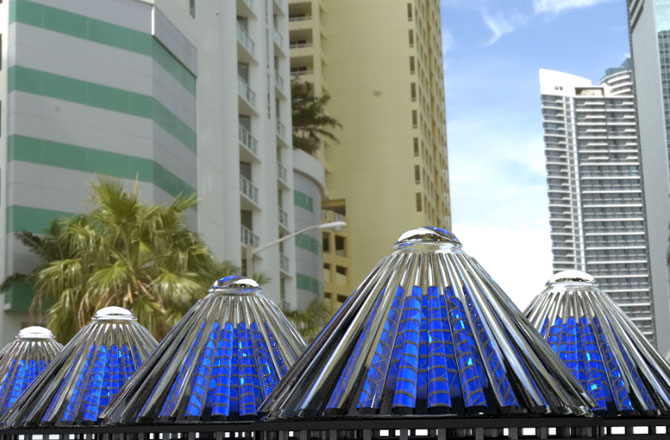
The Los Angeles-based startup V3Solar made the news rounds last year with its literal spin on solar. Slick renderings showed a design for deep blue solar cells in a cone shape that could rotate. The company says they want to take photovoltaics from flat and static to 3-D and dynamic. A new video V3Solar put out this summer had more details about how its spinning mechanism could maximize energy generation.

Kalejs said he said he thought the setup could work but he was skeptical about the complexity. “It looks like something that’s a nice decorative piece you might find in a fountain,” he said. The company said it would show its prototypes to potential investors with a non-disclosure agreement.

Other designers are imagining different shapes for traditionally flat solar panels. Going rounder could mean capturing sunlight from every possible direction. Last year the Japanese optics company Kyosemi launched Sphelar Power to manufacture micro-spherical solar cell beads from discarded silicon and electrodes that are wired into a mesh. André Broessel, an architect at solar architecture company Rawlemon in Barcelona, designed glass spherical lenses filled with water that act like solar concentrators both large and small.

Kalejs called Broessel’s idea a neat one that would appeal to consumers but pointed to companies attempting a similar technology with 20-foot-diameter solar concentrators. “It’s a very tricky system to make and you need to make it on a large scale to make it cost effective,” he said.

Minuscule solar panels placed on microbes could create a chemical reaction akin to artificial photosynthesis

Minuscule solar panels placed on microbes could create a chemical reaction akin to artificial photosynthesis

Scores of scientists are working on artificial photosynthesis by developing systems that chemically convert sunlight, water and CO2 into oxygen and plant fuel. Unfortunately, photosynthesis has less than a percent efficiency versus 20 percent to 30 percent for regular solar cells, Kalejs pointed out. The risks with artificial plants and microbes are also quite high because a disease or fungus could wipe everything out.

British researchers from the University of East Anglia announced earlier this year that they’re working on artificial photosynthesis by placing minuscule solar panels on microbes in an effort to create hydrogen for fuel. Kalejs said he found their approach interesting and added that he’s attended National Science Foundation meetings where attendees discussed putting photosynthetic material on top of a solar cell. “Everybody’s been looking for a boost,” he said.

 Reusable peel-and-stick solar cells can be made easily and affixed to just about anything solid.


Reusable peel-and-stick solar cells can be made easily and affixed to just about anything solid.

Effective transparent and thin-film solar cells have been on the technology wish list for a long time. Several companies have already started manufacturing flexible solar panels but rigid ones remain more affordable and easier to produce, resulting in high quality. Earlier this year Stanford University and the U.S. National Renewable Energy Laboratory came up with reusable peel-and-stick solar cells that can be made easily and affixed to just about anything solid: toys, helmets, transistors and even business cards. The resulting power is still relatively small, though.

Kalejs cautioned that sunlight breaks down materials made with polymers, making the technology unstable. “It’s a short-life product right now,” he said. “The organic solar cells probably wouldn’t last more than a year or two, if that long.”

Bottle Charger is a way to recharge cell phones using a water bottle filled with boiling water and a mini-turbine

Bottle Charger is a way to recharge cell phones using a water bottle filled with boiling water and a mini-turbine

One person’s trash represents solar tech treasure for someone else. Last year blogger and tech writer Ryan Matsunaga posted step-by-step instructions on how to convert a water bottle into a solar lantern for $2. In February, Kenyan designers launched a Kickstarter campaign around the Bottle Charger, a way to recharge cell phones using a water bottle filled with boiling water and a mini-turbine. Although the initial prototype simply required a temperature differential, the designers hoped to integrate a small solar dish that could heat water with sunlight continuously during the day.

“I have no idea how cheap or stable it is,” Kalejs said of the Bottle Charger idea. “I guess you’d say, well if it works, use it.”

Solar-powered wearables will need to get more durable if they're going to be practical.

Solar-powered wearables will need to get more durable if they’re going to be practical.

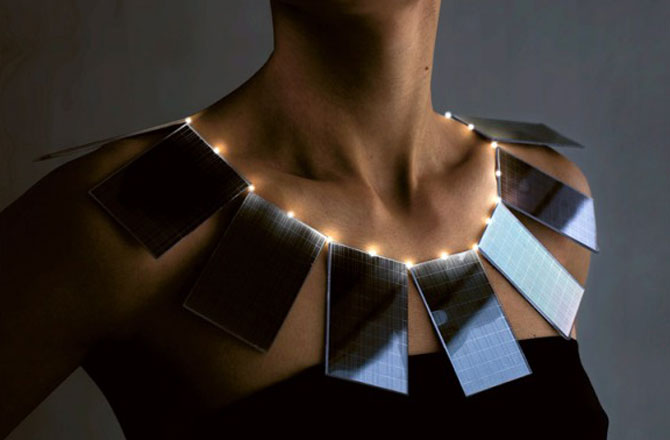
Solar technology’s sleek lines and deep colors are tempting to designers who have incorporated solar cells into purses, necklaces, jackets and mini-dresses. That technology tends to be more high fashion than high function. Charging a phone in a jacket that has a solar power component can take hours. Solar-powered clothing companies have come and gone. Kalejs said that organic solar cell material wears out in a few years so even if the fashion looks timeless, the tech isn’t. He remembered seeing a company that turned spherical solar beads into jewelry and said he can still see how it would appeal to consumers.

Solar arrays could be installed in the open land than runs alongs roads. Oregon Department of Transportatio

Solar arrays could be installed in the open land than runs alongs roads.
Oregon Department of Transportatio

Roads and highways are a natural lure for solar technology innovators. Asphalt does a great job at absorbing and storing heat. Plus there’s so much of it around already — the infrastructure is there. Several years ago engineers and chemists at the University of Rhode Island created a project to develop ideas for harvesting solar heat from roads. Their suggestions included placing flexible photovoltaic cells on concrete highway dividers and installing water pipes in asphalt. At the same time, the company Solar Roadways wants to embed solar panels directly into roads.

Kalejs was highly skeptical of that, calling it a poor use of solar modules. However, solar modules could be put in conventional arrays beside the road, he said, as they’ve done in Oregon. There’s no shortage of land for that.

Follow our FISHING BLOG

WEB   RATES     FISH    HUNT    CABINS    PHOTOS
TESTIMONIALS    BROCHURE    HUNT BOOKLET

Enter your email address to subscribe to this blog and receive notifications of new posts by email.

← Back

Thank you for your response. ✨

Email Me....


Tags: , , , , , , , , ,

Tips on Choosing The Best Field Knife

It doesn’t matter how many knives you have at home. The one you reach for when you’re in the woods—to gut a deer, cut brush, carve a fuzz stick—that’s your field knife, your everyday companion. There’s no one perfect model, but here’s how to pick the ideal features for you.
1) Fixed or Folder?

Field-Knife-2 Field-Knife-5
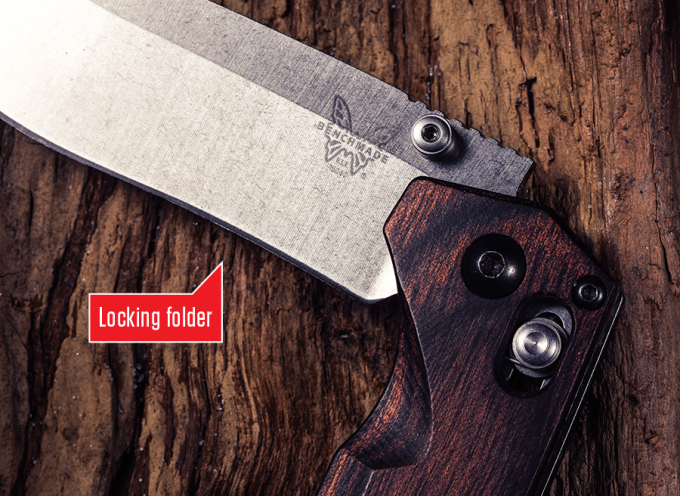
The traditional choice, a fixed-blade knife is stronger than most folders. With no moving parts, it’s virtually fail-safe, and cleaning is as easy as wiping off grime and wiping on oil. If you need a deep belly for skinning big game, fixed is the primary choice due to the challenge of storing a wide folding blade inside its handle. A folder, on the other hand, makes everyday carry simple: Just pop it in your pocket. The increasing popularity of pocket-clip folders has spawned huge innovation in materials and designs, so the options are breathtaking. Bottom line: Fixed or folder, you can’t lose. But you have to choose.
2) Steel Yourself

Field-Knife-3_0
Basic steel is just iron and carbon. But there are hundreds of alloys. The least you need to know is that the more carbon, the harder the blade and the better it holds an edge—but too much can make a blade brittle. Also, adding chromium prevents rust (stainless steel usually has at least 12 percent), but it can soften the steel. It’s a balancing act. Here’s a breakdown:

Non-Stainless Steel: It rusts easily but makes a great blade if you take care. High-carbon examples (1095, D2) really hold an edge. A few are both hard and tough (A2, CPM 3V, 8670M).

​Stainless Steel: If you want low maintenance, this is the way to go. But low-carbon versions (18/8, 420, 440, 440A, AUS-6) can be too soft to get or keep a fine edge. More carbon or a harder alloy is better (440B and C, AUS-8 and 10, 8Cr14MoV, 154CM).

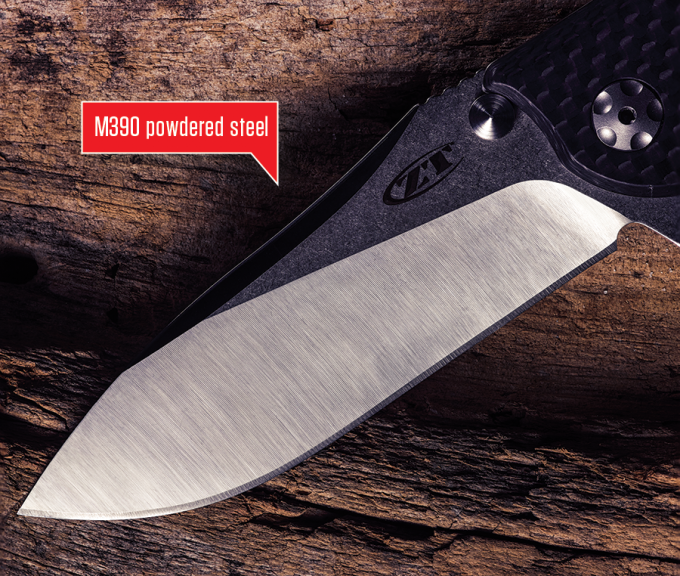
Powdered Steels: The newest stainless alloys (S30V, Elmax, M390) are made of powderlike granules that are heated to form very hard steels that take a wicked edge. They pretty much have it all—​­corrosion resistance, hardness, and strength. Naturally, you pay for it.

3) Get the Point

Field-Knife-4
Most field knives have a drop point or clip point, either of which may be combined with a deeper belly for skinning. The drop point is ideal for field dressing game without slicing innards. Its thicker tip also helps with separating joints and with heavy camp chores. If your hunting knife will double as a fish cleaner and camp-kitchen slicer, the finer clip point is the better choice, and it’s fine for gutting game as long as you’re careful with the tip.

4) Find the Grind

Field-Knife-5
Likewise, most field knives hew to one of two grinds: hollow or flat. A hollow-ground blade has a concave shape, as if material has been scooped out of the blade’s thickness. It’s easy to resharpen and best for shallow cuts, such as field dressing, cutting hide, and simple camp chores. A flat-ground blade is the more common choice; it is tougher, holds its edge better, and excels at deeper cuts, working around sinew and bone, and chopping food at camp.

Now that you know what to look for, check out our field knife gear test to see which brands of fixed and folder blades are worth their metal.

Follow our FISHING BLOG

WEB   RATES     FISH    HUNT    CABINS    PHOTOS T
ESTIMONIALS
    BROCHURE    HUNT BOOKLET

Enter your email address to subscribe to this blog and receive notifications of new posts by email.

← Back

Thank you for your response. ✨

Email Me....


Tags: , , , , , , ,

Backpackers Checklist

 The Means of A Check List

Packing a backpack seems like an easy task, until you are on the trail and forget one of the most essential items. We have prepared this infographic as well as the corresponding text to help you always pack exactly what you need. So go ahead and check it out. If you want to put it on your site there is code at the bottom as well.
2

Follow our FISHING BLOG

WEB   RATES     FISH    HUNT    CABINS    PHOTOS
TESTIMONIALS    BROCHURE    HUNT BOOKLET

Enter your email address to subscribe to this blog and receive notifications of new posts by email.

← Back

Thank you for your response. ✨

Email Me....


Tags: , , , , , , , ,

Mule vs. Mountain Lion – Which One Wins?

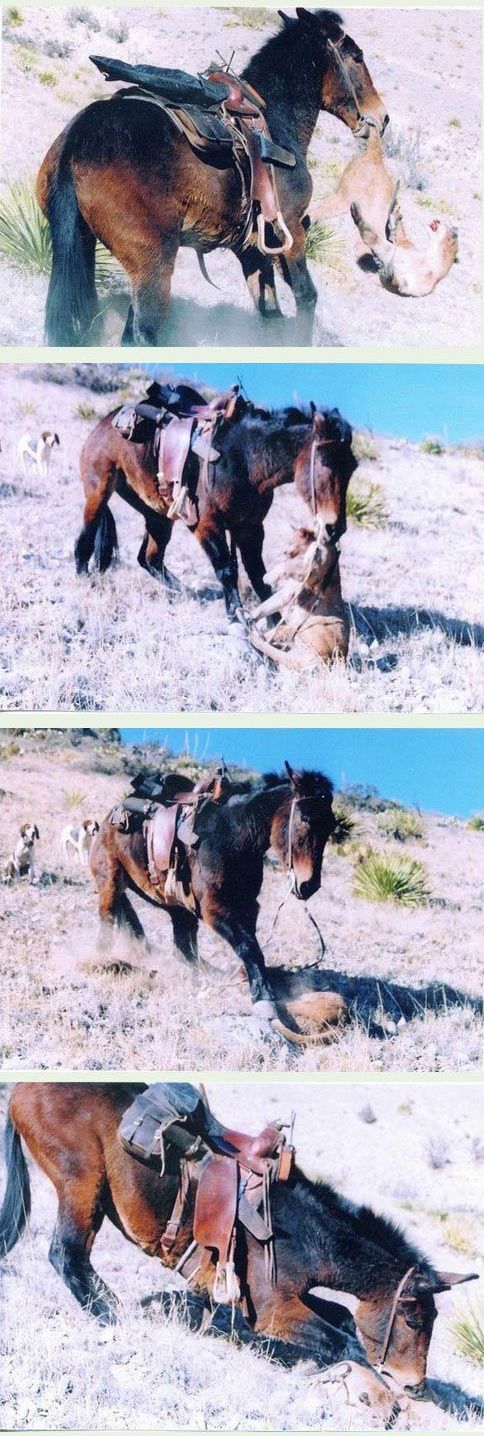
A couple from Montana were out riding on the range, him with his rifle and her with a camera.  Their dogs always followed them, and on this particular day a mountain lion decided to stalk the dogs (you’ll see the dogs in the background watching).  Very, very bad decision……for the cat.

The hunter got off the mule with his rifle and decided to shoot in the air to scare off the lion, but before he could get off a shot the lion charged in and decided he wanted a piece of those dogs.  With that, the mule took off and decided he wanted a piece of that lion.  That’s when all heck broke loose….for the lion.

As the lion approached the dogs the mule snatched him up by the tail and started whirling him around.  Banging its head on the ground on every pass.  Then he dropped it, stomped on it and held it to the ground by the throat.  The mule then got down on his knees and bit the cat all over a dozen or more times to make sure it was dead, then whipped it into the air one last time, walked back over the couple – that were stunned in silence and stood there ready to continue his ride…..just as if nothing had happened.

Fortunately, and even though the hunter didn’t get off a shot, his wife did get photo shots of the entire event.

2

Never underestimate the power of family LOVE!

Follow our FISHING BLOG

WEB   RATES     FISH    HUNT    CABINS    PHOTOS
TESTIMONIALS    BROCHURE    HUNT BOOKLET

Enter your email address to subscribe to this blog and receive notifications of new posts by email.

← Back

Thank you for your response. ✨

Email Me....


Tags: , , , , , , , ,