RSS

Category Archives: survival

The 5 Medications You Need to Stay Alive in the Wilderness

final_FOREST_PHARMACY_V2aWhen we talk about survival, it’s the marquee dangers that carry the conversation: snakebite, gunshot, bear attack. Nobody mentions the microscopic bug in your intestines that causes such severe diarrhea that you die from dehydration, or the plaque that dislodges from an arterial wall to stop your heart. Not a word of the bee sting that induces anaphylactic shock, asphyxiating you as mercilessly as the coils of a python.

Such little things can kill you, but other little things can save your life. In a wilderness emergency, the five pharmaceuticals in the chart at right can be very big medicine. Use it as a guide, and consult with your doctor.

Customize It’s smart to modify your medical kit to your environment and medical history. For example, you don’t need to pack epinephrine if you have no history of allergies. Also, if you’ll hike above 8,000 feet, consult your doctor about getting a prescription for acute mountain sickness. Acetazolamide (Diamox) or dexamethasone (Deca­dron) tablets can save a life if the victim is promptly evacuated to a lower altitude.

There’s also a pill you might consider adding: a narcotic pain medication such as oxycodone (Percocet) or hydrocodone (Vicodin). If you break a leg, for example, it could mean the difference between hobbling out under your own power or dying where you are. But narcotics must be used with caution. Because they relieve pain by suppressing the brain’s ability to perceive it, they can affect your thinking. If your companion is injured, a pain pill may calm him enough to help you get him to safety. Self-medication is riskier. Only consider using a specific narcotic if you have taken it before and know that it does not affect your decision-making abilities. Otherwise, substitute ibuprofen (Advil, Motrin), which will attack your pain at the site of the injury, leaving your mind clear to help get you out of trouble.

Asprin
For – Chest pain, aches, and to reduce fever.
Dosage – Chew and swallow four 81mg chewable tablets at the onset of chest pain. For aches and fever, follow label directions.
Warning – If you’re allergic to aspirin, other over-the-counter pain relievers can reduce fever, but they don’t thin blood.

Anti-Diarrheal (Imodium A-D)
For – Relief from severe diarrhea that causes dehydration.
Dosage – Swallow two tablets initially, followed by one tablet after each loose bowel movement, not to exceed four tablets daily.
Warning – Consult a doctor before using other antidiarrheals containing bismuth salicylate (Pepto-Bismol).

AntiEmetic (zofran)
For – Severe nausea and vomiting, leading to dehydration.
Dosage – Place one to two 4mg oral dissolving tablets on the tongue every 4 to 6 hours as needed.
Warning – Phenergan suppositories are cheaper, but side effects include twitchy muscles and restlessness; relieve them with Benadryl.

AntiAllergy (Epinephrine supplemented by Benadryl)
For – Allergic reactions to stings or foods, resulting in anaphylactic shock.
Dosage – Inject medicine using an EpiPen. Supplement with Benadryl at the onset of allergy symptoms, 50mg every four to six hours.
Warning – The effects of epinephrine are temporary. Seek medical assistance as quickly as possible.

Antibiotic (Levaquin)
For – Pneumonia; bronchitis; and skin, soft-tissue, sinus, or urinary infections.
Dosage – Take 750mg once per day.
Warning – Levaquin is not recommended for children or teenagers. Check with your doctor for alternatives.

Follow our FISHING BLOG

WEB   RATES     FISH    HUNT    CABINS    PHOTOS
TESTIMONIALS    BROCHURE    HUNT BOOKLET

Enter your email address to subscribe to this blog and receive notifications of new posts by email.

← Back

Thank you for your response. ✨

Email Me....


Tags: , , , , , , , , ,

How to Sharpen a Knife

Here is a great video on how CJ Buck, President and CEO of Buck Knives sharpens a knife.  Knowing how to properly sharpen a piece of equipment can not only save time but keep you from permanently damaging your knives as well.

Follow our FISHING BLOG

WEB   RATES     FISH    HUNT    CABINS    PHOTOS T
ESTIMONIALS
    BROCHURE    HUNT BOOKLET

Enter your email address to subscribe to this blog and receive notifications of new posts by email.

← Back

Thank you for your response. ✨

Email Me....


Tags: , , , , , , , ,

8 Ways to Harness Solar Energy

So much energy, so few solutions

1

The sun is the biggest source of renewable energy.

Solar power has become fairly pedestrian since the first photovoltaic cells came out of the lab in the 1950s. Today, utility-scale solar farms soak up the sun and photovoltaic panels dot rooftops across the world. The power generation is finding its way into transportation, too, alongside other clean-burning fuels like hydrogen. Just a few years ago, the Solar Impulse prototype plane flew nonstop without any fuel from San Francisco to New York. And companies like Toyota are looking to bring hydrogen cars mainstream.
Crazy Solar Power Plants

Crazy Solar Power Plants

“The U.S. was really the pioneer of the whole global solar photovoltaic industry,” said Juris Kalejs, an IEEE member and CTO of the Lowell, Massachusetts-based solar developer American Capital Energy. Having worked in photovoltaic technology development for more than 30 years, Kalejs has seen wild ideas come and go. The energy crisis of the 1970s spurred dozens of pie-in-the sky ideas, he said. But that hasn’t stopped people from innovating. Here’s his grounded take on highly unusual ways to harness solar power today.
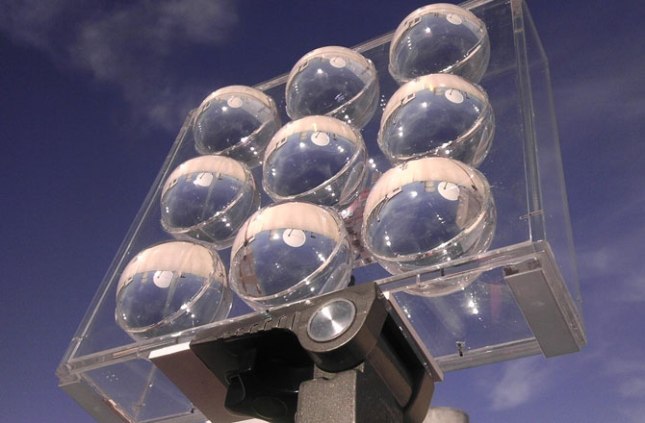
Andre Broessel designed glass spherical lenses filled with water that act like solar concentrators.

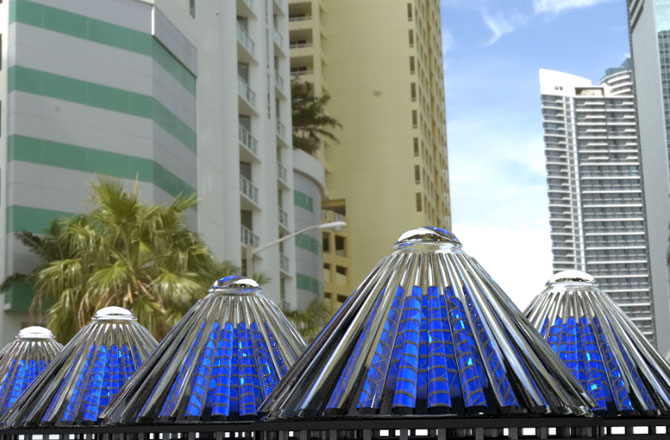
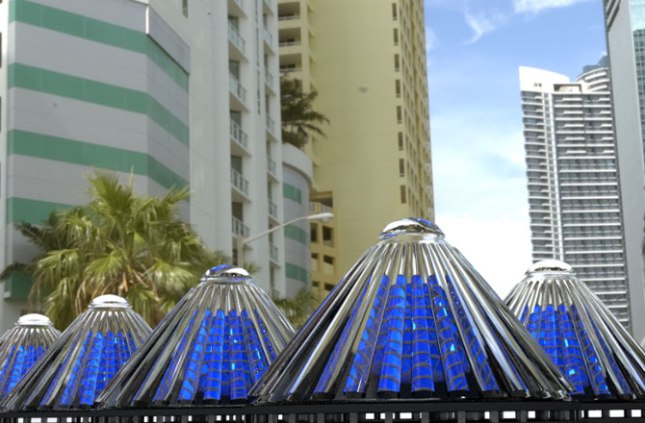
The Los Angeles-based startup V3Solar made the news rounds last year with its literal spin on solar. Slick renderings showed a design for deep blue solar cells in a cone shape that could rotate. The company says they want to take photovoltaics from flat and static to 3-D and dynamic. A new video V3Solar put out this summer had more details about how its spinning mechanism could maximize energy generation.

Kalejs said he said he thought the setup could work but he was skeptical about the complexity. “It looks like something that’s a nice decorative piece you might find in a fountain,” he said. The company said it would show its prototypes to potential investors with a non-disclosure agreement.

Other designers are imagining different shapes for traditionally flat solar panels. Going rounder could mean capturing sunlight from every possible direction. Last year the Japanese optics company Kyosemi launched Sphelar Power to manufacture micro-spherical solar cell beads from discarded silicon and electrodes that are wired into a mesh. André Broessel, an architect at solar architecture company Rawlemon in Barcelona, designed glass spherical lenses filled with water that act like solar concentrators both large and small.

Kalejs called Broessel’s idea a neat one that would appeal to consumers but pointed to companies attempting a similar technology with 20-foot-diameter solar concentrators. “It’s a very tricky system to make and you need to make it on a large scale to make it cost effective,” he said.

Minuscule solar panels placed on microbes could create a chemical reaction akin to artificial photosynthesis

Minuscule solar panels placed on microbes could create a chemical reaction akin to artificial photosynthesis

Scores of scientists are working on artificial photosynthesis by developing systems that chemically convert sunlight, water and CO2 into oxygen and plant fuel. Unfortunately, photosynthesis has less than a percent efficiency versus 20 percent to 30 percent for regular solar cells, Kalejs pointed out. The risks with artificial plants and microbes are also quite high because a disease or fungus could wipe everything out.

British researchers from the University of East Anglia announced earlier this year that they’re working on artificial photosynthesis by placing minuscule solar panels on microbes in an effort to create hydrogen for fuel. Kalejs said he found their approach interesting and added that he’s attended National Science Foundation meetings where attendees discussed putting photosynthetic material on top of a solar cell. “Everybody’s been looking for a boost,” he said.

 Reusable peel-and-stick solar cells can be made easily and affixed to just about anything solid.


Reusable peel-and-stick solar cells can be made easily and affixed to just about anything solid.

Effective transparent and thin-film solar cells have been on the technology wish list for a long time. Several companies have already started manufacturing flexible solar panels but rigid ones remain more affordable and easier to produce, resulting in high quality. Earlier this year Stanford University and the U.S. National Renewable Energy Laboratory came up with reusable peel-and-stick solar cells that can be made easily and affixed to just about anything solid: toys, helmets, transistors and even business cards. The resulting power is still relatively small, though.

Kalejs cautioned that sunlight breaks down materials made with polymers, making the technology unstable. “It’s a short-life product right now,” he said. “The organic solar cells probably wouldn’t last more than a year or two, if that long.”
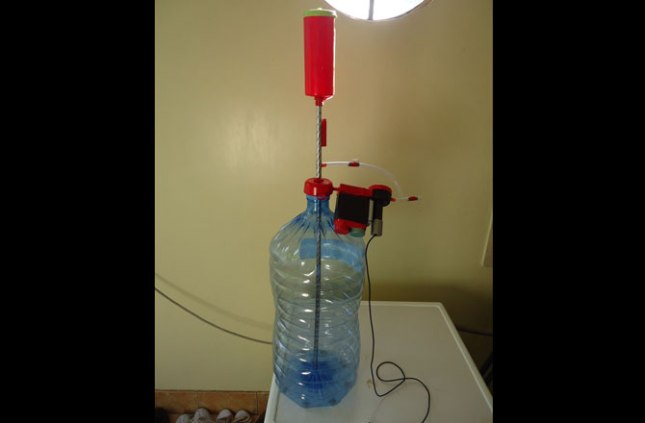
Bottle Charger is a way to recharge cell phones using a water bottle filled with boiling water and a mini-turbine

Bottle Charger is a way to recharge cell phones using a water bottle filled with boiling water and a mini-turbine

One person’s trash represents solar tech treasure for someone else. Last year blogger and tech writer Ryan Matsunaga posted step-by-step instructions on how to convert a water bottle into a solar lantern for $2. In February, Kenyan designers launched a Kickstarter campaign around the Bottle Charger, a way to recharge cell phones using a water bottle filled with boiling water and a mini-turbine. Although the initial prototype simply required a temperature differential, the designers hoped to integrate a small solar dish that could heat water with sunlight continuously during the day.

“I have no idea how cheap or stable it is,” Kalejs said of the Bottle Charger idea. “I guess you’d say, well if it works, use it.”

Solar-powered wearables will need to get more durable if they're going to be practical.

Solar-powered wearables will need to get more durable if they’re going to be practical.

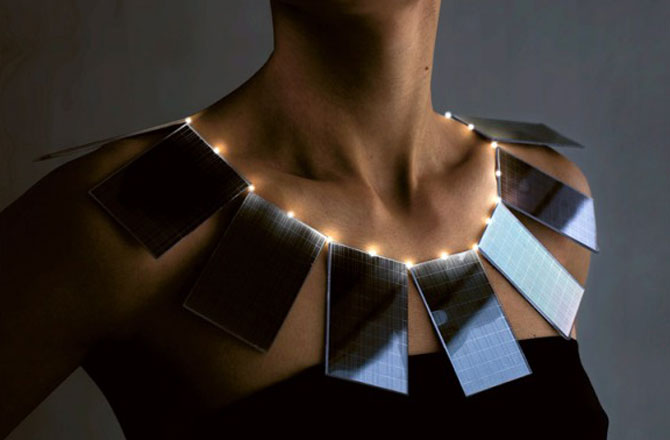
Solar technology’s sleek lines and deep colors are tempting to designers who have incorporated solar cells into purses, necklaces, jackets and mini-dresses. That technology tends to be more high fashion than high function. Charging a phone in a jacket that has a solar power component can take hours. Solar-powered clothing companies have come and gone. Kalejs said that organic solar cell material wears out in a few years so even if the fashion looks timeless, the tech isn’t. He remembered seeing a company that turned spherical solar beads into jewelry and said he can still see how it would appeal to consumers.
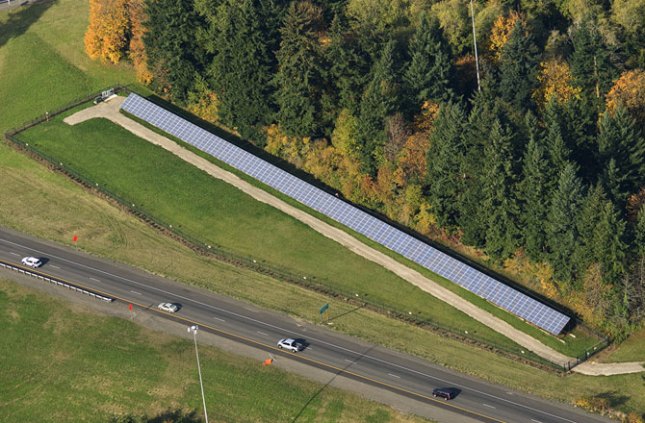
Solar arrays could be installed in the open land than runs alongs roads. Oregon Department of Transportatio

Solar arrays could be installed in the open land than runs alongs roads.
Oregon Department of Transportatio

Roads and highways are a natural lure for solar technology innovators. Asphalt does a great job at absorbing and storing heat. Plus there’s so much of it around already — the infrastructure is there. Several years ago engineers and chemists at the University of Rhode Island created a project to develop ideas for harvesting solar heat from roads. Their suggestions included placing flexible photovoltaic cells on concrete highway dividers and installing water pipes in asphalt. At the same time, the company Solar Roadways wants to embed solar panels directly into roads.

Kalejs was highly skeptical of that, calling it a poor use of solar modules. However, solar modules could be put in conventional arrays beside the road, he said, as they’ve done in Oregon. There’s no shortage of land for that.

Follow our FISHING BLOG

WEB   RATES     FISH    HUNT    CABINS    PHOTOS
TESTIMONIALS    BROCHURE    HUNT BOOKLET

Enter your email address to subscribe to this blog and receive notifications of new posts by email.

← Back

Thank you for your response. ✨

Email Me....


Tags: , , , , , , , , ,

Turn Shipping Containers Into Cabins

Every hunter, fisherman, and all outdoor-minded individuals dream of having their own cabin in the woods.

shipping container cabin
We each have an iconic image of what that subtle shelter looks like, yet here’s a twist that’s very obtainable. And it was achieved by, well, thinking outside the box.

Shipping containers are the “glass bottles” of old; eventually, they need to be replaced. Why not re-use one of these large cubicles as a cabin?

American Pride does just that. Check out this video demonstration.

Follow our FISHING BLOG

WEB   RATES     FISH    HUNT    CABINS    PHOTOS
TESTIMONIALS    BROCHURE    HUNT BOOKLET

Enter your email address to subscribe to this blog and receive notifications of new posts by email.

← Back

Thank you for your response. ✨

Email Me....


Tips on Choosing The Best Field Knife

It doesn’t matter how many knives you have at home. The one you reach for when you’re in the woods—to gut a deer, cut brush, carve a fuzz stick—that’s your field knife, your everyday companion. There’s no one perfect model, but here’s how to pick the ideal features for you.
1) Fixed or Folder?

Field-Knife-2 Field-Knife-5
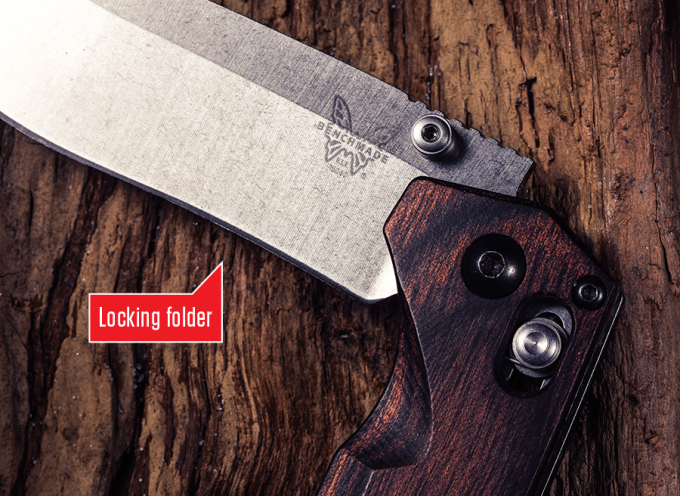
The traditional choice, a fixed-blade knife is stronger than most folders. With no moving parts, it’s virtually fail-safe, and cleaning is as easy as wiping off grime and wiping on oil. If you need a deep belly for skinning big game, fixed is the primary choice due to the challenge of storing a wide folding blade inside its handle. A folder, on the other hand, makes everyday carry simple: Just pop it in your pocket. The increasing popularity of pocket-clip folders has spawned huge innovation in materials and designs, so the options are breathtaking. Bottom line: Fixed or folder, you can’t lose. But you have to choose.
2) Steel Yourself

Field-Knife-3_0
Basic steel is just iron and carbon. But there are hundreds of alloys. The least you need to know is that the more carbon, the harder the blade and the better it holds an edge—but too much can make a blade brittle. Also, adding chromium prevents rust (stainless steel usually has at least 12 percent), but it can soften the steel. It’s a balancing act. Here’s a breakdown:

Non-Stainless Steel: It rusts easily but makes a great blade if you take care. High-carbon examples (1095, D2) really hold an edge. A few are both hard and tough (A2, CPM 3V, 8670M).

​Stainless Steel: If you want low maintenance, this is the way to go. But low-carbon versions (18/8, 420, 440, 440A, AUS-6) can be too soft to get or keep a fine edge. More carbon or a harder alloy is better (440B and C, AUS-8 and 10, 8Cr14MoV, 154CM).

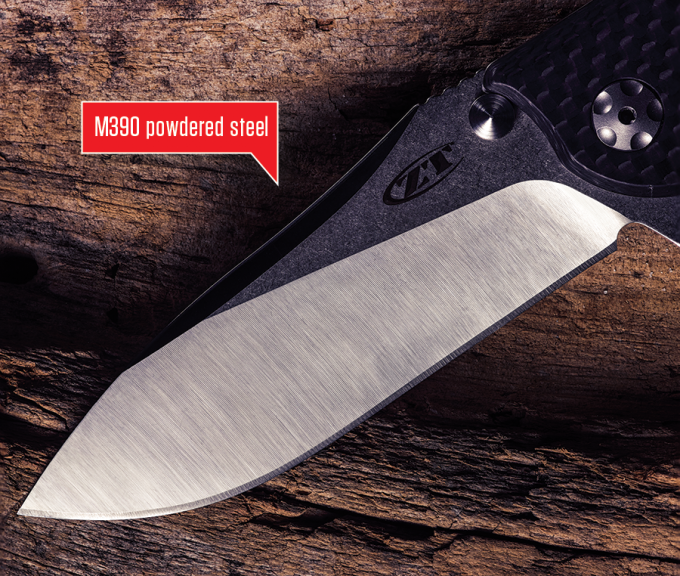
Powdered Steels: The newest stainless alloys (S30V, Elmax, M390) are made of powderlike granules that are heated to form very hard steels that take a wicked edge. They pretty much have it all—​­corrosion resistance, hardness, and strength. Naturally, you pay for it.

3) Get the Point

Field-Knife-4
Most field knives have a drop point or clip point, either of which may be combined with a deeper belly for skinning. The drop point is ideal for field dressing game without slicing innards. Its thicker tip also helps with separating joints and with heavy camp chores. If your hunting knife will double as a fish cleaner and camp-kitchen slicer, the finer clip point is the better choice, and it’s fine for gutting game as long as you’re careful with the tip.

4) Find the Grind

Field-Knife-5
Likewise, most field knives hew to one of two grinds: hollow or flat. A hollow-ground blade has a concave shape, as if material has been scooped out of the blade’s thickness. It’s easy to resharpen and best for shallow cuts, such as field dressing, cutting hide, and simple camp chores. A flat-ground blade is the more common choice; it is tougher, holds its edge better, and excels at deeper cuts, working around sinew and bone, and chopping food at camp.

Now that you know what to look for, check out our field knife gear test to see which brands of fixed and folder blades are worth their metal.

Follow our FISHING BLOG

WEB   RATES     FISH    HUNT    CABINS    PHOTOS T
ESTIMONIALS
    BROCHURE    HUNT BOOKLET

Enter your email address to subscribe to this blog and receive notifications of new posts by email.

← Back

Thank you for your response. ✨

Email Me....


Tags: , , , , , , ,

Backpackers Checklist

backpack2 

The Means of A Check List

Packing a backpack seems like an easy task, until you are on the trail and forget one of the most essential items. We have prepared this infographic as well as the corresponding text to help you always pack exactly what you need. So go ahead and check it out. If you want to put it on your site there is code at the bottom as well.
2

backpack

Follow our FISHING BLOG

WEB   RATES     FISH    HUNT    CABINS    PHOTOS
TESTIMONIALS    BROCHURE    HUNT BOOKLET

Enter your email address to subscribe to this blog and receive notifications of new posts by email.

← Back

Thank you for your response. ✨

Email Me....


Tags: , , , , , , , ,

Balancing Your Back Pack

In hurry and trying to hastily pack out a deer from the backcountry in one trip, a hunter carried a heavy, irregular pack too low and in the process damaged a spinal disc, pinched nerves in his hip, and lost feeling in his ham hocks for quite some time.

Packman_0


Here are a few tips to help you shoulder a heavy load comfortably and safely—and avoid the physical therapy and chiropractic sessions the hunter had to go through.

From the bottom up
Stuff your sleeping bag, pad, and tent in the bottom of the pack.

Heavy load
Place the heavy freight—like a meat quarter—above the light cargo and against your back. It should sit above your hips and between your shoulder blades.

Cram Session
Surround the heavy stuff with lighter gear, such as clothing and food, followed by cooking gear, water filter, and the like. Pack the lightest gear like a hat and gloves in any remaining space at the top.

At the ready
Stash gear like a GPS, flashlight, or other items you might need to access quickly in the pack’s lid.

It’s a cinch
Now that it’s packed right, here’s how to carry your pack:

Follow our FISHING BLOG

WEB   RATES     FISH    HUNT    CABINS    PHOTOS
TESTIMONIALS    BROCHURE    HUNT BOOKLET

Enter your email address to subscribe to this blog and receive notifications of new posts by email.

← Back

Thank you for your response. ✨

Email Me....


Tags: , , , , ,

Make A Vault From PVC

Whether you’re storing beans, bullets, or bars of gold, you’ll need a secure place to keep these potential survival currencies. For a quick solution, you could purchase some expensive olive-drab burial vaults, but does it really matter what color they are if they’re buried in the ground? Follow these easy steps, and you can put together a PVC pipe vault for $15 or less.

pcv1

Materials
First, you’ll need a length of PVC drain pipe. Many stores sell pre-cut two-foot sections, but, if you’re planning to make several of these, it’s cheaper to buy an eight footer and cut it down. For each vault you’ll also need an end cap, a female threaded coupling, and a plug, plus some primer and PVC cement. Four-inch pipe and fittings give you a lot more interior room than three-inch line, but the cost of four-inch fittings is roughly double that of three-inch material.

Construction

Apply your purple primer around each end of the pipe, inside the cap, and inside the female fitting (but not on the threads!). The primer dries very quickly. Once dry, wipe the cement around one end of the pipe and inside the end cap. Do this quickly, it sets up fast! Slide the cap on and press it onto the ground to force the cap on tightly. If you don’t apply pressure for 10 to 15 seconds, the reaction from the cement, primer, and plastic will actually push the fitting apart. Repeat this process with the female fitting, but push on it with the threaded section facing upward (solid cap on the ground again). This keeps cement from running down into the threads.

pcv2

Let the fumes clear out for a day before storing any food in the vault. Otherwise, wait a few hours for the cement to dry. Once you have filled your vault, screw the plug in place tightly. If you’re burying it in a damp area, use a little Teflon tape around the threads. Use pipe dope compound on the threads if you are burying it in a wet location. Use a permanently glued cap on each end if you are submerging the vault in water.

Burial
After you fill your prepper-style treasure chest with loot, bury it in a smart, secure, and memorable location. Fake pet graves, flower beds, and under a mean dog’s doghouse are a few of my top recommendations. You can either bury it horizontally or, if you have a post hole digger, drive a hole straight down and drop it in. The vertical option means minimal surface disturbance and a smaller profile if someone comes along with a metal detector. Just make sure you can find it!

Follow our FISHING BLOG

WEB   RATES     FISH    HUNT    CABINS    PHOTOS
TESTIMONIALS    BROCHURE    HUNT BOOKLET

Enter your email address to subscribe to this blog and receive notifications of new posts by email.

← Back

Thank you for your response. ✨

Email Me....


Tags: , , , , ,

How to Use Wood Sorrel for Food, and Hangovers

If you had a little too much green beer over the weekend, don’t worry — you weren’t alone. St. Patrick’s Day may have a rich historical point of origin in Ireland, but here in North America, it’s often just an excuse to chug cheap brews died into verdant colors. So here’s a little shamrock for the outdoor lover who might still overindulge.

4 clover

Wood Sorrel

The little green plant known as wood sorrel (Oxalis stricta) has often been mistaken as clover because of its three leaflets. On closer examination, you’ll find a big difference. Sorrel’s leaflets are heart shaped, while clover leaflets are round or oval. Wood sorrel grows in both sunny places and shady spots on the edges of woods throughout North America and it has many relatives growing coast to coast.

Wood sorrel usually tops out at under a foot tall, and it typically has small yellow flowers, though some species have more pinkish or purplish blooms. Looking much like a classic shamrock, the fresh leaves can be eaten raw as a tasty sour salad green.

4-Leaf Clover

4-Leaf Clover

You can also make a helpful hangover cure with wood sorrel. A handful of the leaves can be steeped in hot water for 10 minutes and then chilled to make a cold drink. This cold beverage looks and tastes like a green lemonade, and has the remarkable ability to calm nausea and soothe upset stomachs, which often go hand-in-hand with the headaches of hangovers.

While there’s no problem with the occasional consumption of this plant, use it in moderation over the long term. The sour tasting oxalic acid in wood sorrel can inhibit the body’s absorption of calcium and possibly contribute to kidney stones over time.

Look for related edible species such as the violet wood sorrel (Oxalis violacea), the pink wood sorrel (Oxalis montana), and other members of the Oxalis genus.

Have you eaten this wild edible? Or used it to treat nausea? Leave us your comments.

Happy St. Patrick’s Day!

Follow our FISHING BLOG

WEB   RATES     FISH    HUNT    CABINS    PHOTOS
TESTIMONIALS    BROCHURE    HUNT BOOKLET

Enter your email address to subscribe to this blog and receive notifications of new posts by email.

← Back

Thank you for your response. ✨

Email Me....


Tags: , , , , , ,

Make A Vault From PVC

Whether you’re storing beans, bullets, or bars of gold, you’ll need a secure place to keep these potential survival currencies. For a quick solution, you could purchase some expensive olive-drab burial vaults, but does it really matter what color they are if they’re buried in the ground? Follow these easy steps, and you can put together a PVC pipe vault for $15 or less.

pcv1

Materials
First, you’ll need a length of PVC drain pipe. Many stores sell pre-cut two-foot sections, but, if you’re planning to make several of these, it’s cheaper to buy an eight footer and cut it down. For each vault you’ll also need an end cap, a female threaded coupling, and a plug, plus some primer and PVC cement. Four-inch pipe and fittings give you a lot more interior room than three-inch line, but the cost of four-inch fittings is roughly double that of three-inch material.

Construction

Apply your purple primer around each end of the pipe, inside the cap, and inside the female fitting (but not on the threads!). The primer dries very quickly. Once dry, wipe the cement around one end of the pipe and inside the end cap. Do this quickly, it sets up fast! Slide the cap on and press it onto the ground to force the cap on tightly. If you don’t apply pressure for 10 to 15 seconds, the reaction from the cement, primer, and plastic will actually push the fitting apart. Repeat this process with the female fitting, but push on it with the threaded section facing upward (solid cap on the ground again). This keeps cement from running down into the threads.

pcv2

Let the fumes clear out for a day before storing any food in the vault. Otherwise, wait a few hours for the cement to dry. Once you have filled your vault, screw the plug in place tightly. If you’re burying it in a damp area, use a little Teflon tape around the threads. Use pipe dope compound on the threads if you are burying it in a wet location. Use a permanently glued cap on each end if you are submerging the vault in water.

Burial
After you fill your prepper-style treasure chest with loot, bury it in a smart, secure, and memorable location. Fake pet graves, flower beds, and under a mean dog’s doghouse are a few of my top recommendations. You can either bury it horizontally or, if you have a post hole digger, drive a hole straight down and drop it in. The vertical option means minimal surface disturbance and a smaller profile if someone comes along with a metal detector. Just make sure you can find it!

Follow our FISHING BLOG

WEB   RATES     FISH    HUNT    CABINS    PHOTOS
TESTIMONIALS    BROCHURE    HUNT BOOKLET

Enter your email address to subscribe to this blog and receive notifications of new posts by email.

← Back

Thank you for your response. ✨

Email Me....


Tags: , , , , ,