RSS

Category Archives: moose hunting

How to Judge Your Shooting Distance

 A great article by Kevin Wilson

Accurately judging distance is the first step toward proper shot placement. Instinctive or calculated, bowhunters rely on it for close range shooting. Gun hunters count on their ability to estimate longer distances. Over time we all learn our own tricks for calculating distance but with the advent of laser rangefinders many of us won’t leave home without them. Regardless of how you go about it, determining yardage can make or break your hunt.

I will remember one hunt as long as I live. The outcome was downright depressing all because I misjudged the distance. It happened 16 years ago. I was a neophyte bowhunter at the time. I’d set up a treestand in a small block of trees that I knew held several bucks and does. The previous winter I’d picked up some huge sheds that taped out at 183 Boone & Crockett inches. Knowing that the gigantic buck had survived the winter, my hopes ran high and I knew there was always a chance he’d show up in the timber I was hunting. As luck would have it 45 minutes after climbing into my stand I heard leaves crunching underfoot. Straining to look through the trees, sure enough a smaller basket rack buck was making his way toward my stand. Always an impressive sight I enjoyed the view as he walked 10 yards from me. Then I heard more rustling in the leaves and looked over to see him. He was nothing short of magnificent! Based on his sheds, it looked like he’d grown at least another 15 inches putting him well into the high 190’s – a buck of a lifetime in anyone’s books! He walked 12 yards from my stand but I couldn’t get to full draw with him in plain view. As soon as he turned I capitalized. At full-draw, I locked my 20 yard pin on his body as he continued to amble forward. Walking straight away there was no shot opportunity at all! By the time he stopped, I estimated he was standing at 30 yards. With all the concentration I could muster, I focused and released. The arrow flew where I’d aimed, in perfect alignment with his chest, but literally inches high splitting the hair on his back! Completely awestruck and in total disbelief, that gut-wrenching feeling overcame me as I watched my world-class archery whitetail bound away never to be seen again… and all because I’d misjudged the distance!

Since that day I have made it my lifelong mission to learn how to accurately judge distance. From capitalizing on today’s technologically advanced laser range finding devices to using topographic characteristics to assist in calculating distance, and understanding the influences of terrain, it is an ongoing practice in my world. Regardless of whether you’re an archer or a rifleman, here are a few considerations that might help you as you learn to accurately judge distances.

The Technological Solution
Today’s technology is a saving grace for hunters. Many of us won’t leave home without our laser rangefinder. Portable and easy to use, we simply identify our target, adjust the setting, point, hit the button and, voila! … distance is displayed on the screen. With yardage confirmed, all that remains is the shot itself.

When I began bowhunting nearly two decades ago rangefinders had a simple dial that brought the target image into focus when the dial was turned. Wherever the dial ended up, that was your yardage. Today, thanks to innovation, laser rangefinders are readily available and relatively affordable. In fact today there is really no reason not to use a rangefinder. Many manufacturers have their own versions, but in my opinion, one of the latest and greatest inventions is Bushnell’s Laser Arc. I’ve got the Elite 1500 model. The ARC stands for Angle Range Compensation. While traditional rangefinders are precision optical instruments designed to be used on a level plain (line of sight), the ARC rangefinder compensates for angles from a treestand for instance, or up or down a mountain slope. I have owned and used several different kinds of rangefinders over the years. The Laser ARC is my absolute favorite. Using digital technology, it has a built-in inclinometer that displays the exact slope angle from +/- 60º of elevation with +/- 1.0 degree accuracy. Hunters have always struggled with extreme uphill and downhill angles. These severe angles alter true horizontal distance to the target. The ARC solves this problem. It has three primary settings: bow mode, rifle mode, and a regular mode (for line of sight distance calculation only).

It has a bow mode that displays line of site distance, degree of elevation, and true horizontal distance from 5-99 yards (or meters). For longer range shooters, it also has a rifle mode that calculates and displays the amount of bullet drop, at the target in inches (or centimeters). In the rifle mode, the amount of bullet drop is determined by the line of sight distance to the target, degree of elevation, along with the specific ballistic characteristics of the caliber and ammunition. As the hunter ranges the target, the line of sight, degree of elevation, and bullet-drop/holdover in inches or centimeters is displayed from 100-800 yards (or meters). Here’s where the technology shines ballistically. In the start-up menu, one of eight ballistic groups can be selected by the user, with each formula representing a given combination of caliber and loads.

Laser rangefinding technology, and the ARC system in particular, is invaluable but what if we don’t have one? Then it comes down to a matter of practice and estimation to determine our downrange distances.

Practice
For most of us, learning to judge distance takes considerable practice. Only by doing it a lot, and under variable conditions, can we become competent at it. Shooting is a lot like golf. Understanding how your bow or gun works (i.e., trajectory and ballistics) and interpreting the size of the target animal relative to the terrain can only be learned through firsthand repetitive experience. So how do we get all this supposed experience when we can only take a finite number of animals each year? The answer lies in visiting the gun or archery range.

For bowhunters, nothing beats practice on the 3D course. Today’s 3D targets, like those made by MacKenzie, are very lifelike and offer as realistic practice as you’re likely to get anywhere. Most are made to scale and can be strategically placed in any range situation to simulate realistic hunting scenarios. On my local 3D course, our club uses everything from coyote targets to whitetailed deer, mountain goat, elk, moose, wild hog, turkey and more. Some are set at long distances over 60 yards through wide open clearings while others are placed in the trees, often with very small shooting windows at closer distances like 20 or 30 yards. Most 3D ranges have a good assortment of field scenarios to allow practicing archers to hone their skills.

Likewise, rifle and muzzleloader hunters should visit the range regularly to hone shooting skills. Unfortunately due to the expansive nature of bullets today’s 3D targets aren’t an option. Alternatively silhouettes are. Most rifle ranges offer variable range distances from 100 to 400 yards. At my club our furthest distance is 600 yards. Unless you’re really into the long range thing 400 yards is a stretch for most big game hunters. By shooting repeatedly at 100, 200, 300, and 400 yards, we grow accustomed to what those distances look and feel like. By taking note of the size of target in our scope at specified magnifications we can also learn to estimate distances. For example, at 10x zoom on my Leupold scope, I know that a deer will fill a certain percentage of the field of view. By acknowledging how much of the animal is in the field of view, I can guess the approximate yardage with relative accuracy. Likewise, at 200 and 300 yards, that deer will appear smaller respectively.

Break Distances into Increments
Whether we’re hunting remote regions or in farmland things like trees, rocks, fence posts, and power poles can be used to aid in judging distances. As an archer I’ve learned to make a mental note of things like trees, shrubs, rocks or other physical land-based objects at 10 yard increments out to a distance of 50 yards from where I’m sitting. By burning those objects into my memory I’m better able to make quick decisions when an animal steps into a shooting lane. I’m guessing it may be the same throughout North America but where I do much of my hunting I’ve learned that power poles are set at a standard distance of 100 yards apart. Any time I’m hunting a wide open power line or in farm country I can use those power poles as markers to estimate yardage. As a rule, regardless of what kind of weapon you’re hunting with, breaking distances down into increments simplifies things. Remember, if you’re sitting in a stationary stand or ground blind there is always the option of setting out yardage markers at desirable increments, e.g., every 10 yards.

Consider Where and What You’re Shooting
Judging distances on the open prairies is a very different game than judging distance in the dense forest. Likewise, estimating the distance of a large target like a moose can be tricky if you’re more accustomed to looking at antelope. Dense cover and the size of the animal can play tricks on your mind.

As an archer, I spend most of my time hunting heavy mixed forest areas comprised of aspens and evergreens. Rarely do I see deer, moose or elk at distances further than 80 yards unless its down a long open cutline or across a clear cut. So, whenever I head out to different states or provinces to hunt smaller species like pronghorn antelope, it usually takes some time to acclimatize and recalibrate my brain to accurately judge distances. In my experience, smaller big game species in open terrain tend to appear further away while larger species under heavy cover often look closer than they really are. Unfortunately there are no set rules here; you just need to figure out what works best for you under variable conditions.

Follow our FISHING BLOG

WEB   RATES     FISH    HUNT    CABINS    PHOTOS
TESTIMONIALS    BROCHURE    HUNT BOOKLET

Enter your email address to subscribe to this blog and receive notifications of new posts by email.

← Back

Thank you for your response. ✨

Email Me....


Tags: , , , , , , , , , , , ,

Proper Field Care for Moose

IMG_6042

One of the most common questions of a first time moose hunter is “The moose is down, now what?”

First-time moose hunters need to know that handling the animal once it is killed will not be easy. But, with the appropriate equipment and a bit of knowledge, the job can go smoothly. If you are planning to have your moose butchered by a professional, it would be wise to check with him in advance about his preferences for handling moose.

Whatever you choose to do will depend a great deal on your means of getting the moose out of the woods and how you plan to transport it to camp or home. The “game taste” people often speak of is usually the result of poor handling more than anything else. With proper care, moose meat can be outstanding table fare.

The main cause of moose meat spoilage is heat. You can avoid this danger by field dressing your moose immediately. Allow the meat to cool rapidly by providing good air circulation. You should also take every precaution to keep your moose free of dirt, debris, blood and hair.

Cheesecloth or commercial game bags offer the best protection from dirt and flies and still allow necessary air circulation. A liberal application of black pepper will also help to discourage flies.

Field dressing should take place as soon after the kill as possible. Once the animal is dead, bacterial action can spoil the meat quickly. The chance of spoilage increases the longer you wait and the warmer the temperature. Bleeding your moose is unnecessary in most cases. Normally, the animal will bleed internally, and immediate field dressing will ensure adequate bleeding.

Field Dressing Your Moose
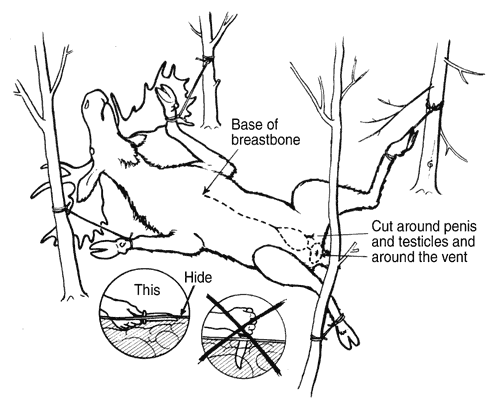
To begin field dressing, position the moose on its back with the head slightly uphill. It is helpful to tie the legs to nearby trees. Make an incision at the base of the breastbone with the tip of a sharp knife. Be careful not to cut the intestines or other internal organs. The contents can taint the meat. Continue the incision down the length of the belly to the anus. Cut through the skin and thin wall of the body cavity only. Face the blade of the knife upward, and away from the internal organs to avoid cutting them. Use the fingers of your free hand as a guide, but be careful not to cut yourself.


 mooseprep1

If the head is not to be mounted, you can continue this cut in the opposite direction to the base of the jaw, exposing the windpipe and esophagus. The windpipe and esophagus should now be severed as close to the head as possible. (Before doing so, tie a string tightly around the esophagus to prevent the stomach’s contents from spilling.) Using your bone saw, split the chest bone down the middle, exposing the contents of the chest cavity.

If you have shot a cow moose, the reproductive tract (ovaries and uterus) can now be removed; you also have the option of waiting until the bowel has been tied. Carefully roll the internal organs to the side until you see the point where two tubes (the rectum and the vagina) exit through the pelvic bone (see illustration). The vagina is the tube nearest the belly. Grasp this and follow it carefully forward until it forks into two tubes, which are the left and right horns of the uterus.

Once you have located the uterus, insert your fingers under it and work your hand in until the organ lays in the palm of your hand. You will notice a thin, almost transparent membrane which connects this organ to the animal’s back. All that now remains is to carefully follow the horns of the uterus to the ovaries. These are bean-shaped organs one to two inches in length. They may be covered with fat so keep looking! When you find them, cut the membranes holding them in place, remove ovaries, and place them in a plastic bag. The uterus can be removed by cutting through the vagina. The ovaries and the uterus should be kept as cool as possible.

Next, circle the anus with your knife, cutting deeply to free the lower bowel. Tie this off with a string to prevent droppings from coming in contact with the meat. Now cut through the flesh of the hams down to the pelvic bone and cut through the pelvic bone with the bone saw.

The internal organs can now be removed. Grasp the tied-off esophagus and trachea and pull them gently but firmly up and back towards the body of the moose. As you do so, have your sub-permitee cut these tissues away from the carcass. Continue this process into the chest cavity, pulling the heart and lungs up and back while cutting any attachments. Once the heart and lungs are freed, cut the diaphragm away from the body on all sides. Then continue firmly pulling on the esophagus and trachea and gently roll the stomach and intestines out of the body cavity, freeing them from all attaching tissues as you go. Once all the viscera is freed of the body, it is best to pull it away from your work space.

Warning!!
Because particularly high cadmium levels have been seen in some moose liver and kidney, it is recommended that you do not consume these organ meats at all.

mooseprep2

Quartering
Quartering is recommended for moose to make handling easier and to allow rapid cooling of the carcass. The hide may be left on each quarter to offer some protection from dirt and flies. If temperatures are above 50 degrees F, you should skin the carcass in the field.

To quarter the animal, you will need a sharp knife and a bone saw. A saw is best to avoid bone splinters and damaged meat.

Begin by removing the head. To do this, cut through the flesh of the neck with your knife. Saw through the vertebrae, and use your knife again to remove the head. Make your cut as close to the head as possible to avoid wasting many pounds of valuable meat.

The next step will be to halve the animal. This is done by placing the back of your knife against the backbone between the second and third rib. Push the blade outward, completely through the flesh and hide. Cut upward using the ribs as a guide and do the same on the opposite side. You can now separate the halves by sawing through the backbone.

Quartering is accomplished by sawing straight down the backbone of each half. Underlying flesh or hide can be separated with your knife. The task of halving and quartering will be easier if the animal can be elevated on logs or sticks. Trim away any shot-damaged meat that could lead to premature spoilage.

Be sure to attach your tags before removing quarters from the place of kill. If the quarters can not be removed before darkness, try to hang them in a nearby tree or elevate them on logs to aid cooling. Cover them with boughs or meat socks and hang a marker nearby.

mooseprep3

Getting Your Moose Out Of the Woods
Getting the moose from the kill site to your vehicle or camp will probably be the toughest task you will face. If you’re fortunate, you may be able to drive close to the kill site, but many of the roads through moose hunting zones are private and may not be open to public use.

Another possibility is to locate someone with a skidder or work horses. The majority of hunters will end up packing their moose out of the woods instead of using a vehicle. To do this, you can tie the quarters to a pack frame or pack board or even suspend them from a long pole so the load can be shared. Try not to overexert yourself; the pieces will be heavy, and the going could be rough. It is a good idea to flag each quarter with a piece of blaze orange material to prevent accidents.

If the quarters are still too much to carry, the carcass can be cut into more pieces, but remember, the law requires the field-dressed carcass be delivered to a checking station for examination. Each individual piece must also be labeled with the name, address and hunting license number of the person who shot it.
It is important to get the quarters hung in a cool, shady place, preferably a meat cooler as soon as possible.

Transportation and Cooling
Always protect the carcass from dirt, heat and moisture. Transport the quarters out in the open if possible. The open back of a pickup works well. Elevate the quarters to keep cool and protect from dirt. If conditions are dusty or rainy, cover them loosely with a porous canvas tarp. Do not stack the quarters, allow them to touch or cover them with plastic. Plastic retains body heat and prevents cooling. If you transport in a covered truck or trailer, you should open windows and vents for proper air circulation.

Once back at camp or your home, hang each quarter from a cross pole of some type in a shady area with good air circulation. If you will have a long trip home, it is best to allow the meat to cool overnight before heading home. If this is not possible, consider traveling at night when temperatures are cooler.

If you are transporting your animal directly home, be cautious about hanging the meat in a garage or shed. Often these areas are not cool enough to allow proper cooling and aging of the carcass.

mooseprep4

Skinning
The quarters should be skinned immediately. If daytime temperatures are above 50 degrees and nighttime temperatures are above 40 degrees, you should remove the hide and over with cheesecloth. If the temperature is between 50 and 30 degrees, you can wait a few hours before skinning.

In skinning, work the hide away with the fingers, and peel it off while the quarters are hanging. Use a sharp knife to slice between the flesh and skin of the animal as it is pulled away. Be careful not to cut either one.

Whether you skin the quarters or not, you should cover each one with cheesecloth or a meat sock.

Aging and Butchering
Aging is intended to make the meat tender. This is best accomplished at a constant temperature of about 40 degrees. The temperature during aging must never exceed 50 degrees. For this reason, you will probably want the services of a professional butcher.

If you age your meat outdoors, three to five days is sufficient, but the period varies with temperature and size of the animal. Meat can be aged for as long as 21 days in a cooler.

If you will be handling the meat yourself, remove as much fat as possible before freezing. Removal of bones will save freezer space. Double-wrap and tightly seal all cuts of meat to prevent freezer burn. Meat should be frozen at zero degrees. Don’t try to freeze too much at once. Label and date all packages for future reference. If you don’t have the knowledge or time to process your own moose, then don’t risk ruining it; have it processed at a commercial facility.

Care Of Big Game Trophies
Proper field care of trophies is extremely important for good results in the final mount. If you intend to have the head of your moose mounted, you must take special precautions when skinning it out.

If the weather is warm, and you plan to have a head mount or a “fur on” rug made from the hide, you must remove the skin, salt flesh inside thoroughly, and roll it up flesh side in. Keep it in a cool place (never in a plastic bag) and get it to your taxidermist as soon as possible. Delay may cause “slipping” a condition in which the hair falls off the hide after the tanning process and ruins the hide for its intended use.

The taxidermist will need as much hide or “cape” to work with as possible. When field dressing, don’t cut any further up the underside than between the front legs. The diagram shows where the cuts should be made to skin the neck. Once the neck is skinned out, the head can be disjointed at the base of the skull and removed with the cape attached. Let the taxidermist skin out the head. He will want the measurements, and the skinning is included in the mounting charge. Remove as much flesh as you can, and salt the cape and all exposed flesh. The head and cape should be kept cool and delivered to the taxidermist as soon as possible.

If you keep only the antlers for mounting, be sure to leave a good portion of the skull attached. The best procedure is to check with your taxidermist in advance of your hunt for specific advice.

To care for the hide, remove all flesh and fat, then salt flesh side well. Moose hides spoil very rapidly in warm weather. You should deliver the hide to a taxidermist within 24 hours after the animal is skinned.

Fine table salt is best for use on hides. Capes will take about 30 pounds of salt. Flat skins will take 50 to 80 pounds. As a guide, figure on using half the weight of the skin in salt. About 24 hours after application, the salt will be wet and will have lost its efficiency — shake it off and re-salt.

Transport the hide rolled up, flesh side in.

mooseprep5

Follow our FISHING BLOG

WEB   RATES     FISH    HUNT    CABINS    PHOTOS
TESTIMONIALS    BROCHURE    HUNT BOOKLET

Enter your email address to subscribe to this blog and receive notifications of new posts by email.

← Back

Thank you for your response. ✨

Email Me....


Need a Do-Over With Your Shot?

It’s rare for any hunter to walk away from a field or reflect on a hunt and not think about whether a shot could have been better.  Whether with a bow, crossbow or firearm, there are times when we hesitate. A little voice – instinct, caution, doubt? – throws up a hurdle.

ShotSimulator
Sometimes we adjust and avoid the hurdle. Other times we pull up short and don’t leap. We don’t take the shot.And, unfortunately, there are times when we know the hurdle is there but take the shot anyway. We’re confident in our abilities and that of our bow, crossbow or gun. Some might call that experience. Some might say it’s recklessness or unethical.

We probably all can look back and wrestle with at least one shot that might have been risky, even if things turned out well after taking it and the deer, bear or moose is on the ground.  Part of our duty as hunters is to strive to maximize our abilities with whatever weapon we use.

We practice, tune our bows, hit the range with our guns. We try to find the right combination of arrows and broad heads or the ammunition that works best with our rifles, muzzleloaders, handguns or shotguns.  One way to improve our knowledge and experience is with Deer & Deer Hunting’s “Shot Simulator” software.  If you’ve ever been curious about where your bullet, slug or arrow has entered a deer’s body and what happened, here’s how to find out.  The Shot Simulator software is designed to provide you with outstanding animation of a deer’s body and internal bones, muscles and organs.

imagesA15UZWSYWith the Shot Simulator, you can position the animated deer in numerous positions – how it was when you shot, or how you saw a buck or doe and didn’t shoot – and then learn which organs were hit.  Didn’t like what you saw? Position it differently and do it again. You can not only position the deer, but also your shot from a tree stand or ground level.  If you’re a stand hunter but only climb about 15 feet, you can see the difference in that height versus 25 feet or on the ground.  The animation allows you to move the deer around and then remove the hide, skin and bones to see what happened.  Then, you can punch in the trailing guide to find out what happens next.  Should you follow the game immediately?  Wait a while? Just for your knowledge, you could take the shots on the computer that you’d definitely pass up in real life and then see what would happen.

It’s an educational tool that could help you glean more knowledge and help make you a better hunter. Shot Simulator also is a great teaching tool for young hunters, too.  They’re curious about what happens and this is a great way to augment their in-field learning.

Follow our FISHING BLOG

WEBSITE    RATES     FISH    HUNT    CABINS    PHOTOS
TESTIMONIALS    BROCHURE    HUNT BOOKLET

Enter your email address to subscribe to this blog and receive notifications of new posts by email.

← Back

Thank you for your response. ✨

Email Me....


Tags: , , , , , , ,

Moose Hunting in NW Ontario

Successful moose hunters must have detailed and sophisticated knowledge of the animal.  mastering skills of the hunt is essential for success, but equally important is knowing how to show respect for the animal, its spirit, and its home.

moose

The language of Moose
In any human culture, people need specialized language to describe every part of their environment that is important to them. This is especially true for people who live directly from the land and waters, because they need very specific words to talk about every facet of their world.

Eye of the Hunter
Moose can be challenging animals to hunt, especially in areas where they are scarce or highly mobile. For traditional people it is essential to have a thorough understanding of moose movements—and this comes by studying the animal and its environment, by sharing information between hunters, and by telling stories passed on to family & friends.

For example, hunters know that during the protracted, harsh northern winter moose are often stressed and skinny, so their meat is not especially desirable. But spring and summer bring long days and lush growth, so, moose can pack in up to 50 pounds of food per day. By the time fall comes, the animals are in prime condition, especially the bulls and cows that have no calves to nurse and protect (known as a dry cow).

To find moose, first a person needs to know where the animals are most likely to be at any given time and when moose are in the best condition. For example, in the fall rutting (breeding) season, moose often congregate in the river valleys where willow thickets still provide fresh browse.

During the rut, bulls sometimes have spectacular battles—pushing and shoving, clashing their enormous antlers—to establish dominance. These contests take tremendous amounts of energy at a time when the bulls eat little or nothing because of their single-minded focus on mating. They become skinny and smelly their meat is hardly edible.

Before the fall rut begins, some hunters arrive in the area to scout, looking for signs of moose—fresh tracks, broken branches in the thick brush, scraped bark on shrubs and trees, or shadowy movements in the brush.

When a hunter finds a set of tracks, he checks them closely to determine the sex and condition of the moose—and most importantly, the age of the track. It’s important to know how long ago the moose walked here and whether the animal is staying put or traveling on.

Aging tracks in our terrain can be very challenging. A fresh track has clean sharp edges, and within a day or so these edges may begin to dry out, or they might be softened by rain or wind. Depending on weather conditions the track could look quite fresh for several days or more.

A sharp eye might find a track where the moose entered the water, and if it’s partially filled with water, this could help the hunter determine how long ago the moose made it. When the water is still muddy, the animal came by within perhaps half-a-day or less. But if the sediment has settled and the water is clear, it means the track is older.

Moose leave other signs too. Rutting bulls scrape off bark when they rub their antlers on trees or shrubs. They sometimes paw the ground, leaving an obvious patch of scattered vegetation and raw ground.

Besides looking for visible signs of moose, hunters keep very quiet, to avoid frightening the moose and to hear any sounds the animals make. Bull moose challenge other bulls by noisily thrashing their huge antlers against trees and brush. Cows and bulls make low grunting sounds during the mating season. People also listen for any movement in the thickets and for the surprisingly loud sounds of a moose chewing and snapping off leaves.

A bull moose acquires a strong, musky scent from rolling in leaves soaked in his own urine. This smell can linger in calm air for up to half an hour, indicating that the bull has passed through recently—or that he is still close by.

If a hunter believes moose are nearby, he might try to draw one closer by imitating the sound of antlers scraping against the brush. For this, he can use the dried shoulder blade of a moose or sometimes even a large stick. If a bull is in the area, he may decide another bull is challenging him and come to investigate, or he might reveal himself by grunting or thrashing his antlers.

A hunter trying to lure a bull closer will sometimes make low grunting sounds, imitating either a cow moose looking for a mate, or a bull looking for a challenge. The hunter watches and listens closely, waiting for the moose to appear.

The most likely time to find a moose is during the dusk and dawn hours, when moose are most active. They will feed in the early morning and then might sleep for an hour or so. They lie down for much of the day to rest and ruminate, and they are very hard to approach. In the evening they will feed again.

In areas with high concentrations of moose, hunters avoid the bone scraping method because it might call too many bulls to them. Also, they are very careful when snapping twigs for campfires—this too could bring an aggressive bull into camp.

Follow our FISHING BLOG

WEBSITE    RATES     FISH    HUNT    CABINS    PHOTOS
TESTIMONIALS    BROCHURE    HUNT BOOKLET

Enter your email address to subscribe to this blog and receive notifications of new posts by email.

← Back

Thank you for your response. ✨

Email Me....


Tags: , , , , , , , , ,

Moose Hunting – After the Hunt

moose-wawang-lakeHunters who take a moose and are camping out often have a feast—chunks of prime meat roasted on sticks over a campfire—a delicious and savory reward for their hard work. Butchering one of these big, heavy animals takes a lot of time and effort. A prime bull can yield more than 500 pounds of meat and fat. Traditional foods include many other edible parts of the moose such as the head, liver, heart, some other internal organs, and the highly valued fat. So it takes not only a lot of work to butcher a moose, but also specialized skills and a detailed knowledge of the animal’s anatomy.


moose=wawang-lakeA Delicious Feast

Moose meat and fat are staple foods in most many people who live in the northern regions of Ontario.

Fat is a very important part of a traditional diet because it stokes the metabolism and adds flavor to meat and organs. Unlike beef, moose meat is not marbled with fat, but rather the fat is separate. A favorite kind of fat is found in the sheath-like mesentery membranes that hold the organs together.

In times past, even the bones of moose were ground and boiled to make a fatty broth. If they didn’t use the bones immediately, they could store them as a potential source of food during times of scarcity.

Delectables include brisket, short ribs, heart, and tongue. Thin slices of meat may be fried. A delicious gravy is made from the fat.

A regular favorite is moose meat simmered in a big pot along with some combination of rice, noodles, or potatoes and sometimes vegetables. The result is a thick meaty, delicious stew. Bone marrow is also used in tasty, nutritious broths.

moose=wawang-lake

Follow our FISHING BLOG

WEBSITE    RATES     FISH    HUNT    CABINS    PHOTOS
TESTIMONIALS    BROCHURE    HUNT BOOKLET
Enter your email address to subscribe to this blog and receive notifications of new posts by email.

← Back

Thank you for your response. ✨

Email Me....


Tags: , , , , , , , , , , ,

Moose Hunting at Wawang Lake

Deeply imbedded in the Canadian Boreal Forest we offer the very finest in Moose habitat for our hunters.  Look no farther than Wawang Lake for accommodations for your next BIG game hunt!

WawangMoose

Our hunts accommodations ONLY for Ontario Resident Moose Hunters.

If your looking for a great hunting area that has a high population of moose then look no farther than Wawang Lake Resort as we’re in the middle of the best moose hunting area in all of NW Ontario.

At Wawang Lake we offer comfortable accommodations to Resident Ontario Moose Hunters only.  Presently we don’t have any tags available and unable to take any non-resident hunters during the Moose Hunt season.

Things Moose Hunters Should Consider:

Crossbows
• Draw length must be al least (11.8 in.)
• Draw weight must be at least (119 lbs.)
• Bolt head must be at least (0.9 in.) at the widest point, and there must be at least two cutting edges of straight, sharp, un-serrated, barbless steel.

Longbows
• Draw weight must be at least (48.5 lbs.) at draw length of (27.6 in.) or less.
• Arrow length must be at least (23.6 in.).
• Broad head must be at least (0.9 in.) at the widest point, and there must be at
least two cutting edges of straight, sharp, un-serrated, barbless steel.

Rifle
We suggest using at the minimum one of the following:
300 Magnum
30-06
7MM Magnum with bullet weights in the 180 grain range
A rim-fire rifle, a shotgun smaller than 20 gauge when loaded with shot, or any shotgun loaded with shot smaller than SG or No. 1 buck cannot be used for hunting Moose.


Clothing requirements
During the rifle season hunts, a minimum of 400 square inches of uninterrupted Hunter Orange must be worn at all times.  Camouflage or open mesh orange does not meet these requirements.  An orange jacket or vest as well as an orange hat do meet these requirements.

Hunters should also have a compass or hand held G.P.S., as well as a good pair of binoculars, thermos, flashlight, lighter, warm clothing, good quality rain gear, waterproof insulated boots, gloves/mitts, long underwear.   Two-way portable radios are also recommended.  Fall hunting weather can be warm & dry to cold, wet and snowy within a few hours; so it is best to be prepared for all variables.

We trust that this information will prove to be useful in planning your next Big Game Hunt in beautiful, exciting NW Ontario.  We invite you to enjoy our ‘True Wilderness Hospitality’ while participating in a remote hunting experience.

 WEBSITE    RATES     FISH    HUNT    CABINS    PHOTOS
TESTIMONIALS    BROCHURE    HUNT BOOKLET

Enter your email address to subscribe to this blog and receive notifications of new posts by email.

← Back

Thank you for your response. ✨

Email Me....


Tags: , , , , , , , , , , ,

In a rut: Brush up on your calling

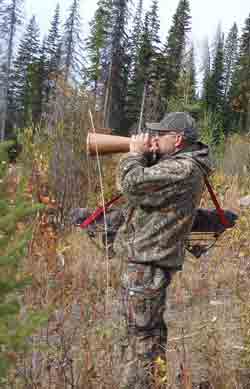
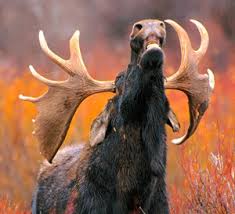
calling-moose-250
There’s a lot of prep that goes into a moose hunt, so don’t blow a shot at one of these majestic beasts because you can’t call it in.
Check out the video below from Ontario Out of Doors for some great tips to help get you ‘in tune’ for when the time comes.
rutmoosewawang3

Follow our FISHING BLOG

WEB   RATES     FISH    HUNT    CABINS    PHOTOS
TESTIMONIALS    BROCHURE    HUNT BOOKLET

Enter your email address to subscribe to this blog and receive notifications of new posts by email.

← Back

Thank you for your response. ✨

Email Me....


Tags: , , , , , , ,

Shooting A World Record MOOSE

If you are in search of a record book moose because he has survived many previous hunts, and you as a hunter respect the survivability of the animal, then you have set a high standard for yourself.

Pursuing any type of world record is not something that many aspire to do.   for the trophy hunter, shooting a world record moose is the ultimate goal. Are you a trophy hunter? Or a meat hunter?

Do we need to continue to search for the ever bigger? Then when we find it, is it right to destroy it? Should we limit the very essence of the mighty beast; snuff out the possibility of procreation? These are tough questions?

giant-moose
Canadian World Record Moose 2013

Hunter Heinz Naef shot what he believes could be the largest moose ever harvested in the Yukon(Sept. 2013). 

His moose, scored 263 1/8 inches after the required drying time of 60 days. The official scoring will be made in Nevada in early 2014.

Heinz is not a trophy hunter, he wasn’t looking to harvest a world record moose. No, he is a meat hunter… by his own admission. He was just out looking for any legal moose to fill his freezer. It just so happened to be this one.

Human beings have pushed everything to its limits. The Guinness Book of World Records is a testament to this. We strive to better ourselves, to beat our predecessors, going beyond what anyone has done in the past. Is it wrong to have the desire to be better, to do it bigger? Is our only purpose to get our names in a book?

When entering animals into record books, who deserves the respect? You or the animal? It is vitally important to include all relevant information about said trophy… the hunters name however may not be so important.

Many hunters have a few trophies on the wall, but most are not world record moose, but all of them are trophies to the hunter.  Many hunters do not go hunt with the sole purpose to acquire a trophy, and likely many of you, may scoff at some of the animals that have been shot. They are not in any record book, nor are they of that class, but to the hunter, they are a reminder of the hunt and a way for to show appreciation for the animal.

No animal should be killed for the sole purpose to raise a hunters social status, to do so is crossing the ethical line for hunters.

Where does one find a world record moose? This question is one that no one person can answer for sure. Through research and dialogue you may be able to locate moose habitat that will contribute to the growth of these monsters. A hunter in search of a world class moose will spend a lot of money and time to achieve his goal. These big animals are not going to be easily accessible. Days, weeks even years of pursuit to harvest a moose that can make the record books will be the required 22dedication.  Hunting the most remote areas of the planet is what it will most likely take and never discount luck. Luck is a huge part of hunting.

As an example the latest world record moose taken with a rifle, shot by Jay Link in 2001. Jay travelled to Russia, to the very remote regions to get this moose. He has stated it cost him $20,000.00 to do this hunt (before shipping and taxidermy). Jay may not have been looking for a world record when he shot this one, but he was certainly looking for a world class moose. Unfortunately for Jay, because the moose was taken in Russia, it is not eligible for Boone and Crockett.

Aaron Folk killed this state record North Dakota moose in October 2012, with a green score of 166 and a 53-inch spread.

Aaron Folk killed this state record North Dakota moose in October 2012, with a green score of 166 and a 53-inch spread.

Real Langlois, who's been dubbed "The Rackman" for all his moose hunting exploits, bagged this world record bull in the Yukon with his bow in 2008. With a score of 249 1/8, The Rackman beat out Michael Cusack, whose 1973 bull moose scored 248. The most amazing thing about Langlois' kill? You can watch the whole thing on YouTube, where he makes a breathtaking five yard shot on this behemoth.

Real Langlois, who’s been dubbed “The Rackman” for all his moose hunting exploits, bagged this world record bull in the Yukon with his bow in 2008. With a score of 249 1/8, The Rackman beat out Michael Cusack, whose 1973 bull moose scored 248.

Eric Arnette killed this Yukon monster in 2004, with a B&C score of 236 and a span of 75 inches.

Eric Arnette killed this Yukon monster in 2004, with a Boone & Crockett score of 236 and a span of 75 inches.

The world record moose, Boone and Crockett scored 261 5/8 and was taken by John A. Crouse in 1994 near Forty-mile River Alaska.

Hunters value the opportunities to venture out into the outdoors and hunt. The chase is wonderful and exhilarating. To some degree the kill is saddening as a wild animal has paid the ultimate sacrifice and many hunters pause to give thanks for any animal that they just harvested.   They truly appreciate it!

Many hunters don’t hunt for a trophy – after all the antlers will make poor soup. Given the opportunity though, if a world record moose were to walk out in front of you, and assuming you recognize it as a trophy. Would you shoot…?   Would You?

Follow our FISHING BLOG

 WEBSITE    RATES     FISH    HUNT    CABINS    PHOTOS
TESTIMONIALS    BROCHURE    HUNT BOOKLET

Enter your email address to subscribe to this blog and receive notifications of new posts by email.

← Back

Thank you for your response. ✨

Email Me....


Tags: , , , , , , , , ,

Moose Hunting at Wawang Lake

Deeply imbedded in the Canadian Boreal Forest we offer the very finest in Moose habitat for our hunters.  Look no farther than Wawang Lake for accommodations for your next BIG game hunt!

WawangMoose

Our hunts accommodations ONLY for Ontario Resident Moose Hunters.

If your looking for a great hunting area that has a high population of moose then look no farther than Wawang Lake Resort as we’re in the middle of the best moose hunting area in all of NW Ontario.

At Wawang Lake we offer comfortable accommodations to Resident Ontario Moose Hunters only.  Presently we don’t have any tags available and unable to take any non-resident hunters during the Moose Hunt season.

Things Moose Hunters Should Consider:

Crossbows
• Draw length must be al least (11.8 in.)
• Draw weight must be at least (119 lbs.)
• Bolt head must be at least (0.9 in.) at the widest point, and there must be at least two cutting edges of straight, sharp, un-serrated, barbless steel.

Longbows
• Draw weight must be at least (48.5 lbs.) at draw length of (27.6 in.) or less.
• Arrow length must be at least (23.6 in.).
• Broad head must be at least (0.9 in.) at the widest point, and there must be at
least two cutting edges of straight, sharp, un-serrated, barbless steel.

Rifle
We suggest using at the minimum one of the following:
300 Magnum
30-06
7MM Magnum with bullet weights in the 180 grain range
A rim-fire rifle, a shotgun smaller than 20 gauge when loaded with shot, or any shotgun loaded with shot smaller than SG or No. 1 buck cannot be used for hunting Moose.


Clothing requirements
During the rifle season hunts, a minimum of 400 square inches of uninterrupted Hunter Orange must be worn at all times.  Camouflage or open mesh orange does not meet these requirements.  An orange jacket or vest as well as an orange hat do meet these requirements.

Hunters should also have a compass or hand held G.P.S., as well as a good pair of binoculars, thermos, flashlight, lighter, warm clothing, good quality rain gear, waterproof insulated boots, gloves/mitts, long underwear.   Two-way portable radios are also recommended.  Fall hunting weather can be warm & dry to cold, wet and snowy within a few hours; so it is best to be prepared for all variables.

We trust that this information will prove to be useful in planning your next Big Game Hunt in beautiful, exciting NW Ontario.  We invite you to enjoy our ‘True Wilderness Hospitality’ while participating in a remote hunting experience.

 WEBSITE    RATES     FISH    HUNT    CABINS    PHOTOS
TESTIMONIALS    BROCHURE    HUNT BOOKLET

Enter your email address to subscribe to this blog and receive notifications of new posts by email.

← Back

Thank you for your response. ✨

Email Me....


Tags: , , , , , , , , , , ,

Big Binoculars: The Advantages

images22Back in the 1970s, an uncle once told me that one of the most useful things any big-game hunter could own was a binocular in the 15×60 range. He said he never went elk hunting without one, and because I always did everything he said, I rushed right out and bought a Zeiss porro prism glass in 15×60 and it was exactly as he said, a highly specialized but invaluable tool if the circumstances were right.  Of course, like a jerk, I sold them some years later, but recently I traded a lot of stuff and coughed up some cash and got another big glass in the same power range.

What a major binocular will do is let you see when it is very dark, and let you see in detail at long range, or in great detail at medium range. On my recent trip to Kansas, the hunter who shared the blind with me had a 10×40 binocular of the first caliber, and I had a 15×60. In practical terms, what it would do was this:

At last light, when it was too dark to shoot, if we could see a deer I could tell if it was a buck or a doe. Fifteen minutes earlier, when he could see if it was a buck or a doe I could see if it was a big buck or a little buck. Fifteen minutes before that, if he could see whether it was a big buck or a little buck, I could count the points and evaluate the rack in excruciating detail.

images33

In some cases, a spotting scope is better. If you’re glassing miles of country, there is nothing that can take the place of 40X. However, at the intermediate ranges, say, 300 to 1,000 yards, a big binocular lets you spot things faster, lets you use both eyes, and is a lot smaller and lighter than most spotting scopes. They’re not cheap, but under the right conditions, big glasses are more than worth it.

Follow our FISHING BLOG

WEB   RATES     FISH    HUNT    CABINS    PHOTOS
TESTIMONIALS    BROCHURE    HUNT BOOKLET

Enter your email address to subscribe to this blog and receive notifications of new posts by email.

← Back

Thank you for your response. ✨

Email Me....


Tags: , , , , , , , , ,