RSS

Category Archives: gun hunting

How to Make Your Own Scent-Free Deodorant

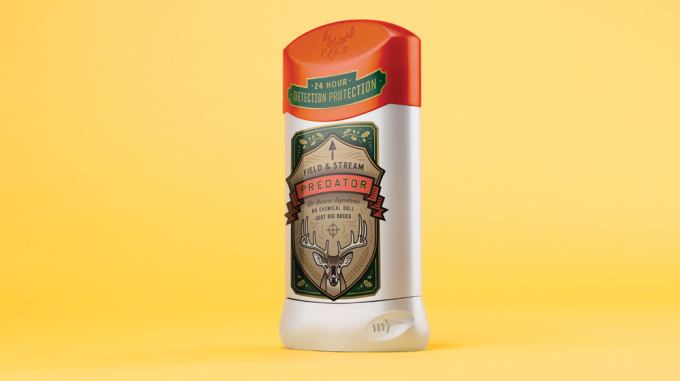
Think organic deodorant isn’t for you? It’s actually perfect for deer hunters, because it battles sweat and odor, and gives off no unnatural scent of its own. Buy ingredients in bulk and make three 2.5-ounce sticks—a season’s worth—for only $2 each. Here’s how.

scentstick

What You’ll Need

● 1⁄4 cup coconut oil
● 2 Tbsp. shea butter
● 2 Tbsp. cocoa butter
● 1⁄4 cup beeswax pellets
● 3 capsules 400-IU Vitamin E
● 21⁄4 tsp. baking soda
● 1⁄4 cup organic arrowroot powder
● 2 capsules Vitacost Probiotic 10-20

The Brew 
Heat a small saucepan of water and remove just before boiling. Combine coconut oil, shea butter, cocoa butter, and beeswax pellets in a mason jar, and place it in the hot water, double-boiler style, until melted. (Warning: If you’ve ever had a severe reaction to a bee sting, don’t handle beeswax.) Leave the jar in the bath and add the Vitamin E capsules, baking soda, arrowroot powder, and probiotics, which introduce good bacteria into the skin to battle the bad stuff that causes BO Stir gently until mixed well.

The Cure
Pour the warm mixture into empty, used stick-deodorant containers, new containers (sold online), or lined muffin tins, and let harden overnight. Then, perform your own sniff test: The only scent noticed is a trace of beeswax.

Follow our FISHING BLOG

WEB   RATES     FISH    HUNT    CABINS    PHOTOS
TESTIMONIALS    BROCHURE    HUNT BOOKLET

Enter your email address to subscribe to this blog and receive notifications of new posts by email.

← Back

Thank you for your response. ✨

Email Me....


Tags: , , , , , , ,

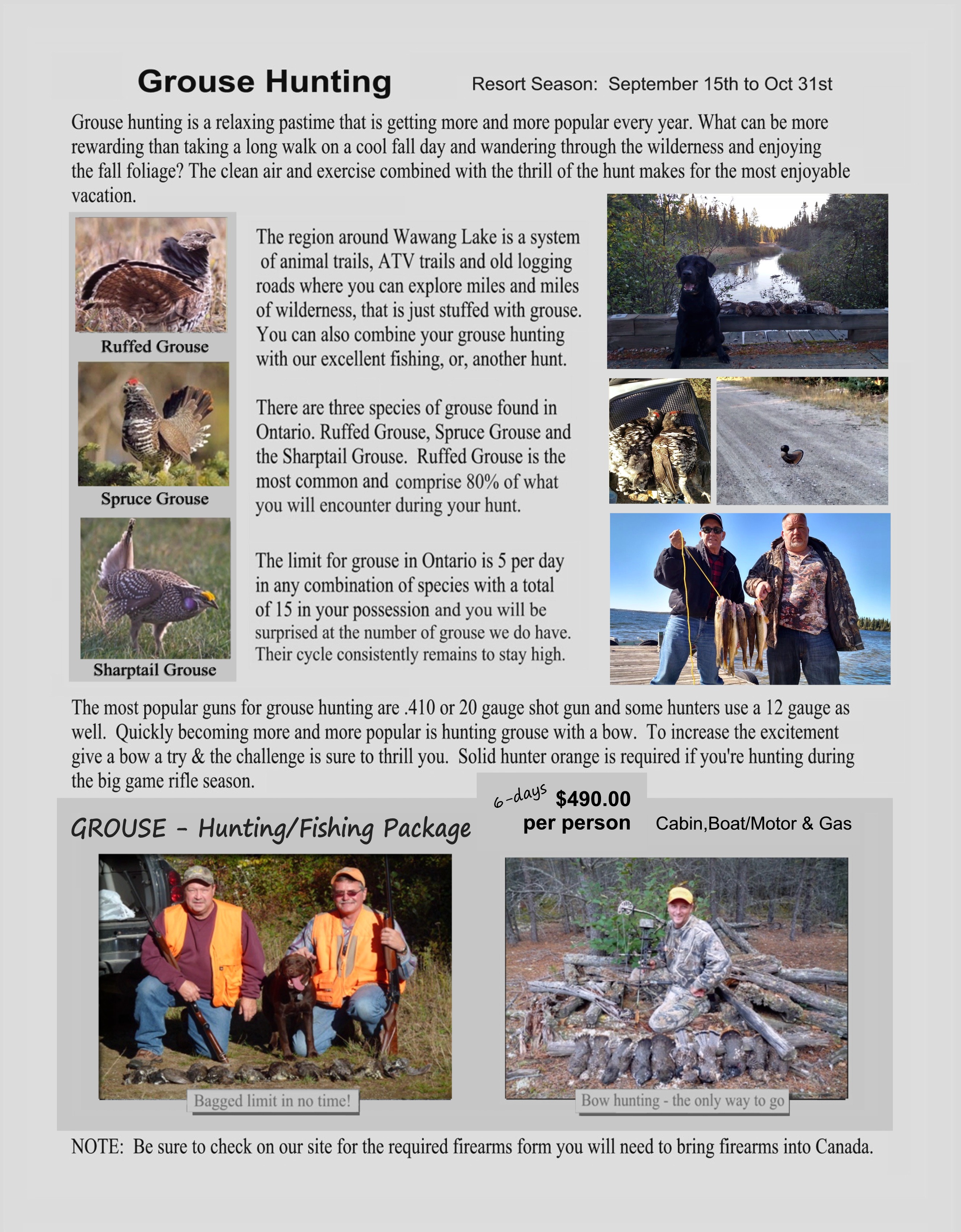
GROUSE Hunting Rates

Bookonline
pg 4 grouse

Bookonline

Follow our FISHING BLOG

WEB   RATES     FISH    HUNT    CABINS    PHOTOS
TESTIMONIALS    BROCHURE    HUNT BOOKLET

Enter your email address to subscribe to this blog and receive notifications of new posts by email.

← Back

Thank you for your response. ✨

Email Me....


Tags: , , , , , , , , ,

Muzzleloader For Beginners

Each year more hunters are discovering the thrill of muzzleloader hunting. There are several advantages to a muzzleloader hunt over traditional rifle hunting. In the Western states in particular, there are special muzzleloader seasons that traditionally coincide with the peak of the elk rut. Licenses are limited, so there are few hunters in the woods. Depending on the location and the skill of the caller, bulls can be bugled in to close ranges. All in all, it makes for a very exciting hunt.

2However, there is a learning curve to becoming a proficient muzzleloader hunter, and chances are, you’ll make every mistake in the book at least once. You’ll see some mighty fine bulls get away from a situation where it would be “meat in the pot” with a high-powered scoped rifle.

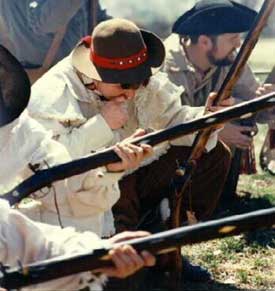
For those who are unfamiliar with muzzleloaders, allow me to explain. Muzzleloaders are the weapons that Davy Crockett and Daniel Boone carried afield with them during their bear hunts, Indian fights, and battles. Today there are two basic types of muzzleloaders used for hunting—primitive and in-line. Both are based upon the premise that the shooter pours powder down the end of the gunbarrel, then rams a slug or ball down on top of it to load the gun.

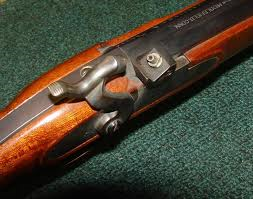
Primitive muzzleloader aficionados must choose between either a flintlock or a caplock ignition system. A flintlock is the more primitive technology, popular from the time of the Revolutionary War through the early 1800’s. The hammer of the gun holds a piece of flint wrapped in fine leather. Below the hammer is a frizzen, a swinging metal plate. Below the frizzen is the pan, into which the shooter pours a small amount of fine black powder. When the shooter pulls the trigger, the hammer strikes the frizzen, the frizzen folds back, and sparks are showered into the black powder in the pan. The ignited powder in the pan shoots a tongue of flame into the barrel of the gun via a small port. In turn, this flame ignites the black powder that has been poured into the barrel. The powder explodes, forcing the ball that has been seated on top of it to shoot out the barrel.

This process sounds cumbersome, and it is. Ignition is not instantaneous. Flintlock shooters have to hold steady for a second or more while an explosion occurs under their eyes. The possibility for error is very real.

cl
The more modern of the primitive technologies is the caplock design. Caplock muzzleloaders use the same basic concept of funneling flame into a port in the barrel, but the ignition is accomplished through a small nipple seated under the gun’s hammer. A small copper cap with a tiny bit of nitroglycerine is placed atop the nipple. When the hammer falls, the cap shoots a tiny spurt of flame through the nipple and into the port in the barrel, igniting the powder inside and shooting the ball out the barrel. Ignition is much more rapid than the flintlock.

In the last decade or two, several companies have noticed the resurgence of muzzleloading popularity. In response, they have crafted rifles that adhere to many states’ definitions of muzzleloader technology, i.e., a ball is rammed down the barrel and it can only be loaded with one round at a time. However, these are not primitive weapons. There are various ignition systems to discharge the load in the barrel, including shotgun primers and specially manufactured discs that are loaded directly behind the charge in the barrel. These are called “in-line” muzzleloaders. These rifles look more like high-powered rifles with a ramrod than something Daniel Boone might have carried on a bear hunt. Many in-line shooters use pelletized powder that can be dropped into the barrel in 50-grain increments and saboted copper-jacketed bullets that are built much like a high-powered rifle bullet with a plastic sleeve to allow ramming it down the barrel. Many of them are mounted with scopes and other optical sights.

Muzzleloader calibers range from old .36 and .40 caliber flintlock squirrel rifles to .68 caliber muskets used for warfare. Most flintlock and caplock guns today are .50 or .54 caliber, with an occasional .58 caliber rifle. The minimum size elk rifle is .50 caliber, and .54 certainly hits harder. The biggest in-line muzzleloaders are .50 caliber, with the occasional .45 caliber rifle used for deer and smaller game.

So, if you’re going muzzleloader hunting, you must make an immediate decision: is your goal simply to be in the woods with fewer people around, or would you like to stalk an animal with the additional challenge of carrying a rifle based on 1830’s technology? If your goal is to maximize your chances with the best available technology, then get your hands on an in-line muzzleloader. If the mystique of hunting like Jeremiah Johnson or John Colter appeals to you, then look into buying a caplock or flintlock rifle.
muzzleloader_guide_1

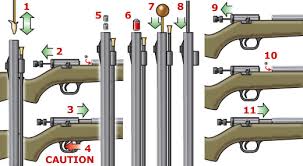
Whichever route you take, shooting a muzzleloader demands practice and patience. If you choose an in-line rifle, thinking that you can accurately shoot an animal out to 175 or 200 yards using pelletized powder, saboted bullets, and a scope, think again. First, you’re still obligated to use iron sights. Few riflemen these days are skilled enough to consistently hit targets at 200 yards with iron sights, and scopes are illegal in most Western states. Secondly, the data provided by the rifle manufacturers that suggest an 11-inch bullet drop at 200 yards are using saboted bullets and pelletized powder, both of which are illegal in most Western states. Thirdly, even if you can hit the kill zone on an elk at 200 yards with black powder and iron sights, the bullet will have lost much of its down-range energy and the chances of only wounding the elk are great. Combine that with a minimum 20-second reloading time (if you’re fast and your hands aren’t shaking with buck fever) and you’ve got a lose/lose situation. An elk can cover a tremendous amount of territory in 20 seconds, and I HATE tracking wounded elk. I recommend limiting your shots to a maximum range of 100 yards, no matter what rifle you’re carrying. After all, the whole point of muzzleloader hunting is to be more skilful hunter and to stalk within closer ranges.

The caplock Hawken. When I’m hunting with the caplock Hawken, you must have a game plan organized down to the finest detail.  Sight in the rifle until you can put three shots in a Skoal can at 100 yards.  Clean the barrel meticulously to rid it of the corrosive black powder fouling. Prepare the powder flask and possibles bag with measures of powder and bullets.  Practice speed loading at the range so that you can get off a quick (twenty second!) follow-up shot. Before setting out to hunt, load the rifle meticulously and check your gear.

imagesIIA88EY1

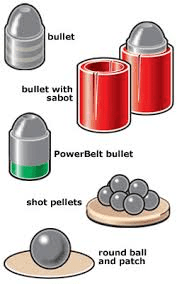
There are three basic kinds of bullets to use in a muzzleloader: the above-mentioned plastic-sleeved sabots, lead slugs, and lead round balls. Round balls are loaded by seating the ball on top of a greased patch of cloth on the muzzle, then ramming it home with the ramrod. Slugs are coated with grease, started down the muzzle, and then rammed home.
untitled

The problem with round balls is that they’re usually significantly lighter than a Minie-type slug, and don’t travel as far or hit as hard.   A typical .50-caliber round ball weighs 150 grains, while a typical buffalo bullet or Minie-type slug weighs 350-380 grains. I’ve shot a pile of elk using Thompson-Center 370-grain Maxi-ball slugs, and they each went down like they had been hit by a truck.

Keep in mind, however, that certain muzzleloader barrels are cut with a slow twist for shooting round balls, and others are rifled with a fast twist for shooting slugs. Make sure that you research the rifle and match it with the appropriate hunting load before you purchase so that your rifle is most accurate for the type of shooting you plan to do.imagesJN6SJJ3E

Most rifles have a “sweet spot” where they shoot very accurately with a certain load. Loading a rifle with more powder may indeed generate more muzzle velocity and knockdown power, but it may also cause it to lose its accuracy. For my caplock, I’ve learned that 90 grains of powder makes it shoot very accurately up to 100 yards and it still kicks pretty darned hard. It develops plenty of energy at that rate to dump an elk with one shot. The maximum load for most muzzleloaders is 120 grains of powder, though the experts say that black powder doesn’t explode like smokeless powder and you really can put a lot of powder in a gun with no adverse consequences. I still wouldn’t recommend it, though. Please note, however, that any amount of smokeless powder will explode almost any muzzleloader because of the high pressures generated.

Hunters can prevent their powder getting wet by covering the muzzle of the rifle with plastic wrap secured by a rubber band, and also by sealing the nipple’s connection to the breech of the gun with modeling putty.

If you think the possibility exists that your powder may have gotten wet, there are still ways to make the rifle go off. With a nipple wrench, you can remove the nipple, dig out a few grains of wet powder, replace it with a few grains of dry powder, and away you go again. If it won’t make a difference in your hunting, fire the gun. If it won’t fire, try several caps until it goes off. In humid places like Alabama, hunters all fire their rifles at the end of each day of hunting. Towards sunset, you can hear a ragged salute of gunfire as each hunter discharges his load.

images

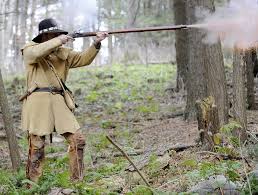
On an elk hunt, the excitement is in getting close to the game. A rutting bull usually has only one thing on his mind, and when a big bull responds to a bugle with a challenge of his own, well…it just doesn’t get more exciting than that. Armed like one of the mountain men of the 1830’s, knowing that you’ve got just one chance to put a killing shot in him, knowing that you’ve got to be patient and wait for the ideal shot, it makes hunting with a high-powered rifle seem just a little unfair.

Follow our FISHING BLOG

WEB   RATES     FISH    HUNT    CABINS    PHOTOS
TESTIMONIALS    BROCHURE    HUNT BOOKLET
Enter your email address to subscribe to this blog and receive notifications of new posts by email.

← Back

Thank you for your response. ✨

Email Me....


Tags: , , , , ,

Learn Rack Size By the Signs

You know what a buck rub looks like. You know that bigger bucks tend to rub bigger trees, and you’re probably aware that a buck travels in the direction facing the rubbed side of a tree. But there’s more to be gleaned from a savaged sapling. The right rub can tell you the size of a buck’s rack, whether he has any beauty points, and how to hunt him.

signofthetines
1. Time of Day
In hilly country, buck rubs that are visible when facing uphill were likely made in the morning as the buck traveled back to his high-ground bedding area. Likewise, the ones you see when looking downhill were probably made in the evening. Wherever feeding areas are open and obvious, such as crop fields, rubs that show when you’re facing into the woods are morning rubs. Their opposites are evening rubs.

2. Velvet Proof
Where there’s off-track ATV travel, it can be difficult to distinguish between a tree that’s been debarked by a buck and one that’s been scraped by a four-wheeler. During preseason and early-season scouting, look for shed velvet on the ground beneath the rub. You won’t always find it—velvet dries quickly and bucks sometimes eat it—but it’s a sure sign when it’s there.

3. Big Tree, Big Buck
This familiar rule of thumb is valid. But remember, there are plenty of exceptions. A mature buck with a narrow tip-to-tip spread or other unusual rack configuration may not be able to rub a large-diameter tree in the usual way.

4. High Rub, Big Buck
Though far less familiar, this is a good rule of thumb, too. A mature buck is taller and stronger and therefore tends to rub higher off the ground. Caveat: This only applies to fresh rubs in fall. Snowpack can affect rub height, giving you a false reading late in the season.

5. Non-typical Marks
Sticker points, split brow tines, and other odd pieces of bone commonly leave corresponding deep, off-center gouges on the tree trunk, branches, or adjacent trees, which can help you identify a specific buck.

6. Rack Width
Wherever you find rubs on multi trunked or closely clumped trees, look for scars or broken branches on saplings and shrubs adjacent to the main rub. They can tell you how wide a buck’s rack is.

7. Tine Length
Look on the underside of branches, too. A tall-tined buck may leave nicks or scraped bark on branches a foot or more above the main rub.

8. Color Clues
Keep an eye peeled for old rubs. A mixture of light-colored new rubs, gray weathered rubs, and often blackish healing-over rubs reveals a perennial favorite buck route and also suggests that the animal making them is now mature.

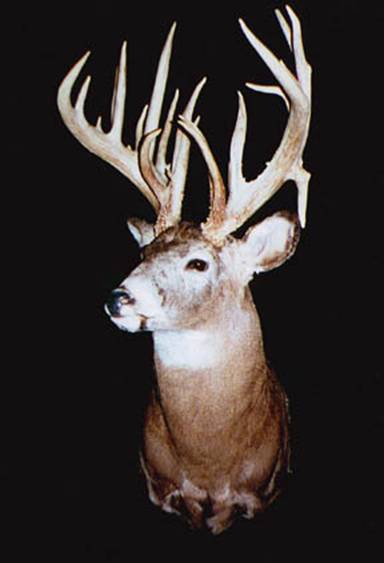
"The Beatty Buck" taken with a compound bow by Michael Beatty in Ohio in 2000. 40 Points on a 10 point mainframe

“The Beatty Buck” taken with a compound bow by Michael Beatty in Ohio in 2000. 40 Points on a 10 point mainframe

Follow our FISHING BLOG

WEB   RATES     FISH    HUNT    CABINS    PHOTOS
TESTIMONIALS    BROCHURE    HUNT BOOKLET

Enter your email address to subscribe to this blog and receive notifications of new posts by email.

← Back

Thank you for your response. ✨

Email Me....


Tags: , , , , ,

Shot-Gunning

One of the consolations of getting older is getting better at some things, like shooting a shotgun, for instance. On the other hand an older person would lose a game of one-on-one basketball or a footrace with 30-year-old person, and we all know who would win the shooting contest.

imagesAV9NQ04Y

What that means is, if you’re a shot-gunner, you probably have a list of days gone by you wish you had back for a do-over. You know, those days in the field when everything was perfect, the stars aligned, and . . .  you couldn’t hit a thing.

In those days we shot only traps for target practice and we hunted a lot of upland birds.  We were good shots on flushing game, but we had no clue how to lead birds when it came to pass-shooting. They are two very different shooting skills.

imagesA0ZB103T2We were setting up in a snowy field with a small spread of full-body decoys. Layout blinds hadn’t become universally popular yet and we were sitting in popup blinds that were square and about the size of a washing machine. Across the road from us was a mass of 50,000 geese that are called the Glob.  In the morning the whole Glob rose up in a seething ball, and as it whirled around like the flakes of a snow globe, strings of geese would split off from it on their way out to feed. At first, geese ignored our spread. The rest of our party grew impatient and went off to try somewhere else, leaving just one and the guide to guard the decoys.

Then the geese started flying over us. They didn’t want in to the decoys, but we were right on the flightline. The snows came in a near endless stream of ones, twos and little bunches about 35 yards up and directly over us. It didn’t even bother them if we left the lids of our popup blinds open. It was as perfect a setup as a pass-shooter could hope for.   We both shot as the guide, Dave, tried to coach on the right leads.  We went through the first box without cutting a feather and was into the second when finally a lone goose came by about ten feet off the ground. That shot had to made, and at the end of the morning, that one bird was all to show for the big pile of empty cartridges on the ground.

imagesE3PFZUR7

We had been on quite a few snow goose hunts and of course,  all of them unsuccessful. This was the best chance to shoot a bunch of them and can still see those geese clearly, flying at us in line. We yearn to go back and have that day over again, knowing what we know now.

Follow our FISHING BLOG

WEB   RATES     FISH    HUNT    CABINS    PHOTOS
TESTIMONIALS    BROCHURE    HUNT BOOKLET

Enter your email address to subscribe to this blog and receive notifications of new posts by email.

← Back

Thank you for your response. ✨

Email Me....


Tags: , , , , , ,

Geared Up: Cleaning your gun

Most know that cleaning a firearm is a necessity for ownership.  This not only helps prevent malfunction and missfire but can also help bullet path and accuracy.  What most don’t know is that the average gun owner does not clean their firearm correctly which can lead to major headaches down the road 🙂

Here are a few great tips to set you straight

Step 1: Clean barrel and metal parts
Step 1: Clean barrel and metal parts with good commercial solvent.
Step 2: Bore should be cleaned through breech end
Step 2: Bore should be cleaned through breech end where possible.
Step 3: Clean bore until dry patch comes through as clean
Step 3: Clean bore until dry patch comes through as clean as possible.
Step 4: Run oily patch through barrel
Step 4: Run oily patch through barrel.
Step 5: All metal parts should get light coat of oil
Step 5: All metal parts should get light coat of oil.
Step 6: Store in horizontal position
Step 6: Store in horizontal position, or with muzzle pointing down.
Step 7: After storage, run a clean patch through bore
Step 7: After storage, run a clean patch through bore before firing.
Step 8: Remove all excess grease and oil
Step 8: Remove all excess grease and oil.
Click to view pdf of this diagram
With clean gun in hand, enjoy the hunt!
Follow our FISHING BLOG

WEB   RATES     FISH    HUNT    CABINS    PHOTOS
TESTIMONIALS    BROCHURE    HUNT BOOKLET

Enter your email address to subscribe to this blog and receive notifications of new posts by email.

← Back

Thank you for your response. ✨

Email Me....


Tags: , , , , , , ,

How To Call Your Shots

Calling a shot simply means the marksman can tell where his bullet hit. This can be done by observing the bullet’s flight and impact or by knowing where the sights were the instant the firearm was triggered. There are two separate, but complementary, ways to call a shot.

shot

When shooting from non-prone positions, witnessing the impact of the bullet is difficult. The trick is to focus intently on the position of the sights and take a mental snapshot of where they were in relation to the target when the bullet was fired.

The best way to develop this skill is through dry-fire practice, coupled with live-fire practice shots at the range. When dry-firing, use a small target that is a challenge to keep the crosshairs on. Don’t fight the wobble of the sight, just smoothly break the shot as it covers the target. Remember where the crosshairs were when the trigger clicked. At the range, do this with every shot.

To actually see your bullet’s impact, you must pair this level of focus with excellent form. If you are square behind the rifle and not putting any pressure on the stock that will cause it to jump to the side under recoil, you’ll be able to watch the bullet and see where it hits.

Follow our FISHING BLOG

WEB   RATES     FISH    HUNT    CABINS    PHOTOS
TESTIMONIALS    BROCHURE    HUNT BOOKLET

Enter your email address to subscribe to this blog and receive notifications of new posts by email.

← Back

Thank you for your response. ✨

Email Me....


Tags: , , , , , , , ,

Pattern Birds for a Better Hunt

But you can save steps, increase your flush count, get more shots, and bag more birds if you use some common sense and follow the program below. Ruffed grouse utilize different parts of their habitat at different times of day. Here’s where to hunt and when.

Early Morning: Timber Seams
Don’t believe sleepyhead late-risers who rationalize that grouse hunting is better at midmorning. Hit the woods at sunrise, when the birds have just flown down and are moving out and laying down some scent for your dog. Even if you hunt without a canine, grouse are on the move and more vulnerable now.

DSC07479

Hunt seams and transitions between big, mature timber (where birds like to roost), open areas, and the thick brush where grouse spend the bulk of their day. Another good zone is the seam between conifers, such as pines or spruce, and hardwoods.

cranMidmorning: Feeding Zones
By the time the sun has been up for an hour, most grouse have arrived at their feeding area and are foraging hard. Know what the birds are eating: If you shoot a grouse, open up its crop and check inside. Then hunt that kind of feed.

Grouse love high bush cranberries, plus most any other juicy or freeze-dried fruit, such as crab apples. Abandoned orchards are grouse heaven. If there are oaks around, grouse will look for small acorns and pieces. Work the edges of open areas like hay meadows and abandoned fields, where grouse will hunt insects and pick up seeds. Logging roads and tote trails with clover are also prime.

Afternoon: Thick Stuff
After feeding, ruffs work their way into the thick stuff, where they will loaf and spend the day under cover. As a general rule, think “low” and/or “damp” now—along brooks, creeks, marshes, bogs, and seeps.

Head for stands of young aspen—trunks from buggy-whip-thick to fencepost diameter are about right. Grouse love tag alder thickets, especially where that cover butts up to timber or wetlands. Brushy tangles of witch hazel, raspberry canes, and multiflora rose hold birds. So do deadfalls. On windy days, kick around in the grassy edges of some of the thickest cover.

Late Afternoon: Feeding/Gritting Areas
By late afternoon, grouse are out feeding again, as well as pecking for grit.
Hit the kinds of feeding areas discussed above. Also work sandy lanes, dirt roads, and the edges of other open areas where birds pick up grit.

Evening: Transition Corridors
You can hunt grouse right up to sunset, and this is a great time to be out, when the birds are back on the move toward roosting areas. Research indicates that grouse prefer to roost in and under deciduous and evergreen trees and shrubs, in brush piles, and in leaf litter. When cold weather hits, grouse will snow roost unless conditions are unsuitable. Conifers are then the roost cover of choice. Try hunting the transitions between stands of young timber and thick brush, or young timber and mature trees. If the evening is windy, stick to lower ground where birds find protection and quiet.

Follow our FISHING BLOG

WEB   RATES     FISH    HUNT    CABINS    PHOTOS
TESTIMONIALS    BROCHURE    HUNT BOOKLET
Enter your email address to subscribe to this blog and receive notifications of new posts by email.

← Back

Thank you for your response. ✨

Email Me....


Tags: , , , , , , ,

Test your Accuracy with Ballistics Software

Ballistics calculators are indispensable tools for making hits on long-range targets, but they are only as accurate as the data they are fed. Many shooters fail to appreciate that some of the initial data input into these calculators are just good guesses and need to be tweaked based on trial-and-error experimentation in the field. However, spend time getting these four calculators dialed in, and you’ll be amazed at the improvement in your accuracy.

shoot1

Field Firing Solutions
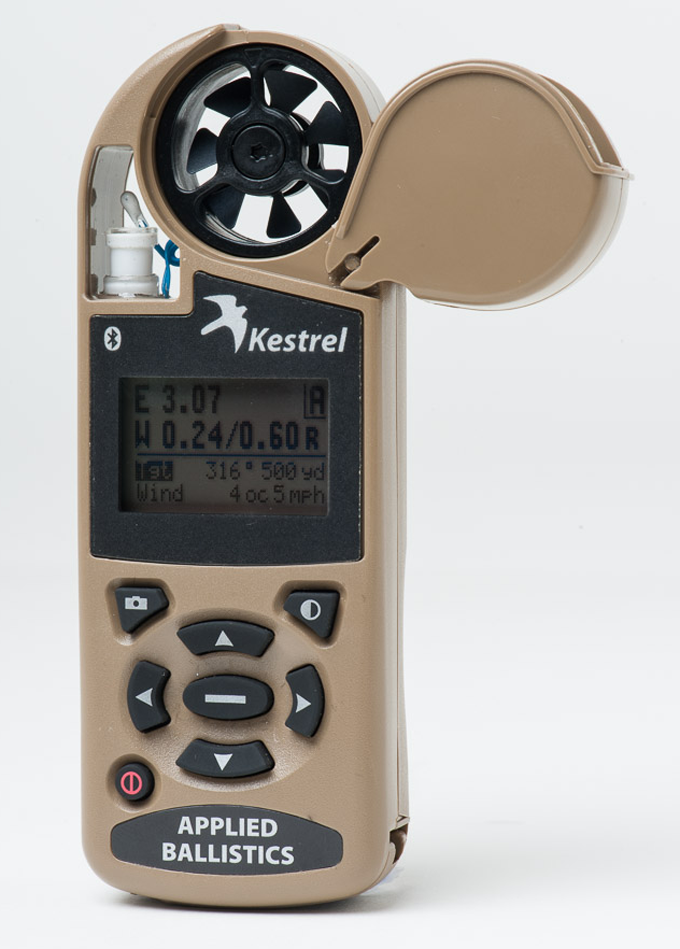
This sophisticated software program comes on an SD card and works with PDAs that run WM 5.0 or above. The program, called Delta V, can work with Bluetooth-enabled Kestrel units to incorporate environmental data at the shooter’s location. This is an advanced program that requires dedication to master, but it is the best on the market. ($395; lextalus.com)

Cold Bore
This software works on both Windows desktop computers and mobile devices running WM operating systems. This calculator doesn’t use a ballistic coefficient (BC) model, but rather one that employs a drag coefficient, which is more precise. The software can be purchased as a bundled package for both desktop and mobile, or individually for either platform. ($150, bundled; $85, individual; patagoniaballistics.com)

Applied Ballistics
This easy-to-use software was developed by Brian Litz, one of the foremost experts on long-range ballistics. It runs on both Android and iOS mobile devices. The calculator comes with a library containing hundreds of custom G1/G7 BC shootprofiles for various bullets. ($30; appliedballisticsllc.com)

JBM Ballistics
This web-based ballistics calculator is both very good and very free. It has a comprehensive library of existing loads, and allows the shooter to tweak the inputs to generate accurate firing solutions. (jbmballistics.com)

How Wind Affects Bullet Flight
Whereas judging a bullet’s drop at long-range is a science, correctly calculating the effect of wind is more of an art. Unseen eddies, sudden gusts, and funnels created by the terrain can all come into play, and it takes practice to pick up on these influences.

Usually, we’re limited to taking a single wind reading at the shooting position. But if we can ascertain only one wind value, that is the one to have. This is because the wind nearest the shooter has the greatest effect on the bullet’s path. Why? Once the projectile starts moving due to the wind, it keeps angling in that direction, even if the conditions are calm down range.

Conversely, if it is only windy down range, the bullet will move less since there is less time remaining in the bullet’s flight.

Follow our FISHING BLOG

WEB   RATES     FISH    HUNT    CABINS    PHOTOS
TESTIMONIALS    BROCHURE    HUNT BOOKLET

Enter your email address to subscribe to this blog and receive notifications of new posts by email.

← Back

Thank you for your response. ✨

Email Me....


Tags: , , ,

Master the Moon Phases

We all understand that hunting or fishing near sunrise or sunset is almost always the most productive. Well, the same goes for the moon, along with its effects of overhead and underfoot periods. Just as the sun has its yearly cycle of 365 days, the moon has a yearly cycle as well, but in much less time of 29.5 days.

61-4vQI-vTL__SY336_BO1,204,203,200_


The effects the lunar cycle has on tides and weather is well documented, these effects carry over into wildlife movements as proven through record harvest studies.

Next time you hear about a big buck being taken at noon or the next time you’re looking at trail camera pictures of the one you’re after, the chances are it was during one of these times; moonrise, moonset overhead or underfoot.

app

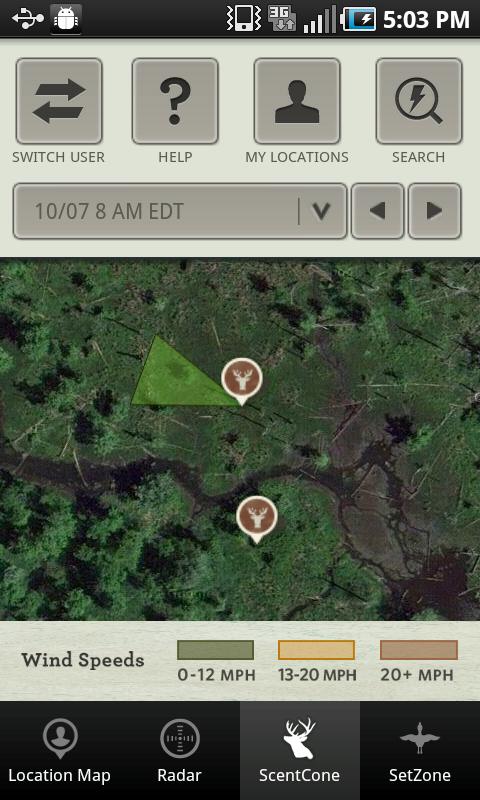
Hunting Weather App


We are entering a favorite hunting time, waxing gibbous through full moon; 10 a.m. until noon and 3 p.m. until dark are your best times to hunt during this moon phase.

It will be especially good if weather factors you’re following on co-operate. Track the weather where you hunt and fish at ACCUWEATHER

Follow our FISHING BLOG

WEB   RATES     FISH    HUNT    CABINS    PHOTOS
TESTIMONIALS    BROCHURE    HUNT BOOKLET

Enter your email address to subscribe to this blog and receive notifications of new posts by email.

← Back

Thank you for your response. ✨

Email Me....


Tags: , , , , , ,