RSS

Category Archives: black bear

Bear Baits – Consistency is Important

Consistent Baiting and Timing is Important
wawanglakebearbaitWe begin baiting two to three weeks prior to the hunters arrival as baiting is lucrative and can vary based on native food source availability, weather pattern and population.  If baiting is done too far in advance, bear can lose interest and become complacent.  The most impact for the hunter is when the food source is new and interesting yet dependable. The baits stations are checked regularly each day and documented as to its status:  whether it’s been hit or not.  This is also the ideal time to determine if the bait station has a sow with cubs or the size of the bear according to tracks.

wawanglakebearbait

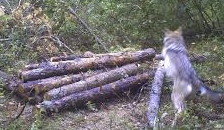
Other animals frequent the baits as well.

All the information collected will determine if the bait station will be suitable for the hunter or not. Stations with sows will continue to be baited in order to confine that they remain in that specific area so they don’t wander and disturb the more suitable bait stations held for the hunters.

What Do We Use
Bears are omnivorous and will scarf down just about anything from produce to pastries, bread and meat scraps. The key is to make sure your offerings have a strong odor – sometimes the more putrid the smell, the better … at least when it comes to attracting them as we don’t place this directly on the bait.   However, during the fall bear do not especially like this strong scent on the bait therefore we use these attractants to drag the area ensuring to lure the bear to the bait station where more delectable bread, pastries and leftover good scraps are waiting. Visiting bear that walk trails and roads we’ve dragged will beneficially establish their own scent trail to and from the bait as well luring in even more bear.

The Set Up
Our baits stations are naturally set up and made from logs and other forest fragments. These logs are large, very heavy and piled in a manner making them difficult for smaller animals to move.  When hunters walk into the bait and notice that logs have been tossed around they are certain that a bear hi the bait.

bait

Know the Rules
Study the Ontario hunting regulations.  Know what you can and can’t do, season dates, licensing guidelines, bring firearms into Canada.   We want our hunters to be comfortable while hunting in Ontario and it is also important to know that you will need to bring along a state/province license as proof of hunting experience to show the Ontario license issuer. Always ask if you don’t know that’s what we’re here for.

When to Sit Baits
Our hunters are required to bring their own tree stands.  This is not only for liability reasons, but, also because you will be more familiar with your own tree stand and the more at ease you are with equipment the more it will increase your odds – less to think about. Upon request we will setup ground stands for those that are not able to climb. If this is the case be sure to bring along a comfortable chair.  Evening hours are by far the proven time to encounter bear on the bait. This however is simply a higher percentage timeframe.   Approaching the bait cautiously is always a must due to the fact that hunters have stumbled upon bear contently feeding at all hours, including early morning and mid-day. You can bring along trail timers and cameras to satisfy your knowledge of the activity of your bait station.

Follow our FISHING BLOG

WEBSITE    RATES     FISH    HUNT    CABINS    PHOTOS
TESTIMONIALS    BROCHURE    HUNT BOOKLET

Enter your email address to subscribe to this blog and receive notifications of new posts by email.

← Back

Thank you for your response. ✨

Email Me....


Tags: , , , , , , , , ,

Bear Facts to Success

imagesS12UAEG6Simple Fact: The more effort you put into masking your scent, the bigger the Black Bears coming into your target zone will be.

All experienced Black Bear Outfitters have their little tricks to make their bear hunters hunt more enjoyable and also help with their success. If you are new to bear hunting you should know what you are up against. Every hunter wants a big trophy bear and this article should bring you a little closer to that goal, but remember, to thoroughly follow the advice of your outfitter, if you’ve chosen one, and, above all else:  DO NOT DEVIATE from the routine they have already established.

BLACK BEAR HUNT RATES

Black Bear hunting to the outfitter is about luring bears to a target zone for their hunting guests by baiting with food the bears like such as high-carbohydrate foods. Bread, pasta and other high starch content foods are rare in nature but it’s what the bears want most so they can quickly store fat for the winter. It’s also about setting up stands at strategic spots where big bears have been scouted. Black Bear hunting for the hunter is all about stealth, with the two biggest factors being sound and most of all, smell.

Black Bear’s Sense of Smell: Olfactory Receptors

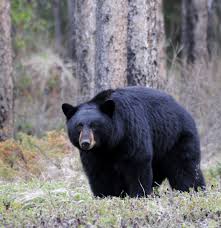
imagesN9DAOG1VThe Black Bear has the best sense on smell of any land walking mammal on Earth. It’s really hard for a human to comprehend how well a bear can smell as we basically have to stick our nose in the pot to smell the sauce. Comparing the amount of Olfactory Receptors between a human and a Black Bear is mind boggling.

Olfactory Receptors are microscopic bulbs on the end of nerves in a mammal’s nose. The more you have the better your sense of smell is.

  • Humans:
    6,000,000 Olfactory Receptors (6 million)
  • Blood Hounds:
    1,800,000,000 Olfactory Receptors (1.8 billion)
  • Black Bear:
    12,600,000,000,000 Olfactory Receptors (12.6 Trillion)

A Black Bear can smell 2100 times better than a human. In addition the Jacobson’s organ in their mouth can taste the air, adding to their brains perception. A mature Black Bear can smell your breakfast from 20 miles away if the wind is right. Big mature bears can smell better than smaller younger bears as their noses are larger and more developed. Bears also know what unnatural smells are and associate them with a human presence. This can explain why Black Bear hunters that are not fanatical about the way they smell rarely see big trophy bears. There are procedures you can do to minimize unnatural smells to keep the bears concentrating on the bait that the outfitter has put out for them.  It is wise to check with your outfitter before applying anything new to the bait station that they normally don’t use.

1) Before your bear hunting trip; pick a couple of sets of clothes that you will only wear at the tree stand while hunting. Wash your clothes with scent-free detergent and when done, run them though the wash twice again with no detergent so they are well rinsed. This will ensure your clothes are scent free. If you live in the city and have chlorinated city water then go to a pet store and buy a small bottle of Aquarium Water Conditioner and add ½ oz. to the last rinse cycle you do with your clothes. The water conditioner will neutralize the chlorine in the water and keep the chlorine smell out of your clothes. Remember, they can smell 2100 times better than you so don’t feel silly getting fanatical. Then pack the clothes in a plastic bag to keep them scent free. If you consistently use fabric softener in your clothes dryer it’s best to hang your clothes up to dry because residual clothes softener might go on your clothes. If you are a smoker, do not smoke while wearing your hunting clothes.

Before we go to the next points you should be aware that Black Bears love the smell of mint. If you go on a camping trip in any of Ontario’s provincial parks the wardens will tell you not to keep mint toothpaste or mint gum in your tent because the bears will smell it and go after it. The bears craving for mint can be used to your advantage.

2) Think Mint: Go to one of those hippy tree-hugger heath stores and buy mint soap. The morning before the hunt take a shower using the mint soap. Brush your teeth with mint toothpaste. Chew mint gum while in the tree stand and if you really want to go all the way, have a glass of mint tea before the hunt and even keep a few bags of mint tea in your pockets. This will help cover up any scent.

3) Smoking: If you are a smoker and you smoke in the tree stand you are basically wasting your time if you expect a big trophy bear to come within sight. Wind direction can give you a little luck but it’s not something you should count on. It’s best to wear a nicotine patch while in the tree stand and if you need to; chew mint gum to keep your mind off smoking. Remember to brush your teeth and wash your hands and stop smoking before you put your scent free hunting clothes on.   This would also apply to cigars and chewing tobacco as well.
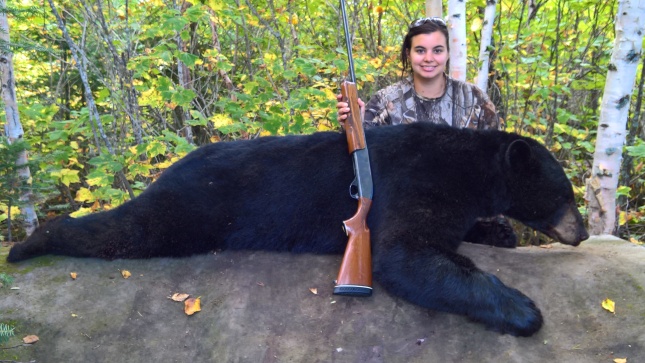
ashley


Black Bear Hearing:

The shape of Black Bear’s ears is mainly responsible for their great hearing. When detecting sound based on volume a bear’s hearing is about four times that of a human. However, a bear can hear a much broader frequency range; both higher and lower frequencies. Rubbing of cloth or twisting of your tree stand can produce sounds that the bear can hear and the hunter cannot. Big old male bears develop a crowned head and their ears move out to the sides giving them stereoscopic hearing, which allows them to pinpoint the origin of the sounds they hear. This is another reason why big old bears are harder to get.

With this in mind try to stay absolutely still. If you have to move; move very slowly. Take some nose drops before the hunt and if you have a cold or allergies. If your throat is dry and itchy bring some mint flavored lozenges with you. You can also oil the joints of your tree stand to make them a little quieter.

Black Bear Sight:

During the day a Black Bear basically has the same site as a human but older bears tend to be near sighted. As a result they cannot focus on things from a long distance. When one of an animal’s senses becomes diminished their brain rewires itself to compensate by making other senses more acute. This is known as neural placidity. As a bear gets older they become near sighted so the brain compensates by being more sensitive to color differentiation. If the bear sees colors it thinks are unnatural and he sees those colors move the game is up. Bears cannot see the same range of colors as a human. Hunter orange looks gray to them. But they can see dull reds and yellows as well into the blue/green cool color spectrum. This is why there are many different forms of camouflage clothing.

Picking the right Camouflage:

You need to talk to the outfitter when you book your hunt and ask what kind of plants will be at the tree stands. If the hunt is taking place in the southern range of Ontario’s bear hunting country during the fall you may have a mix of coniferous and deciduous trees, thus you will need a camouflage that represents pine needles, pine bark and colored fall foliage. If you are father north in an area with only pine trees you will need a camouflage that represents pine bark and pine needles, which means dark brown and green. You need to blend into the scenery so their bear cannot see any unnatural color pattern.

Black Bears are nocturnal. They have a reflective layer in the back of the eye called the tarpetum lucidum. Just because you can’t see them does not mean they cannot see you. Since dusk is the hottest bear hunting time it’s also when you should concentrate the most on being quiet and motionless.

Bear Size:

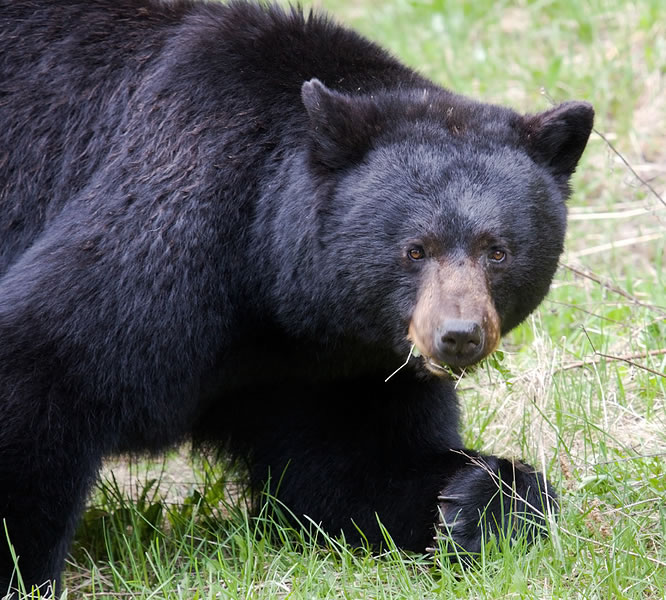
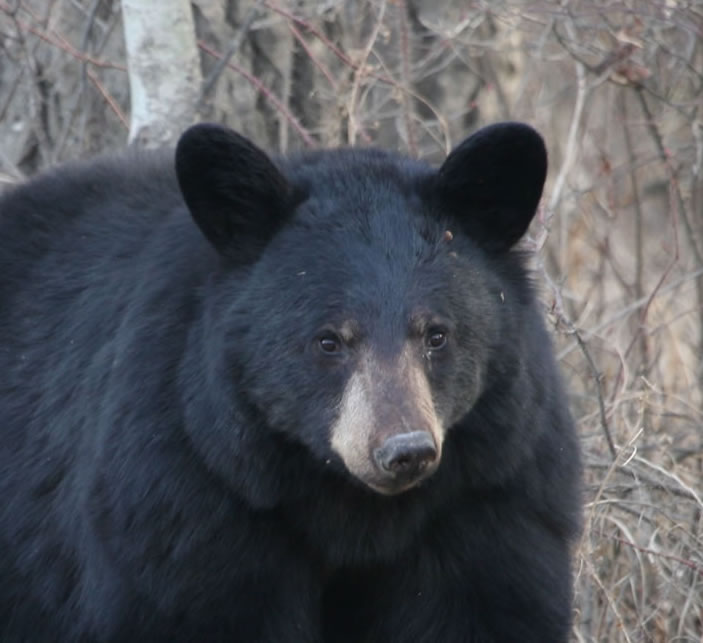
In most cases, big ears mean a smaller bear. A small ear is usually a bigger bear. Once a bear reaches three years old (approx. 100 lbs.), the bear starts to grow into its ears. The ears and eyes don’t grow as much as they do in the first three years. Sometimes if a bear has a hard year with food, the ears will look bigger because the bear is thinner. Read our article:  How to Size a Black Bear

Cubs:

When a sow is with cubs, 90% of the time the cubs are in the lead. The cubs will make more noise than a single bear. Most of the time, adult bears make little or no noise.

Sow:

You can’t shoot a sow with cubs in the Ontario spring hunt, and in the fall we continue this policy on our BMA – DO NOT SHOOT SOWS with cubs.. So make 100% sure you know what you are shooting at. Take a really good look around to make sure there are no cubs. A sow’s ears are usually closer together, as a male bear’s cranium grows wider on top and the ears look farther apart. They also look smaller, which is really an illusion.

These tips and techniques are just a guide line for some things to consider and think about. Ultimately the outfitter is the person you need to discuss the different factors with. Bear hunting can be quite different in different regions.

CHECK OUT OUR FISHING BLOG

WEBSITE    RATES     FISH    HUNT    CABINS    PHOTOS
TESTIMONIALS    BROCHURE    HUNT BOOKLET

Enter your email address to subscribe to this blog and receive notifications of new posts by email.

← Back

Thank you for your response. ✨

Email Me....


Tags: , , , , , , , , , ,

Black Bear Hunting at Wawang Lake

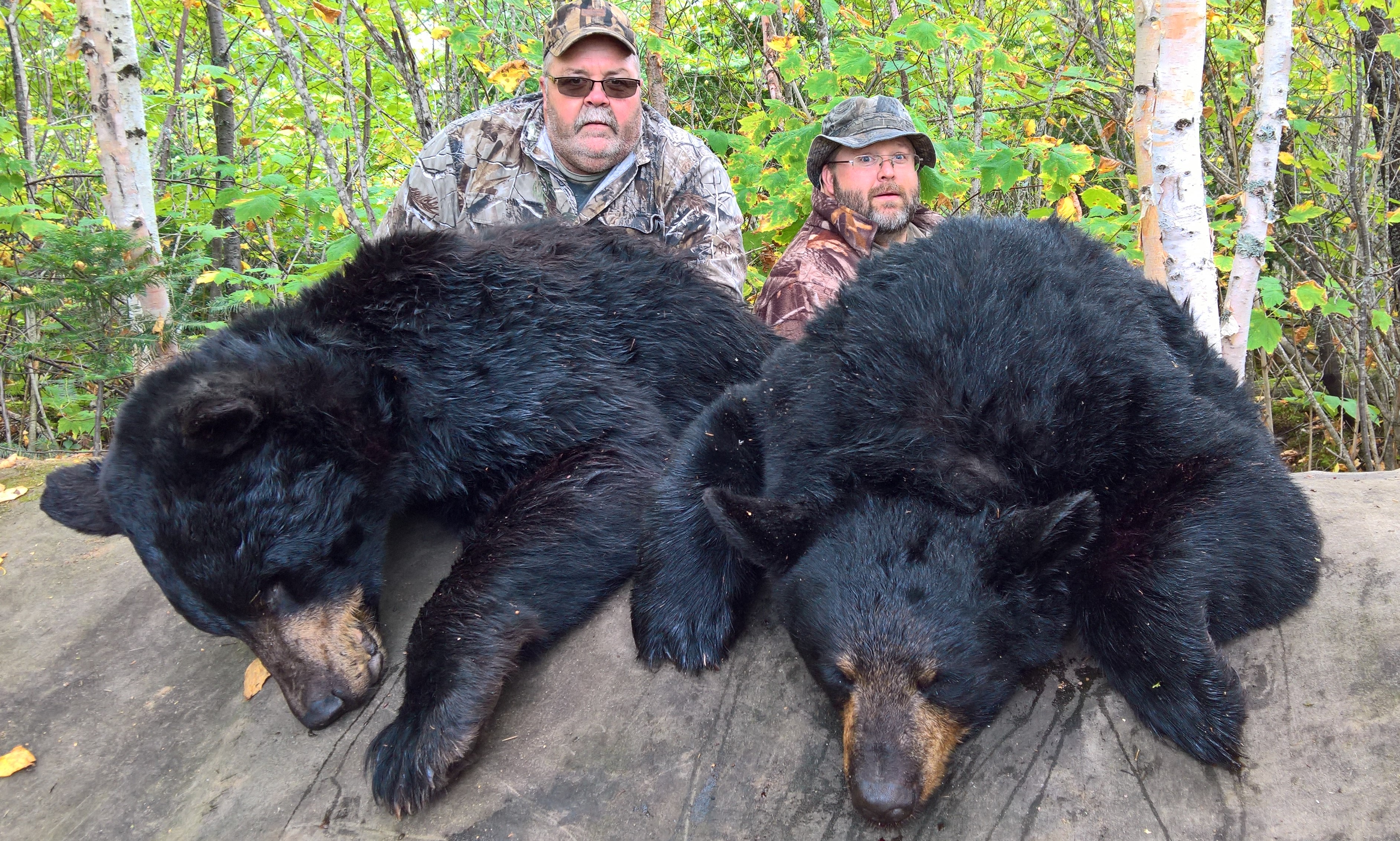
Working hard to provide active baits for each individual hunter is how we operate our hunts, and is what keeps our sportsmen coming back year after year.

BLACK BEAR HUNT RATES

2-bear


We have a very large bear hunt area (1,200 sq miles) surrounding our resort with a good healthy bear population due to years of black bear management.

Our hunts usually begin the Saturday on or after August 15th and continues for three weeks. Since we have consistently managed our bear population for several years we determine the number of hunters we will take according to the bear population we observe the previous year. We average 14 hunters per year.

What We Need to Know Upon booking, please inform us of each party members contact information, weapon (archery or gun) and will they be bringing a tree or ground stand. We need to know what type of weapon each member in the hunt party will be hunting with and whether they will be hunting from tree stand or would prefer a ground stand. More on our website

Days to Hunt (7 days) – Arrive Saturday and depart the following Saturday. Arrive Saturday and depart the following Saturday. If you would like to hunt upon your arrival, please check in between 11am-12pm (EST) and have all of your equipment prepared in advance (tree stands as assembled as possible, weapons/ammunition cased)

Transportation Requirements Since most of our baits are very remote, groups should anticipate driving their members to and from the sites. Most of our baits are road access and we provide private areas for each hunting group so that
dropping members off and picking them up will be systematic and easy. We advise to have 1 vehicle per every two hunters (three max) to ensure as little disruption to each party member’s hunt.

Rates
For a complete list of our Bear Hunt Rates please visit our website at:

BLACK BEAR HUNT RATES A $500.00  non-refundable deposit is required at the time of reservation to guarantee a hunt.

Other Costs Hunting license Canadian Funds (approximately). It’s MANDATORY to provide a current or prior hunting license FROM YOUR HOME STATE, or a hunter safety certificate, as qualification to obtain a hunting license in Ontario. Export Permit – $35.00 Canadian Funds (available at designated locations in the area)

Things to Remember Bring your own tree stand as we do not provide them. Comfortable climbers are the most popular and screw in peg types are acceptable, however, whatever type you bring bear in mind that our trees have very loose bark.

What is Included in our Bear Hunts

  • Modern Housekeeping Cottage for 7 nights
  • Pre-baited Sites & all baiting supplies during your stay & Freezer Service
  • Orientation trip to bait site
  • Experienced guide’s knowledge and advice (use it!)
  • Canadian Firearms Regulations All Firearms (does NOT include bows) being brought into Canada must be registered at the Canadian Customs at the time of entry into Canada. A one- year permit costs $50.00 Canadian, or there is a long term permit as well. If you would like further information, you can visit the Canadian Firearms Website through the link on our website or call toll free, 1-800-731-4000

Passport Cards (similar to a Passport) Information can be obtained at this website: http://www.travel.state.gov/passport/ppt_card/ppt_card_3926.html

Our season begins Saturday on or after August 15th

For further information, or, to book your next bear hunt please contact us at:
1-888-534-9217 or EMAIL

 WEBSITE    RATES     FISH    HUNT    CABINS    PHOTOS
TESTIMONIALS    BROCHURE    HUNT BOOKLET

Enter your email address to subscribe to this blog and receive notifications of new posts by email.

← Back

Thank you for your response. ✨

Email Me....


Tags: , , , , , , , , , ,

Check Out Our Hunt Booklet!

 Working hard to provide quality hunts for each individual  hunter
is how we operate our hunts and is what keeps  our hunters coming back year after year.

Hunt Booklet Cover

Follow our FISHING BLOG

WEB   RATES     FISH    HUNT    CABINS    PHOTOS
TESTIMONIALS    BROCHURE    HUNT BOOKLET

Enter your email address to subscribe to this blog and receive notifications of new posts by email.

← Back

Thank you for your response. ✨

Email Me....


Leave a comment

Posted by on September 7, 2016 in black bear, grouse, Wawang Lake Resort, wolf


Tags: , , , , ,

Field Judging Black Bear

Here is an excerpt from a fantastic article written by Carl of BCHuntingBlog.  This is always a popular question we are asked and this article gives the same advice (with photos) as we have given for many decades 🙂

Field judging Black Bears can sometimes be difficult even for the most experienced of bear hunters.  The animal you are judging is usually completely black aside from color phase bears, they have thick fur and the shadows they create can be deceiving.  With that said there are a few methods you can have at your disposal to help you determine if the bear is a shooter or not.

So how can you improve your skills at judging trophy black bear size in the field?

Let’s Get Started.

Check Out The Bears Head:

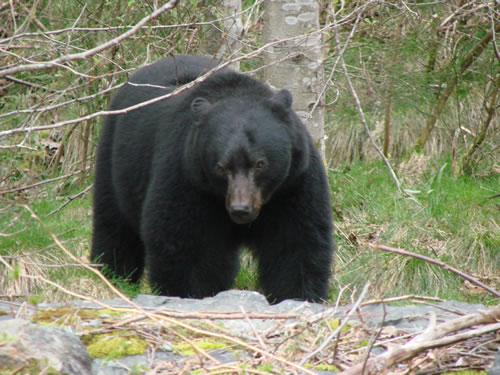
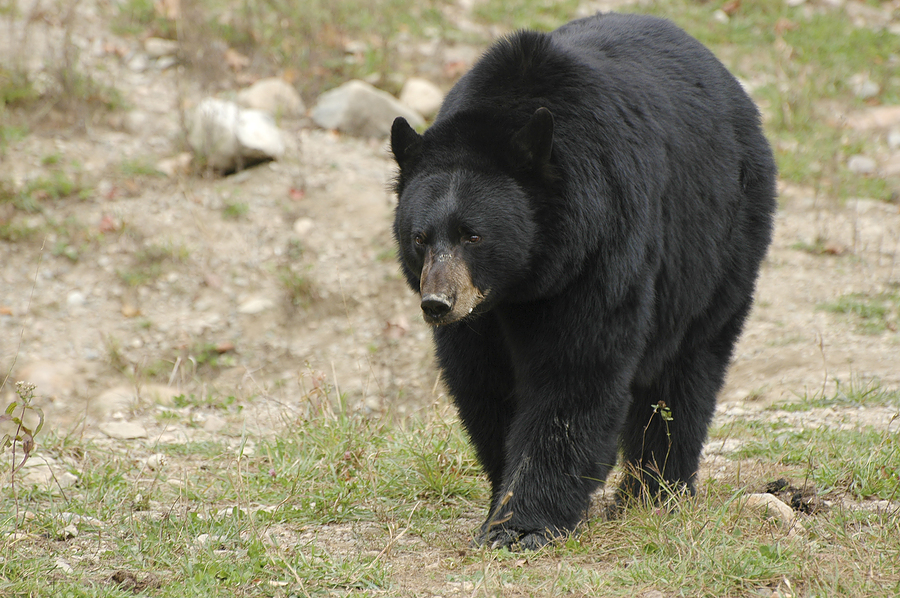
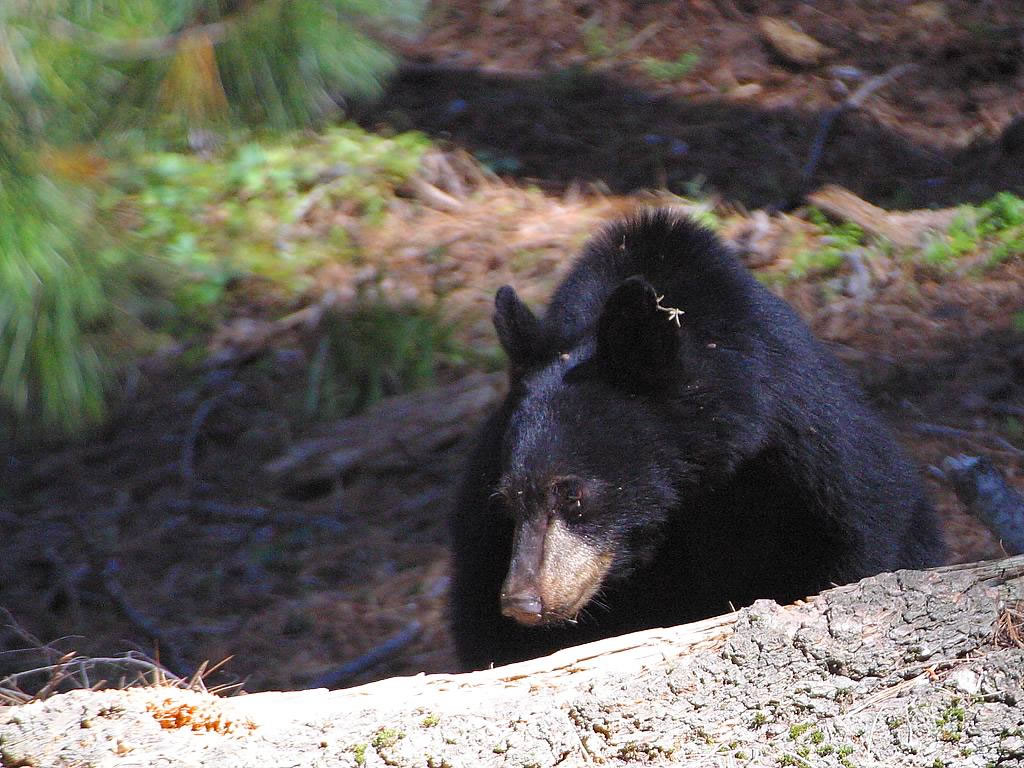
Big Bears:  Will have a very large, blocky looking head.  Their ears will look small, and almost off to the side of their skull a little.  On really big boars you might even see a crease down the center of their forehead, if that’s the case, it’s a good bear.  Other features to look for on a bears head would be scarring around the face, boars have ferocious fights, so it’s not uncommon for them to have plenty of battle scars around their muzzle, eyes and ears and these are helpful clues.

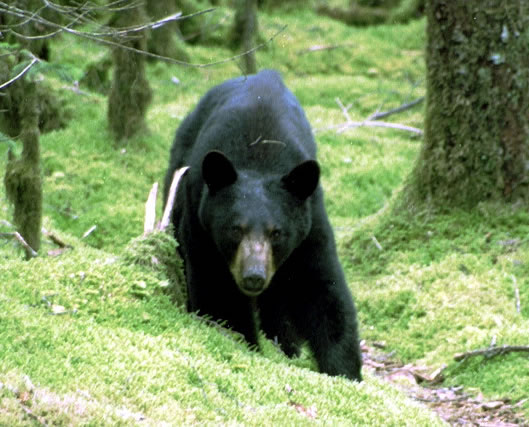
Small Bears:  Will have a small, narrow head, almost dog like.  Their ears will appear to be much larger and defined.  Almost like “Mickey Mouse” is a common description among many experienced bear hunters.

Check Out The Bears Behavior:

Big Bears:  Big dominant boars, behave like big dominant boars.  And they usually won’t be in much of a hurry unless they know you’re there and you’ve spooked him.  When big boars walk they will sometimes have a big swagger to their stride, much more so then a bear who’s on the submissive end of the spectrum.  When I shot my first Island Black Bear we watched him stand up on two legs and scratch his back on a tree for a couple minutes, without a care in the world.  When big boars decide to move they move deliberately, there is no indecision in their movements which can be noticed in younger, startled and confused bears.  Because they are dominant, the big boars will usually have a bit of a schedule and will often be caught feeding in the same places, at the same times of day.  They can do this because they are the boss!

Small Bears:  Are very cautious, they will get out of  your way quickly (so will a big old boar too if he’s spooked).  They will usually always be more alert then a dominant bear because they have to be, or they could become dinner.  Smaller bears will often seek the safety of a tree when in trouble or they just won’t stop running until they hit the coast.  When small bears run, they will appear much more agile then a larger bear.  They will will look more like a big dog running, then a lumbering old boar.

*Tip – When you’re observing a bear, and he/she doesn’t appear to be spooked, sit there and watch them for 1/2 hour or so.  Bears are pretty fascinating creatures when you watch them do their thing, and by observing you’ll learn more about them and that makes the hunt more fun.

Check Out The Bears Body:

Big Bears:  Sometimes the big boys are called “belly draggers” for a reason, and it’s possible for our bears to get this big.  Big Boars may appear to be so big, you can’t see underneath their body when they are moving around.  That’s a big bear!  If the bear you’re looking at appears to have long legs, it’s probably because he has a smaller body in proportion.  Big bears will have very muscular looking arms and legs, especially their front shoulders/neck area.

Small Bears:  Can you picture the size of a really large breed dog? OK.  That’s about the size of an “average” Island Black Bear.  An average Island Bear will weigh 150-250lbs.  An large 6′+ boar could likely weigh 300+ and the big bears do look much different as you can see in the photos.

What Are Some Additional Signs Of A Big Bear?

If it’s a big bear you’re after then you need to pay attention to the sign you see around you.  Tracks and Scat are very good indicators as to the potential size of a bear, and will let you know if a particular bear is frequenting an area.

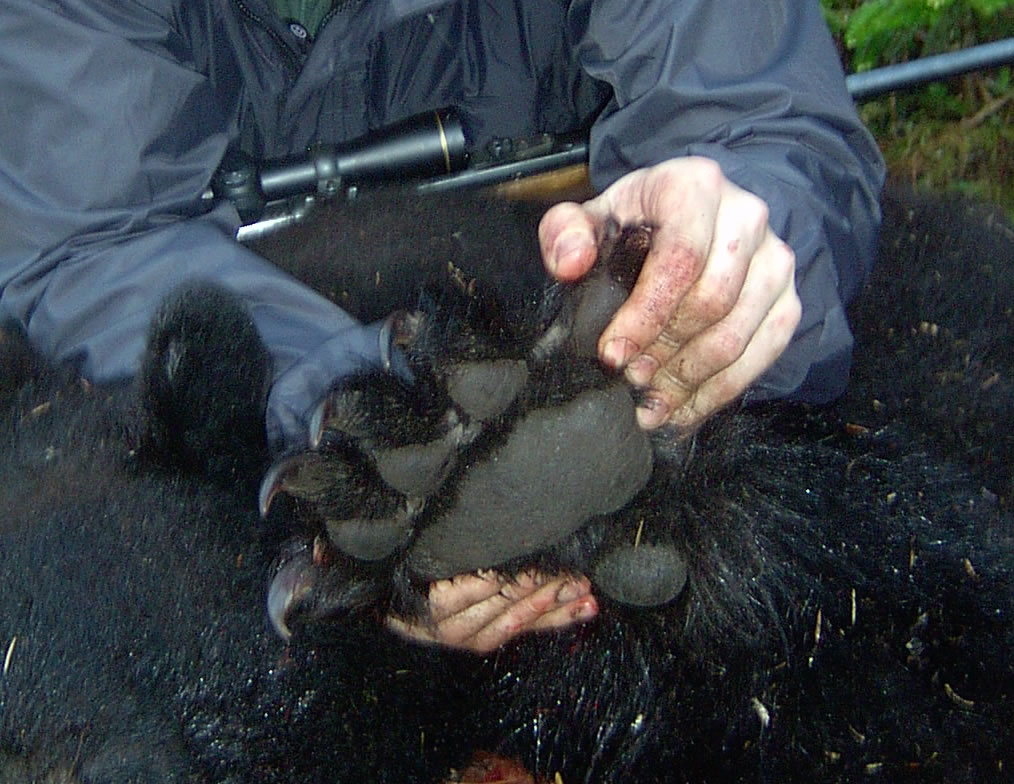
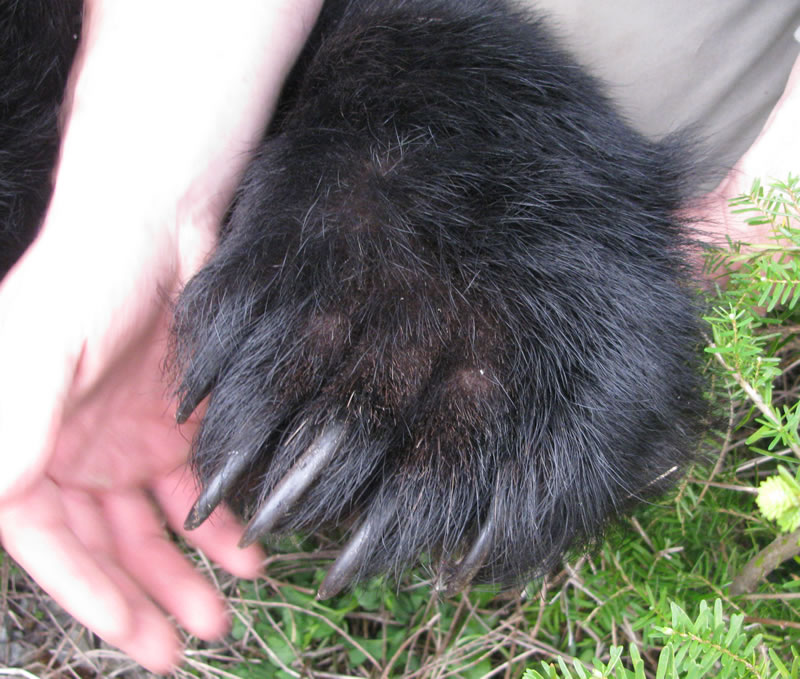
Judging Bear Size From Tracks:

This method was shown to me by my Father who was a big game guide for nearly 30 years.  It has since been shown to me by several taxidermists and many more experienced bear hunters than I so I believe in this method.

If you can find fresh bear tracks in an area, maybe mud or soft sand (common where we hunt spring bear on the Island) measure the distance across the front pad and simply add 1.  This will give you a rough “square” of the bear.   So if you measure the bear track and it came out at 5″inches across, you would add 1 and could guesstimate that bear was roughly a 6′ foot bear.

I have tried this method on many of our harvested black bears and I have to say it’s pretty damn close!  The only problem with this method is you need to find the bear that left the track!

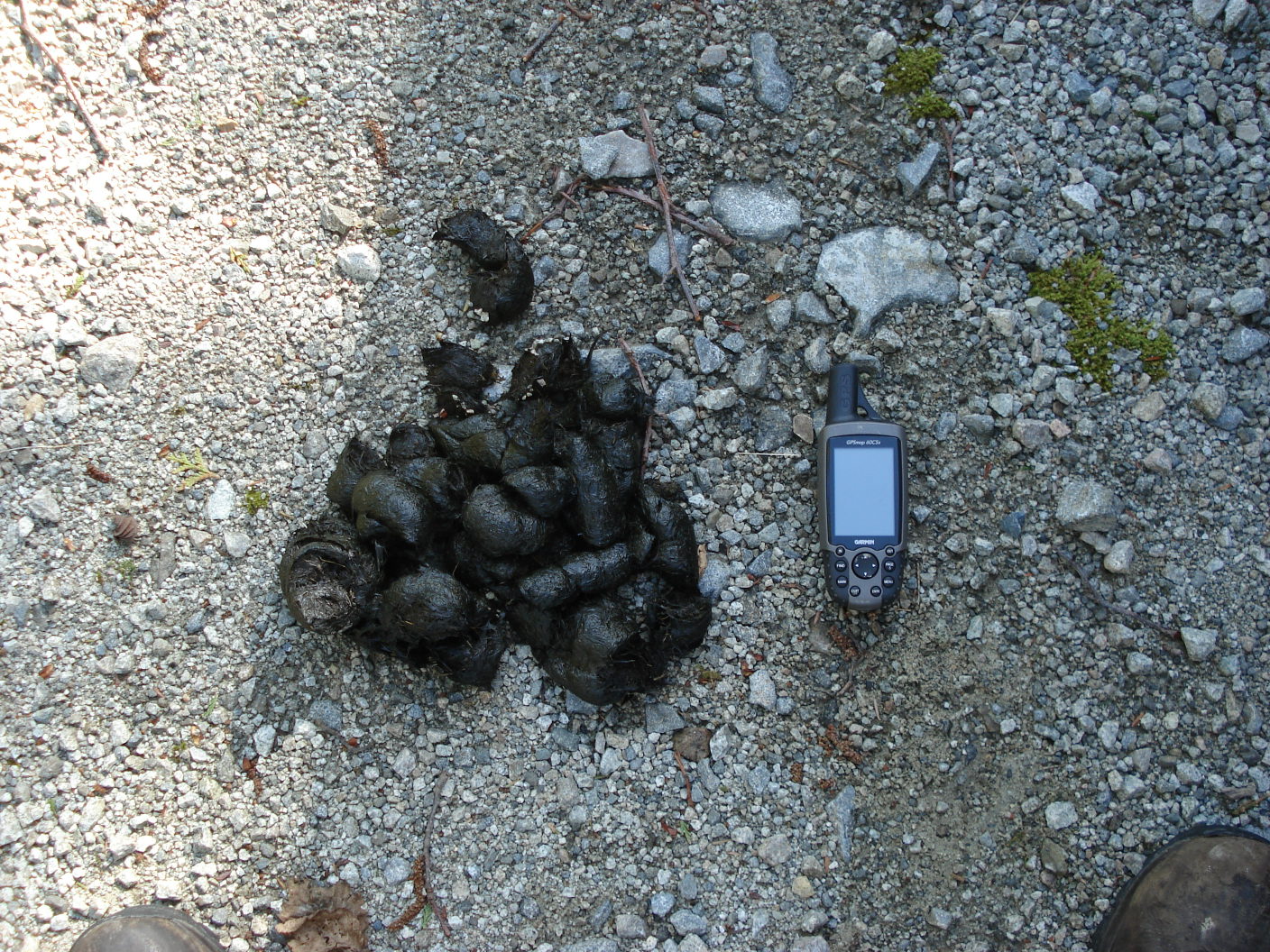
Judging Bear Size From Scat:

Spend a couple days bear hunting and you’ll observe several dozen or so piles of bear scat scattered across the road.  Not only can they help you see what the bears are eating but they can give you a pretty good indicator as to the size of the bear that left it.  Here’s a tip for you.  It’s not necessarily the size of the pile… It’s the diameter of the nuggets!  A really BIG bear has a really big butt and it’s not uncommon for them to leave scat the diameter of a beer can behind!  If you look at 10 piles of bear scat and then come across the one left by the big kahuna trust me… You’ll Know!

If you discover an area that has BIG tracks and some BIG (large diameter) scat, then it might be worth hunting that area a little harder.  Big Island Black Bears don’t have enormous ranges and unless you’ve spooked them heavily they will keep coming back to the same places to feed.

Hopefully you found article helpful and through experience you’ll become a much better bear hunter.  Because of their abundance it’s pretty easy to rack up experience if you’ve got the time to put a couple weekends in every year and then the patience to watch and observe what goes on around you.  Pay attention to the sign, and have a good time out there!

WEBSITE    RATES     FISH    HUNT    CABINS    PHOTOS
TESTIMONIALS    BROCHURE    HUNT BOOKLET

Enter your email address to subscribe to this blog and receive notifications of new posts by email.

← Back

Thank you for your response. ✨

Email Me....


Tags: , , , ,

Blueberries – a Critical Food for Black Bear

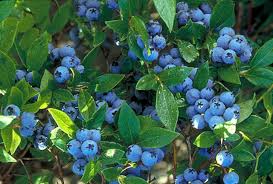
imagesB4EBB1P8 Blueberries are an important food source throughout the black bear range.  The most commonly eaten berries in our area of northwestern Ontario are blueberries and raspberries.   Many other berries are eaten, but they have shorter seasons, are scarce, or are less preferred.

The period when blueberries  are abundant in our area is short & mainly in August-making that period critically important in the black bear’s annual cycle of events.  Efficient feeding during that time is critically important to winter survival, growth, and reproductive success.  Researchers found that bears in NW Ontario end mating activities before the critical feeding period and focus on feeding for the remainder of the summer.

Black bears are efficient berry-eaters, consuming up to 30,000 berries a day in a good year.  They gather berries quickly, using their sensitive, mobile lips and swallowing them whole.  The berries enter a two-part stomach, which grinds the pulp off the seeds.


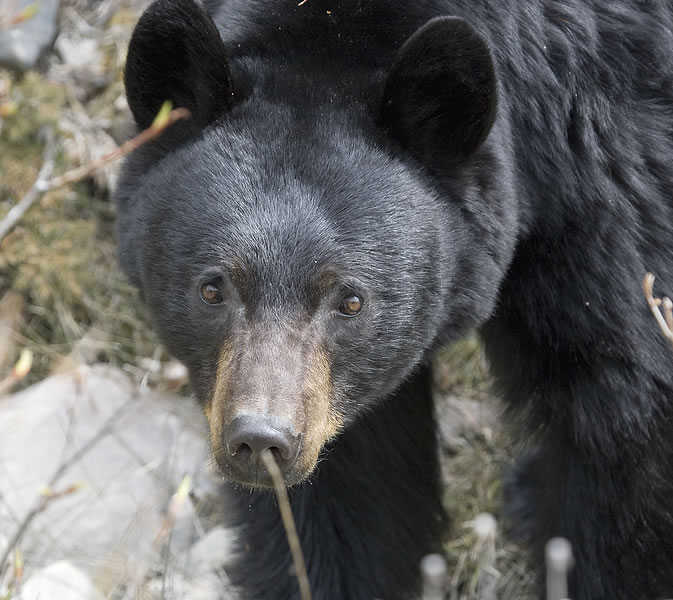
imagesP1Y6BVCSThe seeds pass through the digestive tract unbroken and able to germinate, making black bears important seed dispersers.  Each summer, they spread the seeds of their favorite berries all over their home ranges.

Black Bear around Wawang Lake gain weight most rapidly during July and August when berries are abundant.  When the berries run out in September, there is little else to eat.  The bear usually seek out their dens in September or October.   The longer period of food abundance enables bears to achieve more growth and reach maturity more quickly than bear.  Bear in NW Ontario typically produce their first litters at 4 to 5 years of age.

Berries contain anti-oxidants, and the seeds of some species contain vitamin B-17, considered an anti-cancer compound by some scientists.  Although cancer occurs in captive bear, it has never been reported in wild bear.

RECIPES

blueberry pancakes wawang lake

Blueberry Pancakes


GLUTEN FREE BLUEBERRY PIE

Gluten FREE Blueberry Pie


Follow our FISHING BLOG

WEBSITE    RATES     FISH    HUNT    CABINS    PHOTOS
TESTIMONIALS    BROCHURE    HUNT BOOKLET

Enter your email address to subscribe to this blog and receive notifications of new posts by email.

← Back

Thank you for your response. ✨

Email Me....


Tags: , , , , , , , ,

Stalking Black Bear

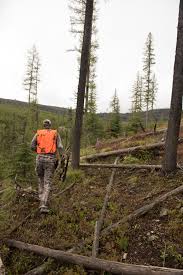
imagesPQEZ37S9If you’re determined to fill your tag and you’re up for a truly heart-pounding hunt, try one of these two killer ground setups. There are times when you have to get on the ground to arrow a big bear. Either the best ambush point offers no suitable place to hang a tree stand or the biggest bear is wise to the stand you’ve already hung. In both cases, the solution is to get on the bear’s level (at your own risk, of course). If you’re determined to fill your tag and you’re up for a truly heart-pounding hunt, try one of these two killer ground setups.

1) Smoke Him Out As the days begin to shorten in autumn, bears enter a stage called hyper­phagia in which they gorge themselves in advance of hibernation, often feeding all day long, putting on 2 or 3 pounds a day. Any major feeding area, therefore, is a great place to find bears now. Trouble is, many of their favorite spots, including clear-cuts, apple orchards, blueberry bogs, and raspberry and blackberry thickets, lack suitable stand trees. To take a bear in a place like this, the first thing you need to do is scout the area for scat, tracks, and traces of fur to tell you where the bruin is doing most of its feeding. Once you figure that out, pick an open area where you can get a shot, move crosswind about 20 paces, and make a natural blind. Try to choose a spot that already has good cover, such as a blow down, stump, or thicket, as bears are acutely aware of changes in their feeding areas. imagesAI2YGGR2Walk back out to the opening you chose earlier and fire up a couple of scent sticks, which are legal in many areas that don’t allow bait (be sure to check local regulations). Now just sneak back into your hideout and wait for a hungry bear to show up. Theoretically, the approaching bruin’s attention will be locked on the sweet-smelling smoke—not on you quivering in the shadows—and you’ll be able to keep it together long enough to take the shot.

2) Back Off the Bait The majority of black bear bait sites feature a permanent (or at least long-term) tree stand that is situated downwind and overlooking the goodies. The biggest bears, however, often know not only where that tree stand is, but whether or not a hunter is in it. Circling downwind of the stand to check with his nose and often his eyes, a big boar will not hit the bait until he’s absolutely certain the perch is unoccupied. And that means, if you’re willing to go to the ground, you can use the stand as a decoy.

First look for the faint trail that curves through the undergrowth downwind of the treestand; this usually lies just within sight of the bait barrel. Broken plant stems, paw impressions in the moss, and freshly snapped branches should be all the evidence you need, but you may also see obvious tracks or scat. Once you’ve determined the bear’s route, look for a natural hideaway downwind of it and get comfortable. I should probably warn you: You may be afraid as that big boar pads in to investigate, but wait for him to walk past you, and then take the quartering-away shot.

Follow our FISHING BLOG

WEBSITE    RATES     FISH    HUNT    CABINS    PHOTOS
TESTIMONIALS    BROCHURE    HUNT BOOKLET

Enter your email address to subscribe to this blog and receive notifications of new posts by email.

← Back

Thank you for your response. ✨

Email Me....


Tags: , , , , , ,

How to Size a Black Bear

……… WHEN SIZING UP A BEAR

WawangLakeBear
A big bear swaggers and walks with attitude. He doesn’t jump at every sound like a small bear will.  A big bear doesn’t have to; he believes he’s got nothing to fear. Once you’ve spotted your bear on the bait site, it’s time to get serious about analyzing how that bear is behaving.

It is important to note that long before you judge the size of the bear, you must judge the sex of that bear and here are some things to take into consideration:

A big, old sow will have all, or more correctly, almost all of the physical characteristics of a big, old boar. She’ll have the nasty looking face that’s seen one too many years in the ring, the potbelly and the sway back.

Watch to see if the bear stands on his hind legs and rubs his back on a tree, that’s a boar.  If it walks along and straddles small trees, wiping its scent on that tree, it’s a boar.  If it stands up and breaks saplings over its shoulder, it’s a boar.  If it encounters another bear and gives chase, it’s a boar and if it is following a smaller bear, it’s a boar.

SCALE:  There is one last general appearance tip to judging black bear that makes the top three in importance, and that is scale.   A big bear looks big . . . but so does a closer, smaller bear.   Here’s a help tip on how to gauge more accurately.  If the bear is 150 yards away but the hunter thinks the bear is 200 yards away, the hunter will overestimate the bear’s relative size by somewhere near 25 percent.   In other words, the hunter is in for a serious case of ground shrink when he walks up to his bear.  TIP:  Let the bear get as close to you as possible and preferably on the bait itself.   The closer the bear, the less chance there is of misjudging the distance to relative size.

SPECIFIC TIPS FOR JUDGING BLACK BEARS: If the bear fails any one of the above general conditions, then it’s advisable to pass up on it or let the bear walk. It’s tough and you could be wrong, but at least there isn’t a dead small bear lying on the ground.   Call it a personal aversion to guilt.

BODY SHAPE:    Bigger bear are older bears, and like most of us, they don’t have the svelte bodies they once did. They tend to look “heavy” and out of shape. Remember, they monopolize the best feed and habitat, and therefore exert less energy to live.

HEAD SHAPE:   A big bear (boar) will have a deeper, wider and longer snout than a smaller bear or a female. His ears will appear to be wide apart and small. If he is aware of you and looking your way, his ears won’t stand up on top of his head like a dog’s ears, they’ll seem to be aimed out to the side of his head. A big bear will have well developed “bulging” muscles on the top of his head.


WawangBear2

LEGS:   A big bear will have massively developed front shoulders. His shoulders will look big and burly. A sow’s wrist will pinch in directly above the foot. Not so with a boar. The lower forearm, wrist and the foot on a big boar are all the same width. A big bear often appears to have shorter legs because the body is so much thicker, but keep in mind that the best-scoring bears for the records book are often the lankier looking, longer-bodied bears.

There are bear that have meatier heads; bear that look great and are great trophies, but that don’t score well.  There are others that have short skulls, block- headed beasts that look impressive, but that don’t score well at all and there are lanky, skinny bears with donkey faces that score like the devil, but that a hunter seriously looking for  a  records book bear wouldn’t walk across the street for. Black bear morphology is just too darn diversified to make a science out of judging.

The best way to hunt for a record boar is to simply shoot the bear that looks good to you and that hopefully  you’ll  appreciate all the time and effort you put in for the hunt.  If it’s got a nice hide, be happy with your animal. If it has long claws and weighs a ton, good for you and congratulations. If it isn’t as big as  you’d like, don’t fret, you’re not alone and the rug on your wall will still look great. If it happens to be one of those rare few bears that has grown a skull that qualifies for the record books, thank your guide for the good fortune that made that bear come to the bait site.

To easily judge, remember:

  • Check out the ear size in relation to the head
  • Mickey Mouse ears means a small bear.
  • Watch to see if the belly is low to the ground
  • Legs that appear short means big bear.

Watch the bear’s behavior around the bait – small bears will be skittish and afraid of a larger bruin in the area.

Look for a log around the bait and use it as a reference, check to see the length and height of the log before climbing into your stand. When the bear enters the bait site use the size of the log to help determine the overall size of the bear.

SKULL MEASURING

WawangSkull

Hope this information helps develop your judging skill on your next hunt, and,  good luck out in the field.

For further information, or, to book your next bear hunt please contact us at:
1-888-534-9217 or EMAIL

 WEBSITE    RATES     FISH    HUNT    CABINS    PHOTOS
TESTIMONIALS    BROCHURE    HUNT BOOKLET

Enter your email address to subscribe to this blog and receive notifications of new posts by email.

← Back

Thank you for your response. ✨

Email Me....


Tags: , , , , , , , , , ,

How to Size a Black Bear

……… WHEN SIZING UP A BEAR

WawangLakeBear
A big bear swaggers and walks with attitude. He doesn’t jump at every sound like a small bear will.  A big bear doesn’t have to; he believes he’s got nothing to fear. Once you’ve spotted your bear on the bait site, it’s time to get serious about analyzing how that bear is behaving.

It is important to note that long before you judge the size of the bear, you must judge the sex of that bear and here are some things to take into consideration:

A big, old sow will have all, or more correctly, almost all of the physical characteristics of a big, old boar. She’ll have the nasty looking face that’s seen one too many years in the ring, the potbelly and the sway back.

Watch to see if the bear stands on his hind legs and rubs his back on a tree, that’s a boar.  If it walks along and straddles small trees, wiping its scent on that tree, it’s a boar.  If it stands up and breaks saplings over its shoulder, it’s a boar.  If it encounters another bear and gives chase, it’s a boar and if it is following a smaller bear, it’s a boar.

SCALE:  There is one last general appearance tip to judging black bear that makes the top three in importance, and that is scale.   A big bear looks big . . . but so does a closer, smaller bear.   Here’s a help tip on how to gauge more accurately.  If the bear is 150 yards away but the hunter thinks the bear is 200 yards away, the hunter will overestimate the bear’s relative size by somewhere near 25 percent.   In other words, the hunter is in for a serious case of ground shrink when he walks up to his bear.  TIP:  Let the bear get as close to you as possible and preferably on the bait itself.   The closer the bear, the less chance there is of misjudging the distance to relative size.

SPECIFIC TIPS FOR JUDGING BLACK BEARS: If the bear fails any one of the above general conditions, then it’s advisable to pass up on it or let the bear walk. It’s tough and you could be wrong, but at least there isn’t a dead small bear lying on the ground.   Call it a personal aversion to guilt.

BODY SHAPE:    Bigger bear are older bears, and like most of us, they don’t have the svelte bodies they once did. They tend to look “heavy” and out of shape. Remember, they monopolize the best feed and habitat, and therefore exert less energy to live.

HEAD SHAPE:   A big bear (boar) will have a deeper, wider and longer snout than a smaller bear or a female. His ears will appear to be wide apart and small. If he is aware of you and looking your way, his ears won’t stand up on top of his head like a dog’s ears, they’ll seem to be aimed out to the side of his head. A big bear will have well developed “bulging” muscles on the top of his head.


WawangBear2

LEGS:   A big bear will have massively developed front shoulders. His shoulders will look big and burly. A sow’s wrist will pinch in directly above the foot. Not so with a boar. The lower forearm, wrist and the foot on a big boar are all the same width. A big bear often appears to have shorter legs because the body is so much thicker, but keep in mind that the best-scoring bears for the records book are often the lankier looking, longer-bodied bears.

There are bear that have meatier heads; bear that look great and are great trophies, but that don’t score well.  There are others that have short skulls, block- headed beasts that look impressive, but that don’t score well at all and there are lanky, skinny bears with donkey faces that score like the devil, but that a hunter seriously looking for  a  records book bear wouldn’t walk across the street for. Black bear morphology is just too darn diversified to make a science out of judging.

The best way to hunt for a record boar is to simply shoot the bear that looks good to you and that hopefully  you’ll  appreciate all the time and effort you put in for the hunt.  If it’s got a nice hide, be happy with your animal. If it has long claws and weighs a ton, good for you and congratulations. If it isn’t as big as  you’d like, don’t fret, you’re not alone and the rug on your wall will still look great. If it happens to be one of those rare few bears that has grown a skull that qualifies for the record books, thank your guide for the good fortune that made that bear come to the bait site.

To easily judge, remember:

  • Check out the ear size in relation to the head
  • Mickey Mouse ears means a small bear.
  • Watch to see if the belly is low to the ground
  • Legs that appear short means big bear.

Watch the bear’s behavior around the bait – small bears will be skittish and afraid of a larger bruin in the area.

Look for a log around the bait and use it as a reference, check to see the length and height of the log before climbing into your stand. When the bear enters the bait site use the size of the log to help determine the overall size of the bear.

SKULL MEASURING

WawangSkull

Hope this information helps develop your judging skill on your next hunt, and,  good luck out in the field.

For further information, or, to book your next bear hunt please contact us at:
1-888-534-9217 or EMAIL

 WEBSITE    RATES     FISH    HUNT    CABINS    PHOTOS
TESTIMONIALS    BROCHURE    HUNT BOOKLET

Enter your email address to subscribe to this blog and receive notifications of new posts by email.

← Back

Thank you for your response. ✨

Email Me....


Tags: , , , , , , , , , ,

Check Out Our NEW Hunt Booklet!

 Working hard to provide quality for each individual  hunter is how we operate our hunts
and is what keeps  our hunters coming back year after year.

Hunt Booklet Cover

Follow our FISHING BLOG

WEB   RATES     FISH    HUNT    CABINS    PHOTOS
TESTIMONIALS    BROCHURE    HUNT BOOKLET

Enter your email address to subscribe to this blog and receive notifications of new posts by email.

← Back

Thank you for your response. ✨

Email Me....


Tags: , , , , ,