RSS

Category Archives: animal tracks

Learn Rack Size By the Signs

Learn Rack Size By the Signs

You know what a buck rub looks like. You know that bigger bucks tend to rub bigger trees, and you’re probably aware that a buck travels in the direction facing the rubbed side of a tree. But there’s more to be gleaned from a savaged sapling. The right rub can tell you the size of a buck’s rack, whether he has any beauty points, and how to hunt him.

signofthetines
1. Time of Day
In hilly country, buck rubs that are visible when facing uphill were likely made in the morning as the buck traveled back to his high-ground bedding area. Likewise, the ones you see when looking downhill were probably made in the evening. Wherever feeding areas are open and obvious, such as crop fields, rubs that show when you’re facing into the woods are morning rubs. Their opposites are evening rubs.

2. Velvet Proof
Where there’s off-track ATV travel, it can be difficult to distinguish between a tree that’s been debarked by a buck and one that’s been scraped by a four-wheeler. During preseason and early-season scouting, look for shed velvet on the ground beneath the rub. You won’t always find it—velvet dries quickly and bucks sometimes eat it—but it’s a sure sign when it’s there.

3. Big Tree, Big Buck
This familiar rule of thumb is valid. But remember, there are plenty of exceptions. A mature buck with a narrow tip-to-tip spread or other unusual rack configuration may not be able to rub a large-diameter tree in the usual way.

4. High Rub, Big Buck
Though far less familiar, this is a good rule of thumb, too. A mature buck is taller and stronger and therefore tends to rub higher off the ground. Caveat: This only applies to fresh rubs in fall. Snowpack can affect rub height, giving you a false reading late in the season.

5. Non-typical Marks
Sticker points, split brow tines, and other odd pieces of bone commonly leave corresponding deep, off-center gouges on the tree trunk, branches, or adjacent trees, which can help you identify a specific buck.

6. Rack Width
Wherever you find rubs on multi trunked or closely clumped trees, look for scars or broken branches on saplings and shrubs adjacent to the main rub. They can tell you how wide a buck’s rack is.

7. Tine Length
Look on the underside of branches, too. A tall-tined buck may leave nicks or scraped bark on branches a foot or more above the main rub.

8. Color Clues
Keep an eye peeled for old rubs. A mixture of light-colored new rubs, gray weathered rubs, and often blackish healing-over rubs reveals a perennial favorite buck route and also suggests that the animal making them is now mature.

Follow our FISHING BLOG

WEB   RATES     FISH    HUNT    CABINS    PHOTOS
TESTIMONIALS    BROCHURE    HUNT BOOKLET

Enter your email address to subscribe to this blog and receive notifications of new posts by email.

Go back

Your message has been sent

Warning
Warning
Warning
Email Me....

Warning

Warning.


Tags: , , , , ,

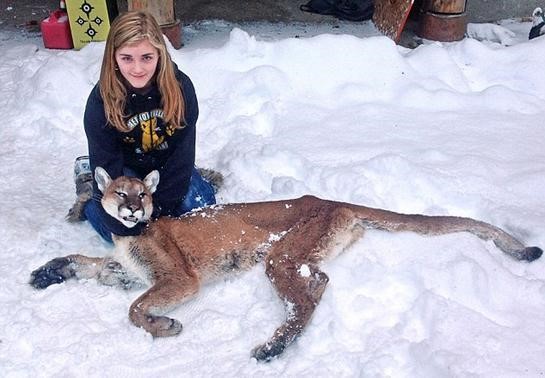
Girl Shoots Mountain Lion That Stalked Her Brother

During the course of a single week, three cougars were killed at a family ranch in northern Washington. The latest big cat was killed by 11-year-old Shelby White, who shot an emaciated lion that had been stalking her older brother near their home.

ML1

Thomas White awoke at 2:30 a.m. to the barking of the family dog so White walked outside and discovered a cougar trying to enter an enclosure of cows and calves. Although he scared away the cougar without incident, the lion returned two hours later and White drove it off a second time.

Later that day White’s three children arrived home from school at 3:30 p.m. The cougar turned up a third time when his 14-year-old son Tanner White was doing his chores outside. Tanner had finished feeding the dogs and was walking back toward the house when the cougar emerged from its hiding spot by a vehicle in the driveway. Tanner didn’t notice the cat following him and walked safely through the basement door.

His dad was in there and said, ‘Close the door!’ because there was the cougar, right behind him.

Shelby White, 11, was the only member of the White family with an unfilled cougar tag.  She retrieved her rifle and shot the cat where it stood outside, just 10 feet from the door. The 4-year-old female cougar appeared “very, very skinny” and weighed just 50 pounds. A healthy mature female cougar should weigh twice that, according to Treser. “It was starving to death,” Treser said.

Shelby’s cougar was the third big cat taken on or near the family ranch in a single week. Two days prior a family friend tracked a cougar within 200 yards of the ranch. The hunter shot the 2- to 3-year-old female cat near the White’s driveway a couple days earlier.

The youngest White child also tracked and tagged a cougar on the property. Nine-year-old Cody White and his father spotted paw prints near the White house  and followed them to the family’s calving pasture. He discovered a 120-pound male cougar and shot it on the hillside.

ML2

Additional tracks and big cat sightings have occurred in the region since and a total of 10 cougars have been harvested during the season. Five were taken by hunters and the other five were killed by wildlife officials after the cats attacked domestic animals.

The number of cougar predations and encounters in the area is above average. Wildlife officials suspect cougar numbers have increased or the big cats cannot find enough deer to survive without resorting to domestic prey.

Follow our FISHING BLOG

WEB   RATES     FISH    HUNT    CABINS    PHOTOS
TESTIMONIALS    BROCHURE    HUNT BOOKLET

Enter your email address to subscribe to this blog and receive notifications of new posts by email.

Go back

Your message has been sent

Warning
Warning
Warning
Email Me....

Warning

Warning.


Tags: , , , , , ,

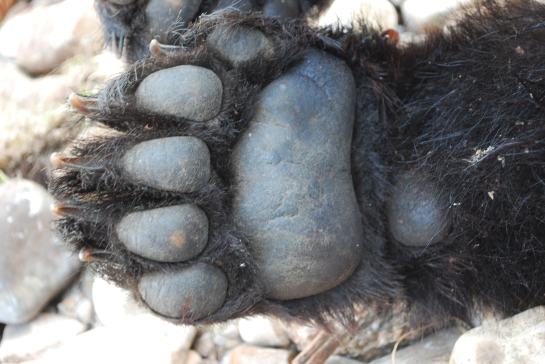
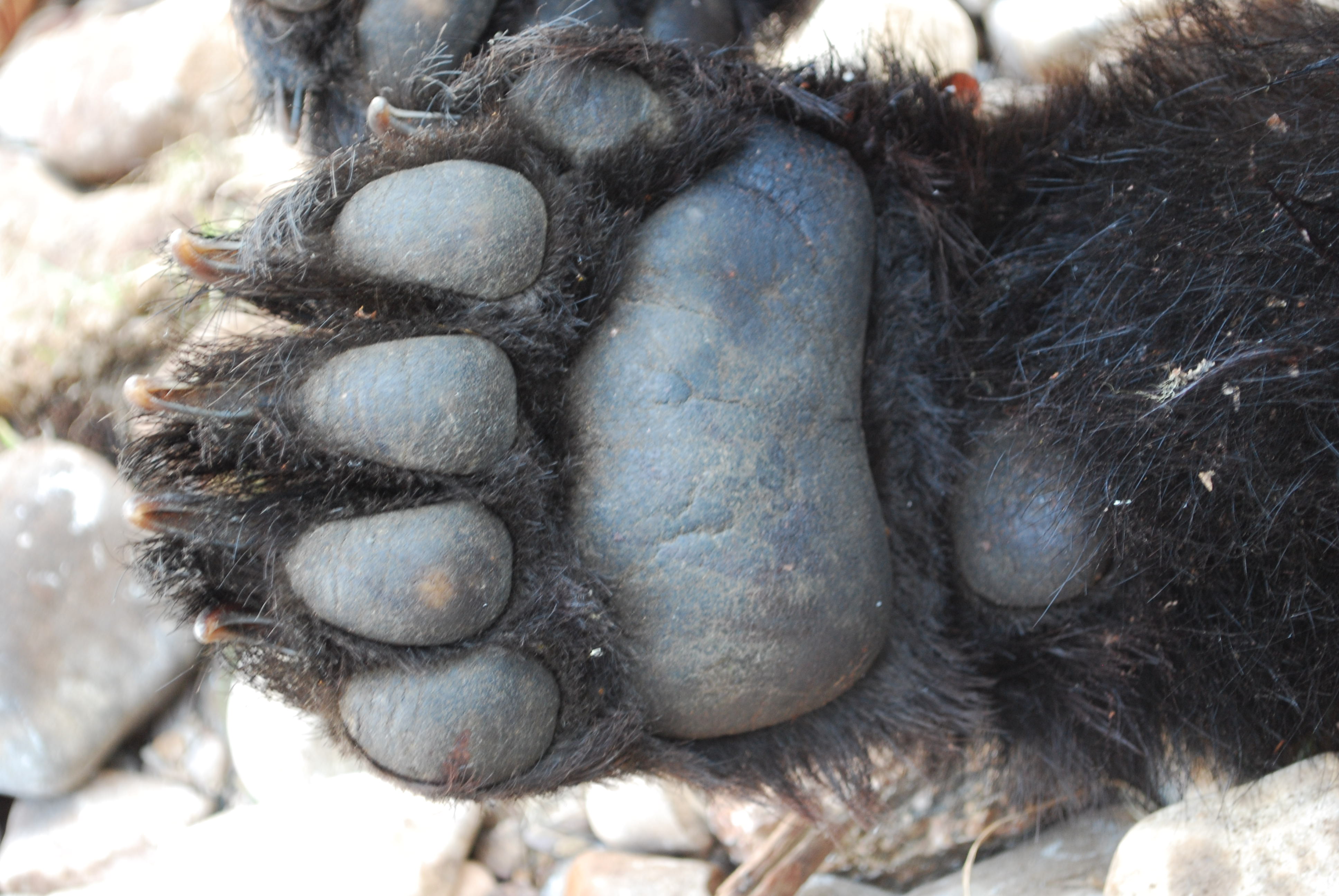
Tracking Black Bear

imagesY2AQPWJM

The goal of all hunters is a quick, humane kill where the animal drops in it’s tracks and is dead within seconds. But in a pursuit that has as many variables as hunting, sometimes things don’t quite go according to plan. However, game can be tracked and recovered with the right skills and with patience.

First of all, you need to wait the right amount of time after the shot before tracking a wounded animal. I’ve heard estimates of waiting 30 minutes for a hit in the vitals and 5-8 hours for a gut shot. Waiting overnight might be even better on very poorly hit animals, however for black bear the temps may not allow for this as the meat might spoil.

imagesB582SF66You don’t want to push an animal. Be patient and wait it out. If you push a wounded animal, and he gets adrenaline flowing, the odds are against you finding that animal.

You need to mark the exact spot where the animal was when it was hit. This will save you much time in searching for blood. Also mark the position where you took your shot from in case you have to return to it to regain that perspective. Once you find the trail that the animal took after the hit you should try and identify where you hit that animal. Dark blood can indicate a liver or muscle wound; bright red blood with bubbles in it is a good sign and indicates a hit in the lungs; green liquid or bits of food matter in the blood indicates a gut shot.

Take it slow and mark blotches of blood with flagging tape every 25-50 yards to trace the trail from afar to determine overall direction the animal took. Just remember to go back and pick up the tape when you’re done. You should walk to the side of the trail so as to not disturb the sign. If you lose the trail and can’t find more blood, start fanning out and walking circles from the last place you had blood.

2013-10-12-birch-012When tracking a wounded animal it is easy to get caught up in just looking at the ground, trying to find that next speck of blood. You should be aware of what is 100 yards out in front of you as well and be ready for a killing shot if the animal should get up in front of you.

If you take it slow, be quiet and be thorough, finding wounded animals can be done on a consistent basis. Follow these tips to help find the game that you might have not put the best shot on.

DDW-Bear-Hunt-086

Follow our FISHING BLOG

WEB   RATES     FISH    HUNT    CABINS    PHOTOS
TESTIMONIALS    BROCHURE    HUNT BOOKLET

Enter your email address to subscribe to this blog and receive notifications of new posts by email.

Go back

Your message has been sent

Warning
Warning
Warning
Email Me....

Warning

Warning.


Tags: , , , , , , ,

Tracks in the Snow

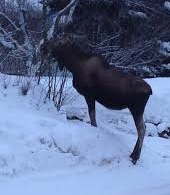
moose-wawang-lakeTraditionally, moose have also been taken outside the rutting season, especially in the winter. At this time, moose tend to be scattered. If the snow is fresh and powdery, a hunter can move silently through the forest and thickets. But if the snow is drifted or develops a crust, every footstep makes a noise that alerts the moose. Making matters worse, even slight sounds carry over surprisingly long distances on windless days with temperatures far below zero—as often happens during the northern winter.

Moose have excellent hearing, so the best chance of approaching one in the winter is during storms when gale winds and gusts cover the sound of crunching snow. Luckily, temperatures tend to be warmer during storms, so although hunting in these conditions can be very uncomfortable, it’s not as life threatening as when the temperatures sink to minus thirty or colder.

When the snow is really deep—up to a moose’s belly—these animals have a very hard time moving around. Also if the snow is deep and crusted, the heavy-bodied moose will punch through the icy crust, cutting its legs as the animal walks, making travel extremely difficult.

If the crust is hard and strong enough, wolves can walk on top, giving them a lethal advantage over moose. Mired in the snow, a moose cannot escape by running away and has difficulty defending itself. Human hunters on snowshoes can also stay near the top of deep or crusted snow while the moose are forced to wallow slowly along. Under these conditions, a moose is virtually trapped in a small area of its feeding trails, making it extremely vulnerable.

When the snow is not so deep, moose can move far more quickly and easily. The practiced hunter knows that if moose tracks consistently lead in a single direction, the animal may be heading somewhere else and will be very hard to catch.

If a moose is feeding in one area its tracks will wander in multiple directions. This is good news for the hunter, because he may have a chance to get close to the animal. Now the difficulty is to find which tracks are the freshest and which direction they lead.

A hunter always wants to know how old the tracks are—how long ago did the moose make them? Would it be possible to catch up or is the animal long gone?

A track made within the hour is soft—as soft as the surrounding snow. The hunter riding on a dog sled or snow machine might simply drag his boot through the track. If the track is fresh, he feels almost nothing. If it’s older, he feels two distinct thumps as his boot hits both sides of the track.

In cold weather—especially if it’s far below zero—the inner walls of an animal’s track will recrystallize and develop a crust within a few hours. This starts first around the top and happens later at the bottom. If the track was made the night before it will be harder still. The colder the temperatures, the more quickly a crust forms on the inside of tracks.

A hunter on foot pushes his boot or a mittened hand down into the tracks, feeling the crust or testing how much pressure it takes to break through. The harder the crust, the older the track. In below zero weather, a track made two days ago or earlier will be very hard.

Another sign the hunter looks for is moose droppings. When they’re fresh, the color is dark brown and they’re soft. In freezing temperatures, the pellets quickly harden and turn lighter.

Other signs are willow branches that have been freshly broken by browsing moose, the white wood showing conspicuously against the darker background of the thicket. Often this is accompanied by a scramble of tracks and patches of gouged-out snow where the moose has pawed down looking for edible vegetation under the snow.

moose-wawang-lake (2)Moose rest or sleep in snow beds, often straight downwind from their tracks. They do this to catch a warning scent from any predator that is following their trail. At other times, a moose that hears a suspicious sound or spots something unusual will intentionally move downwind to test the scent. A moose can recognize the drifting smell of a wolf or human, even at a considerable distance.

When a hunter is following fresh moose tracks in the snow, he knows that the animal could have bedded downwind so it would pick up his scent. For this reason he leaves the trail at intervals, walks straight downwind, then makes a wide loop and heads back upwind—always watching the underbrush for the dark shape of his prey. Again and again, he makes these downwind loops and comes back upwind until he finds tracks leading to where the moose is bedded. If luck is with him and the moose never catches his scent, he may catch it unaware.

Follow our FISHING BLOG

WEBSITE    RATES     FISH    HUNT    CABINS    PHOTOS
TESTIMONIALS    BROCHURE    HUNT BOOKLET
Enter your email address to subscribe to this blog and receive notifications of new posts by email.

Go back

Your message has been sent

Warning
Warning
Warning
Email Me....

Warning

Warning.


Tags: , , , , , , , , , ,

Evolution of a Hunter

wawang-lake

 WEBSITE    RATES     FISH    HUNT    CABINS    PHOTOS
TESTIMONIALS    BROCHURE    HUNT BOOKLET

Enter your email address to subscribe to this blog and receive notifications of new posts by email.

Go back

Your message has been sent

Warning
Warning
Warning
Email Me....

Warning

Warning.


Tags: , , , , , ,