RSS

Tag Archives: WMU 15A

Develop Proper Archery Form


SONY DSCPictured here is perhaps the most popular position of the feet when it comes to shooting; the “Open Stance”. It is easy to perform and opens up the shooter to the target resulting in less interference with clothing from the bowstring.

Despite the fact that you may be shooting the most highly tuned bow, adorned with top of the line accessories, if your shooting form is bad your accuracy will likely be worse. Shooting with good form requires mastering a number of processes. However, once these processes are understood and learned, shooting with proper form will be as easy as walking across the floor; it will become second nature.

Before incorporating the following steps into your shot routine, be sure that you are shooting a well tuned bow set at the appropriate draw length.SONY DSC

Proper Shooting Stance
Where you place your feet during the shot process can have a great bearing on where your arrow strikes. By nature, your body has a natural centering point. If your feet are not positioned properly you might find yourself being pulled away from this centering point. As a result, the body will fight to return to this location. Unfortunately, this can occur during the shot which will impede accuracy.

Resist the urge to grip your bow. Instead, let your fingers naturally drop around the handle and riser. This will eliminate unwanted tension and bow torque making your shots more accurate.

There are 3 basic stance positions to consider. They are as follows.
  • Squared Stance:  Feet are in-line with one another, drawing a line perpendicular to the target.
  • Closed Stance:  Front foot is forward from the front of the body
  • Open Stance:  Front foot is slightly pointing toward the target.The best stance, regardless of which you choose, should be comfortable and solid. This starts by placing your feet about shoulders-width apart with your body weight distributed between the midsection and rear of your feet.

Most bow hunting experts will suggest an open stance which starts by positioning your toes 90 degrees to the target, and then taking a half-step backward with the foot that is closest to the target. This stance will essentially place the chest more toward the target and allow for greater bowstring clearance along the bow arm and chest.

However, this stance may not be for everyone. In order to find your perfect stance, enlist the help of a friend and simply close your eyes and draw your bow while facing a archery target with a wide back 1wall, anchoring as you normally would. With your eyes still closed, move your body and feet around until you find the most comfortable position. Then, open your eyes and note the direction of your aim.

When it comes to hauling back the bowstring, don’t rely on the small bicep muscles of the arm. Instead, use the larger, more stable muscles of the upper back and shoulder. Not only can these muscles pull more weight, they are also steadier and fatigue less quickly.

Let down the bow and reference the position of your feet by pointing an arrow straight at the aiming spot. You have just found your stance.

SONY DSCCorrect Bow Grip
When it comes to gripping the bow you want to do so in such a way that hand torque is not promoted. In other words, you want your grip to be as torque-free as possible. To do this, you first need to find the best location for the grip to contact your hand. This can easily be accomplished with a simple test.

First, take your bow hand and hold it out as if you were going to grip the bow; keeping it slightly open and rigid to imitate pressure being applied to it. Next, take your thumb from your other hand and push it into your bow hand at different locations. You will notice that every location you push with your thumb causes your bow hand to move or collapse—-except one. That one spot is where you want to place the pressure of the bows grip while at full draw.

Your bow arm shoulder should be down and in a “locked” position while at full draw. This makes it more difficult to flex the bow arm causing shot-ruining muscle tension.

This location is typically where the bones in the forearm butt up against the base of the palm. It is a bone-to-bone contact point and is the most reliable, torque-resistant location in which to place the bow grip.

When grabbing the bow, place a small amount of tension on the string, just enough to feel it in your bow hand. Then position the grip into the area you discovered by pressing your thumb into your palm. Now you are ready to draw the bow. Just remember, upon reaching full draw, your bow hand should remain relaxed with your fingers falling down or dangling around the front of the riser.

Drawing the Bow
This may seem like a trivial facet to good shooting, but drawing the bow properly incorporates all of the essential muscles needed in order to shoot with good form; mainly, the back muscles. One of the easiest ways to do this is to think of your drawing arm elbow as having a hook in it. When drawing the bow, start with your elbow about as high as your jaw line. Then, imagine someone has a string attached to the hook that is in your elbow. Now, think about them pulling your elbow straight back as you draw your bow. Instead of puling with your biceps, you will notice that you are actually drawing the bow by using the larger muscles of the upper back; specifically, the rhomboid muscles. This will allow you to relax the rest of your body and pull through the shot using only your back.

SONY DSCBow-Arm Position
A steady aim equals comfortable shooting and tighter arrow groups. A relaxed bow hand is the key to this. To acquire this it is imperative that your drawing side shoulder be down and in a locked position during the shot. Positioning the shoulder in such a manner will greatly reduce muscle tension which is the root of poor aiming. Before drawing the bow, lean slightly toward the target, then start the drawing process. This will place the shoulder in a low, locked, “bone to bone” position.

When it comes to where you place your release-hand, choose and area along the face/jaw-line that is easily repeatable and consistent; your shooting will likewise follow. Hunter shown wearing Lost Camo.

Anchor Position
Consistency is the cornerstone to good shooting. The best location to anchor your bowhand is somewhere along the jawbone that provides the most stable platform. In other words, choose a spot that allows your hand, knuckles, etc. to rest solidly as you release the trigger of your release or let go of the bowstring.

A good tip is to locate this spot with your eyes closed, without looking through the peep sight. Then, once your anchor point has been established, with your head in a natural, upright position, you can open your eyes and adjust the peep sight to your eye, instead of adjusting your eye to the peep sight.

The bottom line is to find an easy-to-repeat anchor point; one that will be consistent and second nature when shooting under pressure or any other time.

TIf good shooting form and posture are present, your body should resemble the letter “T” when viewed from behind. Hunter shown wearing Lost Camo.

Establishing T-Form
The easiest way to confirm that proper draw length and comfortable shooting posture are being used is to look for the “T-Form” as the archer is at full draw. This is easily recognized while looking at the shooter from behind. When doing so, his/her body will represent the shape of a “T”.

The torso should be vertically straight, with a direct line running up and down through the spinal column. The horizontal line in the “T” should run from the bow-side elbow, through the shoulders, and across to the drawing elbow. The trick to establishing this “T” form is to make sure that your drawing elbow isn’t too high or too low. Ideally, it should be about the same height as your ears while at full draw. This will promote the use of back muscles to draw and execute the shot.

Include these simple steps into your shouting routine and watch as your accuracy improves and your confidence soars not only on the 3D archery range, but in the field as well.

Follow our FISHING BLOG

WEBSITE    RATES     FISH    HUNT    CABINS    PHOTOS
BROCHURE    HUNT BOOKLET

Enter your email address to subscribe to this blog and receive notifications of new posts by email.

← Back

Thank you for your response. ✨

Email Me....


Tags: , , , , , , , ,

Know your Rover, Know its Range

by 

a chocolate lab, pointing

“Here, Penny. Come here, girl. Whoa. Now Whoa!” The panicked expletives started the minute I turned my brittany, Penny, loose to quarter the covert. The problem was, it wasn’t me shouting the commands. It was my hunting partner who had only hunted upland birds over his labs.

He didn’t understand that the range for a pointing dog was vastly different than that of a flushing dog, (but really shouldn’t have been commanding or cautioning my dog at all).

He was used to a very close working dog and thought that a wider ranging dog was going to bump birds before we got in position to shoot. What he didn’t know was that a pointing dog, unlike a flushing dog, will (or should) hold birds on point until the guns arrives for the flush.

Range is simply the distance a dog can effectively hunt from its master, and this will vary from dog to dog, breed to breed.

To my mind, range is simply the distance a dog can effectively hunt from its master, and this will vary from dog to dog, breed to breed.

A dog’s natural range is first dictated by genetics and then molded by handling and training in the field. Each breed has its own general parameters in which it works effectively.

Being mindful of the differences between breeds makes the potential owners more informed and more likely to be pleased with their hunting companion.

Point or Flush?
Flusher Retrievers
Flushing dogs, such as retrievers and spaniels, do as their name suggests.

Upon scenting game, they chase and ultimately flush birds. In order to be effective, these dogs must work within a distance of typical shotgun range (10 to 25 yards). If the dog pushes the envelope and starts popping birds up at 35 to 40 yards, the number of missed birds will increase.

The way to train a dog to handle within range is to make sure it’s successful at finding birds in range of the gun during training. Planted birds and solid basic obedience training will convince the dog that if it stays close enough to the shooter, a mouthful of feathers and a retrieve are the reward.

Pointers
Pointing dogs on the other hand can, and should, stretch out the field a bit more. As long as the dog is dependably holding birds until the gun-totting hunter arrives, it can be trusted to reach out a little more.

To ensure that a dog remains steady on point and doesn’t flush birds prematurely, never shoot birds that the dog bumps or flushes.

Soon enough the dog will understand that the only way he gets the reward of a mouthful of feathers is to remain still and hold the bird on the ground until the handler flushes the bird.

Best Breed Debate
The debate over which breed is best for a particular game bird has gone on for decades and will certainly continue. With that in mind, I suggest for the rough shooter who expects to shoot both upland and waterfowl on a given hunt, one of the flushing/retrieving breeds might be most appropriate choice, flushing/retrieving breeds might be most appropriate choice — a springer spaniel or Labrador, for example.

With training, these breeds work close to the gun and will also be happy to hunker down in a blind while waiting for waterfowl to pitch into the decoys.

If, on the other hand, you like to keep your boots dry and hunt upland birds exclusively, then pointing breeds are a better fit. Pointing dogs have a style and range that add a unique flavour to the hunt. True pointing breeds, such as setters or English pointers, are specialists — as are those who tend to own them.

For those who don’t want their dog to dictate the kind of game they pursue, there are always the dock-tailed Continental breeds, such as German shorthairs, Hungarian vizsla, pudlepointers and even brittanys. Pointing, tracking, and retrieving of upland birds, waterfowl, and furred game is all in a day’s work for these versatile breeds.

The distance your dog works from you is ultimately a matter of choice. Regardless of what breed you prefer orgame you hunt, it’s important that you recognize the skills your own dog brings to the field and allow it the room he needs to be effective.

Follow our FISHING BLOG

WEB   RATES     FISH    HUNT    CABINS    PHOTOS
BROCHURE    HUNT BOOKLET

Enter your email address to subscribe to this blog and receive notifications of new posts by email.

← Back

Thank you for your response. ✨

Email Me....


Tags: , , , , , ,

Trip Planning Tips

So many people WANT to go on a hunting or fishing trip but find the task daunting and the thought overwhelming so they tend to avoid it….

Truly, if you know a few simple tricks, planning can be expedited and you could find yourself in a boat or tree stand much quicker than expected.

wawang lake, wawang lake resort

U. S. Passport Card

First and foremost, you do NOT need to purchase a passport.  For half the price ($55.00 adult, $40 child) this handy card lasts for a period of 10 years and allows ground transport between the US and Canada and Mexico. If you plan to fly, a passport will be required but most of us travel will plenty of hunting and fishing equipment so driving is much more common.

http://travel.state.gov/content/passports/english/passports/information/card.html

Also a note regarding those pesky DWI’s….if you have had one and it has been over 6 months, there is a good possibility you can still enter Canada!!  https://help.cbp.gov/app/answers/detail/a_id/402/~/entering-the-u.s.-and-canada-with-dui-offenses

Next, when choosing a trip, make a list of ‘must haves’ such as:  The resort MUST HAVE running water, indoor plumbing, somewhere to prepare food etc.  (We have that…shameless plug lol)

Next devise a budget.  Remember to calculate travel and food costs.  And also remember to find out if the cost is per person or an overall cost.  Always add an extra 15% to that number to ensure you have money for unexpected incidentals such as a flat tire etc.  Also, never forget to calculate the local taxes into the cost.

Once you have a targeted budget, begin your research.  Remember, most resorts do have varying rates depending on the season as well as various other specials during the year.sunset bear

When utilizing specials, ensure that you understand the weather patterns and fishing patterns at that time of year.  Some places have a change over in ease of catching species or hunting migration patterns.  Make sure you ask about this so you aren’t disappointed.

Take us for example, in June our regular Housekeeping fishing rate is $655 per person but offer various discounts from July 20% Off- August 25% Off & September 25% Off.     And for those of you who are paying attention, our lake is a closed off headwater, spring fed and our fish cant leave…they just tend to migrate from one part of the lake to another so fishing will only be affected by color, depth and presentation 🙂  Feel free to check ALL our rates at:   http://wawangresort.com/rates.htm  If you’re looking for that fish of a lifetime, to catch your first trophy fish OR to just catch LOTS of fish then Wawang Lake is the place for you.

Last and not least, get referrals!  There is nothing more disappointing that driving (or flying) all that way only to find it isnt what is what you were expecting.  Though no trip may be perfect, you should understand the basics of what to expect.

Ensure that you also contact the lodge representatives with all questions and they should respond promptly, honestly and with as much information as possible…..remember, they should be looking forward to meeting you and be excited to share what they can provide for you.

Remember…this is YOUR vacation and it is within your control to make it the best possible!

Follow our HUNTING BLOG

WEB   RATES     FISH    HUNT    CABINS    PHOTOS
 BROCHURE    HUNT BOOKLET

Enter your email address to subscribe to this blog and receive notifications of new posts by email.

← Back

Thank you for your response. ✨

Email Me....


Tags: , , , , ,

Black Bear Hunting at Wawang Lake

Working hard to provide active baits for each individual hunter is how we operate our hunts, and is what keeps our sportsmen coming back year after year.

BLACK BEAR HUNT RATES

2-bear

We have a very large bear hunt area (1,200 sq miles) surrounding our resort with a good healthy bear population due to years of black bear management.

Our hunts usually begin the Saturday on or after August 15th and continues for three weeks. Since we have consistently managed our bear population for several years we determine the number of hunters we will take according to the bear population we observe the previous year. We average 14 hunters per year.

What We Need to Know Upon booking, please inform us of each party members contact information, weapon (archery or gun) and will they be bringing a tree or ground stand. We need to know what type of weapon each member in the hunt party will be hunting with and whether they will be hunting from tree stand or would prefer a ground stand. More on our website

Days to Hunt (7 days) – Arrive Saturday and depart the following Saturday. Arrive Saturday and depart the following Saturday. If you would like to hunt upon your arrival, please check in between 11am-12pm (EST) and have all of your equipment prepared in advance (tree stands as assembled as possible, weapons/ammunition cased)

Transportation Requirements Since most of our baits are very remote, groups should anticipate driving their members to and from the sites. Most of our baits are road access and we provide private areas for each hunting group so that

dropping members off and picking them up will be systematic and easy. We advise to have 1 vehicle per every two hunters (three max) to ensure as little disruption to each party member’s hunt.

Rates
For a complete list of our Bear Hunt Rates please visit our website at:

BLACK BEAR HUNT RATES A $500.00  non-refundable deposit is required at the time of reservation to guarantee a hunt.

Other Costs Hunting license Canadian Funds (approximately). It’s MANDATORY to provide a current or prior hunting license FROM YOUR HOME STATE, or a hunter safety certificate, as qualification to obtain a hunting license in Ontario. Export Permit – $35.00 Canadian Funds (available at designated locations in the area)

Things to Remember Bring your own tree stand as we do not provide them. Comfortable climbers are the most popular and screw in peg types are acceptable, however, whatever type you bring bear in mind that our trees have very loose bark.

What is Included in our Bear Hunts

  • Modern Housekeeping Cottage for 7 nights
  • Pre-baited Sites & all baiting supplies during your stay & Freezer Service
  • Orientation trip to bait site
  • Experienced guide’s knowledge and advice (use it!)
  • Canadian Firearms Regulations All Firearms (does NOT include bows) being brought into Canada must be registered at the Canadian Customs at the time of entry into Canada. A one- year permit costs $50.00 Canadian, or there is a long term permit as well. If you would like further information, you can visit the Canadian Firearms Website through the link on our website or call toll free, 1-800-731-4000

Passport Cards (similar to a Passport) Information can be obtained at this website: http://www.travel.state.gov/passport/ppt_card/ppt_card_3926.html

Our season begins Saturday on or after August 15th

For further information, or, to book your next bear hunt please contact us at:
1-888-534-9217 or EMAIL

 WEBSITE    RATES     FISH    HUNT    CABINS    PHOTOS
 BROCHURE    HUNT BOOKLET

Enter your email address to subscribe to this blog and receive notifications of new posts by email.

← Back

Thank you for your response. ✨

Email Me....


Tags: , , , , , , , , , ,

Grouse Hunting at Wawang Lake

Join us in NW Ontario CANADA for some exciting and thrilling grouse hunting

P1130017
Grouse Season:  September 15th to Oct 31st

Grouse hunting is a relaxing pastime that is getting more and more popular every year.  In our area bird hunting can be an adventure in itself!  Driving down the back roads & trails in your truck or on your ATV can not only be thrilling but breathtaking as well as you wander down roads that are in full color deserving of natures fall foliage. Just taking in these magnificent fall colors, peaceful wilderness & the wildlife that you’ll encounter will make you feel like you are definitely “North of the Tension Zone”.

The bush trails with the rise of the birds, singing of the guns, the smell of the pines along with friendly comraderie back at the camp will not long be forgotten.

Surrounding Wawang Lake are hundreds of miles of ATV trails, old logging road, game animal trails and hiking trails. The bush is just stuffed with these upland game birds and on a sunny fall afternoon you will see hoards of them. Many of our guests choose a fishing / grouse hunting combination package and spend half the their time taking advantage of the awesome northern pike and walleye fishing and spend the rest of their time enjoying the clean fall area and exploring the many trails where birds are plentiful.

There are three species of grouse found in Ontario.

Ruffed Grouse  –  Spruce Grouse  –  Sharptail Grouse

Ruffed Grouse is the most common and comprises of 80% of what you will encounter during your hunt.

The limit for grouse in Ontario is 5 birds per day in any combination of species with a total of 15 in your possession and you will be surprised at the number of grouse we do have and how fast you’ll bag those limits.

Compared to other areas the grouse cycle in our area has remained consistently high over the years and we credit this because of less human population that other places are known for.  In a nutshell what you’ll experience at Wawang Lake is a vast area of complete privacy during your hunt.

The most popular guns for grouse hunting are .410 or 20 gauge shot gun and some hunters use a 12 as well.   Quickly becoming more popular is BOW HUNTING for birds.  To increase the thrill and excitement of your hunt give your bow a try and the challenge alone is sure to thrill you.

Blaze orange hat & vest is required and must be worn out in the field

Canadian Firearms Regulations
All Firearms (does NOT include bows) being brought into Canada must be registered at the Canadian Customs at the time of entry into Canada. A one-year permit costs $50.00 Canadian, or there is a long term permit as well. If you would like further information, you can visit the Canadian Firearms Website through the link on our website or call toll free, 1-800-731-4000.

Canadian Customs
You should be aware of special customs and immigration issues whenever traveling to another country. For people with prior legal issues (including DWI’s) you need to find out what restrictions may be placed on your travel. Visit the Border Crossing Link and/or the Canada Citizenship & Immigration.

DEPOSIT REQUIREMENTS
A $150.00 non-refundable deposit is required at the time of reservation to guarantee a hunt. Balance to be paid in full upon arrival at the resort.  Hunting deposits and installments are non-refundable. Consideration may be given to date transfers if vacancy can be filled.

There are a limited number of spaces available for our hunts. Often there are more guests interested in hunting than there are available spaces, and hunts are often booked a year or more in advance. It is extremely difficult to fill spaces that become available due to cancellation. For these reasons we ask that our guests do not book hunts lightly

For further information, or, to book your next bear hunt please contact us at:
1-888-534-9217 or EMAIL

 WEBSITE    RATES     FISH    HUNT    CABINS    PHOTOS
  BROCHURE    HUNT BOOKLET

Enter your email address to subscribe to this blog and receive notifications of new posts by email.

← Back

Thank you for your response. ✨

Email Me....


Tags: , , , , , ,

Grinding Wild Game with Meatloaf Recipe

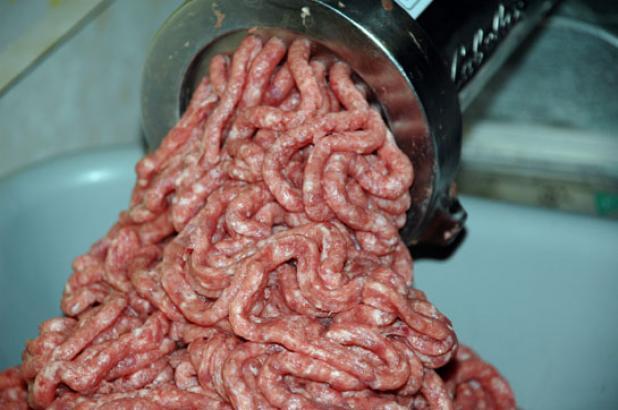
For foodies, especially those smart enough to eat within their means, there is no better everyday meat than wild-game burger, whether it is from elk, antelope, moose, or most likely, whitetail deer. No meat sold at the farmer’s market is more local, humanely raised, drug free, and genetically unmodified than that from a wild animal cleanly killed by the hunter. And if you process it yourself, you know exactly what you’re getting. No mystery meat or pink slime scares when it’s done D.I.Y. If you do decide to do the grinding at home, there are a few things to note when processing wild game into ground meat. Here are few tips to get the best from your burger.

Ground_Wild_Game

1. Buy The Best Grinder You Can Afford—and Keep it Sharp
An underpowered grinder, or one with a dull knife, won’t grind meat cleanly. If the meat coming from the grinder plate looks like it’s been extruded rather than cut, make sure the back of the plate is free from sinew and the retaining ring is on tight.

2. You Get Out What You Put In
Who knows what ground meat from the grocer contains. When you do it yourself, you control the final product. Make sure you clean your meat well and trim with a judicious, yet keen, hand. Trim sinew, yellow fat, silverskin, and all bloodshot meat before it goes into the grinder.

3. Keep Things Cold
You’ll get a much better grind with less smear if your meat, and the grinder, is cold. Put cubed meat in the freezer for at least 30 minutes until it’s firm, but not hard, to the touch. Also, throw the grinder neck, auger, blades, and plate in there as well.

4. Don’t Forget Fat
Beef has fat built right in, but wild game burger needs a boost. You can use several things to up the fat content (and flavor) depending on what the final product is going to be. Bacon trimmings (sold in boxed form often called Ends and Pieces) add a distinctive flavor to burgers and meat loaf. Beef tallow and pork butt are both available from good butchers and make great fat additives. You can control the ratio of meat to fat, but I like somewhere in the neighborhood of 10 to 15 percent. Experiment until you find what’s right for you.

5. Or, Cut The Fat
Some folks want to cut the fat altogether and that’s fine, too. Just realize that a 100-percent wild-game burger can be very dry and will fall apart when cooked. To avoid crumbly burger, consider adding some type of moisture as you form your patties (same goes for meatloaf). This can be anything from eggs to bread crumbs soaked in milk. Last summer, Wild Chef readers turned in a bunch of great ideas for better burgers.

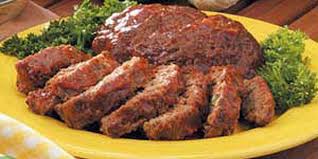
Meat Loaf

Ingredients
– 1 lb. ground meat
– 8 oz. can tomato sauce
– 1 egg, beaten
– 16 to 20 Saltine cracker crumbs
– 1/2 cup of dry oatmeal
– 1/2 onion, chopped
– ¼ cup ketchup

imagesUB61KB7K

Directions:
1. Preheat the oven to 350 degrees. In a large bowl, mix ground meat with tomato sauce and beaten egg.

2. Crush the Saltines in a gallon-sized zip-top bag and mix in the dry oatmeal and chopped onion.

3. Add the dry ingredients to the meat-egg mixture and, using your hands, blend thoroughly.

4. Form meat mixture into a loaf pan. Liberally cover top with ketchup. Bake for 45 min to 1 hour.

Follow our FISHING BLOG

WEB   RATES     FISH    HUNT    CABINS    PHOTOS
BROCHURE    HUNT BOOKLET

Enter your email address to subscribe to this blog and receive notifications of new posts by email.

← Back

Thank you for your response. ✨

Email Me....


Tags: , , , , , , , , ,

Grouse Hunting at Wawang Lake

Join us in NW Ontario CANADA for some exciting and thrilling grouse hunting

P1130017
Grouse Season:  September 15th to Oct 31st

Grouse hunting is a relaxing pastime that is getting more and more popular every year.  In our area bird hunting can be an adventure in itself!  Driving down the back roads & trails in your truck or on your ATV can not only be thrilling but breathtaking as well as you wander down roads that are in full color deserving of natures fall foliage. Just taking in these magnificent fall colors, peaceful wilderness & the wildlife that you’ll encounter will make you feel like you are definitely “North of the Tension Zone”.

The bush trails with the rise of the birds, singing of the guns, the smell of the pines along with friendly comraderie back at the camp will not long be forgotten.

Surrounding Wawang Lake are hundreds of miles of ATV trails, old logging road, game animal trails and hiking trails. The bush is just stuffed with these upland game birds and on a sunny fall afternoon you will see hoards of them. Many of our guests choose a fishing / grouse hunting combination package and spend half the their time taking advantage of the awesome northern pike and walleye fishing and spend the rest of their time enjoying the clean fall area and exploring the many trails where birds are plentiful.

There are three species of grouse found in Ontario.

Ruffed Grouse  –  Spruce Grouse  –  Sharptail Grouse

Ruffed Grouse is the most common and comprises of 80% of what you will encounter during your hunt.

The limit for grouse in Ontario is 5 birds per day in any combination of species with a total of 15 in your possession and you will be surprised at the number of grouse we do have and how fast you’ll bag those limits.

Compared to other areas the grouse cycle in our area has remained consistently high over the years and we credit this because of less human population that other places are known for.  In a nutshell what you’ll experience at Wawang Lake is a vast area of complete privacy during your hunt.

The most popular guns for grouse hunting are .410 or 20 gauge shot gun and some hunters use a 12 as well.   Quickly becoming more popular is BOW HUNTING for birds.  To increase the thrill and excitement of your hunt give your bow a try and the challenge alone is sure to thrill you.

Blaze orange hat & vest is required and must be worn out in the field

Canadian Firearms Regulations
All Firearms (does NOT include bows) being brought into Canada must be registered at the Canadian Customs at the time of entry into Canada. A one-year permit costs $50.00 Canadian, or there is a long term permit as well. If you would like further information, you can visit the Canadian Firearms Website through the link on our website or call toll free, 1-800-731-4000.

Canadian Customs
You should be aware of special customs and immigration issues whenever traveling to another country. For people with prior legal issues (including DWI’s) you need to find out what restrictions may be placed on your travel. Visit the Border Crossing Link and/or the Canada Citizenship & Immigration.

DEPOSIT REQUIREMENTS
A $150.00 non-refundable deposit is required at the time of reservation to guarantee a hunt. Balance to be paid in full upon arrival at the resort.  Hunting deposits and installments are non-refundable. Consideration may be given to date transfers if vacancy can be filled.

There are a limited number of spaces available for our hunts. Often there are more guests interested in hunting than there are available spaces, and hunts are often booked a year or more in advance. It is extremely difficult to fill spaces that become available due to cancellation. For these reasons we ask that our guests do not book hunts lightly

For further information, or, to book your next bear hunt please contact us at:
1-888-534-9217 or EMAIL

 WEBSITE    RATES     FISH    HUNT    CABINS    PHOTOS
BROCHURE    HUNT BOOKLET

Enter your email address to subscribe to this blog and receive notifications of new posts by email.

← Back

Thank you for your response. ✨

Email Me....


Tags: , , , , , ,

Tips For More Grouse

trees3Learn to Recognize Good Cover
Some hunters seem to have a sixth sense about where the grouse are. This isn’t magic but rather the culmination of years of experience, observation, and a working knowledge of what the birds need. These guys are constantly reading about grouse habitat and lore; they take note of wherever they hear drumming in the spring. They know that good grouse cover holds food and provides protection from predators — if it is near an evergreen stand or gravel so much the better.

Take a page from these hunters. Every time you or your dog move a bird, have a good look around after the smoke has cleared — you’ll see a pattern soon enough. Study grouse biology at home; carry field guides when you hunt; learn to recognize common grouse foods in your area. After a while you’ll develop that sixth sense too.

Keep a Log
Every serious grouse hunter I know keeps a hunting log. Some maintain elaborate leather-bound journals in which they detail particulars of the hunt such as the date, cover, number of flushes, dog work, weather, harvest, and crop contents of the birds. Other keep it simple, by marking covers on their handheld GPS. Either way, the hunter is reminded of the places that produced grouse last season.gps

Do this consistently and it won’t take many seasons before you have a bevy of early, mid, and late season options. The more options you have, the better your chance of having a grouse dinner.

Break Some Clay
Over the course of a season, few of us get enough shots at grouse. So it only stands to reason that a hunter ought to make the most of each opportunity. I do this by honing my shotgunning skills in the off-season. Skeet, trap, or sporting clays keep a hunter sharp so that mounting and swinging his scattergun becomes second nature. You’ll still miss — grouse have a way of humbling everyone — but you’ll also make some shots that you might not have without the off-season practice. It just takes a few of these to turn a mediocre season into a great one.

Don’t Forget the Dog Days
Spring and summer are tailor-made for training your dog. Despite this, few of us take advantage of the opportunity. Instead, we expect our dogs to work flawlessly on opening day and we’re actually surprised when that doesn’t happen.

Does your flushing dog hunt too far ahead and blow cover before you get there? A little “hup training” (teaching your dog to sit on command, no matter how far away) in the off season goes a long way towards remedying this. You might also consider brushing up on retrieving drills or introducing your dog to pigeons or game farm forays prior to the season. Some advanced training, such as steadying to wing and shot (where a dog sits down automatically at each flush) might require the help of a professional dog trainer. If that’s what you want, the off-season is the time to do it.

P1040011

Pointing dogs have their own set of training needs, which might include bolstering staunchness, retrieving, hunting range and finding dead birds. Whatever your canine hunting partner’s flaw is, the off-season is the time to address it.

The idea is to learn to handle your dog so that you perform as a well-oiled team during the hunting season. There are plenty of great dog training books and videos — the off-season is when you should benefit from them most.

Follow the Food
Grouse eat hundreds of types of food and each provides a clue as to where the birds are hanging out. That’s why it’s a good idea to check the crop of every bird you shoot. Knowing what grouse are eating helps you understand their habits and tells you where you should focus your hunting efforts. If the last three birds you shot were full of blackberries, for instance, it’s definitely time to hunt any of your covers that hold these shrubs.

Against the Wind
A dog relies on his nose to find birds. So why would you hunt with the wind at its back? We all know that there isn’t any good reason for doing so, but it’s one of the first things excited dog handlers forget when approaching good cover.

If you hunt into the wind, your dog will work closer, scent more game and, hopefully, find more birds. It’s a simple but often overlooked strategy that can make the difference between a full and empty game bag. This is also an important consideration when looking for a lost bird. Take your dog downwind from where you think it fell and let it start hunting from there.

Stop and Start
A good grouse hunting dog provides opportunities that you might not have otherwise had, but that’s not to say that a dog less hunter can’t do well. The key, for a dog less hunter, is to stop and start through likely cover and change direction often. These unpredictable patterns unnerve grouse and invariably pressure them into flushing. Another added bonus is that when you stop you can sometimes hear the put-put-put of a grouse moving just ahead of you. If that’s the case, get the gun up and rush it.

Don’t Hesitate
A good upland shot doesn’t hesitate. He takes the first available shot, even if it’s not a great one.

If you wait for a better chance you’ll rarely get it. Similarly, if you are leading a bird that disappears behind a screen of leaves, follow through, and shoot anyway. You’ll be surprised how often you connect. If not, shells are cheap.

While we’re on the subject of shooting, be ready for the second flush. Often, especially, early in the season when birds are still in their family groups, multiple flushes do occur. If you keep this in mind, they won’t catch you flat-footed — or with an empty gun.

Follow Up
Whenever you flush a bird and don’t fold it, mark where you last saw it. Most times they won’t fly much further than 150 yards. If you marked it well and follow up immediately, you have a good chance of forcing a second flush.


This slideshow requires JavaScript.

Another advantage of following up on grouse is that they sometimes lead you to new covers. If that’s the case, don’t forget to mark it.

Lastly, never assume that you missed any grouse that you shot at. After the shot, keep quiet and listen. Sometimes you’ll hear a mortally wounded grouse doing its death dance against the ground — that’s the one that you thought you missed.

The Right Tools
A fast-handling 12, 16 or 20 gauge shotgun is ideal for birds. Most gunners like double guns. Some happen to prefer a pump because that’s what they shoot best with.  However, don’t discount the light weight, easy to carry .410 shotgun.  Nice little gun with ever growing in popularity in our neck of the woods.

Whatever, your preference, you can’t go wrong using 2 3/4-inch shells filled with 7.5 shot. Grouse aren’t tough birds and it doesn’t take much to bring them down. Since most shots are within 15 yards, the more open-choked your barrels are, the better.

Other essential grouse hunting tools include a quality blaze orange upland hunting vest with a lined game pouch; brush pants; comfortable, well-supported hunting boots; and a compass and/or GPS. If you are hunting with a dog, a whistle, water bottle, portable dog dish, dog first aid kit, and lead are important too. When working heavy, thorny cover, a pair of shooting glasses that protect your eyes are worth their weight in gold.

Conclusion
No one ever said grouse hunting was complicated. But it does take some planning, know-how and skill. Over the last few years, these strategies have made many a much better grouse hunter. Hopefully, they’ll do the same for you.

Follow our FISHING BLOG

WEB   RATES     FISH    HUNT    CABINS    PHOTOS
BROCHURE    HUNT BOOKLET

Enter your email address to subscribe to this blog and receive notifications of new posts by email.

← Back

Thank you for your response. ✨

Email Me....


Tags: , , , , , , ,

Calling in Coyotes & Wolves

Thanks to the prevalence of electronic calling devices, anyone can become a decent coyote caller with the press of a few buttons. But if you really want to step up your game, you need to first understand what makes these animals tick.

coyote-hunting

Prey Distress
Coyotes are nature’s great omnivores. Studies of stomach contents have found that coyotes will swallow almost anything that they can get in their mouths, including rocks, plastic packaging, harness buckles, and even the occasional rabbit. Knowing this, it doesn’t matter much which sort of prey distress call you use—most modern electronic callers offer everything from a whitetail fawn to a house cat—as long as you set up within a coyote’s earshot.

The manner in which a coyote approaches a distress call depends on its security level, which is influenced by its latest experiences. An unpressured coyote will often come in quickly and boldly to almost any distress sound. A pressured coyote, however, will take much longer to approach a call. He’ll wait downwind of the sound before slowly slinking in, wary nose to the air.

Upon hearing the initial prey distress cries, the test coyotes would usually run to a downwind position without exposing themselves and remain there until we left. They would later approach our stand area to investigate. One wary old alpha pair (the male was 10 years old) waited 17 hours before approaching the calling location, and then spent 45 minutes at our stand site sniffing around.

The takeaway? One of the biggest mistakes you can make with a distress call is leaving a location too soon. Spend at least 30 to 45 minutes on stand.

Another important factor is the time of day you target coyotes. Only 10 percent of respondents in a recent poll of about 1,400 coyote callers said dawn was best. More than half the hunters chose 8 a.m. to 10 a.m., followed by 11 a.m. to 2 p.m., and then dusk, each of which got about 20 percent of the vote.

Whines & Yelps
These nonaggressive vocalizations—often made by pups—are probably the most effective sounds in a coyote caller’s repertoire because they trip so many behavioral triggers at once. With the press of a button you can target social interaction, territorial instincts, and protective maternal/paternal instincts. At certain times of the year, a case could probably be made that you’re appealing to their hunger, too, since several studies have documented coyotes cannibalizing pups.

Before switching to a different sound, we’ll increase the volume and intensity of the whines and yelps for three or four series in order to reach out to distant coyotes. This has proven extremely effective in all seasons and geographic locations, and at any time of day.

Challenge Howl
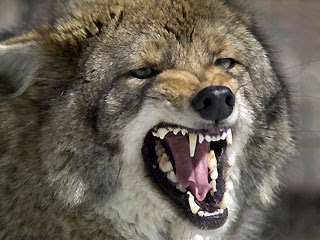
The challenge howl is a misnomer. A challenge is an invitation to fight, to do battle, such as a monarch bull elk bugling at a satellite bull. Coyotes don’t do that. Biologists call this vocalization the threat-bark howl because it more accurately describes the intent of the coyote: to threaten and demand that the intruder leave. Now. Field observations have shown that coyotes (unlike wolves) will avoid fights whenever possible. A wolf pack will run down an intruder and kill it. A pack of coyotes will run down an intruder, make him submit, and then let him leave the territory.

coyote_snarl

For these reasons, callers should use this vocalization only if they know they are set up in a pack’s core territory. If a caller sets up near a den during whelping or denning season, the results can be spectacular. Having resident coyotes charge in on a close, loud, aggressive call rivals any approach of a rutting buck or strut of a spring gobbler. However, if you set up in overlapping home ranges and demand that every coyote within hearing distance leave, they probably will.

The key to locating a pack’s core area is to home in on their group-yip howls. Listen for a pack’s group howl night after night. If you are able to pattern their howling with some regularity, you should be able to determine their core area. Once you’ve plotted that on a map or GPS, study the terrain. Coyotes will typically hide out in the thickest, most secluded cover in the area. Make an educated guess and move in close before threatening the pack.

Many callers will break off a stand when a coyote bark-threat howls in response to their distress calls because they believe that it means the coyote has busted them and will not approach. That’s not always the case. The coyote may simply be protesting the source of the sound even if it hasn’t identified it. You can often get a barking, threat-howling coyote to expose himself for a clear shot if you wait him out and weaken your return howls, keeping them less aggressive than the coyote’s. Another tactic is to retrace your steps and then circle around to a different location. If the coyote doesn’t see or scent you, you can call him in to the new setup with whines and whimpers.

130

Group and Solo Howls
Coyote calling is a numbers game. You want to offer sounds that appeal to the largest number of coyotes without alarming or intimidating them. The most effective howl to draw them in is a lone howl that is low frequency, high pitched, and long. It announces the presence of an unknown, young, small, nonaggressive coyote that any other dog within hearing distance will be willing to investigate.

Louder, long-range howls are more likely to get howls in return, but they are less likely to draw a coyote in to your stand.


Knowing that, here’s a simple formula for success: Locate coyotes with a group-yip howl (the collective yowling that you have undoubtedly heard on calm evenings) and call them in to gun range with a lone howl.

0cf5707bbfce2588fddf51ff630fbe1c

Most of those vocalizations are aggressive in nature. This is important to know because such vocalizations will alarm and/or intimidate most coyotes. Submissive coyotes will often retreat to their core areas after howls are broadcast and remain there until joined by another group member or until enough time has passed for them to call back or investigate. That’s the exact opposite of what you want your howls to do.

It is important to remember that coyotes will sometimes investigate the source of your group-yip howls, so don’t get caught unprepared.

Follow our FISHING BLOG

WEB   RATES     FISH    HUNT    CABINS    PHOTOS
BROCHURE    HUNT BOOKLET

Enter your email address to subscribe to this blog and receive notifications of new posts by email.

← Back

Thank you for your response. ✨

Email Me....


Tags: , , , , , , , , , ,

Training Your Retriever

Attach a 6-foot lead or cord to a scent-infused training dummy or the wing of a bird. (Freeze wings during hunting season and thaw them out when ready for training.) Use this to create “drags” of scent the dog will follow.

66

Start with 10-yard straight-line retrieves on short grass. Gradually increase the challenge: curved drag lines, taller grasses, abrupt turns, short gaps in the scent trail by lifting the dummy off the ground for a foot or two.

88

To stay on track, some dogs need reinforcement in the form of small bits of dog treats dropped along the trail. Use treats if you need to keep your dog excited, but sparingly. The point is to find the big payoff at the end of the trail, not the little goodies along the way.

55

Once your dog is trailing enthusiastically, dial up the difficulty. Run the scent trail over a log, make a sharp turn, and drag it along the log as if the wounded bird ran down the log. Run the scent trail in and out of the water along a creek or pond edge. Run it across a creek and continuing on the other side. Create longer and longer gaps.

777

To really hone a dog’s tracking skills, make a dragging pole. This is a particularly good drill for dogs that will hunt in the heavy cover of beaver ponds and thick timber. Cut a piece of PVC pipe about 5 feet long. (The diameter doesn’t matter—use whatever is cluttering up your basement.) Run a 10-foot section of parachute cord or other cordage through the pipe, and tie a slip loop to one end.

Attach the loop to a bird wing or training dummy treated with duck scent. Hold the pipe out from your body, and drag the wing or dummy along a scent trail through yard. The pipe prevents your own foot scent from contaminating the trail.

Follow our FISHING BLOG

WEB   RATES     FISH    HUNT    CABINS    PHOTOS
BROCHURE    HUNT BOOKLET

Enter your email address to subscribe to this blog and receive notifications of new posts by email.

← Back

Thank you for your response. ✨

Email Me....


Tags: , , , , , ,