RSS

Tag Archives: WMU 15A

Shoot it! : A picture is worth a thousand words!

Wawang has always been synonymous with great trophies.  We have also be recognized as one of the most photographed filled brag book holders amongst our peers.  Believe me, when you have this much to be proud of, you want the world to see it 🙂

This slideshow requires JavaScript.

It is for this reason that we announce that we can now be found on Instagram!  With so many photos of successful fishing and hunting, it just makes sense to share it with the world.

We have always lived by a principal here: Show me, don’t tell me!  Join us and see what we can show you…..because remember, what you show, shows what you know!

Come on over and see our page WawangResort  and tell us what you think!

← Back

Thank you for your response. ✨

Email Information regarding

Do you like what you see? Join us on our<a title=”Fishing Blog ” href=”wawangresort.wordpress.com”> Fishing Blog</a> for more up to the minute action, tips and tactics!!

 
Leave a comment

Posted by on October 29, 2013 in black bear, moose, Wawang Lake Resort


Tags: , , , , , , , , , , , ,

Moose Hamburgers grilled on the Barbeque. Mmm Good!!

One of our favorite summer foods, moose hamburgers!
When having a gathering of friends on the weekend, you could cook up barbequed burgers for everybody. I don’t know about you and your friends but a friendly gathering around the BBQ and campfire is something we love to do. We are fortunate to live in the country away from the city core so on occasion our gatherings will include a campfire. Sitting around the fire is a great way to relax and get caught up with the goings on with your friends… Don’t you think?

Everyone loves Summer Barbeques, and Moose Hamburgers on the grill are no exception so we thought we would share how to cook moose hamburgers. We added a Pasta and Potato Salad and were set.

bigmooseburger

How to Make Moose Burgers

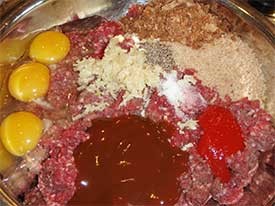
Ingredients (makes 16 patties):

  • Moose Mince (3 pounds)
  • 6 Cloves Garlic – pressed
  • 3 Eggs
  • 1/2 Cup Bread Crumbs
  • 1/2 Cup Bread Crust Crumbs
  • 3/4 cup Barbeque Sauce
  • 1 Tsp Salt
  • 1/2 Tsp Fresh Ground Pepper
  • 1/2 Cup Hot Chilli Sauce (just enough for flavor not enough to offend anyone)

mooseburger mix

Directions:

  1. Pre-heat Barbeque
  2. Combine all ingredients in large bowl
  3. Thoroughly mix
  4. Make patties by taking about 3/4 cup of moose meat mixture and flatten. Place on a piece of wax paper for ease of removal. Continue until all moose meat has been used.
  5. Cook you patties until the moose meat juice starts to pool on the surface of the patties. Turn the patties over and complete the cooking process. Follow the chart below for recommend temperatures for cooking moose meat hamburgers.

We like to put all of our patties on a large tray and then place them in the freezer until I am ready to use them. It doesn’t matter if they freeze, if all the time you have is for them to get a little stiff… that’s OK. It helps to keep the patties together while cooking.

If you don’t use all your patties at once place a piece of waxed paper between each one and then let them freeze for future use. For longer storage, once frozen we put our moose hamburger patties into freezer bags for easy access. If you want to grind your own moose meat get a quality grinder to do the job. Any leftover meat from the previous year can easily be ground.

Hint: Moose Meatloaf Recipe

You can always take the same mixture from the moose hamburgers and place it into a loaf pan… voila… easy moose meatloaf!

Add your favourite dressings and voila you have the makings for a perfect meal!

We added leaf lettuce, sliced tomatoes, sauteed mushrooms, sauteed onion, mozzarella cheese and our own special sauce.
Special Sauce

  • Mayonnaise
  • Hamburger Relish
  • Ketchup

Mix equal portions of mayonnaise and hamburger relish, add about one quarter of your mixture in ketchup. Example: 1/2 cup mayo, 1/2 cup relish, 1/4 cup ketchup. Internal Temperature for Cooked Moose Meat

  • Internal temperature of 125-135 = Rare
  • Internal temperature of 135-140 = Medium Rare
  • Internal temperature of 145-150 = Medium
  • Internal temperature of 160 = Well Done
  • Internal temperature of above 170 = Don’t Bother… Hahahaha!

Nutritional value of Moose Meat

Moose meat is naturally low in fat, and because it comes from the wild it contains no harmful chemicals or hormones. Moose meat is so low in fat that you often have to add some to prevent it from being dry. When we process our moose meat we do not add any fat to our mince, choosing instead to add fat when cooking as needed.

Enjoy

← Back

Thank you for your response. ✨

Email Information regarding

Do you like what you see? Join us on our Fishing Blog for more up to the minute action, tips and tactics!!

 
Leave a comment

Posted by on October 23, 2013 in moose, recipe, Wawang Lake Resort


Tags: , , , , , , , , , , ,

BBQ Moose Roast

How to Barbeque a Moose Roast

Have you ever wanted to barbeque a moose roast and still have it be tender? We have, and recently cooked a moose round roast on the barbeque that was so tender once we carved it, it was possible to cut it with your fork.

How did we do it? Let me tell you about it.

I started out with a moose round roast; I know this is not the best cut to be barbequing. So I knew it would require moist heat if it were to be palatable.

I remembered a friend of mine telling me how he had cooked ribs on his barbeque and had great results. I wondered if I could achieve the same?

mooseroast1

I wanted to give it a try.

The Process

The process is quite simple really, and you could likely apply this to any meat that is tough.

Cook it with moisture over a long period of time.

How much time… I cooked our roast for almost 9 hours.

Ingredients:

  • Moose round roast 3 pounds
  • 1 large onion
  • 5 cloves garlic (elephant)
  • 1 1/2 cups of barbeque sauce

 mooseroast2

Directions: Barbeque a Moose Roast

Thaw the moose roast in your refrigerator

Coarse chop the onion

Peel and slice half of the garlic and mince the balance

Start with a 8 inch by 8 inch roasting pan and place the moose round roast that you plan to barbeque onto a thin layer of the chopped onions.

Place the rest of the onions around the roast evenly.

What I did next was to sprinkle the onions with the sliced garlic and rubbed the roast itself with the minced garlic.

I followed this by pouring the barbeque sauce over the roast.

Once this was complete I covered the entire pan with a layer of heavy aluminum foil and took the pan (with the roast in it) outside to my barbeque.

I lit one burner (in my case the right hand one) and set it to low heat. I then placed the covered pan containing the moose roast I wished to barbeque on the left hand side well away from the heating element.

I then closed the lid.

mooseroast3

I have a thermometer on the outside lid of my barbeque I maintained a constant temperature of about 200 degrees Fahrenheit for 9 hours, until the internal temperature reached a minimum of 140 degrees; or your required doneness.

At the end of the cooking time the barbequed moose roast was cooked to perfection.

We served the moose roast with baby potatoes, carrots, chopped onions and mushrooms. All of which were cooked on the barbeque while the roast was cooking. All the veggies were wrapped in foil; salt, pepper and butter were added and placed directly over the burner that was set on low temperature. About 1 1/4 hours.

We made gravy from the juice from the meat pan as well we added the onions from the meat pan to our veggie dish.

Also we had grape tomatoes with feta cheese dressed with Balsamic Vinegar Reduction…

The barbequed moose roast, the entire dish… well…

Delicious

Now I can say we learned how to barbeque a moose roast… and have it tender too!

← Back

Thank you for your response. ✨

Email Information regarding

Do you like what you see?  Join us on our Fishing Blog for more up to the minute action, tips and tactics!!

 
Leave a comment

Posted by on October 7, 2013 in moose, recipe, Wawang Lake Resort


Tags: , , , , , , ,

In a Rut: BULL MOOSE DOWN!

First day, second hour and first moose down in camp!!!  Nice job Sandro aka Rookie on his first moose and his first visit to Wawang Lake Resort and Outfitters!

sandromoose

Sandro came up with a the long time D’Ambroisio group that has camped with us for the past 15 years with overall fantastic success.  John also let me know that all of this year’s group members have taken a moose over the years while staying with us!

Aviary Photo_130254763368957516

We have 3 openings left for the 2013 moose hunt season.  Sorry we do not have tags available.

moose hunter flyer.mix2

← Back

Thank you for your response. ✨

Email Information regarding

Do you like what you see?  Join us on our Fishing Blog for more up to the minute action, tips and tactics!!

 
Leave a comment

Posted by on October 5, 2013 in hunting, moose, Wawang Lake Resort


Tags: , , , , , , ,

In a Rut: 15A & 15B Moose Gun opener this weekend

So here we are again with the moose hunt just around the corner.  Our annual regulars will be descending on us from all over Ontario in hopes of bringing home those various trophies, be it antlers, meat or a great story!

moose

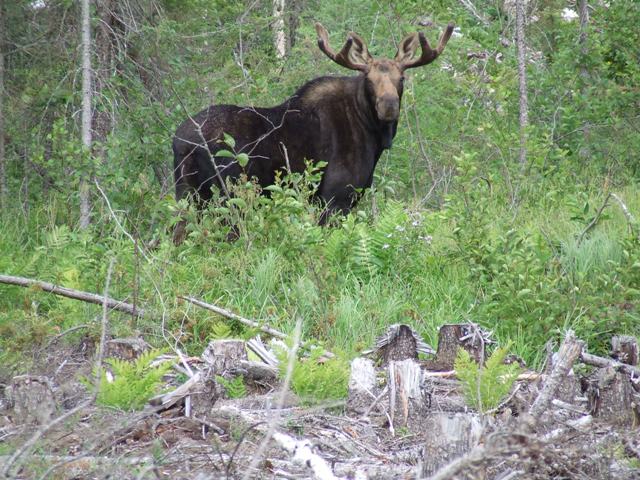
Both the 15A and 15B area are renowned for the density of moose and the easily travelled roads and cut overs that make finding one or or more of these beauties much easier.

We look forward to what this big game hunt will bring and we will keep you all posted on the expected success 🙂


Stay tuned!

← Back

Thank you for your response. ✨

Email me information regarding

 
Leave a comment

Posted by on October 3, 2013 in hunting, moose, Wawang Lake Resort


Tags: , , , , , , ,

The study of Caribou patterns in North Western Ontario

Tracking the travels of the elusive Woodland Caribou in the English River Forest

This improved understanding will help the ministry develop resource management practices that will minimize the impact of human development and resource use on caribou.

It is a relatively unknown fact that the Woodland Caribou once thrived in the Wawang area.  Herds lived freely and well fed on the abundance of lichen in the surrounding area.  In the last century, due to logging, hunting and forest fires, the population not only migrated but was also put at serious risk.

In 2012, the Woodland Caribou was escalated from the Species at Risk list to the Endangered Species list in our area.  With the stringent management and extensive research taking place, the Ministry biologists suspect that it may be slow but the Woodland Caribou will eventually once again become prolific in the English River Forest which encompasses Wawang Lake.

With such rarity, it was a real treat to see on right on our very own beach….what a majestic creature!

If you’re not familiar with northern forests, it would be easy to think that forest-dwelling woodland caribou are more or less on their own in these woodlands. But caribou share the landscape with many other species – including other large mammals.

The program is researching ways to maintain healthy caribou populations in the province. Since 2010, program researchers have fit more than 190 caribou with collars that transmit information about their location and movement behaviour in three large study areas. Their objective is to sample animals in relatively undeveloped landscapes, as well as in more disturbed and developed areas, to collect information on how survival, reproduction, habitat selection and movement patterns are affected by human influences. They plan to analyze this information to develop a better understanding of the factors that influence woodland caribou persistence. This improved understanding will help the ministry develop resource management practices that will minimize the impact of human development and resource use on caribou.

A shed radio transmitter collar used to track the movement and behavior of the Woodland Caribou

A shed radio transmitter collar used to track the movement and behavior of the Woodland Caribou

The Northern Mammal Ecology Program at the Ministry of Natural Resources Center for Northern Forest Ecosystem Research studies caribou, wolves and moose to learn what determines the density and distribution of these mammals on the northern Ontario landscape.

The abundance of other large prey species (e.g., moose) and predators (e.g., wolves) on the landscape are believed to influence the caribou density. When intact forests are affected by development or resource extraction activities, these disturbances may cause changes in the abundance, behaviour and the amount of habitat available for species like moose and wolves. These changes have the potential to have a negative impact on caribou density and persistence.

To gain a better understanding of how predators and other prey species might be affecting caribou, researchers are also collecting information on the distribution, density and behaviour of these other species. For example, more than 45 wolves have been fitted with collars that transmit information about their location and movements. These collars have been placed on animals that inhabit the same three study areas as the collared caribou. Information collected focuses on the types of habitat (e.g., forest types, landscape features) that wolves inhabit and travel through, the prey species they eat, and the characteristics of the locations where they catch their prey.

The collared movement data for the caribou in North W

The collared movement data for the caribou in Northwestern Ontario


Researchers have also conducted aerial surveys within the study areas to calculate moose densities and identify the characteristics of locations with relatively high and low moose densities. They are also examining historic information gathered from moose collared in other areas of northern Ontario, to develop a more detailed understanding of how moose respond to different types of forestry practices.

This holistic approach to caribou research – which focuses on the species they interact with, as well as caribou themselves – should provide some important insights into caribou ecology that will help the ministry develop effective caribou conservation measures.

In time, it will become more and more common to spot these animals on your visits up to Wawang Lake….stay tuned and keep your eyes peeled!

 
Leave a comment

Posted by on September 29, 2013 in caribou, Wawang Lake Resort


Tags: , , , , , , , ,

In a Rut: Call ahead

We all know that moose season in Ontario is just about to get fully underway and in anticipation of this event, I have located a fantastic article on the importance of the call.

The call is an often misunderstood and misused hunting necessity that can be the determining factor between success and an empty freezer.  Take some time to check out the article below, originally posted by The North American Sportsman page.  Also check out the other various informative articles they provide 🙂

The Rut & The Art Of Calling

During the first part of September, the rutting season begins. The rut generally starts about the time leaves turn color and may last from a month to six weeks. Both sexes become extremely active, travelling far more than at any other time of year. The bull shakes off his easy going ways and starts to roam outside his home territory. Instead of being a lethargic, detached creature, he is suddenly deranged by the urge to reproduce.

Prior to the rut the velvet is rubbed from their antlers, turning them into gleaming weapons. Once the rut has begun, this animal becomes stately and arrogant — with a very short temper. Anything, including hunters, that gets in his way is fair game.

A sexually active bull will travel far and wide in search of cows. Where normally he would quietly retire, he now becomes a beast with a mission; crashing through timber grunting challenges to all. He may fight, but it will invariably be with a bull of similar stature. A young bull often hangs around a more mature bull who has already collected a cow. He’ll keep his distance and will run off if seriously challenged. The transformation that takes place during the rut is a big help to hunters — it keeps bull’s on the move and lowers their usual guard.

evenly matched bulls, eye-to-eyeBull moose are content to stay with one cow at a time. Unlike breeding elk, which collect a harem, bull moose locate a receptive cow, stay with her a few days then move on. Bulls will service as many willing cows as they can find. By the end of the rut he is spent, thin, and bedraggled. He has fed very little in the last 4 to 6 weeks and now must start to diligently feed. Fat must be put on for the winter ahead.

Both sexes are excessively vocal during this cycle in their year. The sawing wail of the cow and the deep, croaking grunt of the bull indicate the seriousness of their intentions. What the hunter attempts to do is imitate these sounds.

During the rut, moose are often hunted by artificial calling. The most common form is comparable to bugling for elk. A horn constructed of birch bark, a commercial call or even something as simple as the cupped hands are generally used to imitate the bawling call of the cow or the grunt of a bull. Even a large plastic bottle (1 gallon or more) with the top cut off and a 3 foot long shoelace placed hanging through a small hole drilled in the bottom works well. The shoelace is wetted and slowly pulled through the fingers. With practice, this call has a reasonable resemblance to a cow’s rasping call. Whatever method you choose can be effective if done right.

two different types of moose callsGood areas for calling are just inside the edges of brush or timber around lake shores and from low, timbered areas leading toward meadows and bogs. Locate a wallow if you can. This is mud dug up by the front hoofs of a rutting bull to a depth of up to half-a-foot and can be several feet in diameter. The bull urinates in it, then wallows in the reeking mess. Sit hunched down in a concealed stand and grunt or bawl with the instrument you’re using. Wait a few minutes and try again. Try for an authentic sound that would be irresistible to any bull within hearing distance.

Another form of calling is to dump a hatful of water into a lake at late evening. At a slow dribble, this noise approximates the sound of a cow urinating — a noise that a rut-crazed bull cannot resist. On a calm day this sound will carry far. With this form of calling, the inexperienced “caller” is probably as accomplished as the veteran. We bring up this method of calling to point out that even unconventional calls can bring in an interested bull.

a calling bullThroughout moose range, calling works relatively well during the rut. To learn the proper sounds of rutting moose, invest in a commercial recording. Spend the time necessary to practice and perfect this “art” form. Few moose hunters are naturally adept at calling and if not done right, you may arouse suspicion rather than eagerness in a listening bull.

The majority of moose hunters are guided. If you fall in this category, it’s likely best to leave the calling to an experienced guide. Your guide will know the time, the probable places, and the circumstances under which calling will work. Done right, there is no bigger thrill than a love-sick bull charging in to your waiting rifle.

← Back

Thank you for your response. ✨

Email me information regarding

 
Leave a comment

Posted by on September 27, 2013 in hunting, moose, Wawang Lake Resort


Tags: , , , , , , ,

In A Rut: Moose Stir Fry

Moose season is almost upon us!  Below is a fantastic idea for a new game dish!

moosestir


This delicious moose dish is low in fat. The amount of each ingredient is proportional to how many people you’re serving. Using half a pound of moose, as this recipe does, makes two large servings.


Ingredients

  • 1/2 lb moose steak
  • 1/2 cup carrots
  • 1/2 cup bean sprouts
  • 1/4 cup celery
  • 1/2 cup snow peas
  • 1/2 cup broccoli
  • 1/4 cup unsalted peanuts
  • 2 cloves of garlic, minced
  • 1/2 cup soy sauce
  • 1 tbsp crushed red pepper
  • 1 tbsp cumin
  • Cooked noodles (excluding seasoning packet)

Preparation

  1. Slice steaks cross grain and marinade in soy sauce for one day. Throw a little oil into a hot wok to avoid sticking. Stir in moose for about 1 minute.
  2. Add other ingredients, including seasoning, stirring frequently. Add additional soy sauce to coat all ingredients.
  3. Stir in noodles and serve immediately.

← Back

Thank you for your response. ✨

Email me information on

 
Leave a comment

Posted by on September 23, 2013 in moose, recipe, Wawang Lake Resort


Tags: , , , , , , , , ,

Bull-In the Rut

Understanding the Moose Rut

Once you understand the moose rut, you will have a much better chance of finding moose. During the moose-rutting season moose are found in different areas than other parts of the seasons.

What Season Is the Rut?

Typically the peak of the rutting season for moose is the first two weeks of October. This is only an average though. The further north in the hemisphere you travel the earlier in the season the rut happens and the opposite is true for going south.

There are of course always exceptions to the rule, but for the most part early October will be the peak. Some have hunted in early September and been able to call bull moose in using and estrous cow moose calls in an area that I know the peak rut is October. There will always be some cow moose that will start ovulating early and of course a bull moose that hears the yearning calls of a cow moose in estrous will investigate, and may even vocalize his approach.

Where do the Moose Go During the Rut?

We have been asked many times where do the moose go during the rut? Hunters have been out pre-rut scouting and located the moose. Once the season has arrived they return to where they found the moose and cannot find any! Why?

moose-hunting-009c

Before the bull moose go into rut, they are usually found in the higher elevation areas. They will seek out cooler and thicker areas of the forest, higher in elevation trying to escape insects and predators.

Cow moose and their calves on the other hand will stay in the lowlands near water. The cows seek out water for two main reasons… food and safety. Calves are vulnerable, especially to wolves and bears. A cow with calf will use the water as an escape when threatened by predators. Sure the insects will be more bother but the safety of water will outweigh this.

When the moose rut begins and likely for a few weeks before the beginning of the cow moose estrous the bulls will move down out of the higher elevations to seek out the cows. The bulls will stay in the lower and wetter areas within proximity of the cows with hope of getting the breeding done. As the rut winds down the bull moose will once again move back to the higher elevations.

This migration makes for a sometimes elusive hunt.  Scan the area and look for all sign and be prepared for one exhilarating experience!

Join us next time for what to do when you spot your moose!!

 
2 Comments

Posted by on September 3, 2013 in hunting, moose, Wawang Lake Resort


Tags: , , , , , , , ,