RSS

Tag Archives: ontario

Ozonics: How Does it Work?

DSC_0173
Thankfully, wild turkeys don’t have a sense of smell, like deer, or we’d never outfox one. However, turkeys often thrive in deer habitat. Many seemingly perfect spring gobbler set-ups have been blown by a snorting deer that entered the hunter’s scent stream. A unique device called “Ozonics” can change that by eliminating human odor. It’s especially effective in an enclosed space, such as a turkey or deer blind. This unit works in spring or fall and has captured the interest of sportsmen, yet many aren’t sure how it works. Here’s the explanation from the manufacturer.

ozonics0b00a4ed-2288-483c-8cf7-b8e2d7d42280Neutralize a mature buck’s best defense, its nose, and a hunter’s chances of success rise dramatically. Cover scents, hunting clothes washed in scent-free detergents, avoiding a buck’s core area during the prime time to hunt because the wind isn’t right… Hunters are obsessed with scent, and for good reason. A deer’s nose is truly its best sense.

1041It’s not often a new hunting product revolutionizes the sport. Ozonics is just such a product. O1041zonics is the only scent-control product that deals with your human scent zone. Simply, there is nothing else like it. Ozonics is an in-the-field ozone generator. An Ozonics Unit electronically changes oxygen into ozone, which destroys your human scent zone. Ozonics blankets your scent zone with scent-destroying ozone propelled by a quiet fan. The ozone is unstable, so it will bond with your scent molecules, rendering them indistinguishable to the nose of a deer.Ozonics should be positioned 6 to 10 inches above you and angled downward. Use a wind tracker to detect wind direction, and then aim Ozonics downwind. Heavy ozone molecules generated by the Ozonics Unit fall through your scent zone. The ozone concentration is heaviest in the direction Ozonics is facing and closer to the unit. This is why knowing wind direction is important. Reducing your scent profile means more ozone reaches your scent stream.

Best of all, Ozonics is guaranteed. If you do not experience a dramatic reduction in the number of downwind deer that bust you, Ozonics will refund your money in the same calendar year as purchase.

Follow our FISHING BLOG

WEB   RATES     FISH    HUNT    CABINS    PHOTOS
TESTIMONIALS    BROCHURE    HUNT BOOKLET

Enter your email address to subscribe to this blog and receive notifications of new posts by email.

← Back

Thank you for your response. ✨

Email Me....


Tags: , , , , , ,

10 Incredibly Cool Adventure Campers You Wish You Owned

By Matt Alpert

Earthroamer21-700x366

These are 10 of the most awesome adventure campers ever made.

If you want to go car camping in the wild — the real wild — your Toyota Camry is not going to cut it. No my friend, you’re going to need something with some more chutzpah.

These 10 heavy-duty adventure campers are designed to crawl over any terrain that stands in their way, be it a steep mountain or dense jungle brush. Heck, some of them can even drive across the ocean.

Some of these adventure campers are loaded with amenities that you’d typically find in a high-end RV. So, if you’ve ever wanted to try glamping in a desert, jungle or rugged mountainside, these adventure campers will get the job done.

Jeep Forward Control

1-300x157

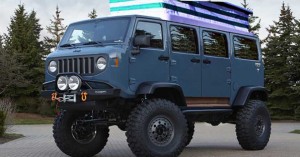
1The Jeep Forward Control is a unique utility vehicle that was made from 1956 to 1965. These trucks feature a cab over engine layout that gives the vehicle a shorter wheelbase.

Jeep Forward Controls were made as both a pickup truck and a van. Both designs are great vehicle platforms for rugged camper conversions, such as the one pictured above. Good luck finding one today.

EarthRoamer

2-300x157

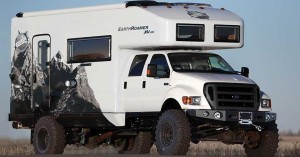
2If you had the thought to put your RV on a jacked-up 4×4, EarthRoamer beat you to the punch.

The company makes heavy-duty, go-anywhere expedition campers that are loaded with the amenities you’d expect in an RV. The company started by building self-contained Jeep Wrangler camper conversions, but later switched to modifying Ford trucks like the F-650 featured above.

Terra Wind Amphibious RV

3-300x157

3The Terra Wind is a fully-loaded luxury motor home that can operate on land and water.

It can reach a cruising speed of 7 knots on the water, and can drive up to 80mph on land. But it comes with a hefty price tag – these bad boys cost $850,000.

Unicat TC55 Comfort Plus

4-300x157

4Ok, it kind of looks like a garbage truck, but don’t let this rugged camper’s exterior fool you.

Inside you’ll find high-grade wood paneling, skylights, a shower room, multiple beds, a kitchen, stereo system and a whole lot more. This self-contained camper is also about as durable as adventure vehicles come. Plus, it can charge over anything in its path.

Unimog

5-300x157

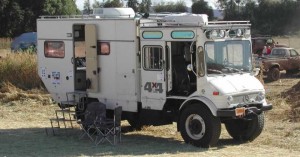
5The Unimog is the quintessential heavy-duty expedition vehicle. Manufactured by Mercedes-Benz, this rugged vehicle has portal axles for high ground clearance and flexible frames to handle rough terrain changes.

The Unimog’s powerful off-road capabilities have made it a big hit among adventurers and explorers.

Pinzaugers

6-300x156

6Similar to Unimogs, Pinzaugers are highly-capable all-terrain vehicles. They were originally designed for military use, but adventurers and expeditionists have taken a shine to them for their off-road capabilities, carrying capacity and durability.

These powerful vehicles can drive up and over just about anything in their way.

7-300x157

7Engineering whiz Rick Dobbertin built this one-of-a-kind camper out of a stainless-steel milk tank, and drove it from Florida to South America and back again via the Gulf of Mexico in 1995.

It has living quarters inside, and a front dash that looks kind of like it belongs in a spaceship. There’s only one Dobbertin Surface Orbiter in existence, and we wish we owned it.

Conqueror Australia

fold-open_jpg_662x0_q100_crop-scale

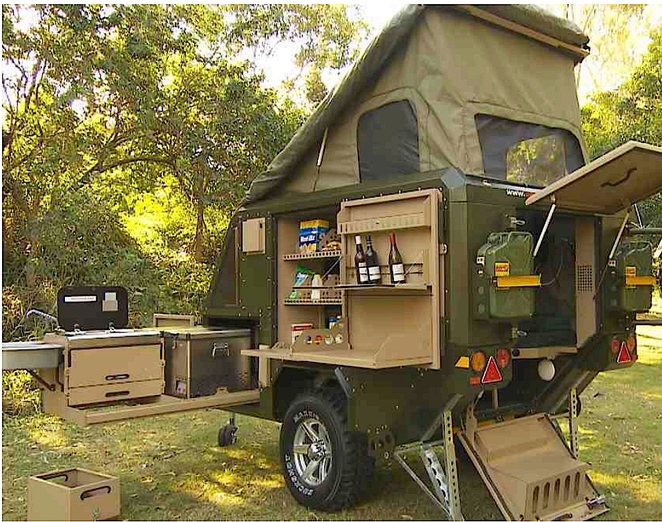
8Conqueror Australia’s UEV’s are rugged and versatile off-road camper trailers that have independent suspension systems and loads of cool campers features.

Each model comes with a fold-out kitchen, large hot water heaters, queen-sized beds, and lots more.

Sportsmobile

9-300x157

9Sportsmobile has been making customizable adventure campers since 1961. They convert Ford, Chevy/GM and Mercedes Benz vans into off-road vehicles.

As you can tell by the Sportsmobile featured above, they can get pretty tricked out.

Ford Push Button Camper

10-300x157

10Okay, it’s not a rugged all-terrain vehicle, but Ford’s 1958 push button station wagon camper is just too cool to leave off this list.

This one-of-a-kind camper contains a lifeboat and shelter that both unfold on the roof at the push of a button. It also has an unfolding kitchen with a refrigerator, sink and stove, and dozens of other automated gadgets.

Follow our FISHING BLOG

WEB   RATES     FISH    HUNT    CABINS    PHOTOS
TESTIMONIALS    BROCHURE    HUNT BOOKLET

Enter your email address to subscribe to this blog and receive notifications of new posts by email.

← Back

Thank you for your response. ✨

Email Me....


Tags: , , , , , , ,

Moose Hunting at Wawang Lake

Deeply imbedded in the Canadian Boreal Forest we offer the very finest in Moose habitat for our hunters.  Look no farther than Wawang Lake for accommodations for your next BIG game hunt!

BOOK Your Accommodations HERE!

WawangMoose

Our hunts accommodations ONLY for Ontario Resident Moose Hunters.

If your looking for a great hunting area that has a high population of moose then look no farther than Wawang Lake Resort as we’re in the middle of the best moose hunting area in all of NW Ontario.

At Wawang Lake we offer comfortable accommodations to Resident Ontario Moose Hunters only.  Presently we don’t have any tags available and unable to take any non-resident hunters during the Moose Hunt season.

Things Moose Hunters Should Consider:

Crossbows
• Draw length must be al least (11.8 in.)
• Draw weight must be at least (119 lbs.)
• Bolt head must be at least (0.9 in.) at the widest point, and there must be at least two cutting edges of straight, sharp, un-serrated, barbless steel.

Longbows
• Draw weight must be at least (48.5 lbs.) at draw length of (27.6 in.) or less.
• Arrow length must be at least (23.6 in.).
• Broad head must be at least (0.9 in.) at the widest point, and there must be at
least two cutting edges of straight, sharp, un-serrated, barbless steel.

Rifle
We suggest using at the minimum one of the following:
300 Magnum
30-06
7MM Magnum with bullet weights in the 180 grain range
A rim-fire rifle, a shotgun smaller than 20 gauge when loaded with shot, or any shotgun loaded with shot smaller than SG or No. 1 buck cannot be used for hunting Moose.


Clothing requirements
During the rifle season hunts, a minimum of 400 square inches of uninterrupted Hunter Orange must be worn at all times.  Camouflage or open mesh orange does not meet these requirements.  An orange jacket or vest as well as an orange hat do meet these requirements.

Hunters should also have a compass or hand held G.P.S., as well as a good pair of binoculars, thermos, flashlight, lighter, warm clothing, good quality rain gear, waterproof insulated boots, gloves/mitts, long underwear.   Two-way portable radios are also recommended.  Fall hunting weather can be warm & dry to cold, wet and snowy within a few hours; so it is best to be prepared for all variables.

BOOK Your Accommodations HERE!

We trust that this information will prove to be useful in planning your next Big Game Hunt in beautiful, exciting NW Ontario.  We invite you to enjoy our ‘True Wilderness Hospitality’ while participating in a remote hunting experience.

 WEBSITE    RATES     FISH    HUNT    CABINS    PHOTOS
TESTIMONIALS    BROCHURE    HUNT BOOKLET

Enter your email address to subscribe to this blog and receive notifications of new posts by email.

← Back

Thank you for your response. ✨

Email Me....

 
1 Comment

Posted by on November 14, 2015 in moose, moose hunting, Wawang Lake Resort


Tags: , , , , , , , , , , ,

Want More Grouse? Watch the Thermometer Drop!

P1040063
Cold, blustery days in early winter are not the best days to go grouse hunting. Neither are, humid, September days. Essentially, the best time to go grouse hunting is when you can. And if that means dealing with the weather de jour- so be it. That doesn’t mean you can’t find some grouse, and even pocket a few, regardless of the weather.

Grouse like to stay cool in early fall when Indian summer days send the thermometer to summer-like temperatures. During those glorious fall days grouse will sleep in on their cozy roost and then venture out into a sunlit patch to soak up the warming October rays. November and December is a transitional period when cover becomes as much a priority as food. Staying warm and out of the wrath of heat-sapping winds and cold makes the places that grouse frequent during the late fall and early winter months predictable. Most times the mercury can give you a heads-up on which way to go.

Ruffed grouse seasons open in September in Ontario. Going hunting then is more a testament to tradition than it is to wanting to kill grouse. Foliage is thick, dense and green. But, if you insist on subjecting yourself to this kind of brutality you might as well give yourself the best chance at finding birds.

Look at the thermometer and you’ll realize that one of the best places to look for early season grouse is near rivers and streams. Waterways provide cool summer oases for grouse and you usually won’t find them far from the same habitat come early fall. During especially dry years, the moist soils found along rivers and streams may be one of the few places that you’re going to find the types of vegetation that produce the fruits and berries that grouse love so much.

Another reason early season grouse can be found along waterways is that the thick vegetation protects grouse broods from predators. Moist soils produce lush habitat that is ideal for protecting young grouse broods and the temperate environment produces a lot of high-protein invertebrates that are critical to young grouse growth and survival. Working along river bottoms and creek beds can be a good tactic because grouse broods can often be found in or close to their brood habitat.

Grouse are often still in broods or tight-knit family groups in September and October and can be concentrated and difficult to find. Perseverance can pay off. You might hunt several prime coverts without success and then bust several coveys in a short period of time. The trick is to keep at it. When you do run into some birds, you’ll usually find a bunch and chasing down singles after the flock is broken up can produce some quick shooting.

And quick shooting is what you can expect this time of year. Shooting grouse is never easy, but the task is made increasingly difficult when foliage is thick and catching even a glimpse of a bird is tricky. In the early season, you need to post, plan and resist the temptation to go in after them. It’s fruitless. If you have a dog, let them do the dirty work. Instead, look for openings, deer trails, clearings and post where you can get a shot if a bird flushes in your direction. Put a bell on your dog so your can keep track of his location at all times. Let one hunter bust the brush while the other walks a logging road where a flushing bird just might offer a shot. Don’t wait for an open shot. You’ll never get one! Instead, instinctively point and shoot even if you only catch a fleeting glimpse of the bird. Many times I never even knew I’d hit the bird until the dog came back with the grouse in its mouth. Be sure to keep in constant contact with your hunting party and know their location for safety sake and wear plenty of hunter’s orange.

Think wide open chokes and small shot during the early season. Grouse are not difficult birds to bring down, so put a lot of shot in the air and maybe just a pellet or two will get through the trees and hit its mark.

Weather and temperatures can be quite diverse in October. You might be rewarded with one of those cool, sunny, perfect fall days that grouse hunters live for. But don’t be surprised if you’re forced to pull out the woolies and gloves either. And you might even wake up to some fresh tracking snow. That’s just how October is- transitional- and it’s a transitional period for grouse too.

This slideshow requires JavaScript.

Grouse have a smorgasbord of items to choose from in October and finding their preferred food source is often critical to finding numbers of grouse. Ripening fall fruits can draw grouse from far and wide. Grouse favor edge cover, and it’s no coincidence that some of their favorite culinary delights do best on edges where sunlight can penetrate the forest canopy. Depending on which state you live in, grouse can usually be found keying in on edge cover fruits like wild grapes, chokecherry, and a host of other fruity edibles. These open areas also produce some of old ruff’s favorite greens like wild strawberry and clover and are also places where they can find high-protein items like grasshoppers, crickets, and other insects.

When grouse numbers are high, they can be found in variety of cover types at this time of year. Even marginal grouse habitat will hold a few birds as grouse begin dispersing into new territories during the fall shuffle.

Cover becomes an increasingly important priority as the month wears on. October begins with it plenty of foliage and grouse can move about uninhibited. By the end of the month, the trees are bare, the wind has a foreshadowing bite to it and grouse must rely on their camouflage and staying hidden as much as possible. Still, you’ll find grouse wandering about in search of brunch or a late afternoon snack and those are two of the best times to hunt grouse at this time of year.

Obviously a peak time in October is the first week or two after the leaves have fallen. When this happens might vary by a few weeks from region to region, but it is prime time to be in the woods. Grouse seem to forget for a little while that they are not as invisible as they were just a few days earlier and their numbers are at a seasonal peak. You can actually see some of the grouse that you flush too. 

At this time of year you can find grouse in some pretty unusual places far from what you’d consider ideal grouse cover. I’ve found grouse under a solitary crab apple tree in the middle of a field far from what you’d consider grouse cover. I’ve shot grouse out of fields of goldenrod that you’d think were more likely to hold pheasants. No patch of cover is too small or too thin to hold a grouse then.

Once snow blankets the ground the whole ballgame changes. Grouse that have survived the onslaught of hunters, wolves, owls and know that when their environment becomes covered in white they are vulnerable. Snow also covers up many of the grouse’s food sources and feeding becomes a little more risky and perilous. Grouse don’t go on those aimless strolls in search of food. Their search is more deliberate and of shorter duration when the thermometer starts to dip and the weather turns cold. Cover becomes more of a priority.

It’s important to ferret out productive versus non-productive cover as quickly as possible. I don’t know about you, but I’m not as young as I use to be. Those all-day jaunts of pounding the woods are over. I’m usually only good for about a half a day of hard hunting and I want to make the most of it. To do so requires that you develop a since for identifying the absolute best cover and hunt it hard. Learn to not waste time where you THINK there might be birds.

Remember those light loads and wide-open chokes you used in September? Put them away if you’re serious about killing grouse once the snow flies. Shots will be longer and birds will be tougher. Replace your 8’s and 9’s with high-brass 71/2’s or even 6’s. Take the skeet tubes out and go to improved or even a modified tube in one barrel. With your shooting eye in late season form you’ll still get the easy shots and with the heavier shot and tighter chokes you’ll be able to add a few birds you wouldn’t normally pocket.

Grouse are tough customers. That’s why most of us hunt them. But watching the thermometer you can get a better idea of where to begin your search and make your days in the woods a little more productive.

Join us for our 2015 Grouse HUNT!

Check out our 24 pg. HUNT BOOKLET

Check out our 24 pg. HUNT BOOKLET

Follow our FISHING BLOG

WEB   RATES     FISH    HUNT    CABINS    PHOTOS
TESTIMONIALS    BROCHURE    HUNT BOOKLET

Enter your email address to subscribe to this blog and receive notifications of new posts by email.

← Back

Thank you for your response. ✨

Email Me....

Rates,eBrochure,THE OUTBACK Adventure Info,Hunting Rates’/][/contact-form]

 
1 Comment

Posted by on November 12, 2015 in grouse, hunting, Wawang Lake Resort


Tags: , , , , ,

Ontario’s Ruffed Grouse

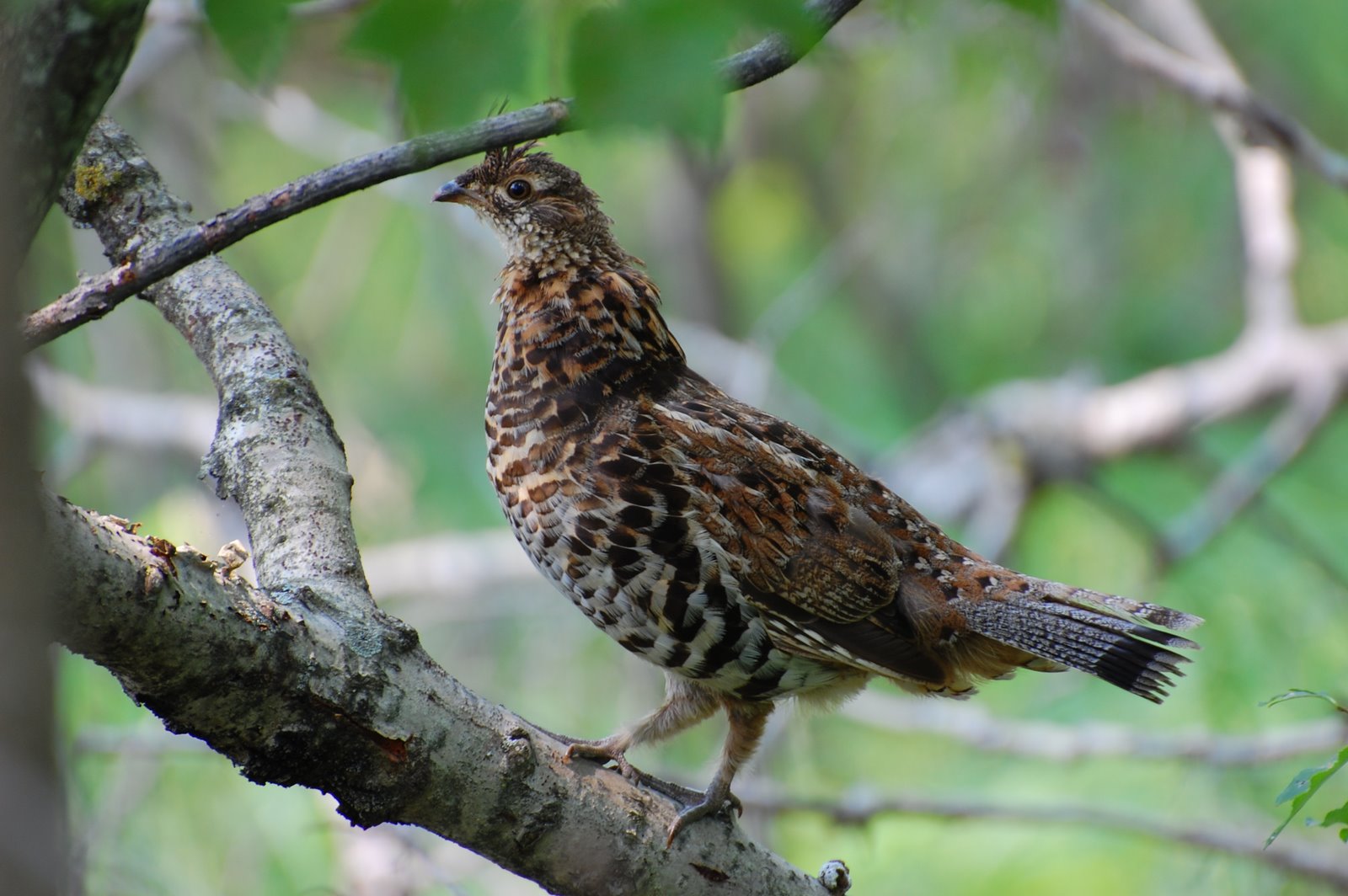
Ruffed GrouseAlthough sometimes regarded as “wilderness” birds, Ruffed Grouse have no aversion to living in close proximity to humans if the cover gives them adequate security. In some areas of Ontario, Canada –  Ruffed Grouse are more abundant in remote wilderness forests. They thrive best where forests are kept young and vigorous by occasional clear-cut logging, or fire, and gradually diminish in numbers as forests mature and their critical food and cover resources deteriorate in the shade of a climax forest.

Ruffed Grouse response to man varies greatly across their range, depending upon their experiences. In southern Ontario generally they are usually quite elusive and difficult to approach. Yet they can still be killed with a canoe paddle or thrown stones in NW Ontario wilderness forests.

When the ground is bare of snow, Ruffed Grouse feed on a wide variety of green leaves and fruits, and some insects. They have also been known to eat snakes, frogs as well. But when snow covers the ground as it does for most of the winter across the major portion of their natural range, Ruffed Grouse are almost exclusively “flower-eaters,” living on the dormant flower buds or catkins of trees such as birches and pin cherry bush’s.

Known as solitary in their social behavior they do not develop a pair-bond between males and females, although there is usually at least one hen in the woods for every male. Young birds, especially, collect in temporary, loose flocks in the fall and winter, but this is not equivalent to the covey organization of the quails and partridges.

Male Ruffed Grouse are aggressively territorial throughout their adult lives, defending for their almost exclusive use a piece of woodland that is 6-10 acres in extent. Usually this is shared with one or two hens. The male grouse proclaims his property rights by engaging in a “drumming” display. This sound is made by beating his wings against the air to create a vacuum, as lightning does when it makes thunder. The drummer usually stands on a log, stone or mound of dirt when drumming, and this object is called a “drumming log.” He does not strike the log to make the noise, he only uses the “drumming log” as a stage for his display.

The drumming stage selected by a male is most likely to be about 10-12 inches above the ground, in moderately dense brush, (usually 70 to 160 stems within a 10 ft. radius) where he can maintain unrestricted surveillance over the terrain for a radius of about 60 ft. Across much of the Ruffed Grouse range there are usually mature male within sight in the forest canopy overhead.

Drumming occurs throughout the year, so long as his “log” is not too deeply buried under snow. In the spring, drumming becomes more frequent and prolonged as the cock grouse advertises his location to hens seeking a mate. Listen to an example at the top of this page.

Courtship is brief, lasting but a few minutes, then the hen wanders away in search of a nest site, and there is no further association between the male grouse and his mate – or the brood of chicks she produces. A hen may make her nest more than 1/2 mile from the log of her mate.

Nests are hollowed-out depressions in the leaf litter, usually at the base of a tree, stump or in a clump of brush. The nest is usually in a position which allows the hen to maintain a watch for approaching predators. Sometimes hens will nest under logs or in brush piles, but this is less common, and a dangerous location.

A clutch usually contains 8 to 14 buff colored eggs when complete. Eggs are laid at a rate of about one each day and a half, so it may take 2 weeks for a clutch to be completed. Then incubation, which usually commences when the last egg is laid, takes another 24 to 26 days before the eggs hatch. A nest has to be placed so that it will not be discovered by a predator during a period of at least 5 weeks.

The chicks are prosocial, which means that as soon as they have dried following hatching they are ready to leave the nest and start feeding themselves. Grouse chicks are not much larger than a man’s thumb when they leave the nest. They are surprisingly mobile and may be moving farther than 1/4 mile a day by the time they are 3 or 4 days old. They begin flying when about 5 days old, and resemble giant bumble bees in flight. The hen may lead her brood as far as 4 miles from the nest to a summer brood range during its first 10 days of life.

Although grouse broods occasionally appear on roadsides, field edges or in forest openings, these are hazardous places for young grouse to be, and broods survive best if they can remain secure in fairly uniform, moderately dense brush or sapling cover.
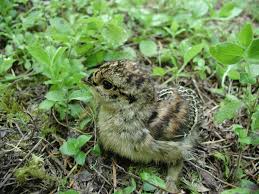
wawanggrouse1The growing chicks need a great deal of animal protein for muscle and feather development early in life. They feed heavily on insects and other small animals for the first few weeks, gradually shifting to a diet of green plant materials and fruits as they become larger. Chicks grow rapidly, increasing from about 1/2 ounce midgets when hatched to 17-20 oz. fully grown young birds 16 weeks later. That is a 38 to 46 fold increase in weight. At 17 weeks of age, a Ruffed Grouse is almost as large and heavy as it will ever be.

Biologists and others who want to age Ruffed Grouse rely upon certain peculiarities of the molt of the primary flight feathers. The booklet A Grouse in the Hand explains this aging procedure. And following the first complete molt by a 14 to 15 month old adult grouse, there are no known physical characteristics which reliably identify the age.

When about 16 to 18 weeks old, the young grouse passes out of its period of adolescence and breaks away to find a home range of its own. This is the second and last time that Ruffed Grouse are highly mobile. The young males are the first to depart, when they range out seeking a vacant drumming territory, or activity center, where they can claim a drumming log. Most young males find a suitable site within 1.8 mi. of the brood range where they grew up, although some may go as far as 4.5 mi. seeking a vacant territory. Many young cocks claim a drumming log by the time they are 20 weeks old; and once they have done so, most will spend the remainder of their lives within a 200 to 300 yard radius of that log.

Young females begin leaving the brood one or two weeks later than their brothers, and they normally disperse about three times as far. Some young hens move at least 15 miles looking for the place where they’ll spend the rest of their lives.

Occasionally a hen and her brood will remain together as late as mid-January, but this is unusual, and most groups of grouse encountered in the fall and winter are composed of unrelated individuals who gather together temporarily to share a choice food resource or piece of secure cover.

In fall and winter some inexperienced young grouse frightened by a predator or something else, crash into buildings, trees or through windows in a so-called “crazy-flight.” Sometimes they are evidently simply trying to take a short-cut when they can see through two large windows on the corner of a house. After all, young grouse in their first fall have never been confronted by something that can be seen through but not flown through, such as glass!

 WEBSITE    RATES     FISH    HUNT    CABINS    PHOTOS
TESTIMONIALS    BROCHURE    HUNT BOOKLET

Enter your email address to subscribe to this blog and receive notifications of new posts by email.

← Back

Thank you for your response. ✨

Email Me....


Tags: , , , , , ,

Wild Mushrooms

The main edible find in our region is  lobster mushrooms, Hypomyces lactifluorum, in some pretty good quantities. On any hunt, it’s good to bring home dinner, but one doesn’t typically expect to bring home a bundle of lobsters too late into the fall.

lobster-mushrooms-wawang-lake

Typically, by the end of August and into September the brush is filled with mushrooms, edible and not. Unlike spring hunting, fall hunting in and around our area is more mushroom identifying than actually trying to find mushrooms growing. But some year the lobsters can account for a major harvest.

This slideshow requires JavaScript.

So on your next trip out into our region whether you’re fishing or grouse hunting be sure to hike the old logging roads in search of these very delicious mushrooms.  Stay tuned for a great recipe that easy to prepare.


WEBSITE    RATES     FISH    HUNT    CABINS    PHOTOS
TESTIMONIALS    BROCHURE    HUNT BOOKLET

Enter your email address to subscribe to this blog and receive notifications of new posts by email.

← Back

Thank you for your response. ✨

Email Me....


Tags: , , , , , ,

Grin and Bear It: Planning your hunt

Planning a black bear hunt often a painstaking, long drawn out event that involves researching outfitters, contacting references, arranging for lodging and transportation, and choosing the proper weapon.

IMG_5703 (640x495)

Most people must apply for tags by lottery depending on location, but did you know that if you go through an outfitter in Ontario, Canada you are GUARANTEED a tag?!  With that in mind, let’s visit the outfitter planning phase.

NW Ontario is renowned for not only population but size of black bear.  In the last 3 years of our hunts, we have had 44 hunters.  Of those 44, 33 harvested 6 spotted and passed up and 5 did not spot  Pretty impressive stats.  We go a step further when we can boast that over 45% were 300lb+ with 8 being over the 400lb mark and our record (taken last year) was 475lb (dressed weight) and squared out at 7′

Whether you choose an outfitter (suggested for first timers) or set up your own hunt, be prepared to start planning at least as early as a year prior.  Do you have your area picked?  Do you know the native food sources? What was the weather pattern like this hunt season?  Were the bears active and what was the harvest from the season(s) prior to your arrival?

A good outfitter will have all of this information readily available as well as a list of references.  That list should include people that did and did not get their bears.  It should include multiple years and an honest overview. You need to know exactly what to expect when you arrive and during your hunt.

Patterning the animal by baiting is often preferred up here in the boreal forest as spot and stalk is very unlikely with our dense forest and thick canopy.  The bonus to baiting is the ability to cull the size and sex necessary to help maintain and manage the population.  Often times, in our area, those that spot and stalk often take the first animal they see as it may be the only one and most refuse to pass up the opportunity 😦

SAM_0025 (640x480)

Baiting and sitting a stand may seem like a ‘canned hunt’ but as most can attest to, it can be a grueling experience that will test your fortitude.  Most first time bear hunters assume (incorrectly) that if you feed them, they will come…..while that is often the truth, bears are as individual as people and even with food, there is no guarantee of compliance on the animal’s part….remember, you are dealing with a wild creature and trying in 14 days or less to train it to your will.  Those that have children or pets know that training anything can be a very difficult task but consistency is key!

When planning your hunt, ensure that you are prepared for the task at hand.  Don’t think that just because you showed up that the bear is going to get the memo.  Be prepared to sit that stand!  You cant harvest a bear from your cabin/tent/motel.

When you contact potential outfitters, ensure that they have answers to all of your questions and they are engaged with your plight.  They should be just as focused on you getting a bear as you are.  Your outfitter is your link to the area as well as in most cases in charge of ‘conditioning’ your bear prior to your arrival.  A good outfitter will be promoting consistency with baiting (by example of course).  We bait each and every day to ensure cycles and patterning is noted.

As mentioned earlier, bears are unpredictable to some extent and a bait that could have been hitting each time it was checked (hopefully daily) could quiet down for a day or two.  Be patient, if you trust your outfitter they will help you through this phase and often have backup plans including alternate baits that may be still consistent.  Ensure that your outfitter is the type that cares enough to keep up with you and your hunt and puts your success as a priority.

This slideshow requires JavaScript.

No hunt is guaranteed but what you can guarantee is that doing your homework can save you the disappointment of an unfulfilling hunt, bear or not!

Follow our FISHING BLOG

WEB   RATES     FISH    HUNT    CABINS    PHOTOS
TESTIMONIALS    BROCHURE    HUNT BOOKLET

Enter your email address to subscribe to this blog and receive notifications of new posts by email.

← Back

Thank you for your response. ✨

Email Me....


Tags: , , , , , , , ,

Moose Hunting – After the Hunt

moose-wawang-lakeHunters who take a moose and are camping out often have a feast—chunks of prime meat roasted on sticks over a campfire—a delicious and savory reward for their hard work. Butchering one of these big, heavy animals takes a lot of time and effort. A prime bull can yield more than 500 pounds of meat and fat. Traditional foods include many other edible parts of the moose such as the head, liver, heart, some other internal organs, and the highly valued fat. So it takes not only a lot of work to butcher a moose, but also specialized skills and a detailed knowledge of the animal’s anatomy.


moose=wawang-lakeA Delicious Feast

Moose meat and fat are staple foods in most many people who live in the northern regions of Ontario.

Fat is a very important part of a traditional diet because it stokes the metabolism and adds flavor to meat and organs. Unlike beef, moose meat is not marbled with fat, but rather the fat is separate. A favorite kind of fat is found in the sheath-like mesentery membranes that hold the organs together.

In times past, even the bones of moose were ground and boiled to make a fatty broth. If they didn’t use the bones immediately, they could store them as a potential source of food during times of scarcity.

Delectables include brisket, short ribs, heart, and tongue. Thin slices of meat may be fried. A delicious gravy is made from the fat.

A regular favorite is moose meat simmered in a big pot along with some combination of rice, noodles, or potatoes and sometimes vegetables. The result is a thick meaty, delicious stew. Bone marrow is also used in tasty, nutritious broths.

moose=wawang-lake

Follow our FISHING BLOG

WEBSITE    RATES     FISH    HUNT    CABINS    PHOTOS
TESTIMONIALS    BROCHURE    HUNT BOOKLET

Enter your email address to subscribe to this blog and receive notifications of new posts by email.

← Back

Thank you for your response. ✨

Email Me....


Tags: , , , , , , , , , , ,

Five Ways To Control Your Scent

Deer have always been prey species. They use all of their senses to avoid being killed by predators like coyotes, wolves, bears, hunters, and automobiles. Their most refined defense is their nose. Whitetail deer are believed to have noses one hundred times more sensitive than a dog’s. Uneducated deer are usually not exceedingly wary of human scent. But if you want to get close to a mature buck you’re going to have to control your scent. Here are five great tips for controlling human odor while deer hunting.

SCENT-WAWANG-LAKEScent Control Clothing The first step is scent control clothing. Some clothing utilizes activated carbon, others use silver to eliminate odor. Just about everything from base layers, socks, gloves, pants, jackets, hats, and facemasks are made to control odor. Of course, rubber boots are also an important addition. It doesn’t matter what you wear if you don’t take care of your clothing. If you’re wearing your scent free clothing in the truck or during breakfast you might as well wrap yourself in bacon. Don’t put on your hunting clothing until you’re in the field and have everything else ready to go.

Don’t wash your scent free clothing in normal detergent. Use scent free, phosphate free, UV brightener-free detergent. In fact, wash a load of your normal clothes in this detergent before doing a load of your hunting clothes just to get any residual detergent out of the machine. Once clean, clothing should be stored in a sealed, scent-free container.

De-Scenting Shower Your body is constantly creating odor. Bacteria is the chief cause of human odor and most scent killing soap is designed to kill bacteria. Lather your entire body and leave the soap on for about a minute before rinsing off. Letting the soap sit on your body will allow it to kill more bacteria. Be sure to wash a supply of towels with your scent free laundry detergent too. Before dressing, apply scent free antiperspirant.

Dirty Mouth One of the most bacteria rich environments on your body is your mouth. As you exhale, much of the scent from your mouth is dispersed into the air. Brush your teeth with unscented baking soda toothpaste at home and just before going into the field. Plaque is a chief producer of scent. Regular visits to the dentist can help control plaque and in turn, control scent. Chewing gum flavored with vanilla, apple, or mint can mask your scent.

Scent-Eliminating Sprays Just about everybody sprays down before hunting these days. But are you doing a good enough job? Buy your spray in bulk at the beginning of the season and don’t be shy about using it. Spray down at the truck and again in the stand. Spray down everything including yourself, your equipment, decoys, calls, and anything else you may have with you.

Using Scents There are two basic types of scents; cover scent and lures. I have seen deer lure scents work but personally avoid them. Using a deer lure scent is essentially asking deer to use their nose at a heightened level. Think about walking into your house when something really good is on the stove. You try to figure out what it is that you are smelling and are very aware of the scents in your home. If you come home before dinner is on the stove your house just smells like it always does and you’re probably not thinking about scent at all. The same principle applies for deer in my opinion. I do like cover scents but I don’t buy commercially produced scents. I prefer using scents from my hunting area. For example, we have junipers, apple trees, and various pines scattered throughout the property. I’ll use branches and apples to mask my scent. I’ve also been known to walk through cow pies on the way into my stand.

You’re never going to completely eliminate your scent. But if you can control it well, you can make a buck and possibly even a bear think your 200 yards away when you’re really just 20 yards away.

Follow our FISHING BLOG

WEBSITE    RATES     FISH    HUNT    CABINS    PHOTOS
TESTIMONIALS    BROCHURE    HUNT BOOKLET

Enter your email address to subscribe to this blog and receive notifications of new posts by email.

← Back

Thank you for your response. ✨

Email Me....

 
Leave a comment

Posted by on October 5, 2015 in hunting, Wawang Lake Resort


Tags: , , , , , , , , ,

Bear Baits – Consistency is Important

Consistent Baiting and Timing is Important
wawanglakebearbaitWe begin baiting two to three weeks prior to the hunters arrival as baiting is lucrative and can vary based on native food source availability, weather pattern and population.  If baiting is done too far in advance, bear can lose interest and become complacent.  The most impact for the hunter is when the food source is new and interesting yet dependable. The baits stations are checked regularly each day and documented as to its status:  whether it’s been hit or not.  This is also the ideal time to determine if the bait station has a sow with cubs or the size of the bear according to tracks.

wawanglakebearbait

Other animals frequent the baits as well.

All the information collected will determine if the bait station will be suitable for the hunter or not. Stations with sows will continue to be baited in order to confine that they remain in that specific area so they don’t wander and disturb the more suitable bait stations held for the hunters.

What Do We Use
Bears are omnivorous and will scarf down just about anything from produce to pastries, bread and meat scraps. The key is to make sure your offerings have a strong odor – sometimes the more putrid the smell, the better … at least when it comes to attracting them as we don’t place this directly on the bait.   However, during the fall bear do not especially like this strong scent on the bait therefore we use these attractants to drag the area ensuring to lure the bear to the bait station where more delectable bread, pastries and leftover good scraps are waiting. Visiting bear that walk trails and roads we’ve dragged will beneficially establish their own scent trail to and from the bait as well luring in even more bear.

The Set Up
Our baits stations are naturally set up and made from logs and other forest fragments. These logs are large, very heavy and piled in a manner making them difficult for smaller animals to move.  When hunters walk into the bait and notice that logs have been tossed around they are certain that a bear hi the bait.

bait

Know the Rules
Study the Ontario hunting regulations.  Know what you can and can’t do, season dates, licensing guidelines, bring firearms into Canada.   We want our hunters to be comfortable while hunting in Ontario and it is also important to know that you will need to bring along a state/province license as proof of hunting experience to show the Ontario license issuer. Always ask if you don’t know that’s what we’re here for.

When to Sit Baits
Our hunters are required to bring their own tree stands.  This is not only for liability reasons, but, also because you will be more familiar with your own tree stand and the more at ease you are with equipment the more it will increase your odds – less to think about. Upon request we will setup ground stands for those that are not able to climb. If this is the case be sure to bring along a comfortable chair.  Evening hours are by far the proven time to encounter bear on the bait. This however is simply a higher percentage timeframe.   Approaching the bait cautiously is always a must due to the fact that hunters have stumbled upon bear contently feeding at all hours, including early morning and mid-day. You can bring along trail timers and cameras to satisfy your knowledge of the activity of your bait station.

Follow our FISHING BLOG

WEBSITE    RATES     FISH    HUNT    CABINS    PHOTOS
TESTIMONIALS    BROCHURE    HUNT BOOKLET

Enter your email address to subscribe to this blog and receive notifications of new posts by email.

← Back

Thank you for your response. ✨

Email Me....


Tags: , , , , , , , , ,