RSS

Tag Archives: hunting

An adrenaline filled archery moose hunt!

Sometimes the thrill of the hunt gets escalated that much more!  This is one of the most adrenaline filled hunts we have seen in years.  This hunt was filmed in the Yukon and was executed with great skill…while we promote hunting, we suggest unless you have the skill necessary, do not try this out in the field 🙂

Are you an Ontario resident with a tag for 15A or 15B?  We have centrally located accommodations.  Book early to avoid disappointment!

moosehuntersjpg

Follow our FISHING BLOG

WEB   RATES     FISH    HUNT    CABINS    PHOTOS
TESTIMONIALS    BROCHURE    HUNT BOOKLET

Enter your email address to subscribe to this blog and receive notifications of new posts by email.

← Back

Thank you for your response. ✨

Email Me....


Tags: , , , , , , , , ,

The dangers of dry firing your bow


Dry-firing your bow is something you will want to avoid at all costs. To help minimize your chances of dry-firing a bow you should always draw a bow with an arrow in it, and aim it at a target. This way if you do accidentally release the string there is an arrow in it and you have a target to stop the arrow. Also if you are just trying out a bow be sure to draw with an anti-dry-fire release. When in a group of people it is very easy to become side tracked and forget to load your bow with an arrow. It’s always good to double check before you draw your bow


bowtarget


Dry firing a bow is the act of shooting a bow without an arrow. While this may seem harmless to some of us who are just starting out I assure you that this can be one of the most costly mistakes you can make.

The fact of the matter is that it can happen to anyone beginner or expert for many different reasons. Whether it be from ignorance, distractions, or accidental misfire of a release it happens all the time. So the question is what do you do if you accidentally dry-fire your bow.

There are a few outcomes that could happen when a bow is dry-fired, the first is that is that it will appear that nothing has happened to any of your bow. The second scenario is that your string breaks however everything else stays intact. The third possibility is your bowstring, and cables could snap resulting in your limbs breaking and potential debris flying all over the place. This is basically the worst case scenario and can at times be irreparable.

No matter what scenario your bow falls into after being dry-fired, the first thing you will need to do is to get a magnifying glass and a bright light and look over the limbs especially near the cams for any cracking, or splintering. If you find that one of both limbs have cracks or splinters in them then you will have to replace the limbs before you are able to shoot again. Failing to do so will likely cause will render the bow unusable and/or injury.

bowillustration

In any of the other cases where the string breaks and/or the bow limbs shatter, you will first go get medical attention if you need it and then you will need to bring your bow in to a bow repair shop and you will have to replace the limbs,string, and any other broken parts(axles,cams,wheels etc.).

After checking for cracks and splinters in the limbs, take a look at the cams/wheels to make sure that they have not been bent or cracked, again if they are you will need to replace them as soon as possible before you are able to shoot. Next if you were lucky enough to have your string still intact, you will need to check the whole thing for badly frayed portions, cut strands, and badly damaged areas, especially near the axles.
If everything checks out and you were unable to find anything wrong with your bow then you are lucky, and you have 2 options, your first option is to draw the bow(with an arrow) and shoot it. Make note of any weird noises, or vibrations. If you aren’t the risky type then you can bring it into a bow repair shop and they will have the tools and resources to be able to better inspect it for damages.

In closing, dry firing a bow may seem innocent, but in turn can be detrimental and even dangerous. Take your time to ensure longevity of your equipment for years to come and better success rates!

 
Leave a comment

Posted by on October 21, 2014 in archery, bow, Wawang Lake Resort


Tags: , , , , , ,

Deer hunters donate over 227,000 lbs. to help feed the hungry in Missouri alone!

I have often read comments regarding hunting (especially mass hunting) and what happens to the meat.  There are occasions when a population becomes too dense and the animals must be culled to reset the balance…this is what generally happens.

Via http://www.ozarkssentinel.com. The Ozarks Sentinel

— According to the Missouri Department of Conservation (MDC), 4,487 deer hunters donated 227,358 pounds of venison from the 2013 Missouri deer harvest to the state’s Share the Harvest program.

The program is administered by the Conservation Federation of Missouri and MDC to help feed hungry Missourians. Share the Harvest orchestrates the efforts of thousands of hunters, numerous local supporting organizations, and more than 100 participating meat processors to get ground venison to people in need through food banks and food pantries around the state.

Hunters donate their extra venison to participating meat processors who then prepare the donated venison by grinding it into one-pound packages that are given to food banks and food pantries for distribution to those in need.

← Back

Thank you for your response. ✨

Email Information regarding


 Processing fees are covered entirely or in part by numerous local program sponsors, and statewide sponsors that include the Conservation Department, Shelter Insurance, Bass Pro Shops, the Conservation Federation of Missouri, Missouri Chapter Whitetails Unlimited, Missouri Chapter Safari Club International, Missouri Chapter National Wild Turkey Federation, Midway USA Inc., Missouri Deer Hunters Association, and the Missouri Food Banks Association.

Since the program started in 1992, Share the Harvest has provided more than 3.1 million pounds of lean, healthy venison to help feed Missourians in need.

For more information on Share the Harvest, visithttp://mdc.mo.gov/node/2544.

 
Leave a comment

Posted by on March 19, 2014 in hunting, Wawang Lake Resort


Tags: , , ,

Know your Rover, Know its Range

So those that know me best, know that I am an avid dog enthusiast that has traveled the globe showing dogs.  I am passionate about dogs that can do what they were bred for and still hold a working ability.  This is a fantastic article outlining some very valid points- Enjoy!
by  February 3rd, 2014

a chocolate lab, pointing

“Here, Penny. Come here, girl. Whoa. Now Whoa!” The panicked expletives started the minute I turned my brittany, Penny, loose to quarter the covert. The problem was, it wasn’t me shouting the commands. It was my hunting partner who had only hunted upland birds over his labs.

He didn’t understand that the range for a pointing dog was vastly different than that of a flushing dog, (but really shouldn’t have been commanding or cautioning my dog at all).

He was used to a very close working dog and thought that a wider ranging dog was going to bump birds before we got in position to shoot. What he didn’t know was that a pointing dog, unlike a flushing dog, will (or should) hold birds on point until the guns arrives for the flush.

Range is simply the distance a dog can effectively hunt from its master, and this will vary from dog to dog, breed to breed.

To my mind, range is simply the distance a dog can effectively hunt from its master, and this will vary from dog to dog, breed to breed.

A dog’s natural range is first dictated by genetics and then molded by handling and training in the field. Each breed has its own general parameters in which it works effectively.

Being mindful of the differences between breeds makes the potential owners more informed and more likely to be pleased with their hunting companion.

Point or Flush?
Flusher Retrievers
Flushing dogs, such as retrievers and spaniels, do as their name suggests.

Upon scenting game, they chase and ultimately flush birds. In order to be effective, these dogs must work within a distance of typical shotgun range (10 to 25 yards). If the dog pushes the envelope and starts popping birds up at 35 to 40 yards, the number of missed birds will increase.

The way to train a dog to handle within range is to make sure it’s successful at finding birds in range of the gun during training. Planted birds and solid basic obedience training will convince the dog that if it stays close enough to the shooter, a mouthful of feathers and a retrieve are the reward.

Pointers
Pointing dogs on the other hand can, and should, stretch out the field a bit more. As long as the dog is dependably holding birds until the gun-totting hunter arrives, it can be trusted to reach out a little more.

To ensure that a dog remains steady on point and doesn’t flush birds prematurely, never shoot birds that the dog bumps or flushes.

Soon enough the dog will understand that the only way he gets the reward of a mouthful of feathers is to remain still and hold the bird on the ground until the handler flushes the bird.

Best Breed Debate
The debate over which breed is best for a particular game bird has gone on for decades and will certainly continue. With that in mind, I suggest for the rough shooter who expects to shoot both upland and waterfowl on a given hunt, one of the flushing/retrieving breeds might be most appropriate choice, flushing/retrieving breeds might be most appropriate choice — a springer spaniel or Labrador, for example.

With training, these breeds work close to the gun and will also be happy to hunker down in a blind while waiting for waterfowl to pitch into the decoys.

If, on the other hand, you like to keep your boots dry and hunt upland birds exclusively, then pointing breeds are a better fit. Pointing dogs have a style and range that add a unique flavour to the hunt. True pointing breeds, such as setters or English pointers, are specialists — as are those who tend to own them.

For those who don’t want their dog to dictate the kind of game they pursue, there are always the dock-tailed Continental breeds, such as German shorthairs, Hungarian vizsla, pudlepointers and even brittanys. Pointing, tracking, and retrieving of upland birds, waterfowl, and furred game is all in a day’s work for these versatile breeds.

The distance your dog works from you is ultimately a matter of choice. Regardless of what breed you prefer orgame you hunt, it’s important that you recognize the skills your own dog brings to the field and allow it the room he needs to be effective.

← Back

Thank you for your response. ✨

Email Information regarding


Tags: , , , , , ,

Sharpen your bow skill during the off season!

We practice with our bows all summer long, but after opening day its easy to get wrapped up in the hunting and forget about practicing. But even if you’re spending your time in the field and can’t hit the archery range every day, you can still keep your edge. Shooting in hunting situations is obviously different from target shooting. In the real world, weather conditions, shot angles, brush and other obstacles can impact your shot. Also, when the time comes to take a shot during a hunting situation you’re usually either stiff and cold from sitting in a treestand or sucking wind from running up a hill. All this combined with the fact that you must make a clean shot with the first arrow makes it all the more important to keep your shooting skills sharp. Here are a couple tips.

Practice Drawing
One of the biggest challenges to making a “cold shot” is that often the muscles I use for properly drawing my bow are stiff. The simplest way to cure this is to periodically pick a target, draw your bow, aim, hold, and let down your draw. This keeps you loosened up, plus drawing and aiming without actually shooting helps you focus on the target.


Practice Shooting

Although just drawing and aiming will help a lot, the single biggest help is to actually shoot while out hunting. A common practice among traditional shooters is to carry one or two blunt pointed arrows in your quiver so that you can stump shoot in your down time. Stump shooting is fantastic for keeping you warmed up, but unlike just drawing, actually completing your shots will bring your release into play, as well as give you all sorts of angles and situations to practice.

Small game is even better than stumps (grouse and rabbits taste a lot better too). Grouse can be deceivingly tough to hit. You want to aim for the base of the neck or the head. Sometimes they flush at the shot, but grouse will go in the direction that their head is pointing, so if you use a snaro point, you can either take their head off or hit them in the body as they flush. The best thing about grouse is they often give you extremely challenging shots, and if you can become consistent at taking them, you will be ready for the big game (make sure to check your local regulations before taking any small game with a bow).


← Back

Thank you for your response. ✨

Email Information regarding


Tags: , , , , , , ,

Bear Down: Tracking and the one that might get away

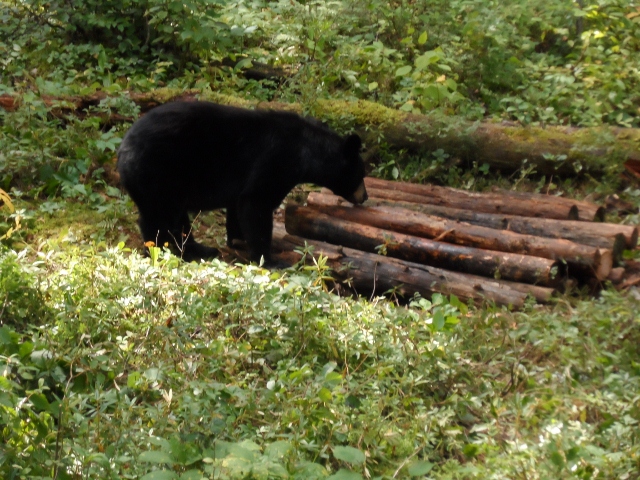
Black bear are very hard to kill, and they are hard to track when wounded. Even a good heavy-caliber lung or heart shot may not keep the animal from getting off into the woods, and that same shot may not leave very much of a blood trail. Wounded bear bleed into the porous fat layers between hide and muscle, and their thick fur absorbs external bleeding like a sponge. As the bear runs and the fat moves, it appears to seal over most wounds and even a heavily bleeding animal may travel a great distance before its wound begins to leave a visible trail again.

SAM_0022 (640x480)

There aren’t many more upsetting situations a hunter can face in this country than to put a carefully aimed shot into a carefully selected bear at virtual point-blank range, see it stagger, then vanish into the brush in two steps before you can even recover from recoil. You sit there, with dark closing in by the minute, not able to see more than 20 feet, and a wounded bear extending the distance. You have to get down onto the ground and do something about it. No wonder now why your guide and other experienced bear hunters kept telling you how important it is to hit a bear hard and solid and put him down and keep on hitting him until there is no chance he will get up and get out of your sight.

First rule is to wait.  Be patient and slowly gather your wits and be prepared for the next steps.

Second: Look.  Observe the direction your bear exited.

Third: Listen.  Bears are commonly known to turn into the direction of their wound (more likely if mortally wounded) and can actually end up circling the bait.  Those that don’t will run with such ferocity that the normally silent creature can cause major disturbances to surrounding areas and make enough ruckus for you to gage the direction to begin tracking.

If you are lucky, a short time after your shot is made, you may hear a drawn out, breathy cry often referred to as the death moan.  This likely means your bear is down and is not getting back up.  Don’t worry if you don’t hear one, not all bears will give you this satisfaction.

After waiting at least 30 minutes in your stand, cautiously come down and look at the area where your shot connected.  Look for any sign of your shot: blood, tissue or even an arrow that carried through.

Start in the direction where you shot and look for any sign of blood in the direction you saw your prey evacuate from.  Take the time to bring and use marking tape to highlight your trail as you go, not only will it give you a general direction, but it will also make finding your way out much easier and stress free.

A good, clean shot should drop a bear within 40 yards but we have tracked bear that have gone up to a couple of miles away.

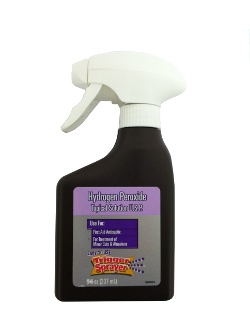
peroxide

On top of marking tape, I also suggest having a spray bottle with peroxide in your kit.  In the forest, leaves can often have brown marks that look an awful lot like blood and using the peroxide will help differentiate as it will bubble on contact with blood.  I often add the brightest yellow food coloring I can find to highlight the blood even further.  I also like to pack a small black light to use in conjunction with this mixture as it will illuminate if the natural lighting begins to fade.

It is not uncommon to spend a few hours searching if your bear has gone beyond the 40 yard mark but don’t lose hope.  Keep your eyes peeled for signs of foot prints, snapped twigs or torn leaves as this could be nature’s own way of marking your bear’s trail.

If the day ends and no bear can be found, ensure that you go back early the next day.  Look for any signs of scavengers in the area.  Turkey vultures are often a DEAD giveaway.  They feed in the daytime so be prepared to wait a bit for them to arrive.  We sometimes will suggest to our hunters to climb back in the stand and look over the area again from the original vantage point.

If on the second day there is no harvest found and no sign of scavengers, it is very unlikely you will find your bear and you will come away with one of the hardest experiences in hunting.  Disappointing for both sides.

So in closing, take time placing that shot and take time looking for any wounded animals you may have created.

← Back

Thank you for your response. ✨

Email Information regarding

Do you like what you see? Join us on our<a title=”Fishing Blog ” href=”wawangresort.wordpress.com”> Fishing Blog</a> for more up to the minute action, tips and tactics!!

 
Leave a comment

Posted by on November 25, 2013 in black bear, hunting, Wawang Lake Resort


Tags: , , , , , ,

Geared Up: Cleaning your gun

Most know that cleaning a firearm is a necessity for ownership.  This not only helps prevent malfunction and missfire but can also help bullet path and accuracy.  What most don’t know is that the average gun owner does not clean their firearm correctly which can lead to major headaches down the road 🙂

Here are a few great tips to set you straight

Step 1: Clean barrel and metal parts
Step 1: Clean barrel and metal parts with good commercial solvent.
Step 2: Bore should be cleaned through breech end
Step 2: Bore should be cleaned through breech end where possible.
Step 3: Clean bore until dry patch comes through as clean
Step 3: Clean bore until dry patch comes through as clean as possible.
Step 4: Run oily patch through barrel
Step 4: Run oily patch through barrel.
Step 5: All metal parts should get light coat of oil
Step 5: All metal parts should get light coat of oil.
Step 6: Store in horizontal position
Step 6: Store in horizontal position, or with muzzle pointing down.
Step 7: After storage, run a clean patch through bore
Step 7: After storage, run a clean patch through bore before firing.
Step 8: Remove all excess grease and oil
Step 8: Remove all excess grease and oil.
Click to view pdf of this diagram
With clean gun in hand, enjoy the hunt!

← Back

Thank you for your response. ✨

Email Information regarding

Do you like what you see? Join us on our<a title=”Fishing Blog ” href=”wawangresort.wordpress.com”> Fishing Blog</a> for more up to the minute action, tips and tactics!!
 
Leave a comment

Posted by on November 23, 2013 in firearm, gun hunting, Wawang Lake Resort


Tags: , , , , , , ,

Quick tips for hunter safety

While reading some great hunting articles last night, I came across a very overlooked topic.  This is an article written by Tyrrell Hearn and is a great quick snippet on basic hunter safety tricks!

climbing treestand

Over the years we have all heard of hunting accidents and how bad they can be. Hunting safety should be paramount in the mind on any hunter, especially those using high-powered rifles. It goes without saying that guns are designed to take life quickly and effectively, making it imperative that you treat them as such. If you are a hunter, here are a couple tips to keep you safe this season.

IMG_5703 (640x495)

Blind placement– Keep in mind that there are people around you who may also be hunting in the mornings and evenings. Be mindful of other known hunting groups in your area. Having a chat with them about the direction of their firing lanes so everyone is up to date on their neighbor’s new hunting spots is a great way to stay safe.

Less powerful bullets– It is always a draw to buy the highest grain bullet for your guns, however, higher grain equals a faster and longer bullet trajectory. Pick something a little smaller but effective for the game you are targeting.

Aviary Photo_130254763368957516

Hollow points– Buy hollow point bullets. Full Metal Jacketed bullets are not legal to hunt with in most areas anyway. Hollow or soft tipped bullets will break up even if they are only hitting brush and small trees. Lessening your chance of a bullet traveling way past your target.

P1040004

Safety orange– Wear your safety gear so that even at a distance, the most novice of hunter will not mistake you for an animal.

Stay safe, think ahead, and have a great hunting season!

← Back

Thank you for your response. ✨

Email Information regarding

Do you like what you see? Join us on our<a title=”Fishing Blog ” href=”wawangresort.wordpress.com”> Fishing Blog</a> for more up to the minute action, tips and tactics!!

 
1 Comment

Posted by on November 19, 2013 in archery, black bear, grouse, moose, Wawang Lake Resort


Tags: , , , , , , , , ,

Gear up: Bow Hunting 101:pt 1 The Parts of Compound Bow

The lure of archery hunting has been an age old tradtion. From the evolution of spear to projectile, a sport was born!

Many people (including myself) have been daunted by the task of choosing their first bow. From draw length to pull pounds, this choice can be pivitol to a successful purchase.

There are many manufacturers and models being introduced yearly boasting a wide array of different accessories, colors, cam numbers and composites but in general, most compound bows come equipped with the same basics.

Study the image to the right to help learn the parts of the compound bow. Click on a compound bow part for glossary definition.

Parts of a Compound Bow

parts of a compound bow

  1. Arrow Rest
  2. Arrow Shelf
  3. Berger Hole
  4. Bow Sling
  5. Bow String
  6. Brace Height
  7. Cable(s)
  8. Cable Guard
  9. Cable Slide
  10. Cam(s)
  11. D-Loop
  12. Fletchings / Vanes
  13. Grip
  14. Limb(s)
  15. Nock
  16. Nocking point
  17. Peep Sight
  18. Quiver
  19. Riser
  20. Sight
  21. Silencing Aids
  22. Stabilizer
  23. String Vibration Arrester
  24. Tiller Measurement

With this basic outline, you can build your understanding and move forward into the purchasing stage.  Remember, before attempting to harvest any animal, practice practice practice!  More times than not, an amateur archery hunter will skip this step and either miss or wound an animal needlessly 🙂

If you are anxious to use your bow immediately, join an archery club…not only will you learn the skills needed, but you may even meet others that are looking forward to hunting and may request your company 🙂

Follow our FISHING BLOG

WEB   RATES     FISH    HUNT    CABINS    PHOTOS
TESTIMONIALS    BROCHURE    HUNT BOOKLET

Enter your email address to subscribe to this blog and receive notifications of new posts by email.

← Back

Thank you for your response. ✨

Email Me....

 
1 Comment

Posted by on November 15, 2013 in archery, bow, Wawang Lake Resort


Tags: , , , , , ,

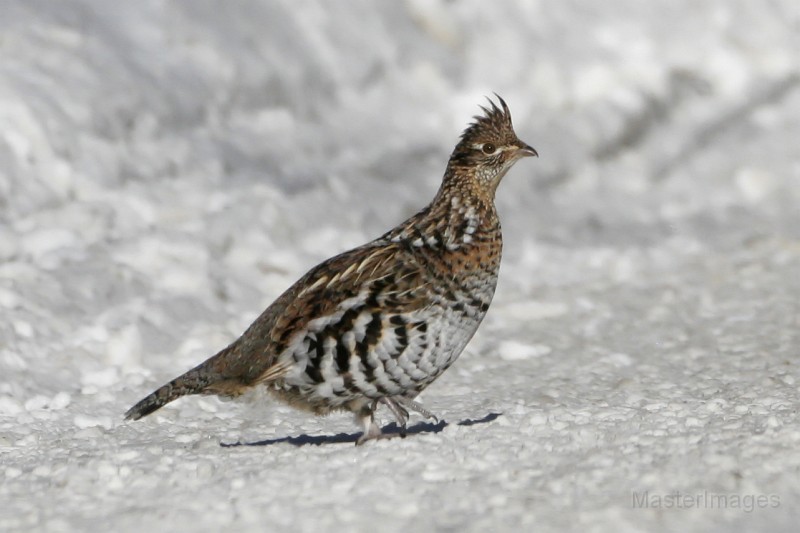
Bird Brained: Ruffed grouse in the winter.

Winter can be a great time to hunt ruffed grouse. Okay, anytime is a good time to hunt grouse (maybe – maybe – no so much in the early season) but winter can be particularly good. If, as always, you find where the birds are. 

Many hunters have trouble finding ruffed grouse during late season, even with the aid of snow. Since ruffs are usually grouped around the available food sources, it might take a bit of walking to find them.

grouse in snow

It is usually to a late-season grouse hunter’s advantage to hunt at a fast pace until tracks in the snow indicate a group of grouse has been feeding in the area, and then slow down and hunt that territory thoroughly.

Since the fruits and greens favored by grouse earlier in the fall will have all but disappeared by December, the birds will be feeding mostly on buds and catkins. Grouse will pick away at a variety of edibles, but the catkins of hazel are their favorite early-winter food.

Ruffs definitely prefer the larger catkins of hazel plants that grow in areas exposed to the sun, so look for the best hazel thickets to be in open areas and on woodland edges. Overgrown cattle pastures are almost always good, especially when close to more typical ruffed grouse cover.

hazel catkins

Ruffed grouse also feed on ironwood and birch buds during December and, as winter progresses, aspen buds. Grouse also eat highbush cranberries, and unlike many other woodland fruits, the colorful red berries remain on the stems through the winter, or until hungry grouse pluck them.

Examine the crops of the birds you kill because that will help you determine what they are feeding on.

On cold days grouse will often feed only in the late afternoon, forgoing their breakfast, but will usually be loafing within a quarter-mile of their favorite food source. If the snow is deep the birds may be roosting under a blanket of powder. Otherwise grouse often will hunker next to logs or tree trunks in a sunny spot out of the wind, or may relate to evergreens such as balsam fir or spruce.

Once flushed, late-season grouse often land in a tree.

While hunting in the snow can be good, it can also be tough if the snow is crunchy: The birds will hear you coming and boogie off. If you can get out after a new snow, hopefully not on top of an icy layer, it’s particularly good.

snow grouse

And remember: If you track a grouse to a tree, it will flush from the opposite side.

Follow some of these tips and you should have a bountiful harvest and a full dinner plate!

← Back

Thank you for your response. ✨

Email Information regarding

Do you like what you see? Join us on our<a title=”Fishing Blog ” href=”wawangresort.wordpress.com”> Fishing Blog</a> for more up to the minute action, tips and tactics!!

 
Leave a comment

Posted by on November 13, 2013 in grouse, hunting, Wawang Lake Resort


Tags: , , , , , , , , ,