RSS

Tag Archives: hunting guide

HUNT the HUNTER

The best timber wolf habitat in all of Ontario CANADA is located in the Boreal Forest
around………. Wawang Lake Resort

HUNT the HUNTER – Ontario’s Timber Wolf

HUNT the HUNTER – Ontario’s Timber Wolf

Hunting a top predator is a challenge you will never forget. A timber wolf hunt is not for the novice hunter though.   In fact hunting for wolf will require more determination and patience than any other type of hunt.   If you’re the kind of hunter that can pride themselves with this type of stamina then wolf hunting is definitely something you’ll  want to experience.

Remaining aloof is what wolves do best and they are also extremely cautious and above all prefer not to be seen. They hunt small game, moose and bear for a living, so they are extremely resourceful. They

are shrewd, cautious, and have finely tuned senses. With this said remember that the wolf is the hunter’s top opponent when hunting in NW Ontario and up for any challenge man will present.

Our region of the Boreal Forest remains to be one of the most populated areas for the timber wolf with pack sizes reaching 30 or more and this is due mainly because of our small game, moose and bear population that are at its peak annually.

Wolves are nocturnal hunters, so getting a crack at one during legal daylight hours can be difficult, but, by precisely following the strategic technique of our expert guides it can be done.

WawangWolfHunts2Wolves are territorial and each pack occupies, hunts, and protects a specific area.   Once we know where a pack lives, we can learn more about them and that is the groundwork  for  our  hunts.  We  know  of  many different packs, in this vast area, and each year we gather information of each packs hunting patterns. A pack seems to hunt a particular route and often return to the same areas with unbelievable regularity.

Calling is helpful if the wolves are within earshot. Distressed small game calls such as rabbits (snowshoe hares) works well, as this and other small game are the wolves’ primary food source along with moose and bear. Also, howling can be effective. A wolf will almost always answer to a howl regardless of their distance from the person howling.

Hunting down live large prey like moose or bear takes a lot of energy so wolves are also opportunists. They can smell blood from many miles away and frequently visit our baiting stands for an easy meal so we know where they are, but, the wolf hunt is much more interesting than that. Outsmarting wolves means having an outfitter that knows their strategy and scouts out what game trails they are using.   Placing baits sites in proper places can mean the difference between success or not!
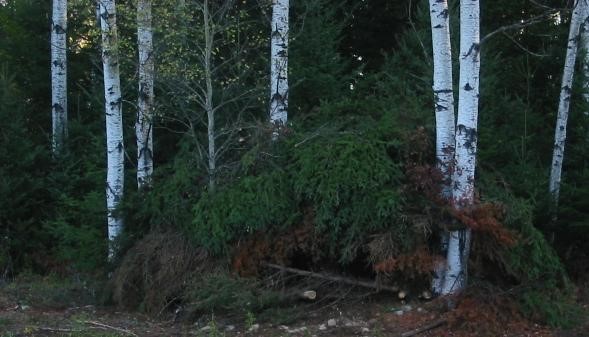
wawanglakeblind

A Typical Natural Hunt Blind

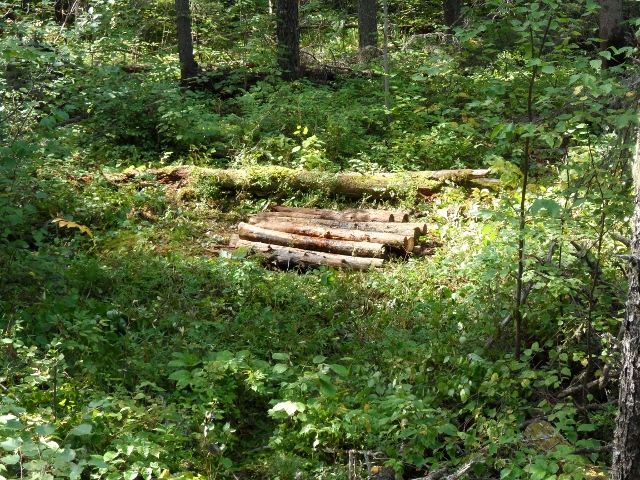
We hunt from natural ground blinds made from deadfall, but, because temperatures can be extreme we advise our hunters to bring along their own commercial ground blinds (aired out for at least two months in advance of the hunt) in order to be more comfortable, however, this can be risky and best to avoid this type of blind if at all possible as the wolves can be skittish of them and of course can reduce the hunter’s chances of success. It is always best to dress for the extreme outdoor  conditions  and  hunt  from the natural ground blinds we provide.

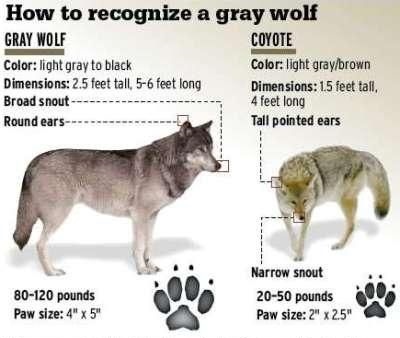
The color phases of the wolves seen in our area are varied, from the most common gray tones to blacks and whites, to medium tones of cream, gray, brown and orange.   The specs of our wolves are as follows:

  • Length: 4.9 ft – 6.7 ft.
  • Weight: up to 175 lb
  • Height: between 26” to 33”

There are very few guarantees in hunting, but we do offer you this . . . . .

That you will find the wolf hunt a challenging and enjoyable experience in some of the most beautiful terrain you’ve seen.
Your guides are passionate hunters and strive to provide the same hunting experience for you that

they would want for themselves.
Our resort is a comfortable with a homey environment to relax in after an enjoyable day in the field…..and we feed our Meal Plan guests very well!

So while the outcome of the hunt is never a guarantee, the quality of the hunt experience is. And when you hear that first ghostly howl in the distance you will know you are in timber wolf country and from that moment on you will be hooked!

For further information, or, to book your next bear hunt please contact us at:
1-888-534-9217 or EMAIL

 WEBSITE    RATES     FISH    HUNT    CABINS    PHOTOS
TESTIMONIALS    BROCHURE    HUNT BOOKLET

Enter your email address to subscribe to this blog and receive notifications of new posts by email.

← Back

Thank you for your response. ✨

Email Me....


Tags: , , , , , , , , , ,

How to Use Your Knife

knife-wawang-lake

WEBSITE    RATES     FISH    HUNT    CABINS    PHOTOS
TESTIMONIALS    BROCHURE    HUNT BOOKLET

Enter your email address to subscribe to this blog and receive notifications of new posts by email.

← Back

Thank you for your response. ✨

Email Me....

 
Leave a comment

Posted by on September 24, 2015 in How to Use a Knife, knives


Tags: , , , , , , , , , , , , , ,

How to Use Your Knife

knife-wawang-lake

WEBSITE    RATES     FISH    HUNT    CABINS    PHOTOS
TESTIMONIALS    BROCHURE    HUNT BOOKLET

Enter your email address to subscribe to this blog and receive notifications of new posts by email.

← Back

Thank you for your response. ✨

Email Me....

 
Leave a comment

Posted by on July 18, 2015 in How to Use a Knife, knives


Tags: , , , , , , , , , , , , , ,

How to Identify a Gray Wolf

Identify a Wolf


wolf-track-wawang-lake

WEBSITE    RATES     FISH    HUNT    CABINS    PHOTOS
TESTIMONIALS    BROCHURE    HUNT BOOKLET

Enter your email address to subscribe to this blog and receive notifications of new posts by email.

← Back

Thank you for your response. ✨

Email Me....


Tags: , , , , , , ,

3 Guys, 3 Bears…One Awesome Trip!

3 Guys, 3 Bears…One Awesome Trip!

There is nothing more fun for a hunter than taking a long road trip with the guys and getting away from it all. The difference between the average ‘getting away from it all’ and a hunter’s ‘getting away from it all’ is that the hunter’s version often times includes a stand and some great harvest stories. This rang true for Dave, Tim and Jason. On September the 7th they arrived at my front door with weapons in hand and excitement in their eyes. Though it was Dave’s second hunt with us, it was both Tim and Jason’s first time hunting a bear. Dave had acquainted them with what to expect and the basics of our operation and much to the boy’s excitement, we were providing them all with baits that seemed to be jam packed with bruin. The first night came with all guys coming to camp empty handed but Dave letting us know that his bait was just a Bear Highway….they were everywhere! Tim had heard a bear and Jason had yet to have any sign of.

The following night had proven fruitful to both Dave and Tim, taking their trophies earlier in the dusk hours. Jason had heard several sounds around him but had yet to spot. He was fine with that though as the following day was his birthday and he felt that a birthday bear would be that much more fitting. The next morning as the boys began to prepare their bears, Jason prepped and began that drive to his stand. Thoughts raced through is head as to what his day would hold and how he was going to handle harvesting that bear.  Early that evening, I spotted the truck pulling in, my heart was wild with anticipation….had he gotten his birthday bear? As Jason emerged, his face was pulled with a frustrated look and the color was drained. “I missed!” was all he said. After a few minutes of silence, Jason filled me in on the adventure. “I was just opening my pb and j and having a bite. I saw a set of ears pop up and slowly put the sandwich on my lap. I lifted my gun just as the bear emerged to my right and he stood and sniffed the air…I think he wanted my sandwich! He dropped and began to lick the tree directly broadside and I fired……the bullet went low and right below. No hit but just hit the ground. I have NO IDEA what happened! The bear took off like a bat out of hell and that was it. I sat for about thirty minutes and had to get out of there. I am so frustrated that I know I couldn’t shoot proper a second time. Tomorrow I am taking my .270.” SAM_0016 (640x480) With that we both agreed that this could happen to anyone and that it’s better than wounding and wasting a bear. I knew tomorrow he would have a different plan. The next day Jason came in for his coffee and sat quiet. The thought of the day’s play could be read in his eyes and it was obvious that today he woke up with serious intention.  Dave and Tim decided to load the boat and spend the day kicking back while Jason set out as tightly wound as he could be. The day wore on and not a truck in sight. As the night fell, Jason arrived with a tired, defeated look in his eyes. “Nothing. I didn’t see a thing today. It was a long day.” I knew that the events of the day prior had made today seem much longer but I knew that his determination hadn’t left. The following morning, Jason met with Terry and they came up with the new game plan. It was a variation of the original but the outcome was planned the same….Come home with a bear! As Jason left for the day, we all settled back into our daily routines, me in the lodge, Tami back to marketing and Terry back out to the baiting. At 3:12pm a black truck made a hasty entrance to the resort and straight over to cabin 6. Jason was back! He was energized as he exited the truck and fists pumped the sky! “I got it! It’s down!” With a couple of high fives and congratulations I could just see the pride in his eyes. He had finished the group with 100% success rate! As he tied the tell-tale orange flag for the other two on the lake to see, he began to load the truck with retrieval supplies. As they all arrived back with Jason’s bear, the camaraderie was thick. Each were successful and each just as happy for each other as themselves.

When a hunter ‘gets away from it all’ it’s what they come away with afterwards that counts!

Follow our FISHING BLOG

WEB   RATES     FISH    HUNT    CABINS    PHOTOS TESTIMONIALS    BROCHURE    HUNT BOOKLET

Enter your email address to subscribe to this blog and receive notifications of new posts by email.

← Back

Thank you for your response. ✨

Email Me....


Tags: , , , , , , ,

Camouflage Won’t Help IF…….

You’re invisible. Or at least you think you are. After all, you’ve done all the right things: bought that pricey camo that matches your surroundings, painted your face with lots of greasy face paint, and you are even wearing camo boots. Now all you have to do is sit there, soak in a little sunshine, and wait for a big boar to show himself.

SAM_0066

But when a bear does come in, he spots your position and blows out for the next county.  The problem? You set up in the sunlight

A common mistake that has ruined plenty of big-game hunters’ chances is setting up where direct sunlight can reach them. Sunshine turns a camouflaged hunter from an indistinct shadowy figure into a glowing beacon. Dappled sunlight shining through a canopy of leaves isn’t usually a problem. But direct sunlight can reveal your whereabouts and end your hunt.

SAM_0057

Camouflage clothing’s basic function is to break up our outline – tricking our prey’s eyes into passing over us in their constant search for danger. The human silhouette is incredibly distinct in the wilderness – there is no other form like it. To fool game, it is essential to reduce our human outline. The best camo patterns utilize starkly contrasting colors in their design, thus changing us from a human form into something indistinct and non-threatening. Interestingly, for those of you traditional hunters like me – a good plaid pattern like Fred Bear often wore can work almost as effectively as modern camouflage.

jamie

Remember that sunlight moves as the earth rotates. Set up your ambush in a location that allows you to remain shadowed as the light moves around you. If you are still-hunting or stalking, move efficiently through areas of sunshine and then pause to watch and listen when in the shadows.  Set up in dark shade that offers good shooting lanes. Remember to keep your hands and face camo’d up as well – if left uncovered, they are a dead giveaway even in the shadows.

Follow our FISHING BLOG

WEB   RATES     FISH    HUNT    CABINS    PHOTOS
TESTIMONIALS    BROCHURE    HUNT BOOKLET

Enter your email address to subscribe to this blog and receive notifications of new posts by email.

← Back

Thank you for your response. ✨

Email Me....


Tags: , , , , , , , , , , , , ,

Tips for Choosing the Right Outfitter

What kind of a hunt do you want?
The first question you need to ask yourself is what type of a hunt you want.  There are baited hunt, spot & stalk hunts, and even combinations of these. Think about your physical capabilities, your shooting ability, experience and desires. Scenery, number of bears you want to see, frantic action or lack of it, and climate. These things and more go into your choice of a hunt. If you start talking to an outfitter and you realize this isn’t exactly what you are looking for, don’t hesitate to back out.

image[2] (2)

Websites are one of the best places to learn more about a hunt. You can read about the outfitter, the guide and importantly, how long they’ve been in business. You can look at an album of photos and have a candid discussion that will give you a real gut feeling for the hunt and the people you will entrust with your money and in some cases your life. In the course of the search you will think of questions to ask so ask them on the spot in your email or phone conversation, you will think of even more questions to ask so write them down and ask at a later time.

If you do not meet the outfitter in person then plan to have a good phone conversation and ask the tough questions. Get references of successful and unsuccessful past clients and call them.

h2

Define your Expectations
Realistically, an outfitter can’t offer you the hunt you really want unless they know exactly what you want. Many people have had a bad experience because they went on a hunt that wasn’t a good fit because they didn’t specifically tell the outfitter what they wanted. If an outfitter says they have fishing available, but you get there and find out its only fly fishing and you don’t know how to fly fish; that’s your fault, you should have clarified it before you left home.

Be honest about your physical limitations. Don’t go on a spot & stalk hunt if you can’t hike up a steep hill. Likewise, if you are 400 pounds and can’t get into a tree stand, it would be a good idea to tell the outfitter that ahead of time so he can get a ground blind in place. Don’t surprise your outfitter when you pull into camp. He will be asking questions and expecting honest answers and you should be too.

404

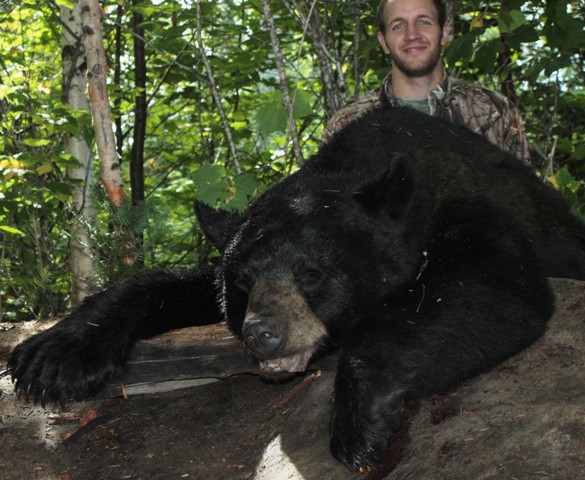
Are you looking for a truly big black bear? Make sure you are going to a place that has them. There are a lot of places that specialize in getting everyone a bear, but the top end of them is about 300 pounds. If you want to bag a giant, you have to ask the questions that will help you understand the type of operation you are dealing with. Looking for a color phase bear? Ask the specific questions about percentages of color bears. Then ask exactly how many and what colors were bagged there in the past three years. Trust your gut, if it doesn’t feel right, back off.bear3

Make your needs and preferences known. If you have health issues as simple as a lactose intolerance or an allergy, tell them so they can pass it along to the cook. If you don’t like baloney sandwiches, tell them that. Or don’t complain if you find yourself in a tree stand for six hours with nothing but a baloney sandwich to eat.

Ask specific questions about the temperatures, clothing you should bring and footwear. Not much is worse than having nothing but leather hunting boots when you have to slog through a swamp to get to your stand. Wet, smelly feet can ruin a trip as fast as anything. Ask about outerwear, mosquito protection, long johns and headwear.

Many baited hunts mean long hours in the stand during the afternoon and evening, but having something to do during the mornings can make a hunt much more enjoyable.  What if you shoot your bear early in the hunt? Learn what might be available to take up your time while you wait for a buddy to get his bear.

Check out our 24 pg. HUNT BOOKLET

Check out our 24 pg. HUNT BOOKLET

Get to know the area well before leaving for the hunt. Look at the area on Google Earth, check the weather for the hunt on accuweather.com, spend some time on the outfitter’s website.

The theme in this article is communication. That’s because the vast majority of bad experiences can be traced back to bad communication; either yours or the outfitter’s. Make sure it isn’t yours.

Follow our FISHING BLOG

WEB   RATES     FISH    HUNT    CABINS    PHOTOS
TESTIMONIALS    BROCHURE    HUNT BOOKLET
Enter your email address to subscribe to this blog and receive notifications of new posts by email.

← Back

Thank you for your response. ✨

Email Me....


Tags: , , , , , , , , , ,

Evolution of a Hunter

wawang-lake

 WEBSITE    RATES     FISH    HUNT    CABINS    PHOTOS
TESTIMONIALS    BROCHURE    HUNT BOOKLET

Enter your email address to subscribe to this blog and receive notifications of new posts by email.

← Back

Thank you for your response. ✨

Email Me....


Tags: , , , , , ,

Grouse Population

 imagesPOPULATION
Ruffed Grouse normally have a short life span. From a brood of 10 or 12 hatched in late May or early June, usually 5 or 6 will have died by mid-August. Among those living to disperse during the fall shuffle, about 45% will have been lost by late fall and early winter. Another 10% die over winter and during early spring, so that only about 45% of the young grouse alive in mid-September live to their first breeding season. In subsequent years a given cohort (a season’s crop of young birds ) continues to shrink by about 55 to 60% per year. So from 1000 chicks hatched in late spring, about 400 normally survive to early autumn, 180 survive to the following nesting season, 80 are alive a year later, 36 live to breed a 3rd time, 16 may breed a 4th time. One out of 2200 chicks hatched may live as long as 8 years.

Most Ruffed Grouse die a violent death to provide a meal for one of a number of meat-eating predators, for in the natural scheme of things, Ruffed Grouse are one of the first links in a complex food chain. Some also die from disease and parasites, or from exposure to severe weather, or accidentally by hitting trees or branches while in a panic flight after being frightened.

grousewawanglakeAcross the major portion of the Ruffed Grouse range, the winged predators or raptors are most efficient at taking these birds. Although the goshawk is certainly the most efficient of all grouse predators, the horned owl probably kills more grouse annually than any other predator. This is due to the cosmopolitan distribution of these owls and the likelihood that any woodland capable of supporting grouse will have resident horned owls, or at least be regularly visited by them. Yet, where cover is adequate, grouse can find security and maintain their abundance even when goshawks and horned owls live and nest nearby.

Conditions are seldom static in the world of the Ruffed Grouse and their numbers fluctuate from year to year, and from decade to decade. Across most of their range in the northern states, Canada and Alaska, Ruffed Grouse numbers have risen and fallen in a somewhat predictable pattern for most of this century, in what is often called a “10-year cycle”. In the Lake States, for example, periods of abundance usually coincide with years ending in 0, 1 or 2, and the bottom of the depression in years ending with 5 or 6. This is not invariable, but a general, regional trend. These “cycles” sweep across the continent more or less as a wave, beginning in the far Northwest and Northeast, and progressing southward and southeastward.

The factors responsible for these periodic fluctuations remain poorly understood, and appear to involve a number of different factors interacting with one another in different ways at different times. The one factor which does not appear to be important is hunting during the period of fall dispersal.

grousewawanglake3

The primary causes for the short-term fluctuations in Ruffed Grouse abundance appear to be related to weather trends and variations in the quantity and quality of food resources. These are interrelated to a large degree. Superimposed upon these two basic factors is that of predation – as predators take advantage of grouse placed in jeopardy by unfavorable weather conditions or inadequate food resources. A favorable combination of weather factors and food resources may allow these grouse to survive the winter nearly immune to predation. These combinations of factors also affect annual production. If grouse spend the winter feeding on poor quality foodstuffs, or have to use an excessive amount of energy to keep warm, hens may not have sufficient reserves to produce a clutch of viable eggs, or vigorous, healthy chicks in the spring. Across most of their range, the most productive and most abundant Ruffed Grouse populations are those living where they spend most of the winter burrowed into 10 inches or more of soft, powdery snow, and emerge for only a few minutes once or twice a day to take a meal of the male flower buds of the aspens. Our Ruffed Grouse can be considered snow lovers or “Chionophiles.” Ruffed Grouse tend to be less numerous and less productive if they live in regions where they cannot burrow in snow and feed on aspen (poplar).

grousewawanglake2There also seems to be a poorly understood relationship between the color-phase of a Ruffed Grouse and its ability to survive severe wintering conditions, and its vulnerability to predation.

Longer term changes in Ruffed Grouse abundance reflect how we have treated our woodlands and forests. There is also reason to suspect that much of the severity of the “10-year cycle” is largely a result of how we have treated forested lands. These birds depend upon the food and cover resources produced by a group of short-lived trees and shrubs growing in full sunlight which develop following the severe disturbance of forests. In earlier times, fire and windstorm were the ecological agents periodically renewing forests and creating satisfactory habitat for Ruffed Grouse and many other species of forest wildlife. Ruffed Grouse should be considered a “fire-dependent” species in the natural scheme of things.

Our current reluctance to cut forests, even under strict management plans and the suppression of fire to protect growing forests, have upset this natural sequence of events. In the early part of this century, farm abandonment and the recovery of forests from unregulated logging and fires produced habitats which probably resulted in the greatest abundance of grouse in recent times in most of Canada & northern  United States. But as forests mature under protection from fire and cutting, they lose the habitat qualities Ruffed Grouse require. In many regions, Ruffed Grouse numbers have declined as forests have become more extensive and older.

Ruffed Grouse abundance can often be readily restored by proper harvest management of forested lands, or through the judicious use of prescribed fire that is ongoing in northwestern Ontario.

Follow our FISHING BLOG

GROUSE HUNTING at Wawang Lake

 WEBSITE    RATES     FISH    HUNT    CABINS    PHOTOS
TESTIMONIALS    BROCHURE    HUNT BOOKLET

Enter your email address to subscribe to this blog and receive notifications of new posts by email.

← Back

Thank you for your response. ✨

Email Me....


Leave a comment

Posted by on December 17, 2014 in grouse, hunting, Wawang Lake Resort


Tags: , , , , , , ,

Pay Attention to Detail

Scent can be your biggest ally or your worst enemy

wawanglakebear
Black Bear are attracted to the aroma of a free meal, but if they catch a whiff of you, you can often kiss them good-bye for a day or two.   Keep your clothing and footwear as scent-free as possible. Be alert at all times while hunting your bait. You will most often see bear before you hear them. With padded feet they move with calculated precision. Remember, when they come into a bait station they know the treats were left by humans.

Shot Placement

Regardless of your choice of weapon, whether it is a gun or bow, learning when and where to shoot can mean the difference between an expedited kill, or, the outcome of tracking a wounded animal. We advise our hunters to wait until the bear is preoccupied with the bait and is facing away while standing broadside or quartering away. Bears are extremely tough, so a double lung or heart shot are always your best option therefore taking your time will be important.

wawangshotplacement

When archery hunting, bows must meet the following specifications.

Crossbows: Draw length must be at least (11.8 in.);

  • Draw weight must be at least (119 lbs.);
  • Bolt head must be at least (0.9 in.) at the widest point; and,
  • there must be at least two cutting edges of straight, sharp, un-serrated, barbless steel.

Re-curve Bow:    Draw weight must be at least (48.5 lbs.) at draw length of (27.6 in.) or less;

  • Arrow length must be at least (23.6 in.);
  • Broad head must be at least (0.9 in. at the widest point; and,
  • There must be at least two cutting edges of straight, sharp, un-serrated, barbless steel.

For bow hunting Black Bear we recommend a compound bow with a draw weight of no less than 50 pounds and a 100 grain broad head

Recommended Knowledge base
www.mnr.gov.on.ca/en/Business/FW/Publications/MNR E001275P.html

For rifle hunting black bear we recommend using nothing less than a .270 caliber.
Other recommended calibers: 7mm magnum; .308; .30-06.  NO 30-30’s

Firearm Information www.rcmp-grc.gc.ca/cfp-pcaf/index.htm

The bottom line – baiting is a proven strategy for attracting a wary game animal with a voracious appetite. It involves much more than just tossing out a few tasty morsels. There is a right way and a wrong way to do it and our experienced guides take pride in their skills and knowledge. Keen attention to detail and listening to the guide is the key to your success.

In order to ensure the highest possible success to our hunters we take only an average 14 hunters a year. Should we have an increase in bear sighting throughout the spring and summer we may take a few more hunters but our first obligation is to ascertain a healthy black bear population together with satisfied hunters for years to come.

Most importantly, remember baiting is a ton of work and takes weeks on our part for each hunter. From collecting legal paper work to buying and picking up the ingredients, materials along with travelling for miles and then finally establishing and maintaining each site daily prior to your hunt. It requires foresight and commitment on our part and we do this because of our passion for the outdoors and careful management of our Black Bear.

Follow our FISHING BLOG

WEBSITE    RATES     FISH    HUNT    CABINS    PHOTOS
TESTIMONIALS    BROCHURE    HUNT BOOKLET
Enter your email address to subscribe to this blog and receive notifications of new posts by email.

← Back

Thank you for your response. ✨

Email Me....


Tags: , , , , , , , , ,