RSS

Tag Archives: hunting at wawang lake

Flint Laces: Shoe Laces That Can Start a Fire

flint-laces-shoe-laces-that-can-start-a-fire-thumb

The Flint Laces are a pair of shoe laces that you can use in case of an emergency to start a fire with if you are otherwise incapable of starting one. Maybe you forgot your matches at home, maybe it just rained and all your matches are wet, or maybe you’re stranded in the woods without a match or a lighter and you’ve lost your manhood and just can’t make a fire using your own two hands.

flint-laces-shoe-laces-that-can-start-a-fire-9435
Each flint lace contains a hidden piece of ferro rod that is capped with rubber. Simply scrape the rubber from the rod, strike it against a knife or some steel (assuming you have some), and you will be toasting your buns on a nice hot fire in no time.

The flint laces are completely normal shoe laces other than containing a fire starter rod, they are made from type III 7 strand 550 paracord, contain 4 separate rods (1 on each end of each shoelace), come in sizes 36-108, and are perfect for when you’re planning on getting lost and stranded while hiking or camping.


Follow our FISHING BLOG

WEBSITE    RATES     FISH    HUNT    CABINS    PHOTOS
TESTIMONIALS    BROCHURE    HUNT BOOKLET

Enter your email address to subscribe to this blog and receive notifications of new posts by email.

← Back

Thank you for your response. ✨

Email Me....


Tags: , , , , , , , , ,

Turn Your Phone Into A Walkie Talkie

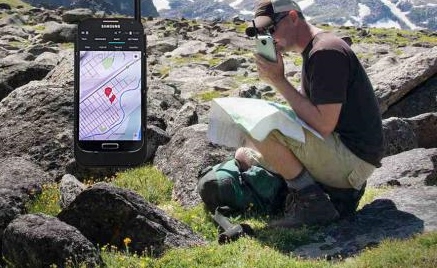
Beartooth a case to use on your smartphone that essentially turns your phone into a walkie talkie to be used when your phone is out of range of cell service.beartooth-case-that-turns-your-phone-into-a-walkie-talkie-thumb

The device will allow you to make texts and phone calls with other Beartooth users over a radio signal, and even allows you to get your geo-location to be used with a map. The radio device will even encrypt your text messages using a 128-bit encryption to keep your data safe.

The Beartooth phone case radio features individual or group messaging, an SOS broadcasting that that will broadcast your position at user defined intervals for emergencies, as well as hold extra battery storage for your phone right in the case.

The radio will reach the standard length of most walkie talkies (around 2 miles), comes with a 2000 mAh battery that will double the battery life of your phone, and will operate in the 151-154Mhz (VHF) and 462-467Mhz (UHF) frequency ranges. Price and availability for the device is to be determined, but production is said to begin in 2015.

Follow our FISHING BLOG

WEBSITE    RATES     FISH    HUNT    CABINS    PHOTOS
TESTIMONIALS    BROCHURE    HUNT BOOKLET

Enter your email address to subscribe to this blog and receive notifications of new posts by email.

← Back

Thank you for your response. ✨

Email Me....


Tags: , , , , , , , , , , ,

Develop Proper Archery Form


SONY DSCPictured here is perhaps the most popular position of the feet when it comes to shooting; the “Open Stance”. It is easy to perform and opens up the shooter to the target resulting in less interference with clothing from the bowstring.

Despite the fact that you may be shooting the most highly tuned bow, adorned with top of the line accessories, if your shooting form is bad your accuracy will likely be worse. Shooting with good form requires mastering a number of processes. However, once these processes are understood and learned, shooting with proper form will be as easy as walking across the floor; it will become second nature.

Before incorporating the following steps into your shot routine, be sure that you are shooting a well tuned bow set at the appropriate draw length.SONY DSC

Proper Shooting Stance
Where you place your feet during the shot process can have a great bearing on where your arrow strikes. By nature, your body has a natural centering point. If your feet are not positioned properly you might find yourself being pulled away from this centering point. As a result, the body will fight to return to this location. Unfortunately, this can occur during the shot which will impede accuracy.

Resist the urge to grip your bow. Instead, let your fingers naturally drop around the handle and riser. This will eliminate unwanted tension and bow torque making your shots more accurate.

There are 3 basic stance positions to consider. They are as follows.
  • Squared Stance:  Feet are in-line with one another, drawing a line perpendicular to the target.
  • Closed Stance:  Front foot is forward from the front of the body
  • Open Stance:  Front foot is slightly pointing toward the target.The best stance, regardless of which you choose, should be comfortable and solid. This starts by placing your feet about shoulders-width apart with your body weight distributed between the midsection and rear of your feet.

Most bow hunting experts will suggest an open stance which starts by positioning your toes 90 degrees to the target, and then taking a half-step backward with the foot that is closest to the target. This stance will essentially place the chest more toward the target and allow for greater bowstring clearance along the bow arm and chest.

However, this stance may not be for everyone. In order to find your perfect stance, enlist the help of a friend and simply close your eyes and draw your bow while facing a archery target with a wide back 1wall, anchoring as you normally would. With your eyes still closed, move your body and feet around until you find the most comfortable position. Then, open your eyes and note the direction of your aim.

When it comes to hauling back the bowstring, don’t rely on the small bicep muscles of the arm. Instead, use the larger, more stable muscles of the upper back and shoulder. Not only can these muscles pull more weight, they are also steadier and fatigue less quickly.

Let down the bow and reference the position of your feet by pointing an arrow straight at the aiming spot. You have just found your stance.

SONY DSCCorrect Bow Grip
When it comes to gripping the bow you want to do so in such a way that hand torque is not promoted. In other words, you want your grip to be as torque-free as possible. To do this, you first need to find the best location for the grip to contact your hand. This can easily be accomplished with a simple test.

First, take your bow hand and hold it out as if you were going to grip the bow; keeping it slightly open and rigid to imitate pressure being applied to it. Next, take your thumb from your other hand and push it into your bow hand at different locations. You will notice that every location you push with your thumb causes your bow hand to move or collapse—-except one. That one spot is where you want to place the pressure of the bows grip while at full draw.

Your bow arm shoulder should be down and in a “locked” position while at full draw. This makes it more difficult to flex the bow arm causing shot-ruining muscle tension.

This location is typically where the bones in the forearm butt up against the base of the palm. It is a bone-to-bone contact point and is the most reliable, torque-resistant location in which to place the bow grip.

When grabbing the bow, place a small amount of tension on the string, just enough to feel it in your bow hand. Then position the grip into the area you discovered by pressing your thumb into your palm. Now you are ready to draw the bow. Just remember, upon reaching full draw, your bow hand should remain relaxed with your fingers falling down or dangling around the front of the riser.

Drawing the Bow
This may seem like a trivial facet to good shooting, but drawing the bow properly incorporates all of the essential muscles needed in order to shoot with good form; mainly, the back muscles. One of the easiest ways to do this is to think of your drawing arm elbow as having a hook in it. When drawing the bow, start with your elbow about as high as your jaw line. Then, imagine someone has a string attached to the hook that is in your elbow. Now, think about them pulling your elbow straight back as you draw your bow. Instead of puling with your biceps, you will notice that you are actually drawing the bow by using the larger muscles of the upper back; specifically, the rhomboid muscles. This will allow you to relax the rest of your body and pull through the shot using only your back.

SONY DSCBow-Arm Position
A steady aim equals comfortable shooting and tighter arrow groups. A relaxed bow hand is the key to this. To acquire this it is imperative that your drawing side shoulder be down and in a locked position during the shot. Positioning the shoulder in such a manner will greatly reduce muscle tension which is the root of poor aiming. Before drawing the bow, lean slightly toward the target, then start the drawing process. This will place the shoulder in a low, locked, “bone to bone” position.

When it comes to where you place your release-hand, choose and area along the face/jaw-line that is easily repeatable and consistent; your shooting will likewise follow. Hunter shown wearing Lost Camo.

Anchor Position
Consistency is the cornerstone to good shooting. The best location to anchor your bowhand is somewhere along the jawbone that provides the most stable platform. In other words, choose a spot that allows your hand, knuckles, etc. to rest solidly as you release the trigger of your release or let go of the bowstring.

A good tip is to locate this spot with your eyes closed, without looking through the peep sight. Then, once your anchor point has been established, with your head in a natural, upright position, you can open your eyes and adjust the peep sight to your eye, instead of adjusting your eye to the peep sight.

The bottom line is to find an easy-to-repeat anchor point; one that will be consistent and second nature when shooting under pressure or any other time.

TIf good shooting form and posture are present, your body should resemble the letter “T” when viewed from behind. Hunter shown wearing Lost Camo.

Establishing T-Form
The easiest way to confirm that proper draw length and comfortable shooting posture are being used is to look for the “T-Form” as the archer is at full draw. This is easily recognized while looking at the shooter from behind. When doing so, his/her body will represent the shape of a “T”.

The torso should be vertically straight, with a direct line running up and down through the spinal column. The horizontal line in the “T” should run from the bow-side elbow, through the shoulders, and across to the drawing elbow. The trick to establishing this “T” form is to make sure that your drawing elbow isn’t too high or too low. Ideally, it should be about the same height as your ears while at full draw. This will promote the use of back muscles to draw and execute the shot.

Include these simple steps into your shouting routine and watch as your accuracy improves and your confidence soars not only on the 3D archery range, but in the field as well.

Follow our FISHING BLOG

WEBSITE    RATES     FISH    HUNT    CABINS    PHOTOS
TESTIMONIALS    BROCHURE    HUNT BOOKLET

Enter your email address to subscribe to this blog and receive notifications of new posts by email.

← Back

Thank you for your response. ✨

Email Me....


Tags: , , , , , , , ,

Gnarliest Bucks


1barnaclebuck

“The Barnacle Buck” found by Lionel Crissman in 1989 in Ohio. 128 Points on an 8 point main frame

Follow our FISHING BLOG

WEBSITE    RATES     FISH    HUNT    CABINS    PHOTOS
TESTIMONIALS    BROCHURE    HUNT BOOKLET

Enter your email address to subscribe to this blog and receive notifications of new posts by email.

← Back

Thank you for your response. ✨

Email Me....


Tags: , , , , , ,

Polar Bear Chases Man Around Truck

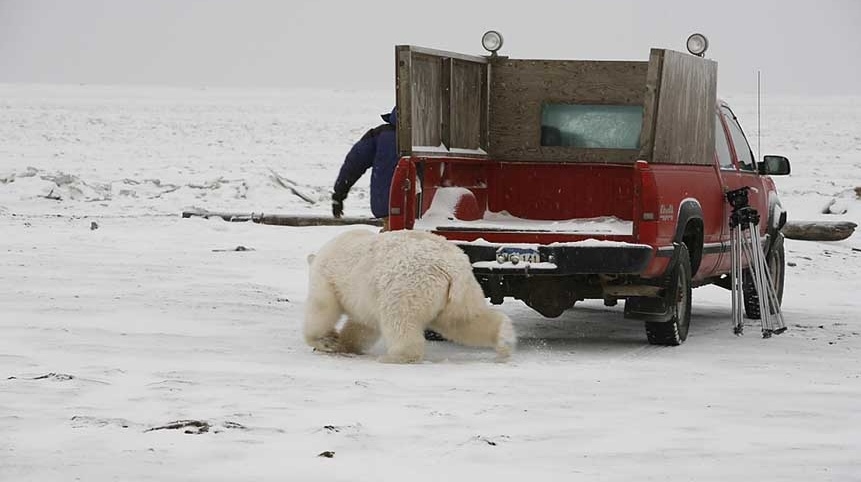
These are pictures from Barrow, Alaska. A photographer got careless and let the bear get too close and he did not have time to get into his truck before the Polar Bear started chasing him around the truck.

1
This is just a small bear. It’s probably only 2 years old and on it’s first year without its mother. A full grown male Polar Bear can get up to be three times this size. Hiding in a truck or car would not save you as any polar bear could smash though the car glass in seconds with very little difficulty.

2

This slideshow requires JavaScript.

WEBSITE    RATES     FISH    HUNT    CABINS    PHOTOS
TESTIMONIALS    BROCHURE    HUNT BOOKLET

Enter your email address to subscribe to this blog and receive notifications of new posts by email.

← Back

Thank you for your response. ✨

Email Me....

 
Leave a comment

Posted by on July 11, 2015 in Bear, hunting, Wawang Lake Resort


Tags: , , , , , , , ,

Hilarious and Terrifying Taxidermy

Taxidermy has come a very long way over the years, but even with primitive techniques, these are far from professional in any sense.  Some terrifying and some hilarious, each represents what NOT to do when having a mount done.  Make sure you do your homework when finding a taxidermist 🙂

This oh-so-sassy bobcat.

DmPdaU9 Bad taxidermy is the perfect mix of hilarious and terrifying

This contemplative fox.

OMXvAYU Bad taxidermy is the perfect mix of hilarious and terrifying

This… ambiguous embodiment of sadness.

HbDC9fY Bad taxidermy is the perfect mix of hilarious and terrifying

This two-for-the-price-of-one bonus!  A fox carrying a duckling!

ZzIrZFz Bad taxidermy is the perfect mix of hilarious and terrifying

This… house cat?  Is this a cat?  I don’t even know anymore.

RpeO2JK Bad taxidermy is the perfect mix of hilarious and terrifying

This surprised tiger.

165 Bad taxidermy is the perfect mix of hilarious and terrifying

This exhausted polar bear.

144 Polar Bear Bad taxidermy is the perfect mix of hilarious and terrifying

This bloated bull.

BcBWboI Bad taxidermy is the perfect mix of hilarious and terrifying

This sad, sad creature.

Gavcrww Bad taxidermy is the perfect mix of hilarious and terrifying

This angelic cat.

80 Bad taxidermy is the perfect mix of hilarious and terrifying

WHATEVER THIS “AMAZON MAN” IS.

114 Bad taxidermy is the perfect mix of hilarious and terrifying

Some type of amazon cat and monkies?

TV host polar bear

polar bear

Rat sllippers

moleshoes


Prankster lion

lion

Leopard??

leopard

Wired weasel

freak wtf

Rabid monkey

freak monkey

Surprised cheetah

freak jaguar

Stick fox?

freak fox2

Half assed??

freak donkey


← Back

Thank you for your response. ✨

Email Information regarding


Tags: , , , , ,

Shooting A World Record MOOSE

If you are in search of a record book moose because he has survived many previous hunts, and you as a hunter respect the survivability of the animal, then you have set a high standard for yourself.

Pursuing any type of world record is not something that many aspire to do.   for the trophy hunter, shooting a world record moose is the ultimate goal. Are you a trophy hunter? Or a meat hunter?

Do we need to continue to search for the ever bigger? Then when we find it, is it right to destroy it? Should we limit the very essence of the mighty beast; snuff out the possibility of procreation? These are tough questions?

giant-moose
Canadian World Record Moose 2013

Hunter Heinz Naef shot what he believes could be the largest moose ever harvested in the Yukon(Sept. 2013). 

His moose, scored 263 1/8 inches after the required drying time of 60 days. The official scoring will be made in Nevada in early 2014.

Heinz is not a trophy hunter, he wasn’t looking to harvest a world record moose. No, he is a meat hunter… by his own admission. He was just out looking for any legal moose to fill his freezer. It just so happened to be this one.

Human beings have pushed everything to its limits. The Guinness Book of World Records is a testament to this. We strive to better ourselves, to beat our predecessors, going beyond what anyone has done in the past. Is it wrong to have the desire to be better, to do it bigger? Is our only purpose to get our names in a book?

When entering animals into record books, who deserves the respect? You or the animal? It is vitally important to include all relevant information about said trophy… the hunters name however may not be so important.

Many hunters have a few trophies on the wall, but most are not world record moose, but all of them are trophies to the hunter.  Many hunters do not go hunt with the sole purpose to acquire a trophy, and likely many of you, may scoff at some of the animals that have been shot. They are not in any record book, nor are they of that class, but to the hunter, they are a reminder of the hunt and a way for to show appreciation for the animal.

No animal should be killed for the sole purpose to raise a hunters social status, to do so is crossing the ethical line for hunters.

Where does one find a world record moose? This question is one that no one person can answer for sure. Through research and dialogue you may be able to locate moose habitat that will contribute to the growth of these monsters. A hunter in search of a world class moose will spend a lot of money and time to achieve his goal. These big animals are not going to be easily accessible. Days, weeks even years of pursuit to harvest a moose that can make the record books will be the required 22dedication.  Hunting the most remote areas of the planet is what it will most likely take and never discount luck. Luck is a huge part of hunting.

As an example the latest world record moose taken with a rifle, shot by Jay Link in 2001. Jay travelled to Russia, to the very remote regions to get this moose. He has stated it cost him $20,000.00 to do this hunt (before shipping and taxidermy). Jay may not have been looking for a world record when he shot this one, but he was certainly looking for a world class moose. Unfortunately for Jay, because the moose was taken in Russia, it is not eligible for Boone and Crockett.

Aaron Folk killed this state record North Dakota moose in October 2012, with a green score of 166 and a 53-inch spread.

Aaron Folk killed this state record North Dakota moose in October 2012, with a green score of 166 and a 53-inch spread.

Real Langlois, who's been dubbed "The Rackman" for all his moose hunting exploits, bagged this world record bull in the Yukon with his bow in 2008. With a score of 249 1/8, The Rackman beat out Michael Cusack, whose 1973 bull moose scored 248. The most amazing thing about Langlois' kill? You can watch the whole thing on YouTube, where he makes a breathtaking five yard shot on this behemoth.

Real Langlois, who’s been dubbed “The Rackman” for all his moose hunting exploits, bagged this world record bull in the Yukon with his bow in 2008. With a score of 249 1/8, The Rackman beat out Michael Cusack, whose 1973 bull moose scored 248.

Eric Arnette killed this Yukon monster in 2004, with a B&C score of 236 and a span of 75 inches.

Eric Arnette killed this Yukon monster in 2004, with a Boone & Crockett score of 236 and a span of 75 inches.

The world record moose, Boone and Crockett scored 261 5/8 and was taken by John A. Crouse in 1994 near Forty-mile River Alaska.

Hunters value the opportunities to venture out into the outdoors and hunt. The chase is wonderful and exhilarating. To some degree the kill is saddening as a wild animal has paid the ultimate sacrifice and many hunters pause to give thanks for any animal that they just harvested.   They truly appreciate it!

Many hunters don’t hunt for a trophy – after all the antlers will make poor soup. Given the opportunity though, if a world record moose were to walk out in front of you, and assuming you recognize it as a trophy. Would you shoot…?   Would You?

Follow our FISHING BLOG

 WEBSITE    RATES     FISH    HUNT    CABINS    PHOTOS
TESTIMONIALS    BROCHURE    HUNT BOOKLET

Enter your email address to subscribe to this blog and receive notifications of new posts by email.

← Back

Thank you for your response. ✨

Email Me....


Tags: , , , , , , , , ,

Pack of 400 Wolves Terrorized Remote Russian Town

NOTE:  This is an older story, but, worthy of re-telling.

wolf

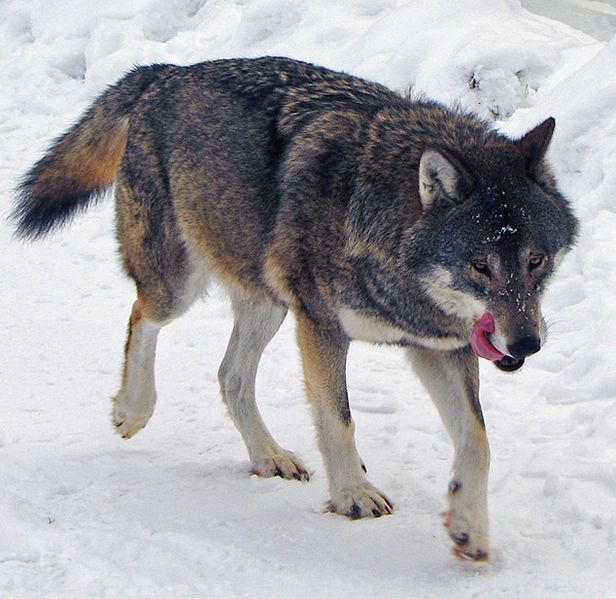
The small Russian town of Verkhoyansk has recently been fighting a “super pack” of about 400 wolves. The predators have attacked livestock and killed 30 horses in four days.

Twenty four teams of shooters and trappers have started thinning wolf numbers with officials offering a cash reward of £210 for each skin they turn in.

The size of the pack has stunned animal experts, who say wolves usually hunt in small groups of six or seven. In this case, the Super Pack may have been driven together because of a sharp decrease in their usual prey: rabbits.

The cold, remote town is located in “Stalin’s Death Ring,” so named because the former dictator exiled prisoners there. With a population of just 1,300, town officials say they need more manpower and will begin shooting wolves from helicopters once daylight hours in the region increase.

Follow our FISHING BLOG

WEB   RATES     FISH    HUNT    CABINS    PHOTOS
TESTIMONIALS    BROCHURE    HUNT BOOKLET

Enter your email address to subscribe to this blog and receive notifications of new posts by email.

← Back

Thank you for your response. ✨

Email Me....


Tags: , , , , , , ,

Calling in Coyotes & Wolves

Thanks to the prevalence of electronic calling devices, anyone can become a decent coyote caller with the press of a few buttons. But if you really want to step up your game, you need to first understand what makes these animals tick.

coyote-hunting

Prey Distress
Coyotes are nature’s great omnivores. Studies of stomach contents have found that coyotes will swallow almost anything that they can get in their mouths, including rocks, plastic packaging, harness buckles, and even the occasional rabbit. Knowing this, it doesn’t matter much which sort of prey distress call you use—most modern electronic callers offer everything from a whitetail fawn to a house cat—as long as you set up within a coyote’s earshot.

The manner in which a coyote approaches a distress call depends on its security level, which is influenced by its latest experiences. An unpressured coyote will often come in quickly and boldly to almost any distress sound. A pressured coyote, however, will take much longer to approach a call. He’ll wait downwind of the sound before slowly slinking in, wary nose to the air.

Upon hearing the initial prey distress cries, the test coyotes would usually run to a downwind position without exposing themselves and remain there until we left. They would later approach our stand area to investigate. One wary old alpha pair (the male was 10 years old) waited 17 hours before approaching the calling location, and then spent 45 minutes at our stand site sniffing around.

The takeaway? One of the biggest mistakes you can make with a distress call is leaving a location too soon. Spend at least 30 to 45 minutes on stand.

Another important factor is the time of day you target coyotes. Only 10 percent of respondents in a recent poll of about 1,400 coyote callers said dawn was best. More than half the hunters chose 8 a.m. to 10 a.m., followed by 11 a.m. to 2 p.m., and then dusk, each of which got about 20 percent of the vote.

Whines & Yelps
These nonaggressive vocalizations—often made by pups—are probably the most effective sounds in a coyote caller’s repertoire because they trip so many behavioral triggers at once. With the press of a button you can target social interaction, territorial instincts, and protective maternal/paternal instincts. At certain times of the year, a case could probably be made that you’re appealing to their hunger, too, since several studies have documented coyotes cannibalizing pups.

Before switching to a different sound, we’ll increase the volume and intensity of the whines and yelps for three or four series in order to reach out to distant coyotes. This has proven extremely effective in all seasons and geographic locations, and at any time of day.

Challenge Howl
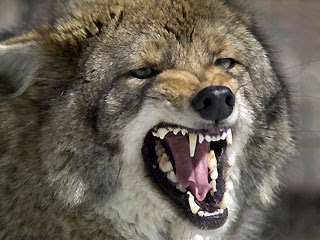
The challenge howl is a misnomer. A challenge is an invitation to fight, to do battle, such as a monarch bull elk bugling at a satellite bull. Coyotes don’t do that. Biologists call this vocalization the threat-bark howl because it more accurately describes the intent of the coyote: to threaten and demand that the intruder leave. Now. Field observations have shown that coyotes (unlike wolves) will avoid fights whenever possible. A wolf pack will run down an intruder and kill it. A pack of coyotes will run down an intruder, make him submit, and then let him leave the territory.

coyote_snarl

For these reasons, callers should use this vocalization only if they know they are set up in a pack’s core territory. If a caller sets up near a den during whelping or denning season, the results can be spectacular. Having resident coyotes charge in on a close, loud, aggressive call rivals any approach of a rutting buck or strut of a spring gobbler. However, if you set up in overlapping home ranges and demand that every coyote within hearing distance leave, they probably will.

The key to locating a pack’s core area is to home in on their group-yip howls. Listen for a pack’s group howl night after night. If you are able to pattern their howling with some regularity, you should be able to determine their core area. Once you’ve plotted that on a map or GPS, study the terrain. Coyotes will typically hide out in the thickest, most secluded cover in the area. Make an educated guess and move in close before threatening the pack.

Many callers will break off a stand when a coyote bark-threat howls in response to their distress calls because they believe that it means the coyote has busted them and will not approach. That’s not always the case. The coyote may simply be protesting the source of the sound even if it hasn’t identified it. You can often get a barking, threat-howling coyote to expose himself for a clear shot if you wait him out and weaken your return howls, keeping them less aggressive than the coyote’s. Another tactic is to retrace your steps and then circle around to a different location. If the coyote doesn’t see or scent you, you can call him in to the new setup with whines and whimpers.

130

Group and Solo Howls
Coyote calling is a numbers game. You want to offer sounds that appeal to the largest number of coyotes without alarming or intimidating them. The most effective howl to draw them in is a lone howl that is low frequency, high pitched, and long. It announces the presence of an unknown, young, small, nonaggressive coyote that any other dog within hearing distance will be willing to investigate.

Louder, long-range howls are more likely to get howls in return, but they are less likely to draw a coyote in to your stand.


Knowing that, here’s a simple formula for success: Locate coyotes with a group-yip howl (the collective yowling that you have undoubtedly heard on calm evenings) and call them in to gun range with a lone howl.

0cf5707bbfce2588fddf51ff630fbe1c

Most of those vocalizations are aggressive in nature. This is important to know because such vocalizations will alarm and/or intimidate most coyotes. Submissive coyotes will often retreat to their core areas after howls are broadcast and remain there until joined by another group member or until enough time has passed for them to call back or investigate. That’s the exact opposite of what you want your howls to do.

It is important to remember that coyotes will sometimes investigate the source of your group-yip howls, so don’t get caught unprepared.

Follow our FISHING BLOG

WEB   RATES     FISH    HUNT    CABINS    PHOTOS
TESTIMONIALS    BROCHURE    HUNT BOOKLET

Enter your email address to subscribe to this blog and receive notifications of new posts by email.

← Back

Thank you for your response. ✨

Email Me....


Tags: , , , , , , , , , ,

Where to Place Your Trail Cams

A trail camera won’t stumble through a bedding area, leave scent all over a trail, or exaggerate the size of a rack. And it’ll never oversleep. But your perfect little scouting buddy must be chosen wisely and placed carefully if you want to pattern that old, crafty animal you know is around. Here’s how…

CameraNO_MosaicYELLOW

The earlier version trail cameras were just a 35mm film point-and-shoot tucked in a weatherproof housing. It snapped a single picture when something triggered the sensor. After retrieving the camera, you ran to the one-hour shop to get the film developed, then thumbed through a week’s worth of pictures. More than once a stack of 36 prints revealed a handful of out-of-focus animals and a couple dozen shots of a wind-whipped brush or a drooping tree branch. That was only a few years ago.

Today, many website boasts several pages of trail cams, and even the cheapest one outperforms the original older ones. They have lenses sharp enough to count the ticks on a deer’s neck, electronic circuit boards so efficient that four AA batteries will run a unit for months, and memory cards that hold thousands of pictures you can download to your computer or delete at the touch of a button. And those are standard features on mid-priced cameras. The high-end ones will send a photo to your cellphone or laptop.

Like everything in the digital age, trail-cam technology has improved, competition has become fierce, and prices have plunged. Still, $200 is plenty of money, and matching a camera with the right features to meet your needs is critical. And even the best camera can’t take spectacular photos of a trophy buck if you don’t set it properly. But it’s not difficult to get started. These are the basics.

TrailCameras3
Wildlife biologists use trail cams to measure herd densities, buck-to-doe ratios, and the like. Your goals should be simpler: learning about the deer on your property, figuring out where to hunt them, and having fun in the process. You can pinpoint ideal spots before you buy a camera, and the locations you choose can determine what model is best for you. Here are four sites for four different periods.

Time: Late Summer
Site: Mineral lick
Goal: To start an inventory of buck numbers and quality on your property.
Setup: Find a spot with moderate to heavy deer traffic and spade up dirt in a 2-foot circle. Pour in half of an ice-cream pail of stock salt or commercial deer mineral and spade it into the loosened soil. Pour the rest on top.
Tips:
• Establish one or two licks per 80 acres. Allow deer up to a week to find them.
• Situate each lick 10 to 30 feet from a tree for mounting a camera.
• Jam a stick behind the camera’s top edge to point it down toward the lick.

500Time: Early Season
Site: Mock scrape
Goal: To find bucks after velvet shed, when they often relocate. Mocks can draw up to 90 percent of the bucks you’ll hunt.
Setup: Rake grass and forest debris 5 feet away from a tree that has a green, overhanging licking branch 5 to 7 feet above the ground. Activate with your own “product” (drink plenty of liquids) or deer urine.
Tips:
• If you are not getting clear shots of a buck, aim the camera at the licking branch. Most bucks will work it with their antlers.
• Establish multiple scrapes in each area and hang cameras only on the most active ones.

Time: Rut
Site: Funnel
Goal: To determine where resident bucks are traveling and whether traveling bucks are in the area.
Setup: Find terrain features that channel buck movement and hang a camera near fresh tracks and rubbing activity. Check camera every three to five days—the rut moves quickly.
Tips:
• Mount camera at a 45-degree angle to the trail. Bucks often move through funnels quickly; a camera set perpendicular to the trail might miss the shot.
• Scuff dirt in front of the camera with a boot. Such a mini mock will often make a moving buck pause and get “shot.”

Time: Late Season
Site: Food source
Goal: To find out where to fill a last-minute tag, and to know which bucks have survived the bulk of the hunting season.
Setup: Scout widely to find the hot food sources in your area, such as waste grainfields and clear-cuts. Place camera within 30 feet of the most heavily trafficked area. Load it with fresh batteries if you hunt in an extremely cold area.
Tips:
• Set up and check cameras at midday to avoid spooking feeding deer.
• If no trees are located near the food source, mount the camera on a tripod and camouflage it with grass or brush.

Make the Next Shot Count!

Follow our FISHING BLOG

WEB   RATES     FISH    HUNT    CABINS    PHOTOS T
ESTIMONIALS
    BROCHURE    HUNT BOOKLET

Enter your email address to subscribe to this blog and receive notifications of new posts by email.

← Back

Thank you for your response. ✨

Email Me....


Tags: , , , , , ,