
Follow our FISHING BLOG
WEB RATES FISH HUNT CABINS PHOTOS
TESTIMONIALS BROCHURE HUNT BOOKLET
Follow our FISHING BLOG
WEB RATES FISH HUNT CABINS PHOTOS
TESTIMONIALS BROCHURE HUNT BOOKLET

Of all the living members of the deer family, moose have the greatest amount of antler material. They also show great variation in size, with the smallest racks coming from Colorado, Idaho, Montana, Utah, Washington, and Wyoming, and the largest from Alaska, Yukon, and the Northwest Territories. A records book sized Shiras moose would not be even a desirable trophy in Alaska.

Although the widest spread antlers are sought in all categories for the records, strong development of antler palmation in both length and width is even more desirable. Many Shiras moose show only a single spike brow point on each antler, rather than a well-developed brow palm. This is undesirable since the length-of-palm is measured to a notch between brow points. The single spike brow dictates that the length of palm measurement must be ended at the edge of the main palm, obviously losing some potential that would have been fulfilled if the brow were palmate or even forked. High-scoring Canada or Alaska-Yukon moose have three or more brow points, on broad, well-developed brow palms that increase the length-of-palm measurement. This feature, along with broad main palms, markedly improves the score potential.
Although an Alaska-Yukon moose may have 15 or more points on each antler, not all projections count as points, especially if they are blunt in shape. One cannot accurately count the antler points on most trophy moose when the animal is in the field, so evaluation must generally be made on the basis of the amount of palm material present and the greatest spread.

Big trophy moose of all three classes tend to have the main palms lying flat to produce a wide spread, whereas smaller antlers are more apt to show cup-shaped palms and a narrow spread. The ear tips of a mature bull when laid flat are roughly 30 inches wide, with ears themselves being 9 – 10 inches. A bull with an extra ear length on either side would, then be approximately a bull with a 50 inch spread.
Even though moose can often be studied carefully in the field, and an experienced guide may make reasonable estimate of the greatest spread, it is very difficult to estimate the scores accurately at a distance. This is because the length, width, and symmetry of the palms are all hard to judge when seen from the side. A frontal view, with the animal’s head down and antlers nearly vertical, gives a much better chance for accurate evaluation, but may not be available under field conditions.
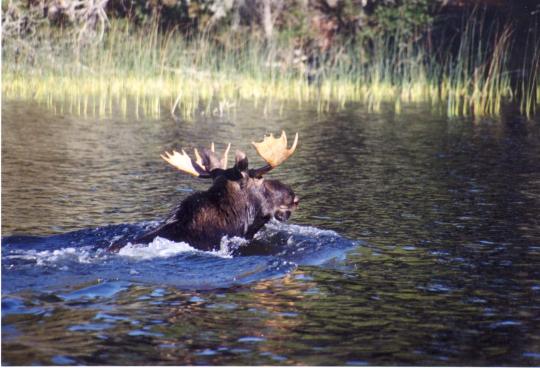
Typically, younger bulls will feature long and disguisable points, but with narrower spreads and shorter palms. As bulls age they tend to add in number of points that will be shorter and less recognizable having given way to wider and taller palms. As a rule, palm width and length pile up B&C points.
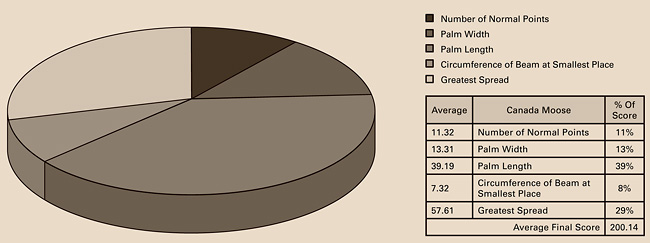
BREAKDOWN OF SCORING COMPONENTS – CANADA MOOSE
MAXIMUM VS. MINIMUM – A COMPARISON OF TWO RECORDS-BOOK CANADA MOOSE
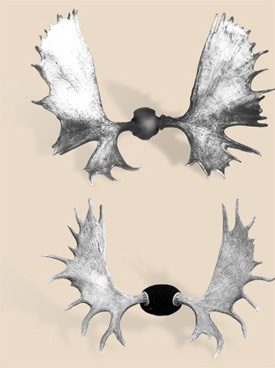
TOP – World’s Record Canada moose scoring 242 points
Bottom – Canada moose scoring 187-2/8 points
Follow our FISHING BLOG
WEB RATES FISH HUNT CABINS PHOTOS
TESTIMONIALS BROCHURE HUNT BOOKLET

 Being Afraid of the Dark
Sounds silly, but don’t let it fool you. It is an ungrounded fear and one people need to overcome in order to have a successful black bear hunt; especially if you are hunting for a trophy. It can be very intimidating leaving a bear stand, by yourself, in the middle of the dark when you know with 110% certainty that there are active black bear in the area. You’d be off your rocker if you weren’t a little apprehensive. When you are hunting into the twilight hours, and getting ready to depart your stand, remember this, since 1883, in North American there have only been 30 reported black bear fatalities, most of which occurred during non-hunting activities. That means in 125 years, there has only been 30 fatal black bear attacks and subsequent deaths. With the 100’s of thousands of hunters that take to the woods every year, that puts the odds of being attacked by a black bear inconceivably in your favor. Hunting until you can’t see anymore gives you better odds when pursuing that trophy black bear of a life time. Most BIG black bears are taken within a half hour from dusk, when the smart animals feel most secure eating from an unnatural food source. Stay in your stand as late as you can, and the odds of shooting a monster increase tenfold.
And should there still be bears on your bait when your ready to leave your stand (although this rarely happens), shining a light or a sudden loud noise will send these skittish critters running for miles. Black bears, in their natural setting, are extremely fearful of humans, and would rather turn tail and run then face an unknown advisory.

Jon Hanson – Tiffin, IA 440 lb. black bear
Recovering Your Harvested Bear
Many people take to the bear stand, rightfully so, with excitement and anticipation of a successful hunt. Myself included, I get like a little child full of excitement when hunting these magnificent creatures. While most hunters will do a tremendous amount of prep work prior to the hunt, few prepare for what happens after the hunt.Bears rarely pile up on the bait or in an open area with easy access. Instead, these hearty creatures are famous for taking a double lung shot and running for miles, deep into thick woods and cedar swaps.Having a plan on how to recover your trophy will put you light years ahead of most black bear hunters when it comes to a successful hunt. Planning should include how to track and more importantly flag the path the animal takes. What to do if it starts to rain or gets dark. Who will help you track the animal and once found, how will you get it out? And how to protect the meat from spoiling on a warm fall night.
Weather
Avid hunters know that fall weather can change in a heart beat. It can go from warm, to cold, windy and raining in the blink of an eye. Having the right clothes in your back pack can make the best of a somewhat undesirable situation.
 Bugs
Bugs
can be a huge annoyance in the great outdoors. Especially when you are forced to sit still for extended periods of time. Avoid bug sprays when bear hunting… PERIOD! A new, unfamiliar scent, along with an intuitive feeling that something isn’t right, will keep trophy bears from over coming fear and committing to your bait. Bug jackets and bug nets are a must. (Oh, on side note, make sure you practice shooting with your bug net on, more about that later). Regarding the portable propane bug eliminators. I have seen hunters use them with success. In fact, in 2008 there was a beautiful 350lbs sow taken while a hunter used one, however my vote is not in on them.
Boredom
Nothing will end your hunt faster than impatience and constant movement in your stand. If you are like most guys who can’t sit still for more than 30minutes at a time, you must bring something with to occupy your mind. I personally use a book. I have also seen guys use those portable, pocket video games. Regardless of what you use, make sure you sit sill and be quiet!
Natural Calls – Ever been in the stand when all of the sudden you have to take a pee? Sucks, doesn’t it? I don’t know how many times I have had this happen to me, yet somehow I always forget to bring a container along. Put a portable urinal on your packing list. Doing so will make the difference between shooting that monster and taking it’s offspring.
Follow our FISHING BLOG
WEB RATES FISH HUNT CABINS PHOTOS T
ESTIMONIALS BROCHURE HUNT BOOKLET

Successful moose hunters must have detailed and sophisticated knowledge of the animal. mastering skills of the hunt is essential for success, but equally important is knowing how to show respect for the animal, its spirit, and its home.

The language of Moose
In any human culture, people need specialized language to describe every part of their environment that is important to them. This is especially true for people who live directly from the land and waters, because they need very specific words to talk about every facet of their world.
Eye of the Hunter
Moose can be challenging animals to hunt, especially in areas where they are scarce or highly mobile. For traditional people it is essential to have a thorough understanding of moose movements—and this comes by studying the animal and its environment, by sharing information between hunters, and by telling stories passed on to family & friends.
For example, hunters know that during the protracted, harsh northern winter moose are often stressed and skinny, so their meat is not especially desirable. But spring and summer bring long days and lush growth, so, moose can pack in up to 50 pounds of food per day. By the time fall comes, the animals are in prime condition, especially the bulls and cows that have no calves to nurse and protect (known as a dry cow).
To find moose, first a person needs to know where the animals are most likely to be at any given time and when moose are in the best condition. For example, in the fall rutting (breeding) season, moose often congregate in the river valleys where willow thickets still provide fresh browse.
During the rut, bulls sometimes have spectacular battles—pushing and shoving, clashing their enormous antlers—to establish dominance. These contests take tremendous amounts of energy at a time when the bulls eat little or nothing because of their single-minded focus on mating. They become skinny and smelly their meat is hardly edible.


Before the fall rut begins, some hunters arrive in the area to scout, looking for signs of moose—fresh tracks, broken branches in the thick brush, scraped bark on shrubs and trees, or shadowy movements in the brush.
When a hunter finds a set of tracks, he checks them closely to determine the sex and condition of the moose—and most importantly, the age of the track. It’s important to know how long ago the moose walked here and whether the animal is staying put or traveling on.
Aging tracks in our terrain can be very challenging. A fresh track has clean sharp edges, and within a day or so these edges may begin to dry out, or they might be softened by rain or wind. Depending on weather conditions the track could look quite fresh for several days or more.
A sharp eye might find a track where the moose entered the water, and if it’s partially filled with water, this could help the hunter determine how long ago the moose made it. When the water is still muddy, the animal came by within perhaps half-a-day or less. But if the sediment has settled and the water is clear, it means the track is older.
Moose leave other signs too. Rutting bulls scrape off bark when they rub their antlers on trees or shrubs. They sometimes paw the ground, leaving an obvious patch of scattered vegetation and raw ground.
Besides looking for visible signs of moose, hunters keep very quiet, to avoid frightening the moose and to hear any sounds the animals make. Bull moose challenge other bulls by noisily thrashing their huge antlers against trees and brush. Cows and bulls make low grunting sounds during the mating season. People also listen for any movement in the thickets and for the surprisingly loud sounds of a moose chewing and snapping off leaves.
A bull moose acquires a strong, musky scent from rolling in leaves soaked in his own urine. This smell can linger in calm air for up to half an hour, indicating that the bull has passed through recently—or that he is still close by.
If a hunter believes moose are nearby, he might try to draw one closer by imitating the sound of antlers scraping against the brush. For this, he can use the dried shoulder blade of a moose or sometimes even a large stick. If a bull is in the area, he may decide another bull is challenging him and come to investigate, or he might reveal himself by grunting or thrashing his antlers.
A hunter trying to lure a bull closer will sometimes make low grunting sounds, imitating either a cow moose looking for a mate, or a bull looking for a challenge. The hunter watches and listens closely, waiting for the moose to appear.


The most likely time to find a moose is during the dusk and dawn hours, when moose are most active. They will feed in the early morning and then might sleep for an hour or so. They lie down for much of the day to rest and ruminate, and they are very hard to approach. In the evening they will feed again.
In areas with high concentrations of moose, hunters avoid the bone scraping method because it might call too many bulls to them. Also, they are very careful when snapping twigs for campfires—this too could bring an aggressive bull into camp.
Follow our FISHING BLOG
WEBSITE RATES FISH HUNT CABINS PHOTOS
TESTIMONIALS BROCHURE HUNT BOOKLET

Scent can be your biggest ally or your worst enemy
Black Bear are attracted to the aroma of a free meal, but if they catch a whiff of you, you can often kiss them good-bye for a day or two. Keep your clothing and footwear as scent-free as possible. Be alert at all times while hunting your bait. You will most often see bear before you hear them. With padded feet they move with calculated precision. Remember, when they come into a bait station they know the treats were left by humans.
Shot Placement
Regardless of your choice of weapon, whether it is a gun or bow, learning when and where to shoot can mean the difference between an expedited kill, or, the outcome of tracking a wounded animal. We advise our hunters to wait until the bear is preoccupied with the bait and is facing away while standing broadside or quartering away. Bears are extremely tough, so a double lung or heart shot are always your best option therefore taking your time will be important.

When archery hunting, bows must meet the following specifications.
Crossbows: Draw length must be at least (11.8 in.);


Re-curve Bow: Draw weight must be at least (48.5 lbs.) at draw length of (27.6 in.) or less;
For bow hunting Black Bear we recommend a compound bow with a draw weight of no less than 50 pounds and a 100 grain broad head
Recommended Knowledge base
www.mnr.gov.on.ca/en/Business/FW/Publications/MNR E001275P.html
For rifle hunting black bear we recommend using nothing less than a .270 caliber.
Other recommended calibers: 7mm magnum; .308; .30-06. NO 30-30’s


Firearm Information www.rcmp-grc.gc.ca/cfp-pcaf/index.htm
The bottom line – baiting is a proven strategy for attracting a wary game animal with a voracious appetite. It involves much more than just tossing out a few tasty morsels. There is a right way and a wrong way to do it and our experienced guides take pride in their skills and knowledge. Keen attention to detail and listening to the guide is the key to your success.
In order to ensure the highest possible success to our hunters we take only an average 14 hunters a year. Should we have an increase in bear sighting throughout the spring and summer we may take a few more hunters but our first obligation is to ascertain a healthy black bear population together with satisfied hunters for years to come.
Most importantly, remember baiting is a ton of work and takes weeks on our part for each hunter. From collecting legal paper work to buying and picking up the ingredients, materials along with travelling for miles and then finally establishing and maintaining each site daily prior to your hunt. It requires foresight and commitment on our part and we do this because of our passion for the outdoors and careful management of our Black Bear.
Follow our FISHING BLOG
WEBSITE RATES FISH HUNT CABINS PHOTOS
TESTIMONIALS BROCHURE HUNT BOOKLET

Whether we are at the range shooting targets, or in the field hunting, breathing is important. We want our sight, scope or pin to be on its mark when we pull the trigger.

Education, shooting positions and firearms are all very important to shooters. Breathing is a very important factor as well. We all breathe. From the day we were born we have unconsciously learned to breathe in and out. That natural motion can help or hinder during shooting.
Controlled breathing is a necessity in shooting accuracy. When you breathe in and out your chest rises and falls. This movement can cause your gun barrel or arrow sight to float on its target. Your breathing may cause you to move at the exact moment you pull the trigger to fire.
Sometimes when you are hunting, you get excited and/or the terrain and conditions cause your heart rate to accelerate. Your breathing becomes more rapid and harder to control. If you hold your breath, you may become light headed and your shot may be off target. It is important to practice your breathing techniques as you practice shooting positions at the range.
There are multiple methods of breathing during a shot. The best thing to do is practice them and determine which works best for you. Once you’ve determined your breathing technique, practice it so it becomes instinctive when you are under pressure.
 Exhale & Pause – When you are in shooting position, put your cheek against the stock of the gun. Take in a deep breath. Exhale just a portion of that breath, pause briefly and pull the trigger. The pause should allow you to hold your gun barrel and sights in perfect alignment on the target at the very moment the gun fires.
Inhale & Pause – Relax and practice steady breathing. Double check your shooting position. In your rythm of relaxed breathing, inhale. When your lungs are about half full, pause and pull the trigger. The inhale and pause is similar to the exhale and pause method. Your gun barrel and sights should be in perfect alignment on the target at the exact moment the gun fires.
Full exhale – Make sure you are in proper shooting position. Breathe slowly to relax. Focus on your target. As you breathe naturally, and you are at complete exhale, pause when your lungs are empty and squeeze the trigger.
 Breathe Naturally – Breathing naturally takes the focus completely off of breathing technique. You do not pause at all. Focus on your form and your target as you breathe naturally and squeeze the trigger. Sometimes being consciously focused on breathing can increase heart rate and breathing patterns. The natural breathing technique takes the focus off and you begin to unconsciously form a habit of correct shot timing.
When you are pausing, remember just that. It is a pause, not a hold. When a shooter holds their breath, their muscles tighten and their heart rate can change. This will dramatically change the accuracy of a shot.
While you are practicing, if you become short of breath, stop. Re-group and practice your natural, relaxed breathing. It is important to steady your breath to decrease the amount of movement your body is making. If you are able, step back. Take a deep breath in. Then exhale and then reacquire your target.

Follow our FISHING BLOG
WEBSITE RATES FISH HUNT CABINS PHOTOS
TESTIMONIALS BROCHURE HUNT BOOKLET

Consistent Baiting and Timing is Important
 We begin baiting two to three weeks prior to the hunters arrival as baiting is lucrative and can vary based on native food source availability, weather pattern and population. If baiting is done too far in advance, bear can lose interest and become complacent. The most impact for the hunter is when the food source is new and interesting yet dependable. The baits stations are checked regularly each day and documented as to its status: whether it’s been hit or not. This is also the ideal time to determine if the bait station has a sow with cubs or the size of the bear according to tracks.
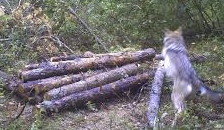
Other animals frequent the baits as well.
All the information collected will determine if the bait station will be suitable for the hunter or not. Stations with sows will continue to be baited in order to confine that they remain in that specific area so they don’t wander and disturb the more suitable bait stations held for the hunters.
What Do We Use
Bears are omnivorous and will scarf down just about anything from produce to pastries, bread and meat scraps. The key is to make sure your offerings have a strong odor – sometimes the more putrid the smell, the better … at least when it comes to attracting them as we don’t place this directly on the bait. However, during the fall bear do not especially like this strong scent on the bait therefore we use these attractants to drag the area ensuring to lure the bear to the bait station where more delectable bread, pastries and leftover good scraps are waiting. Visiting bear that walk trails and roads we’ve dragged will beneficially establish their own scent trail to and from the bait as well luring in even more bear.
The Set Up
Our baits stations are naturally set up and made from logs and other forest fragments. These logs are large, very heavy and piled in a manner making them difficult for smaller animals to move. When hunters walk into the bait and notice that logs have been tossed around they are certain that a bear hi the bait.

Know the Rules
Study the Ontario hunting regulations. Know what you can and can’t do, season dates, licensing guidelines, bring firearms into Canada. We want our hunters to be comfortable while hunting in Ontario and it is also important to know that you will need to bring along a state/province license as proof of hunting experience to show the Ontario license issuer. Always ask if you don’t know that’s what we’re here for.
When to Sit Baits
Our hunters are required to bring their own tree stands. This is not only for liability reasons, but, also because you will be more familiar with your own tree stand and the more at ease you are with equipment the more it will increase your odds – less to think about. Upon request we will setup ground stands for those that are not able to climb. If this is the case be sure to bring along a comfortable chair. Evening hours are by far the proven time to encounter bear on the bait. This however is simply a higher percentage timeframe. Approaching the bait cautiously is always a must due to the fact that hunters have stumbled upon bear contently feeding at all hours, including early morning and mid-day. You can bring along trail timers and cameras to satisfy your knowledge of the activity of your bait station.
Follow our FISHING BLOG
WEBSITE RATES FISH HUNT CABINS PHOTOS
TESTIMONIALS BROCHURE HUNT BOOKLET

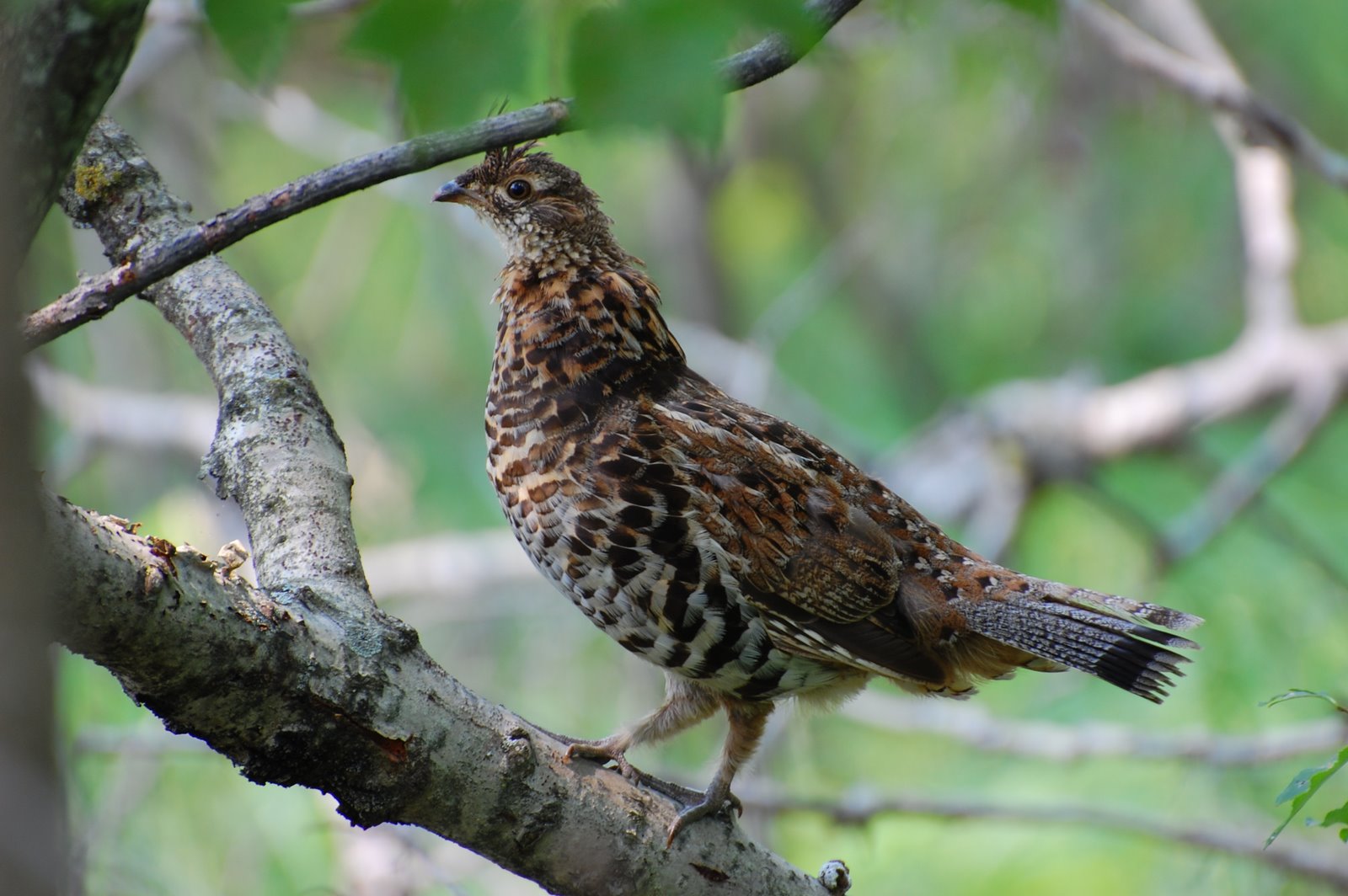 Although sometimes regarded as “wilderness” birds, Ruffed Grouse have no aversion to living in close proximity to humans if the cover gives them adequate security. In some areas of Ontario, Canada – Ruffed Grouse are more abundant in remote wilderness forests. They thrive best where forests are kept young and vigorous by occasional clear-cut logging, or fire, and gradually diminish in numbers as forests mature and their critical food and cover resources deteriorate in the shade of a climax forest.
Ruffed Grouse response to man varies greatly across their range, depending upon their experiences. In southern Ontario generally they are usually quite elusive and difficult to approach. Yet they can still be killed with a canoe paddle or thrown stones in NW Ontario wilderness forests.
![OR%20Map%20rg%20habitat%201[1]](https://i0.wp.com/wawanghunting.com/wp-content/uploads/2014/11/or20map20rg20habitat2011.jpg?w=211&h=211&crop=1&ssl=1 "OR%20Map%20rg%20habitat%201[1]")
![OR%20Map%20rg%20habitat%204[1]](https://i0.wp.com/wawanghunting.com/wp-content/uploads/2014/11/or20map20rg20habitat2041.jpg?w=211&h=211&crop=1&ssl=1 "OR%20Map%20rg%20habitat%204[1]")

When the ground is bare of snow, Ruffed Grouse feed on a wide variety of green leaves and fruits, and some insects. They have also been known to eat snakes, frogs as well. But when snow covers the ground as it does for most of the winter across the major portion of their natural range, Ruffed Grouse are almost exclusively “flower-eaters,” living on the dormant flower buds or catkins of trees such as birches and pin cherry bush’s.
Known as solitary in their social behavior they do not develop a pair-bond between males and females, although there is usually at least one hen in the woods for every male. Young birds, especially, collect in temporary, loose flocks in the fall and winter, but this is not equivalent to the covey organization of the quails and partridges.
Male Ruffed Grouse are aggressively territorial throughout their adult lives, defending for their almost exclusive use a piece of woodland that is 6-10 acres in extent. Usually this is shared with one or two hens. The male grouse proclaims his property rights by engaging in a “drumming” display. This sound is made by beating his wings against the air to create a vacuum, as lightning does when it makes thunder. The drummer usually stands on a log, stone or mound of dirt when drumming, and this object is called a “drumming log.” He does not strike the log to make the noise, he only uses the “drumming log” as a stage for his display.


The drumming stage selected by a male is most likely to be about 10-12 inches above the ground, in moderately dense brush, (usually 70 to 160 stems within a 10 ft. radius) where he can maintain unrestricted surveillance over the terrain for a radius of about 60 ft. Across much of the Ruffed Grouse range there are usually mature male within sight in the forest canopy overhead.
Drumming occurs throughout the year, so long as his “log” is not too deeply buried under snow. In the spring, drumming becomes more frequent and prolonged as the cock grouse advertises his location to hens seeking a mate. Listen to an example at the top of this page.
Courtship is brief, lasting but a few minutes, then the hen wanders away in search of a nest site, and there is no further association between the male grouse and his mate – or the brood of chicks she produces. A hen may make her nest more than 1/2 mile from the log of her mate.
Nests are hollowed-out depressions in the leaf litter, usually at the base of a tree, stump or in a clump of brush. The nest is usually in a position which allows the hen to maintain a watch for approaching predators. Sometimes hens will nest under logs or in brush piles, but this is less common, and a dangerous location.


A clutch usually contains 8 to 14 buff colored eggs when complete. Eggs are laid at a rate of about one each day and a half, so it may take 2 weeks for a clutch to be completed. Then incubation, which usually commences when the last egg is laid, takes another 24 to 26 days before the eggs hatch. A nest has to be placed so that it will not be discovered by a predator during a period of at least 5 weeks.
The chicks are prosocial, which means that as soon as they have dried following hatching they are ready to leave the nest and start feeding themselves. Grouse chicks are not much larger than a man’s thumb when they leave the nest. They are surprisingly mobile and may be moving farther than 1/4 mile a day by the time they are 3 or 4 days old. They begin flying when about 5 days old, and resemble giant bumble bees in flight. The hen may lead her brood as far as 4 miles from the nest to a summer brood range during its first 10 days of life.
Although grouse broods occasionally appear on roadsides, field edges or in forest openings, these are hazardous places for young grouse to be, and broods survive best if they can remain secure in fairly uniform, moderately dense brush or sapling cover.
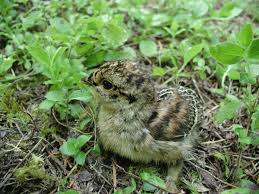 The growing chicks need a great deal of animal protein for muscle and feather development early in life. They feed heavily on insects and other small animals for the first few weeks, gradually shifting to a diet of green plant materials and fruits as they become larger. Chicks grow rapidly, increasing from about 1/2 ounce midgets when hatched to 17-20 oz. fully grown young birds 16 weeks later. That is a 38 to 46 fold increase in weight. At 17 weeks of age, a Ruffed Grouse is almost as large and heavy as it will ever be.
Biologists and others who want to age Ruffed Grouse rely upon certain peculiarities of the molt of the primary flight feathers. The booklet A Grouse in the Hand explains this aging procedure. And following the first complete molt by a 14 to 15 month old adult grouse, there are no known physical characteristics which reliably identify the age.
When about 16 to 18 weeks old, the young grouse passes out of its period of adolescence and breaks away to find a home range of its own. This is the second and last time that Ruffed Grouse are highly mobile. The young males are the first to depart, when they range out seeking a vacant drumming territory, or activity center, where they can claim a drumming log. Most young males find a suitable site within 1.8 mi. of the brood range where they grew up, although some may go as far as 4.5 mi. seeking a vacant territory. Many young cocks claim a drumming log by the time they are 20 weeks old; and once they have done so, most will spend the remainder of their lives within a 200 to 300 yard radius of that log.
Young females begin leaving the brood one or two weeks later than their brothers, and they normally disperse about three times as far. Some young hens move at least 15 miles looking for the place where they’ll spend the rest of their lives.
Occasionally a hen and her brood will remain together as late as mid-January, but this is unusual, and most groups of grouse encountered in the fall and winter are composed of unrelated individuals who gather together temporarily to share a choice food resource or piece of secure cover.
In fall and winter some inexperienced young grouse frightened by a predator or something else, crash into buildings, trees or through windows in a so-called “crazy-flight.” Sometimes they are evidently simply trying to take a short-cut when they can see through two large windows on the corner of a house. After all, young grouse in their first fall have never been confronted by something that can be seen through but not flown through, such as glass!
WEBSITE RATES FISH HUNT CABINS PHOTOS
TESTIMONIALS BROCHURE HUNT BOOKLET





 ON TARGET in CANADA