RSS

Category Archives: trip planning

What is Solunar and why is it helpful?

The solunar theory is a hypothesis that animals and fishes move according to the location of the moon in comparison to their bodies. The theory was laid out in 1926 by John Alden Knight, but was said to be used by hunters and fishermen long before the time it was published.

History

In May 1926, John Aldenn Knight put together some fishing folklore and other fishing factors such as the sun and the moon, hence the name Solunar (Sol for sun and Lunar for moon) to form a theory on the patterns of animal movement. Knight compiled a list of factors which control or influence the day-to-day behavior of many freshwater and saltwater fish. Each one of the 33 different factors were considered. All but 3 were rejected.

The three factors retained were the sun, the moon and the tide. For salt water fishing, tides have long been known as a factor which control fishes’ behavior. As Knight’s research progressed, he found that rather than just tides themselves, the relationship of the moon and sun’s positions relative to each other may be the determining factor.

In addition to the time of moon up (moonrise) – moon down, his research determined that there were intermediate times of the day that occurred in between the two major periods. From that he establishes that there were major periods (moon up – moon down) and minor periods. Knight published the first Solunar table in 1936.[3]

Tables

Solunar tables are tables that fishermen and hunters use to determine the best days of the month and times of the day for catching fish and hunting game. For fishermen, the tides, sunrise and sunset are helpful times of the day to know when the fish are going to bite. For hunters, the tides are not a factor.

Hunters use the sun and the moon to determine when the game will be moving the most.”Other conditions not being unfavorable, fish will feed, animals will move about, birds will sing and fly from place to place, in fact, all living things will become more active, more alive, during Solunar periods than at other times of apparent equal value. …anglers have found that it is a guide to the best fishing of each day, and the quality of their sport has improved…”

Using these tables, a fishermen and a hunter can tell when the moon is directly underfoot and overhead. The strongest activity occurs when there is a full moon or a new moon and is weakest when there is a quarter moon and a three quarter moon. This is because the moon and the sun’s gravitation force is strongest when directly above or directly below our head. The lunar data humans receive is better now because of the newer technology the US Naval Observatory and GPS technology.

This new technology has allowed the Solunar Theory to generate hunting and fishing times with much greater precision It is important to note that data in tables found on various websites should be reverified periodically with US Naval Observatory available data as well as compared against other reputable solunar data providers. Inconsistencies abound due to the complex nature of the Astrophysics computations and overlooked associated anomalies checking that are required to produce useful results. Moon Transits which do not occur for more than a day or associated times being off more than a few minutes are indications of a fundamental issue for a given position and should be suspect.  All data providers should be verified before assuming data presented is authoritative or accurate. 

Go to http://www.solunarforecast.com/ to create your own solunar calendar 🙂

← Back

Thank you for your response. ✨

Email Information regarding

 
Leave a comment

Posted by on September 22, 2015 in trip planning, Wawang Lake Resort


Tags: , , , , ,

Flint Laces: Shoe Laces That Can Start a Fire

flint-laces-shoe-laces-that-can-start-a-fire-thumb

The Flint Laces are a pair of shoe laces that you can use in case of an emergency to start a fire with if you are otherwise incapable of starting one. Maybe you forgot your matches at home, maybe it just rained and all your matches are wet, or maybe you’re stranded in the woods without a match or a lighter and you’ve lost your manhood and just can’t make a fire using your own two hands.

flint-laces-shoe-laces-that-can-start-a-fire-9435
Each flint lace contains a hidden piece of ferro rod that is capped with rubber. Simply scrape the rubber from the rod, strike it against a knife or some steel (assuming you have some), and you will be toasting your buns on a nice hot fire in no time.

The flint laces are completely normal shoe laces other than containing a fire starter rod, they are made from type III 7 strand 550 paracord, contain 4 separate rods (1 on each end of each shoelace), come in sizes 36-108, and are perfect for when you’re planning on getting lost and stranded while hiking or camping.


Follow our FISHING BLOG

WEBSITE    RATES     FISH    HUNT    CABINS    PHOTOS
TESTIMONIALS    BROCHURE    HUNT BOOKLET

Enter your email address to subscribe to this blog and receive notifications of new posts by email.

← Back

Thank you for your response. ✨

Email Me....


Tags: , , , , , , , , ,

Turn Your Phone Into A Walkie Talkie

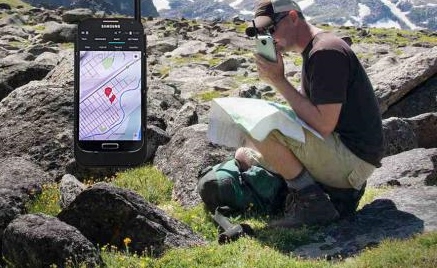
Beartooth a case to use on your smartphone that essentially turns your phone into a walkie talkie to be used when your phone is out of range of cell service.beartooth-case-that-turns-your-phone-into-a-walkie-talkie-thumb

The device will allow you to make texts and phone calls with other Beartooth users over a radio signal, and even allows you to get your geo-location to be used with a map. The radio device will even encrypt your text messages using a 128-bit encryption to keep your data safe.

The Beartooth phone case radio features individual or group messaging, an SOS broadcasting that that will broadcast your position at user defined intervals for emergencies, as well as hold extra battery storage for your phone right in the case.

The radio will reach the standard length of most walkie talkies (around 2 miles), comes with a 2000 mAh battery that will double the battery life of your phone, and will operate in the 151-154Mhz (VHF) and 462-467Mhz (UHF) frequency ranges. Price and availability for the device is to be determined, but production is said to begin in 2015.

Follow our FISHING BLOG

WEBSITE    RATES     FISH    HUNT    CABINS    PHOTOS
TESTIMONIALS    BROCHURE    HUNT BOOKLET

Enter your email address to subscribe to this blog and receive notifications of new posts by email.

← Back

Thank you for your response. ✨

Email Me....


Tags: , , , , , , , , , , ,

The 5 Medications You Need to Stay Alive in the Wilderness

final_FOREST_PHARMACY_V2aWhen we talk about survival, it’s the marquee dangers that carry the conversation: snakebite, gunshot, bear attack. Nobody mentions the microscopic bug in your intestines that causes such severe diarrhea that you die from dehydration, or the plaque that dislodges from an arterial wall to stop your heart. Not a word of the bee sting that induces anaphylactic shock, asphyxiating you as mercilessly as the coils of a python.

Such little things can kill you, but other little things can save your life. In a wilderness emergency, the five pharmaceuticals in the chart at right can be very big medicine. Use it as a guide, and consult with your doctor.

Customize It’s smart to modify your medical kit to your environment and medical history. For example, you don’t need to pack epinephrine if you have no history of allergies. Also, if you’ll hike above 8,000 feet, consult your doctor about getting a prescription for acute mountain sickness. Acetazolamide (Diamox) or dexamethasone (Deca­dron) tablets can save a life if the victim is promptly evacuated to a lower altitude.

There’s also a pill you might consider adding: a narcotic pain medication such as oxycodone (Percocet) or hydrocodone (Vicodin). If you break a leg, for example, it could mean the difference between hobbling out under your own power or dying where you are. But narcotics must be used with caution. Because they relieve pain by suppressing the brain’s ability to perceive it, they can affect your thinking. If your companion is injured, a pain pill may calm him enough to help you get him to safety. Self-medication is riskier. Only consider using a specific narcotic if you have taken it before and know that it does not affect your decision-making abilities. Otherwise, substitute ibuprofen (Advil, Motrin), which will attack your pain at the site of the injury, leaving your mind clear to help get you out of trouble.

Asprin
For – Chest pain, aches, and to reduce fever.
Dosage – Chew and swallow four 81mg chewable tablets at the onset of chest pain. For aches and fever, follow label directions.
Warning – If you’re allergic to aspirin, other over-the-counter pain relievers can reduce fever, but they don’t thin blood.

Anti-Diarrheal (Imodium A-D)
For – Relief from severe diarrhea that causes dehydration.
Dosage – Swallow two tablets initially, followed by one tablet after each loose bowel movement, not to exceed four tablets daily.
Warning – Consult a doctor before using other antidiarrheals containing bismuth salicylate (Pepto-Bismol).

AntiEmetic (zofran)
For – Severe nausea and vomiting, leading to dehydration.
Dosage – Place one to two 4mg oral dissolving tablets on the tongue every 4 to 6 hours as needed.
Warning – Phenergan suppositories are cheaper, but side effects include twitchy muscles and restlessness; relieve them with Benadryl.

AntiAllergy (Epinephrine supplemented by Benadryl)
For – Allergic reactions to stings or foods, resulting in anaphylactic shock.
Dosage – Inject medicine using an EpiPen. Supplement with Benadryl at the onset of allergy symptoms, 50mg every four to six hours.
Warning – The effects of epinephrine are temporary. Seek medical assistance as quickly as possible.

Antibiotic (Levaquin)
For – Pneumonia; bronchitis; and skin, soft-tissue, sinus, or urinary infections.
Dosage – Take 750mg once per day.
Warning – Levaquin is not recommended for children or teenagers. Check with your doctor for alternatives.

Follow our FISHING BLOG

WEB   RATES     FISH    HUNT    CABINS    PHOTOS
TESTIMONIALS    BROCHURE    HUNT BOOKLET

Enter your email address to subscribe to this blog and receive notifications of new posts by email.

← Back

Thank you for your response. ✨

Email Me....


Tags: , , , , , , , , ,

Learn Rack Size By the Signs

Learn Rack Size By the Signs

You know what a buck rub looks like. You know that bigger bucks tend to rub bigger trees, and you’re probably aware that a buck travels in the direction facing the rubbed side of a tree. But there’s more to be gleaned from a savaged sapling. The right rub can tell you the size of a buck’s rack, whether he has any beauty points, and how to hunt him.

signofthetines
1. Time of Day
In hilly country, buck rubs that are visible when facing uphill were likely made in the morning as the buck traveled back to his high-ground bedding area. Likewise, the ones you see when looking downhill were probably made in the evening. Wherever feeding areas are open and obvious, such as crop fields, rubs that show when you’re facing into the woods are morning rubs. Their opposites are evening rubs.

2. Velvet Proof
Where there’s off-track ATV travel, it can be difficult to distinguish between a tree that’s been debarked by a buck and one that’s been scraped by a four-wheeler. During preseason and early-season scouting, look for shed velvet on the ground beneath the rub. You won’t always find it—velvet dries quickly and bucks sometimes eat it—but it’s a sure sign when it’s there.

3. Big Tree, Big Buck
This familiar rule of thumb is valid. But remember, there are plenty of exceptions. A mature buck with a narrow tip-to-tip spread or other unusual rack configuration may not be able to rub a large-diameter tree in the usual way.

4. High Rub, Big Buck
Though far less familiar, this is a good rule of thumb, too. A mature buck is taller and stronger and therefore tends to rub higher off the ground. Caveat: This only applies to fresh rubs in fall. Snowpack can affect rub height, giving you a false reading late in the season.

5. Non-typical Marks
Sticker points, split brow tines, and other odd pieces of bone commonly leave corresponding deep, off-center gouges on the tree trunk, branches, or adjacent trees, which can help you identify a specific buck.

6. Rack Width
Wherever you find rubs on multi trunked or closely clumped trees, look for scars or broken branches on saplings and shrubs adjacent to the main rub. They can tell you how wide a buck’s rack is.

7. Tine Length
Look on the underside of branches, too. A tall-tined buck may leave nicks or scraped bark on branches a foot or more above the main rub.

8. Color Clues
Keep an eye peeled for old rubs. A mixture of light-colored new rubs, gray weathered rubs, and often blackish healing-over rubs reveals a perennial favorite buck route and also suggests that the animal making them is now mature.

Follow our FISHING BLOG

WEB   RATES     FISH    HUNT    CABINS    PHOTOS
TESTIMONIALS    BROCHURE    HUNT BOOKLET

Enter your email address to subscribe to this blog and receive notifications of new posts by email.

← Back

Thank you for your response. ✨

Email Me....


Tags: , , , , ,

Gear: A Cure for Cold Feet

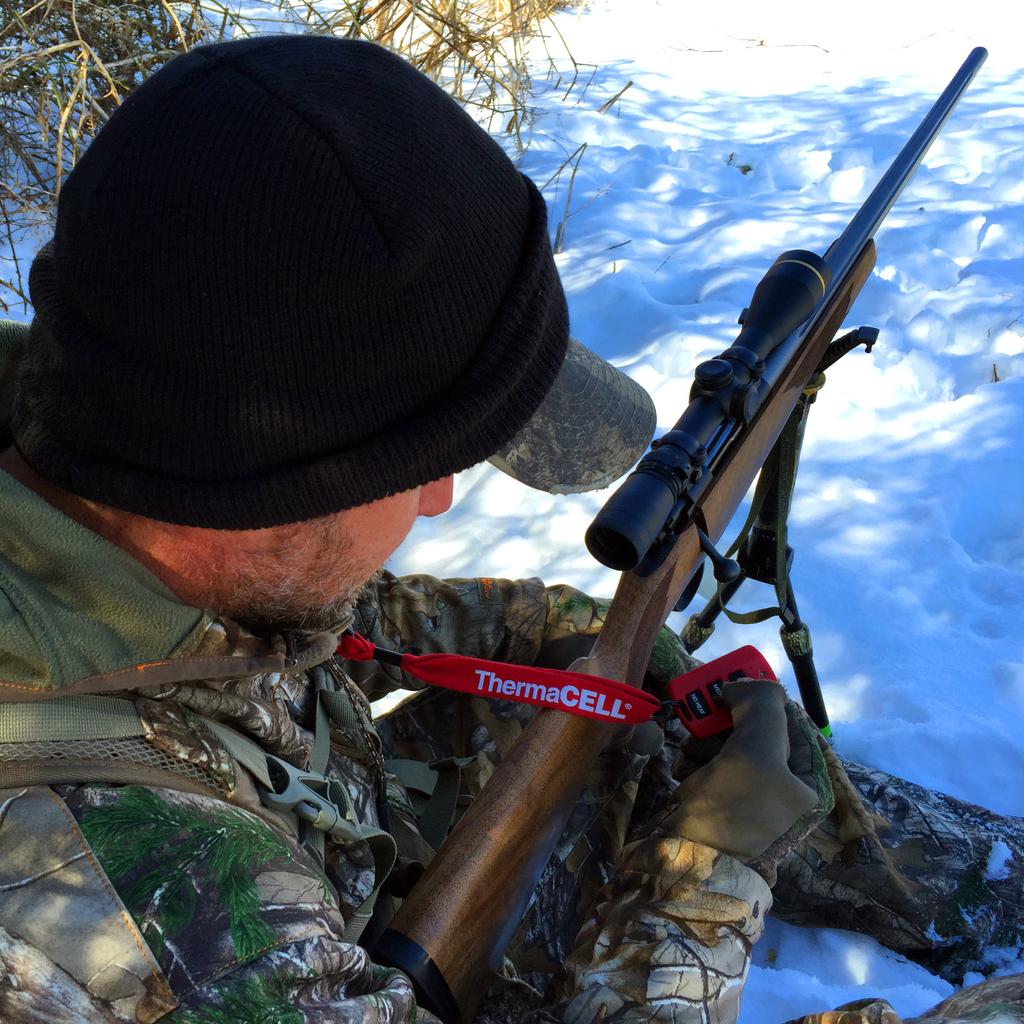
ThermaCELL’s electronically heated insoles aren’t perfect, but they are the best cure for my biggest late-season deer hunting problem: cold feet. When temperatures drop into the teens,  toes can start to burn with the cold unless wearing heavy felt-lined boots. If hiking to a stand or do some still-hunting, however, pac boots make feet sweat, which guarantees  toes will be cold when standing still.Thermacell-Insole-1

The best thing about ThermaCELL’s heated insoles is the fob-like remote and built-in control board and battery. Unlike chemical toe warmers, which start out hot and gradually cool down, these let you wirelessly select “No Heat” when you don’t need any supplemental warmth, then either “Medium” (100 degrees F) or “High” (110 degrees F) heat when you do, all without clumsy external batteries or switches.

That allows for wearing a favorite pair of lightweight, moderately insulated knee-high rubber boots when on the go, with the assurance that the heat can be vamped up if on a stand or stop for whatever reason. And even if wearing heavier boots, the control board acts like a thermostat and temporarily shuts off power to the heating element when it reaches the selected temperature.

B_5v_OnVAAAS60U

It’s genius—though not without a few flaws.

  • For starters, the molded, cushioned insoles are much thicker than the insoles that come standard with most boots and can only use them with light socks in boots that are large to begin with. Otherwise the fit is way too snug.
  • They could also be a little warmer, and the battery life is disappointing. The lithium-ion unit built into the heel of each insole recharges quickly, but it does not come close to the advertised five-hour run time at medium heat.
  • And they’re pricey, at about $130. If the battery lives up to its promised 500 charges, that works out to only about $0.26 per use, which is about one-quarter what chemical toe warmers cost. At this point, though, that’s still a big “if.”

imagesPO5E8D77

But the biggest complaint is with the remote. It doesn’t confirm what setting the insole is at. Sometimes it’s off when it should be on and on when it should be off. A positive on-off switch, or even better a setting and battery level indicator, would be a huge improvement. So for now we’ll have to wait for the perfect cure. Until then, these are still pretty darn good, and a second pair would be convenient so they can be swap out on all-day hunts.

Follow our FISHING BLOG

WEB   RATES     FISH    HUNT    CABINS    PHOTOS
TESTIMONIALS    BROCHURE    HUNT BOOKLET

Enter your email address to subscribe to this blog and receive notifications of new posts by email.

← Back

Thank you for your response. ✨

Email Me....


Tags: , , , , , ,

Master the Moon Phases

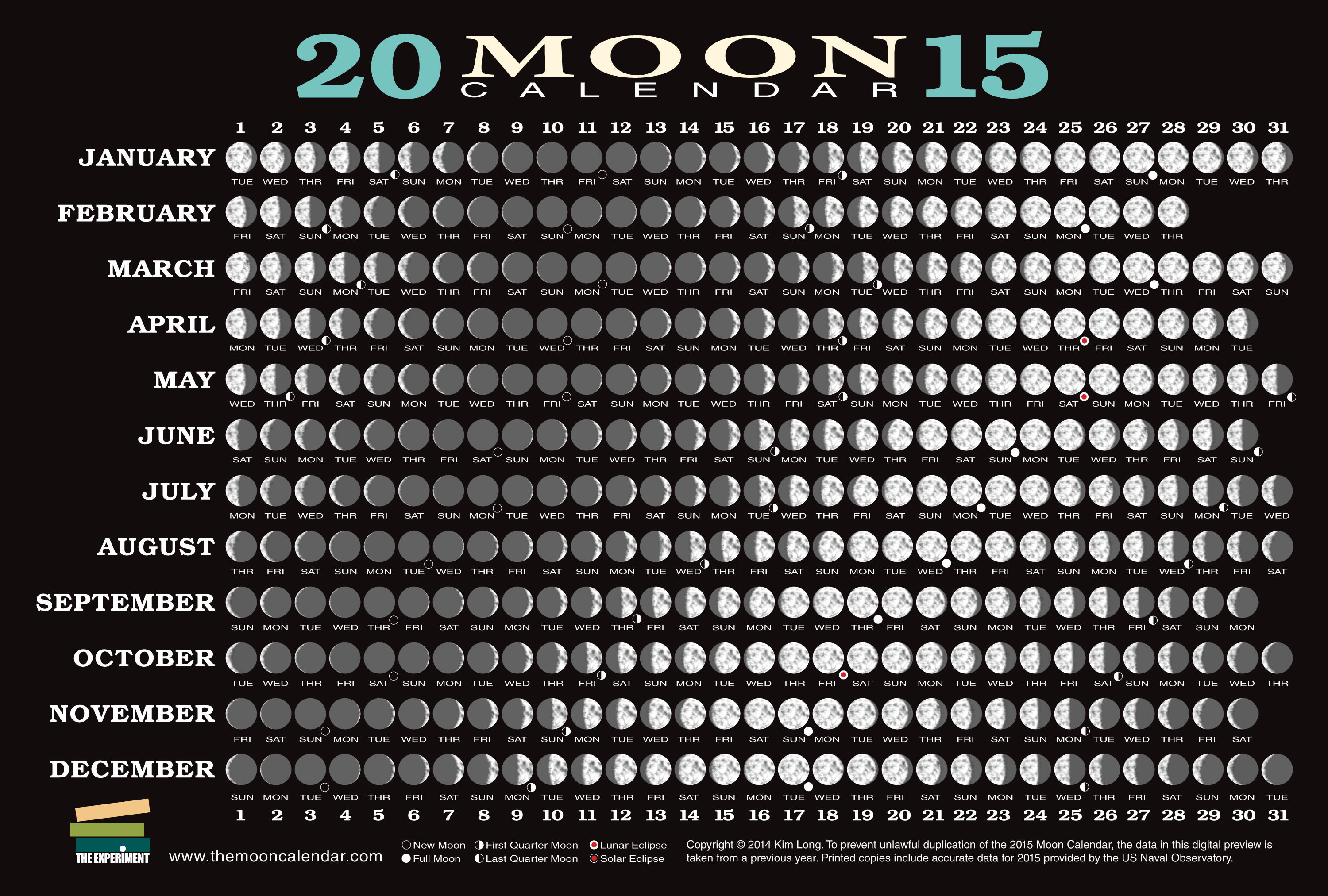
We all understand that hunting or fishing near sunrise or sunset is almost always the most productive. Well, the same goes for the moon, along with its effects of overhead and underfoot periods. Just as the sun has its yearly cycle of 365 days, the moon has a yearly cycle as well, but in much less time of 29.5 days.

2015 lunar calendar

The effects the lunar cycle has on tides and weather is well documented, these effects carry over into wildlife movements as proven through record harvest studies.

Next time you hear about a big buck being taken at noon or the next time you’re looking at trail camera pictures of the one you’re after, the chances are it was during one of these times; moonrise, moonset overhead or underfoot.

app

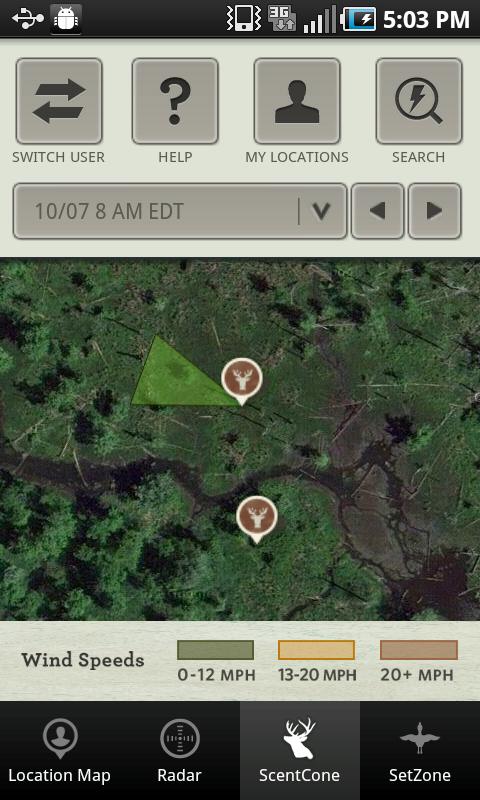
Hunting Weather App


We are entering a favorite hunting time, waxing gibbous through full moon; 10 a.m. until noon and 3 p.m. until dark are your best times to hunt during this moon phase.

It will be especially good if weather factors you’re following on co-operate. Track the weather where you hunt and fish at ACCUWEATHER

Follow our FISHING BLOG

WEB   RATES     FISH    HUNT    CABINS    PHOTOS
TESTIMONIALS    BROCHURE    HUNT BOOKLET

Enter your email address to subscribe to this blog and receive notifications of new posts by email.

← Back

Thank you for your response. ✨

Email Me....


Tags: , , , , , ,

Pattern Birds for a Better Hunt

But you can save steps, increase your flush count, get more shots, and bag more birds if you use some common sense and follow the program below. Ruffed grouse utilize different parts of their habitat at different times of day. Here’s where to hunt and when.

Early Morning: Timber Seams
Don’t believe sleepyhead late-risers who rationalize that grouse hunting is better at midmorning. Hit the woods at sunrise, when the birds have just flown down and are moving out and laying down some scent for your dog. Even if you hunt without a canine, grouse are on the move and more vulnerable now.

DSC07479

Hunt seams and transitions between big, mature timber (where birds like to roost), open areas, and the thick brush where grouse spend the bulk of their day. Another good zone is the seam between conifers, such as pines or spruce, and hardwoods.

cranMidmorning: Feeding Zones
By the time the sun has been up for an hour, most grouse have arrived at their feeding area and are foraging hard. Know what the birds are eating: If you shoot a grouse, open up its crop and check inside. Then hunt that kind of feed.

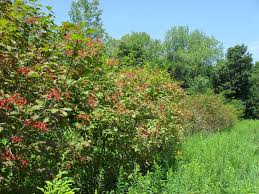
Grouse love high bush cranberries, plus most any other juicy or freeze-dried fruit, such as crab apples. Abandoned orchards are grouse heaven. If there are oaks around, grouse will look for small acorns and pieces. Work the edges of open areas like hay meadows and abandoned fields, where grouse will hunt insects and pick up seeds. Logging roads and tote trails with clover are also prime.

Afternoon: Thick Stuff
After feeding, ruffs work their way into the thick stuff, where they will loaf and spend the day under cover. As a general rule, think “low” and/or “damp” now—along brooks, creeks, marshes, bogs, and seeps.

Head for stands of young aspen—trunks from buggy-whip-thick to fencepost diameter are about right. Grouse love tag alder thickets, especially where that cover butts up to timber or wetlands. Brushy tangles of witch hazel, raspberry canes, and multiflora rose hold birds. So do deadfalls. On windy days, kick around in the grassy edges of some of the thickest cover.

Late Afternoon: Feeding/Gritting Areas
By late afternoon, grouse are out feeding again, as well as pecking for grit.
Hit the kinds of feeding areas discussed above. Also work sandy lanes, dirt roads, and the edges of other open areas where birds pick up grit.

Evening: Transition Corridors
You can hunt grouse right up to sunset, and this is a great time to be out, when the birds are back on the move toward roosting areas. Research indicates that grouse prefer to roost in and under deciduous and evergreen trees and shrubs, in brush piles, and in leaf litter. When cold weather hits, grouse will snow roost unless conditions are unsuitable. Conifers are then the roost cover of choice. Try hunting the transitions between stands of young timber and thick brush, or young timber and mature trees. If the evening is windy, stick to lower ground where birds find protection and quiet.

Follow our FISHING BLOG

WEB   RATES     FISH    HUNT    CABINS    PHOTOS
TESTIMONIALS    BROCHURE    HUNT BOOKLET

Enter your email address to subscribe to this blog and receive notifications of new posts by email.

← Back

Thank you for your response. ✨

Email Me....


Tags: , , , , , , ,

Master the Moon Phases

We all understand that hunting or fishing near sunrise or sunset is almost always the most productive. Well, the same goes for the moon, along with its effects of overhead and underfoot periods. Just as the sun has its yearly cycle of 365 days, the moon has a yearly cycle as well, but in much less time of 29.5 days.

2015 lunar calendar

The effects the lunar cycle has on tides and weather is well documented, these effects carry over into wildlife movements as proven through record harvest studies.

Next time you hear about a big buck being taken at noon or the next time you’re looking at trail camera pictures of the one you’re after, the chances are it was during one of these times; moonrise, moonset overhead or underfoot.

app

Hunting Weather App


We are entering a favorite hunting time, waxing gibbous through full moon; 10 a.m. until noon and 3 p.m. until dark are your best times to hunt during this moon phase.

It will be especially good if weather factors you’re following on co-operate. Track the weather where you hunt and fish at ACCUWEATHER

Follow our FISHING BLOG

WEB   RATES     FISH    HUNT    CABINS    PHOTOS
TESTIMONIALS    BROCHURE    HUNT BOOKLET

Enter your email address to subscribe to this blog and receive notifications of new posts by email.

← Back

Thank you for your response. ✨

Email Me....


Tags: , , , , , ,

Test your Accuracy with Ballistics Software

Ballistics calculators are indispensable tools for making hits on long-range targets, but they are only as accurate as the data they are fed. Many shooters fail to appreciate that some of the initial data input into these calculators are just good guesses and need to be tweaked based on trial-and-error experimentation in the field. However, spend time getting these four calculators dialed in, and you’ll be amazed at the improvement in your accuracy.

shoot1

Field Firing Solutions
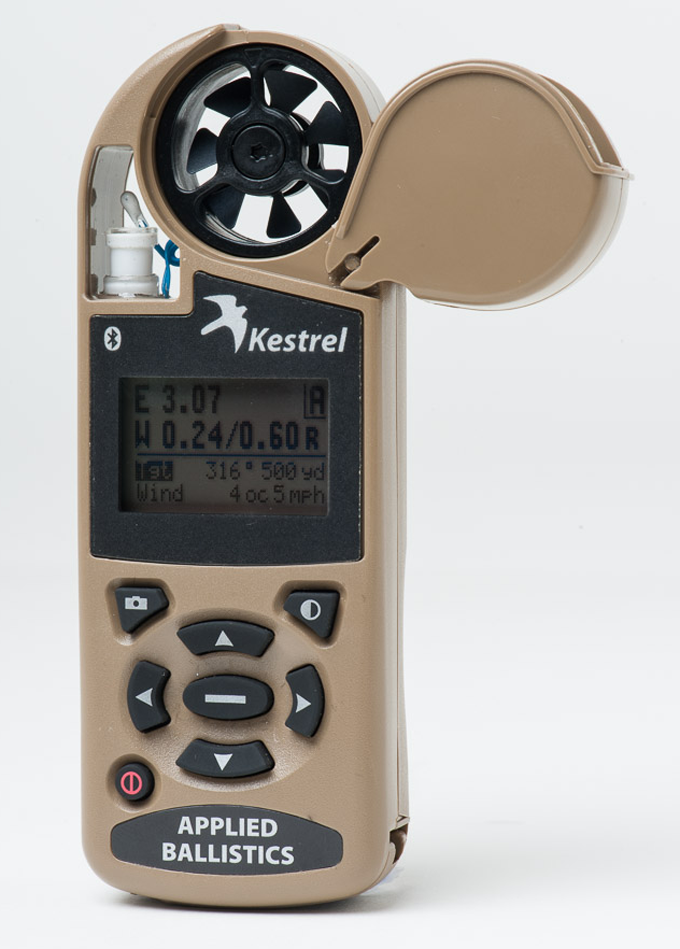
This sophisticated software program comes on an SD card and works with PDAs that run WM 5.0 or above. The program, called Delta V, can work with Bluetooth-enabled Kestrel units to incorporate environmental data at the shooter’s location. This is an advanced program that requires dedication to master, but it is the best on the market. ($395; lextalus.com)

Cold Bore
This software works on both Windows desktop computers and mobile devices running WM operating systems. This calculator doesn’t use a ballistic coefficient (BC) model, but rather one that employs a drag coefficient, which is more precise. The software can be purchased as a bundled package for both desktop and mobile, or individually for either platform. ($150, bundled; $85, individual; patagoniaballistics.com)

Applied Ballistics
This easy-to-use software was developed by Brian Litz, one of the foremost experts on long-range ballistics. It runs on both Android and iOS mobile devices. The calculator comes with a library containing hundreds of custom G1/G7 BC shootprofiles for various bullets. ($30; appliedballisticsllc.com)

JBM Ballistics
This web-based ballistics calculator is both very good and very free. It has a comprehensive library of existing loads, and allows the shooter to tweak the inputs to generate accurate firing solutions. (jbmballistics.com)

How Wind Affects Bullet Flight
Whereas judging a bullet’s drop at long-range is a science, correctly calculating the effect of wind is more of an art. Unseen eddies, sudden gusts, and funnels created by the terrain can all come into play, and it takes practice to pick up on these influences.

Usually, we’re limited to taking a single wind reading at the shooting position. But if we can ascertain only one wind value, that is the one to have. This is because the wind nearest the shooter has the greatest effect on the bullet’s path. Why? Once the projectile starts moving due to the wind, it keeps angling in that direction, even if the conditions are calm down range.

Conversely, if it is only windy down range, the bullet will move less since there is less time remaining in the bullet’s flight.

Follow our FISHING BLOG

WEB   RATES     FISH    HUNT    CABINS    PHOTOS
TESTIMONIALS    BROCHURE    HUNT BOOKLET

Enter your email address to subscribe to this blog and receive notifications of new posts by email.

← Back

Thank you for your response. ✨

Email Me....


Tags: , , ,