RSS

Category Archives: hunting

Nine Year Old Girl Shoots Grizzly Bear

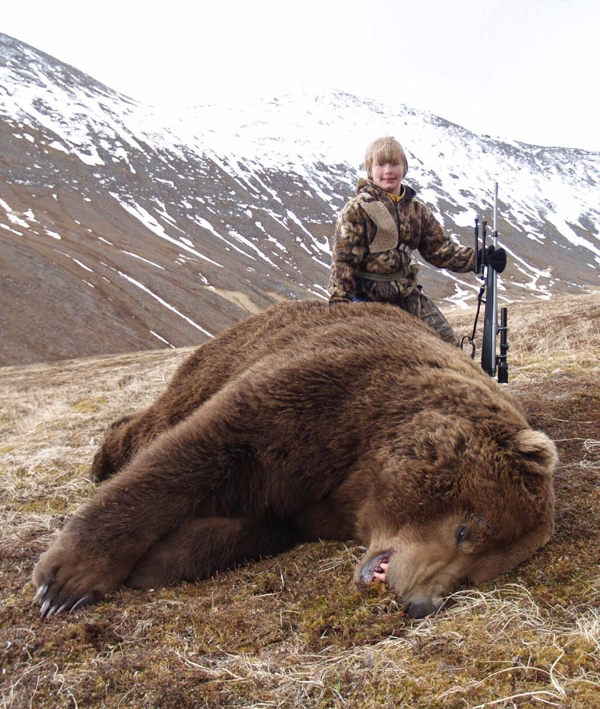
You may have heard a story of a little 9-year old girl that shot a World Record Alaskan Brown Bear (Grizzly Bear). Fern Spaulding Rivers did shoot a trophy Brown Bear but it was not a world record. It’s still a really interesting story.

Story from Bear Hunting Magazine is below

1
If the “biggest bear” is determined as a ratio of the size of the bear to the size of the hunter then Fern Spaulding-Rivers is probably setting records that will never be broken. The 10 year-old from Talkeetna, Alaska has already harvested great trophies of most of Alaska’s major game species, and she is a hand loading fanatic as well.

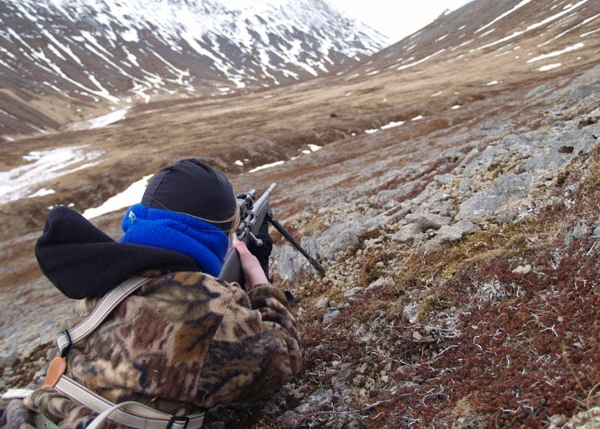
Fern’s larger caliber rifles have a muzzle brake and a recoil pad and she also wears a custom-made padded shooting vest from McCoy Shooting Armor to help her withstand big bore recoil. Fern was brown bear hunting on the Alaskan Peninsula with her father and mother on May 10th, 2006 (when she was 9 years old). She was carrying her Remington 700 Stainless chambered in .375 H&H and topped with a Zeiss Diavari Classic 1.5 – 4.5 x 18 scope. As the day progressed she and her father saw 11 bears. At one point, they were charged by a wolf, and they had to dispatch it at only 8 paces! Later, they spotted a big bruin in a gully at 32 yards.

2

With all the excitement of the day beginning to show, Fern asked Larry to hold her legs steady while she shot because her knees were shaking. Fern rolled the bear with her first shot, but the bruin regained it’s footing and tore off across the tundra. Shooting again from a prone position, Fern dropped the behemoth for good with a second 270 grain Barnes Triple-shock at 112 yards. The United States Fish and Wildlife Service measured the bear’s hide at 11’4″ from nose to tail. The skull has been officially scored at 29 1/16″ Boone and Crockett. What does Fern think of bear hunting? “Do you know how big an 11′ bear looks at 30 yards? It’s really kind of scary! They are about the size of a Volkswagen bus and when they swing their head to look your way they remind you of a T-Rex in Jurassic Park!”

3

Her trophy brown bear now puts her in an elite class. Fern is a tremendous example to young hunters everywhere, and she is a great hunter regardless of her age.

WEBSITE    RATES     FISH    HUNT    CABINS    PHOTOS
TESTIMONIALS    BROCHURE    HUNT BOOKLET

Enter your email address to subscribe to this blog and receive notifications of new posts by email.

← Back

Thank you for your response. ✨

Email Me....


Tags: , , , , , , , , ,

Polar Bear Chases Man Around Truck

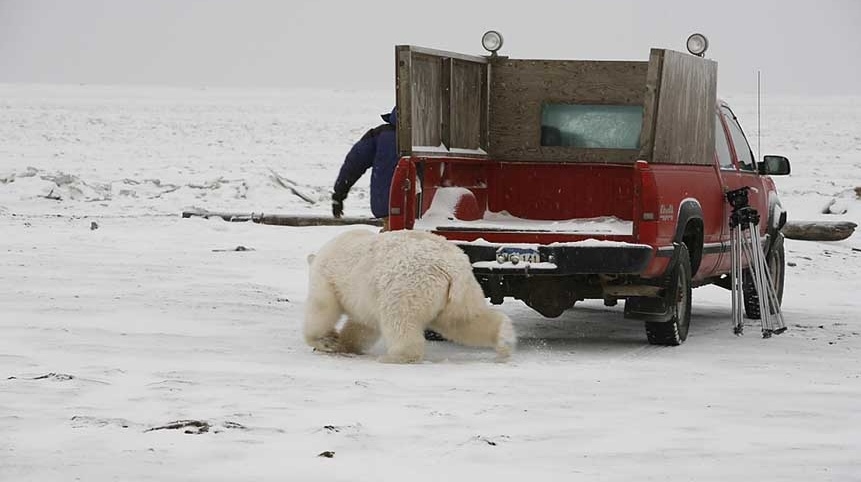
These are pictures from Barrow, Alaska. A photographer got careless and let the bear get too close and he did not have time to get into his truck before the Polar Bear started chasing him around the truck.

1
This is just a small bear. It’s probably only 2 years old and on it’s first year without its mother. A full grown male Polar Bear can get up to be three times this size. Hiding in a truck or car would not save you as any polar bear could smash though the car glass in seconds with very little difficulty.

2

This slideshow requires JavaScript.

WEBSITE    RATES     FISH    HUNT    CABINS    PHOTOS
TESTIMONIALS    BROCHURE    HUNT BOOKLET

Enter your email address to subscribe to this blog and receive notifications of new posts by email.

← Back

Thank you for your response. ✨

Email Me....

 
Leave a comment

Posted by on November 28, 2014 in Bear, hunting, Wawang Lake Resort


Tags: , , , , , , , ,

Baking Soda to Cover Your Scent

Baking soda, the same stuff that deodorizes the fridge and is the key to scent-control system before a hunt.

CN7BBG empty box on white background

Take a soda shower.
The stuff can rub your skin raw if you use it straight, so mix a few tablespoons with some liquid no-scent soap.  Sometimes showering with straight unscented soap, can still leave an odor.

Make a soda-and-clothes lasagna style.
Use baking soda like any other powdered detergent to wash your clothes. Dry them, lay a few items in a plastic tote, sprinkle a layer of soda on that, put in another layer of clothing, sprinkle more soda, and so on until the tote is full. Then place an open box of baking soda in with the clothes and seal the tote up.

Sprinkle your boots.
Obviously, your feet are one of the smelliest body parts because they’re constantly sweating inside your boots,   If boots are wet with perspiration after a hunt, put them on a boot dryer and then sprinkle in some baking soda.  You’ll have very few animals cut your track after applying this tip.

WEBSITE    RATES     FISH    HUNT    CABINS    PHOTOS
TESTIMONIALS    BROCHURE    HUNT BOOKLET

Enter your email address to subscribe to this blog and receive notifications of new posts by email.

← Back

Thank you for your response. ✨

Email Me....


Tags: , , , , , , , , ,

Tree Stand Safety

tree_stand_tips_wawanglakeAlways be cautious using a tree stand.   As hunters begin to set up tree stands as part of their preparation, safety is still rule number one   Whether you are scouting a location, trimming shooting lanes and putting up your tree stand, even on a trial basis, use the same precautions you would during hunting season.

Use a lineman-style belt in addition to a full-body harness when first putting a tree stand in place.  This minimizes the chance of falls and potential injury,  and,  always select a healthy, straight tree for placement.

Other recommendations:
Never carry anything as you climb — use a haul line to raise and lower equipment.

  • Maintain three points of contact when climbing.
  • Follow manufacturer instructions.
  • Don’t exceed manufacturer’s maximum height settings.
  • Have an emergency signal device with you.
  • Tell someone where you plan to go.

As with any piece of equipment, tree stands need inspection before use.

Replace:

  • Rusted bolts
  • Frayed straps or, if needed, buy a new tree stand.

Leaving a tree stand up from one season to the next has some inherent problems that outweigh any convenience. When a tree stand is exposed to the elements due to long-term placement, it may have damaged straps, ropes and attachment cords — any of which may potentially lead to breakage and failure.


WEBSITE    RATES     FISH    HUNT    CABINS    PHOTOS
TESTIMONIALS    BROCHURE    HUNT BOOKLET

Enter your email address to subscribe to this blog and receive notifications of new posts by email.

← Back

Thank you for your response. ✨

Email Me....


Tags: , , , , , ,

An adrenaline filled archery moose hunt!

Sometimes the thrill of the hunt gets escalated that much more!  This is one of the most adrenaline filled hunts we have seen in years.  This hunt was filmed in the Yukon and was executed with great skill…while we promote hunting, we suggest unless you have the skill necessary, do not try this out in the field 🙂

Are you an Ontario resident with a tag for 15A or 15B?  We have centrally located accommodations.  Book early to avoid disappointment!

moosehuntersjpg

Follow our FISHING BLOG

WEB   RATES     FISH    HUNT    CABINS    PHOTOS
TESTIMONIALS    BROCHURE    HUNT BOOKLET

Enter your email address to subscribe to this blog and receive notifications of new posts by email.

← Back

Thank you for your response. ✨

Email Me....


Tags: , , , , , , , , ,

Winter camping for beginners

Winter camping can mean different things to different people.  For some, it means renting a cabin heated by a wood stove. For oth­ers, it means pack­ing snow­mo­bile trail­ers to the brim. For the more adven­tur­ous, it means grab­bing a pack and haul­ing in all the neces­si­ties to a remote loca­tion. No mat­ter how you win­ter camp, the fol­low­ing tricks are useful.

WEAR A FIRE­PROOF SHELL
If you are going to build camp­fires, either for the sake of cook­ing, warmth, or morale, make sure that your outer layer of cloth­ing is less likely to end up ruined if struck by an errant ember.  Wool is one of the best, most fire-resistant nat­ural mate­ri­als and is great for this.  Down jack­ets are down­right (no pun intended) awful, and you can lose tons of feath­ers this way.

PACK THE SNOW
Before set­ting up your tent, pack down your camp­site. If you have skis or snow­shoes, that means tramp­ing around hard until all the snow is packed.  If you’re shod only in boots this will take some time, but if you don’t do this, you run the risk of step­ping into a soft bit of snow in your tent and tear­ing the floor.

PACK AN EXTRA HAT AND GLOVES
Always carry a spare hat and a set of mit­tens. No mat­ter how dili­gent you are, no mat­ter how reli­gious you are about using idiot strings and keeper cords, you will lose a hat, and you will lose a glove.  Keep a cheap spare, or be pre­pared for frost­bite or a fore­short­ened trip.

EMBRACE THE PEE BOT­TLE.
Being cold can cause you to want to uri­nate more fre­quently, and we all know how incon­ve­nient it is to dis­robe and undo your sleep­ing bag at 0 degrees F.  For women, I highly rec­om­mend look­ing into the var­i­ous acces­sories that allow you to pee whilst stand­ing, and for both gen­ders a WELL-MARKED pee bot­tle will keep you warm and sim­plify your nightly con­ti­nence. For the love of god, don’t con­fuse your water bottle—color is not enough, make sure your bot­tle is well-marked and maybe wrapped in some duct tape.

USE THOSE STAKES
If there is snow, you can stake out your tent.  You can always make dead­men out of sticks or fallen trees, stuff sacks full of snow, buried skis, snow­shoes, poles, ice axes, or what have you.  There is no excuse for a poorly staked-out tent.  If you expect no snow and frozen con­di­tions, plenty of com­pa­nies make hard tent stakes meant to push through frozen ground, either out of tita­nium, steel, or 7075-t6 aluminum.

BRING THE RIGHT SLEEP­ING PAD
As Bear Grylls says, two lay­ers on the bot­tom are worth one on the top.  That is, you lose more heat through con­duc­tive heat loss when sleep­ing than any­thing else, so win­ter is no time to skimp on your sleep­ing pad.  Make sure you have a pad with an r value of four or more, and if you have one, throw a closed-cell foam pad under­neath. If you feel like your pad isn’t cut­ting it, stuff extra cloth­ing under­neath you, and toss your down jacket on top of your sleep­ing bag.

BOIL THE SNOW
Leave your water fil­ter at home.  Chem­i­cal fil­ters take longer to work in the cold, and mechan­i­cal fil­ters can crack and fail. Your best bet for water fil­tra­tion is boil­ing your water, as you prob­a­bly have to melt snow any­way. Don’t be suck­ered into think­ing glacial melt or fresh snow is sterile–it isn’t. Snowflakes often form around small bits of dust (nucle­ation sites) which can be bac­te­ria or viruses float­ing in the upper atmosphere.

SLEEP WITH YOUR BOOTS
Use boots with remov­able lin­ers, so you can put those lin­ers at the bot­tom of your sleep­ing bag to keep them warm.  If you only have single-layer boots, put them in a water­proof stuff sack at the bot­tom of your sleep­ing bag.  Noth­ing means morn­ing hypother­mia more than frozen boots!

CAMP BY CAN­DLE­LIGHT
A can­dle lantern safely hung on the inside of your tent (far enough away from you and the ceil­ing so as not to be a fire haz­ard) does won­ders to both warm your tent and reduce con­den­sa­tion.  Despite this, a towel for scrap­ing off con­den­sa­tion is always welcome.

EMBRACE LITHIUM
Use lithium bat­ter­ies in all your win­ter elec­tron­ics.  Not only does lithium per­form con­sis­tently down to much colder tem­per­a­tures than alka­line or NiMh bat­ter­ies, but they are lighter, last three times as long, and have a flat decay curve.

WIPE WITH CARE 
In the sum­mer, comfy leaves or soft river stones abound, but in the win­ter they’re few and far-between. While many have picked up pinecones in des­per­a­tion, the best read­ily found alter­na­tive is just plain old snow. It’s effective, ubiquitous, and leaves behind lit­tle residue.  If you do bring TP, please either pack it out or burn it. The ground is too hard for catholes and for those who have hiked along the Appalachian Trail dur­ing the first spring thaw, a mound of TP gen­er­ally sig­ni­fies a poorly hid­den scat stash.

FIGHT CON­DEN­SA­TION WITH A VBL
If you’re out more than a week, use a VBL, or vapor-barrier-liner for your sleep­ing bag.  Con­den­sa­tion from your own body can freeze within the upper layer of your sleep­ing bag where the warm air meets the freez­ing air, and over time your sleep­ing bag can become frozen solid.  While they are not as com­fort­able to sleep in, it beats hit­ting your sleep­ing bag with a ham­mer every night like some polar explor­ers have had to do.

FLIP YOUR BAG
If it’s not snow­ing, turn your sleep­ing bag inside out on top of your tent to dry dur­ing the day.  This is a great rea­son to choose win­ter sleep­ing bags with a black interior–it absorbs more solar energy and dries out faster.

FLIP YOUR WATER
If you have a large water stor­age con­tainer, turn it upside-down when stor­ing it overnight.  Ice forms from the top down, so keep­ing the spout/opening of your con­tainer fac­ing down keeps it from get­ting frozen up. This can be com­bined with insu­lat­ing the con­tainer, of course.

VASE­LINE
Cover exposed skin in Vase­line or ani­mal fats. Inuit have been doing this for years–simply slather any exposed or poten­tially exposed skin on your face, ears, neck, wrists, or hands in a thick oil and they’ll be less prone to wind­burn and frostbite.

Stay warm!


Prefer traditional camping without snow?  Check us out!

2014_Brochure(307x400)


Tags: , , , ,

Want more grouse? Watch the thermometer drop!

Want more grouse?  Watch the thermometer drop!

P1040063Cold, blustery days in early winter are not the best days to go grouse hunting. Neither are, humid, September days. Essentially, the best time to go grouse hunting is when you can. And if that means dealing with the weather de jour- so be it. That doesn’t mean you can’t find some grouse, and even pocket a few, regardless of the weather.

Grouse like to stay cool in early fall when Indian summer days send the thermometer to summer-like temperatures. During those glorious fall days grouse will sleep in on their cozy roost and then venture out into a sunlit patch to soak up the warming October rays. November and December is a transitional period when cover becomes as much a priority as food. Staying warm and out of the wrath of heat-sapping winds and cold makes the places that grouse frequent during the late fall and early winter months predictable. Most times the mercury can give you a heads-up on which way to go.

Ruffed grouse seasons open in September in Ontario. Going hunting then is more a testament to tradition than it is to wanting to kill grouse. Foliage is thick, dense and green. But, if you insist on subjecting yourself to this kind of brutality you might as well give yourself the best chance at finding birds.

Look at the thermometer and you’ll realize that one of the best places to look for early season grouse is near rivers and streams. Waterways provide cool summer oases for grouse and you usually won’t find them far from the same habitat come early fall. During especially dry years, the moist soils found along rivers and streams may be one of the few places that you’re going to find the types of vegetation that produce the fruits and berries that grouse love so much.

Another reason early season grouse can be found along waterways is that the thick vegetation protects grouse broods from predators. Moist soils produce lush habitat that is ideal for protecting young grouse broods and the temperate environment produces a lot of high-protein invertebrates that are critical to young grouse growth and survival. Working along river bottoms and creek beds can be a good tactic because grouse broods can often be found in or close to their brood habitat.

Grouse are often still in broods or tight-knit family groups in September and October and can be concentrated and difficult to find. Perseverance can pay off. You might hunt several prime coverts without success and then bust several coveys in a short period of time. The trick is to keep at it. When you do run into some birds, you’ll usually find a bunch and chasing down singles after the flock is broken up can produce some quick shooting.

And quick shooting is what you can expect this time of year. Shooting grouse is never easy, but the task is made increasingly difficult when foliage is thick and catching even a glimpse of a bird is tricky. In the early season, you need to post, plan and resist the temptation to go in after them. It’s fruitless. If you have a dog, let them do the dirty work. Instead, look for openings, deer trails, clearings and post where you can get a shot if a bird flushes in your direction. Put a bell on your dog so your can keep track of his location at all times. Let one hunter bust the brush while the other walks a logging road where a flushing bird just might offer a shot. Don’t wait for an open shot. You’ll never get one! Instead, instinctively point and shoot even if you only catch a fleeting glimpse of the bird. Many times I never even knew I’d hit the bird until the dog came back with the grouse in its mouth. Be sure to keep in constant contact with your hunting party and know their location for safety sake and wear plenty of hunter’s orange.

Think wide open chokes and small shot during the early season. Grouse are not difficult birds to bring down, so put a lot of shot in the air and maybe just a pellet or two will get through the trees and hit its mark.

Weather and temperatures can be quite diverse in October. You might be rewarded with one of those cool, sunny, perfect fall days that grouse hunters live for. But don’t be surprised if you’re forced to pull out the woolies and gloves either. And you might even wake up to some fresh tracking snow. That’s just how October is- transitional- and it’s a transitional period for grouse too.

This slideshow requires JavaScript.


Grouse have a smorgasbord of items to choose from in October and finding their preferred food source is often critical to finding numbers of grouse. Ripening fall fruits can draw grouse from far and wide. Grouse favor edge cover, and it’s no coincidence that some of their favorite culinary delights do best on edges where sunlight can penetrate the forest canopy. Depending on which state you live in, grouse can usually be found keying in on edge cover fruits like wild grapes, chokecherry, and a host of other fruity edibles. These open areas also produce some of old ruff’s favorite greens like wild strawberry and clover and are also places where they can find high-protein items like grasshoppers, crickets, and other insects.

When grouse numbers are high, they can be found in variety of cover types at this time of year. Even marginal grouse habitat will hold a few birds as grouse begin dispersing into new territories during the fall shuffle.

Cover becomes an increasingly important priority as the month wears on. October begins with it plenty of foliage and grouse can move about uninhibited. By the end of the month, the trees are bare, the wind has a foreshadowing bite to it and grouse must rely on their camouflage and staying hidden as much as possible. Still, you’ll find grouse wandering about in search of brunch or a late afternoon snack and those are two of the best times to hunt grouse at this time of year.

Obviously a peak time in October is the first week or two after the leaves have fallen. When this happens might vary by a few weeks from region to region, but it is prime time to be in the woods. Grouse seem to forget for a little while that they are not as invisible as they were just a few days earlier and their numbers are at a seasonal peak. You can actually see some of the grouse that you flush too. 

At this time of year you can find grouse in some pretty unusual places far from what you’d consider ideal grouse cover. I’ve found grouse under a solitary crab apple tree in the middle of a field far from what you’d consider grouse cover. I’ve shot grouse out of fields of goldenrod that you’d think were more likely to hold pheasants. No patch of cover is too small or too thin to hold a grouse then.

Once snow blankets the ground the whole ballgame changes. Grouse that have survived the onslaught of hunters, wolves, owls and know that when their environment becomes covered in white they are vulnerable. Snow also covers up many of the grouse’s food sources and feeding becomes a little more risky and perilous. Grouse don’t go on those aimless strolls in search of food. Their search is more deliberate and of shorter duration when the thermometer starts to dip and the weather turns cold. Cover becomes more of a priority.

It’s important to ferret out productive versus non-productive cover as quickly as possible. I don’t know about you, but I’m not as young as I use to be. Those all-day jaunts of pounding the woods are over. I’m usually only good for about a half a day of hard hunting and I want to make the most of it. To do so requires that you develop a since for identifying the absolute best cover and hunt it hard. Learn to not waste time where you THINK there might be birds.

Remember those light loads and wide-open chokes you used in September? Put them away if you’re serious about killing grouse once the snow flies. Shots will be longer and birds will be tougher. Replace your 8’s and 9’s with high-brass 71/2’s or even 6’s. Take the skeet tubes out and go to improved or even a modified tube in one barrel. With your shooting eye in late season form you’ll still get the easy shots and with the heavier shot and tighter chokes you’ll be able to add a few birds you wouldn’t normally pocket.

Grouse are tough customers. That’s why most of us hunt them. But watching the thermometer you can get a better idea of where to begin your search and make your days in the woods a little more productive.

Join us in 2015 for a great hunt!

Check out our 24 pg. HUNT BOOKLET

Check out our 24 pg. HUNT BOOKLET


Leave a comment

Posted by on November 5, 2014 in grouse, hunting, Wawang Lake Resort


Tags: , , , , ,

Unusual but amazing moose antler trophies

With the regular rack mount being the most common, it has become popular to put a spin on an old favorite!

This slideshow requires JavaScript.

 
Leave a comment

Posted by on October 27, 2014 in hunting, moose, Wawang Lake Resort


Tags: , , , , , ,

Great grouse mount ideas for all budgets


With grouse season upon us, we all know that the meat is fantastic, but did you know that there are various ways to utilize the entire bird.

Full mounts are beautiful but often passed over due to cost:

grousedisplay7

grousedisplay6

grousedisplay8

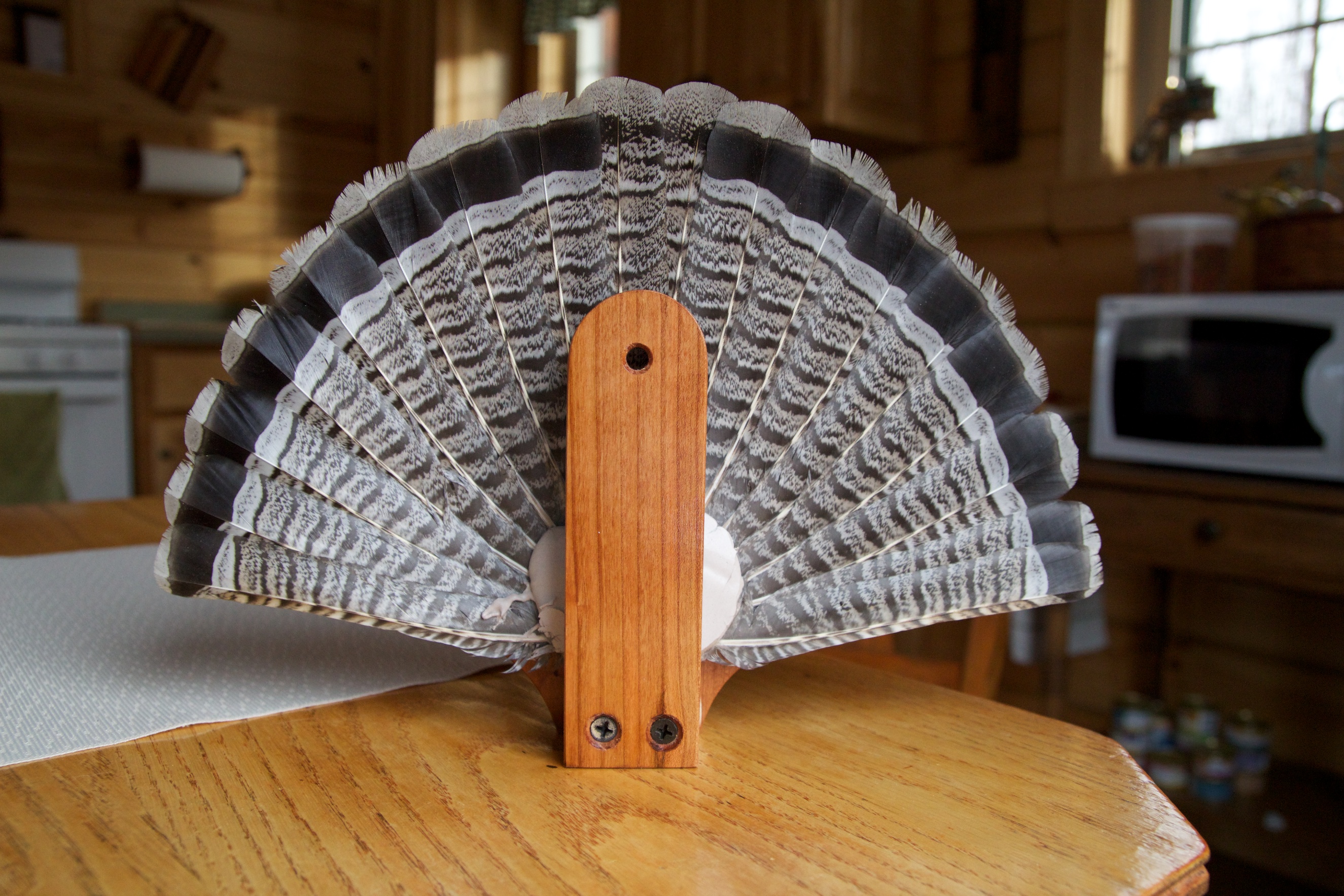
Another great idea is a flat “rug” mount.  Unusual, but beautiful.

grousedisplay3

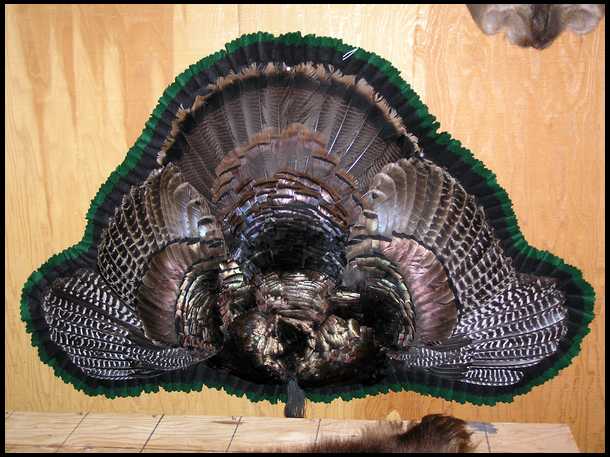
One of the more beautiful ideas is a wall tail fan mount.  These are gorgeous to look at and a good DIY option.

grousedisplay1

grousedisplay4

grousedisplay5

 OLYMPUS DIGITAL CAMERA

These options are not only visually appealing, and with so many options for display, why not utilize the entire bird 🙂

 
Leave a comment

Posted by on October 19, 2014 in grouse, hunting, Wawang Lake Resort


Tags: , , , , , ,

Where to Place Your Trail Cams

A trail camera won’t stumble through a bedding area, leave scent all over a trail, or exaggerate the size of a rack. And it’ll never oversleep. But your perfect little scouting buddy must be chosen wisely and placed carefully if you want to pattern that old, crafty animal you know is around. Here’s how…

CameraNO_MosaicYELLOW

The earlier version trail cameras were just a 35mm film point-and-shoot tucked in a weatherproof housing. It snapped a single picture when something triggered the sensor. After retrieving the camera, you ran to the one-hour shop to get the film developed, then thumbed through a week’s worth of pictures. More than once a stack of 36 prints revealed a handful of out-of-focus animals and a couple dozen shots of a wind-whipped brush or a drooping tree branch. That was only a few years ago.

Today, many website boasts several pages of trail cams, and even the cheapest one outperforms the original older ones. They have lenses sharp enough to count the ticks on a deer’s neck, electronic circuit boards so efficient that four AA batteries will run a unit for months, and memory cards that hold thousands of pictures you can download to your computer or delete at the touch of a button. And those are standard features on mid-priced cameras. The high-end ones will send a photo to your cellphone or laptop.

Like everything in the digital age, trail-cam technology has improved, competition has become fierce, and prices have plunged. Still, $200 is plenty of money, and matching a camera with the right features to meet your needs is critical. And even the best camera can’t take spectacular photos of a trophy buck if you don’t set it properly. But it’s not difficult to get started. These are the basics.

TrailCameras3
Wildlife biologists use trail cams to measure herd densities, buck-to-doe ratios, and the like. Your goals should be simpler: learning about the deer on your property, figuring out where to hunt them, and having fun in the process. You can pinpoint ideal spots before you buy a camera, and the locations you choose can determine what model is best for you. Here are four sites for four different periods.

Time: Late Summer
Site: Mineral lick
Goal: To start an inventory of buck numbers and quality on your property.
Setup: Find a spot with moderate to heavy deer traffic and spade up dirt in a 2-foot circle. Pour in half of an ice-cream pail of stock salt or commercial deer mineral and spade it into the loosened soil. Pour the rest on top.
Tips:
• Establish one or two licks per 80 acres. Allow deer up to a week to find them.
• Situate each lick 10 to 30 feet from a tree for mounting a camera.
• Jam a stick behind the camera’s top edge to point it down toward the lick.

500Time: Early Season
Site: Mock scrape
Goal: To find bucks after velvet shed, when they often relocate. Mocks can draw up to 90 percent of the bucks you’ll hunt.
Setup: Rake grass and forest debris 5 feet away from a tree that has a green, overhanging licking branch 5 to 7 feet above the ground. Activate with your own “product” (drink plenty of liquids) or deer urine.
Tips:
• If you are not getting clear shots of a buck, aim the camera at the licking branch. Most bucks will work it with their antlers.
• Establish multiple scrapes in each area and hang cameras only on the most active ones.

Time: Rut
Site: Funnel
Goal: To determine where resident bucks are traveling and whether traveling bucks are in the area.
Setup: Find terrain features that channel buck movement and hang a camera near fresh tracks and rubbing activity. Check camera every three to five days—the rut moves quickly.
Tips:
• Mount camera at a 45-degree angle to the trail. Bucks often move through funnels quickly; a camera set perpendicular to the trail might miss the shot.
• Scuff dirt in front of the camera with a boot. Such a mini mock will often make a moving buck pause and get “shot.”

Time: Late Season
Site: Food source
Goal: To find out where to fill a last-minute tag, and to know which bucks have survived the bulk of the hunting season.
Setup: Scout widely to find the hot food sources in your area, such as waste grainfields and clear-cuts. Place camera within 30 feet of the most heavily trafficked area. Load it with fresh batteries if you hunt in an extremely cold area.
Tips:
• Set up and check cameras at midday to avoid spooking feeding deer.
• If no trees are located near the food source, mount the camera on a tripod and camouflage it with grass or brush.

Make the Next Shot Count!

Follow our FISHING BLOG

WEB   RATES     FISH    HUNT    CABINS    PHOTOS T
ESTIMONIALS
    BROCHURE    HUNT BOOKLET

Enter your email address to subscribe to this blog and receive notifications of new posts by email.

← Back

Thank you for your response. ✨

Email Me....


Tags: , , , , , ,