RSS

Category Archives: hunting equipment

Coolest Brand Cooler

coolest-new-inventions892942423-oct-17-2014-1-600x450

Now this might not be good for your stand directly (blender and all LOL!)  But it would be great to have on location for spike camps etc.  Great idea!

Follow our HUNTING BLOG

WEB   RATES     FISH    HUNT    CABINS    PHOTOS
TESTIMONIALS    BROCHURE    HUNT BOOKLET

Enter your email address to subscribe to this blog and receive notifications of new posts by email.

← Back

Thank you for your response. ✨

Email Me....


Tags: , ,

Big Binoculars: The Advantages

images22Back in the 1970s, an uncle once told me that one of the most useful things any big-game hunter could own was a binocular in the 15×60 range. He said he never went elk hunting without one, and because I always did everything he said, I rushed right out and bought a Zeiss porro prism glass in 15×60 and it was exactly as he said, a highly specialized but invaluable tool if the circumstances were right.  Of course, like a jerk, I sold them some years later, but recently I traded a lot of stuff and coughed up some cash and got another big glass in the same power range.

What a major binocular will do is let you see when it is very dark, and let you see in detail at long range, or in great detail at medium range. On my recent trip to Kansas, the hunter who shared the blind with me had a 10×40 binocular of the first caliber, and I had a 15×60. In practical terms, what it would do was this:

At last light, when it was too dark to shoot, if we could see a deer I could tell if it was a buck or a doe. Fifteen minutes earlier, when he could see if it was a buck or a doe I could see if it was a big buck or a little buck. Fifteen minutes before that, if he could see whether it was a big buck or a little buck, I could count the points and evaluate the rack in excruciating detail.

images33

In some cases, a spotting scope is better. If you’re glassing miles of country, there is nothing that can take the place of 40X. However, at the intermediate ranges, say, 300 to 1,000 yards, a big binocular lets you spot things faster, lets you use both eyes, and is a lot smaller and lighter than most spotting scopes. They’re not cheap, but under the right conditions, big glasses are more than worth it.

Follow our FISHING BLOG

WEB   RATES     FISH    HUNT    CABINS    PHOTOS
TESTIMONIALS    BROCHURE    HUNT BOOKLET

Enter your email address to subscribe to this blog and receive notifications of new posts by email.

← Back

Thank you for your response. ✨

Email Me....


Tags: , , , , , , , , ,

On Target: How to Make Your Own Arrows

While doing some of my own research, we came across a fantastic article for all of you archers out there that have wondered about manufacturing your own arrows.

This article is reproduced from Edersbows.com, take some time to check them out 🙂 

arrows

Building your own arrows allows you to save about 5 to 1 0 dollars per dozen, but there’s an even better reason for building your own. You can experiment with all the components, with the various fletching styles and shaft sizes until you find the perfect arrow for your bow and your hunting or 3-D shooting requirements.

Building arrows is easy and fun, not to mention the satisfaction you’ll gain from taking game with arrows you’ve crafted yourself. Anyone can do it – and do it well. Armed with only a few basic tools and the information offered here, you’ll have no problem turning raw shafts into top-quality hunting arrows.

Nock Installation
nock
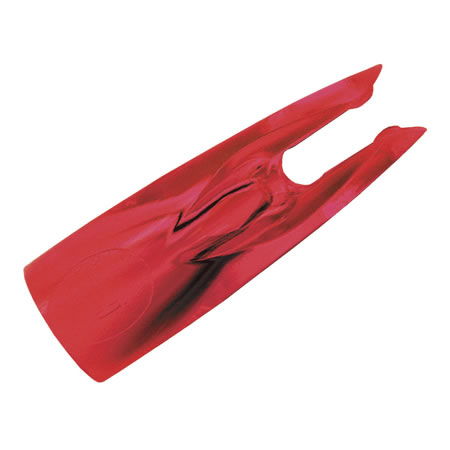
Year’s ago nocks were all glued on, now most arrows offer pressure-fit nocks that fit snugly but are turnable. Tunable nocks are definitely the way to go. These systems will make tuning a lot easier, and they hold up to more hard shooting than will glue-on nocks.

Assuming you aren’t going to paint (crest) your arrows, nock installation is the first step in the arrow building process. Use hot melt glue or epoxy when installing bushings into aluminum. When installing them in (or over) carbon shafts, use a rubber-based epoxy such as that available from Beman or Arizona Archery Enterprises (AAE).

Regular glue-on nocks should be pressed firmly into place (without glue) until after the fletching has been attached. When the arrow is finished you can rotate the nocks to the proper orientation so the fletching clears your rest and then glue them in place. Bohning Fletch- Tite works fine for this.

Apply The Fletching

fletching
You need a fletching jig, but it doesn’t have to be fancy. I’ve had good luck with the $20 plastic Martin jig I bought more than 10 years ago. Other good ones are made by Bohning, Bitzenburger and Grayling. You have three clamp options: left helical, right helical and straight

(no helical). For hunting and 3-D shooting, right helical is the most popular choice. If you’ll be using feathers, make sure to order feathers from the same wing as the clamp (right helical takes right wing). Vanes are manufactured straight and can be used with any clamp, so you don’t have to specify left or right when ordering.

One of the best fletching adhesive I’ve used for vanes is Fast-Set Gel made by AAE. This is a super-glue product that sets up in only 10 seconds allowing you to use a single-clamp jig and still fletch a dozen arrows in mere minutes. Fast-Set Gel will work on all shaft styles except AFC’s film-dipped carbon arrows, which require a traditional cement such as Bohning’s Fletch-Tite. Of course, Fletch-Tite will also work on aluminum arrows but takes about 10 minutes per fletching to set-up before you can remove the clamp. Fletch-Tite is still the best choice for feather fletching, however.

Place your fletching in the clamp so that its back edge will be about 3/4 inch ahead of the nock taper or nock bushing on your arrow. Adjust the back of the magnet on your jig (the magnet holds the clamp in place while the glue dries) inward or outward until the tail of the fletching sits squarely on top of the arrow. Next, adjust the forward end of the magnet to achieve the desired amount of helical. Easton’s technical representatives recommend four to five degrees of helical. I use a bit more myself – probably closer to seven degrees – but this is only on large diameter aluminum arrows. On smaller diameter carbon arrows I stay closer to Easton’s standard.

When using a straight clamp, (as opposed to a helical clamp) you don’t have as much lee-way and must either install your fletching perfectly straight or with a very slight off-set.

After your fletching is installed, apply a small dab of adhesive to both ends of each for a little added insurance against tearing loose.

You have more freedom to experiment with your fletching style and degree of helical than with any other aspect of arrow building, but it’s still best to observe a few general ground-rules. When making aluminum arrows for hunting, stick with four to five inch fletching. Five inch is a bit better because (in theory at least) it offers a small amount of added stability which can make a difference when shooting broadheads.

Carbon arrows, because of their smaller diameter, work best with shorter fletching (four inch is a good starting point) or you can run into a contact problem when trying to pass long helical fletching through the narrow gap in your rest. You can also experiment with various fletching orientations, such as 70/110 degree four-fletch, (you make this change by inserting a different indexing template into your fletching jig). But the basic 120 degree, three-fletch will do just fine under almost every shooting situation.

Cutting Arrows To Length
Draw an arrow and have someone mark it about a half to 3/4 inch in front of the rest. Cutting arrows is easy with the right equipment, but with the wrong equipment it can be a real headache. For limited quantities of aluminum arrows you can get by with a small rotating pipe cutter. I’ve done it a few times, but I’ve also made some pretty rough cuts, and basically ruined some arrows, in the process. You’re far better off pooling your money with a couple of buddies and getting an electric cut-off tool. You can also take your arrows to a pro shop (that’s equipped with an electric cut-off tool) to have them sized – usually for a price.

Installing Inserts and Outserts
Inserts and outserts (outserts are used with some types of carbon arrows) shouldn’t be taken for granted. Consistent accuracy with broadheads can be difficult to achieve when these components fit loosely. Inserts and outserts should install without any free-play. Usually you don’t have too many options with outserts – you get what the arrow maker offers – but you do have options with inserts. I’ve had good luck with aluminum inserts from Easton and Saunders and composite inserts from AAE. Inserts should have a light press-fit with the inside of the shaft so that each broadhead you screw in will line up perfectly with the shaft.

Aluminum inserts used in aluminum or ACC carbon arrows should be installed with hot-melt glue. Composite inserts in aluminum work best with a rubber-based epoxy, and the same applies for aluminum into carbon (Beman ICS or Gold Tip Graphite XT arrows) or when installing metal outserts on conventional all-carbon shafts. When you’re finished you can install a broadhead and spin test your arrows to make sure the inserts are properly aligned.

Take some time to visit http://www.eders.com/ to view their catalogue of parts and equiptment to assist you in your build.
lead_materials

Armed with the information above, you could now have a weekend hobby 🙂


Follow our FISHING BLOG

WEB   RATES     FISH    HUNT    CABINS    PHOTOS
TESTIMONIALS    BROCHURE    HUNT BOOKLET

Enter your email address to subscribe to this blog and receive notifications of new posts by email.

← Back

Thank you for your response. ✨

Email Me....


Tags: , , , , ,

Turn Shipping Containers Into Cabins

Every hunter, fisherman, and all outdoor-minded individuals dream of having their own cabin in the woods.

shipping container cabin
We each have an iconic image of what that subtle shelter looks like, yet here’s a twist that’s very obtainable. And it was achieved by, well, thinking outside the box.

Shipping containers are the “glass bottles” of old; eventually, they need to be replaced. Why not re-use one of these large cubicles as a cabin?

American Pride does just that. Check out this video demonstration.

Follow our FISHING BLOG

WEB   RATES     FISH    HUNT    CABINS    PHOTOS
TESTIMONIALS    BROCHURE    HUNT BOOKLET

Enter your email address to subscribe to this blog and receive notifications of new posts by email.

← Back

Thank you for your response. ✨

Email Me....


Sharpen Your Bow Skill During the Off Season!

bow-hunting-wawang-lakeWe practice with our bows all summer long, but after opening day its easy to get wrapped up in the hunting and forget about practicing. But even if you’re spending your time in the field and can’t hit the archery range every day, you can still keep your edge. Shooting in hunting situations is obviously different from target shooting. In the real world, weather conditions, shot angles, brush and other obstacles can impact your shot. Also, when the time comes to take a shot during a hunting situation you’re usually either stiff and cold from sitting in a treestand or sucking wind from running up a hill. All this combined with the fact that you must make a clean shot with the first arrow makes it all the more important to keep your shooting skills sharp. Here are a couple tips.

Practice Drawing
One of the biggest challenges to making a “cold shot” is that often the muscles I use for properly drawing my bow are stiff. The simplest way to cure this is to periodically pick a target, draw your bow, aim, hold, and let down your draw. This keeps you loosened up, plus drawing and aiming without actually shooting helps you focus on the target.


Practice Shooting

Although just drawing and aiming will help a lot, the single biggest help is to actually shoot while out hunting. A common practice among traditional shooters is to carry one or two blunt pointed arrows in your quiver so that you can stump shoot in your down time. Stump shooting is fantastic for keeping you warmed up, but unlike just drawing, actually completing your shots will bring your release into play, as well as give you all sorts of angles and situations to practice.

Small game is even better than stumps (grouse and rabbits taste a lot better too). Grouse can be deceivingly tough to hit. You want to aim for the base of the neck or the head. Sometimes they flush at the shot, but grouse will go in the direction that their head is pointing, so if you use a snaro point, you can either take their head off or hit them in the body as they flush. The best thing about grouse is they often give you extremely challenging shots, and if you can become consistent at taking them, you will be ready for the big game (make sure to check your local regulations before taking any small game with a bow).

grouseandy

Follow our FISHING BLOG

WEB   RATES     FISH    HUNT    CABINS    PHOTOS
TESTIMONIALS    BROCHURE    HUNT BOOKLET

Enter your email address to subscribe to this blog and receive notifications of new posts by email.

← Back

Thank you for your response. ✨

Email Me....


Tags: , , , , , , , , ,

4 Ladder Stands To Consider

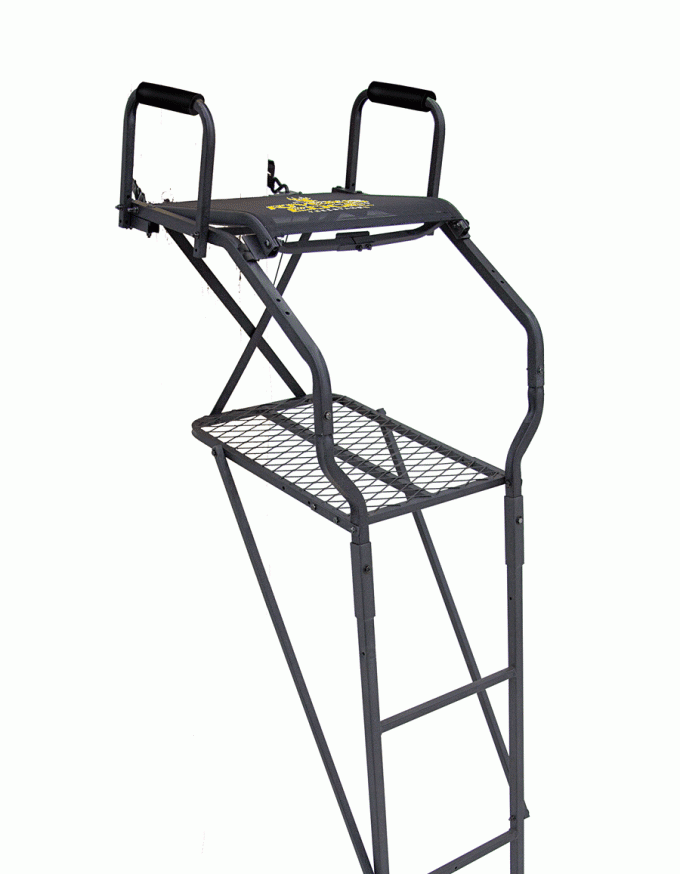
Whether you hunt with a bow or a rifle, want to hide in the treetops or stay closer to the ground, one of these four ladder stands has you covered. A hunting buddy and I started with six models and after a full day of setting up, climbing, sitting, and tearing down chose these four favorites. Here are our picks for an all-around stand, a bow stand, a best bargain, and a gun stand.

All-Around

Ladder-1_0

Ol Man 15′ Bowlite

Specs 15′ high • 25″ x 171⁄2″ platform • 45 lb.

What’s SpeciaL With its mesh seat and narrow ladder, my test partner, a veteran New York hunter, thought the streamlined Bowlite was the best of the test. Two points of contact to the tree made it the most secure by far, and it proved the fastest to assemble.

Bottom Line Easy to build, comfortable, and rock solid. We docked points only for the narrow ladder, which allowed just one foot per rung—not good for XL hunters ($150; olmanoutdoors.com).


Bow

Ladder2

Rivers Edge Bowman

Specs 19′ high • 24″ x 17″ platform • 64 lb.

What’s SpeciaL Tall, with a big 17 inches between rungs, the Bowman is a young person’s treestand. The large platform and skyscraper height is ideal for maneuvering and drawing on deer undetected. Yet we felt it needed a second (not included) ratchet strap to feel secure.

Bottom Line With almost 2 square feet of platform 19 feet up, this is a killer bow stand, but the pins were noisy ($170; huntriversedge.com).


Budget

Ladder-3

Summit Crush Series Solo Performer

Specs 151⁄2′ high • 19″ x 121⁄2″ platform • 40 lb.

What’s SpeciaL For just one Benjamin you get this light, easy-to-set-up, comfortable, do-it-all option. The ladder assembles with bolts and lock nuts, so it’s deathly quiet compared with the others in the test, which use locking pins. But the platform feels small.

Bottom Line Lots of value, plus it’s the lightest and quietest system in the test. Another $30 gets you a backrest and shooting rail ($100; summitstands.com).


Gun

Ladder-4

Big Game NextGen Stealth DX

Specs 15′ high • 25″ x 181⁄2″ platform • 55 lb.

What’s Special Big Game hit the sweet spot of price and performance with the Stealth DX. The ladder is wide, with short 13-inch spacing between the rungs for easy climbing, even in the heavy clothing typical of gun season. There’s a cushy backrest and an adjustable shooting rail.

Bottom Line A comfortable all-day sitter that can be found online for well below the list price. We would have liked the gun rest to elevate a little higher ($220; biggametreestands.com).

Follow our FISHING BLOG

WEB   RATES     FISH    HUNT    CABINS    PHOTOS
TESTIMONIALS    BROCHURE    HUNT BOOKLET

Enter your email address to subscribe to this blog and receive notifications of new posts by email.

← Back

Thank you for your response. ✨

Email Me....


Tags: , , , , , ,

Improve the Effectiveness of Trail Cams

The easiest way to enter the bow hunting season with false expectations about early season success is to use cameras wrong—or at least—lazily. Taking your camera out to the edge of a food plot or a soybean field, hanging it, and then checking it every week or two may feel like you’re scouting correctly, however you’re probably under-utilizing these new-age tools.

ravine-crossings_1

Instead, consider hanging your cameras to answer questions about deer movement. For example, it’s Whitetail 101 to know that deer are going to use prime food sources throughout the summer. How they get to and from those food sources, where they bed, where they water, and where they browse are all questions that are far more difficult to answer. And they are perfect for scouting cameras.

Aside from taking inventory and getting some sweet pics of velvet-racked bucks, setting cameras in easy spots doesn’t do you much good as a hunter. Cameras hung on places that aren’t easily observable will tell you things that can lead to quality fall hunting spots, which is the goal. They’ll also tell you whether the deer use those places at all, which is like pre-fishing for a bass tournament and eliminating dead water until a pattern or hotspot emerges.

visual-follow-up_1

If you plan to run cameras next summer, start thinking about where you’re going to place them now. Although a subtle trail in a wooded finger leading to an alfalfa field or clover plot might not be as exciting as hanging the camera directly on the field edge, it might just tell you when and where a mature buck likes to travel before and after he eats. That’s a good step toward getting an arrow into him, especially since he is likely to reduce daytime movement once he sheds his velvet.

Follow our FISHING BLOG

WEB   RATES     FISH    HUNT    CABINS    PHOTOS
TESTIMONIALS    BROCHURE    HUNT BOOKLET

Enter your email address to subscribe to this blog and receive notifications of new posts by email.

← Back

Thank you for your response. ✨

Email Me....


Tags: , , , , , ,

Gear: A Cure for Cold Feet

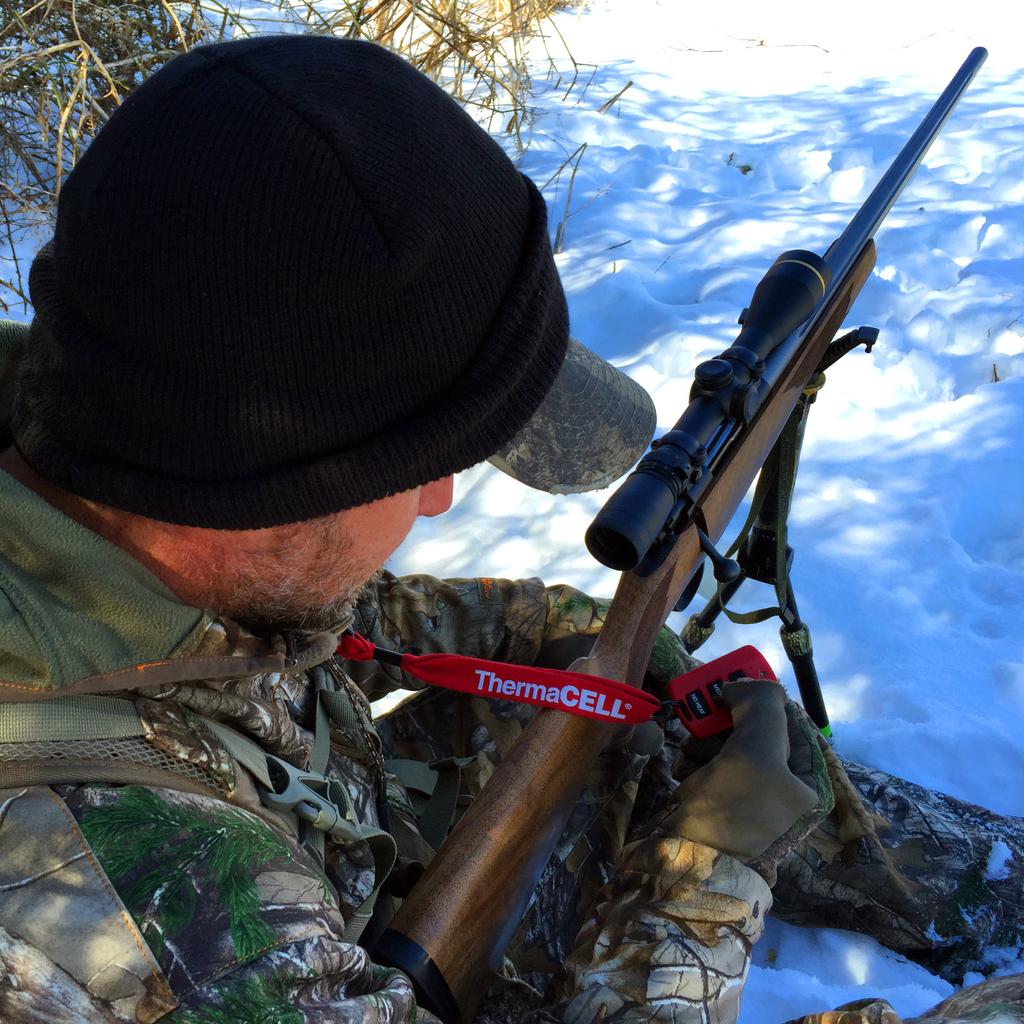
ThermaCELL’s electronically heated insoles aren’t perfect, but they are the best cure for my biggest late-season deer hunting problem: cold feet. When temperatures drop into the teens,  toes can start to burn with the cold unless wearing heavy felt-lined boots. If hiking to a stand or do some still-hunting, however, pac boots make feet sweat, which guarantees  toes will be cold when standing still.Thermacell-Insole-1

The best thing about ThermaCELL’s heated insoles is the fob-like remote and built-in control board and battery. Unlike chemical toe warmers, which start out hot and gradually cool down, these let you wirelessly select “No Heat” when you don’t need any supplemental warmth, then either “Medium” (100 degrees F) or “High” (110 degrees F) heat when you do, all without clumsy external batteries or switches.

That allows for wearing a favorite pair of lightweight, moderately insulated knee-high rubber boots when on the go, with the assurance that the heat can be vamped up if on a stand or stop for whatever reason. And even if wearing heavier boots, the control board acts like a thermostat and temporarily shuts off power to the heating element when it reaches the selected temperature.

B_5v_OnVAAAS60U

It’s genius—though not without a few flaws.

  • For starters, the molded, cushioned insoles are much thicker than the insoles that come standard with most boots and can only use them with light socks in boots that are large to begin with. Otherwise the fit is way too snug.
  • They could also be a little warmer, and the battery life is disappointing. The lithium-ion unit built into the heel of each insole recharges quickly, but it does not come close to the advertised five-hour run time at medium heat.
  • And they’re pricey, at about $130. If the battery lives up to its promised 500 charges, that works out to only about $0.26 per use, which is about one-quarter what chemical toe warmers cost. At this point, though, that’s still a big “if.”

imagesPO5E8D77

But the biggest complaint is with the remote. It doesn’t confirm what setting the insole is at. Sometimes it’s off when it should be on and on when it should be off. A positive on-off switch, or even better a setting and battery level indicator, would be a huge improvement. So for now we’ll have to wait for the perfect cure. Until then, these are still pretty darn good, and a second pair would be convenient so they can be swap out on all-day hunts.

Follow our FISHING BLOG

WEB   RATES     FISH    HUNT    CABINS    PHOTOS
TESTIMONIALS    BROCHURE    HUNT BOOKLET

Enter your email address to subscribe to this blog and receive notifications of new posts by email.

← Back

Thank you for your response. ✨

Email Me....


Tags: , , , , , ,

Balancing Your Back Pack

In hurry and trying to hastily pack out a deer from the backcountry in one trip, a hunter carried a heavy, irregular pack too low and in the process damaged a spinal disc, pinched nerves in his hip, and lost feeling in his ham hocks for quite some time.

Packman_0


Here are a few tips to help you shoulder a heavy load comfortably and safely—and avoid the physical therapy and chiropractic sessions the hunter had to go through.

From the bottom up
Stuff your sleeping bag, pad, and tent in the bottom of the pack.

Heavy load
Place the heavy freight—like a meat quarter—above the light cargo and against your back. It should sit above your hips and between your shoulder blades.

Cram Session
Surround the heavy stuff with lighter gear, such as clothing and food, followed by cooking gear, water filter, and the like. Pack the lightest gear like a hat and gloves in any remaining space at the top.

At the ready
Stash gear like a GPS, flashlight, or other items you might need to access quickly in the pack’s lid.

It’s a cinch
Now that it’s packed right, here’s how to carry your pack:

Follow our FISHING BLOG

WEB   RATES     FISH    HUNT    CABINS    PHOTOS
TESTIMONIALS    BROCHURE    HUNT BOOKLET

Enter your email address to subscribe to this blog and receive notifications of new posts by email.

← Back

Thank you for your response. ✨

Email Me....


Tags: , , , , ,

How To Call Your Shots

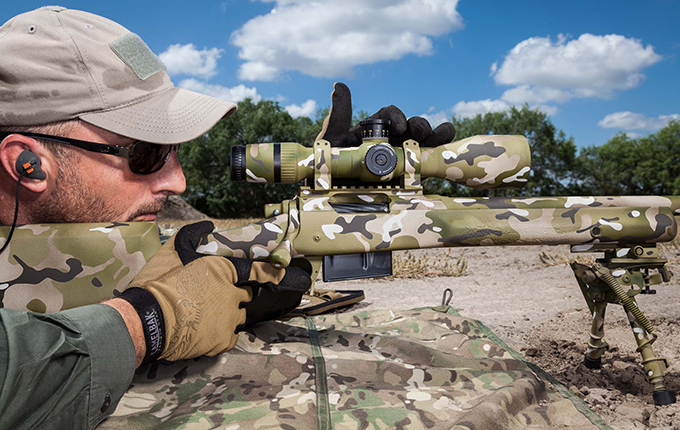
Calling a shot simply means the marksman can tell where his bullet hit. This can be done by observing the bullet’s flight and impact or by knowing where the sights were the instant the firearm was triggered. There are two separate, but complementary, ways to call a shot.

shot

When shooting from non-prone positions, witnessing the impact of the bullet is difficult. The trick is to focus intently on the position of the sights and take a mental snapshot of where they were in relation to the target when the bullet was fired.

The best way to develop this skill is through dry-fire practice, coupled with live-fire practice shots at the range. When dry-firing, use a small target that is a challenge to keep the crosshairs on. Don’t fight the wobble of the sight, just smoothly break the shot as it covers the target. Remember where the crosshairs were when the trigger clicked. At the range, do this with every shot.

To actually see your bullet’s impact, you must pair this level of focus with excellent form. If you are square behind the rifle and not putting any pressure on the stock that will cause it to jump to the side under recoil, you’ll be able to watch the bullet and see where it hits.

Follow our FISHING BLOG

WEB   RATES     FISH    HUNT    CABINS    PHOTOS
TESTIMONIALS    BROCHURE    HUNT BOOKLET

Enter your email address to subscribe to this blog and receive notifications of new posts by email.

← Back

Thank you for your response. ✨

Email Me....


Tags: , , , , , , , ,