RSS

Category Archives: hunting equipment

Hunting: Muzzleloader

Muzzleloaders are a lot of fun to shoot! The concept of a single shot makes shooters try to do their best on every shot. Large puffs of smoke belching from the muzzle after each shot, makes this a very visual shooting sport. As well, muzzleloaders are capable of firing a variety of bullet weights and powder charges, giving them the ability to be a multi species firearm.

For years, people have shot muzzle-loading guns. Most shooters fired old style flintlock guns with open sights. Some shooters found these early muzzle-loading firearms reminded them of their forefathers and helped these individuals re-live the past. However, for many shooters, these guns were unappealing, inaccurate and were a royal pain in the butt to shoot and clean. Thus, there were a very limited number of people involved in muzzleloader shooting and hunting.

Over the course of the past several years, the interest in muzzleloaders and muzzleloader hunting has grown and continues to grow. Much of this growth is due to several gun manufacturers developing inline muzzle-loading rifles that are built with today’s technology, using yesterday’s ideas. These fine firearms are fun and easy to use, have high percentage ignitions and are highly accurate. In addition, they’re easy to disassemble and clean.

These new muzzle-loading guns resemble modern center-fire rifles. They have excellent safety mechanisms and precision rifled barrels. Many of them come tapped and died directly from the factory, so all a shooter has to do is add bases, rings and a scope. It’s very common these days for shooters using in-line muzzleloaders with scopes to achieve one inch groups or better at a hundred yards.

Along with the invention of new muzzleloaders, there has also been a major advancement in gun cleaning solutions. There are all kinds of effective no fuss, no mess gun cleaning solutions designed specifically for muzzleloaders. These new cleaning chemicals make cleaning muzzleloaders a breeze. With these new products, gone are the hours of cleaning after each session at the range or in the field!

Hunters are also quickly discovering that muzzleloaders offer new hunting seasons, high levels of success and many other unique opportunities.

Extra Seasons and Hunting Benefits
Many states and provinces, including my home province of Saskatchewan offer special muzzleloader hunting seasons that are separate from regular rifle seasons. Many of these special seasons are approximately a month before the regular rifle hunting seasons and are often set up to coincide with or run just before the peak rut of the big game species. Hunting with a muzzleloader during these bonus time periods can prove very exciting and productive. Antelope, deer, moose and elk become more mobile and visible just prior to and during their rutting periods as they try to prove their dominance or search for mates.

In many jurisdictions, special muzzle-loading seasons are often held after all other hunting seasons are over. Typically, these extra seasons are several weeks long. They give hunters ample opportunity to get out in the field and get in some bonus hunting action when big game animals are often patternable as they concentrate on cold weather feeding areas.


Inline muzzleloaders such as this one, have made muzzleloader hunting for
big game animals, much more enjoyable.

During muzzleloader seasons, there are usually fewer hunters in the field than during a regular rifle season. This gives muzzleloader hunters an excellent opportunity to harvest an animal. Fewer hunters means less pressure and less pressure means that the animals should continue acting in their natural ways. With the animals’ daily habits remaining unchanged, muzzleloader hunters should be able to pattern the animals. If the hunter is able to determine when, where and why an animal will be in certain location, it should increase the hunter’s odds for success.

Since in many areas muzzleloader seasons generally start before the rifle seasons, the muzzleloader hunter is able to get a jump on the rifle hunters. This early start accompanied with the fact that there are fewer hunters in the field, should allow the muzzleloader hunter to see more animals and get more opportunities at harvesting a big game animal before the rifle hunters move in.

Muzzle-loading Tactics
Using game calls to attract big animals can be very productive during the muzzleloader seasons. Whitetail and mule deer will often respond to grunt and bleat calls. In the early part of the season, when the rut is just starting to fire up, they may come to your call out of curiosity. If this is the case, be patient as their approach will typically be very slow. Later in the season when the rut is in full swing, be prepared for fast action, as the deer may come storming in to investigate your call.

Many a muzzleloader hunter has rattled in a whitetail deer. To be successful during the early part of the season, you should just tickle your rattling antlers together to stimulate a minor sparring match. Try to scrape your rattling antlers on trees and bushes, trying to fool a buck that there is another buck in his territory. Later in the season, when the rut is more advanced, you can use more aggressive rattling techniques to stimulate full-scale battles.

Elk can be called into range with bugles or cow calls. If the bull elk are bugling, try bugling back to them. With any luck, they will respond and move into muzzleloader shooting range. If the bulls are not calling, try using a cow call to entice them into shooting range. Often a simple series of cow calls will bring in an entire herd of elk.

If you get a chance to hunt moose just prior to the breeding period, bull grunts can be used to effectively coax a bull into range. The reason for this is that bulls will be competing with one another for dominance. However, if it’s breeding season, the bulls will be more interested in checking out the call of a cow in heat as opposed to responding to a bugling bull looking for a fight.

Some muzzleloader hunters pursuing antelope will use a decoy to try and lure in their buck. Although this technique can be highly productive, it can also be very dangerous. Other hunters may see the decoy and be fooled by it. The result could be someone shooting at the decoy and killing or injuring the hunter hiding behind the decoy. In most antelope/muzzleloader situations, I prefer to set up near a watering hole and try to catch a love struck buck as it comes in for a quick drink.

Added Bonuses
Muzzleloader hunters are usually able to go hunting in decent weather conditions. During a typical muzzleloader season, the temperatures are usually moderate to warm. Snow and winter blizzards are a rarity. This means the traditional hunting attire of long johns, toques and parkas can be replaced by T-Shirts, sweat shirts, light jackets and ball caps.

Many gun ranges have realized the growth of muzzle-loading. As a result, special muzzleloader ranges have been built to meet the unique needs of smoke-pole shooters. Having spent time on such ranges, I have found that muzzleloader shooters tend to be friendly, outgoing individuals who are willing to help other shooters, teach them tricks of the trade and talk hunting and shooting for hours on end.

Book, magazine publishers and Internet websites, such as www.biggamehunt.net have also recognized the growth of muzzle-loading. Over the past few years, there has been a steady growth in the number of books and articles published on muzzleloaders and muzzle-loading hunting. With increased access to product reviews, reference materials, hunting stories and hunting techniques, muzzleloader shooters are able to learn more about their sport. Increased knowledge means greater satisfaction and a greater desire to participate in the sport.

Game of Accessories and Gadgets
Muzzleloader shooters will also find that shooting a muzzleloader requires a variety of accessories and gadgets. These items are fun to accumulate. They are even more fun to use!


A few accessories: bullets/sabots, ram rod T-handle, cleaning jag, wire brush,
ball/quick starter, speed loader and cleaning solution are needed for your muzzleloader.

The ramrod is probably the most used muzzleloader gadget you require. One of the main functions of the ramrod is stuffing bullets down the barrel. However, it is also used for maintaining and cleaning the muzzleloader barrel. Ramrods are typically threaded on both ends for adding a variety of gun care attachments.

In addition to your ramrod, you’ll also need a jag (ribbed attachment for cleaning), ramrod extension, bullet puller and a short starter or bullet starter.

For those shooting loose powder, a powder measurer and a flask are essential. For a couple of dollars, you can also get a powder can nozzle that allows you easily pour powder right out of the can.


Just a few of my favorite things: bullets/sabots, speed loader, powder flask,
powder measurer, T-handle, ball/quick starter and a jag.

Whether you shoot loose powder or pellets, express loaders are a very good investment. These small tubes are made to hold a bullet and premeasured charge of powder. Express loaders make reloading a quick process and one that you’ll appreciate, especially when you have a 1200 pound moose requiring a second shot coming straight at you.

A capper unit serves a dual role of helping you put percussion caps on your gun’s nipple and allowing you to carry a few spare percussion caps. Speaking of nipples, a nipple wrench is necessary for removing and replacing the muzzleloader’s nipple. In most muzzleloaders, the nipples must be removed before the gun can be cleaned. Since the nipples are threaded and generally tucked away, a specialized nipple wrench is another must.


A variety of muzzleloader accessories resting on a possibles bag. Included are a powder flask, primers, ball/quick starter, powder measurer, capper and a speed loader.

Black-powder and pyrodex are highly corrosive propellants as they attract moisture. At a minimum, you require cleaning patches, a wire brush, cleaning solutions and gun oil. However, as previously mentioned, with today’s technologies, there are a variety of cleaning solutions and accessories that help make muzzleloader cleaning an easy event.


Cleaning is made easy these days!

After shooting your muzzleloader, you should clean it. For best results, get in the habit of cleaning it after every hunt. If you shoot your gun and store it away without cleaning it, you’ll be in for a big surprise (and it won’t be pleasant) the next time you go to use your muzzleloader.

A small glass jar with a lid on it is ideal for soaking small parts in cleaning solution. As well, an old toothbrush works great for cleaning hard to reach areas of your muzzleloader.

You will require a good set of screwdrivers for taking your gun apart and ensuring that everything is tight. Teflon tape is great for wrapping around the threads on the gun’s nipples. A simple wrap of teflon tape makes the nipple easier to remove and prevents it from seizing. If you are shooting your muzzleloader with a scope, a roll of electrical tape is a good investment. Since black powder and pyrodex are so corrosive, you can save damage to your scope’s finish by covering the scope tube with electrical tape.

When hunting, you will need to carry your muzzleloader accessories with you. Some hunters like to go with backpacks or bags they can carry, while other prefer a pouch that attaches to their belt. Whatever style you choose, make sure that it is big enough to carry all the equipment that you need, yet not so bulky that you continually leave it at home or in your truck. As well, make sure it seals shut, so that you don’t loose your equipment as you stalk across the countryside.

Limitations and Potential Restrictions
Muzzleloaders have changed dramatically over the past few years. However, it’s important to remember that they are still only capable of firing one shot at a time. In addition, they also have a limited effective range. While stories abound of hunters taking big game animals at long range shots with muzzleloaders, they really are a close to moderate range firearm. While many of the new in-line muzzleloaders loaded with a maximum charge have the capability of taking animals out to ranges of 200 plus yards, I personally try to limit my shots to 150 yards and prefer those in the 100 yard range.

Before heading out on a muzzleloader hunt, take time to check the regulations for the jurisdiction you are planning to hunt. Some states and provinces may have restrictions in place that do not allow hunters to use in-line muzzleloaders or scopes on their muzzleloaders. In addition, there may be restrictions in place for minimum caliber sizes…………Article by: Mike Hungle

Follow our FISHING BLOG

WEB   RATES     FISH    HUNT    CABINS    PHOTOS
BROCHURE   HUNT BOOKLET

Enter your email address to subscribe to this blog and receive notifications of new posts by email.

Go back

Your message has been sent

Warning
Warning
Warning
Email Me....

Warning

Warning.


Tags: , , , , , , ,

Rhinowire lace review

Here is a very well pointed review written by Tim Collins for Rhinowire 🙂  Enjoy!

Article Written By: Tim Collins

rhinoup


rhinowiresThis review is for the RHINOWIRES boot laces. And no, that is not an error in my typing. I used all capital letters for their company because these “boot laces” are the real deal!

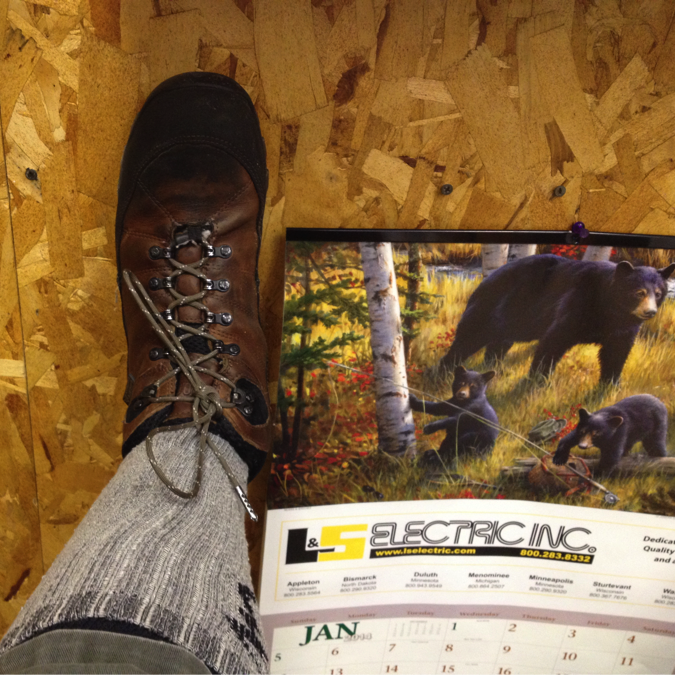
As soon as I received them and took them out of the package I realized I had ahold of a pair of serious laces. The RHINOWIRES feel stiff and you wonder how on earth am I going to tie these up?! I can assure you though that they do tie up. I put mine in a double knot and they hold my entire 12-13 hour day. RHINOWIRES also come with optional lace locks so you don’t have to tie them. I would suggest getting them custom sized and go with the lace locks. Mine are too long to do this and the extra RHINOWIRES length would prove to be a trip and entanglement hazard.

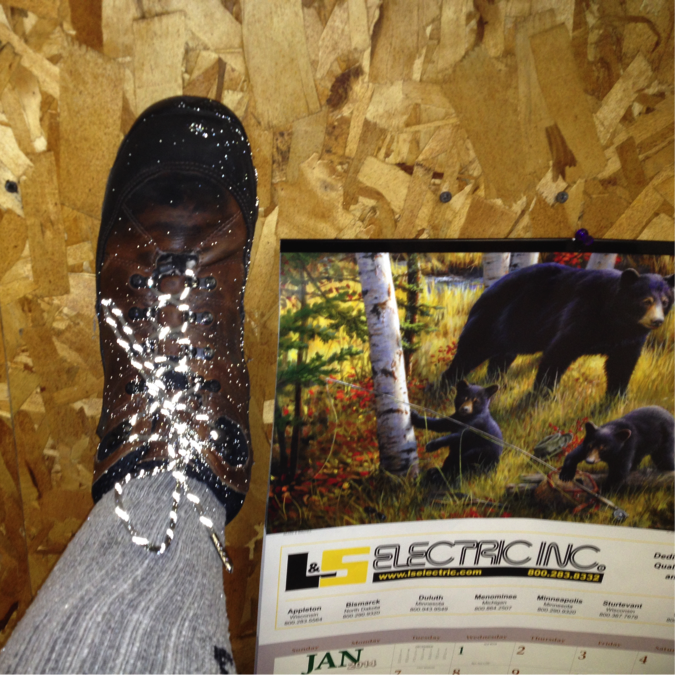
Those of you who are blue collar and perform hard labor for a living would benefit greatly from owning a pair of RHINOWIRES. Outdoor guides, farmers, steel workers, loggers, military, law enforcement, of course firefighters and everyone else who needs to wear steel-toe boots on the job need to get a pair of these RHINOWIRES. Even individuals who spend their time in the great outdoors hunting, fishing, hiking and other outdoor activities would be wise to own a pair of RHINOWIRES. They come in a variety of colors and sizes as well as even being reflective. I received a pair of OD green that is reflective. I work as a dry kiln operator at a lumber mill and the reflective laces will actually benefit me since I need to wear a reflective vest in my work environment. Working around 56,650 lbs. forklifts carrying around lumber bundles that weigh from 17,500 lbs. to 35,000 lbs. means that safety is of the up-most importance. That is where having the reflective laces add an additional safety element to my work. Granted, right now I am wearing rubber over-boots for the winter to help with the freezing temperatures and snow, but I am confident that when summer rolls around my RHINOWIRES will not fail me. You will know what I mean as soon as you lay your hands on your very own pair. As you can see from the photo’s below, I took a picture of my Rhinowires without flash and then one with flash to show the degree of reflectiveness they have. Quite impressive if you ask me.

rhinowiresatworkreflectiverhinowires

RHINOWIRES come with a replacement guarantee. That’s right, if they ever break they will replace them no questions asked! If you don’t believe me, just read their RHINOWIRE guarantee.

These RHINOWIRES were invented by 2 fire fighters. They said it best on their website that “$400 boots are only as good as the $3 shoe laces. Once the laces break, your $400 boots are useless!”. They invented a product that we all can benefit from because they understand the need for RHINOWIRES. Right now they are running a kick-starter program to fund their project. I hope that everyone will consider helping them. They have several packages available that will get you a pair of these RHINOWIRES and believe me; they are worth every penny and then some.

rhinoupkick

I am proud to participate in this product review for RHINOWIRES and I assure you that I am also going to invest in the project even though I received a pair for review. It is completely worth it and I hope you feel the same way as well. As they say on their website, I am definately going to Rhino up! Thank you for reading my product review for RHINOWIRES and if you have any questions, comments or even critiques please feel free to contact me.

Follow our FISHING BLOG

WEB   RATES     FISH    HUNT    CABINS    PHOTOS BROCHURE   HUNT BOOKLET

Enter your email address to subscribe to this blog and receive notifications of new posts by email.

Go back

Your message has been sent

Warning
Warning
Warning
Email Me....

Warning

Warning.

 
Leave a comment

Posted by on April 2, 2017 in hunting, hunting equipment


Tags: , , , ,

Trip planning tips

So many people WANT to go on a hunting or fishing trip but find the task daunting and the thought overwhelming so they tend to avoid it….

Truly, if you know a few simple tricks, planning can be expedited and you could find yourself in a boat or tree stand much quicker than expected.

wawang lake, wawang lake resort

U. S. Passport Card

First and foremost, you do NOT need to purchase a passport.  For half the price ($55.00 adult, $40 child) this handy card lasts for a period of 10 years and allows ground transport between the US and Canada and Mexico. If you plan to fly, a passport will be required but most of us travel will plenty of hunting and fishing equipment so driving is much more common.

http://travel.state.gov/content/passports/english/passports/information/card.html

Also a note regarding those pesky DWI’s….if you have had one and it has been over 6 months, there is a good possibility you can still enter Canada!!  https://help.cbp.gov/app/answers/detail/a_id/402/~/entering-the-u.s.-and-canada-with-dui-offenses

Next, when choosing a trip, make a list of ‘must haves’ such as:  The resort MUST HAVE running water, indoor plumbing, somewhere to prepare food etc.  (We have that…shameless plug lol)

Next devise a budget.  Remember to calculate travel and food costs.  And also remember to find out if the cost is per person or an overall cost.  Always add an extra 15% to that number to ensure you have money for unexpected incidentals such as a flat tire etc.  Also, never forget to calculate the local taxes into the cost.

Once you have a targeted budget, begin your research.  Remember, most resorts do have varying rates depending on the season as well as various other specials during the year.

When utilizing specials, ensure that you understand the weather patterns and fishing patterns at that time of year.  Some places have a change over in ease of catching species or hunting migration patterns.  Make sure you ask about this so you aren’t disappointed.

Take us for example, in June our regular Housekeeping fishing rate is $625 per person but offer various discounts from July-Sept.  In July we offer 25% off for parents and children so the rate would drop to $468.75…quite a savings.  And for those of you who are paying attention, our lake is a closed off headwater, spring fed and our fish cant leave…they just tend to migrate from one part of the lake to another so fishing will only be affected by color, depth and presentation 🙂  Feel free to check us out http://wawangresort.com/HTML%20Pages/RATES/Fishing_Rates.pdf

Last and not least, get referrals!  There is nothing more disappointing that driving (or flying) all that way only to find it isnt what is what you were expecting.  Though no trip may be perfect, you should understand the basics of what to expect.  

Ensure that you also contact the lodge representatives with all questions and they should respond promptly, honestly and with as much information as possible…..remember, they should be looking forward to meeting you and be excited to share what they can provide for you.

Remember…this is YOUR vacation and it is within your control to make it the best possible!

Follow our FISHING BLOG

WEB   RATES     FISH    HUNT    CABINS    PHOTOS
BROCHURE   HUNT BOOKLET

Enter your email address to subscribe to this blog and receive notifications of new posts by email.

Go back

Your message has been sent

Warning
Warning
Warning
Email Me....

Warning

Warning.


Tags: , , , , ,

Bargain vs. Premium Ammo

You get what you pay for. That’s an adage we generally believe in. But does it hold up with respect to ammunition? We set out to answer that question by testing the accuracy of a variety of value-priced .308 hunting ammo against more costly stuff.

ammo1

Methodology
Using three .308 rifles in the test—one hunting rig and two precision rifles that we knew would be ringers.

We put a number of budget and premium loads through all three rifles over the course of one day, ensuring the results wouldn’t be influenced by different environmental conditions. We also used a standard 5-shot-group protocol, and shot two groups with each load at 100 yards. As a control to establish a baseline level of accuracy for each rifle, we also shot 5-shot groups using Federal’s Gold Medal load with 175-grain Sierra BTHPs.

Using the baseline match load to calculate a ratio for each hunting load by dividing the size of the hunting-load groups into the size of the match-load groups. The closer to 1 that ratio is, the better the hunting load performed. None of the hunting loads outshot the match load, so all these ratios were greater than one.

Results
The outcome was interesting. The best hunting ammo was Hornady’s American Whitetail 150-grain Interlock SP. Compared to the baseline groups with the match ammo, this budget-priced load ($19.29 for a box of 20) shot nearly as well as the match ammo in all three rifles and had an impressive 1.41 average ratio. Federal’s Fusion, another bargain ammo ($21.49 for a box of 20) was second best among the loads, with an average ratio of 2.02.

The only expensive load that delivered consistent performance in all three rifles was Federal’s 165-grain Trophy Bonded Tip ($34.49 per box), The two Winchester loads had nearly identical levels of performance, though again, the less expensive 180-grain BST (2.11 ratio average) outshot the more expensive 150-gr. XP3 (2.81 ratio average).

ammo2

It’s worth noting when purchasing premium ammo that the promise of greater accuracy is certainly implied because it uses better quality components, but that much of its benefit is based on the idea that it will perform better on game.

Conclusion
It pays to try different loads in several different bullet weights in your rifles. Investing money to find an accurate load is the cheapest way to get the most from your rig.

Follow our FISHING BLOG

WEB   RATES     FISH    HUNT    CABINS    PHOTOS
BROCHURE    HUNT BOOKLET

Enter your email address to subscribe to this blog and receive notifications of new posts by email.

Go back

Your message has been sent

Warning
Warning
Warning
Email Me....

Warning

Warning.


Tags: , , , , , , , , ,

Wild Plants to Cure the Flu and Common Cold

Can’t make it to the drug store right now? Whatever the reason, you do have some natural medicinal options in the winter season. Look for these three plants to lessen the symptoms and shorten the duration of your next case of the cold or flu. All you need is a sharp eye and a patch of wild growth to find these common and potent medicinal’s.

Mullein 
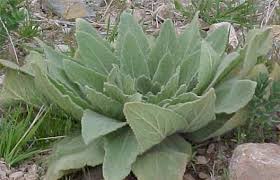
Mullein is a native plant, which favors dry, rocky soil and full sunlight, and is found throughout North America. An easy way to spot patches of this plants in cold weather is to look for the chocolate brown skeletons of the second-year plants. Look for 4- to 6-foot-tall stalks, which often have branching flower heads that resemble the arms of a saguaro cactus.

images2KI75GRG

The part you want for medicine are the velvety green leaves, which can still be found in winter growing in basal rosettes on one-year-old plants. Treat head colds by crushing the leaves into boiling water and breathing the steam. This medicated vapor acts as a decongestant.

barberryBarberry
The little red berries of barberry contain a compound called berberine. This acts as an immune system booster, helping your body fight off viral attacks like the common cold and the flu. The bitter taste of the berries isn’t very inviting, but eating a handful each day you’re feeling sick can shorten the illness, much like elderberry and Echinacea will. Look for small bushes with small dangling red berries. The two native varieties of the shrubs will have thorns in sets of three growing all over the twigs. The introduced Japanese species will have single thorns growing around the twigs. All three species can be used medicinally. As an additional point of identification, check the seeds in the red berries. Each berry should contain dark, slender seeds—typically two per berry.


Yarrow

This non-native plant grows from coast to coast on sunny open ground, although it’s originally nativeyarrow to Europe. Its most common use is as a poultice for cuts and other wounds. But you can fight colds and flu with it by making a tea from the leaves. Chop up the fresh leaves and add one tablespoon to one cup of scalding hot water. Soak the leaves for 10 to 15 minutes. You can sweeten the drink if you need to, or drink it commando-style. The anti-viral compounds help your immune system through its battle, while the diaphoretic compounds will get a sweat going to help break fevers.

Just make sure you use a field guide or guidance from an expert for positive identification of these plants. The last thing you need to do is poison yourself while you’re already ill.

rosehipsRose Hip Benefits
A Rose hip is the fruit of a rose. The wild dog rose is the type of rose most often cultivated for their hips. This plant grows up to ten feet tall and bears a white, very fragrant flower. Once the flower has bloomed, and all the petals have fallen off, the hip is picked and used in a wide variety of preparations. Rose hips are the best source of vitamin C; they contain 50% more vitamin C than oranges.
A single tablespoon of the pulp gives an adult more than the recommended daily allowance of 60 mg. They can be eaten raw, after being put through a blender, or soaked in water overnight and then cooked in the water for about half an hour. Because of the high vitamin C content they are an excellent immune system booster, and are often used as a supplement to prevent or treat a cold. The pulp from rose hips may be used in sauces or made into jelly.

Have you made medicine from wild plants?

Follow our FISHING BLOG

WEB   RATES     FISH    HUNT    CABINS    PHOTOS
BROCHURE    HUNT BOOKLET

Enter your email address to subscribe to this blog and receive notifications of new posts by email.

Go back

Your message has been sent

Warning
Warning
Warning
Email Me....

Warning

Warning.


Tags: , , , , , , ,

Making Waterproof Matches

When it comes to matches, waterproof ones are best, especially in dire circumstances like a flood. Since they’re much more expensive than their pedestrian cousins, you might want to make your own.

cabdle

Use the Candle Technique
Burn a candle long enough for a pool of wax to form around the wick. Blow it out, then dip the head of your match into the wet wax, about of an inch (3 mm) up the stick. Remove the matchstick and allow the wax to dry, pinching it closed to form a water-tight seal.

Deploy the Nail Polish Ploy
Coat your matches with clear nail polish to waterproof them. Dip the head of the match and a bit of the matchstick itself into the polish, then rest the match on a counter with the head hanging off the edge to dry. Survive any wilderness situation with these critical tips.

Try the Turpentine Trick
The easiest way to waterproof your matches is simply to drop them in turpentine. Allow the matches to soak for five minutes before placing them on newspaper to dry. After twenty minutes or so, you’ll have waterproof matches that will last several months.

Follow our FISHING BLOG

WEB   RATES     FISH    HUNT    CABINS    PHOTOS
BROCHURE    HUNT BOOKLET
Enter your email address to subscribe to this blog and receive notifications of new posts by email.

Go back

Your message has been sent

Warning
Warning
Warning
Email Me....

Warning

Warning.


Tags: , , , , , , , , ,

Stay On Track – Navigation Tricks

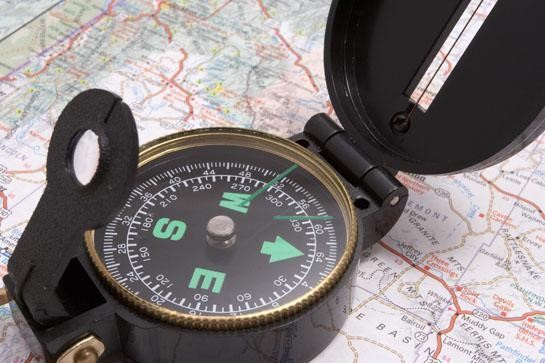
Getting lost is one of the primary reasons that people find themselves in a survival situation in the outdoors. It can happen to anyone, anywhere; but it’s much more likely to occur when someone fails to keep track of their location, or when navigation skills are lacking. Getting lost can be a preventable problem, if you take the right precautions.

compass

To avoid getting lost on your next hunt or hike, put the following tricks into practice:

– Get a map of the area that you are traveling to and study it before going.
– Take the map along, and use it and a compass (or GPS) while you’re there. If you’re printing out maps from your computer, don’t use an inkjet printer. If the map gets wet, the ink will run and turn into a rainbow-smeared mess.
– Imagine what the terrain would look like from a “bird’s eye view” and where you are in that terrain.
– Look behind you frequently, especially if you are returning in that direction.
– Look for and use landmarks, if possible.
– Study and remember the landmarks that you use.
– When traveling off trails, use prominent, distant landmarks and/or a compass bearing to travel in straight lines.
– Account for declination when reading your map and compass. Any good map should tell you how much to add or subtract for True North.
– Watch out for gun barrels and other metal items, which can pull the compass needle off course and distort your bearing.

If you’re heading into the woods this weekend, good luck and stay safe.

Follow our FISHING BLOG

WEB   RATES     FISH    HUNT    CABINS    PHOTOS
BROCHURE    HUNT BOOKLET
Enter your email address to subscribe to this blog and receive notifications of new posts by email.

Go back

Your message has been sent

Warning
Warning
Warning
Email Me....

Warning

Warning.


Tags: , , , , , ,

Packing List

1

2Follow our FISHING BLOG

WEB   RATES     FISH    HUNT    CABINS    PHOTOS
BROCHURE    HUNT BOOKLET

Enter your email address to subscribe to this blog and receive notifications of new posts by email.

Go back

Your message has been sent

Warning
Warning
Warning
Email Me....

Warning

Warning.


Tags: , , , , , , , ,

Muzzle Affect Accuracy – With or Without?

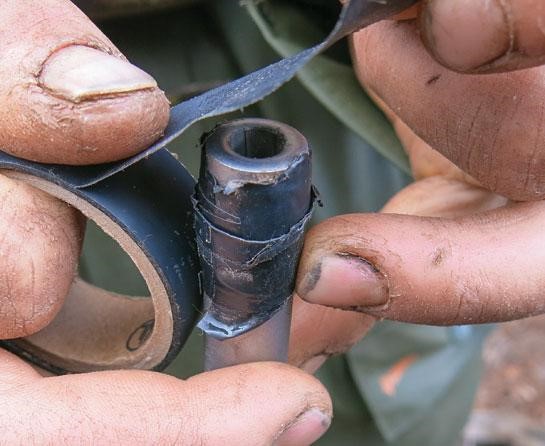
tapeIf you hunt in rainy places, you probably know about electrical tape, the basis of vigorous debate in almost any camp.

The tape, stuck over the muzzle, is used to keep precipitation and debris out of the rifle’s bore. But many hunters argue that the protective layer throws off your bullet’s impact point. Others say the flimsy barrier won’t deflect the bullet.

Which is it?

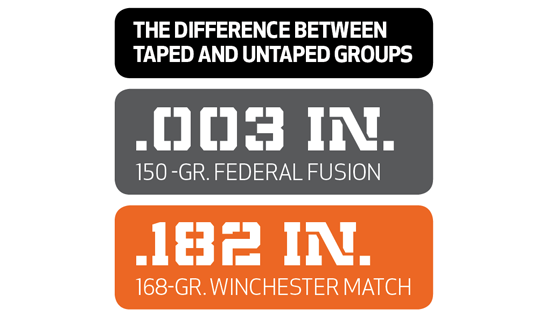
After testing the accuracy of two bullet types fired from the same .308 bench rest rifle, first without tape over its muzzle and then with electrical tape covering the bore. The results of eight 5-shot groups: Tape does not significantly degrade accuracy. Just as important, the tape also did not shift the rifle’s point of aim.

If you tape your muzzle to keep out the elements, you needn’t worry about shooting through it.

difference

Follow our FISHING BLOG

WEB   RATES     FISH    HUNT    CABINS    PHOTOS
BROCHURE    HUNT BOOKLET

Enter your email address to subscribe to this blog and receive notifications of new posts by email.

Go back

Your message has been sent

Warning
Warning
Warning
Email Me....

Warning

Warning.


Tags: , , , , , , ,

How to Pattern a Shotgun + Video

Shotgun patterns are measured at 40 yards for all gauges, except .410 bore. .410’s are patterned at 30 yards. Patterning is a simple process, but time consuming due to all the counting required. Here is the correct way to pattern a shotgun.pattern2

  1. Set a big piece of blank paper on a frame 40 yards from the muzzle. (Butcher’s paper cut into 48″ squares works well.)
  2. Shoot at the center of the paper.
  3. Draw a 30″ diameter circle around the center of the resulting pattern, so that it encloses the greatest number of holes.
  4. Count the pellet holes in the circle. (It helps to mark the holes with a magic marker as you count them, so you don’t lose your place.)
  5. Cut open an identical, unfired shell and count the pellets in the shell. (The actual number of pellets may vary from the theoretical number based on shot size and weight, so it is best to count them.)
  6. Calculate the percentage of pellets that hit in the 30″ circle. (Divide the number of holes by the number of shot in the unfired shell.)

That is it; you have now officially patterned your shotgun. Of course, every shot varies, so ideally you should repeat the process 10 times and average the results. (Analogous to shooting a group with a rifle, rather than just one shot.) Your shotgun’s pattern percentage will vary if you change the shot size, the amount of shot in the shell or the hardness of the shot, so you need to pattern all the loads you actually shoot in a given gun.

Pattern percentages will usually (but not always!) go up if you increase the hardness of the shot, decrease the weight of the shot charge, buffer the shot inside the shell, or decrease the muzzle velocity of the shot charge. Pattern percentages will typically do down if you use softer shot, increase the weight of the shot charge or increase the muzzle velocity of the load. These generalizations primarily apply to traditional lead shot, your gun may vary.

pattern1The percentage of pellet strikes that constitutes what choke varies, depending on the source. These percentages are typical:

  • Full Choke: 70% or higher
  • Improved Modified: 65%
  • Modified: 55-60%
  • Skeet No. 2: 55-60%
  • Quarter Choke: 50%
  • Improved Cylinder: 45%
  • Skeet No. 1: 35-40%
  • Cylinder: 35-40%


Follow our FISHING BLOG

WEB   RATES     FISH    HUNT    CABINS    PHOTOS
TESTIMONIALS    BROCHURE    HUNT BOOKLET   NEWSLETTER
Enter your email address to subscribe to this blog and receive notifications of new posts by email.

Go back

Your message has been sent

Warning
Warning
Warning
Email Me....

Warning

Warning.


Tags: , , , , , , , ,