RSS

Category Archives: archery

How to Size a Black Bear

……… WHEN SIZING UP A BEAR

WawangLakeBear
A big bear swaggers and walks with attitude. He doesn’t jump at every sound like a small bear will.  A big bear doesn’t have to; he believes he’s got nothing to fear. Once you’ve spotted your bear on the bait site, it’s time to get serious about analyzing how that bear is behaving.

It is important to note that long before you judge the size of the bear, you must judge the sex of that bear and here are some things to take into consideration:

A big, old sow will have all, or more correctly, almost all of the physical characteristics of a big, old boar. She’ll have the nasty looking face that’s seen one too many years in the ring, the potbelly and the sway back.

Watch to see if the bear stands on his hind legs and rubs his back on a tree, that’s a boar.  If it walks along and straddles small trees, wiping its scent on that tree, it’s a boar.  If it stands up and breaks saplings over its shoulder, it’s a boar.  If it encounters another bear and gives chase, it’s a boar and if it is following a smaller bear, it’s a boar.

SCALE:  There is one last general appearance tip to judging black bear that makes the top three in importance, and that is scale.   A big bear looks big . . . but so does a closer, smaller bear.   Here’s a help tip on how to gauge more accurately.  If the bear is 150 yards away but the hunter thinks the bear is 200 yards away, the hunter will overestimate the bear’s relative size by somewhere near 25 percent.   In other words, the hunter is in for a serious case of ground shrink when he walks up to his bear.  TIP:  Let the bear get as close to you as possible and preferably on the bait itself.   The closer the bear, the less chance there is of misjudging the distance to relative size.

SPECIFIC TIPS FOR JUDGING BLACK BEARS: If the bear fails any one of the above general conditions, then it’s advisable to pass up on it or let the bear walk. It’s tough and you could be wrong, but at least there isn’t a dead small bear lying on the ground.   Call it a personal aversion to guilt.

BODY SHAPE:    Bigger bear are older bears, and like most of us, they don’t have the svelte bodies they once did. They tend to look “heavy” and out of shape. Remember, they monopolize the best feed and habitat, and therefore exert less energy to live.

HEAD SHAPE:   A big bear (boar) will have a deeper, wider and longer snout than a smaller bear or a female. His ears will appear to be wide apart and small. If he is aware of you and looking your way, his ears won’t stand up on top of his head like a dog’s ears, they’ll seem to be aimed out to the side of his head. A big bear will have well developed “bulging” muscles on the top of his head.


WawangBear2

LEGS:   A big bear will have massively developed front shoulders. His shoulders will look big and burly. A sow’s wrist will pinch in directly above the foot. Not so with a boar. The lower forearm, wrist and the foot on a big boar are all the same width. A big bear often appears to have shorter legs because the body is so much thicker, but keep in mind that the best-scoring bears for the records book are often the lankier looking, longer-bodied bears.

There are bear that have meatier heads; bear that look great and are great trophies, but that don’t score well.  There are others that have short skulls, block- headed beasts that look impressive, but that don’t score well at all and there are lanky, skinny bears with donkey faces that score like the devil, but that a hunter seriously looking for  a  records book bear wouldn’t walk across the street for. Black bear morphology is just too darn diversified to make a science out of judging.

The best way to hunt for a record boar is to simply shoot the bear that looks good to you and that hopefully  you’ll  appreciate all the time and effort you put in for the hunt.  If it’s got a nice hide, be happy with your animal. If it has long claws and weighs a ton, good for you and congratulations. If it isn’t as big as  you’d like, don’t fret, you’re not alone and the rug on your wall will still look great. If it happens to be one of those rare few bears that has grown a skull that qualifies for the record books, thank your guide for the good fortune that made that bear come to the bait site.

To easily judge, remember:

  • Check out the ear size in relation to the head
  • Mickey Mouse ears means a small bear.
  • Watch to see if the belly is low to the ground
  • Legs that appear short means big bear.

Watch the bear’s behavior around the bait – small bears will be skittish and afraid of a larger bruin in the area.

Look for a log around the bait and use it as a reference, check to see the length and height of the log before climbing into your stand. When the bear enters the bait site use the size of the log to help determine the overall size of the bear.

SKULL MEASURING

WawangSkull

Hope this information helps develop your judging skill on your next hunt, and,  good luck out in the field.

For further information, or, to book your next bear hunt please contact us at:
1-888-534-9217 or EMAIL

 WEBSITE    RATES     FISH    HUNT    CABINS    PHOTOS
TESTIMONIALS    BROCHURE    HUNT BOOKLET

Enter your email address to subscribe to this blog and receive notifications of new posts by email.

← Back

Thank you for your response. ✨

Email Me....


Tags: , , , , , , , , , ,

Muscle Exercises for Archery

Archery is a sport that involves the use of a bow and arrow, This sport is hundreds of years old and is even featured in the Olympics. The actions in archery utilize several main muscle groups in the body, including the triceps, which sit at the back of your upper arm, the deltoid muscles in your shoulders and the latissimus dorsi muscles in the lower back. To improve your archery skills, include exercises that target these muscles in your workout.

archery123

Raise One Arm to Boost Arm Strength

Dumbbell one-arm lateral raises strengthen the deltoid muscles, which are used to provide strength and power for holding and pulling back the bow in archery. Stand straight with your feet shoulder-width apart, your right hand holding onto a stationary object on your right and your left hand holding a dumbbell straight down so it’s resting in front of your pelvis. Slowly raise your left arm up to the side, continuing until your elbow is at shoulder-level. Lower it back down, repeat and then switch arms.

Row, Row, Row Your Muscles

Spending time on the rowing machine is well worth it if you want to improve muscles for archery, because it works all of the primary muscles used in the sport including the deltoids, latissimus dorsi and triceps. Sit on the seat with your feet strapped in securely. Keep your back straight and hold onto the handle. Slowly push off with your feet, sliding back until your legs are almost fully extended. Return to your starting position and repeat.


resistancebandsexercises

Go Overhead for Strong Triceps

The overhead triceps extension is one of the most effective exercises for the triceps muscles. Stand straight up with your feet close together, one slightly in front of the other and both flat on the floor. Extend your arms fully above your head, grasping the top of a dumbbell with both hands. While keeping your upper arms beside your head, slowly flex your arms, lowering your forearms behind you toward your back until you feel a light stretch in your triceps. Raise your arms back up above you to complete one rep. Repeat.

Get Big Results with the Barbell Pullover

The barbell pullover exercise targets the latissimus dorsi muscle in the back, but it also works the triceps and deltoids, making it an integral muscle exercise for archery. Lie your upper back perpendicular on a flat weight bench, your legs bent in front of you on a right angle with your feet flat on the floor. Grasp a barbell, position your arms so they’re extended straight above you and keep your hands aligned with your shoulders. While keeping your arms straight during the movement, move your arms back in a slow, controlled motion, until the barbell is directly behind your head. Then, return to your starting position. Repeat.

Why You Need the Lat Pulldown in Your Life

The latissimus dorsi is the largest muscle of the back and is one of the main muscles in the body used in archery, primarily during the drawing motion of the bow. Lat pulldown exercises are most effective for targeting this muscle, so try the cable close-grip pulldown. On the seat of a lat pulldown machine, place your feet flat on the floor below you and position your hands above you while grasping onto the parallel cable attachment. Engage your core, pull down on the cable attachment and then return it until your arms are fully extended. Repeat.

bow1

Weights, Reps and Sets

Even with all the right exercises, if you’re not using the right amount of weight or completing the proper number of sets and reps, you’re not going to get the results you’re hoping for. Start off with a weight you can manage, and only increase the amount of weight you’re using when you can complete a full set of 12 reps while maintaining proper form the entire time. Gradually work up to completing three sets of 12 reps.

Follow our FISHING BLOG

WEB   RATES     FISH    HUNT    CABINS    PHOTOS
TESTIMONIALS    BROCHURE    HUNT BOOKLET

Enter your email address to subscribe to this blog and receive notifications of new posts by email.

← Back

Thank you for your response. ✨

Email Me....


Tags: , , ,

Disabled Archer – Heals Other Wounded Soldiers

Jeff Fabry is one of the world’s best archers. He’s a five-time Special Games world champion, a three-time Paralympic medalist and he’s aiming for gold at the 2012 Olympics in London this summer.

3

What makes his talent unique is that Fabry, who has only one arm, has mastered the art of firing arrows with his teeth. Your dentist might advise against it, but Fabry, who will compete on the U.S. Paralympics Team in London, says his chompers are holding up just fine.


“I’ve been doing this for 13 years and my teeth still look and feel the same the first day I started. Everything is going good, luckily,” Fabry said.

But the road to firing arrows with precision was not a straight one. At 15, Fabry lost his arm and a leg in a motorcycle accident.

“My buddies were out hitting the hills hunting and I was stuck at home and I was like, no, I don’t like this, so I figured out a way to shoot and it happened to be with my teeth,” he said.

Fabry pulls the arrow back by biting on a mouthpiece that he made from a nylon dog leash.

“It was trial and error to find what I considered to be the perfect mouthpiece, where I could be proficient,” he said.

Fabry is sharing his passion with our armed forces. He teaches the sport he loves to members of the Wounded Warriors Project, the nonprofit whose mission is to help injured service members cope in civilian society.

“What I’m really proud of is being able to work with our vets who are coming back from the sandbox with different disabilities,” he said.

Jim Castaneda, a member of the Wounded Warriors, said he is thankful that Fabry introduced him to the sport. While serving in the Navy and stationed in the Philippines, Castaneda suffered a traumatic brain injury and a stroke.

“It’s changed my life completely … I found something that I can do and I really enjoy it and love something now,” Castaneda said.

“I’m not just sitting there anymore, like watching my life go by and feeling sorry for myself. Now I’m actually getting up and doing something for myself and trying something else.”

That kind of feedback is a bull’s-eye for Fabry.

1

“That makes me feel good about myself,” Fabry said. “I got hurt before I could join the military, and this is kind of a way that I can give back to my country by helping our heroes.”

Will Wilson, who works for Navy Safe Harbor, the Navy’s Wounded Warrior Program, says Fabry is a coach and mentor for his team.

5

“Jeff is absolutely fantastic. He has a great demeanor and is able to communicate clear and concise direction,” Wilson said.

Follow our FISHING BLOG

WEB   RATES     FISH    HUNT    CABINS    PHOTOS
TESTIMONIALS    BROCHURE    HUNT BOOKLET

Enter your email address to subscribe to this blog and receive notifications of new posts by email.

← Back

Thank you for your response. ✨

Email Me....


Tags: , , , , , , , , , ,

Easy Fix To Prevent Bow String Damage

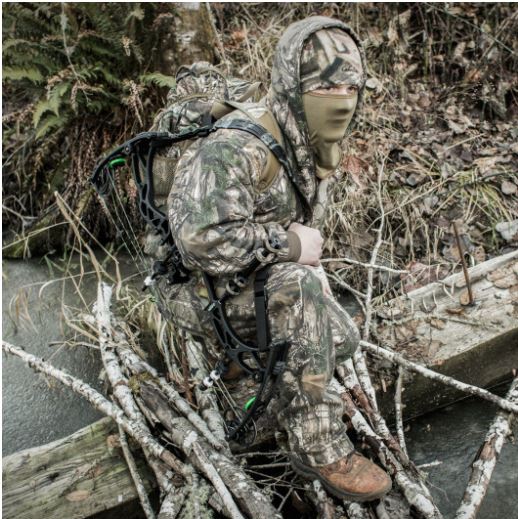
Carrying a crossbow cross-country puts the string at risk. This is especially true if you’re headed to a tree stand in the dark, where any branch can snag the string or cables and quickly ruin a much-anticipated hunt.

Capture

 Many hunters have this problem on their hunts whether black bear hunts, elk hunting, deer hunting, etc.  Your bow is more at risk in mornings that are still dark in order to get out to your stand and especially if you need to hike uphill through thick pine forests, over dead-falls, twisted tree tops, and other obstacles that threatened to damage your bow string.

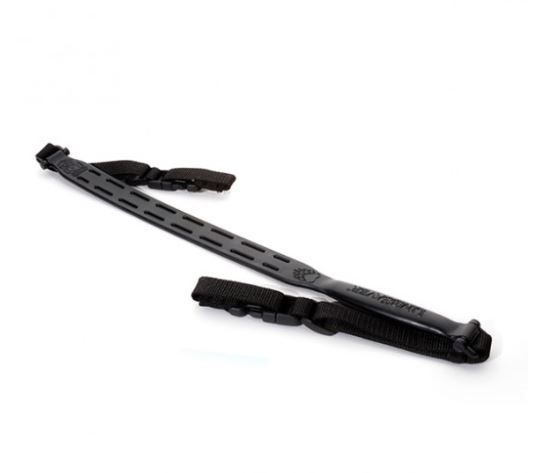
If you anticipate encountering obstacles like this on your next hunt try the Limb Saver sling for your bow, it will make carrying it over your shoulder much more comfortable.   And during a hunt as you duck under branches and squeezed between tree trunks, you never really know what was happening to the string over your shoulder. Then one day it happens.  After one morning’s hike, you see that the string was frayed from tree branch damage.

Capture2

A partial solution is to re-wax your bow string with Limbsaver String Protectant, which reduced the risk of fraying.

Secondly, your hunting jacket should fit over the bow, meaning that you could zip up the jacket with the sling exposed.

Use a Limb saver Kodiak Lite compound bow sling made specifically for crossbows. Its wide, no-slip strap made the carry secure and comfortable. In this way, the entire bow-string, scope, and bolts were protected.

Follow our FISHING BLOG

WEB   RATES     FISH    HUNT    CABINS    PHOTOS
TESTIMONIALS    BROCHURE    HUNT BOOKLET

Enter your email address to subscribe to this blog and receive notifications of new posts by email.

← Back

Thank you for your response. ✨

Email Me....


Tags: , , , , , , , ,

Getting in Shape for Hunting Season

stretching-web-1024x682

A great article Melissa Bachman

Hunting takes a lot of preparation and if you want to be successful there are things you can be doing year-round to help when fall finally arrives.  You may be wondering, well its awhile before the hunting season what can I possibly do to prepare now?  The food plots are in and the tree stands are set?  Well there’s another big part of the equation that could probably use a little work, and that’s YOU!

There are two very important things that every hunter should have on their year round to do list, stay in shape and practice shooting!

Hunting is just like anything else, the more you are willing to put in, the more you will get back.  This is true with both practicing, and staying in shape so why kill two birds with one stone?

Sure, when it comes to practicing any kind of shooting is good.  But think of the real world situation and how you will be feeling once you finally get to full draw.  Probably sweaty, out of breath, and shaking like a leaf!  I don’t know what you can do about the last, but I try to make the sweaty and out of breathe a reality when I practice.

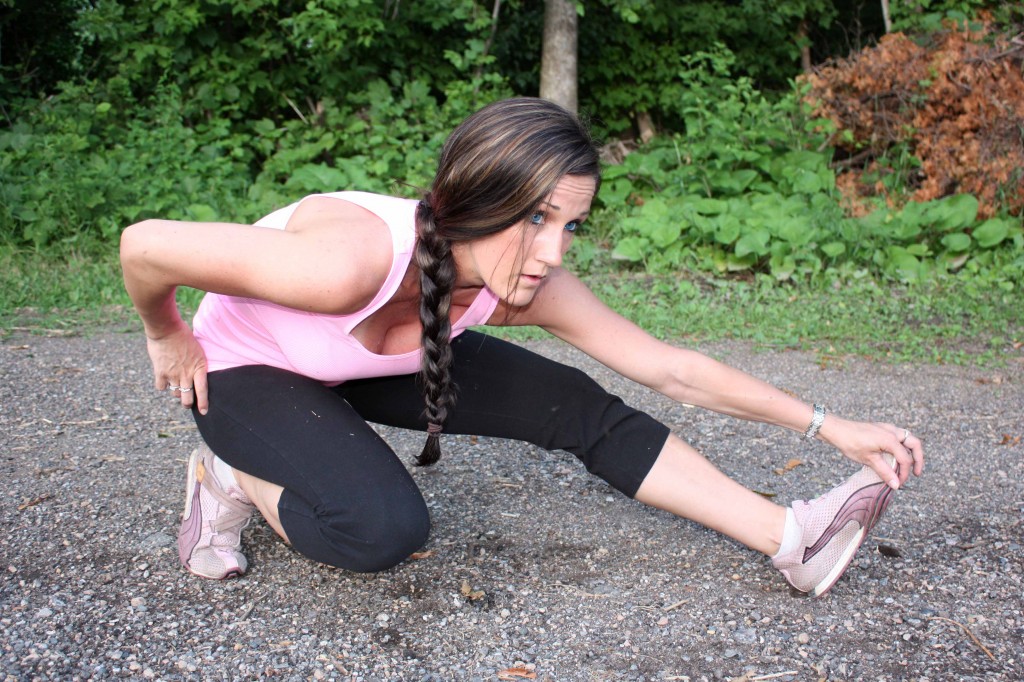
We’re all short on time, so why not combine the two and get even better results in half the time.  I start by spending at least 15 minutes stretching.  Many people think stretching is a waste of time, but you want your muscles flexible to prevent injuries while hunting. Do not skip this step!

Once I’ve stretched, I usually go for a 2-mile run up and down the hills near my home.  After the jog, I grab my bow and shoot around 50 arrows at my target placed 40-60 yards out.  I prefer shooting longer distances as a rule, because once I am confident at 60-yards, 20 seems like a piece of cake.

Jogging-web-1024x682

Shooting while you’re tired is important; in fact it’s very similar to basketball.  I was never taught to practice free throws when you enter the gym; instead you shoot them at the end when you’re dead tired.  This is the real world simulation as to how it would be the last two minutes of the game during crunch time. Hunting is no different.  You’ve waited all year for this hunt.  You’ve climbed half way up the mountain and finally you’re at full draw, all your practice will now pay off.  Your instincts will take over, your breathing will calm, and your arrow will hit its mark.  Isn’t that the way you want your big hunt to play out this fall?

Not only will the workout make you a better real world shooter it will also make your hunt a much more enjoyable experience.  Here are five reasons getting in shape for hunting season will help and shape your hunt this fall.

bow-at-full-draw-web-1024x682

#1. If you’re hunting public land you will be able to get in further than other out of shape hunters, giving you a better chance at success.

#2. You will have a more enjoyable hunt and not be gasping for air and desperately hoping for a break every five minutes.

#3. Being in shape on a guided hunt will help you significantly because the guides will make their plan according to where the game is, not by where you can or can’t get to.

#4. Increase your percentage on making a good shot, because you will be less out of breath and already practiced in this situation.

#5. By being in shape you will have more energy on your hunts and in your everyday life.  In fact, it may help you live longer to enjoy more hunts in the future!!  Not such a bad of a deal after all…

situp-web-e1310358294897-1024x742

Follow our FISHING BLOG

WEB   RATES     FISH    HUNT    CABINS    PHOTOS
TESTIMONIALS    BROCHURE    HUNT BOOKLET

Enter your email address to subscribe to this blog and receive notifications of new posts by email.

← Back

Thank you for your response. ✨

Email Me....


Tags: , , , , , , ,

Sharpen Your Bow Skill During the Off Season!

bow-hunting-wawang-lakeWe practice with our bows all summer long, but after opening day its easy to get wrapped up in the hunting and forget about practicing. But even if you’re spending your time in the field and can’t hit the archery range every day, you can still keep your edge. Shooting in hunting situations is obviously different from target shooting. In the real world, weather conditions, shot angles, brush and other obstacles can impact your shot. Also, when the time comes to take a shot during a hunting situation you’re usually either stiff and cold from sitting in a treestand or sucking wind from running up a hill. All this combined with the fact that you must make a clean shot with the first arrow makes it all the more important to keep your shooting skills sharp. Here are a couple tips.

Practice Drawing
One of the biggest challenges to making a “cold shot” is that often the muscles I use for properly drawing my bow are stiff. The simplest way to cure this is to periodically pick a target, draw your bow, aim, hold, and let down your draw. This keeps you loosened up, plus drawing and aiming without actually shooting helps you focus on the target.


Practice Shooting

Although just drawing and aiming will help a lot, the single biggest help is to actually shoot while out hunting. A common practice among traditional shooters is to carry one or two blunt pointed arrows in your quiver so that you can stump shoot in your down time. Stump shooting is fantastic for keeping you warmed up, but unlike just drawing, actually completing your shots will bring your release into play, as well as give you all sorts of angles and situations to practice.

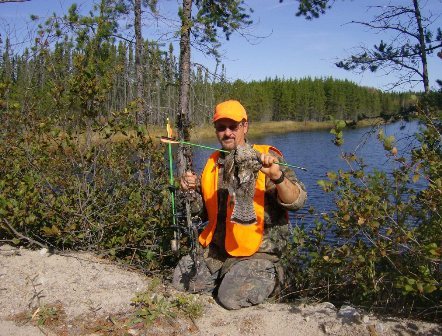
Small game is even better than stumps (grouse and rabbits taste a lot better too). Grouse can be deceivingly tough to hit. You want to aim for the base of the neck or the head. Sometimes they flush at the shot, but grouse will go in the direction that their head is pointing, so if you use a snaro point, you can either take their head off or hit them in the body as they flush. The best thing about grouse is they often give you extremely challenging shots, and if you can become consistent at taking them, you will be ready for the big game (make sure to check your local regulations before taking any small game with a bow).

grouseandy

Follow our FISHING BLOG

WEB   RATES     FISH    HUNT    CABINS    PHOTOS
TESTIMONIALS    BROCHURE    HUNT BOOKLET

Enter your email address to subscribe to this blog and receive notifications of new posts by email.

← Back

Thank you for your response. ✨

Email Me....


Tags: , , , , , , , , ,

Bow Shooting – Stance and Grip

Bow Shooting – Stance and Grip

a3ec154f78392339882e90b6cb5ae210

Follow our FISHING BLOG

WEB   RATES     FISH    HUNT    CABINS    PHOTOS T
ESTIMONIALS
    BROCHURE    HUNT BOOKLET

Enter your email address to subscribe to this blog and receive notifications of new posts by email.

← Back

Thank you for your response. ✨

Email Me....


Tags: , , , , , , , , , , ,

Benefits of Practicing to Hold a Full Draw

archery123

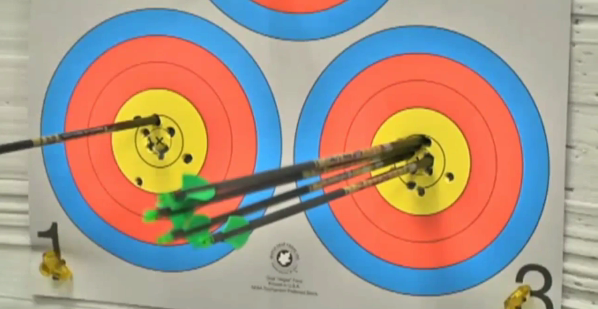
If you practice shooting your bow all spring and summer by casually flinging arrows at a target from 30, 40, and 50 yards, you should be full prepared to shoot a tight group into a 3D target by the fall.

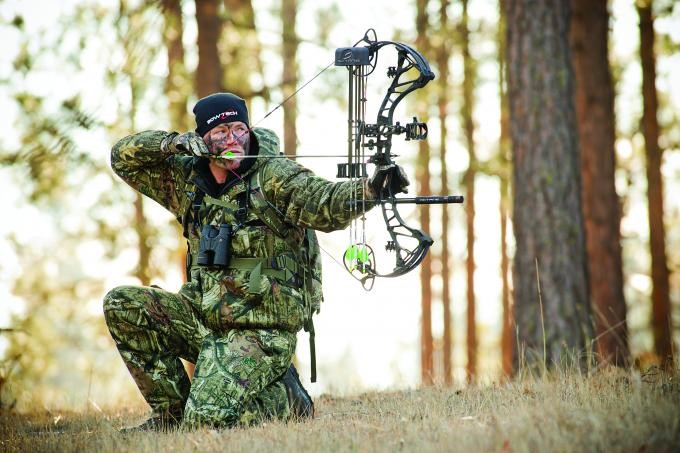
But if you want to get yourself hunt-ready, you have to practice for hunting scenarios: sitting, kneeling, shooting quickly, and holding at full draw. This video is all the proof you need.

This moose hunter was able to keep his cool and make a good shot … but just barely.

Follow our FISHING BLOG

WEB   RATES     FISH    HUNT    CABINS    PHOTOS
TESTIMONIALS    BROCHURE    HUNT BOOKLET
Enter your email address to subscribe to this blog and receive notifications of new posts by email.

← Back

Thank you for your response. ✨

Email Me....


Tags: , , , , , , , , , , ,

Tree Stand Preparation

The satisfaction one gets out of any endeavor is usually proportional to what one puts into it. Preparation leads to confidence, and confidence leads to success. And nothing prepares us for a hunt like a do-it-yourself attempt. Not only will you gain a lot more satisfaction from the hunt, you’ll also acquire a learning experience you can use for the rest of your life, and even pass down.

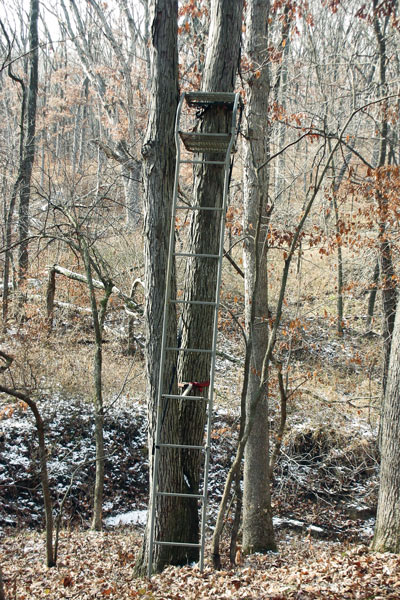
6One of the most important aspects of the right tree for a tree stand is an entrance/exit that will create as little disturbance as possible. In almost all cases, we are better off hunting undisturbed animals that are moving with some predictability. This is a fundamental truth.

A low-impact entrance/exit is vital, and the smart hunter must consider sight, sound, and scent during their approach and departure. Let’s use an example of each in illustration.

  • Often, your stand placement is just off the crest of a ridgeline. Human nature is for old logging/skid roads to follow the crest of the ridge because it makes sense for ease of travel for humans and equipment. But it doesn’t make sense for the deer.
  • Although not always the case, game will usually shy away from being sky lined on a ridge top. They’ll tend to walk parallel to the crest on the downwind side. It sometimes depends on the angle of the terrain and visibility (density), but usually they will prefer just far enough off to the side so their silhouette is less obvious, and where they can see downhill just as well as if they were on the crest. You’ll also notice their passage will tend to be on the downwind side of the crest. Think about it — they can see downhill and can scent-check areas upwind, and still not be silhouetted.

We, as hunters, must do the same thing. When entering a stand site along a ridgeline, it’s easy to walk the logging road on the top. This is fine when it’s dark (another advantage of stand approach before light). But when it’s already light, or in the afternoon, you’re usually better off picking your way in by walking parallel to the crest.

Walk in on a logging road, try to walk in the “tire track” of the downwind side. For example, say the logging road is running north/south and the wind is coming from the west. You walk in the east tire track so the wind carries your residual ground scent off the road. This ensures any deer that happen to be walking the road later will be less likely to smell your passage.

In addition to this, if you use a scent drag on approach, you will notice it will benefit you even more so. Tie a scent-soaked rag to a short cord off a four-foot switch (or your bow tip), and drag it down the west tire track while you walk the east (downwind) track.

Because most hunters tend to sweat, carry extra clothing/gear in a backpack. When you get to within 100 yards or so of the stand,  stop and put the layered jacket, facemask, gloves, and safety harness on. It’s an obvious advantage having your scent on your final approach blowing away from the direction you think the deer will be coming/going.

bear4To ensure a silent approach, rake out a footpath to the stand. For those of you who have hunted bear over a bait site, you may have noticed that when multiple bears are hitting the bait, they will approach it via specific footprints.


This is a dominant/subordinate situation. A subordinate bear knows if he is caught by a dominant bear on his approach to the bait, he will likely get his butt kicked. And it could even be a fatal mistake. Therefore, if you look closely around the bait site, you may find distinct, separate footprint/pad marks that bears will actually place their pads in, in order to guarantee a silent entry. Do the same thing when approaching the stand site.

After the foliage drops, you’ll often have dry leaves covering the ground. Walking through dry leaves silently is hopeless. If there is any cadence/rhythm to your gait, it’s almost impossible to keep your entrance/exit covert. At this point leaving your ambush silently is just about as important as entering it silently, and in both cases use the “bear trick” to my advantage.

  • After the majority of leaves drop, face the fact that you will be disturbing the area and go for it. Time your entrance for midday, knowing what you’ll gain will be worth it in the long run. You can use a regular garden rake with the stiff teeth, but a garden hoe actually works better, because you won’t have to constantly clean leaves from the teeth. Clear away the leaves every couple of feet in order to place your boots on solid ground rather than six inches of leaves.

Yes, continued foliage dropping will fill in the raked spots somewhat, but you can just kick them away with your boot tip if needed. Quiet foot placement is especially important on quiet days, or if you are within hearing distance and/or sight of a known bedding area.

You’ll know it was all worth it when after quietly entering and settling in you see the flick of an ear and notice a deer bedded within eyesight. That probably won’t happen on a calm day if you don’t pre-rake your approach.

Break out the trusty ratchet belt hand pruners to open and clear the understory of brushy twigs, both from where the deer will be walking as well as your own approach. An opening through the brush will shift the deer to the path of least resistance, and they will adapt to it in short order. At the same time, you want to eliminate brush and twigs in my entrance path to reduce scent retention and the noise clothing may create as you pass by.

sunset bear

On approaching a stand setup, try not to cross the main travel pattern you’re hunting. Sometimes there are situations where you have to do that. In these cases, plan your approach to the stand right in a precut shooting lane. That way if the deer cuts your entrance trail on approach and stops to smell your minimal ground scent, at least he is standing in a shooting lane.

Some of this may be hard to follow along with unless you are actually shown. The bottom line is there will be a lot of satisfaction for your efforts. Not only will you watch a deer react exactly as you wanted and intended him to, but your efforts will hopefully shift his movement to a position where you almost can’t miss the shot. And that alone will boost your bow hunting success rates tremendously.

Follow our FISHING BLOG

WEB   RATES     FISH    HUNT    CABINS    PHOTOS
TESTIMONIALS    BROCHURE    HUNT BOOKLET

Enter your email address to subscribe to this blog and receive notifications of new posts by email.

← Back

Thank you for your response. ✨

Email Me....


Tags: , , , , , ,

Camouflage Won’t Help IF…….

You’re invisible. Or at least you think you are. After all, you’ve done all the right things: bought that pricey camo that matches your surroundings, painted your face with lots of greasy face paint, and you are even wearing camo boots. Now all you have to do is sit there, soak in a little sunshine, and wait for a big boar to show himself.

SAM_0066

But when a bear does come in, he spots your position and blows out for the next county.  The problem? You set up in the sunlight

A common mistake that has ruined plenty of big-game hunters’ chances is setting up where direct sunlight can reach them. Sunshine turns a camouflaged hunter from an indistinct shadowy figure into a glowing beacon. Dappled sunlight shining through a canopy of leaves isn’t usually a problem. But direct sunlight can reveal your whereabouts and end your hunt.

SAM_0057

Camouflage clothing’s basic function is to break up our outline – tricking our prey’s eyes into passing over us in their constant search for danger. The human silhouette is incredibly distinct in the wilderness – there is no other form like it. To fool game, it is essential to reduce our human outline. The best camo patterns utilize starkly contrasting colors in their design, thus changing us from a human form into something indistinct and non-threatening. Interestingly, for those of you traditional hunters like me – a good plaid pattern like Fred Bear often wore can work almost as effectively as modern camouflage.

Randy Bear


Remember that sunlight moves as the earth rotates. Set up your ambush in a location that allows you to remain shadowed as the light moves around you. If you are still-hunting or stalking, move efficiently through areas of sunshine and then pause to watch and listen when in the shadows.  Set up in dark shade that offers good shooting lanes. Remember to keep your hands and face camo’d up as well – if left uncovered, they are a dead giveaway even in the shadows.

Follow our FISHING BLOG

WEB   RATES     FISH    HUNT    CABINS    PHOTOS
TESTIMONIALS    BROCHURE    HUNT BOOKLET

Enter your email address to subscribe to this blog and receive notifications of new posts by email.

← Back

Thank you for your response. ✨

Email Me....


Tags: , , , , , , , , , , , , ,