RSS

Monthly Archives: February 2016

Morel Mushrooms Hunting For The Beginner

Morels are America’s mushroom, more so than any other. It may be because they’re widespread, they’re easy to identify, and they come up in the spring, giving people a reason to get out and enjoy warm weather after a long winter. Or, it could be they’re popular simply because they taste so good. Morels are so prized they sell for up to $20 a pound in grocery stores in most locations. Here’s a quick guide to finding your own. Please note that although morels are easy to identify, this a hunting guide, not a field guide. If you have any doubt about a mushroom, don’t keep it.

3

Found in much of the U.S. from late March through May, the morel is our favorite mushroom: plentiful, easy to identify, and delicious. It has colorful names like Molly Moocher, Miracle, Dry land Fish—or, my favorite, Hickory Chickens—but mostly, people just call them “mushrooms” and it’s understood that means “morels.”

Identifying Safe Morels
MushroomBroken2
MushroomBroken1donteat
Here are two morels in the wild. Notice the pits (in the top photo), the distinctive conical shape, and the way the bottom of the cap (the pitted part) is attached near the bottom of the stem. Avoid the half-free morel (bottom photo), which has a longer stem and a cap that attaches near the top, looking like an umbrella. These mushrooms can cause some people to have cramps or other forms of gastrointestinal distress.

Definitely Don’t Eat This
MushroomX_
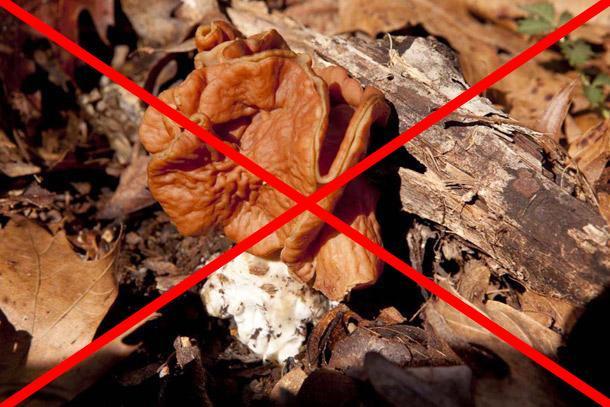
Don’t eat this mushroom, which is a false morel and is mildly toxic. Notice that it lacks the cone shape of the real thing, and has wrinkles, not pits, on its cap.

Where to Look
Mushroom4
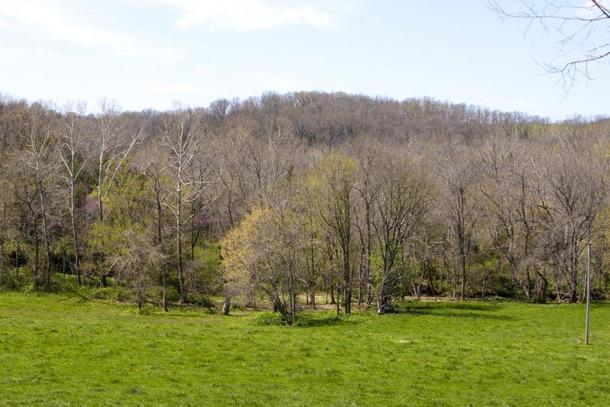
Morels live in and on the edge of forested areas. Look for ash, aspen, elm, and oak trees, around which morels often grow. Early in the spring as the ground is warming, you’ll find them on south-facing slopes in fairly open areas. As the season progresses, go deeper into the woods and onto north-facing slopes.

8
Well-drained, sandy soils like this creek bottom make good hunting spots as well. You’ll find the first morels of the year when daytime highs reach the 60s and lows stay above 40 degrees.

Hunting Tactics
7

Hunting morels is like bass fishing. You cover ground until you find one, then slow down and search the area carefully. Concentrate the rest of your hunt on similar areas, on the theory that you’ve found the “pattern” for the day.

Early-Season Morels
Mushroom7
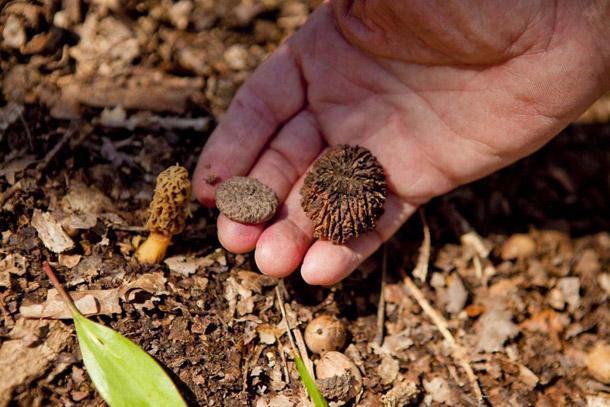
The first morels of the season are small. It takes quite a few to make a meal. The acorn top and walnut husk in the hand above help show scale.

Look For Dead Trees
Mushroom8
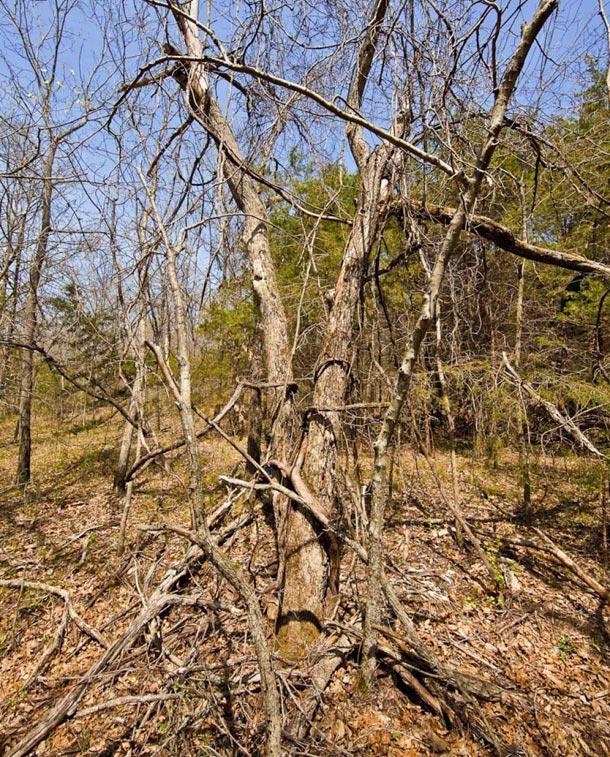
Morels often grow around dead and dying trees. Old apple orchards make good hunting grounds. Always look around dead elm trees like this one. When a tree reaches the stage of decay where its bark is slipping off its trunk you’ll often find lots of morels around it.

Later in the Season
3
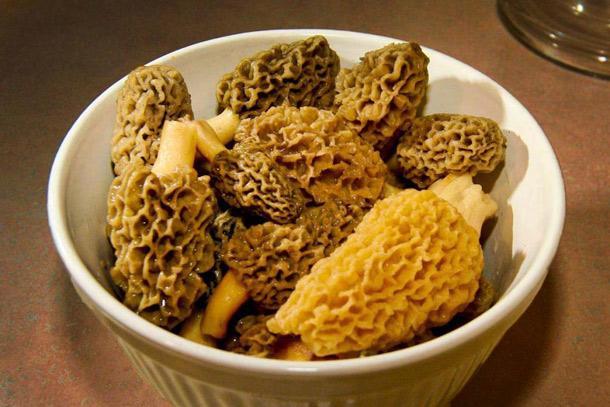
As the season progresses you find bigger, yellow morels. They taste just as good as the smaller ones, they’re easier to spot, and it doesn’t take as many to feed a hungry hunter.
Mushroom10
Soaking morels in water for a couple of hours cleans them and washes out any bugs living inside the hollow mushrooms. Some people slice them in half lengthwise for a more thorough cleaning.

Mushroom11
Here you see morels sautéing in butter. Cooking in butter brings out their rich, almost meaty flavor. If I don’t have very many, I like to scramble them into eggs with some tarragon. Batter-fried morels are also very popular.

Mushroom12

The bounty of spring, fork-ready. Serve with a breast of wild turkey or some fish fillets and it’s totally awesome!

Follow our FISHING BLOG

WEB   RATES     FISH    HUNT    CABINS    PHOTOS
TESTIMONIALS    BROCHURE    HUNT BOOKLET

Enter your email address to subscribe to this blog and receive notifications of new posts by email.

Go back

Your message has been sent

Warning
Warning
Warning
Email Me....

Warning

Warning.


Tags: , , , , , , ,

Bear Encounter for Cyclist

975012fylers
In urban areas, cyclists need to watch out for cars. But in more rural places, there are other dangers. 57-year-old Jim Litz, a science teacher in Missoula, Montana, learned this when he t-boned a black bear while riding his bike to work. Read on for the details.“I was lucky. I was truly lucky”

He was traveling about 25 mph when he came upon a rise and spotted a black bear about 10 feet in front of him. “I didn’t have time to respond. I never even hit my brakes,” Litz said.

He tumbled over his handlebars, planting his helmeted head on the bruin’s back, and man and beast went cartwheeling down the road. The bear rolled over Litz’s head, and its mass cracked his helmet. As the duo toppled over one another, the bear clawed at Litz’s cycling jacket, scratching his flesh from shoulder to buttocks before scampering up a hill above the road, where it stopped and whined.

Litz’s wife drove by soon after and took her husband to Community Medical Center, and he immediately called  Fish, Wildlife and Parks to report the unusual collision. Game wardens told him they didn’t think the animal was seriously injured, but was more likely suffering from some bruised ribs – just like Litz.

“I was lucky. I was truly lucky, because I accosted the bear and he let me live,” Litz said. “I truly respect them. They’re beautiful creatures.”

by:  Michael Graham Richard

Black-Bear-crossing-the-Alaska-Highway

Follow our FISHING BLOG

WEB   RATES     FISH    HUNT    CABINS    PHOTOS
TESTIMONIALS    BROCHURE    HUNT BOOKLET

Enter your email address to subscribe to this blog and receive notifications of new posts by email.

Go back

Your message has been sent

Warning
Warning
Warning
Email Me....

Warning

Warning.


Tags: , , , , , ,

The THREE Bears A Success Story!

There is nothing more impressive than having a one day harvest for one of the most revered predators….imagine having THREE!!

IMG_6110 - Copy
Cody, Rod and Brad descended upon Wawang in hopes of each bringing home a bruin.  Father and son, Cody and Rod, were returning hunters while Cody’s best friend Brad made this his first visit.

Each hunter was prepared and after the day long drive from Iowa, were ready to ascend their trees to await their chance at a bear.

Outwardly, this was to be a week of patience as Cody was no stranger to the wiles of those elusive creatures.  This being Cody’s third attempt (second with us at Wawang) he was determined to pin that tag on something ‘decent’

Cody had spent the entire year honing his skills on sizing and judging bear….a talent most discount until they are faced with the opportunity to shoot.  Read:  How to Size a Bear

The day was bustling at the lodge as it was Labor Day weekend and it was our annual end of the year celebration.  The kitchen was filled with the aroma of turkey, mashed potatoes, roast and all the fixings.  In the bustle of preparation, Cody emerged and made his way across the floor to the kitchen.

labor-day

It’s an exciting time at Labor Day with the bear hunt going on!

We were in high gear with getting the food just right when we looked out the door and saw him heading over.  Lost in our own thoughts, we carried on about the kitchen….until…..wait a minute…wasn’t he supposed to be in a tree?  He only left a couple of hours ago!

“Cody, what are you doing?  Did your truck break down?” we were concerned for hunting time being missed.  Cody reached into his pocket and produced his camera.  “I got one, but I think you might be mad….it’s small.”  His shoulders dropped and he passed the camera to us.

We looked over the picture and then back to Cody….there were no words.   “Cody, I don’t know what you consider small but this isn’t anywhere close to what we call small!”  His eyes lit up….when somebody that has seen numerous BIG bear tells you that you hit the jackpot, it is a good day!

Cody then left to wait for his hunting partners to finish their hunt for the evening to help him retrieve his bear.   The lodge returned to its frantic state of meal prepare.  As the festivities rolled on that night, Cody and his crew finally returned….

Everyone in camp was excited to lay eyes on Cody’s trophy BUT were completely unprepared to meet an entire truck full of bear!  3 bear to be exact!  2 boars and a sow…Goldilocks wouldn’t have been happier!

Each one took turns telling the exciting tale of retrieving their harvest…..each one amazed at the success of the other and each beaming with excitement….it was day 1 and the anxiety of the hunt was already over and done with….now it was time to fish!!

During that week, laughs were exchanged, trophy fish were caught and memories made…a father, son and best friend made a Wawang hunt the life long story to beat!

So glad that we could be a part of such great memories!!

Follow our FISHING BLOG

WEB   RATES     FISH    HUNT    CABINS    PHOTOS
TESTIMONIALS    BROCHURE    HUNT BOOKLET

Enter your email address to subscribe to this blog and receive notifications of new posts by email.

Go back

Your message has been sent

Warning
Warning
Warning
Email Me....

Warning

Warning.


Tags: , , , , , , , , , , ,

Art of Archery – A Timeline through Ages Infographic

ODL0814_HUN02

Here’s an interesting read Infographic on the evolution of archery
art-of-archery-a-timeline-through-ages-infographic-by-global-gear

Follow our HUNTING BLOG

WEB   RATES     FISH    HUNT    CABINS    PHOTOS
TESTIMONIALS    BROCHURE    HUNT BOOKLET

Enter your email address to subscribe to this blog and receive notifications of new posts by email.

Go back

Your message has been sent

Warning
Warning
Warning
Email Me....

Warning

Warning.

 
Leave a comment

Posted by on February 16, 2016 in archery, Wawang Lake Resort


Tags: , , ,

Hunting Bears With Bows – Decoy Tactics

Trophy boars are smarter than your average bear. But even the savviest old bruin has a few chinks in his armor. Using a decoy is an exciting way to exploit them. Even weary old black bears will come in spoiling for a fight. Here are three strategies for drawing a dominant, hungry bruin into bow range.

 1

The Intruder
Big boars are solitary animals and will claim a food source as their own, commonly defecating along entrance trails to warn other bears away. To get this bear’s attention, stake a small bear decoy near the food source, positioned with its head down and its backside facing the direction you expect a boar to approach. Attach a few strips of black cloth to the decoy’s ears and tail for added realism and collect some bear scat from another area—preferably from a boar—and with a plastic bag, transplant it on the entrance trails.

Now sit back. Any wise old boar that might otherwise camp just off the food until nightfall is almost sure to investigate when he sees your “intruder.” Keep in mind that a boar may visit a food site daily or stop by every second or third day while patrolling his home turf. Be patient, and don’t let your guard down.

2

The Easy Meal
Black bears are fond of fresh meat and will drop their guard to capture an animal in distress. Any small, furry decoy, like those used for foxes and coyotes, wiggling about in plain sight is sure to catch a passing bear’s attention. With a little luck, the bruin will move in quickly to finish off what he thinks is hapless prey. If he hangs up, though, add a few squeals from a dying-rabbit call to entice him.

If whitetail deer are prevalent in your area, a fawn decoy can be too much for any hungry black bear to ignore. Try a few fawn contact bleats, and if that fails, go to a fawn-in-distress call. Nock a broadhead and get ready. The bear will come in fast, so be prepared to shoot pronto.

3

The Feeding Female
You’ll have to wait a few months to use this setup, but it’s a good one to have in your arsenal. Black bears rut in late spring and early summer and will visit bait sites, looking for a sow in heat. If baiting is legal in your area, position a small black bear decoy with its head in the bait barrel, and hang a few scent canisters soaked with sow-in-heat urine 3 or 4 feet off the ground nearby.

Big boars are ultracautious around bait, so odor control is critical. As you’re setting up, wear rubber gloves and spray the decoy down liberally with a quality scent remover. The boar will approach the decoy warily. Don’t rush the shot. As he investigates, you should have plenty of time to draw.

Follow our FISHING BLOG

WEB   RATES     FISH    HUNT    CABINS    PHOTOS T
ESTIMONIALS
    BROCHURE    HUNT BOOKLET

Enter your email address to subscribe to this blog and receive notifications of new posts by email.

Go back

Your message has been sent

Warning
Warning
Warning
Email Me....

Warning

Warning.


Tags: , , , , , , , , , ,

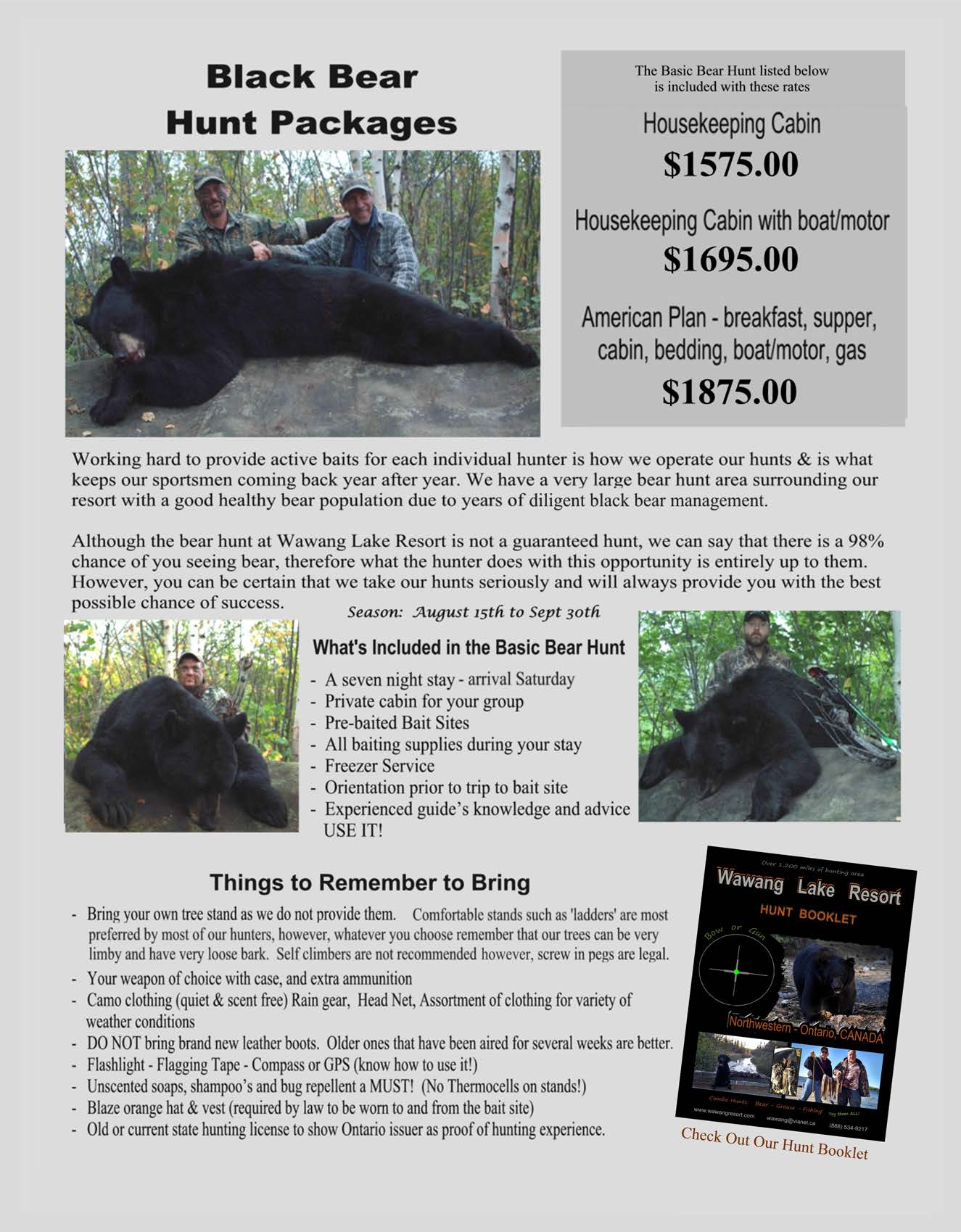
Black Bear Hunting RATES

2 bear sized
Bear RatesFollow our FISHING BLOG   Link to our:  HUNT BOOKLET

Randy Bear

WEB   RATES     FISH    HUNT    CABINS    PHOTOS
TESTIMONIALS    BROCHURE    HUNT BOOKLET

Enter your email address to subscribe to this blog and receive notifications of new posts by email.

Go back

Your message has been sent

Warning
Warning
Warning
Email Me....

Warning

Warning.


Tags: , , , , , , , , ,

Start Your Retriever Off Right

Here are a few helpful tips to help you do it right and get your retriever pup off to a good start:

wading
WATER
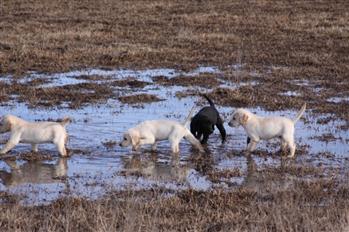
Taking your retriever pup out in a boat to the middle of a lake and throwing her overboard is not a proper water introduction. Ideally, you want the experience to be pleasant and fun.

Find a small pond with a shore that drops gradually from shallow to deep water. The weather should be mild, and the water temperature 60 degrees or warmer. Wading into the water with the pup will help alleviate any fear she may have. Bumpers and water retrieves can come later.

GUNFIRE
The worst thing you can do is to take a puppy to an open field and fire a 12-gauge over her head. That’s almost guaranteed to cause gun-shyness. Instead, recruit a friend or family member to help with this part of your pup’s training. While you handle the dog, have your training partner move a good distance away. Each time you toss a bumper, your partner should fire a shot with a starter pistol or cap gun. Be careful not to overdo it. A few shots each outing will suffice. Each day, decrease the distance between the dog and the gunfire and repeat the same drill. Keep in mind that introducing a dog to gunfire is a gradual process that shouldn’t be rushed.

gunfire
DECOYS
Don’t wait until hunting season to familiarize your dog with decoys. Incorporate them into their training exercises. Place a dozen or more decoys around a field when you’re tossing bumpers. This will help teach the dog that decoys are just part of the setup and not her main focus. Once he/she learns that, they can move on to retrieving bumpers around a decoy spread set in shallow water. This will help them learn how to swim through the decoys without getting tangled in the lines. If you hunt with motion decoys, incorporate them into your training spread as well.

BOATS The best way to acclimate a pup to watercraft is on dry land, where the boat won’t rock or tip over. Place your retriever in the boat and let her explore this unfamiliar setting. Do this several times over a period of a few days, and when the dog is comfortable in her new surroundings, launch the boat and take your pup on a cruise around the lake. Be sure to go slow and avoid rough waters. Keep the outing as pleasant as possible, with the dog sitting calmly beside you. Allowing them to run around while the boat is under way can be extremely dangerous.

BLINDS
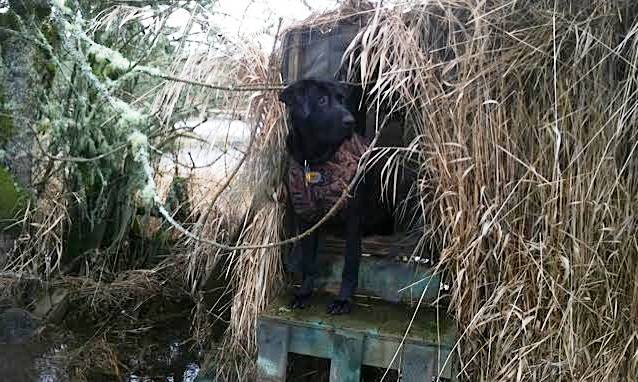
Whether you hunt out of a permanent blind or a layout blind, your retriever should have a place of her own. Set up a dog stand or platform during your training sessions. Begin by teaching the dog to sit still on the stand. The younger the dog, the less patience they will have. But after several training sessions, they should learn to be patient and sit on the stand for extended periods of time.

blind1

Follow our FISHING BLOG

WEB   RATES     FISH    HUNT    CABINS    PHOTOS
TESTIMONIALS    BROCHURE    HUNT BOOKLET

Enter your email address to subscribe to this blog and receive notifications of new posts by email.

Go back

Your message has been sent

Warning
Warning
Warning
Email Me....

Warning

Warning.


Tags: , , , , , , , , , ,

Field Judging Black Bear

Here is an excerpt from a fantastic article written by Carl of BCHuntingBlog.  This is always a popular question we are asked and this article gives the same advice (with photos) as we have given for many decades 🙂

Field judging Black Bears can sometimes be difficult even for the most experienced of bear hunters.  The animal you are judging is usually completely black aside from color phase bears, they have thick fur and the shadows they create can be deceiving.  With that said there are a few methods you can have at your disposal to help you determine if the bear is a shooter or not.

So how can you improve your skills at judging trophy black bear size in the field?

Let’s Get Started.

Check Out The Bears Head:

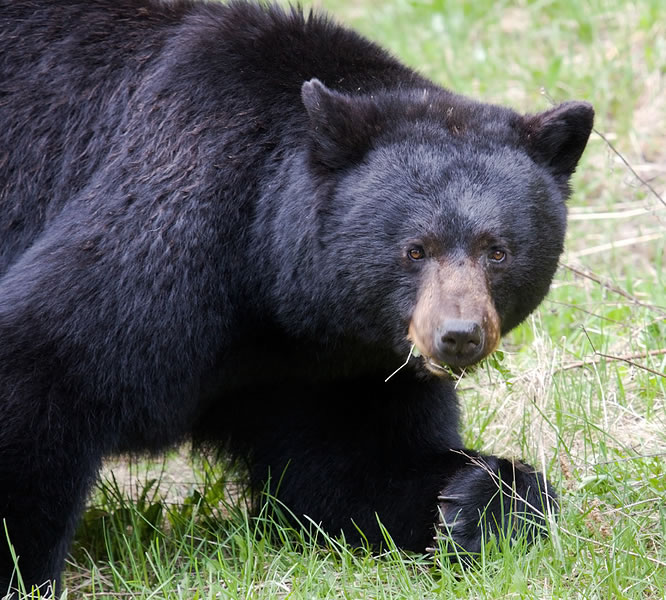
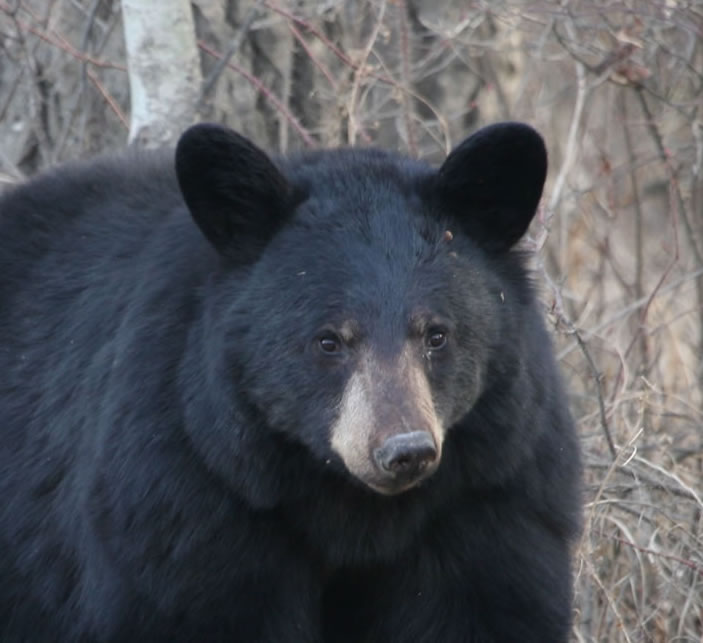
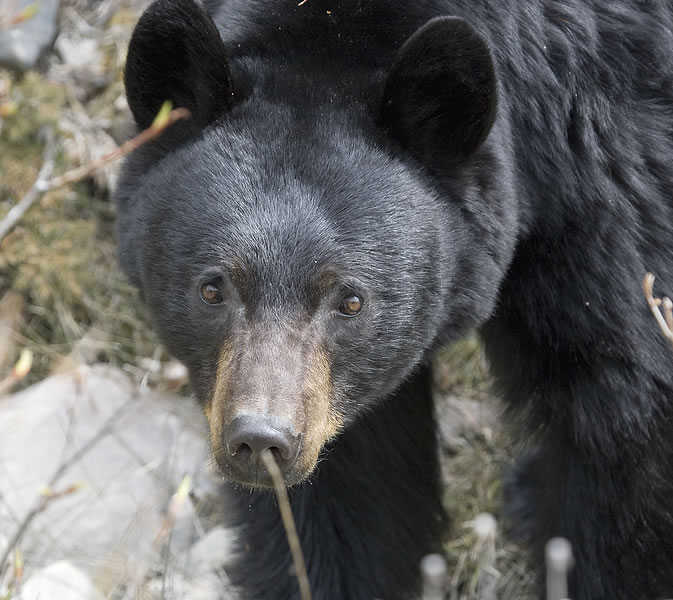
Big Bears:  Will have a very large, blocky looking head.  Their ears will look small, and almost off to the side of their skull a little.  On really big boars you might even see a crease down the center of their forehead, if that’s the case, it’s a good bear.  Other features to look for on a bears head would be scarring around the face, boars have ferocious fights, so it’s not uncommon for them to have plenty of battle scars around their muzzle, eyes and ears and these are helpful clues.

Small Bears:  Will have a small, narrow head, almost dog like.  Their ears will appear to be much larger and defined.  Almost like “Mickey Mouse” is a common description among many experienced bear hunters.

Check Out The Bears Behavior:

Big Bears:  Big dominant boars, behave like big dominant boars.  And they usually won’t be in much of a hurry unless they know you’re there and you’ve spooked him.  When big boars walk they will sometimes have a big swagger to their stride, much more so then a bear who’s on the submissive end of the spectrum.  When I shot my first Island Black Bear we watched him stand up on two legs and scratch his back on a tree for a couple minutes, without a care in the world.  When big boars decide to move they move deliberately, there is no indecision in their movements which can be noticed in younger, startled and confused bears.  Because they are dominant, the big boars will usually have a bit of a schedule and will often be caught feeding in the same places, at the same times of day.  They can do this because they are the boss!

Small Bears:  Are very cautious, they will get out of  your way quickly (so will a big old boar too if he’s spooked).  They will usually always be more alert then a dominant bear because they have to be, or they could become dinner.  Smaller bears will often seek the safety of a tree when in trouble or they just won’t stop running until they hit the coast.  When small bears run, they will appear much more agile then a larger bear.  They will will look more like a big dog running, then a lumbering old boar.

*Tip – When you’re observing a bear, and he/she doesn’t appear to be spooked, sit there and watch them for 1/2 hour or so.  Bears are pretty fascinating creatures when you watch them do their thing, and by observing you’ll learn more about them and that makes the hunt more fun.

Check Out The Bears Body:

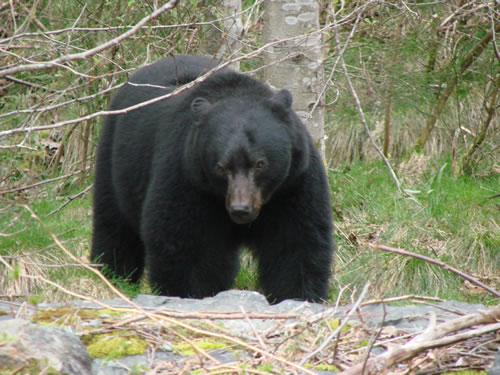
Big Bears:  Sometimes the big boys are called “belly draggers” for a reason, and it’s possible for our bears to get this big.  Big Boars may appear to be so big, you can’t see underneath their body when they are moving around.  That’s a big bear!  If the bear you’re looking at appears to have long legs, it’s probably because he has a smaller body in proportion.  Big bears will have very muscular looking arms and legs, especially their front shoulders/neck area.

Small Bears:  Can you picture the size of a really large breed dog? OK.  That’s about the size of an “average” Island Black Bear.  An average Island Bear will weigh 150-250lbs.  An large 6′+ boar could likely weigh 300+ and the big bears do look much different as you can see in the photos.

What Are Some Additional Signs Of A Big Bear?

If it’s a big bear you’re after then you need to pay attention to the sign you see around you.  Tracks and Scat are very good indicators as to the potential size of a bear, and will let you know if a particular bear is frequenting an area.

Judging Bear Size From Tracks:

This method was shown to me by my Father who was a big game guide for nearly 30 years.  It has since been shown to me by several taxidermists and many more experienced bear hunters than I so I believe in this method.

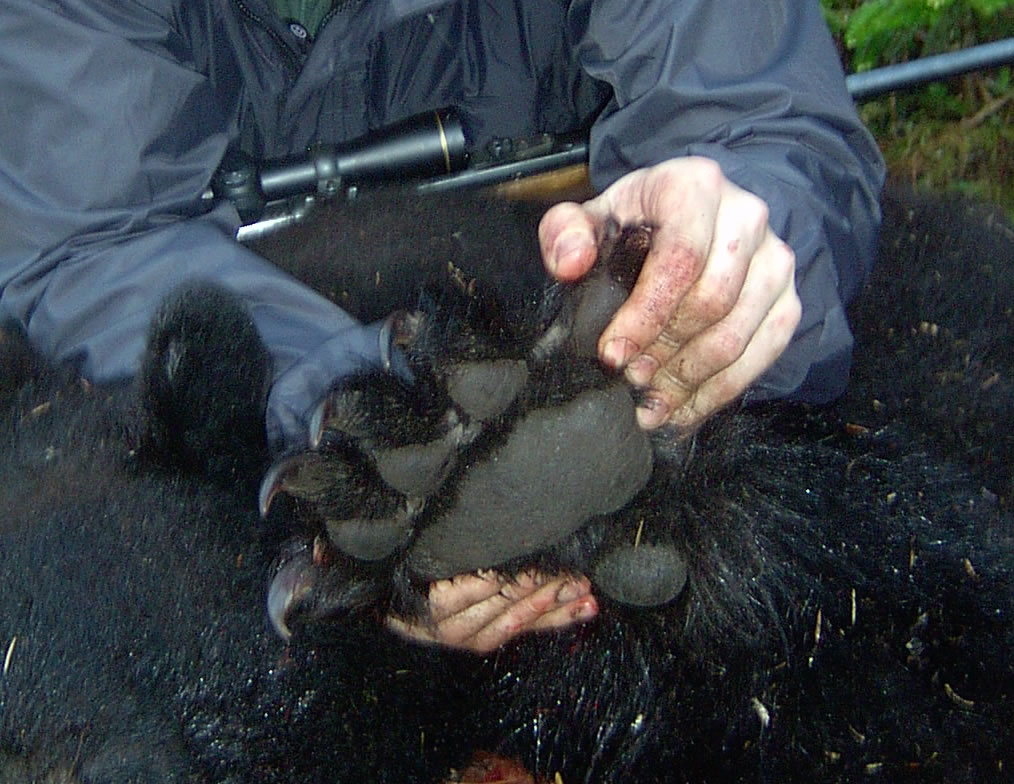
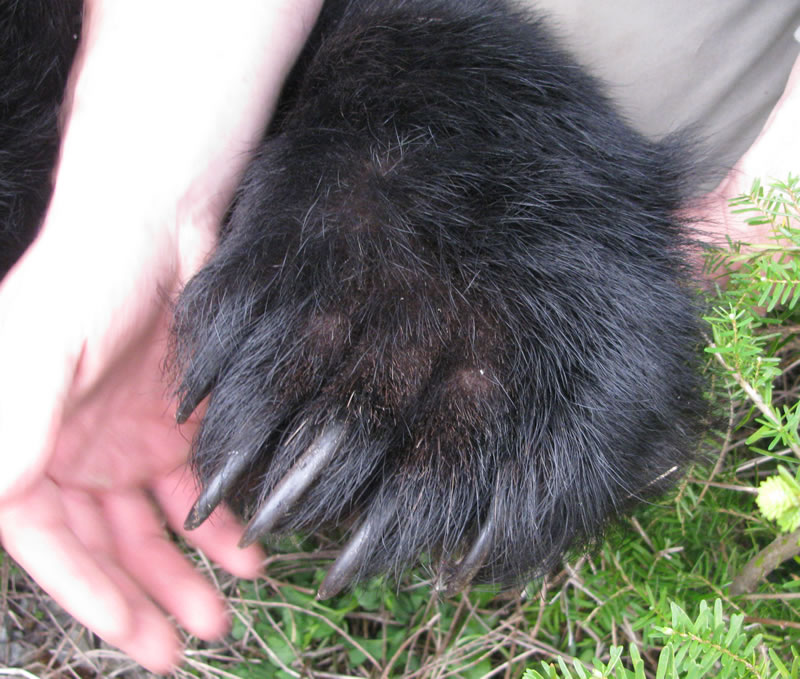
If you can find fresh bear tracks in an area, maybe mud or soft sand (common where we hunt spring bear on the Island) measure the distance across the front pad and simply add 1.  This will give you a rough “square” of the bear.   So if you measure the bear track and it came out at 5″inches across, you would add 1 and could guesstimate that bear was roughly a 6′ foot bear.

I have tried this method on many of our harvested black bears and I have to say it’s pretty damn close!  The only problem with this method is you need to find the bear that left the track!

Judging Bear Size From Scat:

Spend a couple days bear hunting and you’ll observe several dozen or so piles of bear scat scattered across the road.  Not only can they help you see what the bears are eating but they can give you a pretty good indicator as to the size of the bear that left it.  Here’s a tip for you.  It’s not necessarily the size of the pile… It’s the diameter of the nuggets!  A really BIG bear has a really big butt and it’s not uncommon for them to leave scat the diameter of a beer can behind!  If you look at 10 piles of bear scat and then come across the one left by the big kahuna trust me… You’ll Know!

If you discover an area that has BIG tracks and some BIG (large diameter) scat, then it might be worth hunting that area a little harder.  Big Island Black Bears don’t have enormous ranges and unless you’ve spooked them heavily they will keep coming back to the same places to feed.

Hopefully you found article helpful and through experience you’ll become a much better bear hunter.  Because of their abundance it’s pretty easy to rack up experience if you’ve got the time to put a couple weekends in every year and then the patience to watch and observe what goes on around you.  Pay attention to the sign, and have a good time out there!

WEBSITE    RATES     FISH    HUNT    CABINS    PHOTOS
TESTIMONIALS    BROCHURE    HUNT BOOKLET

Enter your email address to subscribe to this blog and receive notifications of new posts by email.

Go back

Your message has been sent

Warning
Warning
Warning
Email Me....

Warning

Warning.


Tags: , , , ,

Moose – FYI

Moose, Alces alces, Canada, North America.Moose are the largest of all the deer species. Males are immediately recognizable by their huge antlers, which can spread 6 feet (1.8 meters) from end to end. Moose have long faces and muzzles that dangle over their chins. A flap of skin known as a bell sways beneath each moose’s throat.

Moose are so tall that they prefer to browse higher grasses and shrubs because lowering their heads to ground level can be difficult. In winter they eat shrubs and pinecones, but they also scrape snow with their large hooves to clear areas for browsing on mosses and lichens. These hooves also act as snowshoes to support the heavy animals in soft snow and in muddy or marshy ground.

moose2In summer, food is far more plentiful in the northern regions of North America, Europe, and Asia. When the ice melts, moose are often seen in lakes, rivers, or wetlands, feeding on aquatic plants both at and below the surface. Moose are at home in the water and, despite their staggering bulk, are good swimmers. They have been seen paddling several miles at a time, and will even submerge completely, staying under for 30 seconds or more.

mooseMoose are similarly nimble on land. They can run up to 35 miles (56 kilometers) an hour over short distances, and trot steadily at 20 miles (32 kilometers) an hour.

Males, called bulls, bellow loudly to attract mates each September and October. The usually solitary bulls may come together at this time to battle with their antlers for mating supremacy. After mating, the two sexes go their separate ways until the following year. Though they may occasionally feed in the same grounds, they tend to ignore each other.

Females give birth to one or two calves in the spring—each weighing some 30 pounds (14 kilograms). These calves grow quickly and can outrun a person by the time they are just five days old. Young moose stay with their mothers until the following mating season.


Follow our FISHING BLOG

WEB   RATES     FISH    HUNT    CABINS    PHOTOS
TESTIMONIALS    BROCHURE    HUNT BOOKLET

Enter your email address to subscribe to this blog and receive notifications of new posts by email.

Go back

Your message has been sent

Warning
Warning
Warning
Email Me....

Warning

Warning.


Tags: , , , , , , , ,

Country-Style Fried Bear Steak

This recipe will bring out the southern drawl in anyone. It’s great for any game meat but extra special with bear. It uses a blended creole seasoning mix recipe, which are also included.

bear-steak-620x338[1]

Creole Seasoning

  • 2 tbsp. onion powder
  • garlic powder
  • dried oregano leaves
  • dried sweet basil 1 tbsp.
  • dried thyme leaves
  • black pepper
  • white pepper
  • cayenne pepper
  • salt 3 tbsp.
  • sweet paprika

Blend together in a food processor. Store in an airtight container.

Ingredients

  • 2 lbs. bear steak, cut into 4 equal portions
  • 3 tbsp. creole seasoning,
  • divided ½ lb. bacon, chopped
  • 11⁄4 cups all-purpose flour,
  • divided 1 large egg
  • 2½ cups milk,
  • divided 1 cup bread crumbs
  • ½ cup yellow onion, minced
  • 1 tsp. salt
  • ½ tsp. pepper

Instructions
Place the bear steak on a piece of plastic wrap and cover with another piece of plastic wrap. Pound steak with a meat mallet until it’s ¼ inch thick. Season both sides of meat with 1 tsp. of creole seasoning.

Fry the bacon in a large, heavy skillet until just crisp. Remove and drain. Set pan with the bacon grease aside.

Prepare 3 bowls to dredge the meat.

Into the first bowl, add 1 cup flour and 1 tbsp. creole seasoning.

To the second bowl, add egg whisked with ½ cup milk and ½ tsp. creole seasoning.

Into the third bowl, add bread crumbs mixed with all but ½ tsp of remaining creole seasoning.

Dredge the meat in the first bowl, shake off any excess, then dip in second bowl and again shake off excess, then roll in crumb mixture. Repeat with all steaks.

Reheat the bacon fat in skillet until hot, but not smoking. Carefully add 1 piece of meat and fry until golden, about 3 to 4 minutes per side. Transfer to paper towel to drain, repeat with other pieces of meat.

Add ¼ cup flour and ½ tsp. of creole seasoning to drippings in pan.

Cook over medium heat, stirring constantly for 2 minutes. Add onion and cook, stirring until onions soften, about 4 minutes. Whisk in remaining milk and salt and pepper and bring to a boil. Reduce heat to low and simmer until sauce is thickened, about 5 minutes.

Stir in bacon. Serve with steaks.

Follow our FISHING BLOG

WEB   RATES     FISH    HUNT    CABINS    PHOTOS
TESTIMONIALS    BROCHURE    HUNT BOOKLET

Enter your email address to subscribe to this blog and receive notifications of new posts by email.

Go back

Your message has been sent

Warning
Warning
Warning
Email Me....

Warning

Warning.

 
Leave a comment

Posted by on February 10, 2016 in Bear, black bear, recipe, Wawang Lake Resort


Tags: , , , ,