RSS

Monthly Archives: January 2016

Turn Your Phone Into A Walkie Talkie

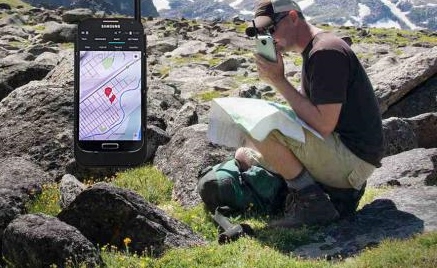
Beartooth a case to use on your smartphone that essentially turns your phone into a walkie talkie to be used when your phone is out of range of cell service.beartooth-case-that-turns-your-phone-into-a-walkie-talkie-thumb

The device will allow you to make texts and phone calls with other Beartooth users over a radio signal, and even allows you to get your geo-location to be used with a map. The radio device will even encrypt your text messages using a 128-bit encryption to keep your data safe.

The Beartooth phone case radio features individual or group messaging, an SOS broadcasting that that will broadcast your position at user defined intervals for emergencies, as well as hold extra battery storage for your phone right in the case.

The radio will reach the standard length of most walkie talkies (around 2 miles), comes with a 2000 mAh battery that will double the battery life of your phone, and will operate in the 151-154Mhz (VHF) and 462-467Mhz (UHF) frequency ranges. Price and availability for the device is to be determined, but production is said to begin in 2015.

Follow our FISHING BLOG

WEBSITE    RATES     FISH    HUNT    CABINS    PHOTOS
TESTIMONIALS    BROCHURE    HUNT BOOKLET

Enter your email address to subscribe to this blog and receive notifications of new posts by email.

Go back

Your message has been sent

Warning
Warning
Warning
Email Me....

Warning

Warning.


Tags: , , , , , , , , , , ,

How To Build A Fire & Cook Over It

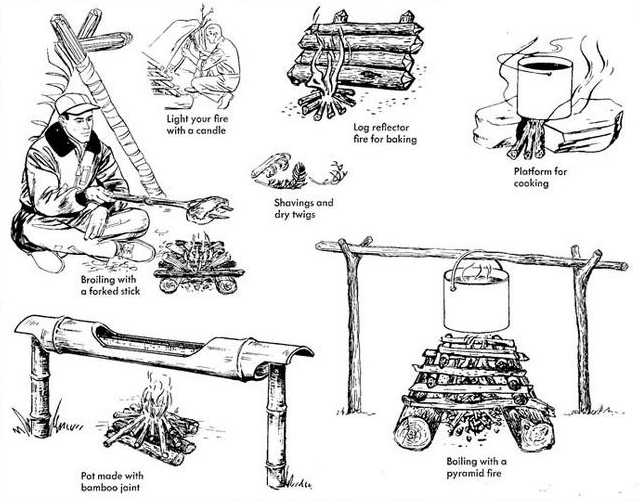
Here is two tutorials on how to build a fire and to cook over it.

f0297e38b791cd12446aa4653d459f0c_zpse549e773

Tutorial 1


wildernesscooking_zpse7c2ef2d

Tutorial 2


Follow our FISHING BLOG

WEBSITE    RATES     FISH    HUNT    CABINS    PHOTOS
TESTIMONIALS    BROCHURE    HUNT BOOKLET

Enter your email address to subscribe to this blog and receive notifications of new posts by email.

Go back

Your message has been sent

Warning
Warning
Warning
Email Me....

Warning

Warning.


Tags: , , , , ,

How to Make & Cook Bannock – Out In the Field

 OLYMPUS DIGITAL CAMERA

A bannock is a small, flat loaf of bread risen by a leavening agent, most often a chemical one, although yeasty bannocks are sometimes baked, as in a sourdough recipe.  They are meant to be cooked hearth-side, whether a fireplace or a campfire.  They are simple, and in the woods, simple is good.  Add some honey to some simple bread and after a few days or weeks of bagels and Wasa bread, it tastes like manna from heaven.  It’s hot, light, and comforting.

How to Make Bannock Bread

Ingredients

  • Bannock Mix
  • Water

Basic Bannock Mix

1 cup flour (white or a mixture of white and whole wheat)
1 tsp. baking powder
1/4 tsp. salt
1/4 cup dry milk powder
1 tbsp. shortening

Make the mix at home ahead of time. Sift dry ingredients, and cut shortening in with a pastry cutter or two knives until you have a granular, corn meal-like mixture. Package in zip-lock freezer bags. Double bag it if you’re going to be on a long trip. I’ve found that you can make large batches at once and make enough bannock mix for a trip in about fifteen minutes. Just make sure you sift the dry ingredients well, so you don’t get leavening problems.

Directions

Baking bannock is relatively simple once you get the hang of it.  Your first ones will be dark and maybe burnt on the outside and gooey on the inside.  Don’t despair, just pretend it’s a jelly donut and try again. The key is a consistent heat.  While flames don’t indicate a bad cooking fire, red glowing fires from hardwood are best.

1. Start with a small cast iron frying pan and oil it well.

2. Pour some water into the bag and squoosh it around in the bag (squooshing is a technical term). Because the water and baking powder form carbon dioxide to make the bread light, the faster you go from mixing to skillet, the lighter your bannock will be. There will be lumps, of course, but we call them flavor bursts. I say “some water” because how much you add depends on the humidity and of course, personal taste. You don’t want it any thinner than a muffin consistency. If you’ve never baked a muffin, think spackle. You can distribute the dough with a poke of a finger or a stick or a spoon if you’re the civilized sort. Remember, it’s always easier to add water than take it out, right?

3. Squeeze the mix out of the bag and onto the warmed pan (not scalding hot — if the oil is smoking, it’s way too hot).  The pan can be warmed over the fire if you have a grate, or leaned against a few logs near the heat source.  It shouldn’t hiss or sizzle like a pancake batter…that means things are too hot. Cool it off and be patient.  The bread will start to rise slowly.

4. Your bannock will start to look loaf-like.  At this point you’ll want to flip your loaf.  A little shake of the pan and flick of the wrist can turn it over, but a spatula is fair game too.  At this point, just keep turning it.  You’ll know when it’s done.  It’ll look a lot like the picture here.

If you have a lid, you can try to cook your bannock dutch oven-style and put coals onto your skillet lid. Otherwise, you can turn it over to cook the top (carefully!) or else when the bottom is done, prop the pan up against a log with the top facing the fire. This is a great method of “semi-reflector-oven”.   It also makes a lighter bannock.

OLYMPUS DIGITAL CAMERA

Follow our FISHING BLOG

WEBSITE    RATES     FISH    HUNT    CABINS    PHOTOS
TESTIMONIALS    BROCHURE    HUNT BOOKLET

Enter your email address to subscribe to this blog and receive notifications of new posts by email.

Go back

Your message has been sent

Warning
Warning
Warning
Email Me....

Warning

Warning.

 
Leave a comment

Posted by on January 19, 2016 in Camping, recipe, Wawang Lake Resort


Tags: , , , , , ,

Blueberries – a Critical Food for Black Bear

imagesB4EBB1P8 Blueberries are an important food source throughout the black bear range.  The most commonly eaten berries in our area of northwestern Ontario are blueberries and raspberries.   Many other berries are eaten, but they have shorter seasons, are scarce, or are less preferred.

The period when blueberries  are abundant in our area is short & mainly in August-making that period critically important in the black bear’s annual cycle of events.  Efficient feeding during that time is critically important to winter survival, growth, and reproductive success.  Researchers found that bears in NW Ontario end mating activities before the critical feeding period and focus on feeding for the remainder of the summer.

Black bears are efficient berry-eaters, consuming up to 30,000 berries a day in a good year.  They gather berries quickly, using their sensitive, mobile lips and swallowing them whole.  The berries enter a two-part stomach, which grinds the pulp off the seeds.


imagesP1Y6BVCSThe seeds pass through the digestive tract unbroken and able to germinate, making black bears important seed dispersers.  Each summer, they spread the seeds of their favorite berries all over their home ranges.

Black Bear around Wawang Lake gain weight most rapidly during July and August when berries are abundant.  When the berries run out in September, there is little else to eat.  The bear usually seek out their dens in September or October.   The longer period of food abundance enables bears to achieve more growth and reach maturity more quickly than bear.  Bear in NW Ontario typically produce their first litters at 4 to 5 years of age.

Berries contain anti-oxidants, and the seeds of some species contain vitamin B-17, considered an anti-cancer compound by some scientists.  Although cancer occurs in captive bear, it has never been reported in wild bear.

RECIPES

blueberry pancakes wawang lake

Blueberry Pancakes


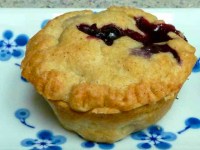
GLUTEN FREE BLUEBERRY PIE

Gluten FREE Blueberry Pie


Follow our FISHING BLOG

WEBSITE    RATES     FISH    HUNT    CABINS    PHOTOS
TESTIMONIALS    BROCHURE    HUNT BOOKLET

Enter your email address to subscribe to this blog and receive notifications of new posts by email.

Go back

Your message has been sent

Warning
Warning
Warning
Email Me....

Warning

Warning.


Leave a comment

Posted by on January 18, 2016 in black bear, recipe, Wawang Lake Resort


Tags: , , , , , , , ,

Squirrel Bungee Cord Feeder

Squirrel Bungee Cord Feeder


Leave a comment

Posted by on January 17, 2016 in Wawang Lake Resort, Wildlife


Tags: , , , , ,

Moose Stir Fry

8

This delicious moose dish is low in fat. The amount of each ingredient is proportional to how many people you’re serving. Using half a pound of moose, as this recipe does, makes two large servings.

Ingredients

  • 1/2 lb. moose steak
  • 1/2 cup carrots
  • 1/2 cup bean sprouts
  • 1/4 cup celery
  • 1/2 cup snow peas
  • 1/2 cup broccoli
  • 1/4 cup unsalted peanuts
  • 2 cloves of garlic, minced
  • 1/2 cup soy sauce
  • 1 tbsp crushed red pepper
  • 1 tbsp cumin
  • Cooked noodles (excluding seasoning packet)

Preparation

  • Slice steaks cross grain and marinade in soy sauce for one day. Throw a little oil into a hot wok to avoid sticking. Stir in moose for about 1 minute.
  • Add other ingredients, including seasoning, stirring frequently. Add additional soy sauce to coat all ingredients.
  • Stir in noodles and serve immediately.

Follow our FISHING BLOG

WEBSITE    RATES     FISH    HUNT    CABINS    PHOTOS
TESTIMONIALS    BROCHURE    HUNT BOOKLET

Enter your email address to subscribe to this blog and receive notifications of new posts by email.

Go back

Your message has been sent

Warning
Warning
Warning
Email Me....

Warning

Warning.


Leave a comment

Posted by on January 16, 2016 in moose, recipe, Wawang Lake Resort


Tags: , , , , , , , ,

Stalking Black Bear

imagesPQEZ37S9If you’re determined to fill your tag and you’re up for a truly heart-pounding hunt, try one of these two killer ground setups. There are times when you have to get on the ground to arrow a big bear. Either the best ambush point offers no suitable place to hang a tree stand or the biggest bear is wise to the stand you’ve already hung. In both cases, the solution is to get on the bear’s level (at your own risk, of course). If you’re determined to fill your tag and you’re up for a truly heart-pounding hunt, try one of these two killer ground setups.

1) Smoke Him Out As the days begin to shorten in autumn, bears enter a stage called hyper­phagia in which they gorge themselves in advance of hibernation, often feeding all day long, putting on 2 or 3 pounds a day. Any major feeding area, therefore, is a great place to find bears now. Trouble is, many of their favorite spots, including clear-cuts, apple orchards, blueberry bogs, and raspberry and blackberry thickets, lack suitable stand trees. To take a bear in a place like this, the first thing you need to do is scout the area for scat, tracks, and traces of fur to tell you where the bruin is doing most of its feeding. Once you figure that out, pick an open area where you can get a shot, move crosswind about 20 paces, and make a natural blind. Try to choose a spot that already has good cover, such as a blow down, stump, or thicket, as bears are acutely aware of changes in their feeding areas. imagesAI2YGGR2Walk back out to the opening you chose earlier and fire up a couple of scent sticks, which are legal in many areas that don’t allow bait (be sure to check local regulations). Now just sneak back into your hideout and wait for a hungry bear to show up. Theoretically, the approaching bruin’s attention will be locked on the sweet-smelling smoke—not on you quivering in the shadows—and you’ll be able to keep it together long enough to take the shot.

2) Back Off the Bait The majority of black bear bait sites feature a permanent (or at least long-term) tree stand that is situated downwind and overlooking the goodies. The biggest bears, however, often know not only where that tree stand is, but whether or not a hunter is in it. Circling downwind of the stand to check with his nose and often his eyes, a big boar will not hit the bait until he’s absolutely certain the perch is unoccupied. And that means, if you’re willing to go to the ground, you can use the stand as a decoy.

First look for the faint trail that curves through the undergrowth downwind of the treestand; this usually lies just within sight of the bait barrel. Broken plant stems, paw impressions in the moss, and freshly snapped branches should be all the evidence you need, but you may also see obvious tracks or scat. Once you’ve determined the bear’s route, look for a natural hideaway downwind of it and get comfortable. I should probably warn you: You may be afraid as that big boar pads in to investigate, but wait for him to walk past you, and then take the quartering-away shot.

Follow our FISHING BLOG

WEBSITE    RATES     FISH    HUNT    CABINS    PHOTOS
TESTIMONIALS    BROCHURE    HUNT BOOKLET

Enter your email address to subscribe to this blog and receive notifications of new posts by email.

Go back

Your message has been sent

Warning
Warning
Warning
Email Me....

Warning

Warning.


Tags: , , , , , ,

Bow Hunting – Packing Tips

Al_2

Over the past two decades hunting backpacks have grown in popularity and size. Not only cubic inches, but number of pockets and where we can strap things. Don’t be sucked into the thought that you have to fill each and every pocket or empty space with something. Instead, make a list of items you think you’ll need for your outing by reviewing the possible scenarios that may occur. For example, if you are just planning a day hunt you may jot down a considerably short list, whereas if you are hunting for a few days you will be carrying a bit more gear.

Years ago a simple camouflage backpack was used with a large holding area and one pocket. Some hunters went out in the field with just a bow, a peanut butter sandwich in their pocket and a knife. Nowadays it’s good policy to prepare a couple packs that to utilize for different hunts. The following is what goes into these packs on a hunting trip, but,  keep in mind that you should customize your pack essentials according to what your adventure will be. You will be surprised at how much extra ‘stuff’ you really don’t need.The first is the Badlands Hybrid pack that is used on most of short day trips like small game or turkey hunts. Pack calls and essentials and you’ll still have room left over. On longer hunts pack a Badlands 2200 which allows more room for extra clothing or food for longer excursions.  Making sure the essentials are in your pack for a bow hunting adventure can be rather simple. In order to bow hunt, you have to find an area where you can take a quality shot.

You have to find a good area to hunt and you need to get there. You also have to have a pack that is tough, not too heavy, and has ample space to pack out an animal should you be fortunate enough to harvest one. Some areas can be thick vegetation so you need to be aware of the terrain and weather of where you will be headed. Pack your gear for each and every trip to be sure you have everything you might need and a little extra should you find yourself stranded. You should do some research and find a good pack that will fit your needs and more importantly fit you.  Here are the essentials that you should take on every hunt.

These essentials should be a constant each time you venture into the forest.

Al_1Water – Always plan to have enough to drink throughout the day. Also plan on sipping, not guzzling so you don’t waste the resource. Before you leave on your hike, locate a water source on a map and prepare to refill along the way.  Put an extra bottle in the bottom of your pack in case your hydration system runs out. Then you know you at least have one bottle left. Also, leave a 2 liter bottle of water in your vehicle (preferably in a cooler) so you have something cool to drink when you reach it.

Food/Snacks – Have fun with what you eat on the trail!  Take almonds, some energy gel, trail bars like Granola bars, and, be sure to pack a sandwich. For some, and, for those who like it, there is something about eating a peanut butter and honey sandwich on top of a peak that just makes it that much better. Try to stay away from most other sweets on the trail like candy bars or snacks that could leave you feeling sluggish.

First-Aid Kit – Pack a kit yourself or better yet, buy one of the Adventure Medical Kits Sportsmans Kit available at most stores. It is a great kit and the one you should carry on each and every trip. A word of advice to everyone is to open the kit and know what is in there before you leave your house check it over. If you think something is missing, add it. One of the items you should always sure to pack is moleskin. You can never tell when it might be needed to cushion a blister or protect your feet. Having that moleskin was invaluable.  Be sure to include other items like QuikClot and a tick remover. You may never needed them and they could’ve been left at home, but  don’t mind a little extra weight when it comes to safety.

SPOT Locator – Having a locator beacon on your in case in the event you might get lost is added security.  It allows your family to track you via computer when your on a hunt. They can see exactly where you are, the terrain, and if you are stationary or moving. The best part is that is if you get lost or need medical assistance you can press a button and have them dispatched to your location. It is highly recommended to review the features to see if you plan on hiking more than a couple miles in or if you plan to be out for a few days.  Having a space blanket is a great idea in case you get stranded and need to keep warm. If you need to use it you will probably be miserable, but it will help keep you alive.

Compass – Know how to use it.

Map – A topographical map of the area I am hunting.  Some of the items that should be packed, but not necessary really don’t need an explanation:

Whistle, Lighter, Headlamp/Flashlight, Knife and Paracord.

As mentioned earlier, for different hunts there will be a different set of items you will have in your pack. It may take some testing on your part to see what you need, don’t need, and what weighs the least. No matter what, whatever you pack, get out there and enjoy yourself.

Follow our FISHING BLOG

WEBSITE    RATES     FISH    HUNT    CABINS    PHOTOS
TESTIMONIALS    BROCHURE    HUNT BOOKLET

Enter your email address to subscribe to this blog and receive notifications of new posts by email.

Go back

Your message has been sent

Warning
Warning
Warning
Email Me....

Warning

Warning.

 
1 Comment

Posted by on January 14, 2016 in hunting, preparation, Wawang Lake Resort


Tags: , , , , ,

5 reasons – Why to Teach Your Kids to Hunt

wawang-lake
1. Learn Valuable Skills
–  sportsmanship, physical fitness, hunting, physics are just a few of the skills you learn. Equipment is set up for the ability of the child, so those just starting get equipment meant for a beginner, not having to jump right into what the more experienced child has. And to focus on our blog – preparedness skills – hunting and safety.

2. Leadership & Sportsmanship– with groups like 4-H, you learn more than just a sport, but you learn sportsmanship & leadership skills.

3. A Sense of Accomplishment – so many kids don’t do well with team sports, but individual sports give them a place to shine. Being able to pull back the string and loose an arrow right into the target on one’s own gives a child a great sense of accomplishment at having done this thing themselves. As they progress in skill, this is skill that they did, not as a team, but as an individual. And with the availability of competitions around the country, those kids who love to compete have a chance to do that as well.

4. Archery Clubs – With archery clubs popping up all over the country, archery clubs make it easy to be indoors or outdoors in a safe environment to practice and be taught. Many clubs provide equipment, instructors, and contact with other kids who participate in the same sport.

5. It’s just plain fun! Archery isn’t an aggressive sport, so it will appeal to those kids who aren’t so physical. It’s a relaxed sport, so there is little pressure for those not drawn to the nail biting of team sports. There are many avenues to enjoy this on it’s own or in competitions. You’re outdoors in nature enjoying an ancient shooting sport!

Follow the rules! Safety rules are most

important – while a fun sport, archery can be extremely dangerous, so please follow these safety rules:

  • Never point a knocked arrow at anyone  – keep pointed downrange at the target
  • Never walk with arrows pointing upwards – use two hands to carry them pointed down to the ground
  • Never retrieve your arrows until there is a cleared range – make sure everyone is done shooting and bows are put away – be aware of your surroundings!

tiro-con-arco-citazione-Tondelli-anteprima-600x400-728126

Follow our FISHING BLOG

WEBSITE    RATES     FISH    HUNT    CABINS    PHOTOS
TESTIMONIALS    BROCHURE    HUNT BOOKLET

Enter your email address to subscribe to this blog and receive notifications of new posts by email.

Go back

Your message has been sent

Warning
Warning
Warning
Email Me....

Warning

Warning.


Leave a comment

Posted by on January 13, 2016 in hunting, Wawang Lake Resort


Tags: , ,

Develop Proper Archery Form


SONY DSCPictured here is perhaps the most popular position of the feet when it comes to shooting; the “Open Stance”. It is easy to perform and opens up the shooter to the target resulting in less interference with clothing from the bowstring.

Despite the fact that you may be shooting the most highly tuned bow, adorned with top of the line accessories, if your shooting form is bad your accuracy will likely be worse. Shooting with good form requires mastering a number of processes. However, once these processes are understood and learned, shooting with proper form will be as easy as walking across the floor; it will become second nature.

Before incorporating the following steps into your shot routine, be sure that you are shooting a well tuned bow set at the appropriate draw length.SONY DSC

Proper Shooting Stance
Where you place your feet during the shot process can have a great bearing on where your arrow strikes. By nature, your body has a natural centering point. If your feet are not positioned properly you might find yourself being pulled away from this centering point. As a result, the body will fight to return to this location. Unfortunately, this can occur during the shot which will impede accuracy.

Resist the urge to grip your bow. Instead, let your fingers naturally drop around the handle and riser. This will eliminate unwanted tension and bow torque making your shots more accurate.

There are 3 basic stance positions to consider. They are as follows.
  • Squared Stance:  Feet are in-line with one another, drawing a line perpendicular to the target.
  • Closed Stance:  Front foot is forward from the front of the body
  • Open Stance:  Front foot is slightly pointing toward the target.The best stance, regardless of which you choose, should be comfortable and solid. This starts by placing your feet about shoulders-width apart with your body weight distributed between the midsection and rear of your feet.

Most bow hunting experts will suggest an open stance which starts by positioning your toes 90 degrees to the target, and then taking a half-step backward with the foot that is closest to the target. This stance will essentially place the chest more toward the target and allow for greater bowstring clearance along the bow arm and chest.

However, this stance may not be for everyone. In order to find your perfect stance, enlist the help of a friend and simply close your eyes and draw your bow while facing a archery target with a wide back 1wall, anchoring as you normally would. With your eyes still closed, move your body and feet around until you find the most comfortable position. Then, open your eyes and note the direction of your aim.

When it comes to hauling back the bowstring, don’t rely on the small bicep muscles of the arm. Instead, use the larger, more stable muscles of the upper back and shoulder. Not only can these muscles pull more weight, they are also steadier and fatigue less quickly.

Let down the bow and reference the position of your feet by pointing an arrow straight at the aiming spot. You have just found your stance.

SONY DSCCorrect Bow Grip
When it comes to gripping the bow you want to do so in such a way that hand torque is not promoted. In other words, you want your grip to be as torque-free as possible. To do this, you first need to find the best location for the grip to contact your hand. This can easily be accomplished with a simple test.

First, take your bow hand and hold it out as if you were going to grip the bow; keeping it slightly open and rigid to imitate pressure being applied to it. Next, take your thumb from your other hand and push it into your bow hand at different locations. You will notice that every location you push with your thumb causes your bow hand to move or collapse—-except one. That one spot is where you want to place the pressure of the bows grip while at full draw.

Your bow arm shoulder should be down and in a “locked” position while at full draw. This makes it more difficult to flex the bow arm causing shot-ruining muscle tension.

This location is typically where the bones in the forearm butt up against the base of the palm. It is a bone-to-bone contact point and is the most reliable, torque-resistant location in which to place the bow grip.

When grabbing the bow, place a small amount of tension on the string, just enough to feel it in your bow hand. Then position the grip into the area you discovered by pressing your thumb into your palm. Now you are ready to draw the bow. Just remember, upon reaching full draw, your bow hand should remain relaxed with your fingers falling down or dangling around the front of the riser.

Drawing the Bow
This may seem like a trivial facet to good shooting, but drawing the bow properly incorporates all of the essential muscles needed in order to shoot with good form; mainly, the back muscles. One of the easiest ways to do this is to think of your drawing arm elbow as having a hook in it. When drawing the bow, start with your elbow about as high as your jaw line. Then, imagine someone has a string attached to the hook that is in your elbow. Now, think about them pulling your elbow straight back as you draw your bow. Instead of puling with your biceps, you will notice that you are actually drawing the bow by using the larger muscles of the upper back; specifically, the rhomboid muscles. This will allow you to relax the rest of your body and pull through the shot using only your back.

SONY DSCBow-Arm Position
A steady aim equals comfortable shooting and tighter arrow groups. A relaxed bow hand is the key to this. To acquire this it is imperative that your drawing side shoulder be down and in a locked position during the shot. Positioning the shoulder in such a manner will greatly reduce muscle tension which is the root of poor aiming. Before drawing the bow, lean slightly toward the target, then start the drawing process. This will place the shoulder in a low, locked, “bone to bone” position.

When it comes to where you place your release-hand, choose and area along the face/jaw-line that is easily repeatable and consistent; your shooting will likewise follow. Hunter shown wearing Lost Camo.

Anchor Position
Consistency is the cornerstone to good shooting. The best location to anchor your bowhand is somewhere along the jawbone that provides the most stable platform. In other words, choose a spot that allows your hand, knuckles, etc. to rest solidly as you release the trigger of your release or let go of the bowstring.

A good tip is to locate this spot with your eyes closed, without looking through the peep sight. Then, once your anchor point has been established, with your head in a natural, upright position, you can open your eyes and adjust the peep sight to your eye, instead of adjusting your eye to the peep sight.

The bottom line is to find an easy-to-repeat anchor point; one that will be consistent and second nature when shooting under pressure or any other time.

TIf good shooting form and posture are present, your body should resemble the letter “T” when viewed from behind. Hunter shown wearing Lost Camo.

Establishing T-Form
The easiest way to confirm that proper draw length and comfortable shooting posture are being used is to look for the “T-Form” as the archer is at full draw. This is easily recognized while looking at the shooter from behind. When doing so, his/her body will represent the shape of a “T”.

The torso should be vertically straight, with a direct line running up and down through the spinal column. The horizontal line in the “T” should run from the bow-side elbow, through the shoulders, and across to the drawing elbow. The trick to establishing this “T” form is to make sure that your drawing elbow isn’t too high or too low. Ideally, it should be about the same height as your ears while at full draw. This will promote the use of back muscles to draw and execute the shot.

Include these simple steps into your shouting routine and watch as your accuracy improves and your confidence soars not only on the 3D archery range, but in the field as well.

Follow our FISHING BLOG

WEBSITE    RATES     FISH    HUNT    CABINS    PHOTOS
TESTIMONIALS    BROCHURE    HUNT BOOKLET
Enter your email address to subscribe to this blog and receive notifications of new posts by email.

Go back

Your message has been sent

Warning
Warning
Warning
Email Me....

Warning

Warning.


3 Comments

Posted by on January 12, 2016 in archery, bow hunting, Wawang Lake Resort


Tags: , , , , , , , ,