RSS

Monthly Archives: November 2014

Sometimes the simplest…….

Sometimes the simplest…….

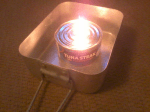
I am always a huge fan of ‘life hacks’ and clever survival tactics.  I came across this fantastic video and thought that it might very well be of great use to one of you…..if nothing else, you will score big at parties for demonstrating your MacGyver talents!You owe me one 😉


Go back

Your message has been sent

Warning
Warning
Warning
Email Me....

Warning

Warning.


Don't just take our word for it!

Don’t just take our word for it!


Leave a comment

Posted by on November 19, 2014 in do it yourself, Wawang Lake Resort


Tags: , , , , , , ,

Animal rights vs The right to hunt….who’s right?

Right to Hunt vs. Animal Rights: Legends of the Fall
A Daily Reckoning Special Position Paper
by Jim Amrhein

“The encouragement of a proper hunting spirit, a proper love of sport, instead of being incompatible with a love of nature and wild things, offers the best guaranty for their preservation.”

– U.S. President and Nobel Prize winner Theodore Roosevelt

I ONCE WROTE an essay in this forum that I’m still getting feedback about. It dealt with the touchy subject of animal rights (or rather, the lack thereof). In the closing paragraph of that piece, I promised to expose the animal rights crowds for the hypocrites they are at a later date — and to demonstrate that the best friend any wild animal ever had is the hunter who exercises his or her personal freedom to stalk the woods, mountains, meadows, or marshes with gun or bow in hand….

P1040006

Right to Hunt vs. Animal Rights: Hunting for Reason — and Respect

And now that it’s the crisp and colorful fall, and time once again for those who are so inclined to hang some healthy wild game on the ol’ meat hook, it’s time for me to make good on that promise. I’ll also offer a “sacrificial lamb” to some critics who claim some of my columns have little financial component to them. To those folks, I say this: What you’re about to read should slake your thirst for numbers. But as you read, I urge you to keep in mind my larger point — that there’s a negative fiscal impact whenever personal freedoms are compromised.

Here’s a fact the animal rights crowd doesn’t like to hear, or to admit:

There wouldn’t be nearly as many (if any) vast tracts of publicly owned land to hike, bike, bird-watch, dog-walk, horseback ride, or generally gambol around on if regulated hunting did not exist. Funds generated by license fees and federal excise taxes on outdoor gear pay for these lands by an overwhelming margin. In fact, these monies dwarf all other sources combined — including the nearly nonexistent contributions of animal rights organizations (more on this in a minute). That means outdoor sportsmen are overwhelmingly the largest source of conservation funding in the United States….

Right to Hunt vs. Animal Rights: “Hunter-Vationists” Are Paying for Everyone’s Party

Here are the numbers, according to the U.S. Fish and Wildlife Service, the International Association of Fish and Wildlife Agencies, and other public sources:

** $746 million — Annual amount of money spent by hunters in the United States on licenses and public land access fees alone. Sportsmen’s licensing revenues account for more than half of all funding for state natural resource agencies

** $300 million — Additional monies contributed to wildlife conservation every year by the more than 10,000 private hunting-advocate organizations, like the National Wild Turkey Federation, Ducks Unlimited, and the Rocky Mountain Elk Foundation

** $4.2 billion — Amount of money sportsmen have contributed to conservation through a 10% federal excise taxes on firearms, ammunition, and gear since the 1937 Pittman-Robertson Act established the tax. Millions of acres of public-use land has been purchased, preserved, and maintained with this money.

From an ecological point of view, here’s what all this translates into– The needs of wild animals — especially endangered and threatened species — are immeasurably better served by the millions of acres of well-maintained, patrolled habitat that hunters’ dollars are paying for than the lies and propaganda dished out by animal rights groups. In fact, their efforts are among the most destructive forces facing wildlife of all types today…

Why? Because if the animal rights crowd got its way and hunting were outlawed, there’d be no money for the preservation and expansion of the habitat that houses not only game species, but the endangered, threatened, and recovering species as well. Like it or not, and believe it or not, sportsmen’s dollars are in large part what has made possible the wildly successful re-establishment of the wild turkey, black bear, bison, elk, and the bald eagle. Yes, it was vast tracts of public, protected land and plenty of dollars for reintroduction efforts that made these miracles of conservation a reality — not to mention the 20-fold increase in the number of wild elk, the 133-fold increase in the wild turkey flock, and the roughly 70-fold increase in  the national whitetail deer herd over the last century.

If sport hunting and/or sport fishing were outlawed (animal rights groups are gunning for them both), many of these species would dwindle once again — because sooner or later, the government would no doubt pony up a lot of these lands for development. They’d have to; who else would pay for their upkeep and regulation? The animal rights crowd?

Uh, no.

imagesCA2JP2XV

Right to Hunt vs. Animal Rights: A-Hunting They Will Go — for Headlines and Hype

In case you’re wondering how much money animal rights groups devote to habitat preservation and the welfare of wild species, take a gander at PETA’s 2004 financials. Straight from its Web site, I discovered that PETA’s prodigious revenue of over $29 million bought:

** 2,700 media interviews

** 703 organized demonstrations

** Nearly 11,000 mentions in print

** Coverage on at least seven major TV networks

** 150,000 “vegetarian starter kits” disseminated to the public

** Enough “educational materials” for 235,000 teachers and 11,000,000 students…

But not a single acre of land for wildlife preservation — not even for endangered species!

Hmmm. Seems that PETA and friends just don’t realize that what critters of every stripe need more than billboards, picket lines, ad campaigns, and celebrity advocates are places to live and thrive. Without the immense revenue of hunting-related dollars, these lands simply would not exist. That’s a hard pill for them to swallow. And as if it isn’t bad enough that animal rights groups — for all their high-profile anti-hunting bluster — don’t seem to pay for ANY true wildlife conservation efforts, they also spend a good deal of their time and resources obfuscating the truth about where conservation money does come from. Case in point:

In a 2003 news release aimed at opposing the New York Bureau of Wildlife’s plans to promote hunting and trapping in publicly owned sections of the Catskill Mountains, the notoriously militant Fund for Animals (ironic name, since I could find no evidence that they spend any money on wildlife conservation, either), stated that: “Although [the Bureau of Wildlife] is financed by millions of dollars of the public’s tax money, the nonhunting public’s viewpoint is consistently ignored…”

Yet according to the New York Bureau of Wildlife’s own financials, its primary source of funding is hunting, fishing, and trapping license fees, public land usage fees, and fines for violations of fisheries and wildlife management policies. Less than 12% of its operating budget comes from state tax revenues. This is a similar ratio to other states’ natural resources agencies’ funding. In fact, nationwide, sportsmen’s dollars outpace tax dollars for conservation efforts by a ratio of 9-to-1!

Can you think of ANY other federal government program that divines only 10% of its budget from the general fund?

But what’s really mind-boggling about the whole shebang is this: Even if animal rights groups could match the $3 million a day American sportsmen contribute directly to wildlife conservation and protection through license fees, land usage fees, and excise taxes, it still wouldn’t even come close to justifying the outlawing of hunting from a dollars-and-sense perspective, personal freedom issues notwithstanding.

Right to Hunt vs. Animal Rights: Stalk Softly and Carry a Big Stack (of Cash)

We’ve established that sportsmen’s dollars are the engine driving wildlife conservation, habitat protection and expansion, and public use lands. But this really only scratches the surface of how important hunting is to the American way of life. A lot of people probably don’t realize exactly how vital sport hunting is to the U.S. economy (animal rights groups know it, they just don’t want YOU to). Here are just a few examples:

** $24.7 billion — Amount of money hunters spend every year on their sport at the retail level. This money reaches all retail segments, including hard goods, travel, gas, trips, food and drink, supplies, vehicles, leases, lodging, and guide services

** $955.4 million — Annual amount of sales and fuel tax revenue directly attributable to hunting in the U.S.

** 575,000 — Number of American jobs sustained entirely by hunting

** $16.7 billion — Total annual salaries and wages paid to those who hold hunting-related jobs in the U.S.

** $2.25 billion — Dollar amount of combined state and federal income tax revenue generated by hunted-related employment in the United States every year.

How do these numbers compare with other high-participation outdoor sports? For some perspective, compare hunting with another popular gear- and travel-intensive sport, skiing. According to the Census Bureau’s Statistics of U.S. Businesses and other sources, the skiing industry annually:

** Employs approximately 127,000 people (less than a quarter as many as hunting)

** Pays gross salaries of around $1 billion (about 6% of what hunting pays)

** Yields just over $500 million in ski equipment sales (hunters spend more than this on their DOGS).

See what I mean? Hunting is big business in the United States. So big that animal rights groups could never even come close to matching, dollar for dollar, the positive impact sportsmen have on America’s bottom line.

Success!

Success!

Right to Hunt vs. Animal Rights: Tyranny of the Majority Cuts Both Ways

Animal rights organizations are quick to sling the word “majority” around in making their case against the blood sports. They make the absurd leap that since the majority of Americans don’t hunt, that the will of the people is that hunting should be outlawed. Let’s examine this kind of logic for a second…

More Americans don’t ski than do hit the slopes every winter. More of us don’t own cats than do. Fewer Americans ride motorcycles than do, and more Americans have cell phones than don’t. Does this mean that skiing should be illegal, cat ownership abolished, motorcycles outlawed, and cell phones made mandatory?

Of course not. If the “majority rule” model applied to matters of personal freedom instead of solely to matters legislative and elective, NOTHING would be allowed, and no new technologies or activities would ever flourish or even take hold. Imagine how that would affect the economy. Beyond that, the whole point of personal freedoms is to be able to resist the tyranny of the majority if you’re so inclined.

And what’s really ironic is that if the majority in America really did wield the power in all things, animal rights organizations themselves would not be allowed. Far, far more people don’t belong to or support the goals of animal rights activists than do. But despite what PETA and friends say, the same cannot be said of hunting…

An independent polling organization (Roper and Starch) found in 2000 that 85% of American adults feel that hunting has a legitimate place in modern society. A full 62% agreed that hunters are the world’s leading conservationists.

And they’re right.

Right to Hunt vs. Animal Rights: The Talking Heads are out for Blood

What’s really lamentable to me is the fact that the left-leaning media have so skewed their portrayal of hunting that I feel compelled to write an article like this to defend it.

Seriously, do the media ever write or broadcast stories about the economic benefits of hunting or the billions of dollars hunters contribute to conservation efforts? PETA gets tens of thousands of mentions and plugs in the mainstream media — how many does the Rocky Mountain Elk Foundation or Ducks Unlimited get?

And how about the hundreds of tons of meat donated every year by hunters to the homeless and impoverished — do you hear about that on the evening news? Last season, in Virginia alone, over a third of a million pounds of lean, high-quality venison was given by hunters to those less fortunate. I wonder how many tons of vegetarian food the animal rights crowd gave to these same folks? I’ll bet not one ounce (if they had, it would have been front-page news)….

The bottom line is this: Like it or not, sport hunting is an incredible boon to American society on multiple levels. But even if it weren’t, every true American should be in support of it (thankfully, most are — not that you’d ever discover this from the meat-hating media). Why? Because it’s perhaps the most vivid example in our culture of the exercise of multiple personal freedoms: to carry a gun on public land, to kill within the law, and to consume meat without interference from the USDA or FDA. That’s awhole lot of freedom bundled up in one activity.

Bottom line: Whether you agree with hunting or not, you should support it on principle. After all, how would you feel if the government outlawed something YOU love to do because some PR-savvy fringe group managed to spread enough lies about it through an activist media to make you a minority in the public’s eye?

So the next time you see a hunter by the side of the road unloading his gear or loading up his kill, give him ahonk and a wave out of basic respect for exercising his freedom and paying for the out-of-doors areas we all enjoy. And if you’re an animal rights activist, pull over, park and give him a great big kiss, because he’s doing more to help animals than you ever will.

Better yet, buy a gun, some gear, a truck, and a hunting license and start really contributing to animal welfare — and your economy….

Always hunting for the endangered species of reason and fairness,

Jim Amrhein

hunters


Go back

Your message has been sent

Warning
Warning
Warning
Email Me....

Warning

Warning.

 
Leave a comment

Posted by on November 17, 2014 in black bear, moose, Wawang Lake Resort


Tags: , , , , , , , , ,

Quartering your moose for transport (with video)

Quartering your moose for transport (with video)


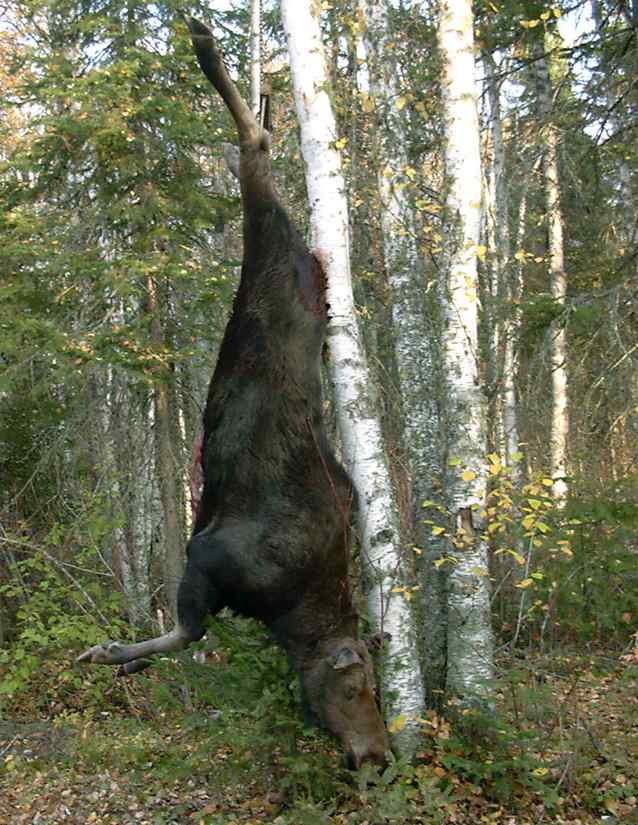
Here is a fantastic how to video for quartering a moose for transport.  It isnt unusual to have a moose down where removing it with this method is mandatory.  Great care must be taken of any wild game to ensure there is no spoilage and that no waste is had.

Enjoy!

If you are an Ontario resident and would like more information regarding our accommodations for the 2015 season, please feel free to contact us 🙂

moosehuntersjpg

 
Leave a comment

Posted by on November 15, 2014 in moose, Wawang Lake Resort


Tags: , , , , , , , ,

The importance of knowing your bowstrings!

Archers are very specific about the bow they use, the sites they mount and the release they settle on, but often overlooked is the actual bow string.  They are as vital to your performance as that of the arrow or even the bow itself.  But the question is, how do you select your bowstrings? And how do you know which ones to opt for? Having to answer these questions might become a bit of a challenge, but with some of these helpful guidelines it just might get easier for you.


1.THE 4 GENERAL THINGS YOU NEED TO LOOK FOR

The best kinds of bowstrings have four qualities you need to know about.

  • They are lightweight
  • They are strong
  • They are highly resistant to abrasion
  • They are moisture-resistant

 2.YOU HAVE TO KNOW WHAT MATERIAL YOUR BOWSTRINGS ARE MADE OF

Modern bowstrings are made of different kinds of synthetic fibers, and knowing what they are can be to your advantage.

  • Dacron: a polyester material that is strong, high-stretch and can last for years. But it’s an outmoded fiber, so wooden bows, older bows and recurve bows, are its best suit. A bowstring made out of Dacron is safe to use on any bow, but results will surely vary.
  •  Kevlar and Vectran: these fibers are made out of polymer. They have a limited-stretch so its arrow speed is faster than Dacron. Kevlar bowstrings, however, can only last for about 1000 shots, and they are known to break without warning.  These materials are not fit for modern compound bows.
  •  HMPE (High- modulus-polyethylene): this fiber is a blend of Spectra and Dyneema. It’s lightweight, faster than any of the materials aforementioned, strong, and long lasting. It is the perfect fit for high-performance recurve bows and modern compound bows.

 3.WHAT KIND OF WAX YOU SHOULD USE

Whether your bowstring is of superior quality or not, it will fray at one point or another. But if you wax it frequently, you can delay the time in which your bowstring wears out and is completely out of use. I can’t emphasis more on just how important it is to wax your bowstring.

But what kind of wax should you use? I have a couple of pointers here, but if you have more, then please do feel free to share it with us.


Beeswax: If you are using a traditional bowstring, which is made out of plant fibers and animal material, then you should opt for beeswax.


Silicone based wax:  Most modern bowstrings come pre-waxed, but no lubricant has ever lasted forever, right? So the second the string starts to feel dry, you have to give it a light coating.  Silicone based waxes are ideal for modern bowstrings; it penetrates the material and lubricates the interior as well as the surface of the string.

Some of the most commonly used and perhaps the best kinds of synthetic waxes are Dalton High-Speed Bow Wax Conditioner and Bohning Silicone Wax.

Remember, this may seem like a trivial detail but it could be the difference between success and an fruitless hunt!

Thank you Martin Douglas of Legendary Archery for the great information!


Leave a comment

Posted by on November 13, 2014 in archery, bow, how to, Wawang Lake Resort


Tags: , , , , ,

An adrenaline filled archery moose hunt!

Sometimes the thrill of the hunt gets escalated that much more!  This is one of the most adrenaline filled hunts we have seen in years.  This hunt was filmed in the Yukon and was executed with great skill…while we promote hunting, we suggest unless you have the skill necessary, do not try this out in the field 🙂

Are you an Ontario resident with a tag for 15A or 15B?  We have centrally located accommodations.  Book early to avoid disappointment!

moosehuntersjpg

Follow our FISHING BLOG

WEB   RATES     FISH    HUNT    CABINS    PHOTOS
TESTIMONIALS    BROCHURE    HUNT BOOKLET

Enter your email address to subscribe to this blog and receive notifications of new posts by email.

Go back

Your message has been sent

Warning
Warning
Warning
Email Me....

Warning

Warning.


Tags: , , , , , , , , ,

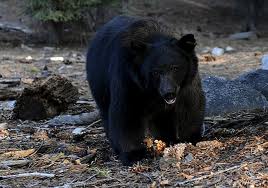
The fascinating cycles of bear hibernation

It’s that time, the bears are getting ready to den up for the winter.  While known, bear hibernation is not fully understood by many.  Hibernation preparation begins immediately when they awake in the spring.  There are five distinctive steps to this

During hibernation, the bear go through five different stages.

First Stage

The spring until midsummer or fall is the time when the bear are in their normal activity. If food and water are available, the bear will consume about 5,000 to 8,000 calories each day. If they are unable to consumer enough food and water during this time, they will be unable to successfully hibernate in the winter.imagesCA0ZA802

Second Stage

This stage is known as hyperphagia. During this stage, bear eat and drink excessively as they build up fat stores for hibernation. When food and water are plentiful, black bear have been know to eat as many as 15,000 to 20,000 calories a day. The need large amounts of water to process the food and flush nitrogenous waste from their bodies.

Third Stage

After they go through hyperphagia, it is time for their fall transition. During this time, their metabolic processes change as they prepare to hibernate. Their heart rate slows from the normal 80-100 beats per minute to about 50-60 beats per minute. During sleep, their rate is about 22 beats per minute. The normal beats of a sleeping bear are between 66-80 per minute. The bear continue to drink, but will start to eat less. As they prepare to hibernate, they can rest as much as 22 hours a day.


Fourth Stage

Hibernation begins. The bears’ breathing slows to about half of their normal rate. They take a breath only once every 45 seconds. Their heart rates slows even more. It can drop periodically to between eight and 21 beats per minute. They burn about 4,000 calories per day. They do not eat, drink, urinate or defecate during hibernation.


Fifth Stage

This stage is known as walking hibernation. During the first two to three weeks after the bear leave their hibernation den, their metabolic processes return to normal levels. During this time, they will continue to eat and drink less than they do in the summer months. Their bodily waste processes are also reduced. Once this time is past, the bears resume their normal summer activity.

Bear that are in hibernation can be hard to wake if they are disturbed. The bear that are in warmer climates may not be in as deep hibernation as bear in colder areas. Female bear often give birth in the den during the winter months. The mother bear tend to be in a lighter state of hibernation as they awaken to care for their young.

Should you stumble upon a hibernating bear, the best thing to do is to quietly leave the area.


Leave a comment

Posted by on November 9, 2014 in black bear, Wawang Lake Resort


Tags: , , , , , ,

Winter camping for beginners

Winter camping can mean different things to different people.  For some, it means renting a cabin heated by a wood stove. For oth­ers, it means pack­ing snow­mo­bile trail­ers to the brim. For the more adven­tur­ous, it means grab­bing a pack and haul­ing in all the neces­si­ties to a remote loca­tion. No mat­ter how you win­ter camp, the fol­low­ing tricks are useful.

WEAR A FIRE­PROOF SHELL
If you are going to build camp­fires, either for the sake of cook­ing, warmth, or morale, make sure that your outer layer of cloth­ing is less likely to end up ruined if struck by an errant ember.  Wool is one of the best, most fire-resistant nat­ural mate­ri­als and is great for this.  Down jack­ets are down­right (no pun intended) awful, and you can lose tons of feath­ers this way.

PACK THE SNOW
Before set­ting up your tent, pack down your camp­site. If you have skis or snow­shoes, that means tramp­ing around hard until all the snow is packed.  If you’re shod only in boots this will take some time, but if you don’t do this, you run the risk of step­ping into a soft bit of snow in your tent and tear­ing the floor.

PACK AN EXTRA HAT AND GLOVES
Always carry a spare hat and a set of mit­tens. No mat­ter how dili­gent you are, no mat­ter how reli­gious you are about using idiot strings and keeper cords, you will lose a hat, and you will lose a glove.  Keep a cheap spare, or be pre­pared for frost­bite or a fore­short­ened trip.

EMBRACE THE PEE BOT­TLE.
Being cold can cause you to want to uri­nate more fre­quently, and we all know how incon­ve­nient it is to dis­robe and undo your sleep­ing bag at 0 degrees F.  For women, I highly rec­om­mend look­ing into the var­i­ous acces­sories that allow you to pee whilst stand­ing, and for both gen­ders a WELL-MARKED pee bot­tle will keep you warm and sim­plify your nightly con­ti­nence. For the love of god, don’t con­fuse your water bottle—color is not enough, make sure your bot­tle is well-marked and maybe wrapped in some duct tape.

USE THOSE STAKES
If there is snow, you can stake out your tent.  You can always make dead­men out of sticks or fallen trees, stuff sacks full of snow, buried skis, snow­shoes, poles, ice axes, or what have you.  There is no excuse for a poorly staked-out tent.  If you expect no snow and frozen con­di­tions, plenty of com­pa­nies make hard tent stakes meant to push through frozen ground, either out of tita­nium, steel, or 7075-t6 aluminum.

BRING THE RIGHT SLEEP­ING PAD
As Bear Grylls says, two lay­ers on the bot­tom are worth one on the top.  That is, you lose more heat through con­duc­tive heat loss when sleep­ing than any­thing else, so win­ter is no time to skimp on your sleep­ing pad.  Make sure you have a pad with an r value of four or more, and if you have one, throw a closed-cell foam pad under­neath. If you feel like your pad isn’t cut­ting it, stuff extra cloth­ing under­neath you, and toss your down jacket on top of your sleep­ing bag.

BOIL THE SNOW
Leave your water fil­ter at home.  Chem­i­cal fil­ters take longer to work in the cold, and mechan­i­cal fil­ters can crack and fail. Your best bet for water fil­tra­tion is boil­ing your water, as you prob­a­bly have to melt snow any­way. Don’t be suck­ered into think­ing glacial melt or fresh snow is sterile–it isn’t. Snowflakes often form around small bits of dust (nucle­ation sites) which can be bac­te­ria or viruses float­ing in the upper atmosphere.

SLEEP WITH YOUR BOOTS
Use boots with remov­able lin­ers, so you can put those lin­ers at the bot­tom of your sleep­ing bag to keep them warm.  If you only have single-layer boots, put them in a water­proof stuff sack at the bot­tom of your sleep­ing bag.  Noth­ing means morn­ing hypother­mia more than frozen boots!

CAMP BY CAN­DLE­LIGHT
A can­dle lantern safely hung on the inside of your tent (far enough away from you and the ceil­ing so as not to be a fire haz­ard) does won­ders to both warm your tent and reduce con­den­sa­tion.  Despite this, a towel for scrap­ing off con­den­sa­tion is always welcome.

EMBRACE LITHIUM
Use lithium bat­ter­ies in all your win­ter elec­tron­ics.  Not only does lithium per­form con­sis­tently down to much colder tem­per­a­tures than alka­line or NiMh bat­ter­ies, but they are lighter, last three times as long, and have a flat decay curve.

WIPE WITH CARE 
In the sum­mer, comfy leaves or soft river stones abound, but in the win­ter they’re few and far-between. While many have picked up pinecones in des­per­a­tion, the best read­ily found alter­na­tive is just plain old snow. It’s effective, ubiquitous, and leaves behind lit­tle residue.  If you do bring TP, please either pack it out or burn it. The ground is too hard for catholes and for those who have hiked along the Appalachian Trail dur­ing the first spring thaw, a mound of TP gen­er­ally sig­ni­fies a poorly hid­den scat stash.

FIGHT CON­DEN­SA­TION WITH A VBL
If you’re out more than a week, use a VBL, or vapor-barrier-liner for your sleep­ing bag.  Con­den­sa­tion from your own body can freeze within the upper layer of your sleep­ing bag where the warm air meets the freez­ing air, and over time your sleep­ing bag can become frozen solid.  While they are not as com­fort­able to sleep in, it beats hit­ting your sleep­ing bag with a ham­mer every night like some polar explor­ers have had to do.

FLIP YOUR BAG
If it’s not snow­ing, turn your sleep­ing bag inside out on top of your tent to dry dur­ing the day.  This is a great rea­son to choose win­ter sleep­ing bags with a black interior–it absorbs more solar energy and dries out faster.

FLIP YOUR WATER
If you have a large water stor­age con­tainer, turn it upside-down when stor­ing it overnight.  Ice forms from the top down, so keep­ing the spout/opening of your con­tainer fac­ing down keeps it from get­ting frozen up. This can be com­bined with insu­lat­ing the con­tainer, of course.

VASE­LINE
Cover exposed skin in Vase­line or ani­mal fats. Inuit have been doing this for years–simply slather any exposed or poten­tially exposed skin on your face, ears, neck, wrists, or hands in a thick oil and they’ll be less prone to wind­burn and frostbite.

Stay warm!


Prefer traditional camping without snow?  Check us out!

2014_Brochure(307x400)


Tags: , , , ,

Want more grouse? Watch the thermometer drop!

Want more grouse?  Watch the thermometer drop!

P1040063Cold, blustery days in early winter are not the best days to go grouse hunting. Neither are, humid, September days. Essentially, the best time to go grouse hunting is when you can. And if that means dealing with the weather de jour- so be it. That doesn’t mean you can’t find some grouse, and even pocket a few, regardless of the weather.

Grouse like to stay cool in early fall when Indian summer days send the thermometer to summer-like temperatures. During those glorious fall days grouse will sleep in on their cozy roost and then venture out into a sunlit patch to soak up the warming October rays. November and December is a transitional period when cover becomes as much a priority as food. Staying warm and out of the wrath of heat-sapping winds and cold makes the places that grouse frequent during the late fall and early winter months predictable. Most times the mercury can give you a heads-up on which way to go.

Ruffed grouse seasons open in September in Ontario. Going hunting then is more a testament to tradition than it is to wanting to kill grouse. Foliage is thick, dense and green. But, if you insist on subjecting yourself to this kind of brutality you might as well give yourself the best chance at finding birds.

Look at the thermometer and you’ll realize that one of the best places to look for early season grouse is near rivers and streams. Waterways provide cool summer oases for grouse and you usually won’t find them far from the same habitat come early fall. During especially dry years, the moist soils found along rivers and streams may be one of the few places that you’re going to find the types of vegetation that produce the fruits and berries that grouse love so much.

Another reason early season grouse can be found along waterways is that the thick vegetation protects grouse broods from predators. Moist soils produce lush habitat that is ideal for protecting young grouse broods and the temperate environment produces a lot of high-protein invertebrates that are critical to young grouse growth and survival. Working along river bottoms and creek beds can be a good tactic because grouse broods can often be found in or close to their brood habitat.

Grouse are often still in broods or tight-knit family groups in September and October and can be concentrated and difficult to find. Perseverance can pay off. You might hunt several prime coverts without success and then bust several coveys in a short period of time. The trick is to keep at it. When you do run into some birds, you’ll usually find a bunch and chasing down singles after the flock is broken up can produce some quick shooting.

And quick shooting is what you can expect this time of year. Shooting grouse is never easy, but the task is made increasingly difficult when foliage is thick and catching even a glimpse of a bird is tricky. In the early season, you need to post, plan and resist the temptation to go in after them. It’s fruitless. If you have a dog, let them do the dirty work. Instead, look for openings, deer trails, clearings and post where you can get a shot if a bird flushes in your direction. Put a bell on your dog so your can keep track of his location at all times. Let one hunter bust the brush while the other walks a logging road where a flushing bird just might offer a shot. Don’t wait for an open shot. You’ll never get one! Instead, instinctively point and shoot even if you only catch a fleeting glimpse of the bird. Many times I never even knew I’d hit the bird until the dog came back with the grouse in its mouth. Be sure to keep in constant contact with your hunting party and know their location for safety sake and wear plenty of hunter’s orange.

Think wide open chokes and small shot during the early season. Grouse are not difficult birds to bring down, so put a lot of shot in the air and maybe just a pellet or two will get through the trees and hit its mark.

Weather and temperatures can be quite diverse in October. You might be rewarded with one of those cool, sunny, perfect fall days that grouse hunters live for. But don’t be surprised if you’re forced to pull out the woolies and gloves either. And you might even wake up to some fresh tracking snow. That’s just how October is- transitional- and it’s a transitional period for grouse too.

This slideshow requires JavaScript.


Grouse have a smorgasbord of items to choose from in October and finding their preferred food source is often critical to finding numbers of grouse. Ripening fall fruits can draw grouse from far and wide. Grouse favor edge cover, and it’s no coincidence that some of their favorite culinary delights do best on edges where sunlight can penetrate the forest canopy. Depending on which state you live in, grouse can usually be found keying in on edge cover fruits like wild grapes, chokecherry, and a host of other fruity edibles. These open areas also produce some of old ruff’s favorite greens like wild strawberry and clover and are also places where they can find high-protein items like grasshoppers, crickets, and other insects.

When grouse numbers are high, they can be found in variety of cover types at this time of year. Even marginal grouse habitat will hold a few birds as grouse begin dispersing into new territories during the fall shuffle.

Cover becomes an increasingly important priority as the month wears on. October begins with it plenty of foliage and grouse can move about uninhibited. By the end of the month, the trees are bare, the wind has a foreshadowing bite to it and grouse must rely on their camouflage and staying hidden as much as possible. Still, you’ll find grouse wandering about in search of brunch or a late afternoon snack and those are two of the best times to hunt grouse at this time of year.

Obviously a peak time in October is the first week or two after the leaves have fallen. When this happens might vary by a few weeks from region to region, but it is prime time to be in the woods. Grouse seem to forget for a little while that they are not as invisible as they were just a few days earlier and their numbers are at a seasonal peak. You can actually see some of the grouse that you flush too. 

At this time of year you can find grouse in some pretty unusual places far from what you’d consider ideal grouse cover. I’ve found grouse under a solitary crab apple tree in the middle of a field far from what you’d consider grouse cover. I’ve shot grouse out of fields of goldenrod that you’d think were more likely to hold pheasants. No patch of cover is too small or too thin to hold a grouse then.

Once snow blankets the ground the whole ballgame changes. Grouse that have survived the onslaught of hunters, wolves, owls and know that when their environment becomes covered in white they are vulnerable. Snow also covers up many of the grouse’s food sources and feeding becomes a little more risky and perilous. Grouse don’t go on those aimless strolls in search of food. Their search is more deliberate and of shorter duration when the thermometer starts to dip and the weather turns cold. Cover becomes more of a priority.

It’s important to ferret out productive versus non-productive cover as quickly as possible. I don’t know about you, but I’m not as young as I use to be. Those all-day jaunts of pounding the woods are over. I’m usually only good for about a half a day of hard hunting and I want to make the most of it. To do so requires that you develop a since for identifying the absolute best cover and hunt it hard. Learn to not waste time where you THINK there might be birds.

Remember those light loads and wide-open chokes you used in September? Put them away if you’re serious about killing grouse once the snow flies. Shots will be longer and birds will be tougher. Replace your 8’s and 9’s with high-brass 71/2’s or even 6’s. Take the skeet tubes out and go to improved or even a modified tube in one barrel. With your shooting eye in late season form you’ll still get the easy shots and with the heavier shot and tighter chokes you’ll be able to add a few birds you wouldn’t normally pocket.

Grouse are tough customers. That’s why most of us hunt them. But watching the thermometer you can get a better idea of where to begin your search and make your days in the woods a little more productive.

Join us in 2015 for a great hunt!

Check out our 24 pg. HUNT BOOKLET

Check out our 24 pg. HUNT BOOKLET


Leave a comment

Posted by on November 5, 2014 in grouse, hunting, Wawang Lake Resort


Tags: , , , , ,

Moose hunt 2014 in review

Moose hunt 2014 in review

So our 2014 moose hunt has come and gone again with fantastic results!  Due to reduced tag number across the province, we were concerned that the hunt would be sparse.  It couldn’t have been further from the truth.  This year we harvested 1 mature bull, 1 cow and a calf with 3 more bulls, 2 cows and 2 other calves spotted!  There was sign evident everywhere around us and made for excited hunters!johnmoose

With both new groups in camp and some here that are 14 year Wawang Veterans, each party worked together to help the overall success of each other as a whole.  As usual, the hunt was a complete community effort 🙂

We are proud to keep our tradition of excellence strong and look forward to 2015!

Cow_Moose_4 (3)


We have limited availability for 2015.  Reserve your spot early for great accommodations during your next moose hunt in 15A or 15B.

Moosehuntersjpg

Book Now


Leave a comment

Posted by on November 3, 2014 in moose, Wawang Lake Resort


Tags: , , , , , ,

Bear fight in New Jersey (video)

Bear fight in New Jersey (video)

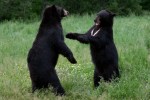
Over the years, hunting in some areas has decreased and urbanization has increased.  The controversy over animal population control continues to spin out of control.  Here is a video of a couple of bears that happened in to a New Jersey neighborhood and what came about after that encounter

Wildlife management and population control is our responsibility as we continue to reduce their habitat.  More animal deaths occur due to rapid urbanization and motor vehicles than recreational hunting and this is a sobering reminder that animals know no bounds and don’t feel the same sense of yours or mine that we do.

 
Leave a comment

Posted by on November 1, 2014 in black bear, Wawang Lake Resort


Tags: , , ,