RSS

Tag Archives: WMU 15A

Know your Rover, Know its Range

So those that know me best, know that I am an avid dog enthusiast that has traveled the globe showing dogs.  I am passionate about dogs that can do what they were bred for and still hold a working ability.  This is a fantastic article outlining some very valid points- Enjoy!
by  February 3rd, 2014

a chocolate lab, pointing

“Here, Penny. Come here, girl. Whoa. Now Whoa!” The panicked expletives started the minute I turned my brittany, Penny, loose to quarter the covert. The problem was, it wasn’t me shouting the commands. It was my hunting partner who had only hunted upland birds over his labs.

He didn’t understand that the range for a pointing dog was vastly different than that of a flushing dog, (but really shouldn’t have been commanding or cautioning my dog at all).

He was used to a very close working dog and thought that a wider ranging dog was going to bump birds before we got in position to shoot. What he didn’t know was that a pointing dog, unlike a flushing dog, will (or should) hold birds on point until the guns arrives for the flush.

Range is simply the distance a dog can effectively hunt from its master, and this will vary from dog to dog, breed to breed.

To my mind, range is simply the distance a dog can effectively hunt from its master, and this will vary from dog to dog, breed to breed.

A dog’s natural range is first dictated by genetics and then molded by handling and training in the field. Each breed has its own general parameters in which it works effectively.

Being mindful of the differences between breeds makes the potential owners more informed and more likely to be pleased with their hunting companion.

Point or Flush?
Flusher Retrievers
Flushing dogs, such as retrievers and spaniels, do as their name suggests.

Upon scenting game, they chase and ultimately flush birds. In order to be effective, these dogs must work within a distance of typical shotgun range (10 to 25 yards). If the dog pushes the envelope and starts popping birds up at 35 to 40 yards, the number of missed birds will increase.

The way to train a dog to handle within range is to make sure it’s successful at finding birds in range of the gun during training. Planted birds and solid basic obedience training will convince the dog that if it stays close enough to the shooter, a mouthful of feathers and a retrieve are the reward.

Pointers
Pointing dogs on the other hand can, and should, stretch out the field a bit more. As long as the dog is dependably holding birds until the gun-totting hunter arrives, it can be trusted to reach out a little more.

To ensure that a dog remains steady on point and doesn’t flush birds prematurely, never shoot birds that the dog bumps or flushes.

Soon enough the dog will understand that the only way he gets the reward of a mouthful of feathers is to remain still and hold the bird on the ground until the handler flushes the bird.

Best Breed Debate
The debate over which breed is best for a particular game bird has gone on for decades and will certainly continue. With that in mind, I suggest for the rough shooter who expects to shoot both upland and waterfowl on a given hunt, one of the flushing/retrieving breeds might be most appropriate choice, flushing/retrieving breeds might be most appropriate choice — a springer spaniel or Labrador, for example.

With training, these breeds work close to the gun and will also be happy to hunker down in a blind while waiting for waterfowl to pitch into the decoys.

If, on the other hand, you like to keep your boots dry and hunt upland birds exclusively, then pointing breeds are a better fit. Pointing dogs have a style and range that add a unique flavour to the hunt. True pointing breeds, such as setters or English pointers, are specialists — as are those who tend to own them.

For those who don’t want their dog to dictate the kind of game they pursue, there are always the dock-tailed Continental breeds, such as German shorthairs, Hungarian vizsla, pudlepointers and even brittanys. Pointing, tracking, and retrieving of upland birds, waterfowl, and furred game is all in a day’s work for these versatile breeds.

The distance your dog works from you is ultimately a matter of choice. Regardless of what breed you prefer orgame you hunt, it’s important that you recognize the skills your own dog brings to the field and allow it the room he needs to be effective.

← Back

Thank you for your response. ✨

Email Information regarding


Tags: , , , , , ,

Trip planning tips

So many people WANT to go on a hunting or fishing trip but find the task daunting and the thought overwhelming so they tend to avoid it….

Truly, if you know a few simple tricks, planning can be expedited and you could find yourself in a boat or tree stand much quicker than expected.

wawang lake, wawang lake resort

U. S. Passport Card

First and foremost, you do NOT need to purchase a passport.  For half the price ($55.00 adult, $40 child) this handy card lasts for a period of 10 years and allows ground transport between the US and Canada and Mexico. If you plan to fly, a passport will be required but most of us travel will plenty of hunting and fishing equipment so driving is much more common.

http://travel.state.gov/content/passports/english/passports/information/card.html

Also a note regarding those pesky DWI’s….if you have had one and it has been over 6 months, there is a good possibility you can still enter Canada!!  https://help.cbp.gov/app/answers/detail/a_id/402/~/entering-the-u.s.-and-canada-with-dui-offenses

Next, when choosing a trip, make a list of ‘must haves’ such as:  The resort MUST HAVE running water, indoor plumbing, somewhere to prepare food etc.  (We have that…shameless plug lol)

Next devise a budget.  Remember to calculate travel and food costs.  And also remember to find out if the cost is per person or an overall cost.  Always add an extra 15% to that number to ensure you have money for unexpected incidentals such as a flat tire etc.  Also, never forget to calculate the local taxes into the cost.

Once you have a targeted budget, begin your research.  Remember, most resorts do have varying rates depending on the season as well as various other specials during the year.

When utilizing specials, ensure that you understand the weather patterns and fishing patterns at that time of year.  Some places have a change over in ease of catching species or hunting migration patterns.  Make sure you ask about this so you aren’t disappointed.

Take us for example, in June our regular Housekeeping fishing rate is $625 per person but offer various discounts from July-Sept.  In July we offer 25% off for parents and children so the rate would drop to $468.75…quite a savings.  And for those of you who are paying attention, our lake is a closed off headwater, spring fed and our fish cant leave…they just tend to migrate from one part of the lake to another so fishing will only be affected by color, depth and presentation 🙂  Feel free to check us out http://wawangresort.com/HTML%20Pages/RATES/Fishing_Rates.pdf

Last and not least, get referrals!  There is nothing more disappointing that driving (or flying) all that way only to find it isnt what is what you were expecting.  Though no trip may be perfect, you should understand the basics of what to expect.  

Ensure that you also contact the lodge representatives with all questions and they should respond promptly, honestly and with as much information as possible…..remember, they should be looking forward to meeting you and be excited to share what they can provide for you.

Remember…this is YOUR vacation and it is within your control to make it the best possible!

← Back

Thank you for your response. ✨

Email Information regarding


Tags: , , , , ,

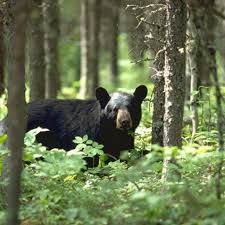
Field dressing a black bear

With the bear hunt just around the corner, we will cover the basics 🙂  Pictures have been withheld due to graphic nature.

Instructions

imagesFG3W4IGS 1. Clear an area surrounding the black bear. Make the area large enough to allow room to move around and roll the animal away from the entrails. The lowest part of the ground should be reserved for the entrails. Move the bear onto its back. Spread the rear legs and either have your partners hold them apart or secure them with ropes. Repeat with the front legs.

  1.  2. Insert one of your knives in the cavity at the base of the bear’s throat. Cut the blood vessels with a deep, crosswise motion to open the jugular vein and bleed the animal. Move the bear so the blood will flow away from it and clear the ground as needed.
  2. Cut the skin in a straight line from the breastbone — located just below the rib cage — to the base of the bear’s jaw. Cut the muscles along this area to the bone to expose the throat and windpipe. From the same starting point, cut the skin in a straight line down to the anus. Some areas require hunters to leave the genitals for sex identification; cut around the genitals slightly to preserve them.
  3. Split the breastbone.  This can be done with a bone saw, hack saw or a couple of axes.  If you choose to use axes, hold one axe against the breastbone and hammer it with the other axe; this will break the bone from the base of the rib cage up to and through the top ribs. Open the chest by pulling the front legs apart. Cut the windpipe and gullet close to the head. Lay them in the chest cavity for later.
  4. Cut through the abdominal muscles; start at the base of the rib cage. Take care not to puncture the intestines, the stomach or the bladder; doing so could taint the meat. Sever the muscles down to the pelvic bone. Enlist your partners to hold open the bear so you can work more smoothly.
  5. Break the pelvic bone by using the same technique implemented the breastbone. Do not cut the urinary tract as it may contaminate the meat. Start on one side of the chest cavity and use your knife to cut the diaphragm from the chest wall. Start at the base of the ribs and slice as far back into the cavity as possible. Have your partners pull the organs to the side so you can see and cut more easily. Repeat the process on the other side of the black bear.
  6. Cut the intestines and rectum from the split pelvic bone to where the rectum meets the muscle tissue at the anus. Cut a circle in the skin at the base of the tail; cut 1 to 2 inches from the anus. Cut the muscles to the top of the pelvic bone to free the anus and rectum. Pull the lower intestine, rectum and anus away from the cavity and hold clear. You must not puncture or cut the urinary tract or intestines.
  7. Hold the parts, roll the black bear away and allow the intestines and stomach to spill onto the ground. Grab the windpipe to pull the lungs and heart out onto the ground. Cut any remaining diaphragm tissue to free the organs. Complete the field dressing by draining as much blood from the bear as possible and wiping the body cavity with cloth rags to clean. Do not use water. At this point your main concern becomes to cool the cavity and prepare for transport which can be done by propping the cavity open with a tree branch.

    IMG_6110 - Copy

    Proper field care will ensure less weight and trouble with removal and transportation from the hunt site.

     For more information on black bear hunting, visit us at http://www.wawangresort.com

    Follow our FISHING BLOG

    WEB   RATES     FISH    HUNT    CABINS    PHOTOS
    TESTIMONIALS    BROCHURE    HUNT BOOKLET

    Enter your email address to subscribe to this blog and receive notifications of new posts by email.

    ← Back

    Thank you for your response. ✨

    Email Me....


Tags: , , , , , , ,

Moose burgers….amazing! Enough said!

One of our favorite summer foods, moose hamburgers!
When having a gathering of friends on the weekend, you could cook up barbequed burgers for everybody. I don’t know about you and your friends but a friendly gathering around the BBQ and campfire is something we love to do. We are fortunate to live in the country away from the city core so on occasion our gatherings will include a campfire. Sitting around the fire is a great way to relax and get caught up with the goings on with your friends… Don’t you think?

Everyone loves Summer Barbeques, and Moose Hamburgers on the grill are no exception so we thought we would share how to cook moose hamburgers. We added a Pasta and Potato Salad and were set.

bigmooseburger

How to Make Moose Burgers

Ingredients (makes 16 patties):

  • Moose Mince (3 pounds)
  • 6 Cloves Garlic – pressed
  • 3 Eggs
  • 1/2 Cup Bread Crumbs
  • 1/2 Cup Bread Crust Crumbs
  • 3/4 cup Barbeque Sauce
  • 1 Tsp Salt
  • 1/2 Tsp Fresh Ground Pepper
  • 1/2 Cup Hot Chilli Sauce (just enough for flavor not enough to offend anyone)

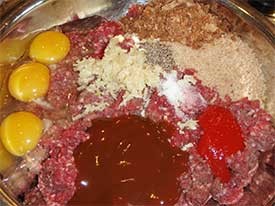
mooseburger mix

Directions:

  1. Pre-heat Barbeque
  2. Combine all ingredients in large bowl
  3. Thoroughly mix
  4. Make patties by taking about 3/4 cup of moose meat mixture and flatten. Place on a piece of wax paper for ease of removal. Continue until all moose meat has been used.
  5. Cook you patties until the moose meat juice starts to pool on the surface of the patties. Turn the patties over and complete the cooking process. Follow the chart below for recommend temperatures for cooking moose meat hamburgers.

We like to put all of our patties on a large tray and then place them in the freezer until I am ready to use them. It doesn’t matter if they freeze, if all the time you have is for them to get a little stiff… that’s OK. It helps to keep the patties together while cooking.

If you don’t use all your patties at once place a piece of waxed paper between each one and then let them freeze for future use. For longer storage, once frozen we put our moose hamburger patties into freezer bags for easy access. If you want to grind your own moose meat get a quality grinder to do the job. Any leftover meat from the previous year can easily be ground.

Hint: Moose Meatloaf Recipe

You can always take the same mixture from the moose hamburgers and place it into a loaf pan… voila… easy moose meatloaf!

Add your favourite dressings and voila you have the makings for a perfect meal!

We added leaf lettuce, sliced tomatoes, sauteed mushrooms, sauteed onion, mozzarella cheese and our own special sauce.
Special Sauce

  • Mayonnaise
  • Hamburger Relish
  • Ketchup

Mix equal portions of mayonnaise and hamburger relish, add about one quarter of your mixture in ketchup. Example: 1/2 cup mayo, 1/2 cup relish, 1/4 cup ketchup. Internal Temperature for Cooked Moose Meat

  • Internal temperature of 125-135 = Rare
  • Internal temperature of 135-140 = Medium Rare
  • Internal temperature of 145-150 = Medium
  • Internal temperature of 160 = Well Done
  • Internal temperature of above 170 = Don’t Bother… Hahahaha!

Nutritional value of Moose Meat

Moose meat is naturally low in fat, and because it comes from the wild it contains no harmful chemicals or hormones. Moose meat is so low in fat that you often have to add some to prevent it from being dry. When we process our moose meat we do not add any fat to our mince, choosing instead to add fat when cooking as needed.

Enjoy

← Back

Thank you for your response. ✨

Email Information regarding

 
Leave a comment

Posted by on January 31, 2014 in moose, recipe, Wawang Lake Resort


Tags: , , , , ,

You know…no big deal…just a SHARK EATING A MOOSE!!!!

Every once in a while (all the time lol) a hunter’s powers and prowess are upstaged by the miracle of Mother Nature………

Screen shot 2013-11-22 at 12.52.02 PM

In a bittersweet rescue, two Newfoundlanders spared a Greenland shark from choking on a symbol of Canadiana.

While gnawing on a piece of moose meat, the shark bit off more than it could chew and got the chunk lodged in its throat, while the tide pulled it in to shore.

Enter Derrick Chaulk, who acted quickly when he saw what he guessed was a beached whale from his car on the northeast coast of Newfoundland.

Upon closer inspection, it was a shark about 2.5 meters long, that was still conscious though choking on a huge piece of moose hide on shore.

Another local, Jeremy Ball, arrived on the scene and began pulling the two-foot-long chunk of moose hide from the shark’s mouth. Once he was successful, the pair began working on getting the shark back out into the water.

Ball tied a knot around the shark’s tail then pulled the rope while Chaulk pushed the shark’s head off shore with his foot. Eventually, they were able to haul the 115-kilogram shark into water about 30 centimetres deep.

The shark laid there for a few minutes, says Chaulk, “Then all of a sudden, the water started coming out of his gills and he started breathing.”

At this point, the shark waded in the water for about 30 minutes, recuperating.

A small crowd had gathered to see if the shark would swim back out into the deeper water.

“There was a few people up on the bank watching and once that shark swam out and lifted his tail, and then swam all the way out, everybody just clapped,” says Chaulk.

“It was a good feeling to see that shark swim out, knowing that you saved his life.”

While moose are a national symbol and a common sight in Newfoundland, Greenland sharks are rarely found on Newfoundland’s northeast coast.

They generally feed on fish in shallow waters, but in some cases they’ll nab polar bears and reindeer when they’ve ventured into the water.

Chaulk suspects the moose may have entered the harbour as discarded scraps from hunters.


← Back

Thank you for your response. ✨

Email Information regarding

 
1 Comment

Posted by on December 29, 2013 in moose, news, Wawang Lake Resort


Tags: , , , , , ,

Choosing the Right Caliber

Here is a great (and funny) chart I found made up by hunter-ed.com that illustrates how to select the proper caliber for your hunt 🙂

How to Choose the Right Caliber

← Back

Thank you for your response. ✨

Email Information regarding

 
Leave a comment

Posted by on December 27, 2013 in firearm, hunting, Wawang Lake Resort


Tags: , , , , , , , ,

Quick tips for hunter safety

While reading some great hunting articles last night, I came across a very overlooked topic.  This is an article written by Tyrrell Hearn and is a great quick snippet on basic hunter safety tricks!

climbing treestand

Over the years we have all heard of hunting accidents and how bad they can be. Hunting safety should be paramount in the mind on any hunter, especially those using high-powered rifles. It goes without saying that guns are designed to take life quickly and effectively, making it imperative that you treat them as such. If you are a hunter, here are a couple tips to keep you safe this season.

IMG_5703 (640x495)

Blind placement– Keep in mind that there are people around you who may also be hunting in the mornings and evenings. Be mindful of other known hunting groups in your area. Having a chat with them about the direction of their firing lanes so everyone is up to date on their neighbor’s new hunting spots is a great way to stay safe.

Less powerful bullets– It is always a draw to buy the highest grain bullet for your guns, however, higher grain equals a faster and longer bullet trajectory. Pick something a little smaller but effective for the game you are targeting.

Aviary Photo_130254763368957516

Hollow points– Buy hollow point bullets. Full Metal Jacketed bullets are not legal to hunt with in most areas anyway. Hollow or soft tipped bullets will break up even if they are only hitting brush and small trees. Lessening your chance of a bullet traveling way past your target.

P1040004

Safety orange– Wear your safety gear so that even at a distance, the most novice of hunter will not mistake you for an animal.

Stay safe, think ahead, and have a great hunting season!

← Back

Thank you for your response. ✨

Email Information regarding

Do you like what you see? Join us on our<a title=”Fishing Blog ” href=”wawangresort.wordpress.com”> Fishing Blog</a> for more up to the minute action, tips and tactics!!

 
1 Comment

Posted by on November 19, 2013 in archery, black bear, grouse, moose, Wawang Lake Resort


Tags: , , , , , , , , ,

In A Rut: Late Season Moose Tactics

We don’t often hear about hunting moose in the late season. An undeniable romance focuses on calling and attracting bulls during the peak of the rut; but what about when all that hormone-driven activity subsides? Where do the moose go and what do they do? More to the point, how do we hunt them in the late season?

For much of the year, bulls are reclusive by nature. They do their own thing, eating, sleeping, and moving on their own. As the rut approaches and peaks, physical antler-on-antler confrontations take place but as breeding winds down, their short-lived aggression fades back to a more docile demeanor. But as the rut concludes and moose are forced into winter survival patterns, bulls become more social, often opting to hang out in bachelor groups. At this time their focus turns to maintaining the necessities in life; eating, sleeping, and conserving energy. For the late season moose hunter who understands these dynamics, hunting can be straightforward. For those better acquainted with rutting bulls, the late season can be both uneventful and frustrating.


Seldom do you see bulls hanging out with cows in the late season.
More often than not, bulls will begin bunching up in small bachelor groups.

Use Vocalizations
While there was no need to communicate with the bulls, you will experience several more encounters during late season hunt when calling is used effectively. Bottom line – don’t be shy about calling, even in the late season. After the rut, formerly reclusive bulls will often group up as the weather turns cold and winter conditions set in. While seeing individual bulls is normal throughout the warm summer months and most of the fall, their social demeanor changes once breeding activity is finished. Vocalizations are common, even in November and December, as moose communicate with one another.

For late season moose hunters, this presents an outstanding opportunity. On several occasions I’ve been told experimenting with cow calls while hunting late season bulls they respond favorably.

Focus on Food

Just as it is a priority for other ungulates, food is always a priority, but during the late season, it’s at the top of the list. This usually means shifting to habitat areas offering the best food sources. While moose have a home range, they will shift within that range throughout the year based on their needs, i.e. to breed, or to find thermal cover and nutrient-rich foods.

During the warm-weather months when wetlands offer a smorgasbord of marsh plants, food is plentiful. At this time food is abundant and life is good. When sub-zero temperatures freeze these wetlands and snowfall covers an assortment of grasses, moose turn to the most accessible food, and that means bark, willows, and poplar saplings. With this in mind, willow flats surrounding frozen marshlands can be an ideal place to look for moose in the late season.

Consider the Cover
Cold, wind, and snow; these are often the conditions of late season. Just like you and I, they don’t like inclement weather. In defense, late season moose may take refuge in hills, valleys, or on leeward facing slopes. They’ll seek cover near food. This can mean different things in different types of habitat. In many areas thermal cover such as old-growth mixed forest is a first choice. In the absence of coniferous trees, alternative cover like thick willow clumps will be a top choice. Rarely will a moose hang around in open areas when the temperature and conditions are inhospitable.

Use the Snow
Found in every Canadian province except Prince Edward Island, moose are also thriving in many northern states like Alaska, Idaho, Montana, Wyoming, Colorado, Utah, Minnesota, Maine, Vermont and New Hampshire – all places that get snow, and sometimes lots of it. It doesn’t matter if you’re hunting in the foothills, mountains, rolling aspen parkland, or boreal forest, more often than not the common denominator with hunting late season moose is colder weather and eventually snow. And with snow comes the added bonus of tracking. Locate a fresh track and, particularly in soft snow, you’ve got an exceptional chance of walking a bull down. If you find a fresh track, get on it, and slowly follow keeping a keen eye looking ahead. Chances are within a short distance you’ll catch up with him.


Rut sign like this rub confirm that moose live in the area.

Follow these tips and that daunting late season hunt will be a breeze!!  Don’t put down your weapon as soon as the snow flies…embrace it as another opportunity

Follow our FISHING BLOG

WEB   RATES     FISH    HUNT    CABINS    PHOTOS
TESTIMONIALS    BROCHURE    HUNT BOOKLET

Enter your email address to subscribe to this blog and receive notifications of new posts by email.

← Back

Thank you for your response. ✨

Email Me....


Tags: , , , , , , , , , ,

Hearty Moose Chili

Hearty Moose Chlli Con Carne… an old time family favourite.

Served with fresh (your choice) Bread, Hearty Moose Chilli Con Carne makes a satisfying meal. An easy to prepare recipe, which can be frozen for latter.

This is one of those super easy recipes that a child could make. Assign one of the kids to make this when they get home from school so it will be ready in time for dinner.

I will often make a large batch of Moose Chili Con Carne (frozen) to take along when we go moose hunting; just heat and serve. Your hunting partners will appreciate the meal, and it does seem to be somewhat appropriate to be eating moose meat while hunting moose!

moose chili2

Moose Chili Con Carne:

Ingredients:

  • 1 pound Moose Mince
  • 6 Cloves garlic (There’s no such thing as too much Garlic )
  • 1 large onion, quartered and sliced
  • 28 ounce (796ml) can of diced tomatoes
  • 28 ounce (796ml) can of tomato sauce
  • 1 small can tomato paste
  • 14 ounce (398ml) Red Kidney Beans
  • 14 ounce (398ml) Baked Beans
  • 1 chopped green bell pepper
  • 2 tablespoons chili powder
  • salt to taste
  • 2 Tablespoons Olive Oil
  • 1/2 teaspoon ground red chilies (more or less to suit)
  • 1 tablespoon sugar
  • 1/2 cup Good Red Wine

Directions:

  • In a skillet heat Olive oil and cook onion and garlic until soft.
  • Add meat and brown.
  • Add remaining ingredients.
  • Simmer until fully cooked.

moose chili

One little secret we have found is the first day, or should I say the day you cook the chili, it tends to be a little runny. After refrigeration though it thickens up quite nicely and will serve well on toast.

Serve Moose Chili Con Carne with Fresh Bread


Enjoy

← Back

Thank you for your response. ✨

Email Information regarding

Do you like what you see? Join us on our<a title=”Fishing Blog ” href=”wawangresort.wordpress.com”> Fishing Blog</a> for more up to the minute action, tips and tactics!!

 
1 Comment

Posted by on November 11, 2013 in moose, Wawang Lake Resort


Tags: , , , , , , ,

2014 Ontario Resident Moose Hunt

Are you planning to put in for a tag in the moose dense 15A or 15B?

Are you sick of setting up a stake camp and coming back each night cold and damp only to have to set up a fire and wait to cook and warm up?

Why not stay in clean, warm cottages with heat, hot and cold running water, indoor plumbing and kitchens?

 Moosehuntersjpg

← Back

Thank you for your response. ✨

Email Information regarding

Do you like what you see? Join us on our<a title=”Fishing Blog ” href=”wawangresort.wordpress.com”> Fishing Blog</a> for more up to the minute action, tips and tactics!!


Leave a comment

Posted by on November 9, 2013 in hunting, moose, Wawang Lake Resort


Tags: , , , , , , , , , ,