RSS

Tag Archives: WMU 15A

Your Success Is Our Goal – Black Bear Hunters [with video]

Andy's 475 lb (dressed)

Andy’s 475lb (dressed)

Black  Bear  are  known  predators  and  Ontario  has  the  largest  population of black bear than anywhere in the world. Furthermore, north-western Ontario leads in the concentration of these animals than elsewhere in Ontario, and, rates highest in population concentration  for all of Ontario that also allows for bating practices.

Many deem baiting unfair, giving the hunter a considerable advantage. But contrary to what some would have us believe, it’s far from easy and holds no guarantees!  Bear can sneak in undetected, grab a morsel of food and disappear as fast as they arrived. Bear can also skulk around the bait for hours, never showing themselves. As experienced outfitters we’ve learned that many of our bear will move in cautiously to inspect the provisions. The advantage of hunting in the fall is bear are eager to fatten up for the winter.  The biggest advantage to baiting is that, if and when a bruin finally commits to the bait, it allows the hunter a  an opportunity to assess size, stature and time for shot placement.

About Bear
Black bear habitant range can span from two to 10 miles and resident populations often hold a variety of boars, sows and cubs, so it’s not uncommon to have multiple bears visiting the baited site.  Ontario only offers a FALL BEAR HUNT therefore the chance for the large TROPHY bear is increased dramatically.  Most hunters fear poor coats or hides due to the fall hunt but our area does not suffer that fate. With little to no burrs or ticks, our bear don’t succumb to ticks causing ‘rub’ or dry patchy fur.  We also are known for our high number of white chevrons (patches) to make your trophy even more unique. Black bear

Jon Hanson - Tiffin, IA 440 lb. black bear

Jon Hanson – Tiffin, IA 440 lb. black bear

Black bear have relatively poor eyesight, but outstanding hearing and acute sense of smell. Once they get a taste of your bait, and, as long as it is replenished regularly, they will be reluctant to leave the area.  In fact, once a site is established properly, you can and will see the same bruin day after day.

Location is Critical
Our bait stations have been established for many years (since 1972) and placed along the bear’s natural movement corridor. Heavily  timbered forests near cutovers and waterways often sustain good bear densities.  With berry crops like wild blueberries and raspberries nearby, black bear favor the accessibility and abundance of such forage and most often reside in the proximity.

Claw marks on deciduous trees and there may even be fresh markings, these lasting scars unveil a historical presence. Nomadic creatures, bear commonly travel traditional trails along waterways and natural movement corridors like valleys and ridges.  Finding fresh scat can instill further confidence that bear have frequented the bait.  Keep in mind that well established bait stations offer much more success than new stations since bear follow these game trails year after year.

 WEBSITE    RATES     FISH    HUNT    CABINS    PHOTOS
TESTIMONIALS    BROCHURE    HUNT BOOKLET

Enter your email address to subscribe to this blog and receive notifications of new posts by email.

← Back

Thank you for your response. ✨

Email Me....


Tags: , , , , , , , ,

Quick tips for hunter safety

climbing treestandWhile reading some great hunting articles last night, I came across a very overlooked topic.  This is an article written by Tyrrell Hearn and is a great quick snippet on basic hunter safety tricks!


Over the years we have all heard of hunting accidents and how bad they can be. Hunting safety should be paramount in the mind on any hunter, especially those using high-powered rifles. It goes without saying that guns are designed to take life quickly and effectively, making it imperative that you treat them as such. If you are a hunter, here are a couple tips to keep you safe this season.


Blind placement– Keep in mind that there are people around you who may also be hunting in the mornings and evenings. Be mindful of other known hunting groups in your area. Having a chat with them about the direction of their firing lanes so everyone is up to date on their neighbor’s new hunting spots is a great way to stay safe.IMG_5703 (640x495)

Less powerful bullets– It is always a draw to buy the highest grain bullet for your guns, however, higher grain equals a faster and longer bullet trajectory. Pick something a little smaller but effective for the game you are targeting.

Aviary Photo_130254763368957516

Hollow points– Buy hollow point bullets. Full Metal Jacketed bullets are not legal to hunt with in most areas anyway. Hollow or soft tipped bullets will break up even if they are only hitting brush and small trees. Lessening your chance of a bullet traveling way past your target.

P1040004

Safety orange– Wear your safety gear so that even at a distance, the most novice of hunter will not mistake you for an animal.

Stay safe, think ahead, and have a great hunting season!

Follow our FISHING BLOG

WEB   RATES     FISH    HUNT    CABINS    PHOTOS
TESTIMONIALS    BROCHURE    HUNT BOOKLET

Enter your email address to subscribe to this blog and receive notifications of new posts by email.

← Back

Thank you for your response. ✨

Email Me....


Tags: , , , , , , , , ,

Man Saves 375 lbs. Black Bear From Drowning

1

Rescuing a 375 lb. Male Black Bear

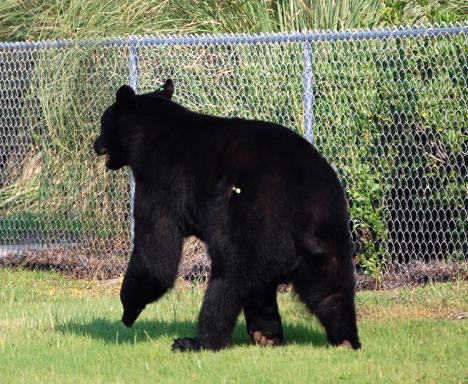
Florida Fish and Wildlife Conservation Commission biologist Adam Warwick just couldn’t let the bear drown, so he took off his shirt and dove after it. The 375 lbs black bear had been spotted in a residential area, obviously looking for food, and was shot with a tranquilizer dart. Unfortunately, before it went under, it jumped in the water of the Gulf of Mexico.

2

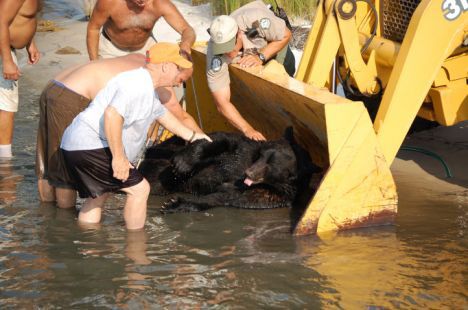
On this photo you can see the tranquilizer dart

3

After watching the dramatic rescue effort unfold, local resident Thad Brett brought his digger to the beachfront to carry the bear away.

Follow our FISHING BLOG

WEB   RATES     FISH    HUNT    CABINS    PHOTOS
TESTIMONIALS    BROCHURE    HUNT BOOKLET

Enter your email address to subscribe to this blog and receive notifications of new posts by email.

← Back

Thank you for your response. ✨

Email Me....


Tags: , , , , , , , ,

Nine Year Old Girl Shoots Grizzly Bear

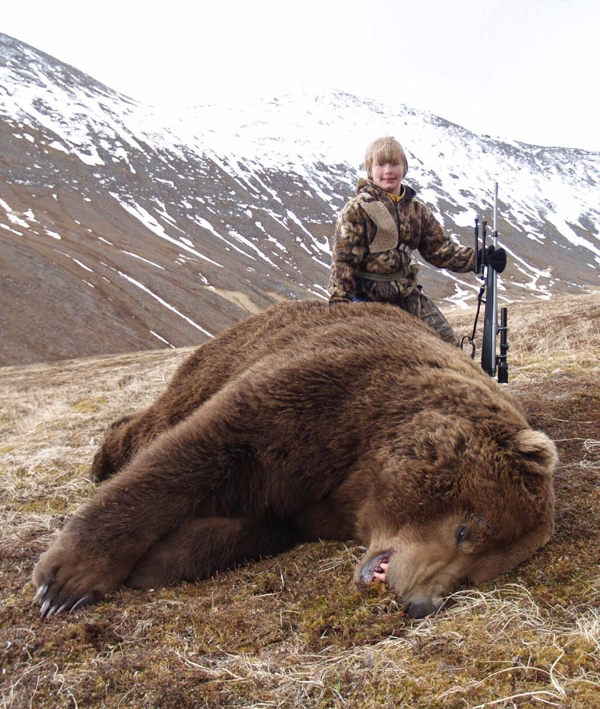
You may have heard a story of a little 9-year old girl that shot a World Record Alaskan Brown Bear (Grizzly Bear). Fern Spaulding Rivers did shoot a trophy Brown Bear but it was not a world record. It’s still a really interesting story.

Story from Bear Hunting Magazine is below

1
If the “biggest bear” is determined as a ratio of the size of the bear to the size of the hunter then Fern Spaulding-Rivers is probably setting records that will never be broken. The 10 year-old from Talkeetna, Alaska has already harvested great trophies of most of Alaska’s major game species, and she is a hand loading fanatic as well.

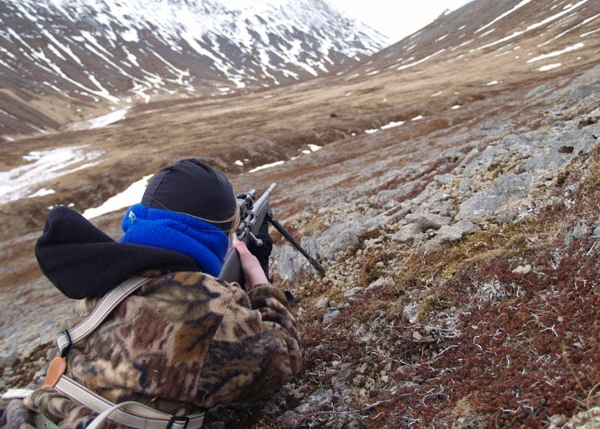
Fern’s larger caliber rifles have a muzzle brake and a recoil pad and she also wears a custom-made padded shooting vest from McCoy Shooting Armor to help her withstand big bore recoil. Fern was brown bear hunting on the Alaskan Peninsula with her father and mother on May 10th, 2006 (when she was 9 years old). She was carrying her Remington 700 Stainless chambered in .375 H&H and topped with a Zeiss Diavari Classic 1.5 – 4.5 x 18 scope. As the day progressed she and her father saw 11 bears. At one point, they were charged by a wolf, and they had to dispatch it at only 8 paces! Later, they spotted a big bruin in a gully at 32 yards.

2

With all the excitement of the day beginning to show, Fern asked Larry to hold her legs steady while she shot because her knees were shaking. Fern rolled the bear with her first shot, but the bruin regained it’s footing and tore off across the tundra. Shooting again from a prone position, Fern dropped the behemoth for good with a second 270 grain Barnes Triple-shock at 112 yards. The United States Fish and Wildlife Service measured the bear’s hide at 11’4″ from nose to tail. The skull has been officially scored at 29 1/16″ Boone and Crockett. What does Fern think of bear hunting? “Do you know how big an 11′ bear looks at 30 yards? It’s really kind of scary! They are about the size of a Volkswagen bus and when they swing their head to look your way they remind you of a T-Rex in Jurassic Park!”

3

Her trophy brown bear now puts her in an elite class. Fern is a tremendous example to young hunters everywhere, and she is a great hunter regardless of her age.

WEBSITE    RATES     FISH    HUNT    CABINS    PHOTOS
TESTIMONIALS    BROCHURE    HUNT BOOKLET

Enter your email address to subscribe to this blog and receive notifications of new posts by email.

← Back

Thank you for your response. ✨

Email Me....


Tags: , , , , , , , , ,

Proper Field Care for Moose

IMG_6042

One of the most common questions of a first time moose hunter is “The moose is down, now what?”

First-time moose hunters need to know that handling the animal once it is killed will not be easy. But, with the appropriate equipment and a bit of knowledge, the job can go smoothly. If you are planning to have your moose butchered by a professional, it would be wise to check with him in advance about his preferences for handling moose.

Whatever you choose to do will depend a great deal on your means of getting the moose out of the woods and how you plan to transport it to camp or home. The “game taste” people often speak of is usually the result of poor handling more than anything else. With proper care, moose meat can be outstanding table fare.

The main cause of moose meat spoilage is heat. You can avoid this danger by field dressing your moose immediately. Allow the meat to cool rapidly by providing good air circulation. You should also take every precaution to keep your moose free of dirt, debris, blood and hair.

Cheesecloth or commercial game bags offer the best protection from dirt and flies and still allow necessary air circulation. A liberal application of black pepper will also help to discourage flies.

Field dressing should take place as soon after the kill as possible. Once the animal is dead, bacterial action can spoil the meat quickly. The chance of spoilage increases the longer you wait and the warmer the temperature. Bleeding your moose is unnecessary in most cases. Normally, the animal will bleed internally, and immediate field dressing will ensure adequate bleeding.

Field Dressing Your Moose
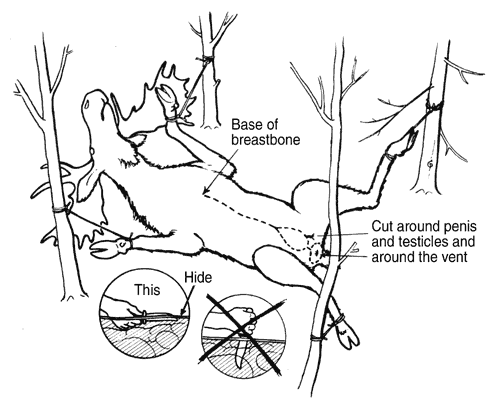
To begin field dressing, position the moose on its back with the head slightly uphill. It is helpful to tie the legs to nearby trees. Make an incision at the base of the breastbone with the tip of a sharp knife. Be careful not to cut the intestines or other internal organs. The contents can taint the meat. Continue the incision down the length of the belly to the anus. Cut through the skin and thin wall of the body cavity only. Face the blade of the knife upward, and away from the internal organs to avoid cutting them. Use the fingers of your free hand as a guide, but be careful not to cut yourself.


 mooseprep1

If the head is not to be mounted, you can continue this cut in the opposite direction to the base of the jaw, exposing the windpipe and esophagus. The windpipe and esophagus should now be severed as close to the head as possible. (Before doing so, tie a string tightly around the esophagus to prevent the stomach’s contents from spilling.) Using your bone saw, split the chest bone down the middle, exposing the contents of the chest cavity.

If you have shot a cow moose, the reproductive tract (ovaries and uterus) can now be removed; you also have the option of waiting until the bowel has been tied. Carefully roll the internal organs to the side until you see the point where two tubes (the rectum and the vagina) exit through the pelvic bone (see illustration). The vagina is the tube nearest the belly. Grasp this and follow it carefully forward until it forks into two tubes, which are the left and right horns of the uterus.

Once you have located the uterus, insert your fingers under it and work your hand in until the organ lays in the palm of your hand. You will notice a thin, almost transparent membrane which connects this organ to the animal’s back. All that now remains is to carefully follow the horns of the uterus to the ovaries. These are bean-shaped organs one to two inches in length. They may be covered with fat so keep looking! When you find them, cut the membranes holding them in place, remove ovaries, and place them in a plastic bag. The uterus can be removed by cutting through the vagina. The ovaries and the uterus should be kept as cool as possible.

Next, circle the anus with your knife, cutting deeply to free the lower bowel. Tie this off with a string to prevent droppings from coming in contact with the meat. Now cut through the flesh of the hams down to the pelvic bone and cut through the pelvic bone with the bone saw.

The internal organs can now be removed. Grasp the tied-off esophagus and trachea and pull them gently but firmly up and back towards the body of the moose. As you do so, have your sub-permitee cut these tissues away from the carcass. Continue this process into the chest cavity, pulling the heart and lungs up and back while cutting any attachments. Once the heart and lungs are freed, cut the diaphragm away from the body on all sides. Then continue firmly pulling on the esophagus and trachea and gently roll the stomach and intestines out of the body cavity, freeing them from all attaching tissues as you go. Once all the viscera is freed of the body, it is best to pull it away from your work space.

Warning!!
Because particularly high cadmium levels have been seen in some moose liver and kidney, it is recommended that you do not consume these organ meats at all.

mooseprep2

Quartering
Quartering is recommended for moose to make handling easier and to allow rapid cooling of the carcass. The hide may be left on each quarter to offer some protection from dirt and flies. If temperatures are above 50 degrees F, you should skin the carcass in the field.

To quarter the animal, you will need a sharp knife and a bone saw. A saw is best to avoid bone splinters and damaged meat.

Begin by removing the head. To do this, cut through the flesh of the neck with your knife. Saw through the vertebrae, and use your knife again to remove the head. Make your cut as close to the head as possible to avoid wasting many pounds of valuable meat.

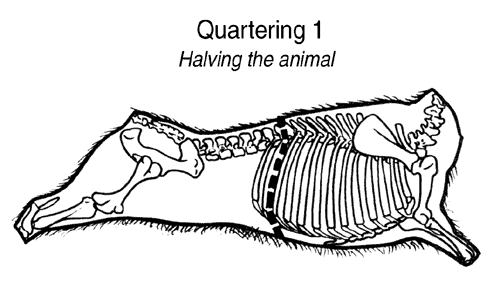
The next step will be to halve the animal. This is done by placing the back of your knife against the backbone between the second and third rib. Push the blade outward, completely through the flesh and hide. Cut upward using the ribs as a guide and do the same on the opposite side. You can now separate the halves by sawing through the backbone.

Quartering is accomplished by sawing straight down the backbone of each half. Underlying flesh or hide can be separated with your knife. The task of halving and quartering will be easier if the animal can be elevated on logs or sticks. Trim away any shot-damaged meat that could lead to premature spoilage.

Be sure to attach your tags before removing quarters from the place of kill. If the quarters can not be removed before darkness, try to hang them in a nearby tree or elevate them on logs to aid cooling. Cover them with boughs or meat socks and hang a marker nearby.
mooseprep3

Getting Your Moose Out Of the Woods
Getting the moose from the kill site to your vehicle or camp will probably be the toughest task you will face. If you’re fortunate, you may be able to drive close to the kill site, but many of the roads through moose hunting zones are private and may not be open to public use.

Another possibility is to locate someone with a skidder or work horses. The majority of hunters will end up packing their moose out of the woods instead of using a vehicle. To do this, you can tie the quarters to a pack frame or pack board or even suspend them from a long pole so the load can be shared. Try not to overexert yourself; the pieces will be heavy, and the going could be rough. It is a good idea to flag each quarter with a piece of blaze orange material to prevent accidents.

If the quarters are still too much to carry, the carcass can be cut into more pieces, but remember, the law requires the field-dressed carcass be delivered to a checking station for examination. Each individual piece must also be labeled with the name, address and hunting license number of the person who shot it.
It is important to get the quarters hung in a cool, shady place, preferably a meat cooler as soon as possible.

Transportation and Cooling
Always protect the carcass from dirt, heat and moisture. Transport the quarters out in the open if possible. The open back of a pickup works well. Elevate the quarters to keep cool and protect from dirt. If conditions are dusty or rainy, cover them loosely with a porous canvas tarp. Do not stack the quarters, allow them to touch or cover them with plastic. Plastic retains body heat and prevents cooling. If you transport in a covered truck or trailer, you should open windows and vents for proper air circulation.

Once back at camp or your home, hang each quarter from a cross pole of some type in a shady area with good air circulation. If you will have a long trip home, it is best to allow the meat to cool overnight before heading home. If this is not possible, consider traveling at night when temperatures are cooler.

If you are transporting your animal directly home, be cautious about hanging the meat in a garage or shed. Often these areas are not cool enough to allow proper cooling and aging of the carcass.

mooseprep4

Skinning
The quarters should be skinned immediately. If daytime temperatures are above 50 degrees and nighttime temperatures are above 40 degrees, you should remove the hide and over with cheesecloth. If the temperature is between 50 and 30 degrees, you can wait a few hours before skinning.

In skinning, work the hide away with the fingers, and peel it off while the quarters are hanging. Use a sharp knife to slice between the flesh and skin of the animal as it is pulled away. Be careful not to cut either one.

Whether you skin the quarters or not, you should cover each one with cheesecloth or a meat sock.

Aging and Butchering
Aging is intended to make the meat tender. This is best accomplished at a constant temperature of about 40 degrees. The temperature during aging must never exceed 50 degrees. For this reason, you will probably want the services of a professional butcher.

If you age your meat outdoors, three to five days is sufficient, but the period varies with temperature and size of the animal. Meat can be aged for as long as 21 days in a cooler.

If you will be handling the meat yourself, remove as much fat as possible before freezing. Removal of bones will save freezer space. Double-wrap and tightly seal all cuts of meat to prevent freezer burn. Meat should be frozen at zero degrees. Don’t try to freeze too much at once. Label and date all packages for future reference. If you don’t have the knowledge or time to process your own moose, then don’t risk ruining it; have it processed at a commercial facility.

Care Of Big Game Trophies
Proper field care of trophies is extremely important for good results in the final mount. If you intend to have the head of your moose mounted, you must take special precautions when skinning it out.

If the weather is warm, and you plan to have a head mount or a “fur on” rug made from the hide, you must remove the skin, salt flesh inside thoroughly, and roll it up flesh side in. Keep it in a cool place (never in a plastic bag) and get it to your taxidermist as soon as possible. Delay may cause “slipping” a condition in which the hair falls off the hide after the tanning process and ruins the hide for its intended use.

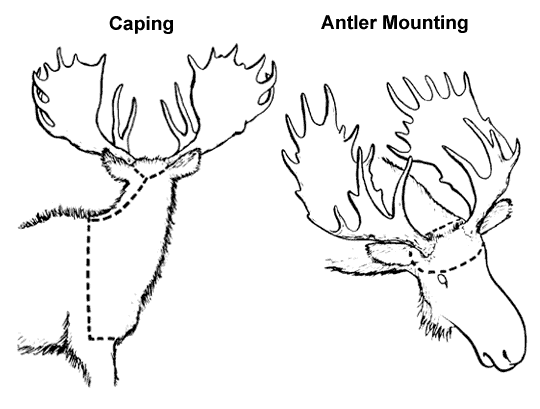
The taxidermist will need as much hide or “cape” to work with as possible. When field dressing, don’t cut any further up the underside than between the front legs. The diagram shows where the cuts should be made to skin the neck. Once the neck is skinned out, the head can be disjointed at the base of the skull and removed with the cape attached. Let the taxidermist skin out the head. He will want the measurements, and the skinning is included in the mounting charge. Remove as much flesh as you can, and salt the cape and all exposed flesh. The head and cape should be kept cool and delivered to the taxidermist as soon as possible.

If you keep only the antlers for mounting, be sure to leave a good portion of the skull attached. The best procedure is to check with your taxidermist in advance of your hunt for specific advice.

To care for the hide, remove all flesh and fat, then salt flesh side well. Moose hides spoil very rapidly in warm weather. You should deliver the hide to a taxidermist within 24 hours after the animal is skinned.

Fine table salt is best for use on hides. Capes will take about 30 pounds of salt. Flat skins will take 50 to 80 pounds. As a guide, figure on using half the weight of the skin in salt. About 24 hours after application, the salt will be wet and will have lost its efficiency — shake it off and re-salt.

Transport the hide rolled up, flesh side in.
mooseprep5

Follow our FISHING BLOG

WEB   RATES     FISH    HUNT    CABINS    PHOTOS
TESTIMONIALS    BROCHURE    HUNT BOOKLET

Enter your email address to subscribe to this blog and receive notifications of new posts by email.

← Back

Thank you for your response. ✨

Email Me....

 
1 Comment

Posted by on November 25, 2015 in moose, moose hunting, Wawang Lake Resort


Tags: , , , , , , ,

Bear Cub Gets Stuck in Window after Raiding Kitchen

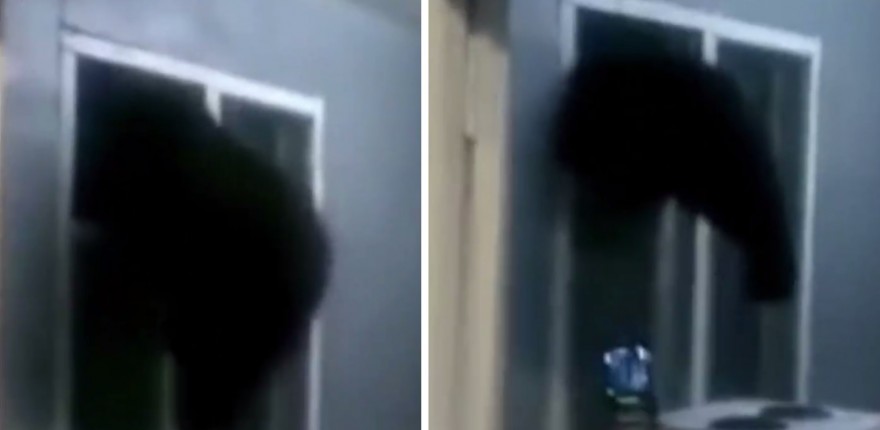
If there was ever a case of instant karma, it’s this. Bears are inquisitive creatures and are scavengers by nature, so it is not unexpected for the animals to occasionally break into homes in the search for food. This is especially true in Russia’s Far East, which holds a healthy population of brown bears. This bear still has not mastered the technique of escaping its victims’ homes gracefully.

bear

According to Ruptly, the bear broke into a house in Kamchatka this week and ransacked the home for foodstuffs. When homeowners returned, the startled cub tried to flee through an open window but quickly found that it was just a little bit too chubby to pass through. That might not have been the case if the bear didn’t devour almost everything in the kitchen.

Understandably, the homeowners were not too keen on helping it out.

Follow our FISHING BLOG

WEB   RATES     FISH    HUNT    CABINS    PHOTOS
TESTIMONIALS    BROCHURE    HUNT BOOKLET

Enter your email address to subscribe to this blog and receive notifications of new posts by email.

← Back

Thank you for your response. ✨

Email Me....


Tags: , , , ,

Prehistoric Deer That Make Modern Deer Look Tiny

If ancient hunters from the ice age were still alive today, they would probably be wondering what shrunk all the deer.

Deer come in all kinds of shapes and sizes, and for the most part, prehistoric deer look much like their modern equivalents (moose, whitetail, elk, caribou, musk deer, etc.). One thing that is different however, is the sheer size. In times past, massive deer with antlers that span the width of barns doors roamed across the land, coexisting with saber-toothed tigers and wholly mammoths.

The earliest deer actually came from diminutive animals (Archaeomeryx and Dicrocerus) and barely rose more than a few feet off the ground. Throw in a few million years of evolution though, and you get something much bigger. Here are five of the largest prehistoric species in the deer family.

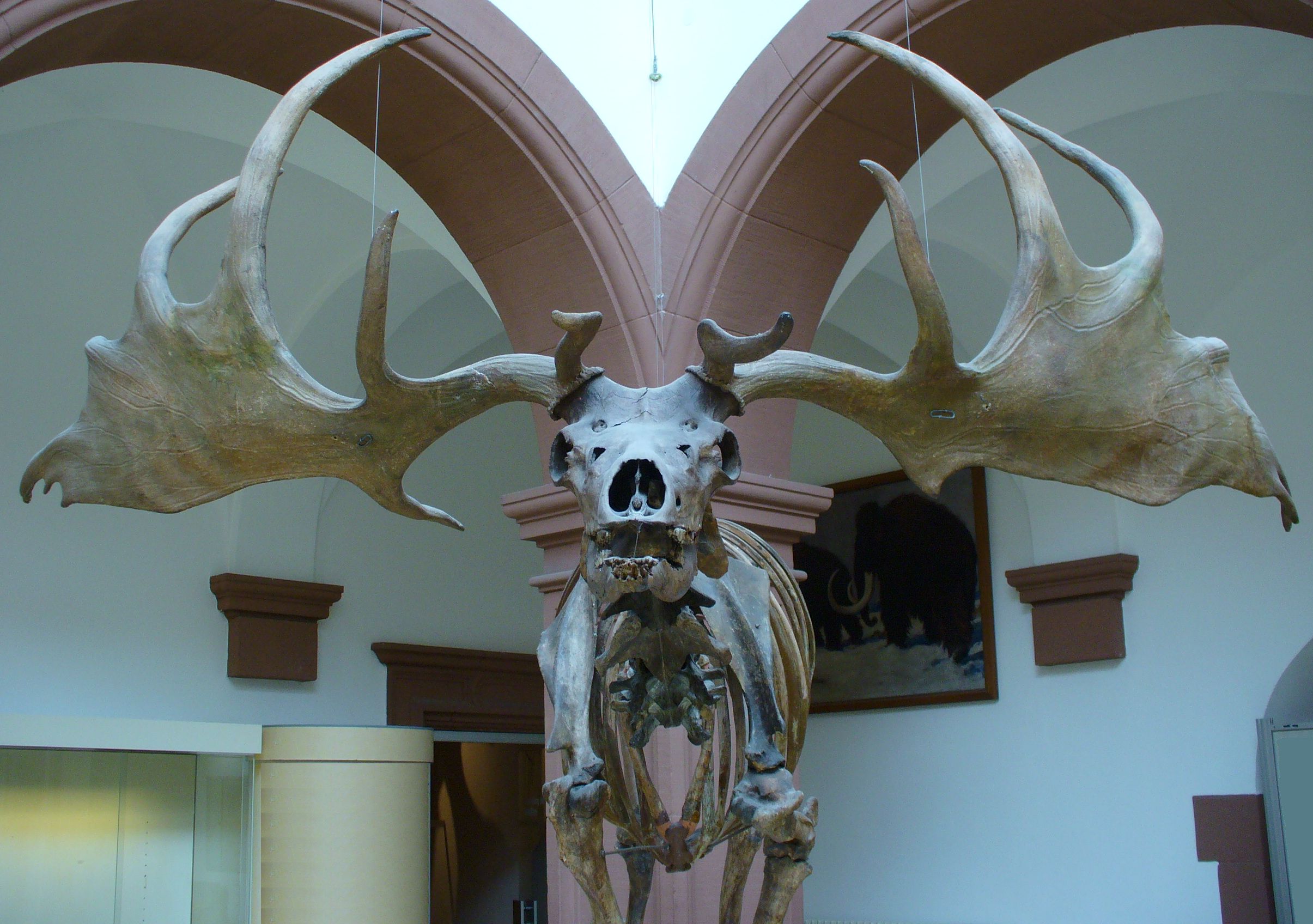
1. Irish elk (Megaloceros giganteus)

Image from I, Atirador on the Wikimedia Commons.

Image from I, Atirador on the Wikimedia Commons.

The Irish elk, commonly referred to as giant deer, is one of the largest deer species that ever lived. With well-preserved specimens being found in the peat bogs of Ireland, scientists estimated that these massive creatures stood about 7 feet tall at the shoulders on average, weighed well over 1,600 pounds, and carried the largest antlers of any known deer species. Just a full rack by itself could weigh up to 90 pounds. With all these characteristics, the Irish elk can be seen as a mega-sized version of the modern moose.

Irish elk first surfaced towards the end of the Pleistocene Epoch roughly 100,000 years ago. Specimens found in Siberia show that the species was still present as recent as 7,000 years ago, meaning it was likely a prime game animal for early human hunters. The species was found widely across Europe, Asia, and Africa and it is believed that hunting by humans may have have played a part in their decline. Believe it or not, scientists actually say their large and unwieldy antlers were most to blame for the elk’s eventual extinction.  A decrease in high-quality forage was unable to sustain massive deer with equally massive antlers, and some speculate that the deer failed to grow smaller to adjust.

You can get a sense of how big Irish elk were compared to humans in the video below:

Species of the Megaloceros genus are all honorable mentions on this list due to their size, and uniqueness of their antlers. Below is an artist’s depiction of them.

Image from Apokryltaros on the Wikimedia Commons.

Image from Apokryltaros on the Wikimedia Commons. From left to right are M. savini, M. cazioti, M. obscurus, M. pachyosteus, M. giganteus, and M. verticornis.

2. Stag-moose (Cervalces scotti)

Image from dantheman9758 on the Wikimedia Commons.

Image from dantheman9758 on the Wikimedia Commons.

Imagine a large modern moose with the head of a deer and you would have some picture of what the stag-moose looked like. This creature from the Pleistocene epoch lived alongside other megafauna such as giant beavers, woodland musk ox, and the dreaded dire wolf. Stag-moose can grow up to 1,500 pounds and reached 8 foot at the shoulder. Unfortunately, its large size did not help it any when the ice age ended, and competition between large-bodied animals lead to a mass extinction event in North America. Eventually, the stag-moose was replaced by the now iconic plains bison.

Experts say that the animal’s downfall may be due to its inability to adapt to warming temperatures. The stag-moose was hyper-adapted to ice and snow, with razor sharp hooves designed to break ice and a thick coat to survive frigid temperatures. Due to its large size, the stag-moose was more than capable of fighting of predators such as ancient brown bears, wolves, and the American cave lion. It is believed that the stag-moose was also a popular target for early human hunters.

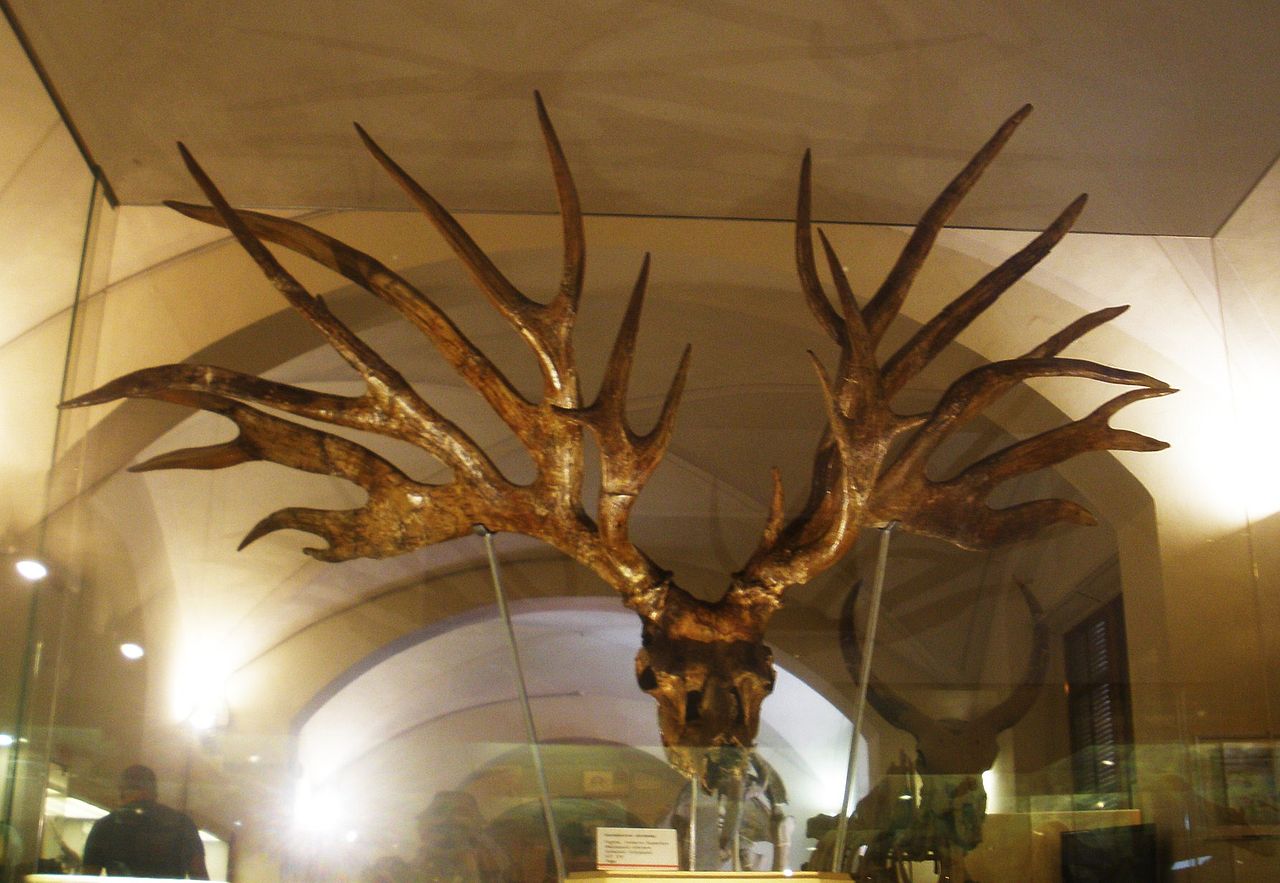
3. Bush-antlered deer (Eucladoceros dicaranios pictured)

Image from Ghedoghedo on the Wikimedia Commons.

Image from Ghedoghedo on the Wikimedia Commons.

These large deer may not be the heaviest on this list, but they certainly have some of the most interesting antlers. The Eucladoceros genus was nicknamed the “bush-antlered deer” because of the unique shape of their racks. Their comb-like antlers can split into twelve tines per pedicle and were up to six feet wide. It is believed that due to the shape of the antlers, they were used mostly for presentation than any actual fighting.

Species within the genus could be found across Europe and Asia and date back to the Early Pleistocene.

4. Broad-fronted moose (Cervalces latifrons)

Image from Ghedoghedo on the Wikimedia Commons.

Image from Ghedoghedo on the Wikimedia Commons.

This is it, the be-all, end-all of large deer. The broad-fronted moose is the largest deer to have ever existed—probably—and was so large, it weighed twice that of the Irish elk. If you’ve been keeping track, that puts this massive animal at well over 3,000 pounds! It was also surprisingly fast for its size since its long limbs allow for a gait known as “silt-locomotion,” which allows it to run quickly through snow or bogs.

The animal lived in the colder parts of Europe and Asia during the end of the Pleistocene epoch and eventually crossed over into North America where it evolved into the stag-moose. Experts are still uncertain whether ones that stayed in Europe eventually developed into modern moose, or died out entirely after the end of the ice age.

5. Broad-antlered deer (Libracles gallicus pictured)

Image from Stanton F. Fink on the Wikimedia Commons.

Image from Stanton F. Fink on the Wikimedia Commons.

One of the earliest deer on this list, the Libracles genus lived during the Pliocene period starting 2.5 million years ago. These deer was not especially large, but had the largest antlers proportional to their body size, rivaling that of the great Irish elk. Despite being only slightly large that modern deer, the species of the Libracles genus sport antlers over two meters wide. Not surprisingly, some scientists suspect that this genus is the early ancestor of the Meglaoceros.
By:  Daniel Xu

Follow our FISHING BLOG

WEB   RATES     FISH    HUNT    CABINS    PHOTOS
TESTIMONIALS    BROCHURE    HUNT BOOKLET

Enter your email address to subscribe to this blog and receive notifications of new posts by email.

← Back

Thank you for your response. ✨

Email Me....


Tags: , , , , , ,

YES, I’M STUPID!

by M.R. James

I’VE SAID IT BEFORE and I’ll say it again. If you hunt from a treestand without wearing a safety harness, you might as well wear a great big sign that reads “Yes, I’m stupid!” Stupid! Stupid! Stupid!

Only this morning I read another news account of a bowhunter found dead at the base of his tree stand. And while he reportedly had a safety harness with him, it was in his pocket. So what happened? No one will ever know the details of why and how he died. But he’s dead and that’s a damn shame.

Somehow I can’t help but believe that like some folks now reading these words, the guy believed it could never ever happen to him.  But it could and did.

He was wrong. Dead wrong! And so are you if you think you’re bulletproof.

Treestands can be a deer hunters best friend and worst enemy. Hunting from trees is the most consistently successful method to tag game, but each year falls injure and kill hunters.

STATISTICS SAY ODDS ARE one-third of bow hunters are destined to take a tumble while climbing into, out of, or while in elevated stands. Think about that. Can you name anyone who’s fallen? I sure can and so can most of the veteran bow hunters I know. It can happen to anyone. Anytime. Anywhere.

Believe it!

Wearing a safety harness is mandatory when hunting from elevated stands. It’s also smart to wear a climber’s strap or safety line when climbing into and out of stands.

A friend of mine, who was with me when I arrowed my first Montana bull elk, died of a broken neck years later while hunting bears from a tree stand. No one knows why and how he fell, but somehow he did and he’s dead.

Another friend fell while hanging a stand. He survived but suffered severe injuries – and still walks with a bad limp. Another guy I know is paralyzed and “lives” in a wheelchair because he’ll never walk again. And even though I wasn’t hunting at the time, I once lost my balance and jumped backwards from an eight-foot stepladder while trimming tree limbs, cold cocking myself when I banged my head on the ground. This list of accidental falls could go on and on. Sadly, it does.

SO HOW DO WE STAY SAFE? We begin by recognizing the fact each and every one of us is vulnerable and we must never climb without wearing a fall restraint safety harness. Ever! If we won’t do it for ourselves, we should do it for family and friends who would have to attend our funeral, visit us in the hospital, or feed, dress, and to tend us because we’re paralyzed and we can’t do it for ourselves.

When hunting alone, we also make sure a hunting buddy or family member knows exactly where we’ll be and when we expect to be home. We slip a cell phone and a whistle into our pocket or pack in case we fall and can’t walk to get help. And we take pains to be safe each and every time we climb a tree, especially in cold, wet, or icy weather. We not only wear a safety harness but add a lineman’s climbing strap or treestand lifeline for use when climbing up and down to and from a stand. We never climb while holding our bow or other hunting gear, raising and lowering hunting tackle with a haul line. We always keep three of four contact points (hands and feet) with the ladder or steps when climbing into or out of stands. And once in the tree stand, we immediately buckle ourselves in and do not unbuckle until just before climbing down. This is the most dangerous time frame we face while hunting from elevated stands.

Here’s a hunter’s-eye view of a couple of feeding does. Knowing you’re securely buckled in allows you to focus on making the shot, not fretting about falling.

Finally, prior to using our hang-on or climbing stands, steps, and ladders, we inspect them for any sign or wear or damage. We check support cables and tighten bolts and screws, if necessary, and double check all straps.

BACK WHEN I RAN BOW HUNTER MAGAZINE, I repeatedly included little reminders designed to make readers think of safety. One of my favorites was, “Bow hunting Safety Is No Accident!”

It was true then and it’s true today.

But the bottom line is we are the ones responsible for keeping ourselves safe. We are the ones who must recognize the need to be proactive in doing whatever is necessary to avoid injury or death. We are the only ones who must admit that a life-changing or life-ending accident could happen to us.

Because doing anything less is downright stupid!

Follow our FISHING BLOG

WEB   RATES     FISH    HUNT    CABINS    PHOTOS
TESTIMONIALS    BROCHURE    HUNT BOOKLET

Enter your email address to subscribe to this blog and receive notifications of new posts by email.

← Back

Thank you for your response. ✨

Email Me....


Tags: , , , , , , , , ,

Ozonics: How Does it Work?

DSC_0173
Thankfully, wild turkeys don’t have a sense of smell, like deer, or we’d never outfox one. However, turkeys often thrive in deer habitat. Many seemingly perfect spring gobbler set-ups have been blown by a snorting deer that entered the hunter’s scent stream. A unique device called “Ozonics” can change that by eliminating human odor. It’s especially effective in an enclosed space, such as a turkey or deer blind. This unit works in spring or fall and has captured the interest of sportsmen, yet many aren’t sure how it works. Here’s the explanation from the manufacturer.

ozonics0b00a4ed-2288-483c-8cf7-b8e2d7d42280Neutralize a mature buck’s best defense, its nose, and a hunter’s chances of success rise dramatically. Cover scents, hunting clothes washed in scent-free detergents, avoiding a buck’s core area during the prime time to hunt because the wind isn’t right… Hunters are obsessed with scent, and for good reason. A deer’s nose is truly its best sense.

1041It’s not often a new hunting product revolutionizes the sport. Ozonics is just such a product. O1041zonics is the only scent-control product that deals with your human scent zone. Simply, there is nothing else like it. Ozonics is an in-the-field ozone generator. An Ozonics Unit electronically changes oxygen into ozone, which destroys your human scent zone. Ozonics blankets your scent zone with scent-destroying ozone propelled by a quiet fan. The ozone is unstable, so it will bond with your scent molecules, rendering them indistinguishable to the nose of a deer.Ozonics should be positioned 6 to 10 inches above you and angled downward. Use a wind tracker to detect wind direction, and then aim Ozonics downwind. Heavy ozone molecules generated by the Ozonics Unit fall through your scent zone. The ozone concentration is heaviest in the direction Ozonics is facing and closer to the unit. This is why knowing wind direction is important. Reducing your scent profile means more ozone reaches your scent stream.

Best of all, Ozonics is guaranteed. If you do not experience a dramatic reduction in the number of downwind deer that bust you, Ozonics will refund your money in the same calendar year as purchase.

Follow our FISHING BLOG

WEB   RATES     FISH    HUNT    CABINS    PHOTOS
TESTIMONIALS    BROCHURE    HUNT BOOKLET

Enter your email address to subscribe to this blog and receive notifications of new posts by email.

← Back

Thank you for your response. ✨

Email Me....


Tags: , , , , , ,

10 Incredibly Cool Adventure Campers You Wish You Owned

By Matt Alpert

Earthroamer21-700x366

These are 10 of the most awesome adventure campers ever made.

If you want to go car camping in the wild — the real wild — your Toyota Camry is not going to cut it. No my friend, you’re going to need something with some more chutzpah.

These 10 heavy-duty adventure campers are designed to crawl over any terrain that stands in their way, be it a steep mountain or dense jungle brush. Heck, some of them can even drive across the ocean.

Some of these adventure campers are loaded with amenities that you’d typically find in a high-end RV. So, if you’ve ever wanted to try glamping in a desert, jungle or rugged mountainside, these adventure campers will get the job done.

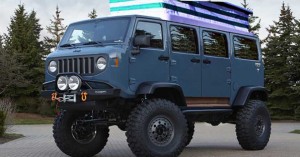
Jeep Forward Control

1-300x157

1The Jeep Forward Control is a unique utility vehicle that was made from 1956 to 1965. These trucks feature a cab over engine layout that gives the vehicle a shorter wheelbase.

Jeep Forward Controls were made as both a pickup truck and a van. Both designs are great vehicle platforms for rugged camper conversions, such as the one pictured above. Good luck finding one today.

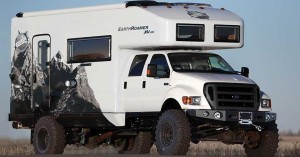
EarthRoamer

2-300x157

2If you had the thought to put your RV on a jacked-up 4×4, EarthRoamer beat you to the punch.

The company makes heavy-duty, go-anywhere expedition campers that are loaded with the amenities you’d expect in an RV. The company started by building self-contained Jeep Wrangler camper conversions, but later switched to modifying Ford trucks like the F-650 featured above.

Terra Wind Amphibious RV

3-300x157

3The Terra Wind is a fully-loaded luxury motor home that can operate on land and water.

It can reach a cruising speed of 7 knots on the water, and can drive up to 80mph on land. But it comes with a hefty price tag – these bad boys cost $850,000.

Unicat TC55 Comfort Plus

4-300x157

4Ok, it kind of looks like a garbage truck, but don’t let this rugged camper’s exterior fool you.

Inside you’ll find high-grade wood paneling, skylights, a shower room, multiple beds, a kitchen, stereo system and a whole lot more. This self-contained camper is also about as durable as adventure vehicles come. Plus, it can charge over anything in its path.

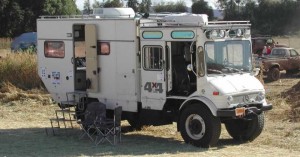
Unimog

5-300x157

5The Unimog is the quintessential heavy-duty expedition vehicle. Manufactured by Mercedes-Benz, this rugged vehicle has portal axles for high ground clearance and flexible frames to handle rough terrain changes.

The Unimog’s powerful off-road capabilities have made it a big hit among adventurers and explorers.

Pinzaugers

6-300x156

6Similar to Unimogs, Pinzaugers are highly-capable all-terrain vehicles. They were originally designed for military use, but adventurers and expeditionists have taken a shine to them for their off-road capabilities, carrying capacity and durability.

These powerful vehicles can drive up and over just about anything in their way.

7-300x157

7Engineering whiz Rick Dobbertin built this one-of-a-kind camper out of a stainless-steel milk tank, and drove it from Florida to South America and back again via the Gulf of Mexico in 1995.

It has living quarters inside, and a front dash that looks kind of like it belongs in a spaceship. There’s only one Dobbertin Surface Orbiter in existence, and we wish we owned it.

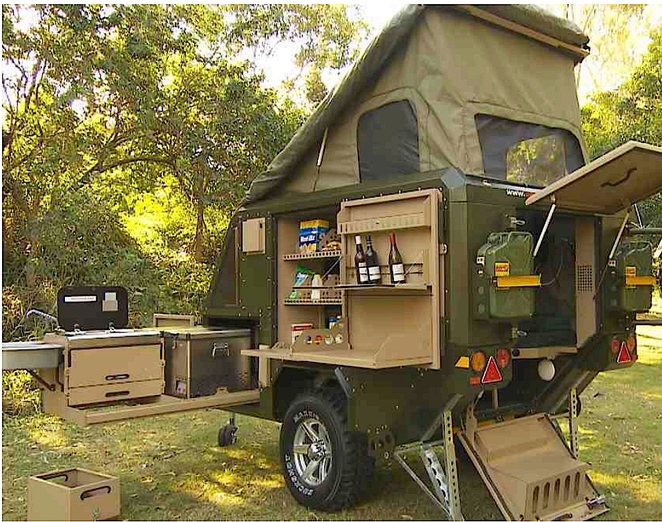
Conqueror Australia

fold-open_jpg_662x0_q100_crop-scale

8Conqueror Australia’s UEV’s are rugged and versatile off-road camper trailers that have independent suspension systems and loads of cool campers features.

Each model comes with a fold-out kitchen, large hot water heaters, queen-sized beds, and lots more.

Sportsmobile

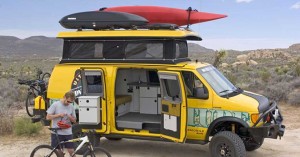
9-300x157

9Sportsmobile has been making customizable adventure campers since 1961. They convert Ford, Chevy/GM and Mercedes Benz vans into off-road vehicles.

As you can tell by the Sportsmobile featured above, they can get pretty tricked out.

Ford Push Button Camper

10-300x157

10Okay, it’s not a rugged all-terrain vehicle, but Ford’s 1958 push button station wagon camper is just too cool to leave off this list.

This one-of-a-kind camper contains a lifeboat and shelter that both unfold on the roof at the push of a button. It also has an unfolding kitchen with a refrigerator, sink and stove, and dozens of other automated gadgets.

Follow our FISHING BLOG

WEB   RATES     FISH    HUNT    CABINS    PHOTOS
TESTIMONIALS    BROCHURE    HUNT BOOKLET

Enter your email address to subscribe to this blog and receive notifications of new posts by email.

← Back

Thank you for your response. ✨

Email Me....


Tags: , , , , , , ,