RSS

Tag Archives: ontario

Wild Mushrooms

The main edible find in our region is  lobster mushrooms, Hypomyces lactifluorum, in some pretty good quantities. On any hunt, it’s good to bring home dinner, but one doesn’t typically expect to bring home a bundle of lobsters too late into the fall.

lobster-mushrooms-wawang-lake

Typically, by the end of August and into September the brush is filled with mushrooms, edible and not. Unlike spring hunting, fall hunting in and around our area is more mushroom identifying than actually trying to find mushrooms growing. But some year the lobsters can account for a major harvest.

This slideshow requires JavaScript.

So on your next trip out into our region whether you’re fishing or grouse hunting be sure to hike the old logging roads in search of these very delicious mushrooms.  Stay tuned for a great recipe that easy to prepare.


WEBSITE    RATES     FISH    HUNT    CABINS    PHOTOS
TESTIMONIALS    BROCHURE    HUNT BOOKLET

Enter your email address to subscribe to this blog and receive notifications of new posts by email.

← Back

Thank you for your response. ✨

Email Me....


Tags: , , , , , ,

Moose Hunting at Wawang Lake

Deeply imbedded in the Canadian Boreal Forest we offer the very finest in Moose habitat for our hunters.  Look no farther than Wawang Lake for accommodations for your next BIG game hunt!

WawangMoose

Our hunts accommodations ONLY for Ontario Resident Moose Hunters.

If your looking for a great hunting area that has a high population of moose then look no farther than Wawang Lake Resort as we’re in the middle of the best moose hunting area in all of NW Ontario.

At Wawang Lake we offer comfortable accommodations to Resident Ontario Moose Hunters only.  Presently we don’t have any tags available and unable to take any non-resident hunters during the Moose Hunt season.

Things Moose Hunters Should Consider:

Crossbows
• Draw length must be al least (11.8 in.)
• Draw weight must be at least (119 lbs.)
• Bolt head must be at least (0.9 in.) at the widest point, and there must be at least two cutting edges of straight, sharp, un-serrated, barbless steel.

Longbows
• Draw weight must be at least (48.5 lbs.) at draw length of (27.6 in.) or less.
• Arrow length must be at least (23.6 in.).
• Broad head must be at least (0.9 in.) at the widest point, and there must be at
least two cutting edges of straight, sharp, un-serrated, barbless steel.

Rifle
We suggest using at the minimum one of the following:
300 Magnum
30-06
7MM Magnum with bullet weights in the 180 grain range
A rim-fire rifle, a shotgun smaller than 20 gauge when loaded with shot, or any shotgun loaded with shot smaller than SG or No. 1 buck cannot be used for hunting Moose.


Clothing requirements
During the rifle season hunts, a minimum of 400 square inches of uninterrupted Hunter Orange must be worn at all times.  Camouflage or open mesh orange does not meet these requirements.  An orange jacket or vest as well as an orange hat do meet these requirements.

Hunters should also have a compass or hand held G.P.S., as well as a good pair of binoculars, thermos, flashlight, lighter, warm clothing, good quality rain gear, waterproof insulated boots, gloves/mitts, long underwear.   Two-way portable radios are also recommended.  Fall hunting weather can be warm & dry to cold, wet and snowy within a few hours; so it is best to be prepared for all variables.

We trust that this information will prove to be useful in planning your next Big Game Hunt in beautiful, exciting NW Ontario.  We invite you to enjoy our ‘True Wilderness Hospitality’ while participating in a remote hunting experience.

 WEBSITE    RATES     FISH    HUNT    CABINS    PHOTOS
TESTIMONIALS    BROCHURE    HUNT BOOKLET

Enter your email address to subscribe to this blog and receive notifications of new posts by email.

← Back

Thank you for your response. ✨

Email Me....

 
Leave a comment

Posted by on November 25, 2014 in moose, moose hunting, Wawang Lake Resort


Tags: , , , , , , , , , , ,

Want more grouse? Watch the thermometer drop!

Want more grouse?  Watch the thermometer drop!

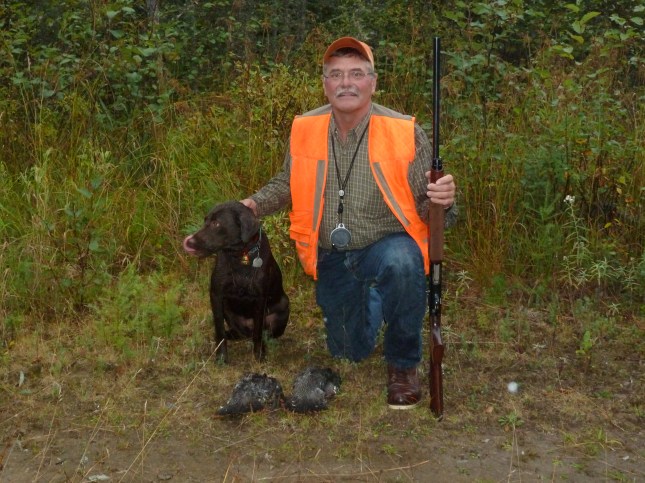
P1040063Cold, blustery days in early winter are not the best days to go grouse hunting. Neither are, humid, September days. Essentially, the best time to go grouse hunting is when you can. And if that means dealing with the weather de jour- so be it. That doesn’t mean you can’t find some grouse, and even pocket a few, regardless of the weather.

Grouse like to stay cool in early fall when Indian summer days send the thermometer to summer-like temperatures. During those glorious fall days grouse will sleep in on their cozy roost and then venture out into a sunlit patch to soak up the warming October rays. November and December is a transitional period when cover becomes as much a priority as food. Staying warm and out of the wrath of heat-sapping winds and cold makes the places that grouse frequent during the late fall and early winter months predictable. Most times the mercury can give you a heads-up on which way to go.

Ruffed grouse seasons open in September in Ontario. Going hunting then is more a testament to tradition than it is to wanting to kill grouse. Foliage is thick, dense and green. But, if you insist on subjecting yourself to this kind of brutality you might as well give yourself the best chance at finding birds.

Look at the thermometer and you’ll realize that one of the best places to look for early season grouse is near rivers and streams. Waterways provide cool summer oases for grouse and you usually won’t find them far from the same habitat come early fall. During especially dry years, the moist soils found along rivers and streams may be one of the few places that you’re going to find the types of vegetation that produce the fruits and berries that grouse love so much.

Another reason early season grouse can be found along waterways is that the thick vegetation protects grouse broods from predators. Moist soils produce lush habitat that is ideal for protecting young grouse broods and the temperate environment produces a lot of high-protein invertebrates that are critical to young grouse growth and survival. Working along river bottoms and creek beds can be a good tactic because grouse broods can often be found in or close to their brood habitat.

Grouse are often still in broods or tight-knit family groups in September and October and can be concentrated and difficult to find. Perseverance can pay off. You might hunt several prime coverts without success and then bust several coveys in a short period of time. The trick is to keep at it. When you do run into some birds, you’ll usually find a bunch and chasing down singles after the flock is broken up can produce some quick shooting.

And quick shooting is what you can expect this time of year. Shooting grouse is never easy, but the task is made increasingly difficult when foliage is thick and catching even a glimpse of a bird is tricky. In the early season, you need to post, plan and resist the temptation to go in after them. It’s fruitless. If you have a dog, let them do the dirty work. Instead, look for openings, deer trails, clearings and post where you can get a shot if a bird flushes in your direction. Put a bell on your dog so your can keep track of his location at all times. Let one hunter bust the brush while the other walks a logging road where a flushing bird just might offer a shot. Don’t wait for an open shot. You’ll never get one! Instead, instinctively point and shoot even if you only catch a fleeting glimpse of the bird. Many times I never even knew I’d hit the bird until the dog came back with the grouse in its mouth. Be sure to keep in constant contact with your hunting party and know their location for safety sake and wear plenty of hunter’s orange.

Think wide open chokes and small shot during the early season. Grouse are not difficult birds to bring down, so put a lot of shot in the air and maybe just a pellet or two will get through the trees and hit its mark.

Weather and temperatures can be quite diverse in October. You might be rewarded with one of those cool, sunny, perfect fall days that grouse hunters live for. But don’t be surprised if you’re forced to pull out the woolies and gloves either. And you might even wake up to some fresh tracking snow. That’s just how October is- transitional- and it’s a transitional period for grouse too.

This slideshow requires JavaScript.


Grouse have a smorgasbord of items to choose from in October and finding their preferred food source is often critical to finding numbers of grouse. Ripening fall fruits can draw grouse from far and wide. Grouse favor edge cover, and it’s no coincidence that some of their favorite culinary delights do best on edges where sunlight can penetrate the forest canopy. Depending on which state you live in, grouse can usually be found keying in on edge cover fruits like wild grapes, chokecherry, and a host of other fruity edibles. These open areas also produce some of old ruff’s favorite greens like wild strawberry and clover and are also places where they can find high-protein items like grasshoppers, crickets, and other insects.

When grouse numbers are high, they can be found in variety of cover types at this time of year. Even marginal grouse habitat will hold a few birds as grouse begin dispersing into new territories during the fall shuffle.

Cover becomes an increasingly important priority as the month wears on. October begins with it plenty of foliage and grouse can move about uninhibited. By the end of the month, the trees are bare, the wind has a foreshadowing bite to it and grouse must rely on their camouflage and staying hidden as much as possible. Still, you’ll find grouse wandering about in search of brunch or a late afternoon snack and those are two of the best times to hunt grouse at this time of year.

Obviously a peak time in October is the first week or two after the leaves have fallen. When this happens might vary by a few weeks from region to region, but it is prime time to be in the woods. Grouse seem to forget for a little while that they are not as invisible as they were just a few days earlier and their numbers are at a seasonal peak. You can actually see some of the grouse that you flush too. 

At this time of year you can find grouse in some pretty unusual places far from what you’d consider ideal grouse cover. I’ve found grouse under a solitary crab apple tree in the middle of a field far from what you’d consider grouse cover. I’ve shot grouse out of fields of goldenrod that you’d think were more likely to hold pheasants. No patch of cover is too small or too thin to hold a grouse then.

Once snow blankets the ground the whole ballgame changes. Grouse that have survived the onslaught of hunters, wolves, owls and know that when their environment becomes covered in white they are vulnerable. Snow also covers up many of the grouse’s food sources and feeding becomes a little more risky and perilous. Grouse don’t go on those aimless strolls in search of food. Their search is more deliberate and of shorter duration when the thermometer starts to dip and the weather turns cold. Cover becomes more of a priority.

It’s important to ferret out productive versus non-productive cover as quickly as possible. I don’t know about you, but I’m not as young as I use to be. Those all-day jaunts of pounding the woods are over. I’m usually only good for about a half a day of hard hunting and I want to make the most of it. To do so requires that you develop a since for identifying the absolute best cover and hunt it hard. Learn to not waste time where you THINK there might be birds.

Remember those light loads and wide-open chokes you used in September? Put them away if you’re serious about killing grouse once the snow flies. Shots will be longer and birds will be tougher. Replace your 8’s and 9’s with high-brass 71/2’s or even 6’s. Take the skeet tubes out and go to improved or even a modified tube in one barrel. With your shooting eye in late season form you’ll still get the easy shots and with the heavier shot and tighter chokes you’ll be able to add a few birds you wouldn’t normally pocket.

Grouse are tough customers. That’s why most of us hunt them. But watching the thermometer you can get a better idea of where to begin your search and make your days in the woods a little more productive.

Join us in 2015 for a great hunt!

Check out our 24 pg. HUNT BOOKLET

Check out our 24 pg. HUNT BOOKLET


Leave a comment

Posted by on November 5, 2014 in grouse, hunting, Wawang Lake Resort


Tags: , , , , ,

Moose hunt 2014 in review

Moose hunt 2014 in review

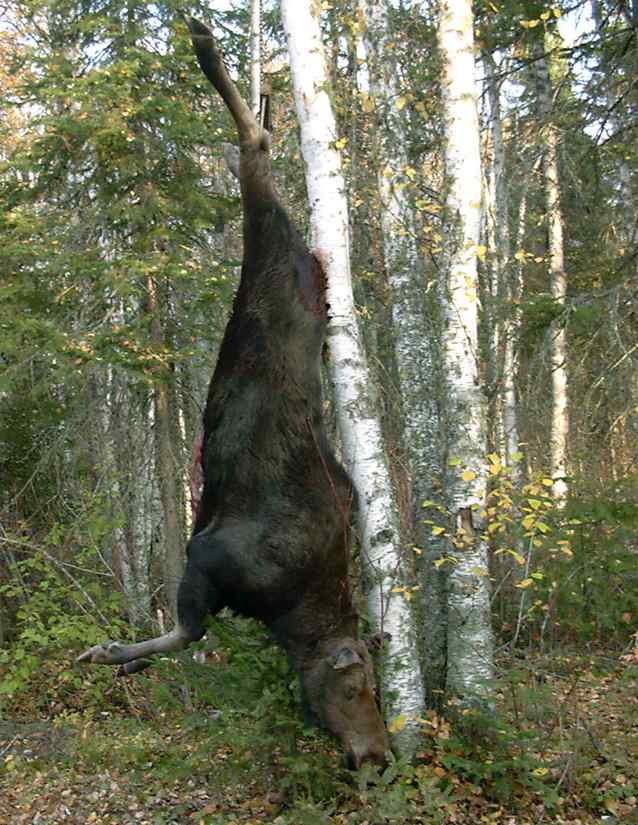
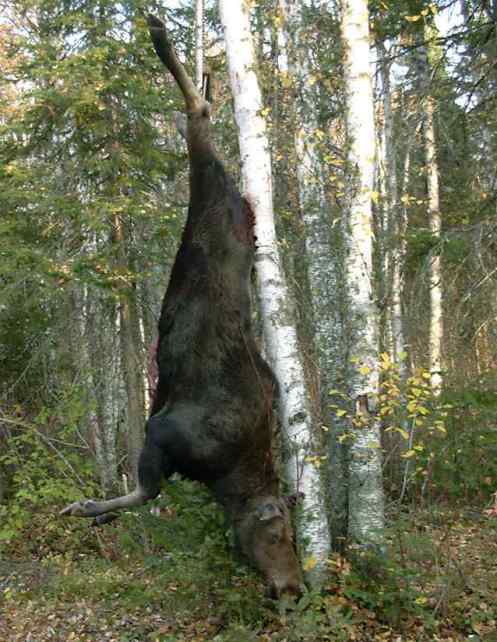
So our 2014 moose hunt has come and gone again with fantastic results!  Due to reduced tag number across the province, we were concerned that the hunt would be sparse.  It couldn’t have been further from the truth.  This year we harvested 1 mature bull, 1 cow and a calf with 3 more bulls, 2 cows and 2 other calves spotted!  There was sign evident everywhere around us and made for excited hunters!johnmoose

With both new groups in camp and some here that are 14 year Wawang Veterans, each party worked together to help the overall success of each other as a whole.  As usual, the hunt was a complete community effort 🙂

We are proud to keep our tradition of excellence strong and look forward to 2015!

Cow_Moose_4 (3)


We have limited availability for 2015.  Reserve your spot early for great accommodations during your next moose hunt in 15A or 15B.

Moosehuntersjpg

Book Now


Leave a comment

Posted by on November 3, 2014 in moose, Wawang Lake Resort


Tags: , , , , , ,

Online RESIDENT moose hunting draw information!

Don’t “Checkout” During Moose Application

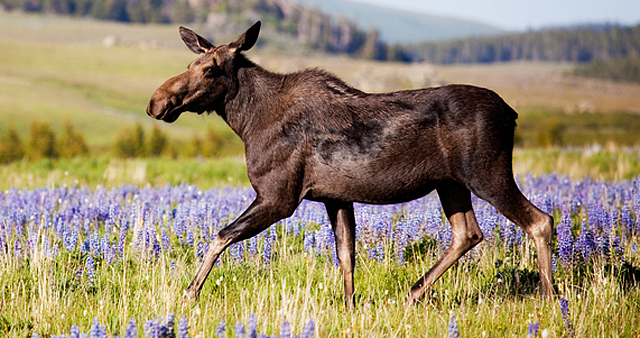
moose in a meadow

The Ontario big game draw for moose online process has caused some confusion, and may result in hunters who believe they have already entered missing out.

When applying online, applicants must be sure to read the instructions very closely. The step-by-step instructions, as per the MNR are as follows. (We advise you to print the appropriate sheet out).

Step 1 Not The Only Step
Purchase your moose tag. Once you’ve entered your personal information, be sure to choose “add licence and continue shopping” instead of “checkout.” This is likely where the confusion is happening.

If you choose checkout, you will get a receipt for your tag only. You must still enter the draw.

“The problem is, the issuance of a receipt of payment is the natural end of an online transaction, so many people could make this mistake. In fact, many have,” said John Vanthof, MPP for Timiskaming-Cochrane, during members’ statements in parliament on April 18. “I have made the Ministry of Natural Resources aware of this problem over the last year but nothing was done to fix the program.”

If you do checkout without entering the draw, you can go back to the homepage and start over. You will not be charged for another tag, but you will have to re-enter your personal information.

The current system can be confusing, even for those who are online savvy, so entering the draw by phone or in person might be a preferable option.

You can enter the moose draw by calling 1-800-288-1155 or going to a Service Ontario location or other participating licensing location.

– See more at: http://www.oodmag.com/hunting/big-game/dont-checkout-during-moose-application/#sthash.wMpebPQZ.dpuf


← Back

Thank you for your response. ✨

Email Information regarding


Leave a comment

Posted by on March 17, 2014 in moose, Wawang Lake Resort


Tags: , , , , , , , , ,

Bear Down! The legend of Squeekules.

It often amazes me what people do in their stands while in wait.  Some nap, some eat, some even make shadow puppets….not Jamie, nope not Jamie.

Jamie’s hunt began just like everyone elses, with optimism and excitement.  He knew what he was waiting for and he was prepared for what to do when it got there…..boy did it take its time!!

As he sat scanning the forest around him for any sign of movement, he spotted something from the corner of his eye.  I little red squirrel was climbing down the tree that was just six inches from his left.  Slowly this little red fellow crept while keeping a watchful eye on Jamie.  He made his way slowly onto the branch directly by his face and looked him in the eye.  Jamie gave little notice at first until he realized that this critter wasn’t leaving…he was perfectly happy to size up this human that was hanging around one of ‘his’ trees!

squeek

There they both sat in silence for a minute or two looking eye to eye, sizing each other up.  Finally Squeekules retreated and carried on down his tree to visit the forest floor.  He scurried around the moss and even over to the bait to check out its bounty.  Jamie watched as the little red fellow ran from one log to another and halfway up one tree and down to the next.  It amazed him that his new buddy was always in view.  It was really nice to have a distraction while waiting for his prey.

As the day came to a close and not a bear had been spotted, Jamie retreated down his tree to the sound of Squeekules chattering him a good bye.

squeek2

The next day started much the same with that slow climb and area inspection.  It didn’t take long for his little buddy to return and fill him in on the mornings events.  There the unlikely pair sat, looking at the bait and scanning the horizon.  The clouds started to close over and the winds picked up.  As the cold rain began to fall, with one last look, Squeekules climbed his tree to find some dry cover.  Jamie wasn’t so lucky.  There he sat in the rain as the temperatures dropped faster and faster.  It was cold and dark but he sat vigilant.  By the end of the day, he was cold, wet and it had appeared that the bear had won again.  He climbed down his stand and made his way out thinking about the time that he had spent up in that tree and his optimism was beginning to wane.  Would it be just as cold tomorrow?

As the sun rose the third morning of the hunt, the temperature was still crisp and those mid forty chills were setting in.  As he dressed for his hopefully short day in the stand, Jamie decided that he would change his weapon of choice.  Retired was his bow and up next was his muzzle loader.  He wanted to ensure that he would have a longer range if so much as one black ear made an appearance.

He made his way to his familiar perch and was happy to see that little Squeekules had already arrived.  There they both sat for a couple of minutes scanning the horizon for any sign of interruption.  The bait had not been hit and the area seemed quiet to any noise other than the rattle of the leaves.  Squeekules gave one last look before heading out for his morning routines.  Jamie sat in wait, the day stretching on.  He could see the little critter bouncing from one tree to the next and back again.  He seemed to be circling the bait and climbing the trees only to come back down again.    As Jamie stood to stretch his legs, here came Squeek, right up his tree and right beside him.  He seemed to just be checking in and making sure Jamie wasnt leaving his post and as Jamie sat again, that little squirrel jumped right onto his leg and ran down back to the bark of the tree!  Boy this little buddy was getting bold.

squeek3

The day was dragging on and his friend had decided to take up space all over Jamie’s tree.  He would leave to take care of his tasks and return to keep Jamie company, at times right behind his head and even right behind his back and against the tree.  The company was welcomed and the stand was becoming more bearable.

As his attention began to wane from his bait, Jamie began to search for his camera.  He desperately was hoping to catch a picture of his new friend.  As he shuffled through his bag, Squeek had began to make his way back to his tree and climbed up halfway up only to be interrupted.  Something was there….it was close and the squirrel knew it.  As Jamie’s attention was focused on that camera, Squeekules had run to the east side of the bait.  He made his way halfway up the tree and sat firm on a branch watching the trail.  Suddenly his tail stood firm and Squeek gripped his tree as he let out a loud chattering war cry.  Jamie looked to his direction and there it was….

angry squeek

That bear ambled in slowly but determined directly below Squeek.  That squirrel stayed braced to the branch and looked to Jamie for acknowledgement.  The two friends knew that the time had come.  The bruin was within range of the bait and began to deviate directly toward Jamie’s tree!  With a knowing look to the branches, Jamie’s eyes met those of this boar, its massive head making those beady eyes look even more pointed.  His hands held steady on his gun as the bear slowly turned and began back to the bait.  He had decided that Jamie was not a threat and his need for a snack was much more pressing.

A shot rang out and Squeek made a hasty retreat as that bear took its final breath.  That was it, the hunt was over and Jamie was proud of his 450lb harvest.  As Jamie brought his bear back and spoke of the hunt, it seemed that the hunt itself was a minor detail in the story of his unlikely friendship with a little red warrior that spent his days keeping him company and making that wait BEARable!

← Back

Thank you for your response. ✨

Email me information about

 
Leave a comment

Posted by on November 5, 2013 in black bear, hunting, Wawang Lake Resort


Tags: , , , , , , , , , , , , ,

BEAR DOWN!!! Quinn and Lucas Had a Long Night! Revisited

We figured we would revisit the highlights of the 2013 bear hunts for those that are looking forward to planning a 2014 hunt 🙂

In the sweltering heat both men knew that they might be in for a long, uncomfortable sit. Both resigned to the fact that being scent locked and camouflaged entailed long sleeves, pants and boot that would be working double time!

A typical view from a stand

Luke settled in confident that at some point during his stay, he would be bringing home what he had come all this way for.

As the mid day and early evening came on, Terry (the guide) had come in from a long day on the baits. It seemed much longer than usual and I asked him how it went.

“Well, we have a bear down.” Right away, the smile was over me, a ‘bear down’ is an outcome we as outfitters strive for and work painstakingly at before the hunter even arrives. Terry too was pleased.

“I was just on my way back up from the northern end baits when I saw a white truck in my rearview. I recognized it and pulled on over. Lucas was all in a mess, hot and concerned because he knew he had a bear down and he had no idea where it was.” Apparently in this 90 degree plus heat, Luke had taken his bear early (11 am) and had spent the last two hours tracking to no avail.

“Just by luck, I happened to be coming back just as he was coming to get me. He needed that bear tracked and that’s what we did.  We went back to where the shot was landed and to where she bedded down for a few moments.”  Luke was so happy that he had made contact and saw her ‘down’ that he let out a shout of excitement and that “YES!!!” quickly turned into a NO!  as that girl got up with all of her might and ran.

“We found the trail and it tapered off as we went on.  We cleared the direct line and went back to the bait to regroup.  I decided to check the small ravine to the right and Luke, the upper ridgeline to the left.  It didnt take long before I zoned in on one very small drop of blood.”  Terry’s eyes narrowed as he relived the moment.

“I was able to flag Luke over and we were hot on the trail!”

Hot was right!  Tracking in the mid day sun at 90+ degree temperatures was painstaking and uncomfortable.

“We were both amazed that there was so little blood.  He swore he heard a distinctive death moan and a final grunt….he KNEW she was down.  We walked for about ten minutes and FINALLY!!!  there she was, completely laid out under a small covering of brush.”

He smiled and you could see he was content that not only she was found but they could both get out of that blistering hot sun…..after she was field dressed.  Luke took no time in getting to work and analyzing his shot and finalizing the autopsy and arrow path.  He had deduced that he had run high but had hit both lungs.  A good, clean shot that had dropped her quickly.  Both men had a good laugh when they noted she had only gotten about 65 yards from the bait but was cunning in her route to be elusive.

“He did a good job.  He was an efficient hunter and he reaped his reward. He stayed behind to wait for Quinn to come off of his stand.  They should be in soon.”  And with that, Terry was off preparing for tommorrows bait run.

I watched the road anxiously for some time, measuring tape and camera ready for whatever was to come……The clock seemed to drag as I waited.  20 minutes turned into 2 hours and I was slightly concerned.  That sow needed to be processed asap, where were they?

Within minutes the white truck ambled up the road.  As they slowed I greeted Luke with all the congratulations.  He sprung from the truck and pointed…..”We brought you two for the price of one!!”

They SURE did!!  Quinn had downed a massive boar!  The truck bed was hanging lower with all the excess weight.

“RIGHT ON!”  I couldn’t hold back my excitement for the two of them.

Now came the real work!  Pictures, measurements and processing!  Quinn had shared that the hunt was relatively quick and uneventful.

“There was a snap of a twig and here he came.  You know he owned this house.  I barely let him reach the bait and I drew back and…….that was it!  20 yards and he was down.”  He made a point of looking to Lucas with a devious grin.

“I have to say, I was a bit worried.  I shot a bear before and he made the distinctive moan but we tracked and tracked and never found it, I was worried that this may be a repeat but there he was, down and done!”

It was a great night of stories including Shawn’s face to face encounter with his boar (that will be a story best saved for later), laughs and WORK!  As it was the very first time any of them caped a bear, all hands were on deck and they were all quick studies as I laid out the technique.  We made short time of Luke’s 225lb sow and Quinn and the rest of the crew were able to tidy up his 410lb boomer and hit the hay by 4 am.

Stay tuned for the next chapter of the Westpfahl’s Canadian wilderness adventure…….be assured there WILL be one!!

← Back

Thank you for your response. ✨

Can you send me information about

 
Leave a comment

Posted by on November 3, 2013 in black bear, hunting, Wawang Lake Resort


Tags: , , , , , , , , , ,

Grin and Bear It: Planning your hunt

Planning a black bear hunt often a painstaking, long drawn out event that involves researching outfitters, contacting references, arranging for lodging and transportation, and choosing the proper weapon.

IMG_5703 (640x495)

Most people must apply for tags by lottery depending on location, but did you know that if you go through an outfitter in Ontario, Canada you are GUARANTEED a tag?!  With that in mind, let’s visit the outfitter planning phase.

North Western Ontario is renowned for not only population but size of black bear.  In the last 3 years of our hunts, we have had 44 hunters.  Of those 44, 33 harvested 6 spotted and passed up and 5 did not spot  Pretty impressive stats.  We go a step further when we can boast that over 45% were 300lb+ with 8 being over the 400lb mark and our record (taken last year) was 475lb (dressed weight) and squared out at 7′

Whether you choose an outfitter (suggested for first timers) or set up your own hunt, be prepared to start planning at least as early as a year prior.  Do you have your area picked?  Do you know the native food sources? What was the weather pattern like this hunt season?  Were the bears active and what was the harvest from the season(s) prior to your arrival?

A good outfitter will have all of this information readily available as well as a list of references.  That list should include people that did and did not get their bears.  It should include multiple years and an honest overview. You need to know exactly what to expect when you arrive and during your hunt.

Patterning the animal by baiting is often preferred up here in the boreal forest as spot and stalk is very unlikely with our dense forest and thick canopy.  The bonus to baiting is the ability to cull the size and sex necessary to help maintain and manage the population.  Often times, in our area, those that spot and stalk often take the first animal they see as it may be the only one and most refuse to pass up the opportunity 😦

SAM_0025 (640x480)

Baiting and sitting a stand may seem like a ‘canned hunt’ but as most can attest to, it can be a grueling experience that will test your fortitude.  Most first time bear hunters assume (incorrectly) that if you feed them, they will come…..while that is often the truth, bears are as individual as people and even with food, there is no guarantee of compliance on the animal’s part….remember, you are dealing with a wild creature and trying in 14 days or less to train it to your will.  Those that have children or pets know that training anything can be a very difficult task but consistency is key!

When planning your hunt, ensure that you are prepared for the task at hand.  Don’t think that just because you showed up that the bear is going to get the memo.  Be prepared to sit that stand!  You cant harvest a bear from your cabin/tent/motel.

When you contact potential outfitters, ensure that they have answers to all of your questions and they are engaged with your plight.  They should be just as focused on you getting a bear as you are.  Your outfitter is your link to the area as well as in most cases in charge of ‘conditioning’ your bear prior to your arrival.  A good outfitter will be promoting consistency with baiting (by example of course).  We bait each and every day to ensure cycles and patterning is noted.

As mentioned earlier, bears are unpredictable to some extent and a bait that could have been hitting each time it was checked (hopefully daily) could quiet down for a day or two.  Be patient, if you trust your outfitter they will help you through this phase and often have backup plans including alternate baits that may be still consistent.  Ensure that your outfitter is the type that cares enough to keep up with you and your hunt and puts your success as a priority.

This slideshow requires JavaScript.

No hunt is guaranteed but what you can guarantee is that doing your homework can save you the disappointment of an unfulfilling hunt, bear or not!

Until next time….When the opportunity presents itself, Grin and Bear it!

Follow our FISHING BLOG

WEB   RATES     FISH    HUNT    CABINS    PHOTOS TESTIMONIALS    BROCHURE    HUNT BOOKLET

Enter your email address to subscribe to this blog and receive notifications of new posts by email.

← Back

Thank you for your response. ✨

Email Me....


Tags: , , , , , , , ,

In a Rut: 15A & 15B Moose Gun opener this weekend

So here we are again with the moose hunt just around the corner.  Our annual regulars will be descending on us from all over Ontario in hopes of bringing home those various trophies, be it antlers, meat or a great story!

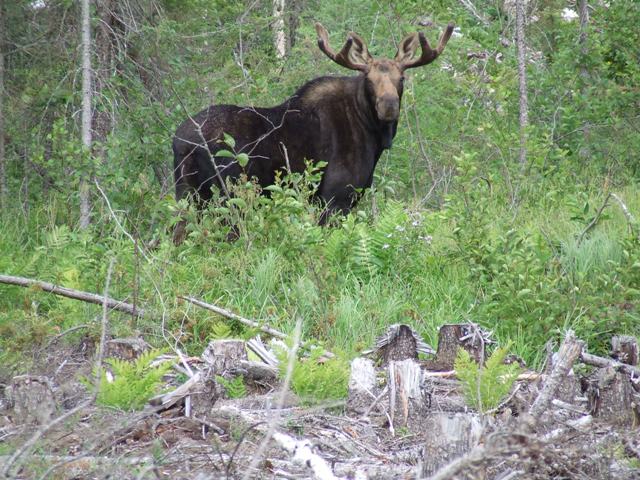
moose

Both the 15A and 15B area are renowned for the density of moose and the easily travelled roads and cut overs that make finding one or or more of these beauties much easier.

We look forward to what this big game hunt will bring and we will keep you all posted on the expected success 🙂


Stay tuned!

← Back

Thank you for your response. ✨

Email me information regarding

 
Leave a comment

Posted by on October 3, 2013 in hunting, moose, Wawang Lake Resort


Tags: , , , , , , ,

The study of Caribou patterns in North Western Ontario

Tracking the travels of the elusive Woodland Caribou in the English River Forest

This improved understanding will help the ministry develop resource management practices that will minimize the impact of human development and resource use on caribou.

It is a relatively unknown fact that the Woodland Caribou once thrived in the Wawang area.  Herds lived freely and well fed on the abundance of lichen in the surrounding area.  In the last century, due to logging, hunting and forest fires, the population not only migrated but was also put at serious risk.

In 2012, the Woodland Caribou was escalated from the Species at Risk list to the Endangered Species list in our area.  With the stringent management and extensive research taking place, the Ministry biologists suspect that it may be slow but the Woodland Caribou will eventually once again become prolific in the English River Forest which encompasses Wawang Lake.

With such rarity, it was a real treat to see on right on our very own beach….what a majestic creature!

If you’re not familiar with northern forests, it would be easy to think that forest-dwelling woodland caribou are more or less on their own in these woodlands. But caribou share the landscape with many other species – including other large mammals.

The program is researching ways to maintain healthy caribou populations in the province. Since 2010, program researchers have fit more than 190 caribou with collars that transmit information about their location and movement behaviour in three large study areas. Their objective is to sample animals in relatively undeveloped landscapes, as well as in more disturbed and developed areas, to collect information on how survival, reproduction, habitat selection and movement patterns are affected by human influences. They plan to analyze this information to develop a better understanding of the factors that influence woodland caribou persistence. This improved understanding will help the ministry develop resource management practices that will minimize the impact of human development and resource use on caribou.

A shed radio transmitter collar used to track the movement and behavior of the Woodland Caribou

A shed radio transmitter collar used to track the movement and behavior of the Woodland Caribou

The Northern Mammal Ecology Program at the Ministry of Natural Resources Center for Northern Forest Ecosystem Research studies caribou, wolves and moose to learn what determines the density and distribution of these mammals on the northern Ontario landscape.

The abundance of other large prey species (e.g., moose) and predators (e.g., wolves) on the landscape are believed to influence the caribou density. When intact forests are affected by development or resource extraction activities, these disturbances may cause changes in the abundance, behaviour and the amount of habitat available for species like moose and wolves. These changes have the potential to have a negative impact on caribou density and persistence.

To gain a better understanding of how predators and other prey species might be affecting caribou, researchers are also collecting information on the distribution, density and behaviour of these other species. For example, more than 45 wolves have been fitted with collars that transmit information about their location and movements. These collars have been placed on animals that inhabit the same three study areas as the collared caribou. Information collected focuses on the types of habitat (e.g., forest types, landscape features) that wolves inhabit and travel through, the prey species they eat, and the characteristics of the locations where they catch their prey.

The collared movement data for the caribou in North W

The collared movement data for the caribou in Northwestern Ontario


Researchers have also conducted aerial surveys within the study areas to calculate moose densities and identify the characteristics of locations with relatively high and low moose densities. They are also examining historic information gathered from moose collared in other areas of northern Ontario, to develop a more detailed understanding of how moose respond to different types of forestry practices.

This holistic approach to caribou research – which focuses on the species they interact with, as well as caribou themselves – should provide some important insights into caribou ecology that will help the ministry develop effective caribou conservation measures.

In time, it will become more and more common to spot these animals on your visits up to Wawang Lake….stay tuned and keep your eyes peeled!

 
Leave a comment

Posted by on September 29, 2013 in caribou, Wawang Lake Resort


Tags: , , , , , , , ,