RSS

Tag Archives: black bear hunting

Benefits of Practicing to Hold a Full Draw

Benefits of Practicing to Hold a Full Draw

If you practice shooting your bow all spring and summer by casually flinging arrows at a target from 30, 40, and 50 yards, you should be full prepared to shoot a tight group into a 3D target by the fall.

But if you want to get yourself hunt-ready, you have to practice for hunting scenarios: sitting, kneeling, shooting quickly, and holding at full draw. This video is all the proof you need.

This moose hunter was able to keep his cool and make a good shot … but just barely.

Follow our FISHING BLOG

WEB   RATES     FISH    HUNT    CABINS    PHOTOS
TESTIMONIALS    BROCHURE    HUNT BOOKLET

Enter your email address to subscribe to this blog and receive notifications of new posts by email.

← Back

Thank you for your response. ✨

Email Me....


Tags: , , , , , , , , , , ,

How to Make Your Own Scent-Free Deodorant

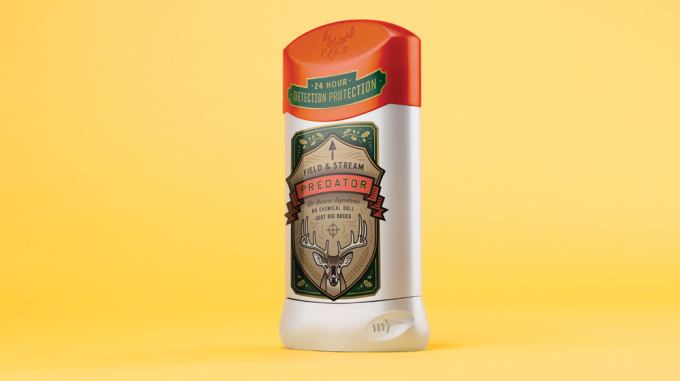
Think organic deodorant isn’t for you? It’s actually perfect for deer hunters, because it battles sweat and odor, and gives off no unnatural scent of its own. Buy ingredients in bulk and make three 2.5-ounce sticks—a season’s worth—for only $2 each. Here’s how.

scentstick

What You’ll Need

● 1⁄4 cup coconut oil
● 2 Tbsp. shea butter
● 2 Tbsp. cocoa butter
● 1⁄4 cup beeswax pellets
● 3 capsules 400-IU Vitamin E
● 21⁄4 tsp. baking soda
● 1⁄4 cup organic arrowroot powder
● 2 capsules Vitacost Probiotic 10-20

The Brew 
Heat a small saucepan of water and remove just before boiling. Combine coconut oil, shea butter, cocoa butter, and beeswax pellets in a mason jar, and place it in the hot water, double-boiler style, until melted. (Warning: If you’ve ever had a severe reaction to a bee sting, don’t handle beeswax.) Leave the jar in the bath and add the Vitamin E capsules, baking soda, arrowroot powder, and probiotics, which introduce good bacteria into the skin to battle the bad stuff that causes BO Stir gently until mixed well.

The Cure
Pour the warm mixture into empty, used stick-deodorant containers, new containers (sold online), or lined muffin tins, and let harden overnight. Then, perform your own sniff test: The only scent noticed is a trace of beeswax.

Follow our FISHING BLOG

WEB   RATES     FISH    HUNT    CABINS    PHOTOS
TESTIMONIALS    BROCHURE    HUNT BOOKLET

Enter your email address to subscribe to this blog and receive notifications of new posts by email.

← Back

Thank you for your response. ✨

Email Me....


Tags: , , , , , , ,

4 Ladder Stands To Consider

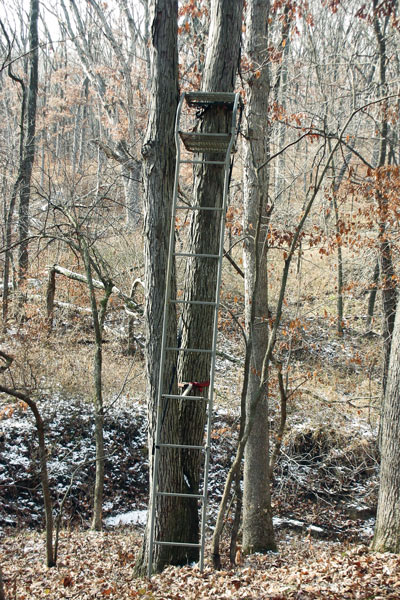
Whether you hunt with a bow or a rifle, want to hide in the treetops or stay closer to the ground, one of these four ladder stands has you covered. A hunting buddy and I started with six models and after a full day of setting up, climbing, sitting, and tearing down chose these four favorites. Here are our picks for an all-around stand, a bow stand, a best bargain, and a gun stand.

All-Around

Ladder-1_0

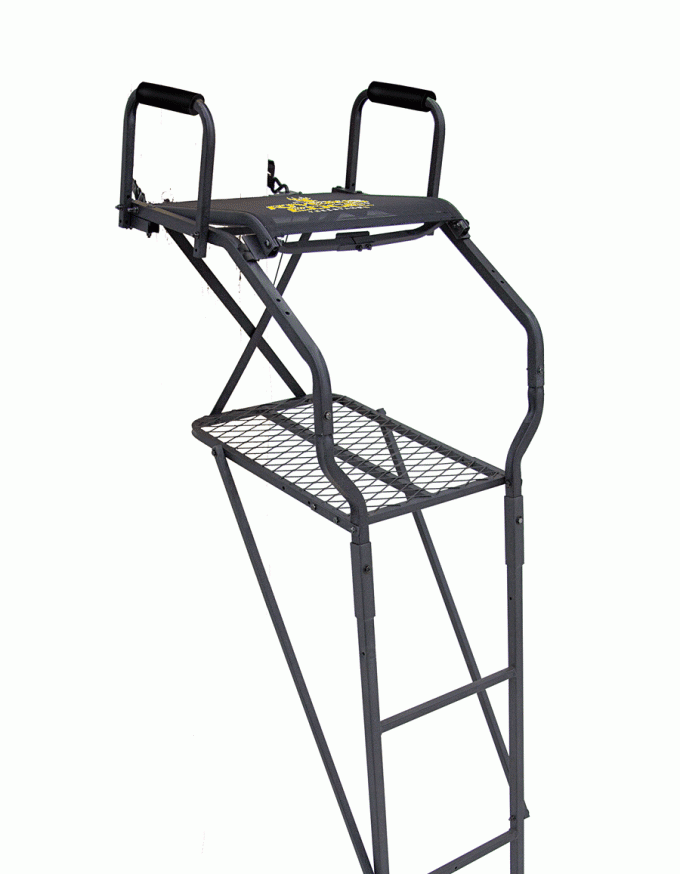
Ol Man 15′ Bowlite

Specs 15′ high • 25″ x 171⁄2″ platform • 45 lb.

What’s SpeciaL With its mesh seat and narrow ladder, my test partner, a veteran New York hunter, thought the streamlined Bowlite was the best of the test. Two points of contact to the tree made it the most secure by far, and it proved the fastest to assemble.

Bottom Line Easy to build, comfortable, and rock solid. We docked points only for the narrow ladder, which allowed just one foot per rung—not good for XL hunters ($150; olmanoutdoors.com).


Bow

Ladder2

Rivers Edge Bowman

Specs 19′ high • 24″ x 17″ platform • 64 lb.

What’s SpeciaL Tall, with a big 17 inches between rungs, the Bowman is a young person’s treestand. The large platform and skyscraper height is ideal for maneuvering and drawing on deer undetected. Yet we felt it needed a second (not included) ratchet strap to feel secure.

Bottom Line With almost 2 square feet of platform 19 feet up, this is a killer bow stand, but the pins were noisy ($170; huntriversedge.com).


Budget

Ladder-3

Summit Crush Series Solo Performer

Specs 151⁄2′ high • 19″ x 121⁄2″ platform • 40 lb.

What’s SpeciaL For just one Benjamin you get this light, easy-to-set-up, comfortable, do-it-all option. The ladder assembles with bolts and lock nuts, so it’s deathly quiet compared with the others in the test, which use locking pins. But the platform feels small.

Bottom Line Lots of value, plus it’s the lightest and quietest system in the test. Another $30 gets you a backrest and shooting rail ($100; summitstands.com).


Gun

Ladder-4

Big Game NextGen Stealth DX

Specs 15′ high • 25″ x 181⁄2″ platform • 55 lb.

What’s Special Big Game hit the sweet spot of price and performance with the Stealth DX. The ladder is wide, with short 13-inch spacing between the rungs for easy climbing, even in the heavy clothing typical of gun season. There’s a cushy backrest and an adjustable shooting rail.

Bottom Line A comfortable all-day sitter that can be found online for well below the list price. We would have liked the gun rest to elevate a little higher ($220; biggametreestands.com).

Follow our FISHING BLOG

WEB   RATES     FISH    HUNT    CABINS    PHOTOS
TESTIMONIALS    BROCHURE    HUNT BOOKLET

Enter your email address to subscribe to this blog and receive notifications of new posts by email.

← Back

Thank you for your response. ✨

Email Me....


Tags: , , , , , ,

Improve the Effectiveness of Trail Cams

The easiest way to enter the bow hunting season with false expectations about early season success is to use cameras wrong—or at least—lazily. Taking your camera out to the edge of a food plot or a soybean field, hanging it, and then checking it every week or two may feel like you’re scouting correctly, however you’re probably under-utilizing these new-age tools.

ravine-crossings_1

Instead, consider hanging your cameras to answer questions about deer movement. For example, it’s Whitetail 101 to know that deer are going to use prime food sources throughout the summer. How they get to and from those food sources, where they bed, where they water, and where they browse are all questions that are far more difficult to answer. And they are perfect for scouting cameras.

Aside from taking inventory and getting some sweet pics of velvet-racked bucks, setting cameras in easy spots doesn’t do you much good as a hunter. Cameras hung on places that aren’t easily observable will tell you things that can lead to quality fall hunting spots, which is the goal. They’ll also tell you whether the deer use those places at all, which is like pre-fishing for a bass tournament and eliminating dead water until a pattern or hotspot emerges.

visual-follow-up_1

If you plan to run cameras next summer, start thinking about where you’re going to place them now. Although a subtle trail in a wooded finger leading to an alfalfa field or clover plot might not be as exciting as hanging the camera directly on the field edge, it might just tell you when and where a mature buck likes to travel before and after he eats. That’s a good step toward getting an arrow into him, especially since he is likely to reduce daytime movement once he sheds his velvet.

Follow our FISHING BLOG

WEB   RATES     FISH    HUNT    CABINS    PHOTOS
TESTIMONIALS    BROCHURE    HUNT BOOKLET

Enter your email address to subscribe to this blog and receive notifications of new posts by email.

← Back

Thank you for your response. ✨

Email Me....


Tags: , , , , , ,

Tree Stand Preparation

The satisfaction one gets out of any endeavor is usually proportional to what one puts into it. Preparation leads to confidence, and confidence leads to success. And nothing prepares us for a hunt like a do-it-yourself attempt. Not only will you gain a lot more satisfaction from the hunt, you’ll also acquire a learning experience you can use for the rest of your life, and even pass down.

6One of the most important aspects of the right tree for a tree stand is an entrance/exit that will create as little disturbance as possible. In almost all cases, we are better off hunting undisturbed animals that are moving with some predictability. This is a fundamental truth.

A low-impact entrance/exit is vital, and the smart hunter must consider sight, sound, and scent during their approach and departure. Let’s use an example of each in illustration.

  • Often, your stand placement is just off the crest of a ridgeline. Human nature is for old logging/skid roads to follow the crest of the ridge because it makes sense for ease of travel for humans and equipment. But it doesn’t make sense for the deer.
  • Although not always the case, game will usually shy away from being sky lined on a ridge top. They’ll tend to walk parallel to the crest on the downwind side. It sometimes depends on the angle of the terrain and visibility (density), but usually they will prefer just far enough off to the side so their silhouette is less obvious, and where they can see downhill just as well as if they were on the crest. You’ll also notice their passage will tend to be on the downwind side of the crest. Think about it — they can see downhill and can scent-check areas upwind, and still not be silhouetted.

We, as hunters, must do the same thing. When entering a stand site along a ridgeline, it’s easy to walk the logging road on the top. This is fine when it’s dark (another advantage of stand approach before light). But when it’s already light, or in the afternoon, you’re usually better off picking your way in by walking parallel to the crest.

Walk in on a logging road, try to walk in the “tire track” of the downwind side. For example, say the logging road is running north/south and the wind is coming from the west. You walk in the east tire track so the wind carries your residual ground scent off the road. This ensures any deer that happen to be walking the road later will be less likely to smell your passage.

In addition to this, if you use a scent drag on approach, you will notice it will benefit you even more so. Tie a scent-soaked rag to a short cord off a four-foot switch (or your bow tip), and drag it down the west tire track while you walk the east (downwind) track.

Because most hunters tend to sweat, carry extra clothing/gear in a backpack. When you get to within 100 yards or so of the stand,  stop and put the layered jacket, facemask, gloves, and safety harness on. It’s an obvious advantage having your scent on your final approach blowing away from the direction you think the deer will be coming/going.

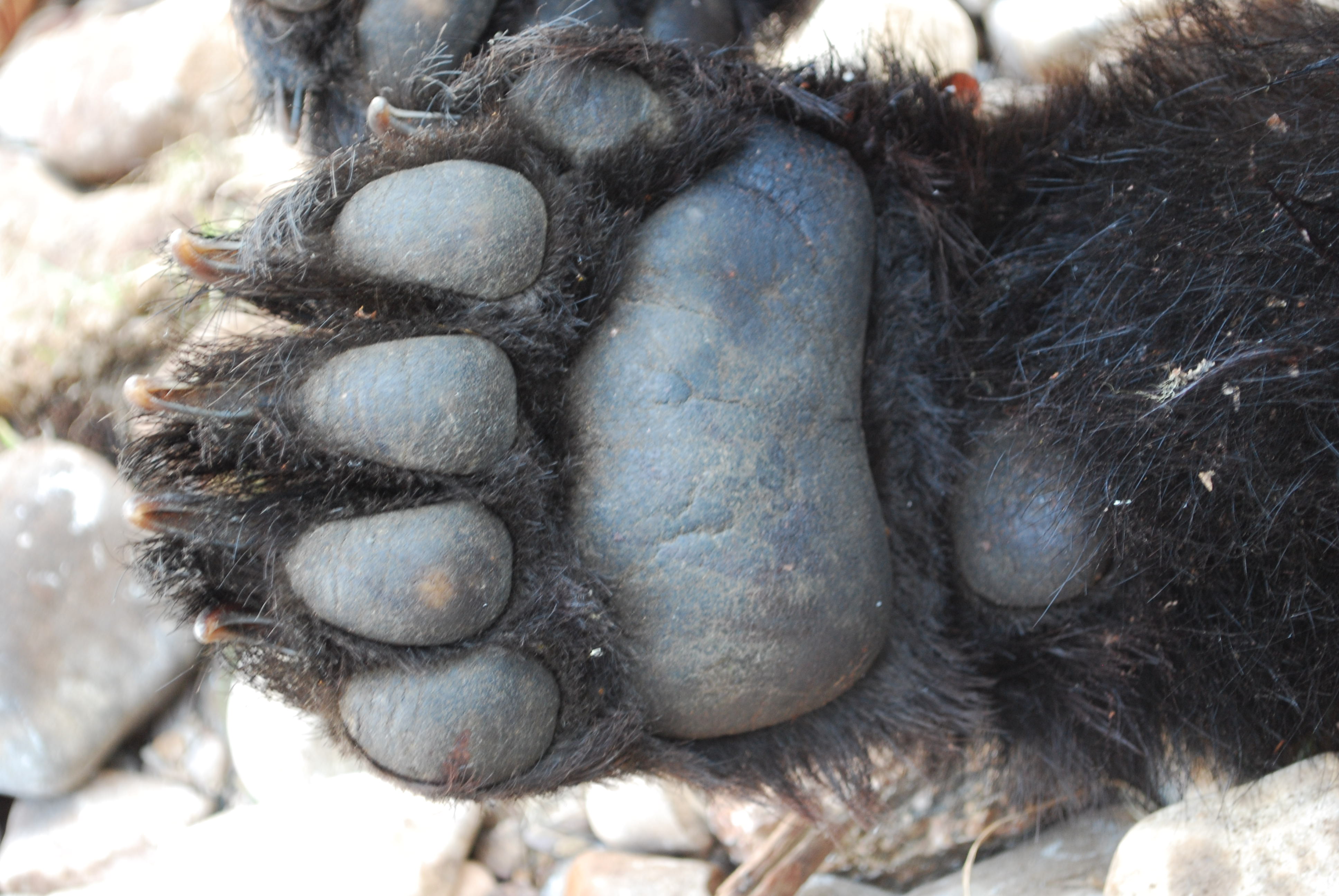
bear4To ensure a silent approach, rake out a footpath to the stand. For those of you who have hunted bear over a bait site, you may have noticed that when multiple bears are hitting the bait, they will approach it via specific footprints.


This is a dominant/subordinate situation. A subordinate bear knows if he is caught by a dominant bear on his approach to the bait, he will likely get his butt kicked. And it could even be a fatal mistake. Therefore, if you look closely around the bait site, you may find distinct, separate footprint/pad marks that bears will actually place their pads in, in order to guarantee a silent entry. Do the same thing when approaching the stand site.

After the foliage drops, you’ll often have dry leaves covering the ground. Walking through dry leaves silently is hopeless. If there is any cadence/rhythm to your gait, it’s almost impossible to keep your entrance/exit covert. At this point leaving your ambush silently is just about as important as entering it silently, and in both cases use the “bear trick” to my advantage.

  • After the majority of leaves drop, face the fact that you will be disturbing the area and go for it. Time your entrance for midday, knowing what you’ll gain will be worth it in the long run. You can use a regular garden rake with the stiff teeth, but a garden hoe actually works better, because you won’t have to constantly clean leaves from the teeth. Clear away the leaves every couple of feet in order to place your boots on solid ground rather than six inches of leaves.

Yes, continued foliage dropping will fill in the raked spots somewhat, but you can just kick them away with your boot tip if needed. Quiet foot placement is especially important on quiet days, or if you are within hearing distance and/or sight of a known bedding area.

You’ll know it was all worth it when after quietly entering and settling in you see the flick of an ear and notice a deer bedded within eyesight. That probably won’t happen on a calm day if you don’t pre-rake your approach.

Break out the trusty ratchet belt hand pruners to open and clear the understory of brushy twigs, both from where the deer will be walking as well as your own approach. An opening through the brush will shift the deer to the path of least resistance, and they will adapt to it in short order. At the same time, you want to eliminate brush and twigs in my entrance path to reduce scent retention and the noise clothing may create as you pass by.

sunset bear

On approaching a stand setup, try not to cross the main travel pattern you’re hunting. Sometimes there are situations where you have to do that. In these cases, plan your approach to the stand right in a precut shooting lane. That way if the deer cuts your entrance trail on approach and stops to smell your minimal ground scent, at least he is standing in a shooting lane.

Some of this may be hard to follow along with unless you are actually shown. The bottom line is there will be a lot of satisfaction for your efforts. Not only will you watch a deer react exactly as you wanted and intended him to, but your efforts will hopefully shift his movement to a position where you almost can’t miss the shot. And that alone will boost your bow hunting success rates tremendously.

Follow our FISHING BLOG

WEB   RATES     FISH    HUNT    CABINS    PHOTOS
TESTIMONIALS    BROCHURE    HUNT BOOKLET

Enter your email address to subscribe to this blog and receive notifications of new posts by email.

← Back

Thank you for your response. ✨

Email Me....


Tags: , , , , , ,

The Bear Facts – What You Should Know

Despite divided opinion about the political correctness of bear hunting, it is something every hunter should try at least once. But a word of caution, if you want to make the most of your outings, there are a few key things you should know. The more knowledgeable you are, the better your chances of tagging a trophy.

WawangBear2

Black Bear can be found roaming the woods in every northern state, all provinces and many eastern and western states. The smallest member of the bear family in North America, black bears are the most populated. Thriving in almost every jurisdiction, populations are on the rise across the continent.

Black bear can be hunted only in the fall at Wawang Lake. Each state and province has specific regulations dictating when and how bears can be hunted. If you want to spend more time in the woods, black bears make the perfect prey during the fall. With thick coats in prime condition, fall is the preferred choice of bear hunters that are looking for that trophy bear. If you’re fortunate enough to connect with a trophy-sized black bear chances are you’ll end up with a beautiful specimen, well worth making into a rug or head mount.

Over-the-counter tags are only available in certain states and provinces. Some states issue tags only through a limited entry draw/lottery process.

In many ways black bears are misrepresented and misunderstood. Ironic but true, bruins are gentle by nature. This stands in contrast to their stereotypically vicious reputation.

Found in a variety of color phases, pelage can range from white through yellow, with black, brown and cinnamon being the most common. Their ominous looking dark shiny coat is the obvious contributor to their malignant image; it may also be the black bear’s slow, methodical and calculated gestures. Whatever the reason, these quiet, yet dominant nomads of our coniferous and mixed forests, are worthy of both admiration and respect.

A sow will typically accompany her cubs for 16 or 17 months. At the end of this period she will sever ties, forcing the youngsters to go off on their own.

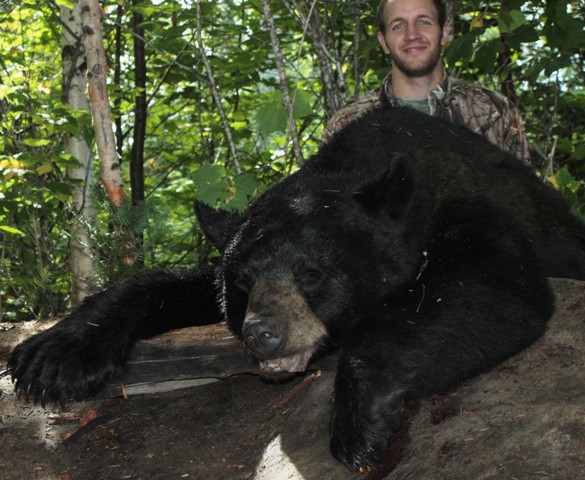
Females will reach their maximum size at six years, and boars continue to grow to a maximum size at 12 years of age. On average, most bears taken by hunters weigh somewhere between 175 and 300 pounds. Any black bear topping the 300-pound mark is considered large.

Aside from body weight, black bears are judged by the size of their skull, with a Boone & Crockett minimum eligibility score of 21 inches and a Pope & Young score of 18 inches.

We often hear of bears being territorial and, in a sense, this is true. While there exists a distinct hierarchy within the ranks of bear world, it is not uncommon to find many individuals residing in a given geographic area. Home ranges can span from two to 10 miles and resident populations will often hold a variety of boars, sows and cubs.

Heavily timbered forests near logging areas often sustain good bear densities.  With blueberry areas, black bear favor the accessibility and abundance of such forage and often reside in proximity.

As forest dwellers, black bear are omnivorous. Predominantly feeding on a variety of plants and berries throughout the summer, springtime offers a feast of dandelion and fresh grasses. Opportunists extraordinaire, black bear  will also feed on carrion. Consistent with this and the fact that bears favor beavers as a staple food source in some regions, areas with spruce and poplar mixed forest and cascading beaver dams can be dynamite locations for the hunter to focus his/her attention.dam2
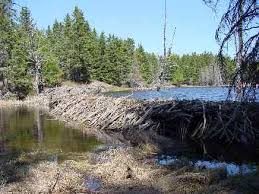
As with ungulate species, black bears undergo an annual rut cycle. Beginning in late May and continuing on through most of June, boars go in search of breeding partners. It is during this approximate six to eight week period that most large bears are taken by savvy hunters. Just as with members of the deer family, the larger, educated and otherwise reclusive boars become more visible as they readily cross roadways, clear-cuts and feed in open areas as they look for sows in estrus.

Black bears den up in late October and drift into a state of torpor. This is not a true state of hibernation, but rather of slowed metabolism, during the cold winter months. In this suspended state, they cease to defecate, urinate or eat for the next 5-6 months. They do however periodically awaken from this sleep to stretch and walk around. Usually only a brief interlude, black bears soon return to the den to wait out the long winter. Sows will deliver and nurse their cubs in the den and as the snow begins to melt and spring arrives, they’ll leave the den to begin their search for food.

Bear meat brings mixed reviews. Some savor every morsel, and others grimace at the very mention of it. Its greasy, coarse texture and sweet flavor requires a certain kind of palate. A word of caution however, bear meat should be thoroughly cooked as it can carry a parasitic infection known as trichinella, a potentially dangerous disease to humans.

Black bear have relatively poor eyesight, but an outstanding sense of smell and an uncanny hearing ability.

When hunting black bear, consider food source. Focus on areas with a sufficient forage base. There should be water nearby along with good cover. With the aid of topographic maps, look for spots with streams, rivers and ample low ground to provide damp, dark and cool cover. In boreal forest regions, this will be dense moss-laden areas bordering swamps and isolated marshy wetlands. In mountainous regions, this will often be found in drainages along creeks and other waterways.

Once a general area is identified, begin your search by looking at trees. Claw marks on deciduous trees are the most obvious indicators. In mixed forest areas mature poplars wear the battle scars revealing claw marks of days gone by. While rarely do you stumble upon fresh markings, these lasting scars unveil a historical presence.

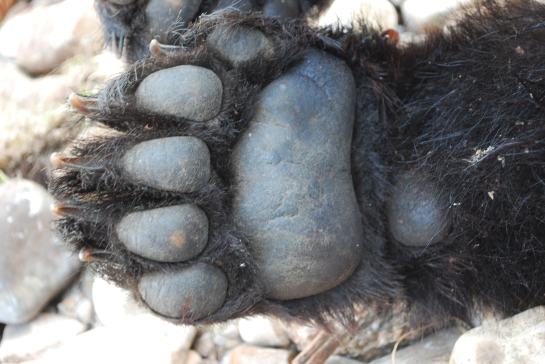
Bear leave tracks. A great place to look for these is in the wet sand and soil along shorelines of rivers, streams and lakes. Most often at least one or two old or new tracks are found, keeping in mind that bears frequently use these movement corridors. A 5″ or better pad/track can suggest a good bear is in the area.DDW-Bear-Hunt-086
Nomadic creatures, bears commonly travel traditional trails along ridges, in valleys, and along drainages. Finding fresh scat can instill further confidence in your pursuit and help you identify the size of a particular bear.

A variety of strategies and techniques are proven effective in pursuing spring black bears. Whether floating down a river, walking cut-lines, spot and stalk hunting, baiting or calling, black bears are very huntable. Each strategy has its own merits.

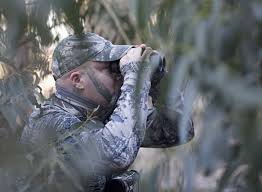
A good set of binoculars is a must when spot and stalk bear hunting. Once spotted, the stalk begins. The regular rules apply – keep the wind in your face; remember bears rely heavily on their sense of smell. The best time to spot and stalk black bears is the five to 10 day window just prior to, or just as the deciduous trees begin to bud. With little food available in the woods, they can frequently be seen browsing on cut-lines and south-facing slopes where the first green grasses begin to sprout.bin
Baiting is far from easy, and holds no guarantees! From time to time you get lucky and have one move in cautiously to inspect the provisions, but this is frequently more the exception than the rule. Perhaps the biggest advantage I see in baiting is that, if and when a bear finally does come to the bait, it can allow the hunter time to assess size and stature. This is advantageous for the trophy hunter, allowing the option to pass up smaller bears, thus diminishing the odds of falling victim to ground shrink.

Predator calling bears has come into its own in recent years. A myriad of videos and how-to articles are available to hunters looking for an alternative approach to hunting bears. I sometimes carry a Lohman wounded rabbit call for scenarios where calling might come in handy. While patience is required in this game of calling, it can take some time before a big old bruin responds favorably. But when they do, be ready, because they’re coming in for dinner!wawanglakebear
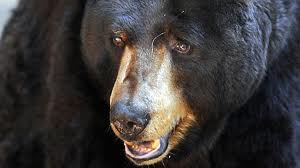
As a rule, black bears want no more to do with you than Superman does with kryptonite. The fact is, it’s important to treat them with due respect, be aware they possess immense strength and are able to cause considerable damage. To get an accurate picture on the nature of bears, I highly recommend a book entitled, Bear Attacks – Their Causes and Avoidance written by Dr. Stephen Herrero. Having heard him speak at a conference, the clear message I gleaned was that if, and when, black bears show aggression, most often they’ll bluff charge … stop 10 yards away and bounce on their front legs. Periodically they’ll stand up, but this is usually to help them get a better look at what is going on. This is intimidating, but most often harmless.

The only thing predictable about black bears is that they are unpredictable. Although many will avoid humans at all cost, there are some that have no fear at all. Caution and respect should always be exercised.

Follow our FISHING BLOG

WEB   RATES     FISH    HUNT    CABINS    PHOTOS
TESTIMONIALS    BROCHURE    HUNT BOOKLET
Enter your email address to subscribe to this blog and receive notifications of new posts by email.

← Back

Thank you for your response. ✨

Email Me....


Tags: , , , , , , , , , , , , ,

Black Bear Hunt RATES

Pages from 2015 Brochure

COMBO HUNTS

Follow our FISHING BLOG

WEB   RATES     FISH    HUNT    CABINS    PHOTOS
TESTIMONIALS    BROCHURE    HUNT BOOKLET

Enter your email address to subscribe to this blog and receive notifications of new posts by email.

← Back

Thank you for your response. ✨

Email Me....


Tags: , , , , , , , , , ,

Camouflage Won’t Help IF…….

You’re invisible. Or at least you think you are. After all, you’ve done all the right things: bought that pricey camo that matches your surroundings, painted your face with lots of greasy face paint, and you are even wearing camo boots. Now all you have to do is sit there, soak in a little sunshine, and wait for a big boar to show himself.

SAM_0066

But when a bear does come in, he spots your position and blows out for the next county.  The problem? You set up in the sunlight

A common mistake that has ruined plenty of big-game hunters’ chances is setting up where direct sunlight can reach them. Sunshine turns a camouflaged hunter from an indistinct shadowy figure into a glowing beacon. Dappled sunlight shining through a canopy of leaves isn’t usually a problem. But direct sunlight can reveal your whereabouts and end your hunt.

SAM_0057

Camouflage clothing’s basic function is to break up our outline – tricking our prey’s eyes into passing over us in their constant search for danger. The human silhouette is incredibly distinct in the wilderness – there is no other form like it. To fool game, it is essential to reduce our human outline. The best camo patterns utilize starkly contrasting colors in their design, thus changing us from a human form into something indistinct and non-threatening. Interestingly, for those of you traditional hunters like me – a good plaid pattern like Fred Bear often wore can work almost as effectively as modern camouflage.

jamie

Remember that sunlight moves as the earth rotates. Set up your ambush in a location that allows you to remain shadowed as the light moves around you. If you are still-hunting or stalking, move efficiently through areas of sunshine and then pause to watch and listen when in the shadows.  Set up in dark shade that offers good shooting lanes. Remember to keep your hands and face camo’d up as well – if left uncovered, they are a dead giveaway even in the shadows.

Follow our FISHING BLOG

WEB   RATES     FISH    HUNT    CABINS    PHOTOS
TESTIMONIALS    BROCHURE    HUNT BOOKLET

Enter your email address to subscribe to this blog and receive notifications of new posts by email.

← Back

Thank you for your response. ✨

Email Me....


Tags: , , , , , , , , , , , , ,

Tips for Choosing the Right Outfitter

What kind of a hunt do you want?
The first question you need to ask yourself is what type of a hunt you want.  There are baited hunt, spot & stalk hunts, and even combinations of these. Think about your physical capabilities, your shooting ability, experience and desires. Scenery, number of bears you want to see, frantic action or lack of it, and climate. These things and more go into your choice of a hunt. If you start talking to an outfitter and you realize this isn’t exactly what you are looking for, don’t hesitate to back out.

image[2] (2)

Websites are one of the best places to learn more about a hunt. You can read about the outfitter, the guide and importantly, how long they’ve been in business. You can look at an album of photos and have a candid discussion that will give you a real gut feeling for the hunt and the people you will entrust with your money and in some cases your life. In the course of the search you will think of questions to ask so ask them on the spot in your email or phone conversation, you will think of even more questions to ask so write them down and ask at a later time.

If you do not meet the outfitter in person then plan to have a good phone conversation and ask the tough questions. Get references of successful and unsuccessful past clients and call them.

h2

Define your Expectations
Realistically, an outfitter can’t offer you the hunt you really want unless they know exactly what you want. Many people have had a bad experience because they went on a hunt that wasn’t a good fit because they didn’t specifically tell the outfitter what they wanted. If an outfitter says they have fishing available, but you get there and find out its only fly fishing and you don’t know how to fly fish; that’s your fault, you should have clarified it before you left home.

Be honest about your physical limitations. Don’t go on a spot & stalk hunt if you can’t hike up a steep hill. Likewise, if you are 400 pounds and can’t get into a tree stand, it would be a good idea to tell the outfitter that ahead of time so he can get a ground blind in place. Don’t surprise your outfitter when you pull into camp. He will be asking questions and expecting honest answers and you should be too.

404

Are you looking for a truly big black bear? Make sure you are going to a place that has them. There are a lot of places that specialize in getting everyone a bear, but the top end of them is about 300 pounds. If you want to bag a giant, you have to ask the questions that will help you understand the type of operation you are dealing with. Looking for a color phase bear? Ask the specific questions about percentages of color bears. Then ask exactly how many and what colors were bagged there in the past three years. Trust your gut, if it doesn’t feel right, back off.bear3

Make your needs and preferences known. If you have health issues as simple as a lactose intolerance or an allergy, tell them so they can pass it along to the cook. If you don’t like baloney sandwiches, tell them that. Or don’t complain if you find yourself in a tree stand for six hours with nothing but a baloney sandwich to eat.

Ask specific questions about the temperatures, clothing you should bring and footwear. Not much is worse than having nothing but leather hunting boots when you have to slog through a swamp to get to your stand. Wet, smelly feet can ruin a trip as fast as anything. Ask about outerwear, mosquito protection, long johns and headwear.

Many baited hunts mean long hours in the stand during the afternoon and evening, but having something to do during the mornings can make a hunt much more enjoyable.  What if you shoot your bear early in the hunt? Learn what might be available to take up your time while you wait for a buddy to get his bear.

Check out our 24 pg. HUNT BOOKLET

Check out our 24 pg. HUNT BOOKLET

Get to know the area well before leaving for the hunt. Look at the area on Google Earth, check the weather for the hunt on accuweather.com, spend some time on the outfitter’s website.

The theme in this article is communication. That’s because the vast majority of bad experiences can be traced back to bad communication; either yours or the outfitter’s. Make sure it isn’t yours.

Follow our FISHING BLOG

WEB   RATES     FISH    HUNT    CABINS    PHOTOS
TESTIMONIALS    BROCHURE    HUNT BOOKLET

Enter your email address to subscribe to this blog and receive notifications of new posts by email.

← Back

Thank you for your response. ✨

Email Me....


Tags: , , , , , , , , , ,

HOW SCENT ACTUALLY WORKS

scent2Scent is a mysterious  and often grossly misunderstood aspect amongst those who not only pursue game with hounds or other hunting dog breeds, but all hunters in general.

Scent is simply comprised of micro parti­cles of disturbed vegetable matter and/or released dead body cells drifting from the targeted subject. Vegetable matter can be crushed plant material or even minute surface dwelling bio-material living upon hard surfaces like concrete or rock.  Dead body cells consist of drifting dead skin, fur or feather cells eventually falling to the ground.  This may also include fluids, oils and vapors the body expels.

How long does a scent trail last?  That depends on given environmental conditions. The trail won ‘t exist very long if it has been hot and windy over dry surfaces.  In contrast, it will sur­vive much longer in cool, moist conditions upon grassy areas with no wind exposure.

Here are some Myths about scenting:

1.
“Animals can’t smell me when I apply scent-free products like special soaps, sprays or even wear scent free clothing.’   If you are liv­ing and breathing, you are giving off scent.  Although these products may lessen the scent intensity from your person, a Bloodhound can find you in the woods within minutes.  It is impossible for any human to be scent free.

2.
“Hounds can’t run a scent trail in the rain.”  Scent parti­cles tend to be hydrophilic, meaning they readily soak up moisture and create an effluvium of scent for the canine olfactory system.  Hounds have successfully found humans and animals in the pounding rain.  Any good hunting breed should be able to trail game in light to moder­ate rain.

3.
“My dog sometimes ground scents and other times he air scents.”  I suppose if your dog’s nose is on the ground, you can call that ground scenting and if it’s in the air, you can call that air scenting. Is it called water scenting if he sniffs a running creek or tree scenting if he barks up a tree?  Scent is scent!

imagesY2AQPWJMThe canine’s nose is attracted to the strongest scent source available at that moment during trailing.  The canine has thousands more scent receptors than humans. A roaming nose is a hunting nose; let it be.

If you want to see how your dog scents, ignite a brightly colored smoke bomb outdoors with plenty of room to observe and follow the pock­ etc. of floating smoke. Watch how clouds of smoke slowly break apart, climb high into tree tops, sink down into ravines or just lazily snake over the high grass. Wind, atmospheric pressure, humidity, temperature, etc. ….all affect the smoke as it does with scent. That is why your trailing dog runs, stops, circles around, runs again ….. Let him work it out without interference from you. Scenting is his world, not yours.

You can improve your game scent trailing by taking advantage of the best environmental conditions available, as well as staying away from proven scent killers, i.e…..hot and dry surfaces, vehicle exhaust fumes or petroleum products. Trying to scent a hound on a fresh track next to a chugging hunting rig is like us trying to smell a rose over a smoky camp fire.

bait

As much as we now know about scent, there is still plenty of scientific work to be done. As a hunter, you must understand how scent works whether you use a canine partner or not.  Whether hunting birds or bear, scent is always there.

Keep the wind on your face, the sun to your back and hunt like a predator!

Follow our FISHING BLOG

WEB   RATES     FISH    HUNT    CABINS    PHOTOS
TESTIMONIALS    BROCHURE    HUNT BOOKLET
Enter your email address to subscribe to this blog and receive notifications of new posts by email.

← Back

Thank you for your response. ✨

Email Me....


Tags: , , , , , , , , , , , , ,